Showing posts with label schools. Show all posts

Thursday, September 04, 2025

Education in America: Sowing the Winds of Our Future


Here in the United States, Labor Day marks the “official” end of summer, although you’d hardly notice. The public pools are closed. The leaves on trees gradually turn their vibrant reds, yellows, and oranges. There’s the faint crunch of the few which have already fallen; soon to be a chorus in just a few more months. The nights are becoming a little cooler and rain is becoming a little more frequent than before. You occasionally have to pause to decide whether you need a jacket, but the warmth summer’s days remains, at least for now.

Labor Day is when states, especially in the South, have their state capstone fairs with venders hawking their wares and rides from practically everywhere. You can sign up to get your blood pressure tested, a mammogram, buy shoe inserts, and buy new gutters all within just a few feet of each other.

 It’s where you’ll find an abundance of friendly (mostly) competition for the best porch whistlers, dancers, cake bakers, quiltmakers, best quality livestock, and where hundreds will come out to watch the well-heeled bid phenomenal amounts of money for best cured ham…all for charity of course (the top ham sold for $10 million dollars this year).  Communities have the first of their local craft and art fairs. But for many Labor Day weekend means just one thing---the end of summer vacation and the start of a new school year which is the subject of this week’s article.  

Education is typically the best barometer to measure a nation’s future potential, after all, the students they graduate are the nation’s economic, technological, political, and cultural future. They are the ones who will develop the newest medicines, the next generation in technology, our new engineers, and will be the makers and enforcers of laws. Many say this represents the new battleground for global domination. So, how does America rank?

When determining where a country ranks, be in education, military spending, medical care, and so forth, they are measure against a bar  or standard. This “standard” is the average of 38 members of  the Organization for Economic Co-Operation and Development (aka the “OECD”). The OCED, which is comprised of developed or “first tier” nations, who work together to promote economic growth and cooperation, sustainability, establish standards, and common policies.

According to OCED, Luxembourg, Norway, and the United States spend the most money per student of any nation (in that order) along with South Korea and Switzerland (especially at the secondary school level).  In terms of percentage of their Gross National Product (“GDP”), top honors go to the Marshall Islands and the nations of Oceania, followed by the U.S., France, and Austria.

U.S. protectorate of American Samoa for instance spends 14.7% of its GDP on education.  Compare that to Cuba, which is one of the few countries with a near 100% literacy rate, which spends about 9.4% of its GDP on education or Sweden, which ranks near to top in nearly every positive measure. It spends approximately 7.6% (the same as Bolivia) while the nation of Batswana spends roughly 8.1%.

As an aside, the World Population Review, which uses a slightly different set of metrics, have some different, albeit similar numbers. According to the WPR, the United States spends 5.4% on education in general while it’s neighbors, Canada and Mexico, spend 4.1% and 4.2% respectively. America’s top economic competitor, China, spends 4% while Russia invests 4.1% on education. Germany spends 4.5% while France does a bit better at 5.4%.

Who then spends the most on the nation’s education? The African nation of Namibia spends a whooping 9% of its GDP on education. Neighboring Botswana invests 8.!%. Bolivia and Sweden both spend 7.6% on education. Iran only spend 2.9% on education, but then again, they only educate half of their population. India invests 4.1% on its future. The tiny nation of Bhutan spends 5.8%. Turkey invests just 2.9% in its future compared to 3.2% for Japan and 5.8 for the mini-nation of Tajikistan.

Pew Research posted a report in April of 2024 which showed that the U.S. was 28th out the 37 OCED countries. Japan was the highest along with several other Asian countries placing near the top along with Finland. The lowest score went to Columbia. In science, the U.S. place 12th out of the 37 OCED nations tested. Again, Japan ranked first while Mexico was last.

However, a more recent study from May 2025 conducted by Data Panda, indicates that the Iceland has the best educational system in the world. It’s followed by Germany, Norway, and the United Kingdom. Next in line was Denmark in fifth place. New Zealand and Finland were tied for sixth. Then came Switzerland, Sweden and Australia were tied. The U.S. was 15th,  just behind the island nation of Palau and ahead of Canada. Hong Kong was 18th.  Ireland was 22nd. Singapore and Austria were tied for 30th while Japan was 35th.

Another test from 2025, based on OCED scores, showed that in terms of literacy, the U.S. far outperformed the OCED average, 504 to 476. While that’s impressive, drilling a little deeper in the scoring indicated that while 14% of those tested outperformed the average, they were a majority of White students while the balance, mostly minority students, significantly underperformed with strong indications that they may require remedial instruction.

In terms of math and science, which are essential for medical and technological innovation and advancement (part of the “STEM” or science, technology, engineering, and mathematics curriculum), the U.S. seriously underperformed. 465 to the OCED average of 472, with several Asian and European nations far out scoring the American students. Once again, the scores reveled major failures among 15th years, especially minorities with over 1/3 being underperformers and just 7% representing top scorers.

 Once again, Asia had the top academic performers. It was noted that this may be indictive of a potential decline in America’s leadership in the area of technology and related fields unless immediate and significant improvements in the educational system aren’t made.

In terms of science, the U.S. did a bit better. The U.S. was 16th of the 37 national participants, scoring 499 against the OCED average of 485. Asia nations, including Japan, Singapore, Hong Kong, and Macau, made up the majority of those outperforming nations. However, while the U.S. did well, it was due primarily to just 11% of its top scoring students while 22% did poorly.

It's also worth nothing that in terms of the best educated populations, Ireland has the highest number of individuals was a bachelor’s degree based on percentage of population at 54.4%. Switzerland and Singapore are next with 45.6% and 45% respectively. Belgium and the UK complete the top five with 44.1% and 43.5%. The United States is 12th with 40% and just beating out Australia with 39.8%.  

Of the Middle East, Israel ranks the highest with 39.7%. Argentina, Chile, and Brazil are the top three in South America with 23.7%, 22.9%, and 21.5% respectively. China and India are among the lowest with 6.9% and 14.2%. There were no African countries out of the top 36 nations.

What does all this mean? The United States ranks third globally in what it spends per student, however, we’re toward the middle of the pack when it comes what we spend on education in general based on our GDP. In terms of what we are getting for our money is definitely no bargain. In terms of math scores, are well below average. Our collective science scores are good, but not great. With regards to literacy (reading and comprehension), we are doing well.

The problem, however, is that our achievements overall aren’t evenly distributed. It seems that where we we’re doing well is reliant on primarily private schools and a white student population. Meanwhile, public schools are generally underperforming, especially in schools where the majority student population are comprised of minorities.   

This is particularly a problem in terms of the future as the high achieving White student population continues to shrink and America heads for “majority minority” status. Our current immigration is only making matters worse more quickly with new immigrates coming from countries with a history of underperforming academics. 46% of arriving adults have no education beyond high school---if that! Only around 41% have a bachelor’s degree while few are certified in the trades.

Additionally, those from Latin America and Africa are less likely to possess a high school degree or equivalent whereas those from Europe, Asia, and Oceania are more likely to possess at least a bachelor’s degree. Those entering with a technical or trade certification face stringent hurdles to get their credentials approved which, given the critical shortage of plumbers, electricians, and so forth, needs to change.

Lastly, unless something is done now, such as changing our focus on immigration and focus our school curriculums more on STEM courses and less on “sports” and low/no demand degrees, we are likely to lose our lead in the sciences, medicine, and technology, making increasingly dependent on other nations, particularly in Asia, or to put it another way, we will reap what we’ve sown.


Thank you for reading "Another Opinion", the Op/Ed blog page for the "militant middle".  Here at "A/O" we truly value our readers. At A/O we seek the facts as they exist, not partisan talking points.  We hope you find our articles informative and engaging. Comments are welcome, provided they are not vulgar, insulting or demeaning.  Another Opinion is offered without charge and is directed toward all independent and free-thinking individuals. We ask, however, that you "like" us on whatever platform you found us on in order to keep our articles available for free to others. Lastly, in order to keep costs down, we depend on passive marketing, and therefore, depend on our readers to please forward our posts along. Below you will find links to the sources we used in writing this article. Thank you. 


OCED


WPR: Education Spending By Country 2025


Data Panda: Education Rankings By Country


U.S. Education Rankings: Global Comparison Performance


Charted: The World’s Educated Countries


Friday, November 22, 2024

America's Global Economic Performance and Our Failing Schools


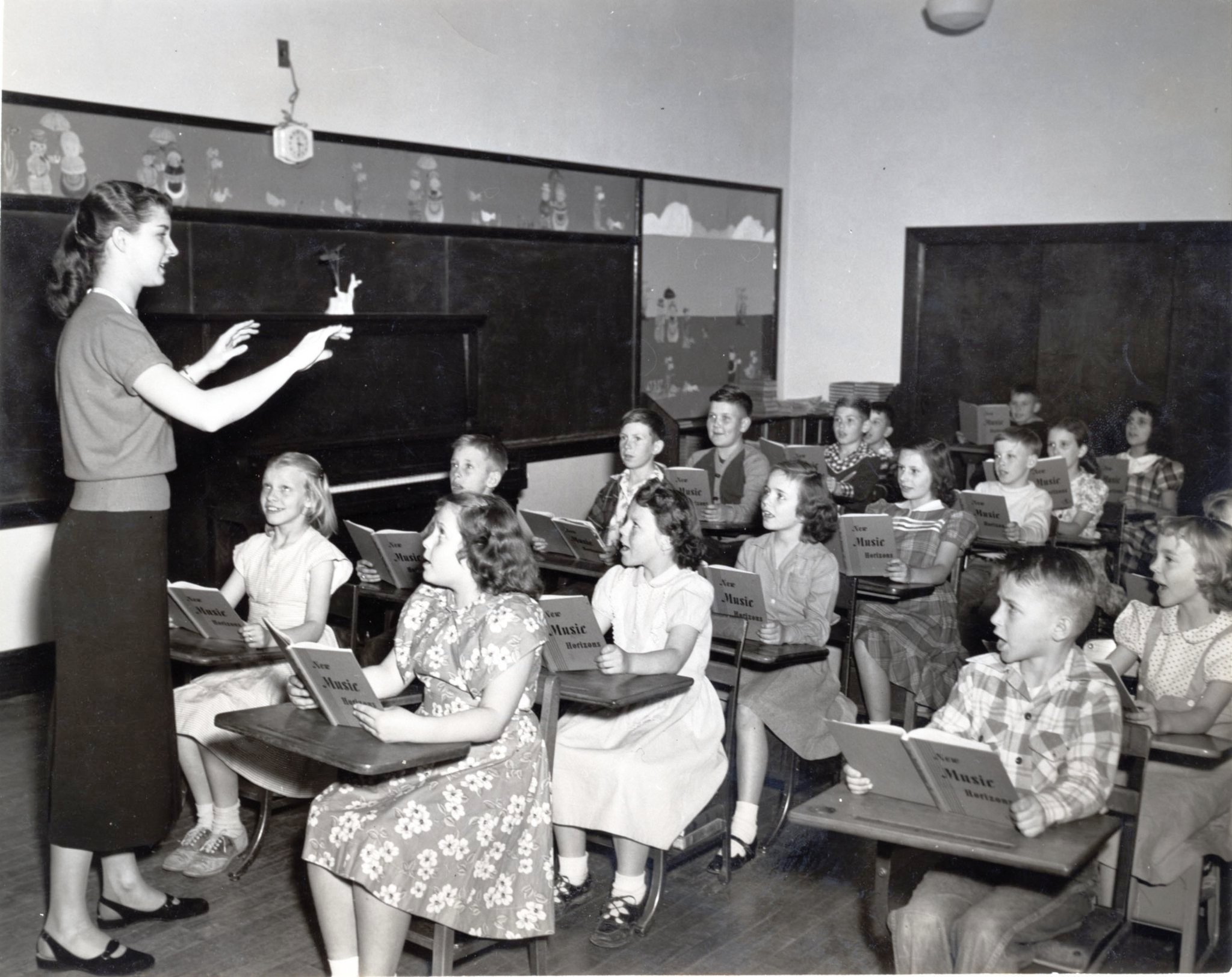
Many of the things we took for granted when we were in school back in the 1950's, 60's, and '70's are not considered "politically correct" these days. It seems that the emphasis is more on not "offending" anyone or promoting a culture where nearly everything is acceptable, no matter how irrational. Kids can't tell time using a analog clock or write cursive but they get to pick which gender they want to be and no one has to even tell their parents! You send "Johnny" or "Mary  to elementary school in the morning and they come home as "Johanna" or "Mark"! What the hell?  I was happy if I got to pick out my shirt for school let along my gender! Besides, everyone knew girls had cooties. 

Today kids have story time read to them by individuals dressed like they belong in some sort of John Waters' movie.  They can now choose what they want to study (or not) based on their racial or gender identity.  Disrupting class isn't at all uncommon and often excused as being a part of their "learning culture" or symptomatic of some attention disorder we never heard of when we were kids in school.

 Assaulting teachers while trying to teach class or enforce discipline isn't unusual (and woe unto the teacher who physically responds). Teachers in their 20's or 30's getting caught having sex with kids barely in puberty happens so often it's barely news worthy.  Professional ethics aside, what about simple  morality?

 I personally happen to support saying the Pledge of Allegiance (if you don't want to participate, fine. Just don't interfere with those who do). Strict discipline in the classroom, active participation of the parent or guardian, and teaching civics are essential. If they don't understand the function of government and their role in society as citizens, how can they protect their freedoms? Volunteering 90 days at the end of senior year performing some civic service such as Habitat for Humanity, helping out at the VA hospital, Meals on Wheels, participate on a police or firefighter advisory board, helping seniors or working as an election officer should be mandatory before graduating. 

 I am especially keen on learning being the focus of education. Anything beyond that (sports, band, cheerleading, or whatever) should be a privilege for maintaining good grades. Poor grades or disciplinary issues and the privileges are suspended until the grade or behavior situation is corrected. Repeated offenses and they're revoked. Period.

Some individuals and groups want to promote the introduction of their agenda a denominational prayer in public school and teaching creationism in public school either alongside evolution or to the exclusion of evolution all together. If that's want you want for your child, great. Send them to a parochial school.

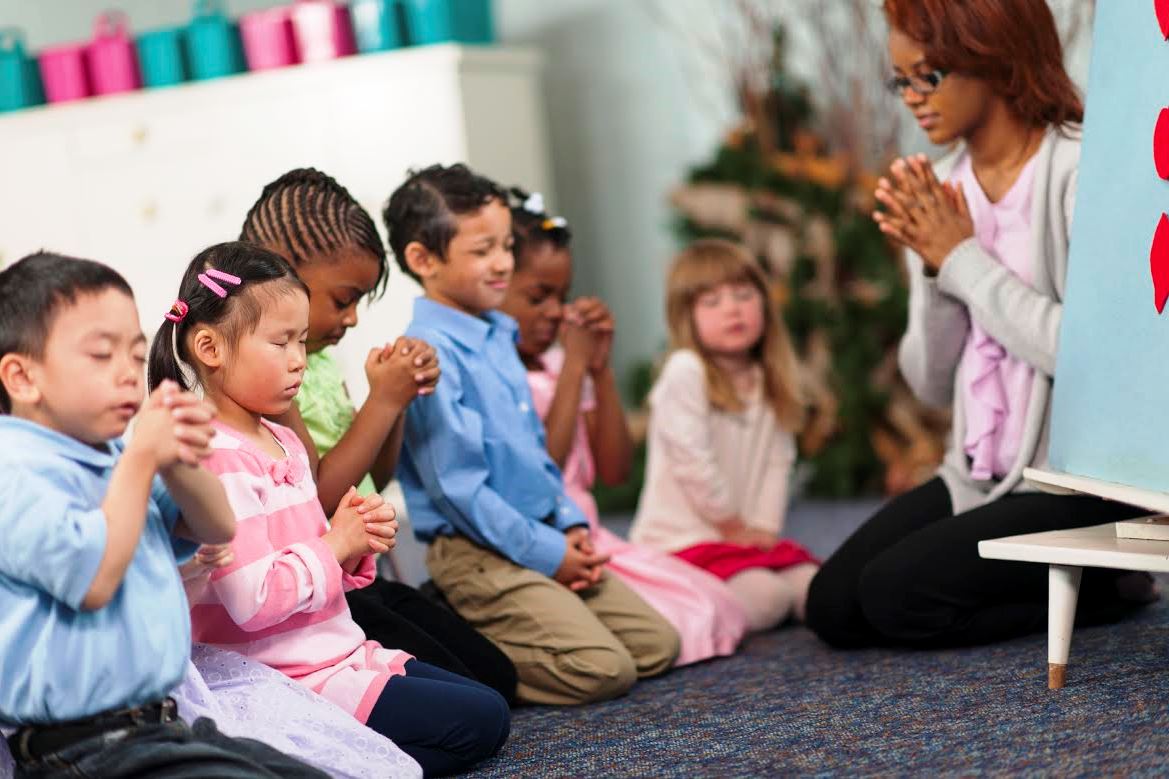
 I have no problem with a minute of silence to get yourself mentally ready for the day ahead. If you want to quietly say a little prayer (or have a little prayer circle), have at it. If you want to do a quick mediation, or some late minute cramming for the test you forgot about or get your homework in order, that's fine too. Just be respectful of others. I do not support the notion of mandatory participation in someone else's religious expressions unless it's part of a comparative religions class examining all faiths.

Another key issue is the emphasis on higher education. I also don't believe college is for everyone or necessary for every or even most jobs. Sure, there are some occupations where higher education is needed because of the intellectual nature of the work. However, there are jobs where someone with a proper high school education should be able to do quite well. One reason employers ask for a college degree is just to get a qualified applicant at what would otherwise be the high school  equivalent.

 I've seen high school "graduates" barely function on a 8th grade grammar or reading level or can do math much beyond a 6th or 7th grade level. You can all but forget about basic geography and history (but boy oh boy do they known or video games!).  One resulting outcome is the lowering of colleges and universities minimum admission standards to create an artificial parity based on race or gender rather than academic performance. This is nothing more than a quota system based on discrimination.  

Far too often, teachers and school administrators "fail students forward" rather than hold them back out of fear of being accused of racism, genderism, or whatever the victim card du jure happens to be.   The most common excuse is that failing little "Brad" or "Babs" hurts their self esteem. I think saddling them with a worthless education or bleak employment opportunities is worse than bruised feelings.

Is it any wonder that the United States consistently performs in the lower half of the second tier globally? The U.S. ranked 16th out of 81 industrial countries according to a 2022 test of 15 year olds as administered by the Organization for Economic Cooperation and Development (OECD). We placed 16th in science among the same 81 countries. When it came to mathematics, we were 34th. The top five highest scores all belonged to Asian nations with Japan, Taiwan, Singapore and Macao consistently being among the top performers. 

These are some of our current and future economic competitors for high paying jobs and market shares, which affects employment levels, quality of life, and other key metrics.  If we think of education as an investment in human capital or part of our economic national security, we're losing the battle.

Although the U.S. spends more taxpayer money per student than other countries, we are obviously not getting our money's worth. Incoming President Trump is putting together an advisory committee---the deceptively named "Department of Government Efficiency" (it's not an actual government agency)  led by Elon Musk and  Vivek Ramaswamy. Their job is to review various government projects, programs, and departments and find a way to make them work better and within budget.

 I suggest they start with our school system and find ways to improve our performance. After all, everything starts with education (there are some who, since the 1990's,  have been calling for the disbandment of the Department of Education and a return of educational authority back to the states). As an aside, the Department of Education was elevated to a cabinet level position in October 1979 by President Jimmy "Peanut" Carter (D-GA).

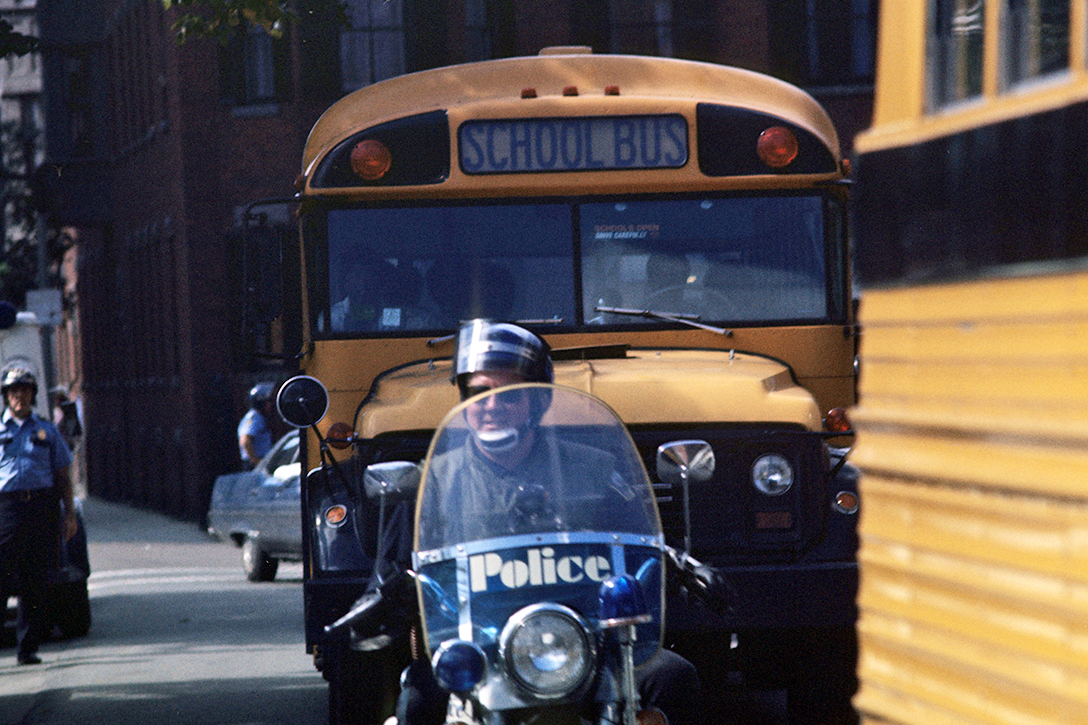
This was just four years after the advent of the disastrous court ordered  fiasco known as "forced busing" which effectively eliminated neighborhood schools. Students as young as six and seven years old, were put onto school buses and shipped all over town for hours at a time each way. This implementation of "social engineering" was intended to create balance in the schools academically and racially.

What it accomplished was a general lowering of academic performance which continues to this day. A better option would have equalizing the money spent on each student and rotating teachers. However, that would have produced a battle with the powerful teacher unions. So, what can we do about it?    

One potential solution is to weed out not just the academically unprepared, but also  redirect individuals who lack the interest or aptitude for higher education. One option would be to adopt a system similar to Germany's where students are tested periodically throughout years K - 8, and channeled into programs which lead to two years degrees, trade or technical schools, or on to higher education. It's one of the reason's Germany has one of the world's most advanced economies in the world.  Of course, the final decision belongs to the student (and parents) who may choose the academic path of their preference.

Students unprepared academically are re-immersed back into the subjects they poorly performed on via in person or online tutoring while extracurricular actives such as sports are put on hold. Students may be required to attend before or after school instruction. In some cases, this may take place during the summer. Until they can pass those courses, they should remain  suspended from  any non-academic events.  

The result is that the abilities and interests of the student is targeted  instead of trying to funnel them onto a path where they have little or no ability or interest. Trade or technical school is one such option. Unlike Europe, America faces a serious shortage of carpenters, welders, plumbers, electricians, glaziers, construction equipment operators, cyber security specialists, and other skills. It's a economic sector where there are real shortages and great opportunities. Making six figures annually isn't unheard of. Neither is owning your own business, where income opportunities can be even higher.

In a 2023 survey, there was a shortage of approximately 374,000 skilled workers in construction. The Association of General Contractors of America had a 70% positive response rate about concerns over the availability of skilled contractors and subcontractors in the upcoming years. 80% of those surveyed said they were worried about unfilled positions long term in the construction industry.

Between now and 2023, the renewable energy industry alone will need 1.1 million more workers worldwide and another 1.7 million to operate the equipment. According to a January 2024 U.S. Bureau of Labor report, the manufacturing industry in the U.S. has a staggering 584,000 unfilled job openings.

Among the reasons for the critical shortage of skilled workers is that the current workforce is slowing but steadily aging out. Almost 70% of supervisors in just the electrical trades are Babyboomers who are quickly reaching or passing retirement age.  More individuals are retiring and leaving than are replacing them. Another explanation is the push by school counselors, college recruiters, and a negative public perception about blue collar workers in general.

The truth is that training for a career in the trades is far shorter and cheaper than getting a Bachelor degree from a college or university. Training, on average, is two years or less plus a short apprentice period which may start simultaneously while being paid with benefits (the average apprentice earns roughly 50% of a skilled worker's salary). It takes about three weeks to qualify for your CDL license needed to be a long haul truck driver (the average salary--with experience--is just over $78,000 yearly).

Typically the cost of attending a trade or technical program can range from just a few thousand dollars to roughly $30,000 with an average cost of $15,000. Many of those attending a trade program are often hired before graduating (some start work will still attending school).

Compare that with the cost to obtain a four year degree. The current average is approximately $10,490 per year for in-state students. For out out-of-state students, that cost can jump to as high as $24,000 per year. If you plan on attending one of the top schools, the cost can be a lot higher. There are a few cheaper options (like attending a unaccredited institution), but remember that you get what you pay for and that's nowhere more true than in education.

Then there's the debt. On average, 61% of those who graduate from a public university leave with diploma in one hand and a bill for $31,960 in the other hand. Over their four years, the majority of students will occur a debt of at least $30,000 by the time they leave. The average federal student loan debt is $37,853 dollars. If you pursue a Masters degree, the costs and debt will be substantially higher.

It used to be that many American workers graduated from high school with a functional degree and would get a good paying job with benefits down at one of the local manufacturing companies. They'd join a union for job security and they were pretty much set. For a large percentage of the country, it was a near guarantee to their entry into the Middle Class. It wasn't uncommon for this path to be multigenerational, but those days are long gone.

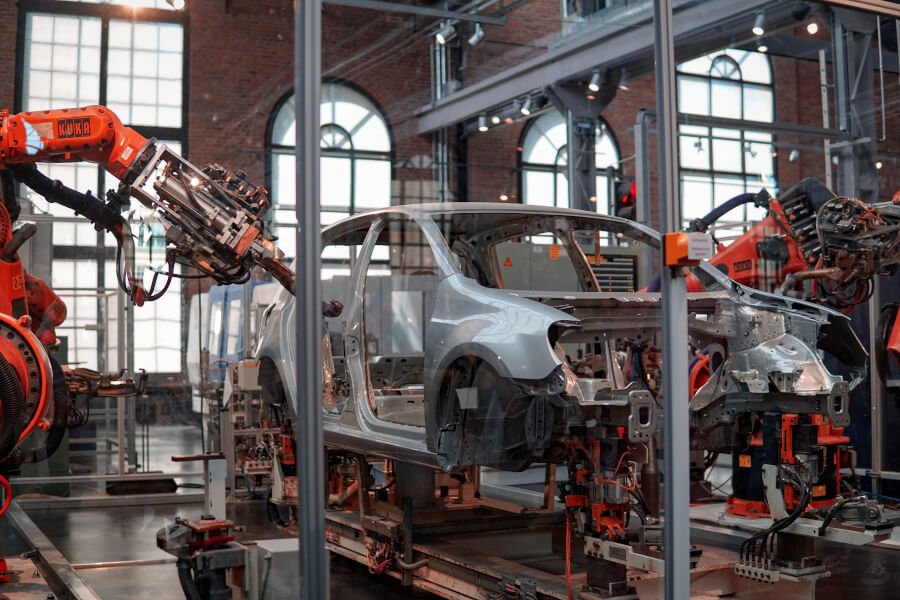
Starting in the late 1970's American began transitioning out of manufacturing and largely into the lower paying (and the less secure non-union) service industry. What industry remained has become more automated, replacing most positions. The only ones with job security and a good paycheck are the ones who repair or program the production line robot. But that's not the half of it.

Our parents and grandparents didn't have to face is the level of competition we do. Today, workers not just compete with each other for scarce well paying jobs, nor is their competition in the next town or state. Today's employee faces competition for work thousands of miles away, in countries like India and China where unions don't exist and people will work for next to nothing (and forget about benefits. They're happy just to have a job!). This is where America is losing ground, and when we look back at math and science score of our students, the future doesn't look to bright for the U.S..

When  it comes to technology, the world leader is Japan (Japan is also the world's most literate nation). Second is South Korea followed by China which has a knack of acquiring, studying, and adapting U.S. and global  technology. You don't have to look much further than the America's F-35 and China's J35A stealth fighter jets for proof.

In fourth place the good ole U.S. of A. Behind us is Germany, a country the size of Wisconsin and with a reputation for high quality engineering and efficiency thanks to their excellent dual avenue academic system which puts the trades on equal ground with higher education without the stigmatism as we mentioned earlier. Of course, we wouldn't expect anything else from the Germans.  As an aside, Russia graduates the most engineers of any country followed by the U.S. and Iran according to UNESCO.

 Singapore, a former British colony, is next (remember at the beginning of this article where I mentioned that the top five nations in academic math and science among 15 year olds were all Asian?). Coming in seventh place is Russia. Another country with a "gift" of mimicking U.S. technology. Great Britain, the United Arab Emirates (UAE), and Switzerland round out the top ten.

The key to the future is innovation. It's where tomorrow originates. So, who leads the world when it comes to innovation? That honor goes to Switzerland which dominates its second place competitor, Sweden. The United States has dropped to third place and is just ever so barely ahead of Singapore and the UK. For now, this may get us by, but not for long. Not at the pace the world is changing. How long can we hold on? Only time will tell. But one thing is for certain. If we don't do radically improve our school system and the quality of graduates, we may be facing a bleak future as the world's largest Banana Republic.


Thank you for reading Another Opinion! We hope you enjoyed this article and will pass it along. Please don't forget to subscribe. It's free! Lastly, please "like" us on whatever platform you use to read anotheropinionblog.com. It helps beat the algorithms and keeps our articles in circulation. Please find below the links we consulted in researching this article. 


Department of Government Efficiency


U.S. Education Rankings Compared to Other Countries


Tradespeople wanted: The need for critical trade skills inU.S.


These countries have the most technological expertise


Friday, May 17, 2024

Breaking Up May Not Be So Hard to Do: Secession from High Crime, High Taxes, and Failing Schools is on the Rise

Remember Reverend Louis Coleman (1948 - 2008)? He was a widely known black social activist in Louisville Kentucky, noted for his megaphone and had a national following. He was sometimes referred to as Louisville's "Dr. King". or "Jesse Jackson. Others called him an extortionist or race baiter. 

Rev. Coleman would ago around organizing protects mainly along racial lines outside of businesses  with the media in toe often inspiring fear from local business (mostly white) owners. City government agencies weren't exempt either. Coleman was active from the 1970's until his death in 2008.

Most every owner (or "target" as some called themselves) would typically cave to whatever his demands were, which usually included hiring more black employees, the cleanup of predominantly black neighborhoods, investment in or relocating businesses to the West End as well as "suggestions" of making a substantial financial "donation" to some black owned program (the majority of which were aimed at remedial education and ending substance abuse). Frankly, he was a hoot to watch in action!

Not long before he died in 2008, the megaphone toting activist grew frustrated with the City of Louisville's hiring policies and especially its budget allocation. (he claimed that black areas were being short changed). Coleman demanded more taxpayer money be directed to Louisville's West End, Portland, and Newburg areas which are predominately black (blacks comprise approximately 24% of Louisville's population, Hispanics and Asian populations were nominal). Interestingly Coleman faced resistance, which was  rather unusual.

Coleman threaten to form a movement which would result in the West End leaving Louisville and becoming a self-incorporated city, taking its tax base and voters with them. (while it produced little in the way of taxes, its resident voted solid Democrat). Rather than inspiring angst and caving to his demands, Coleman and his supporters were meet with a mixture of laughs and "encouragement" to pack up and leave.

Knowing his bluff had been called, Coleman quietly backed down. There was no way the West End, even if joined by Portland and Newburg had the tax base to support itself as its own city.  Nevertheless, the idea of splitting off from a high crime city with a largely inept Board of Education, a hamstrung police department, a rubber stamp Metro Council (which replaced a rubber stamped Board of Aldermen with the City/County Pact of 2003), and a string of worthless mayors, hasn't gone away (it's worth noting that since 1969, the City of Louisville has been run by the Democrat Party).

Since the merger between the City of Louisville and Jefferson County in 2003 (and county residents got screwed), there has been widespread public and private conversations about breaking up with Louisville, which has gone from an important production hub to a city of warehouses.

Reverend Coleman's "Achilles heel" in his threat to succeed from the city was the lack of an organization and having an adequate  self-supporting tax base, hasn't been lost on anyone. It seems that the desire to leave is still there, but as of yet, not the organization or money.

In recent years, as things have continued to decline in the city (which now has murders on par or exceeding that of much larger cities like Chicago and Detroit), the lack of high end jobs or even something as basic as quality schools which are safe, the talk about a "municipal divorce" has taken on a more serious tone.

Communities in the Greater Louisville area have begun exploring a number of possibilities ranging from reversing the 2003 City-County merger to the succession of parts of the southwest portion of the county (which also most strenuously opposed the merger) such as the communities of Pleasure Ridge Park (PRP), Valley Station and Prairie Village. Residents in other parts of the county, including Hillview, are starting to explore other options outside of Louisville proper.

So, where to go? Unlike Coleman's threat of creating a separate city, residents are looking to merge with one of the adjacent counties such as  neighboring Bullitt County. The reasons are numerous, but most notably center on the fact that as a whole, Bullitt County tends to be conservative with strong traditional family values, which closely matches the values in Southwest Jefferson County.

The City of Louisville has a long history of being quite liberal, especially in neighborhoods such as the Highlands and Phoenix Hills. Bullitt County and Southwest Louisville are mostly blue collar working class. Bullitt County has a lower crime rate, better schools, a more responsive government, provides better quality services, and best of all, has lower taxes.  

I said earlier that local residents lacked organizational know how (which plagued Rev. Coleman earlier). However, that may have changed. Residents in the Baton Rouge community of St. George faced many of the same issues as those in Louisville may have found a way to break from their decaying city. I've included a link to the story below in bold, which I think you'll find interesting. It may also give county residents in Louisville  a possible roadmap for making a successful break with the city possible.

Of course, the move prompted many to start calling St. George residents the usual name calling such as "racist", "supremacists" "red lining", "segregationist" and so forth. However, the real reason for the break was a dismal school system (and the refusal to allow St. George the opportunity to create a separate school district), high crime and a  highly unresponsive local government. Sound familiar? 

The break came as a result of several years in court with the state's supreme court finally granting the resident's application to break away. The move, according to Baton Rouge's mayor, Sharon Weston Broome (D), members of Metro government, and the NAACP, the break will hurt the city due to loss of the rather wealthy tax base of St. George and result in reviving the budget. She also said they would fight the high court's "mistake" and will continue every effort to force St. George back into Baton Rouge.

St. George is not the only community to break off. Similar movements (called "soft secession") are happening in New Orleans, St Louis, Atlanta, and in other communities. In Oregon, resident of Wallowa County, lead by the "Greater Idaho Movement" are close to breaking away from Oregon and joining with Idaho. Secessionist movements exist in places like Vermont, New Hampshire, and Maine. Their are numerous communities throughout the U.S., but especially in parts of California, Florida, Texas, Arizona, and New Mexico, which appear little different from communities in Cuba and Latin America. These are also forms of soft secession since there is little or no efforts to assimilate.  

Some survivalists and individuals  wanting to live "off the grid" have grouped together to form their own communities away from society are another form of "soft succession".  There are numerous Hispanic communities throughout the U.S. which are de facto ethnic enclaves totally immersed in their culture, language,values and traditions with no intentions of ever assimilating.  

The Black Panthers and Nation of Islam have long sought to create "separate but equal" zones away from others.  You could refer to certain religious sects such as the "Branch Davidians" led David Koresh in Waco Texas a soft secessionist. You could even argue that the wealthy elite are de facto secessionist too. After all, they tend to live in their own world, tucked away in protected gated communities, with their own values and laws. 

So what are secessionist movements on the rise? For many of the same reasons cited earlier, namely quality of schools, high crime and higher taxes, a breakdown in infrastructure, along with a unresponsive government. Wallowa residents say they have nothing in common with Western Oregon, which is known for being extremely liberal.  So-called "sanctuary" states and cities are de fact forms of this soft succession in that they are defying and operating outside of federal laws for instance.

Even the wealthy members of Congress, the judicial system, and the "nomenklatura" who run the government's agencies and bureaucracy are the same. They have little in common with the people they're suppose to represent. Ordinary laws and behavior don't apply to them. Even their values are different. As author F. Scott Fitzgerald wrote in his 1926 novel, "The Rich Boy" "Let me tell you about the truly rich. They are different from you and me...They think deep in their hearts, that they are better than we are because we had to discover the compensations and refuges of life for ourselves."

Lastly, did you know too that there are 14 unique secessionist movements currently active in the U.S.?  They  range from natural or historical sovereignty, race, ethnic heritage, religion, taxes and excessive government interference or control or nationalism. Whether any of these movements will succeed is matter of both debate and time. What might not seem plausible now may be common sense later on. One thing is for sure, America is more deeply divided than at any time since 1760's in Colonial American prior to our revolution or the late Antebellum period just prior to the Civil War.

As for Louisville residents, what the residents of St. George accomplished may prove to be a useful template. The merger wasn't as billed. Residents in the county, especially in Southwest Jefferson County, have repeatedly come up short since 2003. Perhaps the time has come to step up to the plate and swing for the fence. What do you think? Is it time to split? 


If you enjoyed the article, please consider passing it along to others and don't forget to subscribe. It's free! Lastly please be sure to "like" us on whatever platform you use to read anotheropinionblog.com. It helps beat the algorithms and keeps our articles in circulation. Thank you!


Black Leaders PANIC After Whites Leave City


Report: Louisville, Jefferson County merger fails todeliver, No job growth seen for Louisville


Economic effects of Louisville merger remain uncertain 20years later


Louisville Crime Map


Reverend Louis Coleman: History Maker


Miracle on 34th Street: How Louis Coleman became our 'Dr. King' in Louisville


Wealthy white Louisiana residents win right to split fromBaton Rouge and form own city


Why Does St. Louis Continue to FAIL. 70 Years and Counting


Shocking Reasons Nobody Moves To New Orleans


Succession is here: States, cities, and the wealthy arealready withdrawing from America


Oregon break away effort is down to just 8 votes, deepeningurban - rural divide


List of Separatist Movements in North America


Friday, August 26, 2022

In America We No Longer Trust?


Our currency says "In God We Trust", but what about America? Do we still have confidence in our country? Americans, it seems, do have a serious trust issue, especially when it comes to the government and authority figures. That distrust is part of the American character stemming from those who first settled and explored this land. Many were viewed as being social, political, and religious outcasts.

The economics and social structure of the Pre-19th Century hamstrung the lower class merchants, craftsmen and subsistence farmer who toiled away on land they rarely owned while idle rich reaped the profits through rents and taxes. The social system often locked them into their social class of their birth with little or no hope of rising above it. Life for the majority was a grueling battle just to survive while the ruling elite were all but oblivious to their plight. To the elites, it was all due to "divine" ordination.

This "New World" offered a chance to change that. It was a risk, often requiring them to sell their selves into servitude for as much as a 1/3 of their anticipated lifespan just for this one rare opportunity to step up on the next rung of the social ladder. In the Jamestown of the early 1600's, approximately 75% of the population was indentured.

Upwards to 50% would die before ever seeing their freedom due to disease, exhaustion, or being undernourished.  Even for those who survived to reach the end of their servitude, many would find the land they received for their decades of bondage was infertile land or too small to sustain them. But they came anyway.

America was settled primarily by social, religious, and economic outcasts who built a new life of their own. No lords. No masters. It's helped create the image of the "rugged individual" and sense of independence which we still value to this day (and something others in foreign countries struggle to understand).  

Our alleged "insolence" and "rebelliousness" as England's King George III referred to us was even written into the Declaration of Independence while our belief in the dignity of the individual was expressed in the Bill of Rights.  So, it's no wonder that we distrust authority, which is borne out by a recent Pew Poll.

As an aside, this poll is not about "approval ratings" which often fluctuates weekly based on a variety of issues like the popularity of a party, legislation, or person as presented by the establishment media. Instead, this poll examined our "trust" or "confidence" in government, which more long term.  It also delved a bit deeper to look at other national institutions.   

Polling about the government has long been interesting, if for nothing else than from a perverse perspective to see just how low it will go. Americans have long disliked and distrusted Congress no matter which party is in control, and for the matter, the presidency. However, we have still held the Supreme Court in (relatively) high esteem, but all that's changed and we'll explain how. 

 According to the poll results, taken in July 2022, the amount of "trust" or "confidence" we had  for Congress in 2021 was a meager 12%. But as of July that figure had dropped to a pathetic 7%! As for the presidency (not the President), that "trust factor" dropped from 38% in 2021 to just 23% in 2022. When it came to the U.S. Supreme Court, they were not so "supreme".

Historically, the Supreme Court has been the one branch of government which somehow managed to sidestep the wrath of the public. Perhaps it's because it's rarely in the news or deals with issues many of us have only a passing interest in. Besides, there's always been some kind of mystique about the highest court. It's members, appointed for life, were seen as close to infallible as we mere mortals could get. They were each highly qualified for their position. The court, as a whole, was also seen as being impartial and above or outside the slimy dealings of politics.

However, the Pew Poll showed something different. In 2022, the confidence factor of Supreme Court was only 25%, which was down 11% from the 2021 results of 36%, which was still shocking. What would cause the results typically associated with Congress (on a good day) or the President? One key factor was Citizens United, a ruling that has had devastating consequences for the average American.

Citizens United, which was upheld by the Supreme Court in 2010, all but removed ordinary voters from politics and gave it to Big Business. Corporations were now seen as having the same rights as the average person, with one major exception (more on that shortly). Corporations are a legal construct. They are soulless artificial legal entities. They do not speak or act for their employees (it's often also pointed out that corporations are not democratic. They act as feudalistic kingdoms). 

Corporations function based on the collective voice of their board of directors with limited input from their shareholders. They exist solely to make a profit for those invested in its performance. Thanks to Citizens United, corporations now give virtually unlimited amounts of money to whomever they want, essentially buying the officeholder or political party.

The Supreme Court (and certain members of Congress) justify this by saying that "money equates with free speech" (of course, you and I are limited by the amount of "free speech" we donate by both legislation and practicality). That's the major exception I alluded to earlier. Even unions, which act more on behalf of the corporations they're suppose to protect workers from than the workers, can't compete. Unions are only able to donate one dollar for every ten corporations donate.

Citizens United was the final screw in creating the "Frankenstein" which transformed our Constitutional Republic into a neo-fascist Corporatocracy; our representative democracy is now run by a corporate like board of directors; an oligarchy of unbelievably rich individuals on behalf of equally rich shareholders. 12 years later and still 75% of Americans regardless of party oppose Citizens United.

The court's recent decision reversing Roe v. Wade also deeply affected the public's trust. 62% of American surveyed said the court made the wrong decision, adding that abortion should be legal in every state.

Related to the Supreme Court is the criminal justice system. As many know, we have the highest percentage of individuals behind bars, 0.7%, than any other country on the planet, be they "democratic" or authoritarian (including monarchies). That's nearly 700 individuals per 100,000. That's more than France, Russia, China, Turkey, Mexico, or Brazil. Not surprisingly, confidence in the criminal justice system is just 14%, down from 20% in 2021.

When it comes to other institutions which comprise the foundation of our nation, they've done just as poorly. In fact, 11 of the 16 institutions mentioned in the survey had declined between 2021 and 2022, and of those remaining five, their trust factor remained the same. Let's look at business first.

"Big Business" which includes companies like Walmart, General Electric, and Kroger have a current trust factor of 14% thus far in 2022%. which is down from 18% in 2021.  Large technology companies, such as Google and Apple, went from 26% to 23%. Banks and other financial companies "to big to fail" dropped from 33% to 27%.

Meanwhile, small business (or what's left of them post Covid-19), remained strong 68%, having fallen just 2% from 2021 until now. It seems we still prefer the "mom and pop" businesses that reflect our appreciation of the individual and entrepreneur, as well as the everyday familiarity which comes from the smaller local businesses and the knowledge that we are also helping our community by buying local.

Organized labor was one of the very few groups included in the survey which didn't show a decline, however, it didn't increase either. In fact, trust in unions remained at a 28% low. It's likely due to the low number of workers represented by unions as well as the corrupt reputations many unions suffer from because of the actions of a few.

The medical system took a hit from the Covid pandemic, "mandatory" vaccinations, masks, and the prolonged quarantines which hurt small businesses (which were forced to close) while helping big corporations (which were allowed to remain open). Unanswered questions regarding the vaccinates and the seemly endless "boosters" didn't do them any favors either. 

Many people nowadays question whether doctors, pharmacies, and hospitals serve the interests of insurance companies and medical research companies over the health of their patients. This lack of confidence is reflected in the poll  with just 38% trusting the medical industry compared to 44% in 2021 (we can even link the technology companies mentioned above back into this too).

While the Covid crisis was raging, so was more civil violence resulting from the recent deaths of individuals at the hands of the police. Whether the police were at fault is a matter of opinion, but it certainly affected the public's confidence in law enforcement.

The poll backed that up by showing a decline from 51% in 2021 to 45% in 2022; a 6% drop. Along with the loss in confidence, police departments across the country are losing  law enforcement officers as hundreds continue to retire or resign each month as we reported earlier.  

Trust in the military was another one of the very few which, while dropping slightly, still remained strong with 64%. In 2022, that number had been 68%. No doubt the chaotic withdrawal from Afghanistan after 20 years of fighting and perception of a second military defeat played a big factor in 4% decline. Still, we cherish our men and women in uniform.

Turning from the military to religion, organized religion continues to decline as we reported in our last article. Overall, trust in religion is 31%, which represents a 6% drop from the previous year. While there are several factors, certainly some must include the Vatican's continuing refusal to deal with its pedophilic priests  (a issue which has spilled over to other religions), not to mention corrupt televangelists, along with issues concerning  married priests, ordaining women, birth control and abortion, gays in the church, and the centuries old conflict with science. 

Not surprising is the fact that even our school system isn't safe. Confidence in our schools and even our teachers have been on the decline for decades, starting with forced bussing and the decline of discipline in the schools in the 1970's.

Schools are now largely thought of as either public babysitters or pre-incarceration centers. Schools were once seen as safe havens, but not anymore. Respect for teachers have dropped, as has the desire to learn (for some minorities, academic achievement is often seen as "acting white" and typically results in being bullied and/or ostracized).

Today, the emphasis is on appeasement, especially if it has a racial or sexual orientation slant to it. They "graduate" individuals who can't read at grade level, can barely write, have little or no knowledge of literature, English grammar, science, or history and no appreciation of the arts.

They don't understand civics or what it means to be a citizen or to have respect for others. They have no critical thinking skills, but they sure know their sports!  They're taught that college and debt is their only option rather than the trades which are more in demand, cheaper and quicker to obtain, and pay better than average. Is it any wonder confidence in the school system is just 28%, down from 32% the year before?

Last on our list is the mainstream media. 96% of all media, including videos, movies, TV and radio programming, newspapers, books, and magazines, and even internet content are owned by just five companies. They literally control what we see and hear. They influence what we think on every topic. Most Americans nowadays no longer trust the media, which is labeled as "fake news". I find no surprise that television news has a trust factor of only 11% while newspapers (and print media) is a just 16%.  

It's not uncommon for the approval rating of this or that individual or group (such as Congress) to be in the dumpster, depending on the popularity of their party, their personality, or how they're portrayed by the media, but this poll goes further than that. It's a snapshot of our confidence in the very foundations of our society. It's also a warning.

If you want to know more, please take a look at the links below. If you enjoyed the article, please consider passing it along to others and don't forget to subscribe. It's free! Lastly please be sure to "like" us on whatever platform you use to read A/O. It helps with the algorithms and keeps our articles in circulation. Thank you! 


Confidence in U.S. Institutions Down; Average at New Low


Mass Incarceration: The Whole Pie 2022


Majority of Public Disapproves of Supreme Court's Decision to Overturn Roe v. Wade


Millions of Small Businesses Closed in 2020: The LongRecovery Ahead


The pandemic may have caused 200,000 business closures---fewer than expected


Friday, October 30, 2020

Endorsements: Manipulating the Vote?

 ***Due to Blogger's new format change, there are random changes font size and colors***


I received a recorded phone call from the AFL-CIO. It's interesting how they tend to use a woman's voice. I guess that's to make us a little less defensive, especially when it comes to solicitors or telemarketers. Perhaps, they assume, we are more willing to listen to the sales pitch.

Anyway, this pleasant sounding individual asked to speak with me by name (first name only,  I guess that makes it seem more "personal"). She then asked me to verify my year of birth, so, naturally, I lied. They're making a sell's pitch.  It's none of their business when I was born. Besides, they're just trying to fit my response into some statistical category to gage which way various age demographics are leaning. 

I was asked next if I intended to vote in the upcoming election. I suspect that they already had the answer to that question (I've never missed an election after after I turned 18). The voter list they bought likely included my phone number, e-mail address and no doubt would have also included most of my public information, such as gender, marital status, address, and yes, my age! 

 I was informed that the call was about the upcoming election for U.S. Senate between Amy McGrath and Mitch McConnell. However, before asking me the obvious question, the caller reminded me that the call originated from the AFL-CIO, and then emphasized that "my union" had done all the research for me and concluded that Democrat Amy McGrath was their recommendation , then asked who I was voting for.

At that point I was toying between hanging up or playing along. As anyone who knows me will tell you, I don't need any person or group telling me that they have decided to relieve me of the "burden" of thinking for myself.  They know nothing of issues I'm concerned about. They know nothing about my personal financial or health situation. They know even less about my values.


Their endorsement reflects their interests, not mine. Besides, since when does a union endorse someone who isn't a Democrat no matter who the opponent is?  I served as a state chairman for a writers union for around eight years. I've been privy to a great number of closed door meetings. In most cases, the Democrat, no matter how unqualified, is endorsed before they ever hear from the other candidates.

I remember one instance where a certain Democrat I had known for years and I were talking before the candidate interviews started. We had talked for awhile when he started commenting about how much he disliked unions in general but loved the money they gave to endorsed candidates and how they would "Shanghai" members into doing mailings, making phone calls, or delivering yard signs on behalf of the candidate.  

During the interview it was pointed out that his campaign material lacked a "union bug" (a mark indicating that the material was made by a union shop). His handouts, mailers, and yard signs all lacked the union bug. He also admitted that he had never belonged to union, nor had anyone in his family. His answers were canned platitudes. No substance whatsoever. Obviously, his reception was lukewarm.  Next up was his opponent, a Republican, which is rare at union endorsements.  

This individual was someone I knew by name only. He worked at Ford or General Electric (I don't remember which). He was not only a union member, but also a shop steward. His brothers, father, and uncles all worked there. All were union members; some had been shop stewards as well. His campaign material all bore the union bug. His answers were concise. He even asked some of the members questions about their unions which most couldn't answer. Of course, he already knew the answers. He had taken time to research the issues affecting several of these key unions.

Needless to say, I was impressed. He took the endorsement process serious. He didn't act like he was showing up just to go through the motions. Want to guess which of the two candidates got endorsed? I bet you already know the answer. It was the Democrat, despite not knowing any of the issues for the office he was seeking, knowing any of the key points affecting the unions, being a union member, or even having the basic courtesy of using a union shop for his campaign material.


As far as I'm concerned, that's one of the biggest problems with unions, and is one of the reasons that unions are no longer relevant. Many endorsements are automatic. They put politics over the interests of their members. Union leaders are more interested in what benefits them than the ordinary rank and file.

If they were truly interested in the workers they would pit both of the parties against each other. They'd make them work to earn their support. By choosing to have so-called "friends" on one side of the aisle only, the fate of unions rise and fall with the fortunes of that party. Why would anyone do that? By having allies on both sides you don't have to worry as much about which party is in power.

Even the fact that the Democrats are literally just as bought and paid for by corporate interests as are the Republicans (corporations given five dollars to every one dollar donated by unions) it doesn't dawn on them to spread their support around. Union donations have become almost chump change by comparison.  As a result, only about 6.2% of the total workforce are still unionized. If that doesn't show the rank and file how badly they're being taken advantage of I don't know what does.

Now, make no mistake. Unions were the backbone of the Middle Class for many decades. Not only did they fight to give workers a livable wage, unions made jobs safer.  They provided security for the employee and their family. Unions brought an end to child labor, equality in the workplace, a fixed hour workweek, overtime pay, health benefits, and security from the whims of the owners and supervisors. Unions even made suburbia possible.

Of course, there has been a lot of negatives too, such as getting in bed with the mob, misuse of pension funds, rigged union elections (and endorsements), and so forth. Many of the issues unions fought for are now federal laws.


Some argue that makes unions antiquated, and perhaps to an extent it does. However, workers will always need some way of fighting to protect their jobs, including their wages and benefits. As union clout has declined, so has wages, benefits, and job security. 

As long as they pander to one political party, regardless of the legislation they pass, then they will continue to lose relevance. Workers will increasingly choose to look after their own self interests, which is why most ignore their union's endorsements. As for my phone call, despite being told that "my union" had already decided for me who I should vote for, I opted to think for myself as I've recommended my readers do for years, and declined their "recommendation" to vote for Amy McGrath.

Speaking of endorsements, you'll be seeing the news media attempting the same thing under the guise of "informed choice". They'll tell you they did all the hard work just for you.  They'll point out all the strengths of their choice while downplaying or outright ignoring their flaws. Naturally, the individual they oppose will have few, if any, redeeming qualities worth mentioning, but a laundry list of negatives, especially if they're conservative!

It's one thing when endorsements are from some trade or professional organization. You expect them to be partial, but when they're from the media, that's something altogether different. The news media is suppose to be in the business of providing the news in a impartial, fair, and balanced manner. Their job is not to tell you how to vote. Just provide the unvarnished facts and let us make our own decisions thank you very much.

As I mentioned above, these individuals are pushing their own agenda. They have no particular interest in what issues are important to you. They are interested in seeing certain policies being enacted or in seeing taxes being raised without regard of the ramifications.


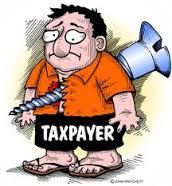
I love it when they tell us it's "only" a few cents or dollars, yet they forget that the majority of Americans live paycheck to paycheck. They fail to take into consideration that everything else is going up in price---water, sewage, electric, cable, gas, groceries, medical bills and so on; everything but our wages.  They especially don't take into consideration those on fixed incomes.

We have a situation like that where I live. The school board voted to increase our property tax by 15% without so much as a "by your leave suckers"! The local media and power brokers were quick to cheer the increase, which, after all, benefits the students (or so we were told).

Several recent studies had concluded that the local school system was already top heavy and overpaid by industry standards. Meanwhile, the teachers were underpaid and the students weren't getting much of the money allotted to them. It was suggested that if they made several adjustments, it could potentially save taxpayers millions.  As an aside, years ago we enacted a state lottery with the proceeds to go exclusively to the schools.

While the lottery passed, the legislators ensured that they got the money, despite their promises to the contrary, which went into a general fund. Big surprise huh? A word of advice from "Captain Obvious"--- never trust politicians with your money.  


So, now they want to raise our property taxes again on the promise that this time the teachers and student would benefit. Oh, by the way, they never took the recommendations from the studies and reduced their top heavy administration or cutback executive salaries.

Despite getting more than enough signatures to get the issue on the ballot, the school board and teacher's union have tried everything in their power to get it removed, including alleging all sorts of falsehoods. To think they are responsible for our children's education!  It's evident that the local power brokers don't want the voters thinking or deciding for themselves. Politics as usual.

So, take it from me, a 40+ year community organizer and political activist, ignore the so-called "endorsements". Do your own research, then go vote.  You'll be glad you did.


Saturday, April 04, 2020

What Have We Learned Since the COVID 19 Outbreak?


Viruses and diseases have been with us since time immemorial. Wherever we've gone, it's been right there with us, in our food or water, on our clothing, our pack animals, or in our boats. Now it comes with us by plane. Some want to curtail or even stop our trade with China; claiming that we're to dependant on the Chinese. Perhaps that's true.

It would certainly be to our advantage to return many of our manufacturing jobs back to America but China isn't the only place where our jobs went (Mexico, India, and South Korea come to mind). However, that won't stop the development and spread of viruses or other diseases. Besides, as economically integrated as the world is, it would be impossible to separate from other countries without severely impacting every economy, including ours.

Some claim that the COVID-19 virus is a biological weapon sent here by the Chinese. After all, they claim, China may be a trading partner; even a important trading partner which just so happens to own much of our national debt, it is also a major economic and political competitor. China has long been on a quiet spending spree to buy up key natural resources to fuel its own phenomenal economic development, albeit at the price of destroying or polluting its own environment. And while it has embraced a certain amount of capitalism, it remains a politically close society; a Communist country whose swore goal is the overthrow of Western democracy and the suppression of freedom in whatever form that takes, including religion---any religion---for the sake of political conformity.

It's true that the virus originated in the Wuhan Province of China, which just so happens to be where a military bio-lab is located (we were told as you'll recall that it originated there as a result of someone eating contaminated "bat soup" as you'll recall). Perhaps it was a strain which accidently escaped from a lab, but then again, perhaps not. Now the Chinese government is trying to blame it on the CIA; an infected tourist who may or may not have knowingly carried the virus. The fact of the matter is that we'll never know for sure.

Another fact is that China has been just as heavily impacted as everyone else (if not more so) whatever the origin of the virus. In tracking the origin of diseases and viruses, it's often near impossible to determine the actually starting point since the first symptoms may not occur for weeks or months after the original exposure, and by then the original person infected ("patient zero") could be hundreds or thousands of miles away, infecting who knows how many others. So, practically speaking, what do we know? What have we learned since this outbreak?

We learned what are considered "essential" jobs and who are "essential" employees, and to the surprise of many, it not upper management. It isn't, for the most part, jobs which required four year degrees. In fact, the majority of these "essential" job didn't require any higher learning at all. I'm talking about garbage men (and women) who pick up our trash every week. I'm talking about the farmers and farmhands who grow our food or those who insure we have clean water.

I'm talking about those who work in fast food restaurants cooking the food and working the drive through windows as well as those who bring food to our door. I'm also talking about those who stock the shelves not just at night, but are currently doing it all through the day just so we'll have something for our families. We can't forget the cashiers either, nor those who make sure we have electricity to cook our food, watch TV, surf the internet, or charge our smartphones so we can play video games all day.

I'm also talking about the all important trucker who is busting their hump to make sure that the stores receive what we need. Without truckers, most of America doesn't eat. It doesn't get the cleaning supplies, clothes, sheets, medicine, or whatever else we need to survive. It includes those working in warehouses, and stockrooms, as well as those working on some production line turning our sanitizers or masks.

We still depend on the police, the firefighters, EMS, and hospital workers---from the doctors, nurses, and lab workers to those doing the laundry and housekeeping who provide clean sheets and sanitary rooms and those working in the kitchen and making sure everyone eats, and on those who are filling our prescriptions.

We're finding that with schools being closed, the most essential individual in any child's education is still the parent. Yes, teachers are important, but without the parent's contribution, it's often a wasted effort. Perhaps home schooling will play an even more important role in the future. We're also rediscovering that with churches being closed, that faith doesn't reside in a building but within each of us.

We are learning all over again about just how dependant we are on each other. We are reminded that we are social animals; that politics, religion, or other self imposed barriers matter little in the long run, and this virus is a harsh reminder that we, as a species, are in this for the long run. We've learned that it's the ordinary worker, the ones we give little thought to, who are keeping us going.

Thanks to this virus, we've also seen Humanity at its selfish and greedy worse. We've seen people hoarding paper towels, toilet paper, sanitizers, and cleaning products, not to mention OTC medicines. It would be one thing if they were buying it to help others, but they're not. They are buying it for the sole intent of taking advantage of the disadvantaged such as seniors, the handicapped, and those unable to get out to shop.

They are in affect stealing from others by creating an artificial shortages, which in turn causes everyone up the supply chain to work longer and harder to replenish stock, which ultimately drives up prices for everyone. Of course, they will be more than happy to sell their hoarded products for a handsome profit to the very people who can afford it the least. I find no sense of honor, let alone compassion in this. The noblest thing we can do is to help those who are unable to help themselves, especially in time of crisis, even if that means not buying more than we think we need.

We've also learned something negative about our "social" nature. Despite repeatedly being warned to stay indoors as much as possible and the emphasis on social distancing, we are witnessing individuals doing just the opposite. Just recently we had thousands of high school and college students head to the beaches for an extended Spring Break. Many of them openly dismissing the warnings; claiming that "this is our time".

Well, perhaps it is "their time". Now that communities have closed all the usual Spring Break hot spots, a number of these self-centered "young adults" have become infected. Better yet, they're now demanding to be treated first. Frankly, too bad. Youth may be known for its zeal, but not necessarily for its intelligence (which typically improves with experience).

But it's not limited to youthful ignorance. It cuts across all age groups just as it does all races, religions, and (most) income brackets. We've seen people enmasse show up to watch the docking of the USS Comfort Hospital ship, going to the park, and at other events with large crowds. If we're to slow this spread of this virus down, we're going to have think about how we interact with others for their protection as well as ours.

We've also seen as unessential Washington can be. We've seen how partisan politics continues to influence something as basic as putting together a relief package for the nation. Be it sneaking in money for illegal immigrants, funding the Kennedy Center, or providing more corporate welfare, and neither party is more guilty than the other.

This should send a clear and unmistakable message to the American People that Washington doesn't represent our best interests (as if we actually need yet another reminder right?). It serves the needs of the very wealthy; the special interest groups who make up the ruling Oligarchy and finance modern politics.

The only reason we got anything out of this so-called "relief package" was the knowledge that the American People might... just might...actually stand up and doing something about a relief package for the elites only (I'm thinking of a repeat of Obama's 2008 Wall Street bailout), and yet special interest groups still made out like bandits. Now, another relief package is being considered and Congress is again looking at ways to reward its special interest benefactors with our money.

We've also seen some of our greatest fears as Americans starting to take shape. For years there has been those who've warned about the slow development of a surveillance state; the forerunner of a police state. We've witnessed the development of technology, which many have welcomed with open arms while not considering its other, possible nefarious, uses. We've assumed that "our" politicians, regardless of their party, were immune to the clarion call of dictatorship which has crumbled countless other nations throughout time. After all, we have a constitution to protect us.

However, recent events, mostly at the local or state level, have shown that politicians, regardless of party, are just as drawn to the allure of absolute power as any other tyrant down through history, and no would be dictator would ever dream of wasting a perfectly good crisis! We know we're already an Oligarchy. The government is not run for our benefit. It serves the needs and wants of a very small group of wealthy individuals and corporations. For them, it's always been about control, be it assets, resources, or the populace.

Whether or not we take the next and perhaps final step into a full fledge police state, there can be no doubt that there's no going back to what we were pre-virus. The government, and those who control the government, have been taking careful note about how we've reacted to this crisis; who obeyed and who were the ones who spoke out. They've seen how we've responded. What were the strengths and weaknesses to our social system, especially our supply chain. How much did we depend on social media as opposed to corporate mainstream media or just how prepared the average American is for a crisis.

They already know that most Americans---80%---live from paycheck to paycheck. They've seen that there was no outcry or even whimper when the primary elections were temporarily suspended (there was more of an outcry when the baseball and basketball seasons were postponed). They have taken note of our restrained reactions to seeing National Guard troops out, to curfews and to restricted travel.

As Lewis Carroll's "Alice" in Alice in Wonderland said, "It's no use going back to yesterday, because I was a different person then". We are all different than we were before this crisis. The question is what we, "the People" will learn from this crisis, be it the tendency of politicians, businesses, ourselves, and each other.