Showing posts with label OCED. Show all posts

Thursday, September 04, 2025

Education in America: Sowing the Winds of Our Future


Here in the United States, Labor Day marks the “official” end of summer, although you’d hardly notice. The public pools are closed. The leaves on trees gradually turn their vibrant reds, yellows, and oranges. There’s the faint crunch of the few which have already fallen; soon to be a chorus in just a few more months. The nights are becoming a little cooler and rain is becoming a little more frequent than before. You occasionally have to pause to decide whether you need a jacket, but the warmth summer’s days remains, at least for now.

Labor Day is when states, especially in the South, have their state capstone fairs with venders hawking their wares and rides from practically everywhere. You can sign up to get your blood pressure tested, a mammogram, buy shoe inserts, and buy new gutters all within just a few feet of each other.

 It’s where you’ll find an abundance of friendly (mostly) competition for the best porch whistlers, dancers, cake bakers, quiltmakers, best quality livestock, and where hundreds will come out to watch the well-heeled bid phenomenal amounts of money for best cured ham…all for charity of course (the top ham sold for $10 million dollars this year).  Communities have the first of their local craft and art fairs. But for many Labor Day weekend means just one thing---the end of summer vacation and the start of a new school year which is the subject of this week’s article.  

Education is typically the best barometer to measure a nation’s future potential, after all, the students they graduate are the nation’s economic, technological, political, and cultural future. They are the ones who will develop the newest medicines, the next generation in technology, our new engineers, and will be the makers and enforcers of laws. Many say this represents the new battleground for global domination. So, how does America rank?

When determining where a country ranks, be in education, military spending, medical care, and so forth, they are measure against a bar  or standard. This “standard” is the average of 38 members of  the Organization for Economic Co-Operation and Development (aka the “OECD”). The OCED, which is comprised of developed or “first tier” nations, who work together to promote economic growth and cooperation, sustainability, establish standards, and common policies.

According to OCED, Luxembourg, Norway, and the United States spend the most money per student of any nation (in that order) along with South Korea and Switzerland (especially at the secondary school level).  In terms of percentage of their Gross National Product (“GDP”), top honors go to the Marshall Islands and the nations of Oceania, followed by the U.S., France, and Austria.

U.S. protectorate of American Samoa for instance spends 14.7% of its GDP on education.  Compare that to Cuba, which is one of the few countries with a near 100% literacy rate, which spends about 9.4% of its GDP on education or Sweden, which ranks near to top in nearly every positive measure. It spends approximately 7.6% (the same as Bolivia) while the nation of Batswana spends roughly 8.1%.

As an aside, the World Population Review, which uses a slightly different set of metrics, have some different, albeit similar numbers. According to the WPR, the United States spends 5.4% on education in general while it’s neighbors, Canada and Mexico, spend 4.1% and 4.2% respectively. America’s top economic competitor, China, spends 4% while Russia invests 4.1% on education. Germany spends 4.5% while France does a bit better at 5.4%.

Who then spends the most on the nation’s education? The African nation of Namibia spends a whooping 9% of its GDP on education. Neighboring Botswana invests 8.!%. Bolivia and Sweden both spend 7.6% on education. Iran only spend 2.9% on education, but then again, they only educate half of their population. India invests 4.1% on its future. The tiny nation of Bhutan spends 5.8%. Turkey invests just 2.9% in its future compared to 3.2% for Japan and 5.8 for the mini-nation of Tajikistan.

Pew Research posted a report in April of 2024 which showed that the U.S. was 28th out the 37 OCED countries. Japan was the highest along with several other Asian countries placing near the top along with Finland. The lowest score went to Columbia. In science, the U.S. place 12th out of the 37 OCED nations tested. Again, Japan ranked first while Mexico was last.

However, a more recent study from May 2025 conducted by Data Panda, indicates that the Iceland has the best educational system in the world. It’s followed by Germany, Norway, and the United Kingdom. Next in line was Denmark in fifth place. New Zealand and Finland were tied for sixth. Then came Switzerland, Sweden and Australia were tied. The U.S. was 15th,  just behind the island nation of Palau and ahead of Canada. Hong Kong was 18th.  Ireland was 22nd. Singapore and Austria were tied for 30th while Japan was 35th.

Another test from 2025, based on OCED scores, showed that in terms of literacy, the U.S. far outperformed the OCED average, 504 to 476. While that’s impressive, drilling a little deeper in the scoring indicated that while 14% of those tested outperformed the average, they were a majority of White students while the balance, mostly minority students, significantly underperformed with strong indications that they may require remedial instruction.

In terms of math and science, which are essential for medical and technological innovation and advancement (part of the “STEM” or science, technology, engineering, and mathematics curriculum), the U.S. seriously underperformed. 465 to the OCED average of 472, with several Asian and European nations far out scoring the American students. Once again, the scores reveled major failures among 15th years, especially minorities with over 1/3 being underperformers and just 7% representing top scorers.

 Once again, Asia had the top academic performers. It was noted that this may be indictive of a potential decline in America’s leadership in the area of technology and related fields unless immediate and significant improvements in the educational system aren’t made.

In terms of science, the U.S. did a bit better. The U.S. was 16th of the 37 national participants, scoring 499 against the OCED average of 485. Asia nations, including Japan, Singapore, Hong Kong, and Macau, made up the majority of those outperforming nations. However, while the U.S. did well, it was due primarily to just 11% of its top scoring students while 22% did poorly.

It's also worth nothing that in terms of the best educated populations, Ireland has the highest number of individuals was a bachelor’s degree based on percentage of population at 54.4%. Switzerland and Singapore are next with 45.6% and 45% respectively. Belgium and the UK complete the top five with 44.1% and 43.5%. The United States is 12th with 40% and just beating out Australia with 39.8%.  

Of the Middle East, Israel ranks the highest with 39.7%. Argentina, Chile, and Brazil are the top three in South America with 23.7%, 22.9%, and 21.5% respectively. China and India are among the lowest with 6.9% and 14.2%. There were no African countries out of the top 36 nations.

What does all this mean? The United States ranks third globally in what it spends per student, however, we’re toward the middle of the pack when it comes what we spend on education in general based on our GDP. In terms of what we are getting for our money is definitely no bargain. In terms of math scores, are well below average. Our collective science scores are good, but not great. With regards to literacy (reading and comprehension), we are doing well.

The problem, however, is that our achievements overall aren’t evenly distributed. It seems that where we we’re doing well is reliant on primarily private schools and a white student population. Meanwhile, public schools are generally underperforming, especially in schools where the majority student population are comprised of minorities.   

This is particularly a problem in terms of the future as the high achieving White student population continues to shrink and America heads for “majority minority” status. Our current immigration is only making matters worse more quickly with new immigrates coming from countries with a history of underperforming academics. 46% of arriving adults have no education beyond high school---if that! Only around 41% have a bachelor’s degree while few are certified in the trades.

Additionally, those from Latin America and Africa are less likely to possess a high school degree or equivalent whereas those from Europe, Asia, and Oceania are more likely to possess at least a bachelor’s degree. Those entering with a technical or trade certification face stringent hurdles to get their credentials approved which, given the critical shortage of plumbers, electricians, and so forth, needs to change.

Lastly, unless something is done now, such as changing our focus on immigration and focus our school curriculums more on STEM courses and less on “sports” and low/no demand degrees, we are likely to lose our lead in the sciences, medicine, and technology, making increasingly dependent on other nations, particularly in Asia, or to put it another way, we will reap what we’ve sown.


Thank you for reading "Another Opinion", the Op/Ed blog page for the "militant middle".  Here at "A/O" we truly value our readers. At A/O we seek the facts as they exist, not partisan talking points.  We hope you find our articles informative and engaging. Comments are welcome, provided they are not vulgar, insulting or demeaning.  Another Opinion is offered without charge and is directed toward all independent and free-thinking individuals. We ask, however, that you "like" us on whatever platform you found us on in order to keep our articles available for free to others. Lastly, in order to keep costs down, we depend on passive marketing, and therefore, depend on our readers to please forward our posts along. Below you will find links to the sources we used in writing this article. Thank you. 


OCED


WPR: Education Spending By Country 2025


Data Panda: Education Rankings By Country


U.S. Education Rankings: Global Comparison Performance


Charted: The World’s Educated Countries


Thursday, March 02, 2023

Is the U.S. Egging on the War in Ukraine?

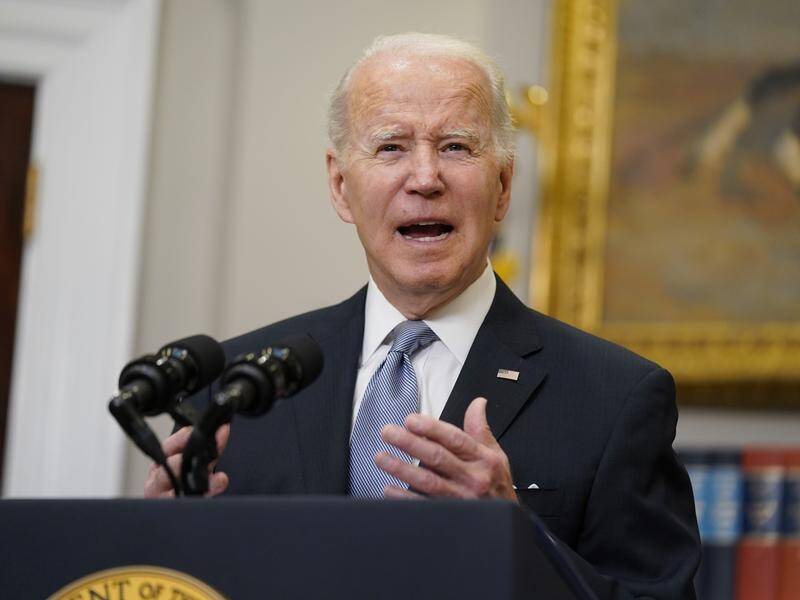
What do you think about the United States getting more deeply involved with the Russian-Ukraine War? The U.S. and NATO have been fanning the conflict by dumping increasing levels of military material in Ukraine and promising even more aid. In fact, President Biden recently flew to Kyiv to personally tell Ukrainian President Zelenskyy that the U.S. will be sending some $500 million dollars worth of military hardware. In January 2023, the Department of Defense proposed a $3 billion dollar package in military aid to Ukraine. 

If we go back to January 2022, we'll find that $3 billion dollars in of your money is just a drop in bucket. Starting in January 2022 through January of this year, you and I have paid for $78.8 billion dollars in aid to Zelenskyy. 31% of that (or about $23.5 billion) was exclusively for military hardware. Another 6% (or $4.7 billion) in the form of grants and loan guarantees for military purposes just in case they want to buy from one of our allies or something.

On top of that, American taxpayers have ponied up $18.3 billion in "security assistance". This covers logistic support, training, and incidentals like boots, belts, uniforms, winter/summer uniforms, rations and whatever else that's not covered previously. In short, the DOD is that one stop shopping that despots, tyrants, and warmongers the world over have come to count on. I wouldn't be surprised if each purchase didn't come with a gold "skull and crossbones" stick pin.

So, the total package just for military related items comes to $46.6% billion dollars, or 61% of $78.8 billion dollars in aid we've given so far.  As they say on television infomercials..."but wait, there's more!", and indeed there is. We've given $26.4 billion in financial aid. This is suppose to cover rebuilding Ukraine's infrastructure, ranging from rebuilding buildings and bridges to schools, roads, and general clean up.

So, what about the people of Ukraine? You know, the women and children that Biden briefly mentioned in his press conference with President Zelenskyy? Well, out of the $78.8 billion dollars, they were slated to receive $3.9 billion in aid. This was to cover temporary shelter, food assistance (including baby formula), as well as medical treatment and medicine. That amounts to just 5% of the 78.8% we provided on last year (and that doesn't cover the additional money that Biden just promised).  

It's worth noting that U.S. military aid to Ukraine has far exceed the amount of aid we've provide any other country, including our closest allies such as Israel which has received a beggarly $3.3 billion. Jordan has receives a mere $504 million dollars in military aid. For the record, prior to the war, Ukraine received just $284 million in American military hardware. 

As an aside, it's worth noting that while President Biden is being so generous with your money, he made no mention of trying to find a way to bring this war to end. You would think that in addition to spreading all that money around a little more fairly, especially on the humanitarian aid side, he would want to see a peaceful and fair resolution to this war.

Accurate reports are hard to come by, but it has been reported that at least 8,000 civilians have been killed with over 13,000 others injured. Many experts are saying that the number of civilian deaths have likely been grossly underreported and added that perhaps as many as 100,000 civilians are possibly dead and buried under unexplored rubble. Military deaths on both sides have lost far in excess of 100,000 each with some estimates putting the number of Russian troops killed as high as 200,000.

Here at home, we have a failing infrastructure system (we are rated a "C-" by the American Society of Civil Engineers). The World Economic Forum's of global infrastructure rankings placed the U.S. 13th in the world out of 141 countries, behind the United Arab Emirates and ahead of Belgium for 2019.  

We have a school system which consistently fails to measure up to international standards (we're 14th overall). A healthcare system which is just as bad (the U.S is 11th, which dead last among the leading industrialized nations). We are faced with rising food and gas prices, as well as rising taxes and stagnate wages amid an inflation rate of 6.4% (last year the inflation rate ranged from 7.480% to 9.060% with the majority being around 8.5%).

Our general quality of life has been on the decline for several years. Globally, we are ranked in the second tier at the 21st. Among the top countries ranked above us include Scandinavia, Germany, the UK, Ireland, the Netherlands, Australia and New Zealand, Italy and Portugal. We even have one of lowest life expectancies of any developed nation---in 46th place!

We have the highest income disparity of any developed nation. Top tier incomes among the one percent make more than 84% more than the bottom 20%. The top 20% earned more than half---52.2%---of all U.S. income in 2020.  CEO's average incomes that are more than 399% more than that of the average employee.  Despite laws to the contrary, women still earn on 82 cents for every dollar her male co-worker earns (the disparity is worse among female minorities).

What about the U.S. military? There's no question that after fighting a 20 year war, the U.S. military was pretty exhausted. Much of our equipment, including tanks, planes, and ships, were in desperate need of some intense maintenance. We were starting to run shortages in everything from bombs and ammunition to spare parts.  We've also experienced a drop in enlistments as service members decided to get out (it's worth noting that during our 20 year misadventure in Afghanistan and Iraq, service members did more tours of duty than at any point in U.S. military history. Much of that was under combat conditions).

According to a report published by Defense News, a detailed report by the Heritage Foundation showed that the U.S. military was weaker than it was in 2022. The "Index of U.S. Military Strength" focuses on the need for the U.S. to be prepared to be able to engage in two wars simultaneously or a major regional confrontation. 

The report goes to say that the U.S. military fails to meet that objective, and currently would struggle in a single front confrontation. The article goes on to state that the military is still capable of "projecting" its strength around the world (meaning we can be anywhere at any time), our fighting capabilities are greatly diminished.

Of all the various branches, only the Marines were still rated as "strong" (hooyah "Devil Dogs"!). The Army was rated as "marginal" while the Navy was "weak" and the Air Force was "very weak". The Space Force was also listed as "weak", citing slow updating of ageing technological platforms.

The Navy's score was based on a lack of combat fit ships (most are in need of overhaul) and an inadequate number of additional "manned" ships. The Air Force lacks adequately trained pilots and the pilots they do have are logging in less than satisfactory flight time (same for the Navy). Nevertheless, we seem to have enough "surplus" military hardware to send to Ukraine but not to satisfy our own needs. To me that just doesn't make sense.

Finally, the reports identifies China as our primary military adversary due to its expanding military capabilities, technology, and growing aggressiveness. China was followed by Russia with its large nuclear capability. North Korea was mention as low threat along with various countries in the Middle East including Iran.

So, where does that leave us? At present the United States is still trying to be the world's policeman and arbiter of events. However, things are rapidly changing. China is now the world's largest economy according to some experts Where it can continue at its present pace is another question. Countries like India and Brazil are on the ascent economically too.

The U.S. is showing serious cracks in almost every area, especially the most important ones of education, technology, and global competitiveness.  It's political system has morphed from a Republic into a neo-fascist Corporatocracy; a surveillance state born out of fear thanks to 9/11. We have a social and political divide unlike anything since the decade preceding the Civil War, not to mention a growing economic divide brought on in part by our "outsourcing" of good paying production jobs.

We are unwilling to stop the hemorrhage of illegal immigration. Worse yet, politicians no longer have the decency to lie to us about trying to stop it!  They just ignore and keep on doing as they please. And so, those who encourage them to come over and those who hire them, often turning these individuals into serf labor, go unpunished.

Meanwhile, we maintain the highest prison population in the world; much of which is based on uneven sentencing. We focus on "doing time" rather than rehabilitation for those convicted of non-violent crimes. We even fine and convict individuals for possession of what grows naturally. Tell me corporation self-interest isn't behind this.

I think our chief problem stems from our failure to take a stand and then stand by our decision. We're too afraid of "offending" someone or being called a name than speaking the truth. We don't want to take responsibility for our actions. Instead, we find someone or something else to blame. There are consequences to our actions and we need to step up and own them---good or bad. 

 When it comes to the government we keep falling into the same ole trap that somehow, magically, the "next time it will be different". We allow ourselves to be seduced by the lies. Politicians, the two corporate owned political parties and their corporate owners are counting on it. It won't change. Why? Because we fail to remember the adage that what we allow to happen will continue to happen.

Lastly, we have a bad habit of sticking our noses where they don't belong globally. It's not our place to decide what government or leader another country should have. Did you know that since the end of WWII in 1945, the U.S. has been involved in the overthrown or attempted overthrow of 57 countries, including the predecessor of Ukrainian President Zelenskyy? 

We need to accept the decision of a people freely voting in their own country for the government they want whether we like it or not and then to find ways to work with those governments if we really want to promote democracy. Besides, we wouldn't tolerate it, why should anyone else?

Not everyone wants to be America's "mini-me". In fact, of all 96 democracies in the world, not a single one has emulated the United States. Not one. Instead, they prefer the parliamentary system of the UK where everyone is represented in lieu of our "winner-take-all" two corporate party system.

Americans are, by and large, a very generous people. We've come to the world's rescue every time disaster has struck. In the case of Ukraine, we should continue to help the people of Ukraine with humanitarian aid while stopping to egg on a war aimed at: A: Antagonizing Putin, B: Securing Right to the oil and gas, C: Securing rights to coal and other natural resources, D: Threatening Russia's national security with NATO/U.S. missiles on Russia's border. Our focus should be on stopping a war which could have and should have been avoided.


 If you want to know more about this article's topic, please check out the links below. If you enjoyed the article, please consider passing it along to others and don't forget to subscribe. It's free! Lastly please be sure to "like" us on whatever platform you use to read anotheropinionblog.com. It helps with the algorithms and keeps our articles in circulation. Thank you! 


How Much Aide Has the U.S. Sent Ukraine? Here Are Six Charts


Soaring Death Total Gives Grim Insight Into Russian Tactics


U.S. Health System Ranks Last Among 11 High-Income Countries


The Quality of Life


US military in decline, threats from China "formable" , report says


Executive Summary of the 2023 Index of U.S. MilitaryStrength


Saturday, March 09, 2019

Where Do We Stack Up on Taxes? A Comparison of Tax Rates Between Countries, States and Cities


"I don't have a dollar to my name. Hey brother can you spare a dime?". That was a common refrain during the Great Depression. With the rate of tax increases across the country, it may become a common refrain once again. Just how much off are Americans when it comes to taxes than their international counterpart? How does America stack up when it come to taxes? To hear it from Corporate America and the super wealthy, the US is the most heavily taxed country on the planet. Why, they can hardly earn a decent profit on their investments! But how true is that? According to the Tax Policy Institute, which is part of the world famous Brookings Institute, Americans are taxed on average 26% of the Gross Domestic Product. This compares to an average of 33% among the world's developed countries---the Organization for Economic Co-operation and Development (aka the OECD).

By comparison, Denmark is the highest taxed country in the world with a tax rate of 48%, followed by France which has a tax rate of 45% and Belgium, which has a tax rate of 44%. Germany has a tax rate of around 36%, and Norway, which is the lowest taxed nation among the Scandinavian countries, has a tax rate of about 38%. Israel has around a 33% tax rate while Japan's is right at 31%. The US, as we said, is 26%, and just below Switzerland and just ahead of South Korea with 25%. Of all of the 35 OCED countries, the least taxed country is Mexico. It's tax rate is around 16%.

Where does this tax come from? After all, someone has to pay for government services. Nothing is free. According to the same article, 48% of America's tax revenue comes from income and profits. 24% comes from Social Security while 17% comes from taxes on goods and services. The least taxed sector is property, which accounts for just 10% of the tax source. Meanwhile, Australia gets about 55% of its taxes from income and profits with about 25% from goods and services. Roughly 9% comes from property tax . However, there is no tax on social safety net type programs. New Zealand is pretty much the same way.

If we look at Denmark, which is the heaviest taxed of all the 35 OCED countries, we find that about 55% comes from income and profit. About 33% is from goods and services and least than 1% comes from social safety net programs. Turkey taxes income and profit at about 25% but about 48% on goods and services. Property tax is about 5% while it taxes social programs at 30% The average among OCED countries is 34% on income and profits, 32% on goods and services, 26% on social safety net programs and 6% on property tax.

So, what does this mean for the US when compared to the other developed nations? It means that we're in the top 25% when it comes to tax on income and profits while we tax less on goods and services, collecting just 17% compared to the OCED average of 32%. In terms of property tax, the US taxes an extra 4% over the OCED average (the majority of this and taxes on goods and services are collected at the state and local levels). In terms of Social Security or social safety net programs, the US collects slightly less tax---24%---compared to the OCED average of 26%. An interesting aside, several countries on the list collect over 40% in taxes on social safety net programs!

Therefore, in answer to our original question, America is actually among the least most taxed countries among the OCED nations, coming in 30th out of 35. However, we are tax heavy on incomes and profits and slightly higher on property taxes, which affects middle class Americans the most (property ownership is typically the largest investment among the middle class). Meanwhile, goods and services, which pertains primarily to businesses get off pretty light compared to other countries by almost half.

This brings us to the second half of our look at taxes, namely how do the states compare with each other? This is perhaps particularly important as Tax Day---April 15th---quickly approaches. As of 2015, most Americans paid almost 1/3 of their income in taxes. In 2015, the IRS assessed taxes of $1.454 trillion dollars on Americans. Based on 150.6 million returns processed and an average income of $71,258, that means on average Americans paid approximately $9,655 in taxes just to the federal government (which equates to a tax rate of 13.5%).

In addition, most Americans pay state and local taxes, Social Security tax, property tax, sales tax, plus so-called "hidden taxes" such as on water, drainage, electricity, toll, usage, garbage, and gas. Meanwhile, corporations levy their own taxes in the form of access fees, late fees, processing fees, convenience fees and a whole range of other fees and add-ons which often doubles a bill. Often times, corporations will claim that these are merely fees actually charged by local or state governments which they are "obligated" to pass on. Some claim that this or that charge is "voluntary" but added on without our consent. As many of you know, trying to obtain details about these various fees is often so difficult most of us simply give up, which I suspect is their intent.

In terms of personal taxes, which states have the lowest and highest? Let's start with the highest personal tax rates by state first. Coming in tenth is Wisconsin which has a state tax rate of 7.65%. In ninth place is New York at 8.82%. The eighth spot goes is the nation's capital, the District of Columbia. It's tax rate is 8.95%. This ties with Vermont. New Jersey is next with a 8.97% state tax. The fifth highest taxed state is Iowa at 8.89%. Coming in at fourth is Minnesota with 9.85%. Third place belongs to Oregon. Its tax rate is 9.9%. Second place goes Hawaii with 11%. Finally, the most taxed state is California whose tax rate is a staggering 13.3%. No wonder so many people are leaving.

So, now let's find out who has the lowest state taxes. Here there is a bit of a surprise since we have ten way tie! That's right. We have ten states with no state tax. They are Alaska, Florida, Nevada, South Dakota, Texas, Washington State, and Wyoming. While Tennessee and New Hampshire have no state income tax, they make up for it taxes on dividends and interest. Many of these states also use a consumption tax in lieu of a income tax. Among the states which do have an income tax, the state with the lowest is Pennsylvania which has a tax rate of 3.07%.

If we look just at property tax, the top three highest spots belong to three counties in New Jersey (Union County with 8.13%, Essex County at 8.27% and 8.79% in Passaic County). The bottom three in terms of least highest property tax all belong to Louisiana. In Vernon Parish it's 0.25%. For Assumption and Grant Parishes the tax rate on property is 0.26%. However, all isn't gumbo and crawdads in Louisiana. Louisiana has the nation's highest sales tax at 9.98%, followed by Tennessee with 9.46%. Arkansas comes in third place with a 9.30% sales tax. As for the lowest, that technically belongs to Alaska which has a 1.78% sales tax. I say "technically" because Oregon, Delaware, New Hampshire and Montana have no sales tax.

In terms of which cities have the highest local taxes, Louisville Kentucky is ranked 21st in terms of worst cites to live when it comes to taxes with an average tax bill of $11,517 despite an average income of only $49,439 coming in just ahead of Atlanta and just behind Los Angeles. I expect Louisville with move up on the list even higher very shortly. The mayor is proposing a 300% tax increase on insurance to make up for a "surprise" pension shortage which the city has known about for just over two years. As an aside, the mayor, who just ran for reelection, publicly stated on several occasions that the city actually had a surplus. What wasn't disclosed was the wasted millions of dollars on numerous pet projects such as bike lanes, paying gang members and criminals to monitor other gang members and criminals (which was hidden from the public), floating private non-profit organizations which are not self-supporting, and buying property or putting up bonds on behalf of corporations. This doesn't include top heavy agencies or executive "make jobs".

If that isn't bad enough, the residents of Louisville will be facing a new gas tax, an increase in gas and electricity rates, sewer rate, water rate, and property rate increases for 2019, which is one reason many people and businesses are moving out of Jefferson County. Meanwhile, public outrage is palpable. A number of groups have come together to fight these tax and rates increases. However, it's expect that despite public outrage, the local Metro Council will likely rubber stamps the increases while the Kentucky State Legislature does likewise.

In tenth spot of the worse taxed cities is Boston Massachusetts where the average tax bill is $14,623, not to mention being one of the worse taxed states in the country. Ninth place belongs to Oakland California. The average tax bill for residents there is $14,916. In the eighth spot is New York City, where the average resident can expect to pay $14,987. Unlucky number seven belongs to Portland Oregon with a average total tax of $16,034, followed by Seattle with $16,891 in taxes shelled out. The fifth place loser is Virginia Beach Virginia, a big military supported city. Residents there can expect to pay on average $17,763. fourth place belongs to San Diego California, another big military city. It has an average tax bill of $18,143.

In the third spot of worse taxed cities, we have Washington DC. Residents there have a average tax bill of $20,686! That's almost inconceivable for the average American. Coming in second is San Francisco, which is represented by Senator Nancy Pelosi (D-CA) in Congress. Bay City residents pay, on average $27,810 in taxes. Lastly, the worse city to live in when it comes to taxes is San Jose California which is represented in the US Senate by Ellen "Zoe" Lofgren (D-CA). San Jose is on the southern edge of the Bay Area outside San Francisco. Its residents pay an average of $27,973 in taxes! That's simply outrageous. However, we should bear in mind that while the cost of living...and taxes...are much higher, so is the overall income level.

The best spots to live in to avoid these municipal leeches include Houston, Dallas, El Paso, and San Antonio Texas, Tampa Florida, Milwaukee Wisconsin, and Tucson Arizona. However, the top three in reverse order is New Orleans Louisiana. It's residents have an average tax bill of $6,928. In the number two position is Memphis Tennessee. While residents pay approximately $5,882, Memphis is known to have a high crime problem. Next on the list is Detroit Michigan. Detroit has long been known for having its share of problems, especially with crime and corruption as well as a population flight creating a "hollowed out" or "donut" city, it's residents pay on average $5,505 in taxes. Perhaps if they paid a bit more, they could hire more cops Now, for the best place to live in terms of lowest taxes, is Miami Florida. You wouldn't think a city as large as Miami would have the lowest average total tax---approximately $5,050---but apparently it does.

So, there you have it, how America stacks up to other countries in terms of taxes, along with the best and worse states and cities to live in when it comes to taxes. Overall, America does well when compared to other industrialized nations, yet it puts too much emphasis on individuals to meet its tax obligations. In terms of states, there are a surprisingly large number of states with no or a very low tax rate. The majority of these state use consumption tax to collect revenue, which is really the most practical way to collect taxes. Others make up for having no state sales taxes by going after interest and dividend payments; essentially taxing those with the most money the most.

As for cities, it goes to show that there are a lot of places to live where the average tax rate is reasonably affordable. However, in several cases, we find instances of low tax rates and high crime rates, high unemployment, poor social services and crumbling infrastructures. In the case of a few, such as Louisville Kentucky, we see incompetence (and many would add corruption) in government to the point of committing economic suicide while a small elite profits. Sounds familiar doesn't it?

The city has tried numerous public funded ventures, only to see them fail. Nowadays it's putting all its eggs into revitalizing the "Bourbon Trail" downtown which had last prospered there over 100 years ago. Instead, the city should focus on basics. While will likely happen at its current rate is creating a Southern version of "Detroit". Other cities manage to survive thanks to a large corporate base which underwrite its services. If they go, so goes the city. Detroit is a classic example. Cities like this often fail to listen to their residents. It's politicians become arrogant and out of touch. When that happens, it's just a matter of time. Taxes are also the price we pay for convenience. Some would say it's the price we pay for civilization. However, taxes should be thought of as a limited resource, especially for ordinary people. If it's managed properly, we all prosper. If not, cities, like civilizations, crumble and fade away.


How Do US Taxes Compare Internationally?


States With the Highest and Lowest Taxes

The Average American's Tax Bill In the 50 Biggest Cities