Showing posts with label hospitals. Show all posts

Saturday, February 24, 2024

Making Sense Of My Own "Great Reset"


We're all familiar with the term "Great Reset"  of "Great Reset Initiative" and its implied meaning being distilled down to "owning nothing and being happy". The concept, first introduced in June 2020 by World Economic Forum chairperson, Klaus Schwab, is intended to be a "reboot" of society through euphemistic slogans as "responsible" or "measured" capitalism which sounds an awful lot to me as another version of a kinder and gentler form of fascism.

Taking the term at its generally accepted meaning, we can define "Great Reboot" as a momentary shutdown and startup of any system. Accordingly, I guess now if as good as time to discuss my  personal reboot", but first I'd like make mention of a caveat. I typically don't discuss personal matters outside a very small clique of family and very close friends. 

I know Millennials and Gen Z don't have any qualms with sharing damn near anything about themselves for the price of a10% discount on some fountain drink at the nearest gas station (and sometimes, not even that). I guess in this age of rapidly vanishing privacy, I don't want to contribute to the uploading of my data to some sort of "permanent file in the cloud".  So, with that said, let us begin.

On any given day I'm nose deep in researching one topic or another in order to ensure my articles are as timely, accurate, and balanced as possible. But, I do come for air from time to time. January 28, 2024 was one such night. After a day of watching political and historical videos, reading countless economic articles and so forth, I decided it was time for a break. So, roughly around 8:00 PM I decided to call it quits for the day.

So I meandered into the living room  to watch some mostly mind numbing chatter on the aptly named "idiot box" with my wife.  I don't really recall what we watched, but I suspect whatever it was, it was on history, science, or documentary channels. Since retiring in 2013, we don't have any set bedtime. It mostly depends on what's on TV and how tired we were. Nevertheless, I was about 1:00 when we decided to call it a night.

After going through all the usual nighttime rituals, I was back in the bedroom and preparing to put my pajama bottoms on when I heard what sounded for the world like a faint or distant ringing of church bells. I paused to listen, but assuming it was my imagination, decided to continued getting my jammies on. But as did, I heard another set of church bells ringing off in the distance.  I listened a little more intently, but again, was unable to find a source.

Finally, as I finished getting ready for bed, I heard a third set church bells! Just as distant and faint as the others. This time I went throughout the house looking for the origin of this mysterious ringing.  Nothing. Everything was off and ints place. As we are pretty rural, there's no churches closest enough to be responsible. Chalking up to just being tired , I hopped into bed for what I hoped would be some restful sleep. I couldn't have been more wrong.

I don't know what it was that so abruptly woke me up but there I was... unquestionably wide awake. As I lay there trying to come to terms with the situation, it dawned on me that I was on my back spread eagle. Since I normally sleep on my side or stomach, I found this rather disconcerting. What's more was the sensation that I was sinking through the bed as if my mattress had become quicksand.

Needless to say, I sat up in a instant wondering what was going. As I sat there in the dark, looking around.  I listened for any kind of sound that would clue me in on what had happened and what seems to still be happening. After about a minute or two, I headed off to the restroom (why waste the opportunity right?) and then into the kitchen for a sip of water.

As I walked down the hall and into the kitchen , I sensed something that felt like  a finger lightly pressing on an area about 3 inches in from my left shoulder. It wasn't painful. There was no discomfort. It was, as I said, "as if "someone was gently but firmly touching me with the finger.  I felt no pain in my arms, legs, or neck. No headache. No shortness of breath. Nothing which seemed to be an obvious clue. If what I thought was happening was actually happening, then it hadn't given me any clue. No warning shot over the bow.

While in the kitchen, I got my sip of water. I looked outside to make sure everything was okay. I wondered into the living room. Nothing seemed out of order. At that point, I decided I'd go back to bed. As I walked back down the hallway, that curious pressure point seemed to get slowly more intense, but at this point it was little more than a minor irritant. 

Once I made it back to the bed, I sat there on the edge trying to make some sense of what was going on. My brain was running over every possible scenario at lightning speed. So, I slowly got back into bed....for all of about two seconds! The situation suddenly took a turn for the worse. As soon as laid down there was an overwhelming need to set back up instantly. I can't quiet explain it, but it was more like being pulled or pushed up. At that point things started happening quickly in my mind.

In a fast walk I headed into the kitchen again, turning on the light and reaching up to where I keep my 81 mg aspirin.  I've been taking an 81 mg aspirin for decades on the advice of my primary care physician as form of preventative medicine. I've always preferred a preemptive approach now rather than chasing symptoms later.

As soon as I swallowed the aspirin, I headed back down the hall and urgently told my wife that she needed to get up and get dress. I added that I thought we were going to be taking a "road trip" real quick. I added that I'll call 911, but before I did that, I grabbed a bottle of Nitroglycerin tablets which one of my doctors had prescribed for me as a afterthought following a regular visit. I'm glad he did! 

As soon as the grayish-blue pill dissolved under my tongue, I called 911. As I started to speak I quickly noticed something utterly terrifying. I couldn't speak, at least properly. It was as if I had an intense stutter. I was having to focus on every word and then every syllable. I forced myself to speak slow and deliberate so the 911 operator could understand me. However, apparently the lack of understanding wasn't on my end.

Once the emergency operator answered, I slowly gave her my name, my address, my phone number and describe to her as best as I could, the essential details. Apparently that caused a problem. Eventually this operation used a script and absolutely wouldn't deviate from it, meaning I was having to repeat each increasingly difficult word over and over. 

I could feel my frustration mount. I kept thinking 
if she'd just shut up and listen to me"! After what felt like an eternity, I got her to confirm that EMS had been dispatched. Whatever else she had to say was of no importance to me at that point.

At about fifteen minutes after my 911 phone call, an ambulance and fire truck arrived. The crew was very responsive, however, from my perspective they didn't seem to be in as much as hurry as I was! It was during this medical version of "20 Questions" that I noticed that my speech wasn't getting better and to add to the chaos, my left arm was violently shaking, and nothing I did could stop it. I also had sweat pouring down from my forehead. Folks, although I remained quiet calm, I was feeling pretty rough. After taking a EKG, it was decided that a hospital trip was in order.

I asked my wife to make sure she had all the insurance information, which we tend to keep centrally located. I asked to her call my mum and let her know what was happening. She would have to come and get my wife before they could head on over to the hospital. 

Meanwhile, since EMS couldn't get their gurney past our entrance way, I had to walk down the steps and get on the gurney while wearing a pair of pajama bottoms and a sleeveless T-shirt. Oh did I mention it was 35 degrees? I ended up requesting a warm blanket several times. As it turned out they didn't have any warm blankets available so I had to make due with a couple of sheets! I remember feeling to desperately cold. 

Once loaded, I was hooked up to another EKG machine and a few other devises to monitor my pulse, blood pressure, and oxygen. After what felt like an eternity (which in truth was about 10 minutes), we were off for a very bumpy ride to Audubon Hospital. Meanwhile, my stuttering speech pattern and badly quivering left arm continued. Despite being in the back of an ambulance,  I wasn't feeling any easier about this.

Once arriving at the Emergency room, I found myself waiting another 15 minutes or so before I could be checked in and given a room. The reason for the delay, apparently, was due to nursing shortages. Not surprising since the American healthcare system is ranked last among industrialize nations.

From that point forward, it seems that I had been transformed a pin cushion with dozens of viales of blood having been taken every few hours along with repeated chest x-rays, EKGs, MRI, CT, and coronary calcium  scan.  By the time I was released about two weeks later, I had over 190 test performed. 

Everyone who attended me in ER was wonderful. They all exhibited a tremendous amour of compassion and professionalism (except the ER doctor. He never bothered to come in a see me. For updates I had to depended on one of the ER nurses).

Little by little a cardio team of specialists began to form around me. Each bringing their own unique expertise and carefully explaining what their role was going to be. Finally, I met the chief cardiovascular surgeon. He looked more like "Doogie Howser" rather than someone who had been doing this for decades already.  Quite intelligent, and unlike most doctors anymore, he had a great bedside manner and took his time making sure everyone understood what was going on.   

Five days after arriving in the emergency room, I underwent a triple heart bypass surgery (what they call a "three cabbage". The surgery last just over five hours, which must have nearly unbearable for my wife, sister, mum and her boyfriend. The doctors, nurses, and staff were absolutely wonderful in keeping everyone informed, and their follow up care.

The kicker, if there was one, was being informed that my prognosis going in wasn't good. I had what was known a "widow-maker" with three totally blocked arteries, which has only a 12% survivability rate if treated immediately. The good news was that the survivability of a triple bypass is 97% 20 years out from the procedure. Most people, as my cardio team said, would never have call 911 because the symptoms were so mild as to be easily ignored. Most too wouldn't have thought of taking a 81% aspirin and/or taking a Nitroglycerin  tablet. Those individuals sadly would have become statistics.

So, my "Great Reset" now begins. I will embark on a 36 cardio rehab session. There will be modifications of pretty much everything, from diet to stress to regular exercise and weight control. Fortunately, most of these aren't an issue for me. I've always tended to eat, exercise, maintain a good weight, and so on, but there's always something new you can learn.
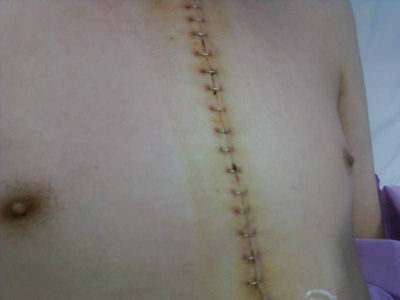
I hope none of you will need to face your "Great Reset",  but statistically you will.  Each year, over 850,000 Americans have a heart attack, the highest of any industrialized nation. That's one every 40 seconds.  I strongly urge you not to ignore any signs your body gives you no matter how subtle. Get annual physicals, including a stress test.  Regularly check your blood pressure. Try to eat as healthy as possible. It's not always easy or convenient, but try to work something healthy into you daily diet. Keep your weight under control.  

Be sure to exercise, even if it's only going for a daily walk around the block. You can easily buy used gym equipment online cheap so you can work out whenever you're really. Lastly, consider getting healthcare DNA test done. I've done a couple and found them both very useful and entertaining. Family Tree DNA looks at 30 factors affecting your overall health. Armed with this data, it gives you a chance to anticipate  some future health issue and do something about it now.

Another terrific testing company is Ancestry which looks a various traits you've inherited. Both of these sites, FTDNA and Ancestry, give you a starting place to build your health line of defense. As an aside, there is another company, 23&Me, which offers a health and trait tests. While I did one of their tests, I was thoroughly disappointed. The information was inaccurate to the point of being unusable so I can't recommend them. 

To be forewarned is to be forearmed Take charge of your personal "Great Reset". Don't leave it to chance. 


 If you enjoyed the article, please consider passing it along to others and don't forget to subscribe. It's free! Lastly please be sure to "like" us on whatever platform you use to read anotheropinionblog.com. It helps beat the algorithms and keeps our articles in circulation. Thank you!


Widowmaker Heart Attack


The Widow Maker: Each Passing Moment Is Taking Away


Dangers of a Silent Heart Attack


Coronary bypass surgery


U.S. Ranks Last Among Seven Countries Healthcare SystemPerformance Measures


Friday, July 28, 2023

The State of U.S. Healthcare


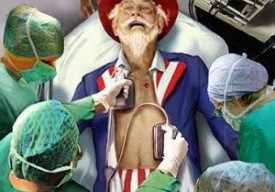
America has one of the lowest ranked healthcare systems of an developed nation anywhere in the world despite being one of the most expensive. Among the top seven most industrialized nations, the U.S. is ranked dead last.

When it comes to life expectancy, America comes in at 47th among 201 countries. We average 79.4 years of age, with women living to be around 82 while men tend to live to age 77. Although that sounds pretty good, it's actually considered pretty low when compared to some of the top ranked nations such as Italy where the average age is 84.20 or any of the Scandinavian countries where most people live to around 83 years of age.

So, with the United States ranking among the lowest developed nations in terms of healthcare, who are at the top? The top three are all Asian countries, namely  Japan, Macao, and Hong Kong with overall life expectancies of 84.95, 85.51, and 85.83 respectively.  

The majority of top tier industrial nations are also in the top 20. The few exceptions include China in the 52nd spot with an average age of 78.79, Poland in 54th place with a expectancy of 78.60, and Saudi Arabia at 60th with a average expectancy of 78.10.  It should be noted that in every instance, women outlive men by an average of roughly ten years.

In terms of infant mortality, America again ranks last. The average is currently 5.4 per 1000 births, making us the highest of any top tier country. It's worth noting that as of 2021, the U.S. spent 17.8% of its  Gross Domestic Product (GDP) on healthcare, which is two times that spent by any other top industrial nation.

The primary reasons cited  is poor prenatal care such as smoking, drug and alcohol abuse, failure to take proper medications, and improper diet. Other factors include the high rate of cesarean sections as well as high rates of poverty which contributes to other health problems such as obesity, high blood pressure, heart disease, and diabetes. 

In addition, the groups most affected tend to be minorities, especially Native Americans, Black Americans, and Hispanics (as an aside, these same groups also tend to have the lowest life expectancies). 

When it comes to prescription prices, the U.S. spends more per capita than any other top tier nation. On average, we spend $1000+ per person annually on prescription drugs while average in other top tier nations is just $552 per person. At the same time, three in four Americans report being unable to afford the price of their medication. Spending on medication from 2004 through 2019 increased 69% in the U.S. while elsewhere it increased by just 41% on average.

Why is that? In part, it's because prescription drugs are, on average, nearly three times more expensive for a given drug than in any other country. A Humira Pen, for instance, used to treat inflammation in diseases like arthritis, averages nearly $5000 dollars per injection while in other industrial countries the same pen would cost about just under $3000 dollars.  The result is that many Americans are forced to chose to either do without or to ration their medication which often means not taking them as prescribed.

Another key reason is the emphasis of the healthcare industry on treatment (and thus writing more prescriptions) and less of emphasis on prevention. It also worth pointing out in other industrial nations, doctors are less time restricted when it comes to treating patients while in the U.S. physicians are typically capped at 15 minutes per individual and follow a quota system. The result is a focus on profitability and less on the long term welfare of the patient.  As the expression goes, "a cured patient is a lost customer".  

In addition, the United States also ranks at the bottom when it comes to the availability of hospital beds, and subsequently the length of the average stay of a patient. In the U.S. there are approximately 2.8 hospital beds available per 1000 individuals.

In terms of long term care, the costs per patient is the fourth  lowest at $924.00 dollars per patient. Italy is the cheapest at $422.00 dollars per patient, followed by Australia and Japan. The UK is next after the U.S. at $952 dollars. The most expensive costs per patient for long term care is the Netherlands at $1,858.00 dollars. Also among the most expensive are Sweden, Switzerland, and Germany at $1,567.00, $1559.00, and $1,445.00 respectively.

Among the other top industrial nations, that number is 4.3 beds per 1000. The lack of beds obviously affects the length of an average hospital stay. In the U.S. the typical patient is in the hospital for about 4.8 days (only the Netherlands is less, at 4.7 days). In Canada, Germany, and Switzerland is roughly 8.5 days. In France it's 9.1 days, and in South Korea it's a whopping 19.1 days! Can you imagine eating hospital food for nearly three weeks? Blah!

Lastly, we need to look at how the United States compares other industrialized countries when it comes to the availability of physicians. Based on the latest data, which is from 2019, the U.S. has least number of practicing physicians of the top 13 industrial nations.

The U.S. has just 2.6 doctors per 1000 individuals. That compares to France where the ratio is 3.2 per 1000. Australia has 3.7 per 1000 while Germany and Switzerland has 4.3. In Austria that number is 5.2 doctors available per 1000 potential patients. 

As an aside, the American healthcare system has more nurses than does comparable healthcare systems worldwide, and while the U.S. has more hospital staff than other nations, the majority of them are clerical/non-medical administrative personnel.  

As a result, the U.S. is tops when it comes to medically related administrative costs; an average of $925.00 per patient compared to an average of $204.00 among the top wealthiest countries. Sweden and Japan by comparison spend just $70.00 dollars per patient.

Lastly, what about quality of life? According the World Population Review, Northern Europeans clearly have the highest quality of life. In fact, the top ten nations are almost always include the Scandinavian countries of Iceland, Finland, Sweden, Norway, and Denmark, along with Germany, Switzerland, Netherlands, Canada, New Zealand, and Australia.

As for the United States, we currently rank 20th in the world, just behind Spain. You'll note that the countries with the highest quality of life also tend to have the longest life expectancies and the better healthcare.  

What does this say for the United States? The majority of the countries which rank higher than the U.S. in terms of life expectancy, healthcare, prescription prices, and so forth all focus on prevention first followed by treatment. They also place a greater emphasis on the overall wellbeing of the patient and less on meeting quotas or cost per patient ratios.

The majority of the countries follow a decentralized national healthcare system which is available to all its citizens. The healthcare is government managed with about 75% - 85% of the costs paid by tax revenue collected at the local and national levels. Prescription prices are often negotiated by the State rather than insurance companies or hospitals to ensure the best quality at the lowest cost.

Dental coverage for children are typically free while adults can buy dental insurance which is often subsidized by the government. There is also cost sharing between the patient and state based on the patient's income with costs being capped overall.  The costs of various medical services such as ambulances are typically bore by the State.

Hospitals and medical practices are given various financial incentives to improve efficiency and productivity. As stated previously, the State also encourages health conscious lifestyles such as regular exercise, longer vacation times and extra time off for "mental health", healthy diets, while encouraging cessation to bad health behavior such as smoking, poor diets and obesity.  

Free clinics can be found nearly everywhere, which is in part to help encourage males to seek treatment (men are notoriously for not wanting to get checkups, thus contributing to their higher mortality rate). Maternity leave is typically paid and extended to include the fathers as well.

The American healthcare system is a primarily profit driven enterprise with an emphasis on treatment and less on prevention. That has to change. While Americans are keenly tax adverse, a single payer tax system provided by the government would go a long toward improving overall healthcare, lower costs in the long run, and ensure health coverage for all, which would reduce costs now picked up by taxpayers.   

It would have the added benefit of allowing small businesses unable to afford health coverage for employees to compete with larger companies who can. Insurance can still be purchased by those looking for additional coverage.

Finally, doctors and medical professionals need to spend more time with patients and focus more on care and less on quotas. There also need to be more emphasis on mental illness treatment, which would go a long in alleviating some of the homeless problems facing communities today. Government funded research must pay along costs savings to the public. In addition, each state should negotiate prescription prices with the manufacturer to ensure patients receive the lowest cost possible for their medicine.

Meanwhile, there needs to be an additional effort made by the State and employers to encourage healthier lifestyles, including perhaps providing free or low costs classes in dietary choices, exercise, mental health, prenatal care, growing gardens, and so forth. 


  If you enjoyed the article, please consider passing it along to others and don't forget to subscribe. It's free! Lastly please be sure to "like" us on whatever platform you use to read anotheropinionblog.com. It helps with the algorithms and keeps our articles in circulation. Thank you! 


Video: Why American Healthcare Is The Worse In The DevelopedWorld


Life Expectancy of the World's Populations


US Has Highest Infant, Maternal Mortality Rates Despite theMost Health Care Spending


How do prescription drug costs in the United States compareto other countries?


U.S. Health Care from a Global Perspective, 2022:Accelerating Spending, Worsening Outcomes


The U.S. Has Fewer Physicians and Hospital Beds Per CapitaThan Italy and Other Countries Overwhelmed by COVID-19


How Does The U.S. Healthcare System Compare To OtherCountries?


World Population Review: Quality of Life by Country 2023


These 10 Countries Are Seen as Having the Best Public HealthCare Systems


Healthcare in the Nordics


Saturday, May 09, 2020

Our Brave New World: Life Post-COVID-19


As we slowly start to return to life after being confined to our homes these past many weeks, I've wondered what our world will be like post-virus. What will change and what will remain the same? Many states and cities remain on lockdown while a few others are slowly coming around, much like flora in the spring, but will they ever fully blossom again?

The federal government has largely left governors and mayors to decide how quickly or slowly they can reopen. Some recommendations have been suggested such as maintaining "social distancing" of at least six feet, wearing protective masks, regular hand washing or using hand sanitizers, which all sound sensible, but how will it play out in practical daily application? Before we address this and other questions about our "brave new world" (to borrow from Aldous Huxley), perhaps we should take a look at what changes took place following the 1918 Spanish Influenza pandemic.

As you may know, the 1918 influenza outbreak (better known as the Spanish Flu), a strain of the H1N1 virus, first appeared just as World War One was waning. No one knows for sure where it originated. It acquired its infamous name from a Madrid newspaper article which had reported on some of the first cases, including their king, Alfonso XIII, but stated that the virus had originated in France. Meanwhile, American doctors first noted patients with the all too familiar symptoms months earlier at a Kansas army base (many of the patients had been stationed in Europe as well as in Asia).

Unlike the current viral strain, the Spanish Flu was truly a mass killer. More people died due to the flu than died in the war (about 50 million compared to around 20 million war dead). At present just over 264,000 worldwide have died due to COVID-19 with about 4 million infected. Compare that to the 500 million or one-third of the world's population being infected by the Spanish Flu. At the time there were no vaccines. Doctors were at a complete loss. They lacked the high tech specialized labs that we have today or computers capable of running millions of calculations a second. It was all slow trial and error experimentation and knowledge gleaned from each death.

Without a proven vaccine, the best solution was to ask citizens to cover their nose and mouth with whatever they could (most used handkerchiefs or scarves while others used homemade masks). Like today, schools and businesses were closed as were churches, saloons, theaters, and other places where people tended to congregate. Even libraries were closed while mail delivery and garbage pickup became sporadic. Since it was thought that the virus was spread by human contact, some staggering business hours in order to minimize crowds.

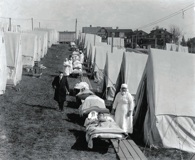
Meanwhile, as hospitals quickly filled up with the sick and dying, officials began to covert empty buildings, homes, and gymnasiums. With a lack of available doctors and nurses, medical students were pressed into service to treat the less severe patients, who, as an aside, were often treated with nothing more than common aspirin, then a relatively new "wonder drug" (the German company Bayer held the patent and Germany was an enemy combatant, making the drug hard to come by). And like today, entire communities were quarantined. Those who violated the quarantine were issued a citation ("disturbing the peace") by the local police. Repeated violators were fined or even arrested!

The death rates were so high that funeral homes were filled beyond capacity. Many used ice houses to store the bodies until they could be buried. In rural parts of the country (which at the time made up 49% of the nation), families had "parlor" funerals in their living rooms while graves were dug by family members or friends with the departed buried on the property (it wasn't unusual in the country to have small family cemeteries). Their names and date of death were reported when they could, which could be weeks or months after their death. Some were never reported.

So how did the Spanish Flu change the America? America in 1918 was still in the midst of "The Great War". Industry had been geared up to support the war effort while young men (and a few women) volunteered to go "over there" as the popular battle cry implied. In some ways that was a good thing. It meant much of America's youth were overseas at the height of outbreak.

It also meant that our resources (especially medicine and medical supplies) had to be balanced to support the war effort and flu outbreak "over there" and increasingly at home. Bear in mind too that many of the country's recently graduated medical doctors and nurses, feeling patriotic, had volunteered for military service. Thus, medical students were co-opted to take care of the sick on the home front.

Like today, the flu took its greatest toll on the old , the sick or those with serious underlying medical conditions like cancer, diabetes, heart or lung disease. Another killer at the time which claimed thousands of lives was tuberculosis. "TB" as it's typically called ran rampant in poorer regions of the country like the deep South or in the slums of large cities like New York and Chicago.

Thanks in part to the devastation of the flu and TB among other diseases of the time like the measles, there was calls to eradicate the slums, access to clean water, improved nutrition, particularly for children, and demands for mandatory vaccinations (again, mainly for the children). Hospitals and universities began dedicating more money to the treatment and prevention of these diseases.

By 1920 overall healthcare had improved dramatically. This was due, in part by the lessons learned by the war in the care and treatment of not just the wounded or treatment of the flu, but also mental illness such as "shell shock" or PTSD as we call it today, and other diseases experienced by those who fought in the filth of the trenches. One major improvements was in sanitation.

After the war much of this changed. There was an emphasis on cleanliness. Even hospital food improved (well, relatively. At least they now got healthier meals). Standardized treatment of individuals now became commonplace with added emphasis in prevention. Because more money was going into research, there was more or improved medicines, treatments and vaccines becoming available.

In society in general, there was a new emphasis in cleanliness, be it in restaurants, saloons, or the neighborhood grocery store, which focused on insuring that its vegetables, fruits, and meats were fresh. It became common to wash your hands before dinner and to take regular baths---with soap! It was far from what we would consider acceptable these days, but it was a huge improvement, and it helped jump start movements to improved the quality of life such as water lines to bring clean water to every home, and stronger health codes for better quality control of meat and food processing.

What will the post-COVID-19 world be like? It's hard to say at this point just as it was all but impossible to predict in the waning months of the Spanish Flu pandemic. At first, I expect there will be a lot of "overkill" of precaution. As in 1918, officials are terrified of being accused of doing too much as they are of not doing enough. We'll see some demand everyone wear masks until the impractically of it finally dawns on them or society refuses to comply. Social distancing will likely remain, at least for awhile, but that will soon fade. Humans are social animals. We tend to congregate. It's our nature.

Whereas in 1918/19 there were no "take out" dinners per se, I think we'll see more people doing just that. The result may be fewer restaurants, especially those whose menus don't easily accommodate to pickups. Businesses which deliver food will likely do well along with those who pick up and deliver office supplies, groceries, and fulfill similar needs. We'll see an increase in online shopping across the board. In fact, anything that can be done electronically will do quite well.

There are some things which has to be done in person such as visiting the doctor. Well, maybe. This pandemic took a relatively new technology, "telemedicine", and brought it into the mainstream of healthcare. It allows the doctor or their staff to connect visually over the internet and conduct a virtual office visit. Of course, there are practical limits, but it does allow the physician to actually see and speak with their patient and ascertain their general health and any issues which may necessitate a office visit or trip to the ER. Now, if we can only figure out how to use this in lieu of dentist visits!

Naturally, the patient can provide their weight, temperature, and blood pressure too if they have the equipment at home. Physicians can already check on a number of medical conditions remotely such as heart monitors and CPACS through the use of the internet or electronic transponders. We may also see the increase in doctor directed robots making the rounds in hospitals or nursing homes.

Speaking of robotics, expect to see an increase in automation not just in manufacturing, but also in warehousing and fast food restaurants. The virus pandemic and reliance on "essential" employees has proven to be too unreliable, operationally costly, and increased the risk of a potential infection which would affect not just staffing but insurance costs.

Banks, which are operating mainly through drive-thru tellers, could potentially eliminate inside banking altogether except for appointments, reducing cost and improving security. They could have a dedicated drive-up window to handle investment services or loan applications. What all this means is less demand for low skill/entry level employees. By the way, there's a growing case being made to all but eliminate cash, which some claim is susceptible of carrying germs and viruses.

The result would be the use of credit and debit cards for the majority of transactions. But why stop there? Why not encode a card to include your credit, work, insurance, criminal, and medical histories plus your driver's license and voter ID ? By the way, expect that your vaccination history to be included, which is more likely going to mandatory and less an option. In short, your entire life on one plastic card! You would have just have one card to worry about, but we can do even better than that!

What if, instead of a plastic card to carry around, they could simply implant a microchip in your hand or arm with all your data on it? Just a wave of your hand (or arm as the case may be), and that's all. No more "dirty" money. No more cards to carry or pin numbers to remember. Less risk of ID theft or stick ups! Maybe it could be encoded to unlock your home or car (or even start it!). Well don't laugh, microchips are already being tried in places like Sweden and the trend is growing. Now it's being promoted as a way to cut back on interpersonal contact and reduce the spread of viruses.

Unlike 1918, we have far greater technology available to us. But scientific achievement doesn't translate to moral wisdom, which sadly often lags decades behind. Sometimes longer. In our rush and fear to avoid the next pandemic, let's pause for a moment and reflect on what it is we really want as a society and what price we are willing to pay for it. Remember, earlier Republics and democracies often failed as a result fearful citizens willingness to trade their freedom for security, and ultimately, obtaining neither.


The Influenza Pandemic of 1918


Diseases In The Trenches


Five Bold Predictions For The Post COVID-19 World


Telehealth


Why You're Probably Getting A Microchip Implant Someday


Saturday, April 04, 2020

What Have We Learned Since the COVID 19 Outbreak?


Viruses and diseases have been with us since time immemorial. Wherever we've gone, it's been right there with us, in our food or water, on our clothing, our pack animals, or in our boats. Now it comes with us by plane. Some want to curtail or even stop our trade with China; claiming that we're to dependant on the Chinese. Perhaps that's true.

It would certainly be to our advantage to return many of our manufacturing jobs back to America but China isn't the only place where our jobs went (Mexico, India, and South Korea come to mind). However, that won't stop the development and spread of viruses or other diseases. Besides, as economically integrated as the world is, it would be impossible to separate from other countries without severely impacting every economy, including ours.

Some claim that the COVID-19 virus is a biological weapon sent here by the Chinese. After all, they claim, China may be a trading partner; even a important trading partner which just so happens to own much of our national debt, it is also a major economic and political competitor. China has long been on a quiet spending spree to buy up key natural resources to fuel its own phenomenal economic development, albeit at the price of destroying or polluting its own environment. And while it has embraced a certain amount of capitalism, it remains a politically close society; a Communist country whose swore goal is the overthrow of Western democracy and the suppression of freedom in whatever form that takes, including religion---any religion---for the sake of political conformity.

It's true that the virus originated in the Wuhan Province of China, which just so happens to be where a military bio-lab is located (we were told as you'll recall that it originated there as a result of someone eating contaminated "bat soup" as you'll recall). Perhaps it was a strain which accidently escaped from a lab, but then again, perhaps not. Now the Chinese government is trying to blame it on the CIA; an infected tourist who may or may not have knowingly carried the virus. The fact of the matter is that we'll never know for sure.

Another fact is that China has been just as heavily impacted as everyone else (if not more so) whatever the origin of the virus. In tracking the origin of diseases and viruses, it's often near impossible to determine the actually starting point since the first symptoms may not occur for weeks or months after the original exposure, and by then the original person infected ("patient zero") could be hundreds or thousands of miles away, infecting who knows how many others. So, practically speaking, what do we know? What have we learned since this outbreak?

We learned what are considered "essential" jobs and who are "essential" employees, and to the surprise of many, it not upper management. It isn't, for the most part, jobs which required four year degrees. In fact, the majority of these "essential" job didn't require any higher learning at all. I'm talking about garbage men (and women) who pick up our trash every week. I'm talking about the farmers and farmhands who grow our food or those who insure we have clean water.

I'm talking about those who work in fast food restaurants cooking the food and working the drive through windows as well as those who bring food to our door. I'm also talking about those who stock the shelves not just at night, but are currently doing it all through the day just so we'll have something for our families. We can't forget the cashiers either, nor those who make sure we have electricity to cook our food, watch TV, surf the internet, or charge our smartphones so we can play video games all day.

I'm also talking about the all important trucker who is busting their hump to make sure that the stores receive what we need. Without truckers, most of America doesn't eat. It doesn't get the cleaning supplies, clothes, sheets, medicine, or whatever else we need to survive. It includes those working in warehouses, and stockrooms, as well as those working on some production line turning our sanitizers or masks.

We still depend on the police, the firefighters, EMS, and hospital workers---from the doctors, nurses, and lab workers to those doing the laundry and housekeeping who provide clean sheets and sanitary rooms and those working in the kitchen and making sure everyone eats, and on those who are filling our prescriptions.

We're finding that with schools being closed, the most essential individual in any child's education is still the parent. Yes, teachers are important, but without the parent's contribution, it's often a wasted effort. Perhaps home schooling will play an even more important role in the future. We're also rediscovering that with churches being closed, that faith doesn't reside in a building but within each of us.

We are learning all over again about just how dependant we are on each other. We are reminded that we are social animals; that politics, religion, or other self imposed barriers matter little in the long run, and this virus is a harsh reminder that we, as a species, are in this for the long run. We've learned that it's the ordinary worker, the ones we give little thought to, who are keeping us going.

Thanks to this virus, we've also seen Humanity at its selfish and greedy worse. We've seen people hoarding paper towels, toilet paper, sanitizers, and cleaning products, not to mention OTC medicines. It would be one thing if they were buying it to help others, but they're not. They are buying it for the sole intent of taking advantage of the disadvantaged such as seniors, the handicapped, and those unable to get out to shop.

They are in affect stealing from others by creating an artificial shortages, which in turn causes everyone up the supply chain to work longer and harder to replenish stock, which ultimately drives up prices for everyone. Of course, they will be more than happy to sell their hoarded products for a handsome profit to the very people who can afford it the least. I find no sense of honor, let alone compassion in this. The noblest thing we can do is to help those who are unable to help themselves, especially in time of crisis, even if that means not buying more than we think we need.

We've also learned something negative about our "social" nature. Despite repeatedly being warned to stay indoors as much as possible and the emphasis on social distancing, we are witnessing individuals doing just the opposite. Just recently we had thousands of high school and college students head to the beaches for an extended Spring Break. Many of them openly dismissing the warnings; claiming that "this is our time".

Well, perhaps it is "their time". Now that communities have closed all the usual Spring Break hot spots, a number of these self-centered "young adults" have become infected. Better yet, they're now demanding to be treated first. Frankly, too bad. Youth may be known for its zeal, but not necessarily for its intelligence (which typically improves with experience).

But it's not limited to youthful ignorance. It cuts across all age groups just as it does all races, religions, and (most) income brackets. We've seen people enmasse show up to watch the docking of the USS Comfort Hospital ship, going to the park, and at other events with large crowds. If we're to slow this spread of this virus down, we're going to have think about how we interact with others for their protection as well as ours.

We've also seen as unessential Washington can be. We've seen how partisan politics continues to influence something as basic as putting together a relief package for the nation. Be it sneaking in money for illegal immigrants, funding the Kennedy Center, or providing more corporate welfare, and neither party is more guilty than the other.

This should send a clear and unmistakable message to the American People that Washington doesn't represent our best interests (as if we actually need yet another reminder right?). It serves the needs of the very wealthy; the special interest groups who make up the ruling Oligarchy and finance modern politics.

The only reason we got anything out of this so-called "relief package" was the knowledge that the American People might... just might...actually stand up and doing something about a relief package for the elites only (I'm thinking of a repeat of Obama's 2008 Wall Street bailout), and yet special interest groups still made out like bandits. Now, another relief package is being considered and Congress is again looking at ways to reward its special interest benefactors with our money.

We've also seen some of our greatest fears as Americans starting to take shape. For years there has been those who've warned about the slow development of a surveillance state; the forerunner of a police state. We've witnessed the development of technology, which many have welcomed with open arms while not considering its other, possible nefarious, uses. We've assumed that "our" politicians, regardless of their party, were immune to the clarion call of dictatorship which has crumbled countless other nations throughout time. After all, we have a constitution to protect us.

However, recent events, mostly at the local or state level, have shown that politicians, regardless of party, are just as drawn to the allure of absolute power as any other tyrant down through history, and no would be dictator would ever dream of wasting a perfectly good crisis! We know we're already an Oligarchy. The government is not run for our benefit. It serves the needs and wants of a very small group of wealthy individuals and corporations. For them, it's always been about control, be it assets, resources, or the populace.

Whether or not we take the next and perhaps final step into a full fledge police state, there can be no doubt that there's no going back to what we were pre-virus. The government, and those who control the government, have been taking careful note about how we've reacted to this crisis; who obeyed and who were the ones who spoke out. They've seen how we've responded. What were the strengths and weaknesses to our social system, especially our supply chain. How much did we depend on social media as opposed to corporate mainstream media or just how prepared the average American is for a crisis.

They already know that most Americans---80%---live from paycheck to paycheck. They've seen that there was no outcry or even whimper when the primary elections were temporarily suspended (there was more of an outcry when the baseball and basketball seasons were postponed). They have taken note of our restrained reactions to seeing National Guard troops out, to curfews and to restricted travel.

As Lewis Carroll's "Alice" in Alice in Wonderland said, "It's no use going back to yesterday, because I was a different person then". We are all different than we were before this crisis. The question is what we, "the People" will learn from this crisis, be it the tendency of politicians, businesses, ourselves, and each other.

Friday, March 27, 2020

The COVID-19 Bill: The Largest Stimulus Package in U.S. History

After almost two weeks of partisan bickering, it appears that we finally have a bipartisan agreement on a two trillion dollar stimulus package aimed at jump starting the economy following a near total shutdown of everything thanks to the COVID-19 virus. President Trump has already said he would sign the bill into law as soon as it hit his desk. This was also the third attempt to produce a bill which everyone could get behind.

This bill, the largest in U.S. history represents almost half of the current federal budget, includes individual payments up to $1200 per person (individuals making over $75,000 may be required to pay back part or all of it) plus $500 per child, $130 billion dollars for hospitals plus tax credits for "charity" assignments, a $500 billion dollar loan and loan guarantee fund plus $150 billion dollars for state and local governments to use as part of their stimulus program. In addition there will be a $367 billion dollar loan fund set for small businesses which will include a six month loan forbearance which will allow a temporary break in payments.

Of the $500 billion dollar fund, $425 billion will be earmarked for businesses, states, and local governments. $50 billion will go to commercial airlines, $8 billion to cargo airlines. $17 billion dollars will directed to companies deemed essential to national security. The fund will be administered by the U.S. Treasury Department. Additionally, the stimulus package also includes an extension of unemployment benefits for individuals laid off as a result of closures due to the virus and paid sick leave.

The package includes $25 billion in emergency funding to keep to U.S. Postal Service going (there was fear that the shutdowns could wipe out the USPS by June without the extra funding). The Department of Defense will be getting an extra $8 - $10 billion dollars in emergency funding as well. $450 million will be earmarked for food banks and food stamps. The bill will prohibit internet and utilities cut offs, along with providing more power to the FTC and state Attorney Generals to go after price-gougers (shame it doesn't include hoarders). Consumer debt payments will also be temporarily suspended.

The bill is the result of intense negotiations between Democrats and Republicans in both the House and Senate. Attempts were made by both sides to tack on funding for non-essential projects designed to help Congressional special interest groups such as money for abortion clinics, a provision to aid illegal immigrants and one to allow student loan forgiveness (repayments can be temporarily suspended), money for unions, and funds for expanded measures pertaining to environment protection were introduced by the Democrats.

Meanwhile, the Democrats demanded concessions from the Republicans that none of the money would be allowed to provide executive bonuses or for stock buybacks (as was done under Obama's 2008 Wall Street bailout) and restrictions on lobbyists. They also held out for extra funding for schools and universities (mainly to provide meals for students while the schools are closed) as well as WIC, child and earned income credits. While the Democrats didn't get the $15 an hour increase in minimum wage they wanted, they did get four billion dollars in funding to allow states to carry out election projects such as early and absentee voting under the Election Assistance Commission.

I suppose there's truth in the old saying that a "good crises should never be allowed to go to waste". Here we are, a month into the crisis, and we're just now getting a stimulus package put together. If Congress had done their jobs the way they were suppose to have, we would have had a package weeks ago and be that much closer to getting the economy back up and running. Instead, we had the usual petty bickering while both sides tried to sneak perks in for their favorite corporate special interest. Of course, I suppose you can't blame them. After all, these corporate sponsors fund their campaigns and keep them in power. It is them, not us, that they represent. So in that sense, they were looking after their constituents.

This is another reason that presidents, governors, and mayors should have line item veto power. A stimulus bill, no matter how imperfect, could have been on the president's desk weeks ago, and with line item veto authority, all those "add-ons" could have simply been removed with the stroke of a pen.

Another way to go about it is simply to require one measure per bill with no add-ons. Period. It would make it much harder to sneak through "pork" projects that taxpayers would be forced to pay, thus exposing more of the corruption by those who try. It would also cut back on lengthy bills, making them far more manageable easier to read and act on. No more, as Nancy Pelosi once said, "we have to pass it to see what's in it" nonsense.

Hopefully Congress will finally do their jobs and get a comprehensive emergency stimulus bill submitted to President Trump. From there, it has to be implemented which could take just as long as it did in Congress. Still, even the knowledge that relief is on its way will help. Meanwhile we all need to stay safe and follow the recommended guidelines. Remember, this too shall pass and we will come out of it stronger than we were before. If you want to know more about the stimulus bill, I've included some links below.


Senate, White House reach $2 trillion stimulus deal to blunt coronavirus fallout

READ: House Democrats Offer Their Own 3rd Coronavirus Response Bill


How the House Democrats stimulus plan compares to the Senates


Sunday, June 07, 2015

Having the Stones to Take on Goliath


As readers of Another Opinion know, I've been engaged in a battle Kynect (Kentucky's "model" insurance exchange) and with Humana, to which I've been assigned. Just to briefly recap, my wife and I applied for insurance through the Kentucky insurance exchange known as "Kynect" (we have the distinction of being the second applicants to register when it went operational in August 2013). Somehow we managed to find every computer glitch and SNAFU in the system despite repeated assurances to the world by Governor Beshear that program was working without any hitches. By early October, our status had been elevated to the highest tier and I found myself dealing with programmers, systems analysts, and systems designers as they attempted to create "work arounds" in their programming and a host of other corrections.

Finally, by February 2014, things had settled down. Since we were enrolled in the system at the end of 2013, we were permitted to pick our start date for coverage to begin. We could chose from January, February or March. Since January had past and we had no medical bills worth any note, and as February was about over, we opted from March. However, "someone" at Kynect decided, when entering the information, that we really meant to say April instead of March, and changed our start date so we ended up absorbing medical bills for March (in all fairness, the senior manager at Kynect with whom we had been working gave us the option of correcting it back to March, however, the time required would have put us well into April anyway, so we opted just to "eat" the costs). Nevertheless, we ended up with some pretty good insurance, but no good deed goes unpunished, especially when dealing with the government.

At the end of 2014, we started getting notices from Kynect saying our coverage was changing (and apparently without our consent). I called our insurance provider several times over the next 45 or so days and was "assured" that our coverage was not changing and we should ignore the notices received from Kynect; we would keep our existing coverage we were repeatedly told. Finally, in early February 2015, I phoned Kynect to see what was going on. Well, it seems that their income calculation formula had changed and we were being removed from our insurance provider and transferred to Humana. Despite my protestations, we were moved in mid-February. At the same time, we received notices from our (now) former provider that our premiums were about to expire (Kynect paid a portion and we paid the balance). Although I repeatedly explained what had happened and offered to fax or email our notices from Kynect, I was advised that my offer (and my explanation) were appreciated but not acceptable. They needed "official" notice direct for Kynect. "Okey dokey" I said, and promptly contacted Kynect to (again) express my frustration and relay their request. I was told that an official notice will be sent, however, an "advisement" had already been issued.

Meanwhile, I discovered that despite Kynect's repeated promises (parroting Obama's) that I could keep my doctors, that in the event I
couldn't, my new carrier would pay for any prescriptions and tests. I, however, would be responsible for paying the office visit. Needless to say, I was dismayed when my primary doctor of 32 years (and who is the area's only known sub-specialist) wouldn't see me when I showed up for my scheduled appointment. I was told that I couldn't even pay cash money for the visit, and to jab the knife a little deeper, my doctor could not write me any more prescriptions while I searched for his replacement. Once my refills ran out, I was, to use the proper medical terminology, screwed. As soon as I got home, I immediately phoned Kynect. Again, they offered their heartfelt and most sincere apologies, but there was nothing that could do about changing the insurer. It was suggested to connect my new provider, Humana, to see if they could locate a doctor for me. "Fat chance" I thought as I said "thank you" as politely as I could muster and hung up the phone.

So I contacted Humana's Customer Service Department. After going through a battery of options to select from (which included what language I wanted---I will never ever press a button for English as long as I live in this country), and a ten minute wait, I finally spoke with a living breathing person. After explaining my situation (while listening to timely interjections of "we're sorry for your inconvenience), I was given a list of six doctors for me to call. I quickly learned that none of these were specialist of the type I needed, but it didn't matter. None were accepting Humana. So, for the next two months, I made my daily calls with the latest of doctors Human had given me, but I jump ahead of myself.

Somewhere along the third week, I managed to get lucky. One of the customer representatives I spoke with (and whose first language was apparently English), blurted out near the end of one of my frustrated phone calls that I could submit a "Continuing Patient Care Request" and then almost as an afterthought, asked if I would like to do so. "Hell yeah" I said. So together---her writing out the synopsis while I provided my medical history, prescriptions, and reason for my request. When we ended, she said it would take approximately 7 to 10 days to get a decision (really? That was like a sleepover by this time). So while I waited, I continued to make my calls and get my daily rejections only to call Humana and get my next list of six doctors with the names sounding less and less familiar by the day from the ever changing representatives (after, of course, having to repeat my story). Some of the rejections were due to the physician winding down their practice; moved out of state; or were simply located in the wrong part of the state; wrong specialty; or simply was not accepting Humana any longer.

Finally, the tenth day came and I was on the phone for what I hoped would be my approval. However, as if to throw salt on the previously mentioned proverbial knife wound, I was told that no decision had been reached yet, so in addition to calling for my list of six, I now had to ask for status updates (as an aside, I was also providing them with updates on the doctors whose names they had given me. Evidently their list hadn't been updated in quiet awhile). Then it came.

I had been reading when the phone rang. I started to ignore the call, figuring it was another solicitor calling, despite my being on the "No Call" list, when I noticed it was my (now) former primary doctor's office calling. So I answered, expecting to hear some other piece of bad news. I don't know if I can correctly express my emotion or thoughts as I was informed that they had just concluded a series of conference calls with my current provider and given my medical needs and length of time I've been with their office, my request was approved. She was calling as quickly as possible to let me know and schedule an appointment as soon as I wanted. I remember being instantly relieved; excited; angry at having been put through the hoops; the corporate and government bureaucracy, that I must of had her repeat herself two or three times (I don't she minded. She knew me from all these years and how much I had fought this).

So, we scheduled an appointment and she explain that my efforts also resulted in a change in policy, both for their offices as well
as for Humana's that would allow longstanding patients to remain with their primary care physician provided the physician was willing to keep the patient on. I didn't feel the need to gloat but I was quietly pleased to know that my efforts may also be helpful to others in a similar position as mine. Most people would have given up I realize, but I not one of those people. I don't believe in giving up the fight if the cause is just, be it for me or for someone else. I've been a community and political activist for well over 35 years. I've also helped countless numbers of individuals take on their own "Goliath" over the decades (while "Goliath" is a good, if not common, analogy, I'm reminded more of Odysseus and the Cyclops, Polyhemus, and in particular Odysseus's response as he sailed away; having outwitted this son of Poseidon). I did it from elementary school on; while in the military; in college; and in every job I ever had. It's simply my nature I guess.

As an comical aside, remember those notices I had been receiving from my the original insurance provider mentioned above? Well, I continue to receive them, advising me that my premium remain due while I continue to advise them that I was removed by Kynect at the end of January. Meanwhile, I've checked with Kynect and have been assured that they have been repeatedly notified of my removal from their policy (I was even provided a reference number which I had sent on). Despite their disinterest in my notices from Kynect, I faxed of copies to them all the same. Just a few days ago, I received a new set of membership cards. You just have to love corporate bureaucracy.


Greek Myths & Greek Mythology
http://www.greekmyths-greekmythology.com/odysseus-and-cyclops-myth/

Sunday, May 10, 2015

Is there a Doctor in the House? No Seriously....Is there?


It's amazing how something so simple as finding a physician can suddenly become so difficult. As I'm sure all the regular readers of A/O know, I've been having an ongoing series of problems with the insurance assigned to us by Kynect, the Kentucky healthcare exchange which was modeled after Obamacare. Supposedly, Kynect was going to make our lives so much more easier when it came to getting insurance. It was supposed to evaluate our healthcare needs, income levels, and provide a list of potential plans to select from. In some instances, it also picks up partial coverage. After a pretty rough start (I had initially applied in August 2013 but didn't get coverage until April 2014), I was pretty pleased with the coverage. Kynect picked up a portion of the premium while we paid for the rest. The quality was good and there were no problems with our doctors or prescriptions. By the end of 2014, I started receiving notices that my coverage would soon be changing. Puzzled, I contacted the insurance company. They assured me that my coverage remained the same, although the name of the plan was changing, that was all and I should ignore the notices, which I did. However, I received a second and then a third notice. I contacted the insurance carrier again and got the same response. I decided to contact Kynect this time.

Well, it turned out that Kynect was changing my coverage and my insurance provider...effective March 2015. "Why?" I asked. Because there had been a change in their income formulation. I advised the "navigator", as Kynect likes to call its customer service folks, that nothing had changed on my part. However, the change in calculation was on their end and as a result, I couldn't keep my current provider. Needless to say, I wasn't happy. At that point, I was transferred to a new department; one in which I would have to deal with from here on out.

While I found the individuals at Kynect to be polite and somewhat helpful, they maintained that their hands were tied and there was nothing they could do. I had the choice of accepting the new provider they assigned or pay full price for coverage on the open market, which, they said, would be in the neighborhood of about $2500.00 per month (an awfully expensive neighborhood I thought to myself). However, on the upside (as if this was actually an "upside), I could still pay for any office visits if my doctor didn't accept the insurance; they would still pay for any lab work or x-rays.

Well, as it turned out, I had a upcoming visit to my primary doctor of 32 years for my annual physical in a few weeks so I decided to wait and see what happens. After all, I had been told there wouldn't be any problems and I would lose my primary doctor. When I showed up, I was told they no longer accepted my insurance provider effective the first of January. Not a problem I thought. I told the receptionist that I would go ahead and pay cash for the visit. "Sorry, but you can't do that" she said. She went on to tell me that under this policy, it was either accepted or I walk. I was not allowed to pay cash, check, or even credit card for the office visit. To do so, I was further informed, would be considered "fraud". WTH? So, I left feeling slightly embarrassed and more than a little flustered. Because of a change in policy calculation that I neither had anything to do with or knew about, I lost the insurance policy I liked and in the process my primary doctor of 32 years, and, oh by the way, what about my prescriptions?

After I got home, I called Kynect to vent. I was told there was nothing they could do and it was suggested I call the new insurance provider, which I did. I explained the situation to that first poor soul who had the misfortune to get my call. Despite the continuous "I'm sorry" which I concluded was written into a script somewhere to sound sympathetic, there was nothing she could do. So, once again, I was transferred to another department which was a near carbon copy of the first. Finally, I managed to work my way up the food chain, where I was told I could submit a "Continuation of Patient Care" form if I wanted to. Seriously? Hell yeah I wanted too! After completing the process with my newly found best friend, I was warned that this review process could take up to 7 to 10 days and I should be patient (little did she know!).

The 10 days came and went without a word, so once more I was on the phone. I called everyday for almost two weeks beyond their 10 day cutoff date. Finally, I heard back. I was told that they wouldn't allow me to keep my primary doctor. I had previously stressed that not only was this my doctor of 32 years, he's also a subspecialist and as far as I knew, the only one around! While my now former bestie went on to repeatedly apologize, she managed to work in that there were no appeals, but they would be happy to help me find a new doctor. Really? Someone who is a subspecialist? Well, no I was told, but they may be just as good! It was at that point I started to wonder just how bad prison food really was.

Well, to make a much longer story more manageable, I've called some 24 doctors now and there's been no takers. The first six were GPs (which I didn't need or want). Most of the doctors weren't accepting new patients; some acknowledged up front they couldn't treat me; and the rest were a hodgepodge of winding down their practice, not being able to understand them or their staff, and one who had been repeatedly cited by the Kentucky Medical Board. Where are the doctors? What good does it do me to have insurance but no doctors? Is the game now to find competent care? Am I going to have this same problem with hospitals or outpatient care? Sigh. So, I called the insurance company again and as usual, had to bring ever-changing customer service rep up-to-date (she also put me on hold for about 10 minutes while she read the notes on my case. I chuckled to myself as I envisioned her cursing her bad luck).

When she returned and after the obligatory "I'm sorry for the problems you've encountered", we got down to business. I told her that I needed more doctors. She suggested that I give her the names of those I called; it might make things go a little faster. I was again given six more names (and with each their names got more difficult to pronounce). She then asked me how I was doing on my prescriptions. I acknowledged that I was getting low. She asked what I was taking, which I happily provided. She then put me on hold while she spoke with their in-house pharmacy. While I was on hold, I blissfully thought to myself that maybe, just maybe, they could help me with this problem resolved (such are the straws of desperation made of).

When she came back (and apologized again), our conversation began anew. First, she read back to me each of prescriptions, milligrams, and frequency I was taking them (oh boy I thought, maybe the gray clouds were finally clearing). I dutifully confirmed each one and what they were for and for how long I've taken each. After we completed the inventory process, she started reading back each one from the top then informed me that I would need to get a new prescription from your doctor. Huh? "I have to get new prescriptions?" I asked. "Yes" she said. "I don't have a primary doctor" I said. "How did you get the medication?" she asked. "From my primary doctor". "You just said you didn't have a primary doctor" she said. "I don't know. You all won't let me see him any longer". "Why?" she asked. "Because he doesn't accept your insurance " I explained. "Then you can't see him". "I know" I said, "and I can't pay cash for the office visit right?". "Under our policy, you can't pay cash for the office visit. It would be considered fraud". "I know" I said. "So, how do I get my prescriptions refilled?" I asked. "From your doctor". "But he doesn't accept your insurance" I said. "Then you
can't see him" came her deadpan response.

As for one prescription in particular, she said the doctor would need to call and get permission to write the prescription first. "Why?" I asked. "Because of the nature of the medication". "But I've been taking it for close to 10 years and it's the only thing we found that works" I said. "Would you like to speak with our in-house nurses?" she asked. "Why?" "So they can explain your medications to you" she answered. "You mean the medication I've been taking for 10 years or the other medications I've been taking for the last 15 or so years?". "Yes sir, those". I politely explained that I most likely know more about my medications than their in-house nurses. "If I did, can they refill them?" I asked. "No sir, you have to see your doctor for that" in perfect monotone. Then it dawned on me. Those weren't gray clouds over my head. They were pigeons.


Sunday, April 12, 2015

The Great Obamacare Circle Jerk


I tend to keep my private life, well, private. Mainly because I think there are more important things happening in the world which warrants more attention than me. However, did you ever have one of those days or weeks where something so absurd happen that you just simply had to say something, if, for no other reason, than for simple validation that you're not going crazy? Well, as you might have already gathered, an event like that just happened to me. I guess the best place to start is at the beginning since that's the only way to grasp the full absurdity of the situation
.
Let's go back to 2013. After 24 years, the company I worked for decided to lay off its senior legal department personnel, along with some of the senior clerical staff. Well, I was "the" senior legal manager for the company. I oversaw a multi-million dollar receivables portfolio; was involved in training; the company's overall top fee earner; and held an assistant vice president level position as a special projects coordinator for the company's president. Basically, I was in charge of improving efficiency, moral, and productivity. I worked with all the department heads, as well as with the head of the North America division and with senior individuals in the home office in Paris, France (we had been bought out about six years earlier by a French commercial insurance company).

As strange as it might sound, I was ok with it. Seriously. I knew it was time to leave. I was simply waiting for the most opportune moment. Well, obviously the moment chose me instead me choosing the moment. Shortly after leaving and settling into my new life, I applied through Kentucky's new insurance exchange, Kynect, which was created as part of Obamacare. This was in August. However, it wasn't until February 2014 that we were actually able to be coverage. Despite all the positive media hype, we encountered one problem after another. Even the people who took over our application encountered repeated problems which seemed to result from issues involving programming (lots of "work throughs" and "wrap arounds"), not to mention a lack of adequate personnel---especially programmers---being available. As an aside, despite claims to the contrary from the Governor's office, Kynect was fraught with problems involving a lot people than just us.

Nevertheless, come February 2014, some six months after originally applying, my wife and I finally received coverage. Because we were already in the system, we were given our choice of start dates---January, February, or March. We though the easiest avenue (to avoid further confusion) would be March. So when the documentation was submitted by Kynect to the insurance company, someone at Kynect though we really meant to say was April, not March, and so they changed the start date without alerting us. Well, that delayed things yet again, but at this point we were used to it. After that, everything seemed to settle down. We were happy with our coverage since we could keep all of our doctors and had no problems getting any prescriptions filled. Well, you know what they say about getting to comfortable right? That's usually when the rug gets pulled out from under you.

Near the end of December, I started getting notices from Kynect about our insurance being switched. I made several calls to Kynect and to the insurance provider and was told to just ignore the letters; they were likely sent out by mistake. Yeah, right. As it turned out, Kynect opted to switch our coverage without consulting us. So, after we somewhat embarrassingly found out that we no longer had the coverage we thought did (or with who we thought), I phone Kynect to ask what happened and why it happen. I was rather nonchalantly told that our coverage had been changed and, no, apparently we couldn't really do anything about it. It was suggested, however, that I might want to speak with a customer service representative in Community Based Services. Boy, did I ever!

Well, the individual I spoke with at Community Based Services was polite enough, but, alas, said I couldn't do anything. I had to take what they offered or get coverage on the open market. Some choice. However, on the upside (from their perspective), I was eligible to pick between three different but essentially same type of policies. It was suggested that I make a list of all our doctors and prescriptions and call back to go over which of the policies includes our doctors. Sounded fair enough, so I make a list of all our doctors along with any prescriptions and called back. Although I had to speak with a different individual, the notes were clear enough for them.

We determined that most of our doctors were supposedly available under one particular policy, although my primary doctor was still a
question. Not to worry I was told. Even if he wasn't covered, I could still pay cash for the office visits and they would cover any procedures or tests. Again, I was reminded that I had the option of declining coverage and purchasing a policy on the open market (which would run about $2000.00 a month). Being newly retired, I thought the better part of valor would be to accept the policy being assigned. Besides, I though, I could always pay for my visit if I had to right?

Fast forward to mid-March this year and my first visit since our policy change (for my annual physical and update on prescriptions). As it turned out, my primary doctor doesn't participate with this insurer. So, I offered to pay cash for the visit. It turns out that I'm not allowed to pay by cash or credit card or anything else under this policy type (it would be considered "fraud"). So, I left without seeing my primary doctor of 33 years. Frustrated, I called Kynect as soon as I got home. Once again, there was nothing they could do, and so I was transferred to another department where I was told unsympathetically to simply "switch doctors". I explained that my primary doctor was a specialist; the only type of his kind in the area, and besides, I had a 33 year relationship with the guy! They offered to find me a substitute, but they'll likely want to do their own testing despite any medical summary they receive. This will only further delay my medical care. That's not going to work I said.

So, I was again transferred to yet another department where I explained the whole situation once more. This time I was told that I
could file a "continuing physician care request", but it would take seven to ten days to get a response. Well, here we are 15 days into this and they can't seem to track anyone down who can make a decision. Meanwhile, I tried to have some prescriptions refilled. Turns out that this policy also doesn't include all medications! They will only approve certain medicines. What isn't approved has to be both "justified" by the issuing physician and there has to be an generic (what happens if there's no generic? Some types of medicines aren't approved for generic yet). And so here I wait. I can't see the doctor of my choice---my primary doctor of 33 years---and I may possibly have to see a non-specialist and start from scratch unless my request can be tracked down and approved. I can't get my long standing prescriptions refilled since I no longer have a primary doctor, who, if I did, would still have to contact the insurance company and "justified" his recommendations, and still there's no guarantee they'll approve the non-generic medication.

I'm remind of an old saying which says that if you can't be a good example, at least be a good object lesson. So, if you anyone tells you that Obama's Affordable Care Act---Obamacare---allows you to keep your own doctors, or go to whatever clinic or hospital you want, or that you can get your prescriptions filled without any problems, just remember my story.