Showing posts with label grocery stores. Show all posts

Saturday, April 04, 2020

What Have We Learned Since the COVID 19 Outbreak?


Viruses and diseases have been with us since time immemorial. Wherever we've gone, it's been right there with us, in our food or water, on our clothing, our pack animals, or in our boats. Now it comes with us by plane. Some want to curtail or even stop our trade with China; claiming that we're to dependant on the Chinese. Perhaps that's true.

It would certainly be to our advantage to return many of our manufacturing jobs back to America but China isn't the only place where our jobs went (Mexico, India, and South Korea come to mind). However, that won't stop the development and spread of viruses or other diseases. Besides, as economically integrated as the world is, it would be impossible to separate from other countries without severely impacting every economy, including ours.

Some claim that the COVID-19 virus is a biological weapon sent here by the Chinese. After all, they claim, China may be a trading partner; even a important trading partner which just so happens to own much of our national debt, it is also a major economic and political competitor. China has long been on a quiet spending spree to buy up key natural resources to fuel its own phenomenal economic development, albeit at the price of destroying or polluting its own environment. And while it has embraced a certain amount of capitalism, it remains a politically close society; a Communist country whose swore goal is the overthrow of Western democracy and the suppression of freedom in whatever form that takes, including religion---any religion---for the sake of political conformity.

It's true that the virus originated in the Wuhan Province of China, which just so happens to be where a military bio-lab is located (we were told as you'll recall that it originated there as a result of someone eating contaminated "bat soup" as you'll recall). Perhaps it was a strain which accidently escaped from a lab, but then again, perhaps not. Now the Chinese government is trying to blame it on the CIA; an infected tourist who may or may not have knowingly carried the virus. The fact of the matter is that we'll never know for sure.

Another fact is that China has been just as heavily impacted as everyone else (if not more so) whatever the origin of the virus. In tracking the origin of diseases and viruses, it's often near impossible to determine the actually starting point since the first symptoms may not occur for weeks or months after the original exposure, and by then the original person infected ("patient zero") could be hundreds or thousands of miles away, infecting who knows how many others. So, practically speaking, what do we know? What have we learned since this outbreak?

We learned what are considered "essential" jobs and who are "essential" employees, and to the surprise of many, it not upper management. It isn't, for the most part, jobs which required four year degrees. In fact, the majority of these "essential" job didn't require any higher learning at all. I'm talking about garbage men (and women) who pick up our trash every week. I'm talking about the farmers and farmhands who grow our food or those who insure we have clean water.

I'm talking about those who work in fast food restaurants cooking the food and working the drive through windows as well as those who bring food to our door. I'm also talking about those who stock the shelves not just at night, but are currently doing it all through the day just so we'll have something for our families. We can't forget the cashiers either, nor those who make sure we have electricity to cook our food, watch TV, surf the internet, or charge our smartphones so we can play video games all day.

I'm also talking about the all important trucker who is busting their hump to make sure that the stores receive what we need. Without truckers, most of America doesn't eat. It doesn't get the cleaning supplies, clothes, sheets, medicine, or whatever else we need to survive. It includes those working in warehouses, and stockrooms, as well as those working on some production line turning our sanitizers or masks.

We still depend on the police, the firefighters, EMS, and hospital workers---from the doctors, nurses, and lab workers to those doing the laundry and housekeeping who provide clean sheets and sanitary rooms and those working in the kitchen and making sure everyone eats, and on those who are filling our prescriptions.

We're finding that with schools being closed, the most essential individual in any child's education is still the parent. Yes, teachers are important, but without the parent's contribution, it's often a wasted effort. Perhaps home schooling will play an even more important role in the future. We're also rediscovering that with churches being closed, that faith doesn't reside in a building but within each of us.

We are learning all over again about just how dependant we are on each other. We are reminded that we are social animals; that politics, religion, or other self imposed barriers matter little in the long run, and this virus is a harsh reminder that we, as a species, are in this for the long run. We've learned that it's the ordinary worker, the ones we give little thought to, who are keeping us going.

Thanks to this virus, we've also seen Humanity at its selfish and greedy worse. We've seen people hoarding paper towels, toilet paper, sanitizers, and cleaning products, not to mention OTC medicines. It would be one thing if they were buying it to help others, but they're not. They are buying it for the sole intent of taking advantage of the disadvantaged such as seniors, the handicapped, and those unable to get out to shop.

They are in affect stealing from others by creating an artificial shortages, which in turn causes everyone up the supply chain to work longer and harder to replenish stock, which ultimately drives up prices for everyone. Of course, they will be more than happy to sell their hoarded products for a handsome profit to the very people who can afford it the least. I find no sense of honor, let alone compassion in this. The noblest thing we can do is to help those who are unable to help themselves, especially in time of crisis, even if that means not buying more than we think we need.

We've also learned something negative about our "social" nature. Despite repeatedly being warned to stay indoors as much as possible and the emphasis on social distancing, we are witnessing individuals doing just the opposite. Just recently we had thousands of high school and college students head to the beaches for an extended Spring Break. Many of them openly dismissing the warnings; claiming that "this is our time".

Well, perhaps it is "their time". Now that communities have closed all the usual Spring Break hot spots, a number of these self-centered "young adults" have become infected. Better yet, they're now demanding to be treated first. Frankly, too bad. Youth may be known for its zeal, but not necessarily for its intelligence (which typically improves with experience).

But it's not limited to youthful ignorance. It cuts across all age groups just as it does all races, religions, and (most) income brackets. We've seen people enmasse show up to watch the docking of the USS Comfort Hospital ship, going to the park, and at other events with large crowds. If we're to slow this spread of this virus down, we're going to have think about how we interact with others for their protection as well as ours.

We've also seen as unessential Washington can be. We've seen how partisan politics continues to influence something as basic as putting together a relief package for the nation. Be it sneaking in money for illegal immigrants, funding the Kennedy Center, or providing more corporate welfare, and neither party is more guilty than the other.

This should send a clear and unmistakable message to the American People that Washington doesn't represent our best interests (as if we actually need yet another reminder right?). It serves the needs of the very wealthy; the special interest groups who make up the ruling Oligarchy and finance modern politics.
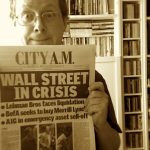
The only reason we got anything out of this so-called "relief package" was the knowledge that the American People might... just might...actually stand up and doing something about a relief package for the elites only (I'm thinking of a repeat of Obama's 2008 Wall Street bailout), and yet special interest groups still made out like bandits. Now, another relief package is being considered and Congress is again looking at ways to reward its special interest benefactors with our money.

We've also seen some of our greatest fears as Americans starting to take shape. For years there has been those who've warned about the slow development of a surveillance state; the forerunner of a police state. We've witnessed the development of technology, which many have welcomed with open arms while not considering its other, possible nefarious, uses. We've assumed that "our" politicians, regardless of their party, were immune to the clarion call of dictatorship which has crumbled countless other nations throughout time. After all, we have a constitution to protect us.

However, recent events, mostly at the local or state level, have shown that politicians, regardless of party, are just as drawn to the allure of absolute power as any other tyrant down through history, and no would be dictator would ever dream of wasting a perfectly good crisis! We know we're already an Oligarchy. The government is not run for our benefit. It serves the needs and wants of a very small group of wealthy individuals and corporations. For them, it's always been about control, be it assets, resources, or the populace.

Whether or not we take the next and perhaps final step into a full fledge police state, there can be no doubt that there's no going back to what we were pre-virus. The government, and those who control the government, have been taking careful note about how we've reacted to this crisis; who obeyed and who were the ones who spoke out. They've seen how we've responded. What were the strengths and weaknesses to our social system, especially our supply chain. How much did we depend on social media as opposed to corporate mainstream media or just how prepared the average American is for a crisis.

They already know that most Americans---80%---live from paycheck to paycheck. They've seen that there was no outcry or even whimper when the primary elections were temporarily suspended (there was more of an outcry when the baseball and basketball seasons were postponed). They have taken note of our restrained reactions to seeing National Guard troops out, to curfews and to restricted travel.

As Lewis Carroll's "Alice" in Alice in Wonderland said, "It's no use going back to yesterday, because I was a different person then". We are all different than we were before this crisis. The question is what we, "the People" will learn from this crisis, be it the tendency of politicians, businesses, ourselves, and each other.

Saturday, March 21, 2020

What History Can Teach Us About Dealing with a Crisis...and Hoarders


A lot has already been said about this virus, COVID-19. Perhaps too much. Mainstream media, in its never ending search for ratings (which drives revenue), seems to have got caught up in its own feeding frenzy. The same goes with social media. The speculation and nonsense has become as contagious as the virus itself. I would even dare say that the speculation and hype has done more harm than good.

I'm not saying we shouldn't be informed. We should. In fact, it's very important that we take this pandemic seriously and takes steps to mitigate its spread through some simple changes in how we go about our day. Things like washing your hands thoroughly with soap, reducing your trips to the store, avoiding large crowds as much as possible, staying home if you're sick or think you're getting sick. Again, these are common sense steps we can take to minimize exposure and to slow down the spread of the virus. However, that doesn't seem to be the major problem here.

The biggest issue facing us right now is hoarding. I'm not talking about buying a few extra packages of meat or cans of vegetables or even a few extra rolls of paper towels, cleaning supplies, or the ever important toilet paper. During a natural disaster or bad weather, people routinely run out and buy extra loafs of bread, eggs, milk, and munchies. That's to be expected. But that's not what's happening is it?

The answer is, of course, a definite "no". What we are seeing is Americans at their worse instead of their best. We're seeing Americans panic and act of fear brought on by mainstream and social media. I am talking about people overloading their shopping carts with as many rolls of toilet paper, paper towels, hand sanitizers, and food stuffs (especially meats, canned veggies, bread, and frozen foods) as they can. Then, as if that's not bad enough, they come back for more or raid other stores. They go after things like aspirin or other over the counter medicines. Heck, they're even raiding gun stores and hoarding ammo!

The result is that it creates an artificial shortage, which causes others to panic which in turn, triggers more hoarding and panic. It means that other people---people who might be neighbors, friends, or even family---will get nothing. It means that seniors, the disabled, those with serious medical conditions or those who depend on others as their lifeline will do without. Can you imagine how our parents, grandparents or great grandparents---the "Greatest Generation"---would react our behavior?

They experienced the worse economic downturn this country has ever seen, lasting just over 10 years. With the collapse of the Stock Market and bank closures, many Americans lost practically everything they had. There were no credit cards. Savings accounts were rare and retirement accounts were unheard of. Businesses had massive layoffs or closed, leaving people with no or little steady work. Many were evicted from the their homes or farms as banks, in desperate for cash, called in loans early. People depended on the generosity of others as well as on their own ingenuity to survive.

In the 1930's, 85% of Americans lived on farms. However, the "Dust Bowl" destroyed tens of thousands of farms, which ultimately affected every single American, and with the absence of crops to sell, they couldn't pay their mortgages and there was little to buy at the store. As a result farmers were booted off their farms, leaving behind most of their possessions since there was no way to move them or any place to move them to. Many ended up as sharecroppers, the lowest rung on the agricultural ladder. It was a hand-to-mouth existence.

But despite the hardship, hoarding was unheard of. So too was people fighting over who got the last (or most) of some item. People pulled together to help each other. Soup kitchens sprung up just about everywhere. Even Chicago mobster Al Capone opened up soup kitchens throughout Chicago's Southside. People made room..and time...for each other. Still, it wasn't uncommon to see people, even whole families, living in cars, flop houses, or in cardboard boxes (called "Hoovervilles" after President Hoover.

As if the Great Depression and Dust Bowl weren't bad enough, many who weren't much more than pre-teens and young adults at the time, would soon find themselves going off to war; fighting in the Pacific, North Africa, and Europe. Approximately 420,000 of them would die or get wounded. Worldwide some 75 - 80 million would perish in this war.

At home their parents, family, wives, significant others as well as their children, friends, neighbors and even total strangers pulled together to support the war effort and one another. People accepted shortages. They forwent items they wanted, from nylon to rubber to pots and pans, in order to help the war effort. There were ration coupons for meat, gas, and a whole host of items. Even certain types of clothes, spare parts for cars, and medicine were rationed. There was scrap metal drives along side with war bond drives. Nearly everyone played a part.

People of all religions, races, national origin, economic class and political leaning came together as ordinary Americans helping each other. This self absorbed greed mentality which we're see today would have been unheard of and not well received. Following the end of the war in 1945, those who went off to fight came home to a very different America from the one they had left.

Women were firmly entrenched in the economy as workers. Businesses were more streamlined. Unions were stronger than ever. It seemed that innovations were happening everywhere. The millions of men and women returning from the war were still quite young and were well trained, but for the first time ever, they got the opportunity to go back to school thanks to the Servicemen's Readjustment Act of 1944, better known as the "G.I. Bill", and it transformed America. It expanded the Middle Class, created a host of new businesses, the development of suburbia and a hugely successful economy. This was truly our "Greatest Generation", yet they weren't entirely unique.

It was their parents, those who lived through the decades leading up to and after the "war to end all wars", the "Great War" which we commonly refer to as World War One (1914 - 1918) who set the standard. While the U.S. was directly involved for just over a year, Americans wasted no time in coming together to support the war effort, and in doing so, sparked an boom economy known as the "Roaring Twenties".

Women, for the first time in our history, left home not just to become teachers, maids, nurses, secretaries or employed in textile, but to work in the factories building cars, operating drill presses, cranes, driving trucks and so forth . Some took over the businesses their fathers or husbands left behind. This gave them a new found sense of personal freedom and self-confidence their mothers and grandmothers never experienced, not to mention the pride of earning their own paycheck. It was in no small part that this helped to motivate them to achieve the vote (which they did in 1920).

The "Great War" also triggered many new innovations, especially in aviation, automobile manufacturing, industry, roads, communications, and in particular, medicine, which were to be tested in the extreme. Just as the war was showing signs of coming to a close, a new and unexpected enemy emerged. This one would prove to be more widespread and lethal than the one being fought in the air, trenches or at sea.

This unknown enemy soon had a name; a most unusual name. It was called H1N1. It became better known as the "Spanish Flu" and it would kill an estimated 40 million people worldwide, more than those killed or wounded in the "Great War" (as an aside, it struck in two devastating waves between January 1918 and December 1920).

To put it in better perspective, the Spanish Flu killed more people in 24 weeks than HIV/AIDs killed in 24 years. Only the "Black Death" of the 14th Century killed more people with estimates ranging as high as 200 million people (in Europe as much as 60% of the population was affected. It took nearly 200 years for Europe to recover). The Spanish Flu was what our great grandparents faced and it was terrifying. By the time it was over, it had killed more Americans than were lost in both world wars combined.

Our great grandparents had never faced anything like this. They lacked the medicines and treatments that we take for granted. But as frightening and deadly as this was, they found ways to come together as a nation. Americans did what we've always done. We looked out for each other as best as we could. We checked on the elderly to make sure there were okay, even if it meant walking several miles to do so (or, as often as not, hitching up a wagon and bringing them what we thought they might need). We looked in on expecting mothers or on those with young children (back then almost everyone had "young children" since large families were common).

The one thing we don't read much of is mass hysteria. Naturally they were afraid, but they fought through whatever fears they had, and part of that was by depending on each other. I read through several articles about this pandemic and noticed something else which was missing. That was talk about hoarding. Once again, people respected each other to the point where they were willing to share what little they had. Back then that might have meant exchanging canned goods or food stuffs like venison, milk, cheese or perhaps doing something in-kind like making a quilt or fixing a broken chair.

Perhaps this was simply a different America or maybe it was simply a different kind of American. Individuals who were more self-reliant but at the same time more than willing to help a friend, neighbor, or even a stranger. Don't get me wrong. In looking around America today, I see acts of kindness and generosity in abundance. Nevertheless, what I'm also seeing are acts of pure greed, selfishness, and a disregard for others.

I see individuals acting purely out of selfish self-interest; many of whom whose sole intent is to take advantage of others. I fully expect to see all these opportunistic parasites trying to sell their toilet paper, paper towels, cleaning supplies, and can goods online on sites like EBay or in yard sales and flea markets at greatly marked up prices. Meanwhile, others are forced to do without, especially seniors, the handicapped or have serious pre-existing medical conditions and may be limited in their ability to get out and shop; the very individuals who are most vulnerable and afraid.

In many ways these hoarders are nothing more than vultures preying on the weak. They are thieves who have used their greed to steal from all of us. In previous times of revolutionary in places like France, Spain, Germany, and Russia, these types of individuals were often rounded up and shot or hanged by authorities, that is if their fellow citizens didn't beat them to death first. Even in the postwar South, hoarders were viewed little different than were looters...and were often treated the same way.

We need to strongly discourage hoarding. We need to call them out; to publicly shame them. They serve no one but themselves. Stores need to restrict purchases to curtail hoarding. In its place, we need to encourage compassion for others. We need to check in on our senior and those who are sick or disabled. If we can't do it in person or by phone, then ask authorities to do so. We need to be the kind of American we once were and can be again.


How the Horrific 1918 Flu Spread Across America


History: The Great Depression


The Library of Economics and Liberty: Great Depression


Women in the Factories