Showing posts with label unemployment. Show all posts

Friday, August 22, 2025

Examining Racial and Ethnic Reality Part 2: Employment, Politics, Crime, Poverty, Home Ownership, Conclusion and Future


In part two of our look at race and ethnic reality, we'll take a look at employment and unemployment, Affirmative Action and quotas, racial equality in politics, crime  and prison sentencing, poverty, welfare, housing, and who really benefits the most? Finally, we’ll address the issues of reparations, the future of race relations, and what does all this mean, if anything?

Employment

When it comes to labor force participation, 63.1% of Blacks are in the work force. 65% of Asians are actively involved as are 62.3% of White and 66.9% of Hispanics. Meanwhile, 65.3% of those who claim to be mixed race participate in the work force.

Whites and Asians occupy the majority of professional and managerial jobs with Asians holding most of the STEM and healthcare professions while Blacks fill most of the community and social services occupations (Black males work the majority of transportation and utility jobs while Hispanics dominate the construction and hospitality industries per the U.S. Bureau of Labor Statistics).  

Examining income levels by race (based on 2023 data), we find that the median household income for Whites nationally is $89,050. For Hispanics, it’s $65,450. The median income for Black households is $56,490. Native Americans earn $57,270.  The highest household income belongs to Asians which averages $108,700.

The national unemployment rate is 4%. Among Whites, it’s 3.6% and 3.5% for Asians. In the Hispanic community, the unemployment rate is 4.6% (4.9% for Mexicans and 5.9% for Puerto Ricans). However, the highest percentage of unemployment belongs to Black Americans with an average of 6%.

Affirmative Action and Quotas

Affirmative Action came into being through two separate measures. First in 1961 when President John Kennedy signed Executive Order 10925 which required government contractors ensured equal employment opportunities  for all applicants. Second was in 1965 when President Lyndon Johson signed into law Executive Order 11246 prohibiting employment discrimination by federal contractors and requiring them to adopt a plan to employ minorities. By the 1980’s, this had been expanded to include gender and religion. It was also expanded to include education and other areas. Basically, it federal dollars touched it, there had to be an affirmative action plan in place.

Some institutions used this as a de facto “quota” system, rather than as intended. Thus, individuals were hired or accepted based not on their skills, experience, or test scores, but on skin color and gender. The overall result was a drop in performance which affected productivity and employability. Fortunately, that was done away with by the Supreme Court  in a 2023 ruling against Harvard College. At long last, ability returned to the forefront.    

Politics

What about politics? Whites make up about 59.3% of the population. Hispanics are 18.9%. Blacks comprise 12.6%, and Asians are about 5.9%. When we look at the make up of Congress, of the 431 members, 301 identify as White. 61 are Black, 46 are Hispanic, 18 are Asian, and 5 say they are racially mixed.

 Of the 99 Senate members, 83 are White. 7 are Hispanic, while 5 are Black and 3 are Asian with 1 Native American (not including Elizabeth Warren), and of course, there was Barack Obama who was bi-racial although popularly identified as Black.

When it comes to federal judges, the majority (65.80%) are white. 14.44% are black. 9.11% are Hispanics. 6.63% are Asian, 2.84% are mixed race, and an embarrassing 0.47% are Native American. Additionally, 52.7% of federal judges are male. Currently, there is one Black governor, one Native American, and one Hispanic.

Crime and Punishment

When it comes to crimes, Black Americans were 50% more likely to be victims of non-lethal violent crimes than Whites according to a report by the Council for Criminal Justice (CCJ). In both instances, the assailant was more likely to be a black male than not. In comparing Hispanics and Blacks, Blacks were 40% more likely to be the victim than Hispanics.

There was no difference in non-lethal victimization between Hispanics and whites although Hispanics were 2x more likely to be robbed than Whites whereas Black females were twice as likely as Hispanic females to be the victim of rape or sexual assault. In short, Blacks were more likely than other races or ethic groups to be a victim of crime while at the same time, most likely to have been the perpetrator of the crime.

An FBI Uniform Crime Report from 2019 seemed to back up the CCJ data. According the UCR, Black Americans accounted for 55.9% of all murders committed. Whites accounted for 44.1%. When it came to the race of the victim, 54.7% were Black while 42.3% were White, and roughly 3% were “other”. The pre-capita “offending rate” was eight times that of whites as were their victim rate meaning that statistically, Blacks (especially males) were more likely to commit violent crime than any other race and that Blacks in general were more often than not to be the victim of a violent crime.

According to a victimization report conducted in 2004, blacks were 56% more likely to be the offenders when it came to carjackings compared to 21% for Whites and 16% for Asians. Blacks were 12% more likely than any other races to commit an armed robbery. Hispanics, on the other hand, comprised 40% of those sentenced for federal crimes.

Per a report by The Sentencing Project, Blacks are the most incarcerated group in America. Black offenders are 5 times more likely than Whites to be sentenced to prison. Hispanics will go to prison almost 2.5 times more often than White offenders. Native Americans will be incarcerated more often than Whites but less than Hispanics.

Blacks are also more likely to be jailed on misdemeanor charges than any other group, but they are also more likely to violate probation. Hispanics are more likely than not to serve time in a federal prison. Asians are least likely to be jailed for any reason.

Black women are more likely than White or Hispanic women to do time. Asian women behind bars are virtually a statistically null category. The Sentencing Project also reports that while there has been a decline in incarceration rates overall, the Black prison population has declined the most.

Echoing the above, the Prison Policy Initiative pointed out that while Blacks are roughly 13% of the U.S. population, they make up 37% of those behind bars. However, based on percentage of population, a discorporate number of Native Americans are incarcerated compared to any other race or ethnic group. Lastly, it should be noted that the U.S. imprisons more of its population than any other country on the planet bar none.

So, with legislation like the Civil Rights Act of 1964, the Voting Rights Act of 1965, Affirmative Action, federal incentives for Historical Black colleges, and various federal and state programs, not to mention academic courses and majors, why isn’t the situation better?

Black, Hispanic, and Asian enterprises have been extremely successful. The Federal Office of Advocacy reported in 2022 that there were 5 million Hispanic owned businesses employing some 3 million individuals. Latinos are also the largest entrepreneurial demographic in the U.S.. There are 3.4 million Asian and Pacific Islander owned businesses in America, employing 5.3 million, and generating earnings of $1.2 trillion dollars annually.

Native American owned businesses, of which there are over 340,000, have earnings of some $46 billion annually despite representing roughly 7% of the total population.  As for Blacks businesses, there are approximately 3.12 million according to the Census Bureau. They provide 3.56 million jobs while producing $206 billion in annual revenue.  Of course that doesn’t include cable channels, print media, radio stations, music and movie genres, events, pageants, business associations, advocacy groups, and so forth which are dedicated to a specific racial or ethnic group.

Lastly, White owned businesses. Currently about 82% of all businesses in the United States are White owned, including 85% of all small businesses. Together, they generate about $1.3 trillion dollars while employing around 21.9 million workers. Given that Whites are by far still the largest demographic, that shouldn’t come as a surprise.

Poverty

The highest poverty rate in the U.S. belongs to Native Americans with 22% living at or below the poverty line. Black Americans are next with 17.9% in poverty. Hispanics have a poverty rate of 16.9%. The poverty rate for Asian Americans was 9.1%.  Whites had the lowest poverty rate at 7.7%.

When we look at those who receive the most government assistance such as Welfare, WIC, energy or rent assistance, or SNAP, Whites are the greatest beneficiaries at 43% (this is also due to their largest percentage of the population). They are also the group mostly likely to leave the poverty rolls and drop government assistance programs.

In terms of SNAP or “food stamps” alone, White make up 62.7% of recipients. Hispanics are 39.8%. Black Americans make up 27% while just 3.8% are of Asian origin. 6.6% are of other races including Native American. It’s bears mentioning that 87.8% are native born.

Hispanics are the second largest users of government assistance at 26%. They are followed by Black Americans at 23%. Finally, Asian Americans. They are just 8% users of taxpayer based services.

Home Ownership

Lastly, let’s look at home ownership. According to the National Association of Home Builders, 65.7% of Americans owned their own home as of 2023. When broken down by race, using data from the U.S. Census Bureau, White Americans were 73.8% of all homeowners. Asian Americans were 63%. Hispanics were 49.8% while Black Americans were slightly behind at 45.9%.

Hispanics also saw the greatest increase of homeownership or any group. Black home ownership has also increased while slowing for Whites and Asians (one explanation it that the aging White population is shifting to low maintenance residences like apartments, condominiums, or assisted living facilities).  

Conclusion

According to the numbers, Whites remain the largest racial demographic, and as such, dominate in most of the categories, including use of government services and prison population, as one would expect based on the population size (note too that there are large pockets White communities, such as in Appalachia or the Ozarks, which resemble more of a third world nation than a top tier one).

In looking at education, Asian Americans, the smallest demographic, outperforms every other racial group relative their size in terms of education, labor market participation, income, own a home, or hold a managerial or professional position.  At the same time, they are least likely to be a criminal offender, got to jail/prison, or use government assistance.  

Hispanics, the second largest demographic, is most likely to use some form of taxpayer based serves, hold service or construction jobs. They are growing most rapidly of any other group in terms of home ownership. They also make up the majority of the labor market while having the third highest unemployment rate.  They have the third highest graduation rates behind Asian Americans and Whites. In terms of politics, they hold the second most number of seats in Congress.

On the downside, Hispanics (especially males) are more likely than other groups to be convicted of a felony and sentenced to a federal prison (usually on immigration or drug related charges). They are ranked third in terms of poverty. Lastly, they are the second highest racial minority  over all to be a victim of a non-lethal crime.

From being  statistically insignificant just 50 years ago, Hispanics have become a powerful force in American culture. Within the next 50 years, they will be on par with Whites in terms of population and likely a powerful player in politics, perhaps having the largest racially based caucus.  There’s no question they’ll regularly hold the Oval Office.

Black Americans, for various reasons, haven’t been able to gain any significant traction socially. They do well when if comes to the number of live births but also lead in terms of illegitimate children. They also have the highest divorce rates while, despite the myth to the contrary, Black fathers are the most active in the lives of their children.

They have an impressive graduation rate yet hold the least number of top level jobs. Black females are also most likely to outperform Black males, but also most likely to be harassed by them as well. They also have the third largest number of individuals in the labor market with the lowest income level or any group. When it comes to poverty, they’re the second highest. However, they are not the “Welfare Queens” they are portrayed as.

In terms of politics, they’ve had decent success, though it’s come in waves, with success in Congress, judgeships, mayoral offices, and even the presidency.  However, these gains are often negated by charges of corruption, drug and alcohol abuse.

When it comes to crimes, Blacks (particularly males) lead the pack, most notably when the victims are also black. They are also most likely to be sentenced to prison, skip bail, or violate probation. Thus, they don’t seem to get the break other groups get.

However, Blacks aren’t the worse off. That goes to Native Americans. They have some of the lowest birth rates, the poorest schools, least number of job opportunities, highest poverty and homeless levels of any racial or ethnic demographic. They also experience the highest school drop out rates. Their overall income levels have improved (thanks largely to legalized gaming). Nevertheless, their representation in politics is and has been negligible.

In the end, each race can boost of a certain measure of success and bemoan its failures. Is there any justification for “reparations”? If we mean as a result of self-inflicted failure, then no. That’s on them, not society. The opportunities are there.  The problem is not taking responsibilities for outcomes. It’s not demanding quality and rewarding success, be it in education, job ownership, or self-care.

They must self-police neighborhoods and create acceptable role models. If they don’t care, why should society? Case in point, look at Asian neighborhoods and schools.  If, on the other hand,  we mean reparations because of governmental abuse or apathy, then yes, and Native Americans would be that group.

They’ve been the subject of land theft, blatant lies, attempted genocide through starvation and disease, and enforced poverty.  They’ve had their culture stripped away. They’ve been denied the opportunities others have taken for granted. Where they’ve succeeded, it’s where they’ve stepped up and took charge…and responsibility…for their situation, handling their own affairs, and keeping the government at arm’s length as much as possible.  

If we continue along the same path, America will slowly, but assuredly, balkanize. For Whites, most everything will remain largely the same despite a slow decline into pockets here and there. Hispanics will settle into their position of co-parity with Whites. Their language and culture will be common place. Parts of the U.S. will be de facto “El Norte” (or “Aztlan” as it’s called”). Asians will dominate the West Coast while a shrinking Black population will occupy some of the larger cities, especially in the Rust belt, looking like they belong more to some dystopian movie or third world country than to the United States. 

Thank you for reading "Another Opinion", the Op/Ed blog page for the "militant middle".  Here at "A/O" we truly value our readers. At A/O we seek the facts as they exist, not partisan talking points.  We hope you find our articles informative and engaging. Comments are welcome, provided they are not vulgar, insulting or demeaning.  Another Opinion is offered without charge and is directed toward all independent and free-thinking individuals. We ask, however, that you "like" us on whatever platform you found us on in order to keep our articles available for free to others. Lastly, in order to keep costs down, we depend on passive marketing, and therefore, depend on our readers to please forward our posts along. Below you will find links to the sources we used in writing this article. Thank you. 


Louisiana Law Review: Race Quotas as a Form of AffirmativeAction


Race and crime in the United States


A Brief History of Affirmative Action


U.S. Poverty Statistics


Fact Check: Are Black people the majority of those onwelfare?


What the data says about food stamps in the U.S.


Homeownership by race and ethnicity


Friday, November 22, 2024

America's Global Economic Performance and Our Failing Schools


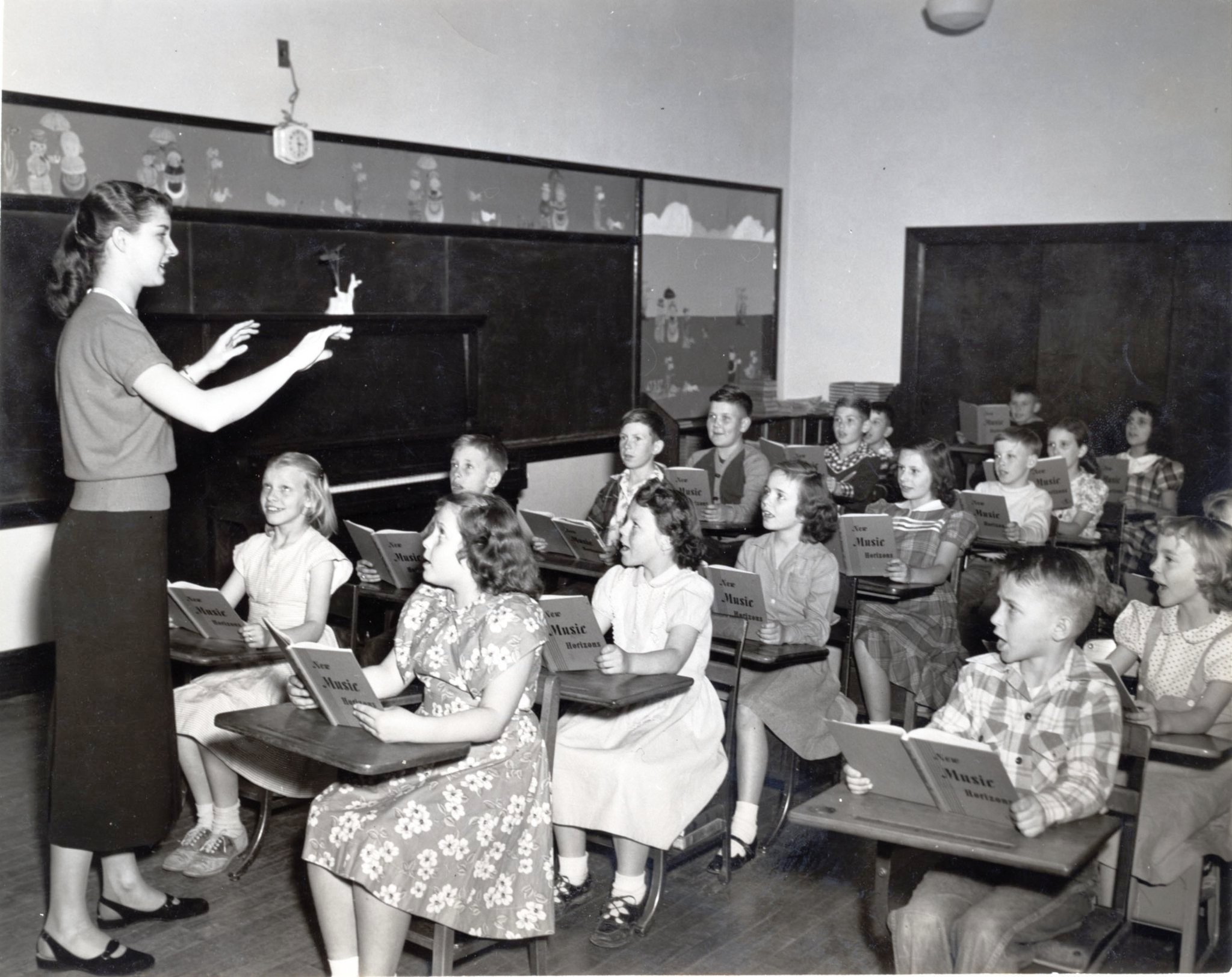
Many of the things we took for granted when we were in school back in the 1950's, 60's, and '70's are not considered "politically correct" these days. It seems that the emphasis is more on not "offending" anyone or promoting a culture where nearly everything is acceptable, no matter how irrational. Kids can't tell time using a analog clock or write cursive but they get to pick which gender they want to be and no one has to even tell their parents! You send "Johnny" or "Mary  to elementary school in the morning and they come home as "Johanna" or "Mark"! What the hell?  I was happy if I got to pick out my shirt for school let along my gender! Besides, everyone knew girls had cooties. 

Today kids have story time read to them by individuals dressed like they belong in some sort of John Waters' movie.  They can now choose what they want to study (or not) based on their racial or gender identity.  Disrupting class isn't at all uncommon and often excused as being a part of their "learning culture" or symptomatic of some attention disorder we never heard of when we were kids in school.

 Assaulting teachers while trying to teach class or enforce discipline isn't unusual (and woe unto the teacher who physically responds). Teachers in their 20's or 30's getting caught having sex with kids barely in puberty happens so often it's barely news worthy.  Professional ethics aside, what about simple  morality?

 I personally happen to support saying the Pledge of Allegiance (if you don't want to participate, fine. Just don't interfere with those who do). Strict discipline in the classroom, active participation of the parent or guardian, and teaching civics are essential. If they don't understand the function of government and their role in society as citizens, how can they protect their freedoms? Volunteering 90 days at the end of senior year performing some civic service such as Habitat for Humanity, helping out at the VA hospital, Meals on Wheels, participate on a police or firefighter advisory board, helping seniors or working as an election officer should be mandatory before graduating. 

 I am especially keen on learning being the focus of education. Anything beyond that (sports, band, cheerleading, or whatever) should be a privilege for maintaining good grades. Poor grades or disciplinary issues and the privileges are suspended until the grade or behavior situation is corrected. Repeated offenses and they're revoked. Period.

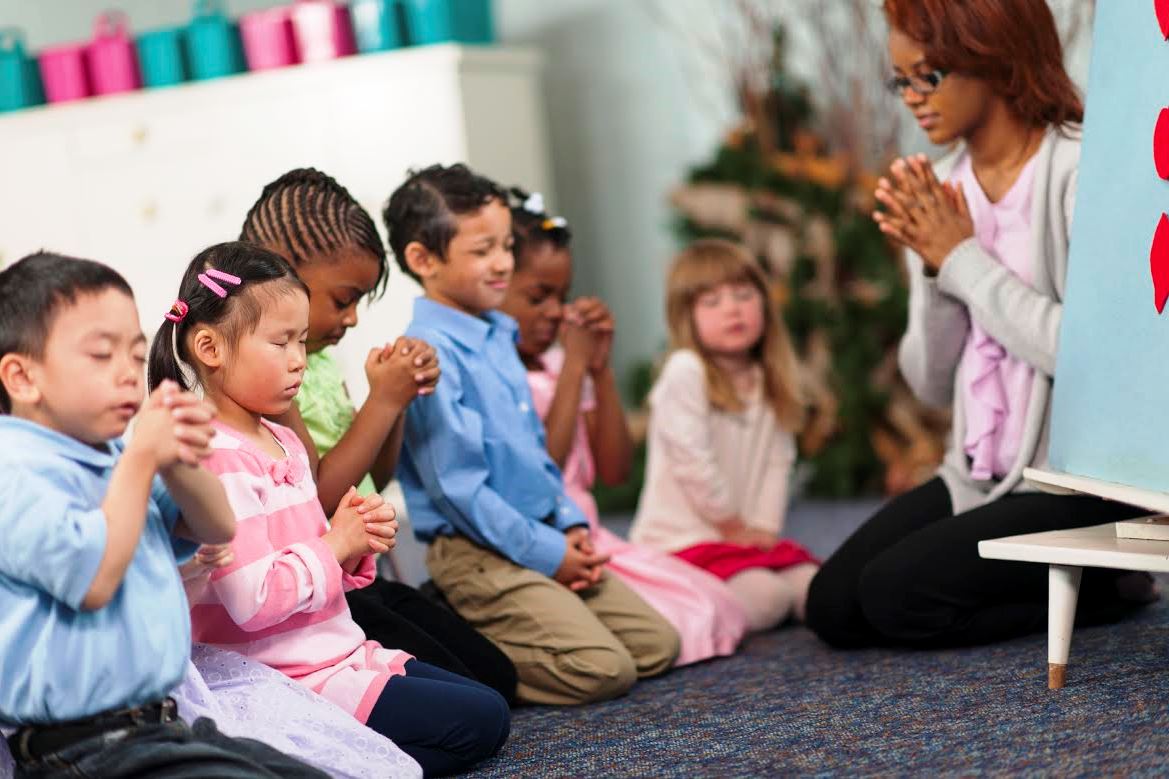
Some individuals and groups want to promote the introduction of their agenda a denominational prayer in public school and teaching creationism in public school either alongside evolution or to the exclusion of evolution all together. If that's want you want for your child, great. Send them to a parochial school.

 I have no problem with a minute of silence to get yourself mentally ready for the day ahead. If you want to quietly say a little prayer (or have a little prayer circle), have at it. If you want to do a quick mediation, or some late minute cramming for the test you forgot about or get your homework in order, that's fine too. Just be respectful of others. I do not support the notion of mandatory participation in someone else's religious expressions unless it's part of a comparative religions class examining all faiths.

Another key issue is the emphasis on higher education. I also don't believe college is for everyone or necessary for every or even most jobs. Sure, there are some occupations where higher education is needed because of the intellectual nature of the work. However, there are jobs where someone with a proper high school education should be able to do quite well. One reason employers ask for a college degree is just to get a qualified applicant at what would otherwise be the high school  equivalent.

 I've seen high school "graduates" barely function on a 8th grade grammar or reading level or can do math much beyond a 6th or 7th grade level. You can all but forget about basic geography and history (but boy oh boy do they known or video games!).  One resulting outcome is the lowering of colleges and universities minimum admission standards to create an artificial parity based on race or gender rather than academic performance. This is nothing more than a quota system based on discrimination.  

Far too often, teachers and school administrators "fail students forward" rather than hold them back out of fear of being accused of racism, genderism, or whatever the victim card du jure happens to be.   The most common excuse is that failing little "Brad" or "Babs" hurts their self esteem. I think saddling them with a worthless education or bleak employment opportunities is worse than bruised feelings.

Is it any wonder that the United States consistently performs in the lower half of the second tier globally? The U.S. ranked 16th out of 81 industrial countries according to a 2022 test of 15 year olds as administered by the Organization for Economic Cooperation and Development (OECD). We placed 16th in science among the same 81 countries. When it came to mathematics, we were 34th. The top five highest scores all belonged to Asian nations with Japan, Taiwan, Singapore and Macao consistently being among the top performers. 

These are some of our current and future economic competitors for high paying jobs and market shares, which affects employment levels, quality of life, and other key metrics.  If we think of education as an investment in human capital or part of our economic national security, we're losing the battle.

Although the U.S. spends more taxpayer money per student than other countries, we are obviously not getting our money's worth. Incoming President Trump is putting together an advisory committee---the deceptively named "Department of Government Efficiency" (it's not an actual government agency)  led by Elon Musk and  Vivek Ramaswamy. Their job is to review various government projects, programs, and departments and find a way to make them work better and within budget.

 I suggest they start with our school system and find ways to improve our performance. After all, everything starts with education (there are some who, since the 1990's,  have been calling for the disbandment of the Department of Education and a return of educational authority back to the states). As an aside, the Department of Education was elevated to a cabinet level position in October 1979 by President Jimmy "Peanut" Carter (D-GA).

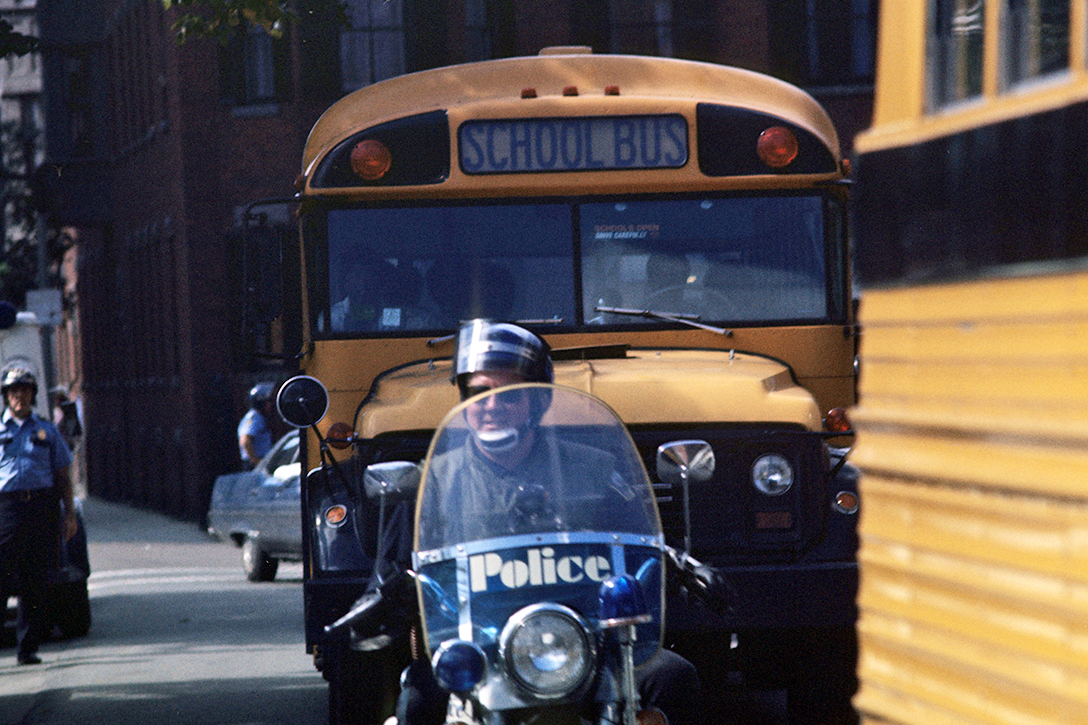
This was just four years after the advent of the disastrous court ordered  fiasco known as "forced busing" which effectively eliminated neighborhood schools. Students as young as six and seven years old, were put onto school buses and shipped all over town for hours at a time each way. This implementation of "social engineering" was intended to create balance in the schools academically and racially.

What it accomplished was a general lowering of academic performance which continues to this day. A better option would have equalizing the money spent on each student and rotating teachers. However, that would have produced a battle with the powerful teacher unions. So, what can we do about it?    

One potential solution is to weed out not just the academically unprepared, but also  redirect individuals who lack the interest or aptitude for higher education. One option would be to adopt a system similar to Germany's where students are tested periodically throughout years K - 8, and channeled into programs which lead to two years degrees, trade or technical schools, or on to higher education. It's one of the reason's Germany has one of the world's most advanced economies in the world.  Of course, the final decision belongs to the student (and parents) who may choose the academic path of their preference.

Students unprepared academically are re-immersed back into the subjects they poorly performed on via in person or online tutoring while extracurricular actives such as sports are put on hold. Students may be required to attend before or after school instruction. In some cases, this may take place during the summer. Until they can pass those courses, they should remain  suspended from  any non-academic events.  

The result is that the abilities and interests of the student is targeted  instead of trying to funnel them onto a path where they have little or no ability or interest. Trade or technical school is one such option. Unlike Europe, America faces a serious shortage of carpenters, welders, plumbers, electricians, glaziers, construction equipment operators, cyber security specialists, and other skills. It's a economic sector where there are real shortages and great opportunities. Making six figures annually isn't unheard of. Neither is owning your own business, where income opportunities can be even higher.

In a 2023 survey, there was a shortage of approximately 374,000 skilled workers in construction. The Association of General Contractors of America had a 70% positive response rate about concerns over the availability of skilled contractors and subcontractors in the upcoming years. 80% of those surveyed said they were worried about unfilled positions long term in the construction industry.

Between now and 2023, the renewable energy industry alone will need 1.1 million more workers worldwide and another 1.7 million to operate the equipment. According to a January 2024 U.S. Bureau of Labor report, the manufacturing industry in the U.S. has a staggering 584,000 unfilled job openings.

Among the reasons for the critical shortage of skilled workers is that the current workforce is slowing but steadily aging out. Almost 70% of supervisors in just the electrical trades are Babyboomers who are quickly reaching or passing retirement age.  More individuals are retiring and leaving than are replacing them. Another explanation is the push by school counselors, college recruiters, and a negative public perception about blue collar workers in general.

The truth is that training for a career in the trades is far shorter and cheaper than getting a Bachelor degree from a college or university. Training, on average, is two years or less plus a short apprentice period which may start simultaneously while being paid with benefits (the average apprentice earns roughly 50% of a skilled worker's salary). It takes about three weeks to qualify for your CDL license needed to be a long haul truck driver (the average salary--with experience--is just over $78,000 yearly).

Typically the cost of attending a trade or technical program can range from just a few thousand dollars to roughly $30,000 with an average cost of $15,000. Many of those attending a trade program are often hired before graduating (some start work will still attending school).

Compare that with the cost to obtain a four year degree. The current average is approximately $10,490 per year for in-state students. For out out-of-state students, that cost can jump to as high as $24,000 per year. If you plan on attending one of the top schools, the cost can be a lot higher. There are a few cheaper options (like attending a unaccredited institution), but remember that you get what you pay for and that's nowhere more true than in education.

Then there's the debt. On average, 61% of those who graduate from a public university leave with diploma in one hand and a bill for $31,960 in the other hand. Over their four years, the majority of students will occur a debt of at least $30,000 by the time they leave. The average federal student loan debt is $37,853 dollars. If you pursue a Masters degree, the costs and debt will be substantially higher.

It used to be that many American workers graduated from high school with a functional degree and would get a good paying job with benefits down at one of the local manufacturing companies. They'd join a union for job security and they were pretty much set. For a large percentage of the country, it was a near guarantee to their entry into the Middle Class. It wasn't uncommon for this path to be multigenerational, but those days are long gone.

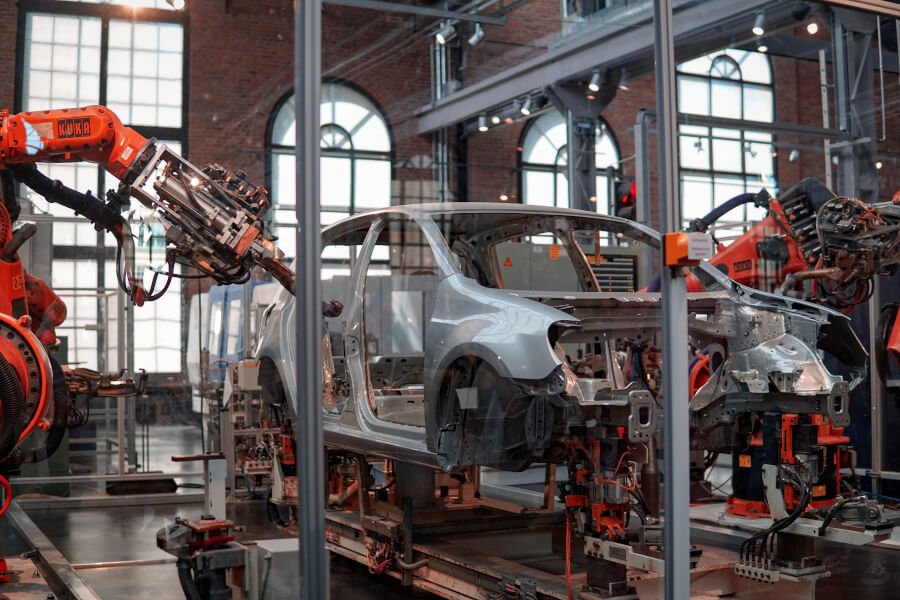
Starting in the late 1970's American began transitioning out of manufacturing and largely into the lower paying (and the less secure non-union) service industry. What industry remained has become more automated, replacing most positions. The only ones with job security and a good paycheck are the ones who repair or program the production line robot. But that's not the half of it.

Our parents and grandparents didn't have to face is the level of competition we do. Today, workers not just compete with each other for scarce well paying jobs, nor is their competition in the next town or state. Today's employee faces competition for work thousands of miles away, in countries like India and China where unions don't exist and people will work for next to nothing (and forget about benefits. They're happy just to have a job!). This is where America is losing ground, and when we look back at math and science score of our students, the future doesn't look to bright for the U.S..

When  it comes to technology, the world leader is Japan (Japan is also the world's most literate nation). Second is South Korea followed by China which has a knack of acquiring, studying, and adapting U.S. and global  technology. You don't have to look much further than the America's F-35 and China's J35A stealth fighter jets for proof.

In fourth place the good ole U.S. of A. Behind us is Germany, a country the size of Wisconsin and with a reputation for high quality engineering and efficiency thanks to their excellent dual avenue academic system which puts the trades on equal ground with higher education without the stigmatism as we mentioned earlier. Of course, we wouldn't expect anything else from the Germans.  As an aside, Russia graduates the most engineers of any country followed by the U.S. and Iran according to UNESCO.

 Singapore, a former British colony, is next (remember at the beginning of this article where I mentioned that the top five nations in academic math and science among 15 year olds were all Asian?). Coming in seventh place is Russia. Another country with a "gift" of mimicking U.S. technology. Great Britain, the United Arab Emirates (UAE), and Switzerland round out the top ten.

The key to the future is innovation. It's where tomorrow originates. So, who leads the world when it comes to innovation? That honor goes to Switzerland which dominates its second place competitor, Sweden. The United States has dropped to third place and is just ever so barely ahead of Singapore and the UK. For now, this may get us by, but not for long. Not at the pace the world is changing. How long can we hold on? Only time will tell. But one thing is for certain. If we don't do radically improve our school system and the quality of graduates, we may be facing a bleak future as the world's largest Banana Republic.


Thank you for reading Another Opinion! We hope you enjoyed this article and will pass it along. Please don't forget to subscribe. It's free! Lastly, please "like" us on whatever platform you use to read anotheropinionblog.com. It helps beat the algorithms and keeps our articles in circulation. Please find below the links we consulted in researching this article. 


Department of Government Efficiency


U.S. Education Rankings Compared to Other Countries


Tradespeople wanted: The need for critical trade skills inU.S.


These countries have the most technological expertise


Friday, April 14, 2023

Racism, Youth, and Distortions by the "Woke" Left

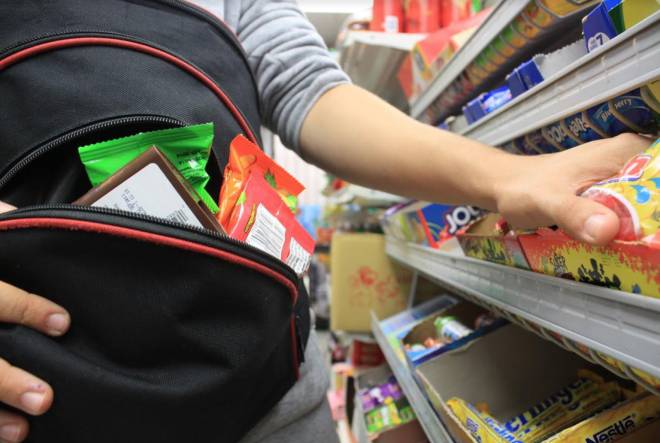
What's the first thing that comes into your mind when you see young kids shoplifting? It is "just one of those things" ? Is it "where are their parents" or something more akin to "if someone doesn't straighten that kid out they're going to wind up in jail"?

For most of us, we're not concerned about their gender, race or anything else. It's just the fact that they're are brazen enough to steal, usually right under the noses of management. In many locations, store management and security are hamstrung in what they can and can't do when it comes to shoplifting, particularly when it involves juveniles.  

Sadly, shoplifters tend to know this better than anyone. Not only do they know the best and easiest ways to steal from stores, they also know how each store responds along with what items will likely get them in serious trouble the quickest.

This knowledge is not just something adults or professional thieves know, but it's also something that younger kids seem to pick up on quickly too. They also know that if caught, it's unlikely much of anything is going to happen to them because they're minors. That's one reason professional thieves often employ minors for riskier crimes like breaking and entry, drug dealing, and, of course, shoplifting.

As a result, stores lose millions annually, at least on paper. In reality, they simply raise prices to offset the cost of the stolen merchandise, leaving customers to pick up the tab.  According to a Forbes article from November of 2022, shoplifting has become nearly a $100 billion dollar "industry" that we, the ordinary consumer, have to pay for.

The magazine, "Loss Prevention", wrote in January 2018 that nearly 55% of adult shoplifters and criminals got their start as juveniles. An article published by the National Association for Shoplifting Prevention, stated that nearly 1 in 4 adults started shoplifting between the ages of 12 and 14. Stores lose on average some $45 million dollars a day to shoplifters while law enforcement authorities estimate that approximately 550,000 shoplifting incidents occur daily.

The report goes on to say shoplifters are caught just once out of 49 times they steal, yet less than half are turned over to the police. Chronic shoplifters are arrested just once out of 100 attempts to steal. Lastly, 75%  of criminal justice professionals acknowledge that shoplifting, often starting out while a young juvenile, go on to more violent crimes which often includes some form gang activity. It's also worth noting that most juvenile shoplifters are white; some 70% according an FBI report. 

The Office of Justice Programs reported that between 14% and 30% of juveniles join gangs.  Their age range when they join is between 12 and 14, which is about the same age range that youngsters start shoplifting as noted above.

Approximately 39% of black youth living in large cities join gangs compared to 32.7% in the suburbs.  45% of Hispanic or Latino juveniles from large cities tend to join gangs with 51% of those living in suburbs do so.

As for whites, just 9.7% living in big cities are likely to join a gang compared to 9.1% living in the suburbs. Meanwhile, 5.8% of other racial groups such as Asians living in larger cities are likely to join a gang. Just 7.2% of those living in the suburbs will probably join a gang. As an aside, males are far more likely to join gangs than females. However, females gang members are more common in suburban and rural areas, 45.3% and 49.5% respectively.

In 2022, more than 1,300 juveniles between ages 12 and 17 were killed by gun violence with another 3,800 injured. In 2021, the number juveniles killed or wounded by guns topped 6,000.  In 2022, 300 kids age 11 and under were killed by gun violence. 700 were wounded.

Most violent crimes committed by juveniles (64%) typically occur on school days in the hours after the end of the school day through early evening (that is, between the hours of 2:00 pm and 7:00 pm).  On non-school days, violent crimes committed by juveniles tend to happen between 6:00 pm and 9:00 pm.

67% of black families are single parent, meaning that the majority of children lack the guidance of a father figure. 8.6% of black adults are unemployed according to the National Bureau of Labor Statistics latest report of 2021, followed by 8.2% for Native Americans. Meanwhile, the unemployment rate for Hispanics is 6.8% and 5.0% for whites.

In addition, as of 2021, almost a third of these families lived at or below the poverty line, meaning their mother is likely working and/or their children are being cared for by an elderly grandparent or neighbor, which in effect means little in the way of family structure.

I was recently watching a video on a Twitter site hosted by the Hodges twins, Keith and Kevin. The Hodges are conservative stand-up comics and political commentators (and for what it's worth, they also happen to be black which neither here nor there). I've been watching them for some time now and really enjoy their humor which is mixed with some really insightful social observations.

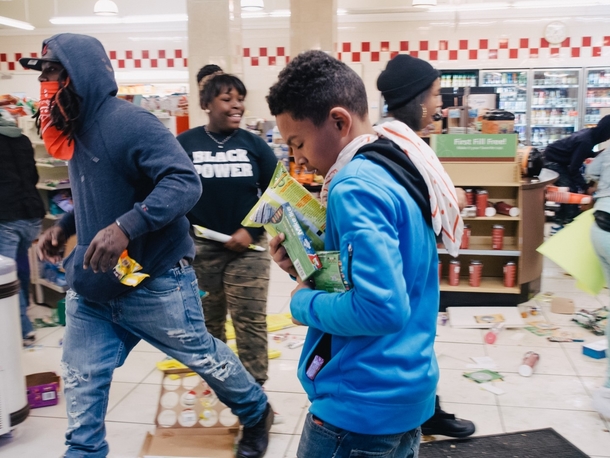
The video, which included a comment by the Hodges ("kids are being taught to do this shit..."), showed the apparent commission of crime being carried out by four or five wannabe "Jesse James" types. These wannabe gangsters were probably between 9 and 12 years old and male.  The crime was a "scoop and scoot" at what appeared to be a neighborhood drug store. The "goods" looked to be petty stuff, mostly chips, cookies, candy and so forth.

In the video you can see a store employee speaking with someone on the phone. The expression on his face is one of disbelief. Apparently the employee, aware of the crime in progress, had shut and locked the store door. Whoever he was speaking with had apparently told him that he couldn't do that and to open the door.

The employee reluctantly unlocks and opens the door as the "James Gang" make a break for it, shoving the employee aside, running across a busy intersection in triumph while other employees start picking up the mess left behind.  Finally, I feel that it's important that I should mention that everyone involved---the kids and employee---were black ( you'll understand why I mention that in a moment).

I could see the expressions on their faces of utter glee of a successful heist. I don't know if this was a spur of the moment job or if any planning had gone into it. Was this a first time "scoop and scoot" or had they or one of gang done it before? Perhaps it was a dare. With kids of that age, it could be almost anything. However, I had just started work on this article so I was already aware of the statistics.

I knew, thanks to the articles and statistics already read, that this little raid should be reason for some concern, not just for the store or its employees, but for the parents, teachers, friends and neighbors of these kids. Being male, a minority, and living in what appeared to be urban environment, the odds of staying out of trouble weren't too good. 

As it is, gangs are usually associated with all sorts of crimes (especially violent crimes and drugs), are the most prevalent in cities. Although blacks make up just 13% of the total population, the percentage of illegal drug use among blacks is 6.9% (the national average for drug use among other races is 7.4%), and young males are the most vulnerable.

So as you might expect, I had to make a comment. Here is what I said: "Thieves. Soon, perhaps in a few years, we'll be hearing about how they died. Maybe gang related. Maybe in a shootout with police. Perhaps a homeowner defending their property. And it will be their parents and neighbors bemoaning the injustice of their deaths".  

Now, you'll notice that there was no mention of race, gender, or anything else. My comment was one of empathy for their parents who, if this type of behavior goes unchecked, may find themselves crying over the body of their child and wondering "why" and "how" this could have happened. 

Based on the reports and statistics mentioned above, this is not a remote outcome . A kid laying dead somewhere, the victim of a drive by shooting, gang violence, drug overdose, or a crime gone wrong is far too common. Perhaps instead of being the victim, they got caught trying to rob someone or selling crack and now they're facing prison. Maybe they're the one who accidentally killed someone.

There's a whole myriads of bad results which started innocently enough with some petty theft. Heck, I just saw a video of a group of older teenagers randomly opening bags of chips, Cokes, cookies in a store helping themselves, and then trotting out after obviously enjoying themselves.

Well, you can well imagine the responses I received. According to the Hodge's site, my simple comment generated some 10.9 million views along with 2,452 comments. It also generated 21.6 thousands "likes" and was shared 5,140 times! The vast majority of comments were positive with most agreeing that this kind of behavior could have very serious consequences for these kids.

However, there was a minority of commentators who wasted no time in playing the racist card (which, of course, I'm far from) and making all sorts of racial slurs toward me, alleging that I was stereotyping these kids, that I was wanting these kids die while referring to me as "sick and deranged", an "old white clown", openly wishing I would die or "rot away", and so on.  

Fortunately, as I said, these were minority, but still I found it amazing how people could twist a simple remark about empathy into something barring no resemblance to the comment itself. Nothing in comment related to race (but their responses did). Nothing in my comment mentioned wishing death on anyone (but their responses did). Nothing in my comment mentioned joining a gang (although their responses did). I did, however, say they could end up being the victim of violence if this kind of behavior continued and statistics support me in that statement. 

I suppose this little exercise demonstrates how vicious and reactionary some on the "woke" Left can be. They certainly can't stand a contrarian opinion, at least on this occasion! They demand tolerance, but for them. Not you. They call you "racist" while they're on a racist rant. They claim to oppose hatred, and yet their comments are as vitriol as they can be. They claim they're wanting to avoid an argument while trying to trigger one with name calling, distortions, and not so subtle innuendos and implied threats.

In fact, several excused the shoplifting youngsters by saying they "might be hungry" while others blew the theft off all together as no big deal. Perhaps I should have condoned the theft since I'm white, "privileged", and all that just as they did. But that would be morally wrong. 

A few wanted to compared the shoplifting to "mass shootings" (which are obviously unrelated) by claiming that they are routinely carried out by whites to the relative banality of the shoplifters. They also claim that I ignore these type of crimes as well.  

To set the record straight, I do routinely condemn mass shooting along with any other form of mass murders including wars over economics in my articles as well as directly online regardless of race, gender or any other factor. Secondly, how would they know unless they regularly read my articles?

However, despite their apparent racial undertones, they are correct that whites are largely responsible for mass shootings. According to Statista, 74 mass shooting were committed by whites while 25 were committed by black individuals between 1982 and April 2023. Hispanic were responsible for 11 such shootings and Asian for 10.  Native Americans committed just 3.  

There's no question that shoplifting is a serious gateway crime which all of us eventually pay for. Although much of it is committed by adults, those under 17 years of age are responsible for a significant portion. Of those, many wind up on a path no one would wish on them.

Many come from an environment where the odds are already stacked against them---poverty, high crime neighborhoods, single parent households, little to no consistent adult supervision, underperforming schools and few opportunities in their neighborhood. Some are even taught to fear or hate police officers, disrespect teachers, and come to admire gang lifestyle. They see crime and drugs as easy money. But it's also a fast ticket to prison or to a short and tragic life.

We have to do better as a society. While pre or after school programs, especially when those programs can provide some nutritional meals are great, nothing replaces the active involvement of a parent in the daily lives of their kid  just as nothing beats a good education. There has to be a refocus of school curriculums to civics, critical thinking and business skills with an emphasis on basic math, proper English, the sciences, and history. 

After school and summer programs working in the community is another great avenue for teenagers. Perhaps too is redirecting those about to graduate from high school into the trades. College isn't for everyone and trade schools are a lot less expensive, pay well and have great benefits. It's also an opportunity to opening your own business at some point if that's what you want to do. We have to do better by our kids. What we've been doing is obviously not working.


If you want to know more about this article's topic, please check out the links below. If you enjoyed the article, please consider passing it along to others and don't forget to subscribe. It's free! Lastly please be sure to "like" us on whatever platform you use to read anotheropinionblog.com. It helps with the algorithms and keeps our articles in circulation. Thank you! 


Shoplifting Has Become a $100 Billion Problem For Retailers


The Shoplifting Problem in the Nation


A record number of American kid's were injured or killed in gunfire in 2022


Office of Juvenile Justice and Delinquency PreventionStatistical Briefing Book


BLS: Labor force characteristics by race and ethnicity, 2021


Number of mass shooting in the United States between 1982 and April 2023, by shooter's race or ethnicity.


Hodgetwins


Saturday, June 11, 2022

The Great Resignation: Lots of Jobs But No Takers


Recently, while on my way home from an appointment a few days ago, I came to one of those innumerable stoplights. As I waited patiently for the light to turn green, I noticed a weathered looking man who appeared be in his 50's. His clothes were worn. Dusty but not ratty. His shirt was the cleanest part of his appearance, but it too had seen better days. His look suggested someone who hadn't seen a shower in several days, but he didn't look like he had missed many meals or happy hours.

What caught my eye was the cardboard sign he was holding---"Veteran Down on Luck. Anything Would Help". A few motorists handed him what appeared to be spare change; perhaps a dollar or two found their way into his dirt stained pockets. I felt a bit sorry for him. After all, I'm a disabled veteran, and the "but for the Grace of God" and all that. Yet, I couldn't help but wonder why he wasn't able to find a job. It seems everywhere I turn I see "Help Wanted" signs (he was actually standing a few feet from one).  

In speaking with store managers and employees, I hear the same, now well worn story about no one wanting to work. Those hired stop showing up after a few days or quit the same day. Several employers have doubled or even quadrupled their starting hourly salary. Some are even offering prospective employees same day pay! Never did I think there would be such a demand for workers. Employers are literally begging for employees.

In the interim, partially stocked shelves have become the norm. Not enough stockers, and those who will work, do so during business hours, meaning that finding what you're looking for is as much catch as catch can than not, especially in drug or grocery stores. Some businesses are closing early or not open during times which would have been their busiest. They can't do that for long and stay in business.

Strangely, as I sit there at the light, patiently waiting for it to turn green, I hear the latest news on the radio tell me about high unemployment. It doesn't make sense. How can we have high unemployment when every business is desperate for employees. What gives?

The U.S. economy had been chugging along nicely for several years under Trump. Unemployment had dropped to around 3.5%. The GDP was 2.5%, production was up, no inflation. Then came Covid-19 and everything changed. Covid inspired fear not just in America, but throughout the world. The media played it up like it was the second coming of Black Plague which had nearly wiped out 2/3 of Medieval Europe or the Spanish Flu which added a deadly punctuation mark to end of WWI with over 50 million dead worldwide.

We were urged to home quarantine. We were paternally warned not to venture outside unless it was an emergency, such as a trip to the doctor or hospital.  Elsewhere, run to the grocery store were only for the healthiest of us to go and only if we wore masks and used sanitizer whenever we touched something.  It was as if the world had become toxic. I half expected needing a note from the mayor.

We had daily "infection rate and death counts" on television which seem like a macabre infomercial. We were prohibited to visit anyone admitted to the hospital, or  worse yet, from being with friends and loved ones as they struggled to breath their last. Even the dead weren't immune from the isolation being imposed on us. Then the shortages came.

The quarantine imposed by government covered all but the most essential of workers, who, ironically, were the lowly hourly workers that most everyone ignores. There were shortages of nearly everything. The result of a badly fractured supply chain, missing workers, and made all the more worse by hoarders (there will be a special place in Hell waiting for them by the bottled water section).  Walking around in the frozen food aisle amusingly made me think of "The Andromeda Strain" for some reason.

Employees were ordered home. Some took their work with them and at least earned a paycheck. Most didn't get anything but unemployment. Thankfully, the government came to the rescue right on queue with multiple "tax free" stimulus checks. However, "free money" is never free.  Schools closed long enough for departments of education to find ways for students to study from home, enabling schools systems to collected their tax dollars and keeping teacher unions happy.

The government mass produced  not just one, but three main vaccines. This would normally take years, if not decades, to develop, test and get FDA approval, but they did it in a matter of months! No wonder some were hesitant. People waited in line for hours to "get the jab". Businesses, hospitals, and doctors began demanding proof of your vaccination before allowing your admittance. It was all surreal like some dystopian Sci-Fi movie...or Nazi Germany.  Ihre Unterlagen bitte! ("your documentation please!").

If you had any faith in the compassion of your community, it was surely put to the test by then. But like everything in life, Covid has all but passed. I think we're on booster shot #6 now. Sporadic shortages remained, and America was left more divided than before. The shortages have forced prices upward while employees, who were furloughed during the pandemic or who worked from home, didn't seem all that anxious to rush back to their cubicles.  Thus began what has been called "The Great Resignation".

While Covid eventually passed from page one, and life generally returned to normal, one key component was missing. The workers. The government had selectively forced businesses to close but not others. Only the smaller "mom and pop" and local businesses closed while the government allowed the big mega stores to remain open. Couldn't have anything to do with their political clout could it?

The result was fewer businesses to return to, reminiscent of the years immediately following the Great Depression. It also, by implication, meant that there should have been more workers available for a limited number of jobs. Simple economics dictates that higher demand for fewer jobs should result in lower wages and a reduction of benefits. Somehow, that didn't happen, but why?

Of the estimated 8.4 million who were technically "unemployed", there still remained 10 million job vacancies. That didn't include those who were underemployed, overqualified for the job they had, or who were employed but quietly looking to switch jobs, or had simply dropped off.  Prior to Covid, there was little choice when it came to having a job and paying the bills. That all changed.

Between 2021, just as things started easing back to normal, and now, we reached a 20 year high in the number of people who quit their jobs. 63% of those who walked away from their jobs cited low pay as the primary reason.  As an aside, did you know that if the minimum wage had been tied to the rate of productivity (how much income someone generates in an hour), the minimum wage would currently be $26.00 by now?

Another 63% indicated a lack of opportunities to advance. 57% said they felt "disrespected" at work or unappreciated by their bosses and fellow employees. Ironically, more women quit than men. 20% compared to 18%. When it came to race, 24% were Hispanic and Asian. 18% were black while 17% were whites. The majority, 22%, had no more than a high school education. 24% were low income. 18% were middle income. Finally, there was evidence of worker blowback and all it took was a pandemic.   

Prior to Covid, most people felt they had little hope of being able to do much about their employment situation. Namely, try to find another job (which may be just as bad or worse than the one they have, even if the pay was slightly better), try to improve their educational status part time or quitting and going full time (45% said they had no or little say in choosing their hours, which made returning to school a tough choice). Either way meant more debt and added stress.

48% quit over childcare issues, stating their employer was unwilling or unable to work with them and forcing them into a no-win choice. Interestingly, 18% said they quit because their employer required they provide proof of a Covid vaccine, which remains a contentious issue with conservatives.

Meanwhile, a large segment decided to cash out of their investments, such as their 401k, stocks, and savings accounts to prolong their protest. Some opted to sell their homes for rental property in order to avoid rising property and other taxes. Others lived off credit cards which were soon maxed out. Those able to moved back home with their parents or other relatives, while some consolidated their living accommodations into defacto dorms. A few turned to existing government programs and charities to help with clothing, rent, medical care, or food.

But perhaps it was the fear that the government and media so skillfully implanted in people's mind which changed their priorities. Polling would seem to indicate it was. In recent polls, many stated they had used their time off to rethink what they wanted out of a job, especially those in the service industry who had been demanding higher wages and better working conditions pre-Covid.

However, the trouble with their demands  is that many, if not most of these jobs were never intended to be long term. They were meant to be part time and temporary jobs for those just getting started in the job market or students picking up some extra cash. Entry requirements were fairly basic with the emphasis being primarily on reliability, good people skills, and a willingness to follow direction.

But with the declining academic performance of high school graduates, an increase in dropout rates, and rise in the number of single parents with no work experience needing a job, that all changed starting in the 1970's. Unable to secure higher paying jobs, many turned to minimum wage entry level jobs as family sustainable jobs. These often required longer shifts and/or multiple jobs to make ends meet. Workers began to demand middle class pay and benefits for what were entry level employment.

To accomplish that, employers would have to double or triple their prices, which would drive off customers. But with an abundance of pre-Covid  applicants, why bother? Now that pool of applicants (as well as existing employees) were gone, employers saw no choice. The result was higher wages and better benefits for workers, but also a cutback in  hours, early closures, and  existing employees doing more.  For some employers, that wasn't a solution.

Some companies turned to automation to remove their dependence on these temperamental workers. However, their capitalist mindset dictated passing the cost of automation on to their customers. Higher prices means less demand. Less demand means fewer employees doing more. So merry-go-round turns.

The pandemic has changed the face of the economy. It enticed older workers, mainly baby boomers, to hang it up earlier than planned, leaving Millennials to pick up the slack and opening the door for the emerging Gen Z workforce; many of whom just graduated from high school.

Initially they'll have plenty of jobs to choose from, but with rising prices, fewer of small businesses (which have historically been the economic backbone of America), and increased automation, they'll need to get some diverse experience under their belts as quickly as possible. Post-Covid years will surely be remembered as the Age of Diminished Realizations.

The pandemic also, for better or worse, resulted in a selloff of homes for apartments or condos. Some have moved downtown for convenience sake, assuming downtown is safe and can provide the necessities they need like grocery stores, pharmacies, and good schools for their kids, and adequate shopping and entertainment.  Others have opted for smaller communities for similar reasons.

But what will happen as those who cashed out of society begin to run out of money, as surely many are by now? Having exhausted their private safety nets, they have little if anything to fall back on. Federal Covid relief is a thing of the past. Most states have long since cut off unemployment benefits beyond just a few weeks given the abundance of available jobs. But those jobs will soon vanish as the recession and rising prices takes hold. Then what?  Already 11.4% of Americans live in poverty. When combined with those who live near the poverty line, that figure jumps up to 32% or one in three Americans.

Prices are already shooting up at unprecedented rate. Gas, utility, and food prices are quickly outstripping income, especially for those on fixed incomes. Our usual political infighting and bungling isn't helping.  The system has intentionally been broken in favor of the 1%. Reform won't cut it. How much longer will we tolerate this? How much longer can we tolerate this?

Oh, that panhandler I mentioned at the beginning? In several polls, many panhandlers admitted that they could make as much or more money standing on a corner begging money than working most entry level jobs. Incidentally, many panhandlers work in teams, giving each other breaks, looking after each other's stuff, and splitting their earnings. Has this the image of the new American entrepreneur? 


If you want to know more, please take a look at the links below. If you enjoyed the article, please consider passing it along to others and don't forget to subscribe. It's free! Lastly please be sure to "like" us on whatever platform you use to read A/O. It helps with the algorithms and keeps our articles in circulation. Thank you!  


Majority of workers who quit a job in 201 cite low pay, noopportunities for advancement, feeling disrespected


Minimum wage would be $26 dollars an hour if it had grown inline with productivity


These two demographic trends are driving the 'Help Wanted' inside so many business windows


'Help Wanted' signs indicate lack of decent job offers, not people unwilling to work


13 reasons that help explain labor shortage


'Help Wanted' signs are everywhere. Where did all the workers go?


Does half of the U.S. live "in or near" poverty?


Thursday, October 14, 2021

A 'Shot' in the Dark: To Vaccinate or Not

Anyone who knows me understands that I am a independent thinker. I have absolutely zero tolerance for dogma of any sort. So, it's not surprising that the cockles of my heart were downright giddy when I read about the number of teachers, doctors, nurses, truck drivers, air traffic controllers, pilots, and all the rest who chose to go home than submit to a defacto mandate from government and business to get a COVID vaccination. 

Now, some of you must be stunned or even flabbergasted to hear that. After all, look at the burden its placing on those who decided to comply and return to work. Would it surprise you to know that I can agree?  There is an inordinate burden being placed on those who opted for the shot and went back to work. For many, not only are they doing their own job, they're also being forced to pick up the slack for those who decided to opt out.

The result has been unstocked shelves, unfilled prescriptions, an absence of replacement parts, longer waits in lines, fewer people to answer the phone at businesses, unavailable or prolonged appointments, not to mention longer work hours for some, drive through only, and even the consolidation of stores, leaving many people having to travel a little further to find an open location (made worse by the higher gas prices, which have recently increased for a myriad of reasons, not the least of which includes fewer people available to unload the tankers sitting outside of  harbors or truckers willing to transport it).

On top of the that, we seem to have fewer people willing to work. It seems that there are "help wanted" signs practically everywhere. I almost feel sorry for those individuals standing on corners with their little cardboard signs begging for money. Who wants to handout "spare change" when now is the best time ever for them to get a job and get their lives back together?

Interestingly, there are about 9.2 million job openings at present, and yet unemployment is at record highs with some 8 million unemployed Americans, and that doesn't include the millions who are underemployed, working outside of the industry they want, or those who either are working part-time and want a full time job or visa versa. What's going on here?

The downturn in employed individuals appeared to have begun with the onset of COVID-19 when the government all but shut down the economy, urging only "essential" workers to report to their jobs and asking the rest of us to stay home. Schools and universities were closed, as were daycare facilities, and most stores in general. Only a small handful of services were open, including many doctor's offices. Dentist office were closed, as were courts (trials were postponed) while hospitals, gas stations, grocery stores, and pharmacies remained open.

To offset the sudden loss of income, unemployment benefits were extended and ordinary households were issued supplemental income checks by the government to help get them through. Meanwhile, insanity seemed to run amuck as people started hoarding paper towels, toilet paper, hand sanitizer, milk, butter, and other food staples which created panic and artificial shortage.

At the same time, we were encouraged to wear nose and mouth coverings, which many thought of as some sort of shroud akin to the ones used during the Black Plague. Nevertheless, this "shroud" became our admission pass should we want to go anywhere, be it to the store, doctor's office, or just about anywhere else that was open. For a few enterprising Americans, making and selling masks became a cottage industry. It wasn't long before other more established businesses got in on the act with "extra layers", filters, while some were even copper enhanced!

Simultaneously, with all the "peaceful protests", resulting in looting, arson, destruction of property, and vandalism, people went on a buying spree of ammo and guns of all types (not to mention the government's quiet buying spree of ammo). It seemed like chaos was everywhere, and then, just like magic, came Big Pharma and Washington to rescue with their hastily produced (and even hastier approved) vaccines.

Americans, in droves, lined up to get an injection of the magic elixir. Meanwhile, the government and corporate owned media went on a full court media press to encourage everyone to step up and get the shot. It seems like we were being told from every corner and from nearly every expert and pseudo-expert (not to mention a few quacks) to get vaccinated. 

Gradually, the lines for the vaccines got smaller, more stores opened, and most of the artificial shortages started to become a thing of the past. At the same time, fewer and fewer people wore their "shrouds". However, in its place, a new "passport" came into being---your proof of vaccine card.

Many businesses and government agencies (including courts) now required proof of your compliance, which reminded many Americans of the "Kennkarte" (personal ID card) demanded of German citizens and those in occupied countries by the nefarious Gestapo of Nazi Germany (Soviet citizens, as well as those in Warsaw Pact nations carried a similar ID card post WWII). 

For the majority of Americans, having to show proof of their compliance hit them wrong, particularly since at the same time, federal and state governments were considering mandates to force individuals to comply. There was never anything from the government or health officials which dictated the mandatory vaccination of all citizens. It was left up to each of us to be vaccinated or not, although the government and others (including employers) were strongly encouraging it, which brings us full circle.

A large percentage of Americans---about 45%--- have elected not to get the anti-COVID shot for various reasons as of July 2021. They believe that COVID is nothing more than variant of the flu; perhaps artificially enhanced to be more virulent, but nothing more than our own immunity couldn't handle (assuming we didn't have any illnesses which suppressed our immune system). 

These individuals believed that collectively, a "herd immunity" would be formed which would all but eliminate COVID and change it into little more than a nuisance, albeit a potentially serious one. They also encouraged those with impaired immune systems to get the vaccination(s) as a way to protect themselves. This notion of "herd immunity", originally encouraged at the initial outbreak of COVID, was now being downplayed by the government and some health officials.

The result has been a unintentional standoff between those who support free choice (to vaccinate or not) and validity of individual and herd immunity versus the government's (and other's) insistence that the only true protection is immunization by vaccine.  Businesses which had required proof of vaccination of their employees (or face sanctions up to and including termination) has seen the majority of their employees not blink at this COVID standoff and take the latter option, whatever that happens to be.

The same has applied in several other occupations including air traffic controllers, pilots and crew, firefighters, nurses, doctors, and hospital employees, truck drivers, warehouse workers, store employees, and even restaurants to name just a few.

Police officers and others in law enforcement also drew a line in the proverbial stand. Already facing massive shortages as a result of early retirements, resignations, and lack of available recruits thanks to last year's anti-law enforcement protests and demands to defund police departments, now officers are rejecting demands by the state to get vaccinated (this also applied to other first responders).

Even the military is seeing a downturn in retention and recruitment, amid the growing threat of China and possible terrorists attacks now that the Taliban is back in charge of Afghanistan and ISIS has returned (to paraphrase Mark Twain's famous quote, "talk of their demise has been greatly over exaggerated"), as military personal, who are inoculated against practically everything you can imagine, are refusing the COVID shots.

So, what does this mean to you and me? In short, we are facing what will surely be the first of a standoff between the Status Quo and its supporters over what constitutes "public health" and those that are ardent defenders of free choice; individuals who believe they have the right to decide whether to get vaccinated or not (the irony of "my body my choice" isn't lost on anyone).

As a result, these individuals have elected to risk financial ruin and who knows what else by refusing to get vaccinated. Unemployment, if covered, is only a short term fix. At some point, they will have to go back to work. Their only hope at this point is that given the millions of job openings, they can find a job that pays as well or better and doesn't require vaccination.

Meanwhile, employers who do require vaccinated employees will have to decide to stand by their guns and suffer it through while encouraging their employees to endure the extra hours. Most likely this will prove to be a boon to the employees. With a labor shortage of this scale, now is the time to seek higher pay, better benefits, promotions, and so forth. Employers can do little but go along, though some may go belly up. Many are already offering sign on bonuses, higher hourly wages, and special bonuses. 

COVID has already morphed once since the introduction of the vaccines (the "Delta" variant), and there's the possibility that it will continue to morph before it can finally be controlled. Given the uncertainty of the COVID's origin (despite strong suspensions), there is the likelihood other viruses will pop up. If so, then what? Will we go through this all over again? What about the concerns of the vaccines themselves?

Numerous doctors, nurses, immunologists, and others in the healthcare have come out against the vaccines, equating them to the snake oil sold by hucksters of past generations. They can be found all over social media pontificating their opinions. There are even claims that the vaccines contain chemicals which can destroy or at the very least, impair our own immune systems or having magnetic ingredients which enable the government (or corporations) to track our every movement. Some claim that the vaccines will help depopulate an overcrowded earth.

Personally, I can understand the need for the vaccinations, especially when it comes to protecting those with impaired immune systems. At the same time, each individual has a natural right to decide for themselves what to do with or to their own body. If I chose to vaccinate, that's my choice and not anyone else's, especially not the government's and certainly not any business.

Others will argue that a employer has a legal duty to provide a safe working environment, and they are right. Employers do have a legal right to protect their workers. That's the purpose of OSHEA. Schools have an obligation to keep students safe as well. But, do they have a right (or legal obligation) to demand that everyone shows proof of vaccination?

 When I was growing up in Florida back in the 1960's, everyone had to be vaccinated. I assume that's still the case. This is just one more vaccination to add to the list isn't it? But, if the majority are vaccinated, they are presumed "protected". So, what if I opt out? What if I was already exposed? My body will create its own natural antibodies to protect me. If I am willing to accept that risk, what's the problem?

As to the vaccines being used as a tracking device, why? We are already a surveillance state. Our movements, purchases, phone calls, computer and Smartphone use, and so forth are already monitored and recorded. They've got satellites which can literally peer over our shoulders and see what we're reading. They don't need a vaccine. As for the vaccine's contents, I have no idea. Biology was never my strong suit. I specialized in economics and the social sciences. Nevertheless, while I trust science, I trust my body's natural immune system more. It's time society did likewise and got people back to work. 


Help Wanted: Why the U.S. Has Millions of Unfilled Jobs


Unvaccinated and misunderstood? Let's Talk


Why COVID-19 Vaccines Should Not Be Required For AllAmericans


By The Numbers: Who's Refusing COVID Vaccinations---And Why


45% of Unvaccinated Americans Say they Will Definitely Not Get the Vaccine