Showing posts with label Supreme Court. Show all posts

Saturday, July 04, 2026

The Supreme Court’s Birthright Citizenship Ruling: Constitutional or a Supreme Blunder?

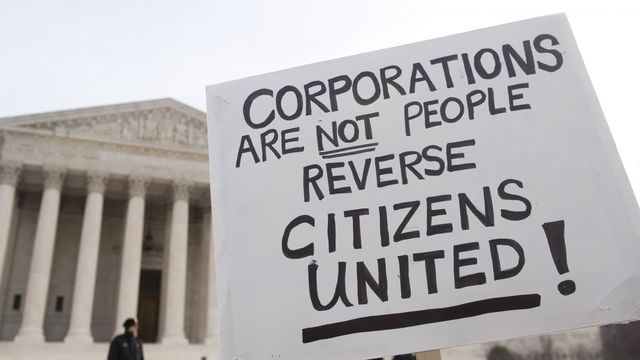
The U.S. Supreme Court has once again demonstrated their fallibility and shortsightedness with their recent 6-3 decision regarding “birthright” citizenship just like their infamous 2010 “Citizens United” blunder, which essentially declared that the U.S. government was “for sale”, which has turned our nation from a democratic constitutional republic into a neo-fascist corporatocracy and surveillance state.  

Originally the 14th Amendment (adopted in 1868) was intended to offer citizenship to all formerly enslaved individuals in order to aid their full  integration into the society. It was never intended to provide legal cover for individuals attempting to sneak in our country in direct violation of both our immigration policies  and defiance of our national sovereignty or allow individuals born elsewhere to evade the steps to become a U.S. citizen while obtaining legal residency via a child born in the U.S., even if the parents are here in violation of our immigration laws.   

There’s no disagreement that a child born on U.S. soil of foreign parents should be entitled to American citizenship. However, should that still apply if the parents are here illegally, in violation of migration laws, and with no other intent than that of securing citizenship for their child in order to remain in the United States themselves? Thus, it appears the Supreme Court got lost among the trees and failed to see the forest much like it did with their 2010 Citizens United blunder.

America, like every other nation, has a strict immigration policy and process for anyone wishing to settle here. It also adheres to international law when it comes to asylum seekers. It’s worth mentioning that economic immigration (ie: finding a job or a better paying job) is NOT accepted as a legitimate reason to seek asylum.  

The United States also has the legal right as a sovereign nation to establish borders and enforce those borders. No different from any other country, including those from where these migrants originate (which, by the way, are far more stringent and brutal than anything we would impose).

The question now is what, if anything, we can do about it? The most obvious answer would be federal judicial term limits (as well as mandatory retirement at age 65). Restricting the amount of time an individual can remain on the Supreme Court would ensure the justices remained relevant not only of the current laws of this land, but also cognizant of the current political, economic, and social trends, as well as the mood of the country.

One justice latter admitted that a major reasons for the passage of Citizens United was their limited knowledge about money in politics.  I submit they may be equally ignorant when it comes to the cost of illegal immigration and the burden it imposes on the average taxpayer.

 As an aside, in case you were wondering, Congress itself conservatively estimates that the cost of illegal immigration in the United States is $183 billion dollars, up 37% since 2017. To put it another way, that’s roughly $8,776.00 per illegal immigrant annually. That’s how much you and I are paying out in tax dollars. The Supreme Court’s ruling just increased that costs that we must bear.

A second option, aside from mandatory term limits,  would be to transfer the costs of illegal immigration from the taxpayers to the responsible parties. Specifically, that means billing their country of origin the cost of absorbing their citizens. Now, I know some of you cynics out there are probably saying that they’ll never pay it, and you’re probably right.

However, to ensure that they do pick of the cost, we need only to deduct the cost from the foreign aid the U.S. State Department sends them annually. Not only does it keep some of our tax dollars at home, it provides a bit of “encouragement” for them to address the issue of illegal immigration from their end.

As an example, Mexico, which is the country of origin for most illegal immigrates, receives about $200 million dollars in foreign aid (remember again, that’s our tax dollars). Of that, $45.5 million goes directly to humanitarian aid which is supposed to address the immigration issue. By offsetting the cost to U.S. taxpayers, we would save that $8,776.00 we spend on each illegal immigrant, we also give them an added incentive to do more to prevent it on their end.

 As an aside, Nicaragua gets about $30 million each year in U.S. foreign aid. Honduras receives bout $200 million of our tax dollars annually in foreign aid  while El Salvador gets $230 million.  That’s a whole lot of money we---the American Taxpayer---could save by offsetting the costs.

Of course, we could impose a fine of the parents and require them to enter into a mandatory citizenship program which also requires that they learn English, and obtain gainful employment though a "Green Card to Citizenship" program, otherwise face deportation. Unfortunately, given today's political climate, this is unlikely to happen.   

Regardless of whether judicial term limits are imposed or we start passing on the cost illegal immigration back on to the country of origin, one thing is for sure. The American Taxpayer can not continue to bear the costs for governmental incompetence. We are not their “cash cow” to use whenever and however they want.

Issues like illegal immigration should be addressed by voters at the ballot box, along with other long term tax matters. Government (as well as both political parties) are supposed to represent us. Instead, it serves Wall Street. It’s past time that we remind them of that. What do you think?


The Cost of the Border Crisis Testimony to the House BudgetCommittee…May 8, 2024


Birthright Citizenship


Supreme Court upholds birthright citizenship on Constitutionalgrounds


Justices Reject Trump’s Effort to End Birthright Citizenship


Birthright Citizenship Under the U.S. Constitution


Friday, April 18, 2025

What Would Our Founding Fathers Think of Us Today?

What do you think our Founding Fathers would think about today’s political situation?  Did you know political parties weren’t around during the founding of our nation? They first arose in the United States in the early 1800’s. At the time we had the Democratic-Republican and Federalist parties which were based mainly on the notion of federalism and anti-federalism.

Those two concepts were political philosophies and centered on whether you believed in a large, mostly centralized, government with states having relatively weak authority or a small and primarily decentralized government with most of the power and taxing authority based in the individual states.  Federalist preferred the former and anti-federalist the latter.

Key federalists included individuals like Alexander Hamilton, Benjamin Franklin, John Jay, and John Madison (George Washington is sometimes lumped in with federalists). Anti-federalists included people like Patrick Henry, John Hancock, Thomas Paine, and George Mason.

Federalists were strict constitutionalists. Their base of support was centered mainly in urban centers and among larger types of businesses. They also supported commercial trade and renewed diplomatic relations with the British. Anti-federalist on the other hand, backed the Articles of Confederation. Much of their support came from rural areas and farmers.

Federalists tended to downplay or oppose the Bill of Rights whereas Anti-federalists strongly supported the Bill of Rights.  It was from these two groups that partisan political parties would later form.  The two parties would split into the Democratic and Whig parties by the 1820’s.

I should mention at this point that many of the early Founding Fathers opposed the notion of partisan political groups. In fact, in 1787, when they gathered in Philadelphia to hash out what would become our new government, political parties weren’t even mentioned. Why?

Because they had witnessed firsthand the destructive power political parties (or “factions” as they called them) could bring. Factions had nearly torn England apart in the form of civil wars and would do the same to France and elsewhere within their lifetimes in many cases.

George Washington, who opposed political parties, knew that his family was forced to flee England because of these partisan civil wars. Thomas Paine, the author of “Common Sense” and “The Rights of Man”, though these “factions” could destroy the nation or at the very least, make ordinary citizens vulnerable to the power of the wealthy elites.

When Washington left office in 1796, he warned the country of the dangers of political parties in his Farewell Address (not unlike President Eisenhower did in his 1960 Farwell Address). He warned of the dangers these “factions” would have on democracy when he said, “The common and continued mischiefs of the spirit of party are sufficient to make it the interest and duty of a wise people to discourage and restrain it”.  

Alexander Hamilton, the first Secretary of the Treasury, said that political parties were the “most fatal of diseases” of a popular government. James Madison wrote in Federalist #10, that one of the duties of a “well-constructed union” should be to manage the “tendency to break and control the violence of faction”. In other words, to keep “factions” or political parties from becoming to powerful.

Several of the Founders saw these “factions” as dangerous.  They would ultimately divide and strip citizens of their political influence leaving a handful of monied elites controlling the political system. What the Founders had hoped to do was to create a new system of government based on the concept of the “citizen legislator”. The last thing they wanted was a professional political class.

Nevertheless, political “factions” happened anyway. Apparently, we weren’t the “wise people” Washington had hoped we would be. By 1860, the two party “winner-take-all” system was firmly entrenched. Corporate influence was even then making itself felt. President Ulysses Grant’s administration in the 1870s was known for its corruption, mainly by banks, financiers, and railroad barons.

Corporate control peaked in 1896 when the robber barons, men like Rockefeller, Hearst, Fisk, Gould, Vanderbilt, and Mellon, brazenly “bought” the presidency for William McKinley, defeating reformer William Jennings Bryan. Ultimately their clout would be dismantled by President “Teddy” Roosevelt following McKinley’s assassination in 1901.  

Wounded though they be it, it was far from dead. By the 1920’s they were back in business, and they’ve never looked back, playing one political party off the other and using shell organizations and “straw men” to influence elections, laws, and policies.

They received a lot of corporate and union money, which was used to buy influence for certain pieces of legislation, direct government contracts their way, or impact policies, voters and communities could still count on their legislators. Party delegates had a say in establishing the party’s platform at conventions (with some having more clout than others) while locally political bosses, such as Tammany Hall, controlled state politics and graft.  

The 2010 “Citizens United v FEC” ruling by the Supreme Court changed all that. The ruling (or more accurately, “mistake”) gave corporations “personhood”. That is, these artificial legal fictions now had the same rights as any ordinary human being, but with one key difference.

The court decided that money was now the same thing as free speech. However, while you and I are capped in the amount of “free speech” we could give, corporations weren’t, and they could give millions. If fact, they could literally buy elections out in the open, they made the impact of ordinary voters almost worthless just as our Founders had warned. Wall Street, not the membership, established the party platform.

As an aside, it isn’t only money politicians receive from deep pocket corporations and the well-heeled. Corporate lobbyists also review bills and make recommendations on how to vote (at least to committee chairs and the party whip). They even help write (or actually write) legislation and chaperone them through the maze of committees. They write news releases and speeches, provide some very expensive junkets, and arranged for some very well paying speaking engagements ($2000 per speech isn’t uncommon).

Corporate influence extended to the media and how politics are reported too. Elections were no longer just reported with commentators making subtle innuendos one way or another. Now, with just six corporations controlling 96%+ of all media, they could be as open as they liked.

Instead of merely reporting the news as the media  had once done, buyouts and consolidations gave corporations unprecedented influence over what the public read, heard, and saw. Now they could manufacture the news and slant it however they wanted.

But that’s not the worst of it. With unlimited financial support, Congress has been to virtually isolated itself from voters (and thus, responsibility for their actions) when you consider that the absence of term limits an almost unlimited tenure in office (something many of the Founders opposed) with a 95% reelection percentage despite an approval rating consistently in the teens.

 Founding Father George Mason was a vocal proponent for “rotations” (as term limits were called then), referring to unrestricted terms in a democracy as “oppression”. In fact, term limits had originally been apart of the Articles Confederation, keeping them to no more than three terms over a six year period. 

The thinking was that legislators who weren't restricted by term limits were prone to become “inattentive to the public good, callous, selfish, and the fountain of corruption” as stated by anti-federalist, lawyer, merchant, and delegate to the Continental Congress, Melancton Smith in 1789.

In addition, partisan gerrymandering ensures that the party in control of the district stays in control of the district although gerrymandering itself was intended to give Congress a ”reflection” of the voter demographic for that area. As a result, partisan gerrymandering allows Congress to select its constituents instead of constituents selecting their representative.  

In fact, in 1891, President Benjamin Harrison called partisan gerrymandering “political robbery”. He went on to say that its “overthrow of majority control by the suppression or perversion of the popular suffrage represented our chief national danger”.  Partisan gerrymandering represents a de facto “taxation with representation” no different than our “winner-take-all” system where voters on the losing side remained taxed without the benefit of being represented in office.

Even running for office is rigged. Shouldn't that, at least, be open to everyone equally? The nation’s largest political demographic, Independents, as well as third parties are required to jump through hoops the two minority parties---the Democrats and Republicans---don’t have to. Should this be legal? Probably not. Even public referendums, the right of voters to have a direct say, are prohibited in half of all states.

Such is the state of our partisan controlled political system. What would our Founder’s think of their little experiment? Bear in mind that our Founders weren’t entirely as benevolent as we were taught in high school. There were the elites of their day or that they feared direct democracy or “mob rule” as they called it, preferring that the citizenry elect their “betters” to govern the country which is how we arrived at a Republic instead of a democracy.  

And you dear reader, what do you think of our current political situation? Do you approve of corporate control of Congress, the Presidency, and the Judicial system? What about unlimited terms of office or partisan control of districts to ensure their complete control by one party or the other? What do you think about our “winner-take-all” system where if your side loses, you aren't represented for the duration of the term, but you still get taxed? Sound fair? 

Finally, shouldn’t the pollical playing field be level in order to allow everyone equal ballot access?  In the end, regardless of what the media or anyone tells you, it is us---the voters---who still have the final say about our nation….at least for now.


Thank you for reading "Another Opinion", the Op/Ed blog page for the "militant middle".  Here at "A/O" we truly value our readers. At A/O we seek the facts as they exist, not partisan talking points.  We hope you find our articles informative and engaging. Comments are welcome, provided they are not vulgar, insulting or demeaning.  Another Opinion is offered without charge and is directed toward all independent and free-thinking individuals. We ask, however, that you "like" us on whatever platform you found us on in order to keep our articles available for free to others. Lastly, in order to keep costs down, we depend on passive marketing, and therefore, depend on our readers to please forward our posts along. Below you will find links to the sources we used in writing this article. Thank you. 


The Founding Fathers Feared Political Factions Would Tearthe Nation Apart


First Party System


James Madison and the Origins of Partisanship


Political Parties


How Big Money in Politics Bought a Presidential Election in1896


Here’s What the Founders Thought About Term Limits


History Frowns on Partisan Gerrymandering


Members of Congress Get What!?


A Promise From the Founder


Friday, April 04, 2025

Where Does Religion Fit in Today’s Politics?


What do you think about religion? Does it have a place in everyday society? What about in public education or in politics? In 1962, the Supreme Court ruled in Engel vs. Vitale (370 U.S. 421), to remove mandatory prayer in public schools. On November 17, 1980, the Supreme Court ruled in Stone vs Graham that a Kentucky Statute requiring the Ten Commandments be posted in every school was a violation of the 1st Amendment.

So, here we are, having seemingly completed some cosmic cycle. Again, we’re addressing the issue religion in not just society, but in our schools and as a part of our politics. The political Far Right (aka "Christian Right" or "Christian Fundamentalists") routinely call for voting their faith, provided that faith is Christian of course. After all, they argue, America was founded as a Christian nation while others are permitted to practice their faiths out of Christian kindness.

The Left, however, have a very different opinion. They argue that religion---any religion---does not belong in the public domain, especially our school system and in particular politics. Schools should be secular. If a parents wants their child to have religion inserted in their education, there’s plenty of private and religious based schools available.

As for  politics, candidates should be chosen not on their faith, but on their actions as it pertains to the overall public good. Religion in politics runs the risk of creating a fascist theocracy little different from Iran’s.  After all, doesn’t the Constitution call for a separation of church and state? Besides, if the Founding Fathers want a national religion, wouldn’t they have made it official?

Well, to address the first things first, no, the Constitution doesn’t call for a separation of church and state. That’s a misconception. The separation between church and state, while never specifically stated in the Constitution, is implied according to a Supreme Court ruling in 1868.

The court argued that the 14th amendment (which pertains to citizenship) also requires states to guarantee fundamental rights such as the First Amendment’s against the establishment of religion. In other words, neither the federal government nor states “may make no law respecting the establishment of religion” (aka “the establishment clause”).  

In 1947, the Supreme Court again addressed the issue when Justice Hugo Black wrote on behalf of the court in the matter of Everson vs Board of Education of the Township of Ewing (330 U.S. 1:1947), “Neither a state or the Federal Government can set up a church. Neither can it pass laws which aid one religion, aid all religions, or prefer one religion over another…In the words of Thomas Jefferson, the clause against the establishment of religion by law was intended to erect a ‘wall of separation between Church and State”.

While many of the Founding Fathers where “Christian” in the broad understanding of the term, their personal religious beliefs differed from person to person, and indeed, varied greatly over their lifetime. However, the main reason was that the monarchies of Europe tended to have a formal church which, while not necessarily adhered to, must still be financial supported.

 England had the Church of England (Anglian Church). France, Poland, and Italy had the Catholic Church as did the Austro-Hungarian Empire and Bavaria in Germany while most of Northern Europe had Lutheranism. Czarist Russia was Orthodox as was much of Eastern and Southeastern Europe.

Everyone, whether a member or the official church or not, was required to pay homage since, after all, the ruling monarch was the head of the church and/or ordained by “God” under the concept of “Divine Right” or “God’s mandation” to rule.

This political and religious doctrine established the legitimacy of a kingship and asserted that a monarch was not subject to any earthly authority. In the case of Catholics, since the pope was seen as God’s vicar on earth, monarchs were subject to his dictates on religious matters (though these were occasionally ignored).  

The Founding Fathers wanted to make their new experiment in democracy a nation open to all faiths. This meant that citizens weren’t required to acknowledge any religion but theirs. It meant that under the law, all religious persuasions were equal. It didn’t forbid, for instance, religious symbols in public property. It simply meant that all religions beliefs had the same access to public property. It meant too that no particular religious dogma held priority over any other.

There have been many instances throughout our history where there was a serious concern that one or another religious sect was going to try and assert dominance over the government. For instance, the Puritans and Pilgrims, who settled in the 1600’s, intended on establishing a religious community along their particular interpretations of the bible including that of premillennialism.  William Penn acquired large tracts of land in what’s now Pennsylvania for groups like the Quakers and Mennonites to practice their faith unimpeded.   

There was the First Great Awakening of the swept through the colonies in the 1730’s and 1740’s.  It was an early forerunner of today’s fundamentalists. The Second Great Awakening (approx. 1790 – 1840), which began in Kentucky and Tennessee, expanded the concept of “revivalism”.

A Third Great Awakening, running from around 1855 to 1930, fueled the belief in a postmillennial or pretribulation world and an imminent “Second Coming”. This was a new intensity in revivalism known as “Social Gospel” which applied biblical interpretation of societal issues such as poverty, establishing orphanages, education, ending slavery, prohibition, and to so forth.

Many pietistic movements also started backing the Republican party because of its adoption of an abolitionist platform. Certain  individuals came to prominence  like Dwight Moody who started his Moody Bible Institute or William Booth who established the Salvation Army or Carrie Nation’s Temperance Movement.

 Individuals like Martin Luther King Jr., Billy Graham, Pope John Paul II, the emergence “megachurches” and televangelists like Jerry Farwell and Pat Robertson are seen as early leaders of  what some call a  “Fourth Great Awakening”.

President Ronald Reagan is credited with firmly aligning Christian fundamentalism within the Republican Party which incorporates a conservative social conformity by merging issues like pro-Life, prayer in school, home schooling, patriotism or opposition teaching a LGBQT/transgender/gay agenda in school and what they identify as "socialism" into political action and ultimately legislation.  

President Trump’s election has rekindled the fervor in the fundamentalist movement which had faded under Clinton, Obama, and Biden, which brings us to the question about what Americans in general think about mixing religion and politics. Do the two belong in the same pew?

According to a March 19, 2024 Pew Poll, 80% of Americans said that organized religion was losing its influence on society. 82% of Protestants  and Catholics agreed as did 76% of Black Protestants and 74% of Hispanic Protestants. Also in agreement were 76% of Jews  who were polled.

When asked if their religious beliefs made them feel as if they were part of a minority, only Jews and Muslims said yes with 83% and 55% respectively. However, 48% of those surveyed said their religious beliefs put them in conflict with America’s current culture. This was especially true among white evangelicals (78%) and Jews (59%).

Politically, 84% of registered Republicans and those who identified as conservative said that religion’s influence was in decline. Democrats and liberals weren’t far behind with 78% agreeing that organized religion was in decline. In looking at age groups, those 18 to 60+ years of age were all in agreement with an average of 81%.

When addressing politics and public education, 49% of adults in general didn’t think any religious group was trying to impose their religious beliefs on society. This opinion was held by 65% of Protestants and peaked with 79% of white evangelicals and 71% of Hispanic Protestants. 39% of Black Protestants disagreed.

Among Catholics, 54% also thought no particular religious group was trying to impose their faith on them. However, 76% of Jews disagreed as did 72% of the religiously unaffiliated. 85% of agnostics also said religious groups were trying to impose their beliefs on them.

When we turn to politics again, 75% of Republicans and those leaning conservative thought that other conservative Christians weren’t trying to influence them. But 72% of Democrats and those who are liberal leaning said conservative Christians were trying to impose their beliefs on them.

That opinion was also held by those 18 to 49 years of age with a clear majority believing that they were being negatively impacted by conservative Christians. It was almost the exact opposite for those 50 and up with about 55% saying no.  

So, where does that leave us? In a 2022 poll by Pew, 73% of Americans said they wanted to keep religion away from politics. However, while the Constitution prohibits using religion as a criteria to run for or hold public office, there is nothing to prevent voters from using their own religious standards in determining who to vote for or what issues to support.

Therefore, our political landscape could very well be determined based not on one’s personal religion (or lack thereof) but on that of the voters. The more religiously conservative voters who show up at the polls the more like minded individuals will likely get elected.

For some, that idea is nothing short of terror, while for others its couldn’t come soon enough. The notion itself represents just one of the many growing divides facing America. The question is whether, in this no-compromise environment, can a compromise be reached before it’s too late?


Thank you for reading "Another Opinion", the Op/Ed blog page for the "militant middle".  Here at "A/O" we truly value our readers. At A/O we seek the facts as they exist, not partisan talking points.  We hope you find our articles informative and engaging. Comments are welcome, provided they are not vulgar, insulting or demeaning.  Another Opinion is offered without charge and is directed toward all independent and free-thinking individuals. We ask, however, that you "like" us on whatever platform you found us on in order to keep our articles available for free to others. Lastly, in order to keep costs down, we depend on passive marketing, and therefore, depend on our readers to please forward our posts along. Below you will find links to the sources we used in writing this article. Thank you. 


What is Separation of Church and State?


BRIA 13 4 a separating Church and State


Everson v. Board of Education


Justia: Everson v. Board of Education, 330 U.S. 1 (1947)


Divine right of kings


Americans Have Positive Views About Religions Role inSociety But Want It Out of Politics


First Great Awakening


Religions Role in Public Life


Christian Right


Religion in Politics


Thursday, September 12, 2024

America's Loss of Faith in Itself: Failing Confidence in Our Institutions


We Americans are facing a severe crisis. Some might rightly call it a crisis of trust. We no longer trust our social institutions, and that's a serious problem. Most governments likes ours exist solely by the consent of those governed.  Well, what happens when citizens withdraw that consent? That's not  meant to be rhetorical. That's where we are now as a country.

In 2022, Gallup published a poll about Americans confidence in our top 16 most important social pillars. Of those, 11 were total failures. Of the five which were positive, only the U.S. military and small business had a solid approval rating. The other three were only marginally positive.

Gallup's most recent approval poll from July 2024 shows that our trust in government and our institutions have gotten worse. A 2023 Ipsos report indicated that on average only 30% of Americans said we could trust each other.  So, given this is a presidential election years, lets' start with confidence in the presidency.

When questioned about their confidence in the role of the presidency, 26% of respondents said they had " a lot" or "great deal" of trust in the presidency. Compared that to 69% who said they had little or no confidence. 4% said they had absolutely no trust in the presidency at all. In 2013, while Donald Trump was President, 36% said they had a great deal or a lot of trust in the office. The Nixon Presidency went from a high of 71% to 24% post Watergate. Ronald Reagan left office with a approval rating of 63%. Bill Clinton's was 66% despite his impeachment.

Trust in Congress has historically remained low, yet somehow it magically manages to pull off a 95% reelection percentage. For the period of June 3 - 23, 2024, Congress had a 9% approval rating according to the Gallup poll. 4% said they trusted Congress a "great deal" while 5% said "a lot". But, 88% said they had no or little trust in Congress.

Just these two sets of numbers alone would have most politicians in other nations booking flights out to non-extradition nations, and yet here in America, many are campaigning for reelection based on the marvelous job they've been doing. How can we explain this?

So, if Congress and the President can't get the job done, who can? How about the third branch of government, the legal system? If we look at the justice system, 76% of respondents would find it guilty of not serving the people. 3% rejected it completely. A mere 11% was happy with how things are going.

The Supreme Court was once held in high esteem and could always be expected to be one of the few institutions with a positive approval rating. But ever since its 2010 "Citizens United" debacle, faith in the high court has taken a nose dive. Just 30% approved of the job being done by the Chief Justices. 66% would dismiss the lot of them. 3% had nothing but contempt for the nation's top court. Is it any wonder that America is labeled a "flawed democracy" and on the brink of being labeled a "failed democracy"?

What about the news media? Print media held themselves out to be the sole arbiters of truth and morality for over a hundred years.  Today, 96+% of all media is owned by just five corporations. Can we still trust them to provide fair and balanced reporting? Beginning with television, 12% say they have a "great amount" or "a lot" of confidence in network news while 83% lack any confidence in what we're told. Another 5% would cancel the lot of them. 

The overwhelming majority of Americans don't believe we're getting "non-partisan" or "fair and balance" reporting from any national networks. As for print media, it had a 18% approval rating. Americans, it seems, have come to expect print media (newspapers, magazines, etc) to publish biased or slanted stories. 79% of respondents agreed.

The survey didn't mention social media sites such as "X" (formerly Twitter), Facebook, Gab, YouTube, TikTok, LinkedIn, etc.  However, another survey showed 25% trusted social media. 42% had confidence in cable news, and 38% in podcasters. Who did they trust most? 56% said their local broadcasters.

A Pew poll reported that among those under 30 (Gen X) had a 50% approval rating of social media sites when it came to getting their news. It was 36% for those ages 30 to 49 (Millennials) and from 50 to 64, the approval rating was 25% and 20% for everyone 65 and older.

Next are those who protect us---law enforcement and the military. America has boasted having the best equipped, best trained, best fed, and best prepared military in the world. Ever since 1945, we have taken on the (mostly self appointed) role of the world's policeman. However, following a exhaustive 20 year war in Afghanistan, which ended where it started, the Pentagon announced that we are currently not militarily capable of fighting a sustained multi-front conflict.

Our planes, ships, tanks, and equipment are in desperate need of total overhaul or replacement. We've depleted our stockpile of spare parts  and other supplies, and all the while, men and women are getting out at a higher rate than average. But, despite our military loss, how did the poll indicate Americans felt about our men and women in uniform? Despite a 2.7% attrition rate, the 2024 Gallup poll showed that most American's still had the back of our military personnel. 61% had a positive opinion of our Armed Forces compared to 39% who didn't.

As an aside, a  Rand study reported that 54.4% of parents would discourage their children from joining the military as enlisted (non-commission). On the other hand, 75% of parent would encourage them to join, but only as an officer. Having been there, done that, I have to agree. Officer is the only way to go. They have a better choice of duty stations, pay, housing, retirement, and they are  treated much better.

When it came to law enforcement, 51% said they trusted the local and state men and women in blue. However,  a sizeable number---48%---puts little or no trust in them. 58% reported little or no trust in the FBI. 43% felt the same way about the Secret Service (the poll was taken prior to the attempted Trump assassination, so it's likely those numbers would be lower). Just 46% had any confidence in the CIA. 42% felt the same way about the Department of Homeland Security. 33% trusted the Justice Department.

Our currency is backed by the "full faith and credit" of the U.S. Government, which, if so, should give every American serious reason to pause. We have the biggest debt of any nation. Congress continually raises the "debt ceiling" so we can keep the government going. We routinely borrow billions from foreign countries (including China) just to keep our nation afloat and make the interest payments on that debt. Imagine having to borrow money just to pay the interest on your mortgage or credit card debt! How long do you think you could keep that up before ending up in bankruptcy court?

So, let's look at the Federal Reserve System, which  manages and regulates the nation's money supply. With a approval rating is mere 36%, most disapprove of how its job performance. 62% of Americans lack faith in the FRS. Next comes the banks. It should come as no surprised that 72% expressed little or no confidence in them.

Big Business, often portrayed as ruthless and immoral (not to mention puppet master of Washington) is deeply disliked by most Americans---83% to be exact. The Big Tech companies like Microsoft or Apple, have an approval rating of only 27%. Small businesses (the "Mom and Pop's" ) are liked by 64% of consumers (which is why Big Business spends billion to portray themselves as being community and people oriented). After peaking in the 1950's, only 27% now approve of unions.

Another key institution is healthcare. Globally, the U.S. healthcare system is last among the top seven industrial nations. It ranks highest among the top industrial nations and 54th overall in infant mortality rates, 60th in life expectancy (behind Estonia and Saudi Arabia), highest treatment cost, fewest hospital beds, and 22nd in quality of life.  Our healthcare system's emphasis is on repeat  treatment instead of prevention.  Could the problem be putting profits over patients?

The Center for Disease Control and Prevention (CDC) has a disapproval rating of 58% following their (mis)handling of COVID-19. Given the above, it shouldn't surprise you to learn that our healthcare system as a whole has an approval rating of just 36% while 64% disapprove.

Our currency boldly proclaims  "In God We Trust". So what about religious institutions? Surely we can safely put our trust in religion...can't we? Well, apparently not so much. According to the Gallup Poll, organized religion has a approval rating of only 32%. 67% of respondents placed little or no faith in doctrinaire religion. In the 1950's, according to a University of Southern California report, 57% of households belonged to some religious institution. By 1960 it rose to a high of  63.3%. Why?

America had come through two wars---WWII and Korea. The economy was booming. Suburbs were springing up everywhere. nearly everyone had a car and a nationwide highway system to drive them on.  We had a functional government where both sides tried to meet in the middle. There was a new sense of optimism to go along with our patriotism. Everybody liked Ike. But somewhere in the late 1970's and early 80's, it all began to fade.

Rev. Jerry Falwell's "Moral Majority" (which was neither) was became viewed as a religious form of McCarthyism; a stick to measure others by. It demanded conformity as it inserted its values into government and society. Televangelists ("pay to pray" preachers) like Jim and Tammy Faye Bakker, Ted Haggard, Oral Roberts, and Falwell, watched by 85% of religious households at one point, found themselves immersed in scandal amid a lifestyle of obscene wealth.

There were widespread reports of child molestation by Catholic priests (and the Church's efforts to intimidate victims and hide the perpetrators), pedophilia, hiring prostitutes, sex trafficking, and tax evasion as well as their positions on abortion, birth control, LGBQT acceptance, single mothers, support of illegal immigration, musical lyrics, and more. America changed as organized religions failed to adapt.  

A 2020 Pew Poll revealed that while church attendance was down considerably, 64% of Americans still self-identified as Christian. Given the current trend, its predicted that by 2030, that number will be 46% or less and 35% by 2070. Americans are leaving mainstream (mostly fundamentalist and conservative churches) at a rate of 10% to 15% annually. Many are becoming agnostic, atheist, or converting to Buddhism, Humanism, Hinduism, or to spirituality (Wicca, pantheism, paganism, etc). What's the fastest growing  religion in America? Islam. Non-doctrinaire? Secularism (aka "none").

Lastly, education. Our educational system is ranked 12th among 81 industrialized nations. We scored in the bottom half globally in math (the top five were all Asian countries). In science, we ranked 16th out of 81 countries,, placing us in the second tier. The top five? All Asian again.

The 2024 Gallup Poll showed our public school system had a approval rating of 29%. However, 70% of those surveyed said our public schools were failing. We had kids graduating high school who can't read at a 12 grade level (many have an 8th grade reading or comprehension ability). In math and the sciences, it's just as bad. History, English (including proper grammar) face a similar problem. In literacy, we rank 36th globally (note that poverty levels are closely tied to literacy rates).  

Higher education doesn't fair much better. To many colleges depend on quotas to fill their enrollment criteria rather than the best performing academically.  Many incoming Freshmen aren't prepared for college. As a result, they are usually required to take remedial classes. just to get started.

Bear in mind too that college isn't for everyone and not every job should requires a four year degree. The best alternative? Trade school. Tuition is much less. There is a strong job demand (many have jobs before graduating), it pays well, and the trades offer a wide range of opportunities.

A lot of students go for whatever major is easiest or trendy, This usually translates into degrees with little demand (such as gender or race based studies, art history, Humanities, Mass Communication, Anthropology, or Sports Health or Administration). These are the students who typically end up with the most debt and least likely able to find a job or pay off their academic debt.

So, there you have it. We have lost confidence in overwhelming majority of our foundational institutions; a trend which has been accelerating for years.  For some of these institutions, it may be possible to earn back some of that trust over time, but for others, perhaps the majority, that confidence appears gone forever, and with them an allegiance to our nation's future.


 If you enjoyed the article, please consider passing it along to others and don't forget to subscribe. It's free! Lastly please be sure to "like" us on whatever platform you use to read anotheropinionblog.com. It helps beat the algorithms and keeps our articles in circulation. Thank you!


U.S. Confidence in Institutions Mostly Flat, but Police Up


Government Agency Ratings Remain Largely Negative


User trust in social platforms is falling, according to ournew study.


U.S. adults under 30 now trust information social mediaalmost as much as from national news outlets


Most Americans Would Discourage Young People From JoiningMilitary as Enlisted Service Members


10 Infamous Evangelical Scandals


Pew: Modeling the Future of Religion in America


A Majority of Americans Trust Local Broadcasters Above OtherMedia for Election News


U.S. Education Rankings Compared to Other Countries


U.S. Ranks Last Among Seven Countries on Health System PerformanceMeasures


30% of adults say most people can be trusted


Saturday, November 25, 2023

Rats Jumping Ship: The Congressional Exodus


This article, "Frustrated lawmakers run for the exits: 'DC is broken'"  showed on my AOL feed  Tuesday as I imagine it did yours. Written by Mychael Schnell for The Hill,  the article strangely makes it seem that the level of dysfunction in Washington is somehow new, which it's not and hasn't been for quite some time. Still, it has some interesting points.

A record number of Congressional members--19 Democrats and 11 Republicans--are bailing due to the vitriol level of bitter partisanship and growing inability to solve even the most mundane of issues. However,  the political system isn't "broken" as the author alleges. In fact, Washington is running exactly as it is intended to by the ruling oligarchy (or kleptocracy if you prefer).

Congress, and indeed our entire operating bureaucracy, has been hijacked by a relatively small group of very wealthy individuals, who have managed to get their hands on the key levers of power in this country, and set up barriers to prevent their removal. This group of individuals are there to serve the interests of Wall Street, not the average American citizen.

Corporate lobbyists literally write bills designed to serve the interests of their paymasters, the big banks and wealth managers, technology, medical, and military companies among others. Meanwhile, no one is there to look out over our interests. The system is aimed to reward the wealthy and powerful while offering vague promises of change to the rest of us.

Benjamin Franklin famously said in 1787, at the close of the Constitutional Convention in Philadelphia, that they had been bequeath to us a Republic to keep, if we could. Well, we couldn't. While there has been those chipping away at it from nearly the beginning, it was  the Supreme Court that finally laid our Republic to rest on January 21, 2010.  In its place, we were given a Corporatocracy.

This day, January 21, 2010, was when the Supreme Court, blind in its understanding of modern politics and safely sequestered away in its ivory tower, grossly misunderstood the issue before it, that of money, corporate sovereignty, and politics, upheld Citizens United vs. the Federal Election Commission (FEC) by a margin of 5 to 4.  In doing so, corporations became de facto "people" with all the rights of ordinary citizens, but with one very important exception...free speech.

The court held that money was now the equivalent to "free speech". Corporations were free to spend all the "free speech" they wanted, be it on politicians, campaigns, or political parties, but what about flesh and blood citizens? Were we going to be allowed to spend what we wanted on candidates and campaigns to?

 The answer was "no". The average citizen's financial "free speech" would remain capped, as if uncapping it would matter anyway. Corporations were now free to step out of the shadows. They could drop tens of millions of dollars without blinking an eye. The result was that voters now had a much influence on elections as spit in a hurricane!

As an example, according to the FEC, during the 2019-2020 election cycle, corporations reported spending  $4.1 billion dollars during that 24 month period. In addition, Congressional candidates received $4 billion dollars while the two political parties, Democrat and Republican, were given $3.2 billion dollars. Corporations funded Political Action Committees ("PACs") to the tune of $13.2 billion. Lastly, electioneering communications and general communications reported to the FEC a received a overall total of $55.5 million dollars. Unions give just one dollar for every ten given by corporations.

The impact of Citizens United is all the more made clear when you consider that 96+% of all media---TV, radio, print, social media platforms, etc---are owned by just five corporations. This means that these same corporations can not only essentially underwrite a candidate or political party, but their control of the media allows them additional influence to affect your thinking on any given issue or candidate.

Citizens United also put the cost of running for office out of reach of most citizens. Races have become so expensive that only the wealthy and well connected can afford to run for political office. In 2022 for instance, the average cost to run for a Congressional seat was $8.9 million dollars according to the FEC. Even local offices can easily cost over $100,000 (as an aside, presidential elections are now firmly in the billion dollar stratosphere).  

It's not surprising that members of Congress are opting out, and who can blame them? The few idealists elected to office and thought they could make alliances in order to make a real difference, have found out otherwise.  Bills not favorable to corporate or special interest groups, are typically blocked or watered down to the point of bearing  little resemblance to their original intent.

In addition, it's not uncommon that newly elected members of Congress are often inundated with committees assignments, which are designed to keep them too busy to think about actually fulfilling any of their campaign promises while it indoctrinates  them into the mechanics of the system. They are also expected to spend hours upon hours fundraising for the party, party leadership and attending functions where they meet their new owners. It seems that you can promise whatever you want during the campaign just as long as you don't take it too seriously.

As the idealists (and naive) continue to vacate the halls of Congress, who do you think will fill their seats---more idealists? Perhaps. But in a political system which has intentionally been corrupted to serve the interests of Wall Street and the very wealthy, we're much more likely to see more charlatans running on promises they have no intentions of fulfilling, even if they had really wanted to. Former House Speaker Sam Rayburn (D-GA) summed up the political process in Congress the best when he said "to get along you have to go along".

So is there anything we can realistically  do? Actually, we can still do a lot. We can help elect Independents and third party candidates. After all, Independents have the largest bloc of registered voters with 49%. Meanwhile, the percentage of Democrats (a distant 29%) and Republicans (20%) continue to shrink. Besides, why should two minority parties control our government? If nothing else, we can vote to oust the incumbents. At least it would be a change of faces!

You can run for office or perhaps you could seek out a board or commission position as way to influence local government. We can change voter registration as well. As I said, Independents are the largest bloc and growing. But there are other viable political parties you might consider such as the Libertarians, the Greens, or the Constitutionalists.

There are also a number of issues you can get behind that would make real impact, such as getting behind Rank Choice Voting, Term Limits, or ending partisan gerrymandering. Roughly half of all states prohibit voter referendums. That's where citizens sign a petition to put an issue on the ballot. Once the requisite number of signatures has been reached, the matter is placed on the ballot  and its voted on by the general electorate. That would be a great issue to get behind!

A key issue to consider is working to get some elected or appointed political offices changed for partisan to non-partisan. Why, for instance, should the State Auditor, Treasurer, Agriculture Commissioner, or Secretary of State be a partisan office? They are Constitutional offices. They don't make any laws. They simply enforce existing laws. The same goes for the offices of County Clerk, Circuit Court Clerk, or County Attorney. Why on earth would you want those to be partisan positions?

As an aside, it's worth nothing that the Board of Elections at both the state and local levels have Democrat and Republican Election Officers to oversee the affairs of their respective party as it applies to voting. But why doesn't Independent and third parties? They literally have no representation!

Currently Independents and third party voters are simply dumped in with whichever of the two corporate owned parties are the smallest to boost their overall numbers, and you can bet that their interests are totally ignored.  So why isn't there a third non-partisan election officer looking out for Independent and third party voters? That would be a great issue to get behind. 

You could volunteer to work for some local group on a particular issue of interest to you. Maybe you'd want to serve as a citizen lobbyist to help get support on some particular cause by lobbying you local elected officials. For example, why don't citizens get to vote on increases of taxes, fees, or rates, including any utilities owned by the city? You could help create or join a neighborhood association or block watch.  Finally, you could write letters to the editor of your local newspapers.

Personally, I've been urging voters to ignore endorsements by the news media for over 20 years. The reason is because I believe the media should focus on solely on reporting the news and not trying to influence elections through endorsements in order to promote their private agendas. That's not their job. Instead, their job is to provide the public with a honest accounting of the facts without bias.

At the very least, those doing the interviews and making the endorsements need to disclose their name, their position, and their party registration (or political leaning) in the name of full transparency. Very few news media endorsements do this. They also  need to release the entire unedited transcript of each candidate interview instead of the editors providing excerpts or corrected responses (unedited filmed versions of the interview would be better)

These are just a few suggestions. There are, without a doubt, many more. The point here is to become and exemplify the change you want to see.  But to do that you have to get off your butt to make it happen instead of whining about how things have become. We lost our Republic by sitting on our collective behinds and assuming someone else would protect our nation and preserve our Constitution for us while we played video games or daydreamed our lives away watching so-called "reality" television shows!

There's an old expression which says that a nation gets the government it deserves. I don't know how true that is, but I can't imagine the average American, regardless of their origin, race, religion, ethnic status or gender, wants to see this great nation continue to circle the drain ever tighter. So, what's it going to be? More bitching and moaning or doing what our Founding Fathers did--- taking a stand? It's your call.


If you enjoyed the article, please consider passing it along to others and don't forget to subscribe. It's free! Lastly please be sure to "like" us on whatever platform you use to read anotheropinionblog.com. It helps with the algorithms and keeps our articles in circulation. Thank you!


Statistical Summary of 24-Month Campaign Activity of the2019-2020 Election Cycle


Think: Supreme Court's Citizen United mistake just turned ten years old. It's time to reverse it.


What's Wrong with Citizens United v. FEC


Brookings Institute: What Americans still want fromgovernment reform: 11 takaways


Government Executive: More Americans Want 'Very Major' Government Reform


Saturday, September 16, 2023

Too Big To Fail? How Big Business Supplanted the American Voter


We've often talked about the rise of corporatocracy and the fall of our Republic. We have transformed from representative democracy, responsible to the citizens of this country, into one in which government, led by an elite oligarchy, serves the needs and interests of Big Business.

Members of Congress are nowadays dependent on corporations to finance their elections, to underwrite both political parties (as of the 2022, Big Business had given both parties $8.9 billion dollars with roughly 45% going to Democrats and 55% going to the GOP), and not only write  legislation, but to review existing bills and make "recommendations" on which ones to vote "yay" on and which ones to say "nay"on.

Perhaps that's not surprising when you consider that just over 50% of  Congressional members or individuals on their staff go on to become lobbyists, political consultants or advisors. They typically bring the expertise, connections, and, of course, the cash.  

In 2022, corporate lobbyists "donated" $4.1 billion dollars to members of Congress, and as of the first quarter of 2023, they had already given over $1 billion dollars.  As an aside, did you know that there are approximately 20 registered lobbyists for every member of Congress? Given that they can make over five times what they made in government, it's not a bad gig.  

Thanks to a politically naive (some would say incompetent) Supreme Court and pressure from Wall Street and Congress, the Citizens United ruling in 2010 by a 5 to 4 margin all but ensured that Big Business would dominate politics henceforth. It declared that corporations, while nothing more than legal fictions, were suddenly granted "personhood" and entitled to all the rights you and I have...with one essential exception.

The ruling declared that money (somehow magically it seems) was now the equivalent of free speech! Thus if you have $20 dollars and I have $100, under the Supreme Court's decision, my opinion is more important or valuable than yours. However, while mere mortals remained capped as to how much they can donate to political campaigns, these legal fictions were free to give what they want.

Obviously there's no way ordinary citizens can compete financially to what Big Business can give. Even unions are outspent more than $5 to $1. The result is that the 2010 Citizens United blunder removed you and I from politics. It made running for high office basically a sport for millionaires.

Coupled with partisan gerrymandering, the absence of term limits, unequal ballot access, lack of voter referendums, and unfair voter access, not to mention the control of a biased media by just five big corporations and "shadow blocking" online,  we're left on the sidelines as spectators watching a rigged horse race using a biased handicapping form  and leaving us with the illusion of having a chance to cash a winning ticket.

How bad is it? Pretty bad. Congress has made it clear on numerous occasions that it doesn't care one wit about what we think. Remember the bank bailouts of 2007/08? Despite the public's loud and very vocal disapproval, Congress did it anyway at a cost of $700 billion dollars of our money, with most going for executive incentivizes, bonuses, and vacations.

 In 2020, at the outset of the COVID pandemic, Congress spent $25 billion of our tax dollars to bailout the airline industry. Instead of using the money to save jobs, it was used for executive bonuses and salaries, not to mention tax breaks, low interest/forgiven loans, and other perks Congress gives its "business partners"   

Congress routinely uses our tax dollars for projects aimed to make them or their corporate friends millions (if not billions) in profits without either party having any fear of voter repercussions.   Despite having decades long disapproval ratings below 20%, Congress still has a reelection rate of 98%! That's higher than the reelection rate of the old Soviet Union's Politburo. We have to look to countries like North Korea or China to see similar reelection percentages.

In case you're wondering by the way, the Soviet Era Politburo had an average turnover rate of about 35% compared to our 2% and no member could serve more than three terms. Here, members of Congress can serve indefinitely. Also, the average age of a member of the Politburo was about 40. The average age of a member of Congress in 2023 is 46, down from a previous 52 years of age. And to think that we used to make fun of the Politburo as a "bunch of tired old men"! 

All this research led me to a informative and entertaining video by a guy who goes by the name of "Mr. Beat" (his real name is Matt Alan Beat. He's a high school history teacher, podcaster, video producer, and musician living in Kansas). Mr. Beat publishes quite a catalog of videos covering a variety of topics, although most appear to be historical or political (non-partisan).

This one, "The One Political Issue That Unites All of Us" is one I especially recommend. The video is 15:52 minutes long. As I said, it's informative as well as entertaining with some rather wry sense of humor. I'm providing a link below and urge you to check it out. I've also included some other links about our political situation that I think you'll find interesting.


Video: The One Political Issue That Unites Allof Us


If you enjoyed the article, please consider passing it along to others and don't forget to subscribe. It's free! Lastly please be sure to "like" us on whatever platform you use to read anotheropinionblog.com. It helps with the algorithms and keeps our articles in circulation. Thank you!


Open Secrets: Federal lobbying spending reaches $4.1 billionin 2022---the highest since 2010


Open Secrets: Federal lobbyist spending tops $1 billion infirst quarter of 2023


Timeline: Notable government bailout, relief programs in U.S. history


CNNMoney.com's bailout tracker


Bailout Lists: Banks, Auto Companies, and More


Which Party Receives More Corporate Donations?