Showing posts with label Churches. Show all posts

Friday, June 21, 2024

Here Illegally? Want to Avoid Deportation? Just Get Married!

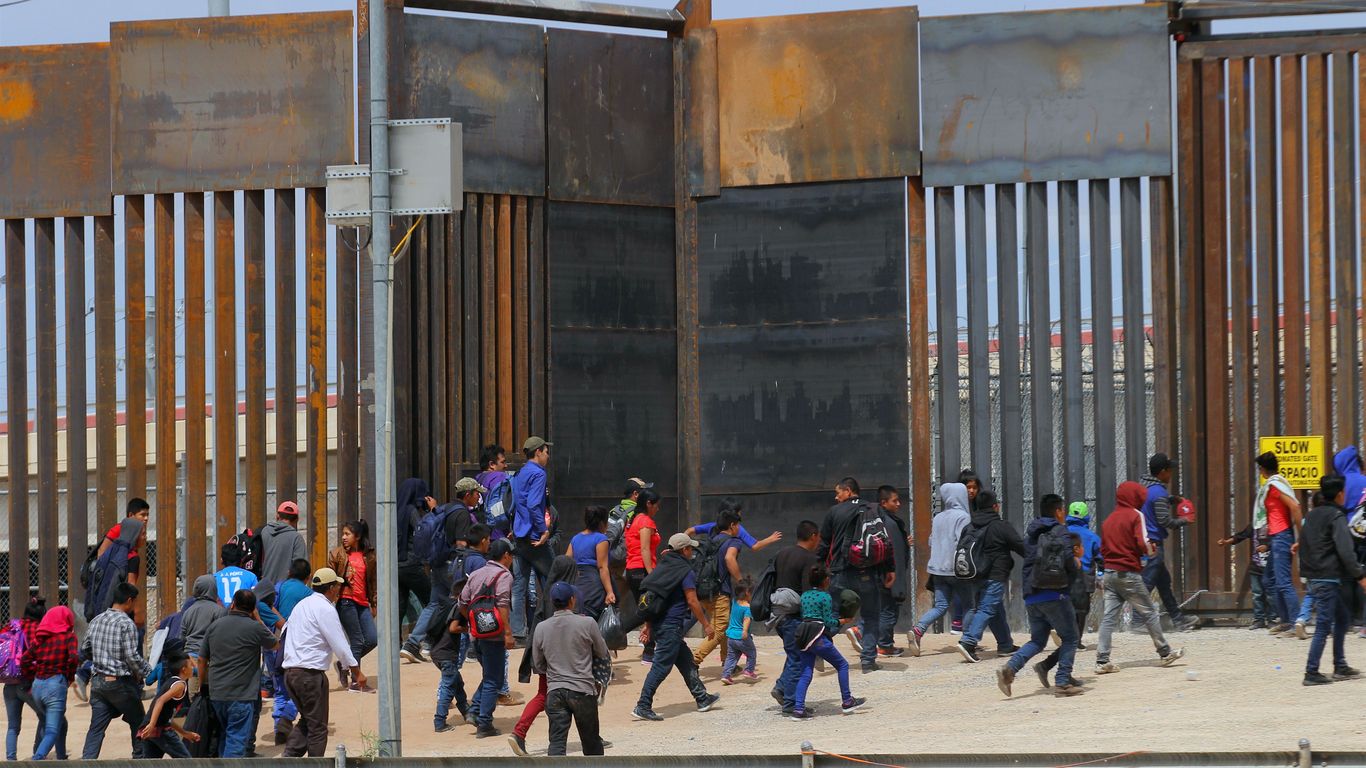
The White House is giving bridal gifts to almost 500,000 couples! NBC News and other news services have recently reported that President Biden  plans on issuing a executive order which will "shield" illegal immigrants from being deported, that is if they're lawfully married to a U.S. citizen. In fact, the order will instantly provide legal status to nearly 500,000 illegal residents right off the bat!

The key requirement of this executive order is that the immigrant in question must have been in the U.S. for a minimum of 10 years. The legislation will automatically give the individual access to a three year green card, or work permit, allowing them to openly work in the U.S. and draw benefits. Can you think of a better way to flaunt your immigration status to ICE and the Border Patrol than uttering two simple little words---"I do"?

Interestingly, the executive order comes just two weeks after Biden issued a executive order to allow immigration officials full authority to deport immigrants illegally here without processing their asylum requests. Sounds an awful lot like a President who is either not sure of what he's doing or is trying to pander to both sides of the issue. Thus, there's a few points which I think needs to be addressed here.

Well, first off, they aren't "undocumented". I'm sure they have ample documentation. It's just that they don't have a green card, meaning they are in the U.S. illegally, making them a criminal. and there's roughly 11.4 million illegal immigrants currently living in the U.S..

So, in order to remove the deportation "Sword of Damocles" from over their heads, all they need to do is find a willing partner (which doesn't have to be consummated in any form or fashion), stay married (at least on paper) for about a year, and then get divorced

Secondly, this legislation should prove to everyone on both sides of the border that without a shadow of doubt that the U.S. Government isn't serious about stopping illegal immigration at the border nor has it ever been serious about stopping it. If it was the national security risk they've claimed in the past, it would have been stopped by now.

The fact of the matter is that businesses want and need cheap labor who are more concerned with having a job than about benefits or even job safety. It true that many of these individuals who take jobs most of us won't. That's mainly because the job doesn't pay very well, there's rarely any benefits, and many times the job is unsafe or unhealthy. Also, since they're here illegally, they are unlikely to rock the boat.

It's also a fact that with this new found abundance of labor increases demand for available jobs. Higher demand drives down wages as competition increases. But it's not just wages, it's benefits too. With rising inflation, people will be to frightened about losing their job to rock the boat either. A win-win for businesses and a lose-lose for workers.

Of course, businesses aren't the only ones to benefit. Unions stand to benefit too. For decades unions have been hemorrhaging  money due to declining membership. They hope that many of these "undocumented" individuals will take some of the low paying union jobs. since their union dues will go a long way in filling their depleted coffers.

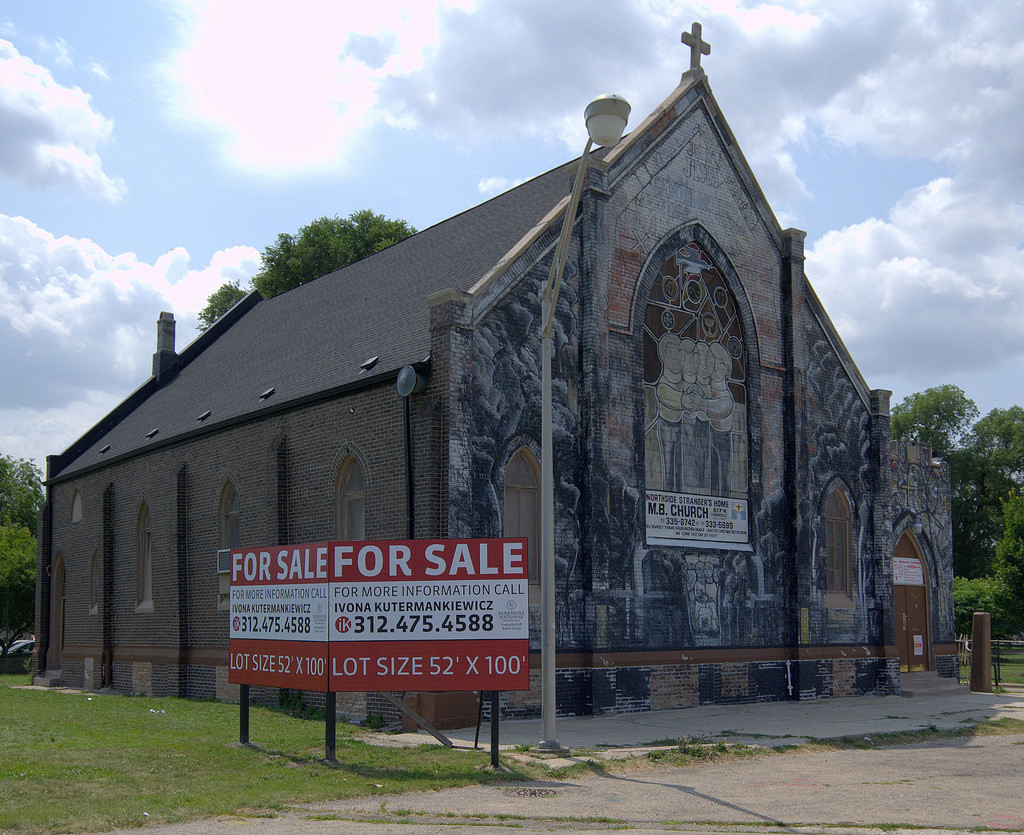
In addition, a number of religious groups and their service organizations have quietly and not so quietly been urging individuals and families to cross the border anyway they can. They believe their status as a "church" will keep ICE agents out long enough for them to find  appropriate transportation, housing and work. Besides, they're a "church" which makes them exempt from following the law, or so they think. 

These organizations also assist them in finding ways to take advantage of legal loopholes to secure taxpayer based services such as medical and entry of their children into public schools. Of course, ultimately they hope they'll become active members of their "flock" and make regular deposits to the collection plate. Not only will this build membership and improve the church financially, it also give them greater political clout.

Lastly, with a change in immigration status, I'm sure some entrepreneuring individuals will set up a "marriage broker"service. These modern day "shadchens" (a Yiddish  term for a "matchmaker") could specifically cater to each illegal immigrants particular situation  to help find a willing ---no-strings-attached---pseudo-spouse who's looking for cash---oops, I mean "love"---and  future short term mate quickly. I bet you'll see all sorts of these quickie wedding joints suddenly start springing up along the southern border. Who knows, perhaps a few "working girls" would be willing expand their professional services!

The bottom line here is really simple. President Biden is openly showing the American People that Washington isn't serious about stopping or reversing  illegal immigration anymore than they are willing to deport those already here. It's just too profitable. We've been pandered too and given lip service for decades.  Most, if not all, of what we've been told has been lies. Can it be any more obvious of the contempt the ruling class has for ordinary Americans?

Therefore, we can either continue to accept lies as business as usual and keep our mouths shut or demand transparency and elect people willing to defy corporate lobbyists and party bosses and have the backbone to do something about the border crisis.  And for those who are willing to do so on our behalf, we must given them our unwavering support.

If you enjoyed the article, please consider passing it along to others and don't forget to subscribe. It's free! Lastly please be sure to "like" us on whatever platform you use to read anotheropinionblog.com. It helps beat the algorithms and keeps our articles in circulation. Thank you!


NBC News:  Undocumented spouses of U.S. citizens will be shielded from deportation under new Biden plan


Biden to give legal status to 500,000 undocumented spouses


Matthews: Illegal immigrants double under Biden---and that's just the start


MPI: Profile of Unauthorized Population: United States


FAIR: How Many Illegal Aliens Are In The United States? 2023Update


Churches get more involved in immigration issue


Saturday, December 30, 2023

Illegal Immigration and America: Death by a Thousand Cuts?


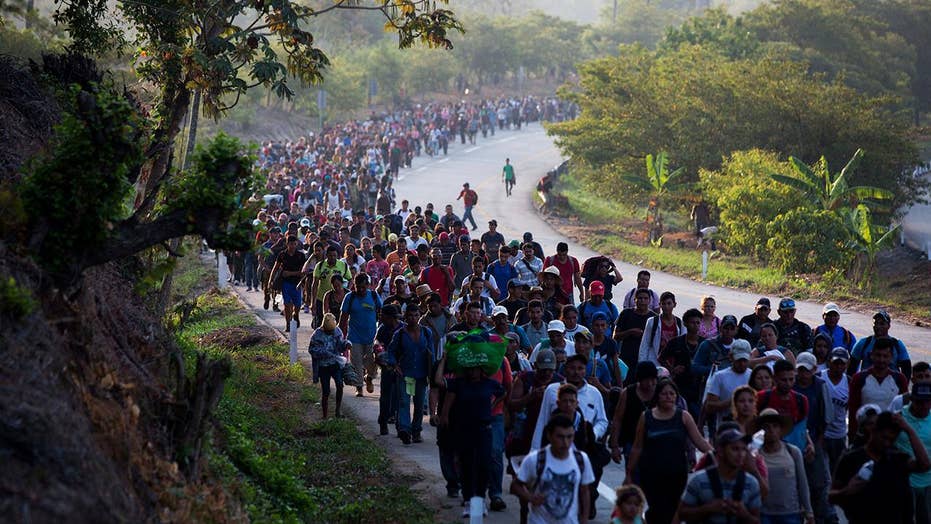
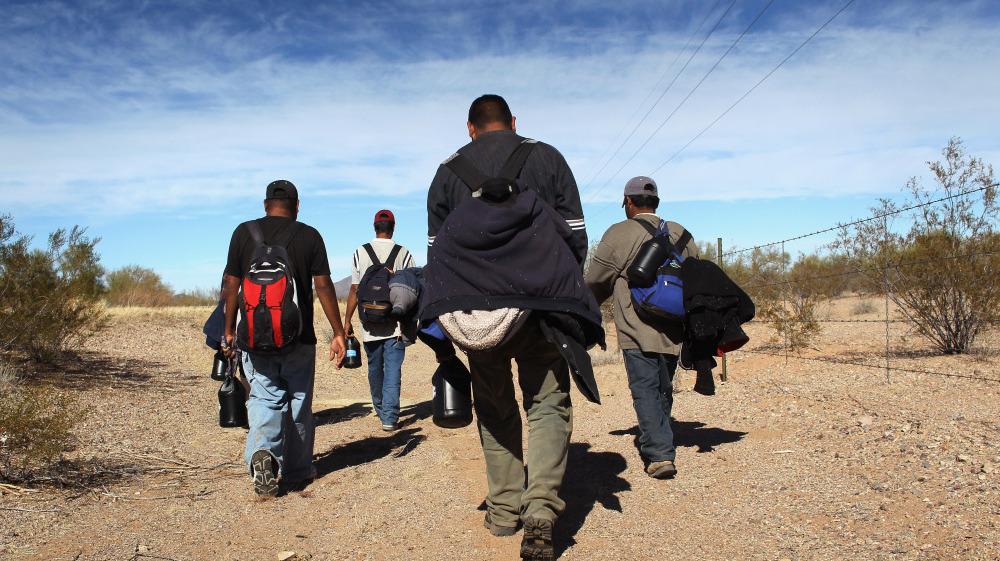
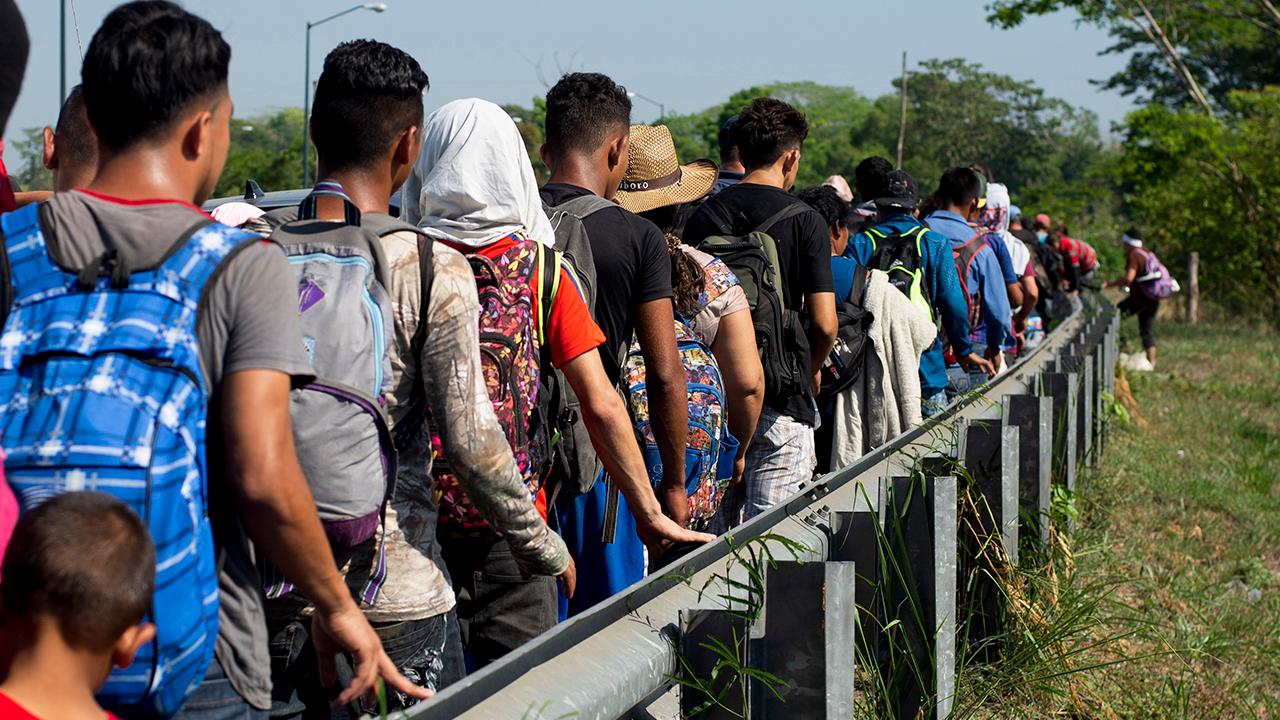
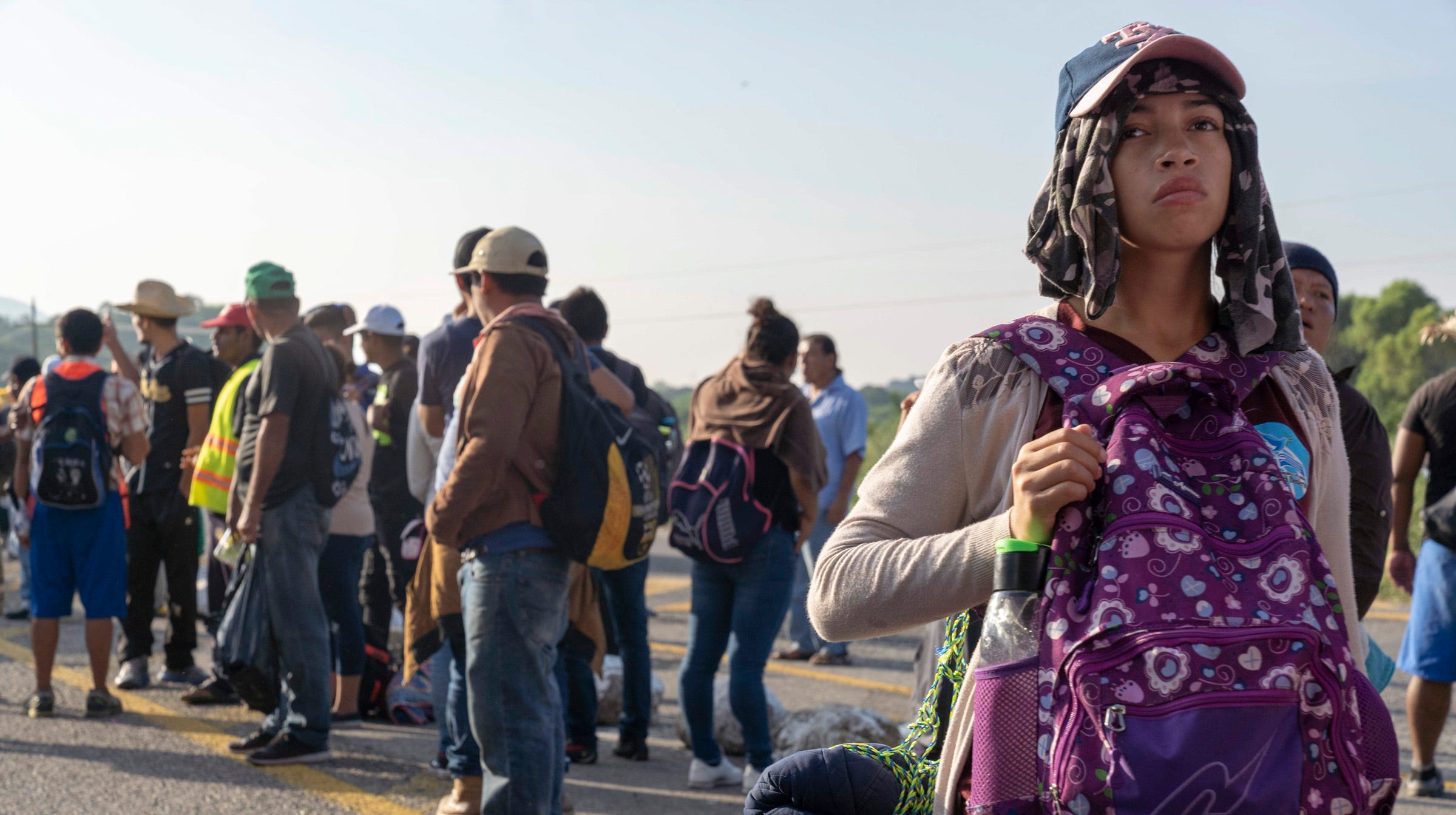
Once again, a caravan of migrants are heading toward the U.S. border with Mexico. Just how many is a matter of debate. At present, the caravan has roughly 8000 men, women, and children. That number will change greatly as individuals and groups leave while others join. Some of the immigrants admit that their goal is to seek sanctuary in the United States while others want to stay in Mexico, at least for the time being.

Media outlets have (as usual) focused on the women, children, seniors, and handicapped with the aim of turning the event into a typical human interest story, which are great for ratings. The focus, as usual, is on the many hardships facing the migrants. There was a recent report about how migrants were "forced" to sleep on the ground using cardboard for mattresses over Christmas.

They also talk about the dire conditions of walking thousands of miles with essentially no shelter, scarce food or fresh water, little or no medicine except what they brought with them. Some are able to barter with other migrants or local residents for various necessities (toilet paper is always in high demand as are shoes and socks). Several charities have, however, been able to pitch in with donations along the way.

There was one story about a week or so ago where one of the leaders of caravan said that he wanted to bring the plight of migrants living conditions to the attention of the governments of Mexico and the United States. He went to indicate that expected the Mexican government to provide some humanitarian relief, despite the fact that the trip through Mexico is a violation of Mexico's immigration laws and border security.

From the tone of the interview, it seems that some among the migrants were expecting to be provided with air conditioned busses somewhere along their trek northward. In truth, they're lucky they haven't been forced back to Guatemala, where the caravan originated from or detained by Mexican Federales.

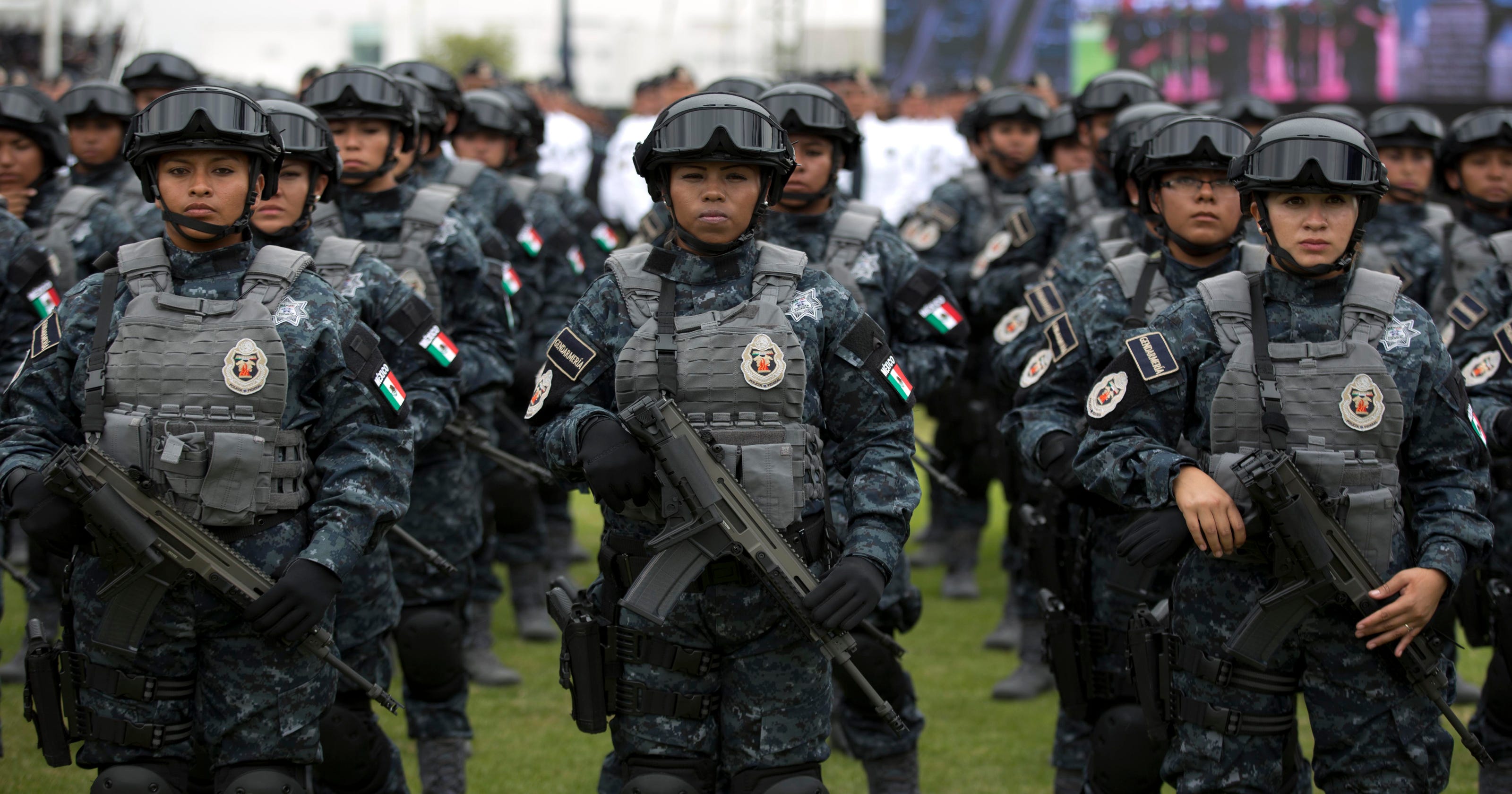
The Federales, or Mexican Federal Police are known for the "no nonsense" discipline and enforcement of the law in the same vein as the Texas Rangers or Canadian Mounted Police. There have been numerous reports of rouge elements taking advantage of the migrants through shake downs, rapes, physical beatings, and temporary jail time in one of Mexico's notorious rural jails. There's even been a few unsubstantiated reports of migrants travelling alone or in small groups being murdered.

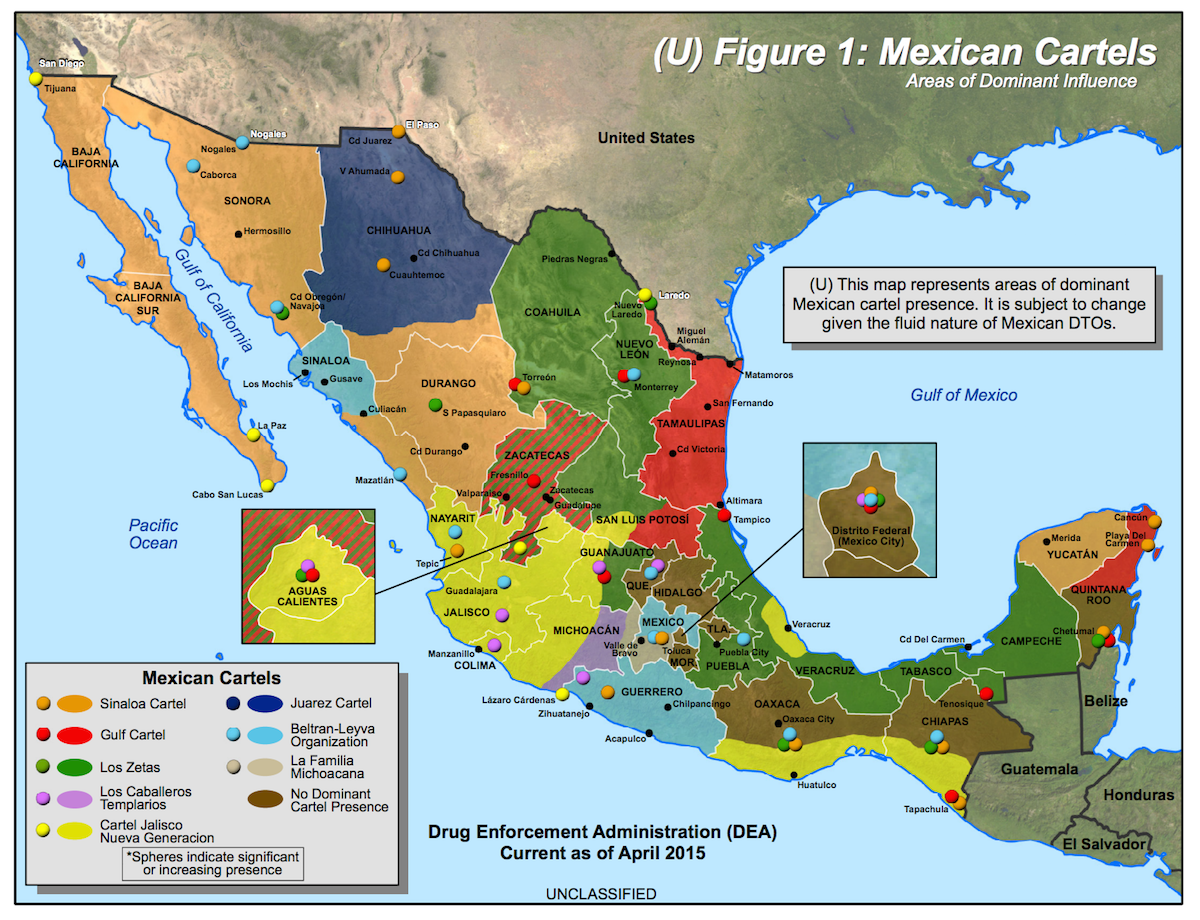
Of course, there's also the ruthless drug lords to contend with. The route usually taken by migrants take them through areas controlled by various drug cartels, and you can be sure they'll have their hand out in typical gangster fashion---pay up for protection or face the consequences.

Some of the drug cartels offer to provide "coyotes" or guides through relatively safe areas into the United States. They're kinda like a cross between a Old West wagon master and the James/Younger Gang. These coyotes provide nothing more than their expertise as guides through some of the back roads and trails leading to the Mexican-U.S. border, and the best places to cross.

Caravans or individuals migrants moving up from Central and South America, may encounter as many as six different cartels ranging from Los Zetas and Sinaloa in the south to South Pacific Cartel, Juarez Cartel, Gulf Cartel, and the Sinaloa in the north (the Sinaloa cartel control the largest swath of territory in Mexico by far). The central portion of Mexico is largely open and highly disputed, which includes Mexico City.  However, that doesn't mean it's cartel free. Certain areas in central Mexico are run by smaller and non-aligned drug related gangs.

Being a coyote can be a pretty lucrative business. The average coyote charges around $1500 to $5000 per person to bring someone across the border. On any given night, they might move 500 individuals or more. A small operation might make anywhere from $780,000 to over $1 million dollars a year (and all tax free naturally). Large operations can see as much as a billion dollars annually.

A few of these coyotes might hook them up with other coyotes who operate on both sides of the border. These individuals will usually provide transportation once the individual crosses the border, in the form of car trunk or semi truck trailer, bound for someplace far away from border patrol agents.

Occasionally, for those short on cash to pay the coyote, there's a job of sorts waiting for the migrant at journey's end, albeit working in some sweat shop processing drugs or for the younger and more attractive women, a job turning tricks. Some may be tasked with running or warehousing drugs or whatever else the cartel needs. However, most choose to pay their fare and take their chances once they reach the border.

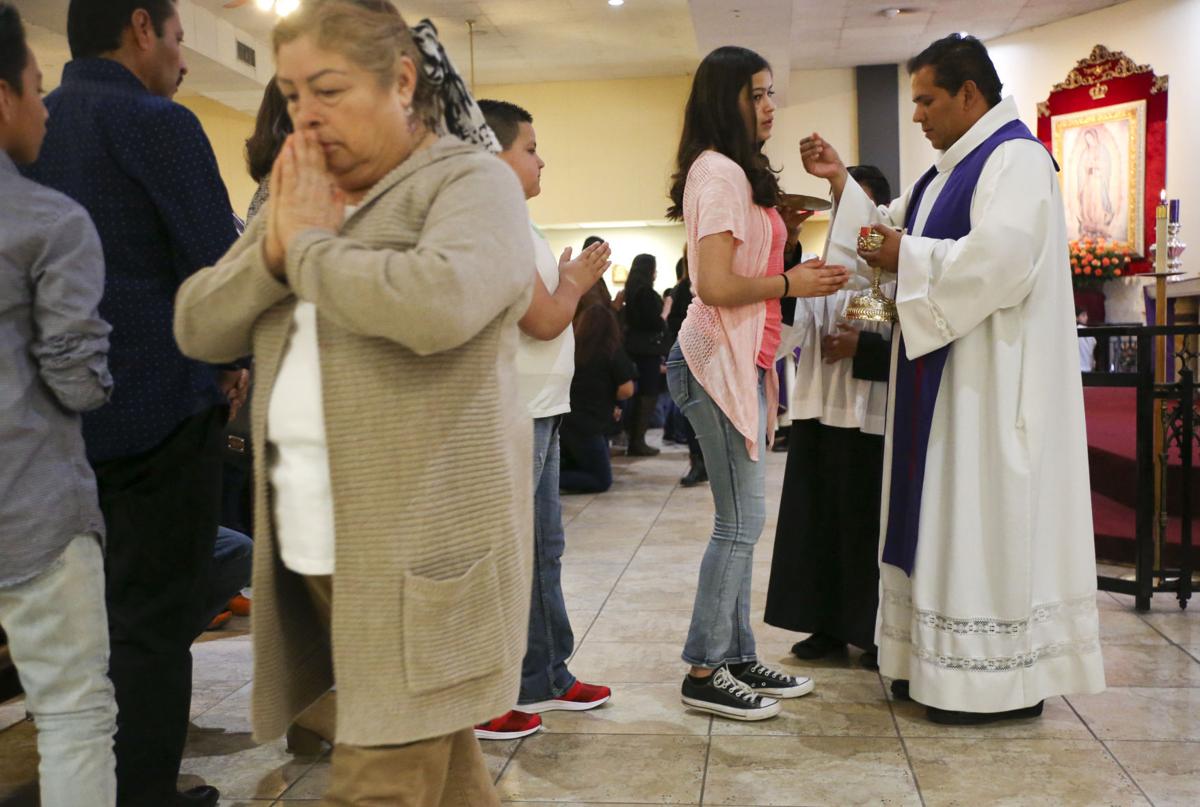
Various religious organizations (mostly Catholic) compete with the cartels for the last leg of the migrants journey into America. These groups ensure contact by advertising extensively in the border towns and communities along both sides of the border. They typically provide a means to contact them and the assurance of transportation once they reach the U.S. and promises of a warm meal and shelter complete with a bed and fresh linen, but it doesn't end there.

Many of these religious groups provide the newly arrived migrant with the kind of help they'll likely need, both legal and financial. They help migrants with completing the necessary forms (and correct wording) in their native language to gain at least temporary status in the U.S.. The current technique involves a plea for amnesty, which is typically given priority (especially if children are involved) and the best part is that not a lot of documentation is required, at least not initially. As an aside, amnesty doesn't apply if the applicant is merely seeking employment or better living conditions.

In addition, these organizations provide legal assistance with all mandatory hearings, and finding long term shelter, help with obtaining employment with businesses that don't ask a lot of questions. These are often in agriculture, farms (including horse racing tracks), hospitality, and construction. They provide aid in navigating the bureaucratic maze to obtain taxpayer paid medical care and school enrollment for their children (which can be in their native language with English never having to be learned...ever).

The cost to the U.S. taxpayer is in the multi-billions (in 2021 the estimate was $120 billion). So why do these groups do it knowing the financial burden they're putting on the already cash strapped Americans? The answer is simple. They sincerely believe they are above the law. Immigration laws, quotes, or whatever doesn't apply to them because they've convinced themselves that they're serving a "higher purpose" and they only have their faith to answer to. Seriously.

Of course, there is the "other" reasons which aren't discussed much, at least not openly. Many of these church based groups are looking to growing their numbers for a variety of reason, but it ultimately comes down to political and economic clout. The more members, the more money flows into their coffers. Secondly, they gain more direct and indirect influence; the kind that politicians pay attention to.

Secondly, since many of the members of these organizations are Democrat, they expect that once the immigrant becomes a citizen, they will repay the kindness by registering as Democrat, The flaw with this tactic is that most migrants are here to find a job. They have no interest in citizenship. They also tend to be fairly conservative socially which puts them at odds with Democratic ideology.

In addition, many of these migrants will end up in trades or industries which are organized. Labor union membership has long been spiraling downward since the 1960's with their core base---production---being sent overseas as a cost cutting measure by businesses. In addition, with more people attending college, many of these entry and low levels positions go unfilled.

The influx of immigrants, legal and illegal, helps to keep these jobs from remaining empty. Since these positions are mostly unionized, filling them pumps badly needed money into union coffers in the form of union dues.  Workers get decent pay, often with good benefits, safe working conditions, job security, and someone to go to bat with them if they need it.

It's far better than working for some dangerous sweatshop with no benefits, impossible lots, and pay so low its illegal. Working conditions are miserable and often unsafe (no air conditioning in the summer, no heat in the winter, no restrooms, etc). And if the boss says you're working 12 hours straight, you are, and there's little recourse. After all, the employer can (and will) hold your immigration status over your head. 

In 2022, some 2.76 million immigrants came north, mostly from Nicaragua, Honduras, Cuba, and Venezuela. They came for a myriad of reasons, from economic conditions (largely triggered by U.S. embargoes and sanctions) to government corruption and wars (many of which we underwrite). So far this year (FY2023), their numbers have been around 2.5 million.

However, U.S. and Mexican government authorities have reported seeing increasing numbers of mainland Chinese, North Koreans, and those from Middle Eastern countries such as Iran, Iraq, Syria, as well as Kurds among the migrants. There is little doubt among government officials that intermingled within these groups are active terrorists. Last year, Mexican authorities incepted several individuals with terrorist connections hiding among the caravans. Most of those caught have been single, male, and of military age.  

The American People have been demanding for decades that Washington contain our southern border, yet nearly every attempt has been thwarted despite U.S. and Mexican officials agreeing that the migrant issue has reached critical levels.  President Trump's efforts to build a wall was meet with fierce        resistance, both in Congress and by the corporate controlled media. So, who is behind the push to keep the border open?

Ironically, one major cause for the influx of migrants is the media itself. According to one recent poll, 71% of individuals between ages 16 and 24 confirm hearing on media outlets rhetoric about the U.S. southern border being "open". They also hear that entry is easy and there are plenty of jobs. That's more than enough incentive for people living in poor economies like Ecuador or El Salvador. 

Powerful drug cartels and corrupt governments are taking advantage of the situation too. For politicians, it's a way to get rid of their poor by encouraging them to go north, thus saving millions in tax dollars. Drug cartels and independent coyotes can easily make millions or more guiding people northward, and of course, there's plenty of unscrupulous individuals along the way to take further advantage.

In the U.S., there are ample religious organizations and special interest groups who would like to see the southern border opened even further, especially among Hispanic communities. Hispanics are the second largest population in the U.S. and growing and they account for 14.3% of all voters (currently they vote Democrat by a 2:1 margin). Within the next 25 years, they will be on par with European whites and perhaps 30 or fewer years into the future, they'll likely hold a majority. This is why both of the corporate owned political parties are currying favor with Hispanics.

The debate over illegal immigration is, in many respects, already over. While the Federation for Immigration Reform (FAIR) projects around 17 million illegal immigrants currently living in the U.S., a study by Yale University says the number is closer to 22 million illegal immigrants. Meanwhile, those numbers grows daily thanks to so-called "sanctuary cities" who openly defy federal immigration laws while simultaneously demanding more federal tax dollars to cope with the influx of illegal migrants!  

With the growth of Hispanic influence, there will be changes unimagined by our parents and grandparents in the U.S.. While socially conservative and family oriented, politically they've tended to lean socialist and populist, but does that reflect America's political and social future?

Given that the U.S. has historically aggressively oppose anything socialist or populist to the point of overthrowing duly elected governments and installing juntas, it will prove interesting to witness. After all,  with a total population of 65.57+ million (13% of which being illegal), are hard numbers to ignore, even in the U.S..


If you enjoyed the article, please consider passing it along to others and don't forget to subscribe. It's free! Lastly please be sure to "like" us on whatever platform you use to read anotheropinionblog.com. It helps beat the algorithms and keeps our articles in circulation. Thank you!


Coyote


Mexican Cartels


Thousands join migrant caravan in Mexico ahead of Blinken's visit to the Capital


Shifting Patterns and Policies Reshape Migration toU.S.-Mexico Border in Major Ways in 2023


Migrant border crossings in fiscal year 2022 topped 2.76million , breaking previous record


The Path to Democratic Socialism: Lessons from Latin America


The U.S. cannot ignore the new 'pink tide' in Latin America


Yale Study Finds Twice As Many Undocumented Immigrants AsPrevious Estimates


Saturday, August 26, 2023

Immigration As President Teddy Roosevelt Saw It

There are currently about 15.5 million illegal immigrants living in the United States at of 2021. With approximately 1.8 million or more coming annually, that figure could be a lot higher. Many who are coming are now claiming to seek "amnesty". The question, however, is just what is meant by "amnesty"? The answer is jobs.  Like most immigrants, they want a better life for themselves and their family. Unlike immigrants of the past, however, many don't want to assimilate.  

Few have any interest in becoming a U.S. Citizen or in learning to speak English. To want to cling to familiar ways, values, and traditions. They establish enclaves which resemble their homeland than it does the United States. Some even choose to fly their native country's flag, sometimes over our own which is seen as highly offensive.

A few demand to have their children taught, at taxpayer expense, in their native tongue rather than in English. Why? Because this is where they happen to live,work, and socialize but it isn't their "home". That's hundreds or thousands of miles away.

Yet, they want jobs, and for many, any job will do. Of course, that has been the hallmark of immigrants since time immemorial.  Whereas in the not too distant past most immigrants left the "Old Country" and all that entails behind, newer immigrants maintain a much closer relationship with their former country. In fact, many routinely send money from these jobs back to the towns and villages they left. 

Mexican workers, for instance, send an average of 13.4% pf their paycheck back home to family and friends. In 2002, approximately $800 billion dollars was sent home by migrant workers here in the U.S.. Many of these communities are in fact dependent on the money sent home to survive.  

Attempts to secure our borders, as any sovereign nation is entitled to do, has been met with harsh criticism from many of the immigrants themselves, from religious institutions and businesses to stand to be impacted economically, from foreign leaders who reject our right to protect and secure our borders (as they themselves have done), and by a few other misguided individuals. In light of this, I have to wonder what would our Theodore Roosevelt, our 26th President, have thought about this?

"TR" or "Teddy" (which, thanks to his crisp upper crust New York accent, sounded more like "Teedy") as President Roosevelt was often called, was the product of his times. He epitomized everything the United States stood for at turn of the 20th Century, and that included a sense of patriotism that we would find hard to understand today. As he said in one of his most famous speeches, made in 1907, we have room for one language, one flag, and loyalty to one nation---the United States of America.  

As an aside, from 1900 through 1915, which included the years "TR" was president, an estimated 15 million immigrants came to the United States, most of them from Europe, especially Eastern Europe.  That means that 13% of the U.S. population was born somewhere other than the United States. Today that number of 47.9 million as of September 2022, which represents 14.6% of the population (the high was 14.8% in 1890).  

I've come across a copy of that speech, posted by BOBWASTINGTIME about seven years ago,  which deals primarily with immigration and what should be expect of those who come to our shores in search of a better life. The video (a recreation of President Roosevelt's 1907 "Immigration Speech") originally produced by One America News Network. The video lasts just 59 seconds but is well worth watching. I think the words of our 26th President should still apply. What do you think?  


Video: Immigration Quote President Roosevelt 1907


If you enjoyed the article, please consider passing it along to others and don't forget to subscribe. It's free! Lastly please be sure to "like" us on whatever platform you use to read anotheropinionblog.com. It helps with the algorithms and keeps our articles in circulation. Thank you! 


TheodoreRoosevelt Quotable Quote: 1907 Immigration Speech


Money Mexican migrants send back home up 13.4% in 2022


A town in Mexico survives entirely on money sent back by U.S.migrants


Migrant works sent home almost $800 billion in 2022. Whichcountries are the biggest recipients?


Immigration During Theodore Roosevelt's Presidency


Friday, August 19, 2022

Religion, Freedom, and Americans

According to a Gallup Poll from December 2021, 75% of Americans identify with some form of religion. Of that, 69% named Christianity as their religion of choice.  When asked for specifics, 35% said Protestantism while 22% said they were Catholic. However, 12% said declined to say.

 Meanwhile, 7% of those surveyed said they weren't Christian. Of those, 2% professed to being Jewish, while 1% each identified as Muslim or Buddhist. 3% declined to answer. But it's worth noting that 22% of those interviewed said they had no religious preference.

The significance of this survey comes into focus when you look at a similar survey conducted in 1971 when 90% of those interviewed identified as Christian, a 15% drop over 50 years, or about two generations. Further highlighting the shift was that in 1971, just 6% said they weren't Christian and a mere 4% had no religious preference.

The 2021 Gallup Poll said that 49% of those who adhere to a religion felt said that it was important to them.  Another 27% said it was "fair" important, while 25% felt it was of little or no particular importance.  But back in 1965, it was quite different. Then 70% of those survey said religion was "very important" to them. That dropped to 52% in 1978 before rising to 60% in 1990 where it remained consistent until 1996 before dropping to its present level of below 50%.

Church membership and attendance are two other key factors affecting religion in America. In 2000, Gallup asked participants if they attended a religious service in person or online, 44% said they did. Compare that to 49% in 1958 who attended services. By 2021, that number had dropped to just 29%.

When it came to membership, the numbers are just as bad. When Gallup first asked respondents if they formally belonged to a church back in 1937, 73% said yes. In 1999, that number was still pretty high with 70% saying they were. However, in 2021, that figure had dropped off to 47%.

The decline was primarily among those under 30 years of age, while it remained fairly stable among seniors.  For those born before 1946, those belonging to a organized religion dropped from 77% to 66%. From Babyboomers (1946 - 1964), that number went from 67% to 59%. Gen X (1965 - 1980), the figure declined by 12%, 62% to 50%. Finally, Millennials (1981 - 1996). Just 36% are belong to some religious denomination. As for Gen Z, 34% were unaffiliated with any religion.

When we break those numbers down further in order to get a clearer picture things get really interesting. First, the largest drop in membership was among Catholics who've dropped from 73% in 1998 to 58% as of 2020. For Protestants, it went from 73% to 64%, with mainstream churches (Lutheran, Baptist, Methodists, Presbyterian, United Church of Christ, etc) being hit the hardest. Even Evangelical churches, which had the largest growth just a few years ago, are seeing record number declines.

Women, once the staple of church membership, has dropped by 20% over the last 20 years, down to 53%. 18% for men or 46%. Among whites, 59% attend, a decline of 16%. For blacks it's was slightly worse--- a 19% decline to 59%. For Hispanics, however, the numbers were worse. Since 2011, church membership among Hispanics has dropped off to just 37%.

As an aside, a 2018 Pew study showed that for the first time ever, the majority of Hispanics in America are no longer Catholic (something I'm sure certain Catholic service organizations were expecting when encouraging Latinos to illegally enter America). In 2009, the number of Hispanics who considered themselves Catholic was 57%. By 2019, that number had dropped to 47%.

Hispanics who considered themselves Protestant rose from 23% to 26%. Of those, the majority self-identified as Evangelical. 3% said they were no longer Christian, while an impressive 23% said they were agnostic, atheist, or nothing in particular.

There's a great line from the novel "Dune", written by Frank Herbert that says "When religion and politics ride in the same cart a whirlwind follows". Although there's nothing in the Constitution about separation of church and state, America has done a great deal to keep religion and politics as separated as possible. It's not that the Founding Fathers disapproved of religion, far from it.  They were just fearful of a state created religion like what had forced others from Europe.

Under a state religion, others exist at the discretion and magnanimity of those in power; to be granted or withdrawn at a whim. In addition, the state church imposed a tax on the citizens as well as on the non-state churches. In addition, the members of these non-approved churches were required to support their minister and church which represented another tax burden many couldn't afford.

The decline of religious membership and participation among Liberals went from 56% to 35% over the last 20 years, a 21% drop. Among moderates, they experienced a 21% as well, going from 66% to 45%. Perhaps not unexpectedly, Conservatives fared the best, falling 14% from 78% to 64%, which still represents a majority.

When we break it down along partisan lines, Independents, who are the nation's largest political demographic, fell from 59% to 41%; a 18% drop.  Democrats saw the largest drop, going from 71% down to 46%, which represents a falloff of 25%.   Again, as expected, Republicans had the least drop. Over the last 20 years, they've gone from 77% to 65%, which once again still leaves them with a majority of participants.

It's ironic that the Left it portrayed by the media as being morally superior, while accusing Conservatives and Republicans of corrupting Christianity; of advocating a form of "neo-fascism" Christian Theocracy the way the Taliban has corrupted Islam. After all, wasn't it said that if fascism ever came to America it would be wrapped in the flag and carrying a bible?

 They cite the Right's push for mandatory prayer in school while ignoring other faiths and the non-religious, while also encouraging pray at social functions, not to mention limiting or prohibiting diversity and cultural inclusivity (aka "multiculturalism").

The Right, on the other hand, cite the need to recreate a "melting pot" where no one group is better than the other. At the same time, for a society to prosper, they argue that a society must share a set of common values and a common language. "You have to stand for something or you'll fall for anything", isn't that the promise of a "anything goes" society? 

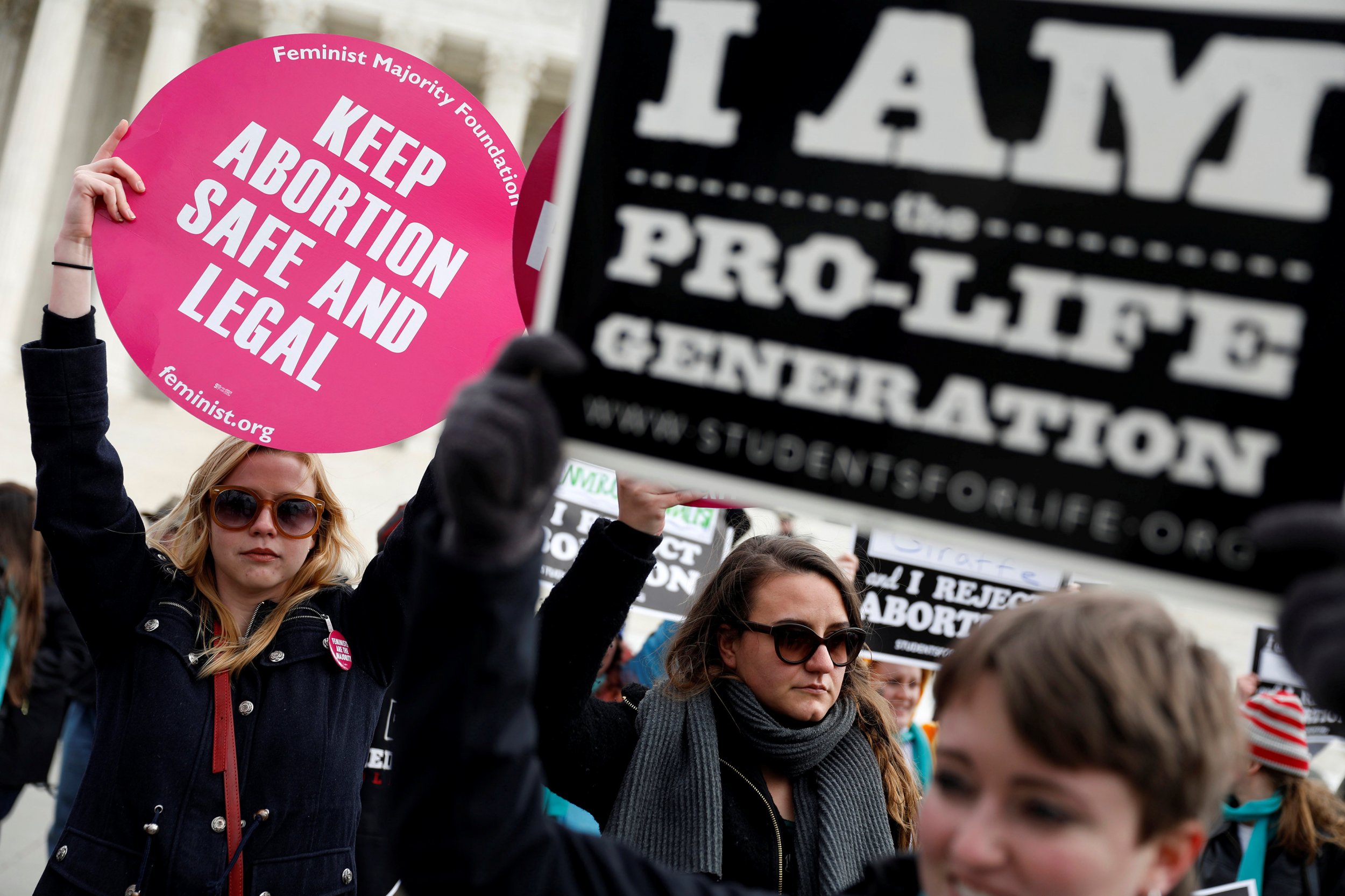
They also point out that the religious Right was behind the move by the Supreme Court to reverse Roe v. Wade, and thus making abortion illegal. The Left sees abortion as a "pro-choice" issue, whether anyone else agrees with it or not. It's their position that a woman has the right to do with her body as she pleases while the religious oriented Right hold that that option ended the moment she became pregnant. 

Even what constitutes a "unborn child" is disputed! The Right says that at the moment of conception, life has begun and all future decisions must be based on that. Meanwhile, the Left believes the process of life (cell division) may technically begin at conception, but you don't have a "life" until there's a heartbeat and brain activity (the absence of which is near uniformly acknowledged as death by the medical community). 

There are some on the Right who believe that the pregnancy must come to term no matter the circumstances of the pregnancy (ie: rape or accidental) or possible medical disabilities that might bring up to and including those affecting the mother's wellbeing, and will cite cherry picked passages from the scripture of their choice to support their claims. But what if the individual isn't of their faith or culture? What then? 

Other issues which separate the Left and Right along religious lines include the acceptance of homosexuality, the admission of female clergy (or gay clergy), the role of women in church and at home just to name a few. None of these even touch on groups like the Amish, Mennonites, Quakers, Mormons, and other non-traditional religions which have either in part or in totality rejected aspects of modern society.

As an aside, the Mormons are one of the few Christian sects which has actually maintained their numbers. While the Utah based church hasn't grown, it's numbers haven't dropped off like other Protestant denominations have (in 2020, the growth rate was 0.6%. In 2021 it was 0.85%). It's primary areas of growth has been in Africa despite a significant drop in missionaries (thanks mainly to Covid-19).

So, what religious based groups are doing well?  In the U.S., the fastest growing organized religion is Islam, albeit the numbers themselves are extremely small. Islam makes up less than 1% in the U.S. and it's growth rate has been 0.6% to 1.5% over the past few years. Nothing to write Mecca about! However, Islam is expected to surpass Judaism in the very near future with Islam reaching eventually about 2.8% of the population compared to 1.8% for Jews. Non-organized religions such as pantheism, paganism, Wiccan, Native American, and African faith systems are also growing rapidly as is the more secular Humanism.  

It's also worth noting that since the collapse in the 1980's of Communism in Eastern Europe, churches have made a comeback in a big way. Under Communism, atheism was the defacto "state religion". Nevertheless, efforts to suppress or even outlaw religion under Communism was largely unsuccessful. Growth mainly among Eastern Orthodox, Catholicism, and Lutheranism has rapid and sustained.

Even in the former center of Communism, Moscow, President Vladimir Putin is a semi-regular attendee at religious services where 71% openly identify as Orthodox, 10% Muslims and 15% who remain "unaffiliated".  87% of Poland are Catholic. 95% of Romania and Moldavia adhere to some religion. 84% for Croatia, and so the story goes.

Religious freedom was denied the people of Eastern Europe for nearly 50 years. Now it's back with a vengeance. Perhaps you have to lose something to realize its value, which for the people under Communism not only included freedom of religion, but by extension, freedom of expression and speech, association, movement, ownership of property, equality of justice, and control over our own persons.

Religion is not mandatory in the West. Those days of autocracy and official religions have thankfully long passed. Today we have the option to accept or reject it. In other parts of the world the people don't have that choice. The state has made the decision for them as to what's acceptable or not, and the penalty for rejecting that decision can be brutal, if not fatal. Migrants to Europe, who claim to be seeking economic and social freedom, are trying to impose their repressive religious and social values on the very citizens whose nations accepted them.

The Founding Fathers intended to create a new society where we had the freedom of religion (which by definition also includes freedom from religion). This freedom meant you could freely practice your religion but you couldn't impose it on others. It also meant the state was prohibited adopting any religion or from imposing any religious beliefs or penalties in its citizens. For its time, this was huge.

Our Founders bequeath to us a freedom of choice, which implied, among other things, the right to believe as we were so inclined too, as well as freedom of speech and expression, association, the right to a fair trial, and the right to defend ourselves from those who would seek to deprive us of these and other rights, which goes to the Founder's belief in the natural and preeminent rights of the individual.


If you want to know more, please take a look at the links below. If you enjoyed the article, please consider passing it along to others and don't forget to subscribe. It's free! Lastly please be sure to "like" us on whatever platform you use to read A/O. It helps with the algorithms and keeps our articles in circulation. Thank you!  


U.S. Church Membership Falls Below Majority For First Time


How Religious Are Americans?


Mainstream Protestants Make Up Shrinking Number of U.S.Adults


"Seven Sisters" of Mainline Protestantism Still Bleed Members


Majority of Hispanics in the U.S. no longer Catholic newstudy finds


The Unlikely Rebound of Mainline Protestantism


Saturday, April 17, 2021

The Babyboomers and Millennials: The Generational and Religious Divide


Last week, I wrote about the decline of organized religion in the U.S.. In addition last week's article looked at how Babyboomers, Millennials, and Gen Z, have influenced this decline which began in the 1960's. This week, we'll get a more specific, starting with the Babyboomers and continuing with the Millennials.

Babyboomers (1946 - 1964) were the product of a society which experienced, on the one hand, one of the most prosperous economies in the country's history, and on the other hand, perhaps America's most violable period.  It was a traditional childhood and youth in one sense but would ultimately led to violent rejection of traditional values, anti-war protests, clashes over race relations and civil rights, which, between 1955 and 1975 took the nation from one which trusted the government to one which had utter contempt for the government.

It was during the 1960's and early 1970's that many Boomers turned their back on organized religion, although there was a brief and intense resurgence as noted by the popularity of musicals like "Godspell" and "Jesus Christ Superstar" which attempted to find a new relevance and interpretation in religion. At the same time, "Fiddler on the Roof" attempted to revive Judaism's historic belief in its traditions and values while plays, like "Hair" and  "Oh! Calcutta!" explored society's changing morality, especially its sexual morals.

The same, or similar expression of disconnect found expression in music, art, and even TV shows like "All in the Family", "The Smother Brothers Comedy Hour", and Rowan and Martin's "Laugh In".  Even network comedies like "Get Smart", "Love American Style", and others carried a anti-establishment undertone. It's not surprising then to expect that religion too would be affected.

Rock groups like The Beatles, The Rolling Stones, among others  had a profound effect on that generation's view of organized religion (in a sense, their "message" came to replace that of the pulpit's).  Groups like these introduced society to the Eastern philosophies, mysticism, yoga, acupuncture, mantras, meditation, holistic and herbal medicine, and Swami whose names we couldn't pronounce.

In addition, first cohort Boomers (1946 - 1954), were largely Left leaning politically. They promoted an idealistic vision of socialism, and began viewing the Cold War as nothing more than propaganda war by Wall Street over who controlled what natural resources and allowed military bases. 

By the late 60's, Boomers started moving to communes as a socialistic experiment and to "get back to nature". They joined small collectives, growing their own food, sharing chores, making their own clothes. Those who, for whatever reason, weren't able to join in, however, started forming neighborhood associations and block watches to take care of their piece of the New American Dream

They also started petition drives and formed boycotts against "unfriendly" or "anti-nature" corporations which wanted to pave over the "bunny fields". From thus the concept of the "NIMBY"---Not In My Backyard was born and remains very much alive today. It was also the birth of consumer advocacy,citizen lobbyists, grassroots environmentalism, and community activism.

The Boomers involvement with protecting the environment, especially air and water, ultimately resulted in the passage of the Clean Air and Water Act and creation of the EPA (1970) just as they had done earlier with the passage of the Civil Rights Act in 1964, which was later expanded in Title VII to include other categories such as gender and age discrimination.

Meanwhile, the second cohort of Babyboomers (1955 - 1964), which embraced many of the same ideals as their older siblings, tended to be less optimistic. They had been more deeply affected by the outcome of the Vietnam War (in part, due to the nightly "body count" on the evening news) and America's failure to secure victory after a nearly 20 year war and the loss of almost 60,000  (mostly young) men and women amid a mountain of lies by the military, Congress, and the Presidency which just seem to grow.

Lies, such as Watergate, caused  Boomers, along with much of America, not just lost its faith in the government and it's institutions, but even its religion was affected as we headed into the 1980's thanks to the rise of the "Televangelist" and the political activism of the "Moral Majority". Sadly, we've never recovered and as I wrote last week, the trend has turned into a death spiral. 

Babyboomers, who rejected materialism in the 1960's went on to be the wealthiest generation up to date, giving us the "Go Go 80's", shopping malls, timeshares, and modern day "greed is good" robber barons like Carl Icahn, T. Boone Pickens, and Ivan Boesky.  Boomers have been behind trends such as healthy eating and fitness craze, disco and mullets (my apologies), McMansions, wine clubs, along with countless others. 

As they age, many of the things Boomers have clung on to will begin to fade (and not just vinyl records or eight tracks). We're talking about traditional brick and mortar businesses (even banks, schools, especially universities are at risk), cable only TV, home ownership, big cars, professional football and, perhaps, boxing (due to head injuries) along with baseball (which is cited by Millennials as "too slow"), and  organized religion just to name a few.

A study by the University of California at Santa Barbara's sociology department indicated that around 42% of Boomers dropped out of organized religion all together, yet 33% never dropped out. Those individuals tended to be conservative, fundamentalist, and were Reagan supporters. However, 25% are slowly returning. Of those, the majority are leaning to liberal and less traditional churches or religious institutions. Their biggest hang-ups? The need for less formality, pro-choice, and LGBT acceptance.

Today, about 88% of Babyboomers describe themselves as "believing in God" or being "pretty sure" God exists (God or some sort of "higher power"). 83% said that religion still had a positive impact on their life. The survey didn't define "religion" as being formal or the same as a less structured "faith system".


When it came to attending some sort of religious service during the year, 71% said they did (but only 38% was weekly). However, when asked if they attended some other religious program (such as bible study or prayer group), 57% said no. When asked if they prayed, 77% said they did; 61% daily and 16% weekly. When asked if they meditated, 56% said they did. Of that, 45% was weekly, while 42% didn't ("prayer" and "meditation" were viewed as being separate from each other)

The same poll asked Babyboomers if they felt a sense of inner peace or spiritual well being. Only 14% said no. 84% did, at least some of the time.  44% also said they didn't read religious scripture of any sort. Just 38% did so weekly while 17% did so occasionally. Of those who did, 35% thought it was literal word of God. 29% said it could be...maybe...or shouldn't take literally. 29% said it wasn't the literal word.

When asked about Heaven and Hell,  74% thought that Heaven existed in some form. 26% didn't think it existed or weren't convinced. As for Hell, 59% believed it existed. 41% didn't think there was a Hell or wasn't sure.  So, how does this compare to the Millennials?

Millennials (1980 - 1996) are, for the most part, the grandchildren of the Babyboomers. They seem to have inherited much of their grandparent's distrust of the government, institutions, and organized religion. However, Millennials are also more dismissive of Boomers (the common Millennial phrase "Ok Boomer" is usually intended to be a polite dismissal of something a Boomer has said or done). 

Many believe that the current social and financial hardships they face as a generation are the direct result of Babyboomers, which they view as greedy and inconsiderate (typical of the "Me Generation). Millennials are the first generation whose quality of life didn't meet or exceed their parents.

Boomers  benefited from their parent's level "living wage" jobs, lifelong employment, employer provided healthcare and retirement (which was often the result of unionization). While Boomers attended college at higher numbers than any previous generation, their debt level was relatively low, especially compared to Millennials, due to many programs which have since been discontinued, including the original GI Bill.

 Millennials are, as we all know, more diverse than Boomers, especially along race, sexual orientation, and ethnic lines, not just as a group, but among their personal relationships. As a group, they tend to have far fewer friends than their grandparents at the same age. They're also more likely to have more health issues like high blood pressure, diabetes, Crohn's, and depression. They are also more likely to have an addiction problems. Millennials are more likely to marry later in life and have fewer children whereas Boomers had more children. Boomers also tend to divorce more often, even as they age.

When it comes to the importance of religion, just 38% of Millennials said it's very important. 29% said it was only "somewhat" important while 33% wasn't impressed with it. 28% attend religious services regularly. 38% did so just a few times a year and 34% said they never do.

Asked about prayer, 36% said no thank you. 39% said they prayed daily while 35% did so occasionally. By contrast, 42% meditated (though only 27% did regularly) while 58% didn't.  When asked if they participated in some sort of religious activity, a whopping 62% said no. Only 18% did on a weekly basis. The remaining 20% was a "hit or miss". 

When asked if they read religious scripture, 53% said no. Only 25% did so weekly. When it came to believing what they read, it didn't fare much better. 20% thought it was the literal word of God while the remaining 80% weren't so sure, which included 44% who said it wasn't. Heaven and Hell? 68% believe in a Heaven; 32% not so much. As for Hell, 56% said yes but the rest didn't think so.

The downward trend of religion seems to have begun in the 1960's, although the seeds were certainly planted much earlier; likely the outgrowth of the private hell brought home by the veterans of WWII and Korea. Babyboomers were said to have been the most spoiled group in recent history; totally devoted to materialism in their childhood yet by their 20's embracing a idealistic form of socialism, and again returning to "conspicuous consumption" and corporate greed by their 30's. Now, once more, returning to the nomadic spiritualism of their youth as they enter their senior years.  

Perhaps it was an attempt by their elders to buy them things they themselves couldn't afford during the Great Depression or during the war years. A vain attempt to buy happiness which left a spiritual void in their children. Maybe the same could be said of the Millennials. They too were spoilt by their parents and grandparents, only to be left feeling hollow inside.  

Millennials have a sense of anger at what they see as misused consumption by their elders, leaving them in no mood to be lectured by a generation which seemed to have had it all and blew it. Now they find themselves adrift financially, politically, and spiritually.  However, with no societal anchor to be found with their parents, grandparents, or great grandparents, the deciding fate of organized religion and perhaps society itself lays with the Gen Z, the new kids on the generational block.


Religious composition of Baby Boomers


Generational cohort by religious group


Why Millennials distaste for Babyboomers is justified


Religious composition of younger Millennials


Saturday, April 10, 2021

Where Has That Old Time Gospel Gone? The Decline of Religion in America

According to a recent survey by Barna, 20% of all churches, regardless of denomination, could close by the end of 2021. That's approximately 60,000 churches nationally. Although there are a number of factors, the leading contributing factor is the COVID-19 virus.

This shouldn't come as a surprise given that the average age of attendees is 57 years old; an age bracket which is considered to be at risk for the virus. However, don't think the decline is just the result of a virus, or that it applies only to Christian churches. Far from it. The decline in attendance applies to practically all organized religions, from Catholic and Protestant churches to Temples and Mosques.

According to an April poll by Gallup, just 47% of those surveyed acknowledged belong to a specific religion, which is down from 70% in 1999. That's the first time in Gallup's 80 years that number has dropped below the 50% mark.

 The poll also revealed that the percentage of "none of the above" has risen from 8% in 1998 to 21% in 2000. It now stands at around 1/3 and growing. It's worth noting that of those who do identify with some specific domination, the majority do not attend services, or if they do, it's only for the major events like Passover, Easter, Yom Kippur, Christmas, etc.

How this breaks down generationally is equally interesting. According to the poll, 66% of those born before 1946 (which comprises the "Greatest Generation" and the "Silents") still either attend or participate in other ways (such as watching it on TV, recordings, listening on the radio, or online).

It's worth nothing that the "Greatest Generation" experienced the Great Depression as children, endured WWII and the Korean War (some participated in the early stages of the Vietnam War too). They fueled the greatest economic revival in history, including the birth of subdivisions, and set the standards we associate with the Middle Class. Many were union members or belonged to some social fraternity; a carryover from their comradery and "can do" attitude from their experiences during the war. 

Meanwhile, the "Silent Generation" (1928 - 1946) was the first generation to benefit from the post-war economic boom. They were known for their fast cars, dances, soda fountains, Beatniks, surfing, having disposable income, and rock 'n' roll! It was also the start of the Space Race and the Cold War. They're usually characterized as hardworking, resourceful, dedicated, traditional, and respectful of authority.

 Babyboomers (1947 - 1964) participate at a rate of 58%. This group was the largest demographic up to that point. As a result, Babyboomers are divided into two similar but different groups or cohorts.  The first group, born between 1947 and 1954, are the more typical "flower children" and "Hippies" of the 1960's. They are often identified by Woodstock, Monterey Pops Festival, communes, the early Vietnam War, JFK, Malcolm X, "love-ins", decline in unions, the Civil Rights Movement, and a lost innocence.

The second cohort, born between 1955 and 1964 was influenced by the more violent aspects of the anti-war movement, SLA, Weathermen, the Women's and LGBT movements, moon landing, Watergate, late Vietnam War, Che Guevara, oil embargo, hyperinflation, the assassinations of MLK and RFK, and the Kent State Massacre. As a group, the first cohort tended to be more optimistic while the second cohort was much more cynical. The first questioned authority. The second was downright dismissive of it.

The first cohort makes up the majority of the 66% which participates, in some fashion or another, organized religion. They were also more likely to "tune in and turn off" and were part of the cutting edge of the emerging popularity of Eastern philosophy thanks mainly to The Beatles and the Rolling Stones. They are also most likely to identify with a religious denomination.

The second cohort is less likely to either participate, identify, or belong to a religious organization. They are, however, more likely to be spiritual. They were much less likely to be trusting of authority figures or institutions in their youth which has carried over into adulthood.

Generation X (1965 - 1980) has a religious participation rate of 50%. This generation is the younger sibling of the Boomers or first born of the first Boomer cohort.  Interestingly, Gen X as its often called was known for being the "Reagan Generation". Unlike the Boomers, they were usually socially and fiscally conservative. They tended to be more traditional in some respects as well, and this included religion. Socially, Gen X was the first post-Jim Crow generation.

Another interesting aspect of this generation is that they were the first to experience the use of computers in school and were the first to take advantage of the internet. They tended to be very entrepreneurial, independent, and self-motivated (the classic Gen X stereotype is "Alex P. Keaton" from the 80's TV series "Family Ties"). 

When it comes to religion, one Pew poll indicated that religion was important to Gen X as a whole with 53% saying it was "very important" and 56% saying they pray at least once a day. However, while religion is considered important, most remain non-denominational. Additionally, just 25% say they participate in some form of religious services on a regular basis (57% said seldom or never).

Replacing Babyboomers as the largest generational demographic is the Millennials (1981 - 1996). Millennials have been in the news a lot due to their increasing influence over both the economy and politics. Millennials are often considered to be lazy or self absorbed; a generation totally immersed in technology. However, they are behind the tech drive which has created countless social media platforms and the high tech world we live in (for better or worse), adaptive, and achievement driven.

Politically, Millennials (aka Generation Y or Gen Y as they're also called) are noted for being strongly in favor of democratic socialism; at the very least, to be anti-capitalist as much as their Gen X predecessors from the "Go-Go '80's" were capitalistic. This could result of having come of age during the "Great Recession", which created a sense of economic insecurity for many of them. They are also the first generation where their quality of life didn't surpass their parents, but dropped instead.

As a group, Millennials tend to be fairly optimistic and socially conscious as their first cohort Babyboomer grandparents were at the same age. They're very aware of the environment, ranging from population to climate change (the environment became a political issues during the mid 1960's and heavily influenced the Presidential election of 1968 and continued to do so for the next decade or so).

 Millennials were the most socially, economically, and racially diverse group this nation had seen, with the majority being Hispanic (many are foreign born or first generation American). They are highly educated and generally optimistic about the future. However, it's worth noting that as a group, they also tend to be financially crippled from high college debt.

The main reason is that in pursuing their academic passion, they neglected to take into consideration how employable their major was. As a result, many ended up with degrees in which the market was already over saturated with applicants or were there was little or no demand (such racial or gender studies).  This has left many unemployed or underemployed in what should now be close to their peak earning years.

Millennials are quite comfortable working on small ad hoc groups or teams to complete a projects, and then moving on to other impromptu groups. They prefer to set their own schedules; working around their own personal time rather than scheduling personal time about work hours.

Politically, the majority of Millennials have rejected both corporate owned parties---the Democrats and Republicans. Most are registered as Independent, which has contributed to Independents being the country's largest political demographic. When it comes to ideology, while Millennials aren't big on dogma, they strongly lean Left as group. In fact, most self-identify as "socialist" or "democratic socialist", while a majority cite libertarianism (small "L") as their preference.

When it comes to religion, Millennials again reject any sort of dogma. Just 36% acknowledge any sort of religious preference. 62% say don't participate in any form of religious services. However, it's worth noting that 69% of Millennials regard themselves as spiritual or somewhat spiritual. 61% say they are sure or fairly sure God exists. As an aside, several of the surveys seem to point out that among Millennials, once they break from an established religion, that break becomes permanent.

The latest generation on the block is Gen Z (born after 1996). Most members of this group are just beginning their lives, so there's much we don't know yet. However, there are a few things we're pretty sure about. First, Gen Z is the first generation which has never known a world without laptops, the internet, or Smartphones.  

Economically, life started out pretty good for most with the overall economy actually in a upswing. However, perhaps the defining factor for them will be the COVID virus and its influence on their lives in terms of physical interaction with friends and school (most have been taken classes online and via chat rooms instead of having personal contact). Thus, they've been forced to develop a further dependence on technology rather than through developing their interpersonal skills. How that works out in the future remains to be seen.

As an aside, many Gen Z's are more interested in trade and vocational schools than in going to college. Perhaps they've seen what the high debt and low economic return has done to their older siblings, thus preferring the lower cost and higher demand, and greater reward trade and vocational school can bring. This could also present a badly needed boon for blue collar unions as well.

Socially, Gen Z has grown up in highly diverse environments. Like their older siblings, race, gender identification, and other markers mean little or nothing. Knowing someone who is gay, transgendered, or of a different culture or race is no big deal.  One in five are Hispanic.

Like Millennials, Gen Z is comfortable with technology just as they are in working in ad hoc groups or teams to solve as specific issue. Equally, they are at ease with a large government and tend to be even more progressive than Millennials.

Although they are still coming of age politically, this is translating into a generation which is even more Left leaning than Millennials. In fact, many are already starting to identify as "socialist" or "democratic socialist". Obviously, with two Left oriented generations, this doesn't bode well for Republicans.

When it comes to religion, Gen Z appears to be even less interested in organized religion than Millennials; 52% have no trust in organized religion. However, while that means they are less interested in organized religion, that doesn't mean they eschew faith. Actually, they are very interested in spirituality in general, with a strong curiosity in Eastern philosophies such as Buddhism, along with Hinduism. Additionally, they are interested in Native American as well as early European spirituality.

Most interesting, a strong segment of Gen Z say they find spiritual satisfaction from giving back to the community, such as participation in food or clothing drives for the poor, picking up trash alongside a river bank, helping the homeless, and so forth, which is similar to some Millennials. That is, they find their spiritual satisfaction from actually doing something instead of praying about it.

So, while organized or dogmatic religion is on continuing its decline in America, interest in spiritually is actually on the rise. While there are numerous reasons, such as the affect of the COVID virus and the ageing of traditional church attendants, there are other and more deeper reasons too.

 Many cited the failure of organized religion to keep pace with technology, changing social values such regarding issues like homosexuality, single parent or adult, abortion, stance on women, divorce, ongoing sexual abuse by priests, plus the ability of priest to marry. Some, on the other hand, point to the failure of organized religion to update their dogma based on recent discoveries in archeology.

Finally, along with the changing social and political demographics of America, including its rejection of the Corporatocracy which has hijacked both parties and usurped the Republic, many see religion as merely another attempt at control. With access to more information than ever before, we can expect more questioning of authority than ever before, be it government, social institutions, or religions. Those able to withstand the onslaught will survive. Those who can't won't. Religion, like everything else, must adapt or be swept away. 


America is losing its religion


Adults in Generation X


Younger Millennials


Gen Z Is The Least Religious Generation. Here's Why That Could Be A Good Thing


Gen Z is looking for religion. You'll be surprised where they find it


Gen Z is lukewarm about religion but open to relationships


Saturday, April 04, 2020

What Have We Learned Since the COVID 19 Outbreak?


Viruses and diseases have been with us since time immemorial. Wherever we've gone, it's been right there with us, in our food or water, on our clothing, our pack animals, or in our boats. Now it comes with us by plane. Some want to curtail or even stop our trade with China; claiming that we're to dependant on the Chinese. Perhaps that's true.

It would certainly be to our advantage to return many of our manufacturing jobs back to America but China isn't the only place where our jobs went (Mexico, India, and South Korea come to mind). However, that won't stop the development and spread of viruses or other diseases. Besides, as economically integrated as the world is, it would be impossible to separate from other countries without severely impacting every economy, including ours.

Some claim that the COVID-19 virus is a biological weapon sent here by the Chinese. After all, they claim, China may be a trading partner; even a important trading partner which just so happens to own much of our national debt, it is also a major economic and political competitor. China has long been on a quiet spending spree to buy up key natural resources to fuel its own phenomenal economic development, albeit at the price of destroying or polluting its own environment. And while it has embraced a certain amount of capitalism, it remains a politically close society; a Communist country whose swore goal is the overthrow of Western democracy and the suppression of freedom in whatever form that takes, including religion---any religion---for the sake of political conformity.

It's true that the virus originated in the Wuhan Province of China, which just so happens to be where a military bio-lab is located (we were told as you'll recall that it originated there as a result of someone eating contaminated "bat soup" as you'll recall). Perhaps it was a strain which accidently escaped from a lab, but then again, perhaps not. Now the Chinese government is trying to blame it on the CIA; an infected tourist who may or may not have knowingly carried the virus. The fact of the matter is that we'll never know for sure.

Another fact is that China has been just as heavily impacted as everyone else (if not more so) whatever the origin of the virus. In tracking the origin of diseases and viruses, it's often near impossible to determine the actually starting point since the first symptoms may not occur for weeks or months after the original exposure, and by then the original person infected ("patient zero") could be hundreds or thousands of miles away, infecting who knows how many others. So, practically speaking, what do we know? What have we learned since this outbreak?

We learned what are considered "essential" jobs and who are "essential" employees, and to the surprise of many, it not upper management. It isn't, for the most part, jobs which required four year degrees. In fact, the majority of these "essential" job didn't require any higher learning at all. I'm talking about garbage men (and women) who pick up our trash every week. I'm talking about the farmers and farmhands who grow our food or those who insure we have clean water.

I'm talking about those who work in fast food restaurants cooking the food and working the drive through windows as well as those who bring food to our door. I'm also talking about those who stock the shelves not just at night, but are currently doing it all through the day just so we'll have something for our families. We can't forget the cashiers either, nor those who make sure we have electricity to cook our food, watch TV, surf the internet, or charge our smartphones so we can play video games all day.

I'm also talking about the all important trucker who is busting their hump to make sure that the stores receive what we need. Without truckers, most of America doesn't eat. It doesn't get the cleaning supplies, clothes, sheets, medicine, or whatever else we need to survive. It includes those working in warehouses, and stockrooms, as well as those working on some production line turning our sanitizers or masks.

We still depend on the police, the firefighters, EMS, and hospital workers---from the doctors, nurses, and lab workers to those doing the laundry and housekeeping who provide clean sheets and sanitary rooms and those working in the kitchen and making sure everyone eats, and on those who are filling our prescriptions.

We're finding that with schools being closed, the most essential individual in any child's education is still the parent. Yes, teachers are important, but without the parent's contribution, it's often a wasted effort. Perhaps home schooling will play an even more important role in the future. We're also rediscovering that with churches being closed, that faith doesn't reside in a building but within each of us.

We are learning all over again about just how dependant we are on each other. We are reminded that we are social animals; that politics, religion, or other self imposed barriers matter little in the long run, and this virus is a harsh reminder that we, as a species, are in this for the long run. We've learned that it's the ordinary worker, the ones we give little thought to, who are keeping us going.

Thanks to this virus, we've also seen Humanity at its selfish and greedy worse. We've seen people hoarding paper towels, toilet paper, sanitizers, and cleaning products, not to mention OTC medicines. It would be one thing if they were buying it to help others, but they're not. They are buying it for the sole intent of taking advantage of the disadvantaged such as seniors, the handicapped, and those unable to get out to shop.

They are in affect stealing from others by creating an artificial shortages, which in turn causes everyone up the supply chain to work longer and harder to replenish stock, which ultimately drives up prices for everyone. Of course, they will be more than happy to sell their hoarded products for a handsome profit to the very people who can afford it the least. I find no sense of honor, let alone compassion in this. The noblest thing we can do is to help those who are unable to help themselves, especially in time of crisis, even if that means not buying more than we think we need.

We've also learned something negative about our "social" nature. Despite repeatedly being warned to stay indoors as much as possible and the emphasis on social distancing, we are witnessing individuals doing just the opposite. Just recently we had thousands of high school and college students head to the beaches for an extended Spring Break. Many of them openly dismissing the warnings; claiming that "this is our time".

Well, perhaps it is "their time". Now that communities have closed all the usual Spring Break hot spots, a number of these self-centered "young adults" have become infected. Better yet, they're now demanding to be treated first. Frankly, too bad. Youth may be known for its zeal, but not necessarily for its intelligence (which typically improves with experience).

But it's not limited to youthful ignorance. It cuts across all age groups just as it does all races, religions, and (most) income brackets. We've seen people enmasse show up to watch the docking of the USS Comfort Hospital ship, going to the park, and at other events with large crowds. If we're to slow this spread of this virus down, we're going to have think about how we interact with others for their protection as well as ours.

We've also seen as unessential Washington can be. We've seen how partisan politics continues to influence something as basic as putting together a relief package for the nation. Be it sneaking in money for illegal immigrants, funding the Kennedy Center, or providing more corporate welfare, and neither party is more guilty than the other.

This should send a clear and unmistakable message to the American People that Washington doesn't represent our best interests (as if we actually need yet another reminder right?). It serves the needs of the very wealthy; the special interest groups who make up the ruling Oligarchy and finance modern politics.

The only reason we got anything out of this so-called "relief package" was the knowledge that the American People might... just might...actually stand up and doing something about a relief package for the elites only (I'm thinking of a repeat of Obama's 2008 Wall Street bailout), and yet special interest groups still made out like bandits. Now, another relief package is being considered and Congress is again looking at ways to reward its special interest benefactors with our money.

We've also seen some of our greatest fears as Americans starting to take shape. For years there has been those who've warned about the slow development of a surveillance state; the forerunner of a police state. We've witnessed the development of technology, which many have welcomed with open arms while not considering its other, possible nefarious, uses. We've assumed that "our" politicians, regardless of their party, were immune to the clarion call of dictatorship which has crumbled countless other nations throughout time. After all, we have a constitution to protect us.

However, recent events, mostly at the local or state level, have shown that politicians, regardless of party, are just as drawn to the allure of absolute power as any other tyrant down through history, and no would be dictator would ever dream of wasting a perfectly good crisis! We know we're already an Oligarchy. The government is not run for our benefit. It serves the needs and wants of a very small group of wealthy individuals and corporations. For them, it's always been about control, be it assets, resources, or the populace.

Whether or not we take the next and perhaps final step into a full fledge police state, there can be no doubt that there's no going back to what we were pre-virus. The government, and those who control the government, have been taking careful note about how we've reacted to this crisis; who obeyed and who were the ones who spoke out. They've seen how we've responded. What were the strengths and weaknesses to our social system, especially our supply chain. How much did we depend on social media as opposed to corporate mainstream media or just how prepared the average American is for a crisis.

They already know that most Americans---80%---live from paycheck to paycheck. They've seen that there was no outcry or even whimper when the primary elections were temporarily suspended (there was more of an outcry when the baseball and basketball seasons were postponed). They have taken note of our restrained reactions to seeing National Guard troops out, to curfews and to restricted travel.

As Lewis Carroll's "Alice" in Alice in Wonderland said, "It's no use going back to yesterday, because I was a different person then". We are all different than we were before this crisis. The question is what we, "the People" will learn from this crisis, be it the tendency of politicians, businesses, ourselves, and each other.