Showing posts with label debt. Show all posts

Saturday, December 20, 2025

How the American Voters Have Become Political Orphans

You don’t need a crystal ball to tell you that America is more divided than at any time in its history. More so than the decade leading up to the American Revolution. More than the decade preceding the Civil War. More than during Great Depression or the turbulent 1960's.

In fact, the division today may be so deep and the gulf so wide that it may never be bridged. We have become a nation of diverging ideals.  The recent elections (such as in New York City and Virginia as well as events in places like Dearborn Michigan) have served only to highlight our division. What have we've become?

One ideal our nation was founded on was the belief in a small or limited federal government. Low taxes, a level economic playing field, and government out of our private lives. However, now there are those who believed that government should be our primary source of our social and economic salvation. While our Founders believed that one succeeds or fails by their own efforts, we have those who think that government and by extension, society, “owes” for them simply for existing.

There are those who believe in entitlements, where all aren't just equal in the government's eyes, but some are more equal than others and should be given special consideration for some historical slight or another. Another group believe success comes from a good education and hard work, be it white collar, blue collar, pink collar or any other collar; that teachers are there to impart the skills one needs to succeed in society.

Meanwhile, others believe in downgrading the quality of education so that everyone "succeeds" or is a “winner”. As a result, society has to become a mediocrity. Meritocracy, where people are hired based on their skill and compatibility, is proclaimed “unfair” or “racist”. Successful people somehow "owe" those less successful because they spent their time skipping school or goofing off or thought that playing sports  was more important than studying English, math, science, or history; that they are owed a job just in the name of diversity or equity instead of knowledge or ability.

Our Founding Fathers envisioned a nation of "Yeoman farmers" and local merchants. We're a long way from that. They believed in the right to petition their elected representatives meant the right to question them, and if necessary, to recall them. They believed in transparency in government. They believed that no matter how well intended, government had no business in our private affairs. Individual privacy was essential as was freedom of speech, press, and association. With just five corporations controlling 96% of everything we watch, hear, or read, including the news, we no longer have those freedoms. We have a propaganda machine.

They believed America should look after America first and no “foreign entanglements”. Indeed, our Founders were ardent nationalists. They truly believed in "America First". They believed in the right to own arms. Not just for hunting or self-defense, but because recent events had proven to them that their mistrust government was justified. They understood that power, once obtained, is seldom willingly given up. They also knew, long before Lord Acton famously said it, that power corrupts and absolute power corrupted absolutely.

An armed citizenry was much harder to intimidate than an unarmed one (just look at England now). Most importantly, they believed in a small federal government with little taxation power because they knew they the way to destroy freedom can come from just as easily from the ability to tax as it can from the barrel of gun. Power should rest primarily in the hands of the States. Local control was the best control.

Most of our Founders opposed the creation of political parties as “cliques” who would, in time, seized power from ordinary citizens and use it to push their own agenda. They would be horrified by the control Big Business has over government.

Forty-three percent of registered voters now identify as Independent, and that doesn’t include members of third parties like the Libertarians or the Greens. That makes them the largest political bloc in the country. That also means that both of the two corporate owned parties, the Democrats and the Republicans, are in fact minority political parties. That also means that the majority of Americans are sick and tired of being sick and tired of the petty partisan bickering pushing their own agendas without public input or approval.

Our Founders also supported the concept of the “citizen legislator”, where a citizens would serve one or two terms in office and then return home and allow another citizen to do the same; a form of term limits. In this way, legislation would also stay relevant and reduce the chances of corruption.

What that absolutely disapproved of was notion of a “professional” politician, which was seen as little better than leach living off their fellow citizens. As an aside, these “citizen legislators” were only to be reimbursed for out of pocket expenses and not given a salary. Serving in government was seen as the civil duty of each citizen.

Personally, I believe that once a newly elected politician raises their hand to take the oath of office, they automatically end any political allegiance. They aren’t there to represent the agenda of some political  party or corporate clique. They are there to solely represent the American People and those of their district. Nothing more and nothing less.

We elect individuals to go to Washington, to our state capitols, or to City Hall and to work together to solve problems, but all too often those problems are the result of backroom dealing making or making unnecessary laws while We the People are left dealing with the mess and picking up the tab on something we had no say in.

We constantly hear how it's always the “other side” who won't cooperate. It's more like how one corporate clique wants more of our tax dollars. Playground antics and high school bullying instead of trying finding common ground is the rule in politics today and not the exception. They play economic chicken with the welfare of the people they were elected to serve. Anything goes as long as their master---big business--- profits.

Who is the "big business"? They are the ones who bankroll both political parties and pull their strings. They are the ones you rarely see at the national conventions. They are the ones who draft the laws with loopholes so they can make more money while avoiding taxes (or better yet, passing those taxes on to us). They are the ones who walk through the revolving doors of Wall Street boardrooms into cushy government appointments and back again. They are the corporate lobbyists and Beltway insiders.

They're the new and improved global military-industrial-technological complex President Eisenhower tried to warn us about. They are the exploiters of people and resources. Their goal is nothing less that control, be it of assets, market access, natural resources, and, of course, of us.

They know no national loyalties and are restricted by national boundaries. They have turned us from self-sufficient producers and proud citizens to mere global consumers “loyal” to one toilet paper brand, detergent or another product. If you carefully watch their programming, you’ll see just how interchangeable we're made to feel. We’ve become indentured economic serfs, hostages to credit ratings, manipulative consumption, and built in obsolescence.

They are the ultimate users and corruptors. We are artificially divided as every turn. We are pitted against each other in some way, be it work, entertainment, sports, and of course, gender, race, religion, and politics. As long as we’re divided, we aren’t focused on the real villains of our collective misery.

So, what are we to do? Can we mend this manufactured divide or is it too late? Frankly, I don't know. But this I do know. The system as envisioned by our Founding Fathers no longer exist. Returning to our constitutional republican government will require more mere tweaking.

Many already recognize this. Given the dominance of Independent voters, it’s obvious that many are finally waking up. Some, however, may never. They prefer to remain blissfully naive, while others couldn't care less as long as they're getting theirs and someone else is picking up the tab.

Lady Liberty has been prostituted out by Wall Street. Our freedoms, once guaranteed, are being usurped and sold to the highest bidder.  Uncle Sam is on life support while his two incompetent physicians, the Democrat and Republican parties, have their hands on the plug as they argue over the treatment for the disease they caused. Meanwhile, you and I are soon to become orphans. The only real question my dear readers, is what will you do? One thing is for certain. Inaction is not a choice. 


If you want to know more about this article's topic, please check out the links below. If you enjoyed the article, please consider passing it along to others and don't forget to subscribe. It's free! Lastly please be sure to "like" us on whatever platform you use to read anotheropinionblog.com. It helps with the algorithms and keeps our articles in circulation. Thank you! 


11 Reasons Why the American Middle Class is Doomed


11 Graphs that Allegedly Prove That the West Is Doomed


Does the US have a bubble economy and doomed to fail?


Friday, May 23, 2025

America: A Nation of Exiles, Misfits, and Second Chances. But has it gone too far?

America. There has always been something truly unique about this country. People of all sorts have been coming here almost ever since its discovery, and they keep coming despite all our faults and failures (and there are many).  Nations, far older than us, are constantly comparing themselves to us. We’ve become the world’s yardstick for practically everything, but who are we really?

We don’t tend to think about it much, but most of those who came here to settle were misfits and exiles. They were people who didn’t fit into society any longer. They came to escape the restrictions their native country had placed on them. For many, they were locked into an economic and social caste system irrespective of their intelligence, ability, or motivation.  

Many were just one slippery step from debtor’s prison. Others had already fell victim to the harsh judicial system, often for petty crimes committed in the name of survival. The lucky one’s found themselves “transported”. This was a way to be rid of petty criminals, social deviants, and malcontents while emptying out their overcrowded prisons and relieving a marginal social safety net based largely on charity.  They were typically sent abroad as “indentured servants” to work off their sentences in places which were often difficult and dangerous (Georgia and the swamplands of South Carolina were often a key destinations).

Meanwhile, others simply wanted to chance to start life over again and a chance to show the world (and themselves) what they could do if given the opportunity, and so they came by the tens of thousands.  Many bore  the same title of “indentured servant” as the felons, though under slightly better circumstances in most cases.

These individuals were mostly young, poor, marginally educated, with very limited opportunities. Many were orphaned. They voluntarily leased themselves out for a set period of time. This usually covered their passage (typically in steerage) as well as their labor with the hopes that, in the end, they would get their chance at a new life. It was a difficult and often risky choice, with many never seeing the end of their bondage, but it was better than what awaited them if they had remained.

A surprisingly large segment of immigrants also came to avoid religious persecution. It was commonplace for each country to have an official religion, often headed by a monarch,  to which everyone was expected to participate, if not in person, then financially. It wasn’t uncommon for so-called “dissenters” to find themselves harassed by authorities, fined, imprisoned, or stripped of everything they owned in order to pay the mandatory tithes. This new country demanded none of that. There would be no state mandated religion.  It’s easy to understand why, to believers, this was seen as the “promised land”.

Not much has really changed in all those centuries since the first Europeans set foot on this continent. We still attract the world’s misfits, exiles, and those looking to start over. America is a different sort of country. It is not a nation which evolved organically over time like Europe or Asia. We came about in less than a blink of an eye in terms of history. We were created as an experiment, born out of a sense of justice, fair play, and individual sovereignty.

 In lieu of having a long history to shape our nation, ours was based a heritage of ideas stemming from the Enlightenment, Judeo-Christian morals, and the philosophies of the Near East, Ancient Greece and Rome.  Even our government was modelled on the Roman Republic. All of which is nicely summed up in our traditional national motto---"E pluribus Unum” (“Out of Many, One”) along with our official national motto, “In God We Trust”, which reflects the desire of many to come here to seeking their religious freedom.   

The Statue of Liberty, which graces the entry into New York, reminds us that we are still a nation of second chances. It’s often the first thing arriving immigrants see. The plaque at its base bears the  famous poem by Emma Lazarus entitled “The New Colossus” which speaks of America as the “Mother of Exiles”. It urges the world to “…Give me your tired, your poor, Your huddled masses yearning to breath free. The wretched refuse of teeming shore. Send these, the homeless, tempest-tost to me, I lift up my lamp beside the golden door!”

Marvelous words expressing the aim of America to welcome all those seeking to be free, but something has changed since those words were pinned in 1883. America was conceived of as a welcoming melting pot, where all would leave behind the worthless hatreds and prejudices from wherever they came. Here they would become a new people---“Americans”--- sharing a common language with a shared set of values, laws, and uniquely American traditions.

Somewhere along the way something changed. We no longer concerned ourselves with those who come here in defiance of our laws. We stopped being proud to be Americans. Today, we have some 13+ million illegals living here with millions using taxpayer based social services they never paid for. They have no interest in adopting our language, laws, traditions or values. Worse, we have politicians, cities and groups which are fine with that. What happened?

According to a U.S. government budget committee report on the costs of illegal immigrants to taxpayers dated January 11, 2024, 69% of illegal immigrants don’t have an education beyond high school (compared to 35% of Americans) which impacts their work skills and employability. Each individual cost taxpayers approximately $68,000 each over their lifetime or about $42 billion.  In addition, the children of illegal immigrates (including children born in the U.S. of parents here illegally) received roughly $68.1 billion dollars (as of 2019) in taxpayers funded services. Taxpayers also picked emergency care and other medical costs to the tune of $7 billion dollars annually.

Some hid behind the 14th Amendment, which was intended to provide citizenship for recently freed slaves following the Civil War, in order to claim legal status, thanks “anchor babies” as noted above. More recently, others have claimed asylum status when they’re only seeking employment without applying for a work permit (employment isn’t recognized as a legitimate reason for asylum status under international law).  Still others send their children with strangers and then come seeking to be reunited with them.

Even certain religious institutions blatantly choose to ignore immigrations laws, believing that somehow they are exempt from following the law, and going as far as not just encouraging them to migrate, but providing them with shelter, housing, job contacts, and even how to manipulate the system to access taxpayer based services. Of course, these immigrants fill pews and church coffers, as well as improve their political clout.

We became fixated on the “right” of these individuals to enter our country undeterred while other nations, ever anxious to rid themselves of hungry mouths they can’t afford thanks to antiquated societal norms, openly proclaim that we had no legal right to protect and secure our border.

Somehow, our right of national sovereignty had come under attack while their sovereignty remained securely intact. Immigrants now come, not to be Americans, but to transplant their country, language, values, traditions, and all! Some intend to even transplant their religious values despite not being compatible with ours. We’re the ones expected to conform and adopt, not the immigrant. What went wrong?

Our  English language is treated as unimportant. The government now caters to “diversity” instead of promoting emersion. Immigrants view the taxpayer funded social security net as an entitlement just for being here. They regularly send money home to support their families and community, which is perfectly fine. But why do they refuse to apply for work permits and pay their fair share of taxes to the country which makes it all possible?

At about the same time, we started to see more and more people no longer identifying as Americans. They had become hyphenated Americans, be it cultural, racial, ethnic, or whatever. In addition, the very notion of “American” increasingly became as a form of slander. The “ugly American” of the 1960’s had suddenly returned home.

We were increasingly taught to be ashamed of our collective history. Entire chapters of our history have become distorted and rewritten. Critical thinking skills have been replaced, and with it, the quality of education. Discipline is now seen as a form of suppression. In colleges and universities, students aren’t expected to take responsibility for the debts they willingly incurred despite many earning majors where there is no demand in the job market.

Even the Pledge of Allegiance is no longer publicly acceptable. Neither are displays of the American flag (which is now considered a “trigger object”).  Statues and monuments deemed “offensive” by a select few are defaced, vandalized, and removed.  Individuals with criminal histories are portrayed as heroes while law enforcement is viewed with contempt.

While America has always welcomed various religions, how do we deal with a religion which wants to impose its own religious laws on society, going so far as verbal and physically attacking people, blocking sidewalks and traffic while they “pray”? They become incensed at criticism of their faith but encourage attacks on other religions. In Europe, this has proven to be a disaster as the governments continually cave to their demands while punishing the victims.  

This is all part of a new narrative being preached throughout America---the “Gospel of Political Correctness” as proclaimed by so-called “woke” Millennials and Gen Z. To contradict the gospel in any way is regarded as blasphemy or heresy, often resulting in being  “canceled” (sounds like a euphemism used by the Gestapo or KGB). The good news, however, is that you’re freely entitled to their opinion at any time, whether you want it or not.

How does a nation founded on freedom of speech, religion, and association cope with this? How does a nation protect its national security when our borders are ignored?  How do we address the issue of hyphenated loyalties, a declining education system, no common language, or an agreed upon history survive? Historically, nations similar to this  have become ungovernable and ultimately imploded. No nation can be pulled in multiple directions and hold in the long run  (I’m reminded of Yugoslavia, the Austro-Hungarian Empire, as well as the Ancient Roman Republic).

I’m reminded of a quote by Theodore Roosevelt (perhaps our greatest president and certainly my favorite). In speaking before the Knights of Columbus at Carnegie Hall in 1915, the former president addressed many of these same issues when he said, “In the first place, we should insist that if the immigrant who comes here in good faith becomes an American and assimilates himself to us, he shall be treated on an exact equality with everyone else, for it is an outrage to discriminate against any such man because of creed, or birthplace, or origin. But this predicated upon the person’s becoming in every facet an American, and nothing but an American…There can be no divided allegiance here. Any man who says he’s an American , but something else also, isn’t an American at all. We have room but for one flag…We have room for one language here, and that is the English language…and we have room for but one sole loyalty, and that loyalty is to the American people”.

I couldn’t have said it better Teddy. Well done. The question  which needs to be addressed is whether we are going to heed Roosevelt’s word, spoken some 110 years ago or are we going to go the way of the Yugoslavia past or current Europe? America has always been a country of second chances for those with nowhere else to go. But for us, here and now, there’s no place for us to go. There’s no one coming to our rescue. Republics rarely, if ever, get second chances.


Thank you for reading "Another Opinion", the Op/Ed blog page for the "militant middle".  Here at "A/O" we truly value our readers. At A/O we seek the facts as they exist, not partisan talking points.  We hope you find our articles informative and engaging. Comments are welcome, provided they are not vulgar, insulting or demeaning.  Another Opinion is offered without charge and is directed toward all independent and free-thinking individuals. We ask, however, that you "like" us on whatever platform you found us on in order to keep our articles available for free to others. Lastly, in order to keep costs down, we depend on passive marketing, and therefore, depend on our readers to please forward our posts along. Below you will find links to the sources we used in writing this article. Thank you. 


Poems: The New Colossus


“Americanism”  by Theodore Roosevelt (1915)


Theodore Roosevelt: No Room in This Country for Hyphenated Americans


Hyphenate American


House Judicial Subcommittee Report: The Costs of IllegalImmigration to Taxpayers


Indentured Servants  


Friday, January 10, 2025

The Rise of the Chinese Dragon and Decline of the United States

Somehow its seems appropriate that the Chinese astrological symbol for 2025 is the Snake, specifically the wooden snake, The Snake is sometimes referred to as the "Little Dragon" which follows the Dragon symbol in the Chinese astrology, and is associated with Earth (it's also occasionally called the "Serpent") and is the sixth of the twelve zodiac signs. The Snake, it is said, is intelligent, cunning, and patient. At the same time it can be narrow minded, judgmental, vain, sneaky, and petty. Why is that significant?

Well, in the world of mythology, which not so surprisingly, still exerts a influence, albeit mostly symbolic, on our lives. We name pieces of technology, procedures, and even name planets after mythological gods and goddesses. Many of us still read our horoscope with at least a passing curiosity. Even when we go out on dates we often get asked "what's your sign" in the hopes that it will reveal a possible compatibility. 

As anyone who follows politics, economics, or current events should know, China has become a major economic power. In 2022, we imported $536.3 billion dollars worth of goods from China. That represents 16.5% of all U.S. imports. Most of that ranges from cheap toys, tools, and miscellaneous items to sophisticated technical hardware, computer chips and processors, computers, batteries (especially lithium), display monitors, and video games. 

Meanwhile, we ship some $195.5 billion dollars in goods back to China, accounting for 7.5% of China's total imports.  We are indebted to China to the tune of just over $1 trillion dollars. That's roughly 7% of our national debt. Still, the United States still has the largest economy in the world, larger than China's by nearly a third. However, among the top industrial nations, China has the fastest growing economy, and may surpass the U.S. in ten or so years.

 Our Gross Domestic Product (GDP) is currently $30.4 trillion compared to China's with $19.6 trillion. While much is made of Chinese ownership of U.S. farmland, in fact China owns just under 1% of American farmland (Canada owns the most). That accounts for about 380,000 acres.  

However, there's another key factor to be considered. Along with having the fastest growing economy in the world among the top industrialized nations, China is also rapidly expanding its economic reach. China has been aggressively buying up control of natural resources around the world, exceeding that of the United States. 

China has been acquiring rights not just to farmland, but mineral rights as well, especially strategic minerals used in computer and missile technology like cobalt and platinum.  However, perhaps one of the most essential of resources, potable water, has been high on China's "buy" list. With 20% of the world's population, it has just 6% of its drinking water. In addition, because of its rapid "hellbent" economic growth, minimizing pollution has not been high on the government's list of things to do. 

According to a study done by the Lowy Institute, somewhere around 85% of China's groundwater is not fit for consumption (over 40% of the groundwater in Beijing is unusable). Worse still, nearly half of China's groundwater isn't safe to be used in the production of crops. On the upside (if there is one) is that China's water pollution isn't the worse. India's is.  What this means is that the two most populous countries on the planet have critical need for scarce usable water, making it perhaps the single most critical natural resource. Many military strategists believe that useable water may become valuable than gold or oil, and thus making its control of primary importance, especially given climate change. What cannot be bought or bartered for will be taken by force as a matter of national survival.   

Another serious factor has been China's growing aggressiveness over control of the South China Sea, which has traditionally been used as a international shipping lane. However, China is now claiming territorial control of the channel, and threatening to use force to hinder or stop all international shipping, including the passage of U.S. military ships. China has even threatened to fire on or seized any vessels traversing the channel. Why the sudden interest in control of a waterway which has long be seen as open?

One possible explanation could be China's recent growth in its navy and its ability to protect whatever it claims. By the end of 2025, China is expected to have 395 ships, including three aircraft carriers, and 435 by 2030. as of 2024, China possessed 234 warships compared to 219 belonging to the U.S. Navy, which makes the Chinese navy this largest---and most modern---in the world. It's should be noted that not only are China's navy newer, it has more shipyards and drydocks than the U.S.. In addition, several recent wargame scenarios have shown China's navy as the victor. This is due to both the newness and quantity of their ships (meaning China's navy can afford to lose more than the U.S. can). 

China has been making use of its new found naval power not only in the South China Sea, but also reenforcing its claim of expanded territorial fishing rights in areas once considered international waters, as well as impinging on waters now claimed by South Korea, Japan, Philippines, Indonesia, and even India. China has also been stepping up it claim of national sovereignty over the island nation of Taiwan in addition to strengthening its ties with North Korea and Iran. 

A Pentagon report on U.S. military readiness didn't help. According to the report provided to the Department of Defense, the United States military was in serious need of a general overhaul, running the gambit from rifles and bullets to tanks, personnel carriers, artillery to aircraft, combat and support ships. In its present condition, according to the Pentagon, the military wasn't capable of fighting a sustained conflict on multiple fronts. 

Thanks to the 20 year war in Afghanistan and Iraq, as well as propping up the Zelensky regime in Ukraine and U.S. support of Israel, the U.S. military is also running critically low levels on spare parts, and technicians to maintain and operate various systems. This is due to the massive hemorrhage of personnel getting out of the military (many of whom have done numerous deployments). For instance, in 2022, the Army missed its infantry recruitment goal by 50%. 

Since 2013, the number of males enlisting has dropped 38%. Enlistment from 1980 through 2020 dropped 59%. To make matters worse, according to the DoD, 77% of individuals of military age (17 - 24) are unfit to serve due to issues like obesity, drug use, mental or other physical reasons. As of November 2023, the Navy was 20% of it annual recruitment goal. The Army was 23% short, and the Air Force was 11% shy of its recruitment goal. Only the Marines and Space Force reached their recruitment numbers.  

Another issue facing the military is the Defense industry's focus on weapon systems that are either not wanted or needed. Following Nazi Germany's example toward the end of WWII, many of the weapons systems have become overly complex and prohibitively expensive (the Wehrmacht adopted equipment which were so complex, they were difficult to maintain such as the "King Tiger" tank or V2 rocket, plus the expense resulted in the production of relatively few numbers).

Per the "2024 Index of U.S. Military Strength"  published by the Heritage Foundation, China is listed as a "formable" threat in Asia  along with Russia. North Korea is considered worth watching. So, how does our military stack up? Again, according to the "Index", the U.S. Army's capacity for waging war is categorized as "weak".   Its capability is listed as "marginal", while its readiness is excellent. Overall, it's rated as "marginal". The Air Force faces similar problems. Its capacity and capability are both "marginal" while its readiness is "very weak" as is its overall rating. 

The U.S. Navy, facing reduction in the number of ships and shipyards, had a capacity rating of "very weak". It capability is rating is "marginal". As for its readiness and overall ratings, both are "weak". As an aside, its projected that with the growth of the Chinese navy, the U.S. Navy will likely not recover its previous naval dominance for at least the next decade. The Marine Corps has a  "weak" capacity rating, while capacity, readiness, and overall score were all "strong".  

The newest member of the military services, the U.S. Space Force, is still looking for its mission. It has yet to establish its fighting credentials (perhaps if aliens invade...). Nevertheless, it maintains satellites, drones, and related technology which are still emerging as unique military systems. But, they're not quite there yet. The U.S. Space Force was rated "marginal" across the board.   Next is our nuclear abilities. In terms of stockpile, delivery modernization, and "allied assurance" the rating was "very strong". 

When it came to delivery platform reliability, warhead modernization (heck, slap a coat of paint on there. Truth me, it won't matter), lab technicians, and weapons complex, the score was "marginal" as was the overall rating.  So, when we add it all up, the U.S. military came out with a overall score of "weak". The question then, is this good enough of a deterrent to stop China, North Korea, Iran, Russia, or a outside player, such as ISIS or Al Qaeda?   

There's no question China is playing the long game. While its economy is growing rapidly, it has also been promoting the Yuan as the alternative currency to the U.S. dollar (or even a possible replacement) which is unlikely, at least in the near future. It has joined Russia, India, South Africa, and Brazil as one of the principal members of "BRICS", which is poised to become a serious competitor to the U.S. dominated "New World Order". While BRICS has aways to go yet, its already showing promise as the number of applicants, especially among less developed countries, continues to grow.  

China's military, like its economy, has been growing and exerting its influence ever wider. With a weakening United States internally and externally, there is a quiet but growing question starting to be asked in serious but hushed tones throughout the nations of Asia, Africa, and even South America, and that question is whether they should continue to place all their political and economic eggs into one "Made in America" basket or is it time to accept the new role of the Chinese "Dragon" as we being the year of "Snake", or as it's also known, the "Little Dragon"?  


 Thank you for reading "Another Opinion", the Op/Ed blog page for the "militant middle".  Here at "A/O" we truly value our readers. At A/O we seek the facts as they exist, not partisan talking points.  We hope you found our articles informative and engaging. Comments are welcome, provided they are not vulgar, insulting or demeaning.  Another Opinion is offered without charge and is directed toward all independent and free thinking individuals. We do ask, however, that you be sure to "like" us on whatever site you found us on in order to keep our articles available for others, and that you please pass our post along. Below you will find links to the sources we used in writing this article. Thank you. 


China's Ownership of US Federal Debt


China's dominance of strategic resources


How Much U.S. Farmland Does China Really Own? More Than Bill Gates ---And Less Than 17 Other Countries


The Top Ten Largest Economies in the World in 2025


The Global Impact of China's Water and Related Environmental Problems


How Does Water Security Affect China's Development? 


Executive Summary of the 2024 Index of  U.S. Military Strength


CFR: What Is the BRICS Group and Why Is It Expanding?


Is military enlistment down?


Our Military Is in a Dangerous Decline and This Is the Reason Why


Friday, November 22, 2024

America's Global Economic Performance and Our Failing Schools


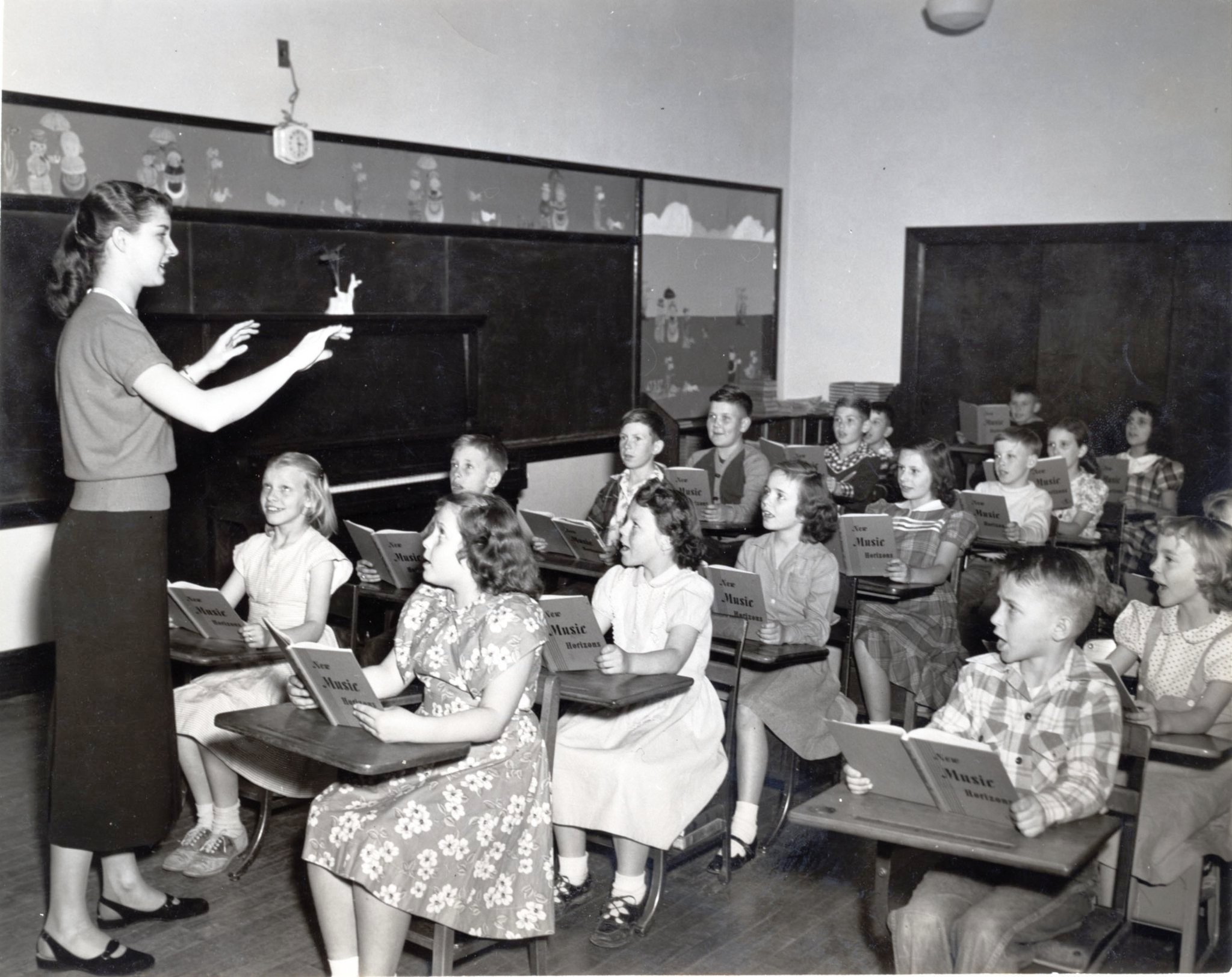
Many of the things we took for granted when we were in school back in the 1950's, 60's, and '70's are not considered "politically correct" these days. It seems that the emphasis is more on not "offending" anyone or promoting a culture where nearly everything is acceptable, no matter how irrational. Kids can't tell time using a analog clock or write cursive but they get to pick which gender they want to be and no one has to even tell their parents! You send "Johnny" or "Mary  to elementary school in the morning and they come home as "Johanna" or "Mark"! What the hell?  I was happy if I got to pick out my shirt for school let along my gender! Besides, everyone knew girls had cooties. 

Today kids have story time read to them by individuals dressed like they belong in some sort of John Waters' movie.  They can now choose what they want to study (or not) based on their racial or gender identity.  Disrupting class isn't at all uncommon and often excused as being a part of their "learning culture" or symptomatic of some attention disorder we never heard of when we were kids in school.

 Assaulting teachers while trying to teach class or enforce discipline isn't unusual (and woe unto the teacher who physically responds). Teachers in their 20's or 30's getting caught having sex with kids barely in puberty happens so often it's barely news worthy.  Professional ethics aside, what about simple  morality?

 I personally happen to support saying the Pledge of Allegiance (if you don't want to participate, fine. Just don't interfere with those who do). Strict discipline in the classroom, active participation of the parent or guardian, and teaching civics are essential. If they don't understand the function of government and their role in society as citizens, how can they protect their freedoms? Volunteering 90 days at the end of senior year performing some civic service such as Habitat for Humanity, helping out at the VA hospital, Meals on Wheels, participate on a police or firefighter advisory board, helping seniors or working as an election officer should be mandatory before graduating. 

 I am especially keen on learning being the focus of education. Anything beyond that (sports, band, cheerleading, or whatever) should be a privilege for maintaining good grades. Poor grades or disciplinary issues and the privileges are suspended until the grade or behavior situation is corrected. Repeated offenses and they're revoked. Period.

Some individuals and groups want to promote the introduction of their agenda a denominational prayer in public school and teaching creationism in public school either alongside evolution or to the exclusion of evolution all together. If that's want you want for your child, great. Send them to a parochial school.

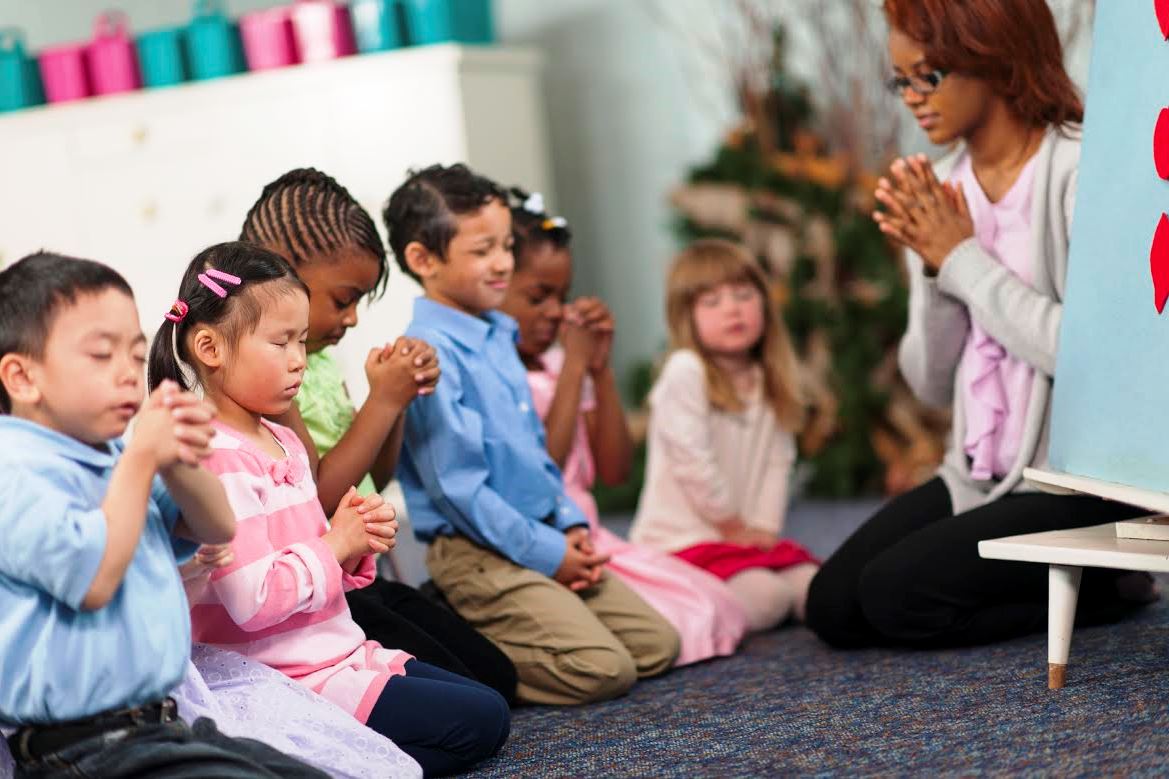
 I have no problem with a minute of silence to get yourself mentally ready for the day ahead. If you want to quietly say a little prayer (or have a little prayer circle), have at it. If you want to do a quick mediation, or some late minute cramming for the test you forgot about or get your homework in order, that's fine too. Just be respectful of others. I do not support the notion of mandatory participation in someone else's religious expressions unless it's part of a comparative religions class examining all faiths.

Another key issue is the emphasis on higher education. I also don't believe college is for everyone or necessary for every or even most jobs. Sure, there are some occupations where higher education is needed because of the intellectual nature of the work. However, there are jobs where someone with a proper high school education should be able to do quite well. One reason employers ask for a college degree is just to get a qualified applicant at what would otherwise be the high school  equivalent.

 I've seen high school "graduates" barely function on a 8th grade grammar or reading level or can do math much beyond a 6th or 7th grade level. You can all but forget about basic geography and history (but boy oh boy do they known or video games!).  One resulting outcome is the lowering of colleges and universities minimum admission standards to create an artificial parity based on race or gender rather than academic performance. This is nothing more than a quota system based on discrimination.  

Far too often, teachers and school administrators "fail students forward" rather than hold them back out of fear of being accused of racism, genderism, or whatever the victim card du jure happens to be.   The most common excuse is that failing little "Brad" or "Babs" hurts their self esteem. I think saddling them with a worthless education or bleak employment opportunities is worse than bruised feelings.

Is it any wonder that the United States consistently performs in the lower half of the second tier globally? The U.S. ranked 16th out of 81 industrial countries according to a 2022 test of 15 year olds as administered by the Organization for Economic Cooperation and Development (OECD). We placed 16th in science among the same 81 countries. When it came to mathematics, we were 34th. The top five highest scores all belonged to Asian nations with Japan, Taiwan, Singapore and Macao consistently being among the top performers. 

These are some of our current and future economic competitors for high paying jobs and market shares, which affects employment levels, quality of life, and other key metrics.  If we think of education as an investment in human capital or part of our economic national security, we're losing the battle.

Although the U.S. spends more taxpayer money per student than other countries, we are obviously not getting our money's worth. Incoming President Trump is putting together an advisory committee---the deceptively named "Department of Government Efficiency" (it's not an actual government agency)  led by Elon Musk and  Vivek Ramaswamy. Their job is to review various government projects, programs, and departments and find a way to make them work better and within budget.

 I suggest they start with our school system and find ways to improve our performance. After all, everything starts with education (there are some who, since the 1990's,  have been calling for the disbandment of the Department of Education and a return of educational authority back to the states). As an aside, the Department of Education was elevated to a cabinet level position in October 1979 by President Jimmy "Peanut" Carter (D-GA).

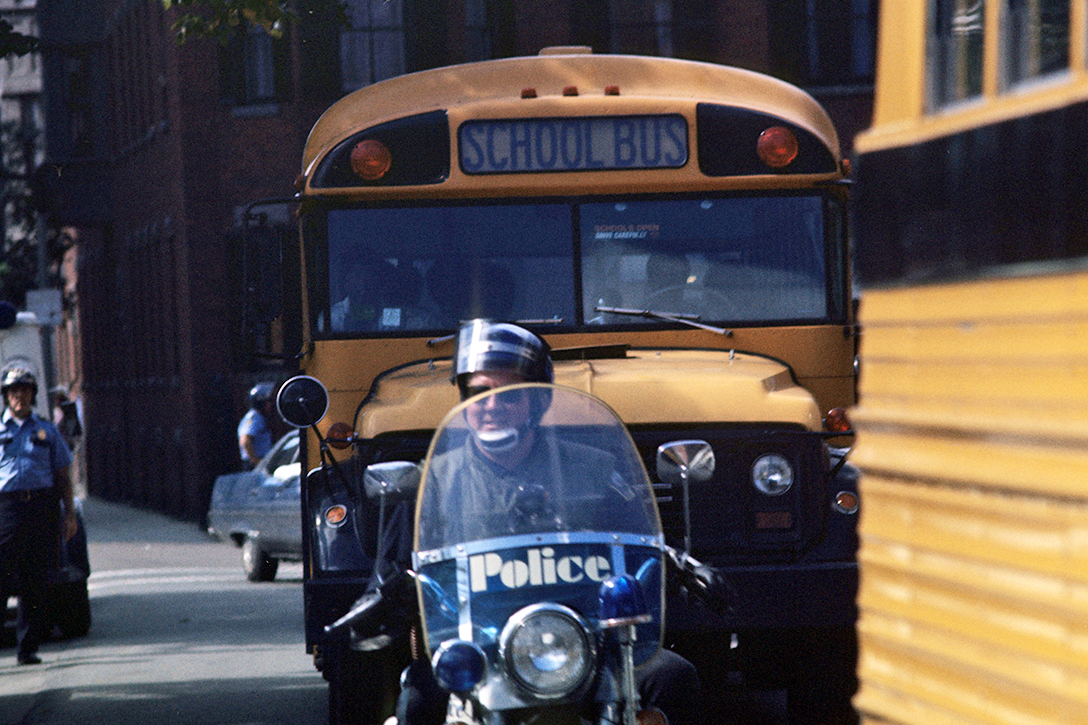
This was just four years after the advent of the disastrous court ordered  fiasco known as "forced busing" which effectively eliminated neighborhood schools. Students as young as six and seven years old, were put onto school buses and shipped all over town for hours at a time each way. This implementation of "social engineering" was intended to create balance in the schools academically and racially.

What it accomplished was a general lowering of academic performance which continues to this day. A better option would have equalizing the money spent on each student and rotating teachers. However, that would have produced a battle with the powerful teacher unions. So, what can we do about it?    

One potential solution is to weed out not just the academically unprepared, but also  redirect individuals who lack the interest or aptitude for higher education. One option would be to adopt a system similar to Germany's where students are tested periodically throughout years K - 8, and channeled into programs which lead to two years degrees, trade or technical schools, or on to higher education. It's one of the reason's Germany has one of the world's most advanced economies in the world.  Of course, the final decision belongs to the student (and parents) who may choose the academic path of their preference.

Students unprepared academically are re-immersed back into the subjects they poorly performed on via in person or online tutoring while extracurricular actives such as sports are put on hold. Students may be required to attend before or after school instruction. In some cases, this may take place during the summer. Until they can pass those courses, they should remain  suspended from  any non-academic events.  

The result is that the abilities and interests of the student is targeted  instead of trying to funnel them onto a path where they have little or no ability or interest. Trade or technical school is one such option. Unlike Europe, America faces a serious shortage of carpenters, welders, plumbers, electricians, glaziers, construction equipment operators, cyber security specialists, and other skills. It's a economic sector where there are real shortages and great opportunities. Making six figures annually isn't unheard of. Neither is owning your own business, where income opportunities can be even higher.

In a 2023 survey, there was a shortage of approximately 374,000 skilled workers in construction. The Association of General Contractors of America had a 70% positive response rate about concerns over the availability of skilled contractors and subcontractors in the upcoming years. 80% of those surveyed said they were worried about unfilled positions long term in the construction industry.

Between now and 2023, the renewable energy industry alone will need 1.1 million more workers worldwide and another 1.7 million to operate the equipment. According to a January 2024 U.S. Bureau of Labor report, the manufacturing industry in the U.S. has a staggering 584,000 unfilled job openings.

Among the reasons for the critical shortage of skilled workers is that the current workforce is slowing but steadily aging out. Almost 70% of supervisors in just the electrical trades are Babyboomers who are quickly reaching or passing retirement age.  More individuals are retiring and leaving than are replacing them. Another explanation is the push by school counselors, college recruiters, and a negative public perception about blue collar workers in general.

The truth is that training for a career in the trades is far shorter and cheaper than getting a Bachelor degree from a college or university. Training, on average, is two years or less plus a short apprentice period which may start simultaneously while being paid with benefits (the average apprentice earns roughly 50% of a skilled worker's salary). It takes about three weeks to qualify for your CDL license needed to be a long haul truck driver (the average salary--with experience--is just over $78,000 yearly).

Typically the cost of attending a trade or technical program can range from just a few thousand dollars to roughly $30,000 with an average cost of $15,000. Many of those attending a trade program are often hired before graduating (some start work will still attending school).

Compare that with the cost to obtain a four year degree. The current average is approximately $10,490 per year for in-state students. For out out-of-state students, that cost can jump to as high as $24,000 per year. If you plan on attending one of the top schools, the cost can be a lot higher. There are a few cheaper options (like attending a unaccredited institution), but remember that you get what you pay for and that's nowhere more true than in education.

Then there's the debt. On average, 61% of those who graduate from a public university leave with diploma in one hand and a bill for $31,960 in the other hand. Over their four years, the majority of students will occur a debt of at least $30,000 by the time they leave. The average federal student loan debt is $37,853 dollars. If you pursue a Masters degree, the costs and debt will be substantially higher.

It used to be that many American workers graduated from high school with a functional degree and would get a good paying job with benefits down at one of the local manufacturing companies. They'd join a union for job security and they were pretty much set. For a large percentage of the country, it was a near guarantee to their entry into the Middle Class. It wasn't uncommon for this path to be multigenerational, but those days are long gone.

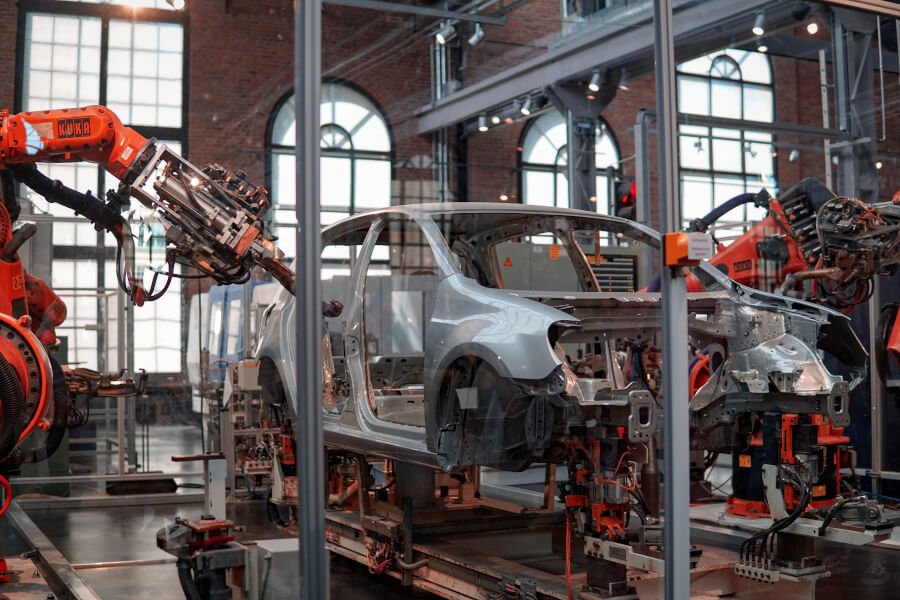
Starting in the late 1970's American began transitioning out of manufacturing and largely into the lower paying (and the less secure non-union) service industry. What industry remained has become more automated, replacing most positions. The only ones with job security and a good paycheck are the ones who repair or program the production line robot. But that's not the half of it.

Our parents and grandparents didn't have to face is the level of competition we do. Today, workers not just compete with each other for scarce well paying jobs, nor is their competition in the next town or state. Today's employee faces competition for work thousands of miles away, in countries like India and China where unions don't exist and people will work for next to nothing (and forget about benefits. They're happy just to have a job!). This is where America is losing ground, and when we look back at math and science score of our students, the future doesn't look to bright for the U.S..

When  it comes to technology, the world leader is Japan (Japan is also the world's most literate nation). Second is South Korea followed by China which has a knack of acquiring, studying, and adapting U.S. and global  technology. You don't have to look much further than the America's F-35 and China's J35A stealth fighter jets for proof.

In fourth place the good ole U.S. of A. Behind us is Germany, a country the size of Wisconsin and with a reputation for high quality engineering and efficiency thanks to their excellent dual avenue academic system which puts the trades on equal ground with higher education without the stigmatism as we mentioned earlier. Of course, we wouldn't expect anything else from the Germans.  As an aside, Russia graduates the most engineers of any country followed by the U.S. and Iran according to UNESCO.

 Singapore, a former British colony, is next (remember at the beginning of this article where I mentioned that the top five nations in academic math and science among 15 year olds were all Asian?). Coming in seventh place is Russia. Another country with a "gift" of mimicking U.S. technology. Great Britain, the United Arab Emirates (UAE), and Switzerland round out the top ten.

The key to the future is innovation. It's where tomorrow originates. So, who leads the world when it comes to innovation? That honor goes to Switzerland which dominates its second place competitor, Sweden. The United States has dropped to third place and is just ever so barely ahead of Singapore and the UK. For now, this may get us by, but not for long. Not at the pace the world is changing. How long can we hold on? Only time will tell. But one thing is for certain. If we don't do radically improve our school system and the quality of graduates, we may be facing a bleak future as the world's largest Banana Republic.


Thank you for reading Another Opinion! We hope you enjoyed this article and will pass it along. Please don't forget to subscribe. It's free! Lastly, please "like" us on whatever platform you use to read anotheropinionblog.com. It helps beat the algorithms and keeps our articles in circulation. Please find below the links we consulted in researching this article. 


Department of Government Efficiency


U.S. Education Rankings Compared to Other Countries


Tradespeople wanted: The need for critical trade skills inU.S.


These countries have the most technological expertise


Friday, August 16, 2024

Democracy For Sale: The State of Our Electoral Process

Free elections are considered the hallmark of a free and democratic society, but just how true is that really? The Communist Party of China considers itself a "free" and "democratic" nation since its citizens are free to vote for whoever is on the ballot. Same with the old Soviet Russian Politburo. Of course, with only one "recognized" political party and with only one "official" candidate selected by the party bosses, the citizens may freely choose whoever they want.

 It reminds me of  Henry Ford's famous statement that the public could have whatever color car they wanted...so long as they wanted black except that we can have anyone we want represent us provided they represent the red or blue political slate.

Ultimately, this little nothing more than playing with semantics. Using "political speak", terms such as "free" or "democratic" can be made to mean whatever the state wants them to mean.  Where does America actually rank using existing data when it comes to "freedom" and "democracy"? Living in a society which is based on the capitalist model, a free marketplace would certainly be a good place to start in defining a free Republic. So, let's get started.

According to the conservative "Heritage Foundation", the United States is ranked third out of the 32 nations comprising the Americas (North, Central, and South America).  Globally, the U.S. ranks 25th in economic freedom among the 185 nations in the survey, labeling us as "mostly free" economically.  Our "freedom index" is a 70.1%, down 5% from last year. The globally average is 58.6% (as an aside, with a cut off of 69%, we are on the edge of being labeled "moderately free").

Another key category tied to economic freedom is property rights. When you hear or read about America becoming "socialist" or Communist, one of the first things to pop into your mind should be property rights. The essential hallmark of  both ideologies (no, they aren't one and the same) is who owns the property.

Under both systems,  socialism or Communism, the state or the people own all the property. Individuals or businesses do not own property, any property, including their homes, factories, or offices. But with fascism, the private ownership of property is permitted. So, how does the U.S. rank in terms of private ownership of property?

According to the survey, the U.S. ranked a very impressive 95.1% when it came to private property ownership (I suppose allowances had to be made for "eminent domain"). A perfect score is 100%. The first takeaway from this figure is that we aren't sliding into "socialism" or Communism as some snake oil group or individual would have you believe. 

The fact is that it's the ruling elite who are deathly scared of both Left Wing ideologies. Why? Both would strip them of their wealth and power. no less than a democratic republic would. In the case of socialist democracy, it puts political and economic power directly into the hands of ordinary citizens. Feeling scared yet?

 Our financial freedoms, which includes monetary, investment, trade, and investment freedom, have an average  score of 75.6%, which is good. However, it still categorizes us as "mostly free". Our judicial effectiveness and government integrity were ranked at 74.8% and 76.4%, making us "mostly free".

Our labor freedom is ranked at 77%, which once again puts in the "mostly free" column. It needs to be pointed out the Labor freedom only applies to the ability of workers to work where they please. and to freely quit and go elsewhere. It doesn't specifically include how they're treated, unionized or "Right to Work," their wage or benefits, etc. It bears mentioning that our business freedom score ranks a significant 84.8%, meaning corporate America is doing far better that those who make it run.

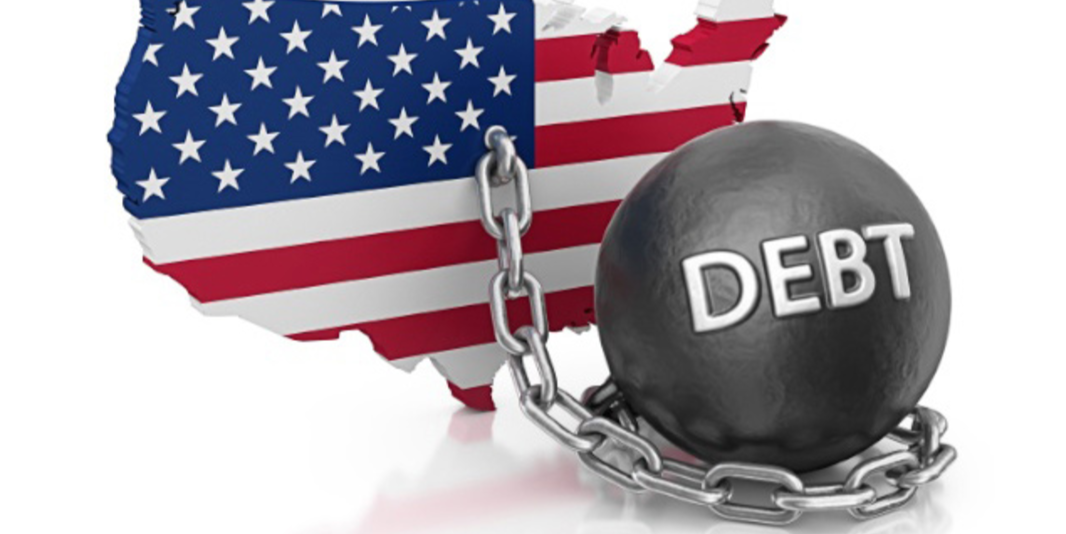
Where America has performed poorly has been with government spending and managing the national debt. The U.S. is ranked a dismal 48.7% in government spending, putting it in the "repressed" category. The Institute of International Finance (IIF) ranks the United States the single worse nation  in the world, bar none, in terms of national debt.

We owe over $31.4 trillion dollars to foreign creditors. That's more than the next four debtor nations (China, Japan, France, and Italy). Think of our debt like this. We are the world's top panhandler, depend on other countries to feed our spending addiction while we prop up other nations. The top four countries with the lowest national debt are  Australia, Singapore, South Korea, and Mexico.

Other area we did poorly in was our overall national fiscal health. We ranked at the bottom with a good ole "goose egg". That zero put us deep in the "repressed" category. That's where you'd expect to find totalitarian governments. Being on the bottom is a clear indicator that our economic and political systems aren't stable. Truthfully,  it wouldn't take a great deal to collapse our house of cards.

According to the Freedom House, a think tank known to advocate on issues like human rights, expanding democracy, and political freedom, released it s highly respected "Freedom Index" survey in 2023 (it's latest to date).  It showed that democracy worldwide remains in decline for the 18th year in a row.

Speaking of human rights, the United States earned a letter grade of "D" in terms of its human rights per the Global Rights Project. Numerically, the U.S. was 59th out of 183 countries. The survey comprised a overall score based on physical integrity and protection from government agencies, empowerment and the ability to speak and live freely, protection of worker rights, and fair judicial rights. 

The World Justice Project placed the United States 23rd out of 142 countries when it came judicial equality. Our regional ranking was 19 out of 31. In terms of having an open government, we ranked 16th of 140 countries. In the area of basic rights, we scored 37th out of 140. When we look at overall political stability from 1999 to 2022, GlobalEconomy.com puts the U.S. 100th out of 192 countries; beneath the Congo (97th), Vietnam (98th) and Cambodia (99th) and above Montenegro (101), Guinea (102), and Ghana (103).  Not what you'd expect from the "leader of the free world" is it? 

In case you're wondering, Liechtenstein, Andorra, Aruba, Singapore, and New Zealand made up the top five most politically stable nations. Switzerland was 13th, Australia was 31st, Canada was 46th, China was 132nd, and Russia was 160th. That's some pretty questionable company if you ask me.

Another important factor in establishing a properly functioning democracy is education. After all, students are the future of any nation. In terms of academic achievement, the U.S. ranked 13th in the world according to the Organization for Economic Cooperation and Development (OECD). We were a distant 16th of 81 countries in science, with the top five nations all being from Asia. 

In math we were just as bad, coming 34th out of 81. The top five nations were all Asian---Singapore, Macao, Taipei,  Hong Kong, and Japan.  When it came to literacy, the U.S. ranked 36th of the 83 OECD member states. Just 79% Americans can read and write at grade level when they graduate high school. 25% of children reach adulthood unable to read. 75% of prison inmates never graduated from high school. Meanwhile, countries like Ukraine, Norway, Russia, and Finland all have 100% literacy rates.

19% of high school graduates struggle to read at grade level.  85% of juvenile offenders read below the average literacy rate.  21% of Americans read at or below a 5th grade level. 14% of adults are "functionally illiterate". 14% of Americans---about 32 million individuals---can't read.   What these numbers indicate is that we're losing our competitive edge as the balance of power shifts eastward.

We have the highest poverty rate of the 26 most developed countries with some 40 million Americans living at or below the poverty line (many being veterans). If it wasn't for that old "socialist" Social Security program, as originally called, you'd be adding another 27.3 million people to that number.

When it comes to child poverty, the U.S. ranks second only to Mexico according to the United Nation's UNICEF out of the top 35 wealthiest nations. And to think that the average CEO's income is a mere 196 times that of their employees. Of course, the one upside about poverty is that the poor rarely vote.

According to the OECD, the Organization for Economic Cooperation and Development, the average turnout of registered  voters for a general election is 65%. Here it's 62%. OECD members, Turkey, Belgium, and Sweden have the highest percentage of voter turnout with 78% or better. Chile, at the other end of the scale, has a turnout rate of under 51% after voting went from mandatory to volunteer.

Women vote more often than men (56% vs. 53%). Whites have historically voted in higher numbers than minorities. 75% of those age 65 and over turn out to vote while half of those under 45 don't. Married people vote more often than singles. White collar employees and professionals vote more than blue collar workers by a margin of 70% to 38%. The higher the level of education, the more likely that individual is to vote. Home owners vote more often renters (63% to 38%).

Some voters show up but are turned away because they lack proper identification. Since you have to have a photo ID for practically  everything, why would someone assume they wouldn't need a photo ID to vote? The Left complains that requiring proof of who you are somehow discriminates against minorities while conservatives say it's simple common sense in a era of stolen identity and voter fraud.

Perhaps the biggest reason for the low turnout is that simply voters don't care. According to Pew, over 60% of Americans are frustrated with elections and politicians. Many---39%--- no longer trust the corporate media. Congress represents Wall Street, not Main Street.

Americans know that the one with the most money usually wins (thanks to Citizens United and the corporate financing of politicians and the two parties) while other candidates---Independent and third party--- are virtually ignored, assuming they can even get on the ballot thanks to crooked electoral regulations. Partisan gerrymandering virtually guarantees the incumbent will win and with the absence of term limit, it means they're going to be there for many years to come.

Lastly, when it comes to primaries, the nation's largest voting bloc, Independents, and their third party kin, are prohibited from participating in most states (despite the fact that our taxes finance the primaries, making it quite literally the definition of taxation without representation). That in itself is a poor commentary on our election system.

What does this say about our democracy? It says we are looking at some very deep cracks in our nation's foundations. Poverty growth and educational decline are affecting our ability to compete globally and straining our national safety net (and that doesn't even consider illegal immigration). The well-to-do are more likely to protect their interests compare to anyone else regardless of race, gender, orientation, or ethnic group.

Congress, as well as other branches of government are dominated by Wall Street. How else do you explain an approval rate below 30% and a reelection percentage of 98+%? They underwrite their campaigns, help write the legislation, review and make recommendations about proposed bills. The majority of Americans have all but lost interest in what's happening in Washington and state capitals out of frustration.We've come to accept theater over substance. We often hear about "woke" Americans, but unless Americans collectively wake up, what remains of our Republic will fade away and will cease to exist except for in our memories.


 If you enjoyed the article, please consider passing it along to others and don't forget to subscribe. It's free! Lastly please be sure to "like" us on whatever platform you use to read anotheropinionblog.com. It helps beat the algorithms and keeps our articles in circulation. Thank you!


The Heritage Foundation: Index of Economic Freedom


How does the US debt rank compared with the rest of theworld?


Why the U.S. scored a "D" for human rights in a new report


World Justice Project: Rule of Law Index


The Balance: U.S. Education Rankings Compared to OtherCountries


22+ US Literacy Statistics: Literacy Rates, Average ReadingLevels


The Best Healthcare in the World: Country Ranking


Debt.org: Poverty in the United States


Saturday, April 13, 2024

How to End Student Debt in a Sensible Way

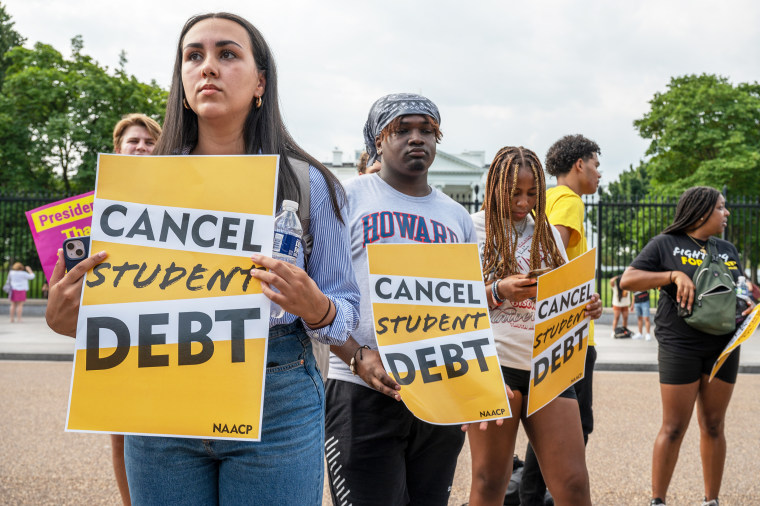
Well, old  "Doddering Joe" Biden has been out on the campaign trail again peddling one of his few big issues---paying off everybody's school debt. It seems a shame that after nearly four years in office, and he has virtually nothing to show for except a disaster with Afghanistan and a rocky economy. Even the school debt matter is little more than pie in the sky, but at least it sounds good to college students and hopefully, at least for Biden, that will translate into votes this November.

I guess you can't blame the students. Most of these young adults have racked up thousands of dollars in debt without thinking much about the long term consequences. The average tuition cost for 2021-2022 academic year was $10,740 for resident students at four year colleges. For out of state students it's double that at $27,560 dollars. Room and board for the academic years runs an additional $11,950.

Is any wonder that the average college student carries a debt of $38,290 according to Experian (this is usually in the form of federal student loans). Private student loan debts amount to $54,921. The total academic debt exceeds $1.74 trillion dollars, and that's the amount Biden is wanting us to pick up the tab for, which begs the question, just where does Biden think that money will come from?

Maybe he thinks we can just take it out of our savings account, but oh wait, nearly a quarter of Americans don't have a savings account. 23% of Americans can't come up with $1000 for an emergency. Of those who do have a savings account, 49% have less than $500 while 36% have $100 or less available!

In fact, according to a 2023 survey by Payroll.org, 78% or over 3/4 of all Americans live paycheck to paycheck, which is a 6% increase over 2022. The average American's  household debt runs about $104,250. In 2023, the total mortgage debt of all Americans was $12,252 trillion dollars! 

So how do most Americans live? They borrow it! The average credit card for household in 2023 was $6,501. Nationally credit card debt amounted to $1,129 trillion dollars. In married households, it common that both adults work. Some often hold down two or sometimes three jobs to make ends meet. 

Is it any wonder that 11.6% of Americans live at or below the national poverty line? That's roughly 37.9 million of us. Again, I ask where President Biden thinks we're going to find the money to take on someone else's debt when we can't pay our own? Obviously the student debt---all $1.74 trillion dollars of it---isn't simply going to vanish into the blue.

One way would be for Biden to ask the Federal Reserve to print money to pay the student debt. The problem with that is printing off more money isn't magic. "Someone" still has to pick up the tab, that "someone" is usually the U.S. taxpayer in the form of inflation.

 With inflation, the costs of pretty much everything goes up, from food, medical care, and mortgage to the costs of utilities and interests rates on damn near everything, but usually not wages. Thus you have to pay more with the same amount of money.   

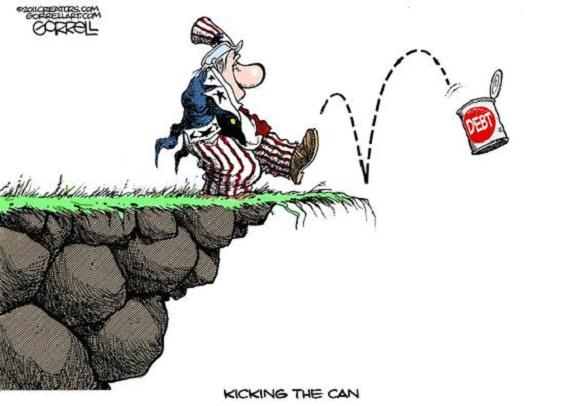
The U.S. sells its debt in the form of Treasury bonds. This, however, is nothing more than kicking the "honey pot" down the road a short piece while paying interest on top of it. Bear in mind too that countries like China, a potential nemesis, owns about 10.17% of our debt (Japan owns the most at 14.52%. The UK is third with 9.16% of our debt). U.S. investors (mostly corporate) owns the most at 32.5% followed by foreign corporate investors which own 29.3%.

When looking at college debt, 53% of federal student loan debt is $20,000 or less. 47% of college debt is actually owed by just 10% of college students who have debt in access of $80,000. 51% of those with a bachelor's degree owe under $30,000. 10% of students have private student loans (which also tend to have higher interest rates ) also had almost double the student debt.

So, with all that debt, how many graduates found work in their chosen field? Most studies show that just 47% are using the their degree in the field  of their choice (the majority of those are in fields like computer science, accounting, actuary science, medicine, or law).

What's of note is that 52% of college graduates are underemployed a year after graduation or not working in their academic field.  33% are unemployed one year after graduating. Meanwhile, 47% have jobs which don't require a four year college degree! To put it another way, it means a substantial number of college graduates have degrees in which there is little or no demand for regardless of their GPA and they're stuck with a big ole debt.

Unfortunately, the majority of those going to college are doing so because they've been conditioned to think a college education is the only way to get a decent job. In fact, there's almost an entire industry that's trying to convince high school students to go to college!

They hear it from their teachers, from guidance counselors to college enrollment professionals (many of whom earn a commission for every student enrolled) and companies peddling loans. Many HR people have changed their job requirements to require a four year degree when in the past a simply high school diploma was all that was needed (if that!) without changing the salary or benefit levels very much. 

In Europe (and most notably Germany which ranks first in the world with a 99% literacy rate and a academic performance ranking of .94%  out of 1.00%), they have a much more advanced approach when it comes to education. Children, beginning in pre-school, are evaluated at regular intervals to measure their interests, aptitudes, and academic performance to determine whether a child should be steered toward the trades or higher education.

It needs pointing that in Europe, unlike America, there is no stigma among children going one track or the other, and no child is locked into a given path. They may opt to change direction at their discretion (along with the parent's approval). In addition, as in America, the trades often pay well, they're in high demand, and often offer good benefits. Finding a unemployed plumber, carpenter, or electrician in Europe (or anywhere else) is damn near impossible!

America needed to revamp its academic system and adopt something similar. Not every individual needs to go to college and not every job requires a four year degree...or its crippling debt. Secondly, the requirements to graduate from high school has been repeatedly "dumbed down" since the late 1960's (at the same time schools started throwing out the need for discipline in classrooms). Want proof? Compare a math, English, or science book from the 1950's with one from now. How many students today could successfully get through one? Not many.

We've developed the bad habit of "flunking" students forward out of fear of upsetting their fragile little egos or angering their parents and getting sued. Teachers spend more time babysitting or worrying about getting jumped than teaching. The result is an academic system which has failed everyone.

It's time to return to stronger academic requirements...and performance in order to graduate.  For students who don't want to learn or disrupt others, get them out of the classroom since it's doubtful the "board of education" will ever be reintroduced. Nevertheless, there's no reason these individuals should be allowed to interfere with the education of those there to learn.

As an aside, during the 2021/22 school year, Homeland Defense reported 327 school related shootings resulting in 188 deaths or injuries. During the same period, 43% of  educators know of a teacher, principal, or someone affiliated with the public school system who've been assaulted by at least one student (often they're jumped by groups). Of this, 20% have been principals. Attacks on school bus drivers have risen 121% between 2001 and 2022. This is completely unacceptable. 

Suspending them does no good. That's what they want---to be out of school. Put them to work doing something they don't want to do like janitorial work at the local jail or prison. Maybe assign them to picking up trash along the roads. Send them to a "juvi" bootcamp. Let them find out what life without a solid education is really like.

As an aside, high school teachers and academic advisors need to change their mindset. Not every student needs to be guided toward college or the military.  The military is a good option for some people, but not all. Not everyone has the right temperament or physical ability for the military. For those who do, they can get good job training if they pick the right rating or MOS (always think about whether your selected MOS or rating is easily transferable to the civilian world after you get out). The military also offers decent benefits, and you'll sure grow up fast!

For those not going to college or lack the urge to "be all they can be", there's the trades. Often overlooked or ignored, the trades are a great way to make a living and provide for a family. First, the pay can be great. So can the benefits. You can work for yourself or someone else (a terrific option to gain experience). You can go union or not. Basic training is generally short and often there is little or no debt. Lastly, there's a huge and growing demand for most all trades. It is a seriously great way to go.

America has a failing  (or failed) school system. Academically, the United States ranks 36th in world for mathematics and 24th in science. By comparison, the top five highest scores in math all go to Asian countries. The Scandinavian countries rank in the top tier across the board.

Overall, the U.S. in 33rd out of 44 advanced industrial countries academically, placing us in the middle of the bottom tier. It's common in the U.S. nowadays for employers (including the military) to provide remedial classes in reading comprehension and basic math for so .   How do we expect to compete globally with results like that?

Next, employers need to reevaluate their job requirements. Does every position actually require a four year degree? If so, then you need to also reevaluate your pay scale and be prepared to pay out a lot more for your potential new employees. Otherwise, employers need to bring their job requirements more in line with what the job actually calls for.

The world doesn't need another art major any more than it needs another gender or race centered major. If we're to reduce college debt, either colleges are going to need to cut their tuition rates (which won't ever happen) or a new approach is going to have to happen to help graduates quickly gain employment to they can start paying off their debt.

That means they need to reassess their choice of majors. All new admissions or undecided majors, along with school councilors, need to review each student's proposed major/minor. Part of the review needs to include a look as the job demand for that particular degree. If there is little or no demand for that job, the applicant must either choose a new major or include a second major (or expanded minor) in a field where there is a demand that's complementary to their major.

For instance, if an applicant choose history as a major, then they need to back that up with courses in something like law, biology, or financial analysis; something where there's an actual demand in the job market. If they choose an art major, then they need to support it with a expanded advertising or marketing minor. The same goes with gender or African-American studies, anthropology, humanities, and so forth. If they combine their desired degree with something employable to fall back on then maybe they can stay out of their parent's basement!

Another opinion is to offer lower interest rates to students pursuing degrees that are in demand, thus making them less of a risk to the lender.  The average interest rate among all student borrowers is 6.87% for federal loans (just over 94% of all student loans. For undergraduate loans, it's a little less at 5.50%.  For those seeking graduate or professional degrees, the interest rates on loans range from around 7.05% to 8.5%. Interest rates from private lenders varies wildly, typically from 3.99% to 13.99 for fixed rates and 5.24% to 13.99% on variable rates.

Much of this is determined by the borrower's credit history and employment status. Other factors include their current debt load or whether they have a co-signer or not and their credit worthiness.  If someone is majoring in a degree where there is a demand, and thus the likelihood of  them getting hired quicker, they would obviously be a better credit risk and thus should be rewarded with better credit terms.

But none of this is what President Biden is peddling. His solution is to wave his magic ink pen and make all student debt suddenly disappear---poof! Just like they never promised to pay it back. Maybe this would be their final lesson --- you don't have to take responsibly for the decisions you make. "Someone" (meaning the government) will bail you out, which means everyone else will have to pay for your bad choices and broken promises.

If you think about it, it kinda makes sense in a twisted sort of way. The United States is the worse debtor nation in the world. The federal debt tops $34 trillion dollars and yet it routinely spends money it doesn't have. Washington can barely make payment on just the interest, which was $725 billion dollars as of July 2023. That's 14% of entire federal budget. But no worries. They can always raise the debt ceiling and go on their merry way!

At the same time, unlike nearly household in America, Washington has consistently refused to adopt a balanced budget amendment which would prohibit them from spending more than they take in.  Is it any wonder then that college graduates and others should expect someone else to pay their bills?


If you enjoyed the article, please consider passing it along to others and don't forget to subscribe. It's free! Lastly please be sure to "like" us on whatever platform you use to read anotheropinionblog.com. It helps beat the algorithms and keeps our articles in circulation. Thank you!


What is the average student loan debt in 2024--- and whatare the impacts?


Average debt in America: 2023 statistics


Nearly Half Have Less Than $500 in Savings: How To Build UpYour Balance in 2024


Average Cost of College Tuition


37.9 million Americans are living in poverty, according tothe U.S. Census. But the problem could be far worse


Living Paycheck to Paycheck Statistics 2024


58 Trade school vs. college statistics for 2022


New college grads are more likely to be unemployed in today's job market


Average Student Loan Interest Rate