Showing posts with label trades. Show all posts

Thursday, September 04, 2025

Education in America: Sowing the Winds of Our Future


Here in the United States, Labor Day marks the “official” end of summer, although you’d hardly notice. The public pools are closed. The leaves on trees gradually turn their vibrant reds, yellows, and oranges. There’s the faint crunch of the few which have already fallen; soon to be a chorus in just a few more months. The nights are becoming a little cooler and rain is becoming a little more frequent than before. You occasionally have to pause to decide whether you need a jacket, but the warmth summer’s days remains, at least for now.

Labor Day is when states, especially in the South, have their state capstone fairs with venders hawking their wares and rides from practically everywhere. You can sign up to get your blood pressure tested, a mammogram, buy shoe inserts, and buy new gutters all within just a few feet of each other.

 It’s where you’ll find an abundance of friendly (mostly) competition for the best porch whistlers, dancers, cake bakers, quiltmakers, best quality livestock, and where hundreds will come out to watch the well-heeled bid phenomenal amounts of money for best cured ham…all for charity of course (the top ham sold for $10 million dollars this year).  Communities have the first of their local craft and art fairs. But for many Labor Day weekend means just one thing---the end of summer vacation and the start of a new school year which is the subject of this week’s article.  

Education is typically the best barometer to measure a nation’s future potential, after all, the students they graduate are the nation’s economic, technological, political, and cultural future. They are the ones who will develop the newest medicines, the next generation in technology, our new engineers, and will be the makers and enforcers of laws. Many say this represents the new battleground for global domination. So, how does America rank?

When determining where a country ranks, be in education, military spending, medical care, and so forth, they are measure against a bar  or standard. This “standard” is the average of 38 members of  the Organization for Economic Co-Operation and Development (aka the “OECD”). The OCED, which is comprised of developed or “first tier” nations, who work together to promote economic growth and cooperation, sustainability, establish standards, and common policies.

According to OCED, Luxembourg, Norway, and the United States spend the most money per student of any nation (in that order) along with South Korea and Switzerland (especially at the secondary school level).  In terms of percentage of their Gross National Product (“GDP”), top honors go to the Marshall Islands and the nations of Oceania, followed by the U.S., France, and Austria.

U.S. protectorate of American Samoa for instance spends 14.7% of its GDP on education.  Compare that to Cuba, which is one of the few countries with a near 100% literacy rate, which spends about 9.4% of its GDP on education or Sweden, which ranks near to top in nearly every positive measure. It spends approximately 7.6% (the same as Bolivia) while the nation of Batswana spends roughly 8.1%.

As an aside, the World Population Review, which uses a slightly different set of metrics, have some different, albeit similar numbers. According to the WPR, the United States spends 5.4% on education in general while it’s neighbors, Canada and Mexico, spend 4.1% and 4.2% respectively. America’s top economic competitor, China, spends 4% while Russia invests 4.1% on education. Germany spends 4.5% while France does a bit better at 5.4%.

Who then spends the most on the nation’s education? The African nation of Namibia spends a whooping 9% of its GDP on education. Neighboring Botswana invests 8.!%. Bolivia and Sweden both spend 7.6% on education. Iran only spend 2.9% on education, but then again, they only educate half of their population. India invests 4.1% on its future. The tiny nation of Bhutan spends 5.8%. Turkey invests just 2.9% in its future compared to 3.2% for Japan and 5.8 for the mini-nation of Tajikistan.

Pew Research posted a report in April of 2024 which showed that the U.S. was 28th out the 37 OCED countries. Japan was the highest along with several other Asian countries placing near the top along with Finland. The lowest score went to Columbia. In science, the U.S. place 12th out of the 37 OCED nations tested. Again, Japan ranked first while Mexico was last.

However, a more recent study from May 2025 conducted by Data Panda, indicates that the Iceland has the best educational system in the world. It’s followed by Germany, Norway, and the United Kingdom. Next in line was Denmark in fifth place. New Zealand and Finland were tied for sixth. Then came Switzerland, Sweden and Australia were tied. The U.S. was 15th,  just behind the island nation of Palau and ahead of Canada. Hong Kong was 18th.  Ireland was 22nd. Singapore and Austria were tied for 30th while Japan was 35th.

Another test from 2025, based on OCED scores, showed that in terms of literacy, the U.S. far outperformed the OCED average, 504 to 476. While that’s impressive, drilling a little deeper in the scoring indicated that while 14% of those tested outperformed the average, they were a majority of White students while the balance, mostly minority students, significantly underperformed with strong indications that they may require remedial instruction.

In terms of math and science, which are essential for medical and technological innovation and advancement (part of the “STEM” or science, technology, engineering, and mathematics curriculum), the U.S. seriously underperformed. 465 to the OCED average of 472, with several Asian and European nations far out scoring the American students. Once again, the scores reveled major failures among 15th years, especially minorities with over 1/3 being underperformers and just 7% representing top scorers.

 Once again, Asia had the top academic performers. It was noted that this may be indictive of a potential decline in America’s leadership in the area of technology and related fields unless immediate and significant improvements in the educational system aren’t made.

In terms of science, the U.S. did a bit better. The U.S. was 16th of the 37 national participants, scoring 499 against the OCED average of 485. Asia nations, including Japan, Singapore, Hong Kong, and Macau, made up the majority of those outperforming nations. However, while the U.S. did well, it was due primarily to just 11% of its top scoring students while 22% did poorly.

It's also worth nothing that in terms of the best educated populations, Ireland has the highest number of individuals was a bachelor’s degree based on percentage of population at 54.4%. Switzerland and Singapore are next with 45.6% and 45% respectively. Belgium and the UK complete the top five with 44.1% and 43.5%. The United States is 12th with 40% and just beating out Australia with 39.8%.  

Of the Middle East, Israel ranks the highest with 39.7%. Argentina, Chile, and Brazil are the top three in South America with 23.7%, 22.9%, and 21.5% respectively. China and India are among the lowest with 6.9% and 14.2%. There were no African countries out of the top 36 nations.

What does all this mean? The United States ranks third globally in what it spends per student, however, we’re toward the middle of the pack when it comes what we spend on education in general based on our GDP. In terms of what we are getting for our money is definitely no bargain. In terms of math scores, are well below average. Our collective science scores are good, but not great. With regards to literacy (reading and comprehension), we are doing well.

The problem, however, is that our achievements overall aren’t evenly distributed. It seems that where we we’re doing well is reliant on primarily private schools and a white student population. Meanwhile, public schools are generally underperforming, especially in schools where the majority student population are comprised of minorities.   

This is particularly a problem in terms of the future as the high achieving White student population continues to shrink and America heads for “majority minority” status. Our current immigration is only making matters worse more quickly with new immigrates coming from countries with a history of underperforming academics. 46% of arriving adults have no education beyond high school---if that! Only around 41% have a bachelor’s degree while few are certified in the trades.

Additionally, those from Latin America and Africa are less likely to possess a high school degree or equivalent whereas those from Europe, Asia, and Oceania are more likely to possess at least a bachelor’s degree. Those entering with a technical or trade certification face stringent hurdles to get their credentials approved which, given the critical shortage of plumbers, electricians, and so forth, needs to change.

Lastly, unless something is done now, such as changing our focus on immigration and focus our school curriculums more on STEM courses and less on “sports” and low/no demand degrees, we are likely to lose our lead in the sciences, medicine, and technology, making increasingly dependent on other nations, particularly in Asia, or to put it another way, we will reap what we’ve sown.


Thank you for reading "Another Opinion", the Op/Ed blog page for the "militant middle".  Here at "A/O" we truly value our readers. At A/O we seek the facts as they exist, not partisan talking points.  We hope you find our articles informative and engaging. Comments are welcome, provided they are not vulgar, insulting or demeaning.  Another Opinion is offered without charge and is directed toward all independent and free-thinking individuals. We ask, however, that you "like" us on whatever platform you found us on in order to keep our articles available for free to others. Lastly, in order to keep costs down, we depend on passive marketing, and therefore, depend on our readers to please forward our posts along. Below you will find links to the sources we used in writing this article. Thank you. 


OCED


WPR: Education Spending By Country 2025


Data Panda: Education Rankings By Country


U.S. Education Rankings: Global Comparison Performance


Charted: The World’s Educated Countries


Friday, November 22, 2024

America's Global Economic Performance and Our Failing Schools


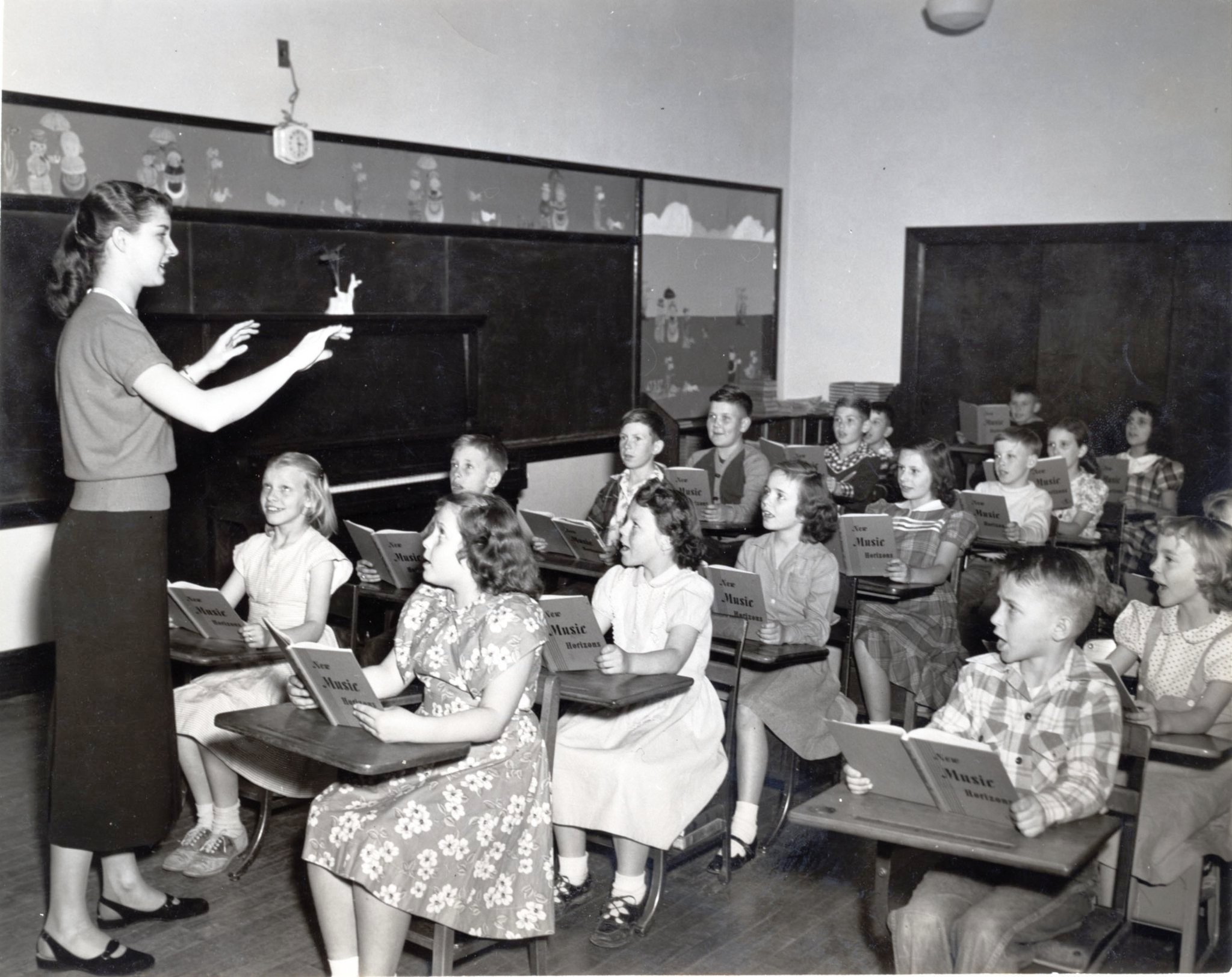
Many of the things we took for granted when we were in school back in the 1950's, 60's, and '70's are not considered "politically correct" these days. It seems that the emphasis is more on not "offending" anyone or promoting a culture where nearly everything is acceptable, no matter how irrational. Kids can't tell time using a analog clock or write cursive but they get to pick which gender they want to be and no one has to even tell their parents! You send "Johnny" or "Mary  to elementary school in the morning and they come home as "Johanna" or "Mark"! What the hell?  I was happy if I got to pick out my shirt for school let along my gender! Besides, everyone knew girls had cooties. 

Today kids have story time read to them by individuals dressed like they belong in some sort of John Waters' movie.  They can now choose what they want to study (or not) based on their racial or gender identity.  Disrupting class isn't at all uncommon and often excused as being a part of their "learning culture" or symptomatic of some attention disorder we never heard of when we were kids in school.

 Assaulting teachers while trying to teach class or enforce discipline isn't unusual (and woe unto the teacher who physically responds). Teachers in their 20's or 30's getting caught having sex with kids barely in puberty happens so often it's barely news worthy.  Professional ethics aside, what about simple  morality?

 I personally happen to support saying the Pledge of Allegiance (if you don't want to participate, fine. Just don't interfere with those who do). Strict discipline in the classroom, active participation of the parent or guardian, and teaching civics are essential. If they don't understand the function of government and their role in society as citizens, how can they protect their freedoms? Volunteering 90 days at the end of senior year performing some civic service such as Habitat for Humanity, helping out at the VA hospital, Meals on Wheels, participate on a police or firefighter advisory board, helping seniors or working as an election officer should be mandatory before graduating. 

 I am especially keen on learning being the focus of education. Anything beyond that (sports, band, cheerleading, or whatever) should be a privilege for maintaining good grades. Poor grades or disciplinary issues and the privileges are suspended until the grade or behavior situation is corrected. Repeated offenses and they're revoked. Period.

Some individuals and groups want to promote the introduction of their agenda a denominational prayer in public school and teaching creationism in public school either alongside evolution or to the exclusion of evolution all together. If that's want you want for your child, great. Send them to a parochial school.

 I have no problem with a minute of silence to get yourself mentally ready for the day ahead. If you want to quietly say a little prayer (or have a little prayer circle), have at it. If you want to do a quick mediation, or some late minute cramming for the test you forgot about or get your homework in order, that's fine too. Just be respectful of others. I do not support the notion of mandatory participation in someone else's religious expressions unless it's part of a comparative religions class examining all faiths.

Another key issue is the emphasis on higher education. I also don't believe college is for everyone or necessary for every or even most jobs. Sure, there are some occupations where higher education is needed because of the intellectual nature of the work. However, there are jobs where someone with a proper high school education should be able to do quite well. One reason employers ask for a college degree is just to get a qualified applicant at what would otherwise be the high school  equivalent.

 I've seen high school "graduates" barely function on a 8th grade grammar or reading level or can do math much beyond a 6th or 7th grade level. You can all but forget about basic geography and history (but boy oh boy do they known or video games!).  One resulting outcome is the lowering of colleges and universities minimum admission standards to create an artificial parity based on race or gender rather than academic performance. This is nothing more than a quota system based on discrimination.  

Far too often, teachers and school administrators "fail students forward" rather than hold them back out of fear of being accused of racism, genderism, or whatever the victim card du jure happens to be.   The most common excuse is that failing little "Brad" or "Babs" hurts their self esteem. I think saddling them with a worthless education or bleak employment opportunities is worse than bruised feelings.

Is it any wonder that the United States consistently performs in the lower half of the second tier globally? The U.S. ranked 16th out of 81 industrial countries according to a 2022 test of 15 year olds as administered by the Organization for Economic Cooperation and Development (OECD). We placed 16th in science among the same 81 countries. When it came to mathematics, we were 34th. The top five highest scores all belonged to Asian nations with Japan, Taiwan, Singapore and Macao consistently being among the top performers. 

These are some of our current and future economic competitors for high paying jobs and market shares, which affects employment levels, quality of life, and other key metrics.  If we think of education as an investment in human capital or part of our economic national security, we're losing the battle.

Although the U.S. spends more taxpayer money per student than other countries, we are obviously not getting our money's worth. Incoming President Trump is putting together an advisory committee---the deceptively named "Department of Government Efficiency" (it's not an actual government agency)  led by Elon Musk and  Vivek Ramaswamy. Their job is to review various government projects, programs, and departments and find a way to make them work better and within budget.

 I suggest they start with our school system and find ways to improve our performance. After all, everything starts with education (there are some who, since the 1990's,  have been calling for the disbandment of the Department of Education and a return of educational authority back to the states). As an aside, the Department of Education was elevated to a cabinet level position in October 1979 by President Jimmy "Peanut" Carter (D-GA).

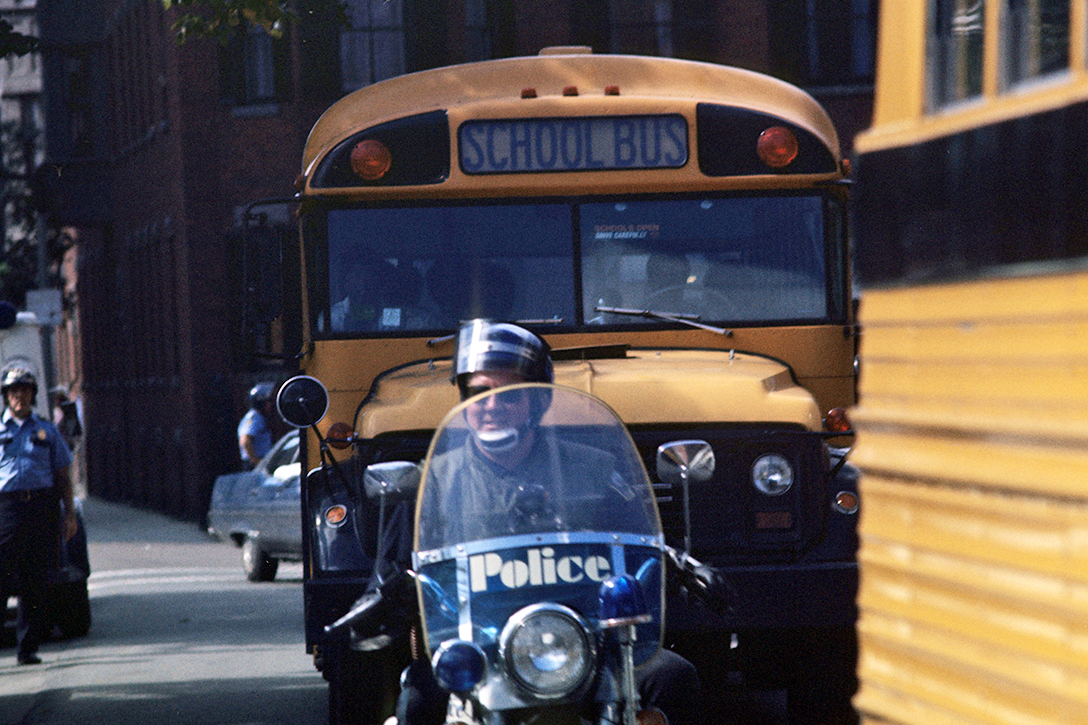
This was just four years after the advent of the disastrous court ordered  fiasco known as "forced busing" which effectively eliminated neighborhood schools. Students as young as six and seven years old, were put onto school buses and shipped all over town for hours at a time each way. This implementation of "social engineering" was intended to create balance in the schools academically and racially.

What it accomplished was a general lowering of academic performance which continues to this day. A better option would have equalizing the money spent on each student and rotating teachers. However, that would have produced a battle with the powerful teacher unions. So, what can we do about it?    

One potential solution is to weed out not just the academically unprepared, but also  redirect individuals who lack the interest or aptitude for higher education. One option would be to adopt a system similar to Germany's where students are tested periodically throughout years K - 8, and channeled into programs which lead to two years degrees, trade or technical schools, or on to higher education. It's one of the reason's Germany has one of the world's most advanced economies in the world.  Of course, the final decision belongs to the student (and parents) who may choose the academic path of their preference.

Students unprepared academically are re-immersed back into the subjects they poorly performed on via in person or online tutoring while extracurricular actives such as sports are put on hold. Students may be required to attend before or after school instruction. In some cases, this may take place during the summer. Until they can pass those courses, they should remain  suspended from  any non-academic events.  

The result is that the abilities and interests of the student is targeted  instead of trying to funnel them onto a path where they have little or no ability or interest. Trade or technical school is one such option. Unlike Europe, America faces a serious shortage of carpenters, welders, plumbers, electricians, glaziers, construction equipment operators, cyber security specialists, and other skills. It's a economic sector where there are real shortages and great opportunities. Making six figures annually isn't unheard of. Neither is owning your own business, where income opportunities can be even higher.

In a 2023 survey, there was a shortage of approximately 374,000 skilled workers in construction. The Association of General Contractors of America had a 70% positive response rate about concerns over the availability of skilled contractors and subcontractors in the upcoming years. 80% of those surveyed said they were worried about unfilled positions long term in the construction industry.

Between now and 2023, the renewable energy industry alone will need 1.1 million more workers worldwide and another 1.7 million to operate the equipment. According to a January 2024 U.S. Bureau of Labor report, the manufacturing industry in the U.S. has a staggering 584,000 unfilled job openings.

Among the reasons for the critical shortage of skilled workers is that the current workforce is slowing but steadily aging out. Almost 70% of supervisors in just the electrical trades are Babyboomers who are quickly reaching or passing retirement age.  More individuals are retiring and leaving than are replacing them. Another explanation is the push by school counselors, college recruiters, and a negative public perception about blue collar workers in general.

The truth is that training for a career in the trades is far shorter and cheaper than getting a Bachelor degree from a college or university. Training, on average, is two years or less plus a short apprentice period which may start simultaneously while being paid with benefits (the average apprentice earns roughly 50% of a skilled worker's salary). It takes about three weeks to qualify for your CDL license needed to be a long haul truck driver (the average salary--with experience--is just over $78,000 yearly).

Typically the cost of attending a trade or technical program can range from just a few thousand dollars to roughly $30,000 with an average cost of $15,000. Many of those attending a trade program are often hired before graduating (some start work will still attending school).

Compare that with the cost to obtain a four year degree. The current average is approximately $10,490 per year for in-state students. For out out-of-state students, that cost can jump to as high as $24,000 per year. If you plan on attending one of the top schools, the cost can be a lot higher. There are a few cheaper options (like attending a unaccredited institution), but remember that you get what you pay for and that's nowhere more true than in education.

Then there's the debt. On average, 61% of those who graduate from a public university leave with diploma in one hand and a bill for $31,960 in the other hand. Over their four years, the majority of students will occur a debt of at least $30,000 by the time they leave. The average federal student loan debt is $37,853 dollars. If you pursue a Masters degree, the costs and debt will be substantially higher.

It used to be that many American workers graduated from high school with a functional degree and would get a good paying job with benefits down at one of the local manufacturing companies. They'd join a union for job security and they were pretty much set. For a large percentage of the country, it was a near guarantee to their entry into the Middle Class. It wasn't uncommon for this path to be multigenerational, but those days are long gone.

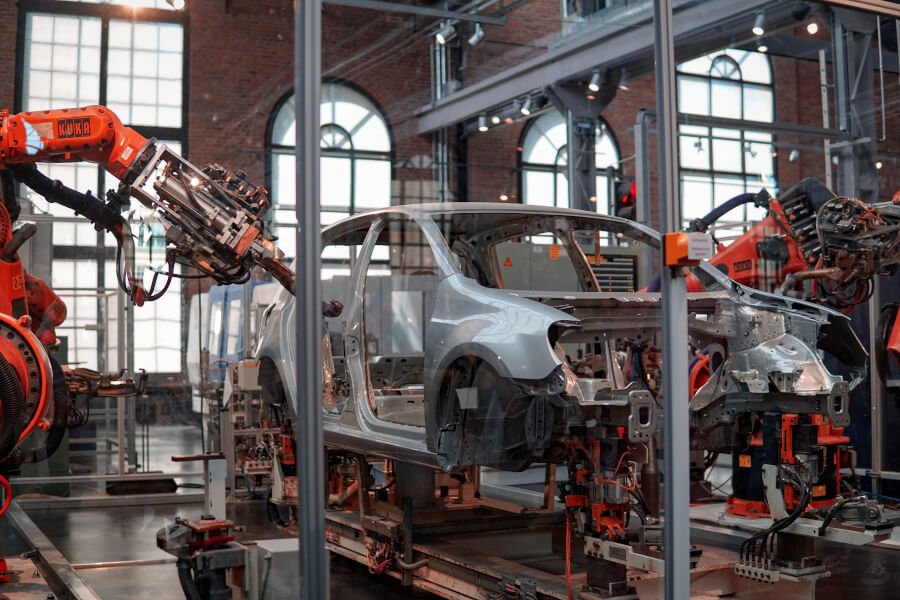
Starting in the late 1970's American began transitioning out of manufacturing and largely into the lower paying (and the less secure non-union) service industry. What industry remained has become more automated, replacing most positions. The only ones with job security and a good paycheck are the ones who repair or program the production line robot. But that's not the half of it.

Our parents and grandparents didn't have to face is the level of competition we do. Today, workers not just compete with each other for scarce well paying jobs, nor is their competition in the next town or state. Today's employee faces competition for work thousands of miles away, in countries like India and China where unions don't exist and people will work for next to nothing (and forget about benefits. They're happy just to have a job!). This is where America is losing ground, and when we look back at math and science score of our students, the future doesn't look to bright for the U.S..

When  it comes to technology, the world leader is Japan (Japan is also the world's most literate nation). Second is South Korea followed by China which has a knack of acquiring, studying, and adapting U.S. and global  technology. You don't have to look much further than the America's F-35 and China's J35A stealth fighter jets for proof.

In fourth place the good ole U.S. of A. Behind us is Germany, a country the size of Wisconsin and with a reputation for high quality engineering and efficiency thanks to their excellent dual avenue academic system which puts the trades on equal ground with higher education without the stigmatism as we mentioned earlier. Of course, we wouldn't expect anything else from the Germans.  As an aside, Russia graduates the most engineers of any country followed by the U.S. and Iran according to UNESCO.

 Singapore, a former British colony, is next (remember at the beginning of this article where I mentioned that the top five nations in academic math and science among 15 year olds were all Asian?). Coming in seventh place is Russia. Another country with a "gift" of mimicking U.S. technology. Great Britain, the United Arab Emirates (UAE), and Switzerland round out the top ten.

The key to the future is innovation. It's where tomorrow originates. So, who leads the world when it comes to innovation? That honor goes to Switzerland which dominates its second place competitor, Sweden. The United States has dropped to third place and is just ever so barely ahead of Singapore and the UK. For now, this may get us by, but not for long. Not at the pace the world is changing. How long can we hold on? Only time will tell. But one thing is for certain. If we don't do radically improve our school system and the quality of graduates, we may be facing a bleak future as the world's largest Banana Republic.


Thank you for reading Another Opinion! We hope you enjoyed this article and will pass it along. Please don't forget to subscribe. It's free! Lastly, please "like" us on whatever platform you use to read anotheropinionblog.com. It helps beat the algorithms and keeps our articles in circulation. Please find below the links we consulted in researching this article. 


Department of Government Efficiency


U.S. Education Rankings Compared to Other Countries


Tradespeople wanted: The need for critical trade skills inU.S.


These countries have the most technological expertise


Saturday, October 26, 2019

The Vanishing Middle Class


We are told constantly that the U.S. economy is booming; that we are witnessing one of the most robust economies in recent memories. We're told that thousands of former U.S. jobs which had shipped overseas are finally coming back home. From the reports, Americans should be giddy from all the growth. But we're not. In fact, most Americans are barely making it.

As most of us know (or should know), the Middle Class, which has been the backbone of this country since its founding, has been under an incessant attack for almost four decades. According to a recent report from the U.S. Social Security Administration, nearly 50% of the Middle Class earns less than $33,000. That works out to be $2,750---before taxes.

To break it down further, 46% of Americans earn under $30,000. 58% make under $40,000, and 67% bring in less than $50,000. But the statistic of real importance is this--- 44% struggle to pay their bills. After taxes, many American routinely have to choose between which bill to pay now and being able to buy groceries or other essentials such as clothes, school supplies, car repairs, etc. As an aside, the poverty level for a family of four is $25,750. That means the half of America is living on the financial edge. Nearly a quarter of all Americans receive welfare benefits while 49% receive at least some form of regular monthly government assistance.

Meanwhile, senior corporate officers are seeing their salaries and benefit packages blossom. Their salaries have increased 937% since 1978, giving them an average salary of $15.6 million dollars; faster growth than the stock market according to the Economic Policy Institute. That's approximately 30 times the salary of an average employee (union or non-union). Meanwhile, adjusted for inflation, the average worker has seen their pay increase by only 11.2% over the same period. I know being a president or CEO isn't for the fainthearted, but that's outrageous.

There are those who say "get a better job" or "go back to school". Well, despite the growth in the number of jobs, the pay is often fairly low while benefits are no longer a given as they once were. As for going back to school, most individuals can't afford to either take the time off to beef up their academic credentials or afford the overinflated costs of higher education. We're heard countless stories of individuals graduating from college with a debt that will take decades to pay off. Of course, in all fairness, there are those who graduate with practically worthless degrees who may never be able to pay off the school debt.

I would be remiss not to point out that while the majority of new jobs are on the lower end of the pay scale, there is an abundance of vocational or trade vocations in desperate need of being filled. In addition, they pay very well (many over $50,000 annually) and often include those ever increasingly rare benefits. I'm talking about plumbers, electricians, carpenters, welders, HVAC mechanics, stone and brick masons, and so forth.

For some reason we've allowed ourselves to be convinced that every job should require a college degree. They don't. What they require is high school graduates being able to perform at a higher than eighth grade level; individuals who can read, write, do basic math and have critical thinking skills. Since the 1960's, we've seen the quality of public education repeatedly dumbed down so as not to "offend" anyone or make them feel "bad" about themselves. As a result, students across the board have been forced to suffer. But, nevertheless, it reinforces the point that not everyone is college material.

Meanwhile, we have created a society ever dependent on service oriented jobs, which are, again, typically low paying. Individuals in the fast food business have been clamoring for $15 an hour pay; claiming they can't support a family with their current wage. No doubt that's true, but then again, fast food jobs were intended to be "starter" jobs. Employment for those just getting starting in the job market like high school students. Aside from manager positions, they weren't intended to be jobs to supporting families.

In addition, automation has taken many of the typical production jobs which were once the domain of the well paid blue collar Middle Class. Add to this the high number of illegal immigrants who are employed in many entry level and service jobs. As a rule, these are generally low paying work with few or any benefits requiring very low skills (even fluent English isn't always a requirement). Again, that speaks to both what's available and the quality of applicants.

We also have to consider the government. We are constantly seeing politicians and bureaucrats pushing for higher taxes, not to mention more and higher fees and rates on everything from water and sewers to electricity to property tax. Of course, they rarely miss an opportunity to raise their own salaries, but that's for another time. Meanwhile, they are doing their best to regulate anything and everything for the obvious purpose of finding new income streams to sink their greedy little hands into.

Regulation has become so bad that the average "mom and pop" business, the traditional economic backbone of this country and its largest private employer, can't afford to stay in business. This is especially true when you consider that the large mega corporations are usually propped up with tax breaks and taxpayer backed incentives, plus they can afford the best accountants, lawyers, and politicians money can buy.

As readers of Another Opinion already know, America is an Oligarchy. These ultra rich corporations and individuals literally own both major political parties as well as their politicians and top level bureaucrats. They "help" write key pieces of legislation and then use their financial influence to see to it that it's passed. The average small business person can't afford to hire a lobbyist, leaving them with very little power over their own existence.

So what do we do? This is a problem which has as many potential answers as it does problems. First, we have to accept that America cannot survive with half of its population literally living from paycheck to paycheck year after year. Right now the average American family is carrying about $38,000 in personal debt (not including student loans). Millennials and Gen Z between 18 and 24 already have an average debt of $22,000. Older Millennials, those between 25 and 34, are in debt to the tune of $42,000 while Gen X and Babyboomers have a debt of between $36,000 and $39,000.

If we add to that the fact that 40% of Americans can't come up with $400 to cover an emergency, we have a pretty bleak picture. Also bear in mind that the average American family has just under $5000 in their savings account; 58% have less than $1000, with a substantial number having no savings account at all. Sooner or later "something" is going to happen economically and "someone" is going to get the Old Maid. When that happens, the whole house of cards is coming down, and with it, the whole economy.

While many argue that we need to increase (almost perpetually) the minimum wage, the problem is that usually increases prices (after all, "someone" is going to have to absorb the increase and that "someone" is almost always the consumer). Perhaps it's time to abandon the concept of a minimum wage and let the marketplace decide. Those who won't pay a livable wage will be forced to adjust or go out of business.

Secondly, we need to cut regulations on small businesses and make it easier for them operate. The biggest stumbling block, aside from government regulation, has been in the area of benefits; especially insurance, which is why I like the idea of a single payer form of insurance where everyone is provided with a basic package and then given the opportunity to purchase additional insurance as their needs change (those making under a certain minimum income could receive either an income credit or discounted rate). It would at least be a starting point. We also need to encourage personal savings by eliminating taxes on accounts under $100,000.

We also need to stop underwriting mega corporations with taxpayer dollars. They are quite capable of taking care of themselves financially thank you. I suggest that a minimum income tax be imposed. The fact that Exxon, Chase, Apple and other global corporations pay zero income tax has to stop. Along those same lines, we must overturn the colossal "Citizens United" mistake by the Supreme Court.

This fiasco declared that corporations were "people" with the same rights as you and I, especially "free speech" which the court equated with money with the exception that corporations can give unlimited amounts while us mere mortals are still capped as to what we can donate. Corporations should be unable to donate money or provide support to any political party or candidate.

Equally, any contact between a government official and a corporate lobbyist should be public. No lobbyist should have input on any piece of legislation other than from an official request in the form of a public hearing open to all. Former public employees should also be required to wait seven years before accepting any position which brings them in contact with a government agency.

All tax, fee, and rate proposals must obtain public approval before being implemented. No more "nickel and dime" increases. This includes salaries for elected officials. Along with this is the need for term limits. This would go a long way to ending corruption and bringing fresh ideas to government. I propose a 12 year term---six 2 year terms for representatives, two 6 terms for senators, three 4 year terms for the executive branch as well as federal judges and the Supreme Court. We also must end partisan gerrymandering of districts. This does nothing more than keep incumbents in power. Districts must be balanced in order to reflect the residents, not the party.

Lastly, we must instill discipline back into the schools. School is about education, not babysitting and surely not tolerating violent students attacking or bullying other students or teachers. Expelling them only gives them what they want. Instead, they should be sent to "bootcamp" schools where discipline is enforced. Emphasis should remain focused on academics, not sports or other extracurricular activities.

Students must be taught history as well as civics. They need to know their collective roots and responsibilities as Americans. Students should be periodically tested to see where their interests and potential abilities might lead them, and then encouraged in that direction. Sex education should be focused on basic biology, not on being gay or transgendered or whatever.

America is more divided as a country right than at any time since the decade preceding the Civil War. Not only are politics more divisive than ever, but the divisiveness is even fanned by the corporate controlled media. The same goes with how we treat one another. We've become all about what we want when we want it without regard for others. A act of compassion or kindness is almost so rare as to make the news it seems. Where has our sense of respect and civility gone?

If we fail to save the Middle Class (or what's left of it), America will truly become a two tier society; a nation of haves and have not (we're pretty close to that already). There are parts of this nation which are now almost indistinguishable from third world countries. We fall in the lower half of most official rankings in health, happiness, freedom, education while ranking at or near the top in incarceration, crime, poverty, and violence.

We've already lost our Republic to the Oligarchy, leaving us with an illusion of control. We must retake our country, and in doing so restore not just our Middle Class. We must not ask for permission to reclaim our country and its way of life. We must demand it.


Goodbye Middle Class: 50% Of American Workers Make Less Than $33,000 A Year


CEOs make $15.6 million on average---here's how much their pay has increased compared to yours over the year


Good paying blue collar jobs go unfilled in tight labor market

Here's how much debt American have at every age

Sunday, October 22, 2017

What Does Halloween and Politics Have in Common?

Halloween. My most favorite of annual holidays. After all, what's not to like? You have cool fall weather with the smell and crunching of falling leaves, not to mention the vibrant colors. Then you have all the kiddos dressing up like their favorite villain or super hero knocking on the door and that near unison shout of "Trick or Treat" as they bravely hold up their plastic pumpkins, bags, or optimistically, a pillow case in the hopes of a successful treat hunt. Of course, Halloween gives adults the excuse to dress up too; be it their favorite monster or character from TV, the movies, or simply their imagination. Halloween is also a time to watch classic horror movies (Lugosi, Karloff, Price, Lee, Lorre, Hitchcock, or Chaney) or more modern fare such as the "Slash and Gore" genre (Freddy Kruger, Jason, Saw or Leatherface),witches, demons, or the latest from Stephen King, plus let's not forget "The Great Pumpkin Charlie Brown" or "The Rocky Horror Picture Show" ("It's a jump to the left..."). Then there are all those sweet "leftover" goodies...and we don't even need another excuse, it's Halloween!

Of course, Halloween is meant for fun; at least these days. We know it's fake, though we enjoy the bit of fright it brings. But what are we really afraid of? What is it that actually scares us? I'm pretty sure it isn't the prospect of Zombies or mummies. So what is it that makes us worry or uncomfortable? Well, according to an article in 'Market Watch' by Jacob Passy, our top ten fears, as published by Chapman University, are, from least to most, as follows. Starting with tenth place is air pollution. 45% of Americans are most worried about foul or dirty air, which I could see as a real problem, particularly in some cities like Los Angeles or Louisville (California has 7 cities in the top 10 for worse air quality. Pennsylvania has 2 and Kentucky has 1). Coming in ninth is North Korea at 48%. Apparently, a sizable number of Americans are worried that the "Boy Dictator" may not be bluffing this time and just might launch an attack against South Korea, Japan, Guam, Hawaii, Alaska, or maybe the West Coast on a good wind day. However, 52% think the Kim Jong Un is simply trying to obtain more freebies from the West to keep his economy running for a bit longer, and why not? By threatening a war with South Korea, Japan, or America, the Kim Dynasty has been able to extort billions in aid and credit which has kept the Hermit Nation in kimchi . But if Kim was to launch a nuclear or chemical attack against the U.S. or its allies in the Pacific, American response would be swift. Who knows? A ill-conceived attack could result in South Korea suddenly becoming an island .

Next on the list is global warming/climate change. It too came in at 48%. Apparently, large minority of Americans aren't buying the line from Republicans that the earth isn't getting hotter. Perhaps it has something to do with increase in the number and intensity of storms, tornados, and hurricanes. It may be the dry weather and longer lasting droughts or maybe the number of forest fires and the increase in so-called "dead zones" in parts of the oceans. Of course, their concern could be the seemingly increase in sea ice resulting from large chunks of the Arctic melting. Of course, some well known scientists such as Stephen Hawking, Michio Kaku, and Neil deGrasse Tyson claim that the existing scientific data indicates that there is an increase Earth's overall temperature (just saying). Of course, that still leaves 52% who think that the changing conditions are simply the result of cyclical weather patterns. As for the other data, they're called "seasons".

Another 48% of those polled said their greatest fear is that the U.S. will be involved in another war. Sorry, but I think that's practically guaranteed. Since America's founding in 1776, we have been at war---declared or not---222 years out of 239 years. That represents 93% of our history since our we told the Brits to take a hike. Folks, that's not good. Right now, we have been at war longer than at any time in our nation's existence. Sadly, I don't see any prospect of this changing. America, as many of you know, is no longer a democratic republic. We let that slip away while focusing on mindless TV programs, sports or video games, not to mentioned accepting the dumbing down of schools. We were kept busy trying to keep our jobs, finding healthcare, and so forth. We saw the growing number corrupt or incompetent millionaire politicians and keep reelecting them. We saw the government take some action, like the Wallstreet Bailout and while we said "no", Washington did it anyway without any fear of repercussions. Besides, they could always manufacture a new "crisis" to distract us anytime they wanted. As the founder of Athenian democracy, Pericles (495 BC - 429 BC), once said, "Just because you do not take an interest in politics doesn't mean politics won't take an interest in you".

America is now an Oligarchy; a plutocracy. Our foreign and domestic polices emanate from boardrooms and backroom deals. This Oligarchy is not about money. Heck, they literally control the money supply. This is about control. Control of assets and resources. If they can't get what they want through co-opting, bribery, intimidation, or extortion, then they will seek to use our military if necessary as their enforcers. Domestically, they've neutered most unions, while others have simply been brought into the fold. They've exported good paying manufacturing jobs overseas where they don't deal with union salaries and benefits, safety issues, wage and hour, etc. All they have to do is grease the right palms. Domestically, you and I get what's left. Yes, some jobs are pretty good. They pay great and benefits, but they're few and far between. Those who go to college end up with a monstrous loan debt which will take decades to pay off, and still with no assurance of a job. Those who go no further than high school have an equally tough time finding a job, unless they went to a trade school. Luckily for this "excess" demographic the military is always hiring. Wars and pseudo-wars are what keep our economy going. Without them, our economy tanks. Meanwhile, we've become economic serfs ("wage slaves" as some say) where our credit rating represents our value to the system.

Medical bills are next on the list; again at 48%. I can easily see why many have a fear of this, especially those with pre-existing injuries or seniors. No matter what side you're on, I think most of us can agree that we are facing a healthcare crisis. Originally, people simply bought coverage out of pocket or got it through their employer (especially before the manufacturing jobs were exported). Obamacare was a nice effort, but ill-conceived and ultimately a failure. President Trump is trying to rewind the healthcare clock, and that too isn't going to work. Let's also not forget than many healthcare professionals have taken early retirement, gone into consulting or private healthcare groups. In some cases, this leaves individuals with substandard care and overworked doctors, nurses, and staff. It's true that the U.S. was the only developed nation without a nationalized healthcare system. It was equally true that we didn't worry about waiting lists or whether our care was subject to some bureaucratic committee's approval (ironically called "death panels") like they in some countries with nationalized healthcare.

What added salt to the wound was that the President, Judicial System, Congress, and Federal employees were exempt from Obamacare. It was like they were saying that Obamacare was beneath them and that rubbed people the wrong way. Personally, I prefer a single payer plan. It would provide a basic level of courage and would allow for individuals or employers access to buy from supplemental plans. That way, small businesses could at least compete with larger companies for potentially better qualified employees while low income individuals would still have at least some coverage. Additionally, it would require everyone--including all government employees---to participate. What's good for the goose is good for the gander.

Not surprising , therefore, is fear of not having enough money for the future is next on the list. 50% of those surveyed said that running out of money was a real concern. Given our discussion about healthcare, that's understandable. For those with 401K or other retirement plans, there is the issue of market volatility. My best advice is diversity and a willingness to ride out the highs and lows. You have to think long term. Downsizing and the loss of a job as a result of consolidations or mergers represent another real concern. One has to worry about rising taxes and fees, which never seem to end. Another factor to consider is the extremely high cost of college, often with mediocre prospects of finding a decent job after graduating for many majors. Those who obtain engineering and applied science degrees tend to do the best (both of these disciplines require excellent math skills by the way).

An alternative to a four or more year college degree without debt in the six figure range, is through trade school. First, and most importantly, there is real demand for plumbers, tool and die machinists, electricians, heavy equipment operators, carpenters, and auto mechanics. Secondly, most programs are reasonably affordable, while many have apprenticeships which allows the student to earn as they learn. Lastly, you can earn great money in the trades and you have the option to work for someone or go into business for yourself (as an aside, these jobs aren't exportable), and the jobs are transferable. You can go anywhere and find a job.

The next two fears are closely related, so we'll treat them as such. One is drinking polluted water at 50% and the other is pollution of the oceans, lakes, and streams with 53%. It seems to me that polluted drinking would be a byproduct of polluted waterways and oceans. However, this could also be viewed as part of a failing infrastructure. As some of you might know, America has a serious issue with outdated and decaying infrastructures such as dams, dikes, roads (including interstates and US highways), crumbing bridges, our electrical grids, sewage systems (including pipelines which can easily be over 100 years old), and, of course, our water treatment plants.

As Hurricanes Katrina, Irma, and Harvey showed us in New Orleans, Huston, and parts of Florida, it doesn't take much to create a backflow into the water treatment plants to effectively shut down the city's water supply, which often takes weeks or longer to clean up. Texas Governor Greg Abbott estimated that Hurricane Harvey created between $150 billion to $180 billion in damages. A German disaster firm, Center for Disaster Management and Risk Reduction, estimated that the damage to the infrastructure in Texas would top $267 billion, while home damage was estimated at $35 billion. For the record, the 2005 Hurricane Katrina, then the most expensive in U.S. history, cost $108 billion.

Next on our list of top fears for 2017 is "Trumpcare", which polled at 55%. Like the ones we just discussed, this could tie back into America's fear of the increasing cost of medical care as well as the fear of not having enough money over time; especially for any type of retirement or unexpected emergencies. Given the relationship between categories, I think it's safe to assume that healthcare, employment, and retirement are the key domestic issues affecting most Americans, and they should be. These issues affect us personally more so that infrastructure or pollution issues. As, it's the failure of Washington to find a solution which is also causing serious concerns for most of us.

At the time of Obamacare, House Republicans fought tooth and nail to defeat it. It was ultimately save by the Supreme Court when it, unconstitutionally, rewrote the bill into a tax. Nevertheless, House Republicans repeatedly stated that once they won the White House, and assuming they maintained a strong factor in the House, Obamacare would be "smothered in the cradle". Senior Senator Mitch McConnell (R-KY) said that House Republicans would continue to work on the matter and would have workable plan available to "pull out of the drawer" when the opportunity arose. Well, they didn't. They had nothing. Zippo. Nada. Zilch. They lied. And you know what? Nobody really expected them too. Voters knew damn good and well that nothing would be done, and as usual, the public was right.

Finally, we come to America's top fear, which shouldn't come as a surprise. In fact, it's the same fear that Americans have had decades. 74% of Americans are afraid of our corrupt government. Going back to 2015, that figure, which was also ranked top, was 58%. According to Gallup, the approval rating for Congress stands at 16%, which is pretty darn good when you consider that in early November 2015 it was only 9%. Interestingly, I had to go back to the week of June 12, 2005 just to reach 50%! In most countries, an approval under 55% is enough to set off alarm bells and brace for a possible coup at the polls or a revolution in the streets. Yet, we endure decades of poor Congressional approval ratings with barely a whimper. Why? As I've often said, Americans know our political system is broken beyond repair. We've come to accept that the time for reform is long past. No amount of tweaking is going to work. Uncle Sam is on life support with no pulse or brain activity. All that awaits him is for those who loved Uncle Sam the most, ordinary Americans, to perform a final act of compassion for him and pull the plug, and then to start our great experiment all over again. Hopefully, we will have learned from our mistakes.


Americans are most afraid of this---hint: it's not Obamacare or terrorism


America has been at war 93% of the Time--222 out of 239 Years-- Since 1776


Hurricane Harvey could cost $190 billion, Topping Hurricane Katrina


Gallup News: Congress and the Public


Saturday, November 28, 2015

Immigration and Outcomes


Everyone knows that the US has an illegal immigration problem. We've had one since at least the Ronald Reagan Presidency. Estimates range from 12 million all the way up to 20 million individuals living in this country illegally. However, no one in Washington seems to care, We used to get empty promises of a border fence; of more border patrol and ICE presence; of more severe penalties for businesses, churches and the like who willfully broke the law. Now, politicians in Washington don't even have the decency to look into the camera and openly lie to us. They simply don't care what you and I think or want. The simple matter is that their corporate masters want cheaper labor. That means that they need more workers willing to accepting low paying jobs with little or no benefits. The more potential workers, the lower wages (and benefits) go. It's basic economics 101: supply and demand.

Many labor unions support illegal immigration too, not because they necessarily care about the welfare of these individuals but because they hope these largely low or no skill workers will accept the menial low paying jobs which is mostly all the private sector unions have left to offer since many of the good paying jobs have been outsourced overseas where companies can pay employees less...much less. Nevertheless, these low skilled and often poorly educated employees with still have to pay union dues out of their meager salaries, which will bolster the faltering union treasuries. Again, basic economics.

Many low wage service jobs like those found in the fast food industry, have been demanding dramatic pay increase; from current wages just over minimum wage to new $15 dollar an hour wages. That's all well and good. I hope they get them. I really do, however, what most people tend to forget is that these jobs were created to be primarily part-time and never as jobs to solely support households, but with the exporting of the majority of manufacturing jobs overseas, these have become the "go to" jobs for the low skilled and/or low educated individual, especially for single parents.

Corporations have, of course, attempted to justify the exporting of jobs overseas as a means to compete in global markets. Corporations have long maintained that they're unable to compete against other businesses that pay employees a few dollars or even cents on the hour, and usually with no benefits (including vacations). Often employees are required to work in unsafe or unhealthy work conditions over long hours, few if any breaks, and with machinery that's unsafe. Thus it's not uncommon for employees to be injured at work due to the equipment failure and/or exhaustion. However, since many countries lack anything similar to an OSHEA and with few (if any) employee rights, they have little recourse. A few companies have even exported jobs to countries actually employ prison or child labor (which is not uncommon in the garment or shoe industries for instance).

Nevertheless, US corporations are able to ship foreign products goods back into the United States while paying little if any tariffs since they maintain a presence here in the States. As a result, not only are American companies able to reduce employee costs, as well as avoiding expenditures on proper equipment requirements or meeting proper health or safety guidelines, they can also avoid any importation penalties. As a result, many US corporations are reaping a financial windfall. Is it any wonder CEOs making on average up to 400% percent more than their average employee? The result is, as alluded to above, those seeking employment, especially those without a college or technical education, are forced to accept whatever job they can find. In addition, there are the tax breaks and taxpayer based incentives commonly known as "corporate welfare". Frankly, who can blame them for attempting to force employers to pay out more in wages? After all, it's not like you can export service jobs right? Well, perhaps.

What many haven't counted on is that low wage employers do have a few recourses available. They can cut back on the number of employees they hire and require existing employees to pick up the slack, including mandatory work on the holidays, longer hours and fewer benefits (especially healthcare). Another recourse is automation. Some fast food restaurants for instance have begun experimenting with automated ordering devises that eliminates order takers (purchases are made with debit or credit cards, so there's no cash transactions). So, instead of four or five employees working the counter, maybe only one or two will be needed. In addition, owners can and most likely will raise the costs of their products a few cents. Thus while they may pay their employees more, they will be paying fewer of them while the public will have to pay more for the same items.

As a result of all this, there will be an increase in competition for the decreasing availability of jobs, and with more demand than supply, wages and/or benefits will decrease. What happens to those unable to find jobs? Many will fall through the cracks into a economic netherworld. Some will eke out a living somewhere between the murky recesses of part time jobs, the black or gray marketplace of cash only transactions or barter, a loose public safety net or maybe low level crime, while for others, especially the young, they can be sure there will always be a war or conflict somewhere for the control of resources or markets to help eliminate any "excess" population.

So what can be done? Fortunately there are options available if we have enough political will. One solution would be to impose tariffs on any imports, be it foreign or domestic. We could also eliminate any types of "corporate welfare" or taxpayer based assistance available to companies with manufacturing centers overseas who use those to ship back completed products to the US. We could also reform our labor laws to permit employees in foreign nations hired overseas by US based companies to be eligible to join US labor unions. Thus, for instances, employees of Ford in, let's say, Mexico or China, would be allowed to join the UAW. This would put them on the same footing as their domestic counterparts and create a more balanced playing field when it comes time for negotiating labor contracts (wages would, of course, be adjusted based the local economy). In addition, US companies who relocate US facilities overseas would be barred for obtaining government contracts, including their subsidiaries.

There is also the matter of illegal immigration. It's obviously going to be difficult at best to remove 12 million illegal immigrants. Building a wall, while a good (and expensive) symbolic statement will, in fact, dissuade very few individuals from crossing illegally into America. Most will simply bypass the wall and enter through other means, including tunnels or boats or find other entry points. Yes, we need to increase the ICE and border patrols agents along with giving them full authority to stop the flow using whatever means at their disposal up to and including direct confrontation. However, the only real solution will be by eliminating demand and that means strict and severe enforcement of penalties for anyone---individual, business, or religious institution---who aid or hire illegal immigrants without exception. Penalties should not be limited to just significant financial fines but also include suspending business licenses or loss of tax exempt status as well as possible imprisonment of key officers or officials for repeated offenses. Only by eliminating demand will we encourage illegal immigrants to return home. Lastly, we need to refuse the use of taxpayer based services to illegals and make English not just the "official" language of America but the only language used on government forms or other legal documents, as well as taught in US classrooms.

We also need to address our current educational standards. For instance, does every job actually require a college education? Personally, I don't think so. In fact, I would say that only a small percentage of jobs should require an applicant having a four or six year degree. In most cases, a solid high school education would be enough while for other jobs, a one or two year technical or trade school degree is more than adequate, and let's face it, not everyone is college material.
Germany, one of the world's top manufactures and known for their outstanding educational system, has a two tier system based on students academic performance, aptitude, and interests. The first track takes applicants toward "real world" jobs such as manufacturing (which also utilizes a two prong approach of academics and apprenticeship programs), the trades, or business (such as accounting, bookkeeping or sales), while the second track encourages qualified students on to higher education where they may pursue careers in law, medicine, engineering, and so forth. I should also point out that there is absolutely no stigma associated with individuals pursing the first approach since the system recognizes that each student is different, with different skills, talents, and abilities. In addition, no student is "locked in" and may pursue whichever track they're most interested in.

Of course, this type of system requires students who are dedicated and disciplined. Something which are lacking in American schools, but is still within the realm of possibility. US schools did, at one time, produce high quality students, especially in the years before the 1970's when a number of ill conceived "reforms" where introduced. If you have any doubts, feel free to check out any school book used in the 1940's, 1950's or even the 1960's for example (and remember, they didn't have computers or calculators) and see for yourself. Also, the US school system made good use of technical and trade schools which provided students with business ready skills to take them from graduation straight into the workforce without any significance additional training (and certainly with no remedial reading, grammar or math courses).

We must understand and accept that the economy is now global. Not only do companies compete on a global scale, but for a significant number of individuals, they too compete with others for jobs on a global scale. Furthermore, the United States is no longer a democratic republic. It's now a oligarchy, controlled in large part by global corporations who view nations as mere marketplaces to be exploited for their bottom line. Some see employees as necessary liabilities instead of the assets they really are. Capitalism, by its very nature, must consume and expand to survive. That's simply the nature of the beast. It has an insatiable appetite. However, if it continues to reduce wages and benefits in its pursuit of market share, it will reach the point where it's unable to sell its products because there will be too few people able to afford them. Therefore, a balance will have to be reached, and soon, which allows economies and wages to grow and expand while satisfying shareholders and consumers alike. At present, only a tiny percentage controls the overwhelming majority of the wealth, both in the United States and abroad. That leaves an underclass which will grow more restless and more desperate. And that is an dangerous combination.


The Pros and Cons of Raising the Minimum Wage
http://wheniwork.com/blog/the-pros-and-cons-of-raising-the-minimum-wage/


Increasing the Minimum Wage: Pros & Cons
http://www.salary.com/increasing-the-minimum-wage-pros-cons/


These CEOs Make A Lot More Money Than Their Workers
http://www.bloomberg.com/news/articles/2015-08-13/these-ceos-make-the-most-money-compared-with-their-workers


How much more do CEOs make compared to their employees?
http://www.latimes.com/business/la-fi-ceo-pay-preview-20150805-story.html


Saturday, September 13, 2014

Tyranny and Television


It seems that we're increasing, as Americans, attempting to embrace the past rather than the future or even the present. There was a time when we looked to the future in our home lives (The Jetsons, Star Trek) and in our public lives (NASA, World's Fair, sound barriers, moon landings, etc). Nostalgia television is more popular than when most of these shows aired originally. Now, it seems we're lost. We stuck living our lives vicariously through other people's lives (so-called "reality" TV); various talk shows where we watch "celebrities" babbling out their opinions on various, sometimes trivial or useless issues that are none of our business to begin with (and in doing so, implicitly inferring what we should think too) instead of us coming to our own opinions; or watching complete strangers airing their dirty laundry while we ogle, incite, and judge; idiotic "court" TV like divorce court, small claims court, or whose-the-daddy court, and so on. Basically shows about people who've made some really stupid decisions or asses out of themselves while we set back and amuse ourselves at their expense. Look at Saturday morning lineup for kids. What a bunch of junk. At least we had cartoons and shows which made sense, and where the production quality was pretty decent. We wouldn't have wasted ten minutes on any of these shows today. What happened?

Have we dumbed down not just the quality of our kid's education but network television too? Here's a thought. Grab a schoolbook---math grammar, science, history from, say, 1955, from any ole high school, and compare it to one today. Which one is more difficult? The answer should be obvious, and they didn't have calculators or computers. Yeah, we may have access to more information but that's useful only if we know what we're looking for, and what to do with it once we have it, and that goes back to what kids aren't taught today which are critical thinking skills. Some would call it common sense. Kids graduating today from high school can barely spell. Most are on an eighth grade reading level. Their math skills aren't much better, and forget about history, science, and geography. American students tend to rank near the bottom when compared to other countries.

In a 2013 international academic test, the PISA, US students scored below average in math and science and slightly above average in reading while most of the Asian countries scored at the top (with China coming in on top). Germany ranked 12th while the US was 28th, just behind tiny Denmark and just ahead of Spain. Countries like Estonia, Vietnam, Ireland, Finland scored higher than America. Poland came in 9th place, so I guess they're now sitting around telling jokes about us for a change. And while poor countries and poor students scored poorly as expected, money didn't seem to make much difference. Countries which spent less per student didn't necessarily do worse than countries which spent more per student as the result showed. The key results seem to have been better early preparatory time, better trained teachers, adaptability to the student's ability, and, oh yeah, discipline.

Maybe that's why everyone wants a college degree these days. Not because of the higher education and more developed knowledge and thinking skills, but a BA or BS degree will generally get you something equivalent to a high school degree from the 1950's. And another thing, not every kid needs to go to college. Yeah, it's great for certain individuals, especially those pursuing certain disciplines like economics, English, or engineering, but for others, they would be better off pursuing a career in the trades, and there is nothing wrong with a "blue collar" degree. First off, most of fields in the trades are in high demand. We need carpenters, welders, electricians, plumbers, and the like. Secondly, they pay well. Damn well. In many cases, an experienced plumber or electrician can earn more than a lot of individuals with BA or BS degrees (or in some cases, more than some with a Masters degree) and they can do it in less time and way cheaper (imagine 1/3 of the school debt and same or better earning potential).

Perhaps there's a stigma in this country against those in the trades. Not so in other countries, especially Germany. Germany has a highly developed to track educational system which directs students either into the trades or into university based on ongoing academic and aptitude tests as well as personal interest. Germany also has one the world's best developed apprenticeship programs in the world whereby students spend part of the day working on theory and the rest of the day doing hands on work, often at the sites of potential employers. The result is one the most successful academic system in the world, as well as maintaining the most powerful economic engine in Europe, and third overall in the world. German students, by the way, tend to rank near the top academically, regardless of which track they're on.

Back to television, how many shows are actually intellectually stimulating? Most are nothing more than commonplace formula based writing with names or genders, or (occasionally) the professions differing, but little more. Most of this can barely hold the attention of the average 10 year old (perhaps that's why they spend so much time with the faces buried in their IPods). Most of today's television shows leaves us in a mental stupor. How much real "news" are we really getting and how much is just so much tripe? It's a wonder we all don't walk around with a glazed look in our eyes and drool dripping down our chins. Is this then what we've become? Has our educational system so dumbed us down that today's "opiate", to borrow from Marx, is designed to perpetuate the process?

Of course, the best way to control a population is to keep them occupied and uneducated. Is that not, perhaps, what's actually going on here? Are we intentionally being kept busy with, as the Roman's would say, "bread and circuses"? Most of us are so overworked; so overwhelmed with the day's events; so concerned with just keeping the job we have, that all we want to do is come home and turn on the "boob tube" or "idiot box" as we used to call it, stick some food in our mouth and "tune in and turn off". After all, if we're so exhausted from the day's work; so fearful of our job being off shored or losing our insurance or pension or 401k; and we feel so powerless by what we're seeing or reading in the corporate news, that all we want to do is be mind numbed until we blissfully fall asleep in our recliners or couches, what does government or corporations have to fear from its citizens? And if a government doesn't fear its citizens, then its citizens will soon come to fear their government. Sounds like control to me, albeit a subtle and somewhat indirect form of control, but control nevertheless. What do you think?

I wish I could say that I was the first to think of this, but I'm not. It's been said a thousand different times in a thousand different ways since time immemorial. However, I think the very best expression of this idea was said by one of History's most evil tyrants, France's Maximilien Robespierre. Robespierre was the one of the leaders---perhaps the single greatest leader---of France's Great Revolution. He started off with good intentions as most tyrants do---freedom, liberty, and brotherhood and the end of a bloated and corrupt monarchy. He is remembered as the originator of the "Great Terror" which took thousands of lives (along with the assistance of the crooked grin of "Monsieur Guillotine") and precursor of the rise of Napoleon, whose reign claimed the lives of millions. It's from Robespierre, we are warned that, "(t)he secret of freedom lies in educating people, whereas the secret of tyranny is in keeping them ignorant". With polls showing an 85% disapproval rating of Congress---a near consistent rating for the last several years and lower than head lice and cockroaches I should add with my own smirk---most countries would be sweating bullets (take that anyway you want) if their disapproval rating gets above 15%, I have to ask: what will it be America? What will you chose to do?


US scores stagnant, other nations pass by us in latest international test
http://edsource.org/2013/u-s-scores-stagnant-other-nations-pass-by-in-latest-international-comparison/52052#.VBOlEZtAKzU

Top US students fare poorly in international PISA test scores
http://educationbythenumbers.org/content/top-us-students-fare-poorly-international-pisa-test-scores-shanghai-tops-world-finland-slips_693/

Congress somewhere below cockroaches, traffic jams and Nickelback in America's esteem
http://www.publicpolicypolling.com/main/2013/01/congress-somewhere-below-cockroaches-traffic-jams-and-nickleback-in-americans-esteem.html