Showing posts with label STEM. Show all posts

Thursday, September 11, 2025

Are You Smarter Than You An Eighth Grader? Population Intelligence From Around the World

Have you ever watched a world leader and thought that they were some sort of a buffoon or wondered how on earth they managed to become a head of state? Russia’s Boris Yeltsin is a good example. Not only was he a heavy drinker, but he always acted like he didn’t have a lick of sense as we say in the South. France’s Emmanuel Marcon is another example of someone who seems to be out of his league, but he’s far from the only one. 

Another individual was George “Dubya” Bush. He seemed to mess up nearly everything he did. Bush managed to graduate with a so-called “Gentleman’s C” which typically means a C-/D+. Barack Obama wasn’t exactly stellar either.  Not exactly what you’d expect for a U.S. President.

Congress is full of such individuals, and increasingly, we’re finding judges, governors, mayors, and local officials so lacking in intelligence that they shouldn't be out in public unsupervised or be allowed to hold sharp objects!

Are our euphemistically named “leaders” a reflection of the people they’re supposed to lead? Like me, I’m sure you’ve worked some place where those in charge were dumber than a box of rocks. Unfortunately, however, we are now living in a society where mediocrity is the norm. Anyone who excels or stands out is viewed with suspicion. 

Kids are routinely placed in sub-par schools where conformity is encouraged. Everyone is equally dumbed down so as to not “offend” lower performing students. As in sports, where everyone gets a trophy, so now in academics everyone gets a diploma whether they actually earned one or not. How else do you explain kids graduating high school with an 8th grade reading and literacy level, a 7th grade knowledge of history, geography, or civics, or that just 37% were academically prepared for entry level college math and science?

At work, we try to do “just enough” and to keep our heads down. We just want to get through the day, collect our paycheck, and go home. If we can somehow slip through without the boss knowing our name, that’s celebrated as a personal victory. Questioning authority is seen as making waves or labeling you as a troublemaker.

Your fellow employees don’t like it because it brings unwanted attention their way and your supervisor doesn’t like it because it means they may  address yet another problem. If the average workplace had a color, it would be dull gray. Is it any wonder then that when we graduate so many underachievers we find ourselves in a milquetoast society?

The Nobel Prize was seen at the epitome of excellence (their prestige was damaged when they started focusing on political correctness over achievement as in the case of President-elect Barack Obama who was awarded the prize for…well…nothing actually). Nevertheless, the United States has the most laureates at 420. The next closest is the United Kingdom with 142 and Germany at 115. India has won 13. China has 8. Russia has 30, and Japan has 31.

The reason for America’s dominance has been well-funded research (mainly by the military and corporations), historic academic freedom, and our emphasis on mathematics and the hard sciences, the very areas where our schools are struggling today. As an aside, do you know which ethnicity has won the most Nobel awards? The answer is Jews. One in ten of all Nobel Prize recipients have been Jewish.

What nation owns the most patents? That honor goes to China according to the World Population Review. They report that China has some 798,347 patent grants. The majority of these are in the areas of digital communications, artificial intelligence, and computer technology (China has 70% of AI patent applications). Two other areas with a high number of patents filed are medical and renewable energy technology.

As for the United States, we have a distant 323,410 of all patents granted. Japan and South Korea are next at 201,420 and 135,180 respectively. India rounds out the top five with 30,490.  It bears mentioning that Asia leads the world with the number of patents filed, accounting for 68.7% of all patents filed globally.  Of that, 70% came from China. It also holds the majority of the world’s trademarks. Not shabby China. Not shabby at all.

In addition, women account for 17.7% of the inventors as indicated on the patent applications, up from 10.9% in 2009. Most of their inventions pertain to the biotechnology and food chemistry industries. It's odd then that some countries view women as third class citizens; as being inferior and therefore makes it criminal for them to be educated or try to reach their maximum potential. 

Given the aging population, especially in the West, another question of interest is which countries have the most number of medical doctors per capita. At first blush, you would think the U.S., China, or India given their population density. Well, you’d be wrong. The nation with the most doctors based on percentage of their population is Cuba which has almost 94 doctors per 10,000 residents. In fact, Cuba is very well known for sending its physicians abroad, especially to poor and developing countries.

Sweden has almost 72 doctors per 10 thousand individuals while Belgium has 64. Greece has just over 63 doctors per 10,000 people. Norway has roughly 52. By comparison, Russia has 38 physicians for every 10 thousand. In India, the world’s largest populous country, its only 7.27. It’s 25 in Canada and just slightly better in Mexico with 25.6. In the United States, the number is 35 physicians for every 10 thousand.  Lastly, in Africa it’s mostly under 10 physicians for every 10 thousand with the majority of countries having under 2 doctors per 10 thousand.

As a side note, the U.S. Northeast has the most number of active doctors with New York producing the most. The majority of doctors in the U.S. are White or Asian. The fewest number are Black. Most of the applicates to medical school are foreign born, with most coming from India, Pakistan, the Caribbean, the Philippines, and Mexico.

Finally, the overwhelming majority of doctors come from upper income families. 75% of doctors comes from families whose incomes are in the top 40%, and of those, 30% are from families in the top 5% income bracket! The high cost of a medical degree (and subsequent debt) make it nearly impossible for applicants coming from poor or working class backgrounds----just 5%---to succeed.  Maybe that explains the “God complex” some seem to have.

All of what we’ve discussed so far presupposes one thing---intelligence. So, what countries tend to have the highest IQs? It’s long been said that education is the key to success. However, that’s just one factor. Opportunity and financial means are also critical. However, none of it matters unless you have the intellectual aptitude.

The average IQ score is 100, be it an individual or a nation. These results are only “best guess” averages, extrapolated from a percentage of the population since, after all, you can’t test everyone in a nation! Secondly, since we’re dealing with entire populations, obviously no country will measure as “genius” or “gifted”, but some are certainly above average.

China has the highest overall IQ of any country with a national average of 107.19, which would be pretty decent for an individual. South Korea was second with 106.43, just beating out Japan with 106.40. Surprisingly, Iran was fourth. It’s average was 106.3. Singapore was fifth with an average national IQ of 105.14.

Russia came in sixth with an estimate national IQ of 103.16. Mongolia, Armenia, and Australia were nearly tied at 102.86, 102.58, and 102.57 respectively. Canada was 101.65 while Thailand’s average IQ was 101.52. Luxembourg had the global average IQ of 100, followed closely by Iceland at 99.99.

Vietnam’s national IQ average was 100.12. Greece was 100.07. The United States came in 30th place with a national IQ of 99.74, just barely beating out Czechia which had an estimate national IQ of 99.73. The UK’s was 99.68. Germany’s average IQ was 99.64. As an aside, the national IQ for France was 101.42, putting them in 17th place (yes, we got beat by the French!). Mexico's was 95.52.

The highest estimated IQ in the Middle East belongs to Lebanon with 99.39, putting them in 37th. Israel was next, in 45th place, with an average IQ of 99.07, tying Turkey. Other Middle Eastern countries were the UAE with an average of 96.8. India was 99.08. Egypt’s average national IQ was 97.21, Kuwait was 95.02, and Algeria had an estimated IQ of 97.01.

Among the nations of South and Central America, Uruguay’s and Ecuador’s national IQs were near identical at 95.01 and 95.00 respectively. Chile’s was 95.38. Argentina’s IQ was an estimated 94.39 and Brazil’s was 92.92 with an IQ of 93.17 for Columbia. 

In Africa, South Africa had the highest with an estimated national average of 94.11. Kenya ‘s IQ was 91.22. Zimbabwe was 90.21 compared to Ghana with 90.25. The Ivory Coast was 88.42, Senegal’s average national IQ was 88.27 and the Congo was 88.01. Angola’s estimated national IQ was 85.33, and in last place at 126 was Gabon, whose average IQ was 85.08. The average IQ for a sub-Saharan African is 80.

It should be mentioned too that overall, IQ scores worldwide have been on the decline, reversing a trend of rising scores throughout much of the 20th century thanks to better nutrition and healthcare, more access to schools, quality education (and discipline) better qualified teachers, and generally secure environments needed to foster learning. This decline (known as the “Reverse Flynn Effect”) first started appearing in the late 1970’s and accelerated in the 1990’s.

The most notable regions of decline has been in Scandinavia, which had long been noted for producing a highly intelligent population. The UK, France, and the United States has also seen a decline in IQ scores. Latin America has remained largely stable while Africa has seen some improvements. Asia, on the other hand, has experienced stable IQ scores or in some cases, a significant rise.

Studies have shown that the decline in IQ scores have been most prevalent in the areas of mathematics, logic, and verbal reasoning. The significance of this is that these are the very areas needed for an advanced technological society as well as in medicinal research. Spatial reasoning, however, has actually improved. Could that be from playing so many video games?

It should come as no surprise that Asia’s dominance in academic testing and it’s rising IQ scores correspond to its growing dominance economically, especially in the areas of AI, technology, and communications. If the West is to remain competitive, it must reverse this trend by demanding academic excellence from its schools, including restoring discipline in the classroom and an emphasis on academic rigor. Excuses will no longer cut it. Additionally, we must accept that not every job requires a college degree. Most only need individuals who had 12 years to master the basics. Trades schools are another area seriously lacking our attention despite high demand, good pay, and low debt.  

Countries like South Africa and Iran have made serious social blunders while Europe is caught in an ever tightening spiral downward thanks to political weakness (that can be said of Canada as well). Africa has the resources but it lacks the infrastructure and leadership thanks to petty graft and prejudices.  Latin America has the potential, but does it have the will? That remains to be seen. In the interim, it appears that the Sun is rising ever higher in the East.  


 Thank you for reading "Another Opinion", the Op/Ed blog page for the "militant middle".  Here at "A/O" we truly value our readers. At A/O we seek the facts as they exist, not partisan talking points.  We hope you find our articles informative and engaging. Comments are welcome, provided they are not vulgar, insulting or demeaning.  Another Opinion is offered without charge and is directed toward all independent and free-thinking individuals. We ask, however, that you "like" us on whatever platform you found us on in order to keep our articles available for free to others. Lastly, in order to keep costs down, we depend on passive marketing, and therefore, depend on our readers to please forward our posts along. Below you will find links to the sources we used in writing this article. Thank you. 


Nobel Prize by Country 2025

https://worldpopulationreview.com/country-rankings/nobel-prizes-by-country


Patents by Country 2025

https://worldpopulationreview.com/country-rankings/patents-by-country


Here’s the top 10 countries who filed the most patents globally

https://www.patentrenewal.com/post/herere-the-top-10-countries-who-filed-the-most-patents-globally


AI Patents by Country Revealed: The Top 15 Countries Dominating the 2025 Landscape

https://arapackelaw.com/patents/ai-patents-by-country/


Doctors per Capita by Country 2025

https://worldpopulationreview.com/country-rankings/doctors-per-capita-by-country


Average IQ by Country (2025 Update)

https://www.thecaliforniacourier.com/average-iq-by-country-2025-update/


American IQ Scores Have Rapidly Dropped, Proving the ‘Reverse Flynn Effect’

https://www.popularmechanics.com/science/a43469569/american-iq-scores-decline-reverse-flynn-effect/


American IQs rose 30 points in the last century.  Now they may be falling

https://thehill.com/policy/technology/3922608-american-iqs-rose-30-points-in-the-last-century-now-they-may-be-falling/

Thursday, September 04, 2025

Education in America: Sowing the Winds of Our Future


Here in the United States, Labor Day marks the “official” end of summer, although you’d hardly notice. The public pools are closed. The leaves on trees gradually turn their vibrant reds, yellows, and oranges. There’s the faint crunch of the few which have already fallen; soon to be a chorus in just a few more months. The nights are becoming a little cooler and rain is becoming a little more frequent than before. You occasionally have to pause to decide whether you need a jacket, but the warmth summer’s days remains, at least for now.

Labor Day is when states, especially in the South, have their state capstone fairs with venders hawking their wares and rides from practically everywhere. You can sign up to get your blood pressure tested, a mammogram, buy shoe inserts, and buy new gutters all within just a few feet of each other.

 It’s where you’ll find an abundance of friendly (mostly) competition for the best porch whistlers, dancers, cake bakers, quiltmakers, best quality livestock, and where hundreds will come out to watch the well-heeled bid phenomenal amounts of money for best cured ham…all for charity of course (the top ham sold for $10 million dollars this year).  Communities have the first of their local craft and art fairs. But for many Labor Day weekend means just one thing---the end of summer vacation and the start of a new school year which is the subject of this week’s article.  

Education is typically the best barometer to measure a nation’s future potential, after all, the students they graduate are the nation’s economic, technological, political, and cultural future. They are the ones who will develop the newest medicines, the next generation in technology, our new engineers, and will be the makers and enforcers of laws. Many say this represents the new battleground for global domination. So, how does America rank?

When determining where a country ranks, be in education, military spending, medical care, and so forth, they are measure against a bar  or standard. This “standard” is the average of 38 members of  the Organization for Economic Co-Operation and Development (aka the “OECD”). The OCED, which is comprised of developed or “first tier” nations, who work together to promote economic growth and cooperation, sustainability, establish standards, and common policies.

According to OCED, Luxembourg, Norway, and the United States spend the most money per student of any nation (in that order) along with South Korea and Switzerland (especially at the secondary school level).  In terms of percentage of their Gross National Product (“GDP”), top honors go to the Marshall Islands and the nations of Oceania, followed by the U.S., France, and Austria.

U.S. protectorate of American Samoa for instance spends 14.7% of its GDP on education.  Compare that to Cuba, which is one of the few countries with a near 100% literacy rate, which spends about 9.4% of its GDP on education or Sweden, which ranks near to top in nearly every positive measure. It spends approximately 7.6% (the same as Bolivia) while the nation of Batswana spends roughly 8.1%.

As an aside, the World Population Review, which uses a slightly different set of metrics, have some different, albeit similar numbers. According to the WPR, the United States spends 5.4% on education in general while it’s neighbors, Canada and Mexico, spend 4.1% and 4.2% respectively. America’s top economic competitor, China, spends 4% while Russia invests 4.1% on education. Germany spends 4.5% while France does a bit better at 5.4%.

Who then spends the most on the nation’s education? The African nation of Namibia spends a whooping 9% of its GDP on education. Neighboring Botswana invests 8.!%. Bolivia and Sweden both spend 7.6% on education. Iran only spend 2.9% on education, but then again, they only educate half of their population. India invests 4.1% on its future. The tiny nation of Bhutan spends 5.8%. Turkey invests just 2.9% in its future compared to 3.2% for Japan and 5.8 for the mini-nation of Tajikistan.

Pew Research posted a report in April of 2024 which showed that the U.S. was 28th out the 37 OCED countries. Japan was the highest along with several other Asian countries placing near the top along with Finland. The lowest score went to Columbia. In science, the U.S. place 12th out of the 37 OCED nations tested. Again, Japan ranked first while Mexico was last.

However, a more recent study from May 2025 conducted by Data Panda, indicates that the Iceland has the best educational system in the world. It’s followed by Germany, Norway, and the United Kingdom. Next in line was Denmark in fifth place. New Zealand and Finland were tied for sixth. Then came Switzerland, Sweden and Australia were tied. The U.S. was 15th,  just behind the island nation of Palau and ahead of Canada. Hong Kong was 18th.  Ireland was 22nd. Singapore and Austria were tied for 30th while Japan was 35th.

Another test from 2025, based on OCED scores, showed that in terms of literacy, the U.S. far outperformed the OCED average, 504 to 476. While that’s impressive, drilling a little deeper in the scoring indicated that while 14% of those tested outperformed the average, they were a majority of White students while the balance, mostly minority students, significantly underperformed with strong indications that they may require remedial instruction.

In terms of math and science, which are essential for medical and technological innovation and advancement (part of the “STEM” or science, technology, engineering, and mathematics curriculum), the U.S. seriously underperformed. 465 to the OCED average of 472, with several Asian and European nations far out scoring the American students. Once again, the scores reveled major failures among 15th years, especially minorities with over 1/3 being underperformers and just 7% representing top scorers.

 Once again, Asia had the top academic performers. It was noted that this may be indictive of a potential decline in America’s leadership in the area of technology and related fields unless immediate and significant improvements in the educational system aren’t made.

In terms of science, the U.S. did a bit better. The U.S. was 16th of the 37 national participants, scoring 499 against the OCED average of 485. Asia nations, including Japan, Singapore, Hong Kong, and Macau, made up the majority of those outperforming nations. However, while the U.S. did well, it was due primarily to just 11% of its top scoring students while 22% did poorly.

It's also worth nothing that in terms of the best educated populations, Ireland has the highest number of individuals was a bachelor’s degree based on percentage of population at 54.4%. Switzerland and Singapore are next with 45.6% and 45% respectively. Belgium and the UK complete the top five with 44.1% and 43.5%. The United States is 12th with 40% and just beating out Australia with 39.8%.  

Of the Middle East, Israel ranks the highest with 39.7%. Argentina, Chile, and Brazil are the top three in South America with 23.7%, 22.9%, and 21.5% respectively. China and India are among the lowest with 6.9% and 14.2%. There were no African countries out of the top 36 nations.

What does all this mean? The United States ranks third globally in what it spends per student, however, we’re toward the middle of the pack when it comes what we spend on education in general based on our GDP. In terms of what we are getting for our money is definitely no bargain. In terms of math scores, are well below average. Our collective science scores are good, but not great. With regards to literacy (reading and comprehension), we are doing well.

The problem, however, is that our achievements overall aren’t evenly distributed. It seems that where we we’re doing well is reliant on primarily private schools and a white student population. Meanwhile, public schools are generally underperforming, especially in schools where the majority student population are comprised of minorities.   

This is particularly a problem in terms of the future as the high achieving White student population continues to shrink and America heads for “majority minority” status. Our current immigration is only making matters worse more quickly with new immigrates coming from countries with a history of underperforming academics. 46% of arriving adults have no education beyond high school---if that! Only around 41% have a bachelor’s degree while few are certified in the trades.

Additionally, those from Latin America and Africa are less likely to possess a high school degree or equivalent whereas those from Europe, Asia, and Oceania are more likely to possess at least a bachelor’s degree. Those entering with a technical or trade certification face stringent hurdles to get their credentials approved which, given the critical shortage of plumbers, electricians, and so forth, needs to change.

Lastly, unless something is done now, such as changing our focus on immigration and focus our school curriculums more on STEM courses and less on “sports” and low/no demand degrees, we are likely to lose our lead in the sciences, medicine, and technology, making increasingly dependent on other nations, particularly in Asia, or to put it another way, we will reap what we’ve sown.


Thank you for reading "Another Opinion", the Op/Ed blog page for the "militant middle".  Here at "A/O" we truly value our readers. At A/O we seek the facts as they exist, not partisan talking points.  We hope you find our articles informative and engaging. Comments are welcome, provided they are not vulgar, insulting or demeaning.  Another Opinion is offered without charge and is directed toward all independent and free-thinking individuals. We ask, however, that you "like" us on whatever platform you found us on in order to keep our articles available for free to others. Lastly, in order to keep costs down, we depend on passive marketing, and therefore, depend on our readers to please forward our posts along. Below you will find links to the sources we used in writing this article. Thank you. 


OCED


WPR: Education Spending By Country 2025


Data Panda: Education Rankings By Country


U.S. Education Rankings: Global Comparison Performance


Charted: The World’s Educated Countries


Friday, November 22, 2024

America's Global Economic Performance and Our Failing Schools


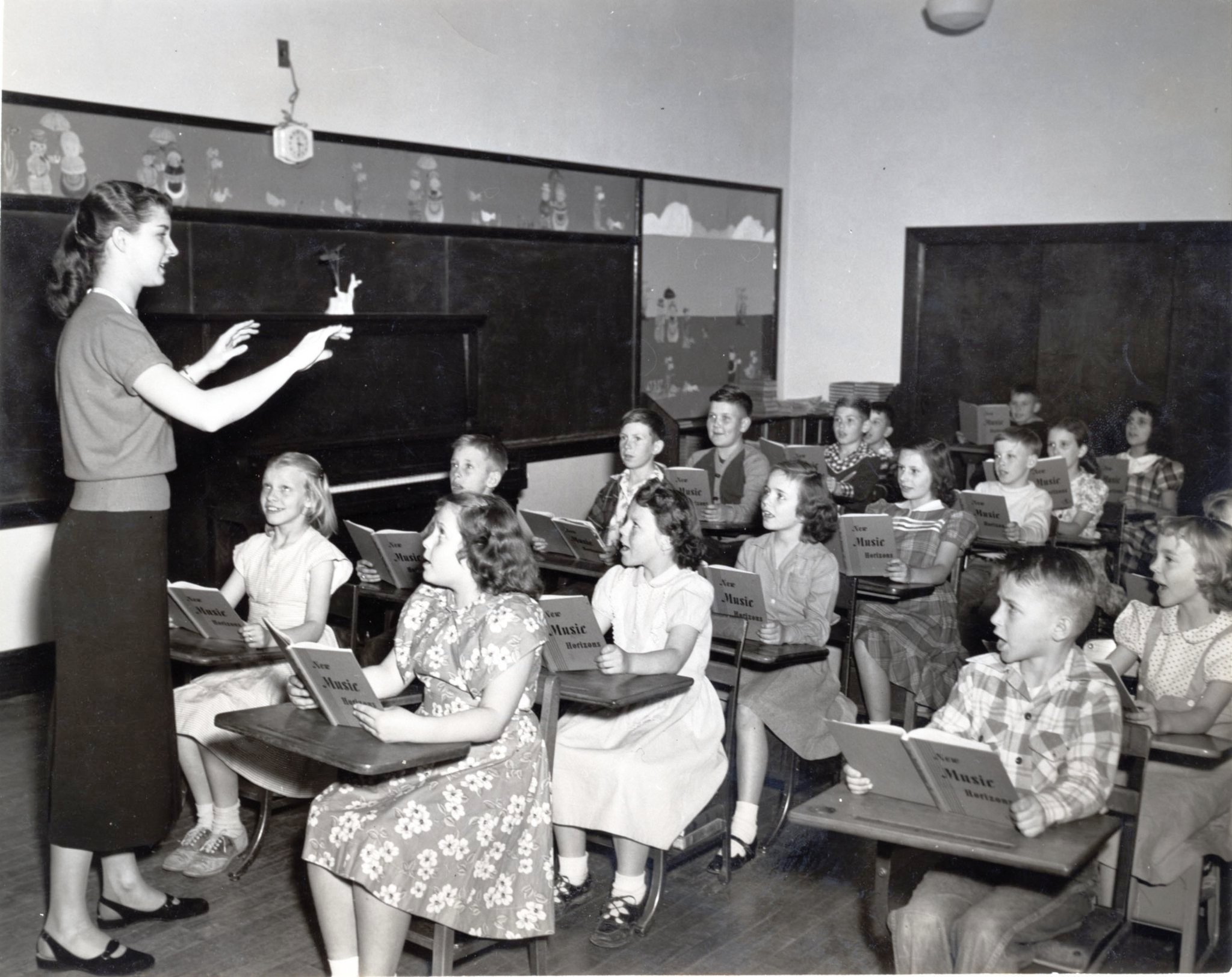
Many of the things we took for granted when we were in school back in the 1950's, 60's, and '70's are not considered "politically correct" these days. It seems that the emphasis is more on not "offending" anyone or promoting a culture where nearly everything is acceptable, no matter how irrational. Kids can't tell time using a analog clock or write cursive but they get to pick which gender they want to be and no one has to even tell their parents! You send "Johnny" or "Mary  to elementary school in the morning and they come home as "Johanna" or "Mark"! What the hell?  I was happy if I got to pick out my shirt for school let along my gender! Besides, everyone knew girls had cooties. 

Today kids have story time read to them by individuals dressed like they belong in some sort of John Waters' movie.  They can now choose what they want to study (or not) based on their racial or gender identity.  Disrupting class isn't at all uncommon and often excused as being a part of their "learning culture" or symptomatic of some attention disorder we never heard of when we were kids in school.

 Assaulting teachers while trying to teach class or enforce discipline isn't unusual (and woe unto the teacher who physically responds). Teachers in their 20's or 30's getting caught having sex with kids barely in puberty happens so often it's barely news worthy.  Professional ethics aside, what about simple  morality?

 I personally happen to support saying the Pledge of Allegiance (if you don't want to participate, fine. Just don't interfere with those who do). Strict discipline in the classroom, active participation of the parent or guardian, and teaching civics are essential. If they don't understand the function of government and their role in society as citizens, how can they protect their freedoms? Volunteering 90 days at the end of senior year performing some civic service such as Habitat for Humanity, helping out at the VA hospital, Meals on Wheels, participate on a police or firefighter advisory board, helping seniors or working as an election officer should be mandatory before graduating. 

 I am especially keen on learning being the focus of education. Anything beyond that (sports, band, cheerleading, or whatever) should be a privilege for maintaining good grades. Poor grades or disciplinary issues and the privileges are suspended until the grade or behavior situation is corrected. Repeated offenses and they're revoked. Period.

Some individuals and groups want to promote the introduction of their agenda a denominational prayer in public school and teaching creationism in public school either alongside evolution or to the exclusion of evolution all together. If that's want you want for your child, great. Send them to a parochial school.

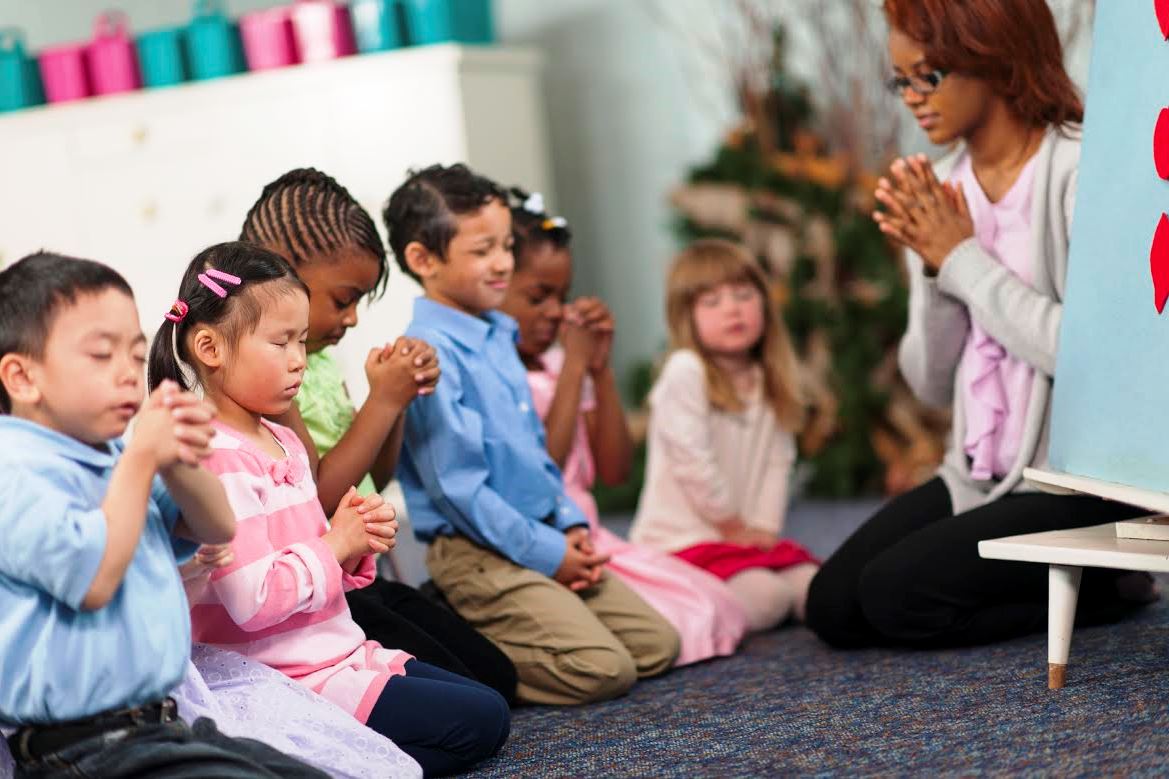
 I have no problem with a minute of silence to get yourself mentally ready for the day ahead. If you want to quietly say a little prayer (or have a little prayer circle), have at it. If you want to do a quick mediation, or some late minute cramming for the test you forgot about or get your homework in order, that's fine too. Just be respectful of others. I do not support the notion of mandatory participation in someone else's religious expressions unless it's part of a comparative religions class examining all faiths.

Another key issue is the emphasis on higher education. I also don't believe college is for everyone or necessary for every or even most jobs. Sure, there are some occupations where higher education is needed because of the intellectual nature of the work. However, there are jobs where someone with a proper high school education should be able to do quite well. One reason employers ask for a college degree is just to get a qualified applicant at what would otherwise be the high school  equivalent.

 I've seen high school "graduates" barely function on a 8th grade grammar or reading level or can do math much beyond a 6th or 7th grade level. You can all but forget about basic geography and history (but boy oh boy do they known or video games!).  One resulting outcome is the lowering of colleges and universities minimum admission standards to create an artificial parity based on race or gender rather than academic performance. This is nothing more than a quota system based on discrimination.  

Far too often, teachers and school administrators "fail students forward" rather than hold them back out of fear of being accused of racism, genderism, or whatever the victim card du jure happens to be.   The most common excuse is that failing little "Brad" or "Babs" hurts their self esteem. I think saddling them with a worthless education or bleak employment opportunities is worse than bruised feelings.

Is it any wonder that the United States consistently performs in the lower half of the second tier globally? The U.S. ranked 16th out of 81 industrial countries according to a 2022 test of 15 year olds as administered by the Organization for Economic Cooperation and Development (OECD). We placed 16th in science among the same 81 countries. When it came to mathematics, we were 34th. The top five highest scores all belonged to Asian nations with Japan, Taiwan, Singapore and Macao consistently being among the top performers. 

These are some of our current and future economic competitors for high paying jobs and market shares, which affects employment levels, quality of life, and other key metrics.  If we think of education as an investment in human capital or part of our economic national security, we're losing the battle.

Although the U.S. spends more taxpayer money per student than other countries, we are obviously not getting our money's worth. Incoming President Trump is putting together an advisory committee---the deceptively named "Department of Government Efficiency" (it's not an actual government agency)  led by Elon Musk and  Vivek Ramaswamy. Their job is to review various government projects, programs, and departments and find a way to make them work better and within budget.

 I suggest they start with our school system and find ways to improve our performance. After all, everything starts with education (there are some who, since the 1990's,  have been calling for the disbandment of the Department of Education and a return of educational authority back to the states). As an aside, the Department of Education was elevated to a cabinet level position in October 1979 by President Jimmy "Peanut" Carter (D-GA).

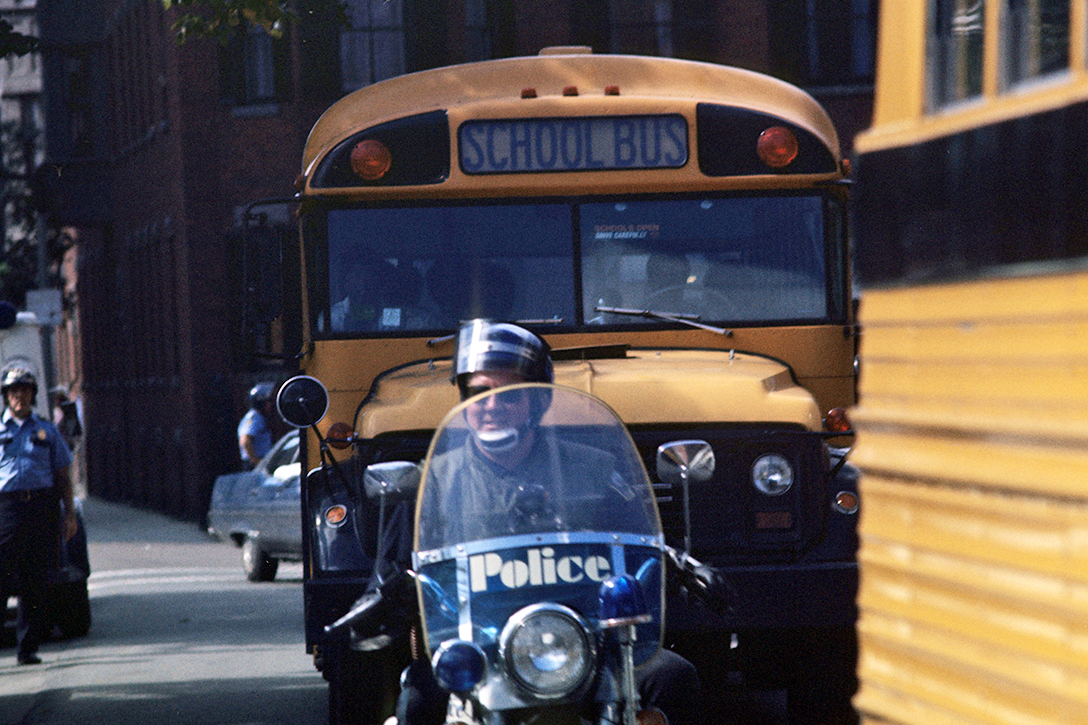
This was just four years after the advent of the disastrous court ordered  fiasco known as "forced busing" which effectively eliminated neighborhood schools. Students as young as six and seven years old, were put onto school buses and shipped all over town for hours at a time each way. This implementation of "social engineering" was intended to create balance in the schools academically and racially.

What it accomplished was a general lowering of academic performance which continues to this day. A better option would have equalizing the money spent on each student and rotating teachers. However, that would have produced a battle with the powerful teacher unions. So, what can we do about it?    

One potential solution is to weed out not just the academically unprepared, but also  redirect individuals who lack the interest or aptitude for higher education. One option would be to adopt a system similar to Germany's where students are tested periodically throughout years K - 8, and channeled into programs which lead to two years degrees, trade or technical schools, or on to higher education. It's one of the reason's Germany has one of the world's most advanced economies in the world.  Of course, the final decision belongs to the student (and parents) who may choose the academic path of their preference.

Students unprepared academically are re-immersed back into the subjects they poorly performed on via in person or online tutoring while extracurricular actives such as sports are put on hold. Students may be required to attend before or after school instruction. In some cases, this may take place during the summer. Until they can pass those courses, they should remain  suspended from  any non-academic events.  

The result is that the abilities and interests of the student is targeted  instead of trying to funnel them onto a path where they have little or no ability or interest. Trade or technical school is one such option. Unlike Europe, America faces a serious shortage of carpenters, welders, plumbers, electricians, glaziers, construction equipment operators, cyber security specialists, and other skills. It's a economic sector where there are real shortages and great opportunities. Making six figures annually isn't unheard of. Neither is owning your own business, where income opportunities can be even higher.

In a 2023 survey, there was a shortage of approximately 374,000 skilled workers in construction. The Association of General Contractors of America had a 70% positive response rate about concerns over the availability of skilled contractors and subcontractors in the upcoming years. 80% of those surveyed said they were worried about unfilled positions long term in the construction industry.

Between now and 2023, the renewable energy industry alone will need 1.1 million more workers worldwide and another 1.7 million to operate the equipment. According to a January 2024 U.S. Bureau of Labor report, the manufacturing industry in the U.S. has a staggering 584,000 unfilled job openings.

Among the reasons for the critical shortage of skilled workers is that the current workforce is slowing but steadily aging out. Almost 70% of supervisors in just the electrical trades are Babyboomers who are quickly reaching or passing retirement age.  More individuals are retiring and leaving than are replacing them. Another explanation is the push by school counselors, college recruiters, and a negative public perception about blue collar workers in general.

The truth is that training for a career in the trades is far shorter and cheaper than getting a Bachelor degree from a college or university. Training, on average, is two years or less plus a short apprentice period which may start simultaneously while being paid with benefits (the average apprentice earns roughly 50% of a skilled worker's salary). It takes about three weeks to qualify for your CDL license needed to be a long haul truck driver (the average salary--with experience--is just over $78,000 yearly).

Typically the cost of attending a trade or technical program can range from just a few thousand dollars to roughly $30,000 with an average cost of $15,000. Many of those attending a trade program are often hired before graduating (some start work will still attending school).

Compare that with the cost to obtain a four year degree. The current average is approximately $10,490 per year for in-state students. For out out-of-state students, that cost can jump to as high as $24,000 per year. If you plan on attending one of the top schools, the cost can be a lot higher. There are a few cheaper options (like attending a unaccredited institution), but remember that you get what you pay for and that's nowhere more true than in education.

Then there's the debt. On average, 61% of those who graduate from a public university leave with diploma in one hand and a bill for $31,960 in the other hand. Over their four years, the majority of students will occur a debt of at least $30,000 by the time they leave. The average federal student loan debt is $37,853 dollars. If you pursue a Masters degree, the costs and debt will be substantially higher.

It used to be that many American workers graduated from high school with a functional degree and would get a good paying job with benefits down at one of the local manufacturing companies. They'd join a union for job security and they were pretty much set. For a large percentage of the country, it was a near guarantee to their entry into the Middle Class. It wasn't uncommon for this path to be multigenerational, but those days are long gone.

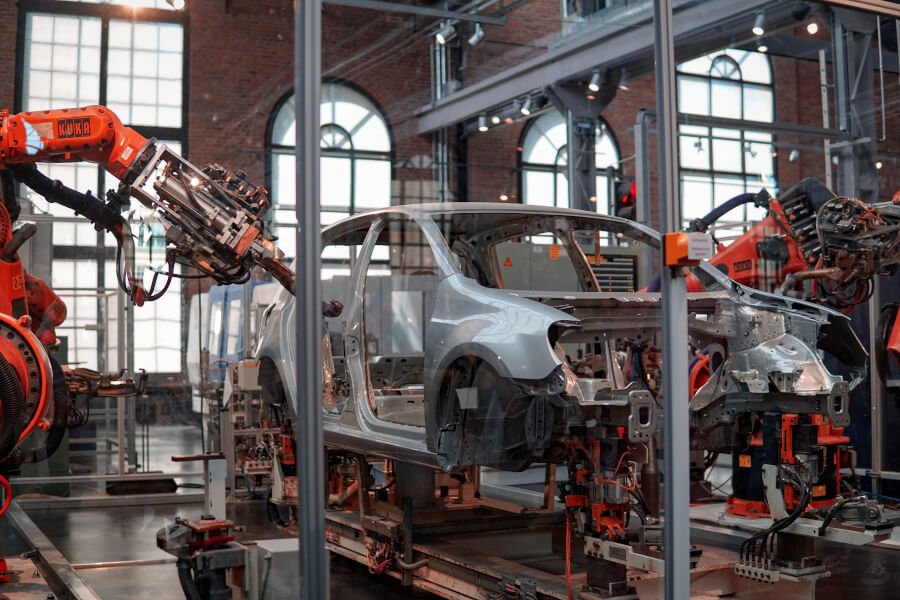
Starting in the late 1970's American began transitioning out of manufacturing and largely into the lower paying (and the less secure non-union) service industry. What industry remained has become more automated, replacing most positions. The only ones with job security and a good paycheck are the ones who repair or program the production line robot. But that's not the half of it.

Our parents and grandparents didn't have to face is the level of competition we do. Today, workers not just compete with each other for scarce well paying jobs, nor is their competition in the next town or state. Today's employee faces competition for work thousands of miles away, in countries like India and China where unions don't exist and people will work for next to nothing (and forget about benefits. They're happy just to have a job!). This is where America is losing ground, and when we look back at math and science score of our students, the future doesn't look to bright for the U.S..

When  it comes to technology, the world leader is Japan (Japan is also the world's most literate nation). Second is South Korea followed by China which has a knack of acquiring, studying, and adapting U.S. and global  technology. You don't have to look much further than the America's F-35 and China's J35A stealth fighter jets for proof.

In fourth place the good ole U.S. of A. Behind us is Germany, a country the size of Wisconsin and with a reputation for high quality engineering and efficiency thanks to their excellent dual avenue academic system which puts the trades on equal ground with higher education without the stigmatism as we mentioned earlier. Of course, we wouldn't expect anything else from the Germans.  As an aside, Russia graduates the most engineers of any country followed by the U.S. and Iran according to UNESCO.

 Singapore, a former British colony, is next (remember at the beginning of this article where I mentioned that the top five nations in academic math and science among 15 year olds were all Asian?). Coming in seventh place is Russia. Another country with a "gift" of mimicking U.S. technology. Great Britain, the United Arab Emirates (UAE), and Switzerland round out the top ten.

The key to the future is innovation. It's where tomorrow originates. So, who leads the world when it comes to innovation? That honor goes to Switzerland which dominates its second place competitor, Sweden. The United States has dropped to third place and is just ever so barely ahead of Singapore and the UK. For now, this may get us by, but not for long. Not at the pace the world is changing. How long can we hold on? Only time will tell. But one thing is for certain. If we don't do radically improve our school system and the quality of graduates, we may be facing a bleak future as the world's largest Banana Republic.


Thank you for reading Another Opinion! We hope you enjoyed this article and will pass it along. Please don't forget to subscribe. It's free! Lastly, please "like" us on whatever platform you use to read anotheropinionblog.com. It helps beat the algorithms and keeps our articles in circulation. Please find below the links we consulted in researching this article. 


Department of Government Efficiency


U.S. Education Rankings Compared to Other Countries


Tradespeople wanted: The need for critical trade skills inU.S.


These countries have the most technological expertise