Showing posts with label gender. Show all posts

Thursday, September 18, 2025

Violent Crime in America


The recent murders of Charlie Kirk, Iryna Zarutska, Dr. Julia Gard Schnuelle and subsequent sympathy for their murderers is unreal. In the case of Charlie Kirk, it has included celebrating in the streets, defacing memorials, attacks on mourners, and remarks so vile that many have been fired from their jobs. Even talk show host, Jimmy Kimmel wasn't immune. Since when do Americans celebrate the death of someone over a difference of opinions? 

The glorification of violence and disregard for human life has once again underscored the vast and deep divide between the Left and Right in this country. It has also brought to the national forefront once more the growth of violence in this country, with some calling for confiscating firearms (all though two of the murders involved the use of a knife).

Along with this rise violence has been the dramatic increase in vitriol anti-White rhetoric. Black on white crime is at a all time high, with Black assailants and White victims accounting for  63.9% of robberies, 58.6% of the rapes, and 51.8% of assaults. By contrast, Blacks are the victims in crimes involving robbery where the perpetrator was White just 8.3% of the time, and in 2.7% of assaults, and 5.5% of the rapes.

Hispanics also face a far disproportional rate of victimhood when it comes to murder, rape, assault, and robbery. They are more likely to be the victim of a violent crime 65% more often than someone who was White and 54% more likely than a Black  individual. Asians too are facing higher rates of violent crime. What is happening in America?

According to FBI statistics from 2019, the latest available, 51.3% of those arrested for murder were Black. 45.7% were White, while 1.83% were Hispanic and 1.1% were Asians. When it came to aggravated assault,  Whites were responsible for 62.2%. Blacks committed 32.7%. Native Americans were 2.2%. Asians made up just 1.8% of those convicted on aggravated assault charges. Note these are raw numbers and not based on their percentage of the population

Another form of assault is rape. In 2019, there were some 13,799 reported cases. Whites were reported as the offender in nearly 70% of the cases. Blacks were reported as the perpetrators in 26.8% of the incidents. Asians were arrested in 1.7% of the attacks while Native Americans accounted for 1.5% of the reported rapes.

Note that many cases of rape are not reported or the charges are withdrawn for various reasons. As of 2024, there are an estimated 225,000 unprocessed rape test kits currently lagging in storage areas. While the judicial system does consider rape a serious issue, many jurisdictions lack the funding or staff to process the kits timely.

A ScienceDirect Study from 2020 reported that from 2016 and 2018, there were approximately 300,000 to 400,000 untested kits awaiting processing. A 2022 Congressional Study reported an estimated backlog of anywhere from 90,000 to a staggering 400,000 untested kits were still pending. Some of the worse offenders are West Virginia, Louisiana, Oregon, and North Carolina.  

One of the states with the worse record is Kentucky. It received a test kit on January 7, 1993 and didn’t finalized the results until 28 years later, on September 27, 2021! But if you think that’s bad, consider Washington State. It received a test kit on January 14, 1984 and didn’t return the results until October 3, 2022, some 38 years later! While there should have been repercussions, it should also be noted that the there is no federal law mandating the tracking, processing, and reporting on rape test kits, which is obviously unacceptable on any level.

When it came to robbery, the FBI report indicated that in 2019 there were 104,595 reports. Of those apprehended, Whites made up the overwhelming majority at 69.8%. Blacks were 27.3% while Native Americans were 1.4% and Asians were 1.2%. Hispanics were 18, 584 of those arrested and convicted.

Unlawful weapon possession is another serious crime the FBI keeps track of. Their data shows there were 97,466 reported arrests made in 2019. Of those busted, 54,167 were White. 40,827 were Black. 18,756 were Hispanic. 1,073 were Asian, and just 988 were Native American, which brings up to another topic—gun violence.

Despite the rantings of a few, the prospects of any political or government agency actually seizing America’s guns are highly unlikely. Based on 2024 data, there are approximately 107 gun owning Americans, or roughly 32% of the adult population of the United States. In all likelihood, that number is higher. Much higher. There are approximately 120 guns per every 100 individuals. In addition, roughly 40% of the U.S. population live in a household where is at least one firearm present.

Guns in the United States are as much a part of the culture as the Old West and the Declaration of Independence. They were written into our Bill of Rights, to be used as a tool to protect us from government overreach and tyranny. They were as any essential tool in the exploration and settlement of this country. We still use them to hunt and for sport. Guns are as much as part of the American character as our belief in individualism and our sense of freedom.

In terms of the demographics of gun ownership, it should come as no surprise that males own 40% of the firearms compared to women who own about 25%. Those living in the country or in rural locations comprise 47% of gun owners. Those who live in suburbia make up some 30% while those living in urban areas are about 20%.

When it comes to age, older Americans, those 50 and up, are the mostly likely to own a firearm at 46% followed by those 30 to 49 at 42%.  The least likely was those individuals between 18 and 29. Only around 32% of them own any sort of firearm. The number one reason for gun ownership---72%---was for personal protection. An average of 31% said it was for hunting and target shooting. 15% said they were simply gun collectors, and just 7% said it was required as part of their job.

Academically, 47% of those with at least some college are most likely to have a gun. Next are those education extends up to high school. About 43% of them own a firearm of some sort. About 40% of college graduates are gunowners while just 30% of those with post graduate degrees are.

When it comes to race, the majority of gun owners---38%---are White. 24% are Black while 20% are Hispanic, and 10% are of Asian heritage. No data was available for Native Americans or Pacific Islanders. Another interesting statistic is political registration.

According to the survey, 45% of Republicans own at least one firearm while just 20% of Democrats own one or more guns. The survey, conducted by Pew, ignores Independents, the nations largest political demographic, so it has to be “presumed” that the 35% difference between Republican and Democrat ownership must be Independents. Unfortunately, a rare case of poor statistics gathering by Pew.

In 2023 there were over 46,000 deaths due to gun violence. Contrary to popular opinion, most of these weren’t the result of a crime, but rather the result of suicide or other self-inflicted injury (there were 26,700 gun related suicides in 2023). Gun related deaths are the leading cause of children ages 1 through 17, largely to a failure to properly secure the weapons and in the case of older kids, a lack of adequate gun safety training. The graphic violence is often portrayed and glorified in video games and in movie are also a significant factor. Unfortunately, there’s no reset button to push in real life.

In terms of gun safety, 58% of those surveyed said they supported tighter gun safety laws. 26% said that the current level of gun laws were about right and 15% thought they were too strict. 88% of Republicans and 89% of Democrats support restrictions on those with known mental illnesses from owning a firearm. 69% of Republicans would like to see the age requirement to own a gun of any sort raised to 21 across the board. 90% of Democrats agree. Mandatory gun safety and care training is also strongly recommended.

So where are the gun related deaths the worse? According to a 2022 report by the Centers for Disease Control and Prevention (“CDC”), which keeps track of these figures, Texas had the most gun related deaths at 4,630. California had 3,484, while Florida was next with 3,232 deaths. Georgia had 2,163. Other states with a high number of gun related deaths included Pennsylvania with 1,941, Illinois at 1,798, and North Carolina reporting 1,831, matching Ohio.

Indiana had 1,211 gun related deaths with the majority being in Gary and Indianapolis. Tennessee had 1,480, mostly stemming from Memphis and Nashville. Kentucky had 840 with Louisville leading the way. The District of Columbia, the nation’s capital, had 154. Meanwhile, Vermont experienced only 84 deaths. Hawaii had 66, and in  Rhode Island there were only 37 gun related deaths.  

It bears mentioning that while the United States is usually portrayed as the gun related death capitol of the world, there are countries far worse than the U.S.  According to a report by World Population Review for 2025, the overall death rate by gun in the United States is 4.42 deaths per 100,000, but first, who are among the lowest?  

In Jordon, despite being surrounded by violence coming from neighboring Syria, Lebanon, Israel, and Iraq, the number of civilian gun related deaths is just 0.3 per 100k. In Australia, it’s 0.09 and 0.02 in Oman.  In Spain and Algeria, the figure is 0.11. In Switzerland where gun ownership is mandatory, gun deaths are only 0.14 per 100,000. As impressive as those numbers are, the nation with the lowest number of gun related fatalities is African nation of Zimbabwe which reported a remarkable 0.01 deaths by firearm.  

The countries with the highest deaths rates due to firearms include Ecuador, where it’s 39.5 per 100k, nearly ten times higher than the U.S. In neighboring, Mexico it’s 17.2% despite all the drug cartel reported killings. Nevertheless, the nation at the top of the corpse strewn mound is Jamacia. Once known for its tourism, Jamacia now has the dubious honor of having the most gun related deaths with a whooping 42 per 100k.

Will stricter laws reduce the number of violence crimes by gun? Perhaps. It will certainly make it tougher for law abiding citizens. Criminals, of course, will have no difficulty getting their hands on gun any time they want, but that doesn’t account for knife attacks with are on the rise.

Knives, not guns, were what took the lives of Iryna Zarutska and Dr. Julia Gard Schnuelle for instance. They were the third most often used weapon in 2023. Random attacks, particularly involving “sucker punches” (aka “coward punches”) are responsible for many of the assaults on the elderly and handicapped along with weapons of opportunity.

So, are we going to impose bans on knives or other sharp objects along with guns? What about bricks, rocks, or pointy sticks? Then too, how do we combat the rise in race based attacks, often brought on by vile racist rhetoric which serves only to promote the violence without violating the 1st Amendment? Unless civility can be restored, the violence will only continue and grow. We are facing dangerous times not seen since the late 1850’s. We are at the point where any act, no matter how benign or unintentional, could potentially be the spark to set this nation on fire and neither side, regardless of the bravado, is prepared for the consequences. 


 Thank you for reading "Another Opinion", the Op/Ed blog page for the "militant middle".  Here at "A/O" we truly value our readers. At A/O we seek the facts as they exist, not partisan talking points.  We hope you find our articles informative and engaging. Comments are welcome, provided they are not vulgar, insulting or demeaning.  Another Opinion is offered without charge and is directed toward all independent and free-thinking individuals. We ask, however, that you "like" us on whatever platform you found us on in order to keep our articles available for free to others. Lastly, in order to keep costs down, we depend on passive marketing, and therefore, depend on our readers to please forward our posts along. Below you will find links to the sources we used in writing this article. Thank you. 


How many rape kits are awaiting testing in the US? See databy state.


America tested 100,000 forgotten rape kits. But justiceremains elusive.


End The Rape Kit Backlog


FBI: 2019 Crime in the United States


WPR: Gun Deaths per Country 2025


Gun deaths and violence in the United States by state


Thursday, September 11, 2025

Are You Smarter Than You An Eighth Grader? Population Intelligence From Around the World

Have you ever watched a world leader and thought that they were some sort of a buffoon or wondered how on earth they managed to become a head of state? Russia’s Boris Yeltsin is a good example. Not only was he a heavy drinker, but he always acted like he didn’t have a lick of sense as we say in the South. France’s Emmanuel Marcon is another example of someone who seems to be out of his league, but he’s far from the only one. 

Another individual was George “Dubya” Bush. He seemed to mess up nearly everything he did. Bush managed to graduate with a so-called “Gentleman’s C” which typically means a C-/D+. Barack Obama wasn’t exactly stellar either.  Not exactly what you’d expect for a U.S. President.

Congress is full of such individuals, and increasingly, we’re finding judges, governors, mayors, and local officials so lacking in intelligence that they shouldn't be out in public unsupervised or be allowed to hold sharp objects!

Are our euphemistically named “leaders” a reflection of the people they’re supposed to lead? Like me, I’m sure you’ve worked some place where those in charge were dumber than a box of rocks. Unfortunately, however, we are now living in a society where mediocrity is the norm. Anyone who excels or stands out is viewed with suspicion. 

Kids are routinely placed in sub-par schools where conformity is encouraged. Everyone is equally dumbed down so as to not “offend” lower performing students. As in sports, where everyone gets a trophy, so now in academics everyone gets a diploma whether they actually earned one or not. How else do you explain kids graduating high school with an 8th grade reading and literacy level, a 7th grade knowledge of history, geography, or civics, or that just 37% were academically prepared for entry level college math and science?

At work, we try to do “just enough” and to keep our heads down. We just want to get through the day, collect our paycheck, and go home. If we can somehow slip through without the boss knowing our name, that’s celebrated as a personal victory. Questioning authority is seen as making waves or labeling you as a troublemaker.

Your fellow employees don’t like it because it brings unwanted attention their way and your supervisor doesn’t like it because it means they may  address yet another problem. If the average workplace had a color, it would be dull gray. Is it any wonder then that when we graduate so many underachievers we find ourselves in a milquetoast society?

The Nobel Prize was seen at the epitome of excellence (their prestige was damaged when they started focusing on political correctness over achievement as in the case of President-elect Barack Obama who was awarded the prize for…well…nothing actually). Nevertheless, the United States has the most laureates at 420. The next closest is the United Kingdom with 142 and Germany at 115. India has won 13. China has 8. Russia has 30, and Japan has 31.

The reason for America’s dominance has been well-funded research (mainly by the military and corporations), historic academic freedom, and our emphasis on mathematics and the hard sciences, the very areas where our schools are struggling today. As an aside, do you know which ethnicity has won the most Nobel awards? The answer is Jews. One in ten of all Nobel Prize recipients have been Jewish.

What nation owns the most patents? That honor goes to China according to the World Population Review. They report that China has some 798,347 patent grants. The majority of these are in the areas of digital communications, artificial intelligence, and computer technology (China has 70% of AI patent applications). Two other areas with a high number of patents filed are medical and renewable energy technology.

As for the United States, we have a distant 323,410 of all patents granted. Japan and South Korea are next at 201,420 and 135,180 respectively. India rounds out the top five with 30,490.  It bears mentioning that Asia leads the world with the number of patents filed, accounting for 68.7% of all patents filed globally.  Of that, 70% came from China. It also holds the majority of the world’s trademarks. Not shabby China. Not shabby at all.

In addition, women account for 17.7% of the inventors as indicated on the patent applications, up from 10.9% in 2009. Most of their inventions pertain to the biotechnology and food chemistry industries. It's odd then that some countries view women as third class citizens; as being inferior and therefore makes it criminal for them to be educated or try to reach their maximum potential. 

Given the aging population, especially in the West, another question of interest is which countries have the most number of medical doctors per capita. At first blush, you would think the U.S., China, or India given their population density. Well, you’d be wrong. The nation with the most doctors based on percentage of their population is Cuba which has almost 94 doctors per 10,000 residents. In fact, Cuba is very well known for sending its physicians abroad, especially to poor and developing countries.

Sweden has almost 72 doctors per 10 thousand individuals while Belgium has 64. Greece has just over 63 doctors per 10,000 people. Norway has roughly 52. By comparison, Russia has 38 physicians for every 10 thousand. In India, the world’s largest populous country, its only 7.27. It’s 25 in Canada and just slightly better in Mexico with 25.6. In the United States, the number is 35 physicians for every 10 thousand.  Lastly, in Africa it’s mostly under 10 physicians for every 10 thousand with the majority of countries having under 2 doctors per 10 thousand.

As a side note, the U.S. Northeast has the most number of active doctors with New York producing the most. The majority of doctors in the U.S. are White or Asian. The fewest number are Black. Most of the applicates to medical school are foreign born, with most coming from India, Pakistan, the Caribbean, the Philippines, and Mexico.

Finally, the overwhelming majority of doctors come from upper income families. 75% of doctors comes from families whose incomes are in the top 40%, and of those, 30% are from families in the top 5% income bracket! The high cost of a medical degree (and subsequent debt) make it nearly impossible for applicants coming from poor or working class backgrounds----just 5%---to succeed.  Maybe that explains the “God complex” some seem to have.

All of what we’ve discussed so far presupposes one thing---intelligence. So, what countries tend to have the highest IQs? It’s long been said that education is the key to success. However, that’s just one factor. Opportunity and financial means are also critical. However, none of it matters unless you have the intellectual aptitude.

The average IQ score is 100, be it an individual or a nation. These results are only “best guess” averages, extrapolated from a percentage of the population since, after all, you can’t test everyone in a nation! Secondly, since we’re dealing with entire populations, obviously no country will measure as “genius” or “gifted”, but some are certainly above average.

China has the highest overall IQ of any country with a national average of 107.19, which would be pretty decent for an individual. South Korea was second with 106.43, just beating out Japan with 106.40. Surprisingly, Iran was fourth. It’s average was 106.3. Singapore was fifth with an average national IQ of 105.14.

Russia came in sixth with an estimate national IQ of 103.16. Mongolia, Armenia, and Australia were nearly tied at 102.86, 102.58, and 102.57 respectively. Canada was 101.65 while Thailand’s average IQ was 101.52. Luxembourg had the global average IQ of 100, followed closely by Iceland at 99.99.

Vietnam’s national IQ average was 100.12. Greece was 100.07. The United States came in 30th place with a national IQ of 99.74, just barely beating out Czechia which had an estimate national IQ of 99.73. The UK’s was 99.68. Germany’s average IQ was 99.64. As an aside, the national IQ for France was 101.42, putting them in 17th place (yes, we got beat by the French!). Mexico's was 95.52.

The highest estimated IQ in the Middle East belongs to Lebanon with 99.39, putting them in 37th. Israel was next, in 45th place, with an average IQ of 99.07, tying Turkey. Other Middle Eastern countries were the UAE with an average of 96.8. India was 99.08. Egypt’s average national IQ was 97.21, Kuwait was 95.02, and Algeria had an estimated IQ of 97.01.

Among the nations of South and Central America, Uruguay’s and Ecuador’s national IQs were near identical at 95.01 and 95.00 respectively. Chile’s was 95.38. Argentina’s IQ was an estimated 94.39 and Brazil’s was 92.92 with an IQ of 93.17 for Columbia. 

In Africa, South Africa had the highest with an estimated national average of 94.11. Kenya ‘s IQ was 91.22. Zimbabwe was 90.21 compared to Ghana with 90.25. The Ivory Coast was 88.42, Senegal’s average national IQ was 88.27 and the Congo was 88.01. Angola’s estimated national IQ was 85.33, and in last place at 126 was Gabon, whose average IQ was 85.08. The average IQ for a sub-Saharan African is 80.

It should be mentioned too that overall, IQ scores worldwide have been on the decline, reversing a trend of rising scores throughout much of the 20th century thanks to better nutrition and healthcare, more access to schools, quality education (and discipline) better qualified teachers, and generally secure environments needed to foster learning. This decline (known as the “Reverse Flynn Effect”) first started appearing in the late 1970’s and accelerated in the 1990’s.

The most notable regions of decline has been in Scandinavia, which had long been noted for producing a highly intelligent population. The UK, France, and the United States has also seen a decline in IQ scores. Latin America has remained largely stable while Africa has seen some improvements. Asia, on the other hand, has experienced stable IQ scores or in some cases, a significant rise.

Studies have shown that the decline in IQ scores have been most prevalent in the areas of mathematics, logic, and verbal reasoning. The significance of this is that these are the very areas needed for an advanced technological society as well as in medicinal research. Spatial reasoning, however, has actually improved. Could that be from playing so many video games?

It should come as no surprise that Asia’s dominance in academic testing and it’s rising IQ scores correspond to its growing dominance economically, especially in the areas of AI, technology, and communications. If the West is to remain competitive, it must reverse this trend by demanding academic excellence from its schools, including restoring discipline in the classroom and an emphasis on academic rigor. Excuses will no longer cut it. Additionally, we must accept that not every job requires a college degree. Most only need individuals who had 12 years to master the basics. Trades schools are another area seriously lacking our attention despite high demand, good pay, and low debt.  

Countries like South Africa and Iran have made serious social blunders while Europe is caught in an ever tightening spiral downward thanks to political weakness (that can be said of Canada as well). Africa has the resources but it lacks the infrastructure and leadership thanks to petty graft and prejudices.  Latin America has the potential, but does it have the will? That remains to be seen. In the interim, it appears that the Sun is rising ever higher in the East.  


 Thank you for reading "Another Opinion", the Op/Ed blog page for the "militant middle".  Here at "A/O" we truly value our readers. At A/O we seek the facts as they exist, not partisan talking points.  We hope you find our articles informative and engaging. Comments are welcome, provided they are not vulgar, insulting or demeaning.  Another Opinion is offered without charge and is directed toward all independent and free-thinking individuals. We ask, however, that you "like" us on whatever platform you found us on in order to keep our articles available for free to others. Lastly, in order to keep costs down, we depend on passive marketing, and therefore, depend on our readers to please forward our posts along. Below you will find links to the sources we used in writing this article. Thank you. 


Nobel Prize by Country 2025

https://worldpopulationreview.com/country-rankings/nobel-prizes-by-country


Patents by Country 2025

https://worldpopulationreview.com/country-rankings/patents-by-country


Here’s the top 10 countries who filed the most patents globally

https://www.patentrenewal.com/post/herere-the-top-10-countries-who-filed-the-most-patents-globally


AI Patents by Country Revealed: The Top 15 Countries Dominating the 2025 Landscape

https://arapackelaw.com/patents/ai-patents-by-country/


Doctors per Capita by Country 2025

https://worldpopulationreview.com/country-rankings/doctors-per-capita-by-country


Average IQ by Country (2025 Update)

https://www.thecaliforniacourier.com/average-iq-by-country-2025-update/


American IQ Scores Have Rapidly Dropped, Proving the ‘Reverse Flynn Effect’

https://www.popularmechanics.com/science/a43469569/american-iq-scores-decline-reverse-flynn-effect/


American IQs rose 30 points in the last century.  Now they may be falling

https://thehill.com/policy/technology/3922608-american-iqs-rose-30-points-in-the-last-century-now-they-may-be-falling/

Friday, November 22, 2024

America's Global Economic Performance and Our Failing Schools


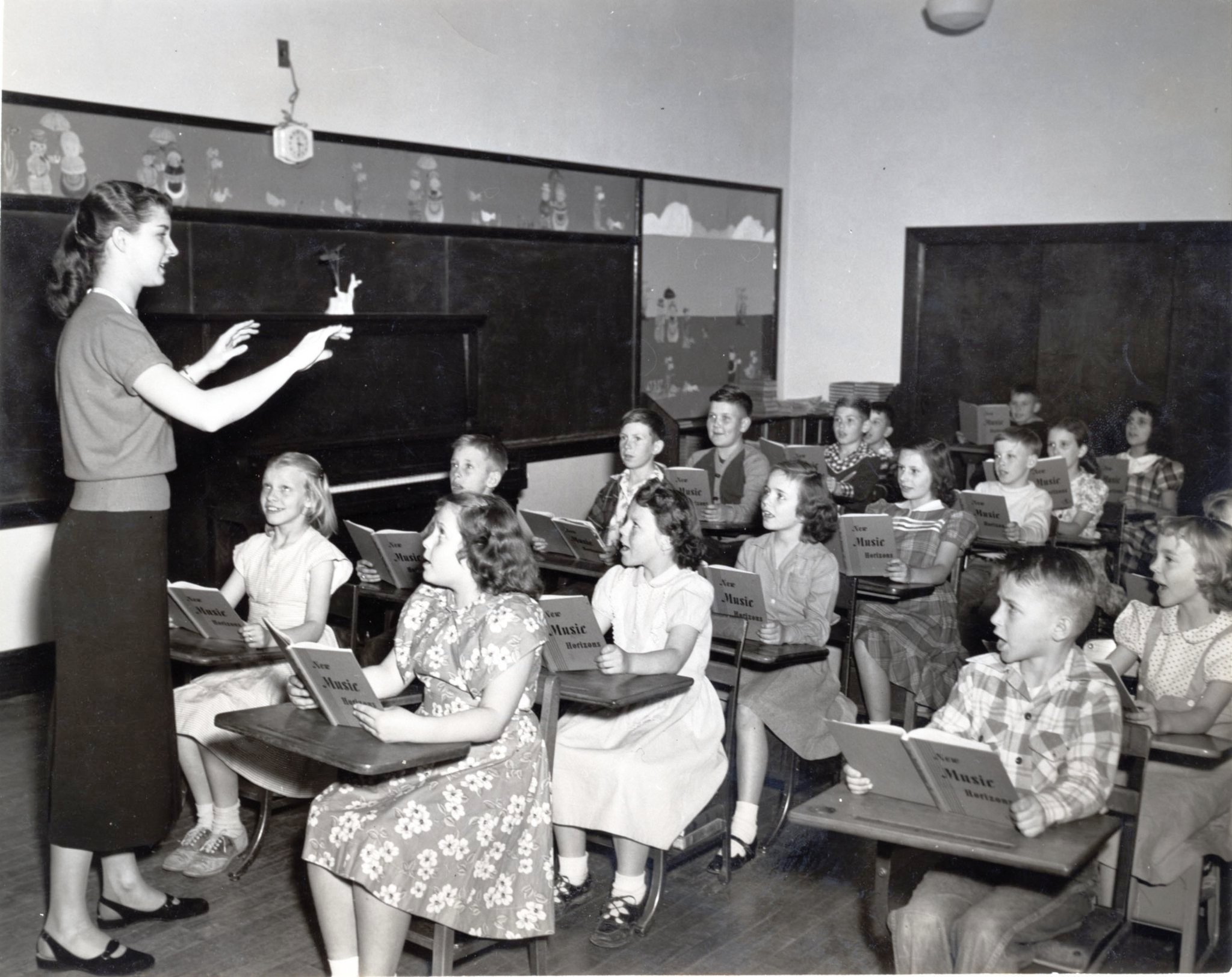
Many of the things we took for granted when we were in school back in the 1950's, 60's, and '70's are not considered "politically correct" these days. It seems that the emphasis is more on not "offending" anyone or promoting a culture where nearly everything is acceptable, no matter how irrational. Kids can't tell time using a analog clock or write cursive but they get to pick which gender they want to be and no one has to even tell their parents! You send "Johnny" or "Mary  to elementary school in the morning and they come home as "Johanna" or "Mark"! What the hell?  I was happy if I got to pick out my shirt for school let along my gender! Besides, everyone knew girls had cooties. 

Today kids have story time read to them by individuals dressed like they belong in some sort of John Waters' movie.  They can now choose what they want to study (or not) based on their racial or gender identity.  Disrupting class isn't at all uncommon and often excused as being a part of their "learning culture" or symptomatic of some attention disorder we never heard of when we were kids in school.

 Assaulting teachers while trying to teach class or enforce discipline isn't unusual (and woe unto the teacher who physically responds). Teachers in their 20's or 30's getting caught having sex with kids barely in puberty happens so often it's barely news worthy.  Professional ethics aside, what about simple  morality?

 I personally happen to support saying the Pledge of Allegiance (if you don't want to participate, fine. Just don't interfere with those who do). Strict discipline in the classroom, active participation of the parent or guardian, and teaching civics are essential. If they don't understand the function of government and their role in society as citizens, how can they protect their freedoms? Volunteering 90 days at the end of senior year performing some civic service such as Habitat for Humanity, helping out at the VA hospital, Meals on Wheels, participate on a police or firefighter advisory board, helping seniors or working as an election officer should be mandatory before graduating. 

 I am especially keen on learning being the focus of education. Anything beyond that (sports, band, cheerleading, or whatever) should be a privilege for maintaining good grades. Poor grades or disciplinary issues and the privileges are suspended until the grade or behavior situation is corrected. Repeated offenses and they're revoked. Period.

Some individuals and groups want to promote the introduction of their agenda a denominational prayer in public school and teaching creationism in public school either alongside evolution or to the exclusion of evolution all together. If that's want you want for your child, great. Send them to a parochial school.

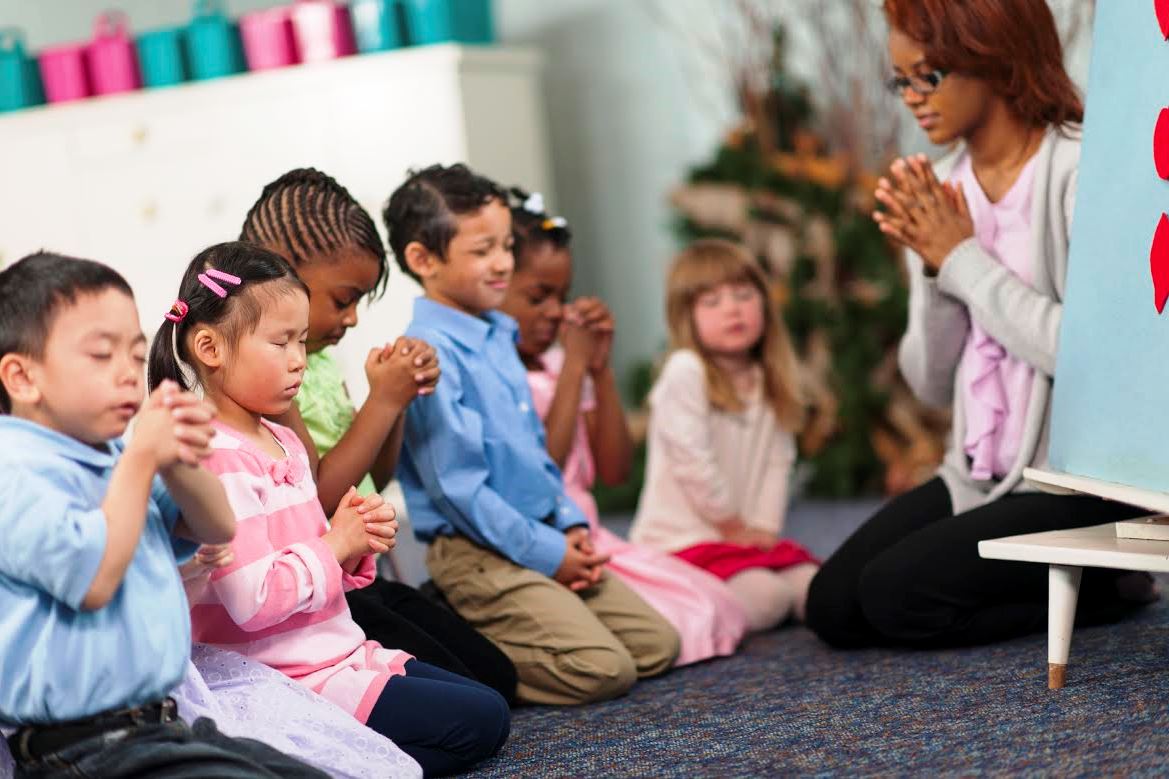
 I have no problem with a minute of silence to get yourself mentally ready for the day ahead. If you want to quietly say a little prayer (or have a little prayer circle), have at it. If you want to do a quick mediation, or some late minute cramming for the test you forgot about or get your homework in order, that's fine too. Just be respectful of others. I do not support the notion of mandatory participation in someone else's religious expressions unless it's part of a comparative religions class examining all faiths.

Another key issue is the emphasis on higher education. I also don't believe college is for everyone or necessary for every or even most jobs. Sure, there are some occupations where higher education is needed because of the intellectual nature of the work. However, there are jobs where someone with a proper high school education should be able to do quite well. One reason employers ask for a college degree is just to get a qualified applicant at what would otherwise be the high school  equivalent.

 I've seen high school "graduates" barely function on a 8th grade grammar or reading level or can do math much beyond a 6th or 7th grade level. You can all but forget about basic geography and history (but boy oh boy do they known or video games!).  One resulting outcome is the lowering of colleges and universities minimum admission standards to create an artificial parity based on race or gender rather than academic performance. This is nothing more than a quota system based on discrimination.  

Far too often, teachers and school administrators "fail students forward" rather than hold them back out of fear of being accused of racism, genderism, or whatever the victim card du jure happens to be.   The most common excuse is that failing little "Brad" or "Babs" hurts their self esteem. I think saddling them with a worthless education or bleak employment opportunities is worse than bruised feelings.

Is it any wonder that the United States consistently performs in the lower half of the second tier globally? The U.S. ranked 16th out of 81 industrial countries according to a 2022 test of 15 year olds as administered by the Organization for Economic Cooperation and Development (OECD). We placed 16th in science among the same 81 countries. When it came to mathematics, we were 34th. The top five highest scores all belonged to Asian nations with Japan, Taiwan, Singapore and Macao consistently being among the top performers. 

These are some of our current and future economic competitors for high paying jobs and market shares, which affects employment levels, quality of life, and other key metrics.  If we think of education as an investment in human capital or part of our economic national security, we're losing the battle.

Although the U.S. spends more taxpayer money per student than other countries, we are obviously not getting our money's worth. Incoming President Trump is putting together an advisory committee---the deceptively named "Department of Government Efficiency" (it's not an actual government agency)  led by Elon Musk and  Vivek Ramaswamy. Their job is to review various government projects, programs, and departments and find a way to make them work better and within budget.

 I suggest they start with our school system and find ways to improve our performance. After all, everything starts with education (there are some who, since the 1990's,  have been calling for the disbandment of the Department of Education and a return of educational authority back to the states). As an aside, the Department of Education was elevated to a cabinet level position in October 1979 by President Jimmy "Peanut" Carter (D-GA).

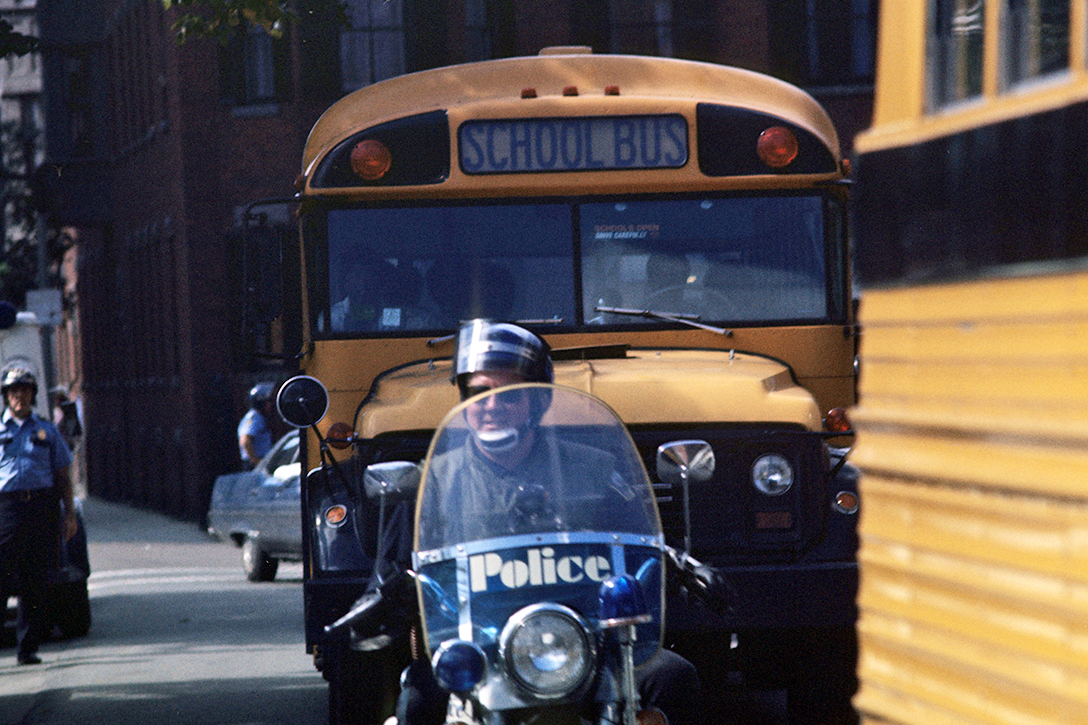
This was just four years after the advent of the disastrous court ordered  fiasco known as "forced busing" which effectively eliminated neighborhood schools. Students as young as six and seven years old, were put onto school buses and shipped all over town for hours at a time each way. This implementation of "social engineering" was intended to create balance in the schools academically and racially.

What it accomplished was a general lowering of academic performance which continues to this day. A better option would have equalizing the money spent on each student and rotating teachers. However, that would have produced a battle with the powerful teacher unions. So, what can we do about it?    

One potential solution is to weed out not just the academically unprepared, but also  redirect individuals who lack the interest or aptitude for higher education. One option would be to adopt a system similar to Germany's where students are tested periodically throughout years K - 8, and channeled into programs which lead to two years degrees, trade or technical schools, or on to higher education. It's one of the reason's Germany has one of the world's most advanced economies in the world.  Of course, the final decision belongs to the student (and parents) who may choose the academic path of their preference.

Students unprepared academically are re-immersed back into the subjects they poorly performed on via in person or online tutoring while extracurricular actives such as sports are put on hold. Students may be required to attend before or after school instruction. In some cases, this may take place during the summer. Until they can pass those courses, they should remain  suspended from  any non-academic events.  

The result is that the abilities and interests of the student is targeted  instead of trying to funnel them onto a path where they have little or no ability or interest. Trade or technical school is one such option. Unlike Europe, America faces a serious shortage of carpenters, welders, plumbers, electricians, glaziers, construction equipment operators, cyber security specialists, and other skills. It's a economic sector where there are real shortages and great opportunities. Making six figures annually isn't unheard of. Neither is owning your own business, where income opportunities can be even higher.

In a 2023 survey, there was a shortage of approximately 374,000 skilled workers in construction. The Association of General Contractors of America had a 70% positive response rate about concerns over the availability of skilled contractors and subcontractors in the upcoming years. 80% of those surveyed said they were worried about unfilled positions long term in the construction industry.

Between now and 2023, the renewable energy industry alone will need 1.1 million more workers worldwide and another 1.7 million to operate the equipment. According to a January 2024 U.S. Bureau of Labor report, the manufacturing industry in the U.S. has a staggering 584,000 unfilled job openings.

Among the reasons for the critical shortage of skilled workers is that the current workforce is slowing but steadily aging out. Almost 70% of supervisors in just the electrical trades are Babyboomers who are quickly reaching or passing retirement age.  More individuals are retiring and leaving than are replacing them. Another explanation is the push by school counselors, college recruiters, and a negative public perception about blue collar workers in general.

The truth is that training for a career in the trades is far shorter and cheaper than getting a Bachelor degree from a college or university. Training, on average, is two years or less plus a short apprentice period which may start simultaneously while being paid with benefits (the average apprentice earns roughly 50% of a skilled worker's salary). It takes about three weeks to qualify for your CDL license needed to be a long haul truck driver (the average salary--with experience--is just over $78,000 yearly).

Typically the cost of attending a trade or technical program can range from just a few thousand dollars to roughly $30,000 with an average cost of $15,000. Many of those attending a trade program are often hired before graduating (some start work will still attending school).

Compare that with the cost to obtain a four year degree. The current average is approximately $10,490 per year for in-state students. For out out-of-state students, that cost can jump to as high as $24,000 per year. If you plan on attending one of the top schools, the cost can be a lot higher. There are a few cheaper options (like attending a unaccredited institution), but remember that you get what you pay for and that's nowhere more true than in education.

Then there's the debt. On average, 61% of those who graduate from a public university leave with diploma in one hand and a bill for $31,960 in the other hand. Over their four years, the majority of students will occur a debt of at least $30,000 by the time they leave. The average federal student loan debt is $37,853 dollars. If you pursue a Masters degree, the costs and debt will be substantially higher.

It used to be that many American workers graduated from high school with a functional degree and would get a good paying job with benefits down at one of the local manufacturing companies. They'd join a union for job security and they were pretty much set. For a large percentage of the country, it was a near guarantee to their entry into the Middle Class. It wasn't uncommon for this path to be multigenerational, but those days are long gone.

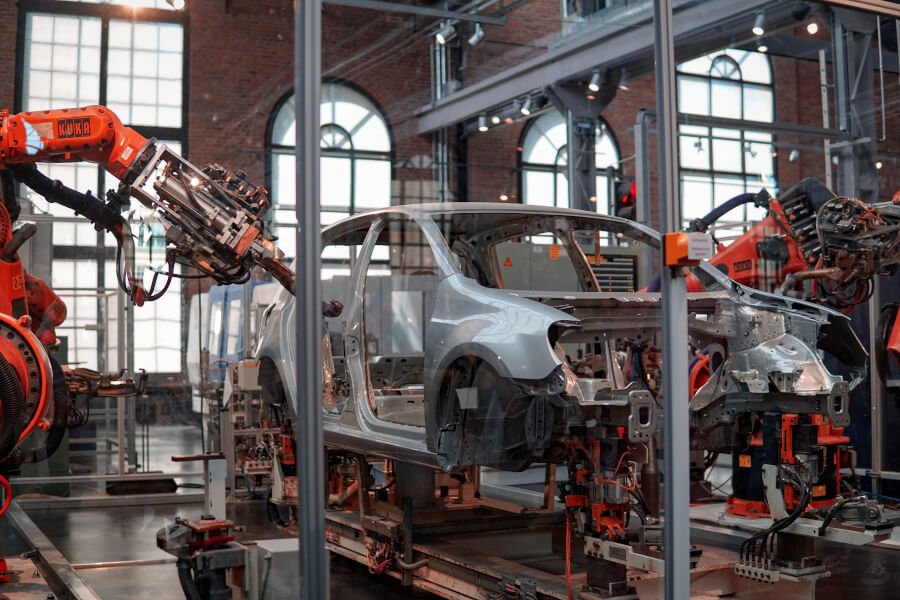
Starting in the late 1970's American began transitioning out of manufacturing and largely into the lower paying (and the less secure non-union) service industry. What industry remained has become more automated, replacing most positions. The only ones with job security and a good paycheck are the ones who repair or program the production line robot. But that's not the half of it.

Our parents and grandparents didn't have to face is the level of competition we do. Today, workers not just compete with each other for scarce well paying jobs, nor is their competition in the next town or state. Today's employee faces competition for work thousands of miles away, in countries like India and China where unions don't exist and people will work for next to nothing (and forget about benefits. They're happy just to have a job!). This is where America is losing ground, and when we look back at math and science score of our students, the future doesn't look to bright for the U.S..

When  it comes to technology, the world leader is Japan (Japan is also the world's most literate nation). Second is South Korea followed by China which has a knack of acquiring, studying, and adapting U.S. and global  technology. You don't have to look much further than the America's F-35 and China's J35A stealth fighter jets for proof.

In fourth place the good ole U.S. of A. Behind us is Germany, a country the size of Wisconsin and with a reputation for high quality engineering and efficiency thanks to their excellent dual avenue academic system which puts the trades on equal ground with higher education without the stigmatism as we mentioned earlier. Of course, we wouldn't expect anything else from the Germans.  As an aside, Russia graduates the most engineers of any country followed by the U.S. and Iran according to UNESCO.

 Singapore, a former British colony, is next (remember at the beginning of this article where I mentioned that the top five nations in academic math and science among 15 year olds were all Asian?). Coming in seventh place is Russia. Another country with a "gift" of mimicking U.S. technology. Great Britain, the United Arab Emirates (UAE), and Switzerland round out the top ten.

The key to the future is innovation. It's where tomorrow originates. So, who leads the world when it comes to innovation? That honor goes to Switzerland which dominates its second place competitor, Sweden. The United States has dropped to third place and is just ever so barely ahead of Singapore and the UK. For now, this may get us by, but not for long. Not at the pace the world is changing. How long can we hold on? Only time will tell. But one thing is for certain. If we don't do radically improve our school system and the quality of graduates, we may be facing a bleak future as the world's largest Banana Republic.


Thank you for reading Another Opinion! We hope you enjoyed this article and will pass it along. Please don't forget to subscribe. It's free! Lastly, please "like" us on whatever platform you use to read anotheropinionblog.com. It helps beat the algorithms and keeps our articles in circulation. Please find below the links we consulted in researching this article. 


Department of Government Efficiency


U.S. Education Rankings Compared to Other Countries


Tradespeople wanted: The need for critical trade skills inU.S.


These countries have the most technological expertise


Friday, October 25, 2024

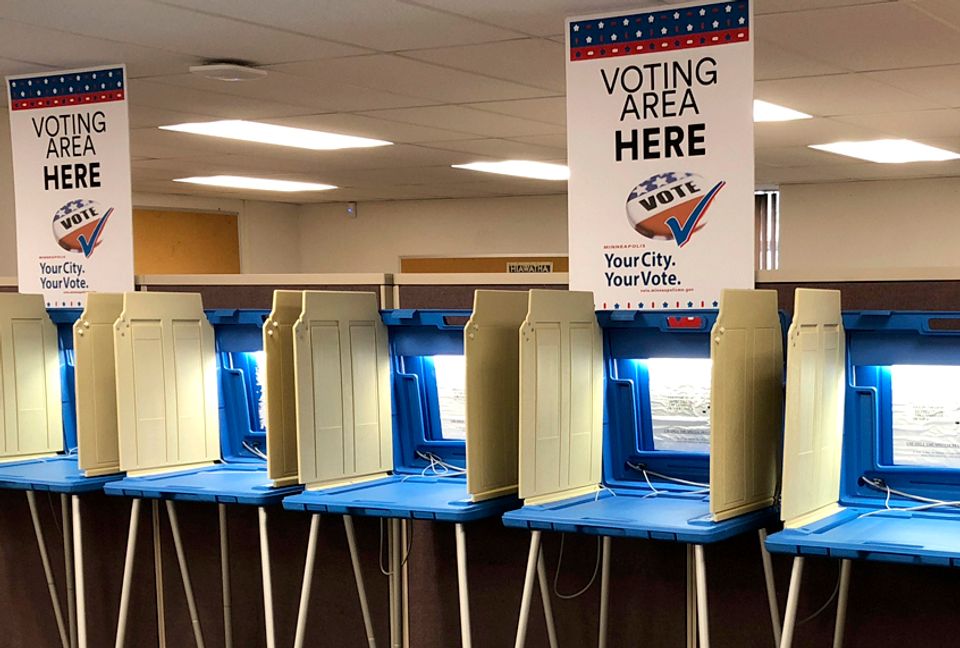
Who Votes in America? A Snapshot of the Average American Voter

It's ironic that nearly every election is billed as the "most important" to our democracy, and yet voter turnout in the United States is among the lowest of any democracy. I remember when I first ran for a seat on our newly created Metro Council, voter turnout in my district was between 5% and 7%. You would think there would be more interest for electing representatives to a newly created local metro government council (we had just merged city and county governments), but nope!

Other democracies have a far greater percentage of voter turnout that we do (we're ranked 31st in the world). For many people it means trudging on foot for miles enduring all kinds of terrain and weather, through dangerous areas controlled by drug cartels, terrorists, corrupt police and military troops, all trying to intimidate voters. But Americans, it seems we will stay home at the drop of a hat. Any ole excuse will do. Is it that we just don't care anymore? Who does show up to vote? Let's look at the numbers.

Voter turnout in the United States in the 2020 presidential election was 66.1%. Of the eligible 240 million voters, 158,427,986 bothered to show up (and of that, an estimated 5% of the votes were cast by illegal immigrants).  Colorado, Maine, Minnesota, Wisconsin, Washington State and Oregon had the highest percentage of turnout with 75% or better of eligible voters showing up at the polls. Hawaii, Oklahoma, Tennessee, Missouri, and West Virginia had the lowest turnout---under 55%---of registered voters.

Historically, voter turnout for presidential elections has been in the neighborhood of 55%. The lowest turnout since 1932 was in 1996 when just 49% of the voting age population showed up to decide between between Bill Clinton, Bob Dole, and Ross Perot. Clinton won with 49% of the vote, Dole received 40.7% and Ross Perot got 8.4%.

As an aside, the lowest voter turnout in U.S. history was the 1792 presidential election between George Washington (seeking a second term) and John Adams.  The turnout was just 6.3% (or 28,000 voters out of a population of 3,919,023). Of course, there were only 15 states back then. Apparently being "Father of the Country" didn't count for much.

Women weren't allowed to vote until 1920, following the passage of the 19th Amendment and the hard work of suffragettes. The last state to approve the amendment was Tennessee on August 18, 1920 (incidentally, my great grandmother was one of those suffragettes. She lived in Nashville). 

The highest voter turnout at the polls was in 1876 when 82.6% of eligible voters showed up to vote for Rutherford Hayes or Samuel Tilden. This was one of the earliest elections to allow former slaves to vote following the passage of the 15th Amendment in 1870.

Although America has had a wide variety of political parties since 1790, the two main parties nowadays are the Republicans and Democrats, although there are several strong third parties which include the Libertarian Party, the Green Party, and the Constitution Party (according to a October 4, 2023 Gallup report, support for third parties is up 63%, the highest increase since 2003).

Nevertheless, both of the two major parties have been hemorrhaging voters, especially since the Supreme Court upheld the "Citizens United" ruling in 2010 which effectively gave over control of the U.S. political system to corporations by declaring they had  "personhood" and basic civil rights. It also declared money was  "free speech",  and without a cap on donations, they could give what they wanted. That meant the few would have more "free speech" than the many.  

For about the last 10 or so years, voters have shifted away from the growing extremism of either corporate owned party and becoming Independents or joining third parties. Today, registered Independents make up about 41% of all registered voters with the Democrats and Republicans comprising 28% and 31% respectively (Independents were as high as 51% in June 2024).

There are currently 244 million eligible voters in the U.S.. Of that, there are 168.31 million registered voters. As we said above, the majority of voters are registered as Independent, followed by Republican and Democrat. When it comes to gender, women tend to vote more often than men. In fact, according to the Center for American Women and Politics, there were 7.4 million more female voters in 2022 than men. To rephrase it, 68.4% of registered women voted compared to 65% of men.

According to a Pew survey, in 2020 48% of registered male voters who showed up voted Democrat compared to 55% of females. 50% of registered Republican males voted while 44% of Republican women did. In 2022, a presidential off year, 44% of male Democrats voted as did 51% of Democratic women. So, in both instances, Republican males showed up more than Democratic males. Among females, the opposite was true.  More female Democrats voted than Republicans.

The survey left out the political majority---Independents (does that subtlety imply a measure of partisanship I wonder?), which is interesting given that Independents made up over a quarter of all voters who showed up at the polls in 2020. Independents tend to lean conservative when it comes to the economy and taxes and lean liberal on most social issues. Independents are, to frame them, typically moderates. They oppose the extremism of the prevailing duopoly.

 When it comes to voting, Independents look at individual candidates and their positions on specific issues compared to their partisan counterparts who tend to vote along party lines (even if it means holding their noses to do so). For instance, in 2022 Democrats voted for Democratic candidates 96% of the time with just 3% refusing to walk in lockstep.

It wasn't any different among Republicans which had the same percentages. Independents, however, tilted more for Biden in 2020 than Trump (54% to 41%) because of the latter's perceived unpredictability and the extremism of the Republican Party. In 1994, more Independents backed President Bush than Bill Clinton by 18 points because he was a unknown factor with a questionable past.

What does this mean? In 2022, 74% of voters disapproved of how Biden was handling (or mishandling as the case may be) of the economy. Given the lockstep mentality of both parties, and their near dead heat in voter registration, it will be the Independents who may decide the 2024 election and do so into the future. The question is which, if any, of the two corporate owned parties can pull in the Independent voter? Independents are political "free agents" and the Democrats and Republicans aren't the only game anymore.

According to a CNN poll, Democratic voters between ages 18 and 29 and 30 to 39 turned out in heavy percentages---63% and 51% respectively---then the percentages drop off significantly to the mid and lower 40% range.  Among Republicans, the inverse was true. The percentages for the same age brackets were 35% and 47%. Ages 40 and older saw the numbers jump to about 55%.

Married Republicans voted 58% of time compared to 39% who are single. For Democrats, just 41% of married couples voted. But if you're single, that percentage jumps to 59%! So, in looking at these two sets of statistics provided by CNN, young single Democrats are more likely than not to show up at the polls. On the other hand, older married Republicans are most likely to be dedicated voters.

Looking backward, although the historical affiliation among the youth vote has been Democrat, it has been by decreasing margins coming forward. If Pew had included Independents, the data would have shown that the general trend among the youth in both parties are deserting the two corporate parties in droves and becoming Independent. As an aside, almost 50/50% favor some form libertarianism  or type of social democracy. Support for traditional capitalism is also in decline.

When it comes to race, 92% of Black voters voted for Democrat in 2020 compared 8% who voted Republican. In 2022, 93% voted Democrat while 5% backed the GOP. In looking at the 2020 white vote, 43% went Democrat in contrast to 55% who voted Republicans. in 2022, 41% of white voters voted Democrat while 57% went Republican.

Hispanics, who are now the second largest population in the U.S., voted 61% Democrat in 2020. 36% backed Republicans (most were of Cuban descent). Those number changed slightly in 2022 when 60% voted Democrat and 39% when Republican. Asians weren't much different. 70% voted Democrat in 2020 compared to 30% Republican. 2022 saw 68% going Democrat and 32% voting Republican.

If we look at race and gender,  60% of white males voted Republican in 2022. 38% voted Democrat. Among white females, 55% voted for the GOP in 2022 while 44% sided with the Democrats. Among Black males, 93% backed Democrats while just 6% supported the Republican Party. Black women were nearly identical with the male counterparts. 93% went Democrat and 5% back Republicans.

Among Hispanic males in 2022, 43% sided with Republicans. 56% back the Democratic Party (one reason may be for the perceived leniency toward illegal immigration and less willingness to deport compare to the Republicans). It appears that 64% of Hispanic females agree. 34% side with the Republicans. Unfortunately, there was no data for Asians.

 In the 2022 election, individuals with a high school or less level of education leaned Republican by a margin of 59% to 39%. Those with an associate degree favored the GOP by 54% to 44%. However, those with a four year degree favored Democrats to Republicans, albeit narrowly, 51% to 48%. For those with a Master's degree or better, 61% voted Democrat versus 37% went for the Republicans.

Does this mean that the more educated you are the more liberal you become or is it the longer exposure to a liberal infused education? Higher education is supposed to be about encouraging critical thinking skills and enhancing the ability to reason rationally and without bias based on facts right? But what if the "facts" are tainted?  A 2023 study showed that 26% of professors considered themselves conservative while 17% said they were moderate. But, 50% admitted they were liberal.  

When it comes to income, more lower income families are registered Democrat than Republican, and they're also more likely to vote. 58% compared to 36%. Among upper middle class voters, 52% will turn out for Republicans compared to 46% for Democrats. Meanwhile, the very wealthy actually show up for Democrats over the Republicans 53% to 46%. It appears that the average Republican voter is someone with a lower middle to upper middle class (the very class which is decreasing the rapidest).

As an aside, union members are more likely to be registered Democrat (59%) than Republican (39%) although the Democratic Party depends on corporate dollars. Among non-union voters, it's almost a even split with 48% Democrat and 49% Republican. Most renters are Democrat compared to Republican (64% to 32%) whereas most homeowners vote Republican (51%) as opposed to Democrat (45%).

When it comes to military service, 63% of veterans vote Republican while 51% of non-military tend toward the Democrats. 72% of white veterans lean Republican but 82% of Black veterans are Democrat. Similar numbers hold true for those who attend church regularly. The majority of white churchgoers---59%---tend to vote Republican while Black churchgoers vote Democrat in near equal numbers.  

So, there you have a snapshot of the average American voter. Women are more likely than men to show up at the polls to vote. The older the voter, the more likely they'll vote. Higher education doesn't equate to more conservative voting. Those with a high school (or trade school degree) are more likely to turn out to vote than someone with bachelor or higher degree.

Among race, whites and Hispanics are more likely to vote than Asians or Blacks. The excuses varied. It could range from getting away to vote, a lack of convenient transportation, no ID or simply a lack of interest. Ultimately, the missing factor appears to be a lack of motivation to show up. But regardless, the result is the same. No vote no voice no b*tching.

The voters of 2024 won't be much different from the voters of 2022, except that turnout will likely be higher. Right now the polling numbers show a virtual dead heat. Will it be who can get their side out in numbers that stands the best chance of winning? Is it who can swing the Independent vote that will win? Personally, I think Joseph Stalin had it right when he allegedly said "those who vote decide nothing. Those who count the votes decide everything", but then that's a problem we've been experiencing with greater frequency isn't it  


Thank you for reading Another Opinion! We hope you enjoyed this article and will pass it along. Please don't forget to subscribe. It's free! Lastly, please "like" us on whatever platform you use to read anotheropinionblog.com. It helps beat the algorithms and keeps our articles in circulation. Please find below the links we consulted in researching this article


Voting Patterns in the 2022 Elections


Voter turnout in United States presidential elections


Gallup: Party Affiliation Week of October 1, 2024


Citizens United vs. FEC


Women's Suffrage in the United States


Gender Differences in Voter Turnout


Independent Voters Have the Final, and Future, Say


Conservative Faculty are Outliers on Campus Today


Partisanship by family income, home ownership, unionmembership, and veteran status


Most White Americans who regularly attend worship servicesvoted for Trump in 2020


Turnout in U.S. has soured in recent elections but by somemeasures trails that of many other countries


Support for Third U.S. Political Party Up to 63%


Friday, September 06, 2024

What are some of contributing factors for the decline of the United States? An Observation from the Center


America, as you know, is no longer a “Republic” although it still likes to pretend it is (much like Rome did under the early Caesars). While purely speculative, as all such predictive analysis are, our decline is not one or two things, but a series of events external and internal, all connected directly or indirectly, which, in the moments of our daily existence, barely warrants our notice. Some appear benign, hardly noticeable, while others glare back at us like Fredrick Nietzsche's abyss. 

First is the assumption that the world wants to be America, or at least like America. America is first and foremost a capitalistic pseudo-democracy. We tend to export “American” ideals and values along with our Levi's, Fords, soybeans and television shows whether they're wanted or not. We try to imprint our society on everyone, especially through consumerism to created a world of "mini me's".  

We create mostly unrealistic dreams, from what to eat, what to wear "what's in and what's passe'" (an artificial construct to sell clothes), TV shows to watch, what we should drive to look sexy or "cool", or what we should look like (especially applies to young girls and women), and even what we should think and what should be considered "important".  Doesn't it make you wonder where we would be without them to think for us?

The corporate media, after all, manufactures the narrative (remember, only five corporations control 96+% of media in all its forms). They tell what's important and not just as they tell us how we're to think or feel. But even that is all about selling "eye time". The higher the viewership the higher the price they can sell a particular commercial slot or print space for.

Another way we sell American ideals is by removing governments we don’t like because they negatively impact our (that is, Wall Street's) financial interest.  This is typically euphemistically referred to as "regime change".  It doesn't matter if the individual or party are chosen by the people, if it interferes with profits, it goes.

During the Cold War with Soviet Russia (1946 - 1991), the U.S. has been involved with the overthrow of roughly 12 governments (euphemistically referred to as "restoring democracy" or "supporting the will of the people"). We've also been directly involved in several hundred political assassinations such as Ngo Dinh Diem, the South Vietnamese President in 1963 or  President Salvadore Allende of Chile in 1973. During the same time span, we've been involved at varying capacities in some 23 proxy wars and 285 armed conflicts. According to one survey, the U.S. was responsible for 81% of the world's armed conflicts from 1945 to 2001

Overwhelmingly, each of these were either directly or indirectly the result of pressure by Wall Street since the individual leader or their government is a threat to their bottom line. In their place, we have typically installed a puppet government, but not just any ole puppet government popular with the people. No siree bob!  These are almost always far Right military juntas headed by such charming individuals like Generals Augusto Pinchot, Gregorio Conrado Alvarez, Alfredo Stroessner, and Jorge Rafael Videla.

Under "Operation Condor", which lasted from 1973 to 1983, we were active in the kidnapping, torturing, murder, or "disappearance" of some 60,000 individuals along with over 400,000 imprisoned. Many of them being Communist, democratic socialists, or simply vocal Left-leaning  activists. Some were union organizers, teachers, pastors, nuns, community leaders, and students.  Naturally, the government likes to say we acted in conjunction with our allies as sort of a soothing balm for our collective conscience.  Still, it kinda brings into question that notion of "leader of the free world" doesn't it?

As an aside, in researching this and similar articles over the decades, I've noted that we've never tried a to elect a non-partisan centrist or someone without strong financial ties to Wall Street. Rarely we elect someone without a military background  Given that we're no longer a democratic or constitutional Republic, having become a Oligarchy led corporatocracy years ago, if we were to have some sort of coup or civil war, what's in store for us? Based on our history, perhaps this is a hint. After all, we have so much experience at it.

Following wars, conflicts, or police actions, the next step is often what's called "nation building" (it should be more properly labeled "national building in our image"). This is where dozens (or more) government contractors engage in the lucrative business of, well, the literal business of physically rebuilding countries we had just bombed back to the Stone Age while the State Department helps restore their government to something acceptable to Wall Street.

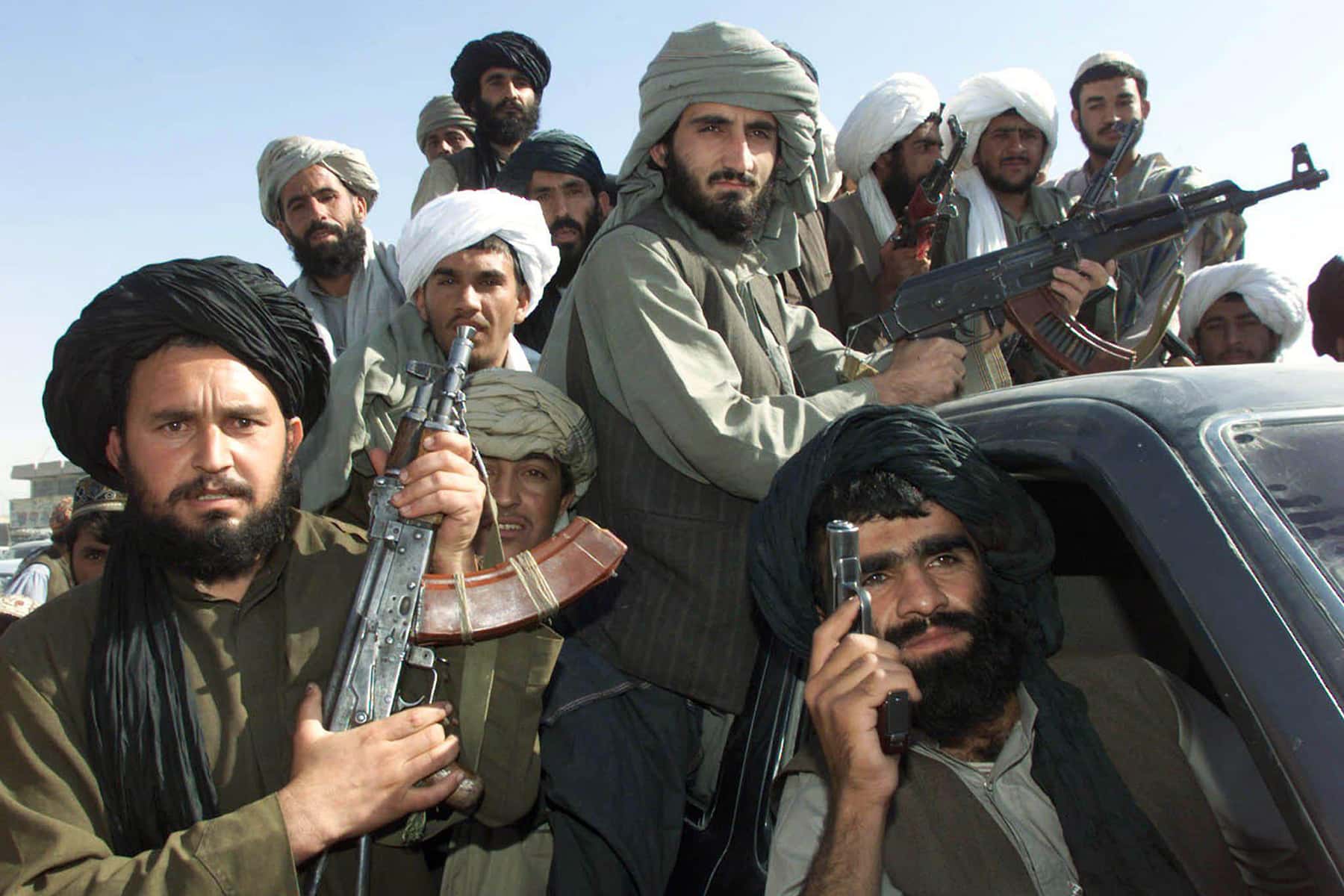
Speaking of "nation building", Brown University announced the results on one of its projects concerning U.S. and its "War on Terror", that states over the last 20 years, Washington has spent $8 trillion dollars and came out empty handed with the Taliban still in charge and Al Qaeda still in business despite the loss of some leaders. Why isn't the American Taxpayer furious?

 In addition, over those 20 years, around 900,000 people have been killed. The U.S. Department of Defense confirmed that over those same 20 years, the American taxpayer has shelled out $145 billion dollars just to rebuild Afghanistan. I'm sure Al Qaeda and the Taliban are quite grateful, not to mention  thankful for the millions of dollars in state-of-the art military equipment we so graciously abandoned when we skedaddled out of Kabul.  

It's worth noting that despite spending billions on nation building since 1946, not a single country has opted to adopt our form of government. Not a single one. The dozens of countries we've helped rebuild like Humpty Dumpty tend to adopt the inclusive British proportional representative government.

Instead, they tend to choose the British “parliamentary” or proportional system where each party is basically guaranteed a seat, depending on the percentage of the vote they get, meaning everyone has a voice in government. This is in lieu of America's "winner take all" system where the voters on the losing side are unrepresented for the term of that office.

Another serious factor in our decline is our educational system. We’ve dumbed it down so as not to “offend” underachievers. We're ranked in the lower tier among industrial nation. How will we compete globally? We’ve accepted the idea of “equal outcomes over equal opportunities”. Everyone gets “participation trophies” just for showing up. Everyone isn't a “winner”.

We’ve developed the notion that certain individuals or groups are somehow "due" something by society simply because they exist. An extension of that is the mistaken presumption that we're “owed” something--- aka "reparations"--- because your ancestors experienced an injustice or other burden. Well, that may be reprehensible, but try naming one group on this planet who hasn't experienced injustice somewhere in their collective history (which speaks volumes about the state of humanity more than it does anything). 

Every race or ethnic group has at one time or another been the slave or the master. But it's all in the distant past. We can't change or undo what happened. They sacrificed for our future. Take from it the lessons they taught us  and move on. The only person ultimately responsible for your success or failure is you. Not the government, not your fellow citizens, and sure as hell not your ancestors.

America has lost its way. We no longer value life or show respect for others or their things. We covet what others have more than we value our own lives. That's how some people end up dead. We're told we're all victims. So now we've developed a victim mentality where others are responsible for our failures, but why not our successes? We're told it's okay to be "offended" if others won't play along with our "pronoun pity party". Guess what? You can "self-identify" as the "Cheshire Cat" if that's what you want, but that doesn't mean everyone has to play long Alice.

We no longer discuss opposing ideas in a civil manner. We don’t want to be presented with anything outside our “bubble”. We want nothing that would distort our view of the world. To do otherwise triggers a intellectual breakdown, requiring a "safe space" and "comfort blanket".

Our partisan politics is a reflection of that. Its’ developed a enemy-like “us vs. them” mentality where the “us” part doesn’t include the average voter. Rather than producing, society now based on consumption of everything without replacing it. Capitalist democracy requires that we  constantly expand and consume ever faster to survive. It’s appetite is insatiable. It’s fueled by greed for “more” of whatever is there.

When capitalist democracy can no longer expand, it begins to metastasize. It starts to consume itself. As it does so, it increasingly seeks to control and manipulate its environment. The economic class which feeds it is put under increasing pressure to provide more and more while it starves. That’s the stage we're now at by the way.

We've arrived at the point where there are no absolutes. Right from wrong is merely shades of gray. Much is often promised, especially by our so-called “leaders”, but no one actually expects those promises to be kept. We've discovered we can invade the coffers expecting them to always be filled but that's increasing not the case.

Facts are now seen as ambiguous. Truth is now a matter of perspective rather than accepted norms mutually agreed upon by society. They're conveniently assumed to be a lie to be discarded if we disagree with them. Perhaps worse is when no one is held accountable for the lie. Let's take a quick look at the nation and the lie we were loosely modeled on---Rome.

"Rome the Eternal", like countless nations before and after, fell because of an over extended and undersupplied military. It was no longer able to impose Roman values on the unruly barbarian tribes. Even its military became less “Roman” as more and more foreigners filled its ranks, who had no vested interest in the empire due to a decline in Rome's  birthrate.  

Originally, the title (and it was a “title”) of “Roman Citizen” carried great weight.  It was bestowed rarely and often with great fanfare. Eventually, it all but lost its mystique. Foreigner didn't settle in order to become a “Roman Citizen”. They came for the economic opportunities Rome could provide.  Eventually, didn’t they even bother to learn the lingua franca of the empire--- Latin---or follow its laws, traditions and adopt its values.  Sound familiar?

Internally, Rome had always been corrupt, but it was the degree of corruptness which changed. It became a cancer and spread everywhere. Citizens were distracted  with “bread and circuses”, that is, games and monthly bread rations, all paid for by the working class---the Plebeians or "Plebs"--- until it eventually collapsed from over taxation.

Taxes and goods from client states also dried up. They developed their own trade alliances and bypassed the Roman “middlemen”. They even lost their fear of Roman might. Why? Not because it was no longer formable, but because Rome could no longer financially sustain a war. Again, sound familiar?

Eventually, there arose an outsider, Julius Caesar, who pledge that “in order to save the Republic I must destroy the Republic”, which was a true enough observation. The Republic could no longer reform itself out of it situation. The dependent classes lacked the means and will. It couldn’t appease all the special interests groups which controlled it. Rome must be founded again.

However, Caesar failed and paid with his life. What followed was a series of internal civil wars, When they were over, Rome had order. It also had a dictatorship. Can we be that far aways from our own Caesar? That’s a question many Americans are asking themselves. We are now a defacto neo-fascist corporatocracy; a surveillance state with all the tools for a full blown police state already in place. All that’s missing is a crisis—-real or manufactured.

We likely won’t have a military junta (although the military is the only institution which has kept a positive approval rating), but rather someone like a board president or chairman. And why not? After all, Wall Street runs the show. Why shouldn’t they step center stage and claim the crown?


 If you enjoyed the article, please consider passing it along to others and don't forget to subscribe. It's free! Lastly please be sure to "like" us on whatever platform you use to read anotheropinionblog.com. It helps beat the algorithms and keeps our articles in circulation. Thank you!


United States involvement in regimechange in Latin America


Operation Condor


Parliamentary system


US initiated 81% of global armedconflicts from 1945 to 2001   


Cold War Coups and Proxy Wars


Costs of the 20-year war onterror: $8 trillion dollars and 900,000 deaths


DoD: What We Need To Learn:Lessons From Twenty Years of Afghanistan Reconstruction