Showing posts with label trade schools. Show all posts

Friday, August 23, 2024

Fried Chicken, Illegal Immigration, and Taxes


I'm just a "Southern boy" at heart. I grew up in the South. I've spent lots of time on working on farms, taking care of cows, pigs, chickens, picking corn and beans, hanging tobacco, stacking hay in the loft, mucking stalls, and everything else that goes with it. I've also lived in big and small cities like San Francisco California, Norfolk Virginia, Memphis Tennessee, Jacksonville Florida, Bowling Green and Glasgow Kentucky, among others.  

I've also lived off and on in the suburbs of a moderate size, sleepy and slightly backwards mid-western town which dons its "Southern" persona for two weeks out of the year, culminating in a overhyped and overpriced two minute horse race, after which it goes snuggly back to sleep and dreams of its former days of prominence.   

As someone with particularly deep Southern roots, I especially enjoy my fried chicken, biscuits and gravy, (no sausage in the gravy please. That's "Yankee" style gravy corporate restaurant chains try to pass off as "Southern" or "country". It ain't, plus they can charge you more). I also love fried apples with cinnamon, and fried white corn. You'll find that in the South almost everything we eat is fried.

That tradition was born of the Scots, Irish, Welsh, and Northern English who settled primarily in the southeastern portion of the country along the Appalachian Mountains, from Kentucky in the north down to Florida and over to Texas, Arkansas, and Missouri which created a culture and tradition uniquely their own, including what we ate. Nevertheless, for some reason many of us don't seem to have our typical "Southern" dinners as often anymore because of the price of everything.

Chicken used to be considered "the poor man's steak" because, next to fish, it was one of the cheapest and healthiest meats one could eat. However, nowadays, chicken is the premier meat as more and more people have turned away for overpriced beef, which is seen by many so-called "health experts" as being unhealthy thanks to pesticides, growth hormones, various drugs and antibodies, and dyes.   

Today, there's hardly any restaurant which doesn't sell chicken. In some cities they even put chicken on their pizzas! Did you know that approximately 70 billion chickens are consumed worldwide every year? That's comes to around 202 million per day or 140,000 chickens per minute. Americans alone bake or fry approximately 9.5 billion chickens every year.  

In 1957, the average weight of a chicken was two pounds. By 1978, with chicken on the verge of overtaking beef and pork, the average chicken weighed in at 4 pounds. As of 2005, the ordinary chicken was a hefty 9 1/4 pounds. Today, it tops out close to 12 pounds! Much of that is enhanced feed. Some of it isn't. It's chemicals like growth hormone.

To turn this around, as of 2020, most people ate roughly 82 pounds of red meat annually. That same year, we ate 127.2 pounds of chicken (to put that in perspective, globally speaking, the average person only consumed 35.7 pounds of chicken, meaning that we're eating about 40% times the recommended amount.

Did you know that Iowa and Ohio are the two largest consumers of chicken? They annually eat 54,957 and 52,690 of those little cluckers respectively. The highest ranking Southern states are Georgia in 5th place and Texas in 6th. Georgians ate 31,641 chickens while the Lone Star State munched down on 30,527.

In 2014, when Trump was elected to office, the average price for a one pound  boneless chicken breast was $3.47 (the previous low, in 2011, when the same one pound boneless breast cost $3.10). By the end of Trump's term, the price for that same one pound chicken breast was $2.94.
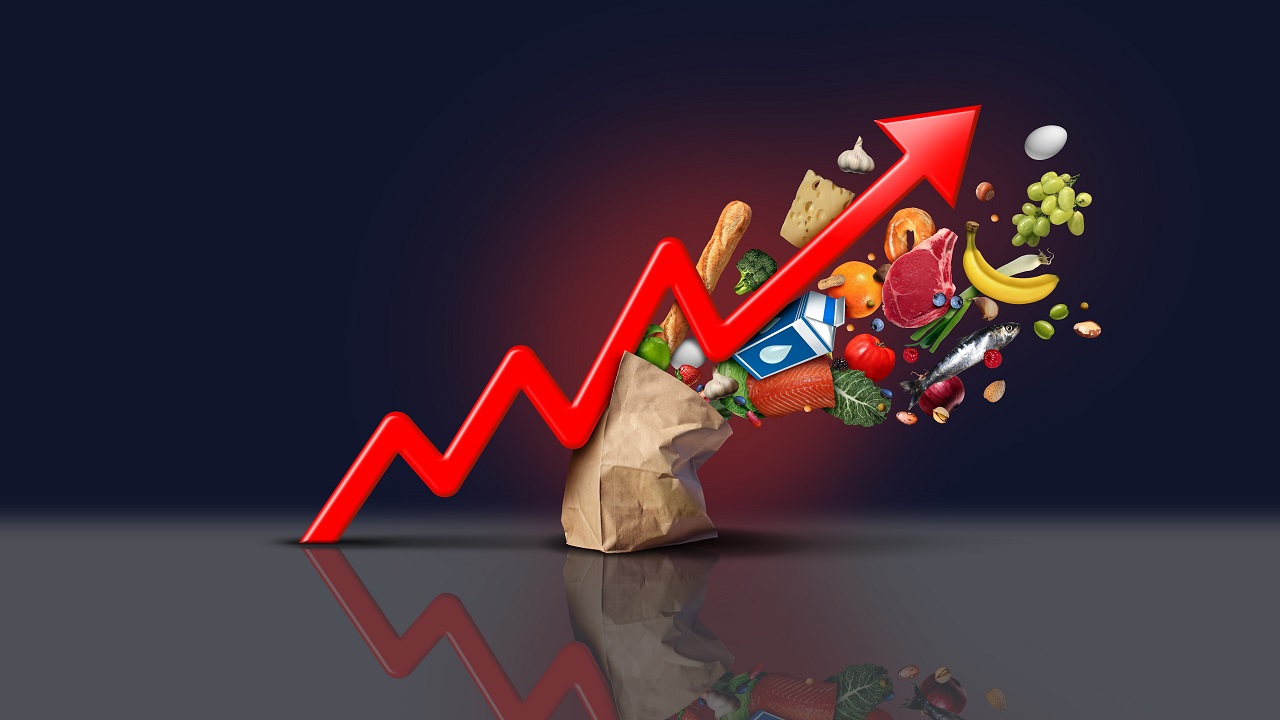
In February 2020, just after the start of the Biden Administration, that one pound boneless chicken breast would cost consumers $3.00. Halfway through Biden's term, in September 2022, you'd be shelling out $4.75. As of July 2024, the average cost for that boneless chicken breast was $3.95.

When we look at the price of sugar, it isn't any better.  A pound of white processed sugar (which is essential for the Southern tradition of "sweet tea") was $0.63 in January 2014. In June 2017, it was slightly to $0.66. By April 2020 it had dropped to $0.64 per pound.  

However, starting around May 2020, sugar prices began to climb from $0.65 in May to $0.69 in November 2021. September 2022 saw sugar prices  reach a new plateau high of $0.84. By September 2024, sugar had become "sweet gold" when it hit  $0.97 per pound. As of July 2024, the price of sugar was selling for a whopping $1.00 a pound!

Ground roasted coffee, that staple of civilization, has seen similar hikes in price. Selling at $2.75 a pound in July 2004, it skyrocketed to $5.01 in March 2014. It drop by December 2019 to $4.05. As of April 2021, a average one pound can of "Joe" would run you $4.75.  If that didn't wake you up, the prices by December 2022 sure would when they hit a record $6.47 a pound. By mid-year 2024, that same pound of coffee was  down slightly to $6.31. What about just stopping by "Mickey D's" instead?

According to the U.S. Department of Labor Statistics, the costs of fresh biscuits, muffins, and rolls rose 134.49% in 2024 over 1997 prices. McDonald's "McDouble" sandwich went from $1.19 in 2014 to a fat $3.19.  A medium order of French fries increased from $1.59 to $3.79 over the same time frame. Overall, McDonald's price have doubled over the last ten years.
Overall, the cost of eating out rose 60%, more than double the inflation rates from 2014 to 2024. McDonald's prices rose the most---100%--- over the period from 2014 to 2024 with Subway's rising the least at 39%. Taco Bell's prices increased 81% while Arby's, Wendy's, Burger King, and Chic-fil-A all rose by 55%.

The fact of the matter is that the price of nearly everything has gone up. The inflation rate of food prices was 3.3% in 2014. In 2015 is had dropped to 0.8 %. The following year it was -0.5% (when was the last time you saw food prices actually go down?). By the end of 2019, the inflation rate of food  had risen slightly, to 1.8%.

With the incoming Biden Administration, the food inflation rate jumped to 3.9% in 2020. The very next year, in 2021, the inflation rate for food had risen to 6.3%, but that turned out to be nothing compared to 2022. That year consumers were robbed when the food inflation rate hit a staggering 10.4%!  

The U.S. Department of Labor Statistics reported that August 2022 saw the highest rate of food inflation---11.4%---since May 1979. Things finally cooled off when, by 2023, it had dropped off to 2.7% and then, finally, to 2.2 thus far in 2024 (just in time for an election. Imagine that).

 So, why do economists tell us that we're teetering on a recession but Vice President Kamala Harris says  everything is fine? Why does Ms. Harris have this long list of things she wants to start working on starting "day one" when she and "Slow Joe" have had four years to produce numbers like these? How can Americans afford another four years of prices like these?

When we look at wages, Statista reported in their June 13, 2024 that from April 2021 through April 2023, the average real hourly earnings declined over for 25 consecutive months. Nominal wages grew by 22.7% since 2020. However, consumer prices rose by 21%, meaning that workers just barely beat inflation by 1.7%. So, if you feel you're barely able to tread water, you're not imagining it.

Ms. Harris talks about curtailing illegal immigration to one group of potential voters and turns around and says she's going to create a easier path to citizenship to others, especially for those seeking "asylum". From 2007 through 2019, illegal immigrant numbers in the United States had been decreasing.

However, 2022 marked the beginning of a reversal of that trend when the number of illegal immigrants reached 11 million (which is still below the peak of 12.2 million in 2007).  Still, illegal immigration makes up 3% of our total population and nearly a quarter of the foreign born population in the U.S..

By the way, does Harris realize that most of these illegal migrants aren't coming here for citizenship? Statistics show they're actually coming here for a job. Some may claim it's "amnesty" they're here for but that isn't necessarily so. It's to get a regular paycheck. However, by applying for "asylum", it puts them into a different category and delays their review process thereby allowing them additional time to find a way to stay.  

These individuals  can't openly admit  say they're "job immigrates". The reason is because "job immigration"  is not recognized by the U.S. State Department, the UN, or even Amnesty International as a legitimate reason to seek entry into a country. Besides, international law requires anyone seeking amnesty to apply to the next closest safe country, no apply to the United States first!
Another key factor often mentioned by Kamala Harris is education and debt. Higher education is expensive. It always has been expensive. It's not uncommon for students to carry at least some debt which is why many find part time jobs to help with expenses.

70% of students graduating with a Bachelors degree has some measure of debt.  About 35% of all undergraduates make use of federal and state grants or loans. Those with certain majors such as science, mathematics, computer science/robotics, finance/economics/accounting, and engineering---degrees in high demand. In some cases, employers will help pay off their student debt!

Those with the lowest---or no debt---when they graduate are those attending trade schools. An average of $10,000 in debt for trade schools vs. 36,000 for a BA/BS degree. Getting a degree in one of the trades, such as carpentry, electricity, or plumbing, HVAC are in high demand and  is faster---six months to two years to complete compared to four years for a Bachelor's degree.

 Many start earning while still in school as apprentices, and most have jobs before they graduate. The median income for a trade school graduate is $42,000 compared to $36,000 for a four year undergraduate. Statistically, degrees in the arts, music, gender or racial studies, or philosophy face the lowest prospects of employment and tend to have the largest debt. They also earn less than average.  

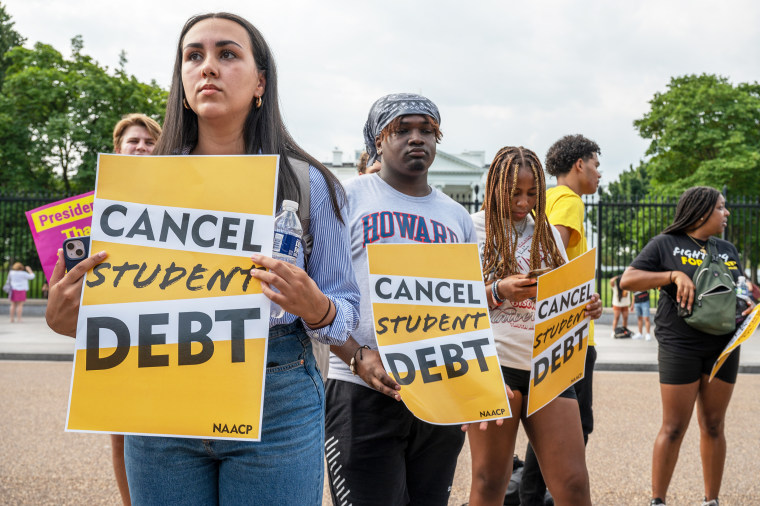
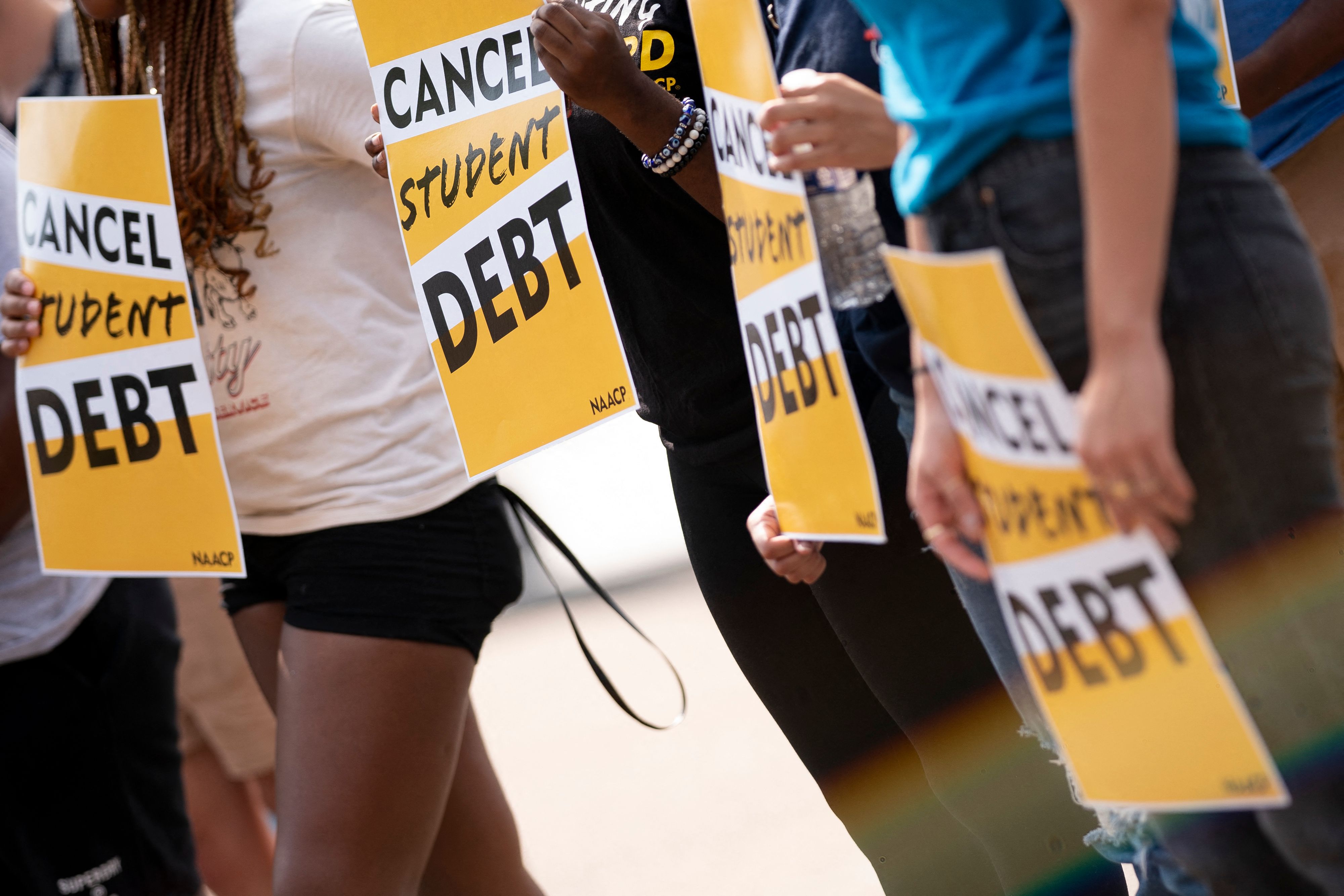
So, here's the rub. Students graduating from college, many of whom with degrees that have little demand in the job market that doesn't involve "you want to supersize those fries?" are demanding that taxpayers paid for their poor decision making skills. The Biden/Harris Administration has placed so-called "debt forgiveness" at or near the top of their domestic priorities.

Thus far, Biden has authorized "forgiving" $150 billion dollars which covers about five million students It's worth mentioning that with "debt forgiveness" the debt just doesn't magically disappear with the stroke of a pen. The government assumes the debt, which means taxpayers pick up the tab...as usual.

As Vice President, Harris has supported Biden's efforts to eliminate student debt. She also backed forgiving debt between $10,000 and $20,000 for every borrower. That, however, was shot down by the Supreme Court. It should be pointed out that former President Donald Trump opposes all out debt forgiveness but supports restructuring debt payback such as eliminating interest rates and other fees.

We've come a long way from fried chicken, biscuits and gravy to illegal immigration and student debt, but each of these issues deeply affect every working class American. We face a rising poverty rate as more and more of our fellow citizens are unable to keep up with rising prices (especially medical) and ever increasing taxes (which I believe should be voted on by registered voters as originally intended).  

Illegal immigration serves the interests of Wall Street. It creates a artificial demand for jobs, which drives down wages and benefits (in many cases eliminating benefits altogether). It also increases the demand on our taxpayer funded social safety net. You can bet that if the ruling elite didn't benefit from illegal immigration, it wouldn't still be happening.

It's time we put working class Americans at the top of our national domestic policy. If we continue with the same old smoke and mirrors game of politics, our collective future looks bleak regardless of who occupies the Oval Office or controls Capitol Hill. VP Kamala Harris has not just told us what she wants to do, her actions has shown us what she intends to do. The only real question then is not whether you can live with it, but whether this is what you want for your children and grand children to live with?


 If you enjoyed the article, please consider passing it along to others and don't forget to subscribe. It's free! Lastly please be sure to "like" us on whatever platform you use to read anotheropinionblog.com. It helps beat the algorithms and keeps our articles in circulation. Thank you!


Federal Reserve Bank/St. Louis: Average Price: ChickenBreast, Boneless (Costs per Pound/Grams 453.6 Grams) in U.S. City Average


McDonald's menu prices have increased by over 100% during the last decade: study


Federal Reserve Bank/St. Louis: Average Price: Sugar, White, All Sizes (Costs per Pound/453.6 Grams)  in U.S. City Average


Food Inflation in the United States (1968-2014)


Charted: Inflation Across the U.S. Fast Food Chains (2014 -2024)


Statista: Have Wages Kept Up With Inflation?


What Kamala Harris has said (and done) about student loansduring her career


Saturday, April 13, 2024

How to End Student Debt in a Sensible Way

Well, old  "Doddering Joe" Biden has been out on the campaign trail again peddling one of his few big issues---paying off everybody's school debt. It seems a shame that after nearly four years in office, and he has virtually nothing to show for except a disaster with Afghanistan and a rocky economy. Even the school debt matter is little more than pie in the sky, but at least it sounds good to college students and hopefully, at least for Biden, that will translate into votes this November.

I guess you can't blame the students. Most of these young adults have racked up thousands of dollars in debt without thinking much about the long term consequences. The average tuition cost for 2021-2022 academic year was $10,740 for resident students at four year colleges. For out of state students it's double that at $27,560 dollars. Room and board for the academic years runs an additional $11,950.

Is any wonder that the average college student carries a debt of $38,290 according to Experian (this is usually in the form of federal student loans). Private student loan debts amount to $54,921. The total academic debt exceeds $1.74 trillion dollars, and that's the amount Biden is wanting us to pick up the tab for, which begs the question, just where does Biden think that money will come from?

Maybe he thinks we can just take it out of our savings account, but oh wait, nearly a quarter of Americans don't have a savings account. 23% of Americans can't come up with $1000 for an emergency. Of those who do have a savings account, 49% have less than $500 while 36% have $100 or less available!

In fact, according to a 2023 survey by Payroll.org, 78% or over 3/4 of all Americans live paycheck to paycheck, which is a 6% increase over 2022. The average American's  household debt runs about $104,250. In 2023, the total mortgage debt of all Americans was $12,252 trillion dollars! 

So how do most Americans live? They borrow it! The average credit card for household in 2023 was $6,501. Nationally credit card debt amounted to $1,129 trillion dollars. In married households, it common that both adults work. Some often hold down two or sometimes three jobs to make ends meet. 

Is it any wonder that 11.6% of Americans live at or below the national poverty line? That's roughly 37.9 million of us. Again, I ask where President Biden thinks we're going to find the money to take on someone else's debt when we can't pay our own? Obviously the student debt---all $1.74 trillion dollars of it---isn't simply going to vanish into the blue.

One way would be for Biden to ask the Federal Reserve to print money to pay the student debt. The problem with that is printing off more money isn't magic. "Someone" still has to pick up the tab, that "someone" is usually the U.S. taxpayer in the form of inflation.

 With inflation, the costs of pretty much everything goes up, from food, medical care, and mortgage to the costs of utilities and interests rates on damn near everything, but usually not wages. Thus you have to pay more with the same amount of money.   

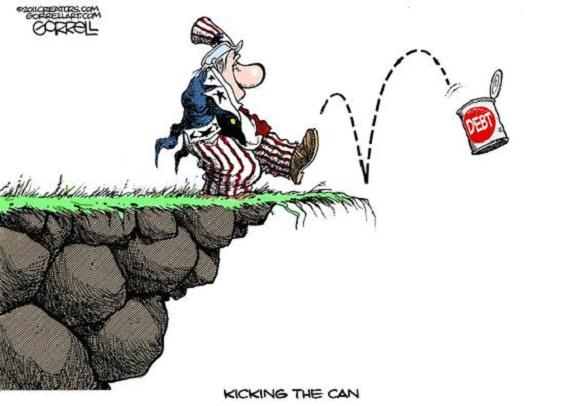
The U.S. sells its debt in the form of Treasury bonds. This, however, is nothing more than kicking the "honey pot" down the road a short piece while paying interest on top of it. Bear in mind too that countries like China, a potential nemesis, owns about 10.17% of our debt (Japan owns the most at 14.52%. The UK is third with 9.16% of our debt). U.S. investors (mostly corporate) owns the most at 32.5% followed by foreign corporate investors which own 29.3%.

When looking at college debt, 53% of federal student loan debt is $20,000 or less. 47% of college debt is actually owed by just 10% of college students who have debt in access of $80,000. 51% of those with a bachelor's degree owe under $30,000. 10% of students have private student loans (which also tend to have higher interest rates ) also had almost double the student debt.

So, with all that debt, how many graduates found work in their chosen field? Most studies show that just 47% are using the their degree in the field  of their choice (the majority of those are in fields like computer science, accounting, actuary science, medicine, or law).

What's of note is that 52% of college graduates are underemployed a year after graduation or not working in their academic field.  33% are unemployed one year after graduating. Meanwhile, 47% have jobs which don't require a four year college degree! To put it another way, it means a substantial number of college graduates have degrees in which there is little or no demand for regardless of their GPA and they're stuck with a big ole debt.

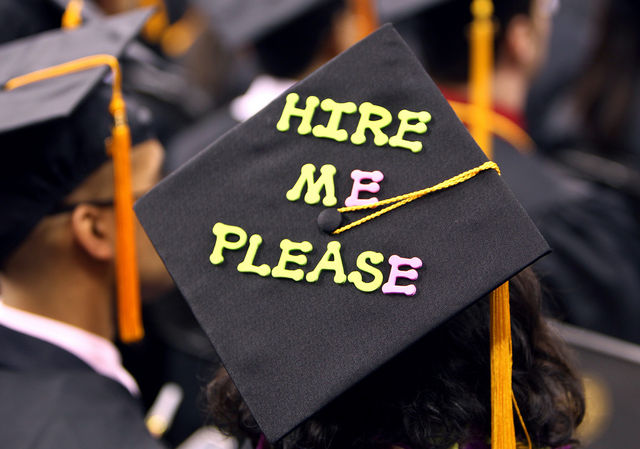
Unfortunately, the majority of those going to college are doing so because they've been conditioned to think a college education is the only way to get a decent job. In fact, there's almost an entire industry that's trying to convince high school students to go to college!

They hear it from their teachers, from guidance counselors to college enrollment professionals (many of whom earn a commission for every student enrolled) and companies peddling loans. Many HR people have changed their job requirements to require a four year degree when in the past a simply high school diploma was all that was needed (if that!) without changing the salary or benefit levels very much. 

In Europe (and most notably Germany which ranks first in the world with a 99% literacy rate and a academic performance ranking of .94%  out of 1.00%), they have a much more advanced approach when it comes to education. Children, beginning in pre-school, are evaluated at regular intervals to measure their interests, aptitudes, and academic performance to determine whether a child should be steered toward the trades or higher education.

It needs pointing that in Europe, unlike America, there is no stigma among children going one track or the other, and no child is locked into a given path. They may opt to change direction at their discretion (along with the parent's approval). In addition, as in America, the trades often pay well, they're in high demand, and often offer good benefits. Finding a unemployed plumber, carpenter, or electrician in Europe (or anywhere else) is damn near impossible!

America needed to revamp its academic system and adopt something similar. Not every individual needs to go to college and not every job requires a four year degree...or its crippling debt. Secondly, the requirements to graduate from high school has been repeatedly "dumbed down" since the late 1960's (at the same time schools started throwing out the need for discipline in classrooms). Want proof? Compare a math, English, or science book from the 1950's with one from now. How many students today could successfully get through one? Not many.

We've developed the bad habit of "flunking" students forward out of fear of upsetting their fragile little egos or angering their parents and getting sued. Teachers spend more time babysitting or worrying about getting jumped than teaching. The result is an academic system which has failed everyone.

It's time to return to stronger academic requirements...and performance in order to graduate.  For students who don't want to learn or disrupt others, get them out of the classroom since it's doubtful the "board of education" will ever be reintroduced. Nevertheless, there's no reason these individuals should be allowed to interfere with the education of those there to learn.

As an aside, during the 2021/22 school year, Homeland Defense reported 327 school related shootings resulting in 188 deaths or injuries. During the same period, 43% of  educators know of a teacher, principal, or someone affiliated with the public school system who've been assaulted by at least one student (often they're jumped by groups). Of this, 20% have been principals. Attacks on school bus drivers have risen 121% between 2001 and 2022. This is completely unacceptable. 

Suspending them does no good. That's what they want---to be out of school. Put them to work doing something they don't want to do like janitorial work at the local jail or prison. Maybe assign them to picking up trash along the roads. Send them to a "juvi" bootcamp. Let them find out what life without a solid education is really like.

As an aside, high school teachers and academic advisors need to change their mindset. Not every student needs to be guided toward college or the military.  The military is a good option for some people, but not all. Not everyone has the right temperament or physical ability for the military. For those who do, they can get good job training if they pick the right rating or MOS (always think about whether your selected MOS or rating is easily transferable to the civilian world after you get out). The military also offers decent benefits, and you'll sure grow up fast!

For those not going to college or lack the urge to "be all they can be", there's the trades. Often overlooked or ignored, the trades are a great way to make a living and provide for a family. First, the pay can be great. So can the benefits. You can work for yourself or someone else (a terrific option to gain experience). You can go union or not. Basic training is generally short and often there is little or no debt. Lastly, there's a huge and growing demand for most all trades. It is a seriously great way to go.

America has a failing  (or failed) school system. Academically, the United States ranks 36th in world for mathematics and 24th in science. By comparison, the top five highest scores in math all go to Asian countries. The Scandinavian countries rank in the top tier across the board.

Overall, the U.S. in 33rd out of 44 advanced industrial countries academically, placing us in the middle of the bottom tier. It's common in the U.S. nowadays for employers (including the military) to provide remedial classes in reading comprehension and basic math for so .   How do we expect to compete globally with results like that?

Next, employers need to reevaluate their job requirements. Does every position actually require a four year degree? If so, then you need to also reevaluate your pay scale and be prepared to pay out a lot more for your potential new employees. Otherwise, employers need to bring their job requirements more in line with what the job actually calls for.

The world doesn't need another art major any more than it needs another gender or race centered major. If we're to reduce college debt, either colleges are going to need to cut their tuition rates (which won't ever happen) or a new approach is going to have to happen to help graduates quickly gain employment to they can start paying off their debt.

That means they need to reassess their choice of majors. All new admissions or undecided majors, along with school councilors, need to review each student's proposed major/minor. Part of the review needs to include a look as the job demand for that particular degree. If there is little or no demand for that job, the applicant must either choose a new major or include a second major (or expanded minor) in a field where there is a demand that's complementary to their major.

For instance, if an applicant choose history as a major, then they need to back that up with courses in something like law, biology, or financial analysis; something where there's an actual demand in the job market. If they choose an art major, then they need to support it with a expanded advertising or marketing minor. The same goes with gender or African-American studies, anthropology, humanities, and so forth. If they combine their desired degree with something employable to fall back on then maybe they can stay out of their parent's basement!

Another opinion is to offer lower interest rates to students pursuing degrees that are in demand, thus making them less of a risk to the lender.  The average interest rate among all student borrowers is 6.87% for federal loans (just over 94% of all student loans. For undergraduate loans, it's a little less at 5.50%.  For those seeking graduate or professional degrees, the interest rates on loans range from around 7.05% to 8.5%. Interest rates from private lenders varies wildly, typically from 3.99% to 13.99 for fixed rates and 5.24% to 13.99% on variable rates.

Much of this is determined by the borrower's credit history and employment status. Other factors include their current debt load or whether they have a co-signer or not and their credit worthiness.  If someone is majoring in a degree where there is a demand, and thus the likelihood of  them getting hired quicker, they would obviously be a better credit risk and thus should be rewarded with better credit terms.

But none of this is what President Biden is peddling. His solution is to wave his magic ink pen and make all student debt suddenly disappear---poof! Just like they never promised to pay it back. Maybe this would be their final lesson --- you don't have to take responsibly for the decisions you make. "Someone" (meaning the government) will bail you out, which means everyone else will have to pay for your bad choices and broken promises.

If you think about it, it kinda makes sense in a twisted sort of way. The United States is the worse debtor nation in the world. The federal debt tops $34 trillion dollars and yet it routinely spends money it doesn't have. Washington can barely make payment on just the interest, which was $725 billion dollars as of July 2023. That's 14% of entire federal budget. But no worries. They can always raise the debt ceiling and go on their merry way!

At the same time, unlike nearly household in America, Washington has consistently refused to adopt a balanced budget amendment which would prohibit them from spending more than they take in.  Is it any wonder then that college graduates and others should expect someone else to pay their bills?


If you enjoyed the article, please consider passing it along to others and don't forget to subscribe. It's free! Lastly please be sure to "like" us on whatever platform you use to read anotheropinionblog.com. It helps beat the algorithms and keeps our articles in circulation. Thank you!


What is the average student loan debt in 2024--- and whatare the impacts?


Average debt in America: 2023 statistics


Nearly Half Have Less Than $500 in Savings: How To Build UpYour Balance in 2024


Average Cost of College Tuition


37.9 million Americans are living in poverty, according tothe U.S. Census. But the problem could be far worse


Living Paycheck to Paycheck Statistics 2024


58 Trade school vs. college statistics for 2022


New college grads are more likely to be unemployed in today's job market


Average Student Loan Interest Rate


Friday, April 14, 2023

Racism, Youth, and Distortions by the "Woke" Left

What's the first thing that comes into your mind when you see young kids shoplifting? It is "just one of those things" ? Is it "where are their parents" or something more akin to "if someone doesn't straighten that kid out they're going to wind up in jail"?

For most of us, we're not concerned about their gender, race or anything else. It's just the fact that they're are brazen enough to steal, usually right under the noses of management. In many locations, store management and security are hamstrung in what they can and can't do when it comes to shoplifting, particularly when it involves juveniles.  

Sadly, shoplifters tend to know this better than anyone. Not only do they know the best and easiest ways to steal from stores, they also know how each store responds along with what items will likely get them in serious trouble the quickest.

This knowledge is not just something adults or professional thieves know, but it's also something that younger kids seem to pick up on quickly too. They also know that if caught, it's unlikely much of anything is going to happen to them because they're minors. That's one reason professional thieves often employ minors for riskier crimes like breaking and entry, drug dealing, and, of course, shoplifting.

As a result, stores lose millions annually, at least on paper. In reality, they simply raise prices to offset the cost of the stolen merchandise, leaving customers to pick up the tab.  According to a Forbes article from November of 2022, shoplifting has become nearly a $100 billion dollar "industry" that we, the ordinary consumer, have to pay for.

The magazine, "Loss Prevention", wrote in January 2018 that nearly 55% of adult shoplifters and criminals got their start as juveniles. An article published by the National Association for Shoplifting Prevention, stated that nearly 1 in 4 adults started shoplifting between the ages of 12 and 14. Stores lose on average some $45 million dollars a day to shoplifters while law enforcement authorities estimate that approximately 550,000 shoplifting incidents occur daily.

The report goes on to say shoplifters are caught just once out of 49 times they steal, yet less than half are turned over to the police. Chronic shoplifters are arrested just once out of 100 attempts to steal. Lastly, 75%  of criminal justice professionals acknowledge that shoplifting, often starting out while a young juvenile, go on to more violent crimes which often includes some form gang activity. It's also worth noting that most juvenile shoplifters are white; some 70% according an FBI report. 

The Office of Justice Programs reported that between 14% and 30% of juveniles join gangs.  Their age range when they join is between 12 and 14, which is about the same age range that youngsters start shoplifting as noted above.

Approximately 39% of black youth living in large cities join gangs compared to 32.7% in the suburbs.  45% of Hispanic or Latino juveniles from large cities tend to join gangs with 51% of those living in suburbs do so.

As for whites, just 9.7% living in big cities are likely to join a gang compared to 9.1% living in the suburbs. Meanwhile, 5.8% of other racial groups such as Asians living in larger cities are likely to join a gang. Just 7.2% of those living in the suburbs will probably join a gang. As an aside, males are far more likely to join gangs than females. However, females gang members are more common in suburban and rural areas, 45.3% and 49.5% respectively.

In 2022, more than 1,300 juveniles between ages 12 and 17 were killed by gun violence with another 3,800 injured. In 2021, the number juveniles killed or wounded by guns topped 6,000.  In 2022, 300 kids age 11 and under were killed by gun violence. 700 were wounded.

Most violent crimes committed by juveniles (64%) typically occur on school days in the hours after the end of the school day through early evening (that is, between the hours of 2:00 pm and 7:00 pm).  On non-school days, violent crimes committed by juveniles tend to happen between 6:00 pm and 9:00 pm.

67% of black families are single parent, meaning that the majority of children lack the guidance of a father figure. 8.6% of black adults are unemployed according to the National Bureau of Labor Statistics latest report of 2021, followed by 8.2% for Native Americans. Meanwhile, the unemployment rate for Hispanics is 6.8% and 5.0% for whites.

In addition, as of 2021, almost a third of these families lived at or below the poverty line, meaning their mother is likely working and/or their children are being cared for by an elderly grandparent or neighbor, which in effect means little in the way of family structure.

I was recently watching a video on a Twitter site hosted by the Hodges twins, Keith and Kevin. The Hodges are conservative stand-up comics and political commentators (and for what it's worth, they also happen to be black which neither here nor there). I've been watching them for some time now and really enjoy their humor which is mixed with some really insightful social observations.

The video, which included a comment by the Hodges ("kids are being taught to do this shit..."), showed the apparent commission of crime being carried out by four or five wannabe "Jesse James" types. These wannabe gangsters were probably between 9 and 12 years old and male.  The crime was a "scoop and scoot" at what appeared to be a neighborhood drug store. The "goods" looked to be petty stuff, mostly chips, cookies, candy and so forth.

In the video you can see a store employee speaking with someone on the phone. The expression on his face is one of disbelief. Apparently the employee, aware of the crime in progress, had shut and locked the store door. Whoever he was speaking with had apparently told him that he couldn't do that and to open the door.

The employee reluctantly unlocks and opens the door as the "James Gang" make a break for it, shoving the employee aside, running across a busy intersection in triumph while other employees start picking up the mess left behind.  Finally, I feel that it's important that I should mention that everyone involved---the kids and employee---were black ( you'll understand why I mention that in a moment).

I could see the expressions on their faces of utter glee of a successful heist. I don't know if this was a spur of the moment job or if any planning had gone into it. Was this a first time "scoop and scoot" or had they or one of gang done it before? Perhaps it was a dare. With kids of that age, it could be almost anything. However, I had just started work on this article so I was already aware of the statistics.

I knew, thanks to the articles and statistics already read, that this little raid should be reason for some concern, not just for the store or its employees, but for the parents, teachers, friends and neighbors of these kids. Being male, a minority, and living in what appeared to be urban environment, the odds of staying out of trouble weren't too good. 

As it is, gangs are usually associated with all sorts of crimes (especially violent crimes and drugs), are the most prevalent in cities. Although blacks make up just 13% of the total population, the percentage of illegal drug use among blacks is 6.9% (the national average for drug use among other races is 7.4%), and young males are the most vulnerable.

So as you might expect, I had to make a comment. Here is what I said: "Thieves. Soon, perhaps in a few years, we'll be hearing about how they died. Maybe gang related. Maybe in a shootout with police. Perhaps a homeowner defending their property. And it will be their parents and neighbors bemoaning the injustice of their deaths".  

Now, you'll notice that there was no mention of race, gender, or anything else. My comment was one of empathy for their parents who, if this type of behavior goes unchecked, may find themselves crying over the body of their child and wondering "why" and "how" this could have happened. 

Based on the reports and statistics mentioned above, this is not a remote outcome . A kid laying dead somewhere, the victim of a drive by shooting, gang violence, drug overdose, or a crime gone wrong is far too common. Perhaps instead of being the victim, they got caught trying to rob someone or selling crack and now they're facing prison. Maybe they're the one who accidentally killed someone.

There's a whole myriads of bad results which started innocently enough with some petty theft. Heck, I just saw a video of a group of older teenagers randomly opening bags of chips, Cokes, cookies in a store helping themselves, and then trotting out after obviously enjoying themselves.

Well, you can well imagine the responses I received. According to the Hodge's site, my simple comment generated some 10.9 million views along with 2,452 comments. It also generated 21.6 thousands "likes" and was shared 5,140 times! The vast majority of comments were positive with most agreeing that this kind of behavior could have very serious consequences for these kids.

However, there was a minority of commentators who wasted no time in playing the racist card (which, of course, I'm far from) and making all sorts of racial slurs toward me, alleging that I was stereotyping these kids, that I was wanting these kids die while referring to me as "sick and deranged", an "old white clown", openly wishing I would die or "rot away", and so on.  

Fortunately, as I said, these were minority, but still I found it amazing how people could twist a simple remark about empathy into something barring no resemblance to the comment itself. Nothing in comment related to race (but their responses did). Nothing in my comment mentioned wishing death on anyone (but their responses did). Nothing in my comment mentioned joining a gang (although their responses did). I did, however, say they could end up being the victim of violence if this kind of behavior continued and statistics support me in that statement. 

I suppose this little exercise demonstrates how vicious and reactionary some on the "woke" Left can be. They certainly can't stand a contrarian opinion, at least on this occasion! They demand tolerance, but for them. Not you. They call you "racist" while they're on a racist rant. They claim to oppose hatred, and yet their comments are as vitriol as they can be. They claim they're wanting to avoid an argument while trying to trigger one with name calling, distortions, and not so subtle innuendos and implied threats.

In fact, several excused the shoplifting youngsters by saying they "might be hungry" while others blew the theft off all together as no big deal. Perhaps I should have condoned the theft since I'm white, "privileged", and all that just as they did. But that would be morally wrong. 

A few wanted to compared the shoplifting to "mass shootings" (which are obviously unrelated) by claiming that they are routinely carried out by whites to the relative banality of the shoplifters. They also claim that I ignore these type of crimes as well.  

To set the record straight, I do routinely condemn mass shooting along with any other form of mass murders including wars over economics in my articles as well as directly online regardless of race, gender or any other factor. Secondly, how would they know unless they regularly read my articles?

However, despite their apparent racial undertones, they are correct that whites are largely responsible for mass shootings. According to Statista, 74 mass shooting were committed by whites while 25 were committed by black individuals between 1982 and April 2023. Hispanic were responsible for 11 such shootings and Asian for 10.  Native Americans committed just 3.  

There's no question that shoplifting is a serious gateway crime which all of us eventually pay for. Although much of it is committed by adults, those under 17 years of age are responsible for a significant portion. Of those, many wind up on a path no one would wish on them.

Many come from an environment where the odds are already stacked against them---poverty, high crime neighborhoods, single parent households, little to no consistent adult supervision, underperforming schools and few opportunities in their neighborhood. Some are even taught to fear or hate police officers, disrespect teachers, and come to admire gang lifestyle. They see crime and drugs as easy money. But it's also a fast ticket to prison or to a short and tragic life.

We have to do better as a society. While pre or after school programs, especially when those programs can provide some nutritional meals are great, nothing replaces the active involvement of a parent in the daily lives of their kid  just as nothing beats a good education. There has to be a refocus of school curriculums to civics, critical thinking and business skills with an emphasis on basic math, proper English, the sciences, and history. 

After school and summer programs working in the community is another great avenue for teenagers. Perhaps too is redirecting those about to graduate from high school into the trades. College isn't for everyone and trade schools are a lot less expensive, pay well and have great benefits. It's also an opportunity to opening your own business at some point if that's what you want to do. We have to do better by our kids. What we've been doing is obviously not working.


If you want to know more about this article's topic, please check out the links below. If you enjoyed the article, please consider passing it along to others and don't forget to subscribe. It's free! Lastly please be sure to "like" us on whatever platform you use to read anotheropinionblog.com. It helps with the algorithms and keeps our articles in circulation. Thank you! 


Shoplifting Has Become a $100 Billion Problem For Retailers


The Shoplifting Problem in the Nation


A record number of American kid's were injured or killed in gunfire in 2022


Office of Juvenile Justice and Delinquency PreventionStatistical Briefing Book


BLS: Labor force characteristics by race and ethnicity, 2021


Number of mass shooting in the United States between 1982 and April 2023, by shooter's race or ethnicity.


Hodgetwins


Friday, September 02, 2022

The Forgiven and the Damned: Biden's Student Debt Forgiveness Program and Taxpayers


President Biden caused quite a stir recently, fulfilling a long standing promise to end student debt. As typical with many of Biden's proposal, it appears he didn't think this one through particularly well. The end result will be a much needed, albeit limited financial relief for the estimated 48 million current and former students with $1.75 trillion dollars owned.

To properly understand Biden's proposal, it's important that we first understand the term Biden uses. So, to begin with, let's get our terms correct.  Instead of calling Biden's proposal "debt forgiveness", the more appropriate term we should use is "debt transfer", which is a more accurate description of what it really is. But before we get into the specifics of Biden's "debt transfer" plan, let's take a look at student debt in general.

Loan debt has been the bane of students for decades. Some cite it as the price we pay for higher education. Others call it nothing more than a money generating scheme with naive and often desperate young adults (and their parents) as the "pigeons" to use the old carnie term for unaware victims of con games. After all, since at least the 1980's, we've been told that the only way to succeed is to go to college.

Approximately 45.4 million current and past student have some form of federal loan debt, of which 4.7% was already 90 days in arrears just in the first quarter of 2022. The average monthly payment is about $300, with most loans require the borrower to pay 10% - 20% of their gross income, based on how much they're earn.

 55% of graduates with a four year bachelor degree owe, on average, just under $30,000 in student debt regardless of whether they attended a private nonprofit or public college or university. 68% of those graduating a private nonprofit college or university has a debt of $31,450 or more. 66% of those graduating from a public institution owed $26,900. 83% of those graduating from a for-profit college or university with a four year degree had a debt of just under $40,000.

Between 2020 and 2021, students and/or their parents borrowed near $96 billion dollars to cover the cost of education with just 13% of that being private and/or non-federally backed loans. Direct loans amounted to $1.38 trillion dollars shared by 37.2 borrowers. FFEL Loans were the largest, with $225 billion loaned out to a little under ten thousand applicants. Perkins Loans, totally $4.2 billion dollars,  went to 1.5 million individuals. The grand total was $1.61 trillion dollars loaned to 43.4 million unique applicants!

The above numbers represent just a snapshot of the debt crisis. It doesn't include other forms on loans such as Stafford, Grad PLUS, or money borrowed on insurance plans, 401K and other retirement plans, home mortgages, credit cards, and so forth, which represents tens of billions in principal, interest, fees, and penalties.  It's obvious that the student debt situation is out of hand. Some would even say it's critical, and you would find few who disagree. However, before we look at Biden's plan, let's consider a few facts about higher education.

First and perhaps more importantly, not every job needs someone with as BA or BS degree. In decades past, most graduates of high school were adequately equipped academically for the majority of jobs. However, starting the mid 1970's, the quality of high school education took a tremendous nosedive. Students were being graduated who had a 6th or 7th grade math ability or read at an 8th grade level. Their knowledge of grammar and spelling was horrendous, while their grasp of history, ethics, the sciences, or literature were virtually non-existent.

Beginning in primary school, discipline all but vanished along with parent participation. At the same time, a rise in poverty among students meant more kids were showing up hungry. As a result, schools turned increasingly into publicly funded daycares. Critical thinking skills were essentially out the window as the focus turned more on sports to attract and keep students than on academics.

As a result, employers had to resort to remedial education for many of their new hires and the demand for college education began just to have the same intellectual level of an applicant they had just 10 or 20 years earlier. Along with this change, universities and employers began downplaying the need for the trades; those educated to do jobs which required physical and mental skills such as electricians, plumbers, carpenters, or mechanics.

Instead, savvy marketing drew new high school graduates to the higher priced colleges with promises of riches in four or six or eight "short years" and away from the less expensive and shorter trade schools. Thus began the rise of sustained student debt as tuition continuously rose and students were "fee" to financial death.

By way of a brief comparison, the cost of a college education is highest in the Northeast and West. It's cheaper in the South, Midwest, and Plains states. The average cost of a four year public college for in-state students is about $21,035 per year (or $84,140 for the full four years plus assorted fees). For a in-state student attending a private four year college, it's about $32,768 (you can roughly double that if you're either a out-of-state student or add another 1/3 if you're going to a for profit college).

If you attend a trade school, the average is about $33,000...for the entire program! Of course, depending on where and what degree, tuition can run $3,800 to $15,000 per year (most programs are two years or less, and in some cases, you can start earning in six to eight months). The figures used here for both college and trade are averages as of 2022. Tuition always changes, and usually upward.

 College admissions and academic administrators also starting not just encouraging students to major in degrees with little or no employment demand, they also started creating new degrees with little real world value (such as gender or race studies). Hey, all to keep the money flowing! Meanwhile, for many colleges, the focus turned from critical thinking skills (the hallmark of higher education) to even greater revenue generating sports programs, leaving some academic departments limping along.

President Biden's "debt transfer" proposal is said to "wipe out entirely" the debt of approximately 1/3 of those with federal loan debt. That's about 16 million individuals. The program includes a $10,000 dollar debt "forgiveness" (specifically, the federal government---meaning taxpayers---will pick up the tab).

This will apply to those earning $120,000 dollars or less (or a combined household income of $250,000). In addition, the federal government will "forgive" up to $20,000 in Pell Grants. Total costs for taxpayers? About $300 billion dollars. Of course, this assumes Biden's "debt transfer" proposal gets past all the anticipated legal challenges.  

By the way, don't expect any "thank you" cards from Millennials or Gen Z's. They have a reputation of self-entitlement. I bet they're going to be surprised to learn that once any type of government welfare goes into effect, it rarely if ever ends, so they expect to be paying off someone else's debt down the road! How's that for a bite in the butt of the two "I love Socialism" generations Capitalist style? 

Anyway, assuming that this portion of the Biden plan survives all the legal challenges, the president's staff claim that about 90% of those earning $75,000 a year or less (which is most Americans) will be the prime beneficiaries. The plan also includes changes in the federally based "Income Driven Repayment System" (IDR).  

Under the IDR, a student's monthly loan repayments is adjusted based on their income after graduating. Students are currently required to pay between 10% and 20% of their annual income for the first 20 years, after which the balance is "forgiven" (that is, picked up by taxpayers). According to one report, between 2010 and 2020, enrollment in the IDR jumped from roughly 10% of eligible applicants to 32%.

With Biden's plan, participants will now have to pay just 5% any undergraduate debt (and up to 10% on graduate or professional school debt such as law or medical school). This covers a repayment plan over 10 to 20 years, depending on debt size and annual income level. The proposal will also include a change in the amount of income not currently covered.

Under the current plan, IDR doesn't include repayment on income up to 150% above the poverty level (based on family size, etc). So if your income is, let's say 155% above the poverty line, your payments would be based on that 5% under the current plan and everything 150% or under is exempt.  

The new plan will adjust that up to 250% over the poverty line, meaning the minimum repayment amount is based on less income, thus significantly lowering the size of the amount due.  It also removes any accrued interest.

As a result, it encourages individuals to borrow as much as possible rather what they need. I see a lot of parties and beer runs in the near future. But fear not! The new IDR changes also encourage colleges to raise tuition since a greater percentage of debt is now being "forgiven"...and picked up by you and me via the government. So, taxpayers get all the debt of a college education but without all those pesky term papers and dust collecting degrees. 

Biden, however, suggested that individuals qualifying under the new IDR wouldn't abuse the opportunity to borrow more money with no interest, have lower monthly payments, and earlier debt termination. Instead, they would use the money saved on the loan payments to invest or spend back into the economy. They could even double up on payments if they wanted too. He also downplayed the likelihood that universities would significantly raise tuition as well.  Yeah...right Joe. Wink. Wink.

As another aside, under Biden's plan, there also could be an unintended consequence---money not paid back could be taxable at the state level  According to the Tax Foundation, there are 13 states which could treat any debt "forgiven" $10,000 or over as earned income. This includes Kentucky (naturally), Arkansas, Wisconsin, Virginia and West Virginia, Hawaii, Idaho, Minnesota, South Carolina, New York, Pennsylvania, and Massachusetts.

The Tax Foundation estimates that amount of tax to be paid could range from $300 up to $1000 or more.  To stick the knife in a little deeper, that figure could double if the debt originated from a Pell Grant and is at least $20,000 is "forgiven". So, what's the total damage of Biden's plan to taxpayers?

Well, according to the University of Pennsylvania's famed Wharton's Business School of Business (and President Donald Trump's old alma mater), taxpayers could end up stuck with a final bill of somewhere between $650 billion to $1 trillion dollars, thus proving again the old adage that no good deed goes unpunished. Not even ones designed to improve approval ratings and reelect Democrats in November. 


If you want to know more, please take a look at the links below. If you enjoyed the article, please consider passing it along to others and don't forget to subscribe. It's free! Lastly please be sure to "like" us on whatever platform you use to read A/O. It helps with the algorithms and keeps our articles in circulation. Thank you! 


A Look at the Shocking Student Loan Debt Statistics for 2022


There's a giant loophole in Biden's student debt relief that could make college even more expensive. Here's how it works


Biden's student loan forgiveness could be taxable in some states


List of States That Might Tax Student Debt Loans Dwindles


The Value of Trade Schools in Today's Economy


Average Cost of College Textbooks


Saturday, September 11, 2021

Frustration with a Failing Democracy


It's often been said that you can tell the political condition of a country by looking at its infrastructure. Well, if that's true, then we should be in  ICU on life support with a minister preparing to read us our last rites.  America currently has approximately 4 to 6 million miles of road which are in need of dire repair at a cost of some $2 trillion dollars or more according to the American Society of Civil Engineers. That includes 73,000 bridges which are deemed "structurally deficient",  meaning they're unsafe.

In addition, there are 600,000 bridges over 20 feet in length which are pretty sketchy too. They add that at the current rate of disrepair, we may have reached the stage where our roads will decline at a faster rate than we can repair them.

The decline in the quality of America's roads doesn't reflect the increasing congestion, which leads to more accidents or poor air quality due to car and truck emissions. Some believe additional tolls would cut down on the congestion and provide additional revenue.

However, studies by the Department of Transportation have shown that while they help, they come nowhere near covering the costs to actually fix the problem. Another example of government's "Band-Aid" approach.  What the United States needs to do is invest more in energy saving mass transit such as electric light rail, trams, and trolleys, as well as electric or biofuel public transit like other industrial countries have done.

While we're at it, the U.S. also has one of the least efficient national electrical grids in the world. Currently, our national power grid covers some 7 million miles and produces around $4 billion dollars of electricity. It's the largest power source of its kind on earth. Bigger than Russia's and bigger than China's, and yet it struggles to keep up with demand, not to mention its vulnerability to terrorist cyber-attacks.

Adding to the problem is that multi-billion dollar companies like Google, Facebook, Walmart, and others are bypassing state and local utilities and going direct to producers, which deprives local municipalities badly need tax revenue.  Local governments stymie competition by giving energy producers a monopoly over electrical output. In some cases, local government is also the sole stockholder (this also applies to water too).

Municipalities also encouraged legislation to cap or limit the percentage that individuals who generate "excess" electricity through the use of alternative sources can sell back to local utilities or remove themselves from the local grid, making it all but impossible to "disconnect" from the grid.

Energy experts say that it would take an estimated $1 trillion dollars minimum just to bring our energy needs current, and make it both more efficient, and environmentally friendly. Rest assured that the public will pay for it one way or another. Meanwhile, rates keep going up with nearly 100% approval from public commissions and boards which are suppose to review rate requests and protect the public. But what do you expect when you have former energy executives on these boards?

However, what is needed to fix the problem, is practically unthinkable to most politicians and government bureaucrats---more taxes. Americans already feel they are grossly overtaxed as it is. On average, about 30% of the average American worker's wages goes to pay taxes. While that sounds like a lot, the average worker's tax rate, according to the 37 member OECD, is 34.6%, which puts the U.S. among the 30 lowest taxed country among industrial nations.

While individuals in other nations pay more in taxes, they typically also get more in return. Specially, better education for their children and themselves, Asian and European countries tend to be at the top of the list, especially in the areas of science and math, and yet we tax more per student than these same countries.

Speaking about kids, a 2020 report from UNICEF on child poverty placed the U.S. 34th among 35 countries along the worse with roughly 20% being "food insecure". Blacks and whites were about equal while Hispanics were slightly higher. Asian children had the lowest rates of child poverty. Single women with children was by far the worse off.

Another report, this one from the Congressional Research Services dated April 14, 2021, showed that the poverty rate among adults 80 and over was just around 13.6% (it was highest among single women). For those 65 to 69, it was 8.4%, and 7.4% for those age 70 up to 74. From 75 to 79, the poverty rate was 9.2%.

Worldwide, the highest poverty rate among seniors was in South Korea, with nearly half of those 66 and older living in poverty. Next was China with 39%, followed by the U.S. Where seniors fared the best was in Scandinavia, the Netherlands, France, Germany, the UK, and Japan.

We need to reinvest in this country, which means improving our infrastructure. It means becoming less dependent on fossil fuels. Corporate industries, not the public, should fund cleanups and restore the environment. We should stop penalizing research and innovation into alternative energy sources or renewable material. That same goes for people who use solar panels, water barrels, windmills, or plant local or community gardens.   

Education should be restructured to educate. Not to cater to the latest political cause, be it liberal or conservative. Every child must master the fundamentals---writing, reading, grammar, and math--at their grade level. They also should be taught to balance a checkbook and keep a household budget. No more placing the blame for a child's inability to learn on their race. If they fail, then they fail and should repeat the grade.

 Education should be honest. That means teaching the facts and both sides of social issues. They must  be taught critical thinking skills. They'll need it in the real world. Discipline is must. There can be no learning without it. Lastly, not everyone is college material (or will play professional sports). That's fine. Provide an alternative route such as the trades.

They should also be taught that while degrees in Women's Studies or "African/Black Studies", and philosophy sound good and noble, they aren't likely to get a job with them. They'll have a unemployable degree and staggering debt. So, pick a major where there's a demand, and then, maybe, minor in one of those other noble sounding programs.

Our children are increasingly coming under the control of the State, be it federal or local. They want to eliminate the parent.  I suspect that if they could take them straight from the crib, they would. Of course, their argument is that most parents aren't willing to take an active role in their children's upbringing, let alone their education, for one reason or another so "someone" has to.  

The most cited reason is that children are being raised by someone other than the parent (like a aunt/uncle or grandparent) or that one of the parents is absent and/or have a unstable home environment, which brings me to the next point. We must reexamine our social safety net and remove or modify those items which reward parental absenteeism.

Finally, we need to ensure that neither our children nor our seniors are "food insecure". There is no excuse for it in a country as resource rich as America. We throw away more food than some countries consume.

Along the same lines, we can do a heck of a lot better when it comes to medical care.  Did you know that we're the only industrial countries in the world without some form of national healthcare? "Obamacare" was a sophomoric try, but at least it was an effort. Personally, I think single payer coverage is a much more reasonable way to go, and potentially cheaper too.

Through a combination of corporate, public, and individual participation, a basic coverage could be given to all U.S. citizens. It could allow employers and the public an opportunity to buy additional insurance from the marketplace. We also need to regulate the healthcare industry as whole to curtail outrageous fees and prescription prices. This could be done by allowing the government to set caps on prescriptions as well, and allowing purchases from approved companies located outside of the U.S.. Even allow some procedures or services to be paid for in cash. 

There should also be a change of focus. The countries which rank higher than us in terms of healthcare have a different focus for instance. Here in the States, we concentrate on post treatment or reactive care, whereas other countries focus on preventative care which keeps people healthier longer and lessens the severity of illnesses so that everyone benefits. Some even make use f alternative treatment and medicines like herbs or time off for "mental health".   

While this may sound bleak (and it is), there is still a silver lining. We have the ability to fix these and other problems. We also have the resources. All that's missing is our resolve to do it.  The best place to start is at the bottom; that is, at the local level. That's where we can have the best impact. Most communities already have food banks or after school tutoring available, and speaking as a community organizer of over 40 years, I can assure you that they love volunteers.

If you can't do it in person, consider doing online volunteering. There's lots of programs available. Better yet, start one if you can't find one you'd  want to join. Attend board and commission meetings, be it school board, zoning, water, or energy. The majority are open to the public, and it's a great way to get your feet wet!  

With a little research for the rules and regulations in your area, you can also start petition campaigns. Attend community meetings which are typically held monthly by local politicians. Start a "letter to the editor" campaign. If you own as little as one share of stock, you can attend their shareholder board meetings, which usually allow up to 15 minutes to address the board (though you're actually speaking to other shareholders in attendance). That's plenty of time to expose what they're doing and ask for change.  

You could even run for office, but if you do just remember that both parties are owned by corporations, and they don't like reformers despite what they claim in their commercials. Therefore, if you're going to be a "boat rocker", count on doing it mainly by yourself, and hopefully, with family and friends support. Parties often promise money and other support to their candidates. Unless you're already a big name, don't hold your breath, especially if they think you're serious about change.  

Instead, you'd be better off lobbying sitting politicians (regardless of their party) on behalf of your neighborhood, community, or a focal issue. Be sure to brush up on what you can and can't do as a citizen lobbyist.  I've found this route to be the most rewarding.  Besides, they can be a little more cooperative when they know you aren't after their seats.

America is at war, but it's not against Al Qaeda, the Taliban, or even Russia or China. This war is one between a corporate and government partnership which is neo-fascist in character and led a group of very wealthy individuals and corporations against us; the ordinary citizen and voter. The object of the war is the creation of surveillance state with the possibility of occasionally acting like a police state.

This new system, which is called an Corporatocracy, will create its own image which we will be conditioned to identify with. Wars will be fought for "freedom" or some other emotionally charged word, while in truth it will be about corporate access to markets or control of assets and resources.  Our loyalty will be defined by products we choose rather than to our nation. We will be encouraged to focus on video games, reality shows, or work and to leave politics to our intellectual and social betters who know what's best for us.

They want a compliant workforce which is just smart enough to do their jobs and nothing more. They want control of every aspect of our lives. To get that, they must divide us every which way they can. They will control our children in order to forge new generations of worker drones who will rely on the State without question. That means rewriting history and the future. We're already seeing that with the removal of statues, censorship of books, and curriculum taught to our children.

Don't expect it to stop until we've forgotten the truth and bought into their manufactured reality. It can be stopped. I've given you some pointers above. The question then becomes, will we?


How 35 countries compare on child poverty (the U.S. isranked 34th)


CRS Senior Poverty Rates