Showing posts with label demographics. Show all posts

Friday, August 22, 2025

Examining Racial and Ethnic Reality Part 2: Employment, Politics, Crime, Poverty, Home Ownership, Conclusion and Future


In part two of our look at race and ethnic reality, we'll take a look at employment and unemployment, Affirmative Action and quotas, racial equality in politics, crime  and prison sentencing, poverty, welfare, housing, and who really benefits the most? Finally, we’ll address the issues of reparations, the future of race relations, and what does all this mean, if anything?

Employment

When it comes to labor force participation, 63.1% of Blacks are in the work force. 65% of Asians are actively involved as are 62.3% of White and 66.9% of Hispanics. Meanwhile, 65.3% of those who claim to be mixed race participate in the work force.

Whites and Asians occupy the majority of professional and managerial jobs with Asians holding most of the STEM and healthcare professions while Blacks fill most of the community and social services occupations (Black males work the majority of transportation and utility jobs while Hispanics dominate the construction and hospitality industries per the U.S. Bureau of Labor Statistics).  

Examining income levels by race (based on 2023 data), we find that the median household income for Whites nationally is $89,050. For Hispanics, it’s $65,450. The median income for Black households is $56,490. Native Americans earn $57,270.  The highest household income belongs to Asians which averages $108,700.

The national unemployment rate is 4%. Among Whites, it’s 3.6% and 3.5% for Asians. In the Hispanic community, the unemployment rate is 4.6% (4.9% for Mexicans and 5.9% for Puerto Ricans). However, the highest percentage of unemployment belongs to Black Americans with an average of 6%.

Affirmative Action and Quotas

Affirmative Action came into being through two separate measures. First in 1961 when President John Kennedy signed Executive Order 10925 which required government contractors ensured equal employment opportunities  for all applicants. Second was in 1965 when President Lyndon Johson signed into law Executive Order 11246 prohibiting employment discrimination by federal contractors and requiring them to adopt a plan to employ minorities. By the 1980’s, this had been expanded to include gender and religion. It was also expanded to include education and other areas. Basically, it federal dollars touched it, there had to be an affirmative action plan in place.

Some institutions used this as a de facto “quota” system, rather than as intended. Thus, individuals were hired or accepted based not on their skills, experience, or test scores, but on skin color and gender. The overall result was a drop in performance which affected productivity and employability. Fortunately, that was done away with by the Supreme Court  in a 2023 ruling against Harvard College. At long last, ability returned to the forefront.    

Politics

What about politics? Whites make up about 59.3% of the population. Hispanics are 18.9%. Blacks comprise 12.6%, and Asians are about 5.9%. When we look at the make up of Congress, of the 431 members, 301 identify as White. 61 are Black, 46 are Hispanic, 18 are Asian, and 5 say they are racially mixed.

 Of the 99 Senate members, 83 are White. 7 are Hispanic, while 5 are Black and 3 are Asian with 1 Native American (not including Elizabeth Warren), and of course, there was Barack Obama who was bi-racial although popularly identified as Black.

When it comes to federal judges, the majority (65.80%) are white. 14.44% are black. 9.11% are Hispanics. 6.63% are Asian, 2.84% are mixed race, and an embarrassing 0.47% are Native American. Additionally, 52.7% of federal judges are male. Currently, there is one Black governor, one Native American, and one Hispanic.

Crime and Punishment

When it comes to crimes, Black Americans were 50% more likely to be victims of non-lethal violent crimes than Whites according to a report by the Council for Criminal Justice (CCJ). In both instances, the assailant was more likely to be a black male than not. In comparing Hispanics and Blacks, Blacks were 40% more likely to be the victim than Hispanics.

There was no difference in non-lethal victimization between Hispanics and whites although Hispanics were 2x more likely to be robbed than Whites whereas Black females were twice as likely as Hispanic females to be the victim of rape or sexual assault. In short, Blacks were more likely than other races or ethic groups to be a victim of crime while at the same time, most likely to have been the perpetrator of the crime.

An FBI Uniform Crime Report from 2019 seemed to back up the CCJ data. According the UCR, Black Americans accounted for 55.9% of all murders committed. Whites accounted for 44.1%. When it came to the race of the victim, 54.7% were Black while 42.3% were White, and roughly 3% were “other”. The pre-capita “offending rate” was eight times that of whites as were their victim rate meaning that statistically, Blacks (especially males) were more likely to commit violent crime than any other race and that Blacks in general were more often than not to be the victim of a violent crime.

According to a victimization report conducted in 2004, blacks were 56% more likely to be the offenders when it came to carjackings compared to 21% for Whites and 16% for Asians. Blacks were 12% more likely than any other races to commit an armed robbery. Hispanics, on the other hand, comprised 40% of those sentenced for federal crimes.

Per a report by The Sentencing Project, Blacks are the most incarcerated group in America. Black offenders are 5 times more likely than Whites to be sentenced to prison. Hispanics will go to prison almost 2.5 times more often than White offenders. Native Americans will be incarcerated more often than Whites but less than Hispanics.

Blacks are also more likely to be jailed on misdemeanor charges than any other group, but they are also more likely to violate probation. Hispanics are more likely than not to serve time in a federal prison. Asians are least likely to be jailed for any reason.

Black women are more likely than White or Hispanic women to do time. Asian women behind bars are virtually a statistically null category. The Sentencing Project also reports that while there has been a decline in incarceration rates overall, the Black prison population has declined the most.

Echoing the above, the Prison Policy Initiative pointed out that while Blacks are roughly 13% of the U.S. population, they make up 37% of those behind bars. However, based on percentage of population, a discorporate number of Native Americans are incarcerated compared to any other race or ethnic group. Lastly, it should be noted that the U.S. imprisons more of its population than any other country on the planet bar none.

So, with legislation like the Civil Rights Act of 1964, the Voting Rights Act of 1965, Affirmative Action, federal incentives for Historical Black colleges, and various federal and state programs, not to mention academic courses and majors, why isn’t the situation better?

Black, Hispanic, and Asian enterprises have been extremely successful. The Federal Office of Advocacy reported in 2022 that there were 5 million Hispanic owned businesses employing some 3 million individuals. Latinos are also the largest entrepreneurial demographic in the U.S.. There are 3.4 million Asian and Pacific Islander owned businesses in America, employing 5.3 million, and generating earnings of $1.2 trillion dollars annually.

Native American owned businesses, of which there are over 340,000, have earnings of some $46 billion annually despite representing roughly 7% of the total population.  As for Blacks businesses, there are approximately 3.12 million according to the Census Bureau. They provide 3.56 million jobs while producing $206 billion in annual revenue.  Of course that doesn’t include cable channels, print media, radio stations, music and movie genres, events, pageants, business associations, advocacy groups, and so forth which are dedicated to a specific racial or ethnic group.

Lastly, White owned businesses. Currently about 82% of all businesses in the United States are White owned, including 85% of all small businesses. Together, they generate about $1.3 trillion dollars while employing around 21.9 million workers. Given that Whites are by far still the largest demographic, that shouldn’t come as a surprise.

Poverty

The highest poverty rate in the U.S. belongs to Native Americans with 22% living at or below the poverty line. Black Americans are next with 17.9% in poverty. Hispanics have a poverty rate of 16.9%. The poverty rate for Asian Americans was 9.1%.  Whites had the lowest poverty rate at 7.7%.

When we look at those who receive the most government assistance such as Welfare, WIC, energy or rent assistance, or SNAP, Whites are the greatest beneficiaries at 43% (this is also due to their largest percentage of the population). They are also the group mostly likely to leave the poverty rolls and drop government assistance programs.

In terms of SNAP or “food stamps” alone, White make up 62.7% of recipients. Hispanics are 39.8%. Black Americans make up 27% while just 3.8% are of Asian origin. 6.6% are of other races including Native American. It’s bears mentioning that 87.8% are native born.

Hispanics are the second largest users of government assistance at 26%. They are followed by Black Americans at 23%. Finally, Asian Americans. They are just 8% users of taxpayer based services.

Home Ownership

Lastly, let’s look at home ownership. According to the National Association of Home Builders, 65.7% of Americans owned their own home as of 2023. When broken down by race, using data from the U.S. Census Bureau, White Americans were 73.8% of all homeowners. Asian Americans were 63%. Hispanics were 49.8% while Black Americans were slightly behind at 45.9%.

Hispanics also saw the greatest increase of homeownership or any group. Black home ownership has also increased while slowing for Whites and Asians (one explanation it that the aging White population is shifting to low maintenance residences like apartments, condominiums, or assisted living facilities).  

Conclusion

According to the numbers, Whites remain the largest racial demographic, and as such, dominate in most of the categories, including use of government services and prison population, as one would expect based on the population size (note too that there are large pockets White communities, such as in Appalachia or the Ozarks, which resemble more of a third world nation than a top tier one).

In looking at education, Asian Americans, the smallest demographic, outperforms every other racial group relative their size in terms of education, labor market participation, income, own a home, or hold a managerial or professional position.  At the same time, they are least likely to be a criminal offender, got to jail/prison, or use government assistance.  

Hispanics, the second largest demographic, is most likely to use some form of taxpayer based serves, hold service or construction jobs. They are growing most rapidly of any other group in terms of home ownership. They also make up the majority of the labor market while having the third highest unemployment rate.  They have the third highest graduation rates behind Asian Americans and Whites. In terms of politics, they hold the second most number of seats in Congress.

On the downside, Hispanics (especially males) are more likely than other groups to be convicted of a felony and sentenced to a federal prison (usually on immigration or drug related charges). They are ranked third in terms of poverty. Lastly, they are the second highest racial minority  over all to be a victim of a non-lethal crime.

From being  statistically insignificant just 50 years ago, Hispanics have become a powerful force in American culture. Within the next 50 years, they will be on par with Whites in terms of population and likely a powerful player in politics, perhaps having the largest racially based caucus.  There’s no question they’ll regularly hold the Oval Office.

Black Americans, for various reasons, haven’t been able to gain any significant traction socially. They do well when if comes to the number of live births but also lead in terms of illegitimate children. They also have the highest divorce rates while, despite the myth to the contrary, Black fathers are the most active in the lives of their children.

They have an impressive graduation rate yet hold the least number of top level jobs. Black females are also most likely to outperform Black males, but also most likely to be harassed by them as well. They also have the third largest number of individuals in the labor market with the lowest income level or any group. When it comes to poverty, they’re the second highest. However, they are not the “Welfare Queens” they are portrayed as.

In terms of politics, they’ve had decent success, though it’s come in waves, with success in Congress, judgeships, mayoral offices, and even the presidency.  However, these gains are often negated by charges of corruption, drug and alcohol abuse.

When it comes to crimes, Blacks (particularly males) lead the pack, most notably when the victims are also black. They are also most likely to be sentenced to prison, skip bail, or violate probation. Thus, they don’t seem to get the break other groups get.

However, Blacks aren’t the worse off. That goes to Native Americans. They have some of the lowest birth rates, the poorest schools, least number of job opportunities, highest poverty and homeless levels of any racial or ethnic demographic. They also experience the highest school drop out rates. Their overall income levels have improved (thanks largely to legalized gaming). Nevertheless, their representation in politics is and has been negligible.

In the end, each race can boost of a certain measure of success and bemoan its failures. Is there any justification for “reparations”? If we mean as a result of self-inflicted failure, then no. That’s on them, not society. The opportunities are there.  The problem is not taking responsibilities for outcomes. It’s not demanding quality and rewarding success, be it in education, job ownership, or self-care.

They must self-police neighborhoods and create acceptable role models. If they don’t care, why should society? Case in point, look at Asian neighborhoods and schools.  If, on the other hand,  we mean reparations because of governmental abuse or apathy, then yes, and Native Americans would be that group.

They’ve been the subject of land theft, blatant lies, attempted genocide through starvation and disease, and enforced poverty.  They’ve had their culture stripped away. They’ve been denied the opportunities others have taken for granted. Where they’ve succeeded, it’s where they’ve stepped up and took charge…and responsibility…for their situation, handling their own affairs, and keeping the government at arm’s length as much as possible.  

If we continue along the same path, America will slowly, but assuredly, balkanize. For Whites, most everything will remain largely the same despite a slow decline into pockets here and there. Hispanics will settle into their position of co-parity with Whites. Their language and culture will be common place. Parts of the U.S. will be de facto “El Norte” (or “Aztlan” as it’s called”). Asians will dominate the West Coast while a shrinking Black population will occupy some of the larger cities, especially in the Rust belt, looking like they belong more to some dystopian movie or third world country than to the United States. 

Thank you for reading "Another Opinion", the Op/Ed blog page for the "militant middle".  Here at "A/O" we truly value our readers. At A/O we seek the facts as they exist, not partisan talking points.  We hope you find our articles informative and engaging. Comments are welcome, provided they are not vulgar, insulting or demeaning.  Another Opinion is offered without charge and is directed toward all independent and free-thinking individuals. We ask, however, that you "like" us on whatever platform you found us on in order to keep our articles available for free to others. Lastly, in order to keep costs down, we depend on passive marketing, and therefore, depend on our readers to please forward our posts along. Below you will find links to the sources we used in writing this article. Thank you. 


Louisiana Law Review: Race Quotas as a Form of AffirmativeAction


Race and crime in the United States


A Brief History of Affirmative Action


U.S. Poverty Statistics


Fact Check: Are Black people the majority of those onwelfare?


What the data says about food stamps in the U.S.


Homeownership by race and ethnicity


Friday, February 17, 2023

The Status of Immigration: Poll Show Americans Have Had Enough!

According to the article, "Americans Sour on Immigration", written by Casey Harper of The Center Square (formerly known as Watchdog.Org), a conservative oriented website owned by the Franklin News Foundation, a recent Gallup poll shows voter support for maintaining the current immigration level has dropped.

The poll indicates that the approval level has declined from 34% to just 28%. It hadn't been this low since 2007 when it dropped even lower, to 23% (the highest it has been was 41% in 2018). Perhaps we shouldn't be surprised. Last year (2022), the United States took in just over one million legal immigrants.

The majority came from India, Mexico, China, Vietnam, and the Philippines. 25,000 of new arrivals were refugees. Over the preceding 18 months, around 150,000 illegal immigrants crossed into the U.S. according to information released by United States Customs and Border Protection.  The Department of Homeland Security also stated that in the second quarter of 2022, roughly 221,000 "non citizens" were given lawful permanent status to remain in the U.S..

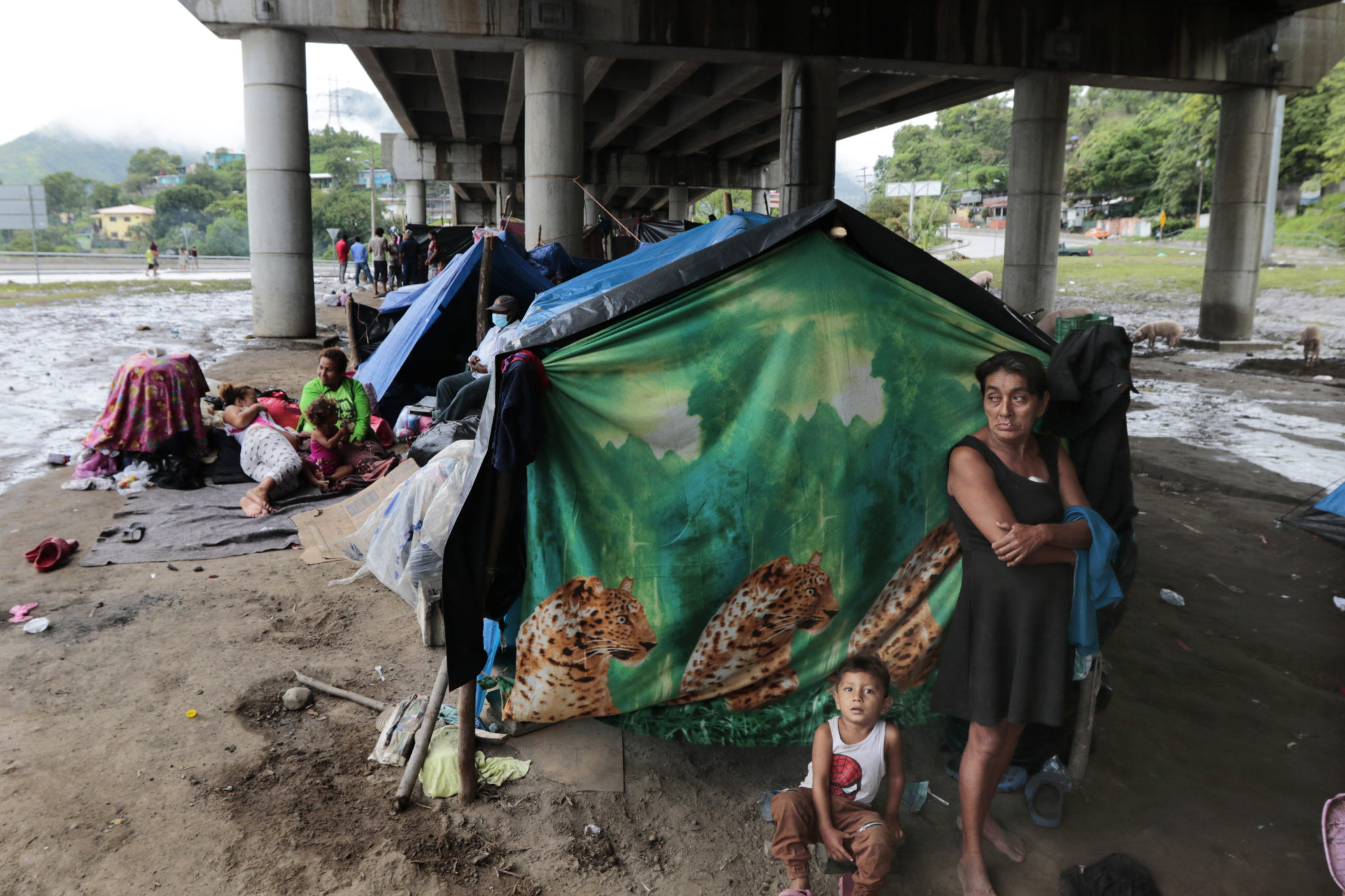
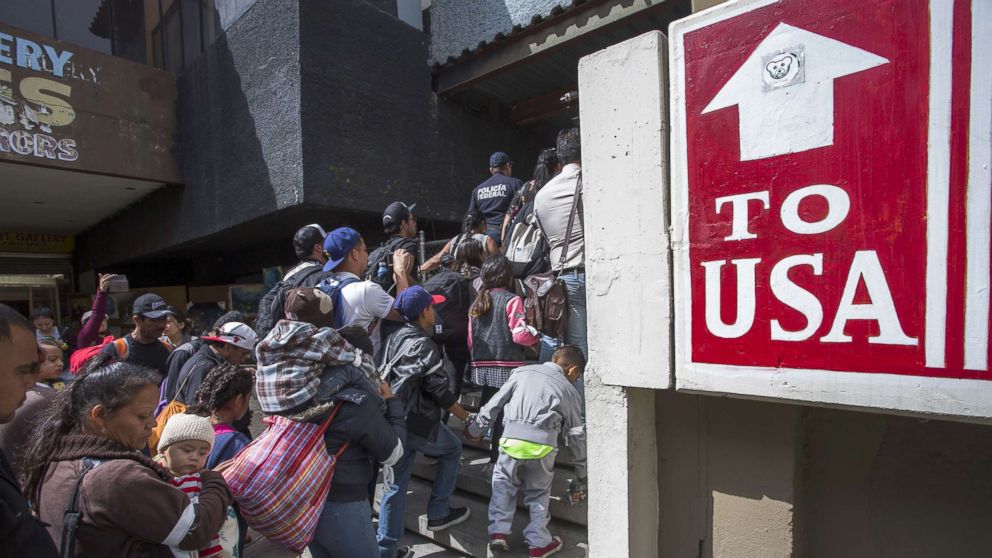
Many immigrants come from Mexico, however, increasing percentages are arriving from Central and South America; countries like Columbia, Honduras, El Salvador, and Guatemala. In fact, the majority of immigrants illegally trying to cross our southern border are coming from Venezuela, replacing Mexico as the origin of most illegal immigrants.

The primary reason most often cited is the collapse of the Venezuelan economy following the death of President Hugo Chavez in 2013 and the imposition of strict restrictions by the U.S. government (an example of reaping the whirlwind?).

The most cited reason is economic and political hardship (as an aside, economic hardship is not generally accepted as legitimate reason to claim refugee status).   In addition, individuals arriving from Caribbean (such as El Salvador, Honduras, and Guatemala, also known as the "Northern Triangle") have also been on the rise.

They too cite the economy (in part due to horrific damage cause by increasingly severe hurricanes) as the main reason along with the usual political corruption. These areas underdeveloped economically and are dependent on tourism to keep their economies afloat, but thanks to COVID-19, tourism dropped to a fraction of what it used to be due to travel restrictions  and cancellations by cruise ship companies.

Most of those coming here illegally are settling in Florida, Texas, Arizona (places already with large Hispanic populations) as well as North Carolina. There are also large migratory populations to be found in more rural states like Kentucky, Iowa, Kansas, and Nebraska.

It's also worth noting that there has also been a substantial increase in individuals from Asian countries coming to America illegally as well with India and China being the top two, followed by Korea and Vietnam.

At present, around 14.6% of the U.S. population are foreign born, which is the highest percentage in 112 years. That translates to about 48 million individuals (legal and illegal) as of September 2022 and a 2.9 million increase since the beginning of the Biden Administration according to the Center for Immigration Studies.  Some 900,000 have gone on to become American citizens according to a report from Pew Research from 2022.

Along with the 48 million immigrants, there were 17.2 million "children" (those under 18 years of age) with a foreign born parent. Therefore, including the immigrant and their children, that account for  approximately one in five U.S. residents.

It's worth noting, particularly given the prevalence of "help wanted" signs appearing in nearly every business window or on every telephone poll, that of the 48 million immigrants in the U.S. roughly half---27.4 million---were employed. This represents two million prior to the COVID-19 crisis. It's worth noting too that most are considered to be hardworking.

In fact, several surveys have shown that most illegal immigrants don't want to become U.S. citizens. They don't want to "blend in" with other Americans, including learning English. They are here solely for the money. Nothing more. Many send a portion back home to support their family.

 In some cases, entire communities are at least partly supported by money sent home by their sons and daughters working in America. If they get caught, so what? They get a free physical paid for by U.S. taxpayers, a good meal, and free trip back home (along with any money earned while here in the States).  Once home many repeat the process all over again a few days or weeks later.

So, what's the takeaway? What are we to make of this?  Well, America has always been the number one "go to" destination for immigrants---legal or illegal. America was, after all, founded by and for immigrants.

No other nation in history (except perhaps Ancient Rome) has had the influx of migrants as we have had. It can truly be said that nearly every country, race, ethnicity, and religion can be found somewhere in this country. I suspect that every language and nearly every dialect can be found here too.

However, America was intended to be a "melting pot". People who came here did so with the intent of becoming "American". To become a U.S. citizen was the goal of nearly everyone who stepped off the boat. Most did their best to learn the language (with varying degrees of success). It was part of what it meant to be American. They did their upmost to adapt to the prevailing customs, laws, and traditions as best as they could.

They tried  to leave behind centuries of hatreds, feuds, and other prejudices. Some changed their names and others their religions. Many married not just out of their social class, but often our their own nationality. This was an opportunity to start completely anew. 

While certain traditions were kept by these new migrants, the objective was to become part of the giant American "melting pot", where our collective backgrounds were added together to create this new being called "American". However, sometime around the 1960's this began to change.

Instead of trying to blend in and part of this nation, we encouraged immigrants to keep their own languages, cultures, traditions, and values. It would be us who would adapt; who would accommodate you.  In time, we began to accept their refusal to blend in and to excuse away their laws and customs even when it came in conflict with our own in the name of "multiculturalism".

Immigrants now can refuse to have their children taught in English, opting instead to have a taxpayer tutor teach them in their former tongue. We provide instructions in a multitude of languages. Even phone recordings are in different languages, which wouldn't be so bad I suppose except we are suppose to "push one" to hear English. As an aside, I won't do it. If you briefly wait, it will continue on in English.  

While we should try to be accommodating, we shouldn't remove the incentive to learn the language spoken here by making it easy to avoid it. Otherwise, we're simply enabling the separation of our nation into ethnic enclaves. As I've said many times over the years, a common language is the thread which binds the fabric of a nation together. 

Once everyone typically wore generally similar types of clothing. Not anymore! Now it's common to see individuals wear traditional native garb. The problem is that some areas try to impose "modest" dress customs (usually based on religious traditions) on others comes into their neighborhoods as if these are foreign enclaves instead of the U.S.

This is a big deal in Europe which even has its own "morality police" which can arrest and even fine so-called "offenders" (usually women) This topic has recently popped up in New York and other U.S. cities. The same goes for food or drinks where pork products or liquor are served or sold in certain neighborhoods.

This has already happened in Europe too where native restaurants are penalized for offering pork or alcohol on their menus. Sure, you can still get these "off menu", but you have to consume them out of sight of other customers less you risk "offending" them. I'll be damned. Give me a BLT and glass of cold beer and I'll enjoy them both wherever I bloody well please!

I don't begrudge anyone's heritage or beliefs, but they should understand that they are the foreigner. It is therefore up to them to adapt to the traditions, values, customs, and language of the nation which took them in and provided them with an opportunity to start over...not the other way around. If they don't like it, they are free to catch the next flight out. That's one of the pluses about America. You can leave at anytime.

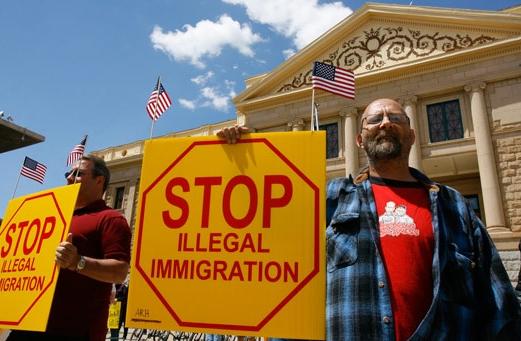
We don't need a poll to tell us that Americans are tired of dealing with this mess just as we're tired of weak willed political stooges ignoring us, but the validation that we're not alone doesn't hurt. I also suspect that many immigrants are just as tired of others, in their self-righteous arrogance, making life harder on them as well. We often see signs at rallies and protests which read "No One is Illegal", which is true. No human being is illegal, however, their actions sometimes are. That's why we have laws. 


 If you want to know more about this article's topic, please check out the links below. If you enjoyed the article, please consider passing it along to others and don't forget to subscribe. It's free! Lastly please be sure to "like" us on whatever platform you use to read anotheropinionblog.com. It helps with the algorithms and keeps our articles in circulation. Thank you! 


Foreign-Born Population Hits nearly 48 Million in September2022


U.S. Immigration---2022 in Review


DHS: Legal Immigration and Adjustment of Status ReportFiscal Year 2022 Quarter 2


Ten Graphics That Explain the U.S. Struggle With MigrantFlows in 2022


Friday, January 27, 2023

Is a Civil War in the Cards for America?

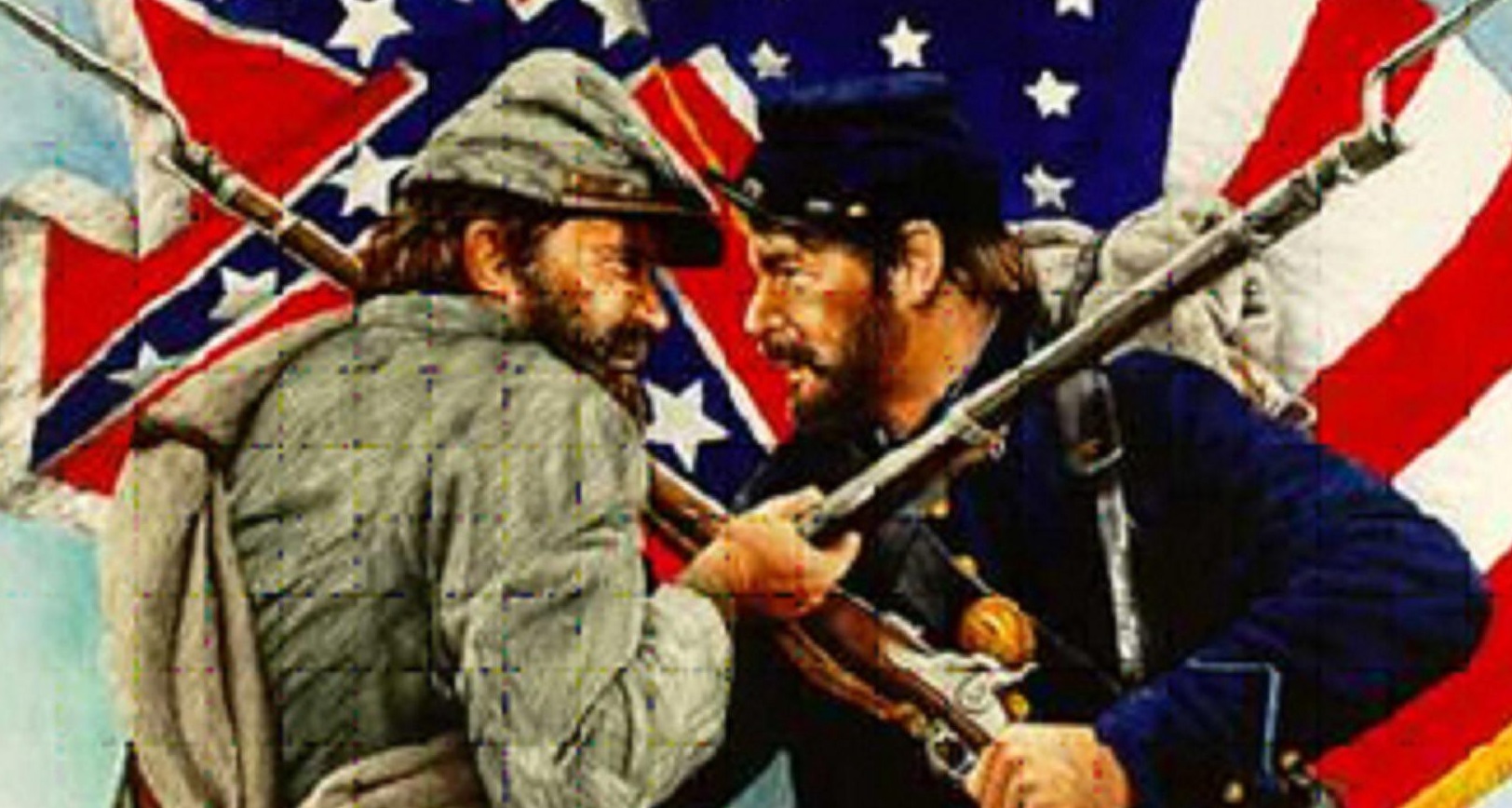
 It's been said here many times, and I think it's appropriate to say it again. America is more divided than at any time since just before the Civil War just over 150 years. We are actually more divided on the number of issues than were our forefathers, and the division on those issues appears to be at least as deep as it was back in the late 1850's. There seems to be the same lack of interest in compromise. Politics has become, for all intent and purpose, scorched earth.  It's all or nothing.

Let's look as the recent 2022 election. For the first time (at least in recent history), there was a protest which morphed into an attempt at a coup by intimidation. Such was the anger directed at Congress. But who was really surprised? The approval rating for the House has been in the toilet for decades as has that of the Senate.

 In most countries, with approval ratings like these (some as low as 9%, but most around low 20's) would have already triggered a revolution.  What did we expect? Even the judicial system has shown negative numbers along almost every other institution in America. Ironically, despite the Antifa and BLM "peaceful" riots and lootings, the police was one of the few institutions whose numbers were positive (along with the military).  

As of September 2022, some ten months after the Presidential election, 61% of Republicans believe the election was rigged; that Joe Biden didn't win the election fairly. On the other side of that coin, some 64% of voters don't believe the January 6 protest was spontaneous. In both instances that's 6 out 10 individuals (as an aside, immediately after the election 70% of Republicans and conservatives that the election was stolen).

To make matters worse, the majority of Americans no longer trust the mainstream media (or as conservatives now call it, "lamestream" media). To further irritate the Right, the liberal media continues to call the opposition to Biden's election the "Big Lie", echoing Reich Minister Joseph Goebbels' use of the term when referring to his brand of propaganda (a backhanded way of calling Republicans and conservatives "Nazis").

When Trump was President, the Left routinely waved flags and chanted "not my President" and the media encouraged it. When Trump supporters did the same thing (referring to Biden), it's suddenly "anti-American". Could the bias get any more obvious? 

Meanwhile, political establishment has lined up to go after Trump and his supporters every way they can, with the media carrying virtual non-stop coverage despite continuously getting some of their lowest viewership numbers ever.

The media's role has traditionally been providing the American People and the world with impartial and unbiased news. It's essential to a free nation. However, since Watergate the media (which has come under an ever tightening control of a smaller and smaller number of corporate owners) has become increasingly biased as to be essentially nothing more than the mouthpiece of their owners.

According to a Gallup Poll from October 2022, only 34% of Americans trust the mainstream media...despite how slick or sincere they look. When broken down by the partisanship, 70% of Liberals and Democrats trust the media, which given its liberal list, isn't surprising. 14% of conservatives and Republicans agree (likely Fox viewers), along with 11% of Independents (the nation's majority political bloc).

In case you're wondering, 96+% of all media is owned by just five corporations. That means everything you read, see, and hear. It also includes the movies you watch. The music formats you hear. The newspapers, magazines, and even what books are published.

They control internet content (and who gets censored, blocked, or "shadow blocked" such as yours truly). They even willing cooperate with government agencies in turning over personal information. Joseph Goebbels would have wet dreams over this kind of clout!

So, how serious it is...really? Well, it ain't good. According to a poll taken in August 2022 said that 66% of Americans believe that the divisions in this country have gotten worse since 2021. 62% of those think things are going to get worse with 60% expecting an increase in political violence.

Another poll from August 2022, roughly 43% of those polled think a civil war is likely in the next 10 years. A further 14% expect something close to a Civil War within the next decade or so. 55% of Republicans and conservatives agreed. So did 40% of Democrats. A earlier poll, from July 2022, indicated the number of Americans who expected a civil war sometime "over the next several years" was 50%.

The liberal leaning Leadership Conference on Civil and Human Rights was even more pessimistic. They said that 78% of Americans believe democracy is currently "under attack" (it is, but not by who they think). 53% think that America will no longer be a democracy in four to five years (not breaking news: we never were a democracy. We were a Republic, but no longer. We're a neo-fascist Corporatocracy). 54% say we're on the path to a civil war.

As an aside, their polling also indicated that race relations in America is getting worse. 62% say that discrimination against blacks is a "big problem". 62% think the government should do more to protect blacks. 66% want the government to take steps to lessen racial inequality while 55% want to see the government to do more to end income inequality. 67% want to see gay marriage protected while 62% want to protect abortion rights. 

A University of Virginia poll from  October 2020 said that they felt America was already in a cold civil War. The same poll also showed that 41% of those who voted for Joe Biden thought it was time to "split the country".  The Institute of Politics at Harvard's Kennedy School released an even more stunning poll result.

According to their poll, over half of those under 30 years of age saw America as "failing" with over one-third expecting a civil war in their lifetimes. But what if that happened? Well, the Civil War was the bloodiest America has ever experienced bar none. Approximately 600,000 people died during the four year conflict. 

Using the same percentage killed based on population, that would translate to about 19.8 million today, and that number could easily go higher. Much higher given that we have a far greater percentage of trained veterans as a percentage of population now than they did then, not to mention the deadliness of the weapons available.

They say that every revolution contains within its own seeds for self-destruction. While the Civil War was fought to preserve the Union, America's future might be more balkanized. Our increasing diversity---racial, ethnic, and so forth, all under the guise of "multiculturalism" may well be the culprit.  It has already manifested itself in our politics by challenging our values, traditions, and even language.  

These changes are showing up in our neighborhoods and communities in the form of more drugs, more crime, and more violence, especially in the form of racial and ethnic gangs murdering for control of territory. In some instances, they demand "their own" do the policing, which is rejection of our legal system.

We already see "Little Havana", "Little Vietnam", "Little China", "Little Columbia", and so on. No longer do they seek to mix and integrate into their new homeland as our immigrant ancestors before them had done. Instead, they remain aloof and separate. Some don't even bother to learn English or allow their children to be taught the language despite being supported by taxpayer dollars, adding insult to injury.

Perhaps the only solution would be the balkanization of America, leaving  it a loosely based confederation of regions. It's happened before. It happened in Ancient Greece, in Ancient Rome, the Holy Roman Empire, the British Empire, and elsewhere. We are, as humans, naturally tribal after all.

 One thing is for sure, doing nothing will not only result in a de facto balkanization along various social, racial, and economic lines, under a neo-fascist Corportracy, but also allow the increasing diverse cultures to come into conflict, providing a greater excuse for the expansion of the surveillance state.

It seems there is only one other option, and that's to accept the multiculturalism on our own terms. But that means that the country we've known---our collective history---and we grew up with has to be allowed to fade into the past. No dominance of any one race or culture or language. It means changes in laws, values, and acceptance of different or perhaps new religions which could dominate or replace older ones. It means starting over again as a country surrounded by those who wish us harm.

It's possible. It's too has happened before, under Alexander the Great, Cyrus the Great, the Kings of Persia, and, albeit briefly, the Austro-Hungarian Empire. You could even include the Mongol Empire. But it's all dependent on maintaining liberal societies along with tolerant leaders and capable administrators. The instant someone comes who shows a preference or a tendency toward despotism, and it crumbles. Some have suggested an economic and political system run by artificial intelligence.

The power elites who dominate this country has been trying to divide us any way they can for decades. In that they've been largely successful. Divided we are easily controlled and manipulated. United and we're unstoppable, but can we do it? We've reached one of those historical crossroads. A "Rubicon" if you'd like, which will be crossed whether we want to or not. What will it be?  


 If you want to know more about this article's topic, please check out the links below. If you enjoyed the article, please consider passing it along to others and don't forget to subscribe. It's free! Lastly please be sure to "like" us on whatever platform you use to read anotheropinionblog.com. It helps with the algorithms and keeps our articles in circulation. Thank you! 


Poll: 61% of Republicans still believe Biden didn't win fair and square in 2020


64% Think The January 6th Attack On The Capital Was Planned


Americans' Trust of the media Remains Near Record Lows.


Two in five Americans say a civil war is at least likely inthe next decade...


Leadership Conference  Poll:  54 Percent Fear America Is on the Path to Another Civil War...


Imagine another American Civil War, but this time in everystate


The Rise and Fall of Multicultural Empires


Friday, July 22, 2022

Joe Biden's Downward Slide To Nowhere

As of July 19th, an average of 55.8% of all Americans disapprove of the job Joe Biden was doing. Just 37.9% gave him a favorable rating. The Rasmussen Poll for the week of July 14th, put that number at 60%. The latest Pew Report  has it at 62%.  Reuters has Biden hitting an all time low...not just for Biden, but for practically any president with an approval rating of 36%.

 At this rate, Biden may soon beat out President Trump who, at his lowest, polled an approval rating of just 33%. The highest Biden has polled thus far into his presidency 57%, which he hit shortly after being sworn in as President. His average to date is 41%.

It's worth noting that at this point in a presidency, the average approval rating is 56% (the average for a president in general is 51%). By comparison, Trump had a 41% approval rating at the same juncture of his administration while Barack Obama did slightly better with 46%. George W. Bush hit 73%.

President John Kennedy's approval rating at this point in his presidency was 69%. George H.W. Bush was at 68% and Eisenhower was 62%. Bill Clinton's approval rating was 43% while "the Gipper", Ronald Reagan, had a approval rating of 45%. Then too, fellow Democrat Jimmy Carter, regarded by most Americans as our worst recent President, had an approval rating of 42% at this same juncture in his presidency, thus outperforming Biden by approximately four percentage points.

However, Biden is still doing well among Democrats. Roughly 74% are happy with his performance thus far.  However, a mere 12% of Republicans think he's doing a decent job, while the majority of Independents---the nation's largest political bloc--- also disapprove of Biden's performance.

When looking at the nation by region, we find that 54% of those living in the Northeast have a negative opinion of Biden. In the Midwest, that number jumps to 64%. In the South, it's 57%. The place where Biden seems to be doing well is out West, especially in California (home of his arch-supporter, Nancy Pelosi) and Washington State, where his approval rating is 49% compared to a disapproval rating of 46%. A difference of a mere 3%, which is well within the 5% margin of error.

Interestingly, President Biden seems to be holding his own in America's urban centers where he has a 55% approval rate. Moving out into the suburbs, his approval rating drops dramatically to 37% while in the rural hinterlands his disapproval rating is 69%. 

As an aside, these numbers tend to match approval ratings in general for Democrats vs. Republicans. Democrats tend to do well in populated cities while Republicans and conservatives do well in the suburbs and farmlands. 

Among gender, 53% of men disapprove of Biden's job performance as do 58% of women. When it comes to age, Biden isn't doing much better. Those 18 to 39 have a 39% approval rating of Biden. That match those 40 and older.

However, his disapproval level is higher among those over 40 (56%) compared to those 39 and younger (54%). When it comes to money, 55% of those surveyed earning under $75K disapprove of how Biden is doing his job. Similarly, those earning more than $75K agree. 57% disapprove.

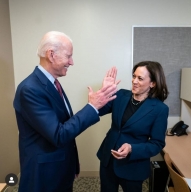
When it comes to vice presidents, Kamala Harris has proven to be nothing to write home about. Harris has managed to poll some of the lowest approval ratings of any Vice President in U.S. history. Her current disapproval rating is 52% (it's been as high as 58%).  Nevertheless, let's take a look at her numbers in a little more detail.

Among Democrats, Ms. Harris is following her boss's lead. 77% approve of her job performance. Meanwhile, a staggering 92% of Republicans think otherwise as does 66% of Independents. 

When we look at gender, surprisingly 49% of the women surveyed disapprove of the job the first ever female Vice President is doing. On the plus side, 45% think she's doing a good job. When it comes to the guys, overwhelmingly they disapprove with 62%. Is this a gender role issue I wonder? Since the women are so close in their opinion, why are the men so dramatically opposed? Could it be that they believe a VP job in politics is no place for a woman? If so, what does that say about a female President?

We may have a slight hint when we look at age. 62% of those over 65 disapprove of Harris. The 45 to 64 age bracket mostly agrees. 58% have a unfavorable opinion of Harris. These groups tend to be generally more traditional, especially among the older voters. However, it also includes the more liberal leaning Babyboomers. So what gives?

Among the 30 to 44 age group, which encompasses the socialist wannabe Millennials, the disapproval rating remains high at 49%, but the favorable figure isn't too bad with a 42% approval.  Finally, those under 30, which includes the very liberal Gen Z crowd, 47% don't seem to like the job Ms. Harris is doing while 42% do. Notably this segment also has the largest "no opinion" figure at 10%.

Kamala Harris is not only the first female Vice President, she is also the first mixed race Vice President in American history (she self identifies as black and South Asian), so perhaps then it's appropriate to look at how she does among the racial groups.

Among whites, Ms. Harris has an approval rating of just 34% with a 63% unfavorable rating. Hispanics are a close second largest racial demographic behind whites in America. In about ten years or so, they are expected to reach parody with whites. With the likelihood we will have a Hispanic President in the very near future, how do they feel about Ms. Harris? Well, 49% think Ms. Harris is doing okay while 45% have their doubts.

Barack Obama is considered to be the nation's first black president though technically he is biracial (his mother was white and his father was African Kenyan). Since Ms. Harris is part black, you'd expect that she would poll well among black voters, and you'd be right. 68% of blacks surveyed said they had a positive opinion of the Vice President while just 24% didn't.

Interestingly, at least from a statistical perspective, is that 49% of a racially "other" bracket disapproved of Ms. Harris's performance. Why that's interesting is that the "other" category includes not just Native Americans, but includes Asians and Pacific Islanders as well.

As a group, Asians and Pacific Islanders are highly traditional and very family oriented with a strong belief in a family hierarchy. So, perhaps they had a tendency to disapprove of a woman in what has traditionally been a "man's job"? Maybe. But then again, Hawaii had a queen. Her name was Liliuokalani, and she was the last sovereign of the Kamehameha dynasty. Other strong Asian and Pacific Islands female leaders have included Indira Gandhi, Corazon Aquino, and Yingluck Shinawatra.

Here in the U.S., female Asian and Pacific Islanders make up just under 7% of Congress, 2% of State Legislators, and roughly 3% of all mayors (of the top 100 cities). Not bad for being just 6.2% of the population! Nevertheless, Kamala Harris is not among the most popular of vice presidents and it has nothing to do with her gender or race.  

It's past time we move beyond race, gender, religion, and party for that matter when it comes to who we elect. When all other factors are considered, they are among the least important. Let's face it, Identity politics just doesn't work. We need individuals dedicated to serve our best interests. Not that of a partisan clique whose sole allegiance is to the power brokers on Wall Street and their K Street minions.


If you want to know more, please take a look at the links below. If you enjoyed the article, please consider passing it along to others and don't forget to subscribe. It's free! Lastly please be sure to "like" us on whatever platform you use to read A/O. It helps with the algorithms and keeps our articles in circulation. Thank you!  


How popular is Joe Biden?


Biden approval rating falls to 36%, matching record low:Reuters/Ipsos poll


Presidential Approval Ratings---Joe Biden


What Does America Think of Kamala Harris?


10 Asian American and Pacific Islander Women You Should KnowAbout


Friday, May 06, 2022

A Time for a (Voting) Change: Republicans, Latinos and Other Minorities

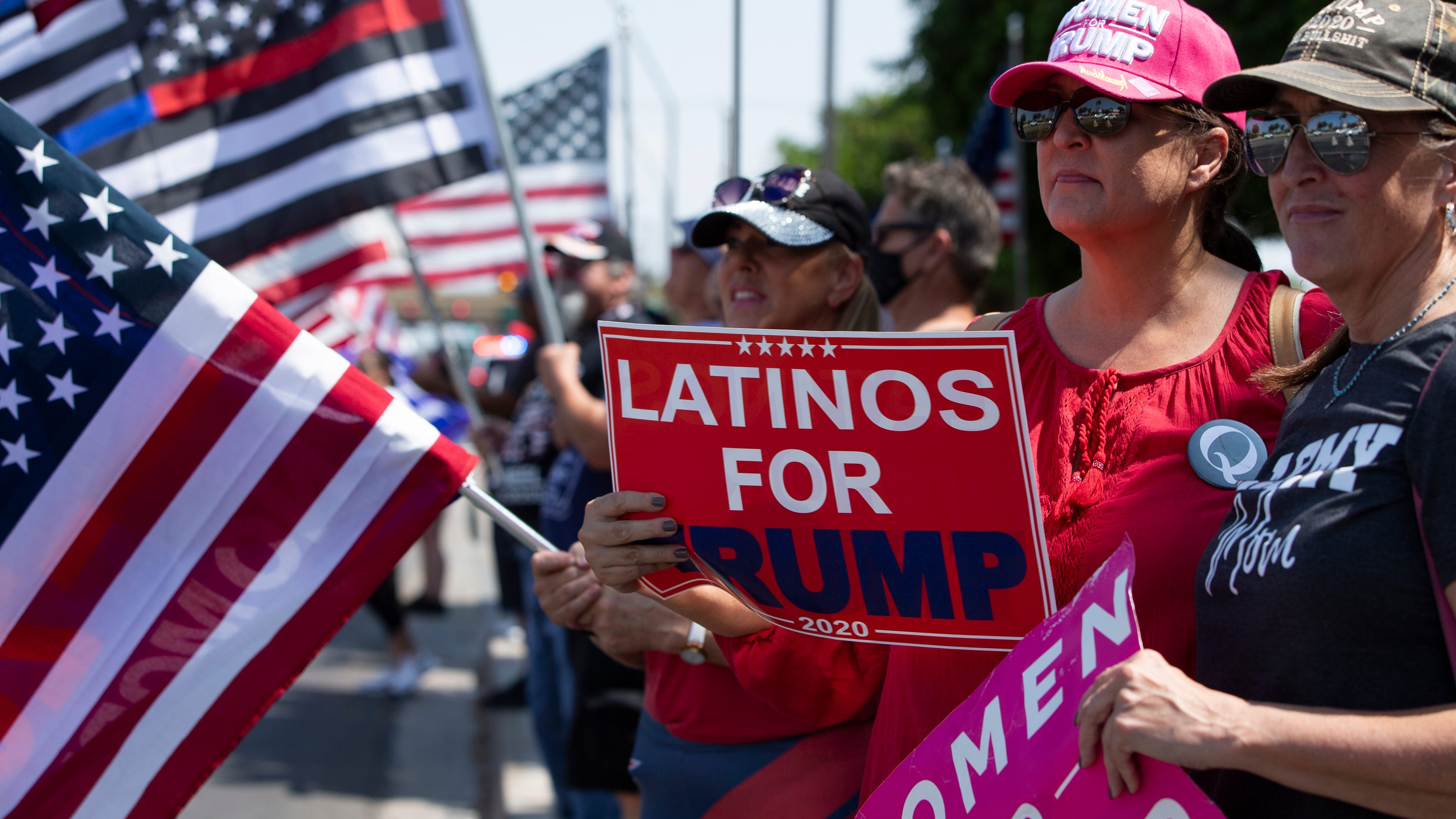
According a recent Marist poll, as posted on Yahoo! News, more Latinos are registering Republican than Democrat. The survey shows that Democrats have only a 39% support among Hispanics compared to Republican support is 52%.

The poll also indicates that few Hispanics support Joe Biden in 2020 than they did Hillary Clinton in 2016 by 8 percentage points (63% from 71%). Of course, Biden has done little to merit the support of Hispanics or anyone else for that matter. Biden's approval numbers has been among the worse of any U.S. President at this point in their presidency, and his Vice president, Kamala Harris, has polled the lowest of any VP.

So, what's going on? Why are Hispanics turning away from Democrats? Historically, Cubans have been predominately Republican (or more accurately, conservatives) in part, thanks to Republican support of Cuban immigrants fleeing Castro's Cuba. However, Hispanics from Latin America, have tended to lean Democrat because of their more lenient policy toward open borders and amnesty for illegal immigrants.

Polling responses seem to indicate that the Democrat Party's continuing shift further and further to the Left is the primary cause. Overall, Hispanics tend to be fairly conservative, or to rephrase it, more traditional. They tend to be very family centered and religiously oriented with the majority being Catholic. Hispanics also tend to hold traditional values when it comes to work and home life.

These tend to be conservative values as well. With the Democrat Party moving ever further to the political left, they are isolating Hispanics. Ironically, even the Left's use of the term "Latinx" which is aimed at being less sexist then "Latino" which generally refers to males, is largely rejected by the Hispanic community. 32% if registered Hispanic voters identify as Independent.

As an aside, the Hispanic community in general is seen as being male oriented ("macho") and in its extreme, very sexist in its portrayal of women. Homosexuals and "metro-males"  are also frowned upon and often ridiculed or used as a comedic prop in Hispanic television and cinema.

When we look at overall turnout, Hispanic voters, which make up roughly 11% of voters, have increasingly turned out since 2014 when only 20% voted to 2020 when just over 50% showed up at the polls.  This matches black voters who are turning out at about 65% and white voters, who make up a increasingly diminishing majority with about 67% of all voter, had a high in 2020 of 72%.

It's worth noting that whites represented 85% of voters in 1986 now represent roughly 67% in2020. Hispanics in general comprise about 23% of the overall population, reaching just over 60 million in number.

When we look at voter turnout by age as of 2020, seniors (60+) still represent the largest voting bloc with nearly 80% showing up to vote. Late middle age voters (45 -59) ranked second with just over 70% turnout. Both of these groups include both cohorts of Boomers with the later age bracket including the leading portion of Gen Xers.

Middle age voters (30 - 44), had a turnout about 65%. This group includes the bulk of Millennials and trailing Gen Xers. The lowest numbers belonged to the 18 - 29 age group (historically trailing edge Millennials with the bulk comprising mainly Gen Z). Their turnout in 2020 was barely over 50%. 

It should be noted that Millennials tend to be divided ideologically between socialist democrats and libertarians while Gen Z tends to favor socialist democracy. The later is also the most diverse demographic in U.S. history.

When we look at voter registration in general, we find that currently 40% of all voters are Independent. 30% are Democrat and 28% are Republican (Independents were as highly as 46% in January 2022. I January 2021 it was 50%). In fact, Independents have held a consistent majority of all voters since about 2008, and yet it's a little amusing and at the same time frustrating to see pollsters attempt to link Independents to either of the two corporate parties.

11 states now have Independent majorities, including most of the Northeast, Oregon, Arizona, Iowa, Alaska, Colorado, and Arkansas, while in several others they're the second largest voting bloc and growing. In the next ten years, an estimated half of all states will have an Independent majority.

They like to use leading questions like "do you lean Democrat or lean Republican" as if Independents are secret or closet partisan voters (I usually respond, "so you mean which of your two parties actually leans closer to the majority of Americans?"). Independents are just that...independent.

Most are ideological exiles (some willingly and some unwillingly) from both corporate parties. They hate dogma. I suspect most were the ones who, in school or church, would always raise their hand with a question to the consternation of their teacher or pastor!

Independents are natural moderates or centrists. They are conservative on some issues and more progressive or liberal on others. The one thing they aren't is predictable, which is what frustrates pollsters who like to put everyone in a box (hence the "lean towards" questions).

The only reason that even more voters aren't Independent is thanks to the partisan primary. Most elections are decided in the primary. That's where the party eliminates everyone but the one they want to represent them. Most primaries are financed by you---the taxpayer---where you either know it or not or want it or not.

However, Independents and third party members are prohibited from voting in most partisan primaries (what's known as "closed primaries").  That means they are forced to pay for a primary they aren't allowed to vote in. Talk about taxation without representation! That's why many Independents and third party members will temporarily switch to one of the corporate parties and then switch back; they want a say in the choice of candidates. 

Pollsters try to make a big deal of this (and often use the "lean toward" lie). One of the great frustrations (and fallacies) of our "winner-take-all" system is that it excludes everyone but the winner. If your choice loses, you're not going to be represented  for the next two, four, or six years. Consider that for a moment.

As an aside, when I say "you" here, I don't actually mean "you" the voter personally. The parties represent corporate cliques. They serve specific special interests groups which literally write the legislation which they then help turn into laws. You merely get to decide which of the two your interests most closely aligns. It's not like they care what you want or think. Wolves don't care about the opinions of sheep. 

The reason I mention this is that interestingly, Hispanics are increasingly showing up as Independents. Perhaps this just follows the trend of voters in general who are abandoning the inept and corrupt duopoly.  Independent and third party voters understand the political system is broken beyond repair and simply aren't willing to play along with the charade any longer.

Many of the recent immigrants coming to America are leaving behind broken political systems as well. They've not just "played the game", they've lived the game. 1/3 were born outside the U.S.. They know how rigged it can be. That's why they left in the first place! 

You can imagine their disappointment when arriving in America to find that they traded one corrupt system for another, except this one only gives you two choices. Maybe that's the reason growing numbers have opted to register Independent wherever its allowed.

When it comes to black voters, the nation's second largest racial voting bloc (Hispanics are the largest non-white voting bloc), they have a strong preference for the Democrats (when it comes to partisan registration, Democrats still hold a slight edge of the two corporate parties).

83% of black voters are registered as Democrats compared to 10% Republican, but again, the continual shift further Left, like with Hispanics, is starting to affect attitudes among black voters. As a population, many older black families tend to be socially conservative; holding similar "traditional family values" as Hispanics, Asians, and whites.

Two key issues affecting black voters are jobs and healthcare. Income levels had historically been much lower than whites, and more recently, even compared to Hispanics and Asians. This is often blamed on the high number of single adult households (mainly absentee fathers), tendency to live in high crime areas, have stable housing, and lower academic performance, especially in junior and senior high school (gangs, drug and alcohol abuse are also cited as key underlining factor).  

Blacks have long lead the list of having the highest numbers living in poverty.  In 2020 is was 19.5% for blacks.  For Hispanics, it was 17%, while for Asians it was 8.1% and 8.2% for whites. The overall poverty rate was 11%.

This makes black families particularly vulnerable to social program funding cuts. Republican policy has typically focused on reducing or even eliminating many social programs such as Head Start and after school activities, as well as job training programs or low interest home and business loans, whereas Democrats have generally tried to maintain, if not increase funding in the past (although in recent years that hasn't always been the case). 

Prior to Covid's appearance in 2019, one Pew survey found that 43% of black families claimed to have trouble paying their bills either on time or being able to make minimum payments on a regular basis. The same survey indicated that 33% depended on a food bank in order to regularly put food on the table. This percentage was higher than any other racial group.

Despite the trend of the Democrat Party toward the extreme Left, Blacks, Hispanics, and Asians, remain generally loyal, despite growing numbers of Hispanics abandoning the Democrats for the GOP and Independents. But that isn't to say the Republicans aren't moving just as fast to the extreme Right. The result is a further widening of the gulf between Americans.

Meanwhile, the growing public anger toward the overtly corrupt corporate duopoly and a political system which has long ceased to represent the people will continue to grow until it reaches a boiling point. If the protest of January 6th is anything, it's that the boiling point is a lot closer than some realize, especially within the Washington Beltway.  Both parties will continue to hemorrhage numbers while Independents, already a majority, will continue to grow along with third parties.

Both parties, in their desperation, will do whatever they must to maintain power. They already use tactics commonly found in third world petty dictatorships such as keeping out opposition through restriction of election laws, restricting free speech and assembly, increased surveillance, manipulation of the economy, voter suppression, and propaganda.

As already pointed out, they manipulate primaries. They also require an inordinate amount of signatures for Independents and third parties to get on the ballot while outright barring them from national debates. In some states, they prohibit referendums and ballot initiatives.

The corporate owned media treats third party and Independent candidates as circus sideshows if they're acknowledge at all. And, of course, both parties have deals with big money donors to keep any funding away, which all but assures them of being unable to get their message out. The end result is that voters get two pre-selected choices, which is to say, they get no choice at all.

They even denied Independents and third parties the opportunity to be appointed to boards and commissions, as well as even having separate election officers (currently they lumped into the smaller of the two parties and totally ignored afterwards). 

Nevertheless, the prospects for both parties are pretty dim, especially as America becomes more diverse. They can't realistically be everything to everybody and still serve their corporate paymasters. If we follow our current course, America will become a cold and grim neo-fascist corporate state like something out of some dystopian Sci-fi movie like Blade Runner, 1984, or The Running Man.  Americans, whether generational or recent, are independent oriented, innovative, and entrepreneurial. All they ask for is a fair shake; a equal opportunity. 

Power is never surrendered willingly. It will be up to the American People to take back their government and their country. It won't be through the system. It's hopelessly and intentionally broken. It won't come celebrity billionaires and global corporations. They are the holders of power. It won't come from so-called "political leaders". They serve and benefit from the broken system. The same goes for their political parties.  If it comes at all, it will be from those independent thinkers and doers.   


 If you want to know more, please take a look at the links below. If you enjoyed the article, please consider passing it along to others and don't forget to subscribe. It's free! Lastly please be sure to "like" us on whatever platform you use to read A/O. It helps with the algorithms and keeps our articles in circulation. Thank you!  


Yahoo! News: Why the Latino vote is a growing problem forDemocrats


As Democrats go hard Left, Hispanics Head to the Center


United States Elections Project: Voter Turnout Demographics


Gallup: Party Affiliation


Gallup: U.S. Political Party Preferences Shifted Greatly During 2021 


Ballotpedia: Partisan Affiliations of Registered Voters


Pew: Key Factors About Black Eligible Voters in 2020Battleground States


Income and Poverty in the United States 2020


Saturday, April 10, 2021

Where Has That Old Time Gospel Gone? The Decline of Religion in America

According to a recent survey by Barna, 20% of all churches, regardless of denomination, could close by the end of 2021. That's approximately 60,000 churches nationally. Although there are a number of factors, the leading contributing factor is the COVID-19 virus.

This shouldn't come as a surprise given that the average age of attendees is 57 years old; an age bracket which is considered to be at risk for the virus. However, don't think the decline is just the result of a virus, or that it applies only to Christian churches. Far from it. The decline in attendance applies to practically all organized religions, from Catholic and Protestant churches to Temples and Mosques.

According to an April poll by Gallup, just 47% of those surveyed acknowledged belong to a specific religion, which is down from 70% in 1999. That's the first time in Gallup's 80 years that number has dropped below the 50% mark.

 The poll also revealed that the percentage of "none of the above" has risen from 8% in 1998 to 21% in 2000. It now stands at around 1/3 and growing. It's worth noting that of those who do identify with some specific domination, the majority do not attend services, or if they do, it's only for the major events like Passover, Easter, Yom Kippur, Christmas, etc.

How this breaks down generationally is equally interesting. According to the poll, 66% of those born before 1946 (which comprises the "Greatest Generation" and the "Silents") still either attend or participate in other ways (such as watching it on TV, recordings, listening on the radio, or online).

It's worth nothing that the "Greatest Generation" experienced the Great Depression as children, endured WWII and the Korean War (some participated in the early stages of the Vietnam War too). They fueled the greatest economic revival in history, including the birth of subdivisions, and set the standards we associate with the Middle Class. Many were union members or belonged to some social fraternity; a carryover from their comradery and "can do" attitude from their experiences during the war. 

Meanwhile, the "Silent Generation" (1928 - 1946) was the first generation to benefit from the post-war economic boom. They were known for their fast cars, dances, soda fountains, Beatniks, surfing, having disposable income, and rock 'n' roll! It was also the start of the Space Race and the Cold War. They're usually characterized as hardworking, resourceful, dedicated, traditional, and respectful of authority.

 Babyboomers (1947 - 1964) participate at a rate of 58%. This group was the largest demographic up to that point. As a result, Babyboomers are divided into two similar but different groups or cohorts.  The first group, born between 1947 and 1954, are the more typical "flower children" and "Hippies" of the 1960's. They are often identified by Woodstock, Monterey Pops Festival, communes, the early Vietnam War, JFK, Malcolm X, "love-ins", decline in unions, the Civil Rights Movement, and a lost innocence.

The second cohort, born between 1955 and 1964 was influenced by the more violent aspects of the anti-war movement, SLA, Weathermen, the Women's and LGBT movements, moon landing, Watergate, late Vietnam War, Che Guevara, oil embargo, hyperinflation, the assassinations of MLK and RFK, and the Kent State Massacre. As a group, the first cohort tended to be more optimistic while the second cohort was much more cynical. The first questioned authority. The second was downright dismissive of it.

The first cohort makes up the majority of the 66% which participates, in some fashion or another, organized religion. They were also more likely to "tune in and turn off" and were part of the cutting edge of the emerging popularity of Eastern philosophy thanks mainly to The Beatles and the Rolling Stones. They are also most likely to identify with a religious denomination.

The second cohort is less likely to either participate, identify, or belong to a religious organization. They are, however, more likely to be spiritual. They were much less likely to be trusting of authority figures or institutions in their youth which has carried over into adulthood.

Generation X (1965 - 1980) has a religious participation rate of 50%. This generation is the younger sibling of the Boomers or first born of the first Boomer cohort.  Interestingly, Gen X as its often called was known for being the "Reagan Generation". Unlike the Boomers, they were usually socially and fiscally conservative. They tended to be more traditional in some respects as well, and this included religion. Socially, Gen X was the first post-Jim Crow generation.

Another interesting aspect of this generation is that they were the first to experience the use of computers in school and were the first to take advantage of the internet. They tended to be very entrepreneurial, independent, and self-motivated (the classic Gen X stereotype is "Alex P. Keaton" from the 80's TV series "Family Ties"). 

When it comes to religion, one Pew poll indicated that religion was important to Gen X as a whole with 53% saying it was "very important" and 56% saying they pray at least once a day. However, while religion is considered important, most remain non-denominational. Additionally, just 25% say they participate in some form of religious services on a regular basis (57% said seldom or never).

Replacing Babyboomers as the largest generational demographic is the Millennials (1981 - 1996). Millennials have been in the news a lot due to their increasing influence over both the economy and politics. Millennials are often considered to be lazy or self absorbed; a generation totally immersed in technology. However, they are behind the tech drive which has created countless social media platforms and the high tech world we live in (for better or worse), adaptive, and achievement driven.

Politically, Millennials (aka Generation Y or Gen Y as they're also called) are noted for being strongly in favor of democratic socialism; at the very least, to be anti-capitalist as much as their Gen X predecessors from the "Go-Go '80's" were capitalistic. This could result of having come of age during the "Great Recession", which created a sense of economic insecurity for many of them. They are also the first generation where their quality of life didn't surpass their parents, but dropped instead.

As a group, Millennials tend to be fairly optimistic and socially conscious as their first cohort Babyboomer grandparents were at the same age. They're very aware of the environment, ranging from population to climate change (the environment became a political issues during the mid 1960's and heavily influenced the Presidential election of 1968 and continued to do so for the next decade or so).

 Millennials were the most socially, economically, and racially diverse group this nation had seen, with the majority being Hispanic (many are foreign born or first generation American). They are highly educated and generally optimistic about the future. However, it's worth noting that as a group, they also tend to be financially crippled from high college debt.

The main reason is that in pursuing their academic passion, they neglected to take into consideration how employable their major was. As a result, many ended up with degrees in which the market was already over saturated with applicants or were there was little or no demand (such racial or gender studies).  This has left many unemployed or underemployed in what should now be close to their peak earning years.

Millennials are quite comfortable working on small ad hoc groups or teams to complete a projects, and then moving on to other impromptu groups. They prefer to set their own schedules; working around their own personal time rather than scheduling personal time about work hours.

Politically, the majority of Millennials have rejected both corporate owned parties---the Democrats and Republicans. Most are registered as Independent, which has contributed to Independents being the country's largest political demographic. When it comes to ideology, while Millennials aren't big on dogma, they strongly lean Left as group. In fact, most self-identify as "socialist" or "democratic socialist", while a majority cite libertarianism (small "L") as their preference.

When it comes to religion, Millennials again reject any sort of dogma. Just 36% acknowledge any sort of religious preference. 62% say don't participate in any form of religious services. However, it's worth noting that 69% of Millennials regard themselves as spiritual or somewhat spiritual. 61% say they are sure or fairly sure God exists. As an aside, several of the surveys seem to point out that among Millennials, once they break from an established religion, that break becomes permanent.

The latest generation on the block is Gen Z (born after 1996). Most members of this group are just beginning their lives, so there's much we don't know yet. However, there are a few things we're pretty sure about. First, Gen Z is the first generation which has never known a world without laptops, the internet, or Smartphones.  

Economically, life started out pretty good for most with the overall economy actually in a upswing. However, perhaps the defining factor for them will be the COVID virus and its influence on their lives in terms of physical interaction with friends and school (most have been taken classes online and via chat rooms instead of having personal contact). Thus, they've been forced to develop a further dependence on technology rather than through developing their interpersonal skills. How that works out in the future remains to be seen.

As an aside, many Gen Z's are more interested in trade and vocational schools than in going to college. Perhaps they've seen what the high debt and low economic return has done to their older siblings, thus preferring the lower cost and higher demand, and greater reward trade and vocational school can bring. This could also present a badly needed boon for blue collar unions as well.

Socially, Gen Z has grown up in highly diverse environments. Like their older siblings, race, gender identification, and other markers mean little or nothing. Knowing someone who is gay, transgendered, or of a different culture or race is no big deal.  One in five are Hispanic.

Like Millennials, Gen Z is comfortable with technology just as they are in working in ad hoc groups or teams to solve as specific issue. Equally, they are at ease with a large government and tend to be even more progressive than Millennials.

Although they are still coming of age politically, this is translating into a generation which is even more Left leaning than Millennials. In fact, many are already starting to identify as "socialist" or "democratic socialist". Obviously, with two Left oriented generations, this doesn't bode well for Republicans.

When it comes to religion, Gen Z appears to be even less interested in organized religion than Millennials; 52% have no trust in organized religion. However, while that means they are less interested in organized religion, that doesn't mean they eschew faith. Actually, they are very interested in spirituality in general, with a strong curiosity in Eastern philosophies such as Buddhism, along with Hinduism. Additionally, they are interested in Native American as well as early European spirituality.

Most interesting, a strong segment of Gen Z say they find spiritual satisfaction from giving back to the community, such as participation in food or clothing drives for the poor, picking up trash alongside a river bank, helping the homeless, and so forth, which is similar to some Millennials. That is, they find their spiritual satisfaction from actually doing something instead of praying about it.

So, while organized or dogmatic religion is on continuing its decline in America, interest in spiritually is actually on the rise. While there are numerous reasons, such as the affect of the COVID virus and the ageing of traditional church attendants, there are other and more deeper reasons too.

 Many cited the failure of organized religion to keep pace with technology, changing social values such regarding issues like homosexuality, single parent or adult, abortion, stance on women, divorce, ongoing sexual abuse by priests, plus the ability of priest to marry. Some, on the other hand, point to the failure of organized religion to update their dogma based on recent discoveries in archeology.

Finally, along with the changing social and political demographics of America, including its rejection of the Corporatocracy which has hijacked both parties and usurped the Republic, many see religion as merely another attempt at control. With access to more information than ever before, we can expect more questioning of authority than ever before, be it government, social institutions, or religions. Those able to withstand the onslaught will survive. Those who can't won't. Religion, like everything else, must adapt or be swept away. 


America is losing its religion


Adults in Generation X


Younger Millennials


Gen Z Is The Least Religious Generation. Here's Why That Could Be A Good Thing


Gen Z is looking for religion. You'll be surprised where they find it


Gen Z is lukewarm about religion but open to relationships