Showing posts with label food shortages. Show all posts

Friday, December 30, 2022

A Retrospective of Another Opinion's Top Articles for 2022

Starting with our first article on Another Opinion, published back in 2005, we have done a year end review of our most popular top articles. It's an opportunity to review what was trending at the time and what you, our dear readers, was most interested in.  In keeping with that tradition, we will start with number five.

COVID has been with us for what seems an eternity, and with it Dr. Anthony Fauci, the CDC, and the never ending vaccines. Also tied to Dr. Fauci and COVID was whether was (or is) any relationship between the Chinese and the origin of the COVID virus, as well as its possible weaponization against the West. 

We also took a look at the profits being made off the vaccines by Pfizer, Moderna, and BioNTech which equated to a total of $93.5 million dollars every single day (or to put it in perspective, $65,000 every minute of every day). Lastly, we examined the possibility that these vaccines would morph into some kind of government control along the lines of new form of police state (no vaccination card no admission to grocery store or no job).

Our fourth article covered similar ground except the focus was on the obscene profits Big Pharma was making, not just on the COVID vaccines, but on ordinary prescriptions and healthcare in general. As we just covered in our most recent article, the U.S. healthcare system is ranked among the worst of all the developed nations in the world. We have the fewest available hospital beds, the highest medical costs, highest infant mortality rates, and lowest life expectancy of any industrialized nation.   

If that wasn't bad enough, nearly 2/3 of Congress (that's the House and Senate) gets money from Big Pharma. $7.1 million went to Republicans while Democrats received $6.6 million. Meanwhile, in 2021 Big Pharma spent an additional $263 million dollars to lobby Congress!  Also, because of cutbacks in government funding, Big Pharma now provides the Federal Drug Administration (FDA) with 75% of its drug review funding.

So what did they get for their money? How about no capping of drug prices, more control over what your physician prescribes, limiting the time your doctor gets to spend with you, and higher hospital bills for shorter stays. They also got more restrictions on converting higher cost "name brand" drugs into cheaper generic counterparts (under federal law, lower cost prescription medication has to be issued over the more expensive brand names unless there is a medical reason that would prevent a substitute).

Finally, Big Pharma has continued to step up its marketing of many drugs directly to public in order to encourage potential patients to request specific medication and boost sales. Big Pharma also expanded its all out offensive against holistic healthcare (common in Asia, Africa and Latin America).

This also includes preventative treatments and homeopathic healthcare which is an accepted practice in Europe and most of the world.  The outcome would be to make an already dependent and overmedicated population ever more dependent on what some call "controlled poisons" when discussing most prescriptions.

Our third most popular article was about Cancel Culture and the fight against freedom of expression and speech (among others).  Talk show host Joe Rogan made a comment on one of his podcast about disapproving of Biden's call for mandatory mask usage and requiring everyone to get COVID vaccines. It was just his personal opinion. Well that started a "firestorm" of protests from the Left. Apparently Rogan's comments weren't "politically correct". 

The Cancel Culture tries its level best to shame, bully, or intimidate anyone who says or does something which happens to offend them that day. Unfortunately they've been somewhat successful, causing individuals, groups, or even occasionally a corporation to back off. A few have even hired "consultants" to help them make sure that they're content is "PC"!
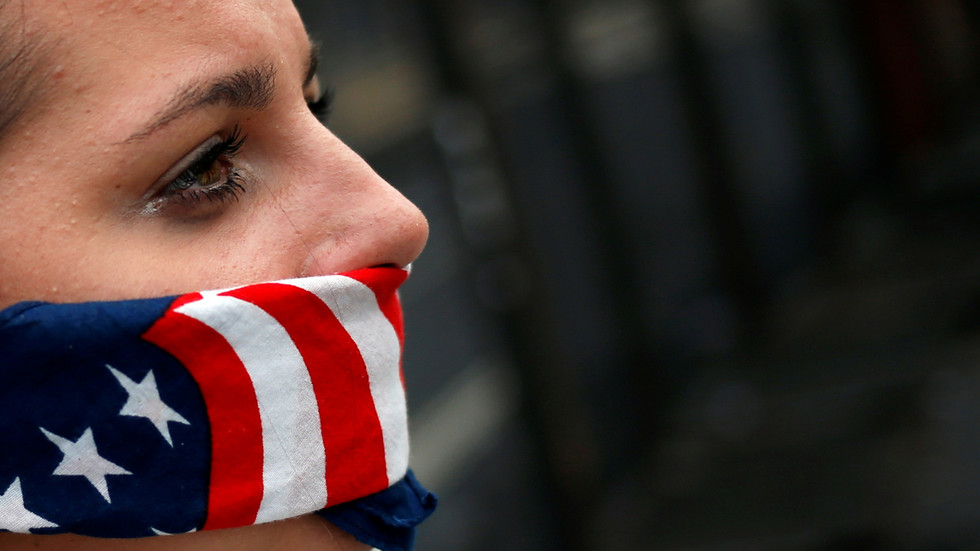
Nevertheless, the ultimate result has been to make individuals and others hesitant about what they say or do out of fear of backlash. It has caused people to measure everything they say or do. Libraries and bookstores have stopped carrying certain books or carry sanitized version of them. Same goes for movies.

Some TV stations will air censored version of movies or not broadcast older movies because of how some groups were portrayed or because all the actors were white; there were no individuals "of color". No so-called "diversity". But, at the same time, certain radio stations will play songs which encourages rape, violence, murder (especially of police officers) and just about every other depravity you can imagine and call it creative "entertainment" or racial expression. Heck, they even give out awards for this garbage!

It's reminiscent of Nazi Germany, Stalinist Russia or China's "Culture Revolution" in 1966 under Mao Zedong. Whatever the state or party disapproved of was deemed as not socially acceptable (ie: not "politically correct"). As a result, certain books and movies were forbidden or destroyed while radio stations and newspapers were ransacked or shut down with thousands beaten, jailed, or murdered.  

Businesses were boycotted and many were fired from their jobs for holding "contrary" ideological positions. Some individuals were labeled "social misfits" or a threat to the state and sent to "reeducation camps" (a euphemism used for concentration camps). The horror of Kristallnacht (or "Night of Broken Glass") was borne out of this mentality. 

There are lots of things I don't like, disagree with, or disapprove of, be it movies, books, music, or media content. However, in a truly free society, each of us have the right to freedom of speech and expression. If I have an issue with it, I simply walk away, turn the channel, or don't buy what they're selling. It's me exercising my freedom of association and using the power of the marketplace.
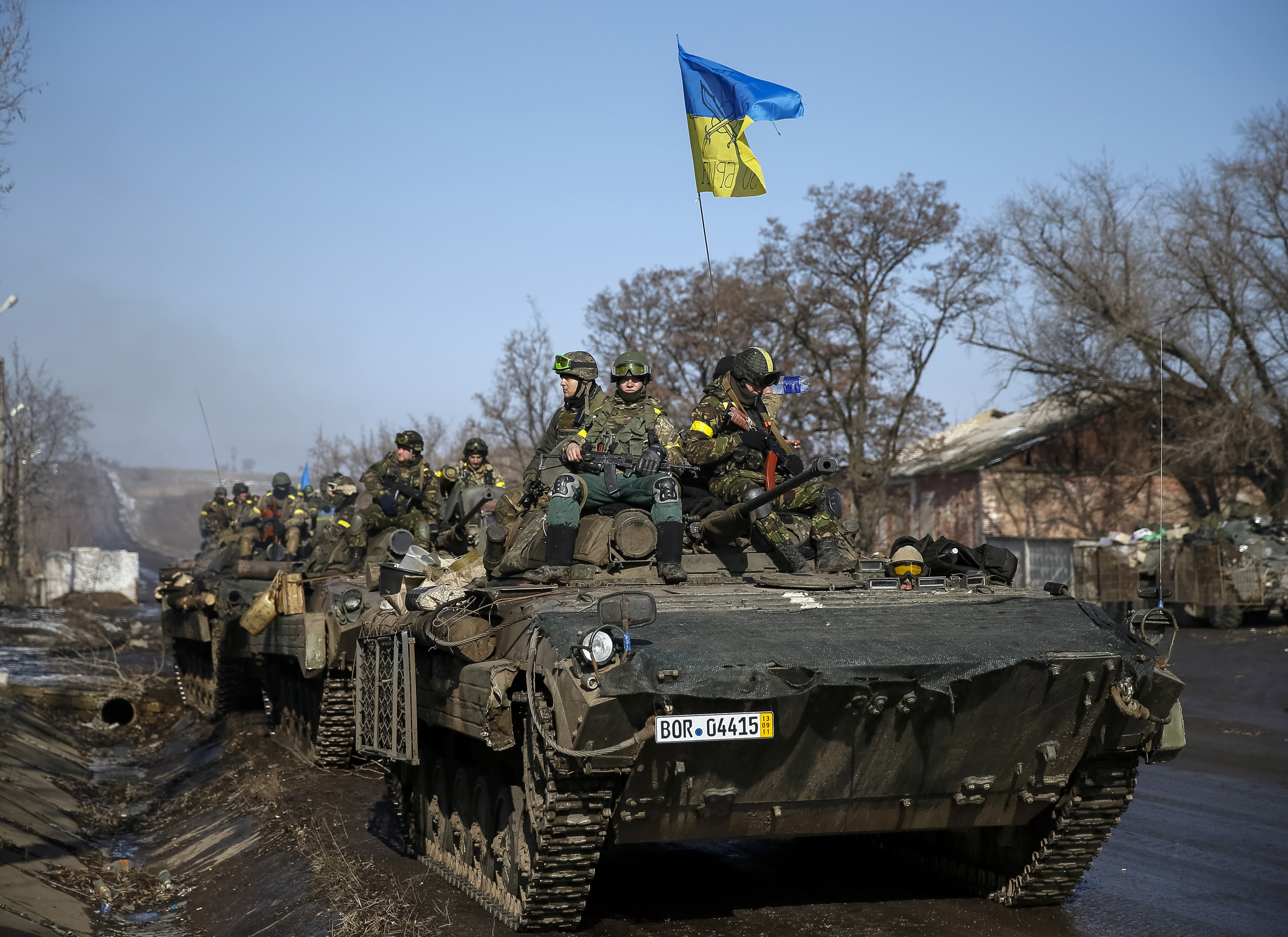
Our second most popular article for 2022 was the ongoing war between Russia and Ukraine. Our focus was on why President Putin invaded his southern neighbor. There's been a long history between Russia and Ukraine dating back to the Kievan Rus in 832, but that didn't spark the invasion.

Following the end of WWII, Soviet Russia created a buffer state composed of Eastern European nations it had liberated from the Nazis and pro-Nazis. It was Stalin's intention that Russia would never again be threatened by the West (Sweden's King Charles XII in 1707, Napoleon had invaded in 1812 and Hitler in 1941). However, with the USSR's implosion starting in 1989, these states were left to their destinies.

In 1990 then President Mikhail Gorbachev was assured by U.S. Secretary of State James Baker that NATO would "not advance one inch eastward", and yet by the end of the 20th Century, all of them belonged to NATO. This meant the Russia faced NATO tanks, troops, ships, and missiles all along its western frontier. The one exception was Ukraine, which at the time included the valuable Crimea with Russia's second largest military and naval bases at Sevastopol on the Black Sea.  It also had something else. Vast oil and gas resources.

The United States and some EU countries helped orchestrate a coup to remove President Petro Poroshenko and his pro-Moscow government with pro-Western Volodymyr Zelenskyy (to help "spread democracy" no doubt).  Some claim that in exchange for Western support a deal was made for access to the oil and gas rich Black Sea.

Almost immediately Zelenskyy began saber rattling about full membership in NATO, which, if granted, would completely surround Russia on the west and put Sevastopol not only in danger, but would threaten Russia's access to the Mediterranean Sea.  Putin continued to warn Ukraine, the West, and the United States that NATO in Ukraine would not be tolerated.

When it became apparent that NATO would approve Ukraine's application for full admission, Russia moved to secure the Crimea and protect its military installations, as well as its control of its oil and gas reserves. When that failed to make Ukraine back off, Russia launched its invasion of Ukraine on February 24, 2022. Since then, the world has turned against Putin (with one lone exception, the Belarus).

Meanwhile, despite a full court press, Russian troops have failed to fully subjacent Ukraine which has militarily exhausted the former Super Power. As a result, Russian troops have focused on securing the pro-Russian Donbas provinces in Eastern Ukraine.  How this war will turn out is anybody's guess.

Some are predicting an eventual chemical, biological, or tactical nuclear strike, which seems unlikely. Others suggest a coup against Putin, which is possibility. There have been massive protests throughout Russia and a growing unrest among senior officers in the Russian military while in Ukraine, thanks to Western media and U.S. public relations and marketing firms, Zelenskyy has achieved near mythic status. Meanwhile, Western (mostly U.S.) energy companies are keeping a close eye on events.

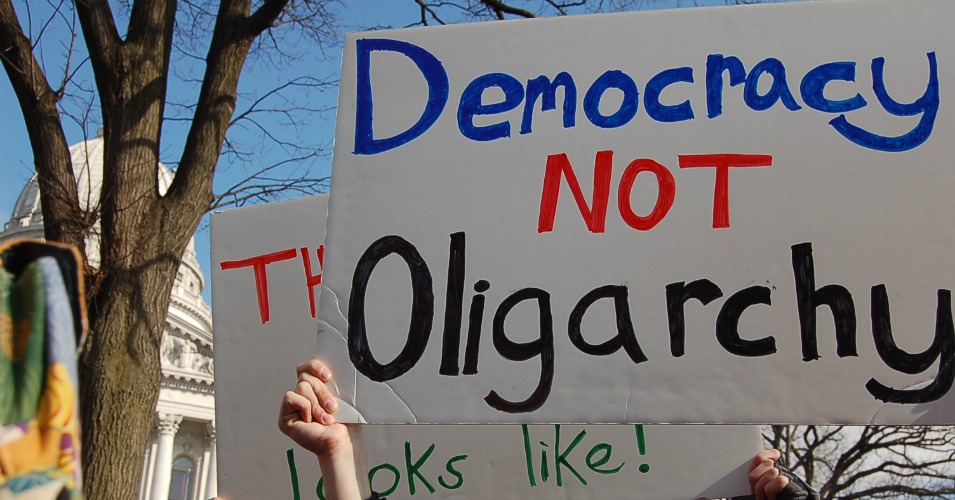
Finally, our most viewed article for 2022 was, in part, about the sudden and dramatic rise in food and gas prices, but at its core it was about the growing power of the Corporatocracy and ruling Oligarchy which has seized control of America.

We pointed out how just five corporations control over 95% of everything you read, watch, or hear. It even controls your entertainment, from music and movies to video games. We discussed how four companies control practically everything (65%) we buy at the store, from clothes and electronics to food. 

We told you that four corporations own 85% of all meat processed in America while three controlled 66% of all pork.  just 15 cent of every dollar spent went to the farmer (most food production, however, comes from giant corporate farms owned by mega corporations, which are heavily subsided by the government.  When it comes to fertilizers, 65.8% of the market is owned by four companies.
Take a look at technology. Only five companies own 80% of the market. When it comes to energy---oil and gas mainly---a relatively small group runs it all, while suppressing alternative energy sources such as wind and solar.  Meanwhile, there's only about 30 companies which totally dominate the our financial markets.  Globally, they are about a dozen. Most of them are Chinese owned.

These companies are part of (indeed the core of) the global Corporatocracy which runs the world. They certainly run the government of the United States. It's senior board members are part of ruling oligarchy (or as some prefer, kleptocracy) that call the shots in Congress, the White House, and the Judicial system. Their lobbyists write our laws that we are told to obey.  It has nothing to do with "socialism" or "communism", although those names are bandied about to make us fear them. Why? Because they fear the people---us.

We've provided a link to these articles below so you can re-read them or perhaps read them for the first time in the same order as above.  We hope you found these, as well as our others articles informative and useful. Ever since our first article was published in July of 2005, we've tried our best to provide you, our dear readers, with accurate non-partisan information. No slant. Just facts. We even include links to our sources in case you want to delve deeper.

If you enjoy our work, please pass it along. We don't have a marketing department and therefore depend on you to help spread the word. We also ask that you "like" us on whatever platform you're using so our articles can stay in front of people. A lot of these platforms don't like what we have to say since it goes against their corporate line (toeing the line has never been one of my strong suits).

Finally, we would like to thank each and every one of you for taking the time to read Another Opinion. We sincerely couldn't do it without your help. Have a happy, healthy, and safe New Year in 2023. Take care everyone.


If you want to know more about this article's topic, please check out the links below. If you enjoyed the article, please consider passing it along to others and don't forget to subscribe. It's free! Lastly please be sure to "like" us on whatever platform you use to read anotheropinionblog.com. It helps with the algorithms and keeps our articles in circulation. Thank you! 


Dr. Fauci: The Man, Myth,Legend...and Schemer?


Big Pharma: A Monopoly in Need of a Cure


Joe Rogan and Cancel Culture: Freedom For Some But Not All


Understanding the Real Reason Why Russia Invaded the Ukraine


Who Wants to Play Monopoly?


Thursday, October 14, 2021

A 'Shot' in the Dark: To Vaccinate or Not

Anyone who knows me understands that I am a independent thinker. I have absolutely zero tolerance for dogma of any sort. So, it's not surprising that the cockles of my heart were downright giddy when I read about the number of teachers, doctors, nurses, truck drivers, air traffic controllers, pilots, and all the rest who chose to go home than submit to a defacto mandate from government and business to get a COVID vaccination. 

Now, some of you must be stunned or even flabbergasted to hear that. After all, look at the burden its placing on those who decided to comply and return to work. Would it surprise you to know that I can agree?  There is an inordinate burden being placed on those who opted for the shot and went back to work. For many, not only are they doing their own job, they're also being forced to pick up the slack for those who decided to opt out.

The result has been unstocked shelves, unfilled prescriptions, an absence of replacement parts, longer waits in lines, fewer people to answer the phone at businesses, unavailable or prolonged appointments, not to mention longer work hours for some, drive through only, and even the consolidation of stores, leaving many people having to travel a little further to find an open location (made worse by the higher gas prices, which have recently increased for a myriad of reasons, not the least of which includes fewer people available to unload the tankers sitting outside of  harbors or truckers willing to transport it).

On top of the that, we seem to have fewer people willing to work. It seems that there are "help wanted" signs practically everywhere. I almost feel sorry for those individuals standing on corners with their little cardboard signs begging for money. Who wants to handout "spare change" when now is the best time ever for them to get a job and get their lives back together?

Interestingly, there are about 9.2 million job openings at present, and yet unemployment is at record highs with some 8 million unemployed Americans, and that doesn't include the millions who are underemployed, working outside of the industry they want, or those who either are working part-time and want a full time job or visa versa. What's going on here?

The downturn in employed individuals appeared to have begun with the onset of COVID-19 when the government all but shut down the economy, urging only "essential" workers to report to their jobs and asking the rest of us to stay home. Schools and universities were closed, as were daycare facilities, and most stores in general. Only a small handful of services were open, including many doctor's offices. Dentist office were closed, as were courts (trials were postponed) while hospitals, gas stations, grocery stores, and pharmacies remained open.

To offset the sudden loss of income, unemployment benefits were extended and ordinary households were issued supplemental income checks by the government to help get them through. Meanwhile, insanity seemed to run amuck as people started hoarding paper towels, toilet paper, hand sanitizer, milk, butter, and other food staples which created panic and artificial shortage.

At the same time, we were encouraged to wear nose and mouth coverings, which many thought of as some sort of shroud akin to the ones used during the Black Plague. Nevertheless, this "shroud" became our admission pass should we want to go anywhere, be it to the store, doctor's office, or just about anywhere else that was open. For a few enterprising Americans, making and selling masks became a cottage industry. It wasn't long before other more established businesses got in on the act with "extra layers", filters, while some were even copper enhanced!

Simultaneously, with all the "peaceful protests", resulting in looting, arson, destruction of property, and vandalism, people went on a buying spree of ammo and guns of all types (not to mention the government's quiet buying spree of ammo). It seemed like chaos was everywhere, and then, just like magic, came Big Pharma and Washington to rescue with their hastily produced (and even hastier approved) vaccines.

Americans, in droves, lined up to get an injection of the magic elixir. Meanwhile, the government and corporate owned media went on a full court media press to encourage everyone to step up and get the shot. It seems like we were being told from every corner and from nearly every expert and pseudo-expert (not to mention a few quacks) to get vaccinated. 

Gradually, the lines for the vaccines got smaller, more stores opened, and most of the artificial shortages started to become a thing of the past. At the same time, fewer and fewer people wore their "shrouds". However, in its place, a new "passport" came into being---your proof of vaccine card.

Many businesses and government agencies (including courts) now required proof of your compliance, which reminded many Americans of the "Kennkarte" (personal ID card) demanded of German citizens and those in occupied countries by the nefarious Gestapo of Nazi Germany (Soviet citizens, as well as those in Warsaw Pact nations carried a similar ID card post WWII). 

For the majority of Americans, having to show proof of their compliance hit them wrong, particularly since at the same time, federal and state governments were considering mandates to force individuals to comply. There was never anything from the government or health officials which dictated the mandatory vaccination of all citizens. It was left up to each of us to be vaccinated or not, although the government and others (including employers) were strongly encouraging it, which brings us full circle.

A large percentage of Americans---about 45%--- have elected not to get the anti-COVID shot for various reasons as of July 2021. They believe that COVID is nothing more than variant of the flu; perhaps artificially enhanced to be more virulent, but nothing more than our own immunity couldn't handle (assuming we didn't have any illnesses which suppressed our immune system). 

These individuals believed that collectively, a "herd immunity" would be formed which would all but eliminate COVID and change it into little more than a nuisance, albeit a potentially serious one. They also encouraged those with impaired immune systems to get the vaccination(s) as a way to protect themselves. This notion of "herd immunity", originally encouraged at the initial outbreak of COVID, was now being downplayed by the government and some health officials.

The result has been a unintentional standoff between those who support free choice (to vaccinate or not) and validity of individual and herd immunity versus the government's (and other's) insistence that the only true protection is immunization by vaccine.  Businesses which had required proof of vaccination of their employees (or face sanctions up to and including termination) has seen the majority of their employees not blink at this COVID standoff and take the latter option, whatever that happens to be.

The same has applied in several other occupations including air traffic controllers, pilots and crew, firefighters, nurses, doctors, and hospital employees, truck drivers, warehouse workers, store employees, and even restaurants to name just a few.

Police officers and others in law enforcement also drew a line in the proverbial stand. Already facing massive shortages as a result of early retirements, resignations, and lack of available recruits thanks to last year's anti-law enforcement protests and demands to defund police departments, now officers are rejecting demands by the state to get vaccinated (this also applied to other first responders).

Even the military is seeing a downturn in retention and recruitment, amid the growing threat of China and possible terrorists attacks now that the Taliban is back in charge of Afghanistan and ISIS has returned (to paraphrase Mark Twain's famous quote, "talk of their demise has been greatly over exaggerated"), as military personal, who are inoculated against practically everything you can imagine, are refusing the COVID shots.

So, what does this mean to you and me? In short, we are facing what will surely be the first of a standoff between the Status Quo and its supporters over what constitutes "public health" and those that are ardent defenders of free choice; individuals who believe they have the right to decide whether to get vaccinated or not (the irony of "my body my choice" isn't lost on anyone).

As a result, these individuals have elected to risk financial ruin and who knows what else by refusing to get vaccinated. Unemployment, if covered, is only a short term fix. At some point, they will have to go back to work. Their only hope at this point is that given the millions of job openings, they can find a job that pays as well or better and doesn't require vaccination.

Meanwhile, employers who do require vaccinated employees will have to decide to stand by their guns and suffer it through while encouraging their employees to endure the extra hours. Most likely this will prove to be a boon to the employees. With a labor shortage of this scale, now is the time to seek higher pay, better benefits, promotions, and so forth. Employers can do little but go along, though some may go belly up. Many are already offering sign on bonuses, higher hourly wages, and special bonuses. 

COVID has already morphed once since the introduction of the vaccines (the "Delta" variant), and there's the possibility that it will continue to morph before it can finally be controlled. Given the uncertainty of the COVID's origin (despite strong suspensions), there is the likelihood other viruses will pop up. If so, then what? Will we go through this all over again? What about the concerns of the vaccines themselves?

Numerous doctors, nurses, immunologists, and others in the healthcare have come out against the vaccines, equating them to the snake oil sold by hucksters of past generations. They can be found all over social media pontificating their opinions. There are even claims that the vaccines contain chemicals which can destroy or at the very least, impair our own immune systems or having magnetic ingredients which enable the government (or corporations) to track our every movement. Some claim that the vaccines will help depopulate an overcrowded earth.

Personally, I can understand the need for the vaccinations, especially when it comes to protecting those with impaired immune systems. At the same time, each individual has a natural right to decide for themselves what to do with or to their own body. If I chose to vaccinate, that's my choice and not anyone else's, especially not the government's and certainly not any business.

Others will argue that a employer has a legal duty to provide a safe working environment, and they are right. Employers do have a legal right to protect their workers. That's the purpose of OSHEA. Schools have an obligation to keep students safe as well. But, do they have a right (or legal obligation) to demand that everyone shows proof of vaccination?

 When I was growing up in Florida back in the 1960's, everyone had to be vaccinated. I assume that's still the case. This is just one more vaccination to add to the list isn't it? But, if the majority are vaccinated, they are presumed "protected". So, what if I opt out? What if I was already exposed? My body will create its own natural antibodies to protect me. If I am willing to accept that risk, what's the problem?

As to the vaccines being used as a tracking device, why? We are already a surveillance state. Our movements, purchases, phone calls, computer and Smartphone use, and so forth are already monitored and recorded. They've got satellites which can literally peer over our shoulders and see what we're reading. They don't need a vaccine. As for the vaccine's contents, I have no idea. Biology was never my strong suit. I specialized in economics and the social sciences. Nevertheless, while I trust science, I trust my body's natural immune system more. It's time society did likewise and got people back to work. 


Help Wanted: Why the U.S. Has Millions of Unfilled Jobs


Unvaccinated and misunderstood? Let's Talk


Why COVID-19 Vaccines Should Not Be Required For AllAmericans


By The Numbers: Who's Refusing COVID Vaccinations---And Why


45% of Unvaccinated Americans Say they Will Definitely Not Get the Vaccine


Saturday, April 25, 2020

Do You Want Fries with Your Pandemic? Global Famine on the Heels of COVID-19


It seems we've entered into a phase where we just can't catch a break. A month or so ago, I read an article where parts of the Middle East were being affected by locust swarms of biblical proportions. California, as everyone knows, was hit by a series of massive wildfires, which were, in part, the result of faulty power lines belonging to PG&E while others were intentionally, as was Australia. Globally, there has been a series of volcanic eruptions and upticks of earthquakes, especially in South America and Asia along the so-called "ring of fire", which is an area with the most active volcanoes along the Pacific Rim.

Of course, we've been locked into a debate for over a decade as to whether we are experiencing climate warming which, if true, could have catastrophic consequences on the planet for decades or centuries to come. Meanwhile, others argue that there is no proof of global warming. What changes that are taking place are ordinary changes like the Earth has been experiencing for thousands or millions of years. A sizeable minority maintain that there are no changes happening whatsoever, and then there are those who even claim we may actually be entering a brief period of global cooling!

Nowadays, we facing a pandemic which some experts say could cause hundreds of thousands of deaths. Fortunately, no one is predicting that the current flu-like virus will have the same numbers of the 1918 Spanish Flu which killed an estimated 20 to 50 million people worldwide (that's more than who died during World War One) while infecting at least 500 million.

As an aside, Ebola, which isn't a respiratory disease like MERS, the Bird Flu, or COVID-19, has killed approximately 11,300 people and infected some 28,000 (mostly in Africa) according to the World Health Organization (WHO) as of 2016. Meanwhile, the AIDS pandemic, which began around 1981 and continues today has caused 35 million deaths. The Swine Flu of 2009/2010 infected 1.4 billion people according to the Center for Disease Control (CDC). While the exact number of deaths are unknown, the CDC estimated that somewhere between 151,700 and 575,400 people died from complications resulting from the Swine Flu. MERS killed around 100 people and the Bird Flu killed approximately 400.

Now, the corporate media is starting to report that as result of the business closures triggered by the COVID-19 outbreak and resulting global economic decline in trade, food production and distribution may become affected. If this occurs, these same news outlets are predicting that there could be a food shortage worldwide, which could become severe or catastrophic in some places.

I'm sure most of us have heard about dairy farmers having to throw out thousands of gallons of milk while produce farmers are allowing equal amounts crops to rot in the field, yet the demand for food in food banks, homeless shelters, and other facilities which cater to those who are food insecure has dramatically increased thanks to the virus situation. Why are we allowing all this to go to waste? Before we address that question, let's look at the food situation globally and nationally first, and who are the most vulnerable.

According to the United Nations, approximately 812 million people do not get enough food to meet basic nutritional needs. That's roughly one in nine individuals globally who go to sleep at night hungry. Asia is the worst affected, followed by Africa (mainly the Sub-Saharan region). Poor nutrition is listed as the prime cause of death among 45% of all children under five years of age. That's about 3.1 million children. One in four are stunted while one in six are underweight. 66 million children globally go to school hungry.

In addition, the lack of proper nutrition also affects their mental development. It also leaves them with a weakened immune system and chronically poor health which often affects them for life. This also affects prenatal women who are typically undernourished in these regions as well. An interesting side note, due to religious and cultural traditions, women are often not permitted birth control. Incidentally, women farmers are not allowed the same resources as the men when it comes to farming for the same reasons. If they were, an estimated 150 million additional people could be fed annually.

In the United States, the "land of plenty", nearly 38 million people live in poverty. An estimated 78% of Americans live from paycheck to paycheck according to a survey done by CareerBuilder in 2019. Three in four are in debt and expect to remain in debt. 45% of Americans have no savings or money set aside for emergencies (72% have less than $1000 set aside). An average of 25% of workers have no money put aside toward retirement. Credit card debt alone in this country is a one trillion dollar issue.

Of the 38 million people living in poverty, 37 million are "food insecure" which is a polite euphemism for not knowing where or when their next meal is coming from. Of this number, 11 million are children. 12.3% are considered the "working poor". 60% of seniors routinely have to decide between food, medicine, and expenses every month. The majority depend on some form of outside assistance such as a food bank, shelter, church, or similar organization. The children of those in poverty depend on school provided meals. Often it's the only meal they can actually count on.

With the COVID-19 pandemic upon us, it only compounds the situation. People aren't working and unemployment will only get you so far, even with small extra government provided "perks" such as the stimulus checks. Meanwhile, with people not working and businesses idle, no revenue is being produced, which means no taxes being generated to keep governments functioning. Yes, governments and businesses can borrow money, but that's just delaying the inevitable (plus the added interest). The result is an economy slowing down and the likely advent of a recession the longer we remain in quarantine, which brings us back to the topic of hunger.

In the best of times, global famine remains a serious issue. With this pandemic, it's only going to get worse. While in most countries, especially the highly industrialized nations, such as Russia, Germany, South Korea, Japan, France, or the UK, it's doubtful it will come to that. However, getting food is becoming an increasing problem, especially in the poorer countries, but also here at home.

There are already growing reports of people lining up in line for hours to get basic food packages only to find out that they "just" ran out. Food banks, as I said earlier, are reporting a significant increase in demand. So, why are there crops in the field being allowed to rot while thousands of gallons of milk go down the drain literally?

Dawn Thilmany, an agricultural economist from Colorado State University, said that normally 50% of all food produced go to commercial use (restaurants, institutions, etc). Because of the quarantine, 75% of that business is gone. The remainder is what's being picked up by the drive-thru and home delivery businesses still open and by institutions who buy in bulk.

In addition, farmers have to cope with the ban prohibiting ten or more individuals gathering out of fear of spreading the virus. A typical farming operation can involve dozens of people. There is also the freshness issue. As general rule, crops will remain fresh for just two weeks (not to mention eggs). Even if they could harvest the crops, food banks, churches, and other organizations which feed the poor couldn't afford the cost the farmers would have to charge just to cover their labor costs, let along make even a small profit. Unfortunately, it's cheaper to let the crops rot in the field, at least in the short run.

The quarantine issue and worker safety is also at the heart of several meat processing and packing plants being shut down. So, that means that animals normally sent to slaughter will get a short reprieve. However, that also means they will continue to have to be fed and cared for. That costs money, and with no money coming in from the sale of the cows, pigs, chicken, and fish, it presents a serious financial problem.

Another agricultural economist, Andrew Novakovic of Cornell University, said that typically the dairy industry loses approximately. 0.3% of product as a result of fluctuating demand. However, because of the COVID-19 virus and the shutdowns (such as schools), demand is down around 15%. As a result dairy farmers are dumping upwards of 10% of the milk produced.

The reason is pretty much the same. There isn't as much demand for dairy based products such as cheese, butter, or sour cream. Therefore, less demand means less production. However, since the "production" is coming from cows rather than production lines, it's simply dumped. Meanwhile, the cows can't be laid off. They can't draw unemployment. That still have to be fed and milked, and that's money out of the farmer's pocket. The end result may be a selloff of dairy cattle and fewer dairy farms, which, in turn, will result in higher prices for dairy based products.

Farmers and meat producers don't, as a rule, make a whole lot of money. Most do pretty well, but it's the large commercial operations which dominate the market. They are the ones which can endure long shutdowns and absorb the costs. Farmers, meanwhile, are expected to lose around $688 million dollars in sales due to the shutdown. With those numbers, the average "mom and pop" or independent operation can't last, at least not for long.

The end result is that we may see significantly fewer independent operations. We'll also likely see higher prices due to the decline in the number of producers and the extra costs associated with the feeding and sheltering of all those pigs, chickens, and hamburgers on the hoof has cost which will be passed to the consumer.

So, we sit and wait. Maybe the government will step forward with a plan to save the small dairy farmer and meat producer similar President Roosevelt's Agricultural Adjustment Act of 1938 which paid farmers a subsidy not to grow crops in order to dry up surpluses and increase prices, thus keeping more farmers in business. Then too, maybe farmers will allow people to come out and pick crops (like fruits and vegetables) rather than let it rot in the fields along the lines of the biblical notion of "second gleanings" (Leviticus 19:9). They could even let churches, food banks, the homeless to come out. At least it would feed some of the hungry.

Virus or not, there is no reason anyone in this country of ours should go hungry, be it in good times or bad. We should be thankful for those individuals who show up and stock the shelves, who work the drive-thru or making home deliveries, the truck drivers or those who are still on the job filling our prescriptions, along with all the nurses, doctors, police, EMS, firefighters, the postal workers, the men and women of the military, the garbage men, housekeeping, those making sure we have clean water and electricity, and of course, the farmers who make it possible for us to put food on the table. Want to know more? Check out our links below.


ISGlobal: Ebola: Two Years and 11,300 Deaths Later

20 of the worse epidemics and pandemics in history

Global hunger continues to rise , new UN report says

Why farmers are forced to let food rot during the shutdown while others go hungry


California farmers are forced to let crops rot and thrown away milk while food band demand soars


Friday, March 27, 2020

The COVID-19 Bill: The Largest Stimulus Package in U.S. History

After almost two weeks of partisan bickering, it appears that we finally have a bipartisan agreement on a two trillion dollar stimulus package aimed at jump starting the economy following a near total shutdown of everything thanks to the COVID-19 virus. President Trump has already said he would sign the bill into law as soon as it hit his desk. This was also the third attempt to produce a bill which everyone could get behind.

This bill, the largest in U.S. history represents almost half of the current federal budget, includes individual payments up to $1200 per person (individuals making over $75,000 may be required to pay back part or all of it) plus $500 per child, $130 billion dollars for hospitals plus tax credits for "charity" assignments, a $500 billion dollar loan and loan guarantee fund plus $150 billion dollars for state and local governments to use as part of their stimulus program. In addition there will be a $367 billion dollar loan fund set for small businesses which will include a six month loan forbearance which will allow a temporary break in payments.

Of the $500 billion dollar fund, $425 billion will be earmarked for businesses, states, and local governments. $50 billion will go to commercial airlines, $8 billion to cargo airlines. $17 billion dollars will directed to companies deemed essential to national security. The fund will be administered by the U.S. Treasury Department. Additionally, the stimulus package also includes an extension of unemployment benefits for individuals laid off as a result of closures due to the virus and paid sick leave.

The package includes $25 billion in emergency funding to keep to U.S. Postal Service going (there was fear that the shutdowns could wipe out the USPS by June without the extra funding). The Department of Defense will be getting an extra $8 - $10 billion dollars in emergency funding as well. $450 million will be earmarked for food banks and food stamps. The bill will prohibit internet and utilities cut offs, along with providing more power to the FTC and state Attorney Generals to go after price-gougers (shame it doesn't include hoarders). Consumer debt payments will also be temporarily suspended.

The bill is the result of intense negotiations between Democrats and Republicans in both the House and Senate. Attempts were made by both sides to tack on funding for non-essential projects designed to help Congressional special interest groups such as money for abortion clinics, a provision to aid illegal immigrants and one to allow student loan forgiveness (repayments can be temporarily suspended), money for unions, and funds for expanded measures pertaining to environment protection were introduced by the Democrats.

Meanwhile, the Democrats demanded concessions from the Republicans that none of the money would be allowed to provide executive bonuses or for stock buybacks (as was done under Obama's 2008 Wall Street bailout) and restrictions on lobbyists. They also held out for extra funding for schools and universities (mainly to provide meals for students while the schools are closed) as well as WIC, child and earned income credits. While the Democrats didn't get the $15 an hour increase in minimum wage they wanted, they did get four billion dollars in funding to allow states to carry out election projects such as early and absentee voting under the Election Assistance Commission.

I suppose there's truth in the old saying that a "good crises should never be allowed to go to waste". Here we are, a month into the crisis, and we're just now getting a stimulus package put together. If Congress had done their jobs the way they were suppose to have, we would have had a package weeks ago and be that much closer to getting the economy back up and running. Instead, we had the usual petty bickering while both sides tried to sneak perks in for their favorite corporate special interest. Of course, I suppose you can't blame them. After all, these corporate sponsors fund their campaigns and keep them in power. It is them, not us, that they represent. So in that sense, they were looking after their constituents.

This is another reason that presidents, governors, and mayors should have line item veto power. A stimulus bill, no matter how imperfect, could have been on the president's desk weeks ago, and with line item veto authority, all those "add-ons" could have simply been removed with the stroke of a pen.

Another way to go about it is simply to require one measure per bill with no add-ons. Period. It would make it much harder to sneak through "pork" projects that taxpayers would be forced to pay, thus exposing more of the corruption by those who try. It would also cut back on lengthy bills, making them far more manageable easier to read and act on. No more, as Nancy Pelosi once said, "we have to pass it to see what's in it" nonsense.

Hopefully Congress will finally do their jobs and get a comprehensive emergency stimulus bill submitted to President Trump. From there, it has to be implemented which could take just as long as it did in Congress. Still, even the knowledge that relief is on its way will help. Meanwhile we all need to stay safe and follow the recommended guidelines. Remember, this too shall pass and we will come out of it stronger than we were before. If you want to know more about the stimulus bill, I've included some links below.


Senate, White House reach $2 trillion stimulus deal to blunt coronavirus fallout

READ: House Democrats Offer Their Own 3rd Coronavirus Response Bill


How the House Democrats stimulus plan compares to the Senates


Sunday, April 13, 2008

The Coming Storm

Gas at $4.00 dollars a gallon by the beginning of summer in most parts of the country, and at or near $5.00 in places like California, Hawaii, or even in Chicago or New York City. Outrageous? You bet it is, but read on. Oil companies continue to post record profits. In 2007, the three biggest oil producers posted $806 billion dollars in revenue. Exxon made $404.6 billion dollars in revenue. Of that, $40.6 billion was pure profit. Chevron had revenues of $214 billion in revenue, of which just under $19 billion was profit. Bringing up the rear was ConocoPhillips which raked in $187.4 billion in revenue, with $11.9 billion in profits. At the same time, these same oil companies get some $18 billion dollars in tax breaks and public tax money. For Free Marketers, that’s wonderful. For consumers, it’s a disaster.

Then there is global warming. Now whether or not you believe global warming or climate change is man made or simply a natural occurring phenomenon doesn’t matter. The fact is that something is happening, and it’s affecting our weather, and thus our food supply, and coupled with the raising costs of fuel, that’s a recipe for disaster on a global scale. Let’s take a look at some examples.

According to the Intergovernmental Panel on Climate Change, some 250 million Africans could be without adequate drinking water by 2020. That’s just 12 years away, and doesn’t even take in consideration the rapidly growing populations of India and China which numbers in the tens of billions already (for that matter, not even Mexico or South America). The prices of basic food staples have increased worldwide 80% since 2005. In March of this year alone, rice, one of the most basic staples, hit a 19 year high while wheat, the other big staple, rose to a 28 year high. The UN Food Bank, which is responsible for food monitoring and distribution, estimates a food shortfall of $500 million dollars to meet current demands. That’s needed to supplement both existing needs and an estimated 70 million additional people in 80 countries.

So why the sudden shortages? Simple. Oil prices. While oil prices continue to shoot up and their stockholders, corporate executives, and speculators rake in obscene profits, people go hungry. Farm acreage formally devoted to producing crops like rice and wheat are now being converted to corn. In 2005, President George Bush signed into law the Energy Policy Act which increased the amount of corn based biofuels (ethanol) available to be added to gasoline in an effort to reduce harmful green house gas emissions thought to be responsible, in part, for global warming. It also, more subtly, was a way to “water down” gas in order to extend the supply as world oil supplies dwindle amid increasing global demand, especially China. Kind of like what folks did during the Great Depression by adding extra bread crumbs to make a meatloaf last longer. Speaking of meat, the price of meat continues to rise because there is less corn available for livestock feed, which is now being diverted for human consumption.

The result was a decrease in wheat and rice production by ¼ acre. This relatively small reduction in acreage saw wheat and rice prices skyrocket, which cascaded across the board as we filled our weekly grocery carts. Meanwhile, corn prices jumped from $2.00 a bushel in 2005 when the policy was signed to $6.00 a bushel so far this year. Again, why? The answer is, once more, the spiraling demand for cheap fuel and now, for food stuffs. Egypt for example, which has long subsidized wheat prices, and the second largest recipient of US aid behind Israel, is facing bread riots because the price of wheat has risen so high that the Egyptian government is having trouble affording it. Some 20% of Egypt’s 76 million people live at or below the poverty line; Bread is the basic component of their diet. The same could be said for rice in Asia.

In my opinion, the near term indicators are that we’ll see an increasing global food crisis and a demand for cheap fuel to power economic growth. At the current time, there’s little that we can do to have both. Climate change will play an increasing factor as crop production, fresh water supplies, and basic infrastructures are challenged to or past the breaking point. There are only two scenarios as I see it. The first is to continue on our current path. This will likely result in increased shortages, unaffordable prices, and war as nations fight for natural resources in order not to create domestic economic growth, but simply to sustain current demand. If they fail, riots, crimes, and even violent revolutions are on the horizon.

The second scenario calls for global economic cooperation on a scale we’ve yet to see. It means putting aside national and ideological differences and focusing on human survival. It may mean international cooperation on an unprecedented scale to develop immediate controls on fuel production and consumption, as well as creating alternative energy sources. For places like Detroit, Stuttgart, and Nagoya, it will mean development of more fuel efficient cars. No more lobbying delays for watered down legislation. It will mean an overhaul of our transportation system, including the implementation of mass transit such as light rail, and bringing back trolleys and trams. It will mean new and more environmentally efficient homes. Given the rapid depletion of oil, it may also mean nationalization of the oil companies as a matter of national security since oil has become a strategic resource, and as such, should not be at the whims of corporate greed.

While that may help with energy shortages, it should also help with diverting acreage now under corn back to wheat and rice. Reengineering through genetic research of crops could produce greater yields on smaller plots of land; Perhaps even using less water and capable of growing in more arid areas. But wholesale education of populations is also need to educate them on more effective growing techniques. And with that, education in birth control to minimize both population growth as well as the spread of diseases such as AID despite outdated and irresponsible religious dogma against birth control. Not only is existing technology in water purification desperately needed, but so are simple tools for digging wells and improving irrigation.

Lastly and perhaps most importantly, is the vigilance of people everywhere to the excesses of corporate greed and governmental indifference. People must stand together to demand a stop to food and water being used as tools of wars; being held hostage as it were by petty thugs for weapons and money. We must demand incessantly that government control the obscene profits of oil companies and the like while they hold their hand out for tax breaks and incentives to the tune of $18 billion dollars that you and I pay for; A figure that’s expect to increase to $28 Billion dollars over the next five years. If we fail to do this, you and I may in the short run be able to avoid the coming storm, but our children and their children surely won’t. In short, “We the People” must lead now so that government will be forced to follow.

Here’s an interesting article submitted to A/O which I think you’ll like.

Making Tax Day Less Painful While Reducing Deficits
By Andrew L. Yarrow
Author of Forgive Us Our Debts

Marie Antoinette is said to have asked Louis XVI’s finance minister," What are you going to do about the deficit?" To which, the good minister—not unlike many an American politician today—purportedly answered: "Nothing Madame. It is too serious."
With a national debt of $9.3 trillion and rapidly growing, federal debt is serious, and failing to balance spending with revenues portends serious long-term pain for the American people, economy, and government if nothing is done.

The elephant in the room is entitlement spending, but it is worth considering the role of our tax system, not tax rates, in exacerbating America’s debt. Liberals and conservatives can disagree about tax rates or types of taxes, but few disagree that how the United States collects taxes could not be much more dysfunctional.

Almost no one likes taxes, despite Oliver Wendell Holmes’ injunction that they are the price for a civilized society. Moreover, almost no taxpayer, expert, or politician likes the current U.S. tax system, which is insanely complex, grossly unfair, and horribly inefficient.

There are several basic problems: 1) filing taxes wastes stunning amounts of time and money; 2) huge amounts of owed taxes go uncollected because of rampant tax cheating; 3) too many Americans pay no taxes; and 4) many tax subsidies are corporate and special-interest welfare.

Income taxes, with 900 or so IRS forms, devour 3.4 billion hours of Americans’ lives every year, or 25 hours per taxpayer. They cost the average filer $200 in out-of-pocket expenses, the U.S. economy untold billions in lost productivity, and IRS compliance costs are one-tenth to one-seventh of the amount of taxes collected. Between the costs of preparing taxes and the lost income from time that could be spent productively, or more enjoyably, paying taxes costs our country between $240 billion and $600 billion in 2005, according to the Government Accountability Office –all to raise about $2 trillion.

Secondly, as Will Rogers once said, "The income tax has made more liars out of the American people than golf has." About $300 billion in taxes owed – more than recent deficits – go uncollected, as polls have found that at least one-fifth of Americans publicly say that it’s OK to cheat on your taxes. That’s only those who admit, in essence, to being liars.

In addition, one-third of Americans pay no income taxes, up from one-fifth in the mid-20th century. While many are low-income, there are good citizenship reasons for all Americans to pay taxes, even if this is not a big revenue-raiser.

The fourth arena – called "corporate welfare" by Ralph Nader liberals and Cato Institute conservatives – involves hundreds of billions of dollars in forfeited revenues from market-distorting tax breaks to business and special interests. Maya MacGuineas of the Committee for a Responsible Federal Budget says that these $800 billion a year in "tax expenditures are really spending programs designed to look like tax cuts." These range from farm subsidies to the $225 billion-a-year exclusion for employer-based health care, which exempts corporations and individuals from paying taxes on the value of health insurance.

These four issues are areas where bipartisan agreement would be relatively easy. While the devil may be in the details, tax simplification is a no-brainer. We could eliminate most forms for most taxpayers; go to return-free filing, putting the onus on the government, as Grover Norquist has suggested; and/or adopt a Simplified Income Tax proposed by the Urban Institute’s Leonard Burman, with a single family credit, a refundable work credit, a 15 percent mortgage credit, no state or local tax deduction, and a built-in 401(k).

To collect owed taxes, honesty could be encouraged and we could beef up enforcement, as the audit rate falling from 2.15 percent in 1978 to 0.58 percent in 2001. The employer health-care exclusion and many agricultural and corporate subsidies are often seen as prime candidates for elimination.

Reducing long-term debt requires many other reforms—notably of entitlement spending—but we could address much easier, tax-system reforms that could win broad support across the political spectrum.

— Andrew L. Yarrow, Washington director and vice president of Public Agenda, a nonpartisan think tank, is a professor of U.S. history at American University, and the author of Forgive Us Our Debts, a book about the causes, consequences, and cures for America’s national debt, published by Yale University Press this spring. Yarrow's book Forgive us Our Debts is available from Yale University press http://yalepress.yale.edu/yupbooks/book.asp?isbn=9780300123531

Poll Results

We had a pretty good response to our poll asking you what you thought about our involvement in Iraq and Afghanistan. 30% said they supported the war while 40% opposed it. The remainder said they backed our involvement in Afghanistan only. Thanks for voting!