Showing posts with label Native Americans. Show all posts

Friday, August 22, 2025

Examining Racial and Ethnic Reality Part 2: Employment, Politics, Crime, Poverty, Home Ownership, Conclusion and Future


In part two of our look at race and ethnic reality, we'll take a look at employment and unemployment, Affirmative Action and quotas, racial equality in politics, crime  and prison sentencing, poverty, welfare, housing, and who really benefits the most? Finally, we’ll address the issues of reparations, the future of race relations, and what does all this mean, if anything?

Employment

When it comes to labor force participation, 63.1% of Blacks are in the work force. 65% of Asians are actively involved as are 62.3% of White and 66.9% of Hispanics. Meanwhile, 65.3% of those who claim to be mixed race participate in the work force.

Whites and Asians occupy the majority of professional and managerial jobs with Asians holding most of the STEM and healthcare professions while Blacks fill most of the community and social services occupations (Black males work the majority of transportation and utility jobs while Hispanics dominate the construction and hospitality industries per the U.S. Bureau of Labor Statistics).  

Examining income levels by race (based on 2023 data), we find that the median household income for Whites nationally is $89,050. For Hispanics, it’s $65,450. The median income for Black households is $56,490. Native Americans earn $57,270.  The highest household income belongs to Asians which averages $108,700.

The national unemployment rate is 4%. Among Whites, it’s 3.6% and 3.5% for Asians. In the Hispanic community, the unemployment rate is 4.6% (4.9% for Mexicans and 5.9% for Puerto Ricans). However, the highest percentage of unemployment belongs to Black Americans with an average of 6%.

Affirmative Action and Quotas

Affirmative Action came into being through two separate measures. First in 1961 when President John Kennedy signed Executive Order 10925 which required government contractors ensured equal employment opportunities  for all applicants. Second was in 1965 when President Lyndon Johson signed into law Executive Order 11246 prohibiting employment discrimination by federal contractors and requiring them to adopt a plan to employ minorities. By the 1980’s, this had been expanded to include gender and religion. It was also expanded to include education and other areas. Basically, it federal dollars touched it, there had to be an affirmative action plan in place.

Some institutions used this as a de facto “quota” system, rather than as intended. Thus, individuals were hired or accepted based not on their skills, experience, or test scores, but on skin color and gender. The overall result was a drop in performance which affected productivity and employability. Fortunately, that was done away with by the Supreme Court  in a 2023 ruling against Harvard College. At long last, ability returned to the forefront.    

Politics

What about politics? Whites make up about 59.3% of the population. Hispanics are 18.9%. Blacks comprise 12.6%, and Asians are about 5.9%. When we look at the make up of Congress, of the 431 members, 301 identify as White. 61 are Black, 46 are Hispanic, 18 are Asian, and 5 say they are racially mixed.

 Of the 99 Senate members, 83 are White. 7 are Hispanic, while 5 are Black and 3 are Asian with 1 Native American (not including Elizabeth Warren), and of course, there was Barack Obama who was bi-racial although popularly identified as Black.

When it comes to federal judges, the majority (65.80%) are white. 14.44% are black. 9.11% are Hispanics. 6.63% are Asian, 2.84% are mixed race, and an embarrassing 0.47% are Native American. Additionally, 52.7% of federal judges are male. Currently, there is one Black governor, one Native American, and one Hispanic.

Crime and Punishment

When it comes to crimes, Black Americans were 50% more likely to be victims of non-lethal violent crimes than Whites according to a report by the Council for Criminal Justice (CCJ). In both instances, the assailant was more likely to be a black male than not. In comparing Hispanics and Blacks, Blacks were 40% more likely to be the victim than Hispanics.

There was no difference in non-lethal victimization between Hispanics and whites although Hispanics were 2x more likely to be robbed than Whites whereas Black females were twice as likely as Hispanic females to be the victim of rape or sexual assault. In short, Blacks were more likely than other races or ethic groups to be a victim of crime while at the same time, most likely to have been the perpetrator of the crime.

An FBI Uniform Crime Report from 2019 seemed to back up the CCJ data. According the UCR, Black Americans accounted for 55.9% of all murders committed. Whites accounted for 44.1%. When it came to the race of the victim, 54.7% were Black while 42.3% were White, and roughly 3% were “other”. The pre-capita “offending rate” was eight times that of whites as were their victim rate meaning that statistically, Blacks (especially males) were more likely to commit violent crime than any other race and that Blacks in general were more often than not to be the victim of a violent crime.

According to a victimization report conducted in 2004, blacks were 56% more likely to be the offenders when it came to carjackings compared to 21% for Whites and 16% for Asians. Blacks were 12% more likely than any other races to commit an armed robbery. Hispanics, on the other hand, comprised 40% of those sentenced for federal crimes.

Per a report by The Sentencing Project, Blacks are the most incarcerated group in America. Black offenders are 5 times more likely than Whites to be sentenced to prison. Hispanics will go to prison almost 2.5 times more often than White offenders. Native Americans will be incarcerated more often than Whites but less than Hispanics.

Blacks are also more likely to be jailed on misdemeanor charges than any other group, but they are also more likely to violate probation. Hispanics are more likely than not to serve time in a federal prison. Asians are least likely to be jailed for any reason.

Black women are more likely than White or Hispanic women to do time. Asian women behind bars are virtually a statistically null category. The Sentencing Project also reports that while there has been a decline in incarceration rates overall, the Black prison population has declined the most.

Echoing the above, the Prison Policy Initiative pointed out that while Blacks are roughly 13% of the U.S. population, they make up 37% of those behind bars. However, based on percentage of population, a discorporate number of Native Americans are incarcerated compared to any other race or ethnic group. Lastly, it should be noted that the U.S. imprisons more of its population than any other country on the planet bar none.

So, with legislation like the Civil Rights Act of 1964, the Voting Rights Act of 1965, Affirmative Action, federal incentives for Historical Black colleges, and various federal and state programs, not to mention academic courses and majors, why isn’t the situation better?

Black, Hispanic, and Asian enterprises have been extremely successful. The Federal Office of Advocacy reported in 2022 that there were 5 million Hispanic owned businesses employing some 3 million individuals. Latinos are also the largest entrepreneurial demographic in the U.S.. There are 3.4 million Asian and Pacific Islander owned businesses in America, employing 5.3 million, and generating earnings of $1.2 trillion dollars annually.

Native American owned businesses, of which there are over 340,000, have earnings of some $46 billion annually despite representing roughly 7% of the total population.  As for Blacks businesses, there are approximately 3.12 million according to the Census Bureau. They provide 3.56 million jobs while producing $206 billion in annual revenue.  Of course that doesn’t include cable channels, print media, radio stations, music and movie genres, events, pageants, business associations, advocacy groups, and so forth which are dedicated to a specific racial or ethnic group.

Lastly, White owned businesses. Currently about 82% of all businesses in the United States are White owned, including 85% of all small businesses. Together, they generate about $1.3 trillion dollars while employing around 21.9 million workers. Given that Whites are by far still the largest demographic, that shouldn’t come as a surprise.

Poverty

The highest poverty rate in the U.S. belongs to Native Americans with 22% living at or below the poverty line. Black Americans are next with 17.9% in poverty. Hispanics have a poverty rate of 16.9%. The poverty rate for Asian Americans was 9.1%.  Whites had the lowest poverty rate at 7.7%.

When we look at those who receive the most government assistance such as Welfare, WIC, energy or rent assistance, or SNAP, Whites are the greatest beneficiaries at 43% (this is also due to their largest percentage of the population). They are also the group mostly likely to leave the poverty rolls and drop government assistance programs.

In terms of SNAP or “food stamps” alone, White make up 62.7% of recipients. Hispanics are 39.8%. Black Americans make up 27% while just 3.8% are of Asian origin. 6.6% are of other races including Native American. It’s bears mentioning that 87.8% are native born.

Hispanics are the second largest users of government assistance at 26%. They are followed by Black Americans at 23%. Finally, Asian Americans. They are just 8% users of taxpayer based services.

Home Ownership

Lastly, let’s look at home ownership. According to the National Association of Home Builders, 65.7% of Americans owned their own home as of 2023. When broken down by race, using data from the U.S. Census Bureau, White Americans were 73.8% of all homeowners. Asian Americans were 63%. Hispanics were 49.8% while Black Americans were slightly behind at 45.9%.

Hispanics also saw the greatest increase of homeownership or any group. Black home ownership has also increased while slowing for Whites and Asians (one explanation it that the aging White population is shifting to low maintenance residences like apartments, condominiums, or assisted living facilities).  

Conclusion

According to the numbers, Whites remain the largest racial demographic, and as such, dominate in most of the categories, including use of government services and prison population, as one would expect based on the population size (note too that there are large pockets White communities, such as in Appalachia or the Ozarks, which resemble more of a third world nation than a top tier one).

In looking at education, Asian Americans, the smallest demographic, outperforms every other racial group relative their size in terms of education, labor market participation, income, own a home, or hold a managerial or professional position.  At the same time, they are least likely to be a criminal offender, got to jail/prison, or use government assistance.  

Hispanics, the second largest demographic, is most likely to use some form of taxpayer based serves, hold service or construction jobs. They are growing most rapidly of any other group in terms of home ownership. They also make up the majority of the labor market while having the third highest unemployment rate.  They have the third highest graduation rates behind Asian Americans and Whites. In terms of politics, they hold the second most number of seats in Congress.

On the downside, Hispanics (especially males) are more likely than other groups to be convicted of a felony and sentenced to a federal prison (usually on immigration or drug related charges). They are ranked third in terms of poverty. Lastly, they are the second highest racial minority  over all to be a victim of a non-lethal crime.

From being  statistically insignificant just 50 years ago, Hispanics have become a powerful force in American culture. Within the next 50 years, they will be on par with Whites in terms of population and likely a powerful player in politics, perhaps having the largest racially based caucus.  There’s no question they’ll regularly hold the Oval Office.

Black Americans, for various reasons, haven’t been able to gain any significant traction socially. They do well when if comes to the number of live births but also lead in terms of illegitimate children. They also have the highest divorce rates while, despite the myth to the contrary, Black fathers are the most active in the lives of their children.

They have an impressive graduation rate yet hold the least number of top level jobs. Black females are also most likely to outperform Black males, but also most likely to be harassed by them as well. They also have the third largest number of individuals in the labor market with the lowest income level or any group. When it comes to poverty, they’re the second highest. However, they are not the “Welfare Queens” they are portrayed as.

In terms of politics, they’ve had decent success, though it’s come in waves, with success in Congress, judgeships, mayoral offices, and even the presidency.  However, these gains are often negated by charges of corruption, drug and alcohol abuse.

When it comes to crimes, Blacks (particularly males) lead the pack, most notably when the victims are also black. They are also most likely to be sentenced to prison, skip bail, or violate probation. Thus, they don’t seem to get the break other groups get.

However, Blacks aren’t the worse off. That goes to Native Americans. They have some of the lowest birth rates, the poorest schools, least number of job opportunities, highest poverty and homeless levels of any racial or ethnic demographic. They also experience the highest school drop out rates. Their overall income levels have improved (thanks largely to legalized gaming). Nevertheless, their representation in politics is and has been negligible.

In the end, each race can boost of a certain measure of success and bemoan its failures. Is there any justification for “reparations”? If we mean as a result of self-inflicted failure, then no. That’s on them, not society. The opportunities are there.  The problem is not taking responsibilities for outcomes. It’s not demanding quality and rewarding success, be it in education, job ownership, or self-care.

They must self-police neighborhoods and create acceptable role models. If they don’t care, why should society? Case in point, look at Asian neighborhoods and schools.  If, on the other hand,  we mean reparations because of governmental abuse or apathy, then yes, and Native Americans would be that group.

They’ve been the subject of land theft, blatant lies, attempted genocide through starvation and disease, and enforced poverty.  They’ve had their culture stripped away. They’ve been denied the opportunities others have taken for granted. Where they’ve succeeded, it’s where they’ve stepped up and took charge…and responsibility…for their situation, handling their own affairs, and keeping the government at arm’s length as much as possible.  

If we continue along the same path, America will slowly, but assuredly, balkanize. For Whites, most everything will remain largely the same despite a slow decline into pockets here and there. Hispanics will settle into their position of co-parity with Whites. Their language and culture will be common place. Parts of the U.S. will be de facto “El Norte” (or “Aztlan” as it’s called”). Asians will dominate the West Coast while a shrinking Black population will occupy some of the larger cities, especially in the Rust belt, looking like they belong more to some dystopian movie or third world country than to the United States. 

Thank you for reading "Another Opinion", the Op/Ed blog page for the "militant middle".  Here at "A/O" we truly value our readers. At A/O we seek the facts as they exist, not partisan talking points.  We hope you find our articles informative and engaging. Comments are welcome, provided they are not vulgar, insulting or demeaning.  Another Opinion is offered without charge and is directed toward all independent and free-thinking individuals. We ask, however, that you "like" us on whatever platform you found us on in order to keep our articles available for free to others. Lastly, in order to keep costs down, we depend on passive marketing, and therefore, depend on our readers to please forward our posts along. Below you will find links to the sources we used in writing this article. Thank you. 


Louisiana Law Review: Race Quotas as a Form of AffirmativeAction


Race and crime in the United States


A Brief History of Affirmative Action


U.S. Poverty Statistics


Fact Check: Are Black people the majority of those onwelfare?


What the data says about food stamps in the U.S.


Homeownership by race and ethnicity


Friday, August 15, 2025

Examining Racial and Ethnic Reality Part 1: Introduction, Home and Hearth, and Education


Growing up in the United States in the 1960’s and 1970's, we were often told that “polite society” doesn’t publicly discuss religious, political, or sexual preferences.  Race was another such topic. Today, things have changed and it seems that everything is on the table.  There are those who seem to expect some sort of positive reinforcement for wearing their political, religious, racial, or sexual allegiance on their sleeve.

They feel entitled to an obligatory pat on the back, a celebratory ice cream cone, or handout, and when that reward isn’t forthcoming, they become offended, indignant, or defensive. They become upset that their life choices or fluke of genetics aren’t being rewarded or as impressive as they think they should be to others. 

You’re expected to embrace their world view or face being ostracized (aka “cancelled”), shouted down, physically attacked, or worse yet, being called a name and incredibly, they become indignant when they are the ones called out.  Race and ethnicity are such topics, and ones which warrant critical examination.  

Introduction

For example, when we examine race, we find something similar in the reaction. Individuals, almost two centuries removed, want not just sympathy for what some ancestor may or may not have endured, but they want to be compensated for what they never experienced. Those who look beyond color and (to quote Dr. Martin Luther King), judge people by the “content of their character” are often considered the worst offenders.

They behave as if this was a one off historical phenomena. Just one group--- white Europeans---were somehow solely responsible for the institution of slavery, forgetting that the most prolific dealers of human flesh weren’t Europeans, but the Arabs of Northern Africa (who put a premium on white flesh).

They give no thought to the historical fact that forced servitude has existed since Mankind existed. Every people and every race has at one time or another been slave and master. It’s a chain we all wear. They have also conveniently ignored the fact that it was these same white Europeans who all but put an end to this hateful institution or that they implemented legislation and taxpayer supported programs balance the scale that has existed since we roamed the African savannahs.

Equally, they’ve chosen to disavow the historical fact that it was their brethren who betrayed them and sold them into slavery, which sadly still continues to this day in Africa as well as parts of Asia. Perhaps the ancestors of the person on the street they randomly call “brother” or “sister” may been responsible for the plight of their ancestor, only to have later been caught up in the net? Such twists of fate aren’t as uncommon as one might think. It’s well documented that blacks owned black slaves in the U.S. or that native Americans had slaves of all races.

Nevertheless, for some reason, they “demand” to be compensated for what they aren’t entitled to (and arguably have already been given). They “demand” that the people who freed their distant ancestors from bondage must also assume some form of self-imposed “guilt” for doing so. Why is that? Is this anger at the people who delivered them from slavery justified or is it anger at themselves for not taking the initiative to free themselves and their refusal to place the blame where it truly belongs?

Shouldn’t their anger be more accurately directed to those who ensured their bondage in the first place, or is that just a little too close to home? If there is some sort of guilt to be had, perhaps it should be their failure to take responsibility for their own future, trading a “master” on a plantation for a politician or bureaucrat? What of the millions of immigrants who’ve come here from a different culture and customs, not speaking the language, and with next to nothing in their pockets, but have adapted very quickly?

They took advantage of the opportunities available, and as a people, kept their independence, and succeeded while the so-called “freed” people who’ve had the advantage of time, language and integration remain in a state of self-imposed bondage, blaming others for their poverty, broken homes, crime, high unemployment, alcoholism and drug abuse. If it was systematic, there should be few or no exceptions, but there are many.

In their anger at themselves, they lash out at others, such as in Cincinnati a few weeks ago, violently attacking individuals who were of no threat to them or looting the businesses of immigrants who’ve succeeded. Is this self-loathing, reversed racialism, opportunism or a combination? Let’s set aside emotions, pre-conceived ideas, and bias in order to examine the data and see what it can tell us.

Home and Hearth

According to the U.S Census Bureau, Whites have 50.5% of all live births while Blacks have 13.9%. Asians and Pacific Islanders are responsible for 6.2%. Native Americans have 0.7% of all live births, and Hispanics make up 25%. Nevertheless, the overall percentage of White and Black fertility rates have been in decline over the past several decades as has Native Americans.

 However, Hispanics, Asians, and Pacific Islanders on the other hand have seen their fertility rates increase, meaning that Asian and Hispanic populations are growing relatively faster than that of whites and blacks. By 2050, the U.S. is expected to reach a near racial parity with no dominate race. How that will work out remains a guess but often cited as a key factor for an eventual (and likely) balkanization of the United States.

A key factor in predicting the eventual success of a child is whether or not they are born in a dual or single parent homes. According to the Center for Equal Opportunity, Black Americans have the highest rate of illegitimate children. According to the Center, nearly 70% of Black children---69.3%-- are born out of wedlock. Compare that to 41.6% of Hispanics and 21.9% of Whites. It’s 59.3% for Native Americans. For Asians of Chinese origin, that number is 6.4% while Japanese Americans it’s 9.7%.

Two interesting asides worth mentioning are these. 45% of Black professionals (including managers) have had at least one illegitimate child compared to just 3% of White professionals.73% of Black high school students admit to having sex. That compares to 52% of Hispanic students and 44% of White students. Also, Black adults have the highest divorce rates while Asians have the lowest. Native Americans have the second highest and Hispanics have the second lowest.

When it comes to preschool care, Hispanic children are most likely to receive home centered care from a parent.  Black children are most likely to receive some form of home based care from a non-parent relative (like grandparent, aunt, uncle, etc.). White kids are most likely to receive home based care from a non-parent or relative such as a nanny or babysitter. Children of mixed race were most likely to receive preschool care from some sort of center (such as a daycare). When it came to subsidized care, Hispanic and black children were most often the beneficiaries.

The National Library of Medicine reported that Black infants tended to have lower birth weights than other groups. They also reported than less than 1/3 of children living at or under the national poverty rate took advantage of programs such as Head Start, and while Head Start tends to provide higher quality care than other centers, Black children receive poorer quality care compared to children of other races. The reasons cited were the birth weight (including high nutritional foods, as well a poor educational levels Black as well as Hispanic ethnicity, especially in family care centers.

 Interestingly, a 2013 study by the Centers for Disease and Prevention reported that 70% of Black fathers who live with their kids were active in their lives compared to 60% of Whites and 45% of Hispanics. 78% of Black fathers tended to have dinner with their children every day while 74% of White fathers and 64% of Hispanic fathers did. Additionally, 27% of Black fathers took their children to and from activities. By contrast, just 20% of White fathers did.  When it came to the all important homework and childcare, 41% of Black fathers stepped up. Meanwhile, only 29% of Hispanic fathers and 28% of White fathers helped out.  

Education

When it comes to graduation, Asian and White students have the highest rates with Asians leading the way. Among Asians and Pacific Islanders, the graduation rate is 94%. For Whites it’s 90%. Hispanic graduation rates are 83% while for Black students it’s 81% and 74% for Native Americans.  

Some additional statistics along the same lines that I found was that 68% of Asians have a bachelor’s degree or higher. That compares to just 25% of Hispanics and 44% of Whites.  On the other side of spectrum, just 4% of Asian had less than a high school diploma. Only 5% of Blacks didn’t have a high school degree along just 7% of whites. However, just over 20% of Hispanics lacked a high school diploma.

It bears mentioning the Black females graduate at a higher percentage than Black males. 64.1% go on to college and graduate. Of those, 71.5% earn a master’s degree, and out of those, an impressive 65.9% obtain a doctorate although more Black males  overall have a doctorate or professional degrees such as a law  or medical degree. It bears mentioning that Black female students face a unique hurdle their counterparts don’t.

For those that tend to be “overachievers”, they are often harassed or treated as social outcasts for their academic performance, often being accused as “acting White”, coming most often from their Black male peers. There have been instances reported where Black students have asked that they not be singled out publicly for some achievement or award to avoid being bullied.

 Some actively try to downplay their academic performance, and even join in with the “bad crowd” in order to blend in. Some have reported being coerced into skipping assignments or school, drinking, drugs, violence, crime, and sex in order no to stand out. The result is that they usually end up holding the proverbial  “bag” and sidetracking their lives.

Finally, it bears mentioning that there are 180 “Black Only” academic scholarships and over 25 “Hispanic Only” scholarships and about 12 scholarship programs directed toward Asian-Americans. Native Americans can apply for approximately 150 “Native American Only” scholarships plus individual tribal scholarships. As for Whites, there are none. The reason, it's argued, is that Whites aren't a minority (the U.S. Census Bureau would disagree. White males are in fact a minority). 

Nevertheless, as the counter argument runs, scholarships should not be based on racial or other quotas, but rather on financial need based on their social-economic situation. It’s also worth noting that prior to 2023, ranked racial quotas were used by many colleges and universities in order to increase  on campus “diversity”, even bypassing higher qualified candidates.

In part two of our look at race, we'll take a look at employment and unemployment, Affirmative Action and quotas, racial equality in politics, crime  and prison sentencing. Finally, we’ll address the issues of reparations, the future of race relations, and what does all this mean, if anything?

Thank you for reading "Another Opinion", the Op/Ed blog page for the "militant middle".  Here at "A/O" we truly value our readers. At A/O we seek the facts as they exist, not partisan talking points.  We hope you find our articles informative and engaging. Comments are welcome, provided they are not vulgar, insulting or demeaning.  Another Opinion is offered without charge and is directed toward all independent and free-thinking individuals. We ask, however, that you "like" us on whatever platform you found us on in order to keep our articles available for free to others. Lastly, in order to keep costs down, we depend on passive marketing, and therefore, depend on our readers to please forward our posts along. Below you will find links to the sources we used in writing this article. Thank you. 


Trans-Saharan slave trade


Barbary slave trade


Barbary Pirates and English Slaves


Percentage of Births to Unmarried Women


Study: Black dads more involved in activities with theirchildren than other groups


Quality Disparities in Child Care for At-Risk Children:Comparing Head Start and Non-Head Start Settings


Fast Facts: Women of Color in Higher Ed


Race and Intelligence


First Divorce Rate by Age and Race/Ethnicity  


Friday, June 20, 2025

“No King” But Plenty of Fools? Civil Disobedience Then and Now


Growing up in the 1960’s and 70’s, I remember watching major historical social events such as Hispanic civil rights activist and labor leader Cesar Chavez leading his migrant field worker’s  on a “1000 Mile March” (or "Peregrination") from the farm fields of Southern California up along the coast educating farm laborers about their newly won rights, including the right to organize.

Then there was no looting or defacement of the Lincoln and Washington monuments. No one peed in the Lincoln Memorial Reflecting Pool while listening to Rev. Martin Luther King Jr’s stirring “I have a Dream” speech (aka “March for Jobs and Freedom" speech, 1963).  

There were the famous protests for civil rights led by likes of Rev. King,  A. Phillip Randolph, Rev. Ralph Abernathy, such as the Montgomery Bus Protest (1965/66), the Birmingham campaign (1963), the Selma march (1965), or the Chicago Peace March (1967) or the March against the Vietnam War (1967). Then there was the “Poor Peoples Campaign in 1968 which was aimed at alleviating the economic poor and improving housing for all races, but where was the violence? There wasn't any.

 Chavez, King, Abernathy, and all the others never intentionally blocked traffic. They never looted or defaced property. They didn’t try and keep people from going to their jobs to earn money in order to put food on their table or keep a roof over their head. They didn’t try to keep ambulances from helping individuals in crisis.

No one blocked the fire department from trying to save someone’s home and their possessions, not to mention their lives? They didn’t loot, commit arson, deface public and private property, throw trash cans everywhere or set bonfires in the middle of road? None of that happened? They didn’t intentionally assault anyone? They didn’t even spit on anybody or scream in their ear? Once again, the answer is no. Leaders repeatedly reminded their followers to avoid violence at all costs. They were also encouraged to respect people’s personal space.

Vehicles weren’t attacked with rocks, bricks, chairs, or pummeled with boards and hammers.  Protest signs weapons. They simply conveyed a message.  What about protesters randomly attacking police officers or federal agents? That rarely happened, and when it came to assaults and law enforcement, protestors were just as often on the receiving end.

Didn’t  “social justice warriors” like King, Chavez, Wilkins, and Abernathy modelled their protests after the anarchist, Mahatma Gandhi? Afterall, aren’t you supposed to substitute yourself in place of the message?  Isn't ending dialogue the goal right?

Well, no. While they did model their protests on Gandhi, he was all about non-violence, passive resistance, and trying to create dialogue. Gandhi wasn't an anarchist although some try to portray him as such today. So, today’s protests and protestors (aka “social justice warriors”) are nothing like their Civil Rights movement counterparts. So, if not the Civil Rights Movement, what about other protests? Incidentally, while Caser Chavez was a major proponent of migrant rights and founder of the United Farm Workers, he opposed illegal immigration, believing it harmed those here legally and gave the impression that all Hispanics were criminals. 

There were the anti-war protests, often led by individuals like Tom Hayden, Jerry Rubin, and Abbe Hoffman.  in Lafayette Park, the National Mall, and the campuses at universities like Berkeley, Kent State, Chicago, and throughout the U.S., as well as the 1971 Mayday Protest. There was the protests by Native Americans, led by individuals like Dennis Means, Russell Means, and Clyde Bellecourt. They led a series of non-violent protests (known as the “Trail of Broken Treaties), including occupying the offices of the Bureau of Indian Affairs, but that too was non-violent.

Following a notoriously violent police raid in 1969 on a gay nightclub in New York’s Greenwich Village, gays, fronted by leaders like Phyllis Lyons and Frank Kameny, began openly (yet peacefully) protesting for a change in laws to decriminalize homosexuality. The “Women’s Liberation Movement” , whose leadership included Bella Abzug, Democratic presidential candidate, Shirley Chisholm, and Gloria Steinem, also started in the 1970’s over a number of issues ranging from equal pay and treatment at work, abortion, separate credit and financial rights, etc. None of these protests involved spitting on people, arson, or looting (although a few innocent bras were burned).

In Chicago, in 1968, there was the infamous “police riot”, ordered by Chicago political boss Mayor Richard Daley during the Democratic Party National Convention, on anti-war demonstrators.  The result was 11 deaths and nearly 800 injuries, which include 152 officers. The officers used nearly everything at their disposal. They were wildly swinging their batons and deploying voluminous amounts of tear gas, causing confusion and panic among the protestors and innocent bystanders. Many of the injuries were head and neck related or the result of being trampled.  

The following year, in 1970, on the relatively quiet campus of Kent State University in Ohio, just over 300 or so students had gathered to protest the expansion of the war in Vietnam into Laos and Cambodia. The Ohio National Guard was called in to maintain “control” over loud but otherwise well behaved students. For reasons still unclear, 28 members of the National Guard opened fire on the peaceful crowd.

By the time the shooting stopped some 13 seconds later, 67 rounds had been fired and four students lay dead. Two were 19 and two were 20. Nine students were badly injured. Although there was a hearing, not one of the 28 members of the National Guard or their officers, were found guilty. As a result, over four million students across the country staged a mass walk out and there was no looting. No arson. A friend of mine, who was a student journalist at Kent State at the time, told me that despite the anguish and anger, there was no talk of revenge on the National Guard members or the judge.

None of this is intended to imply that the 1960’s and ‘70’s lacked violence from the Left. They did, and lots of it, such as the Watts Riots in LA which spread across the nation or the riots following the murder of MLK in 1968. However, the majority of violence, as it pertains to protests, didn’t come from the protestors themselves. It came for the “Establishment” and those on the Far Right. So, what happened? What changed?

By the mid-1970’s, protesting was becoming organized and financed. There were individuals called "coordinators" who were considered “experts” at organizing a protest (Saul Alinsky is considered to be the "father" of modern protests). They would train or bring in certain individuals to be “squad leaders” to lead the direction of the protests, who continuously reported to the coordinators.

They would also work with coordinators and others to create local specific slogans for signs and banners which were produced out of state and shipped in to avoid being traced by law enforcement with other signs, more generic, were homemade. 

Seminars would be formed to help participants learn how to deal with police tactics, passive resistance, how to non-aggressively provoke the other side and law enforcement, and deescalate any anxiety participants might have. They would also practice ways to non-aggressively resist, rehearse their message, and gain the media’s attention in a way to make it appear that they have the moral high ground.

Links would be established with like-minded groups, organizations and legal aid societies, including a bail fund.  Key individuals would be given an 800 phone number which will connect them to a lawyer  on standby who will help with the bail and obtain their quick release from jail.

By the early 2000’s, tactics changed again. Protests became almost indistinguishable from riots. Violence, once shunned by earlier organizers (including Alinsky), became virtually “de rigueur”. The actions of the individuals took the forefront, often obscuring the message of the protest. 

Actions could include trying to block vehicles with your body (especially if the media was present), ignoring the other person’s personal space while over emphasizing yours, shouting (or screaming) the opposition down, spitting on someone to provoke a reaction,  exaggerated acting to an action, using certain words, phrases, or sounds to rally and surround a perceived “threat”, as well as protesting without a permit or illegally blocking traffic (even King obtained a permit).

Physical violence, with the aim to intimidate and demoralize the other side, has also found its way into modern “protests” in a way that would have appalled Dr. King, Cesar Chavez, or Shirley Chisolm. As an aside, some use protests today as a cover for looting, theft, arson, disfiguring or destroying public and private property (which is solely intended to create an added strain on local first responders).  If these wannabe “social justice warriors” truly want to change the system, they need broad public support across social, racial, and economic lines. What they are doing is not how you get it. Mayhem, rather than the message, seems more and more to be the objective. That only weakens the message and prevents the change you want. 

Many of today’s faux revolutionaries think they’re recreating the “social revolution” of their grandparents from the 1960’s and 70’s, when, in fact, they’re acting like spoiled or coddled children not getting their way in a toy store. They spend to much time in the world of make believe instead of reality. In the words of their ideological model, Vladimir Lenin, they are little more than “useful idiots”.  How can you be  an “anarchist” while living in mom and dad’s basement and off their parent's credit cards? The closest many will get to Marx is watching Harpo, Groucho, and Chico on late night TV. 

Personally, I’m not sure I’d even give them that. I prefer to think of them as cannon fodder and eventual statistics. Their ‘60’s and 70’s predecessors were mostly successful with their goals when based on non-violence. The actions of the current generation  will likely result in failure because of choice to use violence. Regardless, if they continue with their present strategy, the end result will be that they accomplish nothing with the exception of alienating people to their cause and enhancing the power of the surveillance state and the empire.  


Thank you for reading "Another Opinion", the Op/Ed blog page for the "militant middle".  Here at "A/O" we truly value our readers. At A/O we seek the facts as they exist, not partisan talking points.  We hope you find our articles informative and engaging. Comments are welcome, provided they are not vulgar, insulting or demeaning.  Another Opinion is offered without charge and is directed toward all independent and free-thinking individuals. We ask, however, that you "like" us on whatever platform you found us on in order to keep our articles available for free to others. Lastly, in order to keep costs down, we depend on passive marketing, and therefore, depend on our readers to please forward our posts along. Below you will find links to the sources we used in writing this article. Thank you. 


 An Organizers Guide To Protests and Political Change


How to Organize a Protest


APWU: Our Labor History: Cesar Chavez Leads “1000 Miles March”for Farm-Worker Rights in California


Cesar Chavez


Cesar’s Thousand Mile March: A 59 Day Trek


Martin Luther King Jr.: 8 peaceful protests that bolsteredcivil rights


Malcolm and the Civil Rights Movement


Speaking and Protesting In America: Protesting in the 1960’sand 1970’s


Leaders in the Struggle for Civil Rights


Anti-War Protests of the 1960-70’s


1968 Democratic National Convention Protests


The Whole World Was Watching…


Kent State Shootings


Watts Riots


Friday, May 24, 2024

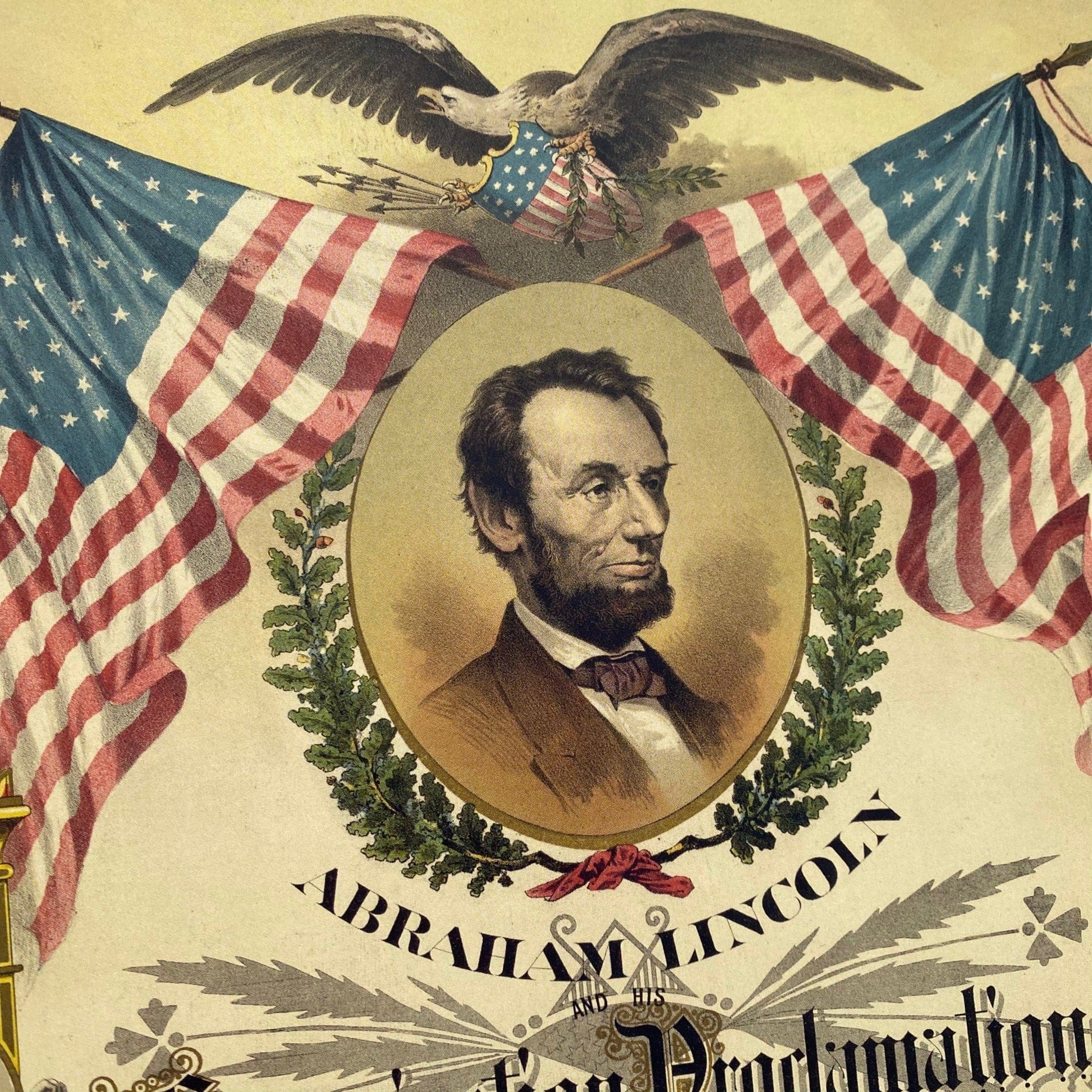
Lincoln's Emancipation Proclamation and the 14th Amendment: Surprising Facts You Didn't Know

 Everybody knows at least the basics of what Abraham Lincoln's "Emancipation Proclamation" was about. Once upon a time (before the dumbing down of public education), students everyone in the U.S. had to memorize at least a portion of it. In some schools, all of it, along with the Preamble of the Constitution. and the Gettysburg Address. It was part of the Civics program which went hand-in-hand with our history classes (which have also largely gone by the wayside).

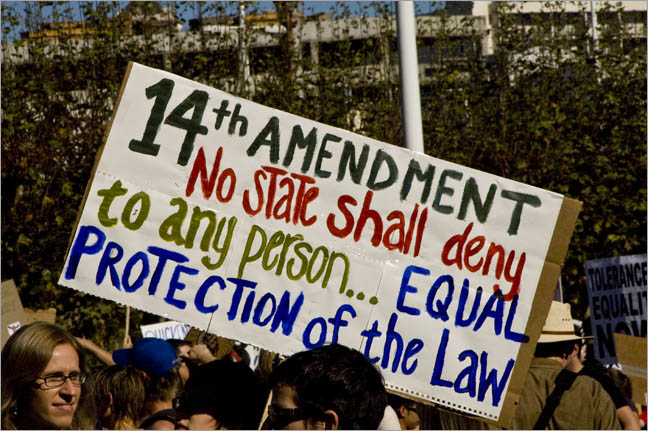
Of course, if you know anything about the proclamation then you should be familiar with the 14th Amendment which was passed by Congress in 1868. Well, I'm going to provide you with some interesting and often overlooked facts about both which you probably didn't know.  I suspect that it may come as a shock for some of you. So, let's start with Lincoln's famous Emancipation Proclamation first.  

Contrary to popular belief, slavery was not the primary or sole reason for the start of the Civil War. However, it was seen as an important issue especially among certain groups, including Quakers, abolitionists, and some evangelical groups. One of the more famous abolitionist was, of course, John Brown, who attempted to spark something of a revolt with his ill-fated raid on a arms depot at Harpers Ferry, Virginia in 1859.

The question of slavery was a serious issue even before the Civil War with a majority of the states wanting to put an end to it, while the South refused, citing its dependence on the use of slaves. During our revolution for independence from the British, it was commonly accepted that without the support of the South the war would be lost (and indeed, the war was ultimately decided in the South), Therefore, the Northern representatives were left with no choice but to except the hated institution...for now.

Shortly after the end of the Revolutionary War in 1783. the importation of slaves into the U.S. was signed into law by President Thomas Jefferson in 1807 (becoming enforced in 1808) again caused a major riff between the industrialized Northern states and the largely agricultural Southern states. The riff came to a head  by the early 1800's and the United States came very close to ceasing to be.

However, a solution was reached in 1850 known as the "Great Compromise"  dealing with the admission of slave states into the union. It was engineered by Senator John C. Calhoun (D-SC),Senator Henry Clay (Whig-KY), and Senator Daniel Webster (Federalist-MA). Sadly, the "Great Compromise" is often overlooked in most history classes, and while it didn't "save" the nation as such, it did prolong the bloodiest war in U.S. history.

The issue of abolition was an important factor leading up the Civil War, thanks to individuals like Brown, Fredrick Douglas, Harriet Beecher Stowe, and John Quincy Adams, it was never the central cause despite what we're taught in our watered down and often distorted history classes in high school (or sometimes, even in college; all of which are intended to fit into a particular political agenda).

The key issues were more about economics and admission of free vs. slave (these are where slavery comes in), tariffs, and ultimately, the supremacy of the Federal government. This was more than interpretation of the Constitution's 10th Amendment. ("...the powers not delegated to the United States by the Constitution, nor prohibited by it to the States, are reserved to the States respectively, or to the people"), it was whether the states or the Federal government would be dominant.

Many Northern senators believed that the Federal government held all power not expressly assigned to the states as mentioned in the Constitution.  Most Southern senators said that the states held all governing powers not expressly given to the Federal government. That issue wouldn't be resolved until the final outcome of the Civil War.

Personally, based on my read of statement in question, and knowing how the Founding Fathers loathed a strong Federal government (and government in general), I tend to side with the South on their interpretation of the amendment, but that's just me. It should be noted that the descendants of most of the Founding Fathers also agreed with the South's position. So, what did Abraham Lincoln think about slavery as an issue and how did this affect his Emancipation Proclamation of 1863?

While campaigning for the presidency, Lincoln repeatedly said that he had no intention of trying to end  or interfere with slavery as an institution. That may come as a surprise to many people, especially those who've been taught to see Lincoln as a second coming of Moses, however, that wasn't the case, at least in the beginning. 

Even after winning the election, Lincoln said in his First Inaugural Address to the nation on March 3, 1861 that the Federal government "held no authority to interfere with the institution of slavery where it already exists". He went on to say that, as president, he wouldn't seek to interfere with any state's right to govern the institution.

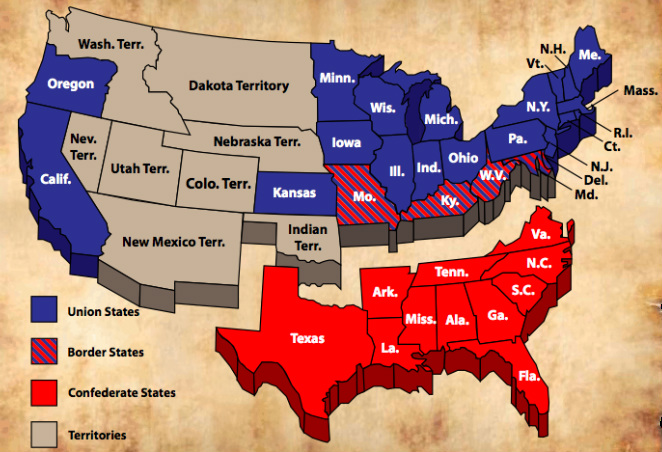
That doesn't mean that Lincoln agreed with slavery as an institution ("I am naturally anti-slavery. If slavery is not wrong, then nothing is wrong"). His first and primary goal was the preservation of the union. Secondly, he wanted to restrict (if not outright ban) the entry of pro- slave territories into the union as new states. Nevertheless, despite his best efforts, he failed. before he even had begun. The first state to secede was South Carolina in November 1860 following Lincoln's election. Other states soon followed until there were 11 in total, forming the Confederate States of America (CSA).

While all of the states were slaveholding, four states that held slaves didn't secede ---Maryland, Kentucky, Delaware, and Missouri (in anticipation of their leaving, Kentucky and Missouri were given stars on the Confederate flag). As an aside, did you know that several Native American tribes sided with the Confederacy? In 1861 the Cherokee, Chickasaw, Choctaw, Seminole, Muscogee (Creek) all signed agreements of support in exchange of being guaranteed title to territories west of the Mississippi River.

 The War between the States began (officially) on April 12, 1861 with the assault on Ft. Sumter in Charleston Harbor (with South Carolina having seceded in 1860, the fort was viewed as foreign occupiers on their territory). The war was naively expected by both sides to be over in a matter of weeks. Bull Run, Shiloh, and Antietam soon removed the nation from that illusion.

By the time of Lincoln's Emancipation Proclamation in 1863, the war had gone worse than expected by the North. Unless something dramatic was done to strategically shift the balance of power, the best outcome that could be expected was a draw.  

As in nearly every conflict down through history, the ability to successfully wage war rests on the economy's ability to sustain the effort. The South's ability to wage war rested on its agriculture. According to the last census before the war in 1860, there were approximately 4 million slaves in the South, making up roughly 30% of its population (compare that to the West Indies where about 85% of the entire population were enslaved).

It should be pointed out that only a few landowning families--mostly large plantations--- owned any slaves. The overwhelming majority of Southerners were too poor to own any slaves at all.  Nevertheless, if, somehow, the South's economy could be disrupted, Lincoln thought, then perhaps the war could be brought to a close.

At this point in late 1862, Lincoln had to accept that despite his promises not to interfere with the institution of slavery, the country was at war with itself,  men were dying daily (the average was 504 per day), and the abolitionists hadn't gone away. If anything, they had grown in number and become a powerful political force. It was time for Lincoln to play his trump card.

On January 1, 1863 Lincoln delivered the "Emancipation Proclamation". It's often overlooked by nearly everybody that the proclamation didn't end slavery in America as claimed. The proclamation freed those enslave only in the states which had seceded from the union and were now a part of the Confederacy ("...that all persons held as slaves within the rebellious states are, and henceforward are free").  But what about the slaveholding states which remained part of the union?

It meant that those slaveholding states which didn't secede, regardless of their sentiment, were excluded from the proclamation. Thus slavery continued in Kentucky, Maryland, Delaware, West Virginia, and Missouri until the end of the war (the tribes which sided with the South were unaffected. Native American tribes long held slaves of all races  before, during, and after the war).

The second interesting observation is that despite Lincoln's decree, those states which had legally (at the time) left the union, were now part of a independent and separate nation known as the Confederate States of America with its own president (Jefferson Davis), its own Congress and Constitution, its own legal system and currency. and so forth.

That meant that President Lincoln was attempting to impose a unlawful degree on an defacto independent nation! It would be like a President issuing a decree to Canada or Mexico! The decree therefore had no legal standing, and no doubt Lincoln knew it. But if it could hamper the South's war efforts, it was worth the bluff. and it worked

At first slowly, then in droves as word spread, slaves began to abandon their fields and head north or to the western territories. Even though slavery comprised a small percentage of its population, the effect was cataclysmic for the South. With crops being left to rot in the field and the economy now in turmoil, soldiers began deserting to harvest the crops in order to prevent their families from starving. 

This left the South's military further undermanned. In addition there was diminishing food and supplies reaching  Confederate troops, whose supply lines were overstretched already. It give the North the edge it needed.  By 1865 the war was over and the South lay in ruins. It would be decades before it would recover. In some ways it never has. 

Following the war, the 14th Amendment essentially codified Lincoln's "Emancipation Proclamation",  along with the 13th which formally abolished slavery as an institution, was passed in 1868.  thus ensuring all those previously held as slaves were now fully U.S. citizens with all the rights which go along with it. The 15th amendment, passed in 1869, provided for the right to vote (it, however, excluded all Native Americans).  The trio of amendments prevented (at least on paper) any states from denying equal rights to all those held in slavery. 

The 14th also forbid any former member of the U.S. government who participated with the "rebellion" from public office and denied any and all compensation incurred by the Confederate government, including loans or contracts (as well as slaveholders, meaning they wouldn't be compensated for the loss of their slaves).

As an aside, Confederate soldiers were eventually allowed compensation for service connected injuries and pensions for Confederate widows as early as 1867 by the state whom they served. The Federal government expanded existing military benefits in two Congressional Acts to cover Confederate soldiers and their widows. One in 1927 and the other in 1957, long after many were dead. 

It should be pointed out that 28 of the existing 37 states were needed to ratified the amendment in order for it become law (which they received), but did you know that despite the passage of the 14th Amendment by Congress in 1868, several states didn't ratify it until later (in some cases, much later)? While most states ratified the law in 1868, several notable states held out. The 14th Amendment wasn't ratified by Texas or Mississippi until two years later, in 1870. 

Three of the slaveholding border states which didn't secede  decided to take their sweet time about it.   Delaware ratified it in 1901. Maryland got around to it in 1959 (as did California which had become a state in 1850).  But the "winner" was Kentucky. It waited until March 18, 1976, nearly 108 years later! The fourth slaveholding  border state, Missouri, was the 17th state to ratify the amendment in 1868 along with West Virginia, another slaveholding border state.


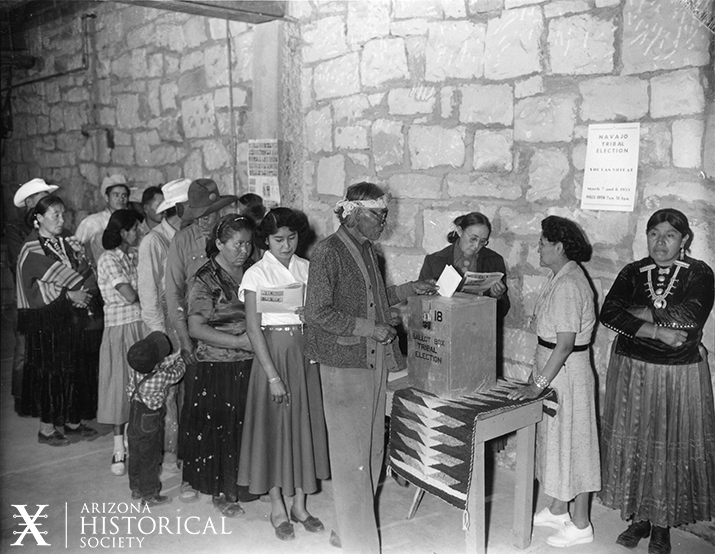
Lastly, I think it's important to point out that while the 14th Amendment provided equal rights and protection under the law to all former slaves as well as children born of foreign parents (legal or illegal), Native Americans weren't granted the same rights until 1924. That's 56 years after the passage of the 14th Amendment. 187 years after America's independence.

The  "Indian Citizenship Act of 1924", or the "Snyder Law" as it became known, was signed into law by President Calvin Coolidge (R) on June 2, 1924. It finally gave equal rights and protection under the law to all Native and Alaskan Americans. A sad commentary on "land of the free and home of the brave" don't you think? Never assume your freedoms are necessarily guaranteed or protected by anyone.


If you enjoyed the article, please consider passing it along to others and don't forget to subscribe. It's free! Lastly please be sure to "like" us on whatever platform you use to read anotheropinionblog.com. It helps beat the algorithms and keeps our articles in circulation. Thank you!


National Archives: Emancipation Proclamation


The Roles of State and Federal Government


Kentucky's Abraham Lincoln


14th Amendment: Citizenship Rights, Equal Protection,Apportionment, and Civil War Debt


Ratification of Constitutional Amendments


There were 4 million enslaved people counted in the 1860census...


What Is the Snyder Act of 1921 and who does it apply to?


Saturday, August 12, 2023

"Stop Acting White!" Has Race Comparison Contributed to Black Academic Failure?

Have you ever heard the expression "stop acting white"? It is typically a remarks most often heard in black communities, and you can bet it isn't being said as a compliment. It's also come up in several corporate diversity projects such as Coke's infamous online training blunder which was hosted on LinkedIn back  in 2021 (link below).

Although education is typically held up as the gateway to success, there seems to be those who do well in school that are seen as somehow "betraying" their race (as if failing is something to aspire to). However, some claim that is purely a cultural myth, but let's look further.

According to the U.S. Census Bureau, Black Americans, who are the second largest minority at 13.6% of the population, have the second highest poverty rate of any group at 25.8%. The largest are Native Americans and Native Alaskans at 27% while comprising only 2.9% of the total population.

The National Center for Educational Statistics reports that the dropout rate among black students between the ages of 16 and 24 is currently 5.9% (down from 10.3% in 2021). For Hispanic students in the same age bracket its 7.8%, a drop from 16.7%. Among Native Americans and Native Alaskans, it's deceased from 15.4% to 10.2%, which is still extremely high given their small population numbers.

White kids have a dropout rate of 4.1%, down from 5.3%. Asians have the lowest dropout rate of any group at 2.1% from a "high" of 2.8%. Lastly, among children of two or more races, the report indicated they had a dropout rate in 2021 of 6.1% to a current rate of 4.9%. Lastly, let's look at incarceration rates.

America has the dubious "honor" of having the highest incarceration rate of any nation in the world. More than Russia. More than Iran.  More than China or even North Korea.  The largest minority population in prison are black males who, at 38.5% of the prison population, make up 1 of every 15 inmates.  Native Americans  are 2.6% of all inmates, which again is a unusually large amount given the relative size of the Native American population.

While making up 19% of the U.S. population, Hispanics represent 1 in 36 of every inmate or about 29.9% of those behind bars.  Yet, while white males are the largest population behind bars, comprising 57.4%  of inmates, blacks are incarcerated at a rate of 5x their white counterparts (as an aside, Hispanics are jailed at just 1.3x that of whites). 1 out of every 81 black adult has served time somewhere.   In 12 states (Alabama, Georgia, Delaware, Illinois, Maryland, Michigan, New Jersey, Mississippi, Virginia, Louisiana, South Carolina, and North Carolina) blacks make up half of the total prison population.

According to the Bureau of Justice Statistics, 41% of all inmates are high school dropouts (the national average is just 18%) while 22% have a high school diploma or GED.  Females were more likely to have graduated from high school or have earned a GED while 68% of all males did not.

When broken down by race, we find that 44% of black inmates lack a high school degree or GED. 53% of Hispanics lack a high school diploma or GED as well. Meanwhile, only 27% of white inmates failed to graduate high school or obtain a GED.  

Interestingly, 27% of female inmates have taken some college level courses while 35% have actually graduated from college. At the state level, 46.5% of inmates lack a high school degree while 3.5% of white prisoners hold a college degree compared to 1.9% Hispanic and 1.6% black  inmates. It's worth noting too that 84% of all businesses indicate that they require a high school degree or GED to get hired. 

So, given the bleak prospects that await most individuals who "act white" face by doing poorly in school, why would they not try to do well?  I found a good answer to that question in the video below. The video, which lasts just 14 minutes, is hosted by popular content producer and social media "influencer", Amala Ekpunobi.

Born in 2000, the "unapologetic" Ms. Ekpunobi (born Susan Amala Ekpunobiis) is a former left wing student activist who has since become quite the conservative (with some strong libertarian tendencies I should add) social media star. She is also affiliated with  PragerU, a private conservative foundation and advocacy group, as a "PragerU Ambassador".  She is also a outspoken Trump supporter.  

Ironically, back in her leftist days, she considered herself as strongly "anti-white" while claiming that whites were inheritably "racist", which makes her video all that more interesting. Appearing with her in this video is another black female social media influencer and "YouTuber" who goes by the moniker of "Gothix" (real name "Vanessa"). She also appears on Instagram and Twitter (aka "X").

Born in 1988, the married podcaster is known for her conservative and Christian content, which has put "Gothix" at odds with many of her racial and social contemporaries, which adds to the impact this video has produced. Below is the video. I hope you'll enjoy it and find it as enlightening as I did in light of the data provided above.     


Video: A Response to "You Act White" w/Gothix

Amala Ekpunobi: Unapologetic


If you enjoyed the article, please consider passing it along to others and don't forget to subscribe. It's free! Lastly please be sure to "like" us on whatever platform you use to read anotheropinionblog.com. It helps with the algorithms and keeps our articles in circulation. Thank you!  


Video: The Betrayal by the Black Elite

The Real News Network: Hosted by Chris Hedges w/ Dr. Cornel West


The Two Faces of Racism


The State of America's Education System: How Low Can You Go?


Crime, Race and Ethnicity in the United States: Where Are WeHeaded?


Racism, Youth, and Distortions  by the "Woke" Left


NCES: Status Dropout Rates


Zoukis Consulting Group: Inmate Educational Levels