Showing posts with label Employment. Show all posts

Friday, October 18, 2024

Some Inconvenient Facts Behind Our Most Important Presidential Election Since Lincoln

We are just under a month away from perhaps the single most important presidential election since Abraham Lincoln vs. Stephen Douglas in 1860 with quite possibly a similar outcome. Of course, it's typical of marketing hyperbole to claim one election or another is more important than any other when, in truth, each election puts the future of our constitutional republic at stake (albeit in name only at this point), but in this case, the claim is not being overstated.

Vice President and Democrat nominee, Kamala Harris, has been speaking about the need to "move America forward" and to "restore the American Dream", which, I think, we can all agree, are worthy (albeit unrealistic) goals. Of course, the underlining message is that former President Donald Trump is somehow personally responsible for throwing the switch that put our "democracy" in peril . Lastly, Ms. Harris has promised a "opportunity economy" for all.

The problem, however, that Ms. Harris is overlooking is that her administration along with President Biden are the one's responsible for whatever track America is on, be it good or bad. After all, they've been in charge of the economy as well as domestic and foreign policy for the last four years. Anything Trump did, good or ill, has been of no real consequence since the Biden/Harris ticket won in 2020. 

So, any complaints or compliments is all theirs. For instance, the rate of inflation (which jumped by 3.24% shortly after Biden took office). It was a frightening 8% in 2022 before eventually settling to 2.4% in September falls squarely on their shoulders, not Trump's. Same goes for prices, from gas and groceries to appliances, cars or houses. 

Since February 2020 to now, overall prices have gone up 21.4%. According to the U.S. Bureau of Labor Statistics, that's far above the national average. According to another economic report, thanks to inflation, what you could buy for ten dollars in 2020 would now cost $11.31 in 2022.
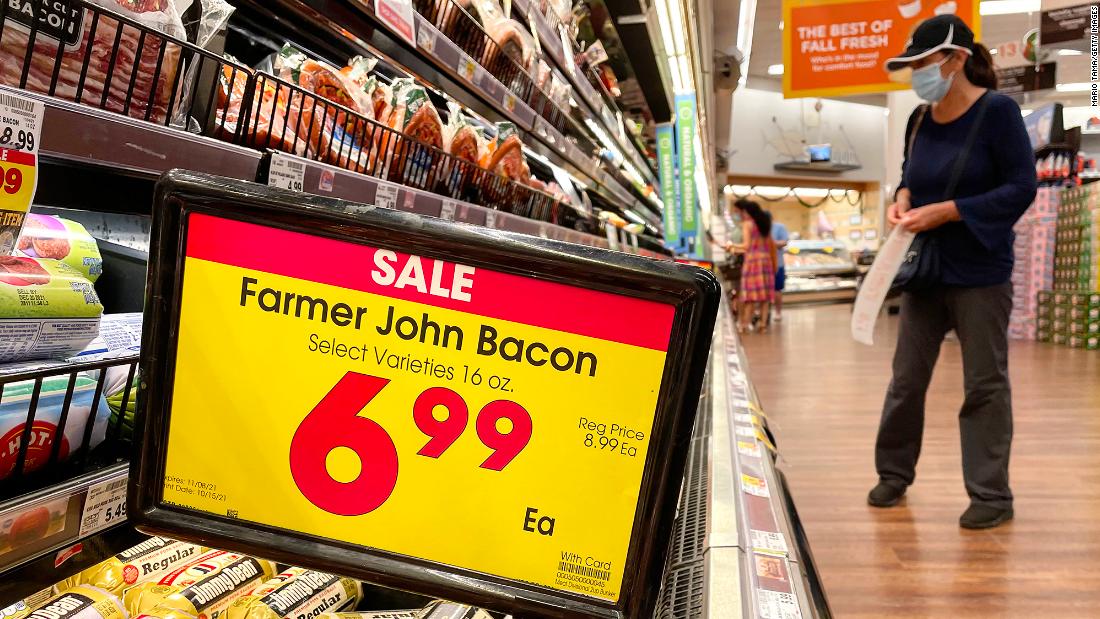
That may not sound like much, but when you look at a the cost of a tank of gas, heating oil, or a week's worth groceries for a family of four, that's quite a hunk of change, forcing the average American to pay more with less purchasing power. 

For example, since 2020 the price of margarine, which nearly everyone uses in cooking, has increased 56.8%. Eggs have gone up 40.1%. Sugar and sugar substitutes have seen a 39.1% increase. Meats, depending on type and cut, have seen a increase of between 39.2% and 44.2%. Car insurance raced upward to 47.5% while vehicle repair (already high) went higher to 47.1%. Gasoline prices almost doubled from January 2020 to June 2024; a increase of 89.5%.   

On the other hand, the prices of Smartphones dropped by 53.9%. 22.4% for televisions. Computers and related items went down by 15.9%, while other electronic equipment (like video cameras, microphones, etc.) dropped in price by 14.1%.The costs of non-electronic toys were 7.1% less as of June 2024 compared to January 20202.

Finally, men's clothing (such as suits, coats and jackets, as well as pants and shirts) saw a decline in price of 6.3% (but apparently not where I shop!).  So, while prices on some items cost consumers less, prices on other items cost more, some significantly more. I suppose it's all a matter of perspective. 

What about housing? How much has the cost of keeping a roof over your head changed since 2020? According to a report ResiClub of the Case-Shiller National Home Price Index, since 2020 until present, the cost of homes rose 47.1%, which they said "easily outstripping the gains of recent decades". That apparently includes not just the Trump years, but the Obama and George W. Bush years as well.

Some of the reasons cited for the increase in housing prices are the lack of housing in general (remaining down 34.3% from pre-2020 availability), the upswing in mortgage rates and jump in the price of construction material.  As an aside, a related RedFin report said that house payments are up 11% over 2023 prices. The average house payment is now $2,775.00. I can certainly see what Ms. Harris means by a "opportunity economy". But then, these are numbers based on her and Biden's policies.

While we're speaking about housing, what about the homeless? In 2020, the number of reported homeless was about 580,466. By 2023 that number had jumped to 653,104, up 12%, the highest year-to-year increase and the second highest total since 2007. Of that, 324,854 were white. 243,624 were black.  According to the VA, there was homeless 35,574 veterans as of 2023, representing an increase of 7.4% over 2022. A single homeless veteran is one too many for the nation to tolerate.

The unemployment rate is at 3.7%, which is higher than expected due to the drop in individuals who are no longer self employed. If underemployed and dissatisfied and looking are factored in, that number nearly doubles to 6.7%.  Note too that unemployment rates don't include those who've given up on looking or serving in the military. The Bureau of Labor Statistics said as of August 2024, overall job growth was weaker than anticipated with 818,000 fewer jobs than in March as previously reported.

While much of the job openings were service industry or low income, work hours correspondingly decreased from the traditional 40 hour work week to a current 34.3 hours. Nevertheless, employees are still expected to do the same amount of work as they would in a traditional 40 work week.

In 2022, the most recent year data was available, over 12% of the nation was living at or below the poverty level. 13% were "food insecure", which is a polite way to say they didn't have enough to eat on a regular basis. School provided meals are commonly the only regular nutritional food kids get. Data also indicated that the figures were trending upward, so by 2024 that number is likely to be considerably higher.

Wages have generally done well since 2020, exceeding inflation by roughly 2% overall. In April 2020, wages dropped by 6% but then jumped to a record high of 15.40% by April 2021. In 2014, when Trump took office, wages had been trending upward. Starting in 2014, the average wage was $24.33. In 2016, it was $25.38. By the time Trump left office, the average hourly wage was $28.44. Under Biden, it had increased to $31.63 as of January 2022. By September the average hourly wage was $35.36%. Social Security, disability payments, and other compensation are all tied to the rate of inflation.

It should be noted that the once untouchable Social Security Trust Fund has been repeatedly raided by Congress to the tune of $17.5 billion dollars. The Social Security Administration predicts that the trust fund will be empty by the end of 2034. Starting in 2035, recipients will see a 23% reduction in benefits. 

Although wages have done well in keeping up with inflation, that can't be said of everyone as the percentage of those falling behind has been increasing dramatically. Since 2009, wage inequality become has a serious issue, leaving the U.S. with the dubious distinction of having the worse wage differences of any industrialized country in the world.

 In 2022, despite federal laws to the contrary, women between ages 25 to 34 still earned 92% as much as men of the same age. Between ages 35 and 54, that number drops to 83%.  Finally, those from 55 and over, it's 79%! For minorities it's worse. Is this the "progress" or "change" Kamala Harris is talking about?

How well do employees do compared to management? Not surprisingly, not very well. For several decades, the incomes of senior corporate officers have far outperformed that of their employees. Ironically, the margin of difference has increased when tracked against the decline in union membership.
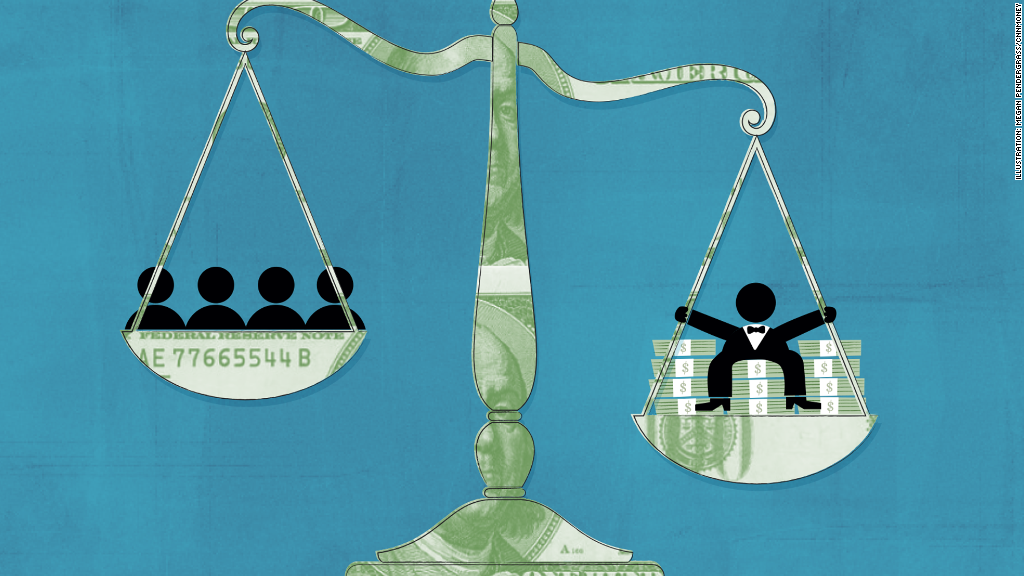
In 2021, the median employee to CEO wage gap was 235%, meaning that for every dollar a worker earned, a CEO received $235 dollars. A year earlier,  it was slightly better with a 212:1 ration between CEO and employee. In 2023, that ratio was now 268:1 among S&P 500 Index companies. I guess it really is good to be king!

In 2021, the Top 1% saw their percentage of wealth continue to grow by 9.1% while the bottom 90% saw theirs decrease.  During the same period, the Top 0.1% saw an income growth of 18.5%. The bottom 90% had a drop in real (after tax) income of 0.2% in 2020 and 2021. By the way, the Top 0.1% is what comprises the ruling oligarchy with a individual power index of 882.9 compared to the bottom 90% which has a power index of 1%.

The bottom 90% also saw just 58.6% of all wages earned, the lowest on record (in 1979, it was 69.8%), demonstrating that over time, workers have been losing ground compared to the upper 20%. Those in the rarified air of the Top 1% took in 14.6% of all wages generated (by comparison, in 1979 it was 7.3%).

To put it another way, from 1980 through 2021, the bottom 90% of Americans saw an increase in wages of 28.7%. The upper 1% saw their wealth increase by 206.3% over the same period while the upper 0.1% (aka: the ruling oligarchy) saw their wealth grow by 465.1%. Feeling nauseated yet?

It bears mentioning that Vice President Harris allegedly said Hurricane Helene victims would be eligible for a $750 "loan" from FEMA which would have to be paid back with interest or face a seizure of their property. That's false. FEMA is offering victims up to a $750 dollars onetime payment for baby food, diapers and incidentals., but it's part of a larger relief package.
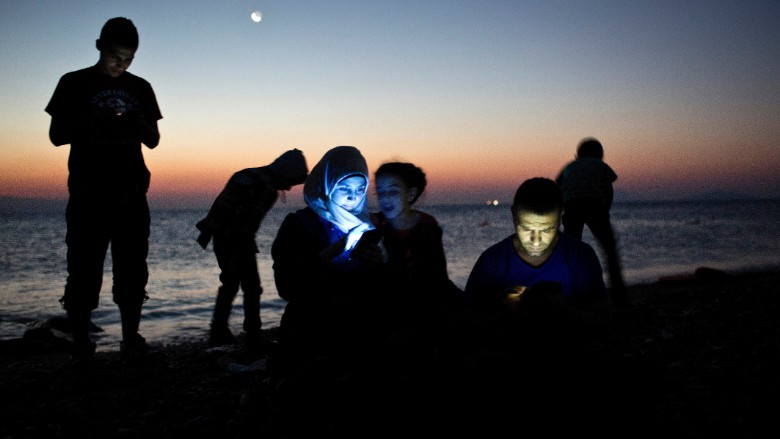
Another rumor is that illegal immigrants can receive over $2000 from the government. That's also not true. The federal government provides immigrants classified as "asylum seekers" (pending determination) with up to $459 monthly to help with the cost of food, transportation, and shelter for up to 12 months. Still, financially, doesn't it appears these "asylum seekers" are making out better than U.S. citizens in trouble?

Lastly, what about foreign aid? Under President Biden, the U.S. has sent $95 billion dollars overseas in the form of foreign aid. The majority of that money went to Africa, the Middle East (mainly Israel), Taiwan, and to Ukraine, which got the most at $60 billion dollars for weapons and other military aid.

Under President Trump, he attempted to get a 21% cut in foreign aid (including eliminating aid for 27 countries) with a requested foreign aid budget of $44.1 billion. However, Trump was overridden by Congress and much of his proposed cuts were restored. It should be noted that the Joint Chiefs of Staff and practically all of the major defense contractors publicly and privately urged Congress to reinstate Trump's military budget cuts, and why not? War is a very profitable business.

Biden has no such qualms. His continued support for arming Ukraine, Taiwan, NATO, and Israel (despite public hand smackings) assures all that the money will keep on rolling in. Besides, war or the appearance of war is a good thing. Besides, it helps to artificially simulates the economy.

The Defense Industry continues to build, spend and hire which in turn helps numerous peripheral businesses and that trickles out to the rest of the interconnected economy. It reduces the appearance of the unemployment numbers despite a reduction of jobs by enlisting individuals (many of whom are under or unemployed and whose numbers aren't included in employment statistics).  

This is the economic picture Kamala Harris and the mainstream media, in its subtle promotion of Ms. Harris, isn't telling you about. Instead, we're being offered generalities and distortions. While this blog is neither Democrat or Republican and strives to simply provide nonpartisan facts as it find them, it would appear that in the real world Biden/Harris, devoid of the script writers, teleprompters, and cheerleading, things aren't so rosy for the country.

Ms. Harris offers a campaign message of "progress", "opportunity", and "change" for a faltering economy and political state of affairs it helped create. It's like the lookout on the Titanic offering to take the wheel after it struck the iceberg.  Our "ship of state" is already bow down, badly listing and taking on water with its engines open full throttle. Not exactly the right strategy if you can't swim.   

This election is one of the rare occasions where we can look at Trump's past term in office and gage how he will perform if reelect. At the same time, we know what Harris has done and what four more years would like accomplish. Can Trump do better? Maybe. He's previously managed to hold his own while fighting the media, Congress, and the political/economic status quo. It certainly wouldn't hurt!  


Thank you for reading Another Opinion! We hope you enjoyed this article and will pass it along. Please don't forget to subscribe. It's free! Lastly, please "like" us on whatever platform you use to read anotheropinionblog.com. It helps beat the algorithms and keeps our articles in circulation. Please find below the links we consulted in researching this article. 


Eggs, gasoline and car insurance: Where inflation has hitAmericans hardest


US home prices have surged 47% since the start of 2020


Veteran homelessness increased by 7.4% in 2023


The number of homeless people in America grew in 2023 ashigh of living took its toll


Average Hourly Earnings of All Employees, Private


The Enduring Grip of the Gender Pay Gap


Inequality in annual earnings worsens in 2021


AFL-CIO Executive Paywatch


Comparing Biden and Trump's Immigration Policies in 12 Charts


Friday, June 21, 2024

Here Illegally? Want to Avoid Deportation? Just Get Married!

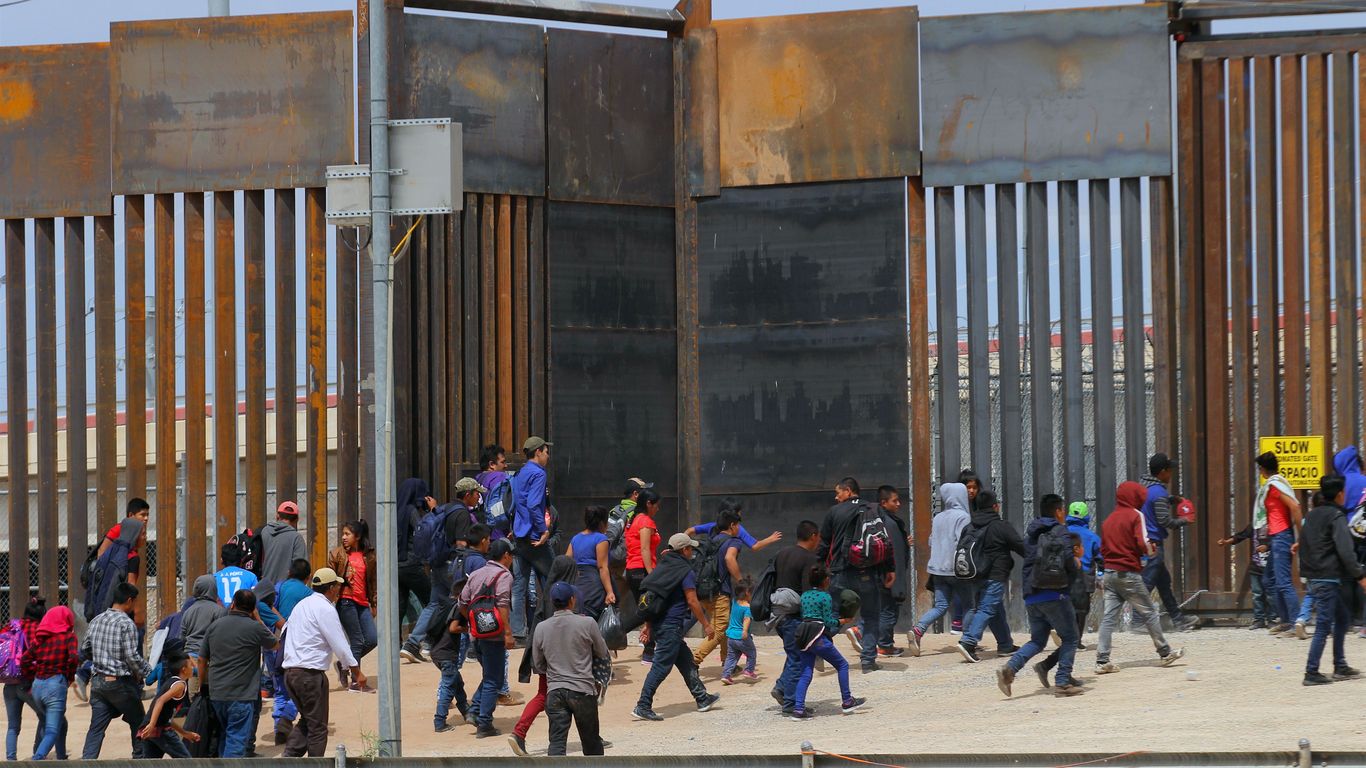
The White House is giving bridal gifts to almost 500,000 couples! NBC News and other news services have recently reported that President Biden  plans on issuing a executive order which will "shield" illegal immigrants from being deported, that is if they're lawfully married to a U.S. citizen. In fact, the order will instantly provide legal status to nearly 500,000 illegal residents right off the bat!

The key requirement of this executive order is that the immigrant in question must have been in the U.S. for a minimum of 10 years. The legislation will automatically give the individual access to a three year green card, or work permit, allowing them to openly work in the U.S. and draw benefits. Can you think of a better way to flaunt your immigration status to ICE and the Border Patrol than uttering two simple little words---"I do"?

Interestingly, the executive order comes just two weeks after Biden issued a executive order to allow immigration officials full authority to deport immigrants illegally here without processing their asylum requests. Sounds an awful lot like a President who is either not sure of what he's doing or is trying to pander to both sides of the issue. Thus, there's a few points which I think needs to be addressed here.

Well, first off, they aren't "undocumented". I'm sure they have ample documentation. It's just that they don't have a green card, meaning they are in the U.S. illegally, making them a criminal. and there's roughly 11.4 million illegal immigrants currently living in the U.S..

So, in order to remove the deportation "Sword of Damocles" from over their heads, all they need to do is find a willing partner (which doesn't have to be consummated in any form or fashion), stay married (at least on paper) for about a year, and then get divorced

Secondly, this legislation should prove to everyone on both sides of the border that without a shadow of doubt that the U.S. Government isn't serious about stopping illegal immigration at the border nor has it ever been serious about stopping it. If it was the national security risk they've claimed in the past, it would have been stopped by now.

The fact of the matter is that businesses want and need cheap labor who are more concerned with having a job than about benefits or even job safety. It true that many of these individuals who take jobs most of us won't. That's mainly because the job doesn't pay very well, there's rarely any benefits, and many times the job is unsafe or unhealthy. Also, since they're here illegally, they are unlikely to rock the boat.

It's also a fact that with this new found abundance of labor increases demand for available jobs. Higher demand drives down wages as competition increases. But it's not just wages, it's benefits too. With rising inflation, people will be to frightened about losing their job to rock the boat either. A win-win for businesses and a lose-lose for workers.

Of course, businesses aren't the only ones to benefit. Unions stand to benefit too. For decades unions have been hemorrhaging  money due to declining membership. They hope that many of these "undocumented" individuals will take some of the low paying union jobs. since their union dues will go a long way in filling their depleted coffers.

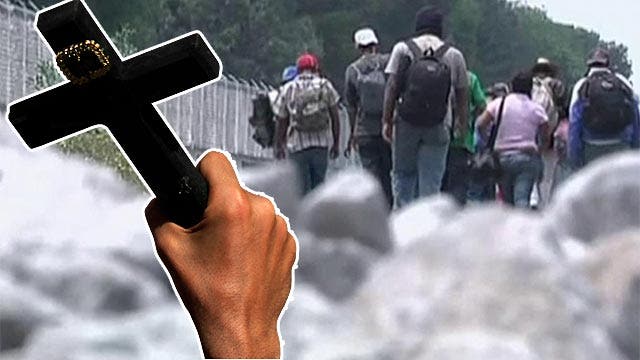
In addition, a number of religious groups and their service organizations have quietly and not so quietly been urging individuals and families to cross the border anyway they can. They believe their status as a "church" will keep ICE agents out long enough for them to find  appropriate transportation, housing and work. Besides, they're a "church" which makes them exempt from following the law, or so they think. 

These organizations also assist them in finding ways to take advantage of legal loopholes to secure taxpayer based services such as medical and entry of their children into public schools. Of course, ultimately they hope they'll become active members of their "flock" and make regular deposits to the collection plate. Not only will this build membership and improve the church financially, it also give them greater political clout.

Lastly, with a change in immigration status, I'm sure some entrepreneuring individuals will set up a "marriage broker"service. These modern day "shadchens" (a Yiddish  term for a "matchmaker") could specifically cater to each illegal immigrants particular situation  to help find a willing ---no-strings-attached---pseudo-spouse who's looking for cash---oops, I mean "love"---and  future short term mate quickly. I bet you'll see all sorts of these quickie wedding joints suddenly start springing up along the southern border. Who knows, perhaps a few "working girls" would be willing expand their professional services!

The bottom line here is really simple. President Biden is openly showing the American People that Washington isn't serious about stopping or reversing  illegal immigration anymore than they are willing to deport those already here. It's just too profitable. We've been pandered too and given lip service for decades.  Most, if not all, of what we've been told has been lies. Can it be any more obvious of the contempt the ruling class has for ordinary Americans?

Therefore, we can either continue to accept lies as business as usual and keep our mouths shut or demand transparency and elect people willing to defy corporate lobbyists and party bosses and have the backbone to do something about the border crisis.  And for those who are willing to do so on our behalf, we must given them our unwavering support.

If you enjoyed the article, please consider passing it along to others and don't forget to subscribe. It's free! Lastly please be sure to "like" us on whatever platform you use to read anotheropinionblog.com. It helps beat the algorithms and keeps our articles in circulation. Thank you!


NBC News:  Undocumented spouses of U.S. citizens will be shielded from deportation under new Biden plan


Biden to give legal status to 500,000 undocumented spouses


Matthews: Illegal immigrants double under Biden---and that's just the start


MPI: Profile of Unauthorized Population: United States


FAIR: How Many Illegal Aliens Are In The United States? 2023Update


Churches get more involved in immigration issue


Saturday, April 13, 2024

How to End Student Debt in a Sensible Way

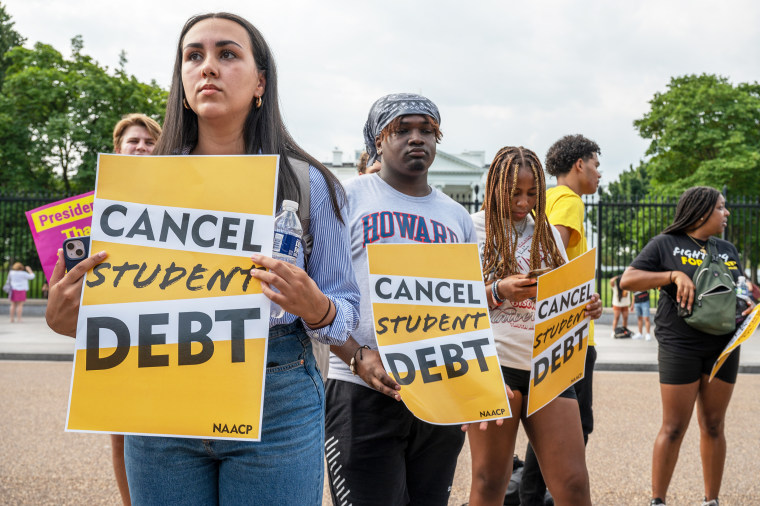
Well, old  "Doddering Joe" Biden has been out on the campaign trail again peddling one of his few big issues---paying off everybody's school debt. It seems a shame that after nearly four years in office, and he has virtually nothing to show for except a disaster with Afghanistan and a rocky economy. Even the school debt matter is little more than pie in the sky, but at least it sounds good to college students and hopefully, at least for Biden, that will translate into votes this November.

I guess you can't blame the students. Most of these young adults have racked up thousands of dollars in debt without thinking much about the long term consequences. The average tuition cost for 2021-2022 academic year was $10,740 for resident students at four year colleges. For out of state students it's double that at $27,560 dollars. Room and board for the academic years runs an additional $11,950.

Is any wonder that the average college student carries a debt of $38,290 according to Experian (this is usually in the form of federal student loans). Private student loan debts amount to $54,921. The total academic debt exceeds $1.74 trillion dollars, and that's the amount Biden is wanting us to pick up the tab for, which begs the question, just where does Biden think that money will come from?

Maybe he thinks we can just take it out of our savings account, but oh wait, nearly a quarter of Americans don't have a savings account. 23% of Americans can't come up with $1000 for an emergency. Of those who do have a savings account, 49% have less than $500 while 36% have $100 or less available!

In fact, according to a 2023 survey by Payroll.org, 78% or over 3/4 of all Americans live paycheck to paycheck, which is a 6% increase over 2022. The average American's  household debt runs about $104,250. In 2023, the total mortgage debt of all Americans was $12,252 trillion dollars! 

So how do most Americans live? They borrow it! The average credit card for household in 2023 was $6,501. Nationally credit card debt amounted to $1,129 trillion dollars. In married households, it common that both adults work. Some often hold down two or sometimes three jobs to make ends meet. 

Is it any wonder that 11.6% of Americans live at or below the national poverty line? That's roughly 37.9 million of us. Again, I ask where President Biden thinks we're going to find the money to take on someone else's debt when we can't pay our own? Obviously the student debt---all $1.74 trillion dollars of it---isn't simply going to vanish into the blue.

One way would be for Biden to ask the Federal Reserve to print money to pay the student debt. The problem with that is printing off more money isn't magic. "Someone" still has to pick up the tab, that "someone" is usually the U.S. taxpayer in the form of inflation.

 With inflation, the costs of pretty much everything goes up, from food, medical care, and mortgage to the costs of utilities and interests rates on damn near everything, but usually not wages. Thus you have to pay more with the same amount of money.   

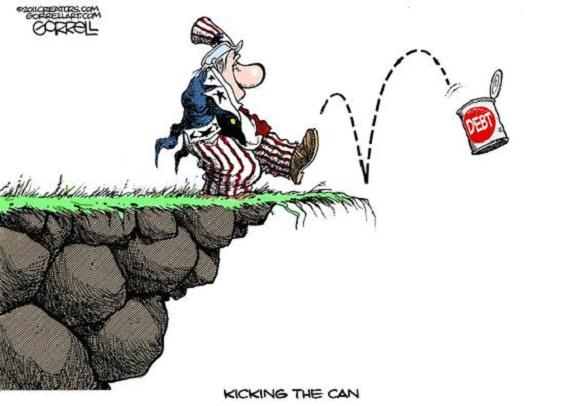
The U.S. sells its debt in the form of Treasury bonds. This, however, is nothing more than kicking the "honey pot" down the road a short piece while paying interest on top of it. Bear in mind too that countries like China, a potential nemesis, owns about 10.17% of our debt (Japan owns the most at 14.52%. The UK is third with 9.16% of our debt). U.S. investors (mostly corporate) owns the most at 32.5% followed by foreign corporate investors which own 29.3%.

When looking at college debt, 53% of federal student loan debt is $20,000 or less. 47% of college debt is actually owed by just 10% of college students who have debt in access of $80,000. 51% of those with a bachelor's degree owe under $30,000. 10% of students have private student loans (which also tend to have higher interest rates ) also had almost double the student debt.

So, with all that debt, how many graduates found work in their chosen field? Most studies show that just 47% are using the their degree in the field  of their choice (the majority of those are in fields like computer science, accounting, actuary science, medicine, or law).

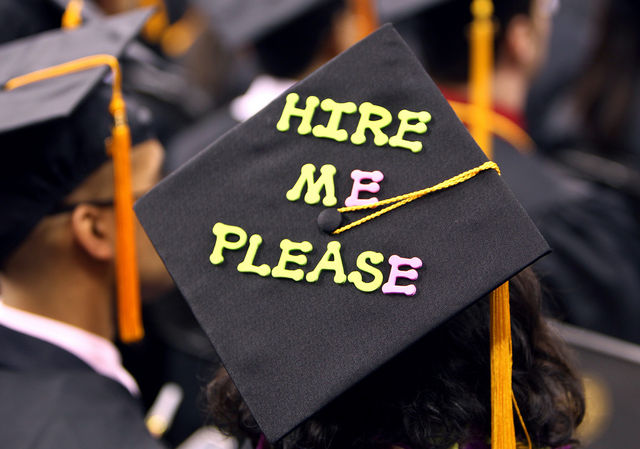
What's of note is that 52% of college graduates are underemployed a year after graduation or not working in their academic field.  33% are unemployed one year after graduating. Meanwhile, 47% have jobs which don't require a four year college degree! To put it another way, it means a substantial number of college graduates have degrees in which there is little or no demand for regardless of their GPA and they're stuck with a big ole debt.

Unfortunately, the majority of those going to college are doing so because they've been conditioned to think a college education is the only way to get a decent job. In fact, there's almost an entire industry that's trying to convince high school students to go to college!

They hear it from their teachers, from guidance counselors to college enrollment professionals (many of whom earn a commission for every student enrolled) and companies peddling loans. Many HR people have changed their job requirements to require a four year degree when in the past a simply high school diploma was all that was needed (if that!) without changing the salary or benefit levels very much. 

In Europe (and most notably Germany which ranks first in the world with a 99% literacy rate and a academic performance ranking of .94%  out of 1.00%), they have a much more advanced approach when it comes to education. Children, beginning in pre-school, are evaluated at regular intervals to measure their interests, aptitudes, and academic performance to determine whether a child should be steered toward the trades or higher education.

It needs pointing that in Europe, unlike America, there is no stigma among children going one track or the other, and no child is locked into a given path. They may opt to change direction at their discretion (along with the parent's approval). In addition, as in America, the trades often pay well, they're in high demand, and often offer good benefits. Finding a unemployed plumber, carpenter, or electrician in Europe (or anywhere else) is damn near impossible!

America needed to revamp its academic system and adopt something similar. Not every individual needs to go to college and not every job requires a four year degree...or its crippling debt. Secondly, the requirements to graduate from high school has been repeatedly "dumbed down" since the late 1960's (at the same time schools started throwing out the need for discipline in classrooms). Want proof? Compare a math, English, or science book from the 1950's with one from now. How many students today could successfully get through one? Not many.

We've developed the bad habit of "flunking" students forward out of fear of upsetting their fragile little egos or angering their parents and getting sued. Teachers spend more time babysitting or worrying about getting jumped than teaching. The result is an academic system which has failed everyone.

It's time to return to stronger academic requirements...and performance in order to graduate.  For students who don't want to learn or disrupt others, get them out of the classroom since it's doubtful the "board of education" will ever be reintroduced. Nevertheless, there's no reason these individuals should be allowed to interfere with the education of those there to learn.

As an aside, during the 2021/22 school year, Homeland Defense reported 327 school related shootings resulting in 188 deaths or injuries. During the same period, 43% of  educators know of a teacher, principal, or someone affiliated with the public school system who've been assaulted by at least one student (often they're jumped by groups). Of this, 20% have been principals. Attacks on school bus drivers have risen 121% between 2001 and 2022. This is completely unacceptable. 

Suspending them does no good. That's what they want---to be out of school. Put them to work doing something they don't want to do like janitorial work at the local jail or prison. Maybe assign them to picking up trash along the roads. Send them to a "juvi" bootcamp. Let them find out what life without a solid education is really like.

As an aside, high school teachers and academic advisors need to change their mindset. Not every student needs to be guided toward college or the military.  The military is a good option for some people, but not all. Not everyone has the right temperament or physical ability for the military. For those who do, they can get good job training if they pick the right rating or MOS (always think about whether your selected MOS or rating is easily transferable to the civilian world after you get out). The military also offers decent benefits, and you'll sure grow up fast!

For those not going to college or lack the urge to "be all they can be", there's the trades. Often overlooked or ignored, the trades are a great way to make a living and provide for a family. First, the pay can be great. So can the benefits. You can work for yourself or someone else (a terrific option to gain experience). You can go union or not. Basic training is generally short and often there is little or no debt. Lastly, there's a huge and growing demand for most all trades. It is a seriously great way to go.

America has a failing  (or failed) school system. Academically, the United States ranks 36th in world for mathematics and 24th in science. By comparison, the top five highest scores in math all go to Asian countries. The Scandinavian countries rank in the top tier across the board.

Overall, the U.S. in 33rd out of 44 advanced industrial countries academically, placing us in the middle of the bottom tier. It's common in the U.S. nowadays for employers (including the military) to provide remedial classes in reading comprehension and basic math for so .   How do we expect to compete globally with results like that?

Next, employers need to reevaluate their job requirements. Does every position actually require a four year degree? If so, then you need to also reevaluate your pay scale and be prepared to pay out a lot more for your potential new employees. Otherwise, employers need to bring their job requirements more in line with what the job actually calls for.

The world doesn't need another art major any more than it needs another gender or race centered major. If we're to reduce college debt, either colleges are going to need to cut their tuition rates (which won't ever happen) or a new approach is going to have to happen to help graduates quickly gain employment to they can start paying off their debt.

That means they need to reassess their choice of majors. All new admissions or undecided majors, along with school councilors, need to review each student's proposed major/minor. Part of the review needs to include a look as the job demand for that particular degree. If there is little or no demand for that job, the applicant must either choose a new major or include a second major (or expanded minor) in a field where there is a demand that's complementary to their major.

For instance, if an applicant choose history as a major, then they need to back that up with courses in something like law, biology, or financial analysis; something where there's an actual demand in the job market. If they choose an art major, then they need to support it with a expanded advertising or marketing minor. The same goes with gender or African-American studies, anthropology, humanities, and so forth. If they combine their desired degree with something employable to fall back on then maybe they can stay out of their parent's basement!

Another opinion is to offer lower interest rates to students pursuing degrees that are in demand, thus making them less of a risk to the lender.  The average interest rate among all student borrowers is 6.87% for federal loans (just over 94% of all student loans. For undergraduate loans, it's a little less at 5.50%.  For those seeking graduate or professional degrees, the interest rates on loans range from around 7.05% to 8.5%. Interest rates from private lenders varies wildly, typically from 3.99% to 13.99 for fixed rates and 5.24% to 13.99% on variable rates.

Much of this is determined by the borrower's credit history and employment status. Other factors include their current debt load or whether they have a co-signer or not and their credit worthiness.  If someone is majoring in a degree where there is a demand, and thus the likelihood of  them getting hired quicker, they would obviously be a better credit risk and thus should be rewarded with better credit terms.

But none of this is what President Biden is peddling. His solution is to wave his magic ink pen and make all student debt suddenly disappear---poof! Just like they never promised to pay it back. Maybe this would be their final lesson --- you don't have to take responsibly for the decisions you make. "Someone" (meaning the government) will bail you out, which means everyone else will have to pay for your bad choices and broken promises.

If you think about it, it kinda makes sense in a twisted sort of way. The United States is the worse debtor nation in the world. The federal debt tops $34 trillion dollars and yet it routinely spends money it doesn't have. Washington can barely make payment on just the interest, which was $725 billion dollars as of July 2023. That's 14% of entire federal budget. But no worries. They can always raise the debt ceiling and go on their merry way!

At the same time, unlike nearly household in America, Washington has consistently refused to adopt a balanced budget amendment which would prohibit them from spending more than they take in.  Is it any wonder then that college graduates and others should expect someone else to pay their bills?


If you enjoyed the article, please consider passing it along to others and don't forget to subscribe. It's free! Lastly please be sure to "like" us on whatever platform you use to read anotheropinionblog.com. It helps beat the algorithms and keeps our articles in circulation. Thank you!


What is the average student loan debt in 2024--- and whatare the impacts?


Average debt in America: 2023 statistics


Nearly Half Have Less Than $500 in Savings: How To Build UpYour Balance in 2024


Average Cost of College Tuition


37.9 million Americans are living in poverty, according tothe U.S. Census. But the problem could be far worse


Living Paycheck to Paycheck Statistics 2024


58 Trade school vs. college statistics for 2022


New college grads are more likely to be unemployed in today's job market


Average Student Loan Interest Rate


Saturday, August 12, 2023

"Stop Acting White!" Has Race Comparison Contributed to Black Academic Failure?

Have you ever heard the expression "stop acting white"? It is typically a remarks most often heard in black communities, and you can bet it isn't being said as a compliment. It's also come up in several corporate diversity projects such as Coke's infamous online training blunder which was hosted on LinkedIn back  in 2021 (link below).

Although education is typically held up as the gateway to success, there seems to be those who do well in school that are seen as somehow "betraying" their race (as if failing is something to aspire to). However, some claim that is purely a cultural myth, but let's look further.

According to the U.S. Census Bureau, Black Americans, who are the second largest minority at 13.6% of the population, have the second highest poverty rate of any group at 25.8%. The largest are Native Americans and Native Alaskans at 27% while comprising only 2.9% of the total population.

The National Center for Educational Statistics reports that the dropout rate among black students between the ages of 16 and 24 is currently 5.9% (down from 10.3% in 2021). For Hispanic students in the same age bracket its 7.8%, a drop from 16.7%. Among Native Americans and Native Alaskans, it's deceased from 15.4% to 10.2%, which is still extremely high given their small population numbers.

White kids have a dropout rate of 4.1%, down from 5.3%. Asians have the lowest dropout rate of any group at 2.1% from a "high" of 2.8%. Lastly, among children of two or more races, the report indicated they had a dropout rate in 2021 of 6.1% to a current rate of 4.9%. Lastly, let's look at incarceration rates.

America has the dubious "honor" of having the highest incarceration rate of any nation in the world. More than Russia. More than Iran.  More than China or even North Korea.  The largest minority population in prison are black males who, at 38.5% of the prison population, make up 1 of every 15 inmates.  Native Americans  are 2.6% of all inmates, which again is a unusually large amount given the relative size of the Native American population.

While making up 19% of the U.S. population, Hispanics represent 1 in 36 of every inmate or about 29.9% of those behind bars.  Yet, while white males are the largest population behind bars, comprising 57.4%  of inmates, blacks are incarcerated at a rate of 5x their white counterparts (as an aside, Hispanics are jailed at just 1.3x that of whites). 1 out of every 81 black adult has served time somewhere.   In 12 states (Alabama, Georgia, Delaware, Illinois, Maryland, Michigan, New Jersey, Mississippi, Virginia, Louisiana, South Carolina, and North Carolina) blacks make up half of the total prison population.

According to the Bureau of Justice Statistics, 41% of all inmates are high school dropouts (the national average is just 18%) while 22% have a high school diploma or GED.  Females were more likely to have graduated from high school or have earned a GED while 68% of all males did not.

When broken down by race, we find that 44% of black inmates lack a high school degree or GED. 53% of Hispanics lack a high school diploma or GED as well. Meanwhile, only 27% of white inmates failed to graduate high school or obtain a GED.  

Interestingly, 27% of female inmates have taken some college level courses while 35% have actually graduated from college. At the state level, 46.5% of inmates lack a high school degree while 3.5% of white prisoners hold a college degree compared to 1.9% Hispanic and 1.6% black  inmates. It's worth noting too that 84% of all businesses indicate that they require a high school degree or GED to get hired. 

So, given the bleak prospects that await most individuals who "act white" face by doing poorly in school, why would they not try to do well?  I found a good answer to that question in the video below. The video, which lasts just 14 minutes, is hosted by popular content producer and social media "influencer", Amala Ekpunobi.

Born in 2000, the "unapologetic" Ms. Ekpunobi (born Susan Amala Ekpunobiis) is a former left wing student activist who has since become quite the conservative (with some strong libertarian tendencies I should add) social media star. She is also affiliated with  PragerU, a private conservative foundation and advocacy group, as a "PragerU Ambassador".  She is also a outspoken Trump supporter.  

Ironically, back in her leftist days, she considered herself as strongly "anti-white" while claiming that whites were inheritably "racist", which makes her video all that more interesting. Appearing with her in this video is another black female social media influencer and "YouTuber" who goes by the moniker of "Gothix" (real name "Vanessa"). She also appears on Instagram and Twitter (aka "X").

Born in 1988, the married podcaster is known for her conservative and Christian content, which has put "Gothix" at odds with many of her racial and social contemporaries, which adds to the impact this video has produced. Below is the video. I hope you'll enjoy it and find it as enlightening as I did in light of the data provided above.     


Video: A Response to "You Act White" w/Gothix

Amala Ekpunobi: Unapologetic


If you enjoyed the article, please consider passing it along to others and don't forget to subscribe. It's free! Lastly please be sure to "like" us on whatever platform you use to read anotheropinionblog.com. It helps with the algorithms and keeps our articles in circulation. Thank you!  


Video: The Betrayal by the Black Elite

The Real News Network: Hosted by Chris Hedges w/ Dr. Cornel West


The Two Faces of Racism


The State of America's Education System: How Low Can You Go?


Crime, Race and Ethnicity in the United States: Where Are WeHeaded?


Racism, Youth, and Distortions  by the "Woke" Left


NCES: Status Dropout Rates


Zoukis Consulting Group: Inmate Educational Levels


Saturday, June 11, 2022

The Great Resignation: Lots of Jobs But No Takers


Recently, while on my way home from an appointment a few days ago, I came to one of those innumerable stoplights. As I waited patiently for the light to turn green, I noticed a weathered looking man who appeared be in his 50's. His clothes were worn. Dusty but not ratty. His shirt was the cleanest part of his appearance, but it too had seen better days. His look suggested someone who hadn't seen a shower in several days, but he didn't look like he had missed many meals or happy hours.

What caught my eye was the cardboard sign he was holding---"Veteran Down on Luck. Anything Would Help". A few motorists handed him what appeared to be spare change; perhaps a dollar or two found their way into his dirt stained pockets. I felt a bit sorry for him. After all, I'm a disabled veteran, and the "but for the Grace of God" and all that. Yet, I couldn't help but wonder why he wasn't able to find a job. It seems everywhere I turn I see "Help Wanted" signs (he was actually standing a few feet from one).  

In speaking with store managers and employees, I hear the same, now well worn story about no one wanting to work. Those hired stop showing up after a few days or quit the same day. Several employers have doubled or even quadrupled their starting hourly salary. Some are even offering prospective employees same day pay! Never did I think there would be such a demand for workers. Employers are literally begging for employees.

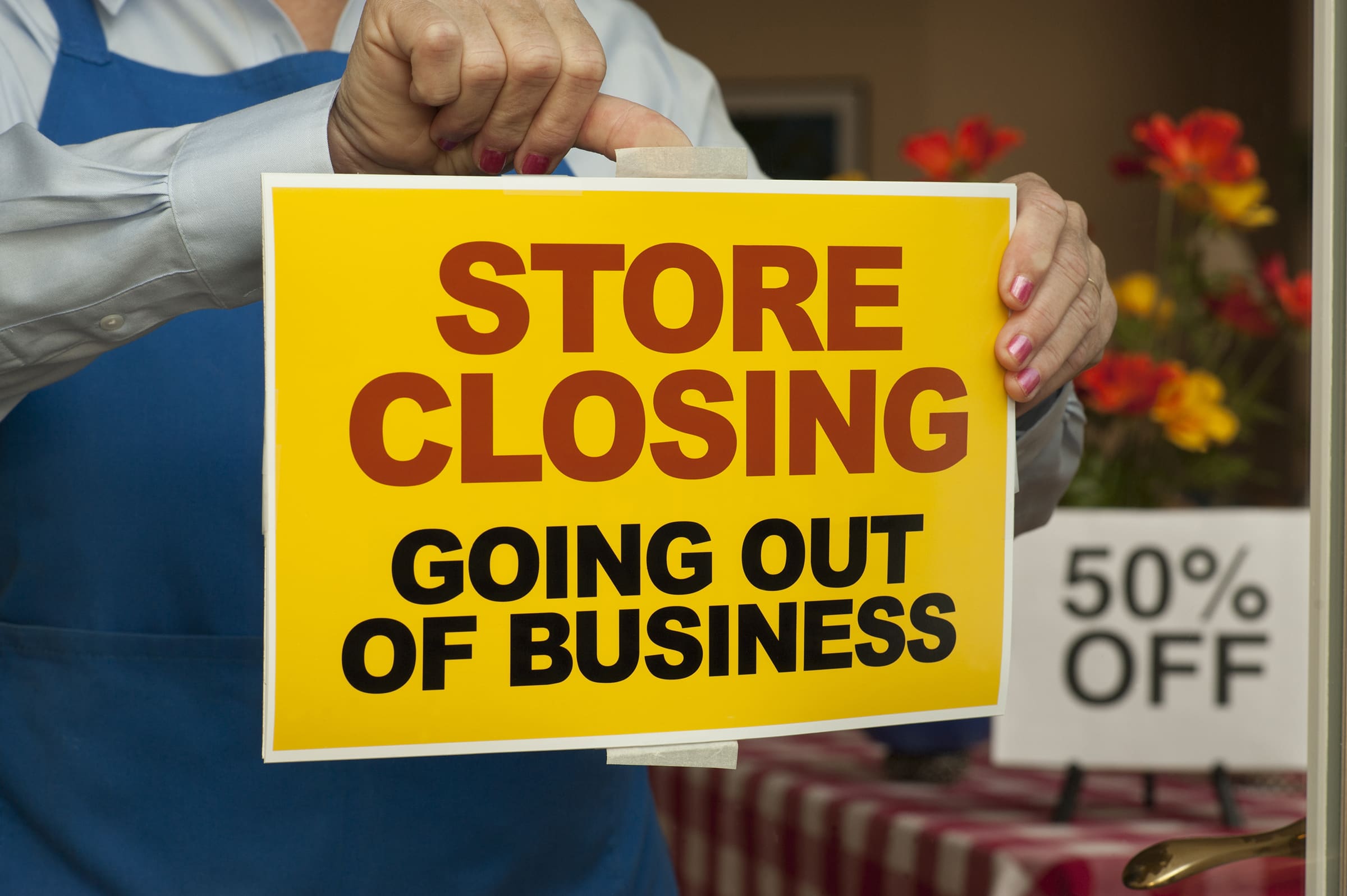
In the interim, partially stocked shelves have become the norm. Not enough stockers, and those who will work, do so during business hours, meaning that finding what you're looking for is as much catch as catch can than not, especially in drug or grocery stores. Some businesses are closing early or not open during times which would have been their busiest. They can't do that for long and stay in business.

Strangely, as I sit there at the light, patiently waiting for it to turn green, I hear the latest news on the radio tell me about high unemployment. It doesn't make sense. How can we have high unemployment when every business is desperate for employees. What gives?

The U.S. economy had been chugging along nicely for several years under Trump. Unemployment had dropped to around 3.5%. The GDP was 2.5%, production was up, no inflation. Then came Covid-19 and everything changed. Covid inspired fear not just in America, but throughout the world. The media played it up like it was the second coming of Black Plague which had nearly wiped out 2/3 of Medieval Europe or the Spanish Flu which added a deadly punctuation mark to end of WWI with over 50 million dead worldwide.

We were urged to home quarantine. We were paternally warned not to venture outside unless it was an emergency, such as a trip to the doctor or hospital.  Elsewhere, run to the grocery store were only for the healthiest of us to go and only if we wore masks and used sanitizer whenever we touched something.  It was as if the world had become toxic. I half expected needing a note from the mayor.

We had daily "infection rate and death counts" on television which seem like a macabre infomercial. We were prohibited to visit anyone admitted to the hospital, or  worse yet, from being with friends and loved ones as they struggled to breath their last. Even the dead weren't immune from the isolation being imposed on us. Then the shortages came.

The quarantine imposed by government covered all but the most essential of workers, who, ironically, were the lowly hourly workers that most everyone ignores. There were shortages of nearly everything. The result of a badly fractured supply chain, missing workers, and made all the more worse by hoarders (there will be a special place in Hell waiting for them by the bottled water section).  Walking around in the frozen food aisle amusingly made me think of "The Andromeda Strain" for some reason.

Employees were ordered home. Some took their work with them and at least earned a paycheck. Most didn't get anything but unemployment. Thankfully, the government came to the rescue right on queue with multiple "tax free" stimulus checks. However, "free money" is never free.  Schools closed long enough for departments of education to find ways for students to study from home, enabling schools systems to collected their tax dollars and keeping teacher unions happy.

The government mass produced  not just one, but three main vaccines. This would normally take years, if not decades, to develop, test and get FDA approval, but they did it in a matter of months! No wonder some were hesitant. People waited in line for hours to "get the jab". Businesses, hospitals, and doctors began demanding proof of your vaccination before allowing your admittance. It was all surreal like some dystopian Sci-Fi movie...or Nazi Germany.  Ihre Unterlagen bitte! ("your documentation please!").

If you had any faith in the compassion of your community, it was surely put to the test by then. But like everything in life, Covid has all but passed. I think we're on booster shot #6 now. Sporadic shortages remained, and America was left more divided than before. The shortages have forced prices upward while employees, who were furloughed during the pandemic or who worked from home, didn't seem all that anxious to rush back to their cubicles.  Thus began what has been called "The Great Resignation".

While Covid eventually passed from page one, and life generally returned to normal, one key component was missing. The workers. The government had selectively forced businesses to close but not others. Only the smaller "mom and pop" and local businesses closed while the government allowed the big mega stores to remain open. Couldn't have anything to do with their political clout could it?

The result was fewer businesses to return to, reminiscent of the years immediately following the Great Depression. It also, by implication, meant that there should have been more workers available for a limited number of jobs. Simple economics dictates that higher demand for fewer jobs should result in lower wages and a reduction of benefits. Somehow, that didn't happen, but why?

Of the estimated 8.4 million who were technically "unemployed", there still remained 10 million job vacancies. That didn't include those who were underemployed, overqualified for the job they had, or who were employed but quietly looking to switch jobs, or had simply dropped off.  Prior to Covid, there was little choice when it came to having a job and paying the bills. That all changed.

Between 2021, just as things started easing back to normal, and now, we reached a 20 year high in the number of people who quit their jobs. 63% of those who walked away from their jobs cited low pay as the primary reason.  As an aside, did you know that if the minimum wage had been tied to the rate of productivity (how much income someone generates in an hour), the minimum wage would currently be $26.00 by now?

Another 63% indicated a lack of opportunities to advance. 57% said they felt "disrespected" at work or unappreciated by their bosses and fellow employees. Ironically, more women quit than men. 20% compared to 18%. When it came to race, 24% were Hispanic and Asian. 18% were black while 17% were whites. The majority, 22%, had no more than a high school education. 24% were low income. 18% were middle income. Finally, there was evidence of worker blowback and all it took was a pandemic.   

Prior to Covid, most people felt they had little hope of being able to do much about their employment situation. Namely, try to find another job (which may be just as bad or worse than the one they have, even if the pay was slightly better), try to improve their educational status part time or quitting and going full time (45% said they had no or little say in choosing their hours, which made returning to school a tough choice). Either way meant more debt and added stress.

48% quit over childcare issues, stating their employer was unwilling or unable to work with them and forcing them into a no-win choice. Interestingly, 18% said they quit because their employer required they provide proof of a Covid vaccine, which remains a contentious issue with conservatives.

Meanwhile, a large segment decided to cash out of their investments, such as their 401k, stocks, and savings accounts to prolong their protest. Some opted to sell their homes for rental property in order to avoid rising property and other taxes. Others lived off credit cards which were soon maxed out. Those able to moved back home with their parents or other relatives, while some consolidated their living accommodations into defacto dorms. A few turned to existing government programs and charities to help with clothing, rent, medical care, or food.

But perhaps it was the fear that the government and media so skillfully implanted in people's mind which changed their priorities. Polling would seem to indicate it was. In recent polls, many stated they had used their time off to rethink what they wanted out of a job, especially those in the service industry who had been demanding higher wages and better working conditions pre-Covid.

However, the trouble with their demands  is that many, if not most of these jobs were never intended to be long term. They were meant to be part time and temporary jobs for those just getting started in the job market or students picking up some extra cash. Entry requirements were fairly basic with the emphasis being primarily on reliability, good people skills, and a willingness to follow direction.

But with the declining academic performance of high school graduates, an increase in dropout rates, and rise in the number of single parents with no work experience needing a job, that all changed starting in the 1970's. Unable to secure higher paying jobs, many turned to minimum wage entry level jobs as family sustainable jobs. These often required longer shifts and/or multiple jobs to make ends meet. Workers began to demand middle class pay and benefits for what were entry level employment.

To accomplish that, employers would have to double or triple their prices, which would drive off customers. But with an abundance of pre-Covid  applicants, why bother? Now that pool of applicants (as well as existing employees) were gone, employers saw no choice. The result was higher wages and better benefits for workers, but also a cutback in  hours, early closures, and  existing employees doing more.  For some employers, that wasn't a solution.

Some companies turned to automation to remove their dependence on these temperamental workers. However, their capitalist mindset dictated passing the cost of automation on to their customers. Higher prices means less demand. Less demand means fewer employees doing more. So merry-go-round turns.

The pandemic has changed the face of the economy. It enticed older workers, mainly baby boomers, to hang it up earlier than planned, leaving Millennials to pick up the slack and opening the door for the emerging Gen Z workforce; many of whom just graduated from high school.

Initially they'll have plenty of jobs to choose from, but with rising prices, fewer of small businesses (which have historically been the economic backbone of America), and increased automation, they'll need to get some diverse experience under their belts as quickly as possible. Post-Covid years will surely be remembered as the Age of Diminished Realizations.

The pandemic also, for better or worse, resulted in a selloff of homes for apartments or condos. Some have moved downtown for convenience sake, assuming downtown is safe and can provide the necessities they need like grocery stores, pharmacies, and good schools for their kids, and adequate shopping and entertainment.  Others have opted for smaller communities for similar reasons.

But what will happen as those who cashed out of society begin to run out of money, as surely many are by now? Having exhausted their private safety nets, they have little if anything to fall back on. Federal Covid relief is a thing of the past. Most states have long since cut off unemployment benefits beyond just a few weeks given the abundance of available jobs. But those jobs will soon vanish as the recession and rising prices takes hold. Then what?  Already 11.4% of Americans live in poverty. When combined with those who live near the poverty line, that figure jumps up to 32% or one in three Americans.

Prices are already shooting up at unprecedented rate. Gas, utility, and food prices are quickly outstripping income, especially for those on fixed incomes. Our usual political infighting and bungling isn't helping.  The system has intentionally been broken in favor of the 1%. Reform won't cut it. How much longer will we tolerate this? How much longer can we tolerate this?

Oh, that panhandler I mentioned at the beginning? In several polls, many panhandlers admitted that they could make as much or more money standing on a corner begging money than working most entry level jobs. Incidentally, many panhandlers work in teams, giving each other breaks, looking after each other's stuff, and splitting their earnings. Has this the image of the new American entrepreneur? 


If you want to know more, please take a look at the links below. If you enjoyed the article, please consider passing it along to others and don't forget to subscribe. It's free! Lastly please be sure to "like" us on whatever platform you use to read A/O. It helps with the algorithms and keeps our articles in circulation. Thank you!  


Majority of workers who quit a job in 201 cite low pay, noopportunities for advancement, feeling disrespected


Minimum wage would be $26 dollars an hour if it had grown inline with productivity


These two demographic trends are driving the 'Help Wanted' inside so many business windows


'Help Wanted' signs indicate lack of decent job offers, not people unwilling to work


13 reasons that help explain labor shortage


'Help Wanted' signs are everywhere. Where did all the workers go?


Does half of the U.S. live "in or near" poverty?


Saturday, February 27, 2021

'Try Acting Less White' : Diversity Training Webinar Gone Awry


We've all heard the advertising slogan, "Things go better with Coke". Well, they may want to update that. Apparently not everything goes better with Coke. I'm talking about a online training webinar entitled "Confronting Racism: Understanding What It Means to Be White, Challenging What It Means To Be Racist" which was promoted by the popular soft drink manufacturer and hosted by LinkedIn.

The online training webinar, allegedly a project of Robin D'Angelo, author of "White Fragility" and was being hosted by LinkedIn, has been removed because of the immediate blowback and negative publicity it caused.  The story about the webinar was broke by Karlyn Borysenko, a psychologist and activist against critical race theory, which is the basis behind "white privilege" and institutional racism.  

According to Borysenko, she was sent the screen shots from an anonymous whistleblower at Coca-Cola who claimed that the webinar was part of the company's mandatory diversity program, "Better Together", and had been acquired through the business oriented website, LinkedIn, for their use.  

The webinar implied that all whites were naturally born racist, which was reinforced by societal norms. The course encourages white employees to "act less white" and adopt certain undefined behaviors such as being "less oppressive", "less certain", "be less arrogant, and to "break with apathy" in dealing with blacks in general according to some of the webinar's slides (you can read the slides through the links below).

 It also encourages employees to "break with white solidarity" which seems to imply that whites act as some monolithic front when it comes to dealing with racism. Another one of the slides evidently told employees to be "less white" in their daily dealings.

The webinar also appears to imply that racism is a one way street; that only whites are capable of racism. If the term "white" was replaced with "black", "Hispanic", or "Asian", we'd be seeing 24 hour news coverage complete with faux outraged politicians, celebrities, sports figures, and all the empty talking heads on the various news channels condemning the webinar. Lawyers would be lining up around the block to go after Coca-Cola, LinkedIn, and no doubt, the content writer. 

LinkedIn has removed the webinar. Ms. D'Angelo has stated through her representative, Caitlin Meyer, that she was not aware that she had been included in the webinar or that the slides had been "re-edited" in the manner presented (particularly as a training course on anti-racism). She also stated that the content presented in the webinar did not properly reflect her work.

As for Coca-Cola, they acknowledge having a diversity training program entitled "Better Together" which was linked with LinkedIn's educational products, but it denies that the courses are "mandatory" (according to Ms. Borysenko, several employees she spoke with said the programs were, in fact, mandatory).  The soft drink conglomerate promised that it would continue to "refine their curriculum".  

So, what happened? Ms. D'Angelo denies that either the webinar nor its content was the result of her efforts. In fact, she seemed to be a bit put off by the content of the slides mentioned. LinkedIn, which hosted the webinar, yanked it and thus far hasn't commented. Coca-Cola appears to have got caught with its pants down and minimized any responsibility of the content judging by their brief statement.

There's nothing unusual about companies offering courses on race relations or diversity. I took diversity classes in graduate school and again when I was an adjunct professor. Even when I was enrolled in community organizing training, diversity training was part of the curriculum.

I never had any issue with diversity training. When I was growing up in the deep South during the 1960's and the Civil Rights movement, our classes were already highly diverse. They included Native Americans, Hispanics, Greeks, Irish, Italians, Asians, and had quite a number of black students too.

We had Hindus, Catholics, Protestants, Eastern Orthodox, Buddhists, rich kids and the children of migrant workers. None of us cared. We learned together, got in trouble together, played together, occasionally fought with and beside each other. We accepted our differences as well as our similarities as just a part of life. That's just the way it was, and that's the way it's always been for me.

I've known people from across the spectrum. Most were just acquaintances; people I encountered throughout my comings and goings. A tiny few were close friends, and others I wouldn't piss on them if they were on fire. If you treat people the way you want to be treated, you shouldn't have any problems. I believe that's all most anyone really wants.

As for diversity training, it's to help expose people to different races, cultures, religions, and values. Anything which can help us get along together I'm all for. However, I do have an issue with trying to blame any race or singular group for our problems. Usually it takes two to tango.

Racism is not a solo sport. It works both ways. Yes, there are white racists, but there are black, Asian, and Hispanic racists too. Hatred is, sadly, open to all. Racism and discrimination have always existed, and to some degree, will likely continue to exist for some time to come.

Racism and discrimination have been a part of the human condition since the beginning. Both developed out of our tribal beginnings. It was likely due to our sense of competition, be it for shelter, resources, or reproduction. We are hardwired to seek out the familiar and reject what's different. We also seek out approval and reaffirmation of our beliefs and values, which became, over time, our traditions and eventually, part of culture and self-identity. 

We've never stopped being, in some way, tribal. We've never stopped being competitive, be it in school,  the workplace or the playground. Over time we've learned to suppress our suspicions and cooperate. It proved to be mutually beneficial for our survival. We've adapted. We've changed. Be it our values, traditions, or even cultures.

Adaptability has been our secret power. It's what has enabled us to survive everything from wooly mammoths, cave bears, and saber tooth tigers, to plagues, wars, and climate change.  Experiencing and accepting diversity is part of that adaptability. However, trying to claim that racism or discrimination is a one way street isn't. It's an attempt to project our successes or failures onto someone else.

The barriers of the past are for the most part gone. Yes, it's taken time; far too much time. There are still barriers out there. Women are still not treated the way they should in the workplace for instance, yet they make up almost 58% of the workforce. They are too often denied supervisory or senior management positions. They still aren't paid the same as men for doing the same job.

People who are LGBT are still frowned on. Personally, I don't care what your sexual orientation is. In fact, it's none of my business any more than mine is theirs. I certainly don't think it has any part to play in academia or the business world. The only thing that matters is their personal conduct and their professional performance.

The same goes when it comes to race, religion, or ethnic heritage. If you can practice your faith without disrupting business or being anything less than professional with another employee or customer, so be it. If, because of your ethnic heritage, religion, or culture, you can't (or won't) work with someone else of a different heritage, religion, culture or gender, you might consider your other employment options.

If you believe you are "entitled" to a job or promotion because of the color of your skin or gender, then I don't think you're the right person for the job. I'm not a fan of quotas. You should be hired or promoted because you're the right person for that position.

People should be hired or promoted because they have proven experience as well as the right education and skill set. Most of all, because they have the right attitude to get the job done and can be counted on.  By the same token, companies should never hire or promote anyone just because it looks like a good PR opportunity. Ultimately, they do both the individual and the company a disservice.

Finally, this. We all belong to one race---the Human race. We are the lone survivors of millions of years of evolution. Just 300,000 years ago, nine humanoid species walked this earth.  We're all that's left, and we have the wherewithal to wipe out every living thing on this planet (with the possible exception of cockroaches) within a matter of minutes.

Though we're just a single race, we belong to different branches on the same family tree. We have our differences, just like they are differences between cousins within the same family. Some of us have darker skin or lighter hair. Some have blue eyes, and others have green eyes or hazel eyes, while the majority have brown eyes.

 Some are taller, shorter, or carry an extra layer of fat to protect us from the cold. We are male or female. We have different shaped skulls or shaped eyes. And yes, there are subtle differences in intelligence just like there are subtle differences in athletic ability or immunity.

We have different cultures, traditions, values, and religions. That doesn't mean one is worse or better than the other. It just means we developed these civilizing factors based on differing environments and experiences.

However, we also have much more in common than not, such as our love for our children, appreciation for our elders, a need to protect things and individuals which we value, as well as a distain for certain types of behavior such as theft, murder, or lying. 

Diversity training is suppose to expose us not just to dissimilarities, but also to our similarities. It's meant to teach us as much as about what we have in common than not. I don't know who was responsible for this webinar (which, it would seem, were altered to enhance our differences and encourage racism rather than consign it to junk heap of the past).

I'm a little disappointed of the relatively few whites who objected to the webinar and lack of coverage by the media. Had some other race been used, I have no doubt that there would have been just as many (if not more) whites objecting as the race in question and it would have been all over the news.

Yet, it appears that few minorities objected to the webinar's message that white employees needed to be more subservient and to act "less white" or that whites only should be required to take diversity training. If diversity training is about anything, it's learning to get along. Thus, shouldn't everyone participate?

When it comes to racism, or discrimination in general, we need to have each other's back. This is especially true when you realize that America is no longer a single race dominated society.

America is becoming a nation of minorities with no single group having a singular dominance. Whites and Hispanics will hold a near parity, followed by blacks and then Asians. However, within a few decades, Asians may dominate in some areas; blacks in other areas.

We will either survive together or we will perish together. We don't have to like each other. We don't have to associate or live with each other in our private lives. But, if we want to survive, then we had better start treating each other how we want to be treated. That begins by accepting that racism goes two ways, and neither are acceptable.


Critical race theory


'Try to be less white': Coca-Cola hit with backlash over 'confronting racism' training course


Whistleblower: Coca-Cola Uses Antiracist Training That Tells Employees  'Try To Be Less White'


Coca-Cola Facing Backlash, Say 'Be Less White' Learning Plan Was About Workplace Inclusion


Coca-Cola slammed for diversity training that urged workers to be 'less white'