Showing posts with label minimum wage. Show all posts

Saturday, June 11, 2022

The Great Resignation: Lots of Jobs But No Takers


Recently, while on my way home from an appointment a few days ago, I came to one of those innumerable stoplights. As I waited patiently for the light to turn green, I noticed a weathered looking man who appeared be in his 50's. His clothes were worn. Dusty but not ratty. His shirt was the cleanest part of his appearance, but it too had seen better days. His look suggested someone who hadn't seen a shower in several days, but he didn't look like he had missed many meals or happy hours.

What caught my eye was the cardboard sign he was holding---"Veteran Down on Luck. Anything Would Help". A few motorists handed him what appeared to be spare change; perhaps a dollar or two found their way into his dirt stained pockets. I felt a bit sorry for him. After all, I'm a disabled veteran, and the "but for the Grace of God" and all that. Yet, I couldn't help but wonder why he wasn't able to find a job. It seems everywhere I turn I see "Help Wanted" signs (he was actually standing a few feet from one).  

In speaking with store managers and employees, I hear the same, now well worn story about no one wanting to work. Those hired stop showing up after a few days or quit the same day. Several employers have doubled or even quadrupled their starting hourly salary. Some are even offering prospective employees same day pay! Never did I think there would be such a demand for workers. Employers are literally begging for employees.

In the interim, partially stocked shelves have become the norm. Not enough stockers, and those who will work, do so during business hours, meaning that finding what you're looking for is as much catch as catch can than not, especially in drug or grocery stores. Some businesses are closing early or not open during times which would have been their busiest. They can't do that for long and stay in business.

Strangely, as I sit there at the light, patiently waiting for it to turn green, I hear the latest news on the radio tell me about high unemployment. It doesn't make sense. How can we have high unemployment when every business is desperate for employees. What gives?

The U.S. economy had been chugging along nicely for several years under Trump. Unemployment had dropped to around 3.5%. The GDP was 2.5%, production was up, no inflation. Then came Covid-19 and everything changed. Covid inspired fear not just in America, but throughout the world. The media played it up like it was the second coming of Black Plague which had nearly wiped out 2/3 of Medieval Europe or the Spanish Flu which added a deadly punctuation mark to end of WWI with over 50 million dead worldwide.

We were urged to home quarantine. We were paternally warned not to venture outside unless it was an emergency, such as a trip to the doctor or hospital.  Elsewhere, run to the grocery store were only for the healthiest of us to go and only if we wore masks and used sanitizer whenever we touched something.  It was as if the world had become toxic. I half expected needing a note from the mayor.

We had daily "infection rate and death counts" on television which seem like a macabre infomercial. We were prohibited to visit anyone admitted to the hospital, or  worse yet, from being with friends and loved ones as they struggled to breath their last. Even the dead weren't immune from the isolation being imposed on us. Then the shortages came.

The quarantine imposed by government covered all but the most essential of workers, who, ironically, were the lowly hourly workers that most everyone ignores. There were shortages of nearly everything. The result of a badly fractured supply chain, missing workers, and made all the more worse by hoarders (there will be a special place in Hell waiting for them by the bottled water section).  Walking around in the frozen food aisle amusingly made me think of "The Andromeda Strain" for some reason.

Employees were ordered home. Some took their work with them and at least earned a paycheck. Most didn't get anything but unemployment. Thankfully, the government came to the rescue right on queue with multiple "tax free" stimulus checks. However, "free money" is never free.  Schools closed long enough for departments of education to find ways for students to study from home, enabling schools systems to collected their tax dollars and keeping teacher unions happy.

The government mass produced  not just one, but three main vaccines. This would normally take years, if not decades, to develop, test and get FDA approval, but they did it in a matter of months! No wonder some were hesitant. People waited in line for hours to "get the jab". Businesses, hospitals, and doctors began demanding proof of your vaccination before allowing your admittance. It was all surreal like some dystopian Sci-Fi movie...or Nazi Germany.  Ihre Unterlagen bitte! ("your documentation please!").

If you had any faith in the compassion of your community, it was surely put to the test by then. But like everything in life, Covid has all but passed. I think we're on booster shot #6 now. Sporadic shortages remained, and America was left more divided than before. The shortages have forced prices upward while employees, who were furloughed during the pandemic or who worked from home, didn't seem all that anxious to rush back to their cubicles.  Thus began what has been called "The Great Resignation".

While Covid eventually passed from page one, and life generally returned to normal, one key component was missing. The workers. The government had selectively forced businesses to close but not others. Only the smaller "mom and pop" and local businesses closed while the government allowed the big mega stores to remain open. Couldn't have anything to do with their political clout could it?

The result was fewer businesses to return to, reminiscent of the years immediately following the Great Depression. It also, by implication, meant that there should have been more workers available for a limited number of jobs. Simple economics dictates that higher demand for fewer jobs should result in lower wages and a reduction of benefits. Somehow, that didn't happen, but why?

Of the estimated 8.4 million who were technically "unemployed", there still remained 10 million job vacancies. That didn't include those who were underemployed, overqualified for the job they had, or who were employed but quietly looking to switch jobs, or had simply dropped off.  Prior to Covid, there was little choice when it came to having a job and paying the bills. That all changed.

Between 2021, just as things started easing back to normal, and now, we reached a 20 year high in the number of people who quit their jobs. 63% of those who walked away from their jobs cited low pay as the primary reason.  As an aside, did you know that if the minimum wage had been tied to the rate of productivity (how much income someone generates in an hour), the minimum wage would currently be $26.00 by now?

Another 63% indicated a lack of opportunities to advance. 57% said they felt "disrespected" at work or unappreciated by their bosses and fellow employees. Ironically, more women quit than men. 20% compared to 18%. When it came to race, 24% were Hispanic and Asian. 18% were black while 17% were whites. The majority, 22%, had no more than a high school education. 24% were low income. 18% were middle income. Finally, there was evidence of worker blowback and all it took was a pandemic.   

Prior to Covid, most people felt they had little hope of being able to do much about their employment situation. Namely, try to find another job (which may be just as bad or worse than the one they have, even if the pay was slightly better), try to improve their educational status part time or quitting and going full time (45% said they had no or little say in choosing their hours, which made returning to school a tough choice). Either way meant more debt and added stress.

48% quit over childcare issues, stating their employer was unwilling or unable to work with them and forcing them into a no-win choice. Interestingly, 18% said they quit because their employer required they provide proof of a Covid vaccine, which remains a contentious issue with conservatives.

Meanwhile, a large segment decided to cash out of their investments, such as their 401k, stocks, and savings accounts to prolong their protest. Some opted to sell their homes for rental property in order to avoid rising property and other taxes. Others lived off credit cards which were soon maxed out. Those able to moved back home with their parents or other relatives, while some consolidated their living accommodations into defacto dorms. A few turned to existing government programs and charities to help with clothing, rent, medical care, or food.

But perhaps it was the fear that the government and media so skillfully implanted in people's mind which changed their priorities. Polling would seem to indicate it was. In recent polls, many stated they had used their time off to rethink what they wanted out of a job, especially those in the service industry who had been demanding higher wages and better working conditions pre-Covid.

However, the trouble with their demands  is that many, if not most of these jobs were never intended to be long term. They were meant to be part time and temporary jobs for those just getting started in the job market or students picking up some extra cash. Entry requirements were fairly basic with the emphasis being primarily on reliability, good people skills, and a willingness to follow direction.

But with the declining academic performance of high school graduates, an increase in dropout rates, and rise in the number of single parents with no work experience needing a job, that all changed starting in the 1970's. Unable to secure higher paying jobs, many turned to minimum wage entry level jobs as family sustainable jobs. These often required longer shifts and/or multiple jobs to make ends meet. Workers began to demand middle class pay and benefits for what were entry level employment.

To accomplish that, employers would have to double or triple their prices, which would drive off customers. But with an abundance of pre-Covid  applicants, why bother? Now that pool of applicants (as well as existing employees) were gone, employers saw no choice. The result was higher wages and better benefits for workers, but also a cutback in  hours, early closures, and  existing employees doing more.  For some employers, that wasn't a solution.

Some companies turned to automation to remove their dependence on these temperamental workers. However, their capitalist mindset dictated passing the cost of automation on to their customers. Higher prices means less demand. Less demand means fewer employees doing more. So merry-go-round turns.
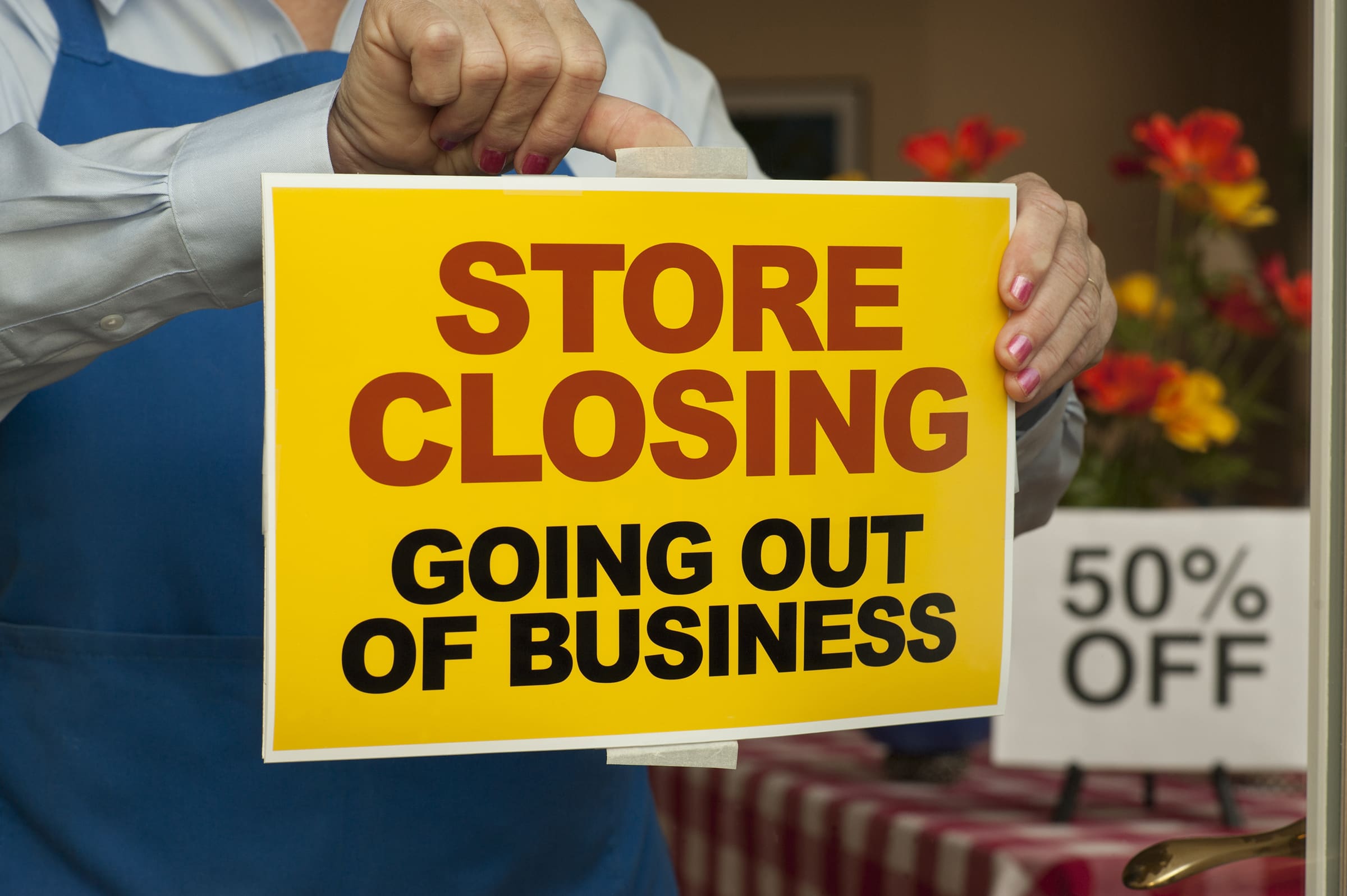
The pandemic has changed the face of the economy. It enticed older workers, mainly baby boomers, to hang it up earlier than planned, leaving Millennials to pick up the slack and opening the door for the emerging Gen Z workforce; many of whom just graduated from high school.

Initially they'll have plenty of jobs to choose from, but with rising prices, fewer of small businesses (which have historically been the economic backbone of America), and increased automation, they'll need to get some diverse experience under their belts as quickly as possible. Post-Covid years will surely be remembered as the Age of Diminished Realizations.

The pandemic also, for better or worse, resulted in a selloff of homes for apartments or condos. Some have moved downtown for convenience sake, assuming downtown is safe and can provide the necessities they need like grocery stores, pharmacies, and good schools for their kids, and adequate shopping and entertainment.  Others have opted for smaller communities for similar reasons.

But what will happen as those who cashed out of society begin to run out of money, as surely many are by now? Having exhausted their private safety nets, they have little if anything to fall back on. Federal Covid relief is a thing of the past. Most states have long since cut off unemployment benefits beyond just a few weeks given the abundance of available jobs. But those jobs will soon vanish as the recession and rising prices takes hold. Then what?  Already 11.4% of Americans live in poverty. When combined with those who live near the poverty line, that figure jumps up to 32% or one in three Americans.

Prices are already shooting up at unprecedented rate. Gas, utility, and food prices are quickly outstripping income, especially for those on fixed incomes. Our usual political infighting and bungling isn't helping.  The system has intentionally been broken in favor of the 1%. Reform won't cut it. How much longer will we tolerate this? How much longer can we tolerate this?

Oh, that panhandler I mentioned at the beginning? In several polls, many panhandlers admitted that they could make as much or more money standing on a corner begging money than working most entry level jobs. Incidentally, many panhandlers work in teams, giving each other breaks, looking after each other's stuff, and splitting their earnings. Has this the image of the new American entrepreneur? 


If you want to know more, please take a look at the links below. If you enjoyed the article, please consider passing it along to others and don't forget to subscribe. It's free! Lastly please be sure to "like" us on whatever platform you use to read A/O. It helps with the algorithms and keeps our articles in circulation. Thank you!  


Majority of workers who quit a job in 201 cite low pay, noopportunities for advancement, feeling disrespected


Minimum wage would be $26 dollars an hour if it had grown inline with productivity


These two demographic trends are driving the 'Help Wanted' inside so many business windows


'Help Wanted' signs indicate lack of decent job offers, not people unwilling to work


13 reasons that help explain labor shortage


'Help Wanted' signs are everywhere. Where did all the workers go?


Does half of the U.S. live "in or near" poverty?


Saturday, October 26, 2019

The Vanishing Middle Class


We are told constantly that the U.S. economy is booming; that we are witnessing one of the most robust economies in recent memories. We're told that thousands of former U.S. jobs which had shipped overseas are finally coming back home. From the reports, Americans should be giddy from all the growth. But we're not. In fact, most Americans are barely making it.

As most of us know (or should know), the Middle Class, which has been the backbone of this country since its founding, has been under an incessant attack for almost four decades. According to a recent report from the U.S. Social Security Administration, nearly 50% of the Middle Class earns less than $33,000. That works out to be $2,750---before taxes.

To break it down further, 46% of Americans earn under $30,000. 58% make under $40,000, and 67% bring in less than $50,000. But the statistic of real importance is this--- 44% struggle to pay their bills. After taxes, many American routinely have to choose between which bill to pay now and being able to buy groceries or other essentials such as clothes, school supplies, car repairs, etc. As an aside, the poverty level for a family of four is $25,750. That means the half of America is living on the financial edge. Nearly a quarter of all Americans receive welfare benefits while 49% receive at least some form of regular monthly government assistance.

Meanwhile, senior corporate officers are seeing their salaries and benefit packages blossom. Their salaries have increased 937% since 1978, giving them an average salary of $15.6 million dollars; faster growth than the stock market according to the Economic Policy Institute. That's approximately 30 times the salary of an average employee (union or non-union). Meanwhile, adjusted for inflation, the average worker has seen their pay increase by only 11.2% over the same period. I know being a president or CEO isn't for the fainthearted, but that's outrageous.

There are those who say "get a better job" or "go back to school". Well, despite the growth in the number of jobs, the pay is often fairly low while benefits are no longer a given as they once were. As for going back to school, most individuals can't afford to either take the time off to beef up their academic credentials or afford the overinflated costs of higher education. We're heard countless stories of individuals graduating from college with a debt that will take decades to pay off. Of course, in all fairness, there are those who graduate with practically worthless degrees who may never be able to pay off the school debt.

I would be remiss not to point out that while the majority of new jobs are on the lower end of the pay scale, there is an abundance of vocational or trade vocations in desperate need of being filled. In addition, they pay very well (many over $50,000 annually) and often include those ever increasingly rare benefits. I'm talking about plumbers, electricians, carpenters, welders, HVAC mechanics, stone and brick masons, and so forth.

For some reason we've allowed ourselves to be convinced that every job should require a college degree. They don't. What they require is high school graduates being able to perform at a higher than eighth grade level; individuals who can read, write, do basic math and have critical thinking skills. Since the 1960's, we've seen the quality of public education repeatedly dumbed down so as not to "offend" anyone or make them feel "bad" about themselves. As a result, students across the board have been forced to suffer. But, nevertheless, it reinforces the point that not everyone is college material.

Meanwhile, we have created a society ever dependent on service oriented jobs, which are, again, typically low paying. Individuals in the fast food business have been clamoring for $15 an hour pay; claiming they can't support a family with their current wage. No doubt that's true, but then again, fast food jobs were intended to be "starter" jobs. Employment for those just getting starting in the job market like high school students. Aside from manager positions, they weren't intended to be jobs to supporting families.

In addition, automation has taken many of the typical production jobs which were once the domain of the well paid blue collar Middle Class. Add to this the high number of illegal immigrants who are employed in many entry level and service jobs. As a rule, these are generally low paying work with few or any benefits requiring very low skills (even fluent English isn't always a requirement). Again, that speaks to both what's available and the quality of applicants.

We also have to consider the government. We are constantly seeing politicians and bureaucrats pushing for higher taxes, not to mention more and higher fees and rates on everything from water and sewers to electricity to property tax. Of course, they rarely miss an opportunity to raise their own salaries, but that's for another time. Meanwhile, they are doing their best to regulate anything and everything for the obvious purpose of finding new income streams to sink their greedy little hands into.

Regulation has become so bad that the average "mom and pop" business, the traditional economic backbone of this country and its largest private employer, can't afford to stay in business. This is especially true when you consider that the large mega corporations are usually propped up with tax breaks and taxpayer backed incentives, plus they can afford the best accountants, lawyers, and politicians money can buy.

As readers of Another Opinion already know, America is an Oligarchy. These ultra rich corporations and individuals literally own both major political parties as well as their politicians and top level bureaucrats. They "help" write key pieces of legislation and then use their financial influence to see to it that it's passed. The average small business person can't afford to hire a lobbyist, leaving them with very little power over their own existence.

So what do we do? This is a problem which has as many potential answers as it does problems. First, we have to accept that America cannot survive with half of its population literally living from paycheck to paycheck year after year. Right now the average American family is carrying about $38,000 in personal debt (not including student loans). Millennials and Gen Z between 18 and 24 already have an average debt of $22,000. Older Millennials, those between 25 and 34, are in debt to the tune of $42,000 while Gen X and Babyboomers have a debt of between $36,000 and $39,000.

If we add to that the fact that 40% of Americans can't come up with $400 to cover an emergency, we have a pretty bleak picture. Also bear in mind that the average American family has just under $5000 in their savings account; 58% have less than $1000, with a substantial number having no savings account at all. Sooner or later "something" is going to happen economically and "someone" is going to get the Old Maid. When that happens, the whole house of cards is coming down, and with it, the whole economy.

While many argue that we need to increase (almost perpetually) the minimum wage, the problem is that usually increases prices (after all, "someone" is going to have to absorb the increase and that "someone" is almost always the consumer). Perhaps it's time to abandon the concept of a minimum wage and let the marketplace decide. Those who won't pay a livable wage will be forced to adjust or go out of business.

Secondly, we need to cut regulations on small businesses and make it easier for them operate. The biggest stumbling block, aside from government regulation, has been in the area of benefits; especially insurance, which is why I like the idea of a single payer form of insurance where everyone is provided with a basic package and then given the opportunity to purchase additional insurance as their needs change (those making under a certain minimum income could receive either an income credit or discounted rate). It would at least be a starting point. We also need to encourage personal savings by eliminating taxes on accounts under $100,000.

We also need to stop underwriting mega corporations with taxpayer dollars. They are quite capable of taking care of themselves financially thank you. I suggest that a minimum income tax be imposed. The fact that Exxon, Chase, Apple and other global corporations pay zero income tax has to stop. Along those same lines, we must overturn the colossal "Citizens United" mistake by the Supreme Court.

This fiasco declared that corporations were "people" with the same rights as you and I, especially "free speech" which the court equated with money with the exception that corporations can give unlimited amounts while us mere mortals are still capped as to what we can donate. Corporations should be unable to donate money or provide support to any political party or candidate.

Equally, any contact between a government official and a corporate lobbyist should be public. No lobbyist should have input on any piece of legislation other than from an official request in the form of a public hearing open to all. Former public employees should also be required to wait seven years before accepting any position which brings them in contact with a government agency.

All tax, fee, and rate proposals must obtain public approval before being implemented. No more "nickel and dime" increases. This includes salaries for elected officials. Along with this is the need for term limits. This would go a long way to ending corruption and bringing fresh ideas to government. I propose a 12 year term---six 2 year terms for representatives, two 6 terms for senators, three 4 year terms for the executive branch as well as federal judges and the Supreme Court. We also must end partisan gerrymandering of districts. This does nothing more than keep incumbents in power. Districts must be balanced in order to reflect the residents, not the party.

Lastly, we must instill discipline back into the schools. School is about education, not babysitting and surely not tolerating violent students attacking or bullying other students or teachers. Expelling them only gives them what they want. Instead, they should be sent to "bootcamp" schools where discipline is enforced. Emphasis should remain focused on academics, not sports or other extracurricular activities.

Students must be taught history as well as civics. They need to know their collective roots and responsibilities as Americans. Students should be periodically tested to see where their interests and potential abilities might lead them, and then encouraged in that direction. Sex education should be focused on basic biology, not on being gay or transgendered or whatever.

America is more divided as a country right than at any time since the decade preceding the Civil War. Not only are politics more divisive than ever, but the divisiveness is even fanned by the corporate controlled media. The same goes with how we treat one another. We've become all about what we want when we want it without regard for others. A act of compassion or kindness is almost so rare as to make the news it seems. Where has our sense of respect and civility gone?

If we fail to save the Middle Class (or what's left of it), America will truly become a two tier society; a nation of haves and have not (we're pretty close to that already). There are parts of this nation which are now almost indistinguishable from third world countries. We fall in the lower half of most official rankings in health, happiness, freedom, education while ranking at or near the top in incarceration, crime, poverty, and violence.

We've already lost our Republic to the Oligarchy, leaving us with an illusion of control. We must retake our country, and in doing so restore not just our Middle Class. We must not ask for permission to reclaim our country and its way of life. We must demand it.


Goodbye Middle Class: 50% Of American Workers Make Less Than $33,000 A Year


CEOs make $15.6 million on average---here's how much their pay has increased compared to yours over the year


Good paying blue collar jobs go unfilled in tight labor market

Here's how much debt American have at every age

Friday, December 12, 2014

Frustrated Americans


The frustration in this country is almost palpable. As of this month, December, we are officially the second largest world economy; the first is now China. While not given much publicity by the corporate media, it's remains a fact never the less. Earlier this year we learned that America was no longer the democratic-republic bequest to us by our Founding Fathers. Instead, we are now more or less officially an oligarchy, which means political, and with it economic, power is concentrated in the hands of a small elite minority. Essentially, a few corporations. Those very same entities in which the US Supreme Court erroneous decided were just like you and me, but only more so and with less restrictions when it comes to taxes and political donations, and as we all know, money is mother's milk of politics. America hasn't fallen, but it's on a greasy downhill slide. Joseph Stalin would be so proud, and somewhere, Nikita Khrushchev is pounding his shoe in sardonic laughter.

The police, whose motto has always been "To Protect and To Serve" seems to have changed recently to something more akin to "Detain or Disperse". They are a far cry from the friendly beat cop of a generation or so again. He was the guy who knew just about everyone's name, or at least their faces, on his beat. He knew all the business owners; who belonged and who didn't. He would share a joke or two, and maybe a cup of coffee. The kids all knew him by name and felt comfortable coming up and talking to him. He was someone who made everyone feel safe. Now he's is some surreal looking individual who looks more like something out of some apocryphal movie. More inhuman than human standing there in his battle gear.

But perhaps that's not surprising. They've been trained to think of each of us as a potential criminal or terrorist and they as the protectors of the "system"; the new Reich. They are equipped to look like "Robocop" or "Judge Dredd". They've been given armored military vehicles and military gauged weapons. So, then why should we expect them not to act like Imperial Stormtroopers of the Empire? Yet, in return, we are assured that while we're surveyed, patted down, x-rayed, monitored, photographed, videotaped, fingerprinted, credit and background checked, body fluid tested, biometrically scanned and recorded, registered, and have our property searched, it will be for our own good and protection---and, oh, by the way, "have a nice day citizen". Perhaps the ancients were right after all; people will voluntarily surrender their freedoms for security, or at least the appearance of it. Isn't it grand to live in a "free" country?

We've allowed our government to be supplanted by the illusion of a Republic just a ancient Rome still called itself a republic after the military coup of Augustus Caesar introduced the long line of Caesars. We fell asleep at the voting booth. We are given the illusion of choice. We are treated to Kabuki theater. What we see isn't always the reality, but we're still left with the entertainment, and distraction of the act itself. We allowed ourselves to be divided and turned against each other by talking heads. We went along with them; after all, weren't they the "experts" we were told they were, and who knew better than some political or academic wonk what was best for us? We knew what we wanted but they knew what we really needed. Funny how each "solution" begat a new and more dangerous problem wasn't it? Divided we fall. United they are unable to stand against us.

We are sent off to fight wars for "American freedom", but we're never allowed to question the reasoning amid the flag waving and manufactured cheers. Yet, while we come home in plastic bags to grieving husbands, wives, boyfriends, girlfriends, family and friends and hangers full of perfected aligned draped coffins, someone somewhere in some boardroom or golf course is being congratulated on the latest quarterly earnings or newest government contract. It is these shadows who pass themselves off as human beings who decide when our "freedom" has been sufficiently defended. But what changed? A name on a map? A flag? The only change most of us see is the value of some corporate contractor's stock going up; the ownership of a piece of property or water rights or a oil or gas or gold field in some place whose name we can barely pronounce, while we lose arms, legs, eyes, and lives; ruined lives. How are we any more secure as a nation? How are we freer? I see a less free America. A less secure world.

Where are our jobs? Well, supposedly the job market has improved. After enduring the "Great Recession", the employment situation has improved the government reports say. However, what we seem to have are more "McJobs"; low wage or part time jobs as well as jobs without benefits. Of course too, the latest reports doesn't take into consideration that numerous individuals who have simply stopped looking, or are underemployed--working beneath their experience or academic levels, though it does count those employed solely as seasonal or temporary. It also does not include those in the military. So, where are the jobs? Well, as many of you already, most of the high wage production jobs were exported years ago to second and third world countries where companies don't have to worry about union contracts, job safety, overtime, or benefits. Workers can be paid pennies by comparison to what they used to pay US workers. Just recently, with Obama's "amnesty" for approximately 5 million illegals (the constitutional legality of which is still up in the air), employers are being encouraged to hire these individuals by giving them a $3000 credit. Meanwhile, we have a whole of veterans returning who are looking a job, not to mention million of ordinary Americans.

Of course, we can raise the minimum wage since some individuals claim they can't live on what they're making, never mind the fact that the minimum wage never intended to serve as a "living wage". It was simply meant to be a entry level wage just like Welfare was meant to be a temporary safety net not a career option. Increasing the minimum wage will, of course, cause businesses to raise prices, cut full time hours, or reduce some employees from full time to part time, and perhaps even cutting back on the number of employees they need, leaving the remaining employees doing more for not much more pay. But what will not change I assure is the profit margin. Some things are written in stone.

So what of the illegal immigrants? Whatever happened to the 60,000 children and their so-called "guardians" abandoned on our border with Mexico? Supposedly, they were to be processed and returned. Those who claimed to have family here in States "promised" to checked in when they arrived at their destination. Guess what? It never happened, and the children along with their "guardians" simply vanished. Oh, and some of these children were allegedly sick with some unknown illnesses and were quarantined. They were packed up literally in the night and sent off to undisclosed government bases. What those illnesses were we'll never know since they too have vanished---poof! Meanwhile, border protection has been gutted and deportations stopped by Obama and now former Attorney General Eric Holder for all practical purposes. Again, the People spoke and Washington ignored.

So where do we go from here? We all know the system is broken; broken beyond repair. Talk by candidates that they'll go to Washington and tell so-n-so that the good citizens of such-n-such States won't take it anymore or that they'll singlehandedly change Washington is just so much BS. We know it. They know it and they know we know it but they say it anyway. I guess it still makes for a good sound bite. Nevertheless, we must deal with the situation. We have no realistic choice. We now face a $12 trillion dollar debt. While many will cite chapter and verse about mortgaging our great grandchildren's economic future, the cold reality is that this figure is simply impossible to ever pay off. It's financially impossible just to keep up with the interest payments alone. As it is, we have to borrow money from nations like China--our idealistic archenemy---just to pay the interest on what we owe while not even touching the principal! Can you imagine having to go to some loan shark (since there's no way any reputable bank would loan you money) and borrow money just to pay the interest on your credit card payments month after month? Most of us would long ago file bankruptcy (and risked getting our legs broken by the loan shark). That's not an option for the US Government; at least not yet, but that day is surely coming and much sooner than some of us realize.

And because the US Government is unable to keep up with its bills, it does what most of us do; it puts off what it can. However, in this case, it's our infrastructure. Things like highways, roads, drainage, the national electrical grid, dams, transportation safety, and so forth. The very things which not only make it safe for you and I to get around, but makes for efficient commerce---the very things we need to help pay down the debt and keep people feed, housed, and employed. Yet, we seem to find billions to bail out poorly run multinational businesses; businesses deemed "too big to fail" but not too big to use taxpayer money to pay their executive officers huge bonuses and to keep doing what they've been doing. We also seem to have billions to spend overseas for all sorts of seemingly trivial projects which, if anything, benefit only a relatively few major corporate players, while many more receive what's politely called "corporate welfare", paid by taxpayers like you and I. Why is that do you think? Meanwhile, corporations now have many of the same "rights" that you and I have, except more, especially when it comes to political contributions and lobbying. You don't suppose there's a connection do you? Why is it that they get tax breaks for sending American jobs---especially good paying middle class union jobs----overseas and still pay little or no taxes despite the billions they earn?

I could easily go on and on and I'm sure that each of you could add your own examples. America is frustrated. We're tired of being sick and tired with Washington. So let's agree that the time has come for this to end. It's time for the government to be restored to the American People, be it by protests, citizen lobbying, petitions, registering as an Independent or third party, or simply voting against incumbent or anyone running under the corporate duopoly of Democrat or Republican. Let's not give them a moment's peace. Let's not let feel safe in their seats on single day. And let's also organize and stand up to these corporations anytime and anywhere we can---from our neighborhoods to the boardrooms. American will not remain an oligarchy and we will not remain their economic serfs.

Saturday, September 13, 2014

Tyranny and Television


It seems that we're increasing, as Americans, attempting to embrace the past rather than the future or even the present. There was a time when we looked to the future in our home lives (The Jetsons, Star Trek) and in our public lives (NASA, World's Fair, sound barriers, moon landings, etc). Nostalgia television is more popular than when most of these shows aired originally. Now, it seems we're lost. We stuck living our lives vicariously through other people's lives (so-called "reality" TV); various talk shows where we watch "celebrities" babbling out their opinions on various, sometimes trivial or useless issues that are none of our business to begin with (and in doing so, implicitly inferring what we should think too) instead of us coming to our own opinions; or watching complete strangers airing their dirty laundry while we ogle, incite, and judge; idiotic "court" TV like divorce court, small claims court, or whose-the-daddy court, and so on. Basically shows about people who've made some really stupid decisions or asses out of themselves while we set back and amuse ourselves at their expense. Look at Saturday morning lineup for kids. What a bunch of junk. At least we had cartoons and shows which made sense, and where the production quality was pretty decent. We wouldn't have wasted ten minutes on any of these shows today. What happened?

Have we dumbed down not just the quality of our kid's education but network television too? Here's a thought. Grab a schoolbook---math grammar, science, history from, say, 1955, from any ole high school, and compare it to one today. Which one is more difficult? The answer should be obvious, and they didn't have calculators or computers. Yeah, we may have access to more information but that's useful only if we know what we're looking for, and what to do with it once we have it, and that goes back to what kids aren't taught today which are critical thinking skills. Some would call it common sense. Kids graduating today from high school can barely spell. Most are on an eighth grade reading level. Their math skills aren't much better, and forget about history, science, and geography. American students tend to rank near the bottom when compared to other countries.

In a 2013 international academic test, the PISA, US students scored below average in math and science and slightly above average in reading while most of the Asian countries scored at the top (with China coming in on top). Germany ranked 12th while the US was 28th, just behind tiny Denmark and just ahead of Spain. Countries like Estonia, Vietnam, Ireland, Finland scored higher than America. Poland came in 9th place, so I guess they're now sitting around telling jokes about us for a change. And while poor countries and poor students scored poorly as expected, money didn't seem to make much difference. Countries which spent less per student didn't necessarily do worse than countries which spent more per student as the result showed. The key results seem to have been better early preparatory time, better trained teachers, adaptability to the student's ability, and, oh yeah, discipline.

Maybe that's why everyone wants a college degree these days. Not because of the higher education and more developed knowledge and thinking skills, but a BA or BS degree will generally get you something equivalent to a high school degree from the 1950's. And another thing, not every kid needs to go to college. Yeah, it's great for certain individuals, especially those pursuing certain disciplines like economics, English, or engineering, but for others, they would be better off pursuing a career in the trades, and there is nothing wrong with a "blue collar" degree. First off, most of fields in the trades are in high demand. We need carpenters, welders, electricians, plumbers, and the like. Secondly, they pay well. Damn well. In many cases, an experienced plumber or electrician can earn more than a lot of individuals with BA or BS degrees (or in some cases, more than some with a Masters degree) and they can do it in less time and way cheaper (imagine 1/3 of the school debt and same or better earning potential).

Perhaps there's a stigma in this country against those in the trades. Not so in other countries, especially Germany. Germany has a highly developed to track educational system which directs students either into the trades or into university based on ongoing academic and aptitude tests as well as personal interest. Germany also has one the world's best developed apprenticeship programs in the world whereby students spend part of the day working on theory and the rest of the day doing hands on work, often at the sites of potential employers. The result is one the most successful academic system in the world, as well as maintaining the most powerful economic engine in Europe, and third overall in the world. German students, by the way, tend to rank near the top academically, regardless of which track they're on.

Back to television, how many shows are actually intellectually stimulating? Most are nothing more than commonplace formula based writing with names or genders, or (occasionally) the professions differing, but little more. Most of this can barely hold the attention of the average 10 year old (perhaps that's why they spend so much time with the faces buried in their IPods). Most of today's television shows leaves us in a mental stupor. How much real "news" are we really getting and how much is just so much tripe? It's a wonder we all don't walk around with a glazed look in our eyes and drool dripping down our chins. Is this then what we've become? Has our educational system so dumbed us down that today's "opiate", to borrow from Marx, is designed to perpetuate the process?

Of course, the best way to control a population is to keep them occupied and uneducated. Is that not, perhaps, what's actually going on here? Are we intentionally being kept busy with, as the Roman's would say, "bread and circuses"? Most of us are so overworked; so overwhelmed with the day's events; so concerned with just keeping the job we have, that all we want to do is come home and turn on the "boob tube" or "idiot box" as we used to call it, stick some food in our mouth and "tune in and turn off". After all, if we're so exhausted from the day's work; so fearful of our job being off shored or losing our insurance or pension or 401k; and we feel so powerless by what we're seeing or reading in the corporate news, that all we want to do is be mind numbed until we blissfully fall asleep in our recliners or couches, what does government or corporations have to fear from its citizens? And if a government doesn't fear its citizens, then its citizens will soon come to fear their government. Sounds like control to me, albeit a subtle and somewhat indirect form of control, but control nevertheless. What do you think?

I wish I could say that I was the first to think of this, but I'm not. It's been said a thousand different times in a thousand different ways since time immemorial. However, I think the very best expression of this idea was said by one of History's most evil tyrants, France's Maximilien Robespierre. Robespierre was the one of the leaders---perhaps the single greatest leader---of France's Great Revolution. He started off with good intentions as most tyrants do---freedom, liberty, and brotherhood and the end of a bloated and corrupt monarchy. He is remembered as the originator of the "Great Terror" which took thousands of lives (along with the assistance of the crooked grin of "Monsieur Guillotine") and precursor of the rise of Napoleon, whose reign claimed the lives of millions. It's from Robespierre, we are warned that, "(t)he secret of freedom lies in educating people, whereas the secret of tyranny is in keeping them ignorant". With polls showing an 85% disapproval rating of Congress---a near consistent rating for the last several years and lower than head lice and cockroaches I should add with my own smirk---most countries would be sweating bullets (take that anyway you want) if their disapproval rating gets above 15%, I have to ask: what will it be America? What will you chose to do?


US scores stagnant, other nations pass by us in latest international test
http://edsource.org/2013/u-s-scores-stagnant-other-nations-pass-by-in-latest-international-comparison/52052#.VBOlEZtAKzU

Top US students fare poorly in international PISA test scores
http://educationbythenumbers.org/content/top-us-students-fare-poorly-international-pisa-test-scores-shanghai-tops-world-finland-slips_693/

Congress somewhere below cockroaches, traffic jams and Nickelback in America's esteem
http://www.publicpolicypolling.com/main/2013/01/congress-somewhere-below-cockroaches-traffic-jams-and-nickleback-in-americans-esteem.html


Tuesday, January 28, 2014

What's Going On America?


You may never have heard of Jamie Dimon or his ilk, but there's no doubt you've felt his influence. Dimon is the CEO of one of the largest financial institutions in the world, JPMorgan. His was one of the institutions which trigger the great financial meltdown a few years back, resulting in the largest bailout in US history and the now infamous phrase, "to big to fail". Mr. Dimon's company remains very much in business and none of executives or shareholders ever faced a day in jail though JPMorgan was forced to pay the largest civil penalty in US history. In fact, he just received a 74% increase in salary--mainly in the form of stocks and stock options---from $11 million to $20 million dollars.

Not too shabby, especially if you consider that real wages for the average working class family has continued to drop year upon year and, after being adjusted for inflation, is no better off than they were in the mid 1970's. In fact, since 1997, all economic gain has gone to those in the top 10% income bracket. Meanwhile, while companies like JPMorgan were bailed out on the taxpayer's dollar (against the will of the American People I should add), some 10 million individuals have lost their homes since 2008 due to the home mortgage meltdown. And, yes, while many should have known better than to borrow more than they needed or could afford , despite intense pressure for banks, so too should the bankers and mortgage companies have known better. Apparently Middle America wasn't deemed "too big to fail" by the Washington-Wall Street nexus.

As everyone should know by now, the top 1% control some 40% of the nation's wealth while the bottom 80% controls a scant 7%. Only 19% of that wealth is actually in the form of income. Most of it is in the form of stocks, bonds, and real estate. To put it another way, the richest 400 people in this country control more wealth the bottom 150 million people. That's a hellva of disparity. The largest ever in our history. So, what are we to do about, if anything?

There's been a lot clamor about raising the minimum wage from its current $7.25 to $11.00 or even $15.00 dollars an hour. Of course all that will do is raise the costs of products, increase the number of layoffs or reduce hours while increasing workloads, not to mention the likelihood of a reduction or elimination of benefits. Heck, some employers may just shut their doors. President Obama is expected to increase the minimum wage for federal contracts to $10.10 an hour, which is nice except the contract bids will simply be adjusted to accommodate the change and thus the taxpayers---that's you and I---will be forced to pay for the wage increase. Sounds like swimming in mud to me.

Typically those who hold minimum wage jobs are the poorly educated (as to whose fault that is, is the subject for another time). Anyway, the only option typically is to return to school. However, to do that means incurring a back breaking debt, despite grants and low interest loans. Since 1999, student debt has increased a mind numbing 500% while those graduating were faced with an average decrease in starting salary of 10%. And filing bankruptcy may help with some of their debt load, it won't erase their student debt, but it will leave an nasty mark on the credit rating, which is the last thing they need.

Unions can't help them much either. Membership continues to drop. Today, it makes up only 7% of the work force thanks to job exportation, NAFTA (thanks heaps Bill), and changes in technology. The only segment of the workforce where unions at least continue to hold their own is the government sector, though wages increases, benefits, and pension protection are but dead. If amnesty is given to the estimated 11 million illegal immigrants now living in this country (not including the anticipated 7--10 million that will follow in the next wave), we'll see wage and benefits decline even further as demand for jobs far outstrips supply. Blacks and Asians will be most adversely affected in the influx since they currently hold most of the jobs that will be undercut from them and taxpayer based services are redirected away to pay for translators, housing, re-education and training programs and other social services. Meanwhile, the strain of Obamacare all but break the back of America's healthcare capabilities. Minimum care will become the norm with only critical care being available for those deemed "productive" as doctors and other healthcare providers hang up their white coats and college bound students consider other professions. All this calls to mind Ronald Reagan's famous quip about the nine scariest words, "I'm from the government and I'm here to help". So, what do we do then?

Serious discussion about extensive government reform, and even revolution are almost commonplace, even anticipated, although the media attempts to make it sound like "crazy talk" from the lunatic fringe. But the facts are that less than 20% of population say they have any faith in the government while just over 50% say that US democracy needs a total overhaul, even if that mean open rebellion (of those, only a few believe that reform will suffice). The majority of Millennials (those under 30) support socialism, primarily because they see capitalism as it now exists as having failed. Perhaps that's why federal agencies have been on a massive spending spree acquiring military grade firepower and ammo; police departments have become more "militarized", senior military officers are quizzed about their willingness to fire on US civilians (those refusing have been largely relieved of command); increased drone and cyber-surveillance; ongoing government harassment; and a proliferation in what I term "diversionary television" designed to take the public's mind of our national and economic decline as well as get us accustomed to the idea of being watched with the variety of "reality" TV programs.

"Diversionary television" is of course, but one part of the media outlets controlled by the top 1%. While media coverage seems to be focused on gay rights, abortion, or domestic spying, not to mention such earth shaking events involving the likes of Justin Bieber or Miley Cyrus or the Kardashians, only 3% of those surveyed in a poll conducted by AP-NORC Center for Public Affairs Research in December 2013 thought those were important issues. The overwhelming majority of Americans it seems were interested in under-reported topics such as healthcare, jobs, the economy, and illegal immigration. Bread and butter issues seems to be the only "View" the majority of Americans are interested in. It may be why we don't hear very much about what's happening in places like the Ukraine. Certainly the goal is to keep America's attention diverted from the real issues, but also Americans divided along as many lines as possible to prevent a united front from focusing on them (this also explains the usual empty talking heads on TV and radio). Meanwhile, politicians are gearing up for their next cycle of hype and misdirection intended to play on the public's emotions. But, I wonder, for how much longer?


Why There's No Outcry
http://www.huffingtonpost.com/robert-reich/why-theres-no-outcry_b_4666330.html


Could America's Wealth Gap Lead To a Revolt?
http://www.forbes.com/sites/dalearcher/2013/09/04/could-americas-wealth-gap-lead-to-a-revolt/


Why America May Be Ripe for a New Revolution
http://www.thestar.com/news/world/2013/10/19/why_america_may_be_ripe_for_a_new_revolution_burman.html

Monday, January 06, 2014

What An Increase in Minimum Wage Means


The federal minimum wage is $7.25 an hour. That's works out to be $290.00 for a 40 hour week or $15,080.00 a year, excluding any unpaid time off. That's not much, and that's before taxes (in post-Depression 1938, when minimum wage was established under the Roosevelt Administration, the minimum wage was 25 cent an hour). Of course, minimum wage is a bit higher in the District of Columbia and 19 other states while four states have a lower minimum wage and five states (all Southeastern) have no minimum wage laws. President Obama favors an increase of the minimum wage to $10.10 an hour. Fast food employees, as many of you know, have been protesting for an increase to $15.00 an hour. 13 states have increased their minimum wage effect January 2014. In Kentucky, State Senator Greg Stumbo (D-Prestonsburg) favors an increase in the minimum wage to around $10.00 an hour while other states are considering similar increases.

Many corporate CEOs are, naturally enough, opposed to an increase in the minimum wage, at least to $15.00. Some cite a statistic by the Bureau of Labor Statistics which states that most individuals earning minimum wage are not working adults supporting a family, but are primarily teenagers still living at home and, at least in part, still being supported by their parents; specifically, 24% of 3.6 million workers earning minimum wage, and another 25% were under 25 years of age. In addition, for those who are attempting to support a family, many if not most are qualified for some form of taxpayer based assistance like food stamps (SNAP---Supplemental Nutrition Assistance Program) or earned income tax credits for children.

With 3/4 of Americans calling for an increase in the minimum wage, advocates also cite CEO salaries in the US are now 357% over the average company worker; the highest in the world (some estimates put it closer to 495% when their total compensation package is taken in account). The top 20% of the richest people in America now control 89% of all wealth in this country. Now if that doesn't give you pause, consider that the top 1% of the world's richest control 46% of world's total wealth according to a Reuter's report released on October 9, 2013! In America, the top 1% control 40% of the nation's total wealth. Therefore, this excess of wealth needs to spread around proponents claim. Those on the Right argue that the wage gap is justified; it's just a part of the capitalist system. They further claim that it's corporate (and personal) profits that allow them to employ the majority of the nation's workforce.

But, what about from an economic perspective? What happens when there's an increase in minimum wage? Well, obviously a broad based income increase will result in an increase in purchasing power, at least temporarily. That means there will be a sudden demand for products; usually high end products such as cars, houses, as well as appliances and entertainment, but also to groceries, utilities, and even taxes. Typically, very little of the wage differential (the difference between the original wage and the new wage) will go into savings or similar investments, though some may find its way in paying down debt, statistically this tends to be minimum at best. Instead, overall debt tends to rise. As the economy adjusts to the influx of additional income, there is always a slight delayed rise in costs to offset the sudden rise in demand. However, once supply reaches a equilibrium with demand, the newly set increase in price will always adjust itself upward to match the new level of demand.

This generally tends to have two secondary actions. First, with the increase in demand, there will be a resulting delayed increase in retail costs as wholesale costs begin to rise to compensate for the declining level of supply and a rush to acquire raw material at a newer, higher premium prices to match the demand. Secondly, there's a short term increase of cost to the manufactures/producers in terms of wages and other internal costs as companies attempt to catch up with demand. This could be simply increasing work hours through overtime or additional shifts; perhaps even temporary hiring. However, as prices of merchandise rise, the demand will begin to drop until it reaches a price equilibrium. This results in less demand for the product and a corresponding reduction of hours to original levels, or even a drop in hours worked.

To put it another way, there's a short term benefit to the employees but as demand increases, the costs rise to meet the level of supply, so that in the end, most everyone is back where they started from but everything has increased in price and in some case, more than by the percentage of the wage increase. Some companies may find that the demand for whatever it is they do has dropped (especially if it's considered a non-essential item). The result will be a reduction in hours or workforce, or even closure. Therefore, employees may be no better off than before; some could even be far worse off. So, how do we get out of this predicament?

A lot of politicians like to talk about increasing minimum wage since it sounds like they're "giving" the people something for free. The reality, however, is that they're not giving them anything. Companies have to raise prices to offset the increase in wages. The money has to come from somewhere after all doesn't it? And you can sure bet it won't be coming out of profits margins. With increased prices, demand could drop. This may mean layoffs or a cutback in work hours with employees having to pick up the slack. For those not affected by the wage increase, they'll be forced to pay more as prices increase while not bringing home any more money. This is especially true for those who are unemployed or on a fixed income.

Free market advocates (or libertarians for that matter) might call for doing away with the minimum wage and allowing demand compete with supply. Employers offering the best salary (and benefits) would attract the most potential employees while those who don't will be forced to adjust the wages upward to attract workers. Of course, those who, at least initially, offer better wages will attract the most potential employees, thus the supply will obviously exceed the available positions which will, in turn, result in employees willing to work for less money in hopes of getting at least an acceptable wage while the employer would get the most qualifed individuals at the lower wage.

Perhaps, then, the best solution would be mandatory increases in wages tied to the inflation. As prices "naturally" rise due to demand over time, wages would match the increase accordingly. Such an increase would simply keep pace with the change in prices and would have little to no adverse affect since the wage adjustment would apply to everyone. A secondary solution would be the complete overall of the US tax code and the adoption of a national consumption tax in lieu of a federal income tax. People could manage their level of taxation based on their purchases. The rich would obviously pay more since they tend to buy more while the poor would pay less since they buy less. Nevertheless, an increase in the minimum wage comes with a price.


Minimum Wage Laws by States
http://www.dol.gov/whd/minwage/america.htm


Fast Food Workers Cry Poverty Wages
http://www.npr.org/blogs/thesalt/2013/12/03/248567592/fast-food-workers-cry-poverty-wages-as-mcdonalds-buys-luxury-jet


13 states raising pay for minimum wage workers
http://www.usatoday.com/story/money/business/2013/12/29/states-raising-minimum-wage/4221773/


Disclosed: The Pay Gap Between CEOs and Employees
http://www.businessweek.com/articles/2013-05-02/disclosed-the-pay-gap-between-ceos-and-employees