Showing posts with label violent crime. Show all posts

Friday, October 03, 2025

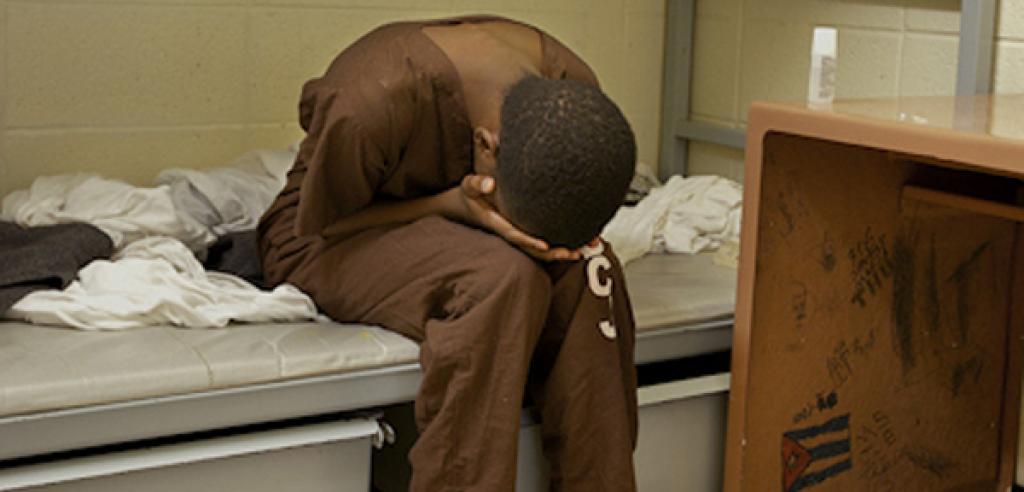
An Eye For An Eye: Is It Time To Do Away With the Death Penalty?

The death penalty is one of the top most hotly debated topics in America. It’s discussed in law school, seminary, medical school as apart of medical ethics. It was discussed in my jurisprudence and philosophy classes while pursuing my undergraduate degree. The validity of the death penalty is just as likely to be discussed in a bar among friends as it is at home. 64% of Americans support it while 80% acknowledge a risk of executing someone innocent and 63% say that it doesn’t deter serious crimes.

Republicans and conservatives are more likely to support the death penalty than Democrats and liberals/progressives. 62% of those claiming a religious affiliation also support it, especially Protestants (66%) and among 75% of White evangelicals. 57% of Black Protestants favor the death penalty even thought the majority of those on death row are Black. 58% of Catholics also favor the death penalty, including 61% of Catholic Hispanics.

Oddly, almost more Atheists oppose the death penalty as Protestants who favor it (65% vs 66%). 57% of agnostics oppose the death penalty while those who affiliate with no religious faith at all are more apt to support it than oppose it by 63% to 37%.

Before we get into a discussion about the death penalty, I want to make it clear that I’m not an attorney, nor am I offering any legal advice. What follows is my personal opinions based on well-established sources and data which are linked below. Some of the information may vary by state. If you’re seeking legal advice, I recommend seeking out a licensed lawyer.

When it comes to the death penalty, as of 2025, it’s on the books of 55 countries. 144 others have abolished it (the latest of which being Sierra Leone and Kazakhstan).  Among those nations which still use death penalty are China, Iran, Egypt, Japan, Saudi Arabia, and South Korea, though rare. In fact, a prisoner in South Korea is more likely to die from old age or illness. As of 2021, there were 60 individuals on their death row. Iran regularly executes gays and trans, women who refuse forced marriages, those attempting to educate women, and anyone else opposed to their brand of Shira law. 

In the United States, 23 states have done away with it, with Virginia being the most recent state to do so. Texas holds the dubious distinction of having carried out the most executions, 523, followed by Oklahoma with 116. It’s worth nothing the Virginia was third with 113. Still, that means that 27 states still use the death penalty, in addition to the federal government, which still uses it under certain circumstances.

It also bears mentioning that the United States has the highest incarceration of any nation in the world with a rate of 629 per 100,000 individuals or roughly about two million men and women behind bars. That’s more than Russia (which has suspended its death penalty), China, or Iran. Of those two million, 2,463 are currently on death row.

42% of those on death row are White, which is proportional with the overall prison population. 40% are Black and about 15% are Hispanics. Asians make up just 1.8%. Their average is about 54 years old. Most have been waiting for the sentence to be carried out for between 19 and 24 years.  The number one reason to land on death row? Premediated murder involving aggravated circumstances such as kidnapping, rape, or the use of a firearm.

Since 1976, there have been five forms of capital punishment carried out. The majority are done by lethal injection with a great deal of care taken to ensure that the injection is as painless as possible and every step is taken to ensure the prisoner’s anxiety is kept to a minimum (such as the use of valium, nitrous oxide, numbing solution at the injection site, dimming the lights, and blocking the injection itself from view).

The electric chair (once billed as being the most “humane”) is still used in some states, along with the gas chamber. Kentucky, Oklahoma, Florida, Arkansas, Alabama, South Carolina, and Tennessee are among those state which carry out executions. Gas is still used in seven states. Among them are Wyoming, Missouri, Arizona, and Alabama.  Nitrogen gas is the most commonly used although Alabama and Louisiana have opted for nitrogen hypoxia as an alternative to lethal injection.

Hanging and a firing squad are (surprisingly) still used in executions. As of 2018, only New Hampshire still allows hanging. Note that while New Hampshire did away with capital punishment in 2009, those on death row at the time were excluded. Washington State abolished hanging as recently as 2018.

As for the firing squad, Utah has used it most often. The last time was 2010. However, the firing squad is on the books in South Carolina, Oklahoma, and Mississippi. The victim is typically hooded and strapped to a chair. The shooters, approximately three to five,  are given rifles which randomly carry live or blank rounds so no one knows whether they fired the fatal shot and are positioned between 15 and 20 feet away. Their identity is protected, with the shooters firing from behind a wall or curtain. The bullets are specially designed to fragment and cause maximum injury (duh). 

It bears mentioning that there has been historically around 166 individuals executed in the United States whose, subsequent deaths to their death, have proven to have been innocent. So, it is still worth it? The alternative is life in prison and thus forcing the public to provide for their upkeep, including medical care, which can be in the tens of thousands of dollars (if not more in some circumstances).

In case you’re wondering, for someone to be sentenced to death, they must first be convicted of an especially heinous crime, which usually involves the planning and intentional murder of someone. Quite often, there are secondary crimes, often just as horrendous, involved.

The individual must be convicted unanimously by a jury. The usual criteria is that their guilt must be “beyond all reasonable doubt”. That is, there can be absolutely no question that they are guilty of the crime(s) for which they are charged. If, on the other hand, they are found guilty but based only on the preponderance of the evidence (meaning the insufficient weight of the evidence, leaving the possibility of some doubt) or if the verdict is not unanimous, the death penalty is no longer an option.  

In addition, the death penalty must also be on the table, that is, the option was made available to them by the presiding judge. Lastly, the judge must also agree with the jury’s decision. In many jurisdictions, an appeal or review is automatically granted to insure that the defendant’s rights were properly and adequately protected.  Otherwise, the defendant’s attorney will typically file upon the request of their client.

 While primarily an administrative procedure,  this is often when we hear of “new evidence” or witnesses suddenly coming to light for some reason. If it’s compelling enough to have a direct impact the case, a new trial could be granted or reexamining proposed sentencing and potentially modified (generally speaking, the sentence may only be reduced downward).  

Nevertheless, the defendant is still afforded another bite at the proverbial “I’m innocent” apple. In fact, they have virtually unlimited bites at the apple, and all at the taxpayer’s expense, which brings us to the first issue. Should someone convicted of a crime and sentenced to death, be afforded an unlimited number of appeals? Some are emphatically say “no”. They believe that an individual should have a set number of appeals or at least a cut off date (although new evidence can be introduced by their attorney at any time).

 What do you think? Should someone on death row be capped in the number of appeals they can file, at least on the taxpayer’s dime? Some argue that they’re simply trying to delay the inevitable (which is likely quite true. Who wouldn’t? After all, even the most hardcore criminal isn’t in any hurry to die). But, how long or for how much of our tax dollars should you and I be on the hook for? You would think that after the, let's say, tenth failed attempt it’s unlikely anything is going to change. But then, we’re also talking about a human life here (even though they've allegedly already deprived someone else of theirs).

There have been some pretty convincing arguments about the use of certain drugs like Sodium Pentothal, Sodium Amytal, or Scopolamine (so-called “truth serums”) which suppresses the nervous system and reduces one’s inhibitions which encourages them to talk more openly without filters. Should these be employed? 

These drugs could be used under the supervision and direction of a license psychologist. Naturally, their attorney would be present along with the prosecuting attorney and other witnesses with very specific questions. The session would obviously be recorded for future reference. What could go wrong?

Well, in theory, this would benefit all parties concerned, especially those who insist they’re innocent despite a preponderance of evidence against them for instance.  It would allow both sides to question the defendant about the crime and perhaps helps the police to redirect their investigation while allowing the District Attorney to focus their attention elsewhere.

Ideally, the DA could offer one of the drugs in exchange for a reduced sentence, a dropping the possibility of a death sentence, or even a dismissal of the charges. At that time the defendant can alter their previous statement before proceeding. But, if it is revealed that they were lying, there’s no going back. They can’t suddenly decide afterwards to come clean or try and make a deal. It’s a one time offer only. Maybe the threat (or promise) of a truth serum would be incentive enough to get to bottom of what they know. 

However, the main problem is that while under the influence of one of these “truth serums”, an individual becomes highly susceptible to suggestion, false memories, and unless new actionable details are revealed, their statements are difficult to verify. Nevertheless, it would seem that if you’re truly innocent, it would be worth the risk as well as time and would save a lot of time.  

 In addition, the U.S. Supreme Court ruled in 1963 (“Townsend vs. Satin”) that the use of truth serums were unconstitutional since they could be used to self-incriminate, despite that fact that the CIA, the nation’s top spy agency, made use of these (and other) types of drugs through, at least the 1970’s. I wouldn’t doubt that thanks to the Patriot Act and FISA courts, they aren’t still used in one form or another.

Given the current selection of execution methods being used, which many call unethical and inhumane, what if there was another choice made available? What if the defendant was offered a deal like this---they agree to five or some other fixed number of taxpayer based appeals and no more. It would save huge amounts of taxpayer money and reduce wasted court time (courts are already highly congested). 

Then, in exchange for dropping the possibility of lethal injection, the gas chamber, or “Old Sparky” and the long wait on death row, they agree to a life sentence in isolation with no further contact with anyone except their lawyer, the prison doctor and a single guard to check up on them and bring them their meals, etc. However, there can be no conversations. Unlike being in the "hole" where the prisoner is thrown into small cell with no light or anything else, the prisoner would be permitted books, TV, magazines, and receive some limited outside time (again, in isolation) but nothing else.  

It sounds cruel, and I suppose in some ways, it is. As far as society would be concerned, they’re dead as if the execution had been carried out. It wouldn't prevent others from attempting to find evidence on their behalf.  The chief downside is that some would consider it to be  “cruel and unusual”, but then if they’re  willingly agreed to, is it? Currently, the average inmate spends just shy of 20 years on death row awaiting their sentence to be carried out. Talk about the “Sword of Damocles” hanging over your head!

Also unlike the "hole", the prisoner can opt out at any time and agree to an execution within 24 hours. Another variation on this idea would be to execute prisoners on death row within five or so years of their convictions absent any new evidence.  As it is, many die of old age or some illness while waiting to be executed. How fair is that, especially the prisoner?  To me, lingering for 20+ years would be “cruel and unusual” punishment.

Finally, the alternative would be do away with the death penalty altogether. After all, we are the only nation in the Americas still using the death penalty and one of the very few major industrial nations to use it. What if their sentences are converted to life in solitary confinement as suggested above or would it be better that they just spend their life in prison without any restrictions while we continue to pick up the tab?

It should be noted that studies have shown that sentencing someone to death is significantly more expensive than being sentenced to life. In Maryland, a single death sentence case can costs as much as $3 million dollars. In Texas, a death sentence case can be as much as three times that of a life sentence, and so on. What do you think? Should we, in the 21st Century, still be using a death penalty? Do you think it’s fair or just?

Finally, just as a reminder, although I do have around 25 years of legal experience as the senior legal manager for a receivables firm, I am not an attorney and I’m certainly not offering legal advice. I’m just providing my opinion based on existing data and history. However, there’s no question that our legal system needs serious reforming, and there’s no better place to start than with death row. The lost of 166 innocent lives in 166 lives too many.

  Thank you for reading "Another Opinion", the Op/Ed blog page for the "militant middle".  Here at "A/O" we truly value our readers. At A/O we seek the facts as they exist, not partisan talking points.  We hope you find our articles informative and engaging. Comments are welcome, provided they are not vulgar, insulting or demeaning.  Another Opinion is offered without charge and is directed toward all independent and free-thinking individuals. We ask, however, that you "like" us on whatever platform you found us on in order to keep our articles available for free to others. Lastly, in order to keep costs down, we depend on passive marketing, and therefore, depend on our readers to please forward our posts along. Below you will find links to the sources we used in writing this article. Thank you. 


Death Row Overview


Hanging Legal States 2025


Execution by firing squad


Death Penalty Cost


Kentucky Government: Notes on the Costs of Death Penalty


Death Penalty Information Center: Costs


Pew Research: 10 facts about the death penalty in the U.S.


Friday, April 21, 2023

Crime, Race and Ethnicity in the United States: Where Are We Headed?

Since the beginning of 2023 there has been 15 mass shootings. As of April 10th, there has been 11,500 deaths due to gun violence and dozens of acts of mass violence ranging from the "takeover" of streets and intersections to the swarming and looting of local businesses.  In many cases, the police are simply outnumbered and outgunned. Meanwhile, police officers are either quitting or taking early retirement in droves, leaving cities severely shorthanded.

 As of March 7, 2023, there have been 63 police officers shot in the line of duty.That's up by 33% from 2021. Of those shot, 8 were killed by gunfire. 323 were shot in 2022. Also since the beginning of 2023, there have been 18 ambush-style attacks on police officers. Many were by individuals who had committed by a "bait" crime and waited not just for police officers to show up, but EMS or firefighters to arrive on the scene. There ambush-style attacks have resulted in 21 officers being shot, of which 3 were fatal. In 2022 there were 124 such attacks. The majority of these attacks occurred in Texas, Arizona, California, and Georgia.

According to a October 2022 Pew Research Report, 61% of registered voters said that violent crime was serious issue. 73% of Republicans said the violent crime was serious which needed to be address by Congress.  On the other side of the aisle, just 49% of Democrats saw violent crime as a serious issue. 34% of liberals in general considered violent crime was an issue which needed to be addressed by Congress. Bearing that mind, when we look at violent crime and race, we see an different picture.

According to the Pew survey, 81% of blacks, the majority of whom vote Democrat, saw violent crime as an issue which needs to be immediately addressed while 65% of Hispanics, who also tend to vote Democrat, also saw violent crime as a serious issue. Among whites, 56% also agreed. It's worth noting that just 33% of white Democrats agree with their fellow Hispanic and black Democrats.

On a related note, according to the most recent statistics regarding "hate crime" compiled by the FBI, since 2021 indicated that were 7,074 incidents of a hate crime reported. Of those, the majority---64.8%---were based on race or ethnicity. 15.6% were due to sexual orientation, and 13.3% were the result of the victim's religion.  3.6% were based on gender identity, 1.7% on disability, and 1% was solely on gender.

The report also indicted that 66.7% of the attacks were against individuals while 30% was on property and 3.3% of the attacks were generic. Just over 32% of the attacks were in or near the victim's home or place of work. 16.9% took place on a road, highway, street, sidewalk or alley. 8.1% happened at a school or on a college campus.

7% occurred in a parking lot or garage while 2.8% of the reported hate crimes were at restaurant or diner. 2.7%  took place in a park or public outdoor setting. Finally, 26.1% of the reported hate crimes happened at multiple locations.

When we look at the offenders, the FBI reported that 56.1% were white. 21.3% were black and 13.5% were unknown. When it came to the ethnicity of the offender rather than race, 7.6% were Hispanic or Latino. 8.9% were of multiple ethnicities, while the largest segment---28.1%---were simply unknown. Lastly 82.3% of the offenders were 18 years of age or older.

Using data from the 2021 FBI Uniform Crime Report, the Feds pointed out that while blacks make up just 13% of the U.S. population, they make up 33% of those arrested for non-fatal crimes which include robbery, aggravated assault, rape, and robbery. For more serious non-fatal violent crimes in which violence was used, they made up 36% of those arrested.

Hispanics comprise 18% of the U.S. population and yet are 21% of those arrested for serious non-fatal violent crimes. Whites make of 60% of the overall population and represent 46% of those arrested for non-fatal violent crimes and 39% of the more serious non-fatal violent crimes.  They also are perpetrators of 52% of the violent crimes. Victims were able to identify the race of their assailant in 85% of the cases.

When it came to multiple assailants, the average number of attackers were two, in which 43% of the assailants were black, 38% were white, and 16% were Hispanic. When there was a single attacker, 59% were white compared to 22% who were black and 14% who were Hispanic. As for Asians, they consistently had the lowest percentages of any group with an average of about 5% of crimes committed, which is in proportion to their 5.7% of the U.S. population. 

As most of you already know, the United States has the dubious honor of having the highest percentage of individuals behind bars of any industrialized nation with an average of 505 individuals per 100,000. However, among countries in general, the U.S. is sixth.

El Salvador is ranked first with 605 individuals per 100,000 behind bars. This followed by Rwanda with 580 per 100,000, Turkmenistan with 576, American Samoa with 538, and Cuba with 510. After the U.S., we have Panama's 478 per 100,000. By comparison, Turkey's infamous prison system has 374 while Russia has "only" 304 and Costa Rica, with 301, is among the lowest in the world.

When we examine the latest available information (2021) regarding the prison composition of U.S. prisons, the Prison Policy Initiative reports that the largest racial segment behind bars are blacks. As stated above, blacks make up roughly 13% of the total U.S. population. However, according to the report they comprise 38% of the total number of inmates.

The arrest rate of blacks compared to whites is 6,109 to 2,795 per 100,000 while the conviction and incarceration rate is an astonishing 2,306 to 450 per 100,000. They also make up 30% of those on parole. Hispanics are 30.2% of the prison population. Whites make up the majority of the inmate population with 57.5%. Asians are 1.4% of those behind bars while Native Americans make up 2.6%.

In terms of age, the largest segment are those between ages 36 and 40 at 17.7% of all inmates. This is followed closely by those ages 31 to 35 with 16.9% and those 41 to 45 at 16.7% of the prison population. Next in line are those between 46 and 50 who make up 11.8% of those behind bars. Ages 26 through 30 comprise 11.7% of those incarcerated.

When it comes to the crime, almost half of all federal prisoners---44.7%---got busted on drug charges. Weapons, arson, and explosives charges make up 21.7%. This is followed with 12% charged for sexual offense. Next are those busted on immigration violations. They make up 5.2% of inmates.

Extortion, bribery, and fraud make up 4.3%. Murder and other non-sexual violent crimes comprise 3.2% of federal inmates. 4.8% of inmates were convicted of burglary, larceny, and property offences charges. Robbery is 2.7% of prison population. The balance is made up of those serving time for wide range of charges such as bank robbery, embezzlement, criminal enterprises, and insurance fraud.

The majority of those sentenced to federal prison are slated to do 5 to 10 years (25.5%). 22.6% are sentenced to 10 to 15 years. Those incarcerated for 15 years but less that life make up 15.1%. Those doing up to 20 years make up 12.6% of the inmates. 9.8% are doing 1 to 3 years behind bars with 2.2% doing less than 2 years. Lifers make 2.5% of prisoners.

When it comes to gender, while women are 51% of the total U.S. population, they are only 6.8% of those serving time in a federal prison. Males are by far the largest group, making up 93.2%. The federal prison system doesn't keep track of those who identify of  a gender different from their birth certificate.

So, what does all this mean? The media, as well as those on the Far Left, claim that the majority of people shot and killed by police are those of color, and therefore, call for the total disarming of everyone.  In truth, whites are more likely than any other racial group of being shot by law enforcement.

In 2022 there was 1,097 individuals killed by the police. Of those, 225 were black while 125 were Hispanic. 22 were classified as "other", meaning Asian, Native American, or mixed race. 329 of those killed were white while the race of 321 were unrecorded or undetermined.  We have similar racial numbers going back to 2017. The only number of any real significance  is that the number of those shot and killed by police have continued to increase, from 981 in 2017 to 1097 as noted above.  

Using the FBI's most recent report of crimes committed by race and ethnicity, the "2019 Crime in the United States", there were over 6.8 million crimes committed in 2019. Of those, whites committed 69.4% of all crimes. However, the report also indicates that minorities, particularly blacks, were more likely than not to be stopped and ultimately arrested for a violent crime.  Is that due to institutional racism and "profiling"?

Not according to the report. It stated that blacks were responsible for 55.9% of all murders while whites made up 41.1%. The reminder were categorized as of "unknown" race/ethnicity. In looking at the victims, the report stated that 54.7% were black. Whites made up 32.3% and the victim's race of 3.1% of was undetermined or not listed.

When it came to violent assaults, non-Hispanic whites were likely to be the victim in half of the reported cases that didn't include a weapon. Black and Hispanic victims accounted to the majority of non-fatal firearm injuries.

Concerning robberies, whites victims and black offenders were 12 times more likely than not according to a National Crime Victimization Survey conducted in 2002. When it came to carjacking, blacks were the victim 56% of the time, followed by 21% of whites. Asians and Native Americans were carjacked 16% of the time.

It's worth noting that a 2009 Pew Hispanic Center report mentioned that Hispanics accounted for 40% of all sentenced federal offenders, while is triple their share of the population. Of this, 48% related to immigration issues, 37% for drug violations, and 15% for other crimes.

The 2019 FBI report added that while black youths made up 16% of the under 18 population, they were responsible for 52% of violent juvenile crime. Could this be a symptom of growing up in a single parent household? Perhaps. 64% of black juveniles live in a single parent household compared to 24% of white children and 15% of Asians. 40% of Hispanic kids also fell into this category.

Hispanic juveniles also made up 46.2% of all gang activity. Blacks comprised 35.3% while whites made up just 11.5%. 7% were of other or mixed racial groups. As indicated earlier, the reports stated that larger cities, suburban areas, as well as some smaller cities and towns were where the majority of these gangs were found.

The take away here is that all racial groups are affected by the rise in violent crime, but not equally. Whites are more likely than other groups to commit a crime, most being non-violent, in terms of raw numbers, but this owing to the size of the white population.  Blacks are overrepresented by percentage of population when it comes to offenders. They are also 3 times more likely to be arrested than not. However, blacks are also more likely than not to be the victim, especially if the offender is also black.

Hispanics, especially under the age of 18, are more likely than not to belong to gang. That's particularly so if they're male, come from a single parent home, and live in a urban environment. Next would be black youth (again applying the same criteria), followed by whites and Asians.

However, none of the data indicated that taking guns out of the hands of law abiding citizens would do little to reduce crime, especially violent crimes, but it would likely lead to an increase in potential victims. There's nothing criminals like better than easy pickings.

While tighter restrictions pertaining to gun ownership may slow the sale of certain types of guns, most offenders---85.8%--- acknowledged that they acquired their weapon either from a family member, friend, or the weapon had been stolen at the time it was acquired according to the U.S. Sentencing Commission. In addition, 95.6% of those arrested are given the recommended minimum sentence for the use of a firearm in carrying out a crime.

It should be noted that according to the DOJ, 79.1% of all weapons used in carrying out a crime were handguns. Rifles (including semiautomatics like the AR-15) comprised just 11.1%. Of those stolen, 20.5% were .38 caliber revolvers followed by .22 and .357 caliber revolvers  11.7% and 11.6% of the time respectively. 9mm semiautomatic handguns such as a Glock were next with 8%.

Instead of taking guns away from law abiding citizens, the emphasis needs to be on better gun security to reduce their access by criminals and out of the hands of children as well as mandatory firearms training to reduce accidental shootings.

Schools need to adopt better discipline standards in the classroom as well as implement additional programs for pre and after school activities. Curriculums need to include developing critical thinking skills and civics.  Adding community based volunteer programs would also help.

The Justice System needs to reevaluate how it treats juveniles arrested for crimes including shoplifting or bullying. Instead of slapping them on the wrist and letting the go, juveniles need to bear responsibility for their actions. There needs to be expanded rehabilitation programs for non-violent first offenders and tax credits for potential employers. In addition to more and better trained law enforcement,  there needs to be a regular presence in not just high crime areas, but in schools and government housing.

There needs to be an emphasis on keeping adult male parents in the household of their children. However, in the absence of a proper male role model, there needs to be more community based programs aimed at high risk children such as Big Brother/Sister programs. More job based programs also need to be introduced, including trade schools.

The approach we've been using since the 1970's obviously doesn't work anymore, if indeed it ever really worked. Only by instilling a sense of responsibility in youth of all races and ethnicity, better discipline in schools, and providing access to opportunities can we ever hope to reduce the current trend in violent crimes and produce more productive adults.  


If you want to know more about this article's topic, please check out the links below. If you enjoyed the article, please consider passing it along to others and don't forget to subscribe. It's free! Lastly please be sure to "like" us on whatever platform you use to read anotheropinionblog.com. It helps with the algorithms and keeps our articles in circulation. Thank you! 


FBI 2021 Hate Crime Statistics


U.S. DOJ Statistics on Race and Ethnicity of Violent CrimePerpetrators


Countries with the largest number of prisoners per 100,000of the national population as of January 2023


Prison Policy Initiative: Race and Ethnicity


Federal Bureau of Prisons: Inmate Age


Federal Bureau of Prisons: Inmate Statistics


Number of people shot to death by the police in the UnitedStates from 2017 to 2023 by race


Race and crime in the United States


DOJ: Guns Used in Crimes


National Institute of Justice: Preventing Crime: What Works, What Doesn't, What's Promising


Friday, April 14, 2023

Racism, Youth, and Distortions by the "Woke" Left

What's the first thing that comes into your mind when you see young kids shoplifting? It is "just one of those things" ? Is it "where are their parents" or something more akin to "if someone doesn't straighten that kid out they're going to wind up in jail"?

For most of us, we're not concerned about their gender, race or anything else. It's just the fact that they're are brazen enough to steal, usually right under the noses of management. In many locations, store management and security are hamstrung in what they can and can't do when it comes to shoplifting, particularly when it involves juveniles.  

Sadly, shoplifters tend to know this better than anyone. Not only do they know the best and easiest ways to steal from stores, they also know how each store responds along with what items will likely get them in serious trouble the quickest.

This knowledge is not just something adults or professional thieves know, but it's also something that younger kids seem to pick up on quickly too. They also know that if caught, it's unlikely much of anything is going to happen to them because they're minors. That's one reason professional thieves often employ minors for riskier crimes like breaking and entry, drug dealing, and, of course, shoplifting.

As a result, stores lose millions annually, at least on paper. In reality, they simply raise prices to offset the cost of the stolen merchandise, leaving customers to pick up the tab.  According to a Forbes article from November of 2022, shoplifting has become nearly a $100 billion dollar "industry" that we, the ordinary consumer, have to pay for.

The magazine, "Loss Prevention", wrote in January 2018 that nearly 55% of adult shoplifters and criminals got their start as juveniles. An article published by the National Association for Shoplifting Prevention, stated that nearly 1 in 4 adults started shoplifting between the ages of 12 and 14. Stores lose on average some $45 million dollars a day to shoplifters while law enforcement authorities estimate that approximately 550,000 shoplifting incidents occur daily.

The report goes on to say shoplifters are caught just once out of 49 times they steal, yet less than half are turned over to the police. Chronic shoplifters are arrested just once out of 100 attempts to steal. Lastly, 75%  of criminal justice professionals acknowledge that shoplifting, often starting out while a young juvenile, go on to more violent crimes which often includes some form gang activity. It's also worth noting that most juvenile shoplifters are white; some 70% according an FBI report. 

The Office of Justice Programs reported that between 14% and 30% of juveniles join gangs.  Their age range when they join is between 12 and 14, which is about the same age range that youngsters start shoplifting as noted above.

Approximately 39% of black youth living in large cities join gangs compared to 32.7% in the suburbs.  45% of Hispanic or Latino juveniles from large cities tend to join gangs with 51% of those living in suburbs do so.

As for whites, just 9.7% living in big cities are likely to join a gang compared to 9.1% living in the suburbs. Meanwhile, 5.8% of other racial groups such as Asians living in larger cities are likely to join a gang. Just 7.2% of those living in the suburbs will probably join a gang. As an aside, males are far more likely to join gangs than females. However, females gang members are more common in suburban and rural areas, 45.3% and 49.5% respectively.

In 2022, more than 1,300 juveniles between ages 12 and 17 were killed by gun violence with another 3,800 injured. In 2021, the number juveniles killed or wounded by guns topped 6,000.  In 2022, 300 kids age 11 and under were killed by gun violence. 700 were wounded.

Most violent crimes committed by juveniles (64%) typically occur on school days in the hours after the end of the school day through early evening (that is, between the hours of 2:00 pm and 7:00 pm).  On non-school days, violent crimes committed by juveniles tend to happen between 6:00 pm and 9:00 pm.

67% of black families are single parent, meaning that the majority of children lack the guidance of a father figure. 8.6% of black adults are unemployed according to the National Bureau of Labor Statistics latest report of 2021, followed by 8.2% for Native Americans. Meanwhile, the unemployment rate for Hispanics is 6.8% and 5.0% for whites.

In addition, as of 2021, almost a third of these families lived at or below the poverty line, meaning their mother is likely working and/or their children are being cared for by an elderly grandparent or neighbor, which in effect means little in the way of family structure.

I was recently watching a video on a Twitter site hosted by the Hodges twins, Keith and Kevin. The Hodges are conservative stand-up comics and political commentators (and for what it's worth, they also happen to be black which neither here nor there). I've been watching them for some time now and really enjoy their humor which is mixed with some really insightful social observations.

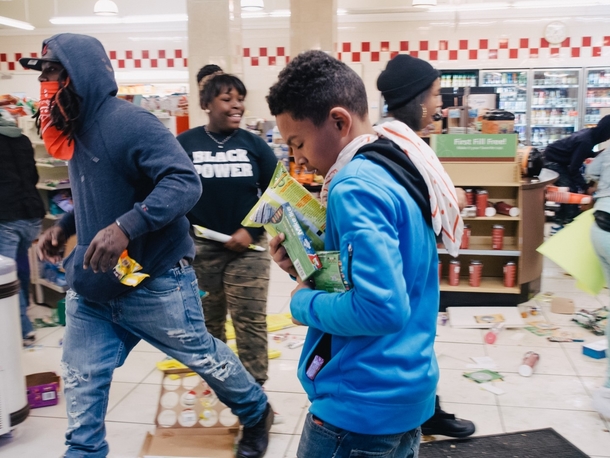
The video, which included a comment by the Hodges ("kids are being taught to do this shit..."), showed the apparent commission of crime being carried out by four or five wannabe "Jesse James" types. These wannabe gangsters were probably between 9 and 12 years old and male.  The crime was a "scoop and scoot" at what appeared to be a neighborhood drug store. The "goods" looked to be petty stuff, mostly chips, cookies, candy and so forth.

In the video you can see a store employee speaking with someone on the phone. The expression on his face is one of disbelief. Apparently the employee, aware of the crime in progress, had shut and locked the store door. Whoever he was speaking with had apparently told him that he couldn't do that and to open the door.

The employee reluctantly unlocks and opens the door as the "James Gang" make a break for it, shoving the employee aside, running across a busy intersection in triumph while other employees start picking up the mess left behind.  Finally, I feel that it's important that I should mention that everyone involved---the kids and employee---were black ( you'll understand why I mention that in a moment).

I could see the expressions on their faces of utter glee of a successful heist. I don't know if this was a spur of the moment job or if any planning had gone into it. Was this a first time "scoop and scoot" or had they or one of gang done it before? Perhaps it was a dare. With kids of that age, it could be almost anything. However, I had just started work on this article so I was already aware of the statistics.

I knew, thanks to the articles and statistics already read, that this little raid should be reason for some concern, not just for the store or its employees, but for the parents, teachers, friends and neighbors of these kids. Being male, a minority, and living in what appeared to be urban environment, the odds of staying out of trouble weren't too good. 

As it is, gangs are usually associated with all sorts of crimes (especially violent crimes and drugs), are the most prevalent in cities. Although blacks make up just 13% of the total population, the percentage of illegal drug use among blacks is 6.9% (the national average for drug use among other races is 7.4%), and young males are the most vulnerable.

So as you might expect, I had to make a comment. Here is what I said: "Thieves. Soon, perhaps in a few years, we'll be hearing about how they died. Maybe gang related. Maybe in a shootout with police. Perhaps a homeowner defending their property. And it will be their parents and neighbors bemoaning the injustice of their deaths".  

Now, you'll notice that there was no mention of race, gender, or anything else. My comment was one of empathy for their parents who, if this type of behavior goes unchecked, may find themselves crying over the body of their child and wondering "why" and "how" this could have happened. 

Based on the reports and statistics mentioned above, this is not a remote outcome . A kid laying dead somewhere, the victim of a drive by shooting, gang violence, drug overdose, or a crime gone wrong is far too common. Perhaps instead of being the victim, they got caught trying to rob someone or selling crack and now they're facing prison. Maybe they're the one who accidentally killed someone.

There's a whole myriads of bad results which started innocently enough with some petty theft. Heck, I just saw a video of a group of older teenagers randomly opening bags of chips, Cokes, cookies in a store helping themselves, and then trotting out after obviously enjoying themselves.

Well, you can well imagine the responses I received. According to the Hodge's site, my simple comment generated some 10.9 million views along with 2,452 comments. It also generated 21.6 thousands "likes" and was shared 5,140 times! The vast majority of comments were positive with most agreeing that this kind of behavior could have very serious consequences for these kids.

However, there was a minority of commentators who wasted no time in playing the racist card (which, of course, I'm far from) and making all sorts of racial slurs toward me, alleging that I was stereotyping these kids, that I was wanting these kids die while referring to me as "sick and deranged", an "old white clown", openly wishing I would die or "rot away", and so on.  

Fortunately, as I said, these were minority, but still I found it amazing how people could twist a simple remark about empathy into something barring no resemblance to the comment itself. Nothing in comment related to race (but their responses did). Nothing in my comment mentioned wishing death on anyone (but their responses did). Nothing in my comment mentioned joining a gang (although their responses did). I did, however, say they could end up being the victim of violence if this kind of behavior continued and statistics support me in that statement. 

I suppose this little exercise demonstrates how vicious and reactionary some on the "woke" Left can be. They certainly can't stand a contrarian opinion, at least on this occasion! They demand tolerance, but for them. Not you. They call you "racist" while they're on a racist rant. They claim to oppose hatred, and yet their comments are as vitriol as they can be. They claim they're wanting to avoid an argument while trying to trigger one with name calling, distortions, and not so subtle innuendos and implied threats.

In fact, several excused the shoplifting youngsters by saying they "might be hungry" while others blew the theft off all together as no big deal. Perhaps I should have condoned the theft since I'm white, "privileged", and all that just as they did. But that would be morally wrong. 

A few wanted to compared the shoplifting to "mass shootings" (which are obviously unrelated) by claiming that they are routinely carried out by whites to the relative banality of the shoplifters. They also claim that I ignore these type of crimes as well.  

To set the record straight, I do routinely condemn mass shooting along with any other form of mass murders including wars over economics in my articles as well as directly online regardless of race, gender or any other factor. Secondly, how would they know unless they regularly read my articles?

However, despite their apparent racial undertones, they are correct that whites are largely responsible for mass shootings. According to Statista, 74 mass shooting were committed by whites while 25 were committed by black individuals between 1982 and April 2023. Hispanic were responsible for 11 such shootings and Asian for 10.  Native Americans committed just 3.  

There's no question that shoplifting is a serious gateway crime which all of us eventually pay for. Although much of it is committed by adults, those under 17 years of age are responsible for a significant portion. Of those, many wind up on a path no one would wish on them.

Many come from an environment where the odds are already stacked against them---poverty, high crime neighborhoods, single parent households, little to no consistent adult supervision, underperforming schools and few opportunities in their neighborhood. Some are even taught to fear or hate police officers, disrespect teachers, and come to admire gang lifestyle. They see crime and drugs as easy money. But it's also a fast ticket to prison or to a short and tragic life.

We have to do better as a society. While pre or after school programs, especially when those programs can provide some nutritional meals are great, nothing replaces the active involvement of a parent in the daily lives of their kid  just as nothing beats a good education. There has to be a refocus of school curriculums to civics, critical thinking and business skills with an emphasis on basic math, proper English, the sciences, and history. 

After school and summer programs working in the community is another great avenue for teenagers. Perhaps too is redirecting those about to graduate from high school into the trades. College isn't for everyone and trade schools are a lot less expensive, pay well and have great benefits. It's also an opportunity to opening your own business at some point if that's what you want to do. We have to do better by our kids. What we've been doing is obviously not working.


If you want to know more about this article's topic, please check out the links below. If you enjoyed the article, please consider passing it along to others and don't forget to subscribe. It's free! Lastly please be sure to "like" us on whatever platform you use to read anotheropinionblog.com. It helps with the algorithms and keeps our articles in circulation. Thank you! 


Shoplifting Has Become a $100 Billion Problem For Retailers


The Shoplifting Problem in the Nation


A record number of American kid's were injured or killed in gunfire in 2022


Office of Juvenile Justice and Delinquency PreventionStatistical Briefing Book


BLS: Labor force characteristics by race and ethnicity, 2021


Number of mass shooting in the United States between 1982 and April 2023, by shooter's race or ethnicity.


Hodgetwins


Saturday, March 23, 2019

Crime In America: Where Do Our Cities and States Rank?


On March 8th of this year, Louisville Mayor Greg Fischer delivered a well prepared speech with his embattled Chief of Police, Steve Conrad, standing behind him and told the residents of Louisville that we didn't have a crime problem. He claimed that homicides, shootings, and robberies were down 30%.

Perhaps they are, but other than the local media, complainant as always, and a few beholden supporters, no one was present to ask him the tough questions and demand the straight forward answers which this administration seems to go to great lengths to avoid. Never mind the fact that we hear or read about a shooting or murder nearly every night. Never mind the fact that in some parts of the city, the crime is so bad that even the police are hesitant to go there after dark. Never mind the fact that areas once considered "stable" and safe, are increasingly becoming havens of violent gangs, which local government denied even existed for years.

Throughout his recent election campaign, Fischer insisted that crime was on the decrease; Louisville was a safe city despite the residents believing otherwise. But he also insisted that Louisville had a solid financial base, but as soon as the election was over, dropped a $65 million dollar bomb on the public; claiming that the tax on insurance would have to go up 300% or otherwise he was going to cut essential services like police, fire protection, and EMS (the bill was the city's portion of state pensions which the city knew about for two years but said nothing about) So, what is the truth? Where does Louisville stand with respect to crime? For that matter, where are the safest places to live by state and city? We'll address those questions one by one.

According to an article by US News and World Report, the safest state to live in is Maine. It was ranked first for having the lowest number of violent crimes and fifth in terms of property related crimes. This was followed by Vermont and New Hampshire which were numbers two and three respectively in terms of violent crimes. New Hampshire was ranked first for having the lowest number of property related crimes while Vermont was sixth.

In fourth place was New Jersey, which I'm sure comes as a surprise, but it was ranked second for the lowest number of property related crimes and twelfth in terms of violent crimes. The fifth spot went to Idaho. Property crime was ranked eighth while violent crime was sixth. Rounding out the rest of the top ten positions, in order, was Connecticut, Virginia, Rhode Island, Wyoming, and Pennsylvania. Kentucky was ranked twelfth overall. Violent crimes in the state was ranked seventh while property crime was 20th. Now, let's look at the five worse states to live in.

Coming in 46th place was Tennessee. Violent crime placed the Volunteer State near the bottom at 47th while property crime was 37th. In the 47th spot was Arkansas. Property crime landed it in 46th place and violent crime was 45th. The 48th place belongs to Louisiana. Violent crimes was ranked at 46th worse while property crime was 47th. The runner-up state of worse places to live in terms of crime goes to Alaska! Now seriously, who saw that coming? Alaska?

Yelp, the snowball capitol of America came in 49th. Property crimes ranked the state as 48th worse while violent crime made it the absolute worse state, coming in 50th place. Finally, the worst state in terms of crimes belongs to New Mexico, which was 50th in property crime and 49th in violent crime. Perhaps one important reason is due to all the illegal immigrants crossing the border along with the influx and influence of criminal drug cartels and their gangs.

Some honorable and not-so-honorable mentions go to Ohio in 21st place, Illinois at 25th, Colorado holding the 27th spot, Hawaii in 29th and North Carolina is 31st. Meanwhile, California is 34th, Florida is 35th and Texas is 36th. Delaware is in 40th place, Alabama is 43rd, followed by South Carolina and Nevada. Now, what about cities and crime? In terms of "big cities" as defined by the FBI (cities with 250,000 or more residents), the city with the worst crime rating was Detroit, Michigan, which as most people know, is an example of gross mismanagement, poor government, high taxes, and a largely ineffective police department.

The result has been a "hollowing out" of the city's core as people and businesses moved out, taking their tax revenue with them. This is something all city mayors, regardless of size, fear (some have suggested that this may be Louisville's fate as well if it keeps to its present course). The second worst city to live in when it comes to crime was Memphis, Tennessee (which shares part of its crime problem with West Memphis, which is just across the Mississippi in Arkansas).

The third place winner...or loser in this case...goes to Oakland, California, across the bay from San Francisco. Next was St. Louis, Missouri followed by Milwaukee, Wisconsin. Rounding out the top five is Baltimore, Maryland. Other states to make the top tier of the worst cities to live in terms of crimes include Cleveland, Ohio, Stockton, California, Indianapolis, Indiana, and Kansas, Missouri. Of the three largest cities in America, Chicago had the highest violent crime rate followed by New York City, and Los Angeles.

Regarding homicide rates, the worse place to be was again in St. Louis, Missouri followed by Detroit, Michigan. The "Big Easy", New Orleans comes in third place. Next comes Baltimore, Maryland and then Newark, New Jersey, which may be a spillover from NYC. Rounding out the top ten are Buffalo, New York, Pittsburgh, Pennsylvania, Memphis Tennessee, Atlanta, Georgia, and Cincinnati, Ohio.

Among medium size cities (cities with 100,000 to 199,999 in population), Birmingham, Alabama was the place not to be. It claimed first place 1588.29 crimes reported per 10,000. In second place was Little Rock, Arkansas, followed by Rockford, Illinois. Springfield, Missouri was fourth with Lansing, Michigan completing the top five. Other dishonorable mentions go to Hartford and Springfield Connecticut, Springfield, Massachusetts, Springfield, Illinois, and San Bernardino, California.

If we look at the murder rates for medium size cities, Jackson, Mississippi takes first place. Coming in second was Birmingham, Alabama. The third place city with the highest murder rates was Baton Rouge, Louisiana. Fourth place was New Charleston, South Carolina, followed by Little Rock, Arkansas. Finishing up top ten are San Bernardino, California, Richmond, Virginia, Dayton, Ohio, Inglewood, California, and Montgomery, Alabama.

Finally, the small cities (cities with populations from 10,000 to 9,999). Darby, Pennsylvania has the most violent crime, which was followed by East St. Louis, Missouri and Florida City, Florida. Next on the list was Espanola, New Mexico and Benton Harbor, Michigan. Other cities on the FBI's list of small cities include Opa Locka, Florida, Anniston, Alabama, College Park, Georgia, Gallup, New Mexico, and Cocoa, Florida.

As for the highest murder rates, East St. Louis, Missouri has the highest homicide rate. In second spot was Chester, Pennsylvania followed by Muskegon Heights, Michigan in third place. Fourth place belongs to Helena-West Helena, Arkansas. Completing the top five was College Park, Georgia. In addition, you have Gary, Indiana, which is just outside of Chicago, Trenton, New Jersey, Eunice, Louisiana, Lumberton, North Carolina, and Rivera Beach, Florida.

So, were any of your states or cities listed? Should they have been listed higher or lower on the FBI's list? What about Louisville, Kentucky? With a post-merger population of around 770,000 (1.2 million in the Greater Metro area), it should have fallen in with the large size cities. Obviously it's not among the top ten worse cities in term of crime. Where is it ranked then? Maybe Mayor Fischer was right and crime isn't so bad after all.

According to the Neighborhood Scout, Louisville is ranked number five on its Crime Index (the top score was 100), meaning that it's safest among 5% of US cities. Being the state's largest city, it also has (by far) the highest crime rate, 6.89 per 1000 residents compared to the state average of 2.26. In 2018, there was 31,145 reported crimes. Of these, 21,266 pertained to property while 4,281 were violent crimes. The reports also points out that your chances of being involved in violent crime in Louisville is 1 in 145 compared to 1 in 443 out in the state. How does that stack up nationally?

Louisville's murder rate was 106 in 2017, which equals 0.17 per 1000. The national rate is 0.05. There were 167 rapes reported. This equates to .027 of the violent crimes locally. Nationally this figure is 0.42. In terms of robbery (armed or otherwise), there was 1,315 reported. That's about 2.12 per 1000. Nationally that figure is 0.98. Finally, assaults. There was 2,693 reported assaults in 2018, which is translates to 4.33 per 1000. Nationally, that number is 2.43. Not exactly what I'd call "safe" would you? The murder rate improved slightly in 2018, down to "only" 80 homicides. Let's check another source to be sure.

The next place I looked at was a US News and World Report article which looked at crime rates and safety. According to the report, Louisville is the 61st best place to live and 56th when it comes to retirement (owing mostly to the number of parks and location of the city to other areas such as Nashville, St Louis, Indianapolis, and Cincinnati). However, in terms of crime, the report gave Louisville a big ole red thumbs down. Louisville ranked a 4.8 out of a possible 10 with the notation that it had a higher than average crime rate of similar sized cities. Louisville's index was 451.9 compared to Charlotte, North Carolina (441), Pittsburgh, Pennsylvania (227) and Portland, Oregon (276) . Not looking good Mister Fischer. Let's try one more site shall we?

The next the site I looked at is called "Only In Your State", which examines a plethora of independent data to do their rankings. In fact, they even comprised a list of the top ten worse cities in Kentucky to live in due to crime. Working backwards and starting in tenth place was Somerset, Bowling Green (aka "Little Chicago"), Versailles, Lexington, Hopkinsville, Frankfort (the state capitol, so criminals of all types are a automatic given), Shively (which is located in Jefferson County with Louisville), Newport (located across the Ohio River from Cincinnati, which as we saw earlier, has one of the top murder rates in the country), and Georgetown.

The number one city in terms of crime in Kentucky is...drum roll please....Louisville! Yelp, that's right. The city in which the mayor, police chief, and Metro Council have all proclaimed to be safe, is ranked as the "most dangerous city in Kentucky". How about that? As the site pointed out, Louisville led the US in murders in 2015, beating out New York, LA, Atlanta, and even Chicago (in 2016, it had 118 homicides). Put that on your tourism posters! The site also mentioned that most of the victims aren't the only one's getting buried. So is all the actual crime reports apparently; hidden under the mayor's well fertilized doublespeak PR campaigns.

So, while it's doubtful there will be any serious cuts to police, fire protection, or EMS as a result of the mayor's now defeated 300% tax increase proposal (it was defeated in a rare bipartisan vote of 15 to 11 on March 21), there will be cuts to an over-inflated bureaucracy, a comprehensive audit, and (hopefully) an end to pet projects. When it comes to tax increases, there should be no sacred cows. However, one thing is for sure, Louisville is not as advertised. It has an higher crime rate than comparable cities of the similar size, and yet it's already one of the highest taxed cities in the US (currently 8th; just behind Detroit) and it's about to get much worse.

Aside from the now defeated 300% "Fischer Tax", there are still four other taxes and rate increases in the pipeline---water, electricity, waste, and gasoline being considered, plus the possibility of an increase in property tax. Politicians, regardless of their political party, have historically proven that they can't manage our money and few have ever met a tax they didn't like or couldn't justify. That's why I think all rate and tax increases (included salaries for elected officials) should have final approval by the voters. After all, it's our money and we should have the final say as to how we want it spent don't you think?


Public Safety Rankings


FBI's Violent Crime Statistics For Every City In America

Louisville Kentucky Crimes Rates

Best Places To Live: Crime and Safety