Showing posts with label Black Sea. Show all posts

Thursday, March 06, 2025

Trump Getting Real with Zelensky: Find Peace with Russia or No More Money


Much has already been made of the heated meeting between President Vladmir Zelensky of Ukraine and President Donald Trump and Vice President  JD Vance.  President Trump, in effect, told Zelensky to make peace with Putin or he was taking away the keys to Ukraine’s war machine…and put a damn tie on where he’s at it!

Zelensky seems to believe that with U.S. financial backing, he will be able to stalemate Putin virtually indefinitely, perhaps even in the long run, obtain NATO membership. That’s something Trump opposes. Putin has attempted several overtures at peace, which Zelensky has essentially blown off like, and why not? He’s got the biggest bully in the world in his court, the United States.     

Trump used the meeting to make a very public statement to Zelensky, the people of Ukraine, to Putin, and to the world---no more money, no more armament and no mineral deal until Zelensky puts on his big boy pants and can set down for a serious discussion about peace with Russia, otherwise we walk, and he can deal with one very angry Russian bear.

 NATO, which also heavily depends on the US, can do as it pleases, but the US needs to set this one out thank you very much should they continue to poke the bear (and kudos to Italy’s Prime Minister, Georgia Meloni, for rejecting UK-French plan to send European troops to Ukraine). It’s one thing to come to the aid of ally being attacked, but when they bring it on themselves, maybe a lesson in “told-you-so” diplomacy is in order.

Putin, on the other hand, has committed much of his military to what amounts to a slow bleed of Ukraine’s economy and military. His has activated antiquated weapon systems (such as outdated tanks) and even employed North Korean troops in what amounts to a ”fight for food” deal for the bankrupt Communist state.

The only sensible reason for Putin to do this is one of taking a measured stance against Ukraine. Putin didn’t start the war. Zelensky and NATO did (with a little help from a former president’s son looking to score a big financial payday). Putin has been consistent his insistence that NATO missiles and armament will not be deployed along his border with Ukraine. Zelensky and NATO thought that by playing the U.S. card, Putin could be intimidated. That wasn’t going to happen

Putin is not a spineless leader of the sort that Europe has produced in abundance lately (for an example, look at their immigration disaster and its effect on crime and their culture). Putin is very intelligent. He was a senior KGB officer. He doesn’t bluff. Unlike European leaders, he doesn’t care if you call him names.  However, since the fall of the USSR and Soviet Russia, their leaders, starting with Mikhail Gorbachev, have tried  once again to build bridges to the West.

Ever since the days of Peter the Great, Russia has wanted to join with the West and act as a bridge between East and West. At one point,  they even asked to join NATO and was rejected out of hand and perhaps justifiably so. With the end of the Cold War, there had been a lot of talk about dismantling NATO.

Therefore, NATO’s justification for its continued existence depended on having a bad guy and that bad guy is Putin. It’s also why many neo-cons and policy gamers are anxious to start a new Cold War. War is profitable---cold or hot. It bears mentioning that the establishment of the Warsaw Pact came about only after the creation of NATO and then with the intention of being a defensive deterrent, presumably against the same military and industrial complex President Eisenhower spoke of in his 1961 “Farewell Address to the Nation”.   

In 1990, as the Warsaw Pact nations began to fall, Secretary of State James Baker informed Soviet Foreign Minister Edward Shevardnadze (in the presence of Gorbachev) that once the unification of Germany was complete, NATO had no intention of advancing “one inch to the east”, and yet within ten years, that’s exactly what happened. Gorbachev saw it as a time to restart and one of openness or as he called it, “Perestroika”. As Gorbachev said at the time, “we are duty bound to learn to live in peace”.

One by one, the former Warsaw Pact countries of Poland (1999),  Hungary (1999), Romania (2004), Czechia (1999), Bulgaria (2004), the Baltic states (2004), and so forth were admitted into NATO, and each time Russian leaders protested through all the proper international channels and were ignored.

At first, the Russians were assured there would be no more, until there was. But each time a country joined, NATO missiles were deployed all along their border. As a result, Russia was slowly helmed in. It would be like Russian missiles being deployed along our southern border, first in the numerous Caribbean islands one by one, until finally, in Mexico along the Rio Grande.

What if the Russians started deploying missiles along the Canadian border just like what happened after Norway and Denmark joined NATO in 1949, Finland in 2023, or Sweden in 2024.   How would you expect Washington would react?

Actually, you don’t even have to imagine. That was what the 1962 Cuban Missile Crisis was all about. It was Russia’s response to U.S. nuclear tipped intermediate range “Jupiter” missiles previously being deployed in Turkey (which had joined NATO in 1952).

Amusingly, then Soviet Premier Khrushchev would walk visitors to his vacation home on the Black Sea to the balcony and hand them  a pair of binoculars, asking “what do you see?”. They typically replied, “I see the sky” or “I see the water”. He would then look through the binoculars and bellow “I see American missiles in Turkey aimed at my dacha!”.

It seems that everyone knew that a NATO presence in Ukraine would be the straw to break the bear’s back, yet they expected Putin to do nothing but grouse and saber rattle like the West does, but that didn’t happen. Putin secured the Crimea, which has been a Russian possession since 1783 when it was annexed by Catherine the Great. It has a majority Russian population. Strategically, the Crimea is the home of the Russian Black Sea Fleet, at Sebastopol, which is their version of our naval base in San Diego.

Russian is taught in its schools and it’s the common language of its people. It was followed by a plebiscite, asking the citizens whether they wanted to remain apart of Russia or the Ukraine. The overwhelming majority said “Russia”.

But this had nothing to do with the history of the region, the will of the people, national sovereignty, or even the long standing presence of the Russian military in and around Sebastopol. This was about oil and gas, which had been discovered in abundance in the Black Sea, and western oil companies wanted it.

In addition to large reserves of oil and gas, the Ukraine has vast deposits of key minerals, much of it in the disputed Donbas Region which is occupied by Russian troops. The deal President Trump was willing to sign with President Zelensky would have allowed a U.S. presence in the Donbas (technically still belonging to Ukraine) to mine for deposits valuable minerals, with each country splitting the processes 50/50. It would enable the Ukraine to begin paying the U.S. back some of the billions it owes us in aid, retain Ukrainian soil, and help Ukraine to rebuild its infrastructure.

In addition, it would be an incentive for Putin’s troops to either withdraw from the areas being explored and mined, or perhaps even pull back altogether. After all, Putin doesn’t want to kill or injure U.S. civilians at any cost. It would serve as a de facto “economic buffer zone” without the need for a single pair of U.S. military boots on the ground and each side wins.

However, Zelensky needed to agree to a peace talks with Russia, and that’s where he has repeatedly dropped the ball. When it comes to power politics, Zelensky is out of his league. He’s a standup comedian turned politician unlike others who are politicians turned fools.  Accordingly, he got a dressing down in his meeting with Trump and Vice President Vance. He was put on notice that the U.S. would not finance his war with Russia indefinitely or for free.

Even during the early stages of WWII, before the U.S. was directly involved, Prime Minister Churchill gave the U.S. 99 year leases to bases on their island possessions in the Caribbean as a “down payment” and “thank you “ to all the war material and economic support we provided to England under the Lend Lease Act of 1941 (the act also extended to the Republic of China, France, the Soviet Union and other allied nations).   As of 2024, we have given Ukraine $174.2 billion dollars in aid (military and otherwise) while the European Union has given about $18 billion.

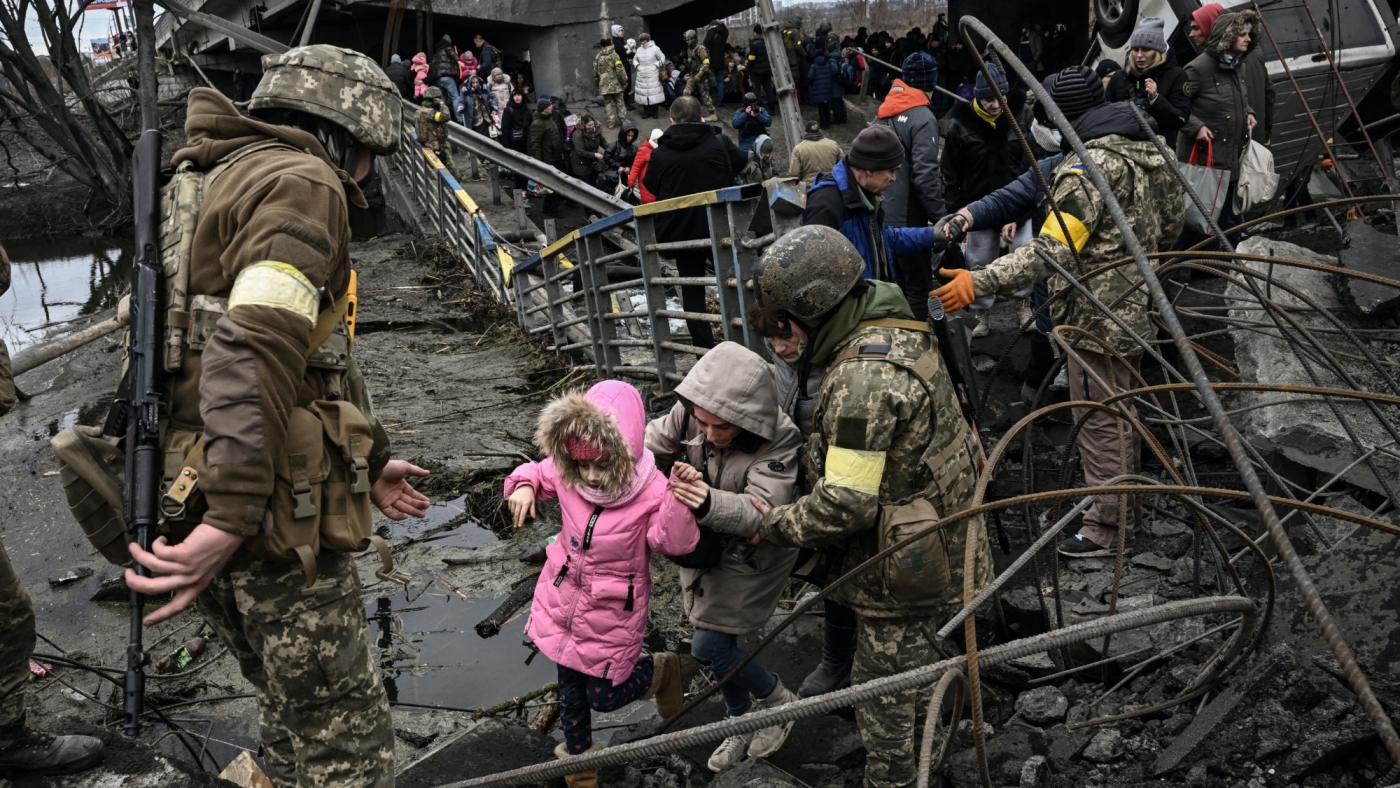
President Trump announced during his speech to Congress on March 4th, that he had received a letter from Zelensky finally agreeing to sit down with Putin and hammer out some sort of peace deal. It may not be entirely to Zelensky’s liking, or that of Putin’s, but it will mean no more killing on either side and ending the destruction of Ukrainian cities and villages.

In addition, President Zelensky said in his letter to President Trump that he was still willing to sign the minerals agreement, which would be a good thing for the Ukrainian economy. Ukraine is a country with vast untapped economic potential, from the oil and gas reserves it does control, to its timber and mineral wealth, and it possesses the most fertile soil in Europe and quite possibly the world. (hence the moniker “breadbasket of Europe”).

This was also an education of sorts for Zelensky about what Otto von Bismarck called “Realpolitik”. Never disrespect your benefactor or take them for granted. By that, don’t show up in casual slacks and t-shirt and “knock-around” boots to meet the leader of a world power and expect to be given a virtual blank check for a never-ending war without a plan to pay them back.  America isn’t your ATM. Show some humility. Even Churchill arrived dressed to the nines with hat in hand and he offered at least island leases!  


Thank you for reading "Another Opinion", the Op/Ed blog page for the "militant middle".  Here at "A/O" we truly value our readers. At A/O we seek the facts as they exist, not partisan talking points.  We hope you find our articles informative and engaging. Comments are welcome, provided they are not vulgar, insulting or demeaning.  Another Opinion is offered without charge and is directed toward all independent and free-thinking individuals. We ask, however, that you "like" us on whatever platform you found us on in order to keep our articles available for free to others. Lastly, in order to keep costs down, we depend on passive marketing, and therefore, depend on our readers to please forward our posts along. Below you will find links to the sources we used in writing this article. Thank you. 


  Zelensky vows to ‘make things right’ with Trump and negotiate peace


How Gorbachev was misled over assurances against NATO expansion


4 Lessons to be learned from Zelensky’s White House Meeting


What they said: Trump, Zelenskyy and Vance’s heated argumentin the Oval Office


NATO Members


Russo-Ukrainian War  


Controversy regarding the legitimacy of eastward NATOexpansion


Lend Lease Act


EU Assistance to Ukraine (in U.S. Dollars)


No suit, no lunch, no respect: Zelenskyy-Trump feud startwith a fashion dig


Friday, February 24, 2023

Ending the War in Ukraine


I've written a number of articles about the Ukraine-Russia war over the past year, and even a few about the prospects of war before that. While I would always present the facts as I found them, everything seemed to point to a deliberate attempt by the EU and NATO (with the U.S. taking a leading role) to promote a conflict between Russia and Ukraine.

It centered on two prime issues. Access and control of  5.7 million tons of oil reserves and 805.3 billion cubic meters of gas with another 1000 billion cubic meters of natural gas found in the area around the Black Sea along with hard coal resources in the Donbas worth in the neighborhood of $57 billion dollars and millions of tons worth of other minerals--- and securing a NATO presence near the Russian border and especially close to Russia's second largest naval installation at Sebastopol in the Crimea.

This would encompass Russia's entire western frontier and making it impossible for Russia's Black Sea fleet to operate freely in the Black Sea or pass through the Straits and into the Mediterranean Sea. To put it another away, it would be like pointing a loaded gun at Putin's head and demanding that he stop being so violent. 

The media in the West wants everyone to believe that this was an act of aggression. It wasn't. It was an act of self defense. Once NATO was in Ukraine, there would be no way of removing them. Russia's response was exactly what any other nation's would be---headed it off before it w as too late. How would the U.S. respond to a militarized border with Canada or Mexico? What would be Washington's response to missiles aimed pointblank at Seattle, San Francisco, San Diego (which is home to our second largest Naval base) or at our NORAD installations in Alaska and Colorado?

So, here we are, a year into the war and no clear winner.  President Biden just paid a surprise visit to Kyiv (after alerting the Russians beforehand so that Air Force One didn't get shot down) where he promised Ukrainian President Zelenskyy "America's undying support for the Ukrainian People" (meaning the Zelenskyy government) and billions of dollars worth of military aid despite the fact that most  Americans want no part of a war directly or indirectly with Russia or spending billions overseas when we desperately need it here (East Palestine Ohio immediately comes to mind). 

It's not that Americans don't want to help the Ukrainian People, we do, but with humanitarian support, not military hardware. Why? Because we all know where that will lead and after having essentially "lost" a 20 year war to a bunch of rag-tag terrorists and making them the fifth largest military in the world thanks to all the military hardware we left behind.

So who the hell wants to get involved in another war, especially with Russia? Well, the "merchants of death"---the American military industrial complex and NATO would . They are making tens of billions supplying military hardware to Ukrainian forces via the U.S. military. The energy industry would. They stand to make many billions if they can get their hands on all the coal, oil and gas reserves and mineral deposits.  

Since the collapse of the USSR in 1989 and reunification of Germany, NATO has expanded from the German border eastward to encompass Russia's western frontier. Today NATO includes all the former Warsaw Pact nations of Eastern Europe with one exception...Ukraine.

So, what happens now?  Russia has long said that a NATO presence in the Ukraine would be viewed as a unqualified threat to its national security for reasons previously stated. As a result of this threat war happened. NATO and the United States has seen to it that Ukraine remains fully armed, thus prolonging the war for who knows how many more years (as an aside, you'll note that while Biden promised billions in military aid and financial support, he said nothing about finding a way to bring the conflict to a peaceful end. That in itself should tell you something).

China, which has long had a long "frenemy" relationship with Russia, has stepped up to offer Russia military and technological support. This poses an interesting quandary for the West and in particular for the United States, which is heavily dependent on Chinese imports, especially in the area of technology and electronics.  As of December 2022, we imported 37.3 billion dollars worth of goods from China.

In addition, China is the second largest holder of U.S. debt behind Japan, owning roughly 13% or $972 billion dollars in U.S. Treasury Bonds. If China were to dump those bonds it would likely either collapse the U.S. economy or at the very minimum trigger a severe depression.

It's worth mentioning as well that China has also indicated that it would like to replace the dollar as the world's "go to" currency with the Yuan. At the very least, making the Yuan a alternative world currency on par with the dollar.  Again, this could have a negative impact on the U.S. economy. Secondly, China has been asserting itself throughout the Eastern Asia region, particularly where Taiwan is concerned.

It's also been aggressively trying to expand its territorial waters in the South China Sea and claiming fishing rights in waters now claimed by Australia, Indonesia, Japan, South Korea, Philippines, and even India (where there's a "warm" territorial conflict ongoing between the two nations).

I think it's pretty much a given that should American "boots" hit the ground in Ukraine, as been hinted at by Biden officials, things could get very ugly very fast. There's no way the U.S. military, which was badly depleted in its lost cause in Afghanistan and Iraq, could defend against an aggressive China on one hand and a slugfest in Ukraine (which would undoubtedly spill over into Europe). 

There's also another possibility, which doesn't bode well for anybody. Putin just announced that Russia was withdrawing from the last treaty it had with the United States concerning nuclear weapons. This was followed up with his announcement that Russia was rolling out its RS-28 "Sarmat" nuclear missiles (aka "Satan II"). 

The Sarmat is a intercontinental missile capable of caring ten "heavy" or 15 "light" thermonuclear separate warheads (also known as "MIRV" or multiple independently targetable reentry vehicles) . They can be launched from a HGC, using a Avangard hypersonic glide vehicle which is at present considered  undefendable due to its exceptionally high velocity (estimated to be around 25,500 kph or 15,845 miles per hour).

The missiles themselves can be launched from a static site or from a mobile unit.  With a shortened first boost stage following launch, it makes them difficult at best to track by satellites using heat sensors. They have a range of roughly 21,748 miles. It's 4,873 air miles between Moscow and Washington DC in case you were wondering.

Each launch site can be equipped with "Mozyr" anti-strike system. This comes with a early detection satellite directed radar system which launches a massive battery of steel "arrows" or metal balls at incoming fighters, bombs, rockets, ICBMs, etc designed to protect the launch vehicle or site. They are allegedly capable at hitting incoming targets at altitudes of about 4 miles. If this sounds wicked, it's because it is.  An interesting aside is that the Sarmat made its first test flight on April 20, 2022 which also happened to be the birthday of Russia's great nemesis, Adolf Hitler.

I think this was a not so subtle warning from Putin to Biden to back off. If he (Biden) can't bring a peaceful solution to the table, back off (ordering the Nord Stream pipelines to be blown up---allegedly--- wasn't helpful Joe). If nothing else, Putin could make regions of Ukraine uninhabitable, making not only the need for a NATO presence in Ukraine irreverent but irradiating the oil and gas fields as with the coal and other minerals.

So, here's where we are with the situation. The corporate interests behind the Biden Administration have reached their Rubicon. If they cross it they risk a global calamity unlike anything the world has ever seen. Of course, they are quite willing to risk the lives of as many people as necessary to gain access to the coal, oil and gas reserves irrespective of any environmental damage, but this is something else altogether. They also risk a economic meltdown as we described should China decide to back its Russian ally all the way. 

If Biden backs down from his recent rehearsed statements, he loses face abroad as support for war at home still continues to decline. Currently 48% of voters support sending military aid, which is down from an original 60%. Meanwhile, just 35% support putting boots on the ground in Ukraine. The DNC and its corporate backers will have to find a way out.

There are already strong doubts as to the re-electability of Biden given not just his age, but his mental acuity. Rumors of possible dementia or Alzheimer's have been running amuck since before his election, and nobody wants Kamala Harris as president.

On the GOP side, Trump remains a threat (thanks largely to the "monster" the media created him into), if only for the commotion he could cause within Republican ranks. His prospects of actually being nominated at the Republican Convention are virtually nil, let alone winning the Presidency again. 

Public tolerance of the ruling oligarchy on both sides has reached a breaking point with this political kabuki theater and neither side wants to risk losing control of the corporatocracy it substituted in place of the Republic. What is needed is a another distraction at home and amenable president acceptable to both corporate factions in order to let the situation in Ukraine to run its course, which is what I expect.

Meanwhile, if the U.S. and European merchants of death can be persuaded to cut back its arming of Ukraine, look for Moscow and Kyiv to makes moves to resolve the war amicably.  After all, both countries are exhausted militarily (although, despite U.S. led sanctions, the Russian economy is doing quite well thank you). Ukraine is in serious economic trouble as well thanks to the war. What is critically needed is for the EU/NATO and Washington to stop egging the war on and focusing on finding a peaceful solution.   


 If you want to know more about this article's topic, please check out the links below. If you enjoyed the article, please consider passing it along to others and don't forget to subscribe. It's free! Lastly please be sure to "like" us on whatever platform you use to read anotheropinionblog.com. It helps with the algorithms and keeps our articles in circulation. Thank you! 


Support for Ukraine aid softens in U.S. public, poll says


Public Expresses Mixed Views of U.S. Response to Russia's Invasion of Ukraine


US-China Trade in Goods Hits New Record in 2022---What DoesIt Mean For Bilateral Ties?


Putin says Russia suspending participation in New STARTtreaty, last nuclear weapons pact with U.S.


Putin say Russia to deploy Sarmat nuclear missiles


RS-28 Sarmat


The War in Afghanistan: Who Benefited? Who Didn't?


The Nord Stream Pipelines: The West vs. Russia...Again


Understanding What's Happening in the Ukraine and its Likely Outcome


Saturday, December 03, 2022

What's Next for Putin and the People of Ukraine?

What's next for Russian President Vladimir Putin? I guess that all depends on who you ask and where you get your news. There's no doubt that Russian news sources are largely controlled by the Russian government. But then, the Western media are just as guilty of their own propaganda. After all, the same corporations which control 96+% of everything we read. watch, and hear also controls Washington.

With that in mind, Russian news sources report that the Russian military is holding their own, if not actually winning in what's now become a war of attrition. Meanwhile, in the West we're told that the Ukrainians are giving the Russian troops a good old fashioned butt kicking (naturally with Western aid).

Russian tanks and mobile units are being decimated while Russian planes and helicopters are being shot down with impunity. As for the much ballyhooed Black Sea Fleet, it's been rendered impotent. We're even told that the Russian military to running on empty when it comes to keeping their war machine supplied with fuel, replacement parts, ammo, and even food, water, and medicine.

Video footage (often provided through the Ukrainian Government) of captured Russian troops are repleve with stories of being randomly drafted, given little or no training, and simply dropped off at random sites in the Ukraine and to await instructions which never seem to come. Many just wonder into the nearest Ukrainian town or village and simply surrender to the first Ukrainians they see...military or civilian.  In short, they're there to use up Ukrainian ammunition as cannon fodder and live (for the moment) targets.

Meanwhile, there seems to be no shortage of scenes of smoldering or abandoned T-90 tanks, or planes and helicopters being shot down on social media outlets, yet curiously few scenes of the obligatory dead Russian soldiers and pilots which are displayed as proof of victory.

It's hard to believe that the arch nemesis of "all that's holy and scared", at least according to Western governments (most notably the United States) during the 45 years long Cold War is being thumped by a second tier military like Ukraine.  Starting in the 1950's, Americans lived in fear of ruthless Soviet expansion throughout the world likened to a game of dominos.

In school, we were taught to hide under our desks or along the hallway wall in case of a nuclear sneak attack (which hung over us and our parents like a sword of Damocles). Looking back, I guess that was so the survivors knew where to find the little piles of our ashes. We were told to "drop and cover" behind sidewalk curves or drive to the nearest fallout shelter, which were usually located downtown. You know. Right where the bomb would hit in about 20 minutes.

Meanwhile selected government officials were to be secretly evacuated by the military to their own nearby private bomb shelters under the auspices of "continuity of government" and all before the ice in their glasses of scotch melted. 

 We fought countless wars directly and indirectly, overthrew governments, and assassinated duly elected foreign leaders throughout the world to make it "safe for democracy" (sarcasm intended).  Then, we watched with a certain measure of glee as the Soviets invaded Afghanistan, only to get bogged down in their own Vietnam (a lesson we repeated and took us 20 long years to learn with the same results), and downright cheered when the USSR imploded and collapsed in 1991.  

So, now what for Putin? Well, if we are to believe the mainstream media, President Putin is stuck between a rock and hard place. On the one hand, his generals are extremely frustrated with the progress (or lack thereof) in the Ukraine while many members of the Duma (Russia's version of Congress), along with large numbers of the populace, are increasingly angry over the quagmire that is Ukraine.

The Russian senior military staff are themselves split between what to do. A minority see their best option as throwing in the towel and withdrawing completely with their tail between their legs as they did in Afghanistan 33 years ago. Others see their best solution as consolidating their tenuous hold on the Donbas provinces and forgoing the rest of Ukraine.

Some of the military and political hardliners are urging the use of some of their 5,977 nukes, specifically the smaller "tactical" warheads of which there are about 2,000. Even some members of the powerful state security apparatus, the FSB (successor to the feared KGB) seem to agree.  

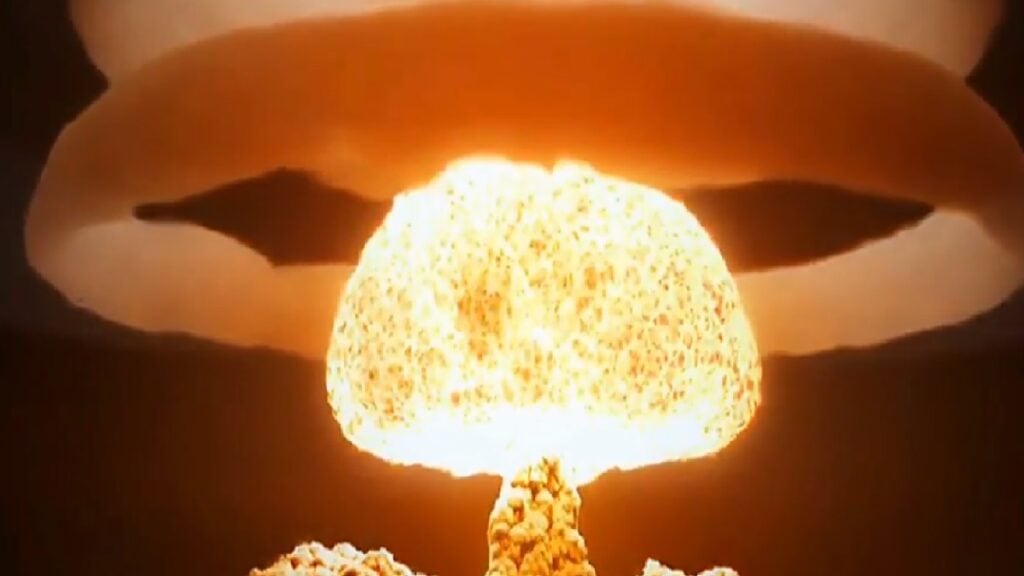
These smaller yield warheads have an explosive output of approximately 15 to 20 kilotons of dynamite, which are close to the explosive power of the bombs dropped on Hiroshima and Nagasaki,which killed or outright vaporized a combined 105,000 lives. The resulting fallout caused the deaths of tens of thousands for months and years afterwards, not including the thousands of birth defects which continued to appear decades later.

Most Western observers reject this scenario, saying Putin may be crazy, but he's not stupid. I agree that it's highly unlikely that Putin would use nukes. First, he would be unanimously condemned by the world. There's even the possibility of a coup. Those nations which have remained on the sidelines throughout the conflict would immediately provide Ukraine with humanitarian aid. Some might add military aid as well.  There would be near universal economic and political sanctions imposed on Russia would stagnate it for years if not decades.

Secondly, the nuclear fallout could drift westward, affecting Poland, Hungary, and Romania or spread further west to Germany and Scandinavia. Depending on the targets and wind direction, it's not out of the question that Turkey, not to mention Russian controlled Crimea and the Black Sea with its fishing industry and critical production of oil and gas would be affected.   

If it did drift into Poland and points west, all NATO countries, it could make for a tenuous, but plausible argument for triggering Article 5 of NATO's mutual assist agreement, and thus activate NATO's military. Granted that might be a bit of a stretch (though fallout is certainly possible and even likely), it wouldn't take much given the hotheads in NATO who've been looking for an excuse to get directly into the fight from the outset. 

Any humanitarian relief efforts transported directly into Ukraine would likely be under the protection of NATO. Any provocation by Russia, intended or not, would be all the excuse needed for things to get "hot", thus forcing Russia to pull back to avoid any possible "misunderstandings". To put it another way, everything would be locked and loaded and the safeties would be off. Lastly, it would give NATO all the justification they need in the eyes of the world to fully admit Ukraine into NATO as a full partner. Nukes would be a no win scenario for Putin.

A good argument could be made for Russia to simply withdraw from the Ukraine proper and focus its energies on the contested Donbas region, which is comprised of roughly 40% ethnic Russians. After all, Russia's military has pretty much mucked up most everything in western Ukraine while invigorating Ukrainian resistance.

Russia's badly depleted and demoralized military would have a substantially smaller area to contend with, and they would have the support of a large pro-Russian minority. The Donbas could provide a link with Russian controlled Crimea.

It's worth noting that several Western pundits claim that the Ukrainians are doing such a marvelous job in fighting Russian troops, that after driving them out of the country proper, they should move into the Crimea and retake it. An interesting notion but unlikely. The Crimea has strong links to Russia dating back to the late 1700's. A substantial portion of the population (about 60%) are ethnically Russian, speak Russian, and identify with Russia.

In March 2014, the Crimean Supreme Council held  a referendum for the Crimean people. They were to decide to rejoin Russia or readopt their 1992 Constitution which gave them autonomy. With a turnout of about 83%, some 96% voted to rejoin Russia. Critics of the referendum (mostly Americans) cited no outside observers to verify the election results, and therefore rejected the outcome. I suppose the same argument could be used for our recent elections too don't you think?

Regardless, Russia has been in the Crimea since Czarina Catherine the Great's annexation in 1783. It's home of one of their largest military installations, Sebastopol, and it's the source of vast amounts of oil and gas which has been propelling Russia's economy (perhaps the main reason Kyiv wants it back).

The Donbas (formed from the name of the area---Donets Basin) is comprised of two pro-Russian provinces, the Luhansk and Donetsk. 68.8% and 74.9% respectively speak Russian.  Fighting has been going on there for roughly 8 years, resulting in the deaths of somewhere around 14,000 people. Control of the Donbas would allow Moscow a direct connection to Crimea and the all important Sebastopol.  However, it's more than just having a land connection to Crimea. The Donbas is resource rich, especially in coal.

The hard coal reserves in the Donbas are one of the largest in the world, worth in the neighborhood of $57 billion dollars. It is also rich in methane gas, rock salt, limestone, mercury, and various types of ore. The Donbas had a gross regional product output in 2020 of 7.0 billion Euros and accounts for 6% of Ukraine's GDP.  

Prior to the 2014 invasion, Kyiv had an agreement with Royal Dutch Shell to develop one the key Yuzuvska natural gas field. Due to the war, that was suspended in 2014. Royal Dutch Shell finally withdrew from the agreement in June 2015.

The securing of the Donbas is too important to Putin to permit him to fully withdraw from the Ukraine. It is and perhaps has always been at the heart of the invasion, notwithstanding Putin's repeated refusal to allow a NATO presence in Ukraine. Such a presence would surround Russia's western frontier with NATO missiles, box in its Black Sea Fleet, and potentially restrict its access to vast amounts of oil, gas, and natural resources.

Russia should no more been expected to accept such as a fait accompli than the U.S. would with a Chinese military and economic presence on our Canadian and Mexican borders. His invasion was in many ways as colossal a blunder as Napoleon's invasion of Russia in 1812 or Hitler's in 1941, but from his perspective, it may have been the lesser of two evil. 

At the same time, a complete withdrawal would devastate Putin's credibility at home, especially with its powerful oligarchs, military and FSB, and key members of the Duma. Such a move would likely result in a coup with Putin's removal from office either voluntarily or horizontally. Failure to leave will led to more dissent at home, and again, a possible ouster.

Securing the Donbas offers Putin with a chance for a militarily victory and stability at home before things spiral too far out of hand, but it leaves him with a dangerous enemy in Kyiv who will undoubtedly seek revenge by keeping the Donbas unstable. It also provides Kyiv with the best excuse it could ever have for full NATO membership, and with it, protection of the global corporate elite.

Finally, Russia will remain outside the reach of the Western capitalism and its ruling elite, where perhaps it should be. The sanctions will likely remain for now, as much as punishment for rejecting Western neo-feudal capitalism as for its invasion of Ukraine. Putin will be portrayed as unstable and a tyrant in the West for his disruption of the "Great Reset" of the New World Order. 


If you want to know more, please take a look at the links below. If you enjoyed the article, please consider passing it along to others and don't forget to subscribe. It's free! Lastly please be sure to "like" us on whatever platform you use to read anotheropinionblog.com. It helps with the algorithms and keeps our articles in circulation. Thank you! 


Crimea: Six years after illegal annexation


Battle for Donbas: 3 reasons why Russia is shifting its warmachine to east Ukraine


Putin's tactical nuclear weapons could pack the same punch as atomic bombs dropped on Japan


Russian Military Leaders Discussed Use of Nuclear Weapons,U.S. Officials Say


Why Vladimir Putin Would Use Nuclear Weapons In Ukraine


How to respond if Putin goes Nuclear? Here are the economicand political options


Saturday, May 21, 2022

Uneasy Bedfellows: Sweden, Finland, NATO and Putin


Sweden and Finland, two Scandinavian countries to Russia's northwest formally submitted an application to join NATO on May 17th in light of Russia's invasion of the Ukraine. Russian President Vladimir Putin had previously warned both nations of the potential danger they faced by joining NATO rather than remaining neutral, which many took as an not so subtle Russian threat.

While Putin doesn't directly oppose the move by Sweden or Finland, NATO's Musketeer-like pledge of "one for all and all for one", makes it clear that any incursion by one NATO member would result in an appropriate military response on all NATO members, or so says Putin. So, why would Putin approve Finland and Sweden's admission to NATO and not the Ukraine's?

NATO came into being just after the end of World War II in 1945 as a means to offset a newly expanded Soviet Russia into the Soviet Union with the addition of so-called "liberated" nations from Nazi and fascist control. Later, in 1955, they would transform into the Warsaw Pact, which was in response to NATO, which was created in 1949, and intended as a buffer from a potential invading Western coalition.

Several nations, Sweden and Finland among them, wanted to maintain as military neutrality between themselves and the USSR. This was in part to keep open historic trade relations with Russia and its partners similar to the 1956 non-aligned movement which included India, Egypt, Yugoslavia and 117 other countries which sought to maintain a economic balance between the West and the Soviet states.

That, however, didn't preclude Sweden at least for conducting restricted joint military games with Europe. In 2017, Sweden held the largest war games in 20 years jointly with NATO members. In anticipation of joining NATO, Finland has participated in limited war games with NATO. Previously, there was always the fear of irritating the Russian bear.

Such fears gradually decreased after the implosion of the Warsaw Pact in 1989 and then, Soviet Russia in 1991, along with continual trade and economic integration which had created the European Union. Now, with the invasion of the Ukraine, that fear has reasserted itself and turned into one of self-preservation and urgency.

However, Sweden and Finland may have to hang on together a little longer. Turkey, the second largest military member of NATO (behind the United States) and one of two Muslim nations in NATO's (the other is Albania, which is 60% Muslim compared to 99% for Turkey) is opposing the entry of Sweden, and to a lesser degree, Finland, into NATO.

Under the rules of admission, any one member of NATO can oppose entry of a nation into its ranks. Turkey's President Erdogan has said that he opposes admission of Sweden and Finland over "security" issues and support of "terrorist" groups. Specifically, he is referring to the support of Sweden and Finland of the PKK---the Kurdish Workers Party---which promotes a free Kurdish State and allegedly has killed tens of thousands (mostly Turks) since 1984.

In addition, both Sweden and Finland have used their clout in the EU to oppose arms sells to Turkey with the express goal of using those weapons to fight Kurdish rebels known as the "YPG" or Syrian Kurdish People's Defense Units, which is linked to the PKK. Lastly, Erdogan opposes Swedish sanctuary of Fethullah Gulen's followers after a failed attempt to overthrow the Turkish Government in 2016. Gulen is a radical U.S. based Muslim cleric.

Finland has been part of the EU since 1995. Its largest trade partners are Sweden, Germany, and United States. Russia, which is Finland's 6th largest trading partner, gets 12% of its imports. Russia accounts for 5% of its exports. Notable but not overly significant.

Sweden, also an EU member since 1995, exports just 1.2% of its good Russia and in return gets back 2.5% in imports, so any economic effects from Russian sanctions would be minor at best. Sweden's largest trading partners are Norway, Germany, the United States, Denmark, and Finland, with Russia ranked 15th (as an aside, China is 6th in terms of exports, at $8.4 billion while Russia receives just $1.2 billion in exports).

So, economically, neither Finland or Sweden is of that important, and there's no reason to expect NATO membership would preclude an change in trade between either country and Russia. If anything, it may provide an additional conduit for trade between Russia and the West in the event of expanded sanctions.

So, why Russia would accept NATO membership of Finland and Sweden but not Ukraine? Does the answer again go to national security just as Putin has maintained all along? As far as Moscow would be concerned, the addition of NATO troops, ships, and particularly missiles in Sweden and Finland, will make little difference. If truth be known, Russian military planners long ago accounted for Sweden and even Finland in their response calculations should a war break out with NATO.  To paraphrase an old adage I adapted, "if you're not with me, you're against me. The only neutrals are in cemeteries".

While Sweden shares no common border with Russia, Finland does with some 830 miles of mostly inhospitable mountainous terrain, bitter cold, and dense forests with Russia. With Finland, the majority of its population and industry are located within 25 miles of Helsinki, which accounts for 27% of its total population (Finland only has a total population of about 5.5 million, and just nine cities with populations over 100,000).   

In Sweden's case, 85% of its 10.21 million population live in urban areas. About 3.3 million live in Stockholm and the surrounding metro area. The city of Gothenburg, Sweden's second largest city, has around 2 million, while another six cities have roughly 100,000 each.

Ukraine, on the other hand, has a 1,426 mile long border, which includes 199 miles along the Black Sea. Its land is among the most fertile in the world and it's moderately populated (both Russia and  Ukraine also share a similar language, history, and culture). Note too that Ukraine was occupied by the Soviets from 1922 until the collapse of the Warsaw Pact in 1989 before becoming independent in 1991. 

Russia's largest naval base since 1783 and home of the Black Sea Fleet is nearby at Sevastopol in the Crimea. It comprises an area of 334 square miles and a population of around 430,000 (when you add in surrounding towns and other populated areas, the total population jumps up to 510,000).

It's worth nothing that some military analysis believed that the Black Sea Fleet is the least prepared of the Russia's four main naval bases, ranking them in order of importance, Baltic, Northern, Pacific, and lastly, Black Sea. However, it is a key link between Russia and its ally, Syria. Then too, there's that matter of oil.

It was recently confirmed that the Black Sea shelf and the Azov Sea may potentially be one of the richest reserves in the world. Ukraine had, in fact, been quietly counting on acquiring full access to it and making closed doors deals with energy giants like Exxon, Dutch Shell, and BP (Europe receives approximately 40% of its oil and gas from Russia, with Germany---the EU's economic engine---getting 70% of its oil and gas from Russia), but then came the annexation of Crimea.

So, how much oil and gas are we talking about? Best estimates are 2.53 million tons of crude oil, 58.6 billion cubic meters of natural gas, and 1.231 million tons of natural gas condensate. That's more than enough to go to war for. It's estimated that Russia's annexation of the Crimea deprived Kyiv of some 80% of its energy potential.

If Russia manages to keep the four Donbass provinces as a result of the current war, it could possibly acquire most of the Ukraine's estimate 60 million tons of coal (90% of the Ukraine's coal lays in the Donets Coalfield, in the Donbass Region). While the Ukraine is rich in other natural resources, including gold, strategic metals, wood, and some of the most fertile soil on the planet, the loss of the Crimea oils and gas fields as well as the coal rich Donbass would severely hurt its energy needs.

Putin claimed the invasion of Ukraine was a matter of national security, and maybe it was, at least to a point. Putin didn't want NATO troops, artillery, tanks, and especially missiles on his border, and especially at the naval base in Sevastopol (even if it's a third rate base). He certainly doesn't want NATO surveillance staring him in the face.

But, it was the oil and gas of the Crimea which was key. And it's the coal rich Donbass region in the east that he wants. The war wasn't so much as a matter of national security as it is one of acquiring energy. In the near future it will be over the fertile soil like that of the Ukraine, strategic resources, and potable water elsewhere. Control of resources will the reason for all  future wars regardless of the "cause" assigned to it.

Since Sweden lacks a border with Russia and Finland's is so insignificant, Putin can use feigned indifference to their applications to join NATO. It doesn't hurt that Finland lacks oil and gas too. Otherwise, Finland's admission to NATO would be deemed a national security and denied just as in Ukraine. If Putin hoped to weaken NATO in his quest for oil and gas, he failed miserably.


If you want to know more, please take a look at the links below. If you enjoyed the article, please consider passing it along to others and don't forget to subscribe. It's free! Lastly please be sure to "like" us on whatever platform you use to read A/O. It helps with the algorithms and keeps our articles in circulation. Thank you!  


The leaders of Finland and Sweden say they will jointlysubmit their NATO applications


Finland and Sweden want to join NATO. Here how it works andwhat comes next.


Sweden's Top 15 Trading Partners


Finland's Top Trading Partners


Russia's naval base in Ukraine: Critical asset or point of pride?


Exxon and Shell win Ukraine oil bid


Energy in Ukraine


NATO chief sure spat over Sweden,Finland will be resolved


Fossil fuel companies are exploiting Russia's attack on Ukraine


Saturday, April 16, 2022

Understanding the Real Reason Why Russia Invaded the Ukraine


Contrary to what many people think, the war in the Ukraine did not begin with the invasion in February 2022. In many ways the war started in 1991 when the former Soviet state pulled away from the Russian orbit with the collapse of Soviet Union.  At the time, areas closely aligned with Russia, such as the Crimea and Donbass provinces in the eastern portion of the country, joined with the rest of the Ukraine in its departure.

The reason was largely the anticipation that the Ukraine would be a separate nation, yet remain closely aligned to Russia, which, in fact it did. However, with the Maidan Revolution (also called the "Dignity Revolution") in February 2014, Western Powers supported the removal of what was essentially a corrupt pro-Moscow government and replaced it with equally corrupt pro-Western government.

Following a plebiscite in Crimea where the majority of the citizens voted to reintegrate with Russia, the Russian military moved in with relatively little resistance. Of course, public approval played only a superficial or cover role for the invasion. The Crimea has been a part of the Russia since the days of Czarina Catherine the Great in the 18th Century.

Secondly, the Crimea is home to Russia's Black Sea Fleet at Sevastopol, which is Russia's second largest naval base (the equivalent to Norfolk Virginia in the United States). It is Russia's only year round warm water port. It also provides the Russian Navy access to the Mediterranean Sea, and from there, access to the Atlantic and Suez Canal and into the Indian Ocean.

However, that's not all. The Crimea holds a tremendous amount of oil and gas reserves. Estimates place the amount at 58.6 billion cubic meters of natural gas and 2.53 million tons of crude oil worth somewhere in the neighborhood of $160 billion dollars.  To put it another way, that represents some 10 billion barrels of oil and about 3.8 trillion cubic feet of natural gas.

Prior to the annexation, the Kyiv Government had been quietly negotiating with Western oil companies (notably BP and ExxonMobil) to step in and begin accessing the oil and gas. However, as a result of the annexation, Ukrainian officials estimate that they lost approximately 80% of what's there on the Black Sea shelf. Prior to the war in the Ukraine, some economists were estimating that Russia could provide as much as 90% of Europe's oil and gas; much of which coming from the Black and Avov seas.  

And fear not for the oil companies. Russian oil conglomerates often work in partnership with ExxonMobil, BP, and Royal Dutch Shell in the Arctic and Siberia which, thanks to global warming, has become more accessible. 

Note too that this is oil and gas revenue which could have gone to the Ukraine. To make matters worse, the Nord 2 pipeline, which originally was expected to cut through the Ukraine, providing additional income, has bypassed it instead, in accordance with an agreement between Moscow, Berlin, and Paris. This negatively reduces Kyiv's anticipated revenues by roughly 3% of it GDP.

The Donbass, located  in the eastern portion of the Ukraine, is no exception to being another resource rich region. The Donbass produces vast amounts of coal, despite having been mined for over a century, ranging from lignite (thermal and coking which is used in making steel) to anthracite,  making it 6th in the world in coal production. And if that's not enough to see why Russia is supporting the Donbass separatist, the region is also rich in graphite, mercury, nickel, titanium, manganese, and iron ore.

Meanwhile, the western portion of the Ukraine, which is less populated and more rural, has extremely fertile soil and has long been known as the "wheat basket of Europe". It's the world's leader in the production of sunflower oil, and one of the main exporters of sugar, grain, and, of course, wheat.

Why is this important for us? Simply this. Inflation. While the war in the Ukraine is not solely responsible for our record high rate of inflation (currently 8.5% this quarter, which is the highest in 40 years), it is a strong contributor and reason we're paying obscene prices for oil and gas, which in turn, drives the increasing prices for everything from the cost of electricity, transportation, and the prices we pay at the grocery store and department stores. 

How bad is it? Potentially pretty bad, depending on how much longer the war in the Ukraine continues, and other factors such as the weather and possible wars. One estimate by OxFam International estimates that at the current rate of inflation, some 260 million people worldwide could find themselves living in extreme poverty by year's end. This is especially true in developing countries; many of whom will be forced to default on loans from the International Monetary Fund (IMF).

When that happens, we tend to see an increase in social unrest and destabilized governments, which forces countries to divert diminishing resources to security matters and away from maintaining basic services. It also produces mass immigration to countries which are seen as richer and more likely able to support them (such as what Europe and the United States has been experiencing for decades). This puts additional stress on the national social safety net and increases strife with the existing population.  

So, what does this mean for us?  The war in the Ukraine is not the cause of what's happening in the United States or the world. Rather, it's a symptom. Whether or not various political cliques want to accept global warming, there's is no question that the climate is changing. Whether that's natural or man-made is of little consequence.

The reality is that there is less fertile farm land. Less fresh water, and more demand for natural resources such as fossil fuels and strategic minerals need to keep our economies going.  We are overfishing the oceans and in the process, killing off coral reefs and creating entire "dead spots" in the oceans thanks to pollution. Meanwhile, corporations are making record profits as we are forced to pay more for the basics. We can't keep going on like that.

The war in the Ukraine, like most wars, is about acquiring resources to fuel their economies. In most cases, this war over resources is done on a political and economic level such as what China has being doing globally for decades. However, it sometimes spills over into open hostilities. That's particularly true of weaker nations who get caught between two or more larger and more powerful countries.

As resources become ever more scarce, we can expect to see these types of conflicts spring up more and more. When this happens, the wealthy elites usually revert to the tried and true tactic of rallying the population around some cause. It will demonize "the enemy" (the irony, at least in America's case, is that we likely install the "demon" in the first place). Using force or threat of force is now considered commonplace. It's used as an additional tool of what I call "imperial diplomacy". 

If the usual bribery, kickbacks, and "backslapping" doesn't work, they tend to revert to intimidation and bullying to get the concessions they want, be it access to certain markets, resources, or trade agreements. If that doesn't work (and it usually does), they up the ante with implied threats of military force.

Russia was content with the pre-Maiden government of the Ukraine. There was no pressure to annex the Crimea or Donbass. It was, after all, pro-Moscow. Economically, Moscow and Kyiv got alone pretty well, even with Kyiv warming up to the West. However, after the Western backed "revolution" ousted the government and helped install a government more favorable to the West, that things rapidly soured.

 Never mind the fact that both governments were (or are) just as corrupt as the other or that a change in governments didn't really life for the Ukrainian people.  Why? Because Moscow faced the prospect of losing out on access to the Ukraine's natural resources, which would also potentially be supported by a NATO military presence. 

A similar threat is the case of China and Taiwan. Yes, China has long claimed Taiwan as a rogue province, the fact is that China has grown economically confident, and with that confidence, it has expanded its military. Of late, it's been threatening India's territorial waters and fishing rights, as well as territory on its northwestern border. Seafood is key to the Chinese economy. It consumes 45% of the world's total seafood production (65 million tons out of 144 million tons harvested annually).  

It's been threatening Australia, New Zealand, South Korea, Japan, Indonesia, and the Philippines over fishing rights and territorial waters too (often sending along Chinese warships with Chinese fishing fleets).  Most of all, it's been threatening just about everybody over control of the South China Sea. Control of Taiwan would help reinforce that claim and extend China's military and economic reach.

As an aside, China has been busy acquiring rights to minerals, ores, oil and gas reserves, gold, diamonds, and even fresh water throughout the world. Like in the Ukraine, wars are less likely to be fought over ideology or even religion, and more over control or access to resources regardless of the propaganda spewed by the corporate media. In the case of the Ukraine, the West failed to act quick enough.

Is there any way we can prevent wars like in the Ukraine? Wars are increasingly motivated by corporation expansion, often behind the mask of "spreading democracy" or "protecting a free people" and other such patriotic mush. If Saddam Hussein had agreed to maintain oil prices and provide access to ExxonMobil or Dutch Shell in Kuwait, there would have been a Gulf War?

Suddenly, a regional ally of the United States (and one we helped into power), Hussein became a villain. He was called everything under the sun (including the same things President Biden has been calling Putin). President Bush was calling on the U.S. and world to "liberate" the 'freedom loving" Kuwaiti people (but let's not talk about the strictly non-democratic Kuwait royals who run everything).

Let's face it. The U.S. has historically been very selective about who it helps and why. We have often overthrown legitimately elected governments because they weren't "Wall Street" friendly. All we have to do is look at Iran, Iraq, Mexico, Argentina, Cuba, Paraguay, Chile, South Vietnam, Afghanistan, Angola, East Tumor, and dozens more.

Often these "political restructurings" are done through violent coups and assassinations; the governments are replaced with brutal right wing military juntas which all but eliminate any vestiges of democracy (not to mention the torture, imprisonment, or murder of tens of thousands) But hey, there're corporate friendly and that sells well at the local supermarket, department store and gas pump!

We must stop corporations from dictating our foreign and domestic policies, not to mention allowing their lobbyists to write the legislation which ultimately become laws. We have to eliminate corporate control over both political parties (and for that matter, level the political playing ground to permit third parties and Independents), which means doing away with Citizens United and similar laws.

Corporations deemed "to big to fail" or have a strategic importance to the United States, need strict government oversight. We need to bring manufacturing jobs, which was the backbone of the U.S. economy, back to the United States along with emphasis in trade schools. As an aside, we need to stop rewarding corporations with tax credits for jobs exported and impose a minimum corporate tax.

Globally, there needs to be a serious refocus from oil and gas to alternative energy sources overseen by the government to prevent them from being snuffed out by existing oil and gas companies which has been the case thus far. If oil, gas or coal were eliminated from the equation, there would have been little incentive for Russia to invade the Ukraine. 

Like the era leading up to World War One, we're using outdated policies and modern technology to combat new and evolving problems. In 1914, they used modern weapons of mass destruction and 19th century strategies which resulted in the wholesale slaughter of millions. We're facing a similar situation, but on a much greater scale. 


If you want to know more, please take a look at the links below. If you enjoyed the article, please consider passing it along to others and don't forget to subscribe. It's free! Lastly please be sure to "like" us on whatever platform you use to read A/O. It helps with the algorithms and keeps our articles in circulation. Thank you!


A divided Ukraine could see two radically different statesemerge


Crimea oil and gas will not come easy for Russia


More money, less transparency: A decade under CitizensUnited


United States involved in regime change


China, the global largest seafood market


National Security Archive: NATO Expansion: What Gorbachev Heard


Friday, March 04, 2022

Understanding What's Happening in the Ukraine and its Likely Outcome

Wars are often like divorces. They're messy, full of misunderstandings, and the fallout often lasts for years, decades, or even lifetime. In addition, it's often difficult to determine who the "good guy" or "bad guy" is. Usually, it's a little of both. That's the situation in the Ukraine with the Ukrainian People paying the price for misunderstandings which should have never occurred or been allowed to fester.

Anyone who follows global politics knew (or should have known) what was going to happen in the Ukraine, particularly with the U.S. pushing for full admission of the Ukraine into NATO.  Beginning in 1989 with the collapse of the Warsaw Pact, which provided Russia with not just trading partners, but also a military buffer zone separating itself from the NATO and the EU. Many of these countries had been under Russian influence going back to the time of the Czars.

At that time, Russian President Mikhail Gorbachev claims that he had been assured that the West would not exploit the situation, nor would NATO expand to the East, and yet that's exactly what happened. Each admission of a former Warsaw Pact nation into NATO put NATO troops, tanks, artillery, and missiles on Russia's border. Needless to say, the Russians protested but took no military action. But even then they had drawn a line in the sand---no NATO membership for the Ukraine. Not then. Now ever.

Starting in 2013/14 President Obama's Administration began backing groups which were attempting to overthrow the duly elected pro-Moscow candidate Viktur Yanukovych in the Ukraine (the Euromaiden Revolution of 2014). Senator John McCain even went to Kiev to show U.S. support for the ultra right wing Svoboda Party.  Victoria Nuland, the assistant Secretary of State for European and Eurasian Affairs, travelled to Kiev on three occasions to show support for Svoboda (and even handed out cookies to the anti-Yanukovych demonstrators!).  

It was during this time that Hunter Biden, President Biden's son, was invited to joined the board of directors of Burisma, a Ukrainian energy company (he remained on the board until April 2019). Allegedly, there is an email from Vadym Pozharskyi, an advisor (lobbyist) for Burisma, thanking Hunter for introducing him to his father, who was then vice president under Obama.  It's worth noting that Joe Biden, in 2016, called for the dismissal of Ukrainian prosecutor Viktor Shokin, who was investigating charges of alleged corruption of Burisma officers.  What business was it of his?

There's no question that Yanukovych was corrupt or that his administration was equally inept. However, that gave the Obama Administration no right to interfere with another country's government (a tried and true tradition of U.S. presidents). Nevertheless, in 2014, Yanukovych was ousted in what amounted to a U.S. supported coup, and a new, pro-Western government led briefly by Oleksander Turchynov was installed, who was followed a few months later by Petro Poroshenko.

It was under Poroshenko that the Ukraine began to take a more nationalist agenda. Poroshenko opposed joining NATO, which he felt would "ruin" the country. He also opposed the pro-Russian separatist in the four eastern provinces in the area known as the "Donbas" as unrepresentative of anyone and denounced the mounting reports of genocide. He also opposed nuclear weapons for the Ukraine and encouraged a more decentralized government.

Poroshenko promised to oppose the growing influence of the Ukrainian oligarchs, which had begun their rise in 1991 with the Ukraine's declaration of independence.  Unfortunately, corruption had again become a problem (thanks largely to the oligarchs). By 2019, Poroshenko was out and current president (a former actor and comic---the perfect training for a politician),  Volodymyr Zelenskyy was in. It should be pointed out that he ran and was elected as an Independent under the banner "Servant of the People".

Zelenskyy promised to end the decades long hostiles with Russia and engage in talks with Putin as soon as possible. At the same time, he sought to end the ongoing situation in the Donbas Region between pro-Russian separatists (with the aid of pro-Russian mercenaries and support from Moscow) and pro-Ukrainian forces, which also include a contingent of neo-Nazi Ukrainians opposed to Russia.  However, at the time of Putin's invasion of the Ukraine, Zelenskyy was planning on sending additional troops and supplies eastward to put down the recent increase of activities of the pro-Russian separatists.

In the years preceding the Ukrainian invasion, Putin was on record protesting the expansion of NATO into former Warsaw Pact nations, putting troops, tanks, artillery, and missiles directly on its border. However, while Putin protested and pointed to assurances from various American Presidents that NATO would not move "one centimeter" from its 1989 positions, he did nothing. That is, until 2008, when President George W. Bush began campaigning for the membership of former Soviet Republic, Georgia, into NATO.

In 1991, Georgia declared its independence from Russia. Shortly afterwards, various separatists groups began to fight for control of their own small parts of the country. Some of these were pro-Russian.  Georgian officials began a campaign to bring these areas back under control of the Georgian government. Simultaneously, Georgia began to foster a closer economic relationship with the West.

This didn't go down well in Moscow. Putin, who had become president of the Russian Federation in May 2000, had warned that a pro-Western position was "not desirable" and NATO membership was unacceptable. Shortly afterwards, Moscow began a crack down on Georgians living in Russia and started applying economic pressure on the tiny country.

By April 2008 the situation had deteriorated  to the point where Russian troops invaded Georgia. The fighting lasted until July 2008. In August of 2008, Russia recognized two pro-Russian breakaway states, the Republic of Abkhazia and the Republic of South Ossetia. By the way, Georgia is not or will likely ever be a member of NATO any time soon.  Sound familiar?

Putin has been consistent in his demands restricting NATO advancement in regions it considers key to its national security. Take the Crimea for instance. Although the Crimea ceded with the rest of the Ukraine in 1991, it has considered itself a separate region uniquely tied to Russia. It has been under Russian control since Czarina Catherine the Great in 1784. It's been the home of Russia's Black Sea Fleet since 1783 (and its only year around warm water port), plus it provides access to the Mediterranean Sea.

In terms of demographics, 67.9% of the Crimea identifies as Russian, with 15.7% as Ukrainians and 10.6% as Crimean Tatars. The rest is a smattering of Belarusians, Jews, and Armenians. Most, around 58%, belong to the Eastern Orthodox Church. About 15% are Muslims, with the balance not belonging to any specific religion.

In 2014, there was a public referendum in Crimea regarding rejoining the Russian Federation. The referendum had a record turnout of 87% of eligible voters. Of that, 97% voted in favor of reintegration with Russia. In Crimea's largest city (and home of the Black Sea Fleet), Sevastopol, there was a 89% voter turnout and an approval of the referendum by 97%. 

It's worth noting too that shortly after the Ukraine declared its independence in 1991 (which still included the Crimea), Kiev oligarchs and certain government officials made a deal with several Western oil and gas companies, including Exxon and BP, to tap into the recently discovered oil and gas reserves under the Black and Azov seas. How much oil and gas are we talking about? About 10 billion barrels of oil and 3.8. trillion cubic feet of natural gas worth in the trillions of dollars.

Russian annexation of the Crimea has ensured Russia's economic and energy future for many decades or even centuries to come. Bear in mind too that Europe---that is, the European Union or "EU"---gets about 40% of its oil and gas from Russia. Germany, the EU's economic engine, receives roughly 70%. So all this posturing from NATO in truth means very little. Even the U.S., with its vast oil and gas reserves, imports about 3% of its oil and gas from Russia (this compares to 61% from Canada, 10% from Mexico, and just 6% from Saudi Arabia).  

So, what does all this mean? First and foremost, it means whether you like him or hate him, Putin is man of his word. He insisted that there would be no NATO membership for Georgia, and there is none. He also divided up the country the same way he is doing in the Ukraine.  He has consistently said no NATO in the Ukraine, and it appears there won't be regardless of the outcome of the war.

Secondly, the Ukraine wasn't the pushover Kremlin strategists predicted it would be. The Ukrainian military has done an amazing job in blunting the Russian advance (even with the use of "vacuum bombs" which vaporizes people and animals) The people of the Ukraine have done a historically remarkable job in standing up to the Russians, be it in terms of fighting or just confronting them face to face. They've shown a level of patriotism and courage the West hasn't witnessed in decades; certainly not in the UK, Germany, France, or the United States. 

The Ukraine's ability to impede Russia's state of the art military may also have an impact on the sale of Russian hardware to other countries like China, India, or Iran. Until now, the Russians have done quite well competing against the UK, Germany, France, and the U.S.. Maybe not so much anymore. Additionally, while the West and others have imposed formal and informal sanctions on Russia, it's unlikely to be anything more than symbolic and may negatively impact the West more so. 

Putin said in a interview by CNN and the BBC on February 25th, that the West (particularly the U.S.) mislead Russia about NATO advancement following the fall of the Warsaw Pact in 1989 and Soviet Russia in 1991. He reiterated his position that there was already too much offensive NATO weaponry, including missiles, on his border. He added that the United States wouldn't stand for the same thing on its border with Canada or Mexico. In short, if Russia can't feel safe, nobody is going to feel safe.

To drive home the point, two long range TU-160 bombers (capable of caring nukes) along with support aircraft, have flown to Venezuela to conduct "joint military maneuvers". In short, he was making a point of possibly stationing long range bombers and even missiles in Venezuela to give America a taste of its own medicine. He has also warned Sweden and Finland to withdraw their requests to join NATO. In light of Georgia and the Ukraine,  I would take that "request" very seriously.

The next issue is whether Russian troops will remain or withdraw them following some sort of agreement. In Georgia, he withdrew his troops following the recognition to the two breakaway provinces and permanent withdrawal of the NATO application. Occupying a country is expensive, it ties down troops and equipment, and it's never really secure.

I suspect he will either reach an agreement with Ukrainian President Zelenskyy regarding NATO and formal succession of the four Donbas provinces or he will replace the Zelenskyy Government with a pro-Moscow one, which will agree to those terms. Given the intense resistance of the Ukrainian military and people which would only intensify with a puppet regime, the former option would be the preferred one.

Except for us ageing Babyboomers, most have forgotten about the Cuban Missile Crisis in 1962. As a brief refresher, we caught Russians setting up nuclear capable intermediate SS-4 ballistic missiles in Cuba (In 1959 Castro ousted General Fulgencio Batista, a corrupt U.S. puppet and strongman, from power). The confrontation brought the U.S. and the USSR to the precipice of nuclear war.

What the American and Western public didn't know at the time was that we had installed nuclear capable Jupiter intercontinental ballistic missiles in Turkey aimed at Russia in 1961. Russian President Nikita Khrushchev decided that two can play the same deadly game. Eventually, President John Kennedy agreed to withdraw the missiles in Turkey in exchange for removal of the missiles in Cuba and because cooler heads prevailed, we're still here to remember it...and use it as a lesson in the Ukraine.   

 If you want to know more, please take a look at the links below. If you enjoyed the article, please consider passing along to others and don't forget to subscribe. It's free! Lastly please be sure to "like" us on whatever platform you use to read A/O. It helps with the algorithms and keeps our articles in circulation.


 CATO Institute: America's Ukraine Hypocrisy


Radio Free Europe: Lavrov Claims Obama's Remarks Prove U.S. Backed Ukraine 'Coup'


Crimea oil and gas will not come easy for Russia


Many predicted Nato expansion would lead to war. Thosewarnings were ignored


Russia wants NATO forces out of ex-Warsaw Pact states:Lavrov