Showing posts with label Putin. Show all posts

Thursday, February 27, 2025

Never Trumpers? Not Quite: What the World Thinks About America and Trump

 In 2016, the liberal left governments of the world were stunned as Hillary Clinton, the Democratic heir apparent to Barack Obama, was forced to conceded her candidacy for president. How was this possible, that a brash businessman and political outsider had denied Hillary her long awaited “coronation”  that the Left believed was all but inevitable?

For the next four years, Donald Trump proceed to dismantle the Status Quo. Nothing and no one was safe. Even the “Deep State’s” hold on government was threatened. Few of Americas allies and trading partners felt safe. Even military alliances felt threatened as Trump began demanding that allies start picking up more of the costs for their own defense.

Up to then, the burden fell largely on the United States while they redirected money to their economies. Then came the 2020 election, and the Status Quo was back in power, and their nightmare was over.  It was time to restore order. But that wasn’t all that happened, the 2020 election displayed for the world to see just how deeply divided Americans were.

To make matters worse, it showed the extent the Status Quo was willing to go to retain its power by propping up a man in obvious mental decline and expecting everyone to play along. This was “The emperor has no clothes” writ large for all the world to see. Confidence in American was now in a freefall.

 President Biden’s approval rating  averaged just 42%. His Vice President, Kamala Harris, was polled as the worse VP in U.S. history (and then the Democratic Party had audacity to put her up as their presidential nominee!). By the time Biden and Harris left office, America’s allies and trading partners had serious concerns. It seemed that nearly everyone was talking about America’s power in the past tense.

We left Afghanistan, after 20 years of war, worse off than when we arrived. Iraq wasn’t doing so great either, and our regional “arch-nemesis”, Iran and all its “baby vipers” like Hamas, Al Qaeda, ISIS, and Hezbollah, were feeling more emboldened than ever. China was now viewed as the new world economic superpower, and it wasn’t being shy backing it up. Not since WWII has nations in the Pacific felt so endangered.

We found ourselves butt deep in the shenanigans that triggered the war between Ukraine and Russia and even threatened the integrity of NATO over promises and deals which should never had been made.  Illegal immigration was out of control and our politicians lacked the will to stop it. But, as the expression goes, “history doesn’t often repeat, but it does rhyme”.

On November 7, 2024, Donald Trump accomplished what few---here at home or overseas--- thought was possible. He defeated the “swamp”, despite years of attempts to financially break him, attacking him and his supporters criminally, and constant political propaganda by the “impartial” mainstream media (cue sinical laughter). They even literally tried to assassinate him.  In Europe as well as Asia, Latin America, and Africa, friend and foe alike did their best to villainize  or humiliate him or anyone who openly supported “The Donald”.

It’s been written by biblical scholars that God would often consigned his chosen prophets to the desert wilderness, to be scourged by the blistering hot winds and sand, the blazing sun, the barren landscape, and constant thirst in order to prepare them for their chosen task ahead.

While no one (especially me) is claiming that Trump has been chosen by any other deity for anything, there’s no question that he has been purged of any doubts or illusions about who he is up against or what it will take to defeat an oligarchy which has destroyed the Republic and substituted in its place, a neo-fascist corporatocracy.  Perhaps more importantly, it has shown who has Trump’s back, both individually and globally.  So, where does the world stand?

Let’s start with Europe, which has traditionally been the focus of our interests for over 200 years. We were settled by Europeans and our country was founded on the ideals of the European Enlightenment and on the model of ancient Rome and Greece.  

Twice now we’ve bailed Europe out of two devastating world wars. We left some of our bravest behind, buried in European soil. Through the Marshall Plan, we invested billions to help raise the continent up from the ashes in which it found itself. We were also instrumental in saving western Europe from the clutches of communist tyranny. We’ve been there ever since, forging close partnerships politically, economically, and militarily.

According to a Visual Capitalist survey from January 2025,  40% Europeans generally are undecided about Trump’s second bite at the presidential apple (a Pew poll shows a 31% approval rating for Trump). While 38% see Trump’s presidency as a potential disaster of global proportions and 22% believe that it may herald in a new American “golden age” which could affect the world. Compare those numbers with that of President Obama where 53% had a positive opinion about him.

The UK is among those with a low opinion of Trump. Despite being our closest ally, 54% disapprove President Trump. 31% are on the fence and just 15% support Trump. As an aside, approval for Trump in Canada is a chilly 28% while the Aussie’s 35% positive rating.

In Germany, Trump’s confidence level is just 13% with 85% having low or no confidence in him. In Sweden it’s 81% no confidence. France and Spain both give Trump a thumb’s down with a negative 78% each. The Dutch and Greeks have only 25% approval rating for Trump. Among the Swiss, 44% are undecided while 23% like Trump, but 34% don’t.

The only place in Europe where Trump actually received positive numbers was in Poland with a 51% confidence level and Ukraine (which is heavily dependent on the U.S. for aid) which gave Trump an approval rating of 44%.  Still, 37% of Ukrainians had no confidence in Trump. As for Russia, 67% had a negative opinion about Trump with only 20% having a positive view of him.

Turning to Asia, only India and the Philippines had a positive impression on “The Donald”. In India it was 56% while in the Philippines that number was 77%. In South Korea, which is heavily dependent on U.S. military support, Trump’s confidence level was 46% with 52% have a negative opinion. In Japan, another country which depends heavily on the U.S., just 36% are confident in Trump and 61% aren’t. Lastly, in Indonesia, polling shows a 30% positive confidence level for Trump and a 40% negative.

In looking at Africa and the Middle East, our main ally, Israel has 71% approval rating of Trump. Israel’s neighbor, Lebanon, things were different. 67% voiced no confidence in Trump.  Nigeria, and Kenya do as well with a  58% and 65% positive approval respectively, whereas Turkey, a key NATO and EU ally, has an 84% negative level of confidence in President Trump. In Tunisia, just 12% said they had trust in Trump (75% didn’t).

In looking at three of the largest economies in Latin America, 89% of Mexicans reported no confidence in Trump (much of that, no doubt, coming from his crackdown on illegal immigration). Only 8% said they could trust Trump. In Brazil, President Trump’s positive confidence level was only 28%. 60% said “no”. Meanwhile, in Argentina, it was worse. 69% turned down Trump. 28% said “si”. It bears mentioning, that of the last five U.S. Presidents, Obama has had the highest global approval rating. First term Trump was the lowest.

It shouldn’t come as a surprise to anyone that those on the political Right had the highest levels of confidence in President Trump. In Israel it was 86%. 55% in Australia and 50% in Italy. In Hungary, Trump polled a 57% positive rating. It was 58% among conservatives in South Korea. Among the Poles, it was a plus 61% for Trump.

Interestingly, however, among the Dutch and Spanish Rightwing parties, Trump’s numbers weren’t that high. Just 35% of conservative Dutch approved of Trump while 31% of the Spanish conservatives did. Conservative Germans had only a 21% positive opinion of him while it was just 21% among conservative Argentinians.

Looking at another poll, this one done by the European Council on Foreign Affairs, the question was posed as to whether Trump was a good thing for the American People, 69% of those surveyed in Saudi Arabia said “yes”. So did 50% in China, 59% in Russia, and 85% in India. Ukraine and Indonesia weren’t so sure. Just 37% of Ukrainians said “yes: as did 38% of those in Indonesia.

Interestingly, when it came to Europe in general, only 34% of those polled thought that President Trump would be a good thing for Americans in general. England polled the lowest with only 24%.

The same poll also showed that 75% of Indians felt that Trump’s reelection was going to be good for the world in general. However, from there the numbers quickly drop. Just 49% of those surveyed in Saudi Arabia agreed as did only 35% of Russians. In China it was 34% and 29% in Turkey.

Once again, Europeans displayed their low opinion of “The Donald”. 22% saw Trump’s second term as positive for the world. 15% of the English agreed with 50% a hard “no”. However, a paltry 13% of South Koreans were looking forward to Trump 2.0. It bears mentioning that 48% weren’t sure. 15% were sure…that Trump needs to go.

In a related poll, this one from June 2024 by Pew, respondents in 34 countries were asked their overall opinion of the United States. In general, 54% had a positive view of U.S. while 31% held a negative opinion. In looking at those with the highest opinions of the U.S., Poland had the highest with 86%. Ghana and Kenya were tied with 78%. They were closely followed with Israel, South Korea, and Thailand with 77% each.

In looking at the countries with the highest negative opinion of America, we have Tunisia with 87%. Our NATO partner, Turkey, was second with a 77% negative view of the U.S. Malaysia had a 65% negative opinion of the U.S. followed by Australia at 60% and Singapore showing a 50% negative opinion of the United States.  As an aside, just one in five Europeans regard America as an ally.

There’s no question that Donald Trump is a polarizing figure. Most people, whether here in the U.S. or abroad, either like him or hate him. There are very few in the middle or with no opinion. With America’s influence waning, confidence in the American Presidency could have a serious impact on global relations no matter how much saber rattling there is. In the high stakes game of global politics, the only thing worse than being disliked is being ignored like Trump's predecessor was. 

Trump has proven to be an excellent business negotiator despite (or because of) his bravado and unpredictability. That’s good for America. But in our highly integrated world, success has to be viewed from a position of a mutual win for all concerned. Furthermore, we have to accept that we are no longer the “big dog” on the block. Might alone doesn't make right. We sometimes have to allow others their time in the sun. Is Trump capable of that? I don’t know. Only time will tell.


Thank you for reading "Another Opinion", the Op/Ed blog page for the "militant middle".  Here at "A/O" we truly value our readers. At A/O we seek the facts as they exist, not partisan talking points.  We hope you find our articles informative and engaging. Comments are welcome, provided they are not vulgar, insulting or demeaning.  Another Opinion is offered without charge and is directed toward all independent and free-thinking individuals. We ask, however, that you "like" us on whatever platform you found us on in order to keep our articles available for free to others. Lastly, in order to keep costs down, we depend on passive marketing, and therefore, depend on our readers to please forward our posts along. Below you will find links to the sources we used in writing this article. Thank you. 


Europe’s Concern Over Trump Isn’t a Universal Opinion


What People Around the World Like and Dislike --- About theAmerican Society and Politics


In a new poll, Europeans express little faith in America’sfuture influence


Why is the World Betting Against American Democracy?


Alone in a Trumpian World: The EU and global public opinionafter the US elections


Pew: Views of the U.S.


Friday, January 03, 2025

2024: A Year in Review and a Look Ahead

There's no question that 2024 was one of the most pivotal years in recent history. It seems that practically everything was happening all at the same time, and the ripples it left with be felt for weeks, months, and even decades from now. In writing this week's article, it was difficult to decide what to include and what to leave out. Much of what we will witness over the upcoming 12 months and beyond have their roots in what we've jointly experienced. Here, then, are our top choices for the most significant events of 2024. 

Hamas and Israel

Perhaps one of the most noteworthy event of 2024 has been the war between Israel and Hamas. Since its founding in 1948, Israel has been involved in 19 wars and conflicts. Beginning with its War of Independence, Israel has faced the combined military might of the Arab world (with Russian and Chinese aid) or financially.   In every encounter (with the exception of one, which was a preemptive strike), Israel has been attacked with little or no prior notice by members of the Arab League. Each time it has prevailed thanks to the support of  the West, and most notably the United States.

On October 7th, members of the Iranian backed terrorist group, Hamas, secretly attacked a group of mostly civilian men, women, and children who had turned out for a concert and family oriented events. The attack was a brutal as it was sudden with over 1700 Israelis viciously murdered. Some were shot in cold blood, while others were raped before being burned alive. Others were taken captive. Beaten and repeatedly rape, they were to be used as bargaining chips to avoid repercussions against Hamas leadership. 

Since then, the Israelis have been relentless in the retaliation, which many have called "justifiable". However, while the Israelis have been winning in ruble of Gaza, they've been losing the public relations war. Hamas and their supporters have been able to portray Israel as the aggressor and guilty of genocide against Palestinian people while Hamas characteristically uses them as human shields and routinely attacking or hijacking relief trucks carrying medicine, food, and fresh water, which they often sell on the black market.  

Israel has seen a serious loss of support globally, and most notably in Europe and among NATO, which has historically backed the Israelis. The situation is so serious that Turkey has subtlety threatening to intervene to prevent the ongoing "genocide" of the Palestinians in Gaza. If that were to happen, how would it affect NATO? Besides having the second most powerful military in NATO behind the U.S., it also serves as a major bulwark, preventing hundreds of thousands of "migrants" from invading. Such a influx could collapse the European economy, which is already teetering on failure. 

Of late, Turkey's President, Recep Tayyip Erdogan, hasn't been shy about threats to throw open its doors to these migrants should NATO or the EU impose any sanctions for its actions against Israel, the Kurds, or Syria. A threat by the way which has all the earmarks of political and economic blackmail. How would a greatly weakened U.S. military and NATO react should Turkey decide to intervene?

Syria, Iran and U.S. Foreign Policy: A Deadly Game of  Political Chess 

Iran, which is behind Hamas as well as Hezbollah in Lebanon, Al Qaeda, the Taliban, and other terrorists groups, has made it crystal clear that it will "wipe Israel off the map" at the first opportunity even if it meant the complete destruction of Iran and all its people. It's no secret that Iran has aggressively been working on a nuclear bomb with the intent of hitting Israel even if it meant that Israel responded in kind. The major stumbling block for Iran has been a delivery platform and defeating Israel's famed "Iron Dome". The fall of Syria may have helped alleviate one portion of that problem.  

It's no secret that U.S. foreign policy has been the control of Middle Eastern oil and gas and transportation lanes as well as destabilizing Russian regional interests and removing Iran as a regional and possible global threat (we've never gotten over the humiliating 1979 "hostage crisis"). Our principal allies, like the Saudi and Kuwaiti royal families, are very nervous about the spread of Iran's radical religious extremism and its threats to destabilize or even topple their governments. 

As a result, Neocons in the U.S. State Department, in conjunction with the Pentagon and intelligence agencies, carefully laid out plans to reshape the Middle East in their image several years ago by first going after Afghanistan, then Iraq, Syria, Lebanon, and lastly, the cherry on top---Iran (of course, the Pentagon and intelligence agencies are all in for any war or conflict. Besides, it's good for business).

Unfortunately, we didn't do so well in Iraq. Not because of any military defeat, but for not properly planning for a post-war government.  In Afghanistan, we lost because our arrogance and failure to learn from history. Everyone from King Cyrus the Great and Alexander to the British Empire and the USSR has failed to conquer Afghanistan. The result, after 20 years of fighting, was a stronger and better armed Taliban, an intact Al Qaeda, and a PR disaster for the Biden Administration.

 Meanwhile, the U.S. has been trying to overthrow the Assad government since 1971 when Hafez al-Assad became president.  His son, President Bashar al-Assad has never been a friend of terrorists and opposed Iran's radical form of Islam. Syria has been the nemesis of our NATO ally, Turkey and our trading partner, Saudi Arabia, yet it was also a buffer to Iranian expansion. 

Most importantly, is that Syria has been a close ally of Russia going back to the early 1950's. The fall of Bashar al-Assad was been on the State Department's and CIA's. "things to do" list for a very long time. During the Syrian civil war, U.S. intelligence agencies have been aiding the Al Qaeda affiliated militia, HTS, and other paramilitary groups in destabilizing Assad's government as part of the efforts. 

Now with Assad out of the way, a number of different militias are poised to battle for the control of Syria, or at least large swaths of it, including ISIS, which stands to benefit greatly from the instability. The leader of the U.S. backed HTS, a spin off of Al Qaeda, Abu Mohmmad al-Jolani, is now downplaying his anti-Western terrorist past in the hope that U.S. aid will buy him a place at the table when it comes time to divide Syria up (either by pen or bullet).  

Meanwhile, as mentioned earlier, Iranian backed militias are now securely in Syria (most notably ISIS). This will allow Iran to extend its influence further, not to mention its missile launchers. ISIS has already launched several rocket and missiles at targets inside Israel. While the fall of Assad benefits U.S. foreign policy interest, at least for the moment, it puts Israel at greater risk. Israel has moved troops pass the Golan Heights buffer zone into Syria while Turkey has extended its reach deeper into northern Syrian territory, pushing the embattled Kurds further into the surrounding hills. Of course, all this sets the stage for even more "migrants" to invade Europe via Lebanon and bypassing Turkey. 2025 should prove very interesting as this situation continues to play out. 

Russia and Ukraine: A Game of Nuclear Chicken

Another event to keep a close eye on is the situation between Ukraine and Russia. The war, which began in February 2014, was thought by most political and military observers, to be over in a matter of months at best, given the easy in which Russia forces seized control of the Crimea. Yet, ten years later and both sides are still slugging it out. For Ukraine, its ability to holdout is due to being heavily supported by the U.S. and NATO members, who are also augmenting American aid with equipment and material of their own.  

Since February 2024, the U.S. has provide Kyiv with some $61.4 billion dollars in military aid according to the U.S. State Department. When other forms of aid are added in, including money to prop up Zelensky's government, American taxpayers have ponied up $106 billion dollars without so much as having say about it. Many analysts believe the goal is to bleed Russia dry militarily, thus removing or at least decreasing its super power status military, and maybe with some luck, even destabilize Putin's government. 

Some former Warsaw pact nations like Poland have become increasingly belligerent toward Russia and are threatening more direct assistance to Ukraine (Poland and Russia have a long and antagonistic history with each other). Putin has urged the Poles and others to seriously rethink their positions and tone down their rhetoric. There has also been hints by the Russians that any such intervention could result in a military response up to and including the use of nukes. 

In a bit of a surprise, North Korea has begun sending troops to support the Russians in exchange for desperately needed economic aid (it must be serious, Kim Jong-Un looks like he's losing some weight). It should be noted that the North Korean soldiers have proven to be mediocre at best. Nevertheless, even as cannon fodder, you can't fault their commitment. Many have chosen suicide to being captured.  

It's unlikely that Putin will allow this drain on his military or economy to continue much longer, That doesn't mean Putin may throw in the towel. Far from it. Putin may go all in, including the possible use of limited tactical nukes in key areas. If so, what then? Will the U.S. and NATO react in-kind or with a all out ground invasion of their own? Sanctions against Russia have proven to be of little use, especially given the rapid growth of BRICs. Since China, a Russia ally and our largest trading partner, is a member of BRICS, sanctions against the U.S. and the EU would have a more profound impact.

The Pentagon has already stated that, following the debacle in Afghanistan, the U.S. military was unable to conduct an effective war on multiple fronts, and with the situation in the Middle East spinning out of control, the rise of the Chinese military and its economic clout, that doesn't leave many options. If we get occupied in the Middle East, that could open door for a Chinese takeover of Taiwan or a North Korean invasion of the South for instance. 

Incoming President, Donald Trump claims to have a good working relationship with Putin, which could result in a ceasefire until a compromise is reached (NATO membership for Ukraine will likely remain off the table). Trump has made similar claims about Israeli President Benjamin Netanyahu and North Korean President, Kim Jong-Un, but is that just ego talking or can he pull it off? 2025 will likely reveal the reality behind the rhetoric.

 Artificial Intelligence and Humanity: Will the Creation Replace its Creator? 

Another huge development in 2024 is the "sudden" rise of artificial intelligence. Many tech heads hail "AI" as the greatest thing since the invention of the abacus. Others see it as the creation of the golem. What was once found only in the pages of Azimov, Herbert, Clarke, and Le Guin, we now have machines capable of analyzing and manipulating genetic conditions, altering manufacturing, serving as our surrogate on far away planets or deep in the ocean. They can manage not just our businesses, but our lives. In many ways I'm remined of movies like "Total Recall", "Blade Runner", and "I, Robot".

We have technology that can monitor and regulate, if needed, practically everything from diabetes, the heart, and kidney functions. We can now grow not just new skin, but organs! Individuals previously unable to walk, can do so now.  Technology can help us overcome a wide myriad of diseases and disorders. Some have proposed linking humans with technology, thus creating real life "Borg".  There are those already proposing that we turn over governments (especially the judicial system) to AI since it presumably could manage society better than we can.  

A few have experimented with linking the human brain with the internet in order to provide near unlimited knowledge. We can strap on exoskeletons which gives us 10x times the strength of the average human.  A growing number of AI developers are promoting the addition of chips into the human body to monitor things like blood pressure or sugar levels, but these chips could also contain our personal information; everything from our employment and medical history to our financial information and credit score. Yes, it could potentially cut down on identity theft, but is it really a good thing for us? 

Banks and other financial institutions are pushing hard to do away with cash. As it is, practically everything can be done electronically, from work to shopping to doctor appointments to banking and paying bills. In fact, businesses are increasingly urging automatically deducted payments. Think about it. You can run your home electronically. You can work from home, get paid automatically directly to your bank account and pay your bills automatically. You can buy your groceries and shop online, and even have them automatically delivered to your door. Plus, while personal information was once private, now everything is stored in the "cloud" and practically any financial institution---or government agency---can gain access to it.

Technology can provide you with all the "adventure" you'd want with highly realistic programs taking you everywhere and allowing you to interact! You'll be able to sense heat, cold, smell, or taste. Games, music, or books, they can already be downloaded to your computer, iPad, or Smartphone. Thanks to AI, and with the level of existing technology, the need for human contact is all but passe'.

Today, the United States has become a virtual surveillance state. Privacy is nowadays a rare commodity and talk about "escaping from the grid" is nearly impossible. You are already watched, monitored, and analyzed nearly everywhere you go. A feature like a chip would simply be one more way to track you. 

However, while chips could be used track us, they could be used to find  children prone to getting loss or adults with diseases like Alzheimer's of mental disabilities who tend to wonder off, especially those in need of special medication. It could be used to monitor former felons on parole. No more "ankle bracelets". Thanks to retina scans, facial and voice recognition software, and the ubiquitous security cameras,  you can be found no matter where you are.  Even drones can be used to find you. Heck, you car even has a tracking device! 

We're developing robots which are nearly indistinguishable from humans in appearance and mannerisms. We have video games which are so accurate they could pass for the real thing.  There are even operational protypes of sexbots! Our military is heavily dependent of AI or related technology to our fight wars in order to minimize human loss and injuries on the battlefield. Yet, without the experiencing the horrors of war, where are the incentives to prevent them?

In the United States and in much of the world, people have become essentially "chained" to their Smartphones. Businesses, like doctor offices or hospitals, expect to be able to text or leave a message for you on your phone. In some countries, such as China, its mandatory that they carry their Smartphones with them at all times. We are increasingly turning over our lives to technology to the point where the line between "master" and "servant" has become almost so blurred as to nearly indistinguishable between the two.

Scientists predict that human level Artificial Intelligence will reach "singularity" or self awareness sometime around 2040. It will exceed human level intelligence within ten years after that and continue to grow exponentially.  Within 20 years following singularity we will have as much in common with AI as we do now with a worm. The question is then what? Will AI seek to serve us or enslave us (for our  safety of course), but  later, seeing us as hopelessly inferior and unwilling or able to change, will it simply replace us? It wouldn't be hard. Will the creator be replaced by its creation? The growth of  AI will be an important issue to watch closely in 2025.

The MAGA Revolution: The Election of Donald Trump

I thought about entitling this section "The Messiahship of 'The Donald' ", but I thought that might be taking it a bit too far. Nevertheless, there's no question that some diehard "Trumpeters" out there  who wouldn't object.  For over ten years, Donald Trump had endured nearly every from of attack the Status Quo could throw at him. They've attacked his character, his businesses, members of his family, and even his friends. They've publicly maligned him at every turn. 

They've tried to break him financially with countless bogus lawsuits, and all without success. Finally, they've managed to create a public atmosphere so poisonous that there have been attempts on life. Never, in the history of our country, has there been a person as loathed by the ruling class as Donald Trump. But who can really blame them? After all, Trump has not only promised publicly to rid the country of the controlling oligarchs, he's promised to restore the Republic and end the neo-fascist corporatocracy. In fact, in his previous term, he tried to back up his words with action. 

However, Trump found out that "draining the swamp" was a lot harder than it first appeared. Our Republic had previously undergone a quiet coup, having been taken over by Wall Street in a approach known as "gradualism". It was slow, happening piecemeal, but it was no less insidious as any other putsch.  It was also through in every detail. It included both political parties, every government agencies and departments, NGOs, and especially the media. 

Nothing was left to chance. What could not be controlled, was made impotent. Those who challenged it was ignored, ridiculed, humiliated, and if necessary, destroyed. What made it worse was the fact that it has been going on for decades. So much so that the corruption has become institutionalized. 

The corruption was given veneer of civility and the weight of law. Wars and conflicts were fought for noble sounding goals just when in truth they were waged for profit. Treaties were nothing more than business contracts designed to benefit the few. Government no longer represented the people. It serves the interests of the controlling elite to the degree where they line separating them has blurred beyond recognition. 

Many consider Trump to be a ego-driven blowhard. Others consider him pompous and volatile, while some even believe him to be dangerous. There is no question that Trump has, at least, some of these qualities, and quiet likely much more than some would consider disagreeable. However, Trump is not part of the Status Quo which we've been made so comfortable with. We've been made afraid of freedom to the point where comfortable servitude is preferable to independence.  

In many ways Donald trump reminds be of Julius Caesar. Caesar was a successful general while Trump is a successful businessman. Both appeared at the end of their respective Republics. Like Caesar, Trump is a political outsider. Caesar sought to restore the Republic, which had become hopelessly corrupt and ineffectually. The Roman Senate promised much but delivered little except bread and distraction in order to buy off its citizens.  

Any real attempts at reform were brutally crushed such as with Tiberius Gracchus and his attempt at land reform around 133 BC as was his brother, Gaius's efforts at agarin reform in 123 BC., and, of course, the Three Servile Wars, made famous by Spartacus in the third war, to end servitude in its many forms. Like the U.S., Rome faced a massive influx of migrants which threatened the stability of the Republic. Efforts to curtail it were half hearted at best. But, as those with a basic knowledge of history should know, each of these individuals were killed in order to preserve the Status Quo. 

Caesar was awarded the title of "dictator" in the hopes that he could be appeased with the title and would leave the rotting Republic and its Senators alone. It failed. Caesar, it's claimed, said that in order to save the Republic, he would have to destroy the Republic, meaning that reversing the level of institutionalized corruption to restore the Republic would take a thorough and unpleasant bit of housecleaning. 

We generally choose to call it "draining the swamp", which is something Donald Trump has repeatedly promised to do. In just a few weeks, he will be sworn in and his second term will begin and then we shall see what his intentions truly are. One thing is for sure, the Status Quo will fight him every step of the way.

As we head into our 20th year, we here at Another Opinion would like to thank each of you, our dear readers, for all your support, encouragement, and comments over the past 12 months. We are deeply appreciative. The articles above are but a small glimpse onto the many exciting and tragic events of 2024 and whose ripples we will feel for weeks, months, and even years to come. No doubt this coming year will be no less eventful. We hope you all have a happy, healthy, and safe 2025.  


Thank you for reading "Another Opinion", the Op/Ed blog page for the "militant middle".  Here at "A/O" we truly value our readers. At A/O we seek the facts as they exist, not partisan talking points.  We hope you found our articles informative and engaging. Comments are welcome, provided they are not vulgar, insulting or demeaning.  Another Opinion is offered without charge and is directed toward all independent and free thinking individuals. We do ask, however, that you be sure to "like" us on whatever site you found us on in order to keep our articles available for others, and that you please pass our post along. Below you will find links to the sources we used in writing this article. Thank you. 


From Syrian jihadist leader to Syrian politician:  How Abu Mohmmad al-Jolani reinvented himself 


Who are the Syrian rebels that have toppled Assad and taken Damascus? 


US sends more troops to the Middle East as violence rises between Israel and Hezbollah


Russia-Ukraine War


U.S. Security Cooperation with Ukraine


Technological singularity 


The new surveillance state


The Trump agenda: Here's what to expect from his second term


The reform movement of the Gracchi (133 - 122 BC)  


Friday, September 27, 2024

Which Presidential Candidate Squares Up With American Voters---Trump or Harris?

The 2024 race for president is a near statistical tie between the former president, Donald Trump, and current Vice President Kamala Harris. We hear with nauseating regularity about how important this singular election is a "race for democracy" as if other elections aren't. Of course, the message is intended to imply that Trump will destroy our democracy but Harris wouldn't, which is laughable.

Our democracy has been curtailed and trampled on for decades, and it's not one party or the other. Our grandparents would be appalled by the power and control government has over our lives.  Power in this country is not in the hands of ordinary citizens as originally intended by our Founders. It is in the hands of the obscenely rich and mega corporations. Remember, the government no longer serves the American People. It serves Wall Street. 

Globally, world leaders see Trump as egotistic, a "drama king" and  prone to aggrandizement, but at the same time, an astute businessman and tough negotiator. They also see him as something of a loose cannon, and therefore unpredictable. This is actually a very good thing when dealing with politicians.

Kamala Harris, on the other hand, is seen as weak.  Politically naive and unintelligent. They know she has the lowest approval rating of any vice president in U.S. history. That means she's not popular and doesn't have a strong sustainable base. When you're dealing with cut throat politics and the likes of Vladimir Putin, Kim Jong Un, Ali Khomeini, Xi Jinping,  that's like chum to sharks.

However, to her credit, she can fall back on people know for their political astuteness and ruthlessness like Nancy Pelosi, Bill and Hilary Clinton, and Barack Obama. But in politics, even the President of the United States has only so many chips they can cash in.  Unlike the president, when the sh*t hits the fan, you can bet they won't be standing in front with Kamala.

So, where does the candidates for president stand on certain key issues and how does that correlate to the average American?  Who comes the closest to expressing the viewpoint of ordinary Americans? Let's start with illegal immigration. Trump favors stronger border protection, more border agents, rebuilding a border wall, tighter restrictions on asylum approvals, and an increase in deportations (there are around 12 million illegals living in the U.S). He also favors ending "anchor baby" citizenship and defunding so-called "sanctuary cities".

Kamala Harris wants to invest more money into the economies of Mexico, El Salvador, Honduras, and Guatemala in order to promote more job growth, reduce poverty and improve their quality of life to the tune of over $1 billion dollars. She is also proposing incentives to U.S. businesses to further invest in Central America with a goal of adding over 90,000 new jobs. The combined  government and business investment is expected to be around $5.2 billion dollars. Wouldn't that money be better spent on our own infrastructure? 

 In 2023, Honduras received $182 million in U.S. aid.  El Salvador got just over $163 million dollars and Guatemala took in $212,670,434 million of U.S. taxpayer's money. Almost $181 million went to Mexico. (as an aside, Afghanistan received $881 million in 2023. The Taliban says "thank you").

Ms. Harris also proposes increasing pathways for migrants to become U.S. citizens, not "separating families (which was blamed on Trump, but actually began under President Obama). She also promises to reduce "abuses" and delays by those seeking asylum. 

Currently, the U.S. has a population of about 65.2 million Hispanics. 19% aren't citizens. About 36.2 million are registered to vote, making them 14.7% of the voting population (the majority of them live in key electoral states like California, Texas, Florida, and New York). Every year, another 1.4 million become a U.S. citizen. Hispanics are the largest minority in America. In about ten years they'll be on par with white Americans of European origin.

Although Trump did well among Hispanics in 2014 and 2020, 89% of Hispanics lean to or are registered Democrat. About 33% are registered or lean Republican. Of those, Cubans are the only Hispanic segment with a strong positive view of the GOP.

In expanding the demographic, when asked about illegal immigration, the majority of Americans---55%--- have been pushing for a reduction since 2001. 51% want to deport all illegal immigrants. 53% would like to see a wall built on our southern border. 76% want more border patrol agents. However, 70% favoring giving illegal residents an opportunity to remain, but only if they become U.S. citizens.

When it comes to Hispanic voters, 75% say the border situation represents a serious crisis. However, 74% think Washington is handling the situation all wrong. 57% and 58% respectively believe the U.S. should create more opportunities to become citizens while making it easier for asylum seekers to enter the U.S. and obtain employment while waiting on a decision about their immigration status.

Concerning the war in Ukraine, Trump has promised to end the war "within 24 hours" through negotiations with Putin and Zelenskyy based on his "personal relationship" with each leader. However, Trump has been a little fuzzy about the details of any such agreement, although cutting military aid to Ukraine is one part of any deal (by happenstance, President Biden approved an additional $61 billion in military aid for Ukraine in April 2024). 

Trump also believes NATO members need to pick up more of the tab when it comes to their defense. The U.S. contributes 16% of the NATO budget (not 2/3 as claimed by Trump). However, only 35% of NATO members are paid up. They've put the defense of their countries on credit.

Harris believes the Ukraine is just one link in a chain of Russian aggression with Poland likely being next on the menu. She believes in strengthening relations with Ukraine and NATO. Ms. Harris says that the money will continue to flow to both Ukraine and NATO. She also promises putting together a 50 nation coalition to help defend Ukraine against Putin.

Expanding the conflict with a major nuclear power like Russia can't be the smartest move to make. Her proposal amounts to a de facto direct threat to Putin. Ms. Harris's statements also seem to contain the implied approval to allow Ukrainian use of long range missiles deep into Russia if elected (Putin has promised  an immediate and "appropriate" response which can't be good). 

Her statements imply too that the U.S. will maintain its current role in NATO and will continue to press for full membership of Ukraine into the archaic military alliance (which was the basis of the war. Putin had repeatedly promised that he wouldn't allow Russia to be enclosed on its western front by NATO or allow missiles at near pointblank range of Moscow and other key cities).

According to a Pew survey, about 1/3 of Americans believe the U.S. is providing too much support to Ukraine while 25% believe the Ukraine is receiving about the right amount in U.S. military aid. Finally, 24% of those polled said Ukraine should be getting more aid. The remaining 18% doesn't have a clue.

Broken down by party, about 50% of Republicans and conservatives think Ukraine is getting to much aid. 16% of Democrats agree. While 24% of Conservatives think support of Zelenskyy is critical to U.S. national security, 49% of Democrats and liberals believe support of Ukraine is key to our national security.   Older Americans (those who experienced the Cold War) are more worried about the war's escalation than younger adults (mainly Millennials and Gen Z).

When it comes to Gaza, the former president says he's an ardent supporter of Israel and its right to defend itself. Nevertheless, Trump has at times been critical of how the IDF has conducted the war and the claims of genocide (about 35 thousand civilians have died thus far).  However, Trump has again been a little fuzzy on details aside from urging Israeli leaders to conclude this war quickly.

Trump  has said he supports a two state agreement between Israel and the Palestinian Authority (which may involve guaranteed direct U.S. support in the event of an attack). He has previously said that he would cut off all aid to the Palestinians for their support of and by Hamas, Hezbollah, and Iran.

 He would suspend student visas and deport any foreign student who openly supports or promotes Hamas or other terrorist groups (opponents criticize him of censoring "free speech"). Trump also opposes rebuilding Gaza because devastation leveled was the result of the October 7th sneak attack and subsequent torture, burning and mass murder of innocent Israeli civilians by Hamas. (I guess it's like saying, "you caused the mess, you got what you deserved, now you clean it up").  

As for Kamala, she comes down more so on the side of the Palestinians, although she has said she supports Israel's right to defend itself and opposes the Democratic plan to suspend military aid to Israel (there have been numerous protests, including direct and indirect action by the Left, against Israel for what they call "the Palestine genocide"). The U.S. has sent Israel some $34 billion dollars in aid since October 7th. Ms. Harris has said that she is "working with" Biden on a cease-fire agreement (it's unlikely she has been directly involved in any such plan and is just trying to build some foreign policy creds).

Ms. Harris has also spoken about the "devastating" numbers of dead as a result of the war launched by Hamas (just under 50,000 civilians has died thus far). She said she supports the right of Palestinians to "dignity, security, freedom and self determination", which was a indirect swipe at Israel and happens to be the same things Hamas opposes for its citizens in Gaza. Beyond that, Ms. Harris is pretty light on details as to how she would help bring about a ceasefire, prevent further attacks on Israel or cut off its military aid and to what extent, if any, the United States would help rebuild Gaza.

According to a July 10th Gallup poll, 48% of Americans oppose Israel's military actions in Gaza while 42% approve. In March, the figure was 55% against Israel and 36% for.  Israel's biggest supporters are Republicans, with 76% expressing their support. Only 23% of Democrats back Israel and the nation's largest political bloc, Independents, have a 34% approval rating of Israel. Interesting, just over 1/3 of American Jews regard Israel's actions in Gaza to be genocide while 60% support the creation of a independent Palestinian state.

Politically, 49% of Democrats believe the IDF's actions constitute genocide. 21% disagrees with 30% being undecided. Among Republicans, 57% doesn't believe Israel is engaged in genocide. 18% said it was and about 25% weren't sure. The poll, taken by Economist/You.Gov, excluded responses by Independents. Looking at age, 49% of those between 18 and 29 years old said they thought Israel was engaged in Palestinian genocide in Gaza. A minority of 24% disagreed and 27% couldn't decide (hell, they can't decide on gender either).

When it comes to abortion, Kamala Harris supports Roe v. Wade and a women's right to chose. Trump, of course, opposed it and was instrumental in its overturn. Of course, that didn't stop abortions. They still continue. Since overturning Roe v. Wade, there has been a 21% increase in maternal pregnancy related deaths due to botched abortions. 45% of illegal abortions were categorized as "medically unsafe". The majority of the public---55%---still support Roe v Wade and believe it should be reinstated. 70% believe abortion should be allowed in most all instances. 80% said it should be legal in extreme circumstances.

So, how do you square up with Trump or Harris on illegal immigration? How about the Ukrainian-Russian war or the situation in Gaza? What about abortion? None of these issues are cut and dry. They each involve complicated issues and a maze of other issues. However, regardless of where Harris or Trump stand, it's Congress and who controls the majority of seats that are the decision makers.


Thank you for reading Another Opinion! We hope you enjoyed this article and will pass it along. Please don't forget to subscribe. It's free! Lastly, please "like" us on whatever platform you use to read anotheropinionblog.com. It helps beat the algorithms and keeps our articles in circulation. Please find below the links we consulted in researching this article. 


Sharply More Americans Want to Curb Immigration to the U.S.


Key facts about Hispanic eligible voters in 2024


Latinos Views on the Migrant Situation at the US-MexicanBorder


U.S. Department of State: U.S. Foreign Assistance by Country


Harris announces 1 billion US investment in Central America


Kamala Harris's immigration polices explained


Views of Ukraine and U.S. involvement with theRussian-Ukraine War


Harris strikes balance in pointed DNC remarks on war


Disapproval of Israeli Action in Gaza Eases Slightly in U.S.


More than one-third of Americans believe Israel iscommitting genocide, poll shows


How Donald Trump and Kamala Harris differ on theUkraine-Russian war


Unsafe abortion: unnecessary maternal mortality


Support for abortion access has risen since Supreme Courtoverturned Roe v. Wade, poll finds


Saturday, March 02, 2024

2024: Does Anyone Want To Be President?

Assuming Trump isn't the GOP nominee for some reason, who is there for the Republicans? Nikki Haley? She's lost six races in a row, including her home state of South Carolina. She even lost to "None of These Candidates" in the Nevada Republican primary, and Trump isn't actually out campaigning.

How can anyone take her seriously? Nevertheless, Haley's is the only active candidate on the Republican side. It looks as if the entire Republican Party has decided to capitulate the 2024 presidential election, which has never happened before.

So, what if Trump is removed from the ballot, has the GOP blown the next four year?  After all, there are some 91 felonies charges pending against "The Donald" and they need only one to stick. to disqualify him from office. I can't imagine this is the Republican Party's grand strategy, and it isn't any better on the Democratic Party's side.

The Democratic power brokers see the same polls we do (and few that we don't). They know Biden has no realistic shot at winning in a general election. His approval rating is just 38%, but then it's never been strong. So, who's there to step in when---not "if"---Biden is removed from office for being mentally unfit? Kamala Harris? Hardly.

Ms. Harris's only accomplishment to date is not having accomplished anything with the possible exception of somehow managing to maintain the lowest approval rating of any VP of any party at any time.! Her current disapproval rating is 52.8%. It's almost as if the Democratic Party is intentionally throwing the 2024 presidential election to Trump which is impossible to imagine.

Then we have to look at the consequences of what potentially could happen if either of these "for display purposes only" candidates wins by default. As we saw in 2016, when Donald Trump defeated Hillary Clinton, and thus denied her of the coronation she and her supporters felt entitled to, there were demonstrations throughout the U.S., Europe,  Latin America, and Middle East (especially among those who had donated millions to her foundation, expecting special excess). They blamed everybody (including Putin and Xi Jinping) for the defeat except for the candidate herself.

There were violent protests seemingly everywhere to the tune of $57.4 million dollars in damages.  If Trump should win in November, is there any reason why we shouldn't expect more of the same? Antifa, LGBQT groups, and BLM will be back in business and better financed than ever before.

Accusations of racism will skyrocket while claims of reverse racism could reach epidemic levels, creating an climate of unmatched racial and gender tension in this country. Censorship, especially on campus as well as on social media will seem to be everywhere. Given the depth of our national divide, can we endure even more?

Meanwhile,  President Trump will find himself playing hell at getting anything accomplished. Even Republican members will fight him at nearly every turn, sending bill after bill down in defeat. I suppose that if there's a "silver lining" to be found here, is that the Republicans and Democrats may finally have an issue to bring them together, namely shutting Trump down for the next four years.

Ultimately, pro-Trump forces ---which comprises about 64% of all conservatives---will grow so frustrated at seeing their agenda being blocked at every turn, and with continued social chaos and crime  reaching record levels, they may take to the streets to fight for "traditional American values". In the end, America may find itself staring into the abyss with the abyss staring back. 

On the other hand, what if Joe Biden somehow manages to win in November, with thanks to the corporate media and in large part to the years of political character assassination directed against Trump. Let's face it, by November Trump will be physically, mentally, and financially exhausted., and who can blame him?

To date, he's already spent over $76 million dollars  over the last two years to 60 law firms on his defense. He's raised just over $27 million for his campaign, but much of that is having to be diverted to his defense. Never before has one individual endured as much as Trump has in his quest to be president again. He might be a billionaire, but even billionaires have finite resources.

So, what if Biden manages to win? Perhaps the most obvious threat facing the U.S. in the event of a Biden victory is on the global front. A Biden win could be the green light China has been waiting for to reclaim Taiwan, not to mention enforcing its claim over fishing and territorial water disputes with Australia, Indonesia, South Korea, India, Japan, and the Philippines.

Given a weakened American military, which is currently at a ten year low in terms of recruiting having adequate supplies and proper updates of equipment, combined with a perceived weak president, could be the ideal situation for Beijing. Meanwhile, this may be the impetus which forces  these countries to unite economically and militarily in lieu of their dependence on U.S. forces.  

A Biden win in November could present Iran with an opportunity for approving a full court press on Israel through Hamas, Hezbollah, Al Qaeda, and the other terrorist cockroaches organizations.  Maybe to North Korea's tinpot dictator, Kim, will use the global situation to press Seoul's defenses. I put nothing pass any of these states or their leaders.

Finally, we need to look at the big bear in the room---Russia. Putin could decide to finally end the drain on Russia's economy vis-à-vis Ukraine while daring NATO to threaten its strategic border again. I think Putin has been more than patient with NATO's saber rattling. He has also demonstrated remarkable restraint in avoiding to be drawn into a new Cold War, which is something the neocons in the West have been desperate to revive.

Nevertheless, Putin may find it necessary to temporarily circle the wagons behind "Brics" and continue to build an alternative to the global petro-dollar based economy."Brics" currently includes some strong and growing economies such as China, India, Brazil, and several of the Gulf States, as well as Russia.  Whether I'm right or not (and I hope I'm not), there won't be many golden opportunities like a second Biden term.

Meanwhile, domestically the Republicans will continue to the dominate party in Congress, though in reality the only clique of  true importance is that of Wall Street and its K Street knights errant with their bags of money and favors. Without them there is no politics in this country. So, we can expect to ended up with more of the same gridlock, petty sniping, and distractions as before.

Of course, the only joker unaccounted for are the Trump supporters, of which there a millions. If Trump losses and Biden manages a second term, there will likely be a upheaval to make January 6th look like a five year old's birthday party. There will naturally be claims of fraud, election sabotage, outside interference, and every other form of tomfoolery you can envision. You can expect mass protests and demonstrations from coast to coast. As an aside, according to the Southern Poverty Law Center, there are currently some 200 militias operating in the US. as of 2015.

Sure, the Feds will do everything in their power---legal and otherwise---to downplay and redirect the anger coming from the Far Right over a Biden victory. How successful they'll be is hard to say. Federal agencies such as the FBI , NSA, Homeland Security think they're clever in their efforts to infiltrate, bug, and monitor these groups, but it's just as likely they'll be the ones to have the infestation especially given that most of these organizations on the Far Right are run by former members of the military, law enforcement, and intelligence communities. In short, nothing is as it seems.

Should the Left make the mistake of trying to confront these groups of the Right, it could get seriously ugly very fast. Let's hope that doesn't happen. Despite having had largely card blanche to do as it pleased in the past, the Left really has no idea of the hurt the Right can bring.

Of course, the media will do its best to villainize Trump and his  supporters as it has in the past while covering up the Left's "peaceful" demonstrations as we watched stores being looted and torched, people brutally attacked (mainly white, Hispanics, Asians, and seniors), and private property vandalized. I suspect the corporate media will get a rude awakening as to just how far their credibility has fallen.

I think there will be another factor to consider, and that's the American People themselves. Americans are overwhelmingly politically Independent. They are sick and tired of the two corporate controlled parties.  We all know the political, judicial, and economic systems don't work, at least for us. For the ruling elites, it works just fine. It's how they designed them to work. The American People want a deep and fundamental change which isn't going to happen willingly. Power is never surrendered voluntarily.

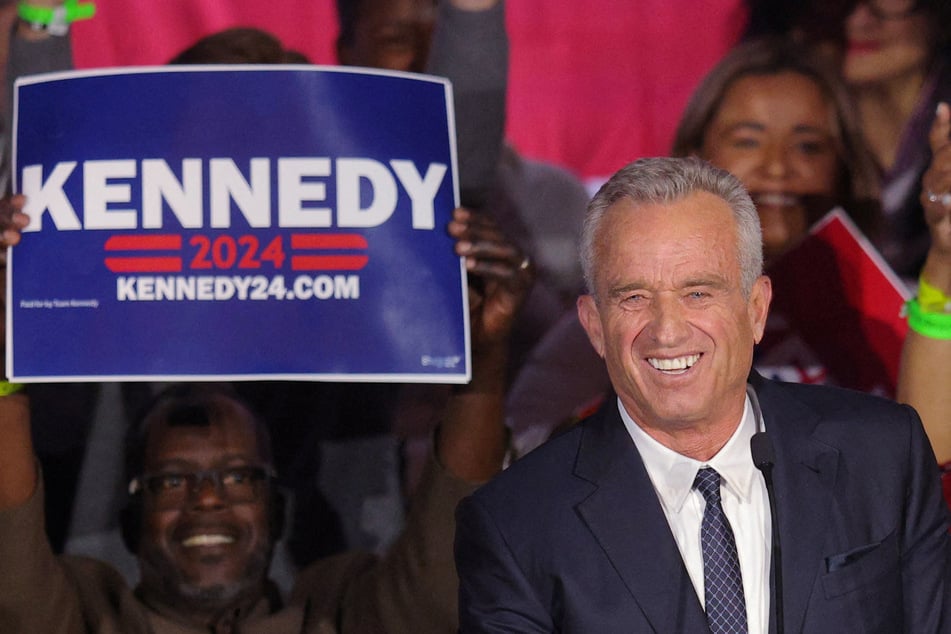
So, who do we do ivote for if Donald Trump is ineligible for some reason  and we don't want Joe Biden? Do we have any other choices aside from Nikki Haley? Well, we do. Robert F. Kennedy Jr., son of Robert F. Kennedy, the former senator from New York. Senator Kennedy was murdered in his 1968 bid for the Democratic Party's nomination.

 I remember that at the time (I was about 10 years old), I really liked Senator Kennedy and had high hopes he'd win. We had a mock election with all the candidates represented and I was "Bobby Kennedy". I had to articulate his various positions. before the entire 6th Grade class.  For what it's worth, I (or rather Kennedy) won! America would have been so much better off if he had. Instead, the nomination went to Senator Hubert Humphrey of Minnesota  who lost to Richard Nixon.

Robert F. Kennedy Jr. is running as an independent and while he's more than qualified to be President, the political duopoly has virtually made it impossible for anyone outside to the two corporate parties to get on the ballot. and the media is virtually ignoring him. Nevertheless, Kennedy has been mostly successful and poised to be a serious contender in November. However, like any outsider, he needs a lot of grassroots support.


Regardless of who you vote for or who ultimately wins in November, remember that America is at a dangerous crossroad. Once chosen, there will be no turning back. We'll be committed to whatever comes next.


 If you enjoyed the article, please consider passing it along to others and don't forget to subscribe. It's free! Lastly please be sure to "like" us on whatever platform you use to read anotheropinionblog.com. It helps beat the algorithms and keeps our articles in circulation. Thank you!


Here's how much the Anti-Trump protests cost, at Trump paid turnout rates


Trump Has Devoured the Republican Establishment


The GOP's Establishment is More Populist Than Its Trumpsters


Who likes Donald Trump? Lots of Republicans, but especiallyHispanic voters plus very rural and very conservative people


Trump spent $76 million over late two years on attorneys aslegal troubles mount ahead of election


US Military  'Weak', At Risk of Not Being Able to Defend National Interests: Study


Kennedy24


Friday, March 17, 2023

Reading America's Fortune Cookie: Is War with China Likely?

Let's face it. The war in Ukraine isn't going well for anyone. Putin's military advisors anticipated a brief invasion followed by a ceasefire and talks about how to guarantee Ukraine's sovereignty without a NATO presence on Ukrainian soil and protecting Russian national security. But that didn't happen.

Instead, the U.S. and its European surrogate, NATO, immediately began pumping billions of dollars in weapons into Ukraine, not to mention providing intelligence about Russian troop movement. The Western media went into full propaganda mode to condemn not just the invasion (rightly so), but also to spin U.S. and NATO involvement and the reasons for the invasion in the first place.

The result has been a stalemate measured in dead civilians, massive destruction of towns and cities and the growing specter of nuclear war. Without U.S. and NATO involvement, the invasion would likely have been over with a few months at best with a practical compromise the likely result. But then again, had Russia not been forced to invade to protect its national security from an encirclement of NATO missiles on its western front, there would have been to need for anyone's involvement and nobody would be dead.  

The only nation to present a peace proposal thus far has been China, which the United States and its allies dismissed out of hand. The primary reason is that China is a ally of Russia, and besides, it has recently started providing military support to Russian troops operating in Ukraine.  You would think that after a year of war, the United Nations or someone would have stepped forward to offer a solution to stop the war, but apparently not. Why?

The most likely reason is pressure from Washington. Washington has long seen Russia a potential threat to its military and economic primacy, well, that is until the collapse of the USSR in 1989 and implosion of Soviet Russia in 1991.  Since then, the United States has sought to impose a "Pax Americana" and the global integration of economies under the auspices of a U.S. led "New World Order".  However, not everyone wants to play along.

Russia, along a few other countries such as Cuba, Brazil, Iran, and China, have been able to go about their merry way outside of this American hegemony. A few have formed their own economic solution, such as Brazil, Russia, India, and China, which formed "BRIC" in 2009. Subsequently, the name has been changed to "BRICS" with the addition of South Africa in 2010. 

There have been other economic blocs formed outside the sphere of American influence such as "The Regional Comprehensive Economic Partnership" (RCEP), which was signed into being in 2020 and took effect in 2022. RCEP is now the largest economic partnership in the world.

At its head is China, and it includes Vietnam, Australia, Brunei, Japan, Cambodia, Laos, Singapore, New Zealand, and Thailand. It doesn't not include the United States. RCEP accounts for some 30% of the world's economy, 30% of the world's population, and will have an economic reach of at least 2.2 billion potential customers.  

China has established itself not just as the world's second largest economy with a GDP of $17.73 billion dollars(compared to the U.S. with a GDP of $23.32 billion), but is expected to surpass the U.S. by 2035. By 2075 or sooner, India will also pass the U.S., leaving the U.S. as the third largest global economy.

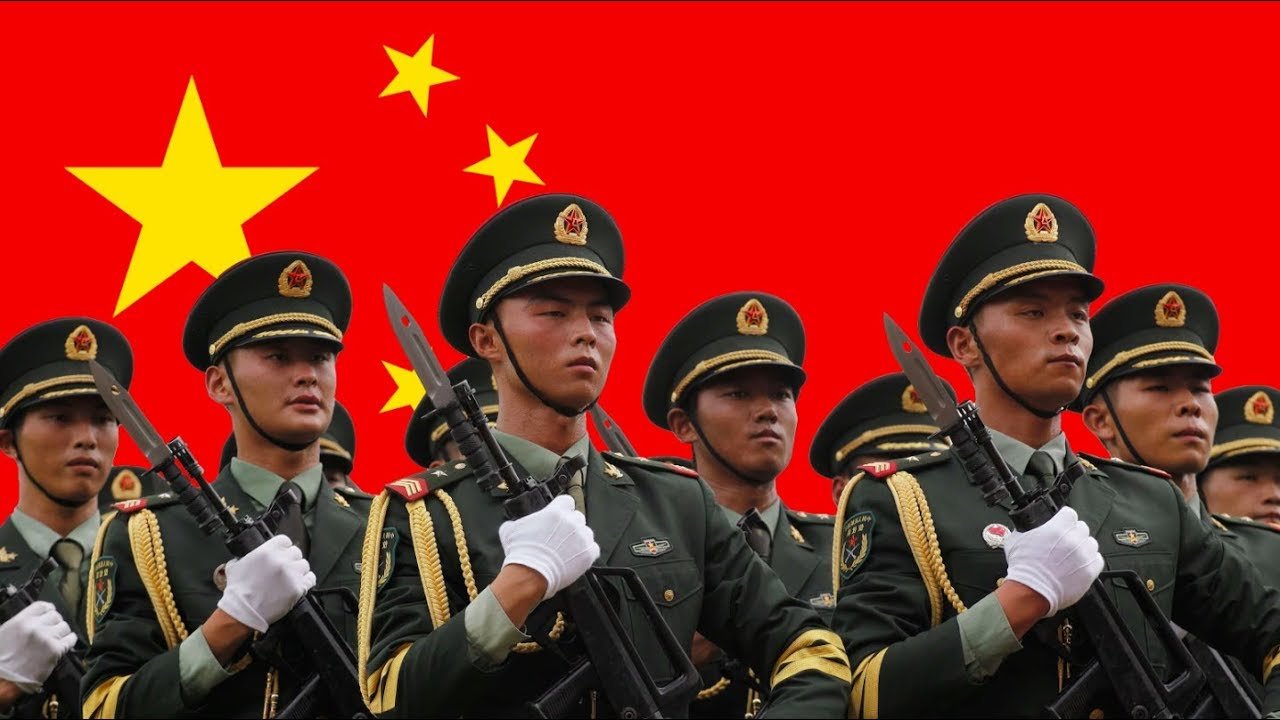
China seeks to do more than just wrestle economic control of the Pacific Rim from the United States. It intends to back up with military might, with a particular focus on its navy.  The Chinese have embarked on the largest military upgrade of any nation since WWII although the United States still spends more on its military budget than the next nine nations combined including China.

In 2022, China spent roughly $293 billion dollars, or 13.9% of its GDP upgrading its military while the United States spent $801 billion dollars or 37.9% of the GDP on its military. Together, China and the U.S. make up 50% of all military expenditures with a combined $1.1 trillion dollars. 

By comparison, Russia spent just 3.1% of its GDP, or $65.9 billion on its military. The UK spent slightly more, or about $68.4 billion dollars. It's worth nothing that China's military expenditures have increased 27 years in a row. The result is that China now has the newest and largest navy in the world by tonnage.

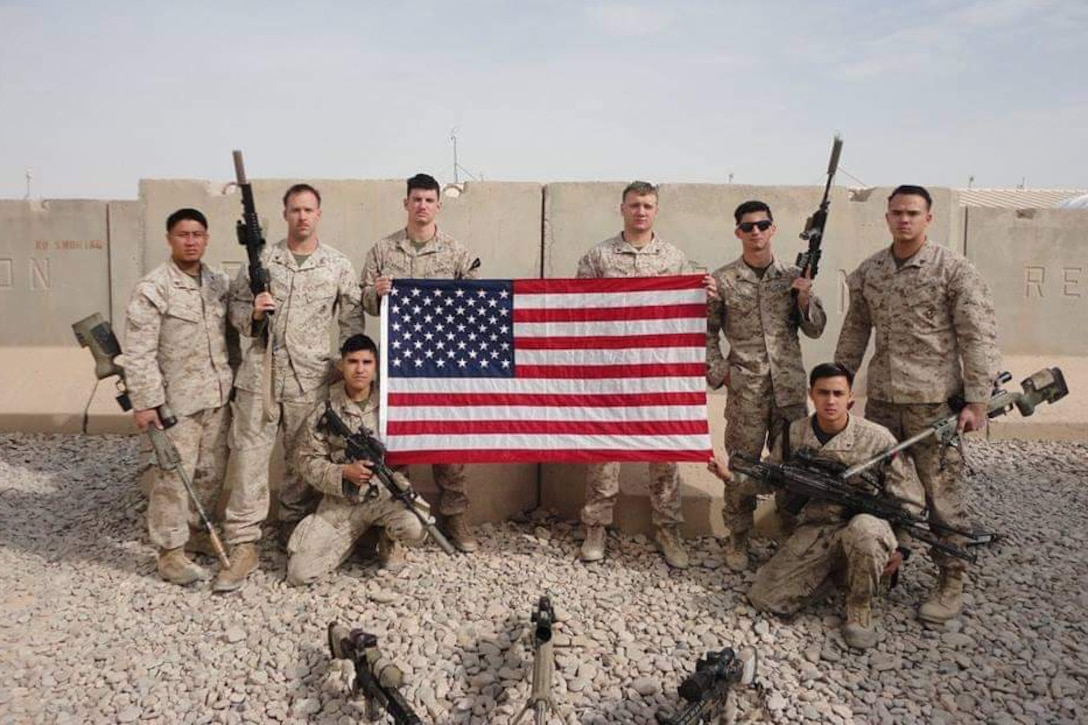
Meanwhile, the U.S. military is still the best trained and equipped, it's suffering from combat fatigue. After 20 years in Afghanistan, the United States left with virtually nothing to show for it. Yes, it took out Al Qaeda's top leadership including Osama bin Laden, but Al Qaeda barely skipped a beat, replacing leaders almost immediately and continuing with its operations. The same goes for the Taliban. In fact, the Taliban were already back in charge before the last U.S. military planes had left Kabul.  

To make matters worse, following the withdrawal, the U.S. military saw a rapid exodus of its highly skilled men and women (most of whom having served at least four tours of combat duty) with replacement proving to be slow and time consuming. In addition, the military is woefully in need of a total overhaul or replacement of practically everything from ships to tanks to aircraft.

During the course of the war, the United States flew 55,150 sorties and dropped over 337,000 bombs and missiles (including some 13,000 precision guided munitions) in Afghanistan. That works out to be an average of about 49 bombs per day every day. In 2019 alone, a record number of 7,423 bombs were dropped on Afghanistan.  The result was a severe shortage in our stockpile of practically everything from bombs to bullets, not to mention spare parts particularly for aircraft.

As an aside, while we were busy blowing up Afghanistan, we were also busy rebuilding it back in our image. U.S. taxpayers shelled out $145,000 billion dollars over the 20 years in rebuilding its infrastructure, schools, hospitals and office buildings, its electrical grid as well as training and equipping its security forces, stabilizing its government, and propping up its economy...and the Taliban got it all, not to mention billions in military equipment and hardware we left behind.

Starting between now and 2035, the U.S. military is expected to undergo a major overhauls of its ships (combat and auxiliary), aircraft, tanks, trucks, artillery, and so forth. If it moves or shoots, it's getting a makeover.  Some ships, however, are beyond the makeover phase. The Pentagon confirmed in late 2022 that 26 ships will be decommissioned, leaving the Navy shorthanded with just 276 active ships (300 is considered its minimal effective force)

However, over the next ten years the Navy is expected to be back up to its fighting weight with the addition of eight new "deep water" combat ships and a projected fleet of 500 ships by 2040; most of whom are destined for the Pacific (by comparison, the British Royal Navy, once the world's dominate naval power, has just 76 combat ships while Australia has a mere 44).

The problem is that China is already at or near its fighting weight. China currently has 355 combat ready ships, including two aircraft carriers and a third, the Fujian, preparing for sea trials. Analysts predict that by 2030, China will have five aircraft carriers and ten new submarines capable of carrying nuclear ballistic missiles. However, China still lacks adequately trained carrier based pilots. Nevertheless,  projections show that if China continues to build its fleet at the same rate it has over the past 27 years, it will have a whooping 425 warships by 2030.

China is also increasing the number of missile carrying destroyers, cruisers and landing craft as well.  China's new Type 075 amphibious assault landing ship will come in at 40,000 metric tons with the capability of carrying 30 helicopters along with landing craft and just over 1000 assault troops.  The Type 075 replaces the Type 071 by 15,000 tons. There are now 32 Type 075's combat ready.

The Type 071 is another, albeit slightly smaller, amphibious land ship. Displacing 20,000 metric tons, it has capacity to carry four helicopters and roughly 800 combat troops. There are currently six known Type 071 ships in service at this time.

In addition to its combat fleet, China has greatly expanded its merchant fleet as well. Something you would expect with a growing economy. China now has 40.3% of the world's merchant shipbuilding market. Compare that to South Korea and Japan which has a 31.5% and a 22.2% share respectively.

China now has the second largest fleet of ships with 5,600, of which approximately 800 merchant ships. Greece has the largest, with 20.4% of the world's tonnage while China has 14.4% and Japan is third with 13% of the world's tonnage. China also has completed or updated the number of ship building facilities to six.

So, bringing this all together, what does it mean for the United States? The United States is still capable of projecting its military might around the world on a moment's notice. However, the question is whether it is still capable of maintaining that projection against a determined foe like Russia or China.

According to a report by the Heritage Foundation entitled "Index of U.S. Military Strength", only the Marines were rated at "strong" while the Navy and Space Force were categorized as "weak". The Air Force was rated as "very weak" and the Army was "marginal".  

Our stockpile of munitions and spare parts were badly depleted by our 20 year misadventure in Afghanistan, and much of what we were able to build back has found its way to Kyiv. The U.S. Navy, our principal tool in the projection of our foreign policy, is currently undergoing a phased overhaul and updating which isn't expected to be completed before 2035. The other branches are also undergoing their own updating which will take several years to complete.

Meanwhile, China is already at or near its ideal fighting weight, with the development of many of its ships progressing ahead of schedule. China's economy, while slowed, is still doing well while ours remains sluggish thanks to rising inflation and lingering effects of COVID on the economy.  Meanwhile, China has become much more aggressive.

It has claimed both the East and South China Seas as its own, and warned other nations to stay away. It has declared some of the territorial waters around South Korea, Japan, the Philippines, Indonesia, Australia, and India are in fact international waters, and thus has asserted its fishing rights there. China is also involved in a "warm war" with India along its mutual border in the Himalayas.

The creation of the Regional Comprehensive Economic Partnership (RCEP) may have a severe impact of America's ability to protect its interests in the Pacific, especially in light of China's growing economy, its expanded merchant fleet, along with a modernized navy capable and apparently ready to defend its economic interests.

For allies like Taiwan, the future doesn't look bright. Over the next seven to ten years, Taiwan will be particularly vulnerable. China has the means and ability to block off the South and East China Seas, and from there launch as rapid air and sea invasion of the island nation before the United States or anyone else has an opportunity to do anything.

This is especially true given our current preoccupation with Ukraine (and doubly so should we make the mistake up upping the ante and forcing Putin into some direct action against NATO. To make matters more interesting, China's ally, North Korea, could start something with South Korea which would further divert the attention a weakened U.S. military (some military analysts have states that given our current situation, we are unlikely to be able to operate effectively on two fronts). 

Of course, there's the economic angle. The U.S. is heavily dependent on Chinese imports, especially on electronics and computer chips. We depend on China for textiles, batteries, and machinery needed  in industry and even the military such as Neodymium which powers magnets used in hard drives or Praseodymium in the manufacture of aircraft engines which are "rare earth" metals.  

The U.S. doesn't manufacture these and other rare earth metals in abundance, but China does. In fact, they control 90% of the world's rare earth market. Heck, most of our cell phones---72%---are made in China!

 90% of our antibiotics come from China. 80% of the ingredients used in our medicines come from China. They also control 90% of the nine critical vitamins, 70% of acetaminophen, and 50% of the anti-coagulant Heparin.  Most of the medical devises we commonly use are of Chinese origin. 

Where does that leave us? The short answer is between a rock and a hard place. Internally we are increasingly unstable socially, economically, and politically. We can no longer afford to be arrogant about the supposed superiority of American capitalism or invincible military might as Vietnam, Iraq, and Afghanistan have shown.

We can't forget that China also owns about 20% or $1 billion dollars of our debt. They can call the tune economically with their influence on our domestic market, and even their growing economy and military power, they are likely to exert de facto regional control over the Pacific Rim and eventually they may surpass us as the world's most power nation. From all appearances, China has outfoxed the fox.    


 If you want to know more about this article's topic, please check out the links below. If you enjoyed the article, please consider passing it along to others and don't forget to subscribe. It's free! Lastly please be sure to "like" us on whatever platform you use to read anotheropinionblog.com. It helps with the algorithms and keeps our articles in circulation. Thank you! 


Asia forms world's biggest trade bloc, a China-backed group excluding U.S.


Ranked: Top Ten Countries by Military Spending


How is China Modernizing its Navy?


China's Navy Could Have 5 Aircraft Carriers, 10 ballistic Missile Submarines by 2030 Say CSBA Report


US military in decline, threats from China "formable" , report says


Executive Summary of the 2023 Index of U.S. MilitaryStrength


U.S. Dependent on China forVital Ingredients


We're Too Dependent on China For Too Many Critical Goods, Especially Medicine


Preparing for War with China, 2025-2032


What Will Drive China to War?


U.S. General's Prediction of War with China 'in 2025' Risks Turning Worse Fears Into Reality