Showing posts with label climate change. Show all posts

Friday, March 28, 2025

Federal Employees Play “DOGE” ball with Elon Musk's Cuts as President Trump Fulfils His Campaign Promises

As we close in on Trump’s first 100 days, he’s has cut through the Washington quagmire like General Sherman's march through Georgia. With Elon Musk leading the charge through “DOGE” (Department of Government Efficiency), over 200,000 federal employees in 18 agencies have had their employment come to an end, not to mention 75,000 who have accepted buyouts.

 That number includes 2,400 Veterans Administration employees, 1,700 workers from the consumer watchdog agency, Consumer Financial Protection Bureau,  2,000 from the Department of Energy, and 2000 from the Department of the Interior, including 800 from the Bureau of Land management.

The IRS has seen 6,000 employees terminated and 5,400 probationary workers from the Department of Defense with an estimated 70,000 who may be let go by the time it’s over. 700 workers at the Centers for Disease Control have fired along 388 employees from the Environmental Protection Agency.  

The Department of Homeland Security has seen a reduction of 400 individuals, of which half were from FEMA, the Federal Emergency Management Agency. The Small Business Administration has seen a reduction of 20% of its workforce.

 Lastly, 10,000 individuals from the U.S. Agency for International Development (USAID) have been placed on indefinite leave. The move is estimated to reduce government “bloat” and save billions in taxpayers dollars.

Meanwhile, some 530,000 immigrants have seen their temporary legal status revoked while some 27,000 illegal immigrants have been deported back to their country of origin as the Pentagon has announced the deployment of some 10,000 active duty and National Guard personnel to our southern border while so-called “sanctuary cities” are facing the possible loss of the  federal funding which keeps them afloat.

So, what do Americans think of the Trump-Musk blitz on the Status Quo? Are all the cuts and reductions justified or is this another example of government going too far? 48% of Americans surveyed by a Pew poll see illegal immigration as problem, so there’s presumably happy with President Trump’s handling of the problem.

As for the mass layoffs, 57% of those polled though the budget deficit was a serious issue, so the reduction in the federal work force would presumably be a good thing. While the layoffs have little or nothing to do with the corruption, 72% believe money in politics is problem. Perhaps Trump can take steps to reduce the control Wall Street has on Washington, such as overturing Citizens United, term limits, and honest to goodness campaign finance reform.

But for that to happen, we’d have to have a level of bipartisan cooperation that we haven’t seen in decades. The divisiveness in today’s politics borders on political turmoil or even a possible civil war. Maybe that’s why 56% of respondents are concerned about the failure of the two corporate owned parties to work together. 48% are worried about the failure of our political system itself and why not?

Afterall, given our “winner-take-all” system, the majority of voters have no representation. Only those whose side wins have any form of representation, while the losing side is out of luck, and when you consider that the largest percentage of voters are Independents, that means that no more than 28% or 29%  of voters (the respective size of the two parties by registration) can claim to have a voice in politics. Of course, when we consider that Washington serves Wall Street and gives Main Street lip service at best, a pretty good argument can be made that voters have little real representation at all.

One issue which has come to the forefront lately is the Trump-Musk duumvirate cutting social services like Welfare, food stamps, Social Security, and  Veteran’s benefits. Supposedly, these cuts will affect just the administrative staff of these agencies and have little impact on benefits. 47% of those polled said they were concerned about the financial solvency of the Social Security and Medicare while 67% are worried about the cost of healthcare.

Of course, cutting back the staff will certainly impact wait times. As anyone who’s applied for Social Security or Veteran benefits already knows, it can sometimes take weeks or months before they receive benefits, which can seem like an eternity when you’re needing the money.

Nevertheless, the reductions are designed to improved the financial stability of safety net programs like Medicare and Medicaid, so that they’ll be available for future generations. One change which will likely occur is changing the minimum age requirement to receive benefits to 70, which makes sense.  For instance, when Social Security was introduced by President Roosevelt in 1933, an applicant had to be at least 65 years of age. That was ten years beyond the average male life expectancy. Today the average life expectancy is 78 years old.

Another possible change is allowing individuals the option of allowing future recipients to invest a portion of their SSN payments themselves into something like an IRA account. Currently the federal government handles all that. Some people may prefer a more aggressive strategy. Of course, should their investments not live up to their expectations,  they could end up receiving a smaller social security check at an age when they need the money most and then what?

In a related area,  63% of those surveyed are concerned about the impact of inflation. It seems that every time we go out to eat or go to the grocery store, food prices have skyrocketed. From 2020 through 2024, food prices have jumped 24%. Egg prices are up 37.5%. thanks in large part to another round of Bird Flu. The average price for a dozen regular size eggs is $5.90. Drought and feed prices has resulted in a reduction of cattle for consumption to the lowest level in 70 years, resulting in 5% increase in the price of beef. Chicken has seen comparable increases in price.  

The price of coffee has increased 1.9%. Orange juice and other frozen juices have spiked 17.2%. The reason is primarily because of weather conditions. Brazil, which is responsible for 30% of our orange juice, has just face one of the worse harvest its had in decades thanks to flooding (due to hurricanes) in some regions and drought in others, as well as a citrus greening disease.  Analysts, reflecting the opinions of 41% of those polled, said climate change may be the culprit.  As a result, don’t expect to see prices go down anytime soon.

Rising prices and taxes coupled with stagnant or declining wages are fostering concerns about the poverty rate. 53% of those polled were worried about the declining middle class and the growing number of individuals slipping into poverty.  As of 2023, 11.5% or 37.9 million Americans were living at or below the national poverty level.

44% of those polled admitted being concerned about natural disasters, which are usually handled by FEMA.   Last year, in 2024, there were 27 weather or climate related disasters in the United States according to the National Centers for Environmental Information, with each exceeding $1 billion dollars in damage and a total of 588 deaths.

In 2024, there were 90 declared “major disasters” according to FEMA. That’s roughly a declared disaster every four days. 41% or 137 million individuals lived in an area affected by a natural disaster. Also in 2024, there was 64,897 wildfires reported. That’s up from 56,580 in 2023. 8,924,884 acres were destroyed compared to 2,693,910 acres in 2023.

California by far experienced the most damage, followed by Alaska, Mew Mexico, Texas, and Oregon (together, they accounted for 46% of all fires).  The cost in terms of private property and economic impact to the affected areas was between $ 250 and $275 billion dollars.

Aside from natural disasters, crime and violence is another area where America’s are concerned. 48% said they were worried about gun violence while 47% were the rise in violent crime. The District of Columbia, New Mexico, Louisiana, Mississippi, and Alabama had the highest number of gun related deaths.

The Department of Homeland Security reports that gang related violence is on the rise thanks to the expansion of ultra-violent gangs from South and Central America and the growth of the fentanyl market.

 Most of the violence is occurring in inner cities, which is sparking fear among city leaders that their city will turn into gang controlled “narco-cities”.  51% of respondents said the drug problem is our biggest concern. 50% said declining morals and values are a contributing factor.

Will Trump’s crusade help ease the concerns of Americans or will it backfire? According to an NBC News Poll conducted in March by the Hart Research Associates/Public Opinion Strategies, 46% of those surveyed thought DOGE was a good idea. 40% didn’t while 14% had no opinion. However, the numbers flipped when asked about Trump appointee, Elon Musk, who is leading DOGE. 51% disapproved the billionaire tech president. While just 39% actually approved.

However, in another poll conducted by Quinnipiac, 54% of their respondents said the DOGE was actually hurting the country. 60% disapproved of how DOGE dealt with federal employees while just 36% approved. The poll also indicated that 50% of those polled did not approved of how Trump handled the termination of the federal employees. 82% of Republicans thought Trump was doing a good job when it came to DOGE. 94% of Democrats disagreed.  

The polling results shouldn’t come as a great surprise. They go to show the extent of our divide. It’s also another case of “NIBY” or “Not in my back yard”. Many Americans appear to want to cut the size and scope of the federal government, but not if it adversely affects them.  

We’ve become too dependent on the government. It’s a sense of entitlement. We’ve come to expect it as normal. We want everything but we don’t want to pay for it. Unfortunately, life doesn’t work that way. There’s a cost to everything. President Trump campaigned on what large numbers of Americans said they wanted, and in keeping with his promises, he is acting on them. But, as the American People are coming to realize, the consequences of having often doesn't match the anticipation wanting.


Thank you for reading "Another Opinion", the Op/Ed blog page for the "militant middle".  Here at "A/O" we truly value our readers. At A/O we seek the facts as they exist, not partisan talking points.  We hope you find our articles informative and engaging. Comments are welcome, provided they are not vulgar, insulting or demeaning.  Another Opinion is offered without charge and is directed toward all independent and free-thinking individuals. We ask, however, that you "like" us on whatever platform you found us on in order to keep our articles available for free to others. Lastly, in order to keep costs down, we depend on passive marketing, and therefore, depend on our readers to please forward our posts along. Below you will find links to the sources we used in writing this article. Thank you. 


Americans Continue to View Several Economic Issues as TopNational Problems


Here are all the federal agencies where workers are beingfired


NCEI: Billion Dollar Weather and Climate Disasters  


As Trump Works to cut FEMA, data shows there was a major disaster every four days in 2024


National Poverty In America Awareness Month: January 2025


Food Prices are on the rise again. What’s behind theincrease


Trump’s early immigration enforcement record, by the numbers


Poll: Voters like the idea of DOGE, but Elon Musk and hisearly results raise red flags


Voters frustrated with Elon Musk ‘s DOGE cuts, new pollfinds


How the Trump Administration Could Leave Families Hungary: Potential Cuts to SNAP in 2025 and Beyond


Saturday, April 16, 2022

Understanding the Real Reason Why Russia Invaded the Ukraine


Contrary to what many people think, the war in the Ukraine did not begin with the invasion in February 2022. In many ways the war started in 1991 when the former Soviet state pulled away from the Russian orbit with the collapse of Soviet Union.  At the time, areas closely aligned with Russia, such as the Crimea and Donbass provinces in the eastern portion of the country, joined with the rest of the Ukraine in its departure.

The reason was largely the anticipation that the Ukraine would be a separate nation, yet remain closely aligned to Russia, which, in fact it did. However, with the Maidan Revolution (also called the "Dignity Revolution") in February 2014, Western Powers supported the removal of what was essentially a corrupt pro-Moscow government and replaced it with equally corrupt pro-Western government.

Following a plebiscite in Crimea where the majority of the citizens voted to reintegrate with Russia, the Russian military moved in with relatively little resistance. Of course, public approval played only a superficial or cover role for the invasion. The Crimea has been a part of the Russia since the days of Czarina Catherine the Great in the 18th Century.

Secondly, the Crimea is home to Russia's Black Sea Fleet at Sevastopol, which is Russia's second largest naval base (the equivalent to Norfolk Virginia in the United States). It is Russia's only year round warm water port. It also provides the Russian Navy access to the Mediterranean Sea, and from there, access to the Atlantic and Suez Canal and into the Indian Ocean.

However, that's not all. The Crimea holds a tremendous amount of oil and gas reserves. Estimates place the amount at 58.6 billion cubic meters of natural gas and 2.53 million tons of crude oil worth somewhere in the neighborhood of $160 billion dollars.  To put it another way, that represents some 10 billion barrels of oil and about 3.8 trillion cubic feet of natural gas.

Prior to the annexation, the Kyiv Government had been quietly negotiating with Western oil companies (notably BP and ExxonMobil) to step in and begin accessing the oil and gas. However, as a result of the annexation, Ukrainian officials estimate that they lost approximately 80% of what's there on the Black Sea shelf. Prior to the war in the Ukraine, some economists were estimating that Russia could provide as much as 90% of Europe's oil and gas; much of which coming from the Black and Avov seas.  

And fear not for the oil companies. Russian oil conglomerates often work in partnership with ExxonMobil, BP, and Royal Dutch Shell in the Arctic and Siberia which, thanks to global warming, has become more accessible. 

Note too that this is oil and gas revenue which could have gone to the Ukraine. To make matters worse, the Nord 2 pipeline, which originally was expected to cut through the Ukraine, providing additional income, has bypassed it instead, in accordance with an agreement between Moscow, Berlin, and Paris. This negatively reduces Kyiv's anticipated revenues by roughly 3% of it GDP.

The Donbass, located  in the eastern portion of the Ukraine, is no exception to being another resource rich region. The Donbass produces vast amounts of coal, despite having been mined for over a century, ranging from lignite (thermal and coking which is used in making steel) to anthracite,  making it 6th in the world in coal production. And if that's not enough to see why Russia is supporting the Donbass separatist, the region is also rich in graphite, mercury, nickel, titanium, manganese, and iron ore.

Meanwhile, the western portion of the Ukraine, which is less populated and more rural, has extremely fertile soil and has long been known as the "wheat basket of Europe". It's the world's leader in the production of sunflower oil, and one of the main exporters of sugar, grain, and, of course, wheat.

Why is this important for us? Simply this. Inflation. While the war in the Ukraine is not solely responsible for our record high rate of inflation (currently 8.5% this quarter, which is the highest in 40 years), it is a strong contributor and reason we're paying obscene prices for oil and gas, which in turn, drives the increasing prices for everything from the cost of electricity, transportation, and the prices we pay at the grocery store and department stores. 

How bad is it? Potentially pretty bad, depending on how much longer the war in the Ukraine continues, and other factors such as the weather and possible wars. One estimate by OxFam International estimates that at the current rate of inflation, some 260 million people worldwide could find themselves living in extreme poverty by year's end. This is especially true in developing countries; many of whom will be forced to default on loans from the International Monetary Fund (IMF).

When that happens, we tend to see an increase in social unrest and destabilized governments, which forces countries to divert diminishing resources to security matters and away from maintaining basic services. It also produces mass immigration to countries which are seen as richer and more likely able to support them (such as what Europe and the United States has been experiencing for decades). This puts additional stress on the national social safety net and increases strife with the existing population.  

So, what does this mean for us?  The war in the Ukraine is not the cause of what's happening in the United States or the world. Rather, it's a symptom. Whether or not various political cliques want to accept global warming, there's is no question that the climate is changing. Whether that's natural or man-made is of little consequence.

The reality is that there is less fertile farm land. Less fresh water, and more demand for natural resources such as fossil fuels and strategic minerals need to keep our economies going.  We are overfishing the oceans and in the process, killing off coral reefs and creating entire "dead spots" in the oceans thanks to pollution. Meanwhile, corporations are making record profits as we are forced to pay more for the basics. We can't keep going on like that.

The war in the Ukraine, like most wars, is about acquiring resources to fuel their economies. In most cases, this war over resources is done on a political and economic level such as what China has being doing globally for decades. However, it sometimes spills over into open hostilities. That's particularly true of weaker nations who get caught between two or more larger and more powerful countries.

As resources become ever more scarce, we can expect to see these types of conflicts spring up more and more. When this happens, the wealthy elites usually revert to the tried and true tactic of rallying the population around some cause. It will demonize "the enemy" (the irony, at least in America's case, is that we likely install the "demon" in the first place). Using force or threat of force is now considered commonplace. It's used as an additional tool of what I call "imperial diplomacy". 

If the usual bribery, kickbacks, and "backslapping" doesn't work, they tend to revert to intimidation and bullying to get the concessions they want, be it access to certain markets, resources, or trade agreements. If that doesn't work (and it usually does), they up the ante with implied threats of military force.

Russia was content with the pre-Maiden government of the Ukraine. There was no pressure to annex the Crimea or Donbass. It was, after all, pro-Moscow. Economically, Moscow and Kyiv got alone pretty well, even with Kyiv warming up to the West. However, after the Western backed "revolution" ousted the government and helped install a government more favorable to the West, that things rapidly soured.

 Never mind the fact that both governments were (or are) just as corrupt as the other or that a change in governments didn't really life for the Ukrainian people.  Why? Because Moscow faced the prospect of losing out on access to the Ukraine's natural resources, which would also potentially be supported by a NATO military presence. 

A similar threat is the case of China and Taiwan. Yes, China has long claimed Taiwan as a rogue province, the fact is that China has grown economically confident, and with that confidence, it has expanded its military. Of late, it's been threatening India's territorial waters and fishing rights, as well as territory on its northwestern border. Seafood is key to the Chinese economy. It consumes 45% of the world's total seafood production (65 million tons out of 144 million tons harvested annually).  

It's been threatening Australia, New Zealand, South Korea, Japan, Indonesia, and the Philippines over fishing rights and territorial waters too (often sending along Chinese warships with Chinese fishing fleets).  Most of all, it's been threatening just about everybody over control of the South China Sea. Control of Taiwan would help reinforce that claim and extend China's military and economic reach.

As an aside, China has been busy acquiring rights to minerals, ores, oil and gas reserves, gold, diamonds, and even fresh water throughout the world. Like in the Ukraine, wars are less likely to be fought over ideology or even religion, and more over control or access to resources regardless of the propaganda spewed by the corporate media. In the case of the Ukraine, the West failed to act quick enough.

Is there any way we can prevent wars like in the Ukraine? Wars are increasingly motivated by corporation expansion, often behind the mask of "spreading democracy" or "protecting a free people" and other such patriotic mush. If Saddam Hussein had agreed to maintain oil prices and provide access to ExxonMobil or Dutch Shell in Kuwait, there would have been a Gulf War?

Suddenly, a regional ally of the United States (and one we helped into power), Hussein became a villain. He was called everything under the sun (including the same things President Biden has been calling Putin). President Bush was calling on the U.S. and world to "liberate" the 'freedom loving" Kuwaiti people (but let's not talk about the strictly non-democratic Kuwait royals who run everything).

Let's face it. The U.S. has historically been very selective about who it helps and why. We have often overthrown legitimately elected governments because they weren't "Wall Street" friendly. All we have to do is look at Iran, Iraq, Mexico, Argentina, Cuba, Paraguay, Chile, South Vietnam, Afghanistan, Angola, East Tumor, and dozens more.

Often these "political restructurings" are done through violent coups and assassinations; the governments are replaced with brutal right wing military juntas which all but eliminate any vestiges of democracy (not to mention the torture, imprisonment, or murder of tens of thousands) But hey, there're corporate friendly and that sells well at the local supermarket, department store and gas pump!

We must stop corporations from dictating our foreign and domestic policies, not to mention allowing their lobbyists to write the legislation which ultimately become laws. We have to eliminate corporate control over both political parties (and for that matter, level the political playing ground to permit third parties and Independents), which means doing away with Citizens United and similar laws.

Corporations deemed "to big to fail" or have a strategic importance to the United States, need strict government oversight. We need to bring manufacturing jobs, which was the backbone of the U.S. economy, back to the United States along with emphasis in trade schools. As an aside, we need to stop rewarding corporations with tax credits for jobs exported and impose a minimum corporate tax.

Globally, there needs to be a serious refocus from oil and gas to alternative energy sources overseen by the government to prevent them from being snuffed out by existing oil and gas companies which has been the case thus far. If oil, gas or coal were eliminated from the equation, there would have been little incentive for Russia to invade the Ukraine. 

Like the era leading up to World War One, we're using outdated policies and modern technology to combat new and evolving problems. In 1914, they used modern weapons of mass destruction and 19th century strategies which resulted in the wholesale slaughter of millions. We're facing a similar situation, but on a much greater scale. 


If you want to know more, please take a look at the links below. If you enjoyed the article, please consider passing it along to others and don't forget to subscribe. It's free! Lastly please be sure to "like" us on whatever platform you use to read A/O. It helps with the algorithms and keeps our articles in circulation. Thank you!


A divided Ukraine could see two radically different statesemerge


Crimea oil and gas will not come easy for Russia


More money, less transparency: A decade under CitizensUnited


United States involved in regime change


China, the global largest seafood market


National Security Archive: NATO Expansion: What Gorbachev Heard


Saturday, November 06, 2021

Joe Biden's Big Adventure: The G20 Climate Summit and Meeting with Pope Francis


It seems we've entered a new stage of insanity as we go deeper and deeper into this dystopian rabbit hole. Take for example climate change.  We've been berated by Democrats and those on the Left for at least a decade about the dangers of global warming (rebranded under the name of "climate change").

 So, why is it that Biden goes to Scotland for an all important convocation of world leaders to discuss about climate change, and what do we see? Biden snoozing for all the world to see! True, he made a speech on climate change at the COP26 meeting which was far from inspiring as well as the usual glad handing and picture posing.

 Much of what he said has been said before, and as usual, ignored afterwards. We all know that nothing, and I mean nothing, will happen, at least in the United States, without the support of the corporate giants who just so happen to own the government. Besides, unless the world's worse polluter, China, isn't a 100% onboard and willing to put its yen where its mouth is, nothing anyone else does will amount to a hill of beans. 75% of all its lakes and waterways are unfit for human usage and wearing masks is common in the cities because of pollution which is six times world health standards.

China has the economic clout to completely derail any realistic chance to curtail climate change unless the West and other industrialized nations acquiesce to what it wants when it wants it. Key to its potential list of demands for any actual compliance to "clean up its act" would be cutting support of Taiwan and quite possibly "looking away" should Beijing decide to "incorporate" the island nation back into the fold.  Imagine how that would affect America's already damaged prestige abroad.

China, while not quite a global superpower on par with the U.S. is still too powerful economically and militarily to be bullied or intimidated by anyone, including the U.S.. At the same time, attempts by U.S. "chicken hawks" to rekindle the Cold War with Russia through sanitations, and propaganda, is only driving Russia closer to the China. Given Europe's dependence on Russian oil and gas, is that really a good idea? Besides, Russia is potentially the better friend where our dealings with China is concerned. 

Along with abandoning Taiwan, accepting the South China Sea as de facto Chinese territorial waters would be another demand.  I wouldn't be surprised if China also demanded concessions from the other power in the region. Both nations has engaged in posturing and the occasional gunplay along their common border for several years.

China has also become closer pals with India's archenemy to the west, Pakistan.  This present an obvious potential double edge sword given Pakistan's deep Islamic roots and connections to terrorist groups and China's troubles with its Uyghur Muslim population in the Xinjiang Province and "rumors" of some Uyghurs being imprisoned in concentration camps. The same can be said of China's and Iran's strategic arrangement, which may be based more on the idea of common enemy, the U.S., than anything substantial.

China's fishing fleet (with naval support) has also been inserting itself in India's traditional sovereign waters. It's also affected other nations dependant on sea harvests to feed their people and bolster their economies. The worst part of the Chinese intrusion is that they typically use huge shipping vessels which can scoop up more in a single catch than local fisherman catch in a year.  

The result is a depleted environment with fewer profitable catches, smaller fish, lobsters, and so forth. If this is allowed to continue, you'll see the economies of nations like Japan, India, both Koreas, the Philippines, and Indonesia deeply affected thanks to higher prices for less available fish---the staple of their diets, and the grim possible of rising poverty and even starvation if not curtailed. 

As an aside, China has also been busy buying up options on natural mineral resources throughout the world, most notably Africa and Latin America along with the rights to fresh water sources (not unlike a few American corporations). It's worth noting that they pay little concern to the environmental damage they cause. With what all that is at stake, you'd think Biden would want to take his naps elsewhere or have someone more "awake" sitting in on these discussions.

Another (we'll call it "interesting") episode took place just before the climate conference, and that was Biden's meeting with Pope Francis in Vatican City, ahead of the G20 Summit and his meeting with France's Macron. Biden, as most people know, is a devout Catholic which makes his stand, as a Democrat, on abortion rather precarious. Some conservative bishops have been calling for Biden's exclusion from communion because of it.

The meeting, Biden's fourth with Pope Francis, but first as President, started off with his usual tired old quip ("Hi, I'm Jill's husband"). Biden presented the Pope with a gold coin depicting the Seal of the United States on one side and outline of Delaware on the other and "the 261st unit" his son had served with (the 261st is a tactical signal brigade which provides command and control to other units).

Officially, the meeting had been scheduled to discuss  a variety of issues ranging from climate change, poverty, the COVID pandemic, and global economics. However rumors persisted that Biden's real agenda concerned whether or not he would receive communion. The Vatican has declined to comment.

It's should be pointed out that the 75 minute meeting (unusually long by Vatican standards) was to be televised live but for some reason, was shut down about halfway in without any comment beyond the Pope and Biden wanting to discuss issues "informally"...but that's not all that allegedly happened.

According to a tweet from Amy Tarkanian, the former Nevada Republican State Chairwoman and wife of Republican Attorney Danny Tarkanian, the meeting with the Pope ran usually long because...how to say this politely...President Biden had a "bathroom incident" which had to be dealt with first.  Ms. Tarkanian even managed to post a picture to backup her tweet. Almost instantaneously, the tweet and the picture went viral. Not unexpectedly, comments (and snarky remarks) poured in.

Here's the problem as I see it. While I'm not a big fan of "Slow Joe" by a long shot, we need to remember that Biden is an "well worn" 78 year old with a lot of health issues (he'll be 79 on November 20th). Never mind the rumors and allegations of dementia or other cognitive illnesses, Biden has suffered two brain aneurysms (one actually ruptured) and developed deep vein thrombosis along with pulmonary embolism.  Brain aneurysms can lead to strokes and be possibly fatal if left untreated. 

In watching Biden's speeches from the "get-go" of his presidential campaign, it appears obvious to just about everyone (even anti-Trumpsters) that something is wrong with Ole Joe. It appeared he was being coached and fed answers practically every step of the way in his speeches (especially during debates where wires from an ear piece could be seen under his jacket and Biden doesn't wear a hearing aid).

When Biden speaks without a teleprompter, his remarks are often muddled and occasionally incoherent, but then again, Obama's speeches weren't worth a damn without a teleprompter either.  It's been reported that he requires questions be submitted in advanced when being interviewed, and he's always got someone there off camera coaching him. Often he doesn't even take unscripted questions from reporters; he just makes his comments and walks off stage. Clearly there's something very wrong.

This leads to another observation. Without Ms. Tarkanian's tweet and picture I would have chalked this is up just another partisan low, albeit an especially cruel one. But there was a picture, which if real, just makes me feel sorry for Biden (the picture I saw looks like it was taken on a golf course and you can't see the man's face, which seems phony to me). It's also a sad commentary on society in just how fast everyone was to make fun of an obviously sick old man...President or not. Democrat or not.

It's obvious, or should be, to everyone that Joe Biden should never ever had been made president. Yes, he was qualified (more so than Obama or Trump). However, he also had a questionable past which included admissions of plagiarism, wanting to cut Social Security (which he called an "entitlement"), support for the Hyde Amendment (which prohibited using Medicaid dollars for abortions under any circumstances), support of NAFTA and claims of being a "fair trader" (anti-union), and so on.

Face it, if anybody, and I mean anybody but Trump was the Republican nominee, Joe Biden wouldn't be president right now, such was the visceral hatred for the man. Given the pandemic, the vaccination revolt and resulting labor shortage plus China's growing clout and aggressiveness, signs of inflation,rising prices, the Afghanistan debacle, and America's deep (and largely manufactured) divisions, Biden is the wrong man at the wrong time in American and world history.

Nevertheless, Trump was the GOP nominee just when America is more divided than at any time since just before the Civil War. China is on the move, as are many of the terrorist organizations who perceive a weak America. Several intelligent agencies now predict a major terrorist event in the U.S. within the next five to ten years. Biden also just recently made another gaff when he "apologized" to world leaders for the Trump Presidency and its policies.

Folks, in case you didn't know, there are several things the former and sitting presidents have informally agreed to do and not to do. One of those "rules" is to never openly criticized another president or their policies, but he did. In doing so, Biden in affect disavowed the Trump Presidency. If you want to bring the country together, that's not how you do it. All Biden succeeded in doing was throwing gasoline on a raging bonfire.

It's worth noting that there was no hue and cry from the Republican Establishment or the corporate controlled media since all sides see the Trump Presidency as nothing more than an aberration; a folly created by the unwashed and uncouth masses who didn't know any better than not to play the game---vote for a pre-vetted cardboard cutout on the Right, ignored the pre-vetted rich "socialist" insider on the Left, and finally allow Hillary her long overdue coronation (and stay tuned for one "Benghazi" of a presidency!). But that's not how it happened.

What happened was that the Establishment was challenged, albeit a bit haphazardly, by a non-politician. This was more than the usual campaign rhetoric and meaningless promises we've all come to expect. This was real. Despite every underhanded and dirty trick they could conjure, "The Donald" remained. But as the reelection loomed, Nancy Pelosi herself said that Trump "won't be allowed to be president again". Allowed? Isn't that our decision? As it turned out, apparently not.

Joe Biden was elected (or "selected" if you prefer) as a his reward for years of dedicated service to the party and the ruling Oligarchy. However, more and more it appears that he's little more than a placeholder. If you agree with that premise, you by default would agree that the American President has become hollow; a figurehead or puppet.

However, that doesn't mean the presidency itself has become equally hollow. It remains the "Imperial Presidency" except it's those behind the scenes, by whatever name you care to give it--- the "secret cabal", "deep state", the "shadow government", the "Corporate State", or simply the Oligarchy who remain firmly in charge of all the apparatuses of real power in and out of government. 

It's up to us regardless of party, race, gender, orientation, religion, or any other artificial divisions to restore the government of our Founders. But, rest assured, time is quickly running out and our enemies aren't waiting around to see what we decide. So, I ask you, what will you do? 


How China's Expanding Fishing Fleet Is Depleting the World's Oceans


China and Iran: Economic, Political, and Military Relations


Why 'Poopy Pants Biden' Memes Trended After POTUS Meeting with Pope Francis


A Closer Look At Joe Biden's Health


Saturday, September 11, 2021

Frustration with a Failing Democracy


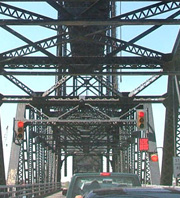
It's often been said that you can tell the political condition of a country by looking at its infrastructure. Well, if that's true, then we should be in  ICU on life support with a minister preparing to read us our last rites.  America currently has approximately 4 to 6 million miles of road which are in need of dire repair at a cost of some $2 trillion dollars or more according to the American Society of Civil Engineers. That includes 73,000 bridges which are deemed "structurally deficient",  meaning they're unsafe.

In addition, there are 600,000 bridges over 20 feet in length which are pretty sketchy too. They add that at the current rate of disrepair, we may have reached the stage where our roads will decline at a faster rate than we can repair them.

The decline in the quality of America's roads doesn't reflect the increasing congestion, which leads to more accidents or poor air quality due to car and truck emissions. Some believe additional tolls would cut down on the congestion and provide additional revenue.

However, studies by the Department of Transportation have shown that while they help, they come nowhere near covering the costs to actually fix the problem. Another example of government's "Band-Aid" approach.  What the United States needs to do is invest more in energy saving mass transit such as electric light rail, trams, and trolleys, as well as electric or biofuel public transit like other industrial countries have done.

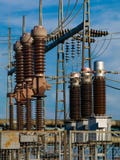
While we're at it, the U.S. also has one of the least efficient national electrical grids in the world. Currently, our national power grid covers some 7 million miles and produces around $4 billion dollars of electricity. It's the largest power source of its kind on earth. Bigger than Russia's and bigger than China's, and yet it struggles to keep up with demand, not to mention its vulnerability to terrorist cyber-attacks.

Adding to the problem is that multi-billion dollar companies like Google, Facebook, Walmart, and others are bypassing state and local utilities and going direct to producers, which deprives local municipalities badly need tax revenue.  Local governments stymie competition by giving energy producers a monopoly over electrical output. In some cases, local government is also the sole stockholder (this also applies to water too).

Municipalities also encouraged legislation to cap or limit the percentage that individuals who generate "excess" electricity through the use of alternative sources can sell back to local utilities or remove themselves from the local grid, making it all but impossible to "disconnect" from the grid.

Energy experts say that it would take an estimated $1 trillion dollars minimum just to bring our energy needs current, and make it both more efficient, and environmentally friendly. Rest assured that the public will pay for it one way or another. Meanwhile, rates keep going up with nearly 100% approval from public commissions and boards which are suppose to review rate requests and protect the public. But what do you expect when you have former energy executives on these boards?

However, what is needed to fix the problem, is practically unthinkable to most politicians and government bureaucrats---more taxes. Americans already feel they are grossly overtaxed as it is. On average, about 30% of the average American worker's wages goes to pay taxes. While that sounds like a lot, the average worker's tax rate, according to the 37 member OECD, is 34.6%, which puts the U.S. among the 30 lowest taxed country among industrial nations.

While individuals in other nations pay more in taxes, they typically also get more in return. Specially, better education for their children and themselves, Asian and European countries tend to be at the top of the list, especially in the areas of science and math, and yet we tax more per student than these same countries.

Speaking about kids, a 2020 report from UNICEF on child poverty placed the U.S. 34th among 35 countries along the worse with roughly 20% being "food insecure". Blacks and whites were about equal while Hispanics were slightly higher. Asian children had the lowest rates of child poverty. Single women with children was by far the worse off.

Another report, this one from the Congressional Research Services dated April 14, 2021, showed that the poverty rate among adults 80 and over was just around 13.6% (it was highest among single women). For those 65 to 69, it was 8.4%, and 7.4% for those age 70 up to 74. From 75 to 79, the poverty rate was 9.2%.

Worldwide, the highest poverty rate among seniors was in South Korea, with nearly half of those 66 and older living in poverty. Next was China with 39%, followed by the U.S. Where seniors fared the best was in Scandinavia, the Netherlands, France, Germany, the UK, and Japan.

We need to reinvest in this country, which means improving our infrastructure. It means becoming less dependent on fossil fuels. Corporate industries, not the public, should fund cleanups and restore the environment. We should stop penalizing research and innovation into alternative energy sources or renewable material. That same goes for people who use solar panels, water barrels, windmills, or plant local or community gardens.   

Education should be restructured to educate. Not to cater to the latest political cause, be it liberal or conservative. Every child must master the fundamentals---writing, reading, grammar, and math--at their grade level. They also should be taught to balance a checkbook and keep a household budget. No more placing the blame for a child's inability to learn on their race. If they fail, then they fail and should repeat the grade.

 Education should be honest. That means teaching the facts and both sides of social issues. They must  be taught critical thinking skills. They'll need it in the real world. Discipline is must. There can be no learning without it. Lastly, not everyone is college material (or will play professional sports). That's fine. Provide an alternative route such as the trades.

They should also be taught that while degrees in Women's Studies or "African/Black Studies", and philosophy sound good and noble, they aren't likely to get a job with them. They'll have a unemployable degree and staggering debt. So, pick a major where there's a demand, and then, maybe, minor in one of those other noble sounding programs.

Our children are increasingly coming under the control of the State, be it federal or local. They want to eliminate the parent.  I suspect that if they could take them straight from the crib, they would. Of course, their argument is that most parents aren't willing to take an active role in their children's upbringing, let alone their education, for one reason or another so "someone" has to.  

The most cited reason is that children are being raised by someone other than the parent (like a aunt/uncle or grandparent) or that one of the parents is absent and/or have a unstable home environment, which brings me to the next point. We must reexamine our social safety net and remove or modify those items which reward parental absenteeism.

Finally, we need to ensure that neither our children nor our seniors are "food insecure". There is no excuse for it in a country as resource rich as America. We throw away more food than some countries consume.

Along the same lines, we can do a heck of a lot better when it comes to medical care.  Did you know that we're the only industrial countries in the world without some form of national healthcare? "Obamacare" was a sophomoric try, but at least it was an effort. Personally, I think single payer coverage is a much more reasonable way to go, and potentially cheaper too.

Through a combination of corporate, public, and individual participation, a basic coverage could be given to all U.S. citizens. It could allow employers and the public an opportunity to buy additional insurance from the marketplace. We also need to regulate the healthcare industry as whole to curtail outrageous fees and prescription prices. This could be done by allowing the government to set caps on prescriptions as well, and allowing purchases from approved companies located outside of the U.S.. Even allow some procedures or services to be paid for in cash. 

There should also be a change of focus. The countries which rank higher than us in terms of healthcare have a different focus for instance. Here in the States, we concentrate on post treatment or reactive care, whereas other countries focus on preventative care which keeps people healthier longer and lessens the severity of illnesses so that everyone benefits. Some even make use f alternative treatment and medicines like herbs or time off for "mental health".   

While this may sound bleak (and it is), there is still a silver lining. We have the ability to fix these and other problems. We also have the resources. All that's missing is our resolve to do it.  The best place to start is at the bottom; that is, at the local level. That's where we can have the best impact. Most communities already have food banks or after school tutoring available, and speaking as a community organizer of over 40 years, I can assure you that they love volunteers.

If you can't do it in person, consider doing online volunteering. There's lots of programs available. Better yet, start one if you can't find one you'd  want to join. Attend board and commission meetings, be it school board, zoning, water, or energy. The majority are open to the public, and it's a great way to get your feet wet!  

With a little research for the rules and regulations in your area, you can also start petition campaigns. Attend community meetings which are typically held monthly by local politicians. Start a "letter to the editor" campaign. If you own as little as one share of stock, you can attend their shareholder board meetings, which usually allow up to 15 minutes to address the board (though you're actually speaking to other shareholders in attendance). That's plenty of time to expose what they're doing and ask for change.  

You could even run for office, but if you do just remember that both parties are owned by corporations, and they don't like reformers despite what they claim in their commercials. Therefore, if you're going to be a "boat rocker", count on doing it mainly by yourself, and hopefully, with family and friends support. Parties often promise money and other support to their candidates. Unless you're already a big name, don't hold your breath, especially if they think you're serious about change.  

Instead, you'd be better off lobbying sitting politicians (regardless of their party) on behalf of your neighborhood, community, or a focal issue. Be sure to brush up on what you can and can't do as a citizen lobbyist.  I've found this route to be the most rewarding.  Besides, they can be a little more cooperative when they know you aren't after their seats.

America is at war, but it's not against Al Qaeda, the Taliban, or even Russia or China. This war is one between a corporate and government partnership which is neo-fascist in character and led a group of very wealthy individuals and corporations against us; the ordinary citizen and voter. The object of the war is the creation of surveillance state with the possibility of occasionally acting like a police state.

This new system, which is called an Corporatocracy, will create its own image which we will be conditioned to identify with. Wars will be fought for "freedom" or some other emotionally charged word, while in truth it will be about corporate access to markets or control of assets and resources.  Our loyalty will be defined by products we choose rather than to our nation. We will be encouraged to focus on video games, reality shows, or work and to leave politics to our intellectual and social betters who know what's best for us.

They want a compliant workforce which is just smart enough to do their jobs and nothing more. They want control of every aspect of our lives. To get that, they must divide us every which way they can. They will control our children in order to forge new generations of worker drones who will rely on the State without question. That means rewriting history and the future. We're already seeing that with the removal of statues, censorship of books, and curriculum taught to our children.

Don't expect it to stop until we've forgotten the truth and bought into their manufactured reality. It can be stopped. I've given you some pointers above. The question then becomes, will we?


How 35 countries compare on child poverty (the U.S. isranked 34th)


CRS Senior Poverty Rates


Saturday, July 24, 2021

A 1973 Prediction From the World's First Supercomputer Predicts Civilization Collapses by 2040


I recently came across an interesting BBC news clip from 1973. The Club of Rome (a think tank similar to the Council of Foreign Relations) and comprises some of the world's leading business leaders, scientists, economists, academicians, and politicians, commissioned a study back in 1973, using the world's first supercomputer, which was housed at the Massachusetts Institute of Technology, better known as MIT, to predict where we will be in 150 years.

Accordingly, the supercomputer predicted that by 2040, civilization will all but cease to exist due to climate changes (natural and manmade), the erosion of natural resources, over-farming and depletion of the soil, over-fishing, pollution, and changes in population (rapid growth in poor nations and stagnation or decline in most advanced ones), economic and technological inequality, and so forth.

The study, using data from multiple academic disciplines along with statistical trends, were fed into the supercomputer on a specially written program model called "World3". World3 is a systems dynamic model which uses a variety of computer simulations based the specific data fed into it to produce a range of results.

In this case, the data pertained to population and industrial growth, agriculture and food production, climatic changes, rate of pollution, technology, non-renewable resources, and the anticipated limits of our ecosystem. The World3 model has been periodically updated to ensure the results are current based on the latest data available.

The results predicted that nations will have to reduce their economic independence and political sovereignty, while global corporations will expand their interlocking influence over many of these same countries to meet the new demands. The study also states that the world's quality of life, which naturally includes the variety and availability of food and medicine, will also likely decline for all but the wealthiest.  Let's briefly consider immigration.

Just within the last 20 or so years, we've seen a wholesale change in demographics globally. Europe, including the prosperous "democratic socialist" states in Scandinavia, as well as France and Germany, have been overrun by largely uneducated and unskilled "migrants" from second and third world nations.

These individuals haven't come in order to become part of their host nation and contribute to society, but as leeches; sucking dry the social safety net provided for by taxpaying citizens. Europe's open borders was intended to allow individuals from war torn countries to immigrate, and yet statistics have shown that only a small fraction of these migrants actually come from war torn countries. Most are coming from poor, but relatively stable nations.

 It's worth noting that a preponderance of those arriving (especially from the Middle East) are young and very fit males of military fighting age, leading some to suspect that they are militants being sent to set up terrorist cells and to radicalize other migrants. If that's true (and it likely is), then Europe may be unable to cope should violence breaks out. As it is, with approximately 50 million Muslims now living in mostly western Europe, their numbers alone are enough to ensure that the EU will support Muslim interests.  If so, what does this mean for Israel and its ally, the United States?

Many have attempted to impose their culture, values, and especially their religion on the host nation. For instance, demanding women alter their attire, cancelling popular festivals, not selling liquor, and dropping certain items from menus. This is especially true with the more radicalized of the migrants. Demanding that locals conform to their values and norms is not how immigration should work.

Sadly, the "leaders" (and I use that term in its broadest sense) in Europe have proved to be completely spineless. They're more afraid of name calling than doing the right thing for the country. The result is that Europe's very liberal social safety net is now strained to the breaking point, and yet the migration continues. One has to wonder what happens when their social safety net is no longer able to support this influx, and the citizens are either no longer able or willing to shoulder the tax burden.

Of course, the same thing can be said of the politicians here in the United States. Since the early 1980's, beginning under President Ronald Reagan, illegal immigration has become a political football.  Currently, there's an estimated 11 million illegals currently in the U.S., and like in Europe, taxpayers are having to pay the tab for the politicians cowardice.  Bear in mind too that immigration, legal or illegal, is just one of the factors.

We also have to contend with the spread of diseases and viruses, terrorism, depletion of freshwater, overfished oceans and dying coral reefs, changing climatic conditions, aggressive nation-states and the potential for regional war or even a covert conflict (which could include biological and technological warfare such as weaponized viruses or system wide hacks), an ageing population and decreased child birth in developed and well educated nations along with a "baby boom" in poorer countries. 

There is, as well, a growing stratification between economic and social classes (particularly America's Middle Class). Then there are the manufactured divisions along gender and racial lines., which are often stoked by the corporate media. We must not forget to mention the decline in global democracy.

A 2020 report from Varieties of Democracy Institute (V-Dem Institute) in Sweden indicated that global democracy has declined from 54% of the world's population in 2009 to 49% by 2019. To make matters worse, the same report also pointed out that those living in autocratic countries went from 6% in 2009 to 34% in 2019. The world's largest democracy, India, has gone from being rated as "free" to "partly free" in a 2021 report from The Freedom House.

The U.S. is now classified as a "flawed democracy" and is increasingly viewed as a nation in a accelerating decline by many world leaders. It has ceased to be a Republic, and has morphed into a Corporatocracy led by an Oligarchic elite and dominates government at all levels. That, my friends, is not the definition of "socialism", nor is it "Communism".  It is, however, the definition of Fascism, albeit perhaps a new variant.  

The reports produced by many of these global think tanks and data analysis centers confirmed that America's decline includes those things I've written about countless occasions over the years such as divisive partisanship, rigged elections, gerrymandering, Citizens United and unlimited corporate money in politics, a lack of term limits, a biased media, and denying third parties and America's political majority-- Independents-- an equal opportunity to participate in the political discussion.

So, just how accurate has this supercomputer been since 1973? Actually, it's been pretty accurate thus far.  Specifically, in terms of population and economic growth and the world's overall quality of life as of 2020. The big question now is just how accurate it will be for the remaining 20 years. In case you're wondering just how much data this supercomputer can process, it can calculate more data in one second than an average human can in six billion years.

You'll find a link to the article below which includes a short video by the BBC, along with a couple other articles regarding the predictions. Check it out and let us know what you think. Is the world doomed by 2040 or will we survive? I've also provided a link to the Club of Rome's website in case you wanted to learn more about them along with additional links for more information.


A 1973 MIT Supercomputers Predicted the End of the World by2040


In 1973, an  MIT computer predicted when civilization will end


M.I.T.  Computer Program Alarmingly Predicts in 1973 That Civilization Will End in 2040


World3


The Club of Rome


New Report: The global decline in democracy has accelerated


Varieties in Democracy Institute


Saturday, April 25, 2020

Do You Want Fries with Your Pandemic? Global Famine on the Heels of COVID-19


It seems we've entered into a phase where we just can't catch a break. A month or so ago, I read an article where parts of the Middle East were being affected by locust swarms of biblical proportions. California, as everyone knows, was hit by a series of massive wildfires, which were, in part, the result of faulty power lines belonging to PG&E while others were intentionally, as was Australia. Globally, there has been a series of volcanic eruptions and upticks of earthquakes, especially in South America and Asia along the so-called "ring of fire", which is an area with the most active volcanoes along the Pacific Rim.

Of course, we've been locked into a debate for over a decade as to whether we are experiencing climate warming which, if true, could have catastrophic consequences on the planet for decades or centuries to come. Meanwhile, others argue that there is no proof of global warming. What changes that are taking place are ordinary changes like the Earth has been experiencing for thousands or millions of years. A sizeable minority maintain that there are no changes happening whatsoever, and then there are those who even claim we may actually be entering a brief period of global cooling!

Nowadays, we facing a pandemic which some experts say could cause hundreds of thousands of deaths. Fortunately, no one is predicting that the current flu-like virus will have the same numbers of the 1918 Spanish Flu which killed an estimated 20 to 50 million people worldwide (that's more than who died during World War One) while infecting at least 500 million.

As an aside, Ebola, which isn't a respiratory disease like MERS, the Bird Flu, or COVID-19, has killed approximately 11,300 people and infected some 28,000 (mostly in Africa) according to the World Health Organization (WHO) as of 2016. Meanwhile, the AIDS pandemic, which began around 1981 and continues today has caused 35 million deaths. The Swine Flu of 2009/2010 infected 1.4 billion people according to the Center for Disease Control (CDC). While the exact number of deaths are unknown, the CDC estimated that somewhere between 151,700 and 575,400 people died from complications resulting from the Swine Flu. MERS killed around 100 people and the Bird Flu killed approximately 400.

Now, the corporate media is starting to report that as result of the business closures triggered by the COVID-19 outbreak and resulting global economic decline in trade, food production and distribution may become affected. If this occurs, these same news outlets are predicting that there could be a food shortage worldwide, which could become severe or catastrophic in some places.

I'm sure most of us have heard about dairy farmers having to throw out thousands of gallons of milk while produce farmers are allowing equal amounts crops to rot in the field, yet the demand for food in food banks, homeless shelters, and other facilities which cater to those who are food insecure has dramatically increased thanks to the virus situation. Why are we allowing all this to go to waste? Before we address that question, let's look at the food situation globally and nationally first, and who are the most vulnerable.

According to the United Nations, approximately 812 million people do not get enough food to meet basic nutritional needs. That's roughly one in nine individuals globally who go to sleep at night hungry. Asia is the worst affected, followed by Africa (mainly the Sub-Saharan region). Poor nutrition is listed as the prime cause of death among 45% of all children under five years of age. That's about 3.1 million children. One in four are stunted while one in six are underweight. 66 million children globally go to school hungry.

In addition, the lack of proper nutrition also affects their mental development. It also leaves them with a weakened immune system and chronically poor health which often affects them for life. This also affects prenatal women who are typically undernourished in these regions as well. An interesting side note, due to religious and cultural traditions, women are often not permitted birth control. Incidentally, women farmers are not allowed the same resources as the men when it comes to farming for the same reasons. If they were, an estimated 150 million additional people could be fed annually.

In the United States, the "land of plenty", nearly 38 million people live in poverty. An estimated 78% of Americans live from paycheck to paycheck according to a survey done by CareerBuilder in 2019. Three in four are in debt and expect to remain in debt. 45% of Americans have no savings or money set aside for emergencies (72% have less than $1000 set aside). An average of 25% of workers have no money put aside toward retirement. Credit card debt alone in this country is a one trillion dollar issue.

Of the 38 million people living in poverty, 37 million are "food insecure" which is a polite euphemism for not knowing where or when their next meal is coming from. Of this number, 11 million are children. 12.3% are considered the "working poor". 60% of seniors routinely have to decide between food, medicine, and expenses every month. The majority depend on some form of outside assistance such as a food bank, shelter, church, or similar organization. The children of those in poverty depend on school provided meals. Often it's the only meal they can actually count on.

With the COVID-19 pandemic upon us, it only compounds the situation. People aren't working and unemployment will only get you so far, even with small extra government provided "perks" such as the stimulus checks. Meanwhile, with people not working and businesses idle, no revenue is being produced, which means no taxes being generated to keep governments functioning. Yes, governments and businesses can borrow money, but that's just delaying the inevitable (plus the added interest). The result is an economy slowing down and the likely advent of a recession the longer we remain in quarantine, which brings us back to the topic of hunger.

In the best of times, global famine remains a serious issue. With this pandemic, it's only going to get worse. While in most countries, especially the highly industrialized nations, such as Russia, Germany, South Korea, Japan, France, or the UK, it's doubtful it will come to that. However, getting food is becoming an increasing problem, especially in the poorer countries, but also here at home.

There are already growing reports of people lining up in line for hours to get basic food packages only to find out that they "just" ran out. Food banks, as I said earlier, are reporting a significant increase in demand. So, why are there crops in the field being allowed to rot while thousands of gallons of milk go down the drain literally?

Dawn Thilmany, an agricultural economist from Colorado State University, said that normally 50% of all food produced go to commercial use (restaurants, institutions, etc). Because of the quarantine, 75% of that business is gone. The remainder is what's being picked up by the drive-thru and home delivery businesses still open and by institutions who buy in bulk.

In addition, farmers have to cope with the ban prohibiting ten or more individuals gathering out of fear of spreading the virus. A typical farming operation can involve dozens of people. There is also the freshness issue. As general rule, crops will remain fresh for just two weeks (not to mention eggs). Even if they could harvest the crops, food banks, churches, and other organizations which feed the poor couldn't afford the cost the farmers would have to charge just to cover their labor costs, let along make even a small profit. Unfortunately, it's cheaper to let the crops rot in the field, at least in the short run.

The quarantine issue and worker safety is also at the heart of several meat processing and packing plants being shut down. So, that means that animals normally sent to slaughter will get a short reprieve. However, that also means they will continue to have to be fed and cared for. That costs money, and with no money coming in from the sale of the cows, pigs, chicken, and fish, it presents a serious financial problem.

Another agricultural economist, Andrew Novakovic of Cornell University, said that typically the dairy industry loses approximately. 0.3% of product as a result of fluctuating demand. However, because of the COVID-19 virus and the shutdowns (such as schools), demand is down around 15%. As a result dairy farmers are dumping upwards of 10% of the milk produced.

The reason is pretty much the same. There isn't as much demand for dairy based products such as cheese, butter, or sour cream. Therefore, less demand means less production. However, since the "production" is coming from cows rather than production lines, it's simply dumped. Meanwhile, the cows can't be laid off. They can't draw unemployment. That still have to be fed and milked, and that's money out of the farmer's pocket. The end result may be a selloff of dairy cattle and fewer dairy farms, which, in turn, will result in higher prices for dairy based products.

Farmers and meat producers don't, as a rule, make a whole lot of money. Most do pretty well, but it's the large commercial operations which dominate the market. They are the ones which can endure long shutdowns and absorb the costs. Farmers, meanwhile, are expected to lose around $688 million dollars in sales due to the shutdown. With those numbers, the average "mom and pop" or independent operation can't last, at least not for long.

The end result is that we may see significantly fewer independent operations. We'll also likely see higher prices due to the decline in the number of producers and the extra costs associated with the feeding and sheltering of all those pigs, chickens, and hamburgers on the hoof has cost which will be passed to the consumer.

So, we sit and wait. Maybe the government will step forward with a plan to save the small dairy farmer and meat producer similar President Roosevelt's Agricultural Adjustment Act of 1938 which paid farmers a subsidy not to grow crops in order to dry up surpluses and increase prices, thus keeping more farmers in business. Then too, maybe farmers will allow people to come out and pick crops (like fruits and vegetables) rather than let it rot in the fields along the lines of the biblical notion of "second gleanings" (Leviticus 19:9). They could even let churches, food banks, the homeless to come out. At least it would feed some of the hungry.

Virus or not, there is no reason anyone in this country of ours should go hungry, be it in good times or bad. We should be thankful for those individuals who show up and stock the shelves, who work the drive-thru or making home deliveries, the truck drivers or those who are still on the job filling our prescriptions, along with all the nurses, doctors, police, EMS, firefighters, the postal workers, the men and women of the military, the garbage men, housekeeping, those making sure we have clean water and electricity, and of course, the farmers who make it possible for us to put food on the table. Want to know more? Check out our links below.


ISGlobal: Ebola: Two Years and 11,300 Deaths Later

20 of the worse epidemics and pandemics in history

Global hunger continues to rise , new UN report says

Why farmers are forced to let food rot during the shutdown while others go hungry


California farmers are forced to let crops rot and thrown away milk while food band demand soars