Showing posts with label Oil. Show all posts

Friday, December 13, 2024

The Fall of Assad and Syria What does it mean for the U.S., Israel and the West?

 The U.S. withdrawal from Afghanistan was an embarrassment of monumental proportions. It not only left the Taliban back in charge of the government and the people (especially the women) worst off, Al Qaeda was still militarily and politically operational. We left so much military equipment behind, that Afghanistan went from being a country of no military significance to being one of the most powerful countries in the region!    

To add insult to injury, it now appears that Al Qaida will emerge as the controlling power in post Assad Syria. It's worth mentioning, that while we were battling Al Qaeda in Afghanistan for 20 years, following the cowardly attack on 9/11, the U.S. was arming and supporting Al Qaida's efforts, albeit under the names "Jabhat al-Nusra Front" and "Hay'at Tahrir al-Sham'  (aka"HTS" ) in Syria to overthrow President Bashar Assad.

Of course, ISIS/ISIL is back. They've already reoccupied the Syrian city of Homs and look to further expand. To give you an idea as to their intentions, all one needs to do is look at their name--- the Islamic State of Iraq and Syria. On September 24, 2014, the Obama Administration officially announced they would be more "hands on" in Syria in order to oust ISIS.  

At about the same time, the CIA began using Syria as one of its base of operations, starting from the mid-1990s and extending well into the 2000's, for its "extraordinary renditions" (aka "unofficial kidnappings") of so-called "ghost detainees" (ISIS and Al Qaeda fighters, cleric, and supporters) for the purpose of extreme interrogation methods.

In 2008, the CIA formed the "Damascus Community School" to lure anti-Assad groups, officials, and civilians (such as teachers and professors) away from the pro-Soviet orbit. They also started funded and training various paramilitary units to oppose Assad, as well as pro-Iranian terrorist organizations. It should be mentioned that the CIA has been active in Syria since 1949 when it helped plan the March Coup of 1949. Syria was the CIA's first "test case" for overthrowing governments not seen as favorable to U.S. national interests.

Using the code name "Operation Inherent Resolve" (my how they do love their secret code names), the U.S. vowed to fight ISIS through the Syrian Free Army (aka "Revolutionary Commando Army" or "RCA") and the Kurdish led Syrian Democratic Front, led by the Kurdish "Popular Protection Units", which are regarded as a terrorist organization by Qatar and Turkey (one nation's terrorists is another nation's liberators). Other groups involved in the fighting include Syrian National Army and the Turkish Armed Forces.

Now, why would we underwrite groups to overthrow the government of President Bashar Assad? The answer is really simply. Syria has been Russia's regional ally for decades. Syria is to Russia what Israel is to the United States. Of course, the U.S. made the usual allegations about the people fighting for their democracy and so forth, the truth was to simply remove the pro-Russian Assad Government, secure access to Syrian oil and gas, and further isolate Iran.

Iran is the center piece in this regional game of chess. The neocons goal all along has been to take control of Iraq and Afghanistan, and destabilize Syria.  Then, with our Arab allies, isolate and ultimately strangle the Iranian government. Well, Iraq is free of Saddam but it's far from stable. However, like the Russians before us,  we were handed our eviction notice by the Taliban and Al Qaeda in Afghanistan while Iran remains still standing.  

In fact, Iran is hard at work developing a nuclear bomb and delivery system to "wipe Israel off the map, even at the cost of Iran being vaporized.  In addition, the Iranians have helped to underwrite and arm terrorist groups like the Taliban and Al Qaeda, but Hezbollah in Lebanon, Hamas in Gaza, Boko Harem in Africa, and terrorist organizations in Yemen, Libya, Sudan, and elsewhere. 

The only glimmer about the Assad Government's fall is that Russia is without its primary regional ally. The problem is that Al Qaeda, which has already launched rockets at Israel while fighting the Syrian military, will now be that much closer to Israel and will have another shot at a Islamic State.

Israel has used the chaos in the aftermath of President Bashar Assad's departure, to expand its presence from the 1973 UN imposed buffer zone with Syria by redeploying its troops from the top of the Golan Heights to new positions just a few miles on the other side of the Golan mountains, thus pushing Al Qaeda's Iranian supplied missiles a little further back. 

Not unexpectedly, the rest of the Arab world, including some of its nominal "friends" like Jordan and Egypt, to object, claiming that Israel is attempting to permanently occupy Syrian territory.  Of course, it didn't help that Israeli Prime Minister Benjamin Netanyahu said precisely that was Israel's intent. 

Although Russia has been engaged in a protracted war with Ukraine, designed to keep it bogged down, deplete its military and economy, and (hopefully) weaken Putin's hold on the government, Russia did make a attempt to aid their old comrade, Assad, despite a chorus from the West (led by the U.S. State Department) alleging "interference". Why is it that the U.S. and West can aid allies but nobody else can?

While Assad wasn't necessarily a good guy, at least as far as U.S. interests were concerned, he did provide a stabilizing presence. Much like Saddam Hussein had done in Iraq (even after having his wings clipped following "Operation Desert Storm",  Saddam provided Iraq and the region with political and military stability while keeping the religious extremists in check albeit under his iron fist. Hussein's removal and U.S. failure to have a post-Saddam plan in place, ultimately resulted in a backlash against U.S. occupation and its puppet government, the suppression of the majority Shiite, and radical Islam. 

For those unfamiliar with the political situation in Iraq and why a majority religious group would be held in check, it's because Saddam Hussein was part of the Sunni minority. Saddam ensured that Sunni tribal chieftains and members of his family (including uncles and cousins) were given positions of power while key members of the government and military were also Sunnis.  

The suppressed Shiites were often brutally treated (as were the Kurdish and Christian populations). It's worth mentioning that Saddam had only one Christian as part of his secular administration, Tariq Aziz, who was Deputy prime Minister. Aziz was a member of the Chaldean Catholic Church, a sect of the Eastern Orthodox Church. The Kurds and Yazidis had no one in Saddam's government.

Like Hussein, Assad managed to keep religious fanatics  at bay and limit Iran's influence (he also throttled Turkey's expansionist ambitions. However, like the Turks, he was no friend of Kurds and only tolerated the Yazidi as well as the Christians).  Now, that's all changed thanks in large part to neo-con arrogance and a shortsighted U.S. foreign policy. So, what happens next?

As with most events of this sort, there will likely be a prolonged and bloody battle for final control of the country. Syria will, no doubt, end up divided with two dominant players jockeying for position behind the scenes.  The first will of course be the U.S. and its proxy, Israel. The other will be Iran and its puppet terrorists organizations, and behind it Russia and China. The trouble, I think, is that the neo-cons and Iranians are playing two very different and dangerous games.

The U.S. is, as always, thinking in terms of regime change. Its objective is the ultimate control of Iran's ample oil and gas production, and control of the region. China is playing a similar game by buying up rights to resources all over the world. It knows that whoever controls key resources such as fresh water, farmland, and strategic minerals needed for technology, wins. We are banking that the control of oil and gas will ultimately trump China's objectives.

Iran, however, is less interested in who among the non-believers control what. It's outlook is strictly religious. It sees as its sole objective to restore or impose a strict global Islamic Caliphate, to aid in the coming of the 12th Imam (a messiah or prophet of sorts) and the destruction of Israel at any cost, even that of its own survival.

The thing about religious zealotry is that you can only bargain with it in the short term, You can never compromise with it over the long term. Why? Because from its perspective, it is God's sole arbiter on Earth. How can God be negotiated with or bought off? There is only submit or perish.

President Assad's departure will create a void more severe than did Saddam Hussein's by creating a similar strategy as to the neocon's, but in reverse. It's mortal enemy, Iraq, is no longer a threat. The Shiites are now in charge, which is good for Iran. After 20 years of war, Afghanistan remains. The Taliban is still in charge. The "Great Satan"---the United States---has been defeated in their eyes, and our unorganized departure has left them stronger than they were in the beginning.

 Despite the decimation of its leadership, Al Qaida remains , and now it's on the verge of controlling a large swath of Syria. ISIS/ISIL too presents a serious threat.  Iran's proxies are closer to Israel than ever, and therefore Iran's missiles won't require the development and deployment of a long range delivery system. In fact, Al Qaida has already shown that it can easily hit Israel's Galilee area from their positions in northern Syria.

Israel's occupation of the far side of the Golan Heights, which has been demilitarized since the Syrian defeat in the 1973 Yom Kipper War, is understandable from a military security perspective. Additionally, there is some bad blood between many of the rebels now in control of Syria. How that will play out remains a serious question with the very real possibility of a renewed civil war.

It provides a badly needed extra buffer zone, but at what cost? The ire of the Arab world, including its tentative friends? Even its historic allies in the West, principally the EU/NATO and even the U.S., have accused the Israelis of deliberate "genocide" of the Gazians  (although Hamas has done far worse to them, and bear in mind, Hamas started this fight with a massacre of 1200+ Israeli civilians on October 7, 2024).

Now, Turkey, a major power of the EU and NATO, has hinted at intervention if Israel doesn't back off. If that happens, what then? The prime directive of NATO is "an attack on one is an attack on all". Could little ole Israel find itself facing NATO and the Arab world, and if so, what about the United States? It's the linchpin of NATO. Meanwhile, the various factions will duke it out for greater control and old scores will be settled as it always tends to happen in a power vacuum.  This is what's at stake now that Assad's government has fallen and U.S. foreign policy continues to blunder forward with outdated objectives.


Thank you for reading "Another Opinion", the Op/Ed blog page for the "militant middle".  Here at "A/O" we truly value our readers. At A/O we seek the facts as they exist, not partisan talking points.  We hope you found our articles informative and engaging. Comments are welcome, provided they are not vulgar, insulting or demeaning.  Another Opinion is offered without charge and is directed toward all independent and free thinking individuals. We do ask, however, that you "like" us on whatever site you found us on, and that you please pass our post along. Below you will find links to the sources we used in writing this article. Thank you. 


Who are the rebels in Syria?


Hay'at Tahrir al-Sham (HTS)


5 things to watch as Syria confronts a new future


Islamic State


Syrian Democratic Forces


US intervention in the Syrian civil war


Revolutionary Commando Army


CIA activities in Syria


Friday, June 07, 2024

Can We Still Save America?


Today we're faced with a whole litany of troubles. It seems that we just jump from crisis to crisis every day. Sometimes it feels like its hour to hour! Many of us have all but stopped listening to the media's "Crisis du Jure", which attempts to tell us who to hate today and what causes or issues we should be for or against. We just can't take another minute of this negativity anymore. So, what do we do?

They whip our passions using fake patriotism, images of charred houses, and the ubiquitous impoverished children and heartbroken women. We turn to distractions like our "smartphones", video games, brain dead television programs which conditions us when to clap or laugh thanks to their programmed laugh tracks.

We even focus on sports to the point of obsession. Our discussions often become so intense you'd think we had a financial stake in the outcome. Why? Because we know that ultimately the outcome of some game doesn't really affect us. Our attention has carefully been turned away from the issues which truly matter such as rising prices, the declining value of our hard earned dollars or the loss of any benefits  we may happened to have had.

We work longer and harder and earn  less. Did you know that today's average worker's income, after adjusted for inflation,  has the same buying power as it did in 1979? Prices haven't remained the same, and hence finding households where both adults work, and some are holding down two or three jobs!

In fact, we now bring home less than our parents or even grandparents did in the 1970's! When adjusted for inflation, worker wages have only increased 15%. At the same time, the income of CEOs and their ilk have increased 1,209 % since 1979.At the same time taxes and prices continue to rise and yet multi-billion dollars conglomerates pay little or nothing. Do you think that's right?

Divisions among class, race, religion, and ethnic group are worse now than they have in decades. As long as we're divided and fighting among ourselves, it's so much easier to control us while they are free to pull the strings. After all, as long as we're fighting each other, the ruling elite can do as they please. Face it,  those with the real power are playing our manufactured fears like a fiddle from Hell. 

The mainstream media publishes or slants the stories the ruling class wants us to hear. Propaganda is all about perception. Wars, for instance, are usually framed in such colorful phrases  such as "freedom", "democracy", "free enterprise", "obligation " and "duty". They try to  connect our revolutionary war to whatever cause their pushing in order to create a link. It's almost always accompanied by imagery intended to play on our emotions and patriotism. But just how sincere is their message?

More often than not, the answer is it isn't.  Everything always comes down to economics. It's often about forcing a sovereign nation to open its markets to U.S. and Western corporations under the not so subtle veil of a U.S. military invasion.  If it weren't, then why do we prop up undemocratic autocracies like Kuwait or Saudi Arabia just as we did for South Vietnam, Iran, Cuba, Chile, Peru, Paraguay, Nicaragua or Panama. Iraq and Nicaragua were praised as allies until they stopped following directions.

Take for instance Iraq. Saddam Hussein (who we helped into power) invaded Kuwait, a key provider of oil and gas. That triggered a rise in prices. So, after a propaganda campaign to manufacture consent by the American People, we were fed a bunch of BS about  promised democratic reforms by the Kuwaiti monarchy such as allowing women to vote and sharing power. You know what happened after we "liberated" Kuwait? Nothing.

Most of these were the result of coups following democratic elections in which we didn't like the outcome.  In their place, we installed ultra conservative military juntas who opposed anything democratic! However, invasion isn't always or even mostly the end result.

In the majority of cases good old bribery and kickbacks do the trick in the form of economic aid. Of course, this works both ways such political donations to various foundations, insider tips on stocks or seats on boards of directors, or being hired as a "consultant".  It's called "pay to play" and the typical American doesn't have the cash to feed the pot.

We talk about being the land of opportunity, yet so many family farms and "mom and pop" businesses are forced to close because of big box stores. Did you know that only 4 companies control 65% of the food market or that other four control 95% of the world's fertilizer and seeds? That represents 65% of the global food supply. Nationally only 5 banks dominate the U.S. financial market---Chase Bank, Bank of America, U.S. Bankcorp, Wells Fargo, and Citibank. 

Just six corporations dominate the pharmaceutical industry and can virtually dictate the price of medication (as an aside, several medical industry research studies have been published which show that 70% of the price increases of prescription medication are not supported by medical research or demand). Shareholders of "Big Pharma" stock saw a 400% increase in payouts from 2000 to 2018.  Government regulations attempt to regulate our ability to cultivate our own gardens or collect rainwater. It's all about dependence.

While the largest producers of oil and gas are Russia and OPEC, the U.S. is a strong contender, yet, when we talk about those companies with control over the spigot, 10 companies overwhelming dominate the market. Together they represent roughly 90% of oil and gas market.

Any new green technology is quickly bought up or "boo hooed" as unpractical  and back up using paid for research papers. That doesn't mean there aren't windmill farms and the like, but there are too few to make much of a difference. They use their influence to divert federal aid from projects that would improve mileage or lower energy costs.  

We now have five corporations controlling 96+% of our media from print and digital to radio and TV. They are behind the shows we watch nightly, the movies we see, the games we play, and even our access to the internet. Just five technology companies dominate 33% of the global technology market, and so the story goes.

Many of these conglomerates have more money than some countries. When comparing economies of size, Apple's revenue is larger than the individual economies of Italy, Canada, Brazil, Russia, Australia, Spain, and others. Microsoft is financially bigger than nine countries including Russia, South Korea, and Mexico. The same goes for Amazon, Facebook, and Saudi Aramco. Only seven nations still has economies larger than these corporations --- U.S., China,  India, and the UK, but that doesn't mean their governments are in control.  

Is it any wonder then that America has undergone a silent coup in slow motion and become a corporatocracy? It was done in such a way that most Americans never even noticed.  And the best part about this silent slow motion coup is that there are those who still denied it ever happened. That's when you know your coup was successful.

The "Republic" is held up as mask to pacify the naive. Our new "America, Inc" is managed by a handful of these meg-rich individuals --- aka "Oligarchs" (or plutocrats if you prefer).  They serve the interest of Wall Street, not Main Street America. Both political parties are quite literally bought and paid for. Consider the "Citizens United" blunder for instance.

Corporations are nothing more than legal fictions. But under Citizens United, they don't have just the same rights as you and I do (an absurdity in itself), but more. How so? Because money is now defined as "free speech" and  you can bet that they have far than we do. Secondly, these "fictional persons" can donate basically whatever they feel like to a issue, party or individual.

Ordinary citizens are capped at an insignificant  $1000 in donations per election cycle. Compare that to Bloomberg Lp which donated just under $93 million to Joe Biden in 2020. The Las Vegas Sands gambled $45 million on Trump . Congressional Leadership PACS (basically "slush funds") received a total of $40.5 million dollars from Big Business, with most of that going to the Republican Party. But what about unions?

The power of organized labor has been broken since the 1960's. Once, they were protected workers and were actively involved in social issues. Nowadays, they are more interested in keeping workers on production lines rather than picket lines. When it comes to donations, corporations give nearly ten dollars for every dollar unions give.

Look at illegal immigration. This has been a national security crisis since the 1980's. That's over 40 years ago. If government really wanted to resolve the issue you'd think four decades would be ample  time. The truth is that they never had any real intentions to resolve the problem. The influx dilutes the workforce, thus driving down wages and benefits (and in some cases, eliminating them altogether). 

It makes employees more concerned about keeping a job than improving their working conditions.  What the ruling class wants is a workforce just smart enough to keep their heads down, do their job, and don't ask questions, which happens to be exactly what public education has participated in creating--- a dumbed down workforce of economic serfs. An unengaged citizenry allows those in power the freedom to do as they please without interference.

Writing legislation has become increasing a corporate lobbyist function rather than that of Congress while using their large staffs to reviewing proposed bills and make recommendations to the House or Senate member on how to vote on any given issue. That frees up the elected representative to spend more time raising money for party leadership.

These corporate lobbyist are also known to provide first rate perks, grease palms, and most importantly, underwrite their elections and provide opponent research.  No wonder members of Congress  have a 98% reelection rate despite having an approval rating of 13% (in November 2013 it was 9%). Think about those numbers for a moment. These are Soviet Era rates! This is what you'd expect in the old Soviet Politburo, China's National People's Congress, or North Korea's Supreme People's Assembly.  They are the percentages of failed democracy.

It's obvious therefore why there's no shortage of willing takers! Why else would already wealthy individuals spend millions for a job that pays just $174,000 or less than what an medium size company president makes? A sense of civic duty? Noblesse oblige?  As the expression goes, the winners write the history...and the game rules. So, in case you're keeping score,  the American People aren't winning. Is there anything we can do to save any part of our remaining Republic?

Well, the answer is a qualified "yes", but there's very little time remaining in the hourglass of our once great nation. Key is that we have to stop bitching and actually do something. We need to stop voting for the "lesser of two evils". Evil is evil. We need to break up the political duopoly. We need to think and vote outside the box. 

While we may be too late to save the federal government, we should focus our efforts on local and state elections. We need to support third parties and Independent candidates in any way we can. We need to force state legislatures to permit citizen initiatives (if you already have one, count yourself lucky). We need to press for term limits, changes in our campaign financial requirements, adding third party and Independent representative to local boards of election.

We need to eliminate partisan offices on non-policy making offices such as county clerk or attorney, the offices of Secretary of State, Agriculture, or Treasure. Newly elected officials should be required to resign from whatever party they belong to and take an oath to represent everyone in the district, not just fellow partisans.

We must build stronger local communities and demand more from our boards of education, police department, as well as reforming our taxing authorizes. No rate or taxes increases without voter approval. While these are just a handful of changes we can make, to set back and do nothing is not an option any more. You don't have to do all of them. Pick one. Get involved. Be the change we must have. It's time to come home to our roots.

If you enjoyed the article, please consider passing it along to others and don't forget to subscribe. It's free! Lastly please be sure to "like" us on whatever platform you use to read anotheropinionblog.com. It helps beat the algorithms and keeps our articles in circulation. Thank you!


Open Secrets: Top Contributors to JoeBiden, 2020 Cycle


Open Secrets: Top Contributors to DonaldTrump, 2020 Cycle


The World's Tech Giants, Compared to the Size of Economies


The Top 10 Oil Companies in the World


Who Controls The World's Food Supply?


For most U.S. worker, real wages havebarely budged in decades


CEO pay slightly declined in 2022


Who owns the world's largest pharmaceutical companies? 


Who are the Players in the Pharmaceutical Industry (Big Pharma)?


Saturday, December 03, 2022

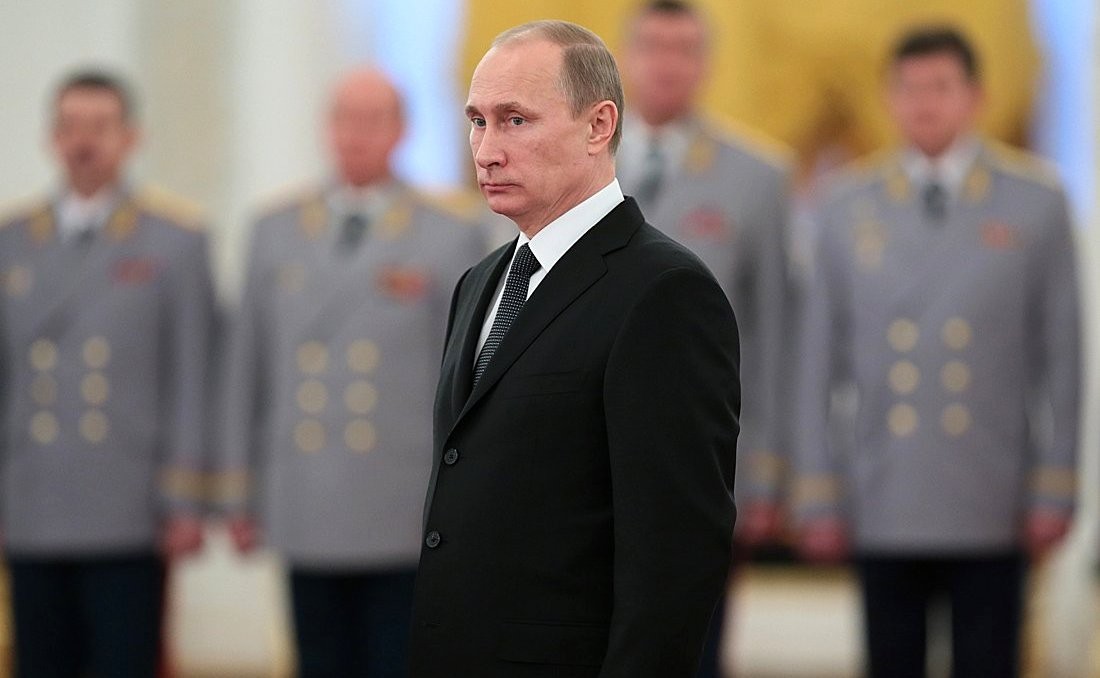
What's Next for Putin and the People of Ukraine?

What's next for Russian President Vladimir Putin? I guess that all depends on who you ask and where you get your news. There's no doubt that Russian news sources are largely controlled by the Russian government. But then, the Western media are just as guilty of their own propaganda. After all, the same corporations which control 96+% of everything we read. watch, and hear also controls Washington.

With that in mind, Russian news sources report that the Russian military is holding their own, if not actually winning in what's now become a war of attrition. Meanwhile, in the West we're told that the Ukrainians are giving the Russian troops a good old fashioned butt kicking (naturally with Western aid).

Russian tanks and mobile units are being decimated while Russian planes and helicopters are being shot down with impunity. As for the much ballyhooed Black Sea Fleet, it's been rendered impotent. We're even told that the Russian military to running on empty when it comes to keeping their war machine supplied with fuel, replacement parts, ammo, and even food, water, and medicine.

Video footage (often provided through the Ukrainian Government) of captured Russian troops are repleve with stories of being randomly drafted, given little or no training, and simply dropped off at random sites in the Ukraine and to await instructions which never seem to come. Many just wonder into the nearest Ukrainian town or village and simply surrender to the first Ukrainians they see...military or civilian.  In short, they're there to use up Ukrainian ammunition as cannon fodder and live (for the moment) targets.

Meanwhile, there seems to be no shortage of scenes of smoldering or abandoned T-90 tanks, or planes and helicopters being shot down on social media outlets, yet curiously few scenes of the obligatory dead Russian soldiers and pilots which are displayed as proof of victory.

It's hard to believe that the arch nemesis of "all that's holy and scared", at least according to Western governments (most notably the United States) during the 45 years long Cold War is being thumped by a second tier military like Ukraine.  Starting in the 1950's, Americans lived in fear of ruthless Soviet expansion throughout the world likened to a game of dominos.

In school, we were taught to hide under our desks or along the hallway wall in case of a nuclear sneak attack (which hung over us and our parents like a sword of Damocles). Looking back, I guess that was so the survivors knew where to find the little piles of our ashes. We were told to "drop and cover" behind sidewalk curves or drive to the nearest fallout shelter, which were usually located downtown. You know. Right where the bomb would hit in about 20 minutes.

Meanwhile selected government officials were to be secretly evacuated by the military to their own nearby private bomb shelters under the auspices of "continuity of government" and all before the ice in their glasses of scotch melted. 

 We fought countless wars directly and indirectly, overthrew governments, and assassinated duly elected foreign leaders throughout the world to make it "safe for democracy" (sarcasm intended).  Then, we watched with a certain measure of glee as the Soviets invaded Afghanistan, only to get bogged down in their own Vietnam (a lesson we repeated and took us 20 long years to learn with the same results), and downright cheered when the USSR imploded and collapsed in 1991.  

So, now what for Putin? Well, if we are to believe the mainstream media, President Putin is stuck between a rock and hard place. On the one hand, his generals are extremely frustrated with the progress (or lack thereof) in the Ukraine while many members of the Duma (Russia's version of Congress), along with large numbers of the populace, are increasingly angry over the quagmire that is Ukraine.

The Russian senior military staff are themselves split between what to do. A minority see their best option as throwing in the towel and withdrawing completely with their tail between their legs as they did in Afghanistan 33 years ago. Others see their best solution as consolidating their tenuous hold on the Donbas provinces and forgoing the rest of Ukraine.

Some of the military and political hardliners are urging the use of some of their 5,977 nukes, specifically the smaller "tactical" warheads of which there are about 2,000. Even some members of the powerful state security apparatus, the FSB (successor to the feared KGB) seem to agree.  

These smaller yield warheads have an explosive output of approximately 15 to 20 kilotons of dynamite, which are close to the explosive power of the bombs dropped on Hiroshima and Nagasaki,which killed or outright vaporized a combined 105,000 lives. The resulting fallout caused the deaths of tens of thousands for months and years afterwards, not including the thousands of birth defects which continued to appear decades later.

Most Western observers reject this scenario, saying Putin may be crazy, but he's not stupid. I agree that it's highly unlikely that Putin would use nukes. First, he would be unanimously condemned by the world. There's even the possibility of a coup. Those nations which have remained on the sidelines throughout the conflict would immediately provide Ukraine with humanitarian aid. Some might add military aid as well.  There would be near universal economic and political sanctions imposed on Russia would stagnate it for years if not decades.

Secondly, the nuclear fallout could drift westward, affecting Poland, Hungary, and Romania or spread further west to Germany and Scandinavia. Depending on the targets and wind direction, it's not out of the question that Turkey, not to mention Russian controlled Crimea and the Black Sea with its fishing industry and critical production of oil and gas would be affected.   

If it did drift into Poland and points west, all NATO countries, it could make for a tenuous, but plausible argument for triggering Article 5 of NATO's mutual assist agreement, and thus activate NATO's military. Granted that might be a bit of a stretch (though fallout is certainly possible and even likely), it wouldn't take much given the hotheads in NATO who've been looking for an excuse to get directly into the fight from the outset. 

Any humanitarian relief efforts transported directly into Ukraine would likely be under the protection of NATO. Any provocation by Russia, intended or not, would be all the excuse needed for things to get "hot", thus forcing Russia to pull back to avoid any possible "misunderstandings". To put it another way, everything would be locked and loaded and the safeties would be off. Lastly, it would give NATO all the justification they need in the eyes of the world to fully admit Ukraine into NATO as a full partner. Nukes would be a no win scenario for Putin.

A good argument could be made for Russia to simply withdraw from the Ukraine proper and focus its energies on the contested Donbas region, which is comprised of roughly 40% ethnic Russians. After all, Russia's military has pretty much mucked up most everything in western Ukraine while invigorating Ukrainian resistance.

Russia's badly depleted and demoralized military would have a substantially smaller area to contend with, and they would have the support of a large pro-Russian minority. The Donbas could provide a link with Russian controlled Crimea.

It's worth noting that several Western pundits claim that the Ukrainians are doing such a marvelous job in fighting Russian troops, that after driving them out of the country proper, they should move into the Crimea and retake it. An interesting notion but unlikely. The Crimea has strong links to Russia dating back to the late 1700's. A substantial portion of the population (about 60%) are ethnically Russian, speak Russian, and identify with Russia.

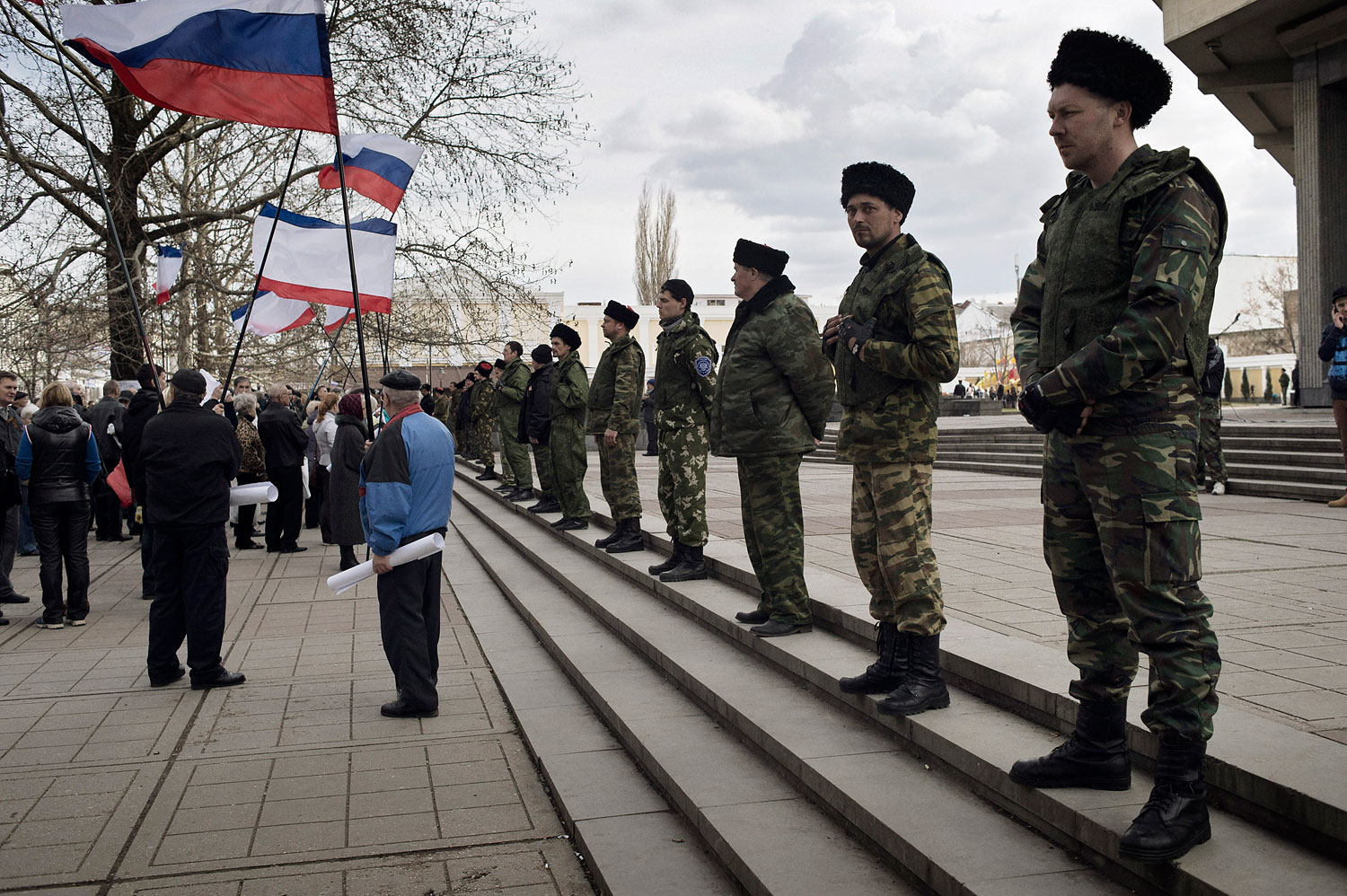
In March 2014, the Crimean Supreme Council held  a referendum for the Crimean people. They were to decide to rejoin Russia or readopt their 1992 Constitution which gave them autonomy. With a turnout of about 83%, some 96% voted to rejoin Russia. Critics of the referendum (mostly Americans) cited no outside observers to verify the election results, and therefore rejected the outcome. I suppose the same argument could be used for our recent elections too don't you think?

Regardless, Russia has been in the Crimea since Czarina Catherine the Great's annexation in 1783. It's home of one of their largest military installations, Sebastopol, and it's the source of vast amounts of oil and gas which has been propelling Russia's economy (perhaps the main reason Kyiv wants it back).

The Donbas (formed from the name of the area---Donets Basin) is comprised of two pro-Russian provinces, the Luhansk and Donetsk. 68.8% and 74.9% respectively speak Russian.  Fighting has been going on there for roughly 8 years, resulting in the deaths of somewhere around 14,000 people. Control of the Donbas would allow Moscow a direct connection to Crimea and the all important Sebastopol.  However, it's more than just having a land connection to Crimea. The Donbas is resource rich, especially in coal.

The hard coal reserves in the Donbas are one of the largest in the world, worth in the neighborhood of $57 billion dollars. It is also rich in methane gas, rock salt, limestone, mercury, and various types of ore. The Donbas had a gross regional product output in 2020 of 7.0 billion Euros and accounts for 6% of Ukraine's GDP.  

Prior to the 2014 invasion, Kyiv had an agreement with Royal Dutch Shell to develop one the key Yuzuvska natural gas field. Due to the war, that was suspended in 2014. Royal Dutch Shell finally withdrew from the agreement in June 2015.

The securing of the Donbas is too important to Putin to permit him to fully withdraw from the Ukraine. It is and perhaps has always been at the heart of the invasion, notwithstanding Putin's repeated refusal to allow a NATO presence in Ukraine. Such a presence would surround Russia's western frontier with NATO missiles, box in its Black Sea Fleet, and potentially restrict its access to vast amounts of oil, gas, and natural resources.

Russia should no more been expected to accept such as a fait accompli than the U.S. would with a Chinese military and economic presence on our Canadian and Mexican borders. His invasion was in many ways as colossal a blunder as Napoleon's invasion of Russia in 1812 or Hitler's in 1941, but from his perspective, it may have been the lesser of two evil. 

At the same time, a complete withdrawal would devastate Putin's credibility at home, especially with its powerful oligarchs, military and FSB, and key members of the Duma. Such a move would likely result in a coup with Putin's removal from office either voluntarily or horizontally. Failure to leave will led to more dissent at home, and again, a possible ouster.

Securing the Donbas offers Putin with a chance for a militarily victory and stability at home before things spiral too far out of hand, but it leaves him with a dangerous enemy in Kyiv who will undoubtedly seek revenge by keeping the Donbas unstable. It also provides Kyiv with the best excuse it could ever have for full NATO membership, and with it, protection of the global corporate elite.

Finally, Russia will remain outside the reach of the Western capitalism and its ruling elite, where perhaps it should be. The sanctions will likely remain for now, as much as punishment for rejecting Western neo-feudal capitalism as for its invasion of Ukraine. Putin will be portrayed as unstable and a tyrant in the West for his disruption of the "Great Reset" of the New World Order. 


If you want to know more, please take a look at the links below. If you enjoyed the article, please consider passing it along to others and don't forget to subscribe. It's free! Lastly please be sure to "like" us on whatever platform you use to read anotheropinionblog.com. It helps with the algorithms and keeps our articles in circulation. Thank you! 


Crimea: Six years after illegal annexation


Battle for Donbas: 3 reasons why Russia is shifting its warmachine to east Ukraine


Putin's tactical nuclear weapons could pack the same punch as atomic bombs dropped on Japan


Russian Military Leaders Discussed Use of Nuclear Weapons,U.S. Officials Say


Why Vladimir Putin Would Use Nuclear Weapons In Ukraine


How to respond if Putin goes Nuclear? Here are the economicand political options


Friday, October 07, 2022

The Nord Stream Pipelines: The West vs. Russia Again

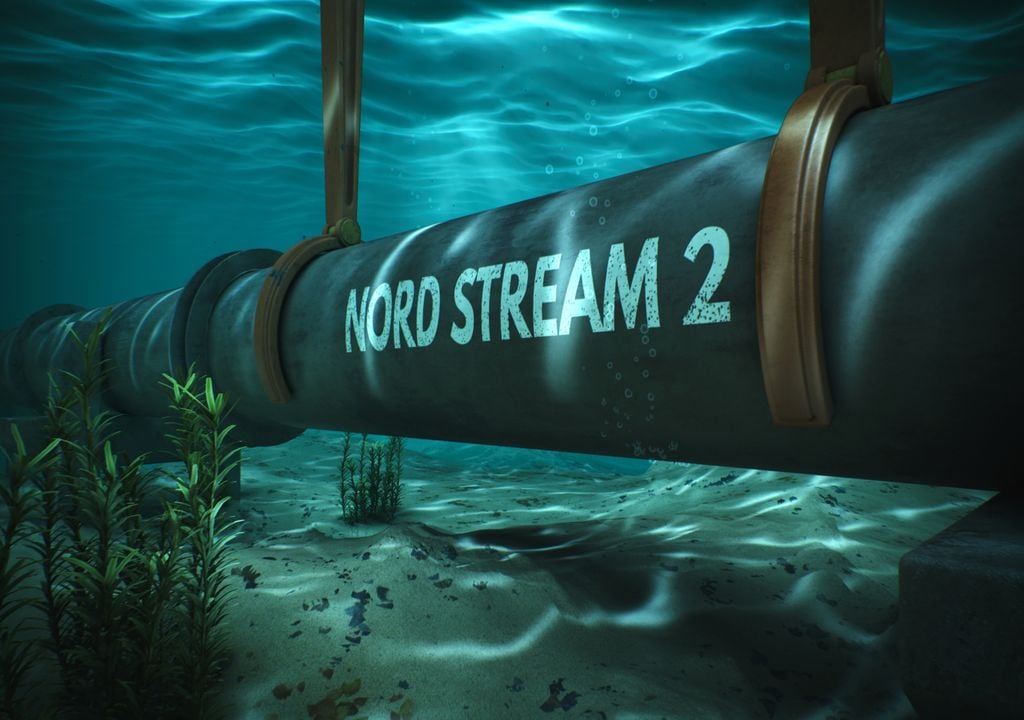
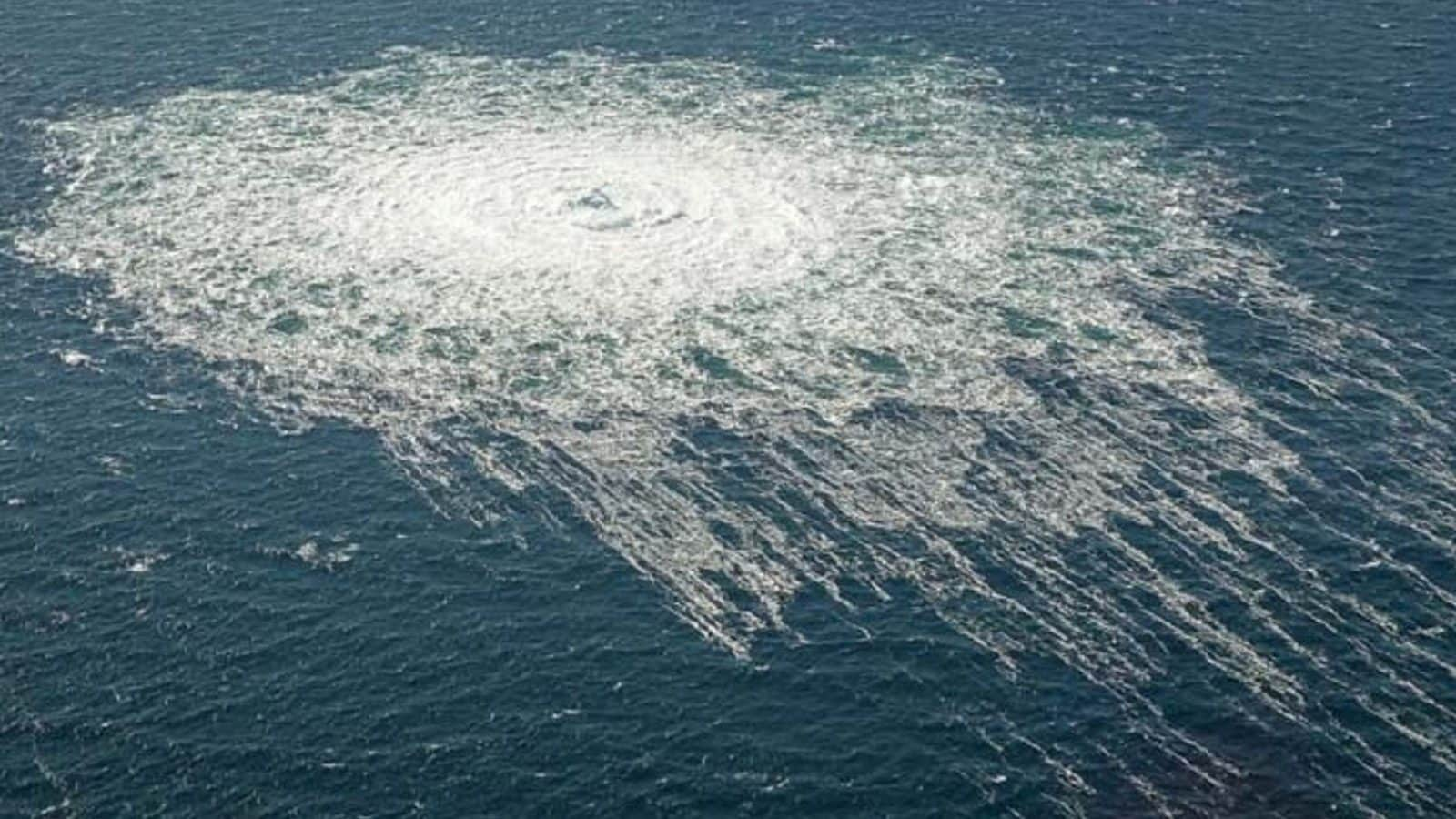
In the Baltic Sea, two Nord Stream gas and oil pipelines were destroyed in a series of three underwater explosions. The victims of sabotage.  One of the pipelines had been used to supply Europe (and particularly Europe's economic engine, Germany) with critically needed oil and natural gas.

Both lines had been shut down previously. The result of sanctions imposed by Russia's President Putin in light of the EU's support of Ukraine in its ongoing war with Russia. The other pipeline was still partially under construction. The result of the explosions was three or possible four ruptures.

Both pipelines were owned by Gazprom, the Russian owned energy giant, in conjunction with Western partners at a cost of several billion dollars (it's worth noting that Gazprom generates around $115 billion dollars annually and is the world's largest natural gas company).

The question which is now being hotly debated in the halls of Congress and the Pentagon, the United Nations Security Council,  the capital of the EU---Brussels---and the halls of other capitals in Europe, the Middle East, and China is who was responsible for the attack.

It's generally agreed that because of the location of the pipelines, at a depth of approximately 361 feet beneath the turbulent Baltic Sea, could have only been accomplished by a tiny handful of nations---Russia through its highly trained Spetsnaz special forces; the United States Navy and its premier global strike force, the SEALs.

 China has its specialized naval assault units, the Jiaolong Assault Team, which are better known as the "Sea Dragon Commandos"; and the British Special Boat Service, also referred to by its initials, the SBS  (as an aside, it's one of the very few type of operations that the Israelis, known for their daring and near impossible attacks anywhere in the world, wouldn't have been able to accomplish. Besides, Israel doesn't have a dog in this fight).   

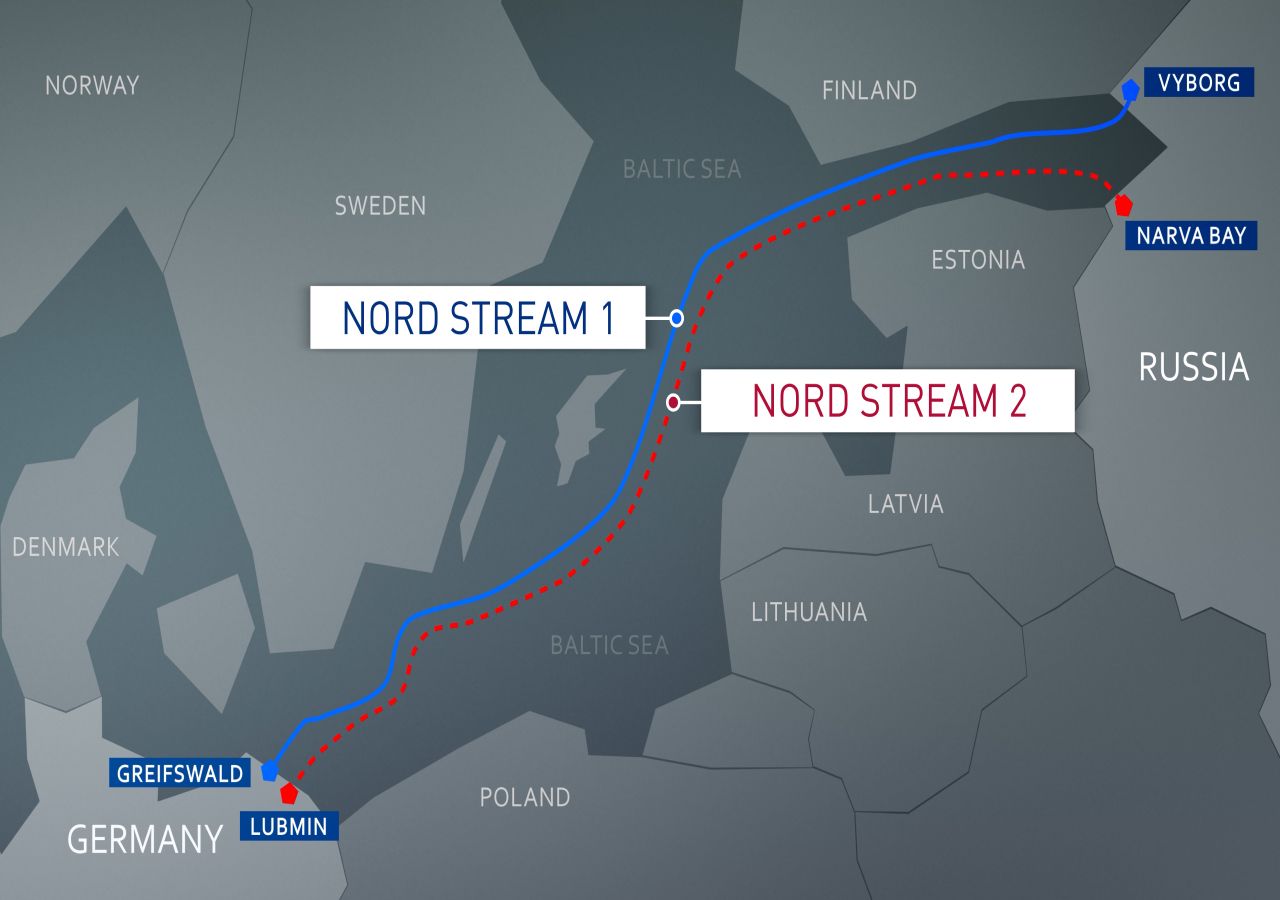
The two pipelines, known as Nord Stream 1 and 2, originate from Vyborg and Ust-Luga on the Russian coast bordering the Baltic and extends Greifswald in Germany. The first leak (Nord Stream 2) was reported by Swedish investigators on September 26th. The second incident involved two leaks involving pipeline 1 the following day, on September 27th. 

The damage on pipeline 1 are close together, while the damage between both pipelines aren't in close proximity to each other, which means the damage had to be closely coordinated, which again points to one of the major powers.

The majority of Western governments have either directly or indirectly indicated that Russia was behind the attacks. German Konteradmiral (Rear Admiral) and Chief of the Navy, Jan Christian Kaack, has stated that Russia has capability for such sabotage when he stated that Russia had "considerable capacity" in its underwater operations, which is true.

Looking at pipeline 1, it covers 745 miles from St. Petersburg in Russia to Germany's Northeastern coast while the second pipeline runs 767 miles. In addition, there are other transmissions lines running from both pipelines (the OPEL and the NEL pipelines, which connect to other lines throughout Europe). The oil and gas originates from Yuzhno-Russkoye petroleum field in the Krasnoselkupsky District of the Tyumen Oblast in West central Siberia.

The field, which was previously unreachable due to the historical dense permafrost, has been made harvestable thanks in large part to warming temperatures and improved technology, which has allowed full time operation. The field has proven gas reserves of 805.3 billion cubic meters of gas with estimated reserves of another 1000 billion cubic meters of natural gas.

Meanwhile, proven oil reserves are about 5.7 million tons. At present, Gazprom operates 26 gas wells  which reportedly produce an estimated 15 million cubic meters of natural gas every single day of the week all year long.

 It bears mentioning that Gazprom has been working on a deal with China to construct a pipeline from the Yuzhno-Russkoye field to Northwestern China via the "Power of Siberia 2" pipeline (aka the "Altai gas pipeline") and end in the Xinjiang region where it would connect with China's East-West pipeline.   The pipeline could also run through Mongolia, which would be a boon for the Mongolian economy.

 Xinjiang Province, however, is home to the Uyghurs, a minority Muslim population which in recent years has become increasing resistant to Beijing's rule in what's known as the "Xinjiang Conflict". An oil and natural gas pipeline of this magnitude would present a tempting target for the Salafist Turkistan Islamic Party and the East Turkestan Independence Movement, two separatist groups comprised of Uyghur Muslims, Buddhists, Taoists, and Confucian nationalists unified in their demand for autonomy from Beijing.

As for the two Nord Stream pipelines in the Baltic, they too present more than tempting targets. While Western leaders led by the U.S. and President Biden blame Russia for the damage to their own pipelines, Russia and its allies claim that the United States is behind the incident.

President Biden had previously made threats concerning the Nord Stream pipelines. Specifically, Biden previously said that if Russia invaded Ukraine, the Nord Stream pipeline "would not move forward" and added that "there will no longer be a Nord Stream 2. We will bring it to an end". 

Since the announcement of that the two pipelines were destroyed, the establishment media has tried to whitewash Biden's statements and do some fancy cover up.  Nevertheless, whether he intended that specifically to be threat or not, it doesn't look good.

In fact, President Putin took Biden's comments as a threat, and now with both pipelines out of commission it certainly appears to be a threat fulfilled. Of course, the U.S. has more than the capability and experience, not to mention intelligence expertise, to carry out an operation like this.

As a result, Putin announced that he intends to "destroy the West's energy infrastructure" as he blamed the "Anglo Saxons" for the damage (fortunately for me I'm mostly Celt and Scandinavian). The question is whether or not he can actually do it. While it remains to be seen, with Europe dependant on 40% of Russia's oil and gas to heat homes and run businesses (and Germany, Europe's industrial heart, depending on Russia for 70% of its oil and gas), it can't be good for the EU, even with limited U.S. support.

The importance of the pipelines to the Russian and European economies  and the amount of money invested in the projects can't be understated. Nord Stream 1 has been in operation since 2011 at a cost of $7.3 billion dollars while Nord Stream 2's price tag was around $11 billion dollars. It was started in 2011 and has been operational since September 2021.  

We can't overlook the possibility of routine failure. The pipelines are 361 feet down in water which average 51 degrees this time of year. At depths of 350+, the water temperature is around 15 to 20 degrees. Plus, while poor quality and/or workmanship shouldn't be an issue, but it can't be entirely ruled out. Pipeline failures aren't uncommon.

As for Russia being responsible for sabotaging either pipeline, it's unlikely. Russia has already imposed its own sanctions against the EU and shut off the valves. There's no need to destroy the pipelines on top of that. Besides, consider the costs to repair either line which could run potentially in the billions and take upwards of six months to complete. Just in closing the pipelines, Russia is taking a huge financial hit. Russia oil and gas shipments to Europe had been bringing in $120 billion annually.  

As long as the war in Ukraine continues, the cost will escalate on all sides until the unthinkable becomes the only logic option. Neither Moscow or Kyiv seems able to deliver a final knockout punch. Ukraine is hanging in there against the full might of the Russian military thanks largely to aide being provided by the EU/NATO, the United States, and an intensive Western PR campaign. Russia's mounting losses, in the face of U.S. led sanctions are starting to severely affect its economy.

As a result, President Putin has struck back by cutting off critically need oil and gas supplies, but that's may not be enough. Putin has strongly hinted at military intervention in certain European border countries and even the possibility of using tactical nukes to end the war. It's unlikely Putin would do so, but some analysis have cautioned not to rule it out entirely. Russian credibility is also on the line here.

Meanwhile, Europe is bracing for a colder than usual winter, as well as a serious blow to its economy with much higher prices for everything from food to rent to gas and staying warm thanks to Russian oil and gas sanctions.  Public unrest and riots shouldn't be ruled out.

In the United States, Washington's pro-Kyiv propaganda isn't working as well as the establishment media had hoped. Putin has proven to be popular in the U.S. (more so than Biden, who's approval ratings continue to hit record lows) as the U.S. economy slows amid rising prices and interest rates. The Republicans aren't doing any better.

Regardless of U.S. politics, the war in Ukraine needs to come to a quick end. It's cause was officially Kyiv's request to join NATO; something Russia has long opposed. The real issue was, and always has been over resources. In this case, oil and gas in the Donbas and Black Sea. With it, Ukraine becomes a new player on the block, especially if it has the protection of NATO. Without it, Ukraine is just another second tier economy.

The Washington led West is going all out to make Russia the bad guy, and in many ways they are, but wars are seldom black and white. Kyiv, Brussels, and Washington bear their share of responsibility for this war too. For Moscow, it's a matter of national security. There was nothing new about Moscow's refusal to allow NATO to encircle its western border or be forced to kneel to a "new global order", whatever that means. Meanwhile, while politicians dicker, generals plan, the rich get richer, ordinary people die.


If you want to know more, please take a look at the links below. If you enjoyed the article, please consider passing it along to others and don't forget to subscribe. It's free! Lastly please be sure to "like" us on whatever platform you use to read A/O. It helps with the algorithms and keeps our articles in circulation. Thank you! 


Nord Stream gas 'sabotage': who's to blame and why?


Biden says the Nord Stream 2 pipeline won't move ahead if Russia invades Ukraine


Russia Blows Up Gas Pipelines, Declaring an All-out EnergyWar It May Have Already Lost


Nord Stream repair may take at least six months, sayslawmaker


The Yuzhno-Russkoye Field


Russia has cut off gas supplies to Europe indefinitely


Saturday, May 21, 2022

Uneasy Bedfellows: Sweden, Finland, NATO and Putin


Sweden and Finland, two Scandinavian countries to Russia's northwest formally submitted an application to join NATO on May 17th in light of Russia's invasion of the Ukraine. Russian President Vladimir Putin had previously warned both nations of the potential danger they faced by joining NATO rather than remaining neutral, which many took as an not so subtle Russian threat.

While Putin doesn't directly oppose the move by Sweden or Finland, NATO's Musketeer-like pledge of "one for all and all for one", makes it clear that any incursion by one NATO member would result in an appropriate military response on all NATO members, or so says Putin. So, why would Putin approve Finland and Sweden's admission to NATO and not the Ukraine's?

NATO came into being just after the end of World War II in 1945 as a means to offset a newly expanded Soviet Russia into the Soviet Union with the addition of so-called "liberated" nations from Nazi and fascist control. Later, in 1955, they would transform into the Warsaw Pact, which was in response to NATO, which was created in 1949, and intended as a buffer from a potential invading Western coalition.

Several nations, Sweden and Finland among them, wanted to maintain as military neutrality between themselves and the USSR. This was in part to keep open historic trade relations with Russia and its partners similar to the 1956 non-aligned movement which included India, Egypt, Yugoslavia and 117 other countries which sought to maintain a economic balance between the West and the Soviet states.

That, however, didn't preclude Sweden at least for conducting restricted joint military games with Europe. In 2017, Sweden held the largest war games in 20 years jointly with NATO members. In anticipation of joining NATO, Finland has participated in limited war games with NATO. Previously, there was always the fear of irritating the Russian bear.

Such fears gradually decreased after the implosion of the Warsaw Pact in 1989 and then, Soviet Russia in 1991, along with continual trade and economic integration which had created the European Union. Now, with the invasion of the Ukraine, that fear has reasserted itself and turned into one of self-preservation and urgency.

However, Sweden and Finland may have to hang on together a little longer. Turkey, the second largest military member of NATO (behind the United States) and one of two Muslim nations in NATO's (the other is Albania, which is 60% Muslim compared to 99% for Turkey) is opposing the entry of Sweden, and to a lesser degree, Finland, into NATO.

Under the rules of admission, any one member of NATO can oppose entry of a nation into its ranks. Turkey's President Erdogan has said that he opposes admission of Sweden and Finland over "security" issues and support of "terrorist" groups. Specifically, he is referring to the support of Sweden and Finland of the PKK---the Kurdish Workers Party---which promotes a free Kurdish State and allegedly has killed tens of thousands (mostly Turks) since 1984.

In addition, both Sweden and Finland have used their clout in the EU to oppose arms sells to Turkey with the express goal of using those weapons to fight Kurdish rebels known as the "YPG" or Syrian Kurdish People's Defense Units, which is linked to the PKK. Lastly, Erdogan opposes Swedish sanctuary of Fethullah Gulen's followers after a failed attempt to overthrow the Turkish Government in 2016. Gulen is a radical U.S. based Muslim cleric.

Finland has been part of the EU since 1995. Its largest trade partners are Sweden, Germany, and United States. Russia, which is Finland's 6th largest trading partner, gets 12% of its imports. Russia accounts for 5% of its exports. Notable but not overly significant.

Sweden, also an EU member since 1995, exports just 1.2% of its good Russia and in return gets back 2.5% in imports, so any economic effects from Russian sanctions would be minor at best. Sweden's largest trading partners are Norway, Germany, the United States, Denmark, and Finland, with Russia ranked 15th (as an aside, China is 6th in terms of exports, at $8.4 billion while Russia receives just $1.2 billion in exports).

So, economically, neither Finland or Sweden is of that important, and there's no reason to expect NATO membership would preclude an change in trade between either country and Russia. If anything, it may provide an additional conduit for trade between Russia and the West in the event of expanded sanctions.

So, why Russia would accept NATO membership of Finland and Sweden but not Ukraine? Does the answer again go to national security just as Putin has maintained all along? As far as Moscow would be concerned, the addition of NATO troops, ships, and particularly missiles in Sweden and Finland, will make little difference. If truth be known, Russian military planners long ago accounted for Sweden and even Finland in their response calculations should a war break out with NATO.  To paraphrase an old adage I adapted, "if you're not with me, you're against me. The only neutrals are in cemeteries".

While Sweden shares no common border with Russia, Finland does with some 830 miles of mostly inhospitable mountainous terrain, bitter cold, and dense forests with Russia. With Finland, the majority of its population and industry are located within 25 miles of Helsinki, which accounts for 27% of its total population (Finland only has a total population of about 5.5 million, and just nine cities with populations over 100,000).   

In Sweden's case, 85% of its 10.21 million population live in urban areas. About 3.3 million live in Stockholm and the surrounding metro area. The city of Gothenburg, Sweden's second largest city, has around 2 million, while another six cities have roughly 100,000 each.

Ukraine, on the other hand, has a 1,426 mile long border, which includes 199 miles along the Black Sea. Its land is among the most fertile in the world and it's moderately populated (both Russia and  Ukraine also share a similar language, history, and culture). Note too that Ukraine was occupied by the Soviets from 1922 until the collapse of the Warsaw Pact in 1989 before becoming independent in 1991. 

Russia's largest naval base since 1783 and home of the Black Sea Fleet is nearby at Sevastopol in the Crimea. It comprises an area of 334 square miles and a population of around 430,000 (when you add in surrounding towns and other populated areas, the total population jumps up to 510,000).

It's worth nothing that some military analysis believed that the Black Sea Fleet is the least prepared of the Russia's four main naval bases, ranking them in order of importance, Baltic, Northern, Pacific, and lastly, Black Sea. However, it is a key link between Russia and its ally, Syria. Then too, there's that matter of oil.

It was recently confirmed that the Black Sea shelf and the Azov Sea may potentially be one of the richest reserves in the world. Ukraine had, in fact, been quietly counting on acquiring full access to it and making closed doors deals with energy giants like Exxon, Dutch Shell, and BP (Europe receives approximately 40% of its oil and gas from Russia, with Germany---the EU's economic engine---getting 70% of its oil and gas from Russia), but then came the annexation of Crimea.

So, how much oil and gas are we talking about? Best estimates are 2.53 million tons of crude oil, 58.6 billion cubic meters of natural gas, and 1.231 million tons of natural gas condensate. That's more than enough to go to war for. It's estimated that Russia's annexation of the Crimea deprived Kyiv of some 80% of its energy potential.

If Russia manages to keep the four Donbass provinces as a result of the current war, it could possibly acquire most of the Ukraine's estimate 60 million tons of coal (90% of the Ukraine's coal lays in the Donets Coalfield, in the Donbass Region). While the Ukraine is rich in other natural resources, including gold, strategic metals, wood, and some of the most fertile soil on the planet, the loss of the Crimea oils and gas fields as well as the coal rich Donbass would severely hurt its energy needs.

Putin claimed the invasion of Ukraine was a matter of national security, and maybe it was, at least to a point. Putin didn't want NATO troops, artillery, tanks, and especially missiles on his border, and especially at the naval base in Sevastopol (even if it's a third rate base). He certainly doesn't want NATO surveillance staring him in the face.

But, it was the oil and gas of the Crimea which was key. And it's the coal rich Donbass region in the east that he wants. The war wasn't so much as a matter of national security as it is one of acquiring energy. In the near future it will be over the fertile soil like that of the Ukraine, strategic resources, and potable water elsewhere. Control of resources will the reason for all  future wars regardless of the "cause" assigned to it.

Since Sweden lacks a border with Russia and Finland's is so insignificant, Putin can use feigned indifference to their applications to join NATO. It doesn't hurt that Finland lacks oil and gas too. Otherwise, Finland's admission to NATO would be deemed a national security and denied just as in Ukraine. If Putin hoped to weaken NATO in his quest for oil and gas, he failed miserably.


If you want to know more, please take a look at the links below. If you enjoyed the article, please consider passing it along to others and don't forget to subscribe. It's free! Lastly please be sure to "like" us on whatever platform you use to read A/O. It helps with the algorithms and keeps our articles in circulation. Thank you!  


The leaders of Finland and Sweden say they will jointlysubmit their NATO applications


Finland and Sweden want to join NATO. Here how it works andwhat comes next.


Sweden's Top 15 Trading Partners


Finland's Top Trading Partners


Russia's naval base in Ukraine: Critical asset or point of pride?


Exxon and Shell win Ukraine oil bid


Energy in Ukraine


NATO chief sure spat over Sweden,Finland will be resolved


Fossil fuel companies are exploiting Russia's attack on Ukraine