Showing posts with label Juntas. Show all posts

Friday, September 06, 2024

What are some of contributing factors for the decline of the United States? An Observation from the Center


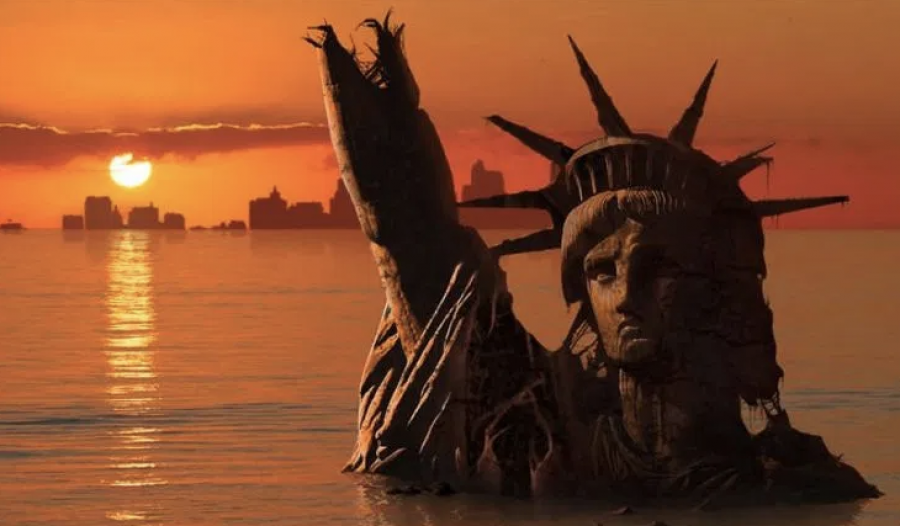
America, as you know, is no longer a “Republic” although it still likes to pretend it is (much like Rome did under the early Caesars). While purely speculative, as all such predictive analysis are, our decline is not one or two things, but a series of events external and internal, all connected directly or indirectly, which, in the moments of our daily existence, barely warrants our notice. Some appear benign, hardly noticeable, while others glare back at us like Fredrick Nietzsche's abyss. 

First is the assumption that the world wants to be America, or at least like America. America is first and foremost a capitalistic pseudo-democracy. We tend to export “American” ideals and values along with our Levi's, Fords, soybeans and television shows whether they're wanted or not. We try to imprint our society on everyone, especially through consumerism to created a world of "mini me's".  

We create mostly unrealistic dreams, from what to eat, what to wear "what's in and what's passe'" (an artificial construct to sell clothes), TV shows to watch, what we should drive to look sexy or "cool", or what we should look like (especially applies to young girls and women), and even what we should think and what should be considered "important".  Doesn't it make you wonder where we would be without them to think for us?

The corporate media, after all, manufactures the narrative (remember, only five corporations control 96+% of media in all its forms). They tell what's important and not just as they tell us how we're to think or feel. But even that is all about selling "eye time". The higher the viewership the higher the price they can sell a particular commercial slot or print space for.

Another way we sell American ideals is by removing governments we don’t like because they negatively impact our (that is, Wall Street's) financial interest.  This is typically euphemistically referred to as "regime change".  It doesn't matter if the individual or party are chosen by the people, if it interferes with profits, it goes.

During the Cold War with Soviet Russia (1946 - 1991), the U.S. has been involved with the overthrow of roughly 12 governments (euphemistically referred to as "restoring democracy" or "supporting the will of the people"). We've also been directly involved in several hundred political assassinations such as Ngo Dinh Diem, the South Vietnamese President in 1963 or  President Salvadore Allende of Chile in 1973. During the same time span, we've been involved at varying capacities in some 23 proxy wars and 285 armed conflicts. According to one survey, the U.S. was responsible for 81% of the world's armed conflicts from 1945 to 2001

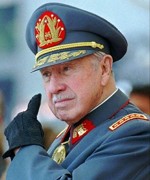
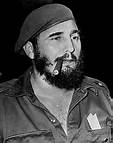
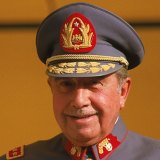
Overwhelmingly, each of these were either directly or indirectly the result of pressure by Wall Street since the individual leader or their government is a threat to their bottom line. In their place, we have typically installed a puppet government, but not just any ole puppet government popular with the people. No siree bob!  These are almost always far Right military juntas headed by such charming individuals like Generals Augusto Pinchot, Gregorio Conrado Alvarez, Alfredo Stroessner, and Jorge Rafael Videla.

Under "Operation Condor", which lasted from 1973 to 1983, we were active in the kidnapping, torturing, murder, or "disappearance" of some 60,000 individuals along with over 400,000 imprisoned. Many of them being Communist, democratic socialists, or simply vocal Left-leaning  activists. Some were union organizers, teachers, pastors, nuns, community leaders, and students.  Naturally, the government likes to say we acted in conjunction with our allies as sort of a soothing balm for our collective conscience.  Still, it kinda brings into question that notion of "leader of the free world" doesn't it?

As an aside, in researching this and similar articles over the decades, I've noted that we've never tried a to elect a non-partisan centrist or someone without strong financial ties to Wall Street. Rarely we elect someone without a military background  Given that we're no longer a democratic or constitutional Republic, having become a Oligarchy led corporatocracy years ago, if we were to have some sort of coup or civil war, what's in store for us? Based on our history, perhaps this is a hint. After all, we have so much experience at it.

Following wars, conflicts, or police actions, the next step is often what's called "nation building" (it should be more properly labeled "national building in our image"). This is where dozens (or more) government contractors engage in the lucrative business of, well, the literal business of physically rebuilding countries we had just bombed back to the Stone Age while the State Department helps restore their government to something acceptable to Wall Street.
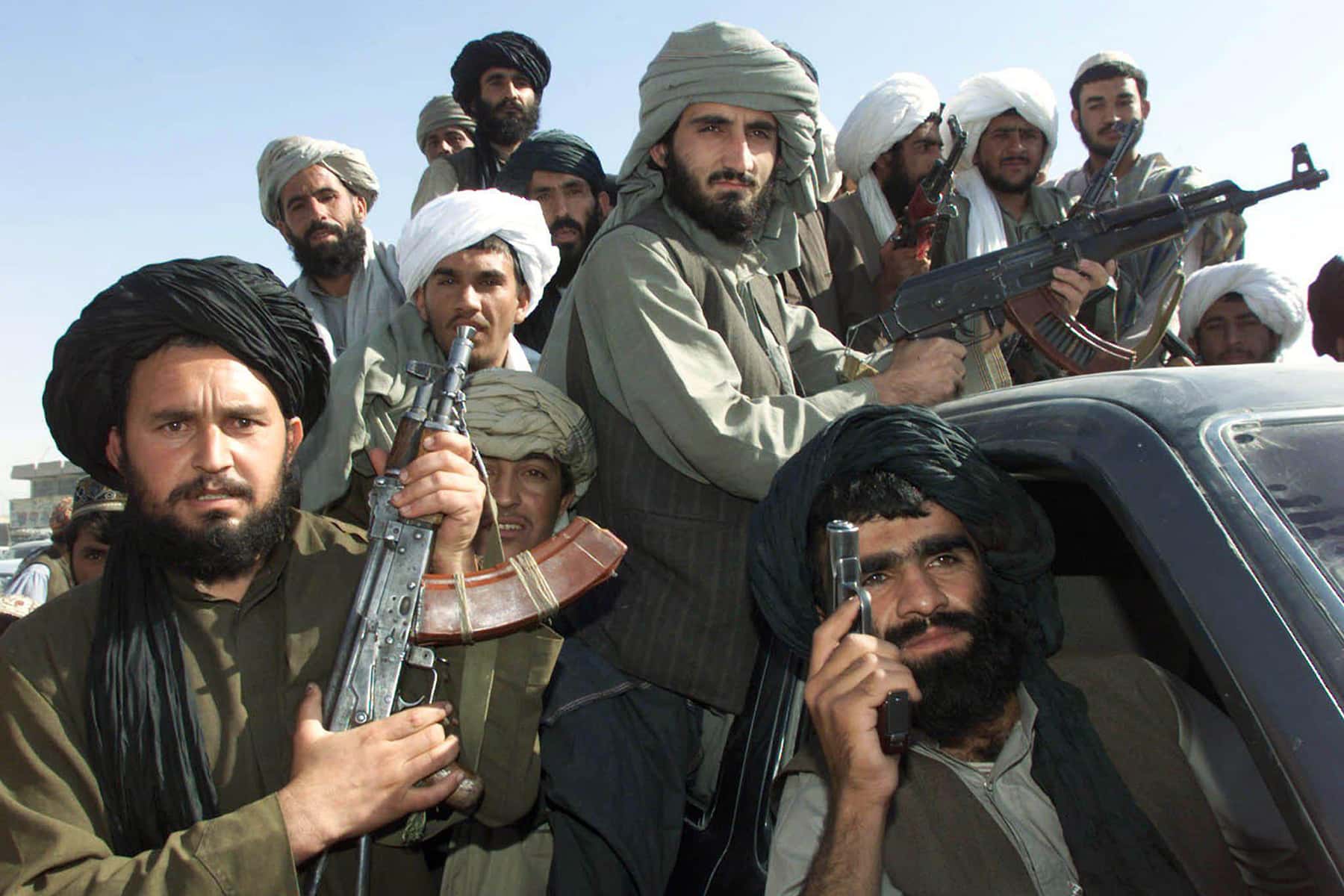
Speaking of "nation building", Brown University announced the results on one of its projects concerning U.S. and its "War on Terror", that states over the last 20 years, Washington has spent $8 trillion dollars and came out empty handed with the Taliban still in charge and Al Qaeda still in business despite the loss of some leaders. Why isn't the American Taxpayer furious?

 In addition, over those 20 years, around 900,000 people have been killed. The U.S. Department of Defense confirmed that over those same 20 years, the American taxpayer has shelled out $145 billion dollars just to rebuild Afghanistan. I'm sure Al Qaeda and the Taliban are quite grateful, not to mention  thankful for the millions of dollars in state-of-the art military equipment we so graciously abandoned when we skedaddled out of Kabul.  

It's worth noting that despite spending billions on nation building since 1946, not a single country has opted to adopt our form of government. Not a single one. The dozens of countries we've helped rebuild like Humpty Dumpty tend to adopt the inclusive British proportional representative government.

Instead, they tend to choose the British “parliamentary” or proportional system where each party is basically guaranteed a seat, depending on the percentage of the vote they get, meaning everyone has a voice in government. This is in lieu of America's "winner take all" system where the voters on the losing side are unrepresented for the term of that office.

Another serious factor in our decline is our educational system. We’ve dumbed it down so as not to “offend” underachievers. We're ranked in the lower tier among industrial nation. How will we compete globally? We’ve accepted the idea of “equal outcomes over equal opportunities”. Everyone gets “participation trophies” just for showing up. Everyone isn't a “winner”.

We’ve developed the notion that certain individuals or groups are somehow "due" something by society simply because they exist. An extension of that is the mistaken presumption that we're “owed” something--- aka "reparations"--- because your ancestors experienced an injustice or other burden. Well, that may be reprehensible, but try naming one group on this planet who hasn't experienced injustice somewhere in their collective history (which speaks volumes about the state of humanity more than it does anything). 

Every race or ethnic group has at one time or another been the slave or the master. But it's all in the distant past. We can't change or undo what happened. They sacrificed for our future. Take from it the lessons they taught us  and move on. The only person ultimately responsible for your success or failure is you. Not the government, not your fellow citizens, and sure as hell not your ancestors.

America has lost its way. We no longer value life or show respect for others or their things. We covet what others have more than we value our own lives. That's how some people end up dead. We're told we're all victims. So now we've developed a victim mentality where others are responsible for our failures, but why not our successes? We're told it's okay to be "offended" if others won't play along with our "pronoun pity party". Guess what? You can "self-identify" as the "Cheshire Cat" if that's what you want, but that doesn't mean everyone has to play long Alice.

We no longer discuss opposing ideas in a civil manner. We don’t want to be presented with anything outside our “bubble”. We want nothing that would distort our view of the world. To do otherwise triggers a intellectual breakdown, requiring a "safe space" and "comfort blanket".

Our partisan politics is a reflection of that. Its’ developed a enemy-like “us vs. them” mentality where the “us” part doesn’t include the average voter. Rather than producing, society now based on consumption of everything without replacing it. Capitalist democracy requires that we  constantly expand and consume ever faster to survive. It’s appetite is insatiable. It’s fueled by greed for “more” of whatever is there.

When capitalist democracy can no longer expand, it begins to metastasize. It starts to consume itself. As it does so, it increasingly seeks to control and manipulate its environment. The economic class which feeds it is put under increasing pressure to provide more and more while it starves. That’s the stage we're now at by the way.

We've arrived at the point where there are no absolutes. Right from wrong is merely shades of gray. Much is often promised, especially by our so-called “leaders”, but no one actually expects those promises to be kept. We've discovered we can invade the coffers expecting them to always be filled but that's increasing not the case.

Facts are now seen as ambiguous. Truth is now a matter of perspective rather than accepted norms mutually agreed upon by society. They're conveniently assumed to be a lie to be discarded if we disagree with them. Perhaps worse is when no one is held accountable for the lie. Let's take a quick look at the nation and the lie we were loosely modeled on---Rome.

"Rome the Eternal", like countless nations before and after, fell because of an over extended and undersupplied military. It was no longer able to impose Roman values on the unruly barbarian tribes. Even its military became less “Roman” as more and more foreigners filled its ranks, who had no vested interest in the empire due to a decline in Rome's  birthrate.  

Originally, the title (and it was a “title”) of “Roman Citizen” carried great weight.  It was bestowed rarely and often with great fanfare. Eventually, it all but lost its mystique. Foreigner didn't settle in order to become a “Roman Citizen”. They came for the economic opportunities Rome could provide.  Eventually, didn’t they even bother to learn the lingua franca of the empire--- Latin---or follow its laws, traditions and adopt its values.  Sound familiar?

Internally, Rome had always been corrupt, but it was the degree of corruptness which changed. It became a cancer and spread everywhere. Citizens were distracted  with “bread and circuses”, that is, games and monthly bread rations, all paid for by the working class---the Plebeians or "Plebs"--- until it eventually collapsed from over taxation.

Taxes and goods from client states also dried up. They developed their own trade alliances and bypassed the Roman “middlemen”. They even lost their fear of Roman might. Why? Not because it was no longer formable, but because Rome could no longer financially sustain a war. Again, sound familiar?

Eventually, there arose an outsider, Julius Caesar, who pledge that “in order to save the Republic I must destroy the Republic”, which was a true enough observation. The Republic could no longer reform itself out of it situation. The dependent classes lacked the means and will. It couldn’t appease all the special interests groups which controlled it. Rome must be founded again.

However, Caesar failed and paid with his life. What followed was a series of internal civil wars, When they were over, Rome had order. It also had a dictatorship. Can we be that far aways from our own Caesar? That’s a question many Americans are asking themselves. We are now a defacto neo-fascist corporatocracy; a surveillance state with all the tools for a full blown police state already in place. All that’s missing is a crisis—-real or manufactured.

We likely won’t have a military junta (although the military is the only institution which has kept a positive approval rating), but rather someone like a board president or chairman. And why not? After all, Wall Street runs the show. Why shouldn’t they step center stage and claim the crown?


 If you enjoyed the article, please consider passing it along to others and don't forget to subscribe. It's free! Lastly please be sure to "like" us on whatever platform you use to read anotheropinionblog.com. It helps beat the algorithms and keeps our articles in circulation. Thank you!


United States involvement in regimechange in Latin America


Operation Condor


Parliamentary system


US initiated 81% of global armedconflicts from 1945 to 2001   


Cold War Coups and Proxy Wars


Costs of the 20-year war onterror: $8 trillion dollars and 900,000 deaths


DoD: What We Need To Learn:Lessons From Twenty Years of Afghanistan Reconstruction


Saturday, April 16, 2022

Understanding the Real Reason Why Russia Invaded the Ukraine


Contrary to what many people think, the war in the Ukraine did not begin with the invasion in February 2022. In many ways the war started in 1991 when the former Soviet state pulled away from the Russian orbit with the collapse of Soviet Union.  At the time, areas closely aligned with Russia, such as the Crimea and Donbass provinces in the eastern portion of the country, joined with the rest of the Ukraine in its departure.

The reason was largely the anticipation that the Ukraine would be a separate nation, yet remain closely aligned to Russia, which, in fact it did. However, with the Maidan Revolution (also called the "Dignity Revolution") in February 2014, Western Powers supported the removal of what was essentially a corrupt pro-Moscow government and replaced it with equally corrupt pro-Western government.

Following a plebiscite in Crimea where the majority of the citizens voted to reintegrate with Russia, the Russian military moved in with relatively little resistance. Of course, public approval played only a superficial or cover role for the invasion. The Crimea has been a part of the Russia since the days of Czarina Catherine the Great in the 18th Century.

Secondly, the Crimea is home to Russia's Black Sea Fleet at Sevastopol, which is Russia's second largest naval base (the equivalent to Norfolk Virginia in the United States). It is Russia's only year round warm water port. It also provides the Russian Navy access to the Mediterranean Sea, and from there, access to the Atlantic and Suez Canal and into the Indian Ocean.

However, that's not all. The Crimea holds a tremendous amount of oil and gas reserves. Estimates place the amount at 58.6 billion cubic meters of natural gas and 2.53 million tons of crude oil worth somewhere in the neighborhood of $160 billion dollars.  To put it another way, that represents some 10 billion barrels of oil and about 3.8 trillion cubic feet of natural gas.

Prior to the annexation, the Kyiv Government had been quietly negotiating with Western oil companies (notably BP and ExxonMobil) to step in and begin accessing the oil and gas. However, as a result of the annexation, Ukrainian officials estimate that they lost approximately 80% of what's there on the Black Sea shelf. Prior to the war in the Ukraine, some economists were estimating that Russia could provide as much as 90% of Europe's oil and gas; much of which coming from the Black and Avov seas.  

And fear not for the oil companies. Russian oil conglomerates often work in partnership with ExxonMobil, BP, and Royal Dutch Shell in the Arctic and Siberia which, thanks to global warming, has become more accessible. 

Note too that this is oil and gas revenue which could have gone to the Ukraine. To make matters worse, the Nord 2 pipeline, which originally was expected to cut through the Ukraine, providing additional income, has bypassed it instead, in accordance with an agreement between Moscow, Berlin, and Paris. This negatively reduces Kyiv's anticipated revenues by roughly 3% of it GDP.

The Donbass, located  in the eastern portion of the Ukraine, is no exception to being another resource rich region. The Donbass produces vast amounts of coal, despite having been mined for over a century, ranging from lignite (thermal and coking which is used in making steel) to anthracite,  making it 6th in the world in coal production. And if that's not enough to see why Russia is supporting the Donbass separatist, the region is also rich in graphite, mercury, nickel, titanium, manganese, and iron ore.

Meanwhile, the western portion of the Ukraine, which is less populated and more rural, has extremely fertile soil and has long been known as the "wheat basket of Europe". It's the world's leader in the production of sunflower oil, and one of the main exporters of sugar, grain, and, of course, wheat.

Why is this important for us? Simply this. Inflation. While the war in the Ukraine is not solely responsible for our record high rate of inflation (currently 8.5% this quarter, which is the highest in 40 years), it is a strong contributor and reason we're paying obscene prices for oil and gas, which in turn, drives the increasing prices for everything from the cost of electricity, transportation, and the prices we pay at the grocery store and department stores. 

How bad is it? Potentially pretty bad, depending on how much longer the war in the Ukraine continues, and other factors such as the weather and possible wars. One estimate by OxFam International estimates that at the current rate of inflation, some 260 million people worldwide could find themselves living in extreme poverty by year's end. This is especially true in developing countries; many of whom will be forced to default on loans from the International Monetary Fund (IMF).

When that happens, we tend to see an increase in social unrest and destabilized governments, which forces countries to divert diminishing resources to security matters and away from maintaining basic services. It also produces mass immigration to countries which are seen as richer and more likely able to support them (such as what Europe and the United States has been experiencing for decades). This puts additional stress on the national social safety net and increases strife with the existing population.  

So, what does this mean for us?  The war in the Ukraine is not the cause of what's happening in the United States or the world. Rather, it's a symptom. Whether or not various political cliques want to accept global warming, there's is no question that the climate is changing. Whether that's natural or man-made is of little consequence.

The reality is that there is less fertile farm land. Less fresh water, and more demand for natural resources such as fossil fuels and strategic minerals need to keep our economies going.  We are overfishing the oceans and in the process, killing off coral reefs and creating entire "dead spots" in the oceans thanks to pollution. Meanwhile, corporations are making record profits as we are forced to pay more for the basics. We can't keep going on like that.

The war in the Ukraine, like most wars, is about acquiring resources to fuel their economies. In most cases, this war over resources is done on a political and economic level such as what China has being doing globally for decades. However, it sometimes spills over into open hostilities. That's particularly true of weaker nations who get caught between two or more larger and more powerful countries.

As resources become ever more scarce, we can expect to see these types of conflicts spring up more and more. When this happens, the wealthy elites usually revert to the tried and true tactic of rallying the population around some cause. It will demonize "the enemy" (the irony, at least in America's case, is that we likely install the "demon" in the first place). Using force or threat of force is now considered commonplace. It's used as an additional tool of what I call "imperial diplomacy". 

If the usual bribery, kickbacks, and "backslapping" doesn't work, they tend to revert to intimidation and bullying to get the concessions they want, be it access to certain markets, resources, or trade agreements. If that doesn't work (and it usually does), they up the ante with implied threats of military force.

Russia was content with the pre-Maiden government of the Ukraine. There was no pressure to annex the Crimea or Donbass. It was, after all, pro-Moscow. Economically, Moscow and Kyiv got alone pretty well, even with Kyiv warming up to the West. However, after the Western backed "revolution" ousted the government and helped install a government more favorable to the West, that things rapidly soured.

 Never mind the fact that both governments were (or are) just as corrupt as the other or that a change in governments didn't really life for the Ukrainian people.  Why? Because Moscow faced the prospect of losing out on access to the Ukraine's natural resources, which would also potentially be supported by a NATO military presence. 

A similar threat is the case of China and Taiwan. Yes, China has long claimed Taiwan as a rogue province, the fact is that China has grown economically confident, and with that confidence, it has expanded its military. Of late, it's been threatening India's territorial waters and fishing rights, as well as territory on its northwestern border. Seafood is key to the Chinese economy. It consumes 45% of the world's total seafood production (65 million tons out of 144 million tons harvested annually).  

It's been threatening Australia, New Zealand, South Korea, Japan, Indonesia, and the Philippines over fishing rights and territorial waters too (often sending along Chinese warships with Chinese fishing fleets).  Most of all, it's been threatening just about everybody over control of the South China Sea. Control of Taiwan would help reinforce that claim and extend China's military and economic reach.

As an aside, China has been busy acquiring rights to minerals, ores, oil and gas reserves, gold, diamonds, and even fresh water throughout the world. Like in the Ukraine, wars are less likely to be fought over ideology or even religion, and more over control or access to resources regardless of the propaganda spewed by the corporate media. In the case of the Ukraine, the West failed to act quick enough.

Is there any way we can prevent wars like in the Ukraine? Wars are increasingly motivated by corporation expansion, often behind the mask of "spreading democracy" or "protecting a free people" and other such patriotic mush. If Saddam Hussein had agreed to maintain oil prices and provide access to ExxonMobil or Dutch Shell in Kuwait, there would have been a Gulf War?

Suddenly, a regional ally of the United States (and one we helped into power), Hussein became a villain. He was called everything under the sun (including the same things President Biden has been calling Putin). President Bush was calling on the U.S. and world to "liberate" the 'freedom loving" Kuwaiti people (but let's not talk about the strictly non-democratic Kuwait royals who run everything).

Let's face it. The U.S. has historically been very selective about who it helps and why. We have often overthrown legitimately elected governments because they weren't "Wall Street" friendly. All we have to do is look at Iran, Iraq, Mexico, Argentina, Cuba, Paraguay, Chile, South Vietnam, Afghanistan, Angola, East Tumor, and dozens more.

Often these "political restructurings" are done through violent coups and assassinations; the governments are replaced with brutal right wing military juntas which all but eliminate any vestiges of democracy (not to mention the torture, imprisonment, or murder of tens of thousands) But hey, there're corporate friendly and that sells well at the local supermarket, department store and gas pump!

We must stop corporations from dictating our foreign and domestic policies, not to mention allowing their lobbyists to write the legislation which ultimately become laws. We have to eliminate corporate control over both political parties (and for that matter, level the political playing ground to permit third parties and Independents), which means doing away with Citizens United and similar laws.

Corporations deemed "to big to fail" or have a strategic importance to the United States, need strict government oversight. We need to bring manufacturing jobs, which was the backbone of the U.S. economy, back to the United States along with emphasis in trade schools. As an aside, we need to stop rewarding corporations with tax credits for jobs exported and impose a minimum corporate tax.

Globally, there needs to be a serious refocus from oil and gas to alternative energy sources overseen by the government to prevent them from being snuffed out by existing oil and gas companies which has been the case thus far. If oil, gas or coal were eliminated from the equation, there would have been little incentive for Russia to invade the Ukraine. 

Like the era leading up to World War One, we're using outdated policies and modern technology to combat new and evolving problems. In 1914, they used modern weapons of mass destruction and 19th century strategies which resulted in the wholesale slaughter of millions. We're facing a similar situation, but on a much greater scale. 


If you want to know more, please take a look at the links below. If you enjoyed the article, please consider passing it along to others and don't forget to subscribe. It's free! Lastly please be sure to "like" us on whatever platform you use to read A/O. It helps with the algorithms and keeps our articles in circulation. Thank you!


A divided Ukraine could see two radically different statesemerge


Crimea oil and gas will not come easy for Russia


More money, less transparency: A decade under CitizensUnited


United States involved in regime change


China, the global largest seafood market


National Security Archive: NATO Expansion: What Gorbachev Heard


Saturday, January 18, 2020

The Aftermath of Soleimani's Assassination and the Darker Side of U.S. Foreign Policy


On January 3, 2020 a U.S. drone took out one of the world's most ruthless terrorist, Iranian General Qassem Soleimani, the head of the dreaded Quds Force which is a specialized unit within the elite Revolutionary Guard. General Soleimani wasn't just feared throughout the Middle East. He was equally feared at home in Iran where his Quds Force were responsible for the torture and murder of thousands of ordinary Iranians. Yet, within hours after the announcement of his assassination, tens of thousands of Iranians took to the streets in protest of his death. Why?

You would think that death of someone as vile as Solemani would be reason to celebrate. Granted many of the protests were organized by the Iranian government who typically use paid organizers some are actually members of the Revolutionary Guard, YEGUP or the PAVA (internal security and the secret police respectively). They tend to bribe or threaten people into participating. Nevertheless, some of the protestors were legitimately upset by the assassination of a government official, hated though he may be, by the U.S. military.

Frankly, you can't blame them if you think about it. After all, how would the American People feel if a foreign power decided to bump off U.S. officials simply because they didn't like their policies towards their country? I think most Americans would be demanding scalps! What if they had assassinated a senior U.S. government official like the President or Vice President? As soon as we found out who was responsible, God help them. We'd turn the country into an uninhabitable wasteland.

Well, perhaps that's was the thinking of at least some of protesters following Solemani's death. Of course, more recently the protests are in response to the Iranian military shooting down an Ukrainian passenger plane and then blatantly lying about for days until overwhelmed proof exposed their lies. The Iranian government brought the Iranian People a step closer to war with the U.S. which would have lead to the utter destruction of their country and the deaths of millions, all because of a lie.

Here is something we tend to forget about in this country. We've get lied to as well, especially when it comes to U.S. foreign policy (and I'm not talking just about Benghazi, though it's a more recent example). Hell, the Gulf of Tonkin incident in 1964 which got us into a war in Vietnam was based on a lie. Let's remember too that in 1953 the U.S., through the CIA, overthrew a popularly elected government in Iran that it didn't like (that is, U.S. "hawks" and certain powerful corporations).

The result was installing Mohammed Reza Pahlavi, the Shah of Iran, who was far from a benevolent monarch. Thousands in Iran "disappeared" while numerous others were tortured or simply murdered. But nevertheless, the Shah supported an open door policy for U.S. military and economic interests. Of course, that wasn't the only time we overthrew a duly elected government. Actually, it's far from it.

In 1952, the U.S. backed Colonel Fulgencio Batista in overthrowing Carlos Prio Socarras, the popular Cuban president. The government which Basista inherited was rather prosperous by Latin America standards with good schools and medical care, a strong economy with a decent infrastructure and a generally open society. However President Prio was protective of Cuban interests from foreign influences, especially the American mafia and certain corporations which wanted control over key Cuban resources, particularly sugar. Enter Colonel Batista and his American backed military coup.

Under Batista, Cuba became a highly repressed society with very limited freedom of expression. Batista cracked down on anyone he viewed as the threat. Corruption was rampant. The infrastructure broke down, and with it the education and healthcare systems, at least for the ordinary Cubans. For the elites, life was good. In fact, it was very good. Batista ruled over Cuba until 1959 when he was ousted by Cuban revolutionary Fidel Castro.

At first it was assumed that Castro's demands for major reforms was just the usual political theatrics and the revolution was nothing more than one corrupt politician replacing another and nothing would change. However, Castro was serious when it came to reform. He threw out the mafia and after various corporations balked at improving their treatment and pay of Cuban workers (like providing health benefits, job safety, and time off), he simply kicked them out and nationalized the businesses. It was the same when it came to land reform where Cubans farmers weren't allow to own land but foreign nationals could! It created a sense of being outcasts in their own country.

It's also worth noting that at no time did Castro ever claim to be a Communist at this point. In fact, he repeatedly denied being a Communist and would often state publicly that he want a democratic government reminiscent of President Prio. After pressure by these "sore butt" corporate presidents (and no doubt the mob), it was decided that Castro had to go.

So, in typically fashion he was vilified and economic sanctions were imposed. Then we backed an invasion and attempted coup of U.S. trained and equipped Cuban rebels. However, this time we failed. It was only after the "Bay of Pigs" fiasco in 1961 that Castro announced that from then on he would be a Communist. Who could blame him? After all, Cuba was a tiny little island nation and it needed a powerful friend, which it found in the USSR to our chagrin. Despite the sanctions, Castro remained in power until 2011.

The U.S. had also supported military strongman, General Alfredo Stroessner of Paraguay in his coup, ousting Frederico Chavez, in 1954. Stroessner, who was responsible for deaths of thousands, including native Ache Indians who were also often enslaved, largely due to U.S. and European corporations wanting (and gaining) access to the country's forests, mines and grazing lands which the Ache considered sacred and refused to give up. The enslaved Ache were typically worked to death. Thousands more were imprisoned and upwards of 500 political detainees simply "disappeared". In 1974,the UN condemned the Stroessner Regime of slavery and genocide. Nevertheless, he retained power for 35 years until he too was ousted by a coup.

In 1964, the U.S. sponsored a military coup against Brazilian President Goulart out of fear of another Cuban type revolution. As a result, Field Marshall Castelo Branco seized power (with a detachment of U.S. Marines standing by in San Paulo just in case). Branco's regime, which last over 20 years, resulted in the destabilization of the economy amid vast corruption and the imprisonment, torture, and deaths of thousands of Brazilians.

The similar thing happened in South Korea with the U.S. backed coup led by General Park Chung-Hee in 1961. Thousands of either known or suspected pro-Communists or Leftists were arrested, tortured, and executed. Best estimates put the total over 100,000. Of course, anyone who voiced any opposition was subject to the same fate. In 1963 South Vietnam, the U.S. supported the overthrow and assassination of President Ngo Dinh Diem through a U.S. approved military coup led by General Duong Van Minh.

It's not that Ngo was the poster boy of a decent guy. He wasn't. It's just that his policies didn't jive with the interests of American "hawks" or the military/industrial complex which saw an opportunity to push back Communist expansion and make a pretty handsome profit to boot. Duong's military junta and subsequent government proved to be much more "cooperative" than his predecessor's.

On September 11, 1973, the popular and democratically elected President of Chile, Salvador Allende, was brutally overthrown by a military coup led by General Augusto Pinochet. Thousands of "troublemakers", from labor leaders, politicians, educators, activists, and anyone viewed as a potential threat were systematically rounded up and executed. The slightest whisper of discontent could get you arrested and you could "disappear" into one of dozens of secret camps throughout the country. After decades in power, it's believed that at least 50,000 Chileans are known to shared this fate.

In 1976, the U.S. backed another military led coup in Argentina. This time is was to overthrow the widow of President of Juan Peron who was serving as the new president (she was Juan Peron's Vice President). Lieutenant General Jorge Rafael Videla was installed and remained the de facto president until 1981. In 1985, Videla was arrested and put on trial for crimes against humanity. It's estimated that as many as 30,000 Argentines were tortured and murdered. In addition it was learned that he sanctioned infant and child kidnapping while their mothers were held in prison camps (the children were sold). Videla was found guilty and sentenced to 50 years in prison. He died while still in prison in 2013.

In 1968, while publicly supporting the military coup by General Omar Torrijos in Panama, the U.S. began a long and lucrative relationship with his head of intelligence, General Manuel Noriega. While Torrijos was known to be corrupt, he was also known to be quite cooperative with U.S. foreign policy objectives in the region and a willing partner in the selling of Panamanian resources.

Torrijos first began receiving American support during the Nicaraguan Revolution which resulted in the removal of U.S. backed dictator, President Anastasio Somoza in 1973 (he had been installed in power in 1967). As a result, the U.S. needed a new and reliable partner, which they found in Torrijo. This relationship continued until Torrijos was killed in a plane crash in 1981.

Due to the useful relationship with Noriega, he was Torrijos' logical successor. That partnership lasted until 1989 when it was decided that he was no longer reliable. In addition, Noriega had made the cardinal mistake of acting on his own. He was eventually arrested and sent to the U.S. where he was tried and sent off to prison. Nevertheless, between Somoza, Torrijos and Noriega, tens of thousands were arrested, tortured, murdered, or simply made to vanish...all without a word from the U.S. Government.

These individuals, as horrible as they were, aren't meant to represented all of the euphemistically named "regime changes" that the U.S has engaged in, along with active encouragement of the same Oligarchy which now controls our country. Not by any means. Starting with the end of WWII in 1945 somewhere around 57 countries have experienced U.S. sanctioned "regime change"; some on multiple occasions. No telling how many changes of government or policies were impacted indirectly by the mere hint of a "regime change". To many in the world this is what "spreading democracy" looks like to them. How would we feel if the tables were reversed I wonder?

The U.S. isn't alone in coercing change in another country's politics, but it is by far much more active in doing so than its ideological enemies. It is also worth mentioning that overwhelmingly these changes have been in favor of very ruthless military juntas which violently suppressed those very ideals which we hold in the highest esteem. Things like freedom of speech, freedom of the press, freedom of assembly including the right to protest, the right to fair and speedy trial as well as the right of knowing what we're accused of and facing our accuser. The right to bear arms or being free from self incrimination as well as the freedom for "cruel and unusual punishment" which originally meant torture.

No doubt the Iranian People are glad that someone like General Soleimani is dead along with Abu Mahdi al-Muhandis who was another blight on the region. Nevertheless the Iranian People remember how the U.S. had previously removed previous government officials they didn't like. Surely they have to wonder whether this assassination was simply an attempt to remove a terrorist or a prelude to an invasion, which the U.S. has been threatening to do since the Hostage Crisis in 1979. Regardless, it should be remembered that we don't have clean hands either.


U.S. involvement in regime change

Mapped: The 7 governments the U.S. has overthrown

How the U.S. Government Has Supported The Deaths Of Hundreds of Thousands


Gulf of Tonkin incident


Monday, May 25, 2015

Remembrances on Memorial Day


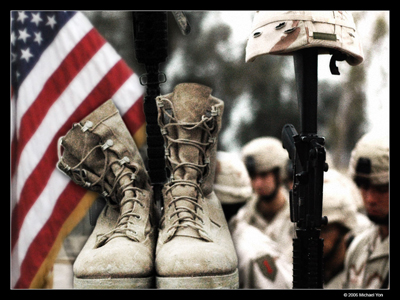
Memorial Day. The day we're supposed to honor our military and especially those who gave their youth for the defense of this nation. Many more gave their arms, legs, eyes while others gave their very lives. Today, we've turned it into the unofficial start of Summer; a times for opening swimming pools and cut outs. Some use the day to start planning their vacations. Yet, few take the time to honor our active duty military personnel, the retired or disabled veterans, or to visit veterans in VA hospitals, and especially to visit cemeteries and help to put flags or flowers of the graves of those made all the above possible; these are the real heroes who deserve to be honored.

Thus far, I've have lived to see the last of the veterans from the Spanish American War pass away; the last participant of the Battle of Wounded Knee, the last of the WWI veterans, and will likely see the last the WWII veteran who are dying at a rate of 3400 a week. Many of us will likely see the last of those who served in Korea too pass away too. Nevertheless, I have had the honor to meet several WWI soldiers, plus numerous WWII veterans; many in their 90's. A few were Japanese POWs, captured in the Philippines and forced to participate in the notorious Bataan Death March. I've had the privilege to know individuals who fought in North Africa; who landed at Normandy on June 6th, 1944; British veterans who survived Arnhem during Operation Market Garden; who fought at Bastogne during the Battle of Bulge, as well as countless individuals who fought in Korea and Vietnam, including former POWs, "tunnel rats", snipers, along with others who were awarded the Purple Heart..I had the privilege of meeting Paul Tibbets, the aircraft commander of the "Enola Gay" and was a "Volunteer Crewman" for the day on the famous B-17 bomber, the "Memphis Belle" while on static display in Memphis, Tennessee. I have come to know survivors of Nazi concentration camps and simply marveled at the resilience of the human condition. I've been lucky enough to get the unique opportunity to meet individuals who fought in Rommel's vaulted Afrika Korp in North Africa; who served in the Kreigsmarine aboard the ill fated DKM Bismarck, fought on the Eastern Front and survived the Battle at Stalingrad, who fought in the Battle of Berlin, as well as those who risked all to fight for Israel's independence in 1948. Their brief moments on the stage of history were often as humble as they were humbling to listen to. Amazing individuals all.

While I was in the Navy and just afterwards, I got to know individuals from the British Marines, the Canadian Navy, the US Navy's SEALs, as well as Army Rangers and Green Berets. I became friends with several individuals serving in US Marine Force Reconnaissance. I got to spend time with some of those who are now considered our nation's enemies and some who remain our allies, including air crews from Iraq, Iran, Saudi Arabia, Libya and Egypt as well as the Israeli Mossad and Shin Beth. Perhaps the greatest honor was attending the retirement of a certain Master Chief. This individual was straight out of boot camp when he arrived at Pearl Harbor on December 6th. He had hoped to spend some leave time touring the islands, but that wasn't too be as we all know what happened the next morning. He went on to complete 30 years active duty before transferring to the Navy Reserves. I met him on the day he was finally retiring and got to spend an hour with him before his discharge ceremony. I even got to met a former member of the Russian special forces, the Spetsnaz.

While the countries and circumstances may differ, but their commitment and professionalism doesn't. Despite the stereotype, no one wants peace more than the ordinary soldier, sailor or airman. What most people aren't aware of is that in the heat of battle, few admit to fighting for any vague ideals. Most will tell you that they fought for each other---the person to their left or their right. Friendships forged in the military are usually deep lifelong bonds. There's nothing quite like danger and the possibility of death that puts your life in perspective; to see and experience what your made of. Some have the mettle. Some don't. Few if any think about being a "hero"; most of those are dead. Instead, they focus on surviving. War knows no race, religion, gender, or sexual orientation. It knows only the living, the wounded and the dead.

Some people claim that war is Man's highest calling. We see Man's nature at its worse and at its most noble. Personally, I agree that war shows the depth and height of Man's duality. We are at once incredibly humane and caring while at the same butchers. Mankind is more often than not a cruel species. We are past masters in the arts of death. Even our holy books are full of bloodshed. Unlike most species, which kills to survive, we kill for the sport (and occasionally for food). We fight over the possession of land or mineral rights which ultimately returns to nature. We may fight over another individual's actions; actions that we have no control over and an individual whom we can never truly possess. We fight over possessions or money; both of which are only temporary given our limited life spans. We commit act of cruelty over religion without understanding the nature of God without even understanding the irony of our actions.

German Air Marshall Hermann Goring once said “Why of course the people don't want war. Why should some poor slob on a farm want to risk his life in a war when the best he can get out of it is to come back to his farm in one piece? Naturally the common people don't want war: neither in Russia, nor in England, nor for that matter in Germany. That is understood. But after all it is the leaders of a country who determine the policy and it is always a simple matter to drag the people along, whether it is a democracy or fascist dictatorship, or a parliament or a communist dictatorship. Voice or no voice, the people can always be brought to the bidding of the leaders. That is easy. All you have to do is tell them they are being attacked, and denounce the peace makers for lack of patriotism and exposing the country to danger. It works the same in any country.” This is what concerns me the most. Wars of today are not fought for concepts such protecting home and hearth, justice or human rights. Today's military actions are fought over control of resources, not for the salvation of a people or nation, but to improve some transnational corporation's bottom line. We wage wars and "police actions" in order to gain access to economic markets. We install and remove governments with equal ease as it suits the agenda of the 1% ; usually it's a military junta or other fascist regime with little to no concern about the people in the nation or region.

Today's "friend" or ally may quickly be tomorrow's enemy, depending on their economic usefulness and cooperation. If you have any doubts, consider this---since 1898, the US has actively overthrown or helped to destabilize some 35+ countries, including Syria, Iraq, Iran Turkey, South Vietnam, Brazil, Nicaragua, Indonesia, Cuba, Venezuela, Congo, Guatemala, or the Dominican Republic. Most, if not all these, were at the behest of a transnational corporation, while others were removed because the people of these countries elected an individual or political party that the US Government (and its corporate handlers) didn't agree with (usually a popular elected Democratic Socialist or Communist government). In return, we installed or provided support to a right wing military junta which usually resulted in the suppression of freedoms, murders or disappearances of millions, and the systematic looting of national treasuries and misuse of American taxpayer provided aid). Is it little wonder that the American Government (though not necessary Americans) is so despised throughout the world today or that no country has chosen to emulate the American form of government? I think the answer is quite obvious.

This brings me back to reason for this article. Our Founding Fathers warned us about becoming entangled in the troubles and tribulations of Europe (and I'm sure they would agree that this included the rest of the world as well). Our military was only to be used to protect America and its interests from invasion or harassment. It was not to used to enforce the desires and interests of transnational corporations to enhance their control or access to various global markets. Memorial Day should be the day when Americans reflect on those who fought and died for our nation and the preservation of freedoms in a world that is more hostile than most can imagine. We must also remember those who were wounded; they are still fighting their own personal battles. Those are our among our greatest heroes too. Finally, we should remember those who served this nation, be it by result of the draft or those who volunteered. We should be on guard against those who desire to "entangle" us in wars, conflicts, or police actions for the sake of profit. They represent a threat not just our nation, but to the legacy of all those who served our nation in the past and of those who are currently serving and to those who will serve in the future.

Lastly, for those who are "offended" at the sight of the American flag, be it on a tee shirt or flying from someone's home or in a
classroom, I urge you to visit the military section of any cemetery and thank each and everyone lying there in neat rows under their white crosses and Stars of David; who give their lives in order to protect your right to criticized, trample, burn or spit on that very flag and its ideals. Don't like cemeteries? No problem. Go to any VA Hospital and thank all those men and women who sacrificed their bodies or who are permanently scared mentally in order to secure your right to spew the hatred you have for this country and its symbols.


Suicide Rate Among Veterans and Active Duty Military Jumps
http://www.forbes.com/sites/melaniehaiken/2013/02/05/22-the-number-of-veterans-who-now-commit-suicide-every-day/