Showing posts with label Kurds. Show all posts

Friday, April 25, 2025

The Lessons of October 7th 2023: The Dangers of Religious Extremism and Intolerance

The horrific attack by Hamas on October 7th, 2023  has produced a ripple effect few anticipated. Israel has long enjoyed the support from the West and most of the rest of the world. It’s chief exception was the Communist Bloc of the Cold War and their client states, mostly in the Middle East. Yet, for some reason the unprovoked attack by an organization known for its brutal Nazi-like treatment of its own people and for committing mass acts of terror again mostly innocent bystanders, has had a rather strange, counterintuitive response.

To briefly recap, on October 7th, 2023, about 7000 terrorist on motorcycles, powered paragliders, small boats, attacked Israel at 119 points along and near the Israeli-Gaza border. Among the attackers was “Nukhba”, which are specially trained commando units of the Hamas military along the lines of Iraq’s Republican Guards, noted for the ferociousness and absolute dedication.

The attack, code named “Al Aqsa Flood” began with a launch of approximately 5000 rockets over 20 minutes into and along Israel’s border with Gaza (and another 1000 rockets launched during the attack). The assault wasn’t directed at  Israeli military bases as you would expect from a legitimate military operation.  Instead, it centered on small civilian, mostly farming, communities or “Kubutzes”  which were either unarmed or very lightly armed.

About 1,195 men, women, and children were murdered. Many were brutally raped (including children), beaten, tortured, and burned alive. The lucky ones were simply killed outright. According to Israeli and international sources, among those dead were 736 Israeli citizens and 36 children, 79 foreign nationals, and 379 members of Israel’s security forces consisting primarily of off duty members of the military, medical teams, police, etc.

The focal point, however, seems to have been on individuals attending a family oriented  “Supernova Sukkot Music Festival”  or simply the “Nova Music Festival”. There was an additional 378 individuals murdered along with 44 hostages taken (all told, there was a total of 251 hostages, of which 30 were children). The perpetrators, armed mainly with  hand grenades, handheld rocket launchers (“RPG”), and AK type assault weapons, was lead by the Al-Qassam Brigade, and groups of Palestinian civilians who were being egged on by the terrorists.

Other groups believed to have participated in the October 7th attack included the National Resistance Brigades, which is military wing of the Maoist Democratic Front for the Liberation of Palestine (DFLP), the Popular Front for the Liberation of Palestine (PFLP), a Marxist-Leninist organization, the secular Lion’s Den group, along with elements of other terrorist organizations including the Iranian backed Hezbollah, which operates mainly in southern Lebanon.

Following the attack, some 44 countries immediately condemned the attack (which some have referred to as blatant genocide against the Israelis) while many Arab and Muslim nations claimed that the attack was justified because of Israel’s continued occupation of Palestinian territory, which had taken following the 1967 “Six Day War” in which Israel defeated five Arab nations whose publicly stated intent was “pushing Israel into the sea”. The Arab forces were soundly defeated, and as a result, some 300,000 Palestinians and 100,000 Syrians were subsequently expelled from the occupied areas.

Hamas, however, claimed the attack was not just over occupied territory, but the continued blockage of the Gaza Strip (which Israel, along with Egypt, maintains in order to prevent further military material from entering the country), as well as the continued expansion of settlements into Palestinian owned land (which has often included personal property which has been in private hands for generations and blatant destruction of homes by the Israeli military with little or no warning as part of Israel’s “reoccupation” of the land).

Israel’s response to the massacre  was as swift as it was brutal. Approximately 50,810 Gaza Palestinians  have been killed while Hamas’s military strength has dropped from around 60,000 to just around 18,000 or less. Bear in mind too that Hamas, which is regarded internationally as an Iranian backed Sunni terrorist organization, typically uses civilians as shields. They often operate missile sites from schools, playgrounds, daycares, and hospitals. They regularly store weapons in private homes and businesses, while controlling nearly every aspect of life in Gaza.

 Although Israel regularly warns civilians in Gaza in advance of a pending response (unlike most countries), Hamas refuses to allow civilians to either vacate or to move their missiles and military hardware away from home, schools, or hospitals. The hits are recorded as “civilian targets”, making for good propaganda and public media events for the uninformed and an opportunity to discredit the IDF and Israeli government.

Foreign aid, which includes food, fresh water, medical supplies, as well as replacement parts for equipment, generators, heating/cooking oil, desalination pumps,  blankets, and so forth, are sold on the black market for weapons or cash, Sometimes they are rationed out to the populace in order to keep them in line (and staged photo ops for the foreign media). Meanwhile, Israel is blamed for so-called “Palestinian genocide” while their Hamas leaders enjoy luxury vacations throughout the region (Qatar, Turkey, and Egypt are favorite spots).

What’s most interesting about the attack on Israel by Hamas is the  backlash it produced which was totally unexpected. Instead of the usual support Israel has historically received, many nations, especially in Europe, and individuals, particularly among the college age youth, blamed Israel not just for the attack by Hamas, but also for intensity of their response and even accuse Israel of intentionally triggered a genocide of the Gazan people.  As an aside, this backlash hasn’t just been directed at Israel. It’s been aimed at the United States, which has traditionally supported Israel, Jews and anyone who supports Israel.  

In some ways it reminded me of the latter days of the Vietnam War when mainly young Leftwing anti-war protesters embraced Cuban revolutionary Ernesto “Che” Guevara and “Uncle” Ho Chi Minh, with their images showing up nearly everywhere. North Vietnamese and Russian “ Sickle and Hammer” flags were almost commonplace at nearly every protest.

Many of the youth were openly promoting Communist ideals (I suspect much of it had to do with tweaking the noses of the Status Quo as it did anything) while burning their draft cards. Nowadays, its Palestinian flag alongside  (ironically) the LGBQT+ flag showing up at protests while they go about illegally trying to block traffic and screaming at anyone who disagrees with them.  I wonder if anyone ever told them that the only way you ultimately change the Status Quo is with ideas and action, not by throwing temper tantrums?

Nevertheless, despite all the meaningless political rhetoric, the empty headed talking heads, the faux militants with the multicolored hair and nose rings, and the wannabe revolutionaries, I wondered if anyone has bothered to ask the people of Gaza what they thought? They are the ones being most affected. They deserve to speak for themselves. Afterall, it’s their opinion alone that actually counts.

When asked about Hamas, most Gazans describe the terrorist organization as “oppressive” (especially for women) and typically placing the interest of Iran ahead of theirs.  They blame Hamas’s attack on Israel for the carnage which has befallen them, while criticizing Hamas for not apologizing for the civilian deaths.

They claim that while Israel “dehumanizes” them, so does Hamas, which sees them as a tool to be used against Israel and the West. They do not accept Hamas emphasis on martyrdom, saying that they value life more. To Hamas and other Islamists the Gazans claim, Palestinians must die so that they can justify their existence.  Gazans point out that Leftist Arab groups and Islamists don’t like for Gazans to speak independently, preferring to control their narrative for them, using their voices to promote their agendas.

Just over 80% said they wanted new elections when the war was over. When asked who they trust to lead Gaza after the war, 40% of Gazans said they’d support  Fatah, the secular based party which currently governs the West Bank while just 6% would back Hamas (no real surprise when you understand that Hamas hasn’t allowed any free and open elections in Gaza since 2006).  When asked if their was a new election after the war, who would they support, the results were pretty similar. 47% said they’d vote for Fatah while again, just 6% would back Hamas. It’s worth noting that 53% of Gazans didn’t believe Hamas would be willing to form a unified national Palestinian government with Fatah.

When asked about the war, 84% said that Hamas should release all hostages.74% wanted an international organization to manage the Rafah border with Israel.  62% wanted to see a two state solution with Israel similar to what was originally proposed in 1948 but rejected by the Arab League. 19% thought a single state solution was the best option. Among Israelis, just 26% think a two state solution was still possible.

It’s worth noting that 74% said they didn’t think Israel was serious about ending the war. Afterall, Israel is winning. However, 20% thought that Hamas wanted to keep the war going as well.  Recent intelligence reports seem to confirm this assumption.

According to these reports, while Hamas had lost half of its original strength since 2023, there’s strong evidence that their recruiting efforts have been successful in bringing them back to near their pre-October 7th strength. Most of the new recruits are from countries with poor economic opportunities.

This bodes poorly not just for the people of Gaza and Israel, but the Middle East, Europe, Asia, and the rest of the world. Groups like Hamas are interested in just one thing---the utter destruction of Israel at any cost (followed by the annihilation of all Kefirs (Non-Muslims). After that, they can murder each over which sect---Shiite or Sunni---is God’s chosen religion of peace and tolerance.   

Iran, perhaps Israel’s moral enemy, has continued with its own nuclear program, allegedly with the intent of launching nuclear tipped missiles at its archenemy with the understanding that such an attack would result in an immediate response and the total destruction of Iran and its people. When involved in a religious war, ordinary lives are inconsequential. They wallow in the gore of war like pigs in mud.

Groups like Hamas, Hezbollah, ISIS, Al Qaeda, and dozens of others also understand this all too well. They  care little for the people they claim to govern. They are mere sacrifices intended for their alters of extremism, ignorance and unquestioned obedience. They bow their heads in prayer and profess to worship one thing when in truth what they worship is oblivion.

While the majority of Gazans no longer support Hamas, many fear that Hamas will retain control, and the killing will only continue. Helmed in on all sides, they’re trapped. ISIS and Al Qaeda are greedily building their own caliphates on the corpses of Syrian, Kurdish, and Yazidi dead.  In Iran, the ayatollahs are showing signs of loosening their grip on power but still remain strong enough and determined to lead the people to the apocalypse.  

There’s no question about their dedication to the cult of death, while we chose not to take them at their word. We like to pretend that somehow, they’re the victims. The Gazans and other Palestinians would disagree. So would the Iranian people and the Kurds, the Yazidis, and countless others of various religions, ethnic groups, gender, and sexual orientation.  You want to talk about intolerance and hatred? Well, here it is in one neat package with a noose for a bow.

 In 1948, just three years after the horrors of the Holocaust,  we thought they won’t come for a newly proclaimed Israel, yet they did. They refused the creation of a Palestinian nation too. Today, some 76 years later,  they still seek Israel’s destruction.  We thought they’d never come for Europe. They have. Europeans are increasingly minorities where they live. Many think they won’t come for Russia, India, Canada, Mexico, Bolivia, or China, but they will just as they will eventually come for us unless we stop  religious and political extremism, intolerance, and authoritarianism in all its forms.


Thank you for reading "Another Opinion", the Op/Ed blog page for the "militant middle".  Here at "A/O" we truly value our readers. At A/O we seek the facts as they exist, not partisan talking points.  We hope you find our articles informative and engaging. Comments are welcome, provided they are not vulgar, insulting or demeaning.  Another Opinion is offered without charge and is directed toward all independent and free-thinking individuals. We ask, however, that you "like" us on whatever platform you found us on in order to keep our articles available for free to others. Lastly, in order to keep costs down, we depend on passive marketing, and therefore, depend on our readers to please forward our posts along. Below you will find links to the sources we used in writing this article. Thank you. 


October 7 Hamas led attack in Israel


Al-Qassam Brigades


Nova music festival massacre


Six Day War


Casualties of the Gaza war


Gazans risk safety to share their criticisms of Hamas


What Gazans Really Think of the War, Who They Blame, and WhatThey Want to Happen Next


Has Palestinian’s perception of Hamas changed?


While Gazans Suffer, Leaders Live in Luxury


Hamas leaders worth $11bn revel in luxury---while Gaza’speople suffer


Analysis: Hamas has been hit hard by Israel, but is not outof Gaza


Saturday, February 17, 2024

A Race Based National Anthem? Gay Beer? Injecting politics into Sports and the Perils of Corporate Marketing in a 'Woke' Society


It used to be that the world tuned into the Super Bowl as much for the commercials and performances (especially during Half Time) as they did the games. Sadly, Sunday's showing proved that the NFL's entertainment drought continues, leaving viewers parched for some quality performers.

Of course, there's no shortage of performances to pick from, be it Janet Jackson's infamous "Wardrobe Malfunction", the Who's tone deaf performance, or this year's offering from Usher. However, there have also been some pretty spectacular shows too over the years such as the legendary Paul McCarthy and Prince performances.

One of the key problems is that in times past, there was a general equality of respect in the various musical genres, ranging from rock, to Motown, Pop, and Country. Nowadays, it seems that just one market segment is even considered. But like many others facing this country, there is a divide which seem ever more insurmountable. 

The NFL's selection of a very narrow band of performers does not appeal to the majority of fans, especially those who are willing to plop down the big dollars, either in the form of season tickets or one of the numerous viewing methods. If it wasn't for those fans, the NFL would quickly find itself  unable to keep paying out those multi-million dollars salaries to players, coaches. and administrative staff.  

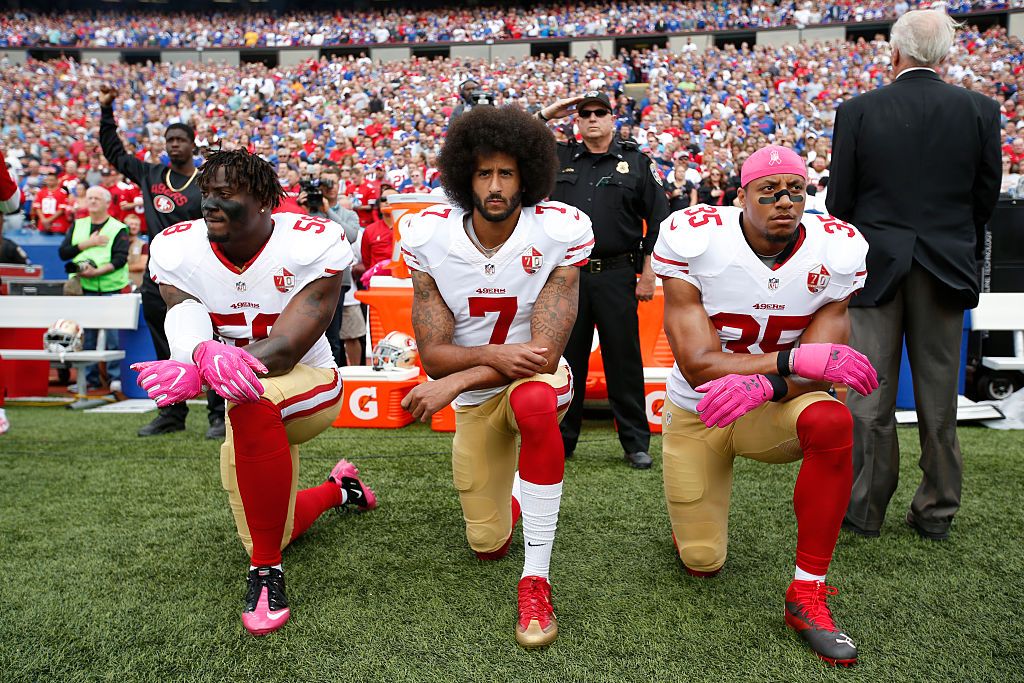
One seriously problem is the apparent growing willingness of the NFL to allow a measure of racism which it wouldn't tolerate from any other group. It originally began with a few players deciding to "take a knee" rather than stand for the playing of our National Anthem (the players claim it was a protest against racial injustice).

This relatively small clique, which revolved by then San Francisco quarterback Colin Kaepernick, had decided to interject their race based political beliefs into a sporting event.  The practice quickly spread into other sports venues, and down to high school and Pop Warner leagues (further proof that children and young adults often emulate what they see more so as a form of "hero worship than an understanding of issues).

The clap back  came swift and hard from the fan base. Fans made it clear that they were there to watch a sporting event, not attend a political event. This was particularly among law enforcement and veteran associations despite denials from the NFL to the contrary.  The general consensus was that if players want to make political statements, they should do it on their own time, not on that of the fans.  

The NFL lost nearly 1/3 of its viewership and took a hit of $8.1 billion dollars in revenue. Other sport leagues and associations face similar drops in the revenue. I imagine that whoever in NFL management who opted to do nothing about the kneel downs found themselves with a pink slip in hand fairly quick. No one take hits in the billions without heads rolling.

While the issue of "taking a knee" during the playing of our National Anthem, has largely faded from the public's mind along those responsible for triggering the movement, but it didn't end there. Not by a long shot.

Today we face another attempt to politicize  sports through the playing of the so-called "Black National Anthem" as the song, "Lift Every Voice and Sing" has been coined.  It's being performed increasingly at various professional sporting events around country, and as with the copycat kneeling, has begun to spread into colleges and Pop Warner games. More so, the media is often encouraging attendees to afford the same level of respect as the actual National Anthem.

The song, "Lift Every Voice and Sing" was a hymn written by NAACP leader James Weldon Johnson around 1900 and set to music by his brother, J. Rosmond Johnson. James Johnson, who was Chair of the Florida Baptist Academy, penned the hymn in honor of Lincoln's birthday. 

The hymn was written from the perspective of late 19th Century Black Americans as a form of thanksgiving and evokes imagery commonly found in Black Liberation theology of the Biblical Exodus story from enslavement to freedom.

It was pointed out that during the last Super Bowl game, attendees were urged to stand for the Black National Anthem, but not for the American National Anthem. Was that a one off mistake or was that intentional?  Later, leading Democrats were critical of the crowd for not standing enmasse.

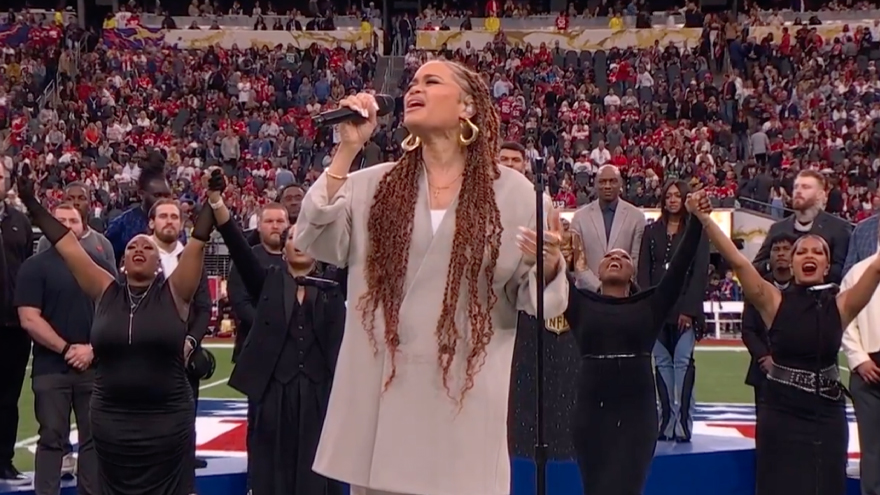
As an aside, when Andra Day sung the Black National Anthem, she was roundly booed by the audience which was audibly suppressed and downplayed by the media commentators while praising the NFL's openness.  Meanwhile, country music star Reba McEntire received a rousing round of cheers and applause in response to her rendition of the National Anthem (am I the only who thinks Reba looks like a caricature of a poor country mouse?)/

While the sentiment of the song is noteworthy, the question of whether a country can or should have two national anthems, especially one seen as promoting a certain racial segment of its society needs serious debate. It's not as if this is a choice between "America the Beautiful" and "If I had a Hammer".  This is especially true given how deeply divided America has become across political, gender, economic class, educational, and racial lines.

According to several surveys and polls conducted by Pew and Gallup, America has never been this deeply or widely split over  even basic issues since the decade preceding the America's bloodiest war, the Civil War. That war resulted in deaths of over 620,000 mostly young men. That's more than the Revolutionary War, War of 1812, the Mexican-American War, the Spanish American War, WWI, WWII, Korea, or Vietnam...combined!

Lately the public has shown a willingness to use economic and social media pressure to respond to bad corporate decisions. As mentioned earlier, the Kaepernick Fiasco resulted in the loss of $8.1 billion dollars in revenue not to mention ending a number of professional sport related careers.  

When Budweiser began its promotion of "transgender influencer" and TikTok personality, Dylan Mulvaney in 2022, "Bud" had long reigned as America's top selling beer and was especially popular at sporting events. It was even referred to as "blue collar beer". Anheuser-Busch, the maker of Budweiser, reported a quick kick in its most tender spot---its bottom line.

During the second quarter, from April to June 2023, its revenue dropped a numbing 10.5%, especially sales of Bud Lite. That reflected a loss of $395 million in North America sales.  Stores couldn't get rid of the stuff no matter how low it cut prices. Drinkers of the stuff saw Bud's promotion of the transgender activist as a not-so-subtle promotion of LGBQT values, and in particular, those revolving around transgenderism, which highly unpopular among conservatives.

Boycotters made it a point to frame their protests as a personal violation of their trust to their long standing brand loyalty. "Bud" had long been associated with conservative ideals . The fall out later spread to include Target and country singers Garth Brooks, Kid Rock and several others. But how different is this than the attempted boycott over Chic-fil-a's refusal to be opened on Sunday?  

Conservative musical performers, athletes, and event promoters dropped Budweiser product from the lineup (some of largest consumers of Bud also happen to be NFL fans). As a result, after being America's top selling brand for over 20 years, it was toppled by a Mexican lager, Modelo Especial, which is owned by the Belgium company ABInBev.  Think about that. A beer which had been accepted as the essential working class American beer being replaced by a Mexican brew! Meanwhile, Anheuser-Busch reported that two of their top marketing executives were place on a leave of absence.

Three current examples, which by themselves and perhaps at some other time would have captured nothing but dead air time. But other examples exist such as alleged "cultural appropriation" of hairstyles, types of jewelry, and clothing styles. Even the use of certain phrases can serve as a trigger event!  But, given America's deep division and hypersensitivity over nearly everything, should any of this  be considered a proper venue for corporate social responsibility?

Even after a year since the "brew off", profits and market shares at Budweiser remain down. Despite Wall Street's never ending chase for more market share and more profits at any cost, shouldn't we address whether boards of directors be giving the green light to delve into socially sensitive issues? Are they showing due diligence to their stake and share holders? 

On the other hand, there are those who believe that corporations have a unique "moral responsibility" when it comes to the environment and society. Does the ruling oligarchy still retain a sense of "noblesse oblige" to society? 

After all, there are corporations out here who have greater revenues than some countries, and thus greater resources for social change. Corporations are commonly typically more influential than any NGO. The top ten richest companies, if combined, would be the third largest financial entity behind the U.S. and China. Saudi Aramco generates more wealth than Italy, Brazil, Canada, and Russia. Apple's market capital is the size of Australia's GDP.

America, as most of its citizens have come to accept, is a neo-fascist corporatocracy managed by a relatively small handful of super rich oligarchs.  Corporate media serves as its mouth piece in ensure a continuous and unrelenting stream of propaganda promoting one agenda or another. But does Wall Street want to get into the "social reimaging" game?  The public has demonstrated that it can and will respond to the wrong message  just as quickly as to the proper one.

So, if we're to have a "Black National Anthem" being promoted as a substitute to our collective national anthem, will Corporate America give equal thrift to a "Hispanic National Anthem"? What about a Asian-American National Anthem or a Native American National Anthem? Then too (I have to ask), what about a European-American National Anthem? Maybe we should adopt corporate anthems like in the 1975 dystopian movie "Rollerball" (a similar theme was played out in the 1986 film "Rollerblade".

How will they respond to the growing population of Muslims without offending other religions or victims of Islam such as the Kurds or Coptic Christians? What about commercials which promote legitimate Muslim traditions or values but which also comes in conflict with Western values such as the role of women?

We saw the public's reaction over LGBQT when it came to a beer. What about race based holidays which have been adopted by government organizations and corporations? How should they be promoted going forward? Can some holidays be celebrated and not others? Many regional holidays pertaining to the Confederacy have already been forcefully dropped, not to mention the removal of statutes.  

Hispanics already represent the largest national minority and growing. Some studies indicate that American will skip pass racial parity with white Europeans and go straight into a Hispanic majority within the next two decades. How will Wall Street handle that transition without disrespecting other racial groups?

Corporations have worked long and hard to achieve control of our political system. Now it's going to have to face up to some of the same issues our Republic struggled with. The chief difference is that the public will have more arrows in quiver. Not only through boycotts, social media "shaming", internal protests, and challenges via stockholder meetings. Corporate America many caught itself in a trap of its own making in its quest for profit and control.


  If you enjoyed the article, please consider passing it along to others and don't forget to subscribe. It's free! Lastly please be sure to "like" us on whatever platform you use to read anotheropinionblog.com. It helps beat the algorithms and keeps our articles in circulation. Thank you!


Lift Every Voice and Sing


Democrats criticizes Super Bowl Crowd for not standingduring Black National Anthem


The Companies More Profitable Than Countries


Bud Lite boycott takes fizz out of brewer's earning


Behind the Backlash Against Bud Light


Garth Brooks' Bud Lite scandal takes to new turn


Saturday, May 21, 2022

Uneasy Bedfellows: Sweden, Finland, NATO and Putin


Sweden and Finland, two Scandinavian countries to Russia's northwest formally submitted an application to join NATO on May 17th in light of Russia's invasion of the Ukraine. Russian President Vladimir Putin had previously warned both nations of the potential danger they faced by joining NATO rather than remaining neutral, which many took as an not so subtle Russian threat.

While Putin doesn't directly oppose the move by Sweden or Finland, NATO's Musketeer-like pledge of "one for all and all for one", makes it clear that any incursion by one NATO member would result in an appropriate military response on all NATO members, or so says Putin. So, why would Putin approve Finland and Sweden's admission to NATO and not the Ukraine's?

NATO came into being just after the end of World War II in 1945 as a means to offset a newly expanded Soviet Russia into the Soviet Union with the addition of so-called "liberated" nations from Nazi and fascist control. Later, in 1955, they would transform into the Warsaw Pact, which was in response to NATO, which was created in 1949, and intended as a buffer from a potential invading Western coalition.

Several nations, Sweden and Finland among them, wanted to maintain as military neutrality between themselves and the USSR. This was in part to keep open historic trade relations with Russia and its partners similar to the 1956 non-aligned movement which included India, Egypt, Yugoslavia and 117 other countries which sought to maintain a economic balance between the West and the Soviet states.

That, however, didn't preclude Sweden at least for conducting restricted joint military games with Europe. In 2017, Sweden held the largest war games in 20 years jointly with NATO members. In anticipation of joining NATO, Finland has participated in limited war games with NATO. Previously, there was always the fear of irritating the Russian bear.

Such fears gradually decreased after the implosion of the Warsaw Pact in 1989 and then, Soviet Russia in 1991, along with continual trade and economic integration which had created the European Union. Now, with the invasion of the Ukraine, that fear has reasserted itself and turned into one of self-preservation and urgency.

However, Sweden and Finland may have to hang on together a little longer. Turkey, the second largest military member of NATO (behind the United States) and one of two Muslim nations in NATO's (the other is Albania, which is 60% Muslim compared to 99% for Turkey) is opposing the entry of Sweden, and to a lesser degree, Finland, into NATO.

Under the rules of admission, any one member of NATO can oppose entry of a nation into its ranks. Turkey's President Erdogan has said that he opposes admission of Sweden and Finland over "security" issues and support of "terrorist" groups. Specifically, he is referring to the support of Sweden and Finland of the PKK---the Kurdish Workers Party---which promotes a free Kurdish State and allegedly has killed tens of thousands (mostly Turks) since 1984.

In addition, both Sweden and Finland have used their clout in the EU to oppose arms sells to Turkey with the express goal of using those weapons to fight Kurdish rebels known as the "YPG" or Syrian Kurdish People's Defense Units, which is linked to the PKK. Lastly, Erdogan opposes Swedish sanctuary of Fethullah Gulen's followers after a failed attempt to overthrow the Turkish Government in 2016. Gulen is a radical U.S. based Muslim cleric.

Finland has been part of the EU since 1995. Its largest trade partners are Sweden, Germany, and United States. Russia, which is Finland's 6th largest trading partner, gets 12% of its imports. Russia accounts for 5% of its exports. Notable but not overly significant.

Sweden, also an EU member since 1995, exports just 1.2% of its good Russia and in return gets back 2.5% in imports, so any economic effects from Russian sanctions would be minor at best. Sweden's largest trading partners are Norway, Germany, the United States, Denmark, and Finland, with Russia ranked 15th (as an aside, China is 6th in terms of exports, at $8.4 billion while Russia receives just $1.2 billion in exports).

So, economically, neither Finland or Sweden is of that important, and there's no reason to expect NATO membership would preclude an change in trade between either country and Russia. If anything, it may provide an additional conduit for trade between Russia and the West in the event of expanded sanctions.

So, why Russia would accept NATO membership of Finland and Sweden but not Ukraine? Does the answer again go to national security just as Putin has maintained all along? As far as Moscow would be concerned, the addition of NATO troops, ships, and particularly missiles in Sweden and Finland, will make little difference. If truth be known, Russian military planners long ago accounted for Sweden and even Finland in their response calculations should a war break out with NATO.  To paraphrase an old adage I adapted, "if you're not with me, you're against me. The only neutrals are in cemeteries".

While Sweden shares no common border with Russia, Finland does with some 830 miles of mostly inhospitable mountainous terrain, bitter cold, and dense forests with Russia. With Finland, the majority of its population and industry are located within 25 miles of Helsinki, which accounts for 27% of its total population (Finland only has a total population of about 5.5 million, and just nine cities with populations over 100,000).   

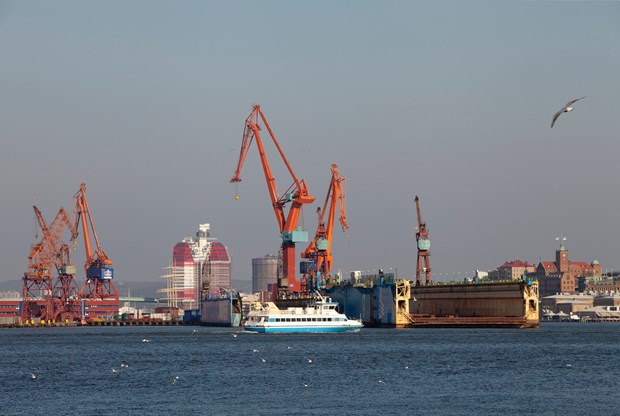
In Sweden's case, 85% of its 10.21 million population live in urban areas. About 3.3 million live in Stockholm and the surrounding metro area. The city of Gothenburg, Sweden's second largest city, has around 2 million, while another six cities have roughly 100,000 each.

Ukraine, on the other hand, has a 1,426 mile long border, which includes 199 miles along the Black Sea. Its land is among the most fertile in the world and it's moderately populated (both Russia and  Ukraine also share a similar language, history, and culture). Note too that Ukraine was occupied by the Soviets from 1922 until the collapse of the Warsaw Pact in 1989 before becoming independent in 1991. 

Russia's largest naval base since 1783 and home of the Black Sea Fleet is nearby at Sevastopol in the Crimea. It comprises an area of 334 square miles and a population of around 430,000 (when you add in surrounding towns and other populated areas, the total population jumps up to 510,000).

It's worth nothing that some military analysis believed that the Black Sea Fleet is the least prepared of the Russia's four main naval bases, ranking them in order of importance, Baltic, Northern, Pacific, and lastly, Black Sea. However, it is a key link between Russia and its ally, Syria. Then too, there's that matter of oil.

It was recently confirmed that the Black Sea shelf and the Azov Sea may potentially be one of the richest reserves in the world. Ukraine had, in fact, been quietly counting on acquiring full access to it and making closed doors deals with energy giants like Exxon, Dutch Shell, and BP (Europe receives approximately 40% of its oil and gas from Russia, with Germany---the EU's economic engine---getting 70% of its oil and gas from Russia), but then came the annexation of Crimea.

So, how much oil and gas are we talking about? Best estimates are 2.53 million tons of crude oil, 58.6 billion cubic meters of natural gas, and 1.231 million tons of natural gas condensate. That's more than enough to go to war for. It's estimated that Russia's annexation of the Crimea deprived Kyiv of some 80% of its energy potential.

If Russia manages to keep the four Donbass provinces as a result of the current war, it could possibly acquire most of the Ukraine's estimate 60 million tons of coal (90% of the Ukraine's coal lays in the Donets Coalfield, in the Donbass Region). While the Ukraine is rich in other natural resources, including gold, strategic metals, wood, and some of the most fertile soil on the planet, the loss of the Crimea oils and gas fields as well as the coal rich Donbass would severely hurt its energy needs.

Putin claimed the invasion of Ukraine was a matter of national security, and maybe it was, at least to a point. Putin didn't want NATO troops, artillery, tanks, and especially missiles on his border, and especially at the naval base in Sevastopol (even if it's a third rate base). He certainly doesn't want NATO surveillance staring him in the face.

But, it was the oil and gas of the Crimea which was key. And it's the coal rich Donbass region in the east that he wants. The war wasn't so much as a matter of national security as it is one of acquiring energy. In the near future it will be over the fertile soil like that of the Ukraine, strategic resources, and potable water elsewhere. Control of resources will the reason for all  future wars regardless of the "cause" assigned to it.

Since Sweden lacks a border with Russia and Finland's is so insignificant, Putin can use feigned indifference to their applications to join NATO. It doesn't hurt that Finland lacks oil and gas too. Otherwise, Finland's admission to NATO would be deemed a national security and denied just as in Ukraine. If Putin hoped to weaken NATO in his quest for oil and gas, he failed miserably.


If you want to know more, please take a look at the links below. If you enjoyed the article, please consider passing it along to others and don't forget to subscribe. It's free! Lastly please be sure to "like" us on whatever platform you use to read A/O. It helps with the algorithms and keeps our articles in circulation. Thank you!  


The leaders of Finland and Sweden say they will jointlysubmit their NATO applications


Finland and Sweden want to join NATO. Here how it works andwhat comes next.


Sweden's Top 15 Trading Partners


Finland's Top Trading Partners


Russia's naval base in Ukraine: Critical asset or point of pride?


Exxon and Shell win Ukraine oil bid


Energy in Ukraine


NATO chief sure spat over Sweden,Finland will be resolved


Fossil fuel companies are exploiting Russia's attack on Ukraine


Saturday, January 11, 2020

The Killing of Qassem Soleimani: Making the World Safer or Lighting the Fuse for WWIII?


I'll cut straight to the chase and right to the point. President Trump ordered the execution of a cold blooded terrorist. A man who was directly responsible for the murder of thousands of Iranians, Iraqis, Yemites, Afghanis, Yazidis, Kurds, and American servicemen and women as well as civilians. Iranian General Qassem Soleimani was involved in aiding the likes of ISIS, Al Qaeda, and Boku Haram.

They are responsible for the murder of hundreds, if not thousands, of Christians, Hindus, Buddhists, and even other Muslims, plus the kidnapping, rapes and selling of young women into slavery. The final straw for the U.S. was the murder of an American contractor, ordered by General Soleimani. From a moral perspective, the world is far better off by his removal. But is the world any safer? By removing this individual are we any closer to world or even regional peace?

There's no question that General Soleimani, who headed the Quds Force, part of the hard line Revolutionary Guards which serves as a cross between the CIA, the Joint Special Operations Command (JSOC) and Delta Force, was despicable; someone on the same level as a Tamerlane or Himmler. President Trump has received nothing but criticism, ranging from Speaker Nancy Pelosi and members of the Democratic Party to the print and electronic media to the talking heads on television.

Pelosi is miffed that Trump didn't tell her first about the pending attack. But then, President Obama didn't tell her beforehand about taking out Osama Ben Laden either and she was just fine with it. In fact, not only Obama, but George W. Bush had ordered the targeting of key ISIS and Al Qaeda leaders without alerting either Pelosi or Congress and everyone seemed okay with that. In fact, the media never said "boo" to either about it. Now why is that? My guess is that this is nothing more than an ongoing attempt at character assassination; of promoting public distrust of President Trump.

So, what was General Soleimani doing in Iraq on January 3rd in the first place (and at a public airport no less)? His presence there was supposed to have been forbidden by the Iraqis. Well, it turns out that he was there to meet with Abu Mahdi al-Muhandi, the deputy commander of the Iranian sponsored Popular Mobilization Forces, an umbrella organization overseeing the various pro-Iranian militias.

Al-Mudandi had arrived with a small convoy to meet with Soleimani and escort him to a safe location outside of Baghdad, presumably to coordinate plans for future terror attacks on pro-Western targets, including U.S. diplomats and military personnel. Al-Mudanhi and a driver were also killed in the attack. It should be pointed out that the drone attack which took out Soleimani came just days after a failed attempt to seize the U.S. embassy by pro-Iranian militias in Baghdad had ended (that attack was in response to an earlier U.S. air attacks killing 25 Hezbollah fighters).

In addition, under the direction of Soleimani, members of the Revolutionary Guards had seized or attacked several oil tankers in the Gulf of Hormuz, attacked a Saudi oil field, and shot down a U.S. surveillance drone (okay, that may have been justified). Pro-Iranians militias, operating through Quds Force, have also been active in Syria and supplying both Hezbollah in Lebanon and Hamas in Giza.

So now what? Well, in keeping with tradition, Iran responded. They withdrew from the agreement restricting their development of "nuclear reactors" (wink wink) which, to be honest, they've not been following anyway. They also launched a limited missile attack on two American bases in Iraq (no one was killed or injured). Heck, they've even raised their "red flag of doom" on the Jamkaran Mosque in Qom to signify a pending war (this is Iran's largest and most famous mosque).

Nevertheless, while their flag stills flies atop the mosque, Iranian Foreign Minister Javad Zarif said that "proportionate measures" have been taken and the matter is now concluded. He added that Iran didn't want any further escalation but would respond in self defense is provoked further. However, Iran's religious leader, Ayatollah Ali Khamenei, called the Iranian missile attacks a "slap on the face" of the U.S. hinted at possible, more "severe" attacks to come in the near future.

Iran has to be careful in its response. First, to overreact is to essentially admit that Western intelligence was correct about Soleimani's importance as the mastermind behind Iran's attempts to destabilize the region and export its brand of radicalized Islam. Iran, while acknowledging Soleimani as the head of Quds Force, has long denied any involvement in terrorism in the region. Their response must be measured; even downplayed. He must be treated a merely a high ranking general.

Secondly, despite American led sanctions, Iran depends heavily on its restricted oil exports to keep the economy going. Iran has close ties to Russia, China, and North Korea which has helped. So has its limited trade agreement with the EU (especially France, Germany and the UK), along with various Arab nations including the United Arab Republic (UAR). To engage the U.S. in a tit-for-tat conflict could easily disrupt Iran's current trade arrangements, which would plunge the country into an economic spiral for which it might not recover.

At the same time, a enlarged U.S. military involvement in the region could also trigger panic in the West and drive the cost of oil and gas to near record highs (some have predicted as much as $100 per barrel of oil). Despite having one of the strongest militaries in the Middle East, Iran wouldn't stand much of a chance against the U.S. However, Iran would be no Iraq. The Iranians are much better trained and equipped than Saddam's forces thanks to support from Russia and China.

In addition, Iran is the lynchpin in the "We Hate America and Israel" club. Muslims throughout the Middle East and elsewhere, while appreciating the removal of a despot like Saddam Hussein, resent the continued presence of Western forces in the region which is viewed as a "conquering force". They also disapprove of our continued support of Israel. A war could result in Iran being able to unite Muslims and turn it from a political/economic conflict into a religious one (and as any historian will tell you, religious wars are the most ruthless and bloody of them all. After all, you're murdering on behalf your god. How can you possibly compromise or surrender?).

I would expect Hamas and Hezbollah to attack Israel with weapons its stockpiled from Iran. Additionally, it would provide an irresistible opportunity for North Korea to act up as well with a possible attack against South Korea, launch missiles at Japan (which it hates as much as it hates us) or even Hawaii or U.S. territories like Guam or Midway. Who knows, maybe China would use U.S. preoccupation to retake Taiwan. After all, we can't be everywhere and with over 20 years of active military engagement, we're kind of pooped. Our military badly needs time to reset, overhaul equipment and replenish inventory. The burnout rate of military personnel is at record highs (as are suicides).

Lastly, there's home...our home, America. Although Homeland Security, U.S. intelligence agencies, members of Congress, and the media have long known but remained virtually silent on the point that there is the strong likelihood of the Muslim terrorist cells in the U.S and quite possibly Canada, the UK, Mexico, throughout Western Europe.

For that matter, Russia and China likely have terrorist cells as well. Both Russia and China have had ongoing problems with Muslim separatists. There are some 9.4 million Muslims in Russia; mostly living in the southwestern portion of the country. Russia's troubles with the Chechens started back in 1994 and is still going on, with thousands dead and no end in sight. China has been attempting to suppress the Muslim Uyghurs in the Xinjiang Province for a couple of decades now.

The Uyghur comprise almost 50% of the population in Xinjiang with large pockets throughout mostly western China, including the Hui, Kyrgyz, and Kazakh who are also mainly Muslim. Although no official numbers are kept, it's estimated that China has around 23 million Muslims---up to 2% of their entire population. However, the more pressure applied by the Chinese, the more they resist. Already, almost 1.5 million Muslims have been imprisoned in what Chinese officials called "reeducation camps".

A war or even a serious uptick in hostilities between Iran and the United States benefits no one. It would deeply affect not just the already fragile economy of Iran (and possibly topple their government), but further destabilize the region, and deeply affect the economies of Europe, the U.S. and the rest of the world. It could engulf the world in a asymmetrical war which could last decades and where there would be no winners.

It's even possible, if not likely, that the end result could be a nuclear war. At the very least, it could involve chemical and biological weapons regardless of any so-called "international prohibitions". I don't care what god you believe in, I can't imagine one who would want to see all of humanity either destroyed or reduced to subsistence conditions. We could only hope that aliens would come down and save us from ourselves.

But reality being what it is, this is about oil. It's about gas. It's also about its control and flow. As an aside, Iran had just announced the discovered of an new oil field capable of producing over 56 billion barrels of oil. Think that's a coincidence? The ruling Oligarchy is, as readers of A/O already know, all about the control of assets and resources, which, by the way, also includes us.

If they are unable to acquire control through normal business channels, then they will employ the resources of government, which they control, to achieve their desired consequences, backed by a media they also control, to manufacture a properly suited villain. Add a dash of nationalism, a pinch of fear and you've got yourself the recipe for a military "intervention". Whether it's called a "war of liberation", a "fight for freedom" or "spreading democracy", it's all about control and, of course, profit.

President Trump, whether you love him or loathe him, acted on the intelligence presented to him by his advisors and generals, along with their recommendations. Trump was and will always be a businessman. He's not an expert on foreign policy or military matters. Obama, with virtually no political experience and had been a local "community organizer" wasn't either. George W. Bush was a largely unsuccessful businessman and mediocre governor wasn't much better.

All three men acted on what others told them. This is where you'll find the ruling Oligarchy; the "Deep State". It lays within the system itself, which makes the situation all the more dangerous. We can only hope that those who advise the president, whoever that may be, are acting in our national interests with an eye toward preserving Humanity rather than towards short term power and wealth.

'Stick of dynamite in a tinderbox': Why General Qassem Soleimani was killed, and what may happen next

European Commission: Iran


Iran supreme leader says missile attack was a 'slap on the face' of the U.S. but it was 'not enough'.


Trump Says Iran Appears to Be Backing Down From Conflict After Overnight Strikes


Analysis: The different stages of Iranian support for ISIS


Saturday, November 16, 2019

Tying Up Loose Ends: A Last Word on Three Stories


Over the past several weeks, we've covered a wide range of topics, from the situation in Syria and the plight of the Kurds, to the vanishing middle class, and Kentucky's state races. However, we've not quite finished the stories, which were still pretty fluid at the time. Personally, I hate to be left hanging; not knowing what finally happened; the "coda" as it were. I guess that hearkens back to the legendary Paul Harvey and his famous "rest of the story" format (I loved to listen to Harvey back in the day). So, with this edition of A/O, we're going to step back and take a parting look at some of the stories we've recently covered.

Let's start with Kentucky's Governor race. As we left it, it appeared the Attorney General Andy Beshear (D), son of former Kentucky governor Steve Beshear, had narrowly defeated Governor Matt Bevin (R) by just over 5000 votes or a margin of 0.36%. However, Governor Bevin refused to concede, citing possible voting "irregularities".

As a result, Bevin called for a recanvassing. Speaking from personal experience, voting "irregularities" in Kentucky are more common than not, so I can't say I blame him. Nevertheless, if Bevin was expecting to see the gap needed to win close, he was mistaken. None of the areas in question (mainly in the sparsely populated counties of Eastern Kentucky) could account for the 5189 votes he needed to pull out a victory. On Thursday, November 14th, the recanvassing was completed and not much changed. Beshear had won and Matt Bevin was out.

Bevin had counted on President Trump's popularity to help him win. However, what he failed to take into consideration was that Trump had lost much of his popularity among Kentuckians since 2015. Since taking office, Trump's approval rating across Kentucky has declined by almost 25%. Still, he remains popular among large segments of the population, especially in rural Kentucky but not in the heavily populated urban centers like Louisville, Lexington, or even Bowling Green for instance.

Secondly, Bevin had been ranked as the most disliked governor in the U.S. earlier in 2019 (he rose one place, to 49th, in the third quarter). The moral of the story is that if the voters don't like you, attaching yourself to a more popular figure typically won't be enough. Bevin should have focused more his accomplishments such as increasing corporate investments in the state to $9.2 billion dollar; nearly two times the previous record set in 2015 of $5.1 billion, which translates into more jobs and an increase in the tax base. He fully funded the Actuarially Required Contribution (ARC), the first administration to do so for instance.

Instead, his opponent, Andy Beshear, set the tone by making the race about Bevin's "abrasive" personality. Like it or not, politics is a popularity contest. If voters have a favorable opinion of someone, be it their appearance or personality (it's called "relatability"), they'll likely give them their vote. If not, they won't, no matter how positive their record is. Yeah, it's pretty shallow and no way to elect representatives, but that's the way it is. The average voter rarely takes time to research a candidate's position on issues or their political record. I guess that's why those who promise the most seem to the best.

Earlier we took a look at America's vanishing Middle Class. As just about all of know, it keeps getting harder to make ends meet. We seem to increasingly have "more month than money". The gap between the rich and everyone has steadily been increasing for decades. According to an article in the May edition of Forbes, the richest top 10% control 70% of the wealth just in America, an increase 10% over the last ten years. Meanwhile, the top 1% controls over 1/3 of all the wealth. The article went on to say that the bottom 50% saw a net zero gain over the last 30 years.

In another article, this one from the St. Louis Federal Reserve, pointed out that in 1989 the top 10% controlled 42% of the nation's wealth. The middle 50% - 90% had the same--42%---and the poorest segment about 15%. In 2016 that had changed. The top 10% had 50% of the total wealth while the middle 50% - 90% had just 37% and the poorest shrunk to 13%.

America has gone from being a democratic or representative Republic to being a defacto Oligarchy, leaving us (for the time being) the illusion of choice when it comes to elections. America's political system is broken beyond "reform" (whatever that means). We need to end partisan controlled gerrymandering, impose term limits, and end "Citizens United" which gives "person-hood" to corporations while equating free speech with unlimited financial contributions (though it still caps what flesh and blood citizens can give), allow equal access of candidates and parties, as well as citizen referendums.

Here's an interesting aside to consider. As anyone who has run for office knows, it takes a lot of money to get elected. Money, after all, is what you need to buy name recognition and get your message out there. Without it, you might as well not exist. If you want to run for the U.S. Senate, you better have $10 million just to get in the game. Think a U.S. Representative may be a better way to go? Great. Count on coughing up at least $5 million. Hillary Clinton spent $1.4 billion in running for president and still lost.

Statewide elections can be just as expensive. In 2002, Texas millionaire Tony Sanchez ran to become the state's first Hispanic Governor. He spent $65 million dollars to unseat Governor Rick Perry...and lost. In the 2018 Illinois Governor race, Democrat Jay Bob ("J.B.") Pritzker raised $175.1 million dollars to his opponent, Bruce Rauner's $79.7 million.

In Florida's 2018 Governor's race, Republican Rick DeSantis raised just under $59,000,000.00. His opponent in the race, Democrat Andrew Gillum, raised $55,062,506.84. Many political consultants will tell you that unless you can raise at least $20 million dollars, stay away from the top jobs. Even the down ticket offices are going to set you back a pretty penny.

Thanks to Citizens United, corporations now underwrite these campaigns, backing the candidate they believe will best serve their interests...not ours. Once elected, their lobbyists ensure that politicians toe the line by "helping" write legislation, ensuring that certain bills get voted up or down, and funding reelection war chests (aka "Leadership" PACs) not to mention all sorts of indirect bribes. Once a politicians (or even senior staffer) decides to hang it up, they tend to become lobbyists, political consultants, or Wall Street executive, thus perpetuating the cycle. Who do we have to look out after our interest? Absolutely no one, and that's not likely to change any time soon without a fight.

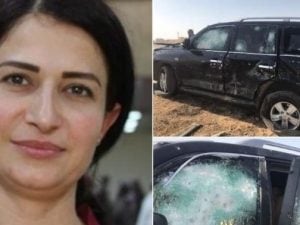
As you may have noticed, we haven't heard anything recently about the Kurds. When I last wrote about them in October, there was a ceasefire in place. The U.S. had withdrawn a small contingent of troops from Northern Syria in order to allow Turkish troops to freely invade the area and push back our allies, the Kurds, from the area. There was a real concern that prisons holding ISIS fighters and guarded by the Kurds, would be left unguarded, thus allowing thousands of dangerous ISIS fighters the opportunity to escape (which indeed happened at two locations). Also, pro-Turkish fighters were able to assassinate a popular Kurdish diplomat and peace advocate, Hevrin Khalaf, along with eight others in a ambush.

Nevertheless, the situation did create a unique opportunity for the U.S. military. With the pullback of the American troops and announcement by President Trump of a pending American withdrawal of troops, the head of ISIS, Abu Bakr al-Baghdadi, came out of hiding...albeit briefly. He had been long targeted by U.S. Special Forces who, it would appear, were just waiting for the right opportunity. That opportunity came on the evening of October 27th when members of the super secret Delta Force chased the ISIS leader into a cave outside of Syrian town of Barisha where, using a suicide vest, he blew himself up along with three of his children.

As for the Kurds, U.S. intelligence agencies (principally the CIA's Special Activities Division), confirmed that the Kurdish led Syrian Democratic Forces (SDF) provided essential intelligence information as to the movement of key ISIS leaders, including that of al-Baghdadi, as well as information regarding his compound and security. The U.S. State Department added that the attack was delayed briefly after President Trump announced the troop pullback ahead of the Turkish invasion of Northern Syria.

Nevertheless, SDF as well as the Iraqi Kurds, continued to provide highly credible intelligence deep from within both ISIS and al-Baghdadi's inner circle, once again proving their importance as valuable American allies in the region. Shortly after al-Baghdadi's death, the second in command and ISIS spokesman, Abdul Hasan al-Muhajir, was killed in an airstrike thanks to information provided by the Kurds.

As a brief aside, it should be noted that Turkey's President Erdogan has repeatedly stated that he considers Kurdish nationalism to be a greater threat to Turkey and the region than that of ISIS and a Islamic Caliphate. We need to bear this in mind given that Turkey, which is 98% Muslim, is a major player in NATO and a key economic trading partner with the European Union.

The Kurds having been living in the same area---northwestern Iran, northern Iraq, northern Syria and southeastern Turkey--- for nearly 5000 years. The majority belong to the Shafi'i sect of Sunni Islam, there are also enclaves of Christians, Shia Islamists, Yazidisms, Zoroastrianists, Alevists and Yarsamists. They have been the victims of countless purges, exiles, and genocide. However, I should point out that part of the land they've long claimed also contains some of the richest oil and gas reserves in the region, so this is much more than about mere "nationalism" or a homeland for a persecuted people.

While Turkey is mostly Muslim, it's also mostly secular with strong connections to the West. An Islamic State could change that. It would certainly destabilize Turkey and even possibly push it toward religious extremism. One could imagine how that would affect its role in NATO or as a reliable trading partner. Meanwhile, the majority of Kurds have been forced to move to safer territory in Northern Iraq as they have time and again over the centuries.

So that, as Paul Harvey so often said, is the rest of the story. As a writer, I felt it was necessary to put a final statement on each of these stories, which had been left open do to the ongoing nature of events at the time. You, the reader, deserve nothing less than the full story.


Kentucky Republican Gov. Matt Bevin concedes to Dem Andy Beshear in reelection bid


America's Humongous Wealth Gap is Widening Further


What Wealth Inequality in America Looks Like: Key Facts and Figures

Kurdish informant provided key intel in operation that killed ISIS leader Abu Bakr al-Bagdadi


Saturday, October 19, 2019

Ceasefire in Syria: Buying Time for the Kurds and the Region


There's a tenuous truce right now between Syrian, Kurdish, and invading Turkish troops. The truce and ceasefire went into effect on October 17, just days after US forces withdrew from the northern region of Syria, separating Kurdish forces and Turks massing on their eastern border. The ceasefire agreement came as a result of---or perhaps despite of---a October 9th letter sent to Turkey's President, Recep Tayyip Erodogan, and President Donald Trump in which he urged the Turkish President not to be a "tough guy" or a "fool".

President Trump went on to say that the U.S. could and would use economic sanctions to disrupt the Turkish economy, and closed with a promise to follow up with a phone call. Allegedly the Turkish president wadded up the letter and threw it into the trashcan. The letter was written the same day Turkish forces began crossing into northern Syria. Whether or not the letter was taken seriously or should have been worded more diplomatically, it appears to have had the desired result.

The Kurds, who were instrumental in the defeat of not just ISIS, but also in the downfall of Saddam Hussein, have had a long standing feud with the Turks, primarily over the issue of sovereignty. Part of the land occupied by the Kurdish people over the last 5000 years or so, includes eastern portions of Turkey, as well as part of northern Syria, northern Iraq, and western Iran.

Following the end of World War I and the collapse of the Ottoman Empire, the Kurdish people had been promised a independent homeland by the victorious allies (principally France and England who acquired the lion's share of the Middle East). However, just a few years later, that promise was broken and the Kurdish people were divided up between four newly created countries---Iran, Iraq, Syria, and Turkey---with a semi-autonomous territory called Kurdistan created in northern Iraq.

Meanwhile, the Kurds were subjected to purges and genocide. Turkey even refused to acknowledge the Kurds on the eastern border, referring to them as "Mountain Turks" instead, along with attempts to suppress their language and culture. In Iraq, Saddam Hussein wage a catastrophic war on the Kurds, including the use of nerve and saran gas attacks. Things weren't much better in Iran or Syria.

So why the invasion? An interesting question to be sure. Partly because a measure of stability has been re-established in the region with the defeat of ISIS. In addition, Syria, a long standing major Russian ally, is much more weakened militarily and economically because of its recent civil war with factions within the country (the U.S. was also looking at not just weakening Syria, but in toppling its president, Bashar el-Assad, in hopefully of a more pro-American government, which would deprive Moscow of a key ally in the region). In addition, it would allow the US an opportunity to put surveillance and perhaps ground forces close to Syria's border with Washington's archenemy, Iran. Perhaps this would give the Turks an opportunity to seize territory in northern Syria, as well as to get rid of the newly embolden Kurdish fighters and put an end to the idea of a independent homeland for the Kurdish people once and for all.

Another key factor is that the semi-autonomous province of Kurdistan sits on approximately 1/3 of Iraq's oil and gas reserves. Nothing in geopolitics gets more attention than the control and flow of oil and gas, which was a key factor in removing former ally, Saddam Hussein, who got a little too big for his britches with the invasion of Kuwait and it's oil production (as well as proximity to the Persian Gulf and their regional enemy, Saudi Arabia). Meanwhile, in Iran, the Kurds have been engaged in a "hot and cold" with whoever was in charge, for a independent homeland, especially since 1918. Since 2014, the intensity has increased to a much more "hot" insurgent war. Since 1946, there has been approximately 28,000 fighters killed, while from 1980 to 2000, around 30,000 civilians have died with no signs of easing hostilities.

President Erdogan alerted Trump on October 6th of his intentions to invade and requested that U.S. troops in the area be evacuated. Trump agreed, and the small detachment of soldiers and equipment were moved further south. What prompted Trump to do so, knowing full well that our Kurdish allies would likely be annihilated is unknown. At first there was a quip about the Kurds not "helping" us in World War II. I don't know if he was serious or not, but no one was smiling. The Pentagon and members of Congress on both sides of the aisle were quick to criticize Trump's decision. In the eyes of the world, especially the Middle East which places a very high value on trust and loyalty, this didn't go down well.

Now President Trump is trying to force the Turks back out of Syria and minimize any damage to the Kurds. However, damage has already taken place. Kurdish troops guarding captured ISIS prisoners have been forced to flee the area, leaving the battle-harden ISIS fighters (in at least one case, around 1000 ISIS prisoners were able to escape thanks to the Turkish backed Free Syrian Army).

In addition, a key Kurdish politician and women's right advocate, Hevrin Khalaf, along with eight others, were ambushed and murdered by Turkish supported rebels who oppose Syria's President Assad. Hevrin was secretary-general of the Future Free Syria Party and a key diplomatic figure in trying to find a peaceful settlement to the situation in Syria and the region. Thus far, approximately 38 civilians have been killed since the October 9th invasion began.

Trump's blunder is serious. It has damaged our image in the eyes of not just our friends and allies, but has also provided a strategic opening for our enemies. They will use this opportunity to show that the United States isn't to be trusted; that it's better to deal with them than an American government whose support ebbs and flows based on its current needs. It will be surprising if North Korea's Kim Jong-Il, Russia's Vladimir Putin, or China's Xi Jinping don't make use of this error in judgment.

Another factor is that while Erdogan has agreed to a ceasefire, he has not agreed to a withdrawal of Turkish forces. This may result in a potential Syrian-Turkish clash. Given the strategic importance of Syria to Russia, there's little doubt that Putin will not allow any attempts at seizing either territory or toppling the Assad Government. Given that Turkey is a member of NATO and an important trading partner of the EU, that will prove to be interesting, especially given that an attack on one NATO partner is viewed as an attack on NATO itself.

How will the other NATO countries respond if Russian troops are introduced en-masse in Syria? In addition, China is also a friend of Syria, supplying it with an array of weapons as well as economic trade (Russia and China are supporters of the Iranians as well). Meanwhile, Israel sits isolated with its back to the Mediterranean with Iranian back Hezbollah to the north and Iranian back Hamas to the south. Not a position I'd like to be in.

So where does that leave us? First, it leaves President Trump with mud on that orange face of his. He has to first find a way to protect our Kurdish allies while at the same time convincing our NATO ally to back out gracefully. He has to be aware of Russia's keen attention to the situation (as well as China's). I would suggest that he be sure to keep both in the loop and well informed of what we're doing. Any misstep could set in motion something no one wants.

Meanwhile, he has to allow Erdogan to save face, especially in the eyes of the Muslim/Arab world. Turkey is 99% Muslim (mainly Sunni), however, it's also very secular and tends to be Westward looking. That makes Erdogan vulnerable to Muslim extremists who would love to turn Turkey into another Iran. As an aside, it would prove to be interesting to see how NATO would deal with a extremist backed civil war in Turkey, especially one supported by Iran. The potential affect could devastate the world economy, especially in Europe.

Trump will have to also find a way to reestablish trust with our Kurdish allies. It's essential, particularly given that ISIS is down but not out in the region. The Kurds not only provided us with military or logistic support, they were major sources of military intelligence. Without them, we would have had a much harder time not just defeating Saddam, but also in defeating ISIS.

Now that Turkish backed groups are busy freeing ISIS prisoners, we can expect that they'll be back with a vengeance. You can expect a uptick in terrorist attacks throughout the region, as well as in Africa, Europe, and even in Asia which has a large Muslim population. Lastly, you can bet that they'll look for ways to strike the U.S. both overseas and domestically.

I generally like Trump. I like his pro-American attitude and willingness to challenge that corrupt bipartisan status quo which has taken control of the government. As I've written many times before, and as academia has verified, America is an Oligarchy. Our Republic is gone. All that's left is the illusion of what we once had similar to what ancient Rome experienced. Trump has shown the moxie to fight back.

Naturally, he's being fought tooth and nail every step of the way by Democrats and Republicans and their corporate owners. Whoever advised Trump to step aside and allow the Turks to invade either knew nothing of political realities of the region or intended to intentionally sabotaged him, knowing the potential outcome of what those actions would bring. I don't know which is worse. I know that control, be it of assets, resources, or us, is the name of game and that lives matter little to the Oligarchy.


Turkish Backed Forces Are Freeing Islamic State Prisoners


Kurdish politician, other civilians 'executed' by Turkey-backed group