Showing posts with label WWIII. Show all posts

Friday, June 27, 2025

Did We Do Right By Bombing Iran?

What’s your opinion about the United States bombing three nuclear sites in Iran? Did we have a national security or moral obligation to destroy Iran’s nuclear facilities and try to disrupt its potential nuclear bomb making capabilities? Was there an ulterior underlining motive? To address those, and other questions, we need to take a brief look back at the history of Iran and its relationship with the United States.

In 1953, the Prime Minister of Iran, Mohammad Mosaddegh, was overthrown via a CIA orchestrated coup (with the help of British Intelligence, MI6), under the direction of Kermit Roosevelt Jr, a intelligence officer with the CIA's Office of Policy Coordination, and grandson of President Theodore Roosevelt.   

Roosevelt had previously helped orchestrate the 1952 coup in Egypt with the Free Officers Movement to topple King Farouk. The movement was led by a small cadre of Egyptian and Sudanese officers and was led by Abdel Moneim Abdel Raouf, and included such future notables Gamal Abdul Nasser (who became close friends with Kermit Roosevelt), Salah Nasr, and Abdel Hakim Amer.

Mohammad Mosaddegh had been appointed prime minister by the democratically elected Iranian Parliament (the “Majlis”). He had also co- founded the National Front, a Left leaning pro-democracy, secular, and Iranian nationalistic political party. They also implemented a number of land and tax reforms aimed at helping the lower class.

Amid a period of political unrest, assassination, and emerging religious extremism, Mossadegh sought to maintain power and improve Iran’s economic stability by nationalizing its burgeoning oil and gas industry, beginning with the Anglo-Iranian Oil Company.

Eventually, following a series of constitutional crisis events, which included the Shah fleeing to Italy out of concerns for his safety, Mossadegh was forced to align himself with pro-Soviet factions (despite strongly disliking the Communists). This was all the CIA and MI6 needed. The result was an overthrow of his government (and future suppression of the National Front) under “Operation Ajax”.

The result was the installation of a much more pro-Western government under the direction of  CIA recommended General Fazlullah Zahedi as the new Prime Minister. Among the many changes implemented by Zahedi was ending nationalized oil and gas production and returning control to British, French, and American oil companies.

The CIA also organized guerrilla groups to disrupt pro-Communist groups. In addition, the CIA also directed Major General Norman Schwarzkopf Sr. (father of “Stormin Norman” of Gulf War fame) to Italy and “encourage” the Shah to return to Iran. He also helped organize and train Iran’s new security service, SAVAK, in order to help the Shah maintain power (in time the SAVAK would develop a reputation similar to Stalin’s NKVD which eventually became the KGB).   

All went well between the West and Iran until 1979 when Shah Reza Mohammed Pahlavi was overthrown by a small group of religious extremists led by the exiled cleric, Ruhollah Khomeini (incidentally, who was also named Time magazine’s “Man of the Year” in 1979) and was described as the “face of Shia Islam”.  He was later to be named the supreme leader in Iran and given the title of “Ayatollah ”, an honorific title of the “Twelver” Shia sect which was to become Iran’s official state religion (95% of the world’s Muslim population is Sunni, however, Iran is 95% Shia). He was also credited with labeling the U.S. as the “Great Satan” and Israel as the “Little Satan”.

Although the U.S. wasn’t happy that their man had been thrown out of power and forced to flee the country (he was given asylum in the U.S. for health reasons), what really irked the U.S. government was the seizure of 66 Americans, which included diplomats, civilian personnel, and a small security detail U.S. Marines, along with the U.S. Embassy itself in a series of assaults by the Muslim Student Followers of  the Iman’s Line, not to mention instigating hostilities with the CIA’s man in Iraq, Saddam Hussein which ultimately led to the Iran-Iraqi War.

The Iranian Hostage Crisis lasted from November 4, 1979 until January 18, 1981. During that time, then President Jimmy Carter made numerous unsuccessful attempts to resolve the situation. In October 1980, Carter authorized a rescue operation (euphemistically named “Operation Eagle Claw”) which was an all-around disaster and national embarrassment, representing a political, military, and intelligence blunder. Eight servicemen were killed and four were injured amid several mechanic failures and crashes.  

Largely forgotten today, there was also an attempted attack on the U.S. embassy in Pakistan by over 1000 pro-Iranians protestors and an aborted attempt to seize the Soviet Union’s embassy for its “Marxist and anti-god beliefs”.  Some U.S. embassy personnel were able to evade capture and hide in a Canadian embassy before being able to escape through an ingenious CIA ruse popularly called “The Canadian Caper” (a 2012 movie entitled “Argo” details this secret rescue operation).

Meanwhile, the Iranians made numerous threats about the imminent execution of the hostages unless the U.S. agreed to a number of demands (essentially blackmail), including the return of the Shah to face trial and probable execution (which was refused). The Iranians ransacked the American embassy, revealing great many political, diplomatic, and intelligence secrets. Finally, after 444 days, and the election of Ronald Reagan, the hostages were released (this was seen as a calculated insult directed at Carter for the attempted rescue operation).

Ever since, The U.S. military and intelligence community has been looking for a way to overthrow Iran’s theocratic regime. Accordingly, Iran has been ostracized, boycotted, and even had billions of its dollars held in U.S. bank accounts frozen, The result had little effect on Iran’s ruling elite although, as usual, the average Iranian felt the brunt of the embargos. Much of the money was ultimately returned. President Obama approved releasing $400 million in August 2016 and President Joe Biden released $6 million in September 2023 for "humanitarian purposes".

 Meanwhile the Iranian government helped organized, train, and finance numerous terrorist organizations whose sole intent was the destabilization of the West (especially the U.S. and Israel) as well as specific Asian nations by any means possible with the ultimate goals being creation of a global caliphate under their version of extreme Islam.

Key among these groups was Hamas, responsible for the October 7th attack on Israel which resulted in the butcher of over 1,139 men, women, and children. as well as seizing 251 hostages. They are also responsible for keeping the Gazans living in a state of terror. Hezbollah is another such group, which routinely launches missiles into Israel from Southern Lebanon.

 Boko Haram, who are known for their raids on African villages to capture women and girls to sell as slaves and butchering non-Muslims. The Houthi, who operate in Yemen, regularly launches missiles into Israel and is active in destabilizing the region. Of course, there is also ISIS, Al Qaeda, and Talban, who received support from the Iranians.

It’s believed that Iran has sponsored establishing sleeper terrorist cells in Europe, Canada, South America, and the United States, and is responsible for the hoard of immigrants into Europe (conquest through numbers?).  It’s been often noted that many of these so-called “migrants” are very fit, aggressive military age males, which isn’t typical of the average refugee (also notable is the lack of women, children and seniors accompanying them).

It should be mentioned that starting with the Ayatollah Khomeini, they have repeatedly promised to “wipe Israel off the map” by every means available, including the use of nuclear weapons, even if it meant their own total destruction. They have been responsible, directly or indirectly for attacks in Paris, Berlin, Tel Aviv,  and “lone wolf” operations in the United States and elsewhere as well as dozens of so-called “self-radicalizations” terrorists.

However, resistance has been growing, especially in Iran where women, long denied basic rights to education, employment, choice of marriage, physical mutilation of their genitalia, political suffrage, have been becoming more militant to their suppression, even to the point of risking death. It’s common for resisters to be blinded in one eye, tortured, suffer broken bones, face mutilation such has having their tongue, nose or ears cut off, or have acid thrown in their faces, and so forth. As an aside, this is, in part, those who back the Iranian regime or radical Islam are supporting.

Despite U.S. and Israeli warnings, Iran has been engaged in the development of a nuclear infrastructure, which they claim is for "energy purposes" only (and yet they sit on some of the world’s richest oil and gas reserves). Taking Iran’s threats seriously, Israel has done everything it could to deter Iran’s efforts overtly and covertly (I’m particularly impressed with the massive computer virus and the exploding cell phones of Iranian nuclear scientists. Bravo Israel! Very clever).

However, despite their best efforts not to provoke an all out war, Israel had little realistic options remaining except to go after Iran’s reactors. It’s noteworthy at how many countries, including those inside the United States, who turned on the Israeli government following the barbaric attack by Hamas on Israel or Hamas’s use of private homes, schools and hospitals to launch their missiles, store weapons, and hide some of the hostages it taken on October 7th (including a tunnel system under a EU hospital!).  

 Hamas has repeatedly attacked or hijacked relief columns of food, fresh water, and medicine, often selling it on the black market for either more weapons or to fund expensive vacations for Hamas leadership. Europe, especially Germany, long been an allies of Israel, now accuse the IDF of doing what Hamas is guilty of. Turkey, an EU and NATO member, even hinted at a possible direct intervention in Gaza. How would that affect NATO's mutual defense clause? Would that plunge NATO into war? 

Finally, this brings us to the bombing of Iranian nuclear facilities by U.S. bombers. Did we have a moral or political obligation to attack those sites? Every U.S. military intervention in the Middle East, from Lebanon, Kuwait, Syria, Afghanistan, and Iraq, regardless of the officially stated reason, has had the secondary goal of bringing us a little closer to Iran.  Was this then just an opportunity to strike Iran after all these years or was it, as President Trump said, an opportunity to make the world a little safer?

According to polls, most Americans opposed the bombings. A poll by The Hill showed that 56% of Americans in general disapproved of the bombings although 82% of Republicans were in favor. However, 60% of Independents (America’s political majority) weren’t happy with the bombings along with 88% of Democrats. 78% of Americans were concerned we will get drawn into a war with Iran.

Additionally, 71% of Democrats said they didn’t trust Trump to make the right decisions on behalf of the United States when it came to Iran.  62% of Independents said they had little or no confidence in Trump's decision ability. On the other hand, 51% of Republicans confirmed that they had a great deal of faith in Trump while 37% said they had a moderate amount of confidence in the president.

 It bears mentioning that prior to the current ceasefire, 59% of Americans in general thought that our attack on Iran actually made it more of a threat to the U.S. and the world. Many were concerned that our attacks might provoke Iran to launch more attacks on Israel either directly or through its many surrogates as well as possibly activate imbedded terrorist cells in Europe, Canada, or the United States.

Finally, there’s Israel itself. Aside from being the only democracy in the Middle East, it is also an important trading partner and a vital source of intelligence information in the region. It also provides a key strategic position for U.S. and allied operations in the Middle East and Africa. Iran has made it crystal clear that it intends to wipe Israel off the map even at its own destruction and there's no reason not to take them at their word. 

Such a fallout would trigger a dire humanitarian crisis regionally as well as globally. Israel’s beef with Iran is direct and personal. The outcome of Iran’s boast would have a severe impact on the rest of the world, not to mention on Humanity as well, which Iran and its cohorts abhor. A nuclear Iran is not just a threat of the survival of Israel. It’s a threat to the survival of Mankind too.


Thank you for reading "Another Opinion", the Op/Ed blog page for the "militant middle".  Here at "A/O" we truly value our readers. At A/O we seek the facts as they exist, not partisan talking points.  We hope you find our articles informative and engaging. Comments are welcome, provided they are not vulgar, insulting or demeaning.  Another Opinion is offered without charge and is directed toward all independent and free-thinking individuals. We ask, however, that you "like" us on whatever platform you found us on in order to keep our articles available for free to others. Lastly, in order to keep costs down, we depend on passive marketing, and therefore, depend on our readers to please forward our posts along. Below you will find links to the sources we used in writing this article. Thank you. 


 Free Officers movement (Egypt)


Kermit Roosevelt Jr.


Iran hostage crisis


October 7 Attacks


The Canadian Caper


56 percent disapprove of U.S. strike on Iran: Survey


Voters 51 – 42 Percent Oppose U.S. Joining Israel inMilitary Strike…


Islam in Iran


Nuclear facilities in Iran


Thursday, March 06, 2025

Trump Getting Real with Zelensky: Find Peace with Russia or No More Money


Much has already been made of the heated meeting between President Vladmir Zelensky of Ukraine and President Donald Trump and Vice President  JD Vance.  President Trump, in effect, told Zelensky to make peace with Putin or he was taking away the keys to Ukraine’s war machine…and put a damn tie on where he’s at it!

Zelensky seems to believe that with U.S. financial backing, he will be able to stalemate Putin virtually indefinitely, perhaps even in the long run, obtain NATO membership. That’s something Trump opposes. Putin has attempted several overtures at peace, which Zelensky has essentially blown off like, and why not? He’s got the biggest bully in the world in his court, the United States.     

Trump used the meeting to make a very public statement to Zelensky, the people of Ukraine, to Putin, and to the world---no more money, no more armament and no mineral deal until Zelensky puts on his big boy pants and can set down for a serious discussion about peace with Russia, otherwise we walk, and he can deal with one very angry Russian bear.

 NATO, which also heavily depends on the US, can do as it pleases, but the US needs to set this one out thank you very much should they continue to poke the bear (and kudos to Italy’s Prime Minister, Georgia Meloni, for rejecting UK-French plan to send European troops to Ukraine). It’s one thing to come to the aid of ally being attacked, but when they bring it on themselves, maybe a lesson in “told-you-so” diplomacy is in order.

Putin, on the other hand, has committed much of his military to what amounts to a slow bleed of Ukraine’s economy and military. His has activated antiquated weapon systems (such as outdated tanks) and even employed North Korean troops in what amounts to a ”fight for food” deal for the bankrupt Communist state.

The only sensible reason for Putin to do this is one of taking a measured stance against Ukraine. Putin didn’t start the war. Zelensky and NATO did (with a little help from a former president’s son looking to score a big financial payday). Putin has been consistent his insistence that NATO missiles and armament will not be deployed along his border with Ukraine. Zelensky and NATO thought that by playing the U.S. card, Putin could be intimidated. That wasn’t going to happen

Putin is not a spineless leader of the sort that Europe has produced in abundance lately (for an example, look at their immigration disaster and its effect on crime and their culture). Putin is very intelligent. He was a senior KGB officer. He doesn’t bluff. Unlike European leaders, he doesn’t care if you call him names.  However, since the fall of the USSR and Soviet Russia, their leaders, starting with Mikhail Gorbachev, have tried  once again to build bridges to the West.

Ever since the days of Peter the Great, Russia has wanted to join with the West and act as a bridge between East and West. At one point,  they even asked to join NATO and was rejected out of hand and perhaps justifiably so. With the end of the Cold War, there had been a lot of talk about dismantling NATO.

Therefore, NATO’s justification for its continued existence depended on having a bad guy and that bad guy is Putin. It’s also why many neo-cons and policy gamers are anxious to start a new Cold War. War is profitable---cold or hot. It bears mentioning that the establishment of the Warsaw Pact came about only after the creation of NATO and then with the intention of being a defensive deterrent, presumably against the same military and industrial complex President Eisenhower spoke of in his 1961 “Farewell Address to the Nation”.   

In 1990, as the Warsaw Pact nations began to fall, Secretary of State James Baker informed Soviet Foreign Minister Edward Shevardnadze (in the presence of Gorbachev) that once the unification of Germany was complete, NATO had no intention of advancing “one inch to the east”, and yet within ten years, that’s exactly what happened. Gorbachev saw it as a time to restart and one of openness or as he called it, “Perestroika”. As Gorbachev said at the time, “we are duty bound to learn to live in peace”.

One by one, the former Warsaw Pact countries of Poland (1999),  Hungary (1999), Romania (2004), Czechia (1999), Bulgaria (2004), the Baltic states (2004), and so forth were admitted into NATO, and each time Russian leaders protested through all the proper international channels and were ignored.

At first, the Russians were assured there would be no more, until there was. But each time a country joined, NATO missiles were deployed all along their border. As a result, Russia was slowly helmed in. It would be like Russian missiles being deployed along our southern border, first in the numerous Caribbean islands one by one, until finally, in Mexico along the Rio Grande.

What if the Russians started deploying missiles along the Canadian border just like what happened after Norway and Denmark joined NATO in 1949, Finland in 2023, or Sweden in 2024.   How would you expect Washington would react?

Actually, you don’t even have to imagine. That was what the 1962 Cuban Missile Crisis was all about. It was Russia’s response to U.S. nuclear tipped intermediate range “Jupiter” missiles previously being deployed in Turkey (which had joined NATO in 1952).

Amusingly, then Soviet Premier Khrushchev would walk visitors to his vacation home on the Black Sea to the balcony and hand them  a pair of binoculars, asking “what do you see?”. They typically replied, “I see the sky” or “I see the water”. He would then look through the binoculars and bellow “I see American missiles in Turkey aimed at my dacha!”.

It seems that everyone knew that a NATO presence in Ukraine would be the straw to break the bear’s back, yet they expected Putin to do nothing but grouse and saber rattle like the West does, but that didn’t happen. Putin secured the Crimea, which has been a Russian possession since 1783 when it was annexed by Catherine the Great. It has a majority Russian population. Strategically, the Crimea is the home of the Russian Black Sea Fleet, at Sebastopol, which is their version of our naval base in San Diego.

Russian is taught in its schools and it’s the common language of its people. It was followed by a plebiscite, asking the citizens whether they wanted to remain apart of Russia or the Ukraine. The overwhelming majority said “Russia”.

But this had nothing to do with the history of the region, the will of the people, national sovereignty, or even the long standing presence of the Russian military in and around Sebastopol. This was about oil and gas, which had been discovered in abundance in the Black Sea, and western oil companies wanted it.

In addition to large reserves of oil and gas, the Ukraine has vast deposits of key minerals, much of it in the disputed Donbas Region which is occupied by Russian troops. The deal President Trump was willing to sign with President Zelensky would have allowed a U.S. presence in the Donbas (technically still belonging to Ukraine) to mine for deposits valuable minerals, with each country splitting the processes 50/50. It would enable the Ukraine to begin paying the U.S. back some of the billions it owes us in aid, retain Ukrainian soil, and help Ukraine to rebuild its infrastructure.

In addition, it would be an incentive for Putin’s troops to either withdraw from the areas being explored and mined, or perhaps even pull back altogether. After all, Putin doesn’t want to kill or injure U.S. civilians at any cost. It would serve as a de facto “economic buffer zone” without the need for a single pair of U.S. military boots on the ground and each side wins.

However, Zelensky needed to agree to a peace talks with Russia, and that’s where he has repeatedly dropped the ball. When it comes to power politics, Zelensky is out of his league. He’s a standup comedian turned politician unlike others who are politicians turned fools.  Accordingly, he got a dressing down in his meeting with Trump and Vice President Vance. He was put on notice that the U.S. would not finance his war with Russia indefinitely or for free.

Even during the early stages of WWII, before the U.S. was directly involved, Prime Minister Churchill gave the U.S. 99 year leases to bases on their island possessions in the Caribbean as a “down payment” and “thank you “ to all the war material and economic support we provided to England under the Lend Lease Act of 1941 (the act also extended to the Republic of China, France, the Soviet Union and other allied nations).   As of 2024, we have given Ukraine $174.2 billion dollars in aid (military and otherwise) while the European Union has given about $18 billion.

President Trump announced during his speech to Congress on March 4th, that he had received a letter from Zelensky finally agreeing to sit down with Putin and hammer out some sort of peace deal. It may not be entirely to Zelensky’s liking, or that of Putin’s, but it will mean no more killing on either side and ending the destruction of Ukrainian cities and villages.

In addition, President Zelensky said in his letter to President Trump that he was still willing to sign the minerals agreement, which would be a good thing for the Ukrainian economy. Ukraine is a country with vast untapped economic potential, from the oil and gas reserves it does control, to its timber and mineral wealth, and it possesses the most fertile soil in Europe and quite possibly the world. (hence the moniker “breadbasket of Europe”).

This was also an education of sorts for Zelensky about what Otto von Bismarck called “Realpolitik”. Never disrespect your benefactor or take them for granted. By that, don’t show up in casual slacks and t-shirt and “knock-around” boots to meet the leader of a world power and expect to be given a virtual blank check for a never-ending war without a plan to pay them back.  America isn’t your ATM. Show some humility. Even Churchill arrived dressed to the nines with hat in hand and he offered at least island leases!  


Thank you for reading "Another Opinion", the Op/Ed blog page for the "militant middle".  Here at "A/O" we truly value our readers. At A/O we seek the facts as they exist, not partisan talking points.  We hope you find our articles informative and engaging. Comments are welcome, provided they are not vulgar, insulting or demeaning.  Another Opinion is offered without charge and is directed toward all independent and free-thinking individuals. We ask, however, that you "like" us on whatever platform you found us on in order to keep our articles available for free to others. Lastly, in order to keep costs down, we depend on passive marketing, and therefore, depend on our readers to please forward our posts along. Below you will find links to the sources we used in writing this article. Thank you. 


  Zelensky vows to ‘make things right’ with Trump and negotiate peace


How Gorbachev was misled over assurances against NATO expansion


4 Lessons to be learned from Zelensky’s White House Meeting


What they said: Trump, Zelenskyy and Vance’s heated argumentin the Oval Office


NATO Members


Russo-Ukrainian War  


Controversy regarding the legitimacy of eastward NATOexpansion


Lend Lease Act


EU Assistance to Ukraine (in U.S. Dollars)


No suit, no lunch, no respect: Zelenskyy-Trump feud startwith a fashion dig


Friday, October 07, 2022

The Nord Stream Pipelines: The West vs. Russia Again

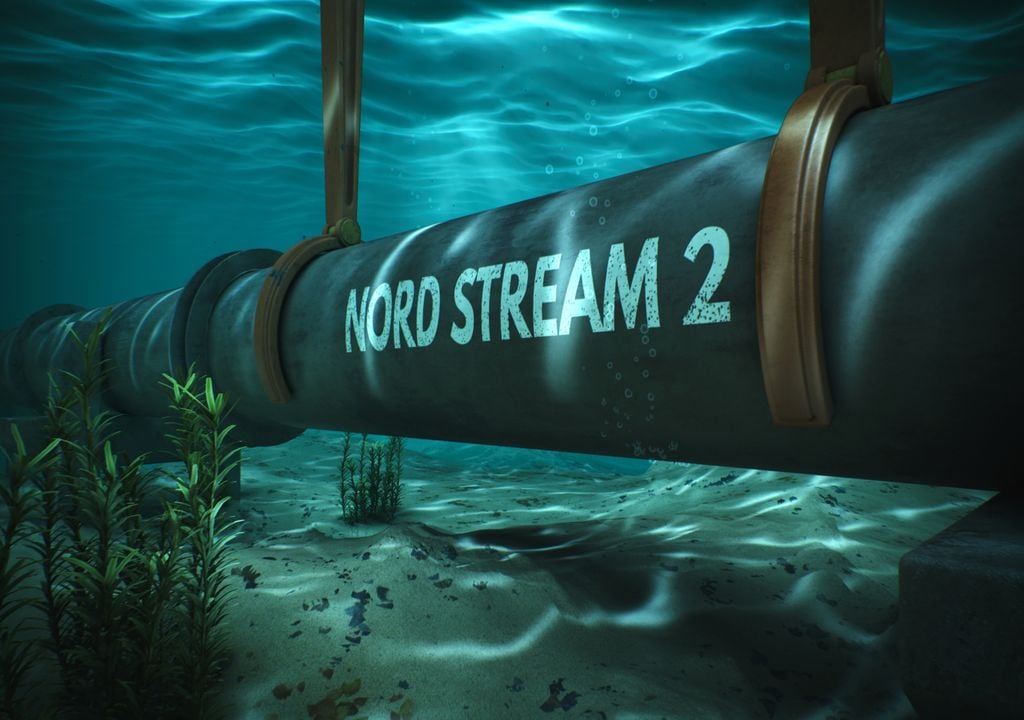
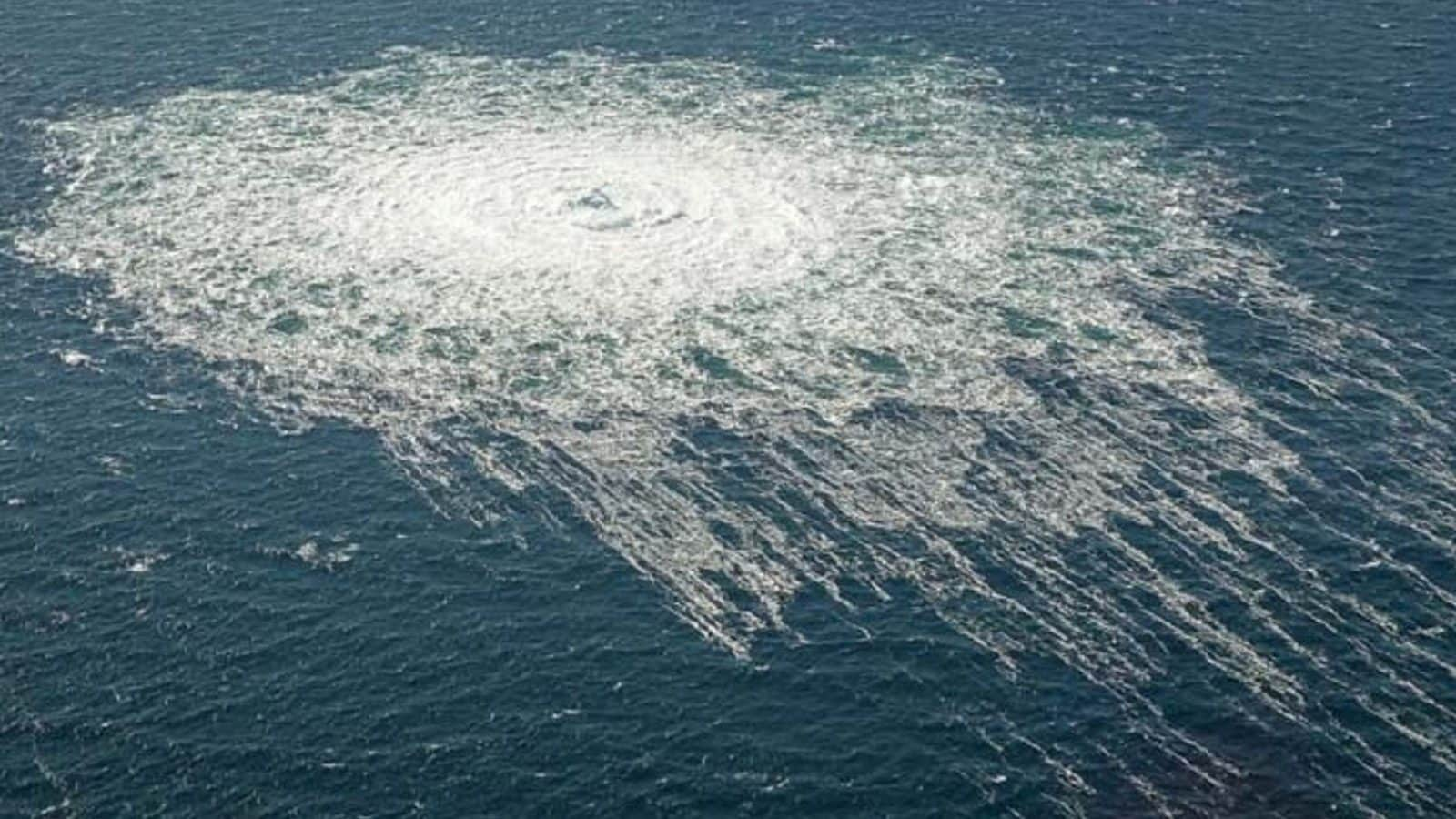
In the Baltic Sea, two Nord Stream gas and oil pipelines were destroyed in a series of three underwater explosions. The victims of sabotage.  One of the pipelines had been used to supply Europe (and particularly Europe's economic engine, Germany) with critically needed oil and natural gas.

Both lines had been shut down previously. The result of sanctions imposed by Russia's President Putin in light of the EU's support of Ukraine in its ongoing war with Russia. The other pipeline was still partially under construction. The result of the explosions was three or possible four ruptures.

Both pipelines were owned by Gazprom, the Russian owned energy giant, in conjunction with Western partners at a cost of several billion dollars (it's worth noting that Gazprom generates around $115 billion dollars annually and is the world's largest natural gas company).

The question which is now being hotly debated in the halls of Congress and the Pentagon, the United Nations Security Council,  the capital of the EU---Brussels---and the halls of other capitals in Europe, the Middle East, and China is who was responsible for the attack.

It's generally agreed that because of the location of the pipelines, at a depth of approximately 361 feet beneath the turbulent Baltic Sea, could have only been accomplished by a tiny handful of nations---Russia through its highly trained Spetsnaz special forces; the United States Navy and its premier global strike force, the SEALs.

 China has its specialized naval assault units, the Jiaolong Assault Team, which are better known as the "Sea Dragon Commandos"; and the British Special Boat Service, also referred to by its initials, the SBS  (as an aside, it's one of the very few type of operations that the Israelis, known for their daring and near impossible attacks anywhere in the world, wouldn't have been able to accomplish. Besides, Israel doesn't have a dog in this fight).   

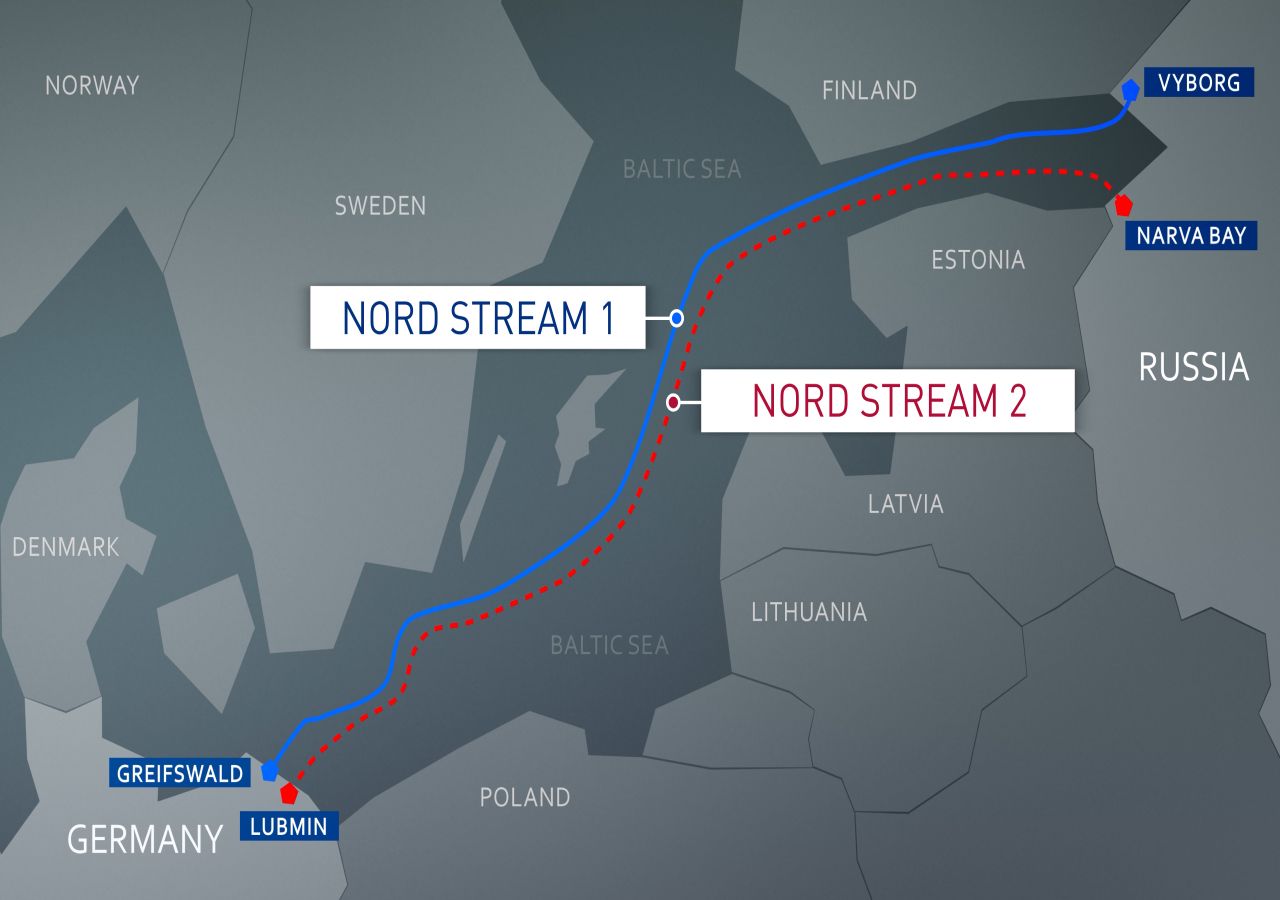
The two pipelines, known as Nord Stream 1 and 2, originate from Vyborg and Ust-Luga on the Russian coast bordering the Baltic and extends Greifswald in Germany. The first leak (Nord Stream 2) was reported by Swedish investigators on September 26th. The second incident involved two leaks involving pipeline 1 the following day, on September 27th. 

The damage on pipeline 1 are close together, while the damage between both pipelines aren't in close proximity to each other, which means the damage had to be closely coordinated, which again points to one of the major powers.

The majority of Western governments have either directly or indirectly indicated that Russia was behind the attacks. German Konteradmiral (Rear Admiral) and Chief of the Navy, Jan Christian Kaack, has stated that Russia has capability for such sabotage when he stated that Russia had "considerable capacity" in its underwater operations, which is true.

Looking at pipeline 1, it covers 745 miles from St. Petersburg in Russia to Germany's Northeastern coast while the second pipeline runs 767 miles. In addition, there are other transmissions lines running from both pipelines (the OPEL and the NEL pipelines, which connect to other lines throughout Europe). The oil and gas originates from Yuzhno-Russkoye petroleum field in the Krasnoselkupsky District of the Tyumen Oblast in West central Siberia.

The field, which was previously unreachable due to the historical dense permafrost, has been made harvestable thanks in large part to warming temperatures and improved technology, which has allowed full time operation. The field has proven gas reserves of 805.3 billion cubic meters of gas with estimated reserves of another 1000 billion cubic meters of natural gas.

Meanwhile, proven oil reserves are about 5.7 million tons. At present, Gazprom operates 26 gas wells  which reportedly produce an estimated 15 million cubic meters of natural gas every single day of the week all year long.

 It bears mentioning that Gazprom has been working on a deal with China to construct a pipeline from the Yuzhno-Russkoye field to Northwestern China via the "Power of Siberia 2" pipeline (aka the "Altai gas pipeline") and end in the Xinjiang region where it would connect with China's East-West pipeline.   The pipeline could also run through Mongolia, which would be a boon for the Mongolian economy.

 Xinjiang Province, however, is home to the Uyghurs, a minority Muslim population which in recent years has become increasing resistant to Beijing's rule in what's known as the "Xinjiang Conflict". An oil and natural gas pipeline of this magnitude would present a tempting target for the Salafist Turkistan Islamic Party and the East Turkestan Independence Movement, two separatist groups comprised of Uyghur Muslims, Buddhists, Taoists, and Confucian nationalists unified in their demand for autonomy from Beijing.

As for the two Nord Stream pipelines in the Baltic, they too present more than tempting targets. While Western leaders led by the U.S. and President Biden blame Russia for the damage to their own pipelines, Russia and its allies claim that the United States is behind the incident.

President Biden had previously made threats concerning the Nord Stream pipelines. Specifically, Biden previously said that if Russia invaded Ukraine, the Nord Stream pipeline "would not move forward" and added that "there will no longer be a Nord Stream 2. We will bring it to an end". 

Since the announcement of that the two pipelines were destroyed, the establishment media has tried to whitewash Biden's statements and do some fancy cover up.  Nevertheless, whether he intended that specifically to be threat or not, it doesn't look good.

In fact, President Putin took Biden's comments as a threat, and now with both pipelines out of commission it certainly appears to be a threat fulfilled. Of course, the U.S. has more than the capability and experience, not to mention intelligence expertise, to carry out an operation like this.

As a result, Putin announced that he intends to "destroy the West's energy infrastructure" as he blamed the "Anglo Saxons" for the damage (fortunately for me I'm mostly Celt and Scandinavian). The question is whether or not he can actually do it. While it remains to be seen, with Europe dependant on 40% of Russia's oil and gas to heat homes and run businesses (and Germany, Europe's industrial heart, depending on Russia for 70% of its oil and gas), it can't be good for the EU, even with limited U.S. support.

The importance of the pipelines to the Russian and European economies  and the amount of money invested in the projects can't be understated. Nord Stream 1 has been in operation since 2011 at a cost of $7.3 billion dollars while Nord Stream 2's price tag was around $11 billion dollars. It was started in 2011 and has been operational since September 2021.  

We can't overlook the possibility of routine failure. The pipelines are 361 feet down in water which average 51 degrees this time of year. At depths of 350+, the water temperature is around 15 to 20 degrees. Plus, while poor quality and/or workmanship shouldn't be an issue, but it can't be entirely ruled out. Pipeline failures aren't uncommon.

As for Russia being responsible for sabotaging either pipeline, it's unlikely. Russia has already imposed its own sanctions against the EU and shut off the valves. There's no need to destroy the pipelines on top of that. Besides, consider the costs to repair either line which could run potentially in the billions and take upwards of six months to complete. Just in closing the pipelines, Russia is taking a huge financial hit. Russia oil and gas shipments to Europe had been bringing in $120 billion annually.  

As long as the war in Ukraine continues, the cost will escalate on all sides until the unthinkable becomes the only logic option. Neither Moscow or Kyiv seems able to deliver a final knockout punch. Ukraine is hanging in there against the full might of the Russian military thanks largely to aide being provided by the EU/NATO, the United States, and an intensive Western PR campaign. Russia's mounting losses, in the face of U.S. led sanctions are starting to severely affect its economy.

As a result, President Putin has struck back by cutting off critically need oil and gas supplies, but that's may not be enough. Putin has strongly hinted at military intervention in certain European border countries and even the possibility of using tactical nukes to end the war. It's unlikely Putin would do so, but some analysis have cautioned not to rule it out entirely. Russian credibility is also on the line here.

Meanwhile, Europe is bracing for a colder than usual winter, as well as a serious blow to its economy with much higher prices for everything from food to rent to gas and staying warm thanks to Russian oil and gas sanctions.  Public unrest and riots shouldn't be ruled out.

In the United States, Washington's pro-Kyiv propaganda isn't working as well as the establishment media had hoped. Putin has proven to be popular in the U.S. (more so than Biden, who's approval ratings continue to hit record lows) as the U.S. economy slows amid rising prices and interest rates. The Republicans aren't doing any better.

Regardless of U.S. politics, the war in Ukraine needs to come to a quick end. It's cause was officially Kyiv's request to join NATO; something Russia has long opposed. The real issue was, and always has been over resources. In this case, oil and gas in the Donbas and Black Sea. With it, Ukraine becomes a new player on the block, especially if it has the protection of NATO. Without it, Ukraine is just another second tier economy.

The Washington led West is going all out to make Russia the bad guy, and in many ways they are, but wars are seldom black and white. Kyiv, Brussels, and Washington bear their share of responsibility for this war too. For Moscow, it's a matter of national security. There was nothing new about Moscow's refusal to allow NATO to encircle its western border or be forced to kneel to a "new global order", whatever that means. Meanwhile, while politicians dicker, generals plan, the rich get richer, ordinary people die.


If you want to know more, please take a look at the links below. If you enjoyed the article, please consider passing it along to others and don't forget to subscribe. It's free! Lastly please be sure to "like" us on whatever platform you use to read A/O. It helps with the algorithms and keeps our articles in circulation. Thank you! 


Nord Stream gas 'sabotage': who's to blame and why?


Biden says the Nord Stream 2 pipeline won't move ahead if Russia invades Ukraine


Russia Blows Up Gas Pipelines, Declaring an All-out EnergyWar It May Have Already Lost


Nord Stream repair may take at least six months, sayslawmaker


The Yuzhno-Russkoye Field


Russia has cut off gas supplies to Europe indefinitely


Friday, April 01, 2022

The Slap Heard Around the World


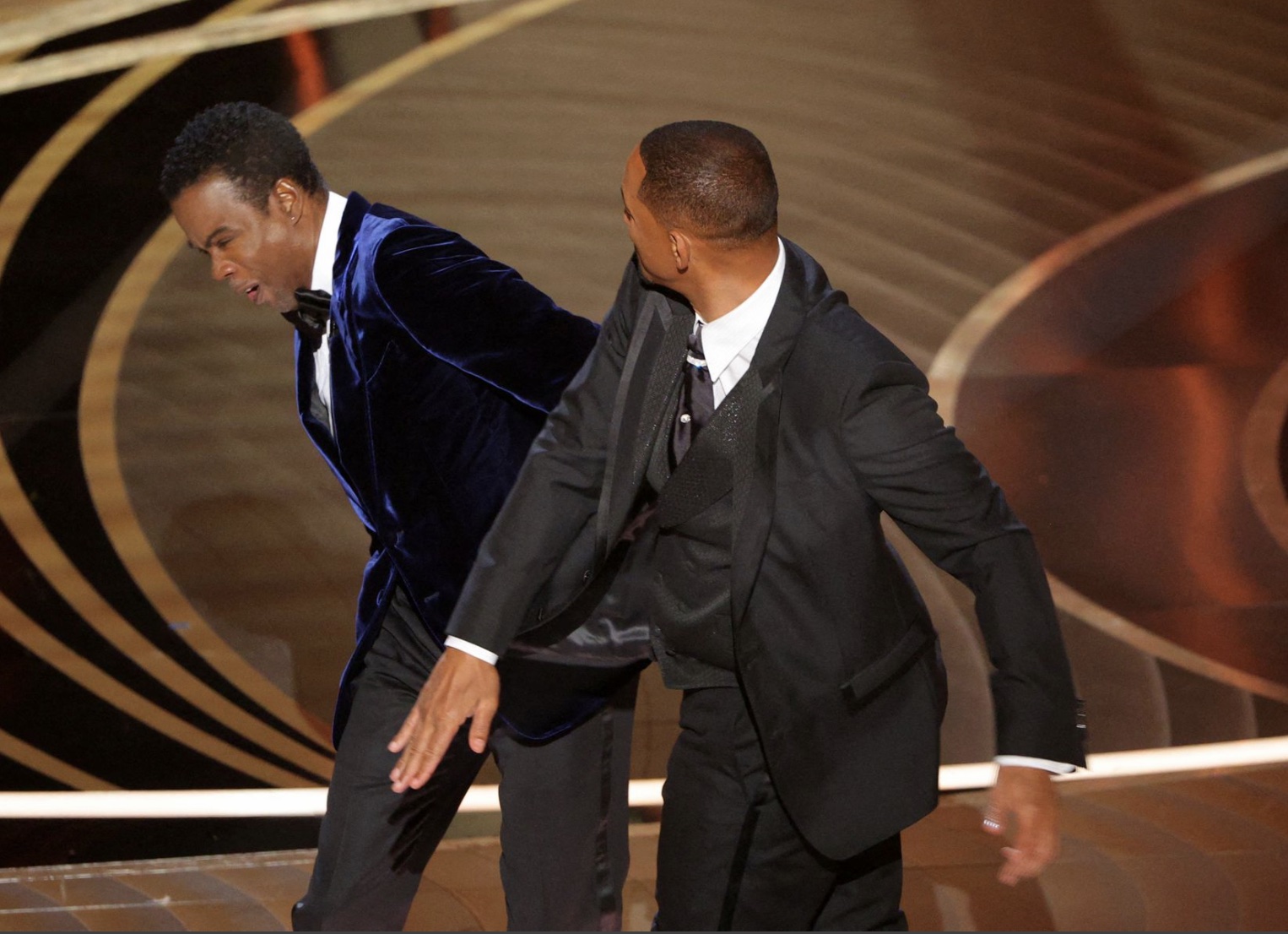
The slap heard around the world. No, I'm not talking about that sissy slap Will Smith meekly threw at comedian and presenter, Chris Rock, at the Oscars. I'm talking about the verbal slap President Biden threw at Russian president Vladimir Putin while visiting Poland. Biden referred to the Russian president as a "butcher".

The head of state of every nation is expected to act with a certain amount of decorum when speaking to or about any other leader, especially one in which they are not at war with, and particularly when they are trying to bring hostilities between two warring factions to an end.

Referring to Putin as a "butcher" is not going to make him take heed to anything else Biden says, whether it's about peace or not. In fact, the only reason to call names like that is if you're actually trying to provoke a fight, which some think Biden is. What's more is that President Biden had previously referred to Putin as a "war criminal".

Whether or not Putin is a "war criminal" is not up to Biden. It's a charge that only the International Court of Justice ("World Court") at The Hague can determine. Secondly, Biden's comment  completely dismisses Putin's reasons for the invasion, which for those not paying attention, was entirely about national security and NATO's disruption of the region would bring should the Ukraine be admitted into the NATO and be permitted to station troops, tanks, aircraft. Most of all, the missiles which would be placed on Russia's border or pointed at point blank range towards Russia's largest naval base in Sebastopol.  All this begs the question, what's going on here?

A few weeks ago, President Biden mentioned at a meeting of the U.S. Business Roundtable that a "New World Order" was inevitable, and added that the U.S. "must" lead it. As we explained in a earlier article, a New World Order is all about creating a single global economic system with the U.S. dollar as the world's reserve currency, meaning that all global trade would use the dollar as the preferred currency.

This increases the value of the dollar on the world market and strengthens the U.S. economy. However, it also weakens the Euro, the Russian ruble or the Chinese yuan, which devalues the U.S. debt (the U.S. is world's top debtor nation). It would also control the International Monetary Fund and World Bank, meaning that the U.S. would be central power player when it comes to loans to various governments.

The New World Order also creates a single world legal system, which includes trade agreements. It would require nations to subjugate their national authority to this supranational agency, which would be under the auspices of the United Nations. Naturally, the U.S. would be the dominant power leading this arrangement if Biden has his way.

Some would say that's totally fair. After all, the U.S. is the primary guarantor of money loaned to the IMF or World Bank. It's also the nation most responsible for keeping the UN afloat. In 2020, the U.S. alone gave the United Nations 22% of its entire budget. China was second with just 12% while Japan donated 8.5%. The way the New World Order is presently configured, other nations like China, Russia, or the EU, would be regulated to second tier status on financial matters.

However, not everyone is willing to play along. Some nations, while willing seeking economic trade, don't want to go along with these rules. They don't want to subjugate their national sovereignty to any other country or supranational organization. It's worth noting that those nations just so happen to be on our economic "hit list" and often labeled as "enemies of democracy". We're talking nations like Iran, China, Venezuela, and Russia.

Let's take China for instance. It is the second largest holder of U.S. debt behind Japan (and it's worth noting, that China is Japan's largest creditor). It doesn't want to subjugate its currency to the dollar. In fact, it's quite happy with the present economic system. Why? Because it's winning.

The U.S. is declining as a world superpower. China is poised to surpass the U.S. as the world's largest economy by the end of this decade. Its infrastructure is continuing to grow (albeit at a pace some economists say it can't sustain), and massively updated its military. It's done this through a system of controlled capitalism in which the State maintains a sustainable interest in each business. It oversees any international agreements to ensure that they meet China's long term goals.

Nevertheless, it is acquiring control over resources throughout the world. It has been hyper-aggressive in its intrusion into fishing waters claimed by India, Indonesia, Japan, South Korea, Australia, and the Philippines. It has warned these and other nations (including the U.S.) to stay out of the South China Seas.

China has not only reiterated its claim to the Senkaku Islands in the East China Sea, which had been Japanese since 1895, but also territory on the Chinese/Indian border around Tibet. China has even gone to the extent of actually building islands in the South China Sea which appear to serve as military fortifications or listening sites.

In terms of international resources, Chinese corporations are aggressively expanding nearly everywhere. However, it's in Africa and South America that its interests are particularly focused. China depends on imports for over half of its key mineral needs such as gold, silver, zinc, copper, and more exotic minerals like germanium and rhenium. The trouble is that the U.S. as well as some other countries, need these same minerals too. Control of these minerals control innovation, which in effect controls economies.

The U.S., while mineral rich, still must import about 24 key minerals to meet its needs. Of these, we are in competition with China for 11 of these. In addition, China is a primary importer of 9 out of 13 minerals, which include cobalt, indium, bismuth, and 17 rare earth elements ("REE"); all of which are important in the manufacturing of batteries, computer chips, automobiles, and electronics. China is also going after timber, farm land, and fresh water, which is becoming increasingly more scarce.

As competition grows, so also grows the need for military might to protect the production and shipment of these products. The military has become key to the acquisition of these and other resources like oil and gas ("might makes right"). Closer at home, while we continue to pick up the lion's share of the costs to keep the UN going, China has been focused on acquiring control of key UN agencies and non-governmental organizations (NGOs).  

China has been actively pursuing control of groups like the World Health Organization (which has been aggressively investigating the origin of the Covid-19 virus), the World Bank, the IMF, UN's Higher Commission on Human Rights, and the World Intellectual Property Organization. It is also attempting to expand its influence into Interpol. China now controls four of the 15 most important agencies within the UN, whereas no other country controls more than one. 

Although China and Russia have been "frenemies" , China is not likely to let Russia sink under all the massive sanctions imposed on it by the U.S. and EU. However, it will not try to alienate the West either. For the moment, that's where its economic bread and butter lies.

Both countries have echoed each other's claims of secret U.S. intervention around the world aimed at reducing Russian or Chinese influence. One of Putin's original claims was that the U.S. was behind the 2013 "Maidan Uprising" in the Ukraine which coincidentally removed a pro-Moscow government and replaced it with the current pro-West and pro-NATO Zelenskiy government.

Russia has expressed its opposition  to a "New World Order" government since the collapse of the Warsaw Pact in 1989, a reiterated again in 1991 with the implosion of the Soviet Union. In 1989, the Russian President Mikhail Gorbachev sought assurances from Western leaders not to expand NATO into former Warsaw Pact nations. 

Gorbachev was seeking to rebuild the trust broken in 1946, following the end of WWII, and find ways to reintegrate Russia into Europe, even applying to become a member of the EU and NATO, which included accepting that, at least for the time being, there would be one global superpower (Russia joined the "Partnership for Peace" in 1991).

Although Gorbachev was promised by President Bush that NATO wouldn't advance "one centimeter", by 1991, all of the Eastern Europe was a member of the EU and NATO. Russia has fought the advancement of a "New World Order" ever since.

Fyodor Lukyanov, one of Putin's foreign policy advisers, has stated that this "unipolarity" of a single world superpower gave the United States an rare historic opportunity to remake the world in its image; an opportunity it squandered. Today, according to Lukyanov, the world must become "multipolar", with multiple spheres of influence. 

He makes the point that rather than trying to create a world modeled on American styled democracy, that nations and their cultures be allowed to develop in their own way, whether its democratic, theocratic, or whatever.  The U.S. notion that "one size fits all" has failed just as surely as Soviet style Communism.

Others in Putin's circle argue that Russia should stop trying to integrate into West and, instead, focus on being a hybrid between East and West, while, as was pointed, China increasingly views itself a merger between communism modeled on Stalin and Mao plus Confucianism which made the collective  stronger than the individual.  Reminds me of the Borg.

President Biden's name calling will solve nothing. His verbal slapping of Putin will have no positive impact on the crisis in the Ukraine, nor will it help the Ukrainian people. It does, however, make him look like an outdated old fool. The war in Ukraine may prove to be mistake. It certainly hasn't gone as Putin's advisers had planned. But it does demonstrate Putin's frustration over his nation's security and the attempt by the U.S. led West to impose its stamp on the world...and Russia. America's time in the sun is coming to end as it has with all great empires before.  

However, Russia and China are governed by autocrats while America, and by extension the West, is ruled by its own Oligarchs who have transformed the U.S. from a constitutional Republic into a growing neo-fascist Corporatocracy.  None of this bodes well for the masses. The ordinary people of the world, who made the riches of the Oligarchs possible, must ensure than any change serves our interests first.

The future will not be dominated by one or even two or three superpowers. The world will once again splinter into perhaps many "points of light" to borrow from President G.W. Bush, and with it, we will see a reordering of alliances---political, economic, and military--- as well as ethnic, racial, and religious, which will hopefully bring humanity closer, but that will only happen if everyone has a seat at the table.

If you want to know more, please take a look at the links below. If you enjoyed the article, please consider passing along to others and don't forget to subscribe. It's free! Lastly please be sure to "like" us on whatever platform you use to read A/O. It helps with the algorithms and keeps our articles in circulation.  


China, United States, and competition for resources thatenable emerging technologies


Russia's and China's plans for a new world order


China Doesn't Want a New World Order. It Wants This One


Rare earth element facts


'Creeping Capture' : How China is trying to 'control' global bodies like UN, WHO


Thursday, March 17, 2022

Bringing the War in the Ukraine to an End


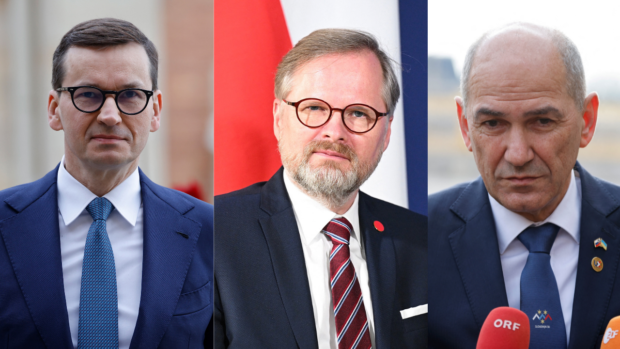
The leaders of Poland, the Czech Republic and Slovenia announced that they were going to Kiev to meet with Ukrainian President Zelenskii and other Ukrainian leaders. It's odd that three weeks after the invasion began, and with the capital, Kiev, increasingly surrounded and pounded by Russian shells and missiles, that the leaders of these countries would chose now to visit Kiev?

Could it have anything to do with the fact that all three countries are not just members of the European Union (EU) but also NATO (as well as being former members of the Warsaw Pact)? What, if anything, is the significance of their visit? 

Article 5 of the NATO Agreement, which has been oft discussed since the invasion, states that an attack on one NATO member constitutes an attack on all. An attack doesn't have to be a some sort of provocative act like an invasion, or a EMP attack, a blockade or embargo, or no fly zone.

An attack could be construed as the death of a leader of NATO member country too. These three individuals, Polish Prime Minister Mateusz Morawiecki, Slovenian Prime Minister Janez Jansa, and Czech Prime Minister Petr Fiala, are putting themselves in direct harm's way and risking a expanded war, but why? 

Ukrainian President Zelenskii has long been pressing for membership into both the EU and NATO.  Russian President Vladimir Putin has equally adamant that NATO membership of the Ukraine was a line in the sand that will not be crossed. Putin isn't happy about membership in the EU, which lessens Ukrainian dependence on Russia, but NATO membership was non- negotiable. 

The three leaders of these former Warsaw Pact nations are hoping, and literally betting their lives, that their presence in Kiev will force a temporary ceasefire; maybe even rekindle a new and a more serious round of negotiations to bring the invasion to a halt, and prompt a withdrawal of Russian troops. 

If, on the other hand, any one or all of them are killed, it could trigger Article 5. If that should happen, it would give NATO the justification it needs to intervene in the Ukraine. NATO troops, tanks, planes, and missiles, are already amassed along their respective borders with Russia.

It's unlikely they would invade Russia and more likely they would brace against a Russian incursion on their border as  NATO forces would cross into the Ukraine to try and force a cease in hostilities. But how would Russia react? Would they see it as an attempt to end their invasion? Would it be viewed as intervening in a situation which doesn't concern them, or would Russia viewed it as a declaration of war?

Putin is no dummy. In fact, he is highly intelligent and experienced. He's repeatedly outmaneuvered Western leaders time and again; making them look foolish. The only Western leader he's acknowledged any respect for was President Donald Trump. I suspect that's less due to Trump's intelligence or political acumen, and more to his unpredictability plus the fact that Trump wasn't beholden to the "Deep State" which controls America and the EU. Putin too has been opposed to this same Deep State which has been trying to either corner Russia and isolate it or force its compliance on Russia. 

Putin, since before the invasion, has tried to shore up his relationship with China, knowing that the West's most likely reaction to the invasion would be severe sanctions. However, given the fact that Russia and China have long been a "frienemies", and the fact that Russian forces have failed to overrun the Ukraine as predicted, China seems to be hesitant in providing too much support beyond moderate economic aid. 

Besides, if Russia and NATO (which includes the U.S.) get into a protracted war, it would economically and militarily hamper everyone, leaving China as the last man standing without having fired a shot. India, China's other big competitor, would have nowhere to turn thanks its decades long policy of nonalignment.

Russian military has shown thus far to be ineffective, despite its overwhelming numbers, against a NATO and U.S. equipped Ukrainian military. The result has been Russia's increasing frustration and desperation for a quick and decisive end. A German style blitzkrieg this hasn't been. As the war has dragged on, Russia's fears of another Afghanistan grows daily. So does its concerns of a expanded war with NATO, which would likely involve the U.S., making matters worse.

Even though the United States just finished a 20 year war in Afghanistan, a war which it all but lost as did Russia, the U.S. still has a powerful military, albeit weaken and somewhat depleted. Putin has repeatedly pointed out that it has nukes, perhaps hoping that the mere threat will buy him a little more time in the Ukraine. But he knows too that NATO has nukes. So does the United States, and the first one to use them will be just as dead 15 minutes later. There are no winners in a nuclear war.

Putin has recently announced that its forces have discovered 30 bio-military laboratories. Laboratories which have all the fingerprints of the U.S. on them. The implication is obvious. That the U.S. was secretly developing pathogens for military use in clear violation of international agreements. Could this be in retaliation of the U.S. accusing Russia of supplying bio-weapons on Syria which resulted in two attacks, killing dozens of combatants and civilians?

It could be. The accusations in Syria turned out to be false. The chemical signature of the weapons were not Russian. Independent analysis indicated European origin; possibly German or England. Here again, independent analysis has shown no U.S. bio-weapon labs in the Ukraine. That's not to say the labs are a complete fabrication. On the contrary, they very much do exist.

These labs, which receive U.S. financial support, were widely known. In addition, they receive aid, financial and otherwise, from the EU and World Health Organization (WHO). Their purpose was never military. They were strictly civilian and focused on finding vaccines to various viruses, unlike the COVID-19 virus which appears to be a weaponized version of the flu.

So why would Russia claim these 30 labs were bio-military? It's difficult to answer. Putin's military advisers had to know that the truth would be outed pretty quick. The labs and their funding were too open. Everyone knew they were there and what they were doing, unlike, say, Wuhan, which operated in secret.

Secondly, it has to go back to Putin's frustration. We can see this in the attack on two nuclear facilities in the Ukraine, including the infamous Chernobyl.  Russian troops repeatedly pounded the facilities with rockets and heavy artillery knowing full well that the assault could trigger a nuclear meltdown and massive radiation leak similar to the Chernobyl accident in 1986. That's how desperate the Russian military is in bringing the Ukraine to its knees.

They've already admitted using thermobaric weapons ("vacuum bombs"), which were originally developed by the U.S. in the 1960's for use in Vietnam and subsequently banned under the Geneva Convention. These weapons sucks all the oxygen out of an area, which it uses to create a high energy explosion and intensive blast wave. It's capable of sucking all the air out of human beings or anything living, filling their lungs with liquid, with the resulting explosion vaporizing every living thing.

Russia previously used these "vacuum bombs" in Chechnya and Syria. This is barbarism on a scale seldom matched in human history. For this alone Putin and his generals should be tried as war criminals for crimes against humanity, but we all know it will never happen.

Throughout, Ukrainian President Zelenskii has pleaded with the world for help. He has asked for medical supplies, food, generators, gas and oil, and most of all, weapons. He was recently given the unique and rare opportunity to speak to members of Congress (and indirectly the American People). He has asked for the U.S. and NATO to create a no-fly zone over parts of the Ukraine and to open corridors for fleeing refugees and for incoming military supplies.  

Putin has indicated that any no-fly zone would be contested, which would again be viewed as a declaration of war. As an aside, previous corridors for refugees have failed; often lasting a few sporadic hours. Meanwhile, NATO sits on the sidelines. It sends military and humanitarian aid as it can, but it too has to be careful.

Russia controls 40% of Europe's oil and gas. It controls 70% of Germany's, which is the economic engine of Europe. The U.S. could provide some to Europe, but it couldn't make up the 40%. Perhaps the Middle East and Canada could pick up the slack, but again, nowhere near what it would lose if Russia cut it off. As an aside, the Ukraine, with its energy reserves, could potentially replace Russia as Europe's supplier.

As for Argentina, with its massive oil and gas reserves, it could definitely use the economic stimulation. However,  Russia has seen to it that it's firmly in their corner.  That puts the EU between a rock and a hard place. In short, between the sanctions, threat of nukes, and energy dependence, Russia, Europe, the U.S. and indirectly the world, has a death grip on each other as it did just prior to the start of World War One.  And again, like the First World War, it would only take one stupid mistake to trigger what truly would be "the war to end all wars".

So, how does this get resolved? First and foremost, the fighting stops immediately. Secondly, Putin and Zelenskii have to act like the leaders they pretend to be and sit down and talk. Putin insists that the Ukraine is an "artificial" country created in Vladimir Lenin during the Russian Civil War and that Russians and Ukrainians are the same people.

Well, that's partially true. The Ukraine has long existed, dating back to the Viking Rus. Russia (which takes its name from the Rus) was one of the conquered lands. Both grew and evolved as all nations do. Both peoples are largely Slavic and Scandinavian. They speak similar but different languages. They have similar as well as different cultures, traditions, and values. But, nevertheless, the Ukraine is an independent and sovereign country. Period.

Putin must accept that. He must also accept that Kiev has the right to establish its own laws, policies, and alliances. That means if it wants to join the EU, it has that right. It also has the right to join NATO for its own national security, which, in part, stems from its fear of the Russian bear. Putin must also acknowledge this.

Given Russia's history, is rightfully afraid for its national security too. That's something Zelenskii must acknowledge. It has been invaded from the east by Mongols (as was the Ukraine), and twice by the West (Napoleon and Hitler). In 1989, Gorbachev was assured by President Bush that NATO would not expand "one centimeter", and yet by 1991, it was on Russia's border with its missiles, tanks, artillery, and troops from the Baltic to the Ukraine, and now the Ukraine wants to complete that encirclement.

Both nation can acknowledge their mutual fear and mistrust of the other and use it to create a non-aggression treaty. No further attacks on the Ukraine and in exchange, no NATO presence on its border by Russia. The Ukraine may provide for its own national defense (which has been pretty good thus far) however it pleases less NATO. The Ukraine can make whatever trade agreements it wishes as a sovereign nation. A mutual trade agreement between the Ukraine, Russia, and the EU could benefit everyone.

As for the four provinces in the Donbass, recent polls, demographics and history has shown a natural link to Russia just as in the Crimea. If that's what they want, then so be it. Those who don't want to live in a pro-Russian Donbass should have the right to migrate to an independent Ukraine and vice versa.  

I suspect Putin invaded the Ukraine to make a point. No NATO. He intended it to be a quick in and out. It turned out to be anything but thanks to the determination of the Ukrainian military and the tenacity  of its people who've given a lesson in patriotism to the world. Nevertheless, as a result of a Putin's ill conceived venture, the world is teetering on global disaster.

The infamous "Doomsday Clock" has been moved ahead to 100 seconds until oblivion for Humanity. That's one minute and forty seconds left for Mankind. That's the closest we've ever been to Armageddon. It won't matter who pushed the first button anymore than who pushed the last button. The only winners will be the cockroaches. Those little bastards can survive anything.

We have other, more serious, issues to focus on such as the climate, poverty, famine, potable water, energy, diseases and viruses. What we don't have time for is pissing rights to a piece of property or who gets to stand atop the highest dung heap. Let's end the war in the Ukraine and elsewhere as rational thinking human beings instead of knuckle dragging primates (apologies to our primate cousins).  

  If you want to know more, please take a look at the links below. If you enjoyed the article, please consider passing along to others and don't forget to subscribe. It's free! Lastly please be sure to "like" us on whatever platform you use to read A/O. It helps with the algorithms and keeps our articles in circulation.


Leaders of 3 EU countries take train to Kyiv in show ofsupport for Ukraine


Zelenskyy tells US Congress, 'We need you right now'


The Fallout From Russia's Attack on Ukrainian Nuclear Facilities


Ukraine War: Fact-checking Russia's biological weapons claims


Russia confirms use of thermobaric 'vacuum bombs' in Ukraine, UK says


At doom's doorstep: It is 100 seconds to midnight


Friday, March 04, 2022

Understanding What's Happening in the Ukraine and its Likely Outcome

Wars are often like divorces. They're messy, full of misunderstandings, and the fallout often lasts for years, decades, or even lifetime. In addition, it's often difficult to determine who the "good guy" or "bad guy" is. Usually, it's a little of both. That's the situation in the Ukraine with the Ukrainian People paying the price for misunderstandings which should have never occurred or been allowed to fester.

Anyone who follows global politics knew (or should have known) what was going to happen in the Ukraine, particularly with the U.S. pushing for full admission of the Ukraine into NATO.  Beginning in 1989 with the collapse of the Warsaw Pact, which provided Russia with not just trading partners, but also a military buffer zone separating itself from the NATO and the EU. Many of these countries had been under Russian influence going back to the time of the Czars.

At that time, Russian President Mikhail Gorbachev claims that he had been assured that the West would not exploit the situation, nor would NATO expand to the East, and yet that's exactly what happened. Each admission of a former Warsaw Pact nation into NATO put NATO troops, tanks, artillery, and missiles on Russia's border. Needless to say, the Russians protested but took no military action. But even then they had drawn a line in the sand---no NATO membership for the Ukraine. Not then. Now ever.

Starting in 2013/14 President Obama's Administration began backing groups which were attempting to overthrow the duly elected pro-Moscow candidate Viktur Yanukovych in the Ukraine (the Euromaiden Revolution of 2014). Senator John McCain even went to Kiev to show U.S. support for the ultra right wing Svoboda Party.  Victoria Nuland, the assistant Secretary of State for European and Eurasian Affairs, travelled to Kiev on three occasions to show support for Svoboda (and even handed out cookies to the anti-Yanukovych demonstrators!).  

It was during this time that Hunter Biden, President Biden's son, was invited to joined the board of directors of Burisma, a Ukrainian energy company (he remained on the board until April 2019). Allegedly, there is an email from Vadym Pozharskyi, an advisor (lobbyist) for Burisma, thanking Hunter for introducing him to his father, who was then vice president under Obama.  It's worth noting that Joe Biden, in 2016, called for the dismissal of Ukrainian prosecutor Viktor Shokin, who was investigating charges of alleged corruption of Burisma officers.  What business was it of his?

There's no question that Yanukovych was corrupt or that his administration was equally inept. However, that gave the Obama Administration no right to interfere with another country's government (a tried and true tradition of U.S. presidents). Nevertheless, in 2014, Yanukovych was ousted in what amounted to a U.S. supported coup, and a new, pro-Western government led briefly by Oleksander Turchynov was installed, who was followed a few months later by Petro Poroshenko.

It was under Poroshenko that the Ukraine began to take a more nationalist agenda. Poroshenko opposed joining NATO, which he felt would "ruin" the country. He also opposed the pro-Russian separatist in the four eastern provinces in the area known as the "Donbas" as unrepresentative of anyone and denounced the mounting reports of genocide. He also opposed nuclear weapons for the Ukraine and encouraged a more decentralized government.

Poroshenko promised to oppose the growing influence of the Ukrainian oligarchs, which had begun their rise in 1991 with the Ukraine's declaration of independence.  Unfortunately, corruption had again become a problem (thanks largely to the oligarchs). By 2019, Poroshenko was out and current president (a former actor and comic---the perfect training for a politician),  Volodymyr Zelenskyy was in. It should be pointed out that he ran and was elected as an Independent under the banner "Servant of the People".

Zelenskyy promised to end the decades long hostiles with Russia and engage in talks with Putin as soon as possible. At the same time, he sought to end the ongoing situation in the Donbas Region between pro-Russian separatists (with the aid of pro-Russian mercenaries and support from Moscow) and pro-Ukrainian forces, which also include a contingent of neo-Nazi Ukrainians opposed to Russia.  However, at the time of Putin's invasion of the Ukraine, Zelenskyy was planning on sending additional troops and supplies eastward to put down the recent increase of activities of the pro-Russian separatists.

In the years preceding the Ukrainian invasion, Putin was on record protesting the expansion of NATO into former Warsaw Pact nations, putting troops, tanks, artillery, and missiles directly on its border. However, while Putin protested and pointed to assurances from various American Presidents that NATO would not move "one centimeter" from its 1989 positions, he did nothing. That is, until 2008, when President George W. Bush began campaigning for the membership of former Soviet Republic, Georgia, into NATO.

In 1991, Georgia declared its independence from Russia. Shortly afterwards, various separatists groups began to fight for control of their own small parts of the country. Some of these were pro-Russian.  Georgian officials began a campaign to bring these areas back under control of the Georgian government. Simultaneously, Georgia began to foster a closer economic relationship with the West.

This didn't go down well in Moscow. Putin, who had become president of the Russian Federation in May 2000, had warned that a pro-Western position was "not desirable" and NATO membership was unacceptable. Shortly afterwards, Moscow began a crack down on Georgians living in Russia and started applying economic pressure on the tiny country.

By April 2008 the situation had deteriorated  to the point where Russian troops invaded Georgia. The fighting lasted until July 2008. In August of 2008, Russia recognized two pro-Russian breakaway states, the Republic of Abkhazia and the Republic of South Ossetia. By the way, Georgia is not or will likely ever be a member of NATO any time soon.  Sound familiar?

Putin has been consistent in his demands restricting NATO advancement in regions it considers key to its national security. Take the Crimea for instance. Although the Crimea ceded with the rest of the Ukraine in 1991, it has considered itself a separate region uniquely tied to Russia. It has been under Russian control since Czarina Catherine the Great in 1784. It's been the home of Russia's Black Sea Fleet since 1783 (and its only year around warm water port), plus it provides access to the Mediterranean Sea.

In terms of demographics, 67.9% of the Crimea identifies as Russian, with 15.7% as Ukrainians and 10.6% as Crimean Tatars. The rest is a smattering of Belarusians, Jews, and Armenians. Most, around 58%, belong to the Eastern Orthodox Church. About 15% are Muslims, with the balance not belonging to any specific religion.

In 2014, there was a public referendum in Crimea regarding rejoining the Russian Federation. The referendum had a record turnout of 87% of eligible voters. Of that, 97% voted in favor of reintegration with Russia. In Crimea's largest city (and home of the Black Sea Fleet), Sevastopol, there was a 89% voter turnout and an approval of the referendum by 97%. 

It's worth noting too that shortly after the Ukraine declared its independence in 1991 (which still included the Crimea), Kiev oligarchs and certain government officials made a deal with several Western oil and gas companies, including Exxon and BP, to tap into the recently discovered oil and gas reserves under the Black and Azov seas. How much oil and gas are we talking about? About 10 billion barrels of oil and 3.8. trillion cubic feet of natural gas worth in the trillions of dollars.

Russian annexation of the Crimea has ensured Russia's economic and energy future for many decades or even centuries to come. Bear in mind too that Europe---that is, the European Union or "EU"---gets about 40% of its oil and gas from Russia. Germany, the EU's economic engine, receives roughly 70%. So all this posturing from NATO in truth means very little. Even the U.S., with its vast oil and gas reserves, imports about 3% of its oil and gas from Russia (this compares to 61% from Canada, 10% from Mexico, and just 6% from Saudi Arabia).  

So, what does all this mean? First and foremost, it means whether you like him or hate him, Putin is man of his word. He insisted that there would be no NATO membership for Georgia, and there is none. He also divided up the country the same way he is doing in the Ukraine.  He has consistently said no NATO in the Ukraine, and it appears there won't be regardless of the outcome of the war.

Secondly, the Ukraine wasn't the pushover Kremlin strategists predicted it would be. The Ukrainian military has done an amazing job in blunting the Russian advance (even with the use of "vacuum bombs" which vaporizes people and animals) The people of the Ukraine have done a historically remarkable job in standing up to the Russians, be it in terms of fighting or just confronting them face to face. They've shown a level of patriotism and courage the West hasn't witnessed in decades; certainly not in the UK, Germany, France, or the United States. 

The Ukraine's ability to impede Russia's state of the art military may also have an impact on the sale of Russian hardware to other countries like China, India, or Iran. Until now, the Russians have done quite well competing against the UK, Germany, France, and the U.S.. Maybe not so much anymore. Additionally, while the West and others have imposed formal and informal sanctions on Russia, it's unlikely to be anything more than symbolic and may negatively impact the West more so. 

Putin said in a interview by CNN and the BBC on February 25th, that the West (particularly the U.S.) mislead Russia about NATO advancement following the fall of the Warsaw Pact in 1989 and Soviet Russia in 1991. He reiterated his position that there was already too much offensive NATO weaponry, including missiles, on his border. He added that the United States wouldn't stand for the same thing on its border with Canada or Mexico. In short, if Russia can't feel safe, nobody is going to feel safe.

To drive home the point, two long range TU-160 bombers (capable of caring nukes) along with support aircraft, have flown to Venezuela to conduct "joint military maneuvers". In short, he was making a point of possibly stationing long range bombers and even missiles in Venezuela to give America a taste of its own medicine. He has also warned Sweden and Finland to withdraw their requests to join NATO. In light of Georgia and the Ukraine,  I would take that "request" very seriously.

The next issue is whether Russian troops will remain or withdraw them following some sort of agreement. In Georgia, he withdrew his troops following the recognition to the two breakaway provinces and permanent withdrawal of the NATO application. Occupying a country is expensive, it ties down troops and equipment, and it's never really secure.

I suspect he will either reach an agreement with Ukrainian President Zelenskyy regarding NATO and formal succession of the four Donbas provinces or he will replace the Zelenskyy Government with a pro-Moscow one, which will agree to those terms. Given the intense resistance of the Ukrainian military and people which would only intensify with a puppet regime, the former option would be the preferred one.

Except for us ageing Babyboomers, most have forgotten about the Cuban Missile Crisis in 1962. As a brief refresher, we caught Russians setting up nuclear capable intermediate SS-4 ballistic missiles in Cuba (In 1959 Castro ousted General Fulgencio Batista, a corrupt U.S. puppet and strongman, from power). The confrontation brought the U.S. and the USSR to the precipice of nuclear war.

What the American and Western public didn't know at the time was that we had installed nuclear capable Jupiter intercontinental ballistic missiles in Turkey aimed at Russia in 1961. Russian President Nikita Khrushchev decided that two can play the same deadly game. Eventually, President John Kennedy agreed to withdraw the missiles in Turkey in exchange for removal of the missiles in Cuba and because cooler heads prevailed, we're still here to remember it...and use it as a lesson in the Ukraine.   

 If you want to know more, please take a look at the links below. If you enjoyed the article, please consider passing along to others and don't forget to subscribe. It's free! Lastly please be sure to "like" us on whatever platform you use to read A/O. It helps with the algorithms and keeps our articles in circulation.


 CATO Institute: America's Ukraine Hypocrisy


Radio Free Europe: Lavrov Claims Obama's Remarks Prove U.S. Backed Ukraine 'Coup'


Crimea oil and gas will not come easy for Russia


Many predicted Nato expansion would lead to war. Thosewarnings were ignored


Russia wants NATO forces out of ex-Warsaw Pact states:Lavrov