Showing posts with label Finland. Show all posts

Saturday, March 30, 2024

Finding Happiness in a "Brave New World"

Are you happy?  Most people would shrug their shoulders and say something like "I guess so" which isn't really much of an answer.  But for most people, the question needs to be qualified in order to give you a more honest answer. For instance, are you talking about my finances, my work situation, my home life, and so forth?

It would also be relative as to your situation at the particular moment.  As an example, you could say you're not real happy with your work situation, but then you suddenly get a promotion with more pay, and suddenly you're one contended clam. You could have cancer and feeling pretty depressed. Then, out of the blue, you get some news that reports a potential cure and your depression almost instantly goes to euphoria.

Nevertheless, to answer properly someone question about happiness, we need to take into consideration the topic and timing. Well, the World Happiness Report is published in partnership with Gallup, The UN Sustainable Development Solutions Network, Oxford Wellbeing Research Centre, and the WHR Editorial Board, decided they were going to poll the globe to find out.

The report, which is published annually, looks at number of wide ranging factors including age demographics, opportunities, health, population, GDP, political satisfaction, degree of freedom, and environment. So, without further adieu, let's see who's the happiest in the world and who isn't!

Starting with the overall score, Norway came in the fifth spot. In fourth place was Sweden. Third place went to Iceland while second went to Denmark. As for the top spot, that went to Finland...again! In case you didn't notice, but all five overall are Nordic, which isn't unusual. Scandinavia is typically ranked in the top ten when it comes to the best educated, best healthcare system, and best government (strictly based on personal opinion obviously).

When the list is expanded, the Netherlands, Luxembourg, Switzerland, New Zealand  and Australia round out the top ten. Notice who's missing? Yelp. The United States didn't fare to well. In fact, for the first time ever, the U.S. fell from the top tier and landed in the 23rd spot, just ahead of Germany in 24th.  The countries just ahead of included Czechia (18th), Lithuania (19th), the UK (20th) and Slovenia holding down the 21st spot.

It's worth noting the bottom third worst countries to live in are mostly in Africa, although Afghanistan is dead last in the 143rd position (Lebanon is just above it at 142),  With the bottom third being the worst places to live in terms of happiness (not to mention economics and opportunities), it's no wonder that Europe is overrun with "migrants"  mostly from Africa. Unfortunately, most appear to be looking for four star rated accommodations and other freebies rather than a job.

In examining our drop, the report says that among those 30 and under, the U.S. ranked a pitiful 62 place. But for those over 60, the survey said the tenth place was all ours (as an aside, the 30 and under crowd are the Millennials and Gen Z while those 60 and up are mostly Babyboomers and some Gen X.  It also includes those of the Silent Generation and the Greatest Generation).  

Before going any further, I need to break up these groups by date. The Greatest Generation (WWII) comprises anyone born before 1927. The Silent Generation is 1928 - 1945. Babyboomers are 1946 - 1964. Gen X is 1965 - 1980. Gen Y/Millennials 1981 - 1996 . Gen Z is 1997 - 2012 and Gen Alpha is 2013 - ?.

It should be mentioned that among Millennials and Gen Z, political party registration is its lowest and dropping.  Among Millennials, Republicans make up barely 21% of registered voters. Democrats are 27% while Independents are a whopping 52% and growing. Among Gen Z, it's not much different. Republicans are only 17%. Democrats are 31%, and Independents are again 52% and continuing to grow.
When we look at Gen X, Republicans make up 30% compared to Democrats at 27%. However, Independents are 44%. Among Boomers (that's me), Republicans are 35%, Independents are 33%, and Democrats are a close 32%. The Silent Generation is the Republicans core voter group. The GOP makes up 39% while Democrats take up 35% and Independents are 26%. As an aside.

The "World Happiness Report" would seem to back this up as it says those under 30 are increasingly unhappy about pretty much everything, but especially the economy, the environment, and corporate control of politics.

Another way to look at how the percentages by generation will affect voting and the economy is based on generational preference for capitalism (our current system) and some form of socialism (likely similar to the top ranking happy Scandinavians).  The Silent Generation overwhelmingly back capitalism with 77% in favor. The balance is equally split between socialism and no preference.

Baby Boomers like their capitalism too (despite their Che posters). 60% back capitalism. 16% like socialism, while 10% are too high to care. When it comes to Gen X, we start to see a shift. While capitalism still wins out 39%, 14% want socialism. Significantly 22% don't care. When we get into Millennials, the shift becomes a little more noticeable.

Among Millennials, 34% like our current capitalist model, although 20% prefer socialism of some type yet 21% are open. Lastly, let's look at Gen Z. Although mostly in their 20's, only 29% support capitalism while a close 28% back socialism and 19% are willing to go either way. So what does that means?
From my take on the numbers, as the Silent and Boomer generations age out, the new power players will be the Millennials and Gen Z. Given the present situation of the United States (such as need to stay on an artificial war economy to get economy going, growth of illegal immigration, slide as a world power, failing infrastructure, etc), I would expect a change away from our current predatory form of capitalism.

In its place, a more managed economy which may include more regulation, especially of critical resources or industries. The biggest change may be the political system. In place to a corporate controlled duopoly, we may find open primaries, easier entry for third party and Independent candidates into election, real campaign finance reform, and term limits. 

While I question whether our southern border will ever again be secure, I expect Spanish to become our second defacto "national" language. (its essentially that already)  The U.S. will start showing concrete signs of balkanizing into racial and ethnic zones. Maybe the "Reconquista" will happen yet.

Gen Z and Gen Alpha may be the last wholly American generation. The U.S. economy may show short lived signs of the dominance it once had, but we will be in stiff competition with countries like India, China, Mexico, and Brazil (all, incidentally, members of the BRICs union). Other similar economic and military unions will form out of necessity in order to compete and defend trade lanes.

For those of us of the Silent, Baby Boomer, and older Gen X generations, the America we grew up in with all its idyllic collective memories  are gone, never to return expect on late night reruns. The Oligarchs are working hard to build a bulwark against what's coming, not for our sake, but for theirs. Their aim is to minimize choices while making it appear choices are abundant; to create a managed political and economic system.
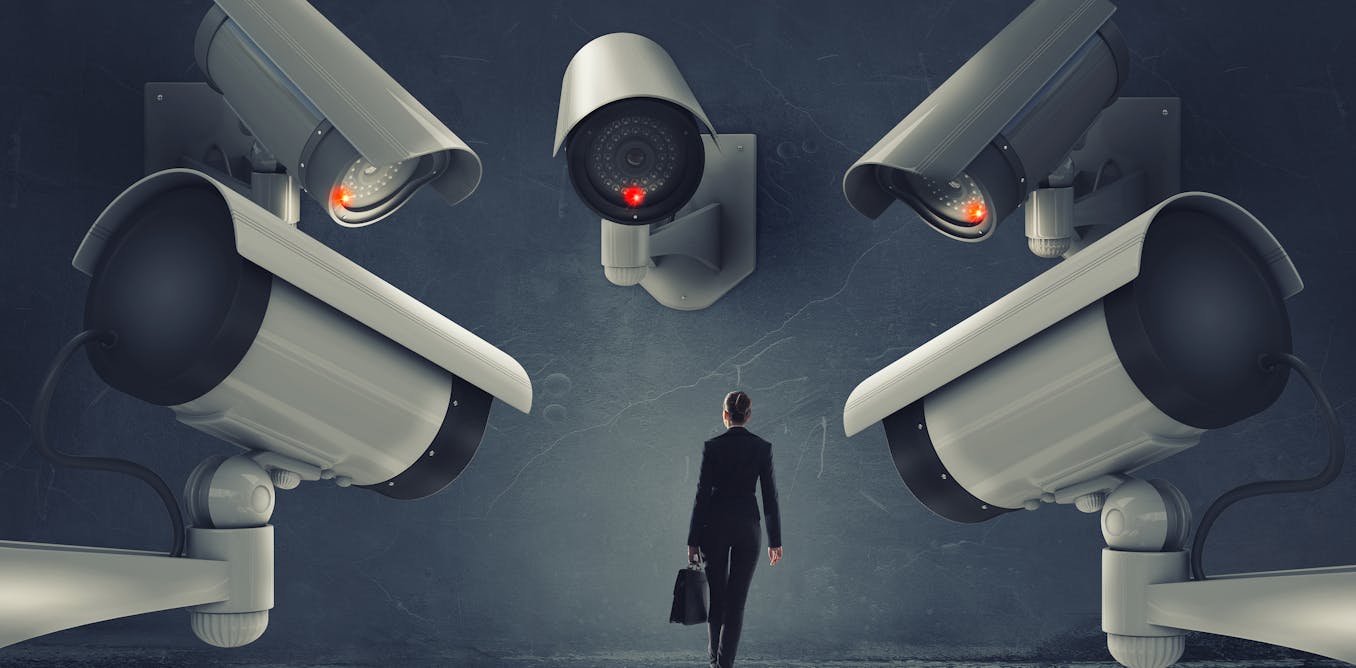
That also entails more surveillance. For instance, while we'll have more electronic goodies than we can imagine, but ultimately you have to wonder who do they serve---us or someone else. Siri and Alexa have already proven they passively listen and store damn near everything. At what point does the illusion of convenience trump  our right to privacy? 

Will our electronic cars take us only to where we're authorized to go based on our credit rating?  We'll also interact less and less with our fellow human beings. We will start replacing flesh and blood relationships with cyber ones. Even our sex partners may come with off/on switches!  

 Our definition of "happiness" will surely have to change to meet changing technology and global demographics. Even "happy" Scandinavia is rapidly changing.  The so-called "migrants" pouring into the country and demanding to be given their free share of prosperity without contributing. I guess when you import the third world, you get the world.  I bet even Aldous Huxley couldn't have predicted this  "Brave New World".


If you enjoyed the article, please consider passing it along to others and don't forget to subscribe. It's free! Lastly please be sure to "like" us on whatever platform you use to read anotheropinionblog.com. It helps beat the algorithms and keeps our articles in circulation. Thank you!


World's Happiness Report 2024


These are the world's happiest countries in 2024


Finland named the world's happiest country (again) but young people are struggling


Party identification in the United States in 2022, by generation


Millennials,Gen Z Clinging to Independent Party ID


Which U.S.Generation Holds The Most Political Power?


Gen Z willchange capitalism as we know it


Saturday, May 21, 2022

Uneasy Bedfellows: Sweden, Finland, NATO and Putin


Sweden and Finland, two Scandinavian countries to Russia's northwest formally submitted an application to join NATO on May 17th in light of Russia's invasion of the Ukraine. Russian President Vladimir Putin had previously warned both nations of the potential danger they faced by joining NATO rather than remaining neutral, which many took as an not so subtle Russian threat.

While Putin doesn't directly oppose the move by Sweden or Finland, NATO's Musketeer-like pledge of "one for all and all for one", makes it clear that any incursion by one NATO member would result in an appropriate military response on all NATO members, or so says Putin. So, why would Putin approve Finland and Sweden's admission to NATO and not the Ukraine's?

NATO came into being just after the end of World War II in 1945 as a means to offset a newly expanded Soviet Russia into the Soviet Union with the addition of so-called "liberated" nations from Nazi and fascist control. Later, in 1955, they would transform into the Warsaw Pact, which was in response to NATO, which was created in 1949, and intended as a buffer from a potential invading Western coalition.

Several nations, Sweden and Finland among them, wanted to maintain as military neutrality between themselves and the USSR. This was in part to keep open historic trade relations with Russia and its partners similar to the 1956 non-aligned movement which included India, Egypt, Yugoslavia and 117 other countries which sought to maintain a economic balance between the West and the Soviet states.

That, however, didn't preclude Sweden at least for conducting restricted joint military games with Europe. In 2017, Sweden held the largest war games in 20 years jointly with NATO members. In anticipation of joining NATO, Finland has participated in limited war games with NATO. Previously, there was always the fear of irritating the Russian bear.

Such fears gradually decreased after the implosion of the Warsaw Pact in 1989 and then, Soviet Russia in 1991, along with continual trade and economic integration which had created the European Union. Now, with the invasion of the Ukraine, that fear has reasserted itself and turned into one of self-preservation and urgency.

However, Sweden and Finland may have to hang on together a little longer. Turkey, the second largest military member of NATO (behind the United States) and one of two Muslim nations in NATO's (the other is Albania, which is 60% Muslim compared to 99% for Turkey) is opposing the entry of Sweden, and to a lesser degree, Finland, into NATO.

Under the rules of admission, any one member of NATO can oppose entry of a nation into its ranks. Turkey's President Erdogan has said that he opposes admission of Sweden and Finland over "security" issues and support of "terrorist" groups. Specifically, he is referring to the support of Sweden and Finland of the PKK---the Kurdish Workers Party---which promotes a free Kurdish State and allegedly has killed tens of thousands (mostly Turks) since 1984.

In addition, both Sweden and Finland have used their clout in the EU to oppose arms sells to Turkey with the express goal of using those weapons to fight Kurdish rebels known as the "YPG" or Syrian Kurdish People's Defense Units, which is linked to the PKK. Lastly, Erdogan opposes Swedish sanctuary of Fethullah Gulen's followers after a failed attempt to overthrow the Turkish Government in 2016. Gulen is a radical U.S. based Muslim cleric.

Finland has been part of the EU since 1995. Its largest trade partners are Sweden, Germany, and United States. Russia, which is Finland's 6th largest trading partner, gets 12% of its imports. Russia accounts for 5% of its exports. Notable but not overly significant.

Sweden, also an EU member since 1995, exports just 1.2% of its good Russia and in return gets back 2.5% in imports, so any economic effects from Russian sanctions would be minor at best. Sweden's largest trading partners are Norway, Germany, the United States, Denmark, and Finland, with Russia ranked 15th (as an aside, China is 6th in terms of exports, at $8.4 billion while Russia receives just $1.2 billion in exports).

So, economically, neither Finland or Sweden is of that important, and there's no reason to expect NATO membership would preclude an change in trade between either country and Russia. If anything, it may provide an additional conduit for trade between Russia and the West in the event of expanded sanctions.

So, why Russia would accept NATO membership of Finland and Sweden but not Ukraine? Does the answer again go to national security just as Putin has maintained all along? As far as Moscow would be concerned, the addition of NATO troops, ships, and particularly missiles in Sweden and Finland, will make little difference. If truth be known, Russian military planners long ago accounted for Sweden and even Finland in their response calculations should a war break out with NATO.  To paraphrase an old adage I adapted, "if you're not with me, you're against me. The only neutrals are in cemeteries".

While Sweden shares no common border with Russia, Finland does with some 830 miles of mostly inhospitable mountainous terrain, bitter cold, and dense forests with Russia. With Finland, the majority of its population and industry are located within 25 miles of Helsinki, which accounts for 27% of its total population (Finland only has a total population of about 5.5 million, and just nine cities with populations over 100,000).   

In Sweden's case, 85% of its 10.21 million population live in urban areas. About 3.3 million live in Stockholm and the surrounding metro area. The city of Gothenburg, Sweden's second largest city, has around 2 million, while another six cities have roughly 100,000 each.

Ukraine, on the other hand, has a 1,426 mile long border, which includes 199 miles along the Black Sea. Its land is among the most fertile in the world and it's moderately populated (both Russia and  Ukraine also share a similar language, history, and culture). Note too that Ukraine was occupied by the Soviets from 1922 until the collapse of the Warsaw Pact in 1989 before becoming independent in 1991. 

Russia's largest naval base since 1783 and home of the Black Sea Fleet is nearby at Sevastopol in the Crimea. It comprises an area of 334 square miles and a population of around 430,000 (when you add in surrounding towns and other populated areas, the total population jumps up to 510,000).

It's worth nothing that some military analysis believed that the Black Sea Fleet is the least prepared of the Russia's four main naval bases, ranking them in order of importance, Baltic, Northern, Pacific, and lastly, Black Sea. However, it is a key link between Russia and its ally, Syria. Then too, there's that matter of oil.

It was recently confirmed that the Black Sea shelf and the Azov Sea may potentially be one of the richest reserves in the world. Ukraine had, in fact, been quietly counting on acquiring full access to it and making closed doors deals with energy giants like Exxon, Dutch Shell, and BP (Europe receives approximately 40% of its oil and gas from Russia, with Germany---the EU's economic engine---getting 70% of its oil and gas from Russia), but then came the annexation of Crimea.

So, how much oil and gas are we talking about? Best estimates are 2.53 million tons of crude oil, 58.6 billion cubic meters of natural gas, and 1.231 million tons of natural gas condensate. That's more than enough to go to war for. It's estimated that Russia's annexation of the Crimea deprived Kyiv of some 80% of its energy potential.

If Russia manages to keep the four Donbass provinces as a result of the current war, it could possibly acquire most of the Ukraine's estimate 60 million tons of coal (90% of the Ukraine's coal lays in the Donets Coalfield, in the Donbass Region). While the Ukraine is rich in other natural resources, including gold, strategic metals, wood, and some of the most fertile soil on the planet, the loss of the Crimea oils and gas fields as well as the coal rich Donbass would severely hurt its energy needs.

Putin claimed the invasion of Ukraine was a matter of national security, and maybe it was, at least to a point. Putin didn't want NATO troops, artillery, tanks, and especially missiles on his border, and especially at the naval base in Sevastopol (even if it's a third rate base). He certainly doesn't want NATO surveillance staring him in the face.

But, it was the oil and gas of the Crimea which was key. And it's the coal rich Donbass region in the east that he wants. The war wasn't so much as a matter of national security as it is one of acquiring energy. In the near future it will be over the fertile soil like that of the Ukraine, strategic resources, and potable water elsewhere. Control of resources will the reason for all  future wars regardless of the "cause" assigned to it.

Since Sweden lacks a border with Russia and Finland's is so insignificant, Putin can use feigned indifference to their applications to join NATO. It doesn't hurt that Finland lacks oil and gas too. Otherwise, Finland's admission to NATO would be deemed a national security and denied just as in Ukraine. If Putin hoped to weaken NATO in his quest for oil and gas, he failed miserably.


If you want to know more, please take a look at the links below. If you enjoyed the article, please consider passing it along to others and don't forget to subscribe. It's free! Lastly please be sure to "like" us on whatever platform you use to read A/O. It helps with the algorithms and keeps our articles in circulation. Thank you!  


The leaders of Finland and Sweden say they will jointlysubmit their NATO applications


Finland and Sweden want to join NATO. Here how it works andwhat comes next.


Sweden's Top 15 Trading Partners


Finland's Top Trading Partners


Russia's naval base in Ukraine: Critical asset or point of pride?


Exxon and Shell win Ukraine oil bid


Energy in Ukraine


NATO chief sure spat over Sweden,Finland will be resolved


Fossil fuel companies are exploiting Russia's attack on Ukraine