Showing posts with label war. Show all posts

Friday, November 07, 2025

The History Behind Veteran's Day

November 11th is Veterans Day, a day to honor and "thank" all the men and women who honorably served our country past and present.  However, it has not always been known as Veterans Day. Originally it was known as "Armistice Day"; the day the which officially brought World War I, or as it was known then, the "Great War" and "The War to End All Wars" to an end. But that's not the whole story.

The German "Spring Offensive" of 1918 had recently been stalled following the Battle of Amiens, forcing the Germans back while Allied counter attacks in the Lowland nations of Belgium and Netherlands had ground to a halt, although there was still some small pockets of movement here and there. Germany still occupied territory in Belgium, Netherlands, and Northern France while the Allies had yet to cross into Germany. It appeared that after four long and bloody years, each side had come to an exhausted stalemate. Back home, each of the major  belligerent nations were facing economic collapse and civil unrest.  

Germany's Kaiser Wilhelm II (who would resign and later abdicate on November 10th), on the advice of his ministers and leading generals, agreed that it was time to end the war.  On October 3, Prince Maximilian of Bavaria, who had replaced the Kaiser as head of state, instructed German diplomats to approach representatives of France, England, and the United States (which had just recently joined the war) about a ceasefire and returning the frontiers to their original pre-war boundaries as well as notifying President Wilson on October 5th of their acceptance of his "Fourteen Points" proposal. After a short deliberation, they agreed.

Thus, on November 11, 1918, representatives of France, Britain, and Germany met in a cramped railroad car belonging to France's Marshal Ferdinand Foch, located at the Forest of Compiegne outside of the town of Compiegne, which is about 37 mile north of Paris.   At 5:45 am the Armistice or cease fire agreement was signed, bringing the war to an effective end (the Armistice was not a surrender agreement as some mistakenly have alleged).

The Germans called for the cease fire to take effect immediately. Marshal Foch, speaking on behalf of the Entente (or Allies), was adamant in his refusal. He insisted the hostilities would stop at exactly 11:00 am, which was about six hours later. Why?

Two reasons were given by Marshal Foch. First, he claimed that it would take six hours to alert front line troops and the media (Germany said they could alert all their front line units within the hour. They were less concerned about the media). Secondly, Marshal Foch thought that end of the greatest war in human history required a "poetic end". Therefore, Foch insisted that the war should end on the eleventh day of the eleventh month at the eleventh hour. Such was his arrogance and elitism I suppose. 

Meanwhile Marshal Foch wanted time to prepared to meet with the media while his subordinates alerted various commands, some 3000 more men would needlessly die, which is something not often found in the history books.  From the conclusion of the ceremony until the armistice took effect six hours later, 3000 soldiers lost their lives to war which technically had come to an end. The majority of those sacrificed for Foch's "poetic end" were mostly Allied soldiers intent of gaining land which no longer held strategic value. Several hundred German died as well, caught off guard as they prepared to go home.

When the "War to End All Wars" was finally all over, 40 million military and civilians were dead and another 23 million combatants were wounded with the Spanish Flu already beginning to make its deadly presence felt. It would ultimately claim the lives of 500 million men, women, and children, or about 1/3 of the entire population of the planet.  

In 1919, President Woodrow Wilson signed into law a bill which recognized November 11th as Armistice Day and those who served. On May 24, 1954, President Dwight Eisenhower signed the bill which expanded Armistice Day to one recognizing all veterans of all wars. Thus, November 11th would henceforth be known as Veterans Day.

Of course, the "War to End All Wars" proved to be a illusion. Despite all the parades and celebrations, the "Treaty of Versailles", which officially brought the Great War to an end laid the seeds for the next, even greater war, in the freshly dug graves and war ravaged fields and towns of Europe. The war brought to an end the empires of Germany, Russia, and the Ottomans. It indiscriminately redrew the map of the Middle East, Asia, and Africa, creating a series crisis, wars, and conflicts which still continues. It greatly weakened the British and French empires as well while bringing the United States to the forefront as a world power. 

The booming Twenties which followed gave way to an economic collapse on a global scale by 1929.  By 1933, many of the old actors had left the stage of History to write their sanitized memoirs, to be replaced by a new form of nationalism and oppression---fascism-- and new actors like Churchill, Franco, DeGaulle, Hitler, Tojo, Franklin D Roosevelt, and Mussolini, stepped onto the stage of History to assume their roles as the clouds of war once more gathered. By the time it ended in 1945, an estimated 85 million lay dead because of the failures of politicians in 1919.

Today, there's an estimated 15.8 million veterans in the United States, which comprised about 6.1% of the population. The largest segment are from the Gulf Wars. The smallest are those who survived WWII, of which approximately 120,000 are still with us. The Veterans Administrations predicts that the last of these heroes will pass into history by the early 2040's. 

At any given time, there are around 32,822 homeless veterans living on the street nationally, a record low. While that is a decrease of 7.5% over 2024, even one homeless veteran is one too many. As of 2023, there were 5.27 million disabled veterans, which is about 30% of all veterans. Some of their injuries are physical while for others, it's the result of mental trauma. such as PTSD.  

Lastly, and arguably the most tragic are veteran suicides. As of 2022 (the latest year available), there were 6,407 veteran suicides compared to 41,841 non-veteran suicides. The most common reasons are often those you don't see like PTSD, depression, stress, drug or alcohol abuse. So, this November 11th---Veterans Day---take a moment to say "thank you" to ant veteran you meet. Your appreciation goes a long way. 


If you want to know more about this article's topic, please check out the links below. If you enjoyed the article, please consider passing it along to others and don't forget to subscribe. It's free! Lastly please be sure to "like" us on whatever platform you use to read anotheropinionblog.com. It helps with the algorithms and keeps our articles in circulation. Thank you! 


Friday, July 25, 2025

Ours is Bigger Than Yours: The World's Military and the Ultimate Outcome

There’s no question that the Untied States spends more on its military---$886 billion---than the next nine nations combined. That includes China ($296B), Russia ($109B), India ($84B), the UK ($75B), France ($61B), and Germany ($67B). That’s 40% of all military related expenditures in the world by just one country---the U.S.. But is it the largest military?

America has 1.328 million men and women in uniform. India has 1.455 million active duty personnel. Russia has 1.13 million. North Korea has 1.28 million active duty personnel. Nevertheless, the largest military in the world belongs to China. Their Peoples Liberation Army has 2.04 million.

However, these numbers are a bit deceiving. Although China has the largest number of active duty troops, when reservists and paramilitary are included, China has only the fourth largest military in the world  with a grand total of 3,045,000. India’s military jumps up to third place with 4,246,000 which includes 1,155,000 reservists and 1,616,050 paramilitary units (compared to China’s 510,000 reservists and 500,000 paramilitary).

Russia has a total of 3,203,000 under arms including 1,500,000 reservists and another 569.000 paramilitary. As an aside, Ukraine has only 990,000 individuals in uniform of which 730,000 are regular military with no reservists and 260,000 paramilitary (not including those forcibly conscripted).

The world’s largest military is actually North Korea which has essentially militarized its entire military age population! It has 1,280,000 regular troops, 600,000 reservists, and a whopping 5,7 million paramilitary personnel, bring its total to 7,580,000 men and women under arms. By comparison, South Korea has 3,100,000 reservists and 3,013,000 to augment its regular military of 500,000, bringing its total to 6,613,000, making it the second largest.  

As for the United States, we have 1,315,000 active duty personnel in addition to 797,200 reservists, bringing our total up to 2,112,00 individuals in uniform. While the U.S. doesn’t officially have a “paramilitary”, we just might have something a little bit better and that’s the millions of U.S. citizens who come packing.

There’s an old expression that America could never be invaded because behind every rock, tree, and bush, will be someone with gun. Although there are no official numbers,  estimates are that approximately 32% of Americans own at least one gun. That’s about 82 million gun toting Americans.

Of those, some 14.4 million classify themselves as active hunters, meaning they’re probably a pretty good shot (additionally, some 25.87 million Americans has hunted at least once and those numbers don’t included the number of individuals who shot skeet, target shoot, and enjoy “plinking”  (shooting homemade targets like garbage can lids, bottles, cans, and the occasional speed limit sign).  

Broken down by individual household, guns can be found in 44% of households. While other countries, like Switzerland and Serbia, have high gun ownership, no other nation even comes close to the U.S. in terms of gun ownership.

As an aside, Montana has the largest percentage of gun owners of any state with 66.3% of residents owning at least one firearms followed by Wyoming with 66.2%. It’s 60% in Idaho and 59% in West Virginia, while around the Ozarks, it averages 56% of households. In Kentucky, it’s just over half with 54.6% of the population owning at least one firearm. Texas is surprisingly low, with just 46% of the population own a gun, which is less than in Maine where 47%  and Vermont at 51% owning a firearm.

In New York, despite its reputation for gun related violence, just 20% of the population legally own a pistol or rifle while in nearby Connecticut it’s 24%.  In California, 28% of it residents legally own a gun, matching Illinois. New Jersey and Massachusetts has the least with about 14.9% of the population own a gun. Finally, despite being a “Southern” state, gun ownership in Florida is only 35%. It must be due to all those Yankee carpetbaggers.

Another factor to consider, like it or not, is that guns are a part of the American persona. They go hand-in-hand with freedom and independence.  It’s just not part of our history, it’s part of our culture and our collective American mythology as a nation from the frontiersmen and “mountain men” to the Wild West and our very founding as a nation.

Firearms and the notion of self-defense from a tyrannical government was seen as so important, ownership of firearms was built into our Constitution.  As long as Americans own firearms, this country will never be invaded. But there is more to national defense than just pistols and rifles.

Who has the largest air force? In terms of most modern and powerful, that goes hands down to the United States with roughly 14,486 manned and unmanned aircraft. Russia is ranked second in the world with approximately 4,211 aircraft while China possesses 3,304. Next on the list comes India with 2,296, Japan with 1,459, and Pakistan following closely behind with 1,434. South Korea has 1,171 aircraft compared to North Korea which possesses just 951.

 It bears mentioning that the individual branches of the U.S. military have more airplanes, helicopters, and drones than the entire air forces of most countries!  For example, the U.S. Army has some 5,714 aircraft compared to entire Russia military which has a total number of planes and helicopters of 4,211. Of course, being former Navy, I have to mention that the best pilots in the world are U.S. Navy pilots.

Speaking of the Navy, who has the world’s largest seagoing fleet? In terms of numbers, the largest fleet belongs to Russia. Once virtually landlocked due to a lack of warm water ports, Russia now has a fleet of some 781 ships. It’s worth noting too that Russia built the largest submarine ever as part of “Project 941---Akula”, a nuclear powered Typhoon class “boomer” with a displacement of 48,000 tons and a length of 574 feet and a width of 75 feet, it is truly a leviathan.   

 China is second with 730 deep water ships, including two operational aircraft carriers (and a third on the drawing board) along with three helicopter carriers. As an aside, China also has the most modern military navy in the world, turning out more new ships than any nation. 70% of its ships were built after 2010 compared to just 25% of the U.S. Navy.

Third place belongs to North Korea with 505 ships, though analysis question their operational status given shortages of replacement parts. North Korea also doesn’t possess any aircraft or helicopter support ships (South Korea has 200 military ships). Next, in fourth place, is the United States Navy with 11 aircraft carriers and nine support helicopter carrier ships.  

The U.S. Department of Defense published a report in 2024 noting that the Navy was badly in need of a total fleet overhaul; everything from drydocking its fleet for a refit to retiring some of its submarines, destroyers, and even a carrier or two (the DoD was also critical of the wartime capabilities of the U.S. Air Force and U.S. Army. Only the Marines were said to be a proper fighting strength).

Following the U.S. is Sweden, which has traditionally been a seagoing nation for centuries. Sweden currently has 353 deep water naval vessels, followed by Indonesia with 333 military ships. Italy has 309 while India and Thailand have 294 and 293 respectively. The largest navy in South America is Columbia which stands at 237 followed by Mexico with 194. In Africa, Algeria has the continent’s largest navy with 213 ships. Egypt is second with 140 ships.

Speaking of submarines, at 70, all nuclear, submarines, the U.S. Navy possesses the world’s largest submarine fleet. Second place belongs to Russia with 63 nuclear and conventional submarines. The Chinese have 61, which includes nuclear and electric diesel. Their emphasis is primarily the Indian and Pacific oceans.  

In fourth place is Iran which operates 25 conventional attack and miniature submarines throughout the Persian Gulf.  Egypt has the largest submarine fleet in Africa with eight Type 209  conventional subs it acquired from Germany (who know a few things about submarines). Algeria has six and South Africa has three, also Type 209.

Lastly, nukes. What nation has the most? Russia is believed to have 5,500 nuclear tipped missiles in various stages of readiness. The U.S has some 5,000 nuclear armed missiles, also in varying stages of readiness. China too has nuclear missiles  (around 600) as does France (290), the UK (225), India (180), Pakistan (170), and Israel (90).

North Korea claims to have around 50 while Iran is desperately trying to become the newest member of “global damnation club”.  It deserves mentioning that in terms of missiles in general, Russia is also thought to possess the largest number of missiles, especially Intercontinental Ballistic Missiles or “ICBMs”, both nuclear and conventional. China is also busily expanding its missile capabilities. 

All told,  there are approximately 12,331 nuclear weapons at play, down from about 70,000 during the Cold War. These range from so-called “tactic”  or low yield warheads which have a explosive capability 20 times that of what was used as Hiroshima and Nagasaki up to a three stage thermonuclear warhead (the Soviet era “Tsar Bomba”) whose explosive output is 1,570 times that which was used on the two Japanese cities. Anyway, you look at it, in a nuclear exchange only cockroaches would survive.

Other missiles systems being made operational include hypersonic missiles which travel at Mac 5 or five times the speed of sound (and thus may be able to evade various anti-missile defense systems) as well as GBU 7a/b “bunker buster” which can penetrate 200 feet into the earth or through 20 feet of solid concrete. The EMP” of electro-magnetic pulse bomb which disrupts or destroys anything electronic or electrical  such as power grids, communication systems, computer systems, electrical circuits, and so forth.

In the final analysis, we seem to be pretty good at developing ways to kill each other. In a world where poverty, hunger, and disease is on the rise, and budgets funding social safety nets are being cut, the budget for the “defense” is virtually unlimited. We kill to gain access to and protect resources or global markets. Besides, war is profitable.

War artificially stimulate economies and reduces unemployment and regulates “excess” populations. Most of our scientific and medical advances are byproducts of weapons research (but then, so are many of our new diseases). It pits us against each other in order to protect the “haves” from the “have nots”. Hell, we’ll even kill each other over whose god or prophet is the most benign. Many of us pray for a divine or even alien intervention to put a stop to our species based insanity. But the sad truth is that no one or nothing is coming from the sky or anywhere else to save us. We’re on our own babies.


Thank you for reading "Another Opinion", the Op/Ed blog page for the "militant middle".  Here at "A/O" we truly value our readers. At A/O we seek the facts as they exist, not partisan talking points.  We hope you find our articles informative and engaging. Comments are welcome, provided they are not vulgar, insulting or demeaning.  Another Opinion is offered without charge and is directed toward all independent and free-thinking individuals. We ask, however, that you "like" us on whatever platform you found us on in order to keep our articles available for free to others. Lastly, in order to keep costs down, we depend on passive marketing, and therefore, depend on our readers to please forward our posts along. Below you will find links to the sources we used in writing this article. Thank you. 


The World’s Largest Armies


Mapped: US States With The Most Guns


Largest Air Forces in the World


U.S. Military Working on Rebuild Readiness and Modernize


Military Readiness


Why the U.S. Military is in Serious Trouble


Top 10 countries with the largest submarine fleets in 2025


Project 941 submarine


Which countries have nuclear weapons?


Friday, May 02, 2025

Understanding the Role of Religion in Today’s World of Power Politics: Are We the Player or the Played?

Religion, in its various manifestations, is supposed to bring us a measure of comfort and reassurance. It was also intended to explain essentially everything such as the stars, how we got here, why life is so tough, and so forth.  However, it’s institutionalization has simply provided a degree of control and ability of manipulation, promising something which is unmeasurable and illusionary in the “hereafter” for you obedience in the here and now for a handful of individuals.

 Of course, what’s a system of rewards---eternal happiness, meeting up with departed friends and family, singing hymns and playing harps ad nauseum, 72 virgins, and so on without a corresponding systems of punishments---a lake of fire, the smell of sulfur,  eternal torment by demons and pitchforks, endless reruns of “I Love Lucy”, those hymns and harps ad nauseum again, and having to put up with 72 virgins?

It’s always about rewards and punishments. The stick and carrot (or apple I suppose in this case). Countless institutions and individuals have made a pretty good living as this. The Vatican for instance, is one of the richest and most powerful corporations on the planet.  They’ve amassed a level of wealth that would have Jeff Bezos, Elon Musk, Exxon, and Google look like paupers. Most estimates put its wealth at around $10 to $15 billion dollars, plus they pay no---zero---taxes on that wealth, not to mention priceless artifacts and documents. For centuries it’s also been the great keeper of secrets.

This has ranged for the ordinary peasant confessing his or her lust for the neighbor’s crops, cows, or son/daughter all the way up to the plans of princes and princess. Kings and queens have been made to grovel on the bellies to the papal throne. It’s been the power mover behind the scenes in global politics for over 2000 years.

It’s given legitimacy to kings and governments for thousands of years, raising some up and bringing many down. No other institution has welded such power over its fellow human beings.  Of course, that doesn’t mean it hasn’t gone unchallenged. There has been numerous political ideologies which has tried to supplant religion down through the centuries.

Take the Greek Empire under Alexander the Great for instance. He conquered hundreds of nation-states, empires, and tribes during his brief reign. In each instance, he would often leave much of the old government and religion in place with only minor changes. The Roman Empire did much the same, asking only that the Emperor be acknowledged as the supreme secular power. Genghis Khan, who amassed the largest land empire in history, followed pretty much the same political philosophy.

However, there has been numerous schisms, reformations, separatist movements, protests, and so forth which has rejected the institutional power of organized religion such as the “Great Schism” (aka “The East-West Schism”) of 1054, separating the Catholic Church and the Orthodox Church (a fight essentially over power, giving a “holier than thou”  authority of the Bishop of Rome over other Bishops), Martin Luther’s Reformation of 1517, King Henry VIII’s Reformation of 1527 (aka “The English Reformation”), and countless others, There’s the Sunni and Shia split of 632 CE which is still being battled everyday on TV screens and across the internet.

 Hinduism, the third largest religion behind Christianity and Islam, dates back some 4000 years, has experienced four major internal breaks with dozens of subsets. Buddhism, known for its peaceful philosophical doctrine, had its first schism just one hundred years after Buddha died in 483 BC. Christianity at least waited three hundred years before it began purging competing ideologies like the Arians, Gnostics, and so forth.

So, with all the reformations, schisms, and other breaks, how many religions are there today? Although no exact number is possible, there’s an estimated 10,000 distinct religions in the world today. They range from having thousands of deities to alleged having one (or is it three with a subset of hundreds of the lesser divine?) while others have no specific entities, preferring nature or the natural world. Most (though not necessary all) have their sacred texts or spoken traditions, holidays/festivals, morals, values, and mythologies.

Of all of them, Christianity, Islam, Hinduism, and Buddhism are the largest, representing 77% of all religious followers. Broken down by the numbers, Christianity, which represents about 32% of the world’s population, has 2.2 billion adherents. Islam, which has 23% of the global population, has roughly 1.6 billion followers, and is the fastest growing organized religion in the world outside of the Middle East.

Hinduism has about 1 billion followers and makes up 15% of the world’s population. Buddhism has about 500 million followers although the number may be higher since adherents may follow Buddhist teaching as either a religion or as a philosophy.  Lastly, Judaism, which is the smallest of the so-called “Great Religions” and certainly one of the most influential, has about 14 million adherents although many consider themselves as “non-religious” or “not practicing”.  Just 0.2% of the world’s population are Jewish.

It bears mentioning that historically, more people have died in the name of religion than any other cause. So, how many people are we talking about? While there’s no way to provide an exact number of deaths, conservative estimates put the number of dead at over 195 billion in deciding who God loves the most. A few examples include the Crusades which killed an estimated 6 million Muslims and Jews. The Thirty Years War killed some 11 million men, women, and children.

The Congolese Genocide (led by King Leopold II of Belgium) resulted in the deaths of 13 million. The ongoing Islamic War has murdered (since 2000) approximately 150,000 and thousands condemned to slavery (mostly Shia’s, Kurds, Yazidis, and Coptic Christians). About 20 million Native Americans died as a result of continental expansion in the name of “Manifest Destiny” (and disease). The Muslim conquest of India took somewhere around 80 million lives. In Africa, due to Church prohibition of birth control (including condoms), some 30 million Africans died of AIDs.

Of course, about 6 million Jews died in the Holocaust.   The French War of Religion killed some 4 million French Protestants and led to exodus of tens of thousands so-called “Huguenots”. By comparison, 5000 Jews were killed during the Spanish Inquisition (although almost every Catholic country carried out its own inquisition), and these are but a few example.

It bears mentioning that there’s been other, more lethal, causes of human death down through history such as malaria (which is the single cause most responsible for human death), the Black Plague, starvation due to crop failure, drought, and other forms of natural disasters (earthquakes, volcanos, tornados, hurricanes, storms, etc.).  The Spanish Flu of 1918/19 killed over 500 million people worldwide. That’s roughly 1/3 of the global population at the time, making it the deadliest pandemic in recorded human history.

These, however, were largely outside of our control. At best, we could only take precautions. Economic wars, fought for the control of land or resources, are the ones we’re most familiar with (ie: Kuwait or Iraq were fought mainly over the control of oil production) and they often go hand in hand with religious war, which both go to control---political, economic, and social compliance.

According to a 2024 Pew report, religious freedom is in decline. 92% of the 190 countries looked at---183---restricted religious freedom in one way or another. In the 20 countries comprising the Middle East and Northern Africa, there was at least one instance each of religious harassment. The same was true for 43 of 45 European countries as well as 33 of the 35 nations in the Americas, 44 of 48 sub-Saharan African nations, and 43 of 50 Asian/Pacific countries.

The decline of religious freedom was, in fact, the lowest recorded since 2007, when Pew began tracking religious freedom. 55% (or 29% of the total) had “high” or “very high” levels of government imposed restrictions on religious freedom (most of these were in the Middle East and China).  

The countries with the highest rates of religious freedom included Australia, Canada, Japan, Finland, South Africa, and along the western coast of South America such as Peru, Chile, Columbia, Bolivia, Paraguay, and Ecuador and Honduras in Central America.  The United States was listed as being a “moderate” when it came restricting religious freedom.

43% (or 22% of the countries studied) had “high” or “very high” levels of social hostilities against minority religions. These “hostilities” included violence against private individuals and groups, religiously affiliated organizations including schools, as well as religious places of worship. The worst offenders were Egypt, Pakistan, Syria, Iraq, and Afghanistan due to the very high level of religious persecution socially and governmentally imposed.  So, what religious groups were most affected?

According to the 2024 Pew survey, Christians were the most heavily persecuted religious group, despite being the world’s largest faith. Persecution was the worse in predominantly Muslim nations, and in areas where Muslims were in the majority , including in the UK and Europe, which have been historically Christian.

Muslims, the second largest religion in the world, were also the second most religiously harassed population. However, most of that harassment came from other Muslims (such as Sunni vs Shia) or more accurately, Muslims vs. Islamists.

Muslims tend to follow the Koran or teachings of Muhammad while Islamists tend to promote a radicalized political philosophy using the corrupted version of the Koran’s teachings. Islamists tend to not only oppose other Muslims, they oppose Christians, Hindus, Buddhists, and especially Jews. In fact, Islamists pretty much oppose anyone who isn’t them.

The third most harassed group, and the smallest of the “Great Religions”, was Judaism. Jews have long been one of the most hated religious groups in history, regardless of where they live or how much they’ve tried to integrate. Fourth were largely the much smaller religions such as Zoroastrianism (which is the common “grandparent” of most religions including the three Abrahamic religions of Judaism, Christianity, and Islam), the Sikhs, Baha’i, etc.  

They are closely followed the fifth most harassed group, the traditional Chinese and Japanese folk religions such as Confucianism, Shintoism, Taoism, Tengrism, Native American spiritualism,  Australian Aboriginal spiritualism, Wicca and paganism.

The last two most harassed religions were the Hindus and the Buddhists, which, despite their size (third and fourth largest religions respectively), tend to be relatively unbothered, but when they are, it’s mostly in countries with large Muslim populations. Finally, the least harassed group are the non-affiliated. While as a group they tend to be largely left alone, But when they are harassed, it has tended to be by those who are most strongly affiliated with a religion in general rather than any one specific religious group.

Religion, especially organized or “dogmatic” religion, is a fickle thing.  Historically, it has usually sought to justify its existence by claiming or doing one thing while seeking another. I cannot imagine a benevolent deity sanctioning intolerance, hatred, or the horrific acts mentioned above to be committed in their name, nor can I imagine such an entity even creating a species with those attributes. 

Mankind has changed little over time, and like little children, we tend to blame someone else (“I don’t know” did it) rather than except responsibility for our actions. In this case, we blame some invisible entity who we know won’t contradict us, especially if we’ve imbued it with inordinate power. All we have to do is shift the blame when things go bad or take the credit when things work out.

Then again, what if all these wars and atrocities were indeed the wish of some deity? What if Humanity was convinced to play “Risk”  while this entity or entities play a cosmic game of chess and Humanity is their pawn?  What, when the game is over and we exist no more, the deity (or deities) simply moves on to the naïve species somewhere in the galaxy to start a new game? Either way, I don’t care much for either scenario. For some reason, I think it’s time we should light a candle for Mankind.


Thank you for reading "Another Opinion", the Op/Ed blog page for the "militant middle".  Here at "A/O" we truly value our readers. At A/O we seek the facts as they exist, not partisan talking points.  We hope you find our articles informative and engaging. Comments are welcome, provided they are not vulgar, insulting or demeaning.  Another Opinion is offered without charge and is directed toward all independent and free-thinking individuals. We ask, however, that you "like" us on whatever platform you found us on in order to keep our articles available for free to others. Lastly, in order to keep costs down, we depend on passive marketing, and therefore, depend on our readers to please forward our posts along. Below you will find links to the sources we used in writing this article. Thank you. 


Religious Hostilities Hit Six-Year High


Religion


The East-West Schism


Schism


How Many People Have Been Killed in the Name of Religion


Spanish Flu


Muslims vs Islamists


Pew Global Survey Shows Rising Religious Restrictions


Religious Restrictions Around the World


The Global Religious Landscape


Friday, September 06, 2024

What are some of contributing factors for the decline of the United States? An Observation from the Center


America, as you know, is no longer a “Republic” although it still likes to pretend it is (much like Rome did under the early Caesars). While purely speculative, as all such predictive analysis are, our decline is not one or two things, but a series of events external and internal, all connected directly or indirectly, which, in the moments of our daily existence, barely warrants our notice. Some appear benign, hardly noticeable, while others glare back at us like Fredrick Nietzsche's abyss. 

First is the assumption that the world wants to be America, or at least like America. America is first and foremost a capitalistic pseudo-democracy. We tend to export “American” ideals and values along with our Levi's, Fords, soybeans and television shows whether they're wanted or not. We try to imprint our society on everyone, especially through consumerism to created a world of "mini me's".  

We create mostly unrealistic dreams, from what to eat, what to wear "what's in and what's passe'" (an artificial construct to sell clothes), TV shows to watch, what we should drive to look sexy or "cool", or what we should look like (especially applies to young girls and women), and even what we should think and what should be considered "important".  Doesn't it make you wonder where we would be without them to think for us?

The corporate media, after all, manufactures the narrative (remember, only five corporations control 96+% of media in all its forms). They tell what's important and not just as they tell us how we're to think or feel. But even that is all about selling "eye time". The higher the viewership the higher the price they can sell a particular commercial slot or print space for.

Another way we sell American ideals is by removing governments we don’t like because they negatively impact our (that is, Wall Street's) financial interest.  This is typically euphemistically referred to as "regime change".  It doesn't matter if the individual or party are chosen by the people, if it interferes with profits, it goes.

During the Cold War with Soviet Russia (1946 - 1991), the U.S. has been involved with the overthrow of roughly 12 governments (euphemistically referred to as "restoring democracy" or "supporting the will of the people"). We've also been directly involved in several hundred political assassinations such as Ngo Dinh Diem, the South Vietnamese President in 1963 or  President Salvadore Allende of Chile in 1973. During the same time span, we've been involved at varying capacities in some 23 proxy wars and 285 armed conflicts. According to one survey, the U.S. was responsible for 81% of the world's armed conflicts from 1945 to 2001

Overwhelmingly, each of these were either directly or indirectly the result of pressure by Wall Street since the individual leader or their government is a threat to their bottom line. In their place, we have typically installed a puppet government, but not just any ole puppet government popular with the people. No siree bob!  These are almost always far Right military juntas headed by such charming individuals like Generals Augusto Pinchot, Gregorio Conrado Alvarez, Alfredo Stroessner, and Jorge Rafael Videla.

Under "Operation Condor", which lasted from 1973 to 1983, we were active in the kidnapping, torturing, murder, or "disappearance" of some 60,000 individuals along with over 400,000 imprisoned. Many of them being Communist, democratic socialists, or simply vocal Left-leaning  activists. Some were union organizers, teachers, pastors, nuns, community leaders, and students.  Naturally, the government likes to say we acted in conjunction with our allies as sort of a soothing balm for our collective conscience.  Still, it kinda brings into question that notion of "leader of the free world" doesn't it?

As an aside, in researching this and similar articles over the decades, I've noted that we've never tried a to elect a non-partisan centrist or someone without strong financial ties to Wall Street. Rarely we elect someone without a military background  Given that we're no longer a democratic or constitutional Republic, having become a Oligarchy led corporatocracy years ago, if we were to have some sort of coup or civil war, what's in store for us? Based on our history, perhaps this is a hint. After all, we have so much experience at it.

Following wars, conflicts, or police actions, the next step is often what's called "nation building" (it should be more properly labeled "national building in our image"). This is where dozens (or more) government contractors engage in the lucrative business of, well, the literal business of physically rebuilding countries we had just bombed back to the Stone Age while the State Department helps restore their government to something acceptable to Wall Street.

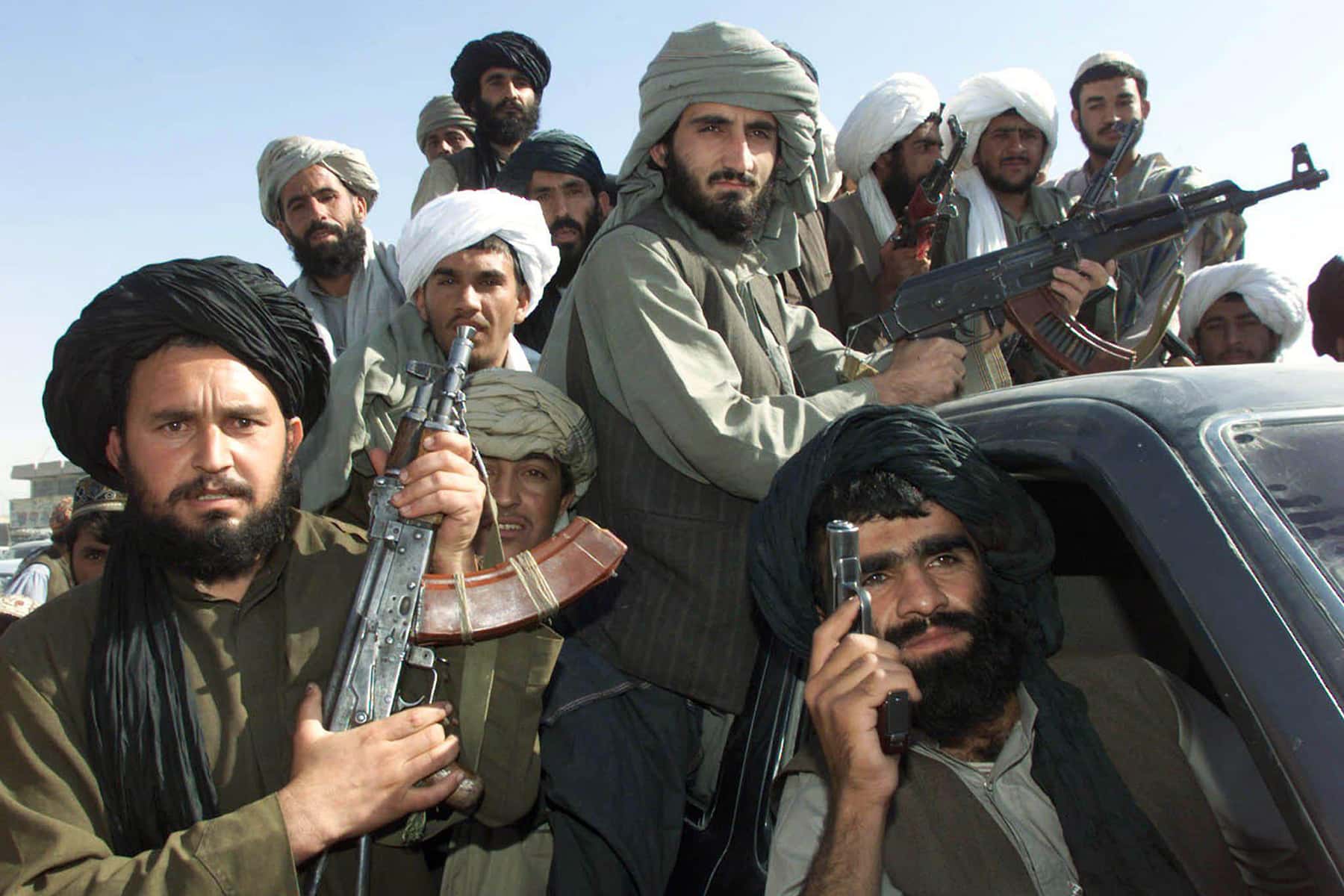
Speaking of "nation building", Brown University announced the results on one of its projects concerning U.S. and its "War on Terror", that states over the last 20 years, Washington has spent $8 trillion dollars and came out empty handed with the Taliban still in charge and Al Qaeda still in business despite the loss of some leaders. Why isn't the American Taxpayer furious?

 In addition, over those 20 years, around 900,000 people have been killed. The U.S. Department of Defense confirmed that over those same 20 years, the American taxpayer has shelled out $145 billion dollars just to rebuild Afghanistan. I'm sure Al Qaeda and the Taliban are quite grateful, not to mention  thankful for the millions of dollars in state-of-the art military equipment we so graciously abandoned when we skedaddled out of Kabul.  

It's worth noting that despite spending billions on nation building since 1946, not a single country has opted to adopt our form of government. Not a single one. The dozens of countries we've helped rebuild like Humpty Dumpty tend to adopt the inclusive British proportional representative government.

Instead, they tend to choose the British “parliamentary” or proportional system where each party is basically guaranteed a seat, depending on the percentage of the vote they get, meaning everyone has a voice in government. This is in lieu of America's "winner take all" system where the voters on the losing side are unrepresented for the term of that office.

Another serious factor in our decline is our educational system. We’ve dumbed it down so as not to “offend” underachievers. We're ranked in the lower tier among industrial nation. How will we compete globally? We’ve accepted the idea of “equal outcomes over equal opportunities”. Everyone gets “participation trophies” just for showing up. Everyone isn't a “winner”.

We’ve developed the notion that certain individuals or groups are somehow "due" something by society simply because they exist. An extension of that is the mistaken presumption that we're “owed” something--- aka "reparations"--- because your ancestors experienced an injustice or other burden. Well, that may be reprehensible, but try naming one group on this planet who hasn't experienced injustice somewhere in their collective history (which speaks volumes about the state of humanity more than it does anything). 

Every race or ethnic group has at one time or another been the slave or the master. But it's all in the distant past. We can't change or undo what happened. They sacrificed for our future. Take from it the lessons they taught us  and move on. The only person ultimately responsible for your success or failure is you. Not the government, not your fellow citizens, and sure as hell not your ancestors.

America has lost its way. We no longer value life or show respect for others or their things. We covet what others have more than we value our own lives. That's how some people end up dead. We're told we're all victims. So now we've developed a victim mentality where others are responsible for our failures, but why not our successes? We're told it's okay to be "offended" if others won't play along with our "pronoun pity party". Guess what? You can "self-identify" as the "Cheshire Cat" if that's what you want, but that doesn't mean everyone has to play long Alice.

We no longer discuss opposing ideas in a civil manner. We don’t want to be presented with anything outside our “bubble”. We want nothing that would distort our view of the world. To do otherwise triggers a intellectual breakdown, requiring a "safe space" and "comfort blanket".

Our partisan politics is a reflection of that. Its’ developed a enemy-like “us vs. them” mentality where the “us” part doesn’t include the average voter. Rather than producing, society now based on consumption of everything without replacing it. Capitalist democracy requires that we  constantly expand and consume ever faster to survive. It’s appetite is insatiable. It’s fueled by greed for “more” of whatever is there.

When capitalist democracy can no longer expand, it begins to metastasize. It starts to consume itself. As it does so, it increasingly seeks to control and manipulate its environment. The economic class which feeds it is put under increasing pressure to provide more and more while it starves. That’s the stage we're now at by the way.

We've arrived at the point where there are no absolutes. Right from wrong is merely shades of gray. Much is often promised, especially by our so-called “leaders”, but no one actually expects those promises to be kept. We've discovered we can invade the coffers expecting them to always be filled but that's increasing not the case.

Facts are now seen as ambiguous. Truth is now a matter of perspective rather than accepted norms mutually agreed upon by society. They're conveniently assumed to be a lie to be discarded if we disagree with them. Perhaps worse is when no one is held accountable for the lie. Let's take a quick look at the nation and the lie we were loosely modeled on---Rome.

"Rome the Eternal", like countless nations before and after, fell because of an over extended and undersupplied military. It was no longer able to impose Roman values on the unruly barbarian tribes. Even its military became less “Roman” as more and more foreigners filled its ranks, who had no vested interest in the empire due to a decline in Rome's  birthrate.  

Originally, the title (and it was a “title”) of “Roman Citizen” carried great weight.  It was bestowed rarely and often with great fanfare. Eventually, it all but lost its mystique. Foreigner didn't settle in order to become a “Roman Citizen”. They came for the economic opportunities Rome could provide.  Eventually, didn’t they even bother to learn the lingua franca of the empire--- Latin---or follow its laws, traditions and adopt its values.  Sound familiar?

Internally, Rome had always been corrupt, but it was the degree of corruptness which changed. It became a cancer and spread everywhere. Citizens were distracted  with “bread and circuses”, that is, games and monthly bread rations, all paid for by the working class---the Plebeians or "Plebs"--- until it eventually collapsed from over taxation.

Taxes and goods from client states also dried up. They developed their own trade alliances and bypassed the Roman “middlemen”. They even lost their fear of Roman might. Why? Not because it was no longer formable, but because Rome could no longer financially sustain a war. Again, sound familiar?

Eventually, there arose an outsider, Julius Caesar, who pledge that “in order to save the Republic I must destroy the Republic”, which was a true enough observation. The Republic could no longer reform itself out of it situation. The dependent classes lacked the means and will. It couldn’t appease all the special interests groups which controlled it. Rome must be founded again.

However, Caesar failed and paid with his life. What followed was a series of internal civil wars, When they were over, Rome had order. It also had a dictatorship. Can we be that far aways from our own Caesar? That’s a question many Americans are asking themselves. We are now a defacto neo-fascist corporatocracy; a surveillance state with all the tools for a full blown police state already in place. All that’s missing is a crisis—-real or manufactured.

We likely won’t have a military junta (although the military is the only institution which has kept a positive approval rating), but rather someone like a board president or chairman. And why not? After all, Wall Street runs the show. Why shouldn’t they step center stage and claim the crown?


 If you enjoyed the article, please consider passing it along to others and don't forget to subscribe. It's free! Lastly please be sure to "like" us on whatever platform you use to read anotheropinionblog.com. It helps beat the algorithms and keeps our articles in circulation. Thank you!


United States involvement in regimechange in Latin America


Operation Condor


Parliamentary system


US initiated 81% of global armedconflicts from 1945 to 2001   


Cold War Coups and Proxy Wars


Costs of the 20-year war onterror: $8 trillion dollars and 900,000 deaths


DoD: What We Need To Learn:Lessons From Twenty Years of Afghanistan Reconstruction


Saturday, June 01, 2024

Israel's Troubles: Hamas and the Blowback from October 7th and Hamas

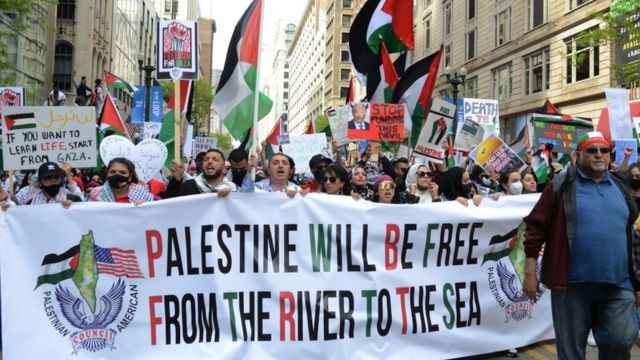
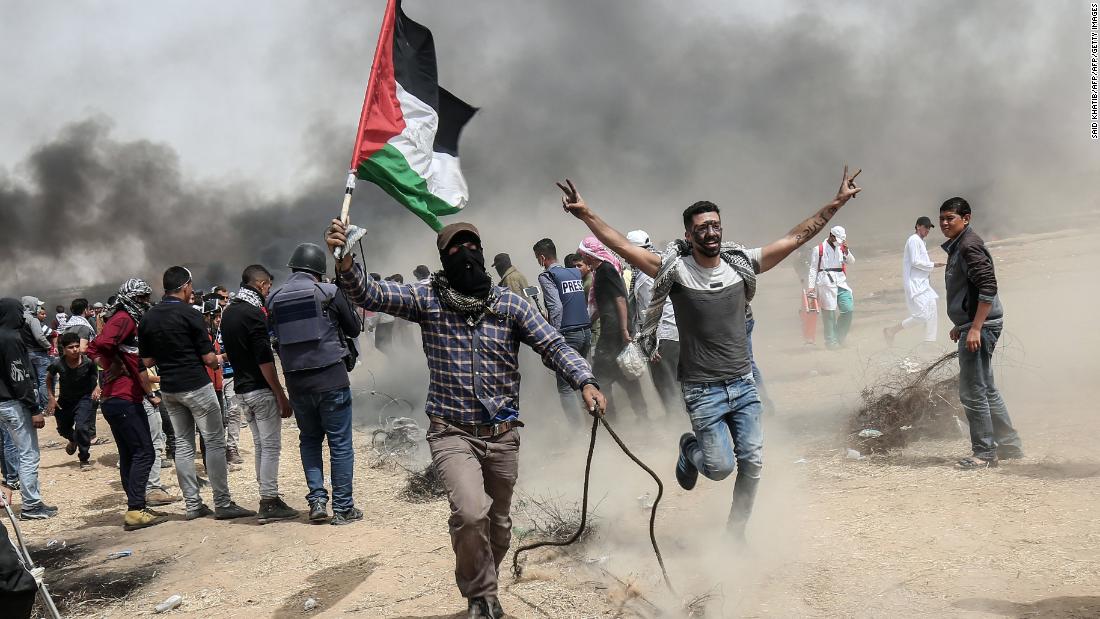
There was a time that whenever Israel was attacked, most of the free (ish) world would rally around the beleaguered little country. But now, it seems nearly everybody, especially the youth, are out protesting and chanting "Free Palestine" or "Stop the Genocide" when it was Israel that was the victim. They (illegally) block highways, streets, and prevent free movement of individuals. They disrupt anywhere they can. They engage in vandalism. They also strike out against anyone who disagrees with them

They charge into shops, disrupt business, knock over merchandise, etc.  They make an ass of themselves at graduation services. They've interfered with wedding and church services. They prevent fellow students from attending class. While these individuals like to wave Palestinian flags, wear a Arab Keffiyeh, I have to wonder just how familiar they are with the history of Israel or Palestine?

Do they know, for instance,  that the region had been under control of the British? As a colonial power, Britain acquired control of what was called the "Palestinian Territories" after  the collapse and breakup of the Ottoman Empire following the end of World War I ( the breakup was engineered by the British and  French which also acquired a large swath of land along with Germany's colonies).

 It was called the "British Mandate for Palestine", and included the Emirate of Transjordan, They also acquired Arabian Peninsula, including what is now Qatar, Bahrain, Kuwait, and the Mandate of Mesopotamia (Iraq).  Egypt had been under British control since 1882.  

In 1917, the British published a statement in support of establishing a Jewish homeland called the "Balfour Declaration".  The declaration favored a dual state, one Jewish and one Palestine. It specifically said that there would be no interference with anyone's religious or civil rights.  In 1939, the British published a "White Paper" or policy statement in response to massive Arab revolts (1936 -- 1939).

The paper was published by Prime Minister Neville Chamberlain (of the infamous Munich Accords). Its aim was to appease the Arab nations by limiting Jewish immigration into the Holy Land, restricted the sale of land to Jews, and the establishment of a Jewish homeland within ten years---1949 in violation of the Balfour Declaration. Of course during that ten year period there was an event which changed everything. It was called the Holocaust.

The Holocaust officially began in 1941, although anti-Semitism wasn't strictly a "German disease" as it was called. It  had been rampant in most European countries for centuries. The Holocaust didn't end until  Nazi Germany's surrender in 1945. It resulted in the deaths of over six million people plus  thousands more forced to live in starvation conditions in dumps known as "ghettos" (as an aside, percentage wise, more Roma gypsies were murdered by the Nazis than Jews).   

While there had been rumblings of reneging on the promise of a Jewish state, but global sympathy for Jews everywhere practically insured the establishment of a new Jewish homeland.  For politicians,  to do otherwise would have been political suicide. Meanwhile, Jews who had earlier settled in Palestine formed their own terrorist units such as Haganah, Irgun and the Lehi or "Stern Gang" in response to attacks on Jewish farms  by Arabs as well as on British authorities in order to keep the Jewish cause in the news and to push British officials back in London.

On November 29th, 1947, the United Nations adopted a plan, originally submitted by American, British, and French, known as "Resolution 181 (II)". It called for a two state solution, one Jewish and one Palestinian. Palestine would compose 42% of the land  or about 6,900 square miles (the proposal was amended to put the town of Beersheba and a strip of land along the Negev Desert into Palestine). 

The new Israeli state would cover 56% of the territory or the equivalent of  8,761 square miles. Israel would get the coastal region from Ashdod to Akko and would include what was the small port city of Haifa. The Palestinians received the central and western Galilee as well as Be'er Sheva and the Jordan Valley. As an aside, this would be the first Jewish nation since its destruction in 79 AD.

The Romans, tired of Jewish revolts and attacks on Roman soldiers and officials, decided that the Jewish state had to go. Accordingly, the main temple (allegedly built by King Solomon) was leveled as where a number of other institutions throughout Judea. Jews were rounded up and taken as slaves or executed (especially the priests and officials). The rest were scattered to the winds with a warning never to return. Thus began the Jewish Diaspora.

As for the remaining 2% comprising the areas around Bethlehem and Jerusalem, would become international zones to be administered by the UN. The Resolution also called for the gradual withdrawal of the British presence from the region. Authority over the respective territories would gradually  be transferred to Jewish and Palestinians officials to run. The actual partition was based primarily on Jewish and Arab population distribution.

When the vote came on November 29, 1947, just two years after the end of WWII, 33 nations, including the United States and the Soviet Union, voted in favor of the plan. 13 nations voted no, and 10 nations refrained. When the plan was submitted to the Jewish People represented by the World Zionist Organization and the existing Jewish communities (called the "Yishuv") it passed unanimously.

However, things weren't so upbeat on the Arab side. Nearly all of the Arab nations voted unanimously to reject the plan on behalf of Palestine (at this point it should be pointed out that Palestine was never a nation state. It was a territory without a central government. It existed mainly as a geographic area on a map).

So, here was the UN offering not just the Jews a state of their own, they were offering the Palestinians the chance to have their own nation as well, which was rejected by other Arab nations (later were known as the "Arab League"). Instead of putting the issue to a vote by the Palestinian people, the matter of a actual Palestinian state which arrogantly rejected by a group of unaffected autocrats.

Worse, these same Arab states, which consisted of Egypt, Transjordan, Iraq, Syria, Yemen, Lebanon, and Saudi Arabia,  along with two mercenary groups, the "Holy War Army" and Al-Najjada, emphatically said  they would snuff out the newborn Jewish state if it declared independence. So, on May 14, 1948, the State of Israel came into being after some 2000 years. The following day, May 15, the five armies of the Arab League invaded. While the Arab nations had a relatively modern military with tanks, heavy artillery, and fighter planes, the Israelis had virtually nothing.

At the outset, Israel's "tank corp" consisted on two WWII era tanks. Their air force was more like a "air farce".  It was made up of mostly WWII era surplus, including some German and British planes. It's army was mostly members of the various paramilitary forces such as Irgun and Haganah, and volunteers from elsewhere. What small arms they possessed either homemade from parts commonly found in hardware stores. Other were WWI and WWII vintage (and one small cannon which dated from the late 1800's!).

Nevertheless, after ten months of bitter fighting, a truce was finally agreed on...and Israel was larger than before. Egypt and Jordan retained control over the Gaza Strip and the West Bank but Israel's population also more than doubled.  The Arab League, despite its strength on paper, couldn't rid itself of Israel. However, what it did manage to destroy was any hope of there ever being a Palestinian State.

In 1956, the Arabs, under the leadership of Egyptian President Gamal Abdel Nasser, decided to try it again. The "Suez Crisis" had mixed results. Prior to the war, Egypt had nationalized the Suez Canal, which had been jointly operated by the French and British. As a result of the nationalization, Egypt effectively controlled all traffic into and out of this vital waterway.  The nationalization was seen by the Arab world as slap in the face of France, Great Britain, and the United States for their support of Israel.

While Israel was attacked by Egypt and elements from other Arab nations, they found themselves defeated in a matter of one week and two days. Israel, along with the British and French and support from the U.S., defeated the Egyptian Army in the Sinai and seized control of Sharm al-Sheikh, thus gaining access strategic control of the Straits of Tiran and forced the Suez Canal to reopen.  It's worth noting that while Egypt had lost on the battlefield, it had won on the all important public relations front, especially among the other Arab nations.

President Nasser was viewed as not just an Egyptian hero, but as a Arab hero, creating what could only be called "Pan-Arabism", uniting all the Arab nations under one banner.  Egypt's loss also resulted in the creation of the "Fedayeen Insurgency Movement", which was a multi-national organization of Arab guerrillas. Their aim was to constantly attack and harass Israelis, particularly civilians, which only added to Nasser's fame and reputation as Israel's deadliest foe.

In June of 1967, Israel found itself at war again. This time it was the Arab states of Egypt, Jordan and Syria. Algeria, Saudi Arabia, Kuwait and Iraq all contributed troops and equipment. By the time it was over six days later (and thus became known as the "Six Day War"), the Arab coalition had again been soundly defeated.

The Arab armies lost more than a war. As a result of their defeat, Israel gained substantial amounts of territory which included both the West Bank and East Jerusalem from Jordan, the strategic Golan Heights from Syria along with Gaza and the entire Sinai from the Egyptians.  Nevertheless, despite another loss, the Arab League weren't quiet finished yet. Later that same year began the "War of Attrition", which would continue for three more years.

The "War of Attrition" was a pseudo-war conducted by Egypt (with Soviet backing), Jordan, Syria, and a new player to the conflict, the Palestine Liberation Organization, better known as the "PLO"  and led by a civil engineer by the name of Yasser Arafat. The war was an intended to recover lost Egyptian land, yet  once again Egypt found itself on the losing end.

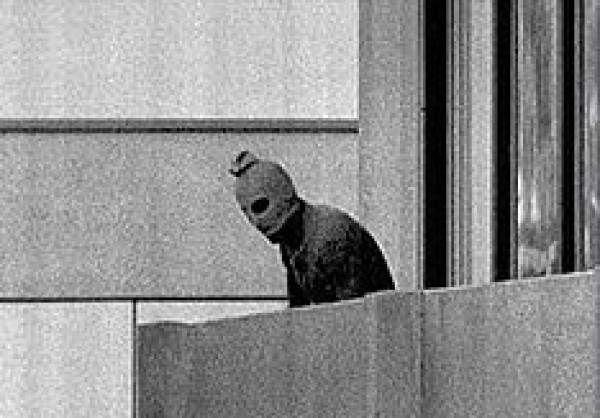
In 1972, a PLO splinter group, "Black September" seized a number of key facilities in the Olympic Village  during the 1972 Summer Olympics in Munich, Germany. Its goal was the capture and murder of the Israeli Olympic team. The credibility of Germany was at stake too. The 1972 Olympics marked the first time Germany had hosted the games since the 1936 Berlin Olympics under Adolf Hitler and the German Olympic Committee was determined to put Germany in a positive light.

The German police and special units of the German military made several botched rescue attempts (with the help of the media which was broadcasting live every movement of the German rescue attempt). 20 hours later, all 11 Israeli Olympians were dead along with the terrorists in what become known as the Munich Massacre"

In 1973 came the infamous "Yom Kippur War" which nearly resulted in not just defeat for Israeli forces, but the destruction of Israel itself. The war, led by Syria and Egypt and the usual compliment of multi-national Arab volunteers, attacked Israel on its most sacred day---the "Day of Atonement", or Yom Kippur.

After a frantic and bloody 20 days of fighting, Israeli forces were able to recover land taken in the earliest days of the fight and went on to decisively defeat their enemy, coming within miles of the capitals of both Syria and Egypt. While a victory for Israel, it was hard fought and Israel came to the razor's edge of defeat. The result was a complete reorganization of the Israeli government, its army and General Staff, and its intelligence services, the Mossad and Shin Bet.

Since then, Israel has continued to fight numerous wars and conflicts including the 1982 Lebanon War, the terroristic Abu Nidal Organization, two Intifadas, a second and third conflict in Lebanon, which included a new terrorist organization, the Iranian backed Hezbollah, and numerous military engagement in and around Gaza. 

There was some success however. In 1979, Egypt and Israel concluded a peace and trade agreement in exchange for Israel returning the Sinai. Jordan signed a similar agreement in 1994. By 2020, four other Arab nations---United Arab Emirates (UAE), Morocco, Sudan, and Bahrain agreed to recognize Israel and normalize relations. The "land for peace" policy seemed to be working.  Even the PLO mellowed.

That all changed on October 7, 2023, when some 3000 members of Hamas's paramilitary suddenly attacked and murdered thousands of innocent men, women, and children who were attending a concert. They beat, mutilated, incinerated, and brutally raped almost as many.  Then there's the bloody 252 hostages they took, intending to hide behind them like cowards and to use them as bargain chips. Hamas had previously been lobbing missiles into Israel on a weekly, if not daily, basis.  Who can truly fault Israel for trying to protect its people and rid the world of this plague?

But this is the Middle East, where peace is fleeting and hatred runs deep. It's where the cult of death is valued  more than the love of life. Somehow, it's coming here to our shores. Naive and  idealistic youth, coached by their professional protest organizers, spew  unimaginative slogans demanding a "free" Palestine and an end to Israeli's "genocide" at the top of their lungs while being totally unaware of the past.

Where were the protesters when Hamas, a recognized terrorist organization that even the Palestinian Authority dislikes, murdered, starved, and bullied the people of Gaza for years or when they used schools and hospitals as cover to launch rockets at Israel in the hopes Israel would retaliate so they can use their bodies as propaganda? Where's the outrage now against rape or threat of rape being as a weapon?  Where the anger for the innocent Israels murdered in cold blood or those taken hostage?

They say knowledge is power. I hope the facts presented to you in this article makes you one powerful individual. At least, I hope it opens your eyes. It will, at the very least, enlighten you about how the Arab League, not Israel,  allowed their hatred of the Jews to deny the Palestinians a homeland. How Arab nations repeatedly attacked Israel directly and indirectly.


If you enjoyed the article, please consider passing it along to others and don't forget to subscribe. It's free! Lastly please be sure to "like" us on whatever platform you use to read anotheropinionblog.com. It helps beat the algorithms and keeps our articles in circulation. Thank you!


Partition of the Ottoman Empire


White Paper of 1939


British Mandate for Palestine


List of wars involving Israel


Suez Crisis


Casualties of the Israeli - Hamas War


Massacre at the 1972 Olympic Games


Hamas