Showing posts with label Warsaw Pact. Show all posts

Thursday, March 06, 2025

Trump Getting Real with Zelensky: Find Peace with Russia or No More Money


Much has already been made of the heated meeting between President Vladmir Zelensky of Ukraine and President Donald Trump and Vice President  JD Vance.  President Trump, in effect, told Zelensky to make peace with Putin or he was taking away the keys to Ukraine’s war machine…and put a damn tie on where he’s at it!

Zelensky seems to believe that with U.S. financial backing, he will be able to stalemate Putin virtually indefinitely, perhaps even in the long run, obtain NATO membership. That’s something Trump opposes. Putin has attempted several overtures at peace, which Zelensky has essentially blown off like, and why not? He’s got the biggest bully in the world in his court, the United States.     

Trump used the meeting to make a very public statement to Zelensky, the people of Ukraine, to Putin, and to the world---no more money, no more armament and no mineral deal until Zelensky puts on his big boy pants and can set down for a serious discussion about peace with Russia, otherwise we walk, and he can deal with one very angry Russian bear.

 NATO, which also heavily depends on the US, can do as it pleases, but the US needs to set this one out thank you very much should they continue to poke the bear (and kudos to Italy’s Prime Minister, Georgia Meloni, for rejecting UK-French plan to send European troops to Ukraine). It’s one thing to come to the aid of ally being attacked, but when they bring it on themselves, maybe a lesson in “told-you-so” diplomacy is in order.

Putin, on the other hand, has committed much of his military to what amounts to a slow bleed of Ukraine’s economy and military. His has activated antiquated weapon systems (such as outdated tanks) and even employed North Korean troops in what amounts to a ”fight for food” deal for the bankrupt Communist state.

The only sensible reason for Putin to do this is one of taking a measured stance against Ukraine. Putin didn’t start the war. Zelensky and NATO did (with a little help from a former president’s son looking to score a big financial payday). Putin has been consistent his insistence that NATO missiles and armament will not be deployed along his border with Ukraine. Zelensky and NATO thought that by playing the U.S. card, Putin could be intimidated. That wasn’t going to happen

Putin is not a spineless leader of the sort that Europe has produced in abundance lately (for an example, look at their immigration disaster and its effect on crime and their culture). Putin is very intelligent. He was a senior KGB officer. He doesn’t bluff. Unlike European leaders, he doesn’t care if you call him names.  However, since the fall of the USSR and Soviet Russia, their leaders, starting with Mikhail Gorbachev, have tried  once again to build bridges to the West.

Ever since the days of Peter the Great, Russia has wanted to join with the West and act as a bridge between East and West. At one point,  they even asked to join NATO and was rejected out of hand and perhaps justifiably so. With the end of the Cold War, there had been a lot of talk about dismantling NATO.

Therefore, NATO’s justification for its continued existence depended on having a bad guy and that bad guy is Putin. It’s also why many neo-cons and policy gamers are anxious to start a new Cold War. War is profitable---cold or hot. It bears mentioning that the establishment of the Warsaw Pact came about only after the creation of NATO and then with the intention of being a defensive deterrent, presumably against the same military and industrial complex President Eisenhower spoke of in his 1961 “Farewell Address to the Nation”.   

In 1990, as the Warsaw Pact nations began to fall, Secretary of State James Baker informed Soviet Foreign Minister Edward Shevardnadze (in the presence of Gorbachev) that once the unification of Germany was complete, NATO had no intention of advancing “one inch to the east”, and yet within ten years, that’s exactly what happened. Gorbachev saw it as a time to restart and one of openness or as he called it, “Perestroika”. As Gorbachev said at the time, “we are duty bound to learn to live in peace”.

One by one, the former Warsaw Pact countries of Poland (1999),  Hungary (1999), Romania (2004), Czechia (1999), Bulgaria (2004), the Baltic states (2004), and so forth were admitted into NATO, and each time Russian leaders protested through all the proper international channels and were ignored.

At first, the Russians were assured there would be no more, until there was. But each time a country joined, NATO missiles were deployed all along their border. As a result, Russia was slowly helmed in. It would be like Russian missiles being deployed along our southern border, first in the numerous Caribbean islands one by one, until finally, in Mexico along the Rio Grande.

What if the Russians started deploying missiles along the Canadian border just like what happened after Norway and Denmark joined NATO in 1949, Finland in 2023, or Sweden in 2024.   How would you expect Washington would react?

Actually, you don’t even have to imagine. That was what the 1962 Cuban Missile Crisis was all about. It was Russia’s response to U.S. nuclear tipped intermediate range “Jupiter” missiles previously being deployed in Turkey (which had joined NATO in 1952).

Amusingly, then Soviet Premier Khrushchev would walk visitors to his vacation home on the Black Sea to the balcony and hand them  a pair of binoculars, asking “what do you see?”. They typically replied, “I see the sky” or “I see the water”. He would then look through the binoculars and bellow “I see American missiles in Turkey aimed at my dacha!”.

It seems that everyone knew that a NATO presence in Ukraine would be the straw to break the bear’s back, yet they expected Putin to do nothing but grouse and saber rattle like the West does, but that didn’t happen. Putin secured the Crimea, which has been a Russian possession since 1783 when it was annexed by Catherine the Great. It has a majority Russian population. Strategically, the Crimea is the home of the Russian Black Sea Fleet, at Sebastopol, which is their version of our naval base in San Diego.

Russian is taught in its schools and it’s the common language of its people. It was followed by a plebiscite, asking the citizens whether they wanted to remain apart of Russia or the Ukraine. The overwhelming majority said “Russia”.

But this had nothing to do with the history of the region, the will of the people, national sovereignty, or even the long standing presence of the Russian military in and around Sebastopol. This was about oil and gas, which had been discovered in abundance in the Black Sea, and western oil companies wanted it.

In addition to large reserves of oil and gas, the Ukraine has vast deposits of key minerals, much of it in the disputed Donbas Region which is occupied by Russian troops. The deal President Trump was willing to sign with President Zelensky would have allowed a U.S. presence in the Donbas (technically still belonging to Ukraine) to mine for deposits valuable minerals, with each country splitting the processes 50/50. It would enable the Ukraine to begin paying the U.S. back some of the billions it owes us in aid, retain Ukrainian soil, and help Ukraine to rebuild its infrastructure.

In addition, it would be an incentive for Putin’s troops to either withdraw from the areas being explored and mined, or perhaps even pull back altogether. After all, Putin doesn’t want to kill or injure U.S. civilians at any cost. It would serve as a de facto “economic buffer zone” without the need for a single pair of U.S. military boots on the ground and each side wins.

However, Zelensky needed to agree to a peace talks with Russia, and that’s where he has repeatedly dropped the ball. When it comes to power politics, Zelensky is out of his league. He’s a standup comedian turned politician unlike others who are politicians turned fools.  Accordingly, he got a dressing down in his meeting with Trump and Vice President Vance. He was put on notice that the U.S. would not finance his war with Russia indefinitely or for free.

Even during the early stages of WWII, before the U.S. was directly involved, Prime Minister Churchill gave the U.S. 99 year leases to bases on their island possessions in the Caribbean as a “down payment” and “thank you “ to all the war material and economic support we provided to England under the Lend Lease Act of 1941 (the act also extended to the Republic of China, France, the Soviet Union and other allied nations).   As of 2024, we have given Ukraine $174.2 billion dollars in aid (military and otherwise) while the European Union has given about $18 billion.

President Trump announced during his speech to Congress on March 4th, that he had received a letter from Zelensky finally agreeing to sit down with Putin and hammer out some sort of peace deal. It may not be entirely to Zelensky’s liking, or that of Putin’s, but it will mean no more killing on either side and ending the destruction of Ukrainian cities and villages.

In addition, President Zelensky said in his letter to President Trump that he was still willing to sign the minerals agreement, which would be a good thing for the Ukrainian economy. Ukraine is a country with vast untapped economic potential, from the oil and gas reserves it does control, to its timber and mineral wealth, and it possesses the most fertile soil in Europe and quite possibly the world. (hence the moniker “breadbasket of Europe”).

This was also an education of sorts for Zelensky about what Otto von Bismarck called “Realpolitik”. Never disrespect your benefactor or take them for granted. By that, don’t show up in casual slacks and t-shirt and “knock-around” boots to meet the leader of a world power and expect to be given a virtual blank check for a never-ending war without a plan to pay them back.  America isn’t your ATM. Show some humility. Even Churchill arrived dressed to the nines with hat in hand and he offered at least island leases!  


Thank you for reading "Another Opinion", the Op/Ed blog page for the "militant middle".  Here at "A/O" we truly value our readers. At A/O we seek the facts as they exist, not partisan talking points.  We hope you find our articles informative and engaging. Comments are welcome, provided they are not vulgar, insulting or demeaning.  Another Opinion is offered without charge and is directed toward all independent and free-thinking individuals. We ask, however, that you "like" us on whatever platform you found us on in order to keep our articles available for free to others. Lastly, in order to keep costs down, we depend on passive marketing, and therefore, depend on our readers to please forward our posts along. Below you will find links to the sources we used in writing this article. Thank you. 


  Zelensky vows to ‘make things right’ with Trump and negotiate peace


How Gorbachev was misled over assurances against NATO expansion


4 Lessons to be learned from Zelensky’s White House Meeting


What they said: Trump, Zelenskyy and Vance’s heated argumentin the Oval Office


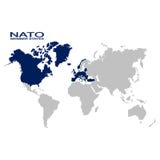
NATO Members


Russo-Ukrainian War  


Controversy regarding the legitimacy of eastward NATOexpansion


Lend Lease Act


EU Assistance to Ukraine (in U.S. Dollars)


No suit, no lunch, no respect: Zelenskyy-Trump feud startwith a fashion dig


Saturday, May 21, 2022

Uneasy Bedfellows: Sweden, Finland, NATO and Putin


Sweden and Finland, two Scandinavian countries to Russia's northwest formally submitted an application to join NATO on May 17th in light of Russia's invasion of the Ukraine. Russian President Vladimir Putin had previously warned both nations of the potential danger they faced by joining NATO rather than remaining neutral, which many took as an not so subtle Russian threat.

While Putin doesn't directly oppose the move by Sweden or Finland, NATO's Musketeer-like pledge of "one for all and all for one", makes it clear that any incursion by one NATO member would result in an appropriate military response on all NATO members, or so says Putin. So, why would Putin approve Finland and Sweden's admission to NATO and not the Ukraine's?

NATO came into being just after the end of World War II in 1945 as a means to offset a newly expanded Soviet Russia into the Soviet Union with the addition of so-called "liberated" nations from Nazi and fascist control. Later, in 1955, they would transform into the Warsaw Pact, which was in response to NATO, which was created in 1949, and intended as a buffer from a potential invading Western coalition.

Several nations, Sweden and Finland among them, wanted to maintain as military neutrality between themselves and the USSR. This was in part to keep open historic trade relations with Russia and its partners similar to the 1956 non-aligned movement which included India, Egypt, Yugoslavia and 117 other countries which sought to maintain a economic balance between the West and the Soviet states.

That, however, didn't preclude Sweden at least for conducting restricted joint military games with Europe. In 2017, Sweden held the largest war games in 20 years jointly with NATO members. In anticipation of joining NATO, Finland has participated in limited war games with NATO. Previously, there was always the fear of irritating the Russian bear.

Such fears gradually decreased after the implosion of the Warsaw Pact in 1989 and then, Soviet Russia in 1991, along with continual trade and economic integration which had created the European Union. Now, with the invasion of the Ukraine, that fear has reasserted itself and turned into one of self-preservation and urgency.

However, Sweden and Finland may have to hang on together a little longer. Turkey, the second largest military member of NATO (behind the United States) and one of two Muslim nations in NATO's (the other is Albania, which is 60% Muslim compared to 99% for Turkey) is opposing the entry of Sweden, and to a lesser degree, Finland, into NATO.

Under the rules of admission, any one member of NATO can oppose entry of a nation into its ranks. Turkey's President Erdogan has said that he opposes admission of Sweden and Finland over "security" issues and support of "terrorist" groups. Specifically, he is referring to the support of Sweden and Finland of the PKK---the Kurdish Workers Party---which promotes a free Kurdish State and allegedly has killed tens of thousands (mostly Turks) since 1984.

In addition, both Sweden and Finland have used their clout in the EU to oppose arms sells to Turkey with the express goal of using those weapons to fight Kurdish rebels known as the "YPG" or Syrian Kurdish People's Defense Units, which is linked to the PKK. Lastly, Erdogan opposes Swedish sanctuary of Fethullah Gulen's followers after a failed attempt to overthrow the Turkish Government in 2016. Gulen is a radical U.S. based Muslim cleric.

Finland has been part of the EU since 1995. Its largest trade partners are Sweden, Germany, and United States. Russia, which is Finland's 6th largest trading partner, gets 12% of its imports. Russia accounts for 5% of its exports. Notable but not overly significant.

Sweden, also an EU member since 1995, exports just 1.2% of its good Russia and in return gets back 2.5% in imports, so any economic effects from Russian sanctions would be minor at best. Sweden's largest trading partners are Norway, Germany, the United States, Denmark, and Finland, with Russia ranked 15th (as an aside, China is 6th in terms of exports, at $8.4 billion while Russia receives just $1.2 billion in exports).

So, economically, neither Finland or Sweden is of that important, and there's no reason to expect NATO membership would preclude an change in trade between either country and Russia. If anything, it may provide an additional conduit for trade between Russia and the West in the event of expanded sanctions.

So, why Russia would accept NATO membership of Finland and Sweden but not Ukraine? Does the answer again go to national security just as Putin has maintained all along? As far as Moscow would be concerned, the addition of NATO troops, ships, and particularly missiles in Sweden and Finland, will make little difference. If truth be known, Russian military planners long ago accounted for Sweden and even Finland in their response calculations should a war break out with NATO.  To paraphrase an old adage I adapted, "if you're not with me, you're against me. The only neutrals are in cemeteries".

While Sweden shares no common border with Russia, Finland does with some 830 miles of mostly inhospitable mountainous terrain, bitter cold, and dense forests with Russia. With Finland, the majority of its population and industry are located within 25 miles of Helsinki, which accounts for 27% of its total population (Finland only has a total population of about 5.5 million, and just nine cities with populations over 100,000).   

In Sweden's case, 85% of its 10.21 million population live in urban areas. About 3.3 million live in Stockholm and the surrounding metro area. The city of Gothenburg, Sweden's second largest city, has around 2 million, while another six cities have roughly 100,000 each.

Ukraine, on the other hand, has a 1,426 mile long border, which includes 199 miles along the Black Sea. Its land is among the most fertile in the world and it's moderately populated (both Russia and  Ukraine also share a similar language, history, and culture). Note too that Ukraine was occupied by the Soviets from 1922 until the collapse of the Warsaw Pact in 1989 before becoming independent in 1991. 

Russia's largest naval base since 1783 and home of the Black Sea Fleet is nearby at Sevastopol in the Crimea. It comprises an area of 334 square miles and a population of around 430,000 (when you add in surrounding towns and other populated areas, the total population jumps up to 510,000).

It's worth nothing that some military analysis believed that the Black Sea Fleet is the least prepared of the Russia's four main naval bases, ranking them in order of importance, Baltic, Northern, Pacific, and lastly, Black Sea. However, it is a key link between Russia and its ally, Syria. Then too, there's that matter of oil.

It was recently confirmed that the Black Sea shelf and the Azov Sea may potentially be one of the richest reserves in the world. Ukraine had, in fact, been quietly counting on acquiring full access to it and making closed doors deals with energy giants like Exxon, Dutch Shell, and BP (Europe receives approximately 40% of its oil and gas from Russia, with Germany---the EU's economic engine---getting 70% of its oil and gas from Russia), but then came the annexation of Crimea.

So, how much oil and gas are we talking about? Best estimates are 2.53 million tons of crude oil, 58.6 billion cubic meters of natural gas, and 1.231 million tons of natural gas condensate. That's more than enough to go to war for. It's estimated that Russia's annexation of the Crimea deprived Kyiv of some 80% of its energy potential.

If Russia manages to keep the four Donbass provinces as a result of the current war, it could possibly acquire most of the Ukraine's estimate 60 million tons of coal (90% of the Ukraine's coal lays in the Donets Coalfield, in the Donbass Region). While the Ukraine is rich in other natural resources, including gold, strategic metals, wood, and some of the most fertile soil on the planet, the loss of the Crimea oils and gas fields as well as the coal rich Donbass would severely hurt its energy needs.

Putin claimed the invasion of Ukraine was a matter of national security, and maybe it was, at least to a point. Putin didn't want NATO troops, artillery, tanks, and especially missiles on his border, and especially at the naval base in Sevastopol (even if it's a third rate base). He certainly doesn't want NATO surveillance staring him in the face.

But, it was the oil and gas of the Crimea which was key. And it's the coal rich Donbass region in the east that he wants. The war wasn't so much as a matter of national security as it is one of acquiring energy. In the near future it will be over the fertile soil like that of the Ukraine, strategic resources, and potable water elsewhere. Control of resources will the reason for all  future wars regardless of the "cause" assigned to it.

Since Sweden lacks a border with Russia and Finland's is so insignificant, Putin can use feigned indifference to their applications to join NATO. It doesn't hurt that Finland lacks oil and gas too. Otherwise, Finland's admission to NATO would be deemed a national security and denied just as in Ukraine. If Putin hoped to weaken NATO in his quest for oil and gas, he failed miserably.


If you want to know more, please take a look at the links below. If you enjoyed the article, please consider passing it along to others and don't forget to subscribe. It's free! Lastly please be sure to "like" us on whatever platform you use to read A/O. It helps with the algorithms and keeps our articles in circulation. Thank you!  


The leaders of Finland and Sweden say they will jointlysubmit their NATO applications


Finland and Sweden want to join NATO. Here how it works andwhat comes next.


Sweden's Top 15 Trading Partners


Finland's Top Trading Partners


Russia's naval base in Ukraine: Critical asset or point of pride?


Exxon and Shell win Ukraine oil bid


Energy in Ukraine


NATO chief sure spat over Sweden,Finland will be resolved


Fossil fuel companies are exploiting Russia's attack on Ukraine


Friday, January 28, 2022

The Howling Dogs of War: Russia's Planned "Blitzkrieg" of the Ukraine or Posturing?

Tensions between NATO, the United States, and Russia seem to be growing by the day as Russian continues building up troops along its border with the Ukraine---100,000 so far--- with mounting troop concentrations in Belarus's border with the Ukraine. 

Meanwhile, NATO is moving men and material east as hardware, including "Javelin" anti-tank missiles are being sent south from Estonia and Stinger anti-aircraft missiles from Lithuania and Latvia, with U.S. approval, not to mention around 8500 American troops now on alert. The Ukraine has thus far received approximately 90 tons in what's labeled as "lethal aid" and the promise of more to come from the U.S..

Russia is moving massive amounts of tanks, artillery, and armored  personnel equipment comprising 60 battle groups ever closer to its border with the Ukraine (and especially its capital, Kiev/Kyiv) like a predator preparing to leap its prey.  Ships from Russia's largest naval base at Sebastopol, located in the Crimea side of the Black Sea, have begun their "military exercise" in the area along with 20 ships from its Baltic Fleet.  

At the same time, a U.S. naval strike force, led by the aircraft carrier "Harry S Truman", along with French warships (including the aircraft carrier Charles De Gaulle) and other foreign naval ships have been placed under NATO command as they head eastward toward the Black Sea. Numerous aircrafts, notably state of the art F-15 and F-35 fighters, are being sent east from as far away as Spain as round the clock surveillance flights begin.   

Russia is putting its famed paratroops into staging areas, and, although there are no confirmed reports, may have already prepositioned its elite Spetsnaz special forces either along or just inside the Ukrainian border with the intention of staging a "false flag" or staged attack on Russian forces as a pretense for launching a limited "punitive" attack the Ukraine and its capital, Kiev reminiscent of Germany's pre-invasion of Poland in 1939. 

The speed at which tensions have built around the Ukraine to the point of an all out war is both amazing and alarming. What has happened to trigger this confrontation? What's really going on?


The Ukraine and Russia have had a long and often troubled history dating back to the 1100's. The Ukraine, known as "Europe's bread basket", has faced oppression from the Czars, the 1917-21 Russian Civil War which included pro and anti Soviet forces along with Ukrainian nationalists, forced collectivization under Stalin and the famines of 1932 and 1933 resulting in the deaths of millions from starvation, and its early support of invading German troops in 1941 as "liberators" from Stalin.

In 1989, President George H.W. Bush promised Russian President Gorbachev, that in anticipation of the collapse of the USSR, the U.S. would not encourage NATO expansion to the east into former Warsaw Pact nations, which is exactly what happened starting in 1991.  As an aside, the Warsaw Pact was formed following WWII as a buffer between Soviet Russia and the West, particularly Germany. It also provided Russia with a captive economic zone. 

In 1991, the Ukraine formally gained its independence from Russia. However, its wasn't as "clean" as it seemed. While the Ukraine chaffed under Russia domination, approximately 30% of the population supported Russian policy and rule, especially in the east and south, with the majority of Ukrainians spoke Russian. The extreme eastern part of the Ukraine, the Crimea, had long been central to the Russian navy, providing it with a year around warm sea port and access to the Mediterranean Sea through the Bosporus Straits.   

Nevertheless, following published news of a secret oil deal between the Ukrainian Government and various Western oil companies relating to the discovery of vast oil and gas reserves, the Russian military reasserted itself in the Crimea in 2014. By the way, this preceded a public referendum in February of the same year, in which 83% of the 95.5% Crimeans who voted were  in favor of rejoining the Russian Federation.

 Since then there's been repeated accusations of "regime changes", both pro-Western and pro-Moscow, including most recently by Russian President Putin as Kiev has sought closer contact with the European Union (EU) and submitted its application to join NATO. 

The problem from Moscow's perspective is that despite President Bush's earlier assurances in 1989, most of the former Warsaw Pact nations have sought and received not just closer economic connections with the EU, but have also joined NATO; Poland, Hungary, the Czech Republic in 1999, the three Baltic states of Latvia, Lithuania, Bulgaria, Estonia, Romania, Slovenia and Slovakia in 2004, Albania and Croatia in 2009.

Thus, NATO virtually surrounds Russia on its Western front. All that would be needed to complete the noose around Russia by the West would be the acquisition of just one country---the Ukraine. That would represent thousands of troops, tanks, aircraft, and missiles aimed point blank at Moscow, despite NATO's claim to be solely a defensive organization.

With the Ukraine, NATO would add another naval base at Odessa (Western Naval Base) and Berdyansk (Azoz Naval Base). At only 300 miles from Moscow using the M3 Highway, there would be even more military with quick access into the Russian frontier, not to mention aimed at point blank range at the Russian naval base of Sebastopol, which is only 340 miles from Odessa and 290 miles from Berdyansk.

It would be like a massive military buildup on the U.S./Mexican border aimed directly at our second largest naval base in San Diego. I don't think we would quietly sit back and do nothing do you? Some of you remember how we reacted when the Soviet Union placed missiles in Cuba, which is 90 miles from Florida, back in 1962 in retaliation of our "Minutemen" missiles in Turkey aimed at Russia. We stood on the razor's edge of nuclear war until reason on both sides prevailed.

Meanwhile, as President Biden (or his handlers) continue to saber rattle about Russia's "imminent" invasion of the Ukraine and the hell that it would bring, President Putin has repeatedly said that he does not intend or want to invade the Ukraine. His positioning of Russian troops are there to send a stern message that he would not accept a noose around Russia's neck.

While he dislikes the prospects of a Western leaning Ukraine, Putin has said that he won't accept a military presence by NATO on his border. Russia has already taken serious economic hits with former Warsaw Pact nations aligning with the EU, and somewhat amazingly, while Moscow has loudly protested, didn't launch any military operations when Poland or Romania, or Latvia joined NATO. But the Ukraine would be step too far.

Within the past few days, France and Germany, the powerhouses of Europe, have asked that NATO and Russia to step back and take a breath. Neither side wants war. In fact, the only one screaming "war!" is Washington. Europe is dependent on Russian oil and gas. Germany, the industrial and technological heart of Europe, gets 40% of its energy from Russia. However, Russia needs European imports just a much. Even the Ukraine is partly reliant on Russian imports. A war is a no win situation all around.

As for Washington, the U.S. just made a messy withdrawal from Afghanistan and looked like a bumbling idiot to the most of the world in the process. We fought a 20 year war and came out with bupkus. The Taliban, which we were told were all but defeated, were back in charge before our last planes left the Kabul airport. Al Qaeda, responsible for the cowardly 9/11 attacks are back too. So is ISIS, while other terrorists groups suddenly feel empowered to do as they please. 

The only people happy about the outcome in Afghanistan and Iraq are the military contractors and energy companies which racked in trillions of dollars, and now the "dogs of war" are howling for more blood and carnage. Despite the fact that the U.S. military is in serious need of a total overhaul in terms of repairs and replenishment of supplies and spare parts, the "death dealers" are ready to go again.

 Personally, I've always thought that the ones who want war should be the first to fight. That includes those who push for military intervention or "regime change" for the sake of natural resources or to force open markets for greed's sake. 

It's a long "honored" tradition among presidents and their administrations to be seen as heroic military leaders. For some reason, it makes them seem  "strong" or "courageous"; they are willing to stand up to the enemy---real or manufactured---for the sake of "spreading democracy" and the "American Way". 

In truth, it's more often for the sake of psychotic level greed, be it installing some brutal military junta, bribing an existing president and their government, or using the U.S. military for simple intimidation.  

With Biden's ratings being what they are (a low of 39%) and upcoming midterm elections set to deal the Democrats with another disaster, Biden, and by extension, the Democrats, need to be seen as strong and proactive, but that ain't happening. The Democrats are viewed as out of touch and authoritarian thanks to their so-called "mandates", inability to deal with the pandemic, inflation, or the supply chain crisis.

 As for Biden, he's seen as a pitiful doddering old man; as someone with early onset of dementia and incapable of being a strong president. Having said that, the Republicans are exactly superheroes either. Their approval ratings haven't been good for awhile either. They have a disapproval rating of 56%, compared to the Democrats, who have a disapproval rating of 55%.

In Russia, Putin has an approval rating of 65%, which, for an American president would be terrific, is actually bad for Putin. Since April 2018, when his approval rating was 82%, his rating has dropped and continues to drop. He needs restore his previous approval level by looking tough. Regarding the situation with NATO and Ukraine, 69% of Russians don't believe there will be a war. As to who is responsible for all the drama, 50% of Russians say the U.S.,16% blame the Ukraine and 4% blame Russia.

So, let's decipher what all this means. For a number of reasons, not the least of which is the history between Russia and the Ukraine, the Ukrainian government wants closer economic contact with the EU and to join NATO. Russia, on the other hand, doesn't want another NATO military presence on its border, which already exists from the Baltic States down the length of its entire Western border.

With 57% of the land being arable and only 4% under irrigation, the Ukraine can offer the West a lot, from corn, wheat, and barley to coal, steel, machinery, and providing another major source of oil and gas. Plus it's a great transition site to Turkey (another NATO ally and member of the EU), and on into the Middle East, India, not to mention its tremendous economic development potential. And despite its current situation with Russia, the Ukraine still exports more than 60% of its products to Russia and other former Soviet Republics.

There is no reason why this shouldn't continue. The Ukraine is in a perfect position as an intermediary between East and West. However, and while Kiev has a right to join NATO, that doesn't necessarily mean it's should. With a uneasy neighbor to the north in Russia, it may be a very dangerous thing to do, especially if Russia believes its defending its own national sovereignty.

Also, all this posturing by the U.S. and NATO to isolate Russia could push Putin closer to China and countries like Iran as a matter of necessity. How does that serve our interests? Frankly, Russia would make for a better friend to the EU and U.S. than as an enemy.

A non-military NATO partnership may be the best solution for all concerned (ie: no NATO military bases or hardware---particularly missiles---allowed) but maintaining a strong defensive military, plus allowing equal naval access to its ports by both NATO, the U.S. and Russia. Meanwhile, allowing Kiev to be economically engaged with Russia, the EU, and whomever it wishes (this will require Russia to acknowledge the Ukraine's national sovereignty which it currently does not). War benefits no one except the few.

Speaking of which, Biden is in trouble. Okay, but so what? That does not give him the right to push for war thousands of miles away, even if it's only bluff. The Chicken hawks and death merchants are the only ones who stand to gain. Well, they've gained for the last 20 plus years now. They can set back and quietly count their gold for a change.  Let's have peace for change of pace. What do you say NATO? Putin? Let's find a compromise.


If you want to know more, please take a look at the links below. If you enjoyed the article, please consider passing along to others and don't forget to subscribe. It's free! Lastly please be sure to "like" us on Facebook or whatever platform you use to read A/O. It helps with the algorithms and keeps our articles in circulation.


If Russia invades, sanction its oil and gas


Assessing the Conventional Force Imbalance in Europe


Party Favorability Ratings Near Parity; Both ViewedNegatively


Do you approve of the activities of Vladimir Putin aspresident (prime minister) of Russia?


Ukraine's Major Exports


Navy Puts Carrier Under NATO Control As Russian ShipsConverge On The Mediterranean


Sunday, July 15, 2018

Let's Talk About NATO Shall We?


President Trump recently ruffled some feathers while speaking to members the North Atlantic Treaty Organization or NATO. Ruffling feathers isn't anything new for Trump, who seems to take a devious delight in seeing whose golden goose he can drop kick across the Rose Garden. I can't say I blame him. Washington is deep up to its coffered comb overs in special interest muck. However, I was curious to see if Trump was right about this one. Are US Taxpayers picking up the lion's share of the bill needed for Europe's defense? For that matter, should Washington even be spending our money on Europe's military?

Before we get started, let's take a moment to remind ourselves why NATO was created and what it's all about. Historically, Europe had long been a continent interlocked by a complicated network of treaties and alliances which ebbed and flowed like Seine or Danube rivers. Today's friend was tomorrows arch-nemesis. This system of alliances reached the status of an art form under three key statesmen---Charles Maurice de Talleyrand (1754 - 1838), who career as French diplomat and foreign minister spanned decades, from King Louis XVI through the French Revolution, Napoleon, King Louis XVIII and Louis-Phillip. Known to be as brilliant as he was duplicitous.

Next was a younger contemporary, Klemens von Metternich (1773 - 1859). Von Metternich was Austria's Foreign Minister who represented the victorious powers following the second defeat of Napoleon. His diplomatic maneuvering resulted in the creation of the "Metternich System" of interlocking treaties and alliances designed to prevent any future "Napoleon" and ensure peace in Europe. The last, but less important diplomatic chess player was Prussia's Otto von Bismarck (1815 - 1898). Von Bismarck served first as the Minister President of Prussian, and then later as Chancellor of the German Empire; an empire he largely created himself.

All three men attempted to create a network of alliances designed to benefit their particular country just as any diplomat then or now would. But, given Europe's long history of bloody wars, also sought to create a system whereby war would become too costly economically and militarily to wage, and for a brief time, it held. However, Europe came to be dominated by lesser men with greater egos. Their systems were undone in one form or another. World War One all but destroyed any notion of wide ranging interconnecting alliances (in fact, it was misused of the existing cross-nation alliances which was to blame for the continent wide carnage). Out of the "Great War" or "War to End All Wars" as it was known, a more restricted system of alliances arose. However, these new political arrangments were little better and helped set the stage for next State sanction murder spree, World War Two.

When that war ended in 1945 to the tune of 60 million people killed or 3% of the world's total population (when disease and famine are included, that number jumps to 80 million). No sooner than the war ended, the stage was set for the next confrontation, the Cold War. Without going into the details of what happened, the former allies formed their own armed camps, with the USSR and the countries it "liberated" from the Nazis on one side, and the US, Great Britain, France and other countries freed from Nazi occupation on the other (China aligned with the USSR, but it's interest remained centered in Asia).

The first to formalize their "mutual defense and cooperation" agreement was the West in July 1948, which originally included the United States, France, UK, West Germany, Holland, Belgium, and Luxembourg. Later, Italy, Portugal, Norway, Denmark, Greece, Spain, Turkey and Iceland joined (France withdrew in 1966 and rejoined in 2009). Its purpose was to deter what was seen a aggressive and expansionist USSR, especially amid Communist uprisings in various Western nations such as Greece and Italy and Stalin's refusal to allow free and monitored elections in the countries where it now occupied.

In response, the USSR created the Warsaw Pact in May 1955 as a counterbalance to NATO (interesting, the USSR actually requested to join NATO January/February 1954 and offered to allow a German reunification. The offer was rejected at the insistence of the UK's Anthony Eden and America's John Dulles and France's George Bidault). Originally, the Warsaw Pact consisted of the USSR, Poland, East Germany, Albania (which withdrew in 1968), Hungary, Romania, Bulgaria, and Czechoslovakia (the impetus for the creation of the Warsaw Pact was Czechoslovakia's fear of a rearmed, albeit truncated and monitored, Germany. As such, it sought a military alliance with Poland and East Germany).

While the Warsaw Pact was formally dissolved on July 1, 1991, which also marked the end of the Cold War, NATO continues to operate as it always has done, but why? Its sole purpose, to defend Europe from a possible Soviet invasion, has vanished. I need to point that that since the fall of the USSR and end of the Warsaw Pact, many of its former members have opted to join NATO, including Poland, the Czech Republic, Albania, Bulgaria, Croatia, Slovenia, and the Baltic States of Latvia, Estonia, and Lithuania.

We also need to be reminded that US support of NATO was due largely to add our economic and military weight to a Europe which was still struggling to recover from the Second War, now 73 years past, is no longer valid either (in fact, Germany, now reunified, is ranked as the fourth largest economy in the world, with the UK and France ranked 5th and 6th respectively). Militarily, each of the NATO members work in cooperation in developing, manufacturing, and deploying military equipment, so why are we there?

If we examine the costs to operate NATO, it's not cheap. According to NATO itself costs in 2017 were $946 billion dollars. The UK contributes just over $55 million dollars to NATO (equal to 2.1% of its Gross Domestic Product or GDP) while France spends just under $45 million dollar or 1.8% of its GDP. Germany spends about $45.5 million dollars on NATO, which equates to 1.2% of its GDP. Italy contributes right at $23 million dollars; about 1.1% of its GDP. Canada gives a tad over $21 million dollars to NATO, which is 1.3% of its GDP. Meanwhile Turkey and Spain both provide about $12 million dollars each or 1.5% and 0.9% respectively of their GDP. Greece, which has long been a troubled economy, still manages to contribute $4.7 million, or about 2.4% of its GDP.

Newcomer nations such as Poland has anted up with just over $10 million dollars, which is equivalent to 2.0% of their GDP, while Romania provides $3.6 million; 1.8% of it GDP. The Czech Republic gives a little over $2 million dollars to NATO and Hungary sends $1.4 million dollars, which is equal to 1.1% GDP for both countries. Other members nations provide a lot less in terms of actual dollars, but in many cases, it still represents a substantial portion of their GDP. Bear in mind that while these percentages of GDP don't seem like a lot, they represent the final values of all goods or services at the time of purchase. In this case, this the equivalent of capital being taken out of the economy and being given to nation rather than reinvested back into the economy. For larger countries, this doesn't really have much of an overall effect, however, for the smaller nations or the ones in serious economic trouble like Greece, it's a big deal.

Now, I bet you'd like to know where the US stands in its contribution to the defense of NATO wouldn't you? Well, here you go. US Taxpayers pony up just under (barely) $686 million dollars (yelp, you read that correctly). That represents a whopping 3.6% of our GDP (remember, the next closest country is UK which provides just over $55 million dollars or 2.1% of their GDP). That's a pretty substantial difference any way you want to look at. So, again I have to ask why? Why are US Taxpayers on the hook for maintain a military organization for which we get very little bang for our bucks?

The prime purpose of NATO, to defend against the USSR, no longer exists; in fact, if you look at the new member nations, many of whom are former Warsaw Pact members, Putin's Russia is pretty much surrounded on practically all sides. Militarily, Russia is in a far worse position than it was at the height of the Cold War in the early 1960's, or even in 1990 when it ended. So, while President Trump may have (in his usual fashion) overstated America's position with regards to NATO, there is no question that we pay far more than any nation. In fact, with a published budget of $946 billion dollars, NATO couldn't function without us; at least on the scale that it does, but does it even need to?

In 1949, when NATO came into existence, the USSR was indeed expanding. It had gobbled up most of Eastern Europe. It was looking to expand in Africa, South and Central America, Cuba, and (in conjunction with China) into Asia; notably Korea and, later, Vietnam along with Laos and Cambodia. It was also seeking to expand, at least its influence, into space. In some of these areas, it was successful, however, in most, it failed for various reasons (including CIA sponsored coups and assassinations not to mention "backdoor" support of various groups). However, Europe was still weak. The war had just ended only four years earlier, and while both sides had nuclear weapons, their range was still limited.

Today, either side can drop multiple bombs anywhere it pleases. The likelihood of a conventional invasion, especially of Europe, is all but non-existent. Modern Russia is all but surrounded by NATO member States (which, in my opinion, is actually a far more dangerous situation than in pre-1990). Of course, there are many today in high places who are busy trying to rekindle the Cold War; it's like they need a super enemy to match their military super state. Personally, I don't see the point. There are other, potentially far worse, issues facing not just us as a nation, but that of Russia and especially Europe right now. Perhaps it's time to put NATO to bed and start addressing those issues.


Defense Expenditure of NATO Members Visualized (Infographic)

The World's biggest economies in 2018

North Atlantic Treaty Organization (NATO) Homepage

NATO vs. Warsaw Pact: How the Ultimate Cold War Showdown Could Have Killed Millions

Saturday, March 25, 2017

Do We Really Need NATO?

Introduction and History

NATO. The North Atlantic Treaty Organization. A military mutual defense pact which came out of the ashes of World War II; midwife to the birth of the Cold War. It was created in response to an aggressively expanding USSR under Premier Joseph Stalin and nations "liberated" from retreating Nazi forces in 1944 and '45 by advancing Russian troops. The alliance which once included Great Britain, France, the US, and Soviet Russia during its struggle against Hitler and the Axis powers along with its allies, first faltered and then disintegrated soon after the war ended. The Western allies united to save starving Germans, still living in rubble of a war torn Berlin, by airlifting food, medicine, and supplies via the ingenious "Berlin Airlift" of 1947, just as an "Iron Curtain" fell across Eastern Europe as British Prime Minister and former war leader Winston Churchill so succinctly put it. From the Russian perspective, however, the allies planned to "gang up" on Russia; perhaps even invade. After all, it had happened before---Napoleon in 1812, expeditionary forces led by England and the US during the dark days of Russia's Civil War following the 1917 Revolution at Archangel, twice by Germany (once in World War I and again in World War II). Even Japan had seized Russian territory in 1907. Russia needed a buffer zone. Besides, could "the People's Revolution" afford to be contaminated by Capitalism? Many returning Russian soldiers---especially officers---and former prisoners of war, were regrettably exposed to "decadent" Western values, had been shot; each bullet a vaccination to protect Mother Russia.

Who is in the Club?

Formed in 1949, on the heels of what many would call its ideological antithesis, the United Nations, NATO originally consisted of 12 nations who pledged mutual military support in the event of a Russian invasion of the West. It's premise was that an attack on one represented an attack on all. NATO members also agreed to provide mutual crisis or emergency assistance in case of a natural or manmade disaster, and to assist with general security. Of the 12 nations, all were European with the exception of Canada and the US.

Within Europe, France and Great Britain represented the two key anchors, although both had been decimated militarily, economically, and in terms of a military age population (much as both had been following the Napoleonic Wars and again by World War I). Iceland, also a founding member, has no military, although it does have a small Coast Guard and agreed to assist with training and logistics. Other founding members included Norway, Belgium, Luxembourg, Portugal, Denmark, Italy (a former Axis nation), and Holland. In 1952, Greece and Turkey were added. West Germany joined in 1955, with the last member before the USSR's collapse in 1999, Spain, becoming a member in 1982.

The 2% Solution...Or Problem?

Each member agreed to contribute a minimum of 2% of its Gross Domestic Product (GDP) to the mutual defense, active participation in military games, R&D, joint and cross training, and assuming administrative leadership roles so that no nation would have to bear the total or even majority costs of the alliance. Each nation is required to prepare and submit "Capability Targets", such as personnel and equipment commitments. However, given the disparities in GDP, economic and/or political stability, some nations have fallen short of the 2% minimum recommendation while other nations, especially the US, have contributed far and away the lion's share. Greece's economic instability has made it exceedingly difficult to meet the 2% goal while Italy's fragile government has made it equally difficult. Spain and Portugal are both relatively poor nations, while other nations such as Holland, Belgium, and Luxembourg simply lack the population and economic wherewithal, to contribute sufficient dollars. Iceland, as stated before, lack a military altogether, and thus contributes approximately 1% toward training and logistics.

That means the bulk of the costs falls on countries like France, the UK, and the US. As an aside, NATO member Turkey has become increasingly non-democratic in light of the rise of extremist Islam domestically and regionally, plus indirect conflicts with other allies of member nations such as Israel, South Africa, and India. This has become more significant since 1999 and the implosion of the USSR (more on that in a moment). So, given the shift away from a common cause, domestic politics and economics, changes in geopolitics, not to mention technology in terms of delivery systems, how practical is NATO really?

The Big Bear in the Room

Russia, since 1945, was always seen as the "big bear" in the room, along with its on again/off again ideological ally, Communist China (China also counts among its allies North Korea and India's nemesis, Pakistan). At its peak, Russia could field the largest number of armor division of any country in the world; the second largest number of attack and support aircraft, and the third largest number of ground troops. Russia also has one of the best special forces units, the Spetsnaz, in the world; comparable to America's SEAL teams, the UK's SAS, or Israel's Sayeret. Where Russia lacked--its Navy (in terms of surface vessels and access to warm water ports), it made up in terms of anti-ship guided missiles and the world's largest submarine fleet, R&D (much of Russia's early post WWII technology came from captured German scientists, and later, from reversed Western sources), it continued to improve in terms of capability and deployment. Plus, the USSR had a first rate space program, for not just manned space exploration, but in terms of satellites. However, an inadequate infrastructure contributed to the reputation of Russian military hardware being poorly constructed. Soviet military philosophy placed more emphasis on quantity over quality (case in point, the Kalashnikov AK-47 assault rifle, the most popular and mass produced weapon of its type in the world).

Nevertheless, Russia created a "buffer" zone, comprised of countries it overran at the end of the Second World War out of which it created the seven member Warsaw Pact in 1955. These included Poland, East Germany, Albania, Romania, Hungary, Bulgaria, and Czechoslovakia. In addition, there was Tito's Yugoslavia, and effectively, Finland (remember too that the USSR consisted of Russia proper along with 15 "republics"). In addition, Russia had (and still maintains) a sizeable nuclear "first strike" and redundant response capability. This provided an effective counterbalance to NATO. The alliance officially lasted until 1991, although East Germany left the previous year to reunite with West Germany.

Same Ole Fears...and Some Brand New Ones

The Warsaw Pact was dissolved in 1991, and in 1999, the once feared USSR was no more. Various former republics went their own way; some seeking to align themselves along cultural and religious lines, especially the countries with large Muslim populations. Many, such as Poland, the Ukraine, and the Baltic States of Lithuania, Latvia, and Estonia sought closer relations with the West. Some, such as Romania, Bulgaria, and Hungary wanted to redevelop their traditional roles, while counties such as Yugoslavia and Czechoslovakia broke apart into the their ethnical components, with some seeking to maintain close contact with Russia while others looked westward.

Since the implosion of the USSR, Russia has emerged much more democratic and capitalistic, though not to the degree as the West, which, given Russia's history of absolute rule, makes perfect sense. Additionally, Russia has had a "love/hate" relationship with the West since at least the reign of Peter the Great. It's a nation with one foot in the West and the other in the Asiatic East. Perhaps of that, it has had a "redheaded stepchild" complex as well; it never quite fit in with the West or the East, though I think its preference was always towards the West. However, given its location far to the east of Europe's cultural and economic centers, periodic isolationism, and invasions from the West, it has rightfully developed something of a " twice bitten" mentality.

During the Cold War, Russia faced nuclear tipped missiles literally on its borders and aimed at its population centers (this was at the heart of the 1963 Cuban Missile Crisis for instance). While other European nations, as well as the US, faced a similar prospect, those missiles were hundreds if not thousands of miles away. Nowadays, many of the former Warsaw Pact nations are now members of NATO, including the Czech Republic, Poland, Hungary, Albania, the three Baltic States, Croatia, Romania, Bulgaria, Slovenia, and Slovakia. In effect, providing Russia with what it has feared all along and sought to prevent with the eastern buffer---being nearly surrounded by a potentially hostile force.

While most of us seriously doubt the US or any other NATO member would initiate an attack on Russia, the prospect, from their point of view, is certainly there, especially with the latest full scale NATO military "war games" taking place within miles of the Russian border. It would be like having nuclear weapons aimed at the US on our Mexican and Canadian borders along with both Canada, Mexico, and the rest of Latin America conducting "war games" aimed at us, including naval and air operations. It would make us feel a bit uncomfortable to say the least. Since the breakup of the USSR and the Warsaw Pact, Russia has formed a new, more economic, alliance with the nations of India, Brazil, and China (the so-called BRIC nations), plus close ties with Belarus, the Crimea, Syria and Iran (which has close ties to China as well).

Given the animosity between China and India, it's doubtful there would be any military cooperation between the two, however, there could be some independent cooperation directly with Russia. Besides, China and Russia could best be described as "frienemies". Iran would jump at the chance to challenge the West, and especially "the Great Satan", the US. Brazil might provide logistical support while Syria is mess and couldn't be expected to provide any assistance other than logistical. Meanwhile, both Belarus and Crimea are firmly attached to Russia by a common history and economic necessity.

Is There Common Cause?

So, is there still a need for NATO? As originally envisioned, I would say no. The "big bad bear" of the East no longer exists. Europe now depends on Russian oil and gas...and potential investment opportunities, especially as a warming climate and newer technology has made accessing the natural resources of Siberia more practical and financially feasible. Plus the globalization of the world's economy, has made international trade almost essential. Additionally, the United States is no longer capable of serving as the world's unofficial "policeman". The US is suffering from its own internal instabilities, with many economists, sociologists, and political scientists predicting a significant decline (or perhaps fall) of the US as the world's superpower.

Already, the US had dropped to second place in terms of the largest economy and is predicted to drop to third within the next decade. America has seen the near evaporation of the Middle Class and the widest income gap in its history. Academically, America barely makes the bottom half of the second tier (and in several subjects, America public schools are on par with some second and third world nations). There is an unprecedented disconnect between Washington and the rest of America, with Congress, the Presidency, and even Judicial System maintaining near single digit approval ratings. Lastly, America is no longer a "representative democracy", and hasn't been for awhile. It's now an Oligarchy; rule by a corporate plutocracy which operates hand in glove with the government.

Lastly, there is a new enemy which threatens Russia and the West, if not the world, equally. That enemy is the advent of extremist Islam, whose goal is the overthrow of democracy in any of its forms, Communism, and all non-Islamic religions and replace it with a theocratic Caliphate. Russia has the longest border of a country in the world with nations with an Islamic majority; some of whom are home to extremist factions. This virulent form of Islam knows no other ideology and recognizes no borders. It seems to me that the goal of mutual protection should be redirected from passé Cold War mentality (and efforts to revive it) and focused on mutual preservation of national sovereignty. I further think that this new alliance should include Russia, who has just as much if not more to lose than China, India, Australia, Southeast Asia, Latin America, Canada, or the United States. It's time we recognize our mutual threat and act together before we fall separately.


How NATO is funded and who pays for what


Here's who is paying the agreed-upon share to NATO and who isn't


NATO Summit: Which members are not pulling their weight with defense spending?


How Vladimir Putin's military compares with the West