Showing posts with label Environment. Show all posts

Saturday, April 16, 2022

Understanding the Real Reason Why Russia Invaded the Ukraine


Contrary to what many people think, the war in the Ukraine did not begin with the invasion in February 2022. In many ways the war started in 1991 when the former Soviet state pulled away from the Russian orbit with the collapse of Soviet Union.  At the time, areas closely aligned with Russia, such as the Crimea and Donbass provinces in the eastern portion of the country, joined with the rest of the Ukraine in its departure.

The reason was largely the anticipation that the Ukraine would be a separate nation, yet remain closely aligned to Russia, which, in fact it did. However, with the Maidan Revolution (also called the "Dignity Revolution") in February 2014, Western Powers supported the removal of what was essentially a corrupt pro-Moscow government and replaced it with equally corrupt pro-Western government.

Following a plebiscite in Crimea where the majority of the citizens voted to reintegrate with Russia, the Russian military moved in with relatively little resistance. Of course, public approval played only a superficial or cover role for the invasion. The Crimea has been a part of the Russia since the days of Czarina Catherine the Great in the 18th Century.

Secondly, the Crimea is home to Russia's Black Sea Fleet at Sevastopol, which is Russia's second largest naval base (the equivalent to Norfolk Virginia in the United States). It is Russia's only year round warm water port. It also provides the Russian Navy access to the Mediterranean Sea, and from there, access to the Atlantic and Suez Canal and into the Indian Ocean.

However, that's not all. The Crimea holds a tremendous amount of oil and gas reserves. Estimates place the amount at 58.6 billion cubic meters of natural gas and 2.53 million tons of crude oil worth somewhere in the neighborhood of $160 billion dollars.  To put it another way, that represents some 10 billion barrels of oil and about 3.8 trillion cubic feet of natural gas.
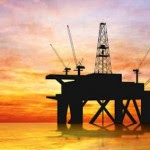
Prior to the annexation, the Kyiv Government had been quietly negotiating with Western oil companies (notably BP and ExxonMobil) to step in and begin accessing the oil and gas. However, as a result of the annexation, Ukrainian officials estimate that they lost approximately 80% of what's there on the Black Sea shelf. Prior to the war in the Ukraine, some economists were estimating that Russia could provide as much as 90% of Europe's oil and gas; much of which coming from the Black and Avov seas.  

And fear not for the oil companies. Russian oil conglomerates often work in partnership with ExxonMobil, BP, and Royal Dutch Shell in the Arctic and Siberia which, thanks to global warming, has become more accessible. 

Note too that this is oil and gas revenue which could have gone to the Ukraine. To make matters worse, the Nord 2 pipeline, which originally was expected to cut through the Ukraine, providing additional income, has bypassed it instead, in accordance with an agreement between Moscow, Berlin, and Paris. This negatively reduces Kyiv's anticipated revenues by roughly 3% of it GDP.

The Donbass, located  in the eastern portion of the Ukraine, is no exception to being another resource rich region. The Donbass produces vast amounts of coal, despite having been mined for over a century, ranging from lignite (thermal and coking which is used in making steel) to anthracite,  making it 6th in the world in coal production. And if that's not enough to see why Russia is supporting the Donbass separatist, the region is also rich in graphite, mercury, nickel, titanium, manganese, and iron ore.

Meanwhile, the western portion of the Ukraine, which is less populated and more rural, has extremely fertile soil and has long been known as the "wheat basket of Europe". It's the world's leader in the production of sunflower oil, and one of the main exporters of sugar, grain, and, of course, wheat.

Why is this important for us? Simply this. Inflation. While the war in the Ukraine is not solely responsible for our record high rate of inflation (currently 8.5% this quarter, which is the highest in 40 years), it is a strong contributor and reason we're paying obscene prices for oil and gas, which in turn, drives the increasing prices for everything from the cost of electricity, transportation, and the prices we pay at the grocery store and department stores. 

How bad is it? Potentially pretty bad, depending on how much longer the war in the Ukraine continues, and other factors such as the weather and possible wars. One estimate by OxFam International estimates that at the current rate of inflation, some 260 million people worldwide could find themselves living in extreme poverty by year's end. This is especially true in developing countries; many of whom will be forced to default on loans from the International Monetary Fund (IMF).

When that happens, we tend to see an increase in social unrest and destabilized governments, which forces countries to divert diminishing resources to security matters and away from maintaining basic services. It also produces mass immigration to countries which are seen as richer and more likely able to support them (such as what Europe and the United States has been experiencing for decades). This puts additional stress on the national social safety net and increases strife with the existing population.  

So, what does this mean for us?  The war in the Ukraine is not the cause of what's happening in the United States or the world. Rather, it's a symptom. Whether or not various political cliques want to accept global warming, there's is no question that the climate is changing. Whether that's natural or man-made is of little consequence.

The reality is that there is less fertile farm land. Less fresh water, and more demand for natural resources such as fossil fuels and strategic minerals need to keep our economies going.  We are overfishing the oceans and in the process, killing off coral reefs and creating entire "dead spots" in the oceans thanks to pollution. Meanwhile, corporations are making record profits as we are forced to pay more for the basics. We can't keep going on like that.
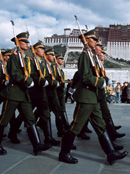
The war in the Ukraine, like most wars, is about acquiring resources to fuel their economies. In most cases, this war over resources is done on a political and economic level such as what China has being doing globally for decades. However, it sometimes spills over into open hostilities. That's particularly true of weaker nations who get caught between two or more larger and more powerful countries.

As resources become ever more scarce, we can expect to see these types of conflicts spring up more and more. When this happens, the wealthy elites usually revert to the tried and true tactic of rallying the population around some cause. It will demonize "the enemy" (the irony, at least in America's case, is that we likely install the "demon" in the first place). Using force or threat of force is now considered commonplace. It's used as an additional tool of what I call "imperial diplomacy". 

If the usual bribery, kickbacks, and "backslapping" doesn't work, they tend to revert to intimidation and bullying to get the concessions they want, be it access to certain markets, resources, or trade agreements. If that doesn't work (and it usually does), they up the ante with implied threats of military force.

Russia was content with the pre-Maiden government of the Ukraine. There was no pressure to annex the Crimea or Donbass. It was, after all, pro-Moscow. Economically, Moscow and Kyiv got alone pretty well, even with Kyiv warming up to the West. However, after the Western backed "revolution" ousted the government and helped install a government more favorable to the West, that things rapidly soured.

 Never mind the fact that both governments were (or are) just as corrupt as the other or that a change in governments didn't really life for the Ukrainian people.  Why? Because Moscow faced the prospect of losing out on access to the Ukraine's natural resources, which would also potentially be supported by a NATO military presence. 
A similar threat is the case of China and Taiwan. Yes, China has long claimed Taiwan as a rogue province, the fact is that China has grown economically confident, and with that confidence, it has expanded its military. Of late, it's been threatening India's territorial waters and fishing rights, as well as territory on its northwestern border. Seafood is key to the Chinese economy. It consumes 45% of the world's total seafood production (65 million tons out of 144 million tons harvested annually).  

It's been threatening Australia, New Zealand, South Korea, Japan, Indonesia, and the Philippines over fishing rights and territorial waters too (often sending along Chinese warships with Chinese fishing fleets).  Most of all, it's been threatening just about everybody over control of the South China Sea. Control of Taiwan would help reinforce that claim and extend China's military and economic reach.

As an aside, China has been busy acquiring rights to minerals, ores, oil and gas reserves, gold, diamonds, and even fresh water throughout the world. Like in the Ukraine, wars are less likely to be fought over ideology or even religion, and more over control or access to resources regardless of the propaganda spewed by the corporate media. In the case of the Ukraine, the West failed to act quick enough.

Is there any way we can prevent wars like in the Ukraine? Wars are increasingly motivated by corporation expansion, often behind the mask of "spreading democracy" or "protecting a free people" and other such patriotic mush. If Saddam Hussein had agreed to maintain oil prices and provide access to ExxonMobil or Dutch Shell in Kuwait, there would have been a Gulf War?

Suddenly, a regional ally of the United States (and one we helped into power), Hussein became a villain. He was called everything under the sun (including the same things President Biden has been calling Putin). President Bush was calling on the U.S. and world to "liberate" the 'freedom loving" Kuwaiti people (but let's not talk about the strictly non-democratic Kuwait royals who run everything).

Let's face it. The U.S. has historically been very selective about who it helps and why. We have often overthrown legitimately elected governments because they weren't "Wall Street" friendly. All we have to do is look at Iran, Iraq, Mexico, Argentina, Cuba, Paraguay, Chile, South Vietnam, Afghanistan, Angola, East Tumor, and dozens more.

Often these "political restructurings" are done through violent coups and assassinations; the governments are replaced with brutal right wing military juntas which all but eliminate any vestiges of democracy (not to mention the torture, imprisonment, or murder of tens of thousands) But hey, there're corporate friendly and that sells well at the local supermarket, department store and gas pump!

We must stop corporations from dictating our foreign and domestic policies, not to mention allowing their lobbyists to write the legislation which ultimately become laws. We have to eliminate corporate control over both political parties (and for that matter, level the political playing ground to permit third parties and Independents), which means doing away with Citizens United and similar laws.

Corporations deemed "to big to fail" or have a strategic importance to the United States, need strict government oversight. We need to bring manufacturing jobs, which was the backbone of the U.S. economy, back to the United States along with emphasis in trade schools. As an aside, we need to stop rewarding corporations with tax credits for jobs exported and impose a minimum corporate tax.

Globally, there needs to be a serious refocus from oil and gas to alternative energy sources overseen by the government to prevent them from being snuffed out by existing oil and gas companies which has been the case thus far. If oil, gas or coal were eliminated from the equation, there would have been little incentive for Russia to invade the Ukraine. 

Like the era leading up to World War One, we're using outdated policies and modern technology to combat new and evolving problems. In 1914, they used modern weapons of mass destruction and 19th century strategies which resulted in the wholesale slaughter of millions. We're facing a similar situation, but on a much greater scale. 


If you want to know more, please take a look at the links below. If you enjoyed the article, please consider passing it along to others and don't forget to subscribe. It's free! Lastly please be sure to "like" us on whatever platform you use to read A/O. It helps with the algorithms and keeps our articles in circulation. Thank you!


A divided Ukraine could see two radically different statesemerge


Crimea oil and gas will not come easy for Russia


More money, less transparency: A decade under CitizensUnited


United States involved in regime change


China, the global largest seafood market


National Security Archive: NATO Expansion: What Gorbachev Heard


Saturday, July 24, 2021

A 1973 Prediction From the World's First Supercomputer Predicts Civilization Collapses by 2040


I recently came across an interesting BBC news clip from 1973. The Club of Rome (a think tank similar to the Council of Foreign Relations) and comprises some of the world's leading business leaders, scientists, economists, academicians, and politicians, commissioned a study back in 1973, using the world's first supercomputer, which was housed at the Massachusetts Institute of Technology, better known as MIT, to predict where we will be in 150 years.

Accordingly, the supercomputer predicted that by 2040, civilization will all but cease to exist due to climate changes (natural and manmade), the erosion of natural resources, over-farming and depletion of the soil, over-fishing, pollution, and changes in population (rapid growth in poor nations and stagnation or decline in most advanced ones), economic and technological inequality, and so forth.

The study, using data from multiple academic disciplines along with statistical trends, were fed into the supercomputer on a specially written program model called "World3". World3 is a systems dynamic model which uses a variety of computer simulations based the specific data fed into it to produce a range of results.

In this case, the data pertained to population and industrial growth, agriculture and food production, climatic changes, rate of pollution, technology, non-renewable resources, and the anticipated limits of our ecosystem. The World3 model has been periodically updated to ensure the results are current based on the latest data available.

The results predicted that nations will have to reduce their economic independence and political sovereignty, while global corporations will expand their interlocking influence over many of these same countries to meet the new demands. The study also states that the world's quality of life, which naturally includes the variety and availability of food and medicine, will also likely decline for all but the wealthiest.  Let's briefly consider immigration.

Just within the last 20 or so years, we've seen a wholesale change in demographics globally. Europe, including the prosperous "democratic socialist" states in Scandinavia, as well as France and Germany, have been overrun by largely uneducated and unskilled "migrants" from second and third world nations.

These individuals haven't come in order to become part of their host nation and contribute to society, but as leeches; sucking dry the social safety net provided for by taxpaying citizens. Europe's open borders was intended to allow individuals from war torn countries to immigrate, and yet statistics have shown that only a small fraction of these migrants actually come from war torn countries. Most are coming from poor, but relatively stable nations.

 It's worth noting that a preponderance of those arriving (especially from the Middle East) are young and very fit males of military fighting age, leading some to suspect that they are militants being sent to set up terrorist cells and to radicalize other migrants. If that's true (and it likely is), then Europe may be unable to cope should violence breaks out. As it is, with approximately 50 million Muslims now living in mostly western Europe, their numbers alone are enough to ensure that the EU will support Muslim interests.  If so, what does this mean for Israel and its ally, the United States?

Many have attempted to impose their culture, values, and especially their religion on the host nation. For instance, demanding women alter their attire, cancelling popular festivals, not selling liquor, and dropping certain items from menus. This is especially true with the more radicalized of the migrants. Demanding that locals conform to their values and norms is not how immigration should work.

Sadly, the "leaders" (and I use that term in its broadest sense) in Europe have proved to be completely spineless. They're more afraid of name calling than doing the right thing for the country. The result is that Europe's very liberal social safety net is now strained to the breaking point, and yet the migration continues. One has to wonder what happens when their social safety net is no longer able to support this influx, and the citizens are either no longer able or willing to shoulder the tax burden.

Of course, the same thing can be said of the politicians here in the United States. Since the early 1980's, beginning under President Ronald Reagan, illegal immigration has become a political football.  Currently, there's an estimated 11 million illegals currently in the U.S., and like in Europe, taxpayers are having to pay the tab for the politicians cowardice.  Bear in mind too that immigration, legal or illegal, is just one of the factors.

We also have to contend with the spread of diseases and viruses, terrorism, depletion of freshwater, overfished oceans and dying coral reefs, changing climatic conditions, aggressive nation-states and the potential for regional war or even a covert conflict (which could include biological and technological warfare such as weaponized viruses or system wide hacks), an ageing population and decreased child birth in developed and well educated nations along with a "baby boom" in poorer countries. 

There is, as well, a growing stratification between economic and social classes (particularly America's Middle Class). Then there are the manufactured divisions along gender and racial lines., which are often stoked by the corporate media. We must not forget to mention the decline in global democracy.

A 2020 report from Varieties of Democracy Institute (V-Dem Institute) in Sweden indicated that global democracy has declined from 54% of the world's population in 2009 to 49% by 2019. To make matters worse, the same report also pointed out that those living in autocratic countries went from 6% in 2009 to 34% in 2019. The world's largest democracy, India, has gone from being rated as "free" to "partly free" in a 2021 report from The Freedom House.

The U.S. is now classified as a "flawed democracy" and is increasingly viewed as a nation in a accelerating decline by many world leaders. It has ceased to be a Republic, and has morphed into a Corporatocracy led by an Oligarchic elite and dominates government at all levels. That, my friends, is not the definition of "socialism", nor is it "Communism".  It is, however, the definition of Fascism, albeit perhaps a new variant.  

The reports produced by many of these global think tanks and data analysis centers confirmed that America's decline includes those things I've written about countless occasions over the years such as divisive partisanship, rigged elections, gerrymandering, Citizens United and unlimited corporate money in politics, a lack of term limits, a biased media, and denying third parties and America's political majority-- Independents-- an equal opportunity to participate in the political discussion.

So, just how accurate has this supercomputer been since 1973? Actually, it's been pretty accurate thus far.  Specifically, in terms of population and economic growth and the world's overall quality of life as of 2020. The big question now is just how accurate it will be for the remaining 20 years. In case you're wondering just how much data this supercomputer can process, it can calculate more data in one second than an average human can in six billion years.

You'll find a link to the article below which includes a short video by the BBC, along with a couple other articles regarding the predictions. Check it out and let us know what you think. Is the world doomed by 2040 or will we survive? I've also provided a link to the Club of Rome's website in case you wanted to learn more about them along with additional links for more information.


A 1973 MIT Supercomputers Predicted the End of the World by2040


In 1973, an  MIT computer predicted when civilization will end


M.I.T.  Computer Program Alarmingly Predicts in 1973 That Civilization Will End in 2040


World3


The Club of Rome


New Report: The global decline in democracy has accelerated


Varieties in Democracy Institute


Friday, June 04, 2021

Stocks and Cons: Changing Wall Street to Change Politics and Restoring the Republic


Remember back around the middle of May when the "sheeple" nearly had a meltdown over the Colonial Oil pipeline being shutdown due to Russian hackers known as "Darkside"? People made a mad dash to gas stations trying to fill up their tanks and nearly anything else they could find. People were even showing up with garbage bags and buckets! It was like the run on toilet paper during the early days of the COVID "panic-demic". What ultimately happened was that the producers of toilet part, paper towels and all the other essentials kicked into high gear and for the most part, shelves were kept stocked while the hoarders got stuck.

In the case of the Colonial Oil hack, it seemed like the same old BS all over again, except most folks actually decided to step back and take a breath; they decided to wait this one out, and it turned out to be the right decision. Like the "Great Toilet Paper Shortage of 2020" (which I'm sure we'll tell our grandchildren about someday), other oil and gas producers picked up the slack and everything worked out just fine. Colonial got its servers back online and the gas flowed (it's unknown if they paid the ransom the hackers were demanding, but I have no doubt they backed up their data this time).

Well, the hackers are back. This time it's JBS USA, part of JBS Foods, one of the nation's largest suppliers of meat (especially beef). Just like before, they disabled backup and other security systems before they launched their raid, shutting down JBS's computers. And, just like before, it looks like other producers will step in to pick up the slack (and extra bucks) while JBS works with the FBI and other agencies to get their system back online. In the interim, you can expect a price hike in the cost of beef and pork.

Meanwhile, both hacks are a warning to companies everywhere to not just back up the data systems, but also to have redundancy systems in place which aren't directly tied to the primary system so it can't be shut down as easily, or at least, keep sensitive trade, product, or other secrets elsewhere. 

On a unrelated note, I came across an article which hasn't caught much attention, but I found to be highly interesting and just might tie these together. A equity firm by the name of "Engine Number 1" managed to oust at least two, and possibly as many as four,  board members of Exxon Oil (they are still tallying the votes).

 What's so unique about this is that "Engine Number 1" is just six months old and relatively speaking, is a fairly small fund; controlling 0.02% of the Exxon's stock, which is worth approximately $250 billion dollars. Engine Number 1 started a campaign prior to the recent board elections, arguing that the current board members were doing nothing for the stockholders or the environment other than maintaining a status quo attitude, and it was time for a change.

Who is behind this small fund that had the audacity to take on one of the most powerful company's in the world? The fund's founder is a man by the name of Chris James. Both he and the others directors of the fund are veterans of the investment industry (James was a co-founder of Andor Capital Management and Partner Fund Management).

James is also a well known philanthropist and, through the James Family Foundation, endows numerous scholarships, conservation and environment programs throughout the country. He also is the chairman of a charitable company called "Tipping Point", which raises money from wealthy donors in the San Francisco Bay Area to help families (and especially children) living in extreme poverty.

James, and a fellow investor and fund partner by the name of Charles Penner, have also been involved in other ventures aimed at creating a more active "social conscientious" in the companies they invest in. Apparently, this is the aim behind their campaign to change Exxon's board of directors.

 It's worth nothing that another group of social activists turn investors were able to force Royal Dutch Shell (worth about $181 billion in revenue) to make some serious concessions when it came to greenhouse gas emissions through a successful court ruling at the Hague in the Netherlands

Although Royal Dutch Shell had previously stated that it would cut emissions by 100% by 2050, the court found that their proposals weren't "concrete enough" and contained to many conditions. The court ruling marks one of the most significant decisions against not just Royal Dutch Shell, but the energy industry in general. Royal Dutch Shell is, naturally, expected to appeal the decision.

So, what does these four events have in common, and what, if anything, do they signify? Perhaps it's just me, but I'm reminded of something that radical 60's organizer, Saul Alinsky wrote in his seminal 1971 book "Rules for Radicals". Alinsky, who is often cited as the bane of conservatives everywhere, was well experienced when it came to dealing with not just governments at all levels, but corporations too.

It was in the chapter "The Genesis of Tactic Proxy" (pages 165 -184) of his Rules book that all this seem to come together. In the chapter, Alinsky discusses using corporate proxies to force changes, be it in the policies of the company, the composition of its board, where it does business, etc. He discusses the possibility using corporate stockholder meetings as a forum to point out changes the company should make.

Brought forward, this tactic could be used  to affect hiring practices (more women and minorities in senior positions), create a flatter pay structure, reinvestment in the community, placement of a new store, or reducing its environmental footprint, so forth.

In the case of the two oil giants, it seems that is just what these investors did. James and Penner created a investment vehicle to change Exxon's board of directors in order to force social and environmental changes. Meanwhile, investors in Royal Dutch Shell used their clout to take the company to court to force changes to its projected emissions reduction.

While the Russian hackers appear to be strictly profit motivated, others, such as Anonymous, were more social driven. Nevertheless, the potential to do both is there. The Russian hackers allegedly stole "trade secrets" and other potentially damaging date in addition to shutting down the computer systems of its targets.

What if a group of hackers were to steal potentially damning information (such as data pertaining to political bribes or backroom deals)  and hold it "hostage" in exchange for changes in corporate behavior or direct donations to some charity or community? Besides being illegal as hell, what's the downside?

Maybe instead of some company stealing free flowing fresh water from locals in some remote area and selling it back to them, they were forced to provide them with water or to dig new wells at no cost? Instead of charging outrageous prices for medicine like insulin, they were "encouraged" to donate medicine to those in financial need?  What about ensuring certain groups are provided with fee free loans or other charges? The same could apply to environmental issues such as a industry based cleanup of waste or land reclamation rather than a taxpayer based one.

Corporations rarely, if ever, do anything which doesn't benefit their bottom line and projects a positive image. Fear of a "stockholder revolt" or a cyber attack releasing sensitive information might be the incentive they need, especially since we live in a society where corporations dominate or own everything, including governments and their politicians (we are, after all, no longer a "Republic", but a Corporatocracy run by a handful of uber-rich Oligarchs), and even though they literally own the media, they can't hide everything!

In the 1980's we saw a revival of the old "robber barons" of a century earlier. Some claimed they were doing it for the benefit of other stockholders, but the truth was that they saw a way to make a profit by breaking up companies (some deservingly so) and selling them off to the highest bidder or simply closing others while shipping the jobs to some dirt poor country where people work for pennies in awful working conditions (so much for their altruism).

Perhaps individuals can come together, form investment groups, or elicit the help of investment professionals like James and Pender to force big business to change. Every stockholder, no matter how many shares they own, is entitled to speak at every stockholder's meeting. Who's to say they can't form special interest groups of their own to force changes in policies?

They could use their new found clout to modify the board so that not just more women or minorities are reflected, but so that a certain percentage of board members are actual blue collar and non-managerial employees. In some countries, such as Germany, employees are automatically included on the board; voted on by their fellow employees on a rotating basis. That way, the employees could have an actual voice in company policies which affect them. It could also be more effective than strikes.

At least using corporate stockholder meetings potentially benefits employees, the community, and not just the stockholders, but the stakeholders too. Instead of destroying capitalism as some of the Far Left want to do, this would be an more productive way to create a new form capitalism; a compassionate capitalism.

People know the political system is broken beyond reform. They talk about the need for a systematic change from the ground up, yet as long as the government is run by corporate and special interest elites, nothing will change. Therefore, perhaps we should be looking at changing the corporations which run the government first.


Shell ordered to deepen carbon cuts in landmark Dutchclimate case


Engine No 1: The little hedge fund that shook Big Oil


A major beef producer was hacked. Here's what you need to know


Colonial Pipeline attack: A 'wakeup call' about the threat of ransomware


Monday, October 31, 2016

More Trouble in North Dakota Over Pipeline


A few weeks ago I wrote an article about the cultural tragedy and potential environmental disaster which was unfolding in North Dakota involving the small and poor Standing Rock Sioux tribe and the Energy Transfer oil pipeline passing adjacent to their reservation which could have a negative impact on not just local wildlife and domestic herds of cattle, but on the local water supply and its source, the Missouri River, not to mention that some of the land brought under construction includes sacred burial grounds. Unfortunately for all concerned, things haven't improved.

Since my last article, well over 200 protestors have been arrested for blocking access across Highway 1806, the key highway used by construction personnel building the pipeline. Members of over 500 tribes from across the US and Canada have shown their support, along with dozens of non-Native Americans from across America and Europe. The land where the pipeline is being constructed is federal land and managed by the Army Corp of Engineers, which had been awarded to the Lakota and Dakota tribes in 1851. It was subsequently taken back years later by federal government. Nevertheless, local tribes still regard the land as theirs since it's home to sacred burial sites and is currently used for grazing by domestic herds, wild bison, and other wildlife that Native Americans either hunt or cultivate.

Efforts by the Standing Rock tribe to delay or defeat the construction of the 1,172 mile pipe through the federal court system has met with little success, which has sided with the oil and gas conglomerate, leaving the resource strapped tribe with little choice but to try and block the advancement of the crude oil pipeline in the hopes the public pressure will result in rerouting the pipeline away from farm and pasture lands, and especially away the water supply which is critical to the entire ecosystem. The CEO of the Texas based Energy Transfer Partners Ltd, Kelcy Warren, has publically stated that the company has no intention of deviating from its current plans, which is estimated to cost approximately $3.76 billion dollars. The pipeline, which is called the "Dakota Access Pipeline" or DAPL, will run from the Bakken oil field near Three Forks North Dakota through South Dakota and Iowa to Patoka, Illinois, will generate almost 600,000 barrels of oil, which is considered to be only half of its production capacity. Energy Transfer Partners is the owner of Sunoco Limited Parters and Sunoco Logistics Limited Partners.

According to Cass County Sheriff Paul Laney, who has been overseeing the response from law enforcement, which has included dozens of federal marshals and sheriff deputies, the protests are "more like riots" with the protestors allegedly attempting to destroy or disable private property (construction equipment) as well as harass and threaten pipeline workers. North Dakota Governor Jack Dalrymple ordered in the National Guard. As late as Thursday, October 27th, seven school buses full of law enforcement officers from North Dakota and other states were brought in to aid existing law enforcement. As a result, protestors have faced officers in riot gear, complete with body armor, riot shields, tear gas, helicopters, and armored personnel carriers, making the scene look more like a military operation than a police presence.

Personally, I have an serious issue with this situation. First, the Standing Rock tribal elders were never included in the discussion of the pipeline proposal, which they should have been as the Army Corps of Engineers has acknowledged. Secondly, Energy Transfer Partners does have a history of leaks and spillages, thus the concern for the integrity of the wildlife, as well as human life, is a genuine concern. A single spillage in the local supply such as the Cannonball River which is near where the protests are taking place, not to mention the Missouri River, would have catastrophic results (the pipeline will cross twice underneath the Missouri River). Finally, the treatment of First Nation tribes as if their opinions or unique interests count for nothing is not just highly insensitive but, frankly, belongs to a long past century of misdeeds and abuse bordering on genocide by the federal government which is just as inexcusable now as it was then. What we seem to be witnessing now---with little corporate media coverage thus far I might add---is the naked display of money and influence over the wellbeing of a land or a People. This is profit at all costs and lives, not to mention Native American culture, be damned.

The end result may be that, eventually, the protestors will wear out and be forced to go back to their daily lives of trying to eke out a living as they have done for generations while supporters leave and return to resume their lives as well. The pipeline will move forward and the company and its stockholders will make a tidy profit off their investment. However, the name of Energy Transfer Partners Ltd. will become as tainted as the ground where their oil spills have occurred. With or without more media coverage, word will spread, and with it the reputation of a oil and gas conglomerate who backhanded a small and poor Native American tribe which was just trying to protect itself from environmental oblivion.

Energy Transfer Partners can't deny that it has a history of oil spills, some with devastating results to the native wildlife and local environment and regulatory noncompliance (see cites listed below for details). In fact, it was hit with a $100,000 fine on this project alone for failure to provide adequate independent construction oversight by the North Dakota Public Service Commission on top of a special $100,000 permit fee to cover any potential damages or legal fees. It can't deny that the Standing Rock tribe can ill afford an corporate "oops" and promise of a cleanup. I think history will show that Energy Transfer may win this battle, but it will lose the war with public opinion, and that will impact its bottom line, which is the ultimate price.


Clashes, arrests and fears---North Dakota pipeline protest at a boiling point
http://www.latimes.com/nation/la-na-pipeline-protest-20161024-snap-story.html


Dakota pipeline: Will police crackdown dampen protests?
http://www.cnn.com/2016/10/28/us/dakota-access-pipeline-protests/index.html


The company behind the embattled North Dakota pipeline isn't giving up so easy
http://www.businessinsider.com/r-energy-transfer-committed-to-building-north-dakota-pipeline-letter-2016-9


North Dakota hits Energy Transfer Partners with more oversight charges
http://www.tulsaworld.com/business/energy/north-dakota-hits-energy-transfer-partners-with-more-oversight-charges/article_e9dbcdc0-b311-5ae7-8a95-1ba8b2a37749.html


Iowa's pipeline safety record less than spotless
http://www.desmoinesregister.com/story/news/investigations/2014/09/07/iowa-pipeline-safety-spotty-records-large-scale-disasters-spills-since-bakken-oil-propane-natural-gas-anhydrous-ammonia/15230791/


Oil Company Lied About Safety of DAPL---Report Exposes Thousands of Spills In Last 6 Years Alone
http://thefreethoughtproject.com/pipeline-company-lied-safety-dapl-data/

Monday, November 11, 2013

A Star Lit Night


If you ever stare up into clear night's sky, especially during the Fall, for any length of time you tend to get a sense of the magnificence of the cosmos. When you contemplate that every flickering light in the sky is a distant planet, off somewhere in the vastness of the universe; it's light already tens of millions of years old by the time it reaches our eyes, may in fact, no longer even exist. What we now see as light may be nothing more than a memory; its originator perhaps long burned out around the time of the dinosaurs, if not before. But beyond that, one gets a sense that there is a unique beauty to the cosmos; a profound order, and out of that order, an logic; an intelligence which has created a balance whereby that order can reign.

When we watch the news, we see the power and fury; the utter destruction nature can bring, yet we often fail to realize that geologically speaking, we are living in one of the earth's more quite epochs. The earth has, for most of its existence, been a far more brutal and violent place. Even our earliest ancestors who survived numerous volcanic eruptions, bitter cold and immense ice expansions, or long droughts, still lived in a rather stable climatic period.

It's really amazing that life ever evolved at all, but evolved it did. Out of the primordial muck, life developed in fits and starts, often followed by mass extinctions and new forms of life. It is almost as if Creation was experimenting with a cosmic chemistry set. In time, after countless ages, Man, or what we would consider "Man", emerged; more brute than anything. But we evolved; we changed rapidly. Man soon learned the value of mutual cooperation, be it for hunting or protection or for simple survival. We learned to think critically. We learned to analyze our environment and how to manipulate it. That's how we were able to transform the night by harnessing fire, and with fire we were able to see in the darkness. We had stolen light itself from the heavens and we no longer afraid. We made tools and used fire to refine them. We were able to cook meat, and thereby improve our quality of nutrition. That make us healthier and stronger. And we were even able to use its charcoal and smoke to create; to express ourselves outside of ourselves. No other creature had even been able to that before.

We also learned to communicate. Other animals communicated, but what made us unique is that we were able to think abstractly; to conceive ideas, and then express those ideas, and as our communication skills improved, we were soon able to retain those ideas and to pass them on, where they were kept as a community memory. Communal memory allowed us to learn from pass mistakes and to make improvements almost exponentially. It provided us with a sense of continuity. Soon, through our collective abilities to grasp concepts of cause and effect, and from that, agriculture, animal husbandry, medicine and the other sciences. By studying the stars and understanding seasonal cycles, we began to comprehend changes in weather patterns, tides, planting cycles and improve crop development.

Modern Man is some 10,000 years old. Civilization is but 5000 years old. In that time we've come up from the savannas, out of the caves, into small settlements of huts by lakes and streams, later to build ziggurats, pyramids, cannels, and dams. Our villages are now vast multi-complex hives with vast global communication networks connecting to more people in a year than existed on the entire planet a mere 5 millennia ago. We're able to prevent most diseases; to feed ourselves year round. We've examined the most finite molecules which makes up the fabric of our very existence and we've harnessed the power of the atom. We've reached back into the heavens seeking to know more, but especially needing to know if we're alone. Were we a fluke; a happenstance, or was there an intent? And if there was an intent, what is it and is there a meaning to our collective being? And if there is a meaning to our collective being, is there a unique meaning for us individually?

We've created myths and religions to try and answer those questions, for they are the ultimate questions we need to be answered as a species and individually; they are as old as Man. Many adhere to some form of belief system. They seem to derive a sense of reassurance and order. However, many do not. A few believe it's all randomness. Some think there is an intelligence, but it is barely aware of us, its creation, if at all, and in that, they gain perhaps a cold comfort. And there are those who see us a part of the whole; part of the cosmos itself and inseparable from it. For them, they see a connectedness to the very stars that flicker in the night as much as to all life around us. For them, they walk in Creation itself. This seems to be something that has engaged us since we first gazed up into the heavens all those generations ago, perhaps on a clear Fall night like this one, and wondered out loud who we really are.

Saturday, September 28, 2013

The Corporate Shell Game: The Future Before Us


There's no question I'm an individualist. I fully support the "rights" of the individual over the corporate, but the modern corporation in our post-nation world doesn't see it that way. Nope. Not at all. In today's world where corporations have replaced national governments, the concept of individuality, like privacy, has become, shall we say "passé".

In the pursuit of maximizing profit and increasing shareholder return, corporations view the world in terms of marketplace. In their world, there is no Germany, India, Mexico, or United States. Designs are created through multinational teams electronically linked through satellite or Ethernet. Products are then modeled and finally produced in a host of regions in varying degrees; material gleaned from one country, sorted and roughed out in another using labor from yet another country, and then shipped using a ship or plane or truck registered to still another, to an assembly point in yet another location, and again, in all likelihood using workers who are perhaps from somewhere other than the host company. The concept of an a "American" car or Japanese electronics are the thing of pure advertising gimmicks or quaint nationalistic myth. Don't believe me? Look up the parts on your car. Look at the tags on your wardrobe. Check out where the parts of your washer and dryer are made. Go ahead. I'll wait. The rest of this article will be here when you get back.

You see, what matters here is the unfettered access to and use of resources, be those resources natural, manufactured, or human. Yes, I said human. In this evolving era of the neo-feudalist State, employees--folks like you and I---are merely resources; something to be used to accomplish a specific goal and then discarded, either because the costs of retaining us exceeds the benefit of retaining us or our function has become obsolete like an eight track player (if you don't know what that is, ask your parents). Wars aren't fought for national pride or even "freedom"--ours or anyone else's. They're fought to secure economic resources and markets by governments on behalf of corporate interests.

In order to pursue this Post-State open market strategy, it's necessary that the governments maintain to a stable economic platform. Simply put, keep the masses in line. In order to generate profits, companies must be able to plan and that means they must be able to anticipate, predict, and manipulate trends. You can't do that when the herds of humanity aren't manageable. Therefore, governments must ensure there is a measure of functional stability through rule of law. So, how do you do that? Actually, it's relatively simple.
Remember, no matter how complex the marketplace is, it all can be reduced to its most common denominator: supply and demand. In this case, we're not talking about widgets. We're talking about jobs. By restricting the number of jobs available, the demand increases. The fewer the jobs available, the more applicants there will be to work at a lesser rate (which includes things like pensions, work hours, vacation time, and healthcare benefits, and so forth). At the same time, these transnational corporations encourage governments to pursue non or low growth policies and use diversionary policies such as blaming one group or political party or the other for the nation's woes. It keeps the focus off of the real reasons.

Secondly, governments have to have funds to function. With a decrease in the availability of jobs, there is a corresponding decrease on available taxes. Therefore, taxes increased in the name of "progress" or some humanitarian sounding program. Governments also control the availability of money through interest rates and amount of currency in the economy. Companies, to be sure, pay taxes too, but only insomuch as it benefits them. You can best bet they get their money's worth, but back to the point. Our taxes pay for services to ensure the smooth function of commerce; that is maintaining a level of security, education, adequate housing, education, clean water and air, etc. In other countries, priorities may differ. Again, it depends the number of " two legged resources" and the availability of jobs. That's why poorer countries may not focus so much on, let's say clean water, job safety, or housing. Of course, culture plays a part in this too. These same locales may not have the benefit of a historically benevolent social-political structure (case in point are many Latin American and East Asian countries).

Another way to maintain control is through electronic surveillance. By actively monitoring the populace, governments can keep check on the mood of the masses and anticipate possible disturbances that could affect commerce. They also can watch for and keep tabs on potential "troublemakers" so in the event something happens, they know just where to look and who to watch out for. Companies already do this internally by being on the lookout for so-called troublemakers or those individuals willing to speak up and speak out (often those individuals are harassed into quitting or "downsized"). Companies with unions often use unions to keep the rank and file in check (ie: defuse worker discontent, discourage walkouts and/or strikes or strong arm members into approving less than acceptable contracts). At the same time, the current mobility of companies also eliminates the impact of the union by being able to close the business and relocate elsewhere.

This too encourages a individualistic go-it-alone mentality born out of frustration. With many of the blatant abuses of employees having been eliminated over five decades ago, this has all contributed to the decline of organized labor (not to mention Labor's history of corruption and being in the hip pocket of the Democrats). Meanwhile, economic policy is set at WTO, G8 and other conferences with instructions or "advisory consultations" from these same transnational corporations, while we're keep preoccupied with the latest fashion trends, games, car models, latest manufactured crisis, and easy-on-the-spot credit. Bread and circuses the Roman's called it. It meant keeping the masses just contented enough not to notice what was happening. So, is possible to fight back?
The answer is yes, but a qualified yes. First, one has to think in this same terms as the corporations and their governmental hirelings. The idea of borders is obsolete. Governments simply manage a given area. That's why corporate associations support amnesty---more workers = lower wages. Political ideology is just as obsolete since corporations can operate with the same degree of freedom in China as in Canada or France. How a particular government manages its populace is of no concern.

However, democracy is considered an impediment since in a actual democracy, there is an accountability factor between the people and government, and by implication, corporations and their "social and economic responsibility". People have to think, act, and cooperate globally. There has to be a unison of action. A particular action in, say, Portugal, has to draw a similar response elsewhere. This requires a level of communication which doesn't quite exist yet, but the tools are there (which may be one reason governments are eavesdropping more and trying to regulate and tax the internet). As an aside, and perhaps most importantly, one has to accept that political parties are virtually irreverent. Odds are they are owned. Part of the pacification of the workers is to keep them confused and divided. This can be through the shell game of blaming the nation's ills on the opposing party, or pitting one economic class, race, or religion, against the other as well. You'll hear various politicians come out with promises or claims to be "with the people". Right. Check out who gives them money; what committees they're on, and how long they've been in office (the longer the more likely they've been bought and paid for).

Elections, especially at the state/provincials or national levels, are more about the illusion of choice than they are about real change. Few issues involving big money or contracts haven't already been settled behind closed doors long before the public or media ever hears about it. Demand specific actions from them. Demand "sunshine laws" to eliminate closed door hearings from the general public and not just certain members of the media. Remember, as long as the working class (and that includes especially the middle class), are fighting amongst themselves, they're not focused on the real problems or the culprits.

Secondly, there needs to be global worker cooperatives or clearing houses for the exchange of information about corporate abuses of employees as a whole, the environment, or corruption of government officials. This requires monitoring of the government and corporations by whatever means possible and the deliberate and immediate publication of this information. It means the sharing of organizing techniques, be it by Skype--either teleconferencing or individually, emails, blogs, YouTube, or snail mail. But remember again, if it's electronic or telephonic, it can be easily monitored.

Third, as Malcolm X once said, "by any means possible". That has to be your tactics, but avoid violence. Why? Violence begets violence and governments, in the interests of their corporate paymasters, will be itching for an excuse to impose martial law. Look for examples in Iceland, Ukraine, Poland, and Romania. Note too where the "Arab Spring" failed with their democratic movements (a bad example is often more useful than a good one). What the workers should be looking for is exposure and global condemnation. Think in terms like Berlin and Spokane aren't different cities in different countries. In this new world, they're two cities in the same global market. The workers there are just the same as workers in a neighboring town.

Lastly, the one thing that is feared more than the public spotlight is the environment that deters this, and that's democracy. However---and this is key---never assume that democracy is the same for everyone. What Americans had was based on a specific series of cultural and economic events. Every people is unique and must develop their own style of democracy. For some, it may be socialistic while for others it could be more theocratic or even anarchic. Whatever works best for them is what's acceptable.

While many, if not most of us, still cling to the notion of "my country right or wrong", countries themselves exist only as reference points and fond memories. This is the New World Order. We need to accept that the rules have changed and learn to play them lest we travel even further down the path of debt slavery and indentured serfdom.

Sunday, April 22, 2012

We Can All Do Better: A Book Review

We Can All Do Better by Bill Bradley
155 pages


I've always respected Senator Bill Bradley. Throughout his career, he always seemed to be one of the few good guys in Washington. Of course, every time a current or former politician or political pundit writes a book, I try to maintain a little healthy skepticism. I'm always concerned that it's going to be another "gotcha" book. More than a few seem to be trying to impress themselves with their name dropping or playing some partisan 'blame game". I was impressed, however, with this book.

First, it wasn't a "gotcha" book. There was finger pointing to be sure, but it was deliberate and deserving as a book of this type should be. Senator Bradley does an excellent job in explaining to the reader the core reasons for the failure of Washington to solve our problems. It's clear from the outset that the Senator is addressing ordinary citizens not the usual politicos attracted to similar books, nor is he writing to tout his achievements, which are impressive in themselves and well deserved. This is a book meant to explain and to inspire action, which it accomplishes and much more.

At the heart of the book is the failure of our elected leader to move beyond the pettiness of partisan politics to reach a consensus that benefits the general public. Part of this failure is that the system itself has been corrupted by both parties to prevent change while practically institutionalizing the perpetual campaign. Blame is carefully crafted and spun as fine as fool's gold is deceiving. There was a time when, despite political ideology, individuals from both parties came together at the end of the day to reach a common consensus. America's interest came first. Not anymore. Today, it's lobbyists and Super PACS who are the play makers, and it's in dollars raised that the political game is scored while the American voter looks on in mesmerizing disbelief like watching a slow motion crash, except this crash is that of his world and everything he took for granted.


What I enjoyed, and appreciated the most as a concerned citizen, was the Senator's explanation and history of the issues and his realistic non-partisan formula for changing the status quo. To many similar books offer "pie in the sky" solutions or blames this party or the other. Senator Bradley, while a Democrat, was equally critical of his own party as he was the Republicans. But it was his suggestions, drawn from his years of experience couple with a working class common sense, which sets this book apart.
If you're concerned about America and you're looking for an explanation of how we got where we are and what we can do about it, then "We Can All Do Better" by Senator Bill Bradley is the book for you. America is in serious trouble. We have too many pundits trying to tell us who to blame. What we are sorely lacking are solutions. This book is good start.


Saturday, August 12, 2006

Oil & Politics

The Color of Money

BP America tries to promote itself as a “green” shale-hugging company; that is if its public relations department, which is sounding more like a crisis center, is to be believed. Well, from where I sit, the warm and fuzzy oil conglomerate looks more “black and blue”. The only “green” they seem to be interested is the color of money. As most everyone knows by now, BP was forced to shut down production in North America’s largest oil field due to corroded and leaking lines along a 16 mile stretch after 270,000 gallons of crude oil poured into the Prudhoe Bay tundra. This reduced America’s total oil supply by 8%, or to put it another way, it will cut by 400,000 barrels of crude for each day of shut down. On August 8th, BP America’s President, Bob Malone, apologized for the shutdown. Mr. Malone said, “We have now taken the decision to replace the main oil transit lines at Prudhoe Bay. This will be accomplished as part of our overall plan for ensuring the integrity of the field” and added that he expected the 16 miles of pipeline to be replaced and back up to full capacity by January 2007, but neglected to mention a cost to Alaska alone is $6.4 million dollars per day in tax revenue and royalties, not to mention higher pump and heating oil prices this winter.

For those who didn’t see Mr. Malone’s “aw-shucks” routine on MSNBS, the company president looked like he just stopped by after posing for LL Bean’s latest outdoor catalog to answer a few quick questions from the media. His attitude, and indeed, his comments seemed less concerned about the leakage as for the fact they were going to have to divert profits to maintenance, and what profits indeed. Over the last 5 years, BP America has made a net profit of $63 billion dollars. $51 billion dollars of that went to shareholders; while a paltry $1.5 billion went into general maintenance for all of North America. In fact, just before the announcement of the shutdown, BP America posted yet another record setting quarter of $6.1 billion in profits over the last 90 days. Not surprisingly, there were no comments (or questions for that matter) about the company’s decision to remove corrosion cleaning devises known as “smart pigs” some 15 years ago, along with a reduction of the inspection crews as costs saving measures, or why didn’t management failed to act on numerous reports and internal memos from line maintenance personnel, many of whom are members of the United Steelworkers union, warning about the deteriorating conditions of the pipelines. The BP subsidiary, Exploration Alaska, which operates the pipeline, has been fined over recent years $1.2 million for environmental damage. Was no one at corporate paying attention, or where they too busy counting their money?

All this falls on the recent woes of BP America, which has included an oil refinery explosion in 2005 in Texas, resulting in the deaths of 15 workers and injury to 150 others (a year earlier, two workers burned to death at the same plant), the breakup of an oil tanker off the Alaskan coast, and series of other high profile disasters. Ever the shut-the-barn-doors-after-the-horses-are-out Congress is finally calling for tighter restrictions and more oversight of the oil industry. No doubt with two oil men occupying the White House and the power of the oil lobby, the America taxpayer will somehow have to bear the brunt of BP’s greed. There’s no question in my mind that we’ll be certainly paying for it at the pump. I just won’t be spending mine at BP.

All Dressed Up

The Fancy Farm Picinic was, well, not so fancy this time around. The annual political “dog and pony” show, and occasional old fashion “slug-fest” held every year in Fancy Farm Kentucky was, in a word, boring. None of the big players bothered to show. Governor Fletcher decided to attend a near by, and much friendlier, GOP fundraiser. Absent too was Attorney General Greg Stumbo, US Senators Mitch McConnell and Jim Bunning, as well as Congresswoman Anne Northup among other notables. One note of interest was the announcement of Republican Secretary of State, Trey Grayson’s intent to strongly explore a run for Governor in 2007. Of course, he’ll need to get past ole Ernie, but doesn’t seem to be much of problem. In fact, Fletcher’s ole sponsor and friend, “Kingmaker” Senator McConnell recently attended a Grayson fundraiser. Senate President David Williams has also given his blessing to Grayson. The Frankfort rats long ago began jumping ship and have been swimming for their political lives from the sinking Fletcher Administration. Well, mates, welcome aboard the USS Trey Grayson; the line is in the water, so scurry on up.

I would like to add a couple personal comments about Trey Grayson if I may. I’ve had the opportunity to meet Trey on several occasions. In fact, he was the only state or party official to have the class to attend a fundraiser of mine several years ago. Trey is friendly, well-spoken, intelligent, and well liked by Democrats and moderate Republicans alike. He has an excellent professional background, and his performance as SOS has been terrific thus far. I see only two possible chinks in his armor however. The first is his age. Trey is only around 34 years old. Some folks equate age with knowledge or wisdom. I think once they’ve had an opportunity to meet Trey, this will resolve itself. The other is Trey’s relative lack of political experience. He’s done a lot to be sure, but he’s still learning how the game (and indeed, politics is nothing if not a game). He needs some “deep water” exposure. In time, I think Trey will be able to swim with the best of the sharks.

The Men who would be King

Regarding the ongoing campaign for Mayor, Republican candidate Kelly Downard, announced his plans for Metro Louisville if elected. Missing were any major improvements for Louisville’s South End or the creation of a cabinet level position to oversee Louisville’s growing (and aging) veteran population. I had suggested to Downard that he give serious consideration to creating a coordinating position on behalf of veterans earlier this year. In fact, when current Mayor, “King” Jerry Abramson was running for Metro Mayor in 2000, Abramson and I discussed this issue, and despite repeated promises, veterans remain ignored by Metro Louisville.

And a Court Jester too

The Courier Journal ran an article a comic running for Metro Mayor. Yeah, I know this could apply to just about any of them, but this guy is an actual stand-up “yuk-yuk” comedian. He’s running as an independent, and frankly, I don’t even recall his name. What I do remember, however, was this was basically a “running” joke (except he had to pay a filing fee). Well, so be it I suppose. What I’d really like to know is why the Courier Journal isn’t spending its time covering serious candidates. If its independents that the C/J staff is interested in these days, what’s wrong with Ed Springston? Mr.Springston is an independent, and this Labor activist is quite serious in his efforts to become mayor. So, come on Courier Journal, how about a fair shake here? You have nothing to lose except your credibility…oh, wait a minute….

And a thank you

Finally, I like to thank and welcome Campaign and Elections. I received an email from this well respected “Bible of American Politics” about a week ago letting me know they were adding my blog to their site list. All I can say is “wow”. “Another Opinion” will be listed under the Liberal category as a progressive Kentucky political blog site. Look for their link on my blog.