Showing posts with label Violence. Show all posts

Thursday, September 18, 2025

Violent Crime in America


The recent murders of Charlie Kirk, Iryna Zarutska, Dr. Julia Gard Schnuelle and subsequent sympathy for their murderers is unreal. In the case of Charlie Kirk, it has included celebrating in the streets, defacing memorials, attacks on mourners, and remarks so vile that many have been fired from their jobs. Even talk show host, Jimmy Kimmel wasn't immune. Since when do Americans celebrate the death of someone over a difference of opinions? 

The glorification of violence and disregard for human life has once again underscored the vast and deep divide between the Left and Right in this country. It has also brought to the national forefront once more the growth of violence in this country, with some calling for confiscating firearms (all though two of the murders involved the use of a knife).

Along with this rise violence has been the dramatic increase in vitriol anti-White rhetoric. Black on white crime is at a all time high, with Black assailants and White victims accounting for  63.9% of robberies, 58.6% of the rapes, and 51.8% of assaults. By contrast, Blacks are the victims in crimes involving robbery where the perpetrator was White just 8.3% of the time, and in 2.7% of assaults, and 5.5% of the rapes.

Hispanics also face a far disproportional rate of victimhood when it comes to murder, rape, assault, and robbery. They are more likely to be the victim of a violent crime 65% more often than someone who was White and 54% more likely than a Black  individual. Asians too are facing higher rates of violent crime. What is happening in America?

According to FBI statistics from 2019, the latest available, 51.3% of those arrested for murder were Black. 45.7% were White, while 1.83% were Hispanic and 1.1% were Asians. When it came to aggravated assault,  Whites were responsible for 62.2%. Blacks committed 32.7%. Native Americans were 2.2%. Asians made up just 1.8% of those convicted on aggravated assault charges. Note these are raw numbers and not based on their percentage of the population

Another form of assault is rape. In 2019, there were some 13,799 reported cases. Whites were reported as the offender in nearly 70% of the cases. Blacks were reported as the perpetrators in 26.8% of the incidents. Asians were arrested in 1.7% of the attacks while Native Americans accounted for 1.5% of the reported rapes.

Note that many cases of rape are not reported or the charges are withdrawn for various reasons. As of 2024, there are an estimated 225,000 unprocessed rape test kits currently lagging in storage areas. While the judicial system does consider rape a serious issue, many jurisdictions lack the funding or staff to process the kits timely.

A ScienceDirect Study from 2020 reported that from 2016 and 2018, there were approximately 300,000 to 400,000 untested kits awaiting processing. A 2022 Congressional Study reported an estimated backlog of anywhere from 90,000 to a staggering 400,000 untested kits were still pending. Some of the worse offenders are West Virginia, Louisiana, Oregon, and North Carolina.  

One of the states with the worse record is Kentucky. It received a test kit on January 7, 1993 and didn’t finalized the results until 28 years later, on September 27, 2021! But if you think that’s bad, consider Washington State. It received a test kit on January 14, 1984 and didn’t return the results until October 3, 2022, some 38 years later! While there should have been repercussions, it should also be noted that the there is no federal law mandating the tracking, processing, and reporting on rape test kits, which is obviously unacceptable on any level.

When it came to robbery, the FBI report indicated that in 2019 there were 104,595 reports. Of those apprehended, Whites made up the overwhelming majority at 69.8%. Blacks were 27.3% while Native Americans were 1.4% and Asians were 1.2%. Hispanics were 18, 584 of those arrested and convicted.

Unlawful weapon possession is another serious crime the FBI keeps track of. Their data shows there were 97,466 reported arrests made in 2019. Of those busted, 54,167 were White. 40,827 were Black. 18,756 were Hispanic. 1,073 were Asian, and just 988 were Native American, which brings up to another topic—gun violence.

Despite the rantings of a few, the prospects of any political or government agency actually seizing America’s guns are highly unlikely. Based on 2024 data, there are approximately 107 gun owning Americans, or roughly 32% of the adult population of the United States. In all likelihood, that number is higher. Much higher. There are approximately 120 guns per every 100 individuals. In addition, roughly 40% of the U.S. population live in a household where is at least one firearm present.

Guns in the United States are as much a part of the culture as the Old West and the Declaration of Independence. They were written into our Bill of Rights, to be used as a tool to protect us from government overreach and tyranny. They were as any essential tool in the exploration and settlement of this country. We still use them to hunt and for sport. Guns are as much as part of the American character as our belief in individualism and our sense of freedom.

In terms of the demographics of gun ownership, it should come as no surprise that males own 40% of the firearms compared to women who own about 25%. Those living in the country or in rural locations comprise 47% of gun owners. Those who live in suburbia make up some 30% while those living in urban areas are about 20%.

When it comes to age, older Americans, those 50 and up, are the mostly likely to own a firearm at 46% followed by those 30 to 49 at 42%.  The least likely was those individuals between 18 and 29. Only around 32% of them own any sort of firearm. The number one reason for gun ownership---72%---was for personal protection. An average of 31% said it was for hunting and target shooting. 15% said they were simply gun collectors, and just 7% said it was required as part of their job.

Academically, 47% of those with at least some college are most likely to have a gun. Next are those education extends up to high school. About 43% of them own a firearm of some sort. About 40% of college graduates are gunowners while just 30% of those with post graduate degrees are.

When it comes to race, the majority of gun owners---38%---are White. 24% are Black while 20% are Hispanic, and 10% are of Asian heritage. No data was available for Native Americans or Pacific Islanders. Another interesting statistic is political registration.

According to the survey, 45% of Republicans own at least one firearm while just 20% of Democrats own one or more guns. The survey, conducted by Pew, ignores Independents, the nations largest political demographic, so it has to be “presumed” that the 35% difference between Republican and Democrat ownership must be Independents. Unfortunately, a rare case of poor statistics gathering by Pew.

In 2023 there were over 46,000 deaths due to gun violence. Contrary to popular opinion, most of these weren’t the result of a crime, but rather the result of suicide or other self-inflicted injury (there were 26,700 gun related suicides in 2023). Gun related deaths are the leading cause of children ages 1 through 17, largely to a failure to properly secure the weapons and in the case of older kids, a lack of adequate gun safety training. The graphic violence is often portrayed and glorified in video games and in movie are also a significant factor. Unfortunately, there’s no reset button to push in real life.

In terms of gun safety, 58% of those surveyed said they supported tighter gun safety laws. 26% said that the current level of gun laws were about right and 15% thought they were too strict. 88% of Republicans and 89% of Democrats support restrictions on those with known mental illnesses from owning a firearm. 69% of Republicans would like to see the age requirement to own a gun of any sort raised to 21 across the board. 90% of Democrats agree. Mandatory gun safety and care training is also strongly recommended.

So where are the gun related deaths the worse? According to a 2022 report by the Centers for Disease Control and Prevention (“CDC”), which keeps track of these figures, Texas had the most gun related deaths at 4,630. California had 3,484, while Florida was next with 3,232 deaths. Georgia had 2,163. Other states with a high number of gun related deaths included Pennsylvania with 1,941, Illinois at 1,798, and North Carolina reporting 1,831, matching Ohio.

Indiana had 1,211 gun related deaths with the majority being in Gary and Indianapolis. Tennessee had 1,480, mostly stemming from Memphis and Nashville. Kentucky had 840 with Louisville leading the way. The District of Columbia, the nation’s capital, had 154. Meanwhile, Vermont experienced only 84 deaths. Hawaii had 66, and in  Rhode Island there were only 37 gun related deaths.  

It bears mentioning that while the United States is usually portrayed as the gun related death capitol of the world, there are countries far worse than the U.S.  According to a report by World Population Review for 2025, the overall death rate by gun in the United States is 4.42 deaths per 100,000, but first, who are among the lowest?  

In Jordon, despite being surrounded by violence coming from neighboring Syria, Lebanon, Israel, and Iraq, the number of civilian gun related deaths is just 0.3 per 100k. In Australia, it’s 0.09 and 0.02 in Oman.  In Spain and Algeria, the figure is 0.11. In Switzerland where gun ownership is mandatory, gun deaths are only 0.14 per 100,000. As impressive as those numbers are, the nation with the lowest number of gun related fatalities is African nation of Zimbabwe which reported a remarkable 0.01 deaths by firearm.  

The countries with the highest deaths rates due to firearms include Ecuador, where it’s 39.5 per 100k, nearly ten times higher than the U.S. In neighboring, Mexico it’s 17.2% despite all the drug cartel reported killings. Nevertheless, the nation at the top of the corpse strewn mound is Jamacia. Once known for its tourism, Jamacia now has the dubious honor of having the most gun related deaths with a whooping 42 per 100k.

Will stricter laws reduce the number of violence crimes by gun? Perhaps. It will certainly make it tougher for law abiding citizens. Criminals, of course, will have no difficulty getting their hands on gun any time they want, but that doesn’t account for knife attacks with are on the rise.

Knives, not guns, were what took the lives of Iryna Zarutska and Dr. Julia Gard Schnuelle for instance. They were the third most often used weapon in 2023. Random attacks, particularly involving “sucker punches” (aka “coward punches”) are responsible for many of the assaults on the elderly and handicapped along with weapons of opportunity.

So, are we going to impose bans on knives or other sharp objects along with guns? What about bricks, rocks, or pointy sticks? Then too, how do we combat the rise in race based attacks, often brought on by vile racist rhetoric which serves only to promote the violence without violating the 1st Amendment? Unless civility can be restored, the violence will only continue and grow. We are facing dangerous times not seen since the late 1850’s. We are at the point where any act, no matter how benign or unintentional, could potentially be the spark to set this nation on fire and neither side, regardless of the bravado, is prepared for the consequences. 


 Thank you for reading "Another Opinion", the Op/Ed blog page for the "militant middle".  Here at "A/O" we truly value our readers. At A/O we seek the facts as they exist, not partisan talking points.  We hope you find our articles informative and engaging. Comments are welcome, provided they are not vulgar, insulting or demeaning.  Another Opinion is offered without charge and is directed toward all independent and free-thinking individuals. We ask, however, that you "like" us on whatever platform you found us on in order to keep our articles available for free to others. Lastly, in order to keep costs down, we depend on passive marketing, and therefore, depend on our readers to please forward our posts along. Below you will find links to the sources we used in writing this article. Thank you. 


How many rape kits are awaiting testing in the US? See databy state.


America tested 100,000 forgotten rape kits. But justiceremains elusive.


End The Rape Kit Backlog


FBI: 2019 Crime in the United States


WPR: Gun Deaths per Country 2025


Gun deaths and violence in the United States by state


Friday, June 20, 2025

“No King” But Plenty of Fools? Civil Disobedience Then and Now


Growing up in the 1960’s and 70’s, I remember watching major historical social events such as Hispanic civil rights activist and labor leader Cesar Chavez leading his migrant field worker’s  on a “1000 Mile March” (or "Peregrination") from the farm fields of Southern California up along the coast educating farm laborers about their newly won rights, including the right to organize.

Then there was no looting or defacement of the Lincoln and Washington monuments. No one peed in the Lincoln Memorial Reflecting Pool while listening to Rev. Martin Luther King Jr’s stirring “I have a Dream” speech (aka “March for Jobs and Freedom" speech, 1963).  

There were the famous protests for civil rights led by likes of Rev. King,  A. Phillip Randolph, Rev. Ralph Abernathy, such as the Montgomery Bus Protest (1965/66), the Birmingham campaign (1963), the Selma march (1965), or the Chicago Peace March (1967) or the March against the Vietnam War (1967). Then there was the “Poor Peoples Campaign in 1968 which was aimed at alleviating the economic poor and improving housing for all races, but where was the violence? There wasn't any.

 Chavez, King, Abernathy, and all the others never intentionally blocked traffic. They never looted or defaced property. They didn’t try and keep people from going to their jobs to earn money in order to put food on their table or keep a roof over their head. They didn’t try to keep ambulances from helping individuals in crisis.

No one blocked the fire department from trying to save someone’s home and their possessions, not to mention their lives? They didn’t loot, commit arson, deface public and private property, throw trash cans everywhere or set bonfires in the middle of road? None of that happened? They didn’t intentionally assault anyone? They didn’t even spit on anybody or scream in their ear? Once again, the answer is no. Leaders repeatedly reminded their followers to avoid violence at all costs. They were also encouraged to respect people’s personal space.

Vehicles weren’t attacked with rocks, bricks, chairs, or pummeled with boards and hammers.  Protest signs weapons. They simply conveyed a message.  What about protesters randomly attacking police officers or federal agents? That rarely happened, and when it came to assaults and law enforcement, protestors were just as often on the receiving end.

Didn’t  “social justice warriors” like King, Chavez, Wilkins, and Abernathy modelled their protests after the anarchist, Mahatma Gandhi? Afterall, aren’t you supposed to substitute yourself in place of the message?  Isn't ending dialogue the goal right?

Well, no. While they did model their protests on Gandhi, he was all about non-violence, passive resistance, and trying to create dialogue. Gandhi wasn't an anarchist although some try to portray him as such today. So, today’s protests and protestors (aka “social justice warriors”) are nothing like their Civil Rights movement counterparts. So, if not the Civil Rights Movement, what about other protests? Incidentally, while Caser Chavez was a major proponent of migrant rights and founder of the United Farm Workers, he opposed illegal immigration, believing it harmed those here legally and gave the impression that all Hispanics were criminals. 

There were the anti-war protests, often led by individuals like Tom Hayden, Jerry Rubin, and Abbe Hoffman.  in Lafayette Park, the National Mall, and the campuses at universities like Berkeley, Kent State, Chicago, and throughout the U.S., as well as the 1971 Mayday Protest. There was the protests by Native Americans, led by individuals like Dennis Means, Russell Means, and Clyde Bellecourt. They led a series of non-violent protests (known as the “Trail of Broken Treaties), including occupying the offices of the Bureau of Indian Affairs, but that too was non-violent.

Following a notoriously violent police raid in 1969 on a gay nightclub in New York’s Greenwich Village, gays, fronted by leaders like Phyllis Lyons and Frank Kameny, began openly (yet peacefully) protesting for a change in laws to decriminalize homosexuality. The “Women’s Liberation Movement” , whose leadership included Bella Abzug, Democratic presidential candidate, Shirley Chisholm, and Gloria Steinem, also started in the 1970’s over a number of issues ranging from equal pay and treatment at work, abortion, separate credit and financial rights, etc. None of these protests involved spitting on people, arson, or looting (although a few innocent bras were burned).

In Chicago, in 1968, there was the infamous “police riot”, ordered by Chicago political boss Mayor Richard Daley during the Democratic Party National Convention, on anti-war demonstrators.  The result was 11 deaths and nearly 800 injuries, which include 152 officers. The officers used nearly everything at their disposal. They were wildly swinging their batons and deploying voluminous amounts of tear gas, causing confusion and panic among the protestors and innocent bystanders. Many of the injuries were head and neck related or the result of being trampled.  

The following year, in 1970, on the relatively quiet campus of Kent State University in Ohio, just over 300 or so students had gathered to protest the expansion of the war in Vietnam into Laos and Cambodia. The Ohio National Guard was called in to maintain “control” over loud but otherwise well behaved students. For reasons still unclear, 28 members of the National Guard opened fire on the peaceful crowd.

By the time the shooting stopped some 13 seconds later, 67 rounds had been fired and four students lay dead. Two were 19 and two were 20. Nine students were badly injured. Although there was a hearing, not one of the 28 members of the National Guard or their officers, were found guilty. As a result, over four million students across the country staged a mass walk out and there was no looting. No arson. A friend of mine, who was a student journalist at Kent State at the time, told me that despite the anguish and anger, there was no talk of revenge on the National Guard members or the judge.

None of this is intended to imply that the 1960’s and ‘70’s lacked violence from the Left. They did, and lots of it, such as the Watts Riots in LA which spread across the nation or the riots following the murder of MLK in 1968. However, the majority of violence, as it pertains to protests, didn’t come from the protestors themselves. It came for the “Establishment” and those on the Far Right. So, what happened? What changed?

By the mid-1970’s, protesting was becoming organized and financed. There were individuals called "coordinators" who were considered “experts” at organizing a protest (Saul Alinsky is considered to be the "father" of modern protests). They would train or bring in certain individuals to be “squad leaders” to lead the direction of the protests, who continuously reported to the coordinators.

They would also work with coordinators and others to create local specific slogans for signs and banners which were produced out of state and shipped in to avoid being traced by law enforcement with other signs, more generic, were homemade. 

Seminars would be formed to help participants learn how to deal with police tactics, passive resistance, how to non-aggressively provoke the other side and law enforcement, and deescalate any anxiety participants might have. They would also practice ways to non-aggressively resist, rehearse their message, and gain the media’s attention in a way to make it appear that they have the moral high ground.

Links would be established with like-minded groups, organizations and legal aid societies, including a bail fund.  Key individuals would be given an 800 phone number which will connect them to a lawyer  on standby who will help with the bail and obtain their quick release from jail.

By the early 2000’s, tactics changed again. Protests became almost indistinguishable from riots. Violence, once shunned by earlier organizers (including Alinsky), became virtually “de rigueur”. The actions of the individuals took the forefront, often obscuring the message of the protest. 

Actions could include trying to block vehicles with your body (especially if the media was present), ignoring the other person’s personal space while over emphasizing yours, shouting (or screaming) the opposition down, spitting on someone to provoke a reaction,  exaggerated acting to an action, using certain words, phrases, or sounds to rally and surround a perceived “threat”, as well as protesting without a permit or illegally blocking traffic (even King obtained a permit).

Physical violence, with the aim to intimidate and demoralize the other side, has also found its way into modern “protests” in a way that would have appalled Dr. King, Cesar Chavez, or Shirley Chisolm. As an aside, some use protests today as a cover for looting, theft, arson, disfiguring or destroying public and private property (which is solely intended to create an added strain on local first responders).  If these wannabe “social justice warriors” truly want to change the system, they need broad public support across social, racial, and economic lines. What they are doing is not how you get it. Mayhem, rather than the message, seems more and more to be the objective. That only weakens the message and prevents the change you want. 

Many of today’s faux revolutionaries think they’re recreating the “social revolution” of their grandparents from the 1960’s and 70’s, when, in fact, they’re acting like spoiled or coddled children not getting their way in a toy store. They spend to much time in the world of make believe instead of reality. In the words of their ideological model, Vladimir Lenin, they are little more than “useful idiots”.  How can you be  an “anarchist” while living in mom and dad’s basement and off their parent's credit cards? The closest many will get to Marx is watching Harpo, Groucho, and Chico on late night TV. 

Personally, I’m not sure I’d even give them that. I prefer to think of them as cannon fodder and eventual statistics. Their ‘60’s and 70’s predecessors were mostly successful with their goals when based on non-violence. The actions of the current generation  will likely result in failure because of choice to use violence. Regardless, if they continue with their present strategy, the end result will be that they accomplish nothing with the exception of alienating people to their cause and enhancing the power of the surveillance state and the empire.  


Thank you for reading "Another Opinion", the Op/Ed blog page for the "militant middle".  Here at "A/O" we truly value our readers. At A/O we seek the facts as they exist, not partisan talking points.  We hope you find our articles informative and engaging. Comments are welcome, provided they are not vulgar, insulting or demeaning.  Another Opinion is offered without charge and is directed toward all independent and free-thinking individuals. We ask, however, that you "like" us on whatever platform you found us on in order to keep our articles available for free to others. Lastly, in order to keep costs down, we depend on passive marketing, and therefore, depend on our readers to please forward our posts along. Below you will find links to the sources we used in writing this article. Thank you. 


 An Organizers Guide To Protests and Political Change


How to Organize a Protest


APWU: Our Labor History: Cesar Chavez Leads “1000 Miles March”for Farm-Worker Rights in California


Cesar Chavez


Cesar’s Thousand Mile March: A 59 Day Trek


Martin Luther King Jr.: 8 peaceful protests that bolsteredcivil rights


Malcolm and the Civil Rights Movement


Speaking and Protesting In America: Protesting in the 1960’sand 1970’s


Leaders in the Struggle for Civil Rights


Anti-War Protests of the 1960-70’s


1968 Democratic National Convention Protests


The Whole World Was Watching…


Kent State Shootings


Watts Riots


Friday, March 28, 2025

Federal Employees Play “DOGE” ball with Elon Musk's Cuts as President Trump Fulfils His Campaign Promises

As we close in on Trump’s first 100 days, he’s has cut through the Washington quagmire like General Sherman's march through Georgia. With Elon Musk leading the charge through “DOGE” (Department of Government Efficiency), over 200,000 federal employees in 18 agencies have had their employment come to an end, not to mention 75,000 who have accepted buyouts.

 That number includes 2,400 Veterans Administration employees, 1,700 workers from the consumer watchdog agency, Consumer Financial Protection Bureau,  2,000 from the Department of Energy, and 2000 from the Department of the Interior, including 800 from the Bureau of Land management.

The IRS has seen 6,000 employees terminated and 5,400 probationary workers from the Department of Defense with an estimated 70,000 who may be let go by the time it’s over. 700 workers at the Centers for Disease Control have fired along 388 employees from the Environmental Protection Agency.  

The Department of Homeland Security has seen a reduction of 400 individuals, of which half were from FEMA, the Federal Emergency Management Agency. The Small Business Administration has seen a reduction of 20% of its workforce.

 Lastly, 10,000 individuals from the U.S. Agency for International Development (USAID) have been placed on indefinite leave. The move is estimated to reduce government “bloat” and save billions in taxpayers dollars.

Meanwhile, some 530,000 immigrants have seen their temporary legal status revoked while some 27,000 illegal immigrants have been deported back to their country of origin as the Pentagon has announced the deployment of some 10,000 active duty and National Guard personnel to our southern border while so-called “sanctuary cities” are facing the possible loss of the  federal funding which keeps them afloat.

So, what do Americans think of the Trump-Musk blitz on the Status Quo? Are all the cuts and reductions justified or is this another example of government going too far? 48% of Americans surveyed by a Pew poll see illegal immigration as problem, so there’s presumably happy with President Trump’s handling of the problem.

As for the mass layoffs, 57% of those polled though the budget deficit was a serious issue, so the reduction in the federal work force would presumably be a good thing. While the layoffs have little or nothing to do with the corruption, 72% believe money in politics is problem. Perhaps Trump can take steps to reduce the control Wall Street has on Washington, such as overturing Citizens United, term limits, and honest to goodness campaign finance reform.

But for that to happen, we’d have to have a level of bipartisan cooperation that we haven’t seen in decades. The divisiveness in today’s politics borders on political turmoil or even a possible civil war. Maybe that’s why 56% of respondents are concerned about the failure of the two corporate owned parties to work together. 48% are worried about the failure of our political system itself and why not?

Afterall, given our “winner-take-all” system, the majority of voters have no representation. Only those whose side wins have any form of representation, while the losing side is out of luck, and when you consider that the largest percentage of voters are Independents, that means that no more than 28% or 29%  of voters (the respective size of the two parties by registration) can claim to have a voice in politics. Of course, when we consider that Washington serves Wall Street and gives Main Street lip service at best, a pretty good argument can be made that voters have little real representation at all.

One issue which has come to the forefront lately is the Trump-Musk duumvirate cutting social services like Welfare, food stamps, Social Security, and  Veteran’s benefits. Supposedly, these cuts will affect just the administrative staff of these agencies and have little impact on benefits. 47% of those polled said they were concerned about the financial solvency of the Social Security and Medicare while 67% are worried about the cost of healthcare.

Of course, cutting back the staff will certainly impact wait times. As anyone who’s applied for Social Security or Veteran benefits already knows, it can sometimes take weeks or months before they receive benefits, which can seem like an eternity when you’re needing the money.

Nevertheless, the reductions are designed to improved the financial stability of safety net programs like Medicare and Medicaid, so that they’ll be available for future generations. One change which will likely occur is changing the minimum age requirement to receive benefits to 70, which makes sense.  For instance, when Social Security was introduced by President Roosevelt in 1933, an applicant had to be at least 65 years of age. That was ten years beyond the average male life expectancy. Today the average life expectancy is 78 years old.

Another possible change is allowing individuals the option of allowing future recipients to invest a portion of their SSN payments themselves into something like an IRA account. Currently the federal government handles all that. Some people may prefer a more aggressive strategy. Of course, should their investments not live up to their expectations,  they could end up receiving a smaller social security check at an age when they need the money most and then what?

In a related area,  63% of those surveyed are concerned about the impact of inflation. It seems that every time we go out to eat or go to the grocery store, food prices have skyrocketed. From 2020 through 2024, food prices have jumped 24%. Egg prices are up 37.5%. thanks in large part to another round of Bird Flu. The average price for a dozen regular size eggs is $5.90. Drought and feed prices has resulted in a reduction of cattle for consumption to the lowest level in 70 years, resulting in 5% increase in the price of beef. Chicken has seen comparable increases in price.  

The price of coffee has increased 1.9%. Orange juice and other frozen juices have spiked 17.2%. The reason is primarily because of weather conditions. Brazil, which is responsible for 30% of our orange juice, has just face one of the worse harvest its had in decades thanks to flooding (due to hurricanes) in some regions and drought in others, as well as a citrus greening disease.  Analysts, reflecting the opinions of 41% of those polled, said climate change may be the culprit.  As a result, don’t expect to see prices go down anytime soon.

Rising prices and taxes coupled with stagnant or declining wages are fostering concerns about the poverty rate. 53% of those polled were worried about the declining middle class and the growing number of individuals slipping into poverty.  As of 2023, 11.5% or 37.9 million Americans were living at or below the national poverty level.

44% of those polled admitted being concerned about natural disasters, which are usually handled by FEMA.   Last year, in 2024, there were 27 weather or climate related disasters in the United States according to the National Centers for Environmental Information, with each exceeding $1 billion dollars in damage and a total of 588 deaths.

In 2024, there were 90 declared “major disasters” according to FEMA. That’s roughly a declared disaster every four days. 41% or 137 million individuals lived in an area affected by a natural disaster. Also in 2024, there was 64,897 wildfires reported. That’s up from 56,580 in 2023. 8,924,884 acres were destroyed compared to 2,693,910 acres in 2023.

California by far experienced the most damage, followed by Alaska, Mew Mexico, Texas, and Oregon (together, they accounted for 46% of all fires).  The cost in terms of private property and economic impact to the affected areas was between $ 250 and $275 billion dollars.

Aside from natural disasters, crime and violence is another area where America’s are concerned. 48% said they were worried about gun violence while 47% were the rise in violent crime. The District of Columbia, New Mexico, Louisiana, Mississippi, and Alabama had the highest number of gun related deaths.

The Department of Homeland Security reports that gang related violence is on the rise thanks to the expansion of ultra-violent gangs from South and Central America and the growth of the fentanyl market.

 Most of the violence is occurring in inner cities, which is sparking fear among city leaders that their city will turn into gang controlled “narco-cities”.  51% of respondents said the drug problem is our biggest concern. 50% said declining morals and values are a contributing factor.

Will Trump’s crusade help ease the concerns of Americans or will it backfire? According to an NBC News Poll conducted in March by the Hart Research Associates/Public Opinion Strategies, 46% of those surveyed thought DOGE was a good idea. 40% didn’t while 14% had no opinion. However, the numbers flipped when asked about Trump appointee, Elon Musk, who is leading DOGE. 51% disapproved the billionaire tech president. While just 39% actually approved.

However, in another poll conducted by Quinnipiac, 54% of their respondents said the DOGE was actually hurting the country. 60% disapproved of how DOGE dealt with federal employees while just 36% approved. The poll also indicated that 50% of those polled did not approved of how Trump handled the termination of the federal employees. 82% of Republicans thought Trump was doing a good job when it came to DOGE. 94% of Democrats disagreed.  

The polling results shouldn’t come as a great surprise. They go to show the extent of our divide. It’s also another case of “NIBY” or “Not in my back yard”. Many Americans appear to want to cut the size and scope of the federal government, but not if it adversely affects them.  

We’ve become too dependent on the government. It’s a sense of entitlement. We’ve come to expect it as normal. We want everything but we don’t want to pay for it. Unfortunately, life doesn’t work that way. There’s a cost to everything. President Trump campaigned on what large numbers of Americans said they wanted, and in keeping with his promises, he is acting on them. But, as the American People are coming to realize, the consequences of having often doesn't match the anticipation wanting.


Thank you for reading "Another Opinion", the Op/Ed blog page for the "militant middle".  Here at "A/O" we truly value our readers. At A/O we seek the facts as they exist, not partisan talking points.  We hope you find our articles informative and engaging. Comments are welcome, provided they are not vulgar, insulting or demeaning.  Another Opinion is offered without charge and is directed toward all independent and free-thinking individuals. We ask, however, that you "like" us on whatever platform you found us on in order to keep our articles available for free to others. Lastly, in order to keep costs down, we depend on passive marketing, and therefore, depend on our readers to please forward our posts along. Below you will find links to the sources we used in writing this article. Thank you. 


Americans Continue to View Several Economic Issues as TopNational Problems


Here are all the federal agencies where workers are beingfired


NCEI: Billion Dollar Weather and Climate Disasters  


As Trump Works to cut FEMA, data shows there was a major disaster every four days in 2024


National Poverty In America Awareness Month: January 2025


Food Prices are on the rise again. What’s behind theincrease


Trump’s early immigration enforcement record, by the numbers


Poll: Voters like the idea of DOGE, but Elon Musk and hisearly results raise red flags


Voters frustrated with Elon Musk ‘s DOGE cuts, new pollfinds


How the Trump Administration Could Leave Families Hungary: Potential Cuts to SNAP in 2025 and Beyond


Saturday, June 04, 2022

Crime and Punishment: Race and Its Consequences

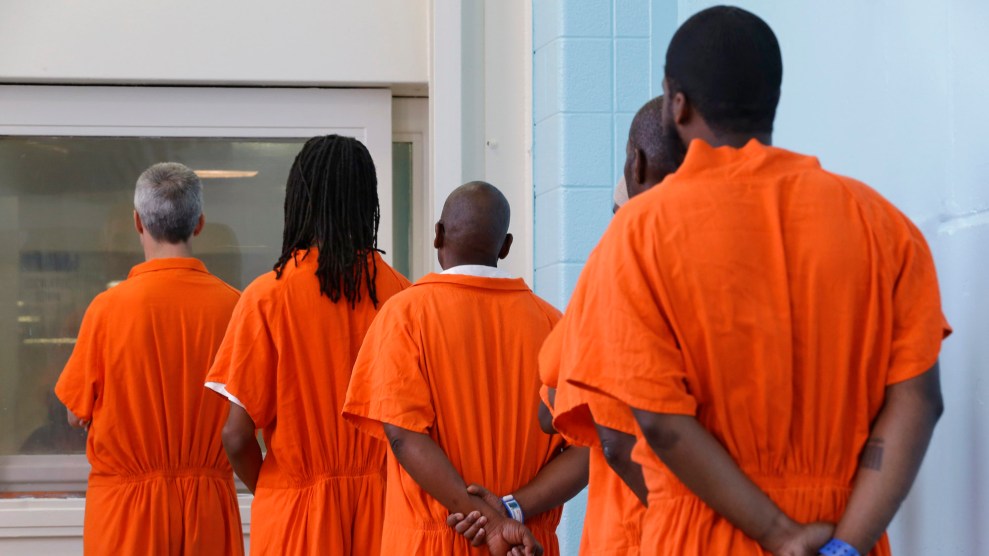
The U.S. has approximately 102 federal prisons, 1,566 state prisons, 2,850 local jails, 1,510 juvenile facilities, 186 immigration detention centers, 82 Native American/tribal jails, not including military prisons, civil commitment centers, mental health facilities, as well the numerous other correctional and detention centers scattered throughout U.S. territories.  Each operates independently from the other, but generally cooperates with the federal authorities in most situations. The result is a multilayered judicial criminal system.

All told, they hold somewhere around 2 million individuals. The most in the world.  Globally, one out of every five individuals behind bars are likely in a U.S. prison or jail. The majority---1 in 5---are in jail on drug charges. The average cost to house a inmate in a federal prison (in 2020) was $39,158 or about $120.59 per day. Prison, probation and parole generates a $81 billion dollar bill to the American taxpayer (the average salary of a police officer is $55,280 plus benefits or about $85,000).  

It's worth noting that much has been said of  "for profit" prison systems which allegedly attempts to make a profit on each prisoner via taxpayer dollars and use of prisoner labor (which some equate with Nazi or Soviet Era labor camps). However, the "for profit" prisons account for only 8% of all inmates.

About 71,000 are overflow population from state prisons while another 40,000 are being held at the behest of the U.S. Marshal Service and Bureau of Prisons.  Of these, the majority are housed in halfway houses or home incarceration which are being privately supervised and managed.

Approximately 13,000 inmates are outsourced from overcrowded and unsafe local jails. 16,000 are ICE (Immigration and Customs Enforcement) detainees, and 9,000 are youths who would otherwise be held in more expensive public detention centers.

When we look at the three percent of the U.S. population behind bars, we find that federal prisons hold about 208,000 inmates. Of those, the vast majority are being held on drug and immigration charges. 11,000 are for committing a violent crime; 7,000 for property crime, and about 59,000 on some other federal charge.

At the state level, which hold the most---roughly 1,042,000---the overwhelming majority (606,000) are imprisoned for violent crimes such as rape, assault, or murder. 159,000 are for property crimes such as burglary, car thief, or acts of vandalism. 146,000 are being held on drug and alcohol charges, including about 18,000 for DWI. Some 124,000 are incarcerated on public order charges which includes certain weapon violations, prostitution, disorderly conduct, or so-called "deviant behavior".

Local jails and detention centers house about 547,000 individuals. About 2/3 of those are awaiting trial while they remain behind bars on charges ranging from drugs, alcohol, assault, theft, burglary, or a public order charge. Typically they are regarded as flight risk or are unable to make bail. 

However, of the remaining 1/3, most are convicted and serving time on a public order charge such as prostitution or disorderly conduct, followed by property crime, which includes car theft (carjacking), burglary, or theft by unlawful taking. Closely behind comes drug and alcohol related charges, and those convicted of committing a violent crime.  A small percentage represents individuals who have violated parole (referred to as a "technical violation") without having been charged with a new crime.

Generally speaking, about 22,000 are held involuntarily due to a mental or psychological  impairment or deficiency.  Juvenile detention accounts for roughly 36,000 youths who are held on a variety of charges. Territorial incarnation includes places like Puerto Rico or Guam, and make up about 10,000 inmates. Tribal jails hold about 2000 individuals, mostly on charges involving prostitution, disorderly conduct, liquor or drugs, while the U.S. military is holding roughly 1000 service members.

As an aside, most accused military members are tried before a military tribunal. Charges typically involve intoxication, drugs, assault, or going AWOL/UA ( aka Absent Without Leave or Unauthorized Absence).  If convicted, they can face a myriad of penalties ranging from verbal or written reprimands, fines, loss of leave time, extra duty assignments, detention, loss of rank, up to a general or dishonorable discharge.

If other charges are involved, they are immediately discharged following competition of any penalties handed down by the tribunal and turned over to the appropriate civilian authorities where they may face additional charges and possible fines and/or jail time.

What about race or gender? Who faces the greatest likelihood of incarceration?  Do more women than men go to jail?  Which race is more likely to serve time in prison?

When it comes to adults (18+), 1 in 15 black males are incarcerated at some level.  It gets worse for black males between 20 and 34 when 1 in 9 are in jail. For Hispanic males, 1 in 54 over age 18 are serving time. As for white males 18+, that number is 1 in 106.

When it comes to women regardless of race or age, 1 in 265 are behind bars. Breaking it down, we find the number for black women between ages 35 and 39, the number is 1 in 100. For Hispanic women in the same age bracket, it's 1 in 297. For white women in the same age range, it's 1 in 355.

What does this tell us? Well, it's pretty obvious that black individuals, regardless of age or gender, are most likely to serve time than either Hispanics or whites (it should be noted that Asian incarceration numbers are low enough to be considered statistically insignificant). 

In fact, blacks are five times more likely to be incarcerated than whites and twice as likely than Hispanics. They are also more likely to serve longer sentences or to face higher bail than anyone else. Why are blacks, especially males, more likely to do time than any other group?

A report published by The Sentencing Project found that in 12 states, more than half of the prison population was black. Also, Hispanics were jailed at a rate of 1.3 times that of whites. Wisconsin, as an aside, had the highest rate of incarceration among blacks. The report revealed that one of every 36 blacks in Wisconsin were behind bars! The same report stated that Hawaii had the lowest racial disparity among inmates, but still jailed blacks at a rate of two to one over whites. What gives?

The majority of blacks arrested and imprisoned results primarily from drug related crimes. These cover everything from simple possession of drugs such as marijuana all the way up to more serious crimes such as manufacturing and sale of crack. It also included peripheral crimes related to drugs such as theft, drug paraphernalia, carjacking, armed robbery, burglary, and prostitution. Some of which involved gang activity associated with these crimes as well. 35% of blacks incarcerated are a gang member. Compare that to 46% of Hispanics and 11% of whites.

It's also interesting to note that while arrest among blacks had been rather consistent from 1920 onward, there was a dramatic upward surge starting in the 1970's and early 1980's, which just so happens to coincide with the second generation of the "War on Poverty", which was launched by President Lyndon Johnson in 1964, coming of age.  

One of the most notable and controversial aspects of the War on Poverty was how the newly created "Welfare State" rewarded single moms with children, thus kicking off the role of "broken" or fatherless homes. Single parents (mainly women) got more benefits and larger subsidies than those where a male was regularly present and contributed to the household income. 70% of criminals and 80% of inmates are from broken or dysfunctional homes. 85% of youths in jail or detention centers came from fatherless homes. Poverty became institutionalized.

Also worth pointing out is that this same period marked the start of forced busing in several states, which took black youth out of their neighborhoods and local schools and placed them in predominately white schools. The intent was to provide "disadvantaged" minority students an opportunity to attend higher performing predominately white schools in hope they would do better.  

In cases where forced busing was implemented, it tended to fail in raising the test scores of minority students while the scores of white students bussed to so-called black neighborhood schools remained equal to or higher than their pre-bussing test results.

As a result, academic standards were quietly lowered across the board, from elementary school through college.  The emphasis was changed from developing critical thinking skills, math, reading, and the sciences to "teaching the test" by which school districts received their funding. That hurts everyone.

 It also marked the period where discipline standards were dramatically lowered and incidents of threats and assaults on teachers and fellow students rose along with vandalism and theft. Interestingly, the average inmate is a high school dropout and can barely read at an eighth grade level. Black male students are three times more likely to be expelled for behavior issues than any other group. 

Lower academic standards naturally equated with less economic opportunities. Jobs, if available, tended to be lower paying, unstable, and with fewer or no benefits. Crimes (and the advent of gang activity) grew based a chance to earn "real money" and feel "respected".  Businesses increasingly relocated to areas with lower crime rates, thus making good jobs harder to find, along with their tax dollars. Cut backs in funding of social programs, plus public transportation, made the situation that much worse.

Meanwhile, the public's growing fear and intolerance of not just rising crime but also that of illegal immigration, which absorbed even more of taxpayer's dollars, forced authorities into making more arrested, imposing higher bail and longer sentences with fewer chances of parole.

Minorities became more dependent on overworked, underpaid, and often inexperienced public defenders with notoriously high conviction rates to defend them. Predominately white and Asian defendants, who were wealthier and better educated (relatively speaking), could afford more competent legal representation, had lower bail and were generally less likely to be convicted.

They are also more likely to obtain stable employment and adhere to parole requirements. Human nature being what it is, those perceived as being less "trouble" are processed out faster and given the most breaks, especially by an underpaid, understaffed and overworked justice system. So much for equal application of the law.

Simultaneously police departments were forced to downsize due by overtaxed citizens, forcing fewer officers to do more with less and adding to the pressure of the job. Increasingly, many police departments depend on federal grants just to operate. Not unexpectedly, the added stress and danger of the job created a "us versus them" mentality which brought the worse as we've seen lately.

Many tried to blame the breakdown of trust between the community, police, and judicial system on systemic racism and a "white superiority" complex. Racism is a factor, but not the key factor it's made out to be. Racism is not a one way street. Every group is capable of racism, which has been around since our beginning. Human beings are innately tribal, and thus racist. It's part of our DNA. It's what enabled us to survive.  However, we have, for the most part, adapted to accept humanity itself as our tribe.

The core of the problem is low academic standards. Those who tend to excel intellectually in most societies are also the ones who are most dominate. They organize society. They control industry. They write and enforce the laws. In organized democratic societies, skin color or other factors are of less importance than economic status, which is largely determined by their level of education.

A system which rewards or makes excuses for low academic performance, poor behavior, encourages a broken family unit (the building block of society) or institutionalizes a dependency or "handout" based society, creates the forces by which poverty, low productivity, and ultimately crime will flourish. The result is a society forced to deal with the mess it has created in ways it cannot sustain in the long run. 


If you want to know more, please take a look at the links below. If you enjoyed the article, please consider passing it along to others and don't forget to subscribe. It's free! Lastly please be sure to "like" us on whatever platform you use to read A/O. It helps with the algorithms and keeps our articles in circulation. Thank you!  


Mass Incarceration : The Whole Pie


Police Officer Salary in the United States


Annual Determination of Average Cost of Incarceration Fee(COIF)


U.S. Incarceration Rates by Race and Sex


The Color of Justice


Schools v. Prisons: Education is the way to cut prisonpopulation


Friday, May 27, 2022

Another School Shooting: What--If Anything---Can We Do?

Here we go again. Another school shooting. That the 27th time so far this year. This time 19 students and two adults dead with just days to go before the end of the school year. Many, no doubt, looking forward to carefree summer vacation with trips to Big Bend National Park, one of the many beach on the Gulf Coast, or just staying home and playing with neighborhood friends and help out around the house.

But that's not to be. Not just for those murdered, but for all the students, their parents, their families, and their friends. That Tuesday will forever be seared in their individual and collective memories. It was the day...the moment they had their childhood innocence stolen from them.

That Tuesday, which should have been an ordinary school day like any other, the children of Robb Elementary School in the small town of Uvalde Texas joined an exclusive but growing club of victims of school violence. 

There's nothing special about Robb Elementary or Uvalde Texas. Perhaps it was its very ordinariness which stands out.  Uvalde has a population of just over 15,000. The town (it hardly qualifies to be called a "city") occupies just 7.6 square miles.  It's closer to Mexico, which is just 53 miles away, than to just about anywhere. The closest actual city is San Antonio, which is 80 miles away.

The largest demographic is Hispanic, which make up just over 78% of the population. Whites comprise 19% while Native Americans make up 11%. Blacks or other races barely show up on census record statistics. Voting records shows Uvalde has consistently voted for a Republican president since 1952. The only exception was 1964, when it voted for Democrat and fellow Texan, Lyndon Baines Johnson. 

It's claim to fame are a couple of Old West gunslingers, a few sports personalities, celebrities Dale Evans (wife of Roy Rogers) and Mathew McConaughey, Apollo 12 astronaut Pete Conrad, and former Speaker of House and Vice President under FDR, John Nance Garner.  It's also, according to the magazine, Outdoor Life,  one of the best places in the world to hunt whitetail deer.  

Now it will be remembered alongside Sandy Hook (2012), Virginia Tech (2007), Stoneman Douglas High School (2018), Columbine High School (1999), and some ten other schools known for being the deadliest school shooting in the United States. But, it appears no place is truly safe, not even in locations not known for violence (and especially gun violence).

In 2002, Erfurt Germany, a former student targeted his former teachers among others and murdered 17 before committing suicide. In 1996, a 43 year old man in Dunblane Scotland killed 17 children and one adult, while wounding 15 others before killing himself.

Between 2008 and 2009, 37 students, teachers, and adults were killed in school related shootings (two in Finland, one in German, and one in Greece. In Kerch Crimea Ukraine, in 2018, 20 college students were murdered while 50 were injured. From 2004 and 2020, 15 individuals died in 20 attacks on schools in Mexico. In South America, between 2001 and 2013, six school attacks resulting in approximately 20 deaths.

 In most cases, the perpetrators used handguns. A few used homemade explosives, crossbows, knives, and hatchets. A handful used semi-automatic rifles (which typically get misidentified by the media as "assault rifles") or pump action shotguns. The assailants typically chose self inflicted death or "suicide by cop" rather than surrendering to law enforcement. Only a few were captured by the police.

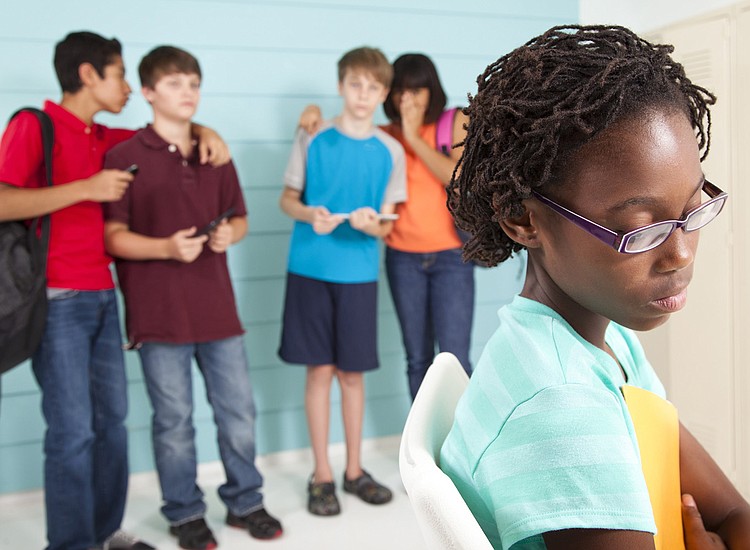
Excluding incidents which involved former students or adults who had no connection to the school, most of the students involved in the shootings ranged in age from 12 to 16. The majority were male. They tended to be loners, non-physical, or were subject to constant bullying.  Psychologists reported that many were more immature than most of the same age group. They often acted out of emotion, tending to be more impulsive and aggressive.

In 1994, Congress passed the "Gun Free Schools Act" which called for greater school safety plans and adoption of a zero tolerance gun policy, which was generally expanded to include weapons of any sort including knives.

The act was part of the "Improving America's Schools Act", signed by President Bill Clinton, and required school districts to adopt a gun-free policy in exchange for federal funds. A similar law was signed by President George H.W. Bush in 1990 called the "Gun Free Zones Act of 1990" as part of the "Crime Control Act of 1990". 

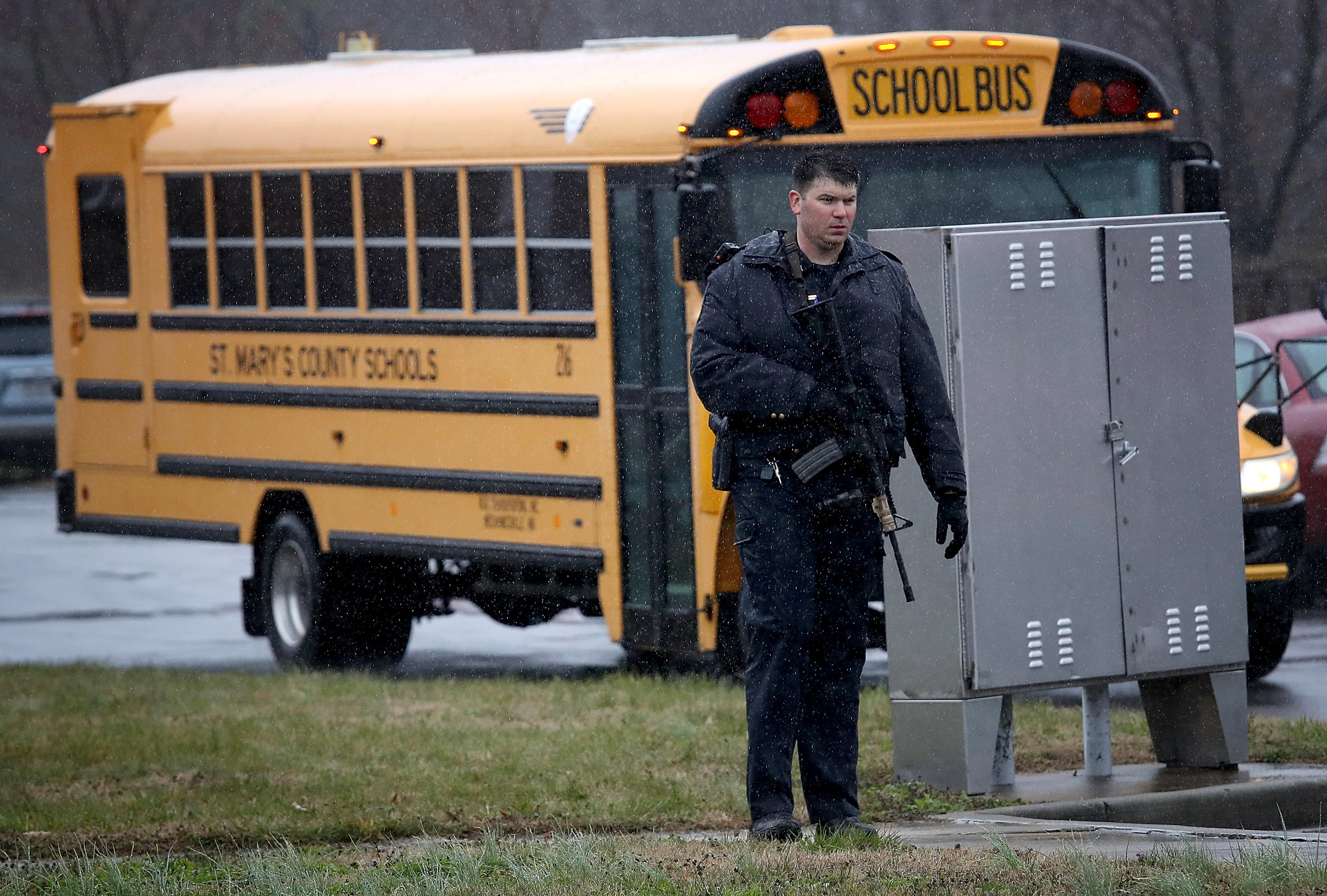
The purpose of both acts was to create a gun (and weapon) free area in and around schools in order to provide for a safer learning environment. This included hiring full or part-time security guard, prohibiting admission during school hours (except through a specially designated entrance), adding metal detectors, security cameras, and a mandatory one year suspensions of any student caught with a weapon on school property. In some cases, school districts also included mandatory home visits and/or counseling of the students in order to head off any potential issues.

Some school districts went further and included additional training for teachers which included methods to prevent forced entry into classrooms, extra locks on doors and windows, methods for contacting authorities, and even allowing some teachers or administrative personnel to covertly carry firearms (with proper training and appropriate licenses). The identity of these individuals was restricted to a few administrative personnel to ensure security.

Politically, the topic of classroom safety became the hot topic de jure, usually following some tragic incident, making gun control efforts more successful given the public's mood at the moment. Those on the Left typically call for total banning of certain types of firearms while increasing restrictions on the purchase of firearms along with limiting the sale and type of ammunition.  

Specifically, the Left wants to limit or (ideally) prohibit the sale of semi-automatic rifles (which, based on the design of the stock, are incorrectly labeled "assault" weapons). The availability of actual military grade weapons are already regulated.

The sale of specific types of ammunition such as those designed to penetrate body armor or metal (except to law enforcement and military personnel) which were restricted in 1995. Calibers in excess of .50 are in most cases also prohibited. "Dragons Breath" or "Hell Fire" incendiary shotgun shells (which shoot 200+ yards), hollowpoints, flechette darts, elephant slugs, "flash bang" shotgun shells, or anything containing depleted uranium, radioactive, or poisoned shells are illegal too in many states. 

Following the mass shooting at the Mandalay Bay in Las Vegas in 2017 in which the alleged shooter, Steve Paddock, used a "bump stock" which in effect, converted a semi-automatic rifle into a de facto full automatic, were banned for general sale and reclassified as a "machine gun", which requires the appropriate licensing. The way the bump stock worked was by using the natural recoil of the weapon to eject, reload, and fire as long as the trigger remained suppressed.

After a series of court hearings, the Department of Justice was successful in getting "bump stocks" re-categorized and banned as of March 19, 2019. It should be noted that in 2017, following the Mandalay Bay shooting, 72% of voters agreed with the decision, of which 79% were Democrats and 62% were Republicans. In 2018, that number increased to 81% of registered voters. The shooting left 60 individuals were killed with another 867 wounded. No motive was publicly disclosed.

While the Left has been pretty unanimous in their call to prohibit or at least restrict many types of gun or ammo, the Right has been a little less unified. Many conservatives are generally in agreement that certain restrictions are necessary, such as prohibiting the sale of armor piercing ammo or availability of certain types of guns and accessories such as the "bump stocks", "sawed off" shotguns (under 18"), or 10+ magazines.  

However, others are of the opinion that the Second Amendment is not open to judicial or political interpretation. The Founding Fathers wrote it with the intention of providing a means for citizens to protect themselves and others from a government bent on overreach and ultimately tyranny.  Therefore, the citizenry should have every means of defense available to them bar none.

They interpret that to mean no registration of guns, ammo, or other weapons, which they see as a thinly disguised attempt at restricting ownership through both intimidation and as providing a handy readymade list of everyone who might resist.

Of course, the primary reason for owning guns is self-protection. Few can argue that crime isn't a persistent and growing problem, and the chief source for school children intent on causing harm. Security locks for most firearms are available for free from various law enforcement agencies or even some pro Second Amendment groups.

It's worth noting that some of the Left would like to see firearms either voluntarily or mandatorily surrendered to the government and destroyed. Their position is that if there are no guns, there will be no shootings. However, that would be equivalent to the position taken by some during Prohibition; if there's no booze, there will be no drinking.

Reality was differently. Liquor became illegal and criminals became rich. If gun ownership was illegal, criminals would still acquire them. Those without guns would simply become potential victims. As the expression goes, when seconds count, the police are minutes away.

We need to accept the fact that we can't prevent violent crime, and that includes school shootings despite our best of intentions. All we can do is mitigate the likelihood of them happening. That means schools need to step up with additional preventative measures.

Metal detectors, security cameras, additional or reinforced locks are good. So are discreetly armed security guards (no one, especially kids, want to feel they are in prison instead of school). So is the barring entry points (save one primary entrance) during school hours. But these only protect those inside of the school, and to a limited measure.

They don't protect from homemade bombs, poisons (which have been used in several instances), or from physical assaults. They don't help on the playground or going to or from the school bus. Nothing will protect everyone from a determined individual, especially if they feel they have nothing to lose.

Therefore more attention needs to be given to students displaying any of the key warning signs like subtle destructive behavior such as "cutting" or are withdrawn (or students who act out through bullying, gang activity, or are persistently disruptive). They could be potential perpetrators of school violence, however, they are just as likely to be victim of someone they routinely pick on.

More parent/school contact is needed. Parents can't just assume that schools are "dealing with the problem". Typically schools aren't aware of the home situation, which are often a contributing factor.  That means everyone, from the bus driver to the principal, needs to make an personal investment in the wellbeing of the students.

Discipline too is often lacking, with the extremes of abuse (including over-prescribed medication in lieu of firm guidance) and total neglect on the other end, as well as physical, emotional, and psychological abuse must be avoided. Children, and especially teenagers, require a balance of support, encouragement, and a gradual loosing of guidance as they age. The "anything goes" attitude does more harm than good.   

Non-abusive ways of securing parent or regular adult involvement are critical. I think the return of art and music classes could help as a way for kids to express they're feelings. Not everyone plays sports. Encouraging academic success shouldn't be viewed as a "white thing" by minorities, who often ridicule "smart" kids who are minorities, resulting in frustration, depression, and acting up in order to fit in.

Households with guns need to ensure their weapons are secure (including periodic checking). They need to pay attention to the video games and sites their child have access to. Personally, I think video games which glorify violence (including killing zombies) are a key factor in youth violence in and out of school. They desensitize killing and accustom the individual to violence and gore. But in real life, once you pull the trigger, there's no "reset button".  No one comes back to life. Saying you're sorry counts for nothing.


If you want to know more, please take a look at the links below. If you enjoyed the article, please consider passing it along to others and don't forget to subscribe. It's free! Lastly please be sure to "like" us on whatever platform you use to read A/O. It helps with the algorithms and keeps our articles in circulation. Thank you!  


Do countries with stricter gun laws really have less crimeor homicides?


U.S. Gun Policy: Global Comparisons


How gun control works in America, compared with 4 other richcompanies


27 school shootings have taken place so far this year


Friday, May 21, 2021

Biden's 'Sword of Damocles': Israel and Gaza. Is There No Way Out?

(NOTE: This is a evolving story). President Joe Biden is facing mounting pressure to withhold military and financial support from Israel until, at least, the situation in Gaza is resolved. The "Gang of Four" or "The Squad"--- Rep. Alexandria Ocasio-Cortez (D-NY), Rep. Rashida Tlaib (D-MI), Ilhan Omar (D-MN), and Ayanna Pressley (D-MA), have all voiced their outrage at Israel and support for the Palestinians (including the actions of Hamas and its allies), along with a number of other Democrats such as Rep. Mark Pocan (D-WI) . Many also opposed the $735 million dollars weapons sale to Israel a week prior to the missile attacks on Israel.

However, not all Democrats are taking an anti-Israel stand. Rep. Elaine Luria (D-VA) and Sen. Chuck Schumer (D-NY) are among several Democrats who've spoken up about Israel's right to exist and right to protect itself. At the same time, Ben Rhoades, a top foreign policy advisor for Obama, is urging Biden to reconsider our relationship with Israel in light of changing political and economic realities (such as the rise of China, the increasing influence of Iran and the resurrection of the Taliban in Afghanistan).

Senator Marco Rubio (R-FL) has spoken in support of Israel, and has urged Biden to renew America's commitment to stand by the only democracy in the Middle East, and one of our staunchest allies. Senator Mitch McConnell, speaking on the Senate floor, harangued some of his fellow senators for their stance against Israel. Senator Ted Cruz (R-TX) spoke out in support of Democrat and New York mayoral candidate Andrew Yang's comments supporting Israel's right to defend itself, while coming under criticism from  fellow Democrats for "supporting genocide".

The conflict now unfolding in Israel is nothing new. It has existed since the moment of Israel's rebirth in 1946, after nearly 2000 years of Diaspora and a mere three years after the Holocaust. In fact, terrorist attacks began almost immediately after Great Britain, which controlled what was called "the Palestine Mandate" as it was known then, and the resettlement of Jews starting in 1946; many settling on self-sustaining farms called kibbutz's.  This lead to the formation of the para-military Palmach (along with the Haganah), the forerunner of the Israeli army.

Since 1948, Israel has fought eight wars, suffered the murder of its athletes at the Munich Olympics in 1972, and hijackings (the most famous of which was Entebbe), faced numerous uprisings, and endured hundreds, if not thousands, of attacks on its civilian population by dozens of terrorist organizations; the majority of which sponsored by rogue states such as Libya, Iran, Egypt, and Syria; several of whom promising to "wipe Israel off the map". 


To date, over 3750 rockets, many of which containing construction grade rebar as shrapnel, have been launched at Israel by Hamas and its allies, with roughly 90% being intercepted thanks to it's "Iron Dome", which is comprised of a comprehensive system of interlocking missile batteries, artillery, radar, high energy lasers, supported by coastal "corvettes" ships (ironically, made in Germany) and air support (and likely, some satellite intelligence provided by a friendly nation or two).

But it's not good enough. Twelve people have been killed in Israel, including two children thus far. In Gaza, 232 individuals have died, of which 65 were children, 1900 were wounded, and over 58,000 displaced as a result of Israeli airstrikes. 

Although Israel has made peace with some of its former enemies, including Egypt, Jordan, Morocco, Sudan, United Arab Emirates, and Bahrain, the violence continues, but why? And why Gaza? Why would a tiny strip of land along the northern Sinai, bordering with Egypt to the west and Israel to the east, want to take on the massive military might of Israel? Isn't this about Israel's right to exist? Doesn't Israel have "clean hands" in this fight? The short answer is no. 

Israel is not without a measure of guilt. It can't hide solely behind its claim of right to exist or self-defense.  Gaza is a defacto imprisoned state.  Because Hamas remains committed to destroying and engaging in terrorist tactics, Israel, along with Egypt, imposed a blockade around Gaza in 2007, which extends to a three miles limits into the Mediterranean, and covers all air traffic in and out.

As a result of the blockade, Gaza is essentially isolated.  Only the most basic supplies are reaching the people inside, and even that is tenuous. According to a report by the United Nations, 1/3 of critical drugs remain out of stock at any given time. 35% of Gaza's farmland and 85% of its territorial fishing waters are completely or partially inaccessible due to the blockade. 54% of the approximate 1.6 million people living in Gaza are classified as "food insecure" and 75% receive some form of international aid.

In addition, of the 1.6 million living in Gaza, nearly 50% are under 18 years of age. 38% live at or below the poverty level. 26% of the eligible workforce is unemployed, including 38% of the youth. 85% of the schools are force to operate on a double shift, in part due to the sporadic availability of electricity.

Most of the major infrastructure has either been destroyed, is damaged or in need of parts, and rendered inoperative by the lack of fuel and/or electricity. As a result, 90% of the water from the Gaza aquifer is undrinkable. Just under 212 million gallons (80 million liters) of raw sewage is dumped directly into the Mediterranean daily.

All requests for aid, be it housing, infrastructure, hospitals, schools---whatever---must be submitted to the Israeli and Egyptian governments for prior approval. Thus far, only a tiny portion has been approved.  As a result, much of what enters Gaza is smuggled in.

 In fact, Hamas has invested much of its resources into digging tunnels and acquiring weapons. Many of the tunnels are used for both smuggling badly needed supplies into Gaza as well as arms, while armed terrorists sneak into Israel. As a result, Israeli troops conduct daily seek and destroy missions. The Israeli military also claims that Hamas regularly uses civilians as cover for their military operations, which, in turn, serves, as anti-Israel propaganda.

Case in point, Israel routinely alerts civilians of incoming missile attacks or shelling 24 hours prior via air leaflet drops and megaphones.  While civilians are "allegedly" forced to remain in place, Hamas often moves its operations to another location (usually at the very last moment while firing off one finally volley to trigger the Israeli response). The result is dead civilians. Sadly, the use of civilians, especially women and children, as a shield has long been a tool of terrorists.

So, what can be done? The situation between Israel and the Palestinians is untenable. It amounts to nothing less than a mutual death grip on the other. Terrorism is the last tool of the weak. Israel is the regional powerhouse. The only democracy in the Middle East, and a reliable friend of America's. Egypt, on the other hand, participates in the blockade while largely turning a blind eye to the smuggling, especially of Humanitarian supplies, while trying to keep out weapons as much as possible.

Our near unconditional support of Israel has earned us a lot of enemies around the world, but especially in the Middle East. The rise of extreme Islam is a indirect result of our support and Israel's existence. It was one of the reasons for the cowardly 9/11 attack, as well as the attack on the USS Cole, on our embassies (mainly in Africa), and U.S. troops everywhere.

The pro-Israeli lobby is one the most powerful in Washington, which can call on tens of millions of Jews and Christian Evangelicals throughout the country at a moment's notice. That's a lot of voters. It's also one of the wealthiest lobbying groups with hundreds of millions of dollars in its coffers.

Meanwhile, in Europe, which was once a diehard supporter of Israel, is now faced with millions of newly arrived Muslims; a silent invasion of Europe which has proven to be successful largely due to the naiveté of European politicians (I won't call them "leaders"), especially Germany's Angela Merkel. At the same time, radical Islam is on the rise not just in the Middle East, but in Africa and Asia (even China isn't immune. It's facing increasing problems in its northwestern provinces among the Uyghurs).  

Israel regards its situation with Palestinians as an internal security issue, and as such, it's own private affair. Yet, the same argument could have been made with Nazi Germany and the Jews (as it was for a time). Israel seems to have learned a lot from the Nazis, especially when it came to the establishment of ghettos (most notably the Warsaw Ghetto), and now is facing its own uprising in Gaza.  

Unlike Nazi Germany, it's not as easy to hide or cover-up in today's around the clock media coverage. At the same time, violence on civilians, be they Palestinian or Israeli, is never acceptable (and by "violence" I mean killings as well as depriving people of the basic necessities such as food, water, and medicine. It matters little to the desperate if they die fast or slowly).

Israel and Egypt needs to end their total blockade of Gaza while insisting on new free and fair elections which excludes terrorists. The people of Gaza deserve the right to live in peace without either a Israeli or Arab gun pointed at their heads. Humanitarian aid must be the first thing allowed in along with parts to repair water, waste, and electrical installations, along with hospitals. Territorial fishing and farming rights need to be immediately restored. Terror can only thrive in hopelessness.

Meanwhile, Gaza must guarantee no further attacks on Israel. Whether they want to acknowledge Israel or not is irrelevant. That's a child's game.  It exists and will continue to exist. Period. However, it will not tolerate attacks, be it by missiles or cowards in the night with bombs or guns. That means it must end its dealing with terror states like Iran, Pakistan, and China.  It also means aggressively removing terrorist organizations like Hamas from Gaza.

Israel and Gaza must build a new relationship with each other. Trade would be a great start. It would not only build both economies, but create relationships. Both sides need to treat each other with respect. They don't have to like each other, but mutual respect doesn't require "liking" the other.  Gaza must also be free to choice its own political and economic destiny without interference from Israel or any other nation (so long as that choice doesn't include the ability to wage war or engage in terrorism). 

The U.S. must encourage peace in the region with more than words. The best way to do this is do cutback on selling Israel offensive weapons. Israel already has its own weapons industry which also happens to be one of the best in the world. To paraphrase the Bible, let's sell plowshares instead of swords. Let's provide Gaza with the same economic opportunities too.

We must also stop trying to "Americanize" other nations. We need to accept that not everyone wants to like us, or even deal with us.  We invaded Afghanistan to pursue those responsible for 9/11. We found and killed most of them, except the one most responsible, Osama bin Laden. He was being protected by a supposed ally, Pakistan. Nevertheless, "justice" was served. At that point we should have packed up and left. We didn't, and more people died or were injured.

We invaded Iraq a second time to remove Saddam Hussein. Why? He was a spent force. Nothing but a loudmouth bully. We could have keep him pinned in indefinitely, but we wanted to create a potential launching pad against Iran. Defeating Iraq's military was easy. So was grabbing its oil and gas production. Establishing a lasting peace has proven to be almost impossible. Same with Libya. There are other ways beside war to bring rouge nations or their leaders to heel.

Israel and Egypt can do better than try and cut off Gaza from the world. Meanwhile, Hamas is not the spokesperson for the Palestinians. If anyone was in this situation, it was the Palestinian Authority in the West Bank. Meanwhile, the Israeli government needs to reel in these "settlers" who seek to kick families who just so happen to be Palestinian, off their land and out of their homes, citing their "right" to the land just because they're Jews, which is what started this round of violence in the first place.

Israel is a nation of laws. It has a duty to treat everyone---and I mean everyone---equally. Would they allow Palestinian settlers to remove a Jewish families because their family once lived there? Absolutely not. So why allow these Right Wing Jewish zealots to do it? Remember the quote from the great Jewish sage and rabbi, Hillel, "what is hateful to you, do not do to your neighbor. That is the whole of the Torah. The rest is commentary".  Egypt and Jordan are friends with both Israel and the Palestinian people. Make use of that. They would be the perfect choice to negotiate a lasting peace between both parties.

Israel must decide if it's going to be a nation of laws and equality or a nation no different from Nazi Germany and it's warped concept of "Aryan Superiority". It cannot claim moral superiority while exercising immorality against any people, nor can Hamas claim victimhood while instigating terror or using its own people as hostages. The hatred and distrust may always remain, but the fighting and dying must stop once and for all. 


Democratic Divide Over Israel Puts Pressure on Biden


National Republicans Applaud Andrew Yang's Pro-Israel Stand Amid Its Conflict With Hamas


Biden followed pro-Israel precedent. But new critics shakethe status quo


Power Up: Biden Administration approves $735 million dollarweapons sale to Israel, raising red flags for some House Democrats