Showing posts with label reform. Show all posts

Saturday, October 18, 2025

The Time for Political Change is Now: Term Limits, Transparency, and Partisan Gerrymandering


When our Founding Fathers embarked on this unique experiment we called the United States of America, they drew on many sources ranging from ancient Greece, the Roman Republic, the ideals of the Enlightenment, and even Judeo-Christian traditions. Their hope was to create a Constitutional Republic which provided just enough government to enable society to flourish with a bare minimum of political interference.

In doing so they opposed the creation of political parties (what they called "factionalism") which they believed would divide Americans and eventually usurp political power from the citizenry and encourage the creation of special interests groups which would, in time, come to control political agenda and the levers of power which rightfully belong to the American citizen. 

They hoped that this new form of government would encourage the development of the "citizen legislator". That is, ordinary citizens from all walks of life who would take their turn in coming to Washington, local councils, and state government, serve a term or two, and then return home. Thus, allowing most everyone an opportunity to participate in controlling their own destiny.

The Founders never intended on the creation of political factions as mentioned above. They opposed the creation of another professional political class like the one they had just thrown off; one comprised of  wealthy upper crust aristocrats. They viewed these individuals as having no connection with the ordinary colonist. They were considered haughty and elitist. They were too inclined to tax ordinary citizens while exempting themselves and their cronies. Laws which applied to the common farmer or business owner didn't apply to them.

In short, our Founders wanted to avoid what we have today---a professional political class of wealthy individuals belonging to competing political factions controlled by powerful special interests groups who've made it all but impossible for the average citizen to participate in the election process. This is thanks mainly to partisan gerrymandering of districts which all but guarantees no party turnover; unlimited financing of not just campaigns, but of legalized bribery through so-called "leadership PACs" which serve as a near bottomless source of funds for the officeholder thanks to Citizens United; the co-opting of the legislative process by very well paid lobbyists (many of whom are former politicians or staffers) who "help" write legislation and then ensure its passage through the maze of committee chairmen "gatekeepers" who get their cut at each stage of the process; and, of course, unlimited terms which means that a well funded politician can hold onto an office virtually for life, just like those old aristocrats. In fact, it's not uncommon for their children, relative, or close friend to pick up the seat after they retire with a full salary and benefits for life---all paid for by you and me.

It's the latter issue, unlimited terms, that I want to briefly discuss. Prior to 1947, the President of the United States could serve indefinitely. However, almost all had previously self-limited themselves to two four year terms out of tradition based on George Washington's example. The one exception was the 32nd President, Franklin D. Roosevelt (aka "FDR"). Roosevelt, a Democrat, was elected in 1933 amid the Great Depression. Through essentially a reworking of government regulations and a series of economic measures and public work projects, he staved off the collapse of the economy, at least for awhile.

However, by 1941, it was beginning to appear that the country might be starting to slip back into, at the very minimum, a recession, if not another depression when the Imperial Japanese Navy struck Pearl Harbor on December 7, 1941. The next day America was at war with Japan and a few days later, with Nazi Germany and Fascist Italy and their combined allies. Although Roosevelt faced elections every four years, the American People believed that wartime was no time to change leaders. Unfortunately, he never saw the war conclusion. He died just a month shy of Germany's capitulation and four months shy of Japan's surrender.

Nevertheless, the American People seemed to agree, perhaps after seeing the toll that 12 years in office took on their beloved president. It was decided that two four years in Washington's tradition were enough. So, on February 27, 1947, the Twenty-second Amendment was ratified limiting the presidency to eight years. What was not changed, however, was the tenure of Congress. The Senate tenure remained six years per term while the House stayed at two years per term. However, there was no cap placed on how many terms they could serve.

In those days there was more participation in politics. People trusted their government (and the media).  Gerrymandering hadn't quite become the science it is now, and special interests hadn't yet seized total control of the political process. People voted (61.4% in 1964 vs.55.7% in 2016). It was still possible for a "Mr. Smith" to afford to run for office and go to Washington. Compromise and civility was more the norm than the visceral extremism of today.

Of course, that's all changed now. Today, the average cost to run for a U.S. Senate seat is approximately $15 million dollars. To run for a House seat, the average cost is (ready for this?)...$2 million dollars. The reelection percentage of incumbents range from 91% in the House to 84% in the Senate and has been that way (or higher) for a very long while now, and yet the approval rating of Congress (as of February 2020) is only 23% (it's been as low as 9%). To put it another way, 77% of your employers think you're doing a lousy job and yet you're rehired almost 100% of the time. I don't know about you, but I find something very unsettling about this.

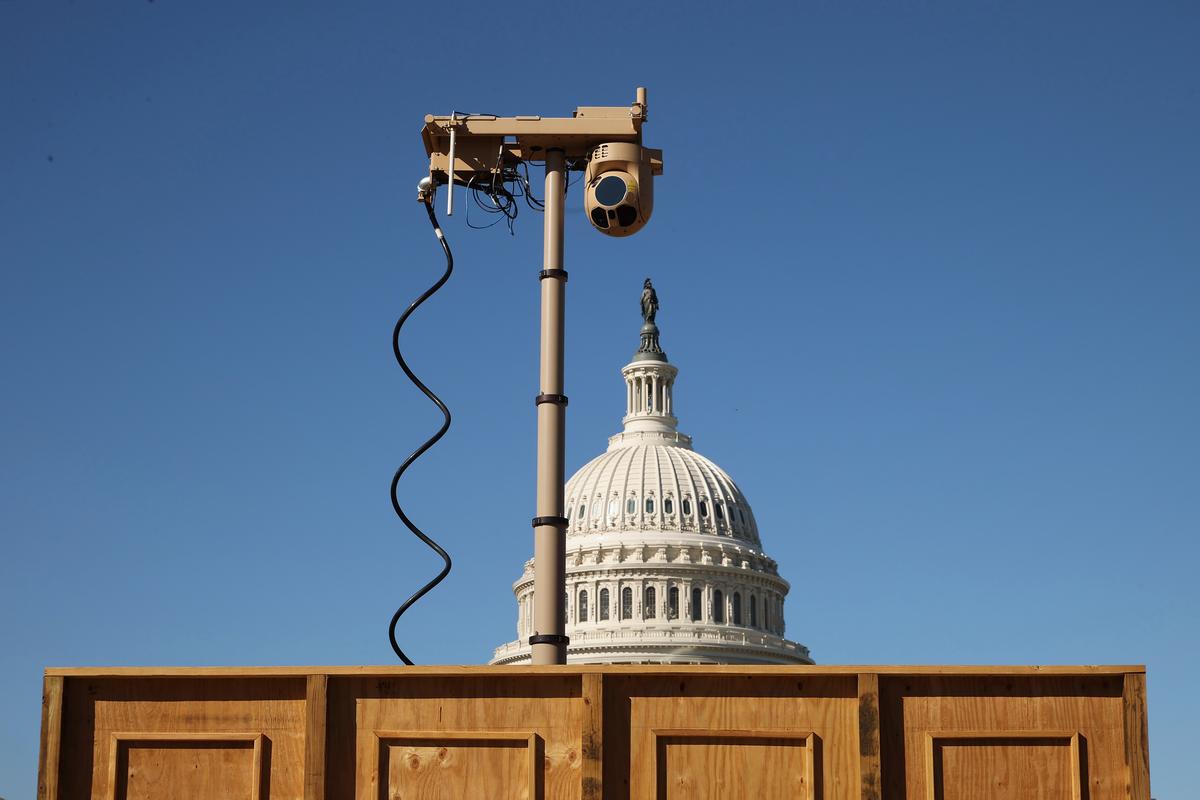
As everyone knows (or should know), the U.S. has become what our Founders feared---an oligarchy. We have a professional class of plutocrats who think they know better they we know about how to run our lives. They've created a system which makes us dependent on them. They even bribe us with our own tax dollars. They've created a surveillance state within a neo-fascist corporatocracy, and are awaiting the opportunity, be it real or manufactured, to impose a police state (the so-called "digital ID" being rolled out in Europe and Canada may be the opening salvo). 

Here's another way for you to think about it. During its heyday, the central governing body of the USSR (or the "Axis of Evil" as President Ronald Reagan called it), the Soviet Politburo, had a higher turnover rate of its members (all of whom belonged to just one party---the Communist) than the members of Congress with their two parties. Of course, nowadays have a single political party too. It's the corporate party, with a Left and Right wing. It kind of makes you wonder who provided the best representation to its citizenry doesn't it? So then, what are some of the pros and cons of term limits?

First, by establishing term limits it would restrict the amount of time an individual has to spend on raising money. Right now the average politician has to raise at least $18,000 every single day for themselves plus at least that for party leadership. On average, a politician will spend six hours of their day just on raising money. That's six hours every day not working on issues. That's six hours per day of not working for us. If their terms are limited they would be more willing to take a stand on key issues rather than hedge their bets in order not to offend some powerful special interest.

It's no secret that the very nature of politics corrupts. Even a person with the best intentions will get "dirty" sooner or later. The longer you're in office the more likely the chances. By limiting terms, it would limit the corruption. Of course, if you're dirty going in or lean that way, limiting the term won't change a thing. A limited term would also reduce the time powerful corporate interests have in gaining control over you. However, given the costs of running for office, unless you're super rich, the chances are pretty good that a least a few have already got their hooks into you.

Congress (or even state or local legislatures), ironically, don't function much like a democracy. They are seniority based with committee leaders and party whips (who ensure you vote the way you're told), and so forth. By restricting tenure, it would increase turnover of these committees and thus by necessity make them more democratic. It might also cut back on a lot of the political shenanigans played out daily behind closed doors. It forces politicians to focus on three or four key issues they intend to accomplish.

By increasing the turnover in Congress you would obviously bring in fresh blood. That means Congress would react faster to changes taking place in society. It would automatically create a closer connection between representatives and those they're supposed to represent. At the same time, by removing individuals long disconnected from their districts (many don't even return home until nearing election time) it would bring in a plethora of new ideas.

Increased turnover too would force members of Congress back to the political center (where the overwhelming majority of Americans are) and to learn once again how to compromise in a true bipartisan manner. Wouldn't a Congress without all the viral hatred and bickering be a good thing for this country? Just think of how much more could get accomplished. It could also increase the need to streamline how things are done, which just might force Congress to cut back in their involvement in our lives.

Term limits do have some drawbacks to consider too. In the process, we could lose some of very few "good" politicians as well as reduce the level of experience level of those who know how to get things done. It could also impact the working relationships which exist between politicians. Given that their time is limited, it could produce a "don't care" attitude among some. However, that would soon be thinned out by voters. 

Nevertheless, despite the negatives, 84% of Americans would like to see form of term limits. So, with a majority like that, why are we still tolerating unlimited terms?  Perhaps limit the Senate to a maximum of three six year terms which would be 12 years. The House could serve the same through six two year terms and expand the presidency to three four years terms. That way, everyone served equally with no more than 12 years max.  If you are one of the "good" ones, that would be enough to get things done. Lastly, I would go one step further by limiting federal judges (including the Supreme Court) to 12 years as well. Too many times, they has proven to be out of touch with society. 

Of course, term limits by themselves won't be enough to retake the government from the ruling Oligarchy. We need to remove Citizens United and cut unlimited corporate money out of politics. We've got to prevent lobbyists from writing legislation in the name of elected officials. We need to given the president and the governors line item veto authority in order to cut out bad projects and special perks tacked onto bills. At the state and local levels, we need to have the final say on all tax, rate and salary increases for elected officials. In addition, we need citizen directed referendums and initiatives.

Speaking of which, no more salaries and benefits for life. Any and all legislation must apply to elected officials, not just us. Government must also become more transparent. Partisan gerrymandering must stop. Instead, turn over redistricting to a non-partisan agency like the Federal Defense Mapping Agency or to local universities on a rotating basis. Currently districts are drawn to benefit parties, not voters. That must change.

Lastly, and this a pet peeve of mine, I'm tired of all the partisan bickering. Next to nothing gets done for the American People. Regardless of their political party, I would like to see everyone elected to office resign from the party upon their election. They are there to represent all voters, not just their political clique. In addition to their oath of office, they need to take an oath to represent their districts, their state, and the American People irrespective of any partisanship. 

At present, over 43% of voters are registered Independent, and that number is growing while the number of registered Democrats and Republicans are continuing to shrink. It's time for both parties to accept the fact that their days of "divide and conquer" are over.  Additionally, with our "winner-take-all" political system, when one party wins, all those on the other side are left unrepresented. That needs to end. It's time that every American should be represented...just as our Founders intended. What do you think?


 Thank you for reading "Another Opinion", the Op/Ed blog page for the "militant middle".  Here at "A/O" we truly value our readers. At A/O we seek the facts as they exist, not partisan talking points.  We hope you find our articles informative and engaging. Comments are welcome, provided they are not vulgar, insulting or demeaning.  Another Opinion is offered without charge and is directed toward all independent and free-thinking individuals. We ask, however, that you "like" us on whatever platform you found us on in order to keep our articles available for free to others. Lastly, in order to keep costs down, we depend on passive marketing, and therefore, depend on our readers to please forward our posts along. Below you will find links to the sources we used in writing this article. Thank you. 


Voting in Early America

Friday, July 04, 2025

Where Has the Love Gone? The Future of the American Political Duopoly

 America’s love affair with partisan politics (if there really was one) appears to be over for good. The Democrats, once the harbinger of inclusivity, has found itself mired in mediocrity and lacking in leadership, is able to maintain relevance through Identity politics.  I guess that’s what happens when you run out of ideas and don’t have a very deep bench.

The Republican Party, as a result has benefited, especially in America’s heartland and  in particular, at state and local levels. Yet, its support seems to rest on the last vestiges of a fading demographic white, mostly male, middle class voters, and there is a subtle cold and callous undertone to their call for austerity and “making America great again” by cutting back on social security and the public social safety net but continuing to spend more money on the military than the next ten nations (including China, UK, India, France, and Russia) combined!   

However, neither those who agitate on the Left or Right are satisfied with what their side is offering. The result is an America more deeply and widely divided than at any time since the years proceeding the Civil War.  Some ominously predict a pending revolution while others anticipate a second civil war at any moment, and still others foresee for a “civil divorce”.

Even during our formative years as a nation there were those among our Founding Fathers who questioned whether we were or could ever become a truly “United States” of America. We were fundamentally too different; a multitude of nations.  Over the subsequent decades and centuries, as millions came to our shores, those divisions have only intensified. Regardless, one thing is for sure. This is not the America our Founders intended. So, lets take a look at our political landscape. Perhaps we can even predict an America just a few years or a decade or two down the road.

First, despite the popular belief that America is a “two party” nation, the truth is that it was never established that way. In fact, the majority of the Founders opposed the creation of political parties, fearing that they could become powerful special interest cliques which would in time weaken the political power of the average citizen through deception and corruption and eventually dominate government (nah. That could never happen…could it?).

Secondly, that we’re only limited to just two parties. In fact, we’ve have numerous political parties. Most have either merged with other parties or simply faded away with whatever particular issues they supported. Today, we have two primary parties---Democrat and Republican, although the Libertarian, Green, and Constitutional parties are formable.

 However, despite their public perception of two differing parties, the fact is they’re more similar than not.  For example, they’re both owned by special interests from Wall Street. Wall Street controls the finances of both parties. It funds their campaigns, their leadership PACs, and sets their agenda. It dictates their domestic and foreign policies (which are not overly dissimilar). The corporate media defines their public persona and influences their political message. Both are legal fictions given the rights of the average citizen…and then some.  They are, in fact, a duopoly of Wall Street. Another thing they have in common is that both are actually minority parties.

According to the most recent polling, Independents are the largest political demographic in the United States with just over 43% of all registered voters not aligning with either the Democrats or Republicans. As an aside, did you know that Independents have been the dominate political demographic since 2011? Meanwhile, the two corporate owned parties are roughly equal with 28% each of the electorate making Independents (erroneously called “swing voters” by some) the literal “kingmakers” of today’s politics.

Something else the Democrats and Republicans have in common is that not many people like them. According to a Pew poll, 65% of registered voters, irrespective of registration, disliked Republican polices. 56% felt the same way about Democrat policies.

A 2025 NBC News Stay Tuned Poll, showed that 71% of Independents disapproved of the direction the Republican Party was going. 91% of Democrats agreed as did 13% of Republicans (could they be the nefarious “RINOs” so hated by GOP hardliners?).

When it came to Democrats, 64% of Independents disapproved of where the Democratic Party was wanting to take the country. 93% of Republicans concurred. Interestingly, so did 22% of Democrats (those nefarious “DINOs” this time).  In short, an overwhelming majority of Americans disapproved of both Democrat and Republican policies.

Amusingly, in 1960, 4% of Democrats and 4% of Republicans said they’d be unhappy if their son or daughter married someone outside of their party affiliation. In 2019, nearly half---45%---of Democrats said they’d be unhappy if their child married someone from a different party. Republicans were apparently a little more open minded. Just 35% said they would object. Today, I suspect they’d be disowned.

Another factor affecting both parties is that they’re losing their base. Demographics in America are constantly changing. Historically, America has been a predominate white European nation since its founding while blacks were considered the largest minority, As a result, legislation and funding was directed accordingly. But that’s all changing.

Today, whites are still the largest racial demographic at 58.4% (white males, often viewed as America's political, social, and economic “powerbrokers” are projected by the Census Bureau to become a de facto minority by the early 2040's).  The second largest population are Hispanics, who comprise 19.5% of the population (that number would likely be higher if all illegal immigrates were included. However, it's  only as an estimate). Black Americans make up just 13.7% of the population. Asians are 6.4%. Those claiming two or more races make up about 3.1% of the population (and growing). Native Americans, Pacific Islanders, and others make up under 2%.

Based on projections, sometime in the next 25 years, America will no longer have a majority racial population. Whites and Hispanics are expected to have a near parity. Black percentages are expected to drop while Asians are anticipated to increase along with the number of those of mixed racial ancestry. So, what does that mean?

Well, for starters, it means that limited federal tax dollars are going to be redirected to the group with the most mouths to feed, and that’s going to be Hispanics. So, expect future federal (and likely state) programs will cater more to Hispanics which could increase competition between blacks and Hispanics for federal dollars.

Secondly, there will be an increase in the number of people of Hispanic ancestry being elected to office at all levels as a result of both a growing population and an increased concentration in key districts or dominate state with high electoral votes. So, don’t be surprised to see a Hispanic president in the next 25 years. Also, although historically, there’s been a decrease in ancestral allegiance over generations, that doesn’t seem to be the case when it comes to Hispanics.

 The reason is that historically, immigration came in waves, thus giving time to integrate into American society, aka the proverbial “melting pot”. Note too, this “absorption” was also encouraged by previous immigrants and society in general as well as newly arriving immigrants had a strong desire to become “Americans” as quickly as possible.

That’s no longer the case. First, the arrival of Hispanic immigrants (legal and illegal) are occurring as such regular rate and volume that there’s little time or opportunity to integrate. Secondly, many have no intention or desire in becoming “Americans”. They are here solely for a payday.  These are economic migrations. As a result, few bother to learn English, the laws, or adopt to customs, values, or traditions. They tend to congregate in their own ethnic enclaves. Many regularly support family back home. Therefore, nearly everything about them remain tied to their native country.

Black Americans have faced a series of serious issues since emancipation which the federal government has attempted to correct through legislation and various taxpayer based programs with varying degrees of success. As federal funding for programs and services are reduced or redirected, along with competition for jobs now being taken by Hispanics, black Americans are going to be forced to struggle harder.

Lastly, the percentage of Asians are growing more rapidly than previously. This is due to the influx of Asians from places like China, Philippines, South Korea, Taiwan,  Vietnam, and elsewhere. Another factor is that Asians tend to have large families (as do Hispanics). Thus, in certain areas, especially along the West Coast, Asians could come to represent minority majorities.

This brings us to an interesting question. With Democrats and Republicans shrinking in number, generational dissatisfaction with existing partisan politics (especially among Millennials, Gen Z and facing a declining number of Babyboomers and aging Gen X), what does our political, economic, and social future look like?  Cities, starving for economic  resources, are gobbling up smaller surrounding communities. Corporations are also continuing to gobble up everything they can, thus eliminating or consolidating competition. It already controls the government, and with it, controls funding as well as domestic and foreign policy.

 Technology, especially AI, is already proving to be a double edge sword. It’s provided opportunities for a few while reducing or eliminating jobs thus contributing to the already enormous gulf between the rich and the rest of us. It is also the tool behind our evaporating personal privacy and becoming the ever watchful eye of our emerging surveillance state. It bears mentioning that Millennials and Gen Z, both raised on technology, don’t appear to have the same regard toward privacy as older generations.

As I briefly touched on, the wage/income gap between the elites and the rest of society (which also benefits Congress and others in power) is widening. For instance, did you know that the top 1% control 31% of the nation’s wealth compared to the bottom 50% which controls just 2.6%? From 1979 to 2023, the top 1% saw their wealth grow 182% while the bottom 90% had a growth of 44%. The average CEO makes roughly 334 times that of the average employee.  

Are either of the two corporate owned parties equipped to deal with issues like these over the long term? The Democrats try to maintain power by never saying “no” and kicking the debt can down a short dead end road without a worry about who’s going to pick up the tab. The Republicans hope they can prolong the inevitable by cutting programs affecting the politically weakest and forcing open foreign markets by rook, crook, or rocket. They believe cutting taxes on mega corporations and the wealthy will improve the lot for everyone else.

Neither party are willing or able to make the changes which we need. Besides, it’s not in their vested interests to do so. It’s taken decades crafting the perfect scam. The tune they dance to isn’t the voice of the American voter. It’s sound of vast sums of money played by Wall Street. Corporatism, as under Fascism or Communism, requires a compliant citizenry convinced into surrendering their integrity and wellbeing to a state absent any real accountability, which to me is a lot like an alley cat telling a mouse to “trust me”.  Bon Appetit anybody?


Thank you for reading "Another Opinion", the Op/Ed blog page for the "militant middle".  Here at "A/O" we truly value our readers. At A/O we seek the facts as they exist, not partisan talking points.  We hope you find our articles informative and engaging. Comments are welcome, provided they are not vulgar, insulting or demeaning.  Another Opinion is offered without charge and is directed toward all independent and free-thinking individuals. We ask, however, that you "like" us on whatever platform you found us on in order to keep our articles available for free to others. Lastly, in order to keep costs down, we depend on passive marketing, and therefore, depend on our readers to please forward our posts along. Below you will find links to the sources we used in writing this article. Thank you. 


Political Polarization in the United States


Digging into America’s sour views on both political parties:From the Politics Desk


GOP Holds the Edge in Party Affiliation for Third StraightYear


Wage inequality fell in 2023 amid a strong labor market,bucking long term trends


Corporatism


U.S. Census Bureau: Quick Facts


Partisan Politics drags U.S. towards failed-state status


Thursday, February 20, 2025

The National Divorce: Trust in the Government

When Donald Trump was first elected President, his campaign mantra was “make America great again”. Now that he’s back, it’s once again the mantra of his followers, but did you know the phrase didn’t originate with “The Donald”? It was actually first used by President Ronald Reagan in his 1980 presidential campaign. It was also included in his acceptance speech at the 1980 Republican National Convention.

The expression seemed to catch on and was later adopted by President Bill Clinton during his 1992 Presidential campaign, and again used in a radio commercial for Hillary Clinton during her run in the 2008 Democratic Primary. Ironically, we now hear from the Left asking, “what’s so great about America?” and “when was America ever great?”

Both Trump’s and Bill Clinton’s use of the phrase was to intentionally harken back to the popular myth of “the Gipper” who emerged from the anger and apathy of the preceding years like a candle leading the nation out of darkness.  America was still recovering from the hangover of 60's and 70's, the Watergate scandal, the defeat in Vietnam, stagflation, the OPEC oil crisis, the Iranian hostage crisis, and what was widely view as governmental incompetence.

Under President Eisenhower’s two terms, 73% of Americans said they trusted their government. Going along partisan lines, the trust level of government was 79% among Republicans. Even Democrats were happy (yes—actual “happy” Democrats. They did once exist). 71% said they trusted in the government.

The overall trust level had jumped to 77% by the time Lyndon Johnson took office. But as the war raged on and the causality rates rose (as well as lies by the military and government became public), those numbers started to drop. Still, they would be regarded as high by today’s standards with 66% confidence level by Democrats and a 60% by Republicans.  By the time Johnson left office, and Richard Nixon took over, public trust had dropped but still remained strong at an overall 68%.

Following Nixon’s resignation and the advent of Gerald Ford’s “caretaker” administration, public trust was floundering at 36%. Among Republicans, just 38% had any confidence in the government. The Democrats weren’t far off with 36%. Jimmy Carter was elected as the “anti-insider” in 1976. The American People had had enough of Washington insiders and Carter took office with a new high---40%---before falling to 28% by the time he left office.

Despite Reagan’s perceived popularity over his eight years as president, trust in the government never did any better than 46%, a pale reflection of the Eisenhower days which he often recalled in his speeches. By 1994, during the Clinton Administration, the public’s trust in the government hit a record low of 19% before rising to 49% by the end of his second term.

President Reagan was well known for his often quips. One involved his switching parties. When asked why he left the Democratic Party and joined the Republican, he famously said “I didn’t leave the Democratic Party. The Democratic Party left me”. I guess this was the time when the American People could say the same thing about both parties and the government in general. Government had left the American People. The national divorce had begun.

Sadly, it took a tragic event like 9/11 to rekindle America’s faith in their government, and it came shortly after George W. Bush (aka “Dubya”) took office. Poll numbers vary slightly, but trust in government ranged between 55% and as much as 60% according to some polls. Since then, confidence in the government by the American People has been on a downward trajectory ever since. As some have said, “we're on a roller coaster ride in a handbag to Hell and no one is driving”

The best Trump did in his first term was 27%. Under President Biden, levels of trust in the government again repeated lows of 19%. Even among Democrats, the trust factor never rose above 35%  while for Republicans, it remained at levels one could only call abyssal---11%. Today, Americans barely tolerate each other. We tend to live in our collective bubbles and regurgitate what we see and hear without bothering to question or investigate.

Even when we break down trust in government by race, we don’t see much of change. Using the Eisenhower/Kennedy/Johnson administrations as the starting point, Blacks and whites intersected in October 1964 with a 77% each having an overall government trust.

Staring in 1968, that trust among blacks plummeted. The next time it peaked was in 1993, corresponding with Clinton’s inauguration, when it hit 43%. Even under Obama, it didn’t do any better than 39% in February 2013. Biden got close in April 2021 with 37%.  Trust levels hit rock bottom in March 2019  during Trump’s administration when they dropped to 9%. 67% of blacks said they believed the political system as it exits is designed to hold them back. 

Among whites, their highest trust level in government following October 1964 wasn’t until October 2001 under George W. when it reached 61% (this was just a few weeks after the 9/11 attacked).   For whites, their low point was 8% in October 2011 under Obama.

According to this Pew poll, Hispanics weren’t tracked until December 1990 while “Dubya” was the president. Their initial start point was 39%. They quickly reached their highest level of trust of 57% in December 1998, late into Clinton’s tenure as President before rapidly dropping off. Their next high point came in January 2013 when it reached 44% under President Obama.  Interesting, their lowest level of trust in the government came near the end of Biden’s term when it hit 23%.

Lastly, Asians. Apparently, they didn’t reach ample numbers to poll until first appearing in August 2020 when they were polled with a trust level of 27%. They peaked in May 2022 at 37% under Biden and bottomed out a month later at 23%. Native Americans and Independents weren't included in the poll.

Now, President Trump promises to make us “great” once more. That would mean taking us politically, socially, and economically back to the       post World War II years of Harry Truman and Ike. The American economy was booming and we had taken center stage as empires of old, England, France, and Germany faded from the limelight. We had become a “superpower”.

Barely a month into office and Trump has already begun implementing many of campaign promises (a rarity in itself). He has started deporting illegal residents by the thousands (many of whom had previously just laughed at the usual empty rhetoric about deportation). He has started purging the government of useless and redundant bureaucrats, saving taxpayers millions in the process, and having an eye towards shutting down unneeded agencies. President Trump is, as promised, “draining the swamp”.

Of course, in his zeal, he needs to be careful of not overreaching into areas vital to ordinary citizens such as Social Security, unemployment, or WIC, while ensuring that those who actually need government services receive it. Often reformist zeal can turn into blind zealotry. 

Politics is a delicate balancing act between achieving results, which isn't popular with the vested interest, but necessary to the public at large, and being "Mister or Mistress Popularity". However, trust in the government is something altogether different. It’s based the public’s confidence in the government’s ability to get things done fairly and honestly irrespective of any other factor.

 For too long, the bulk of American citizens have seen government as inept and corrupt. Over 65% of Americans are unhappy with our position in the world. 72% of America agree with the statement that "America was once a good example of democracy, but no longer".  Among the OECD nations, the United States ranks near the bottom when it comes to trust in government at 31%. Only Columbia and Chile rank lower. Switzerland ranks the highest with 83.78%. 

We’ve watched the government slide from a Republic responsible to its citizens to a neo-fascist corporatocracy which serves Wall Street. Much of what President Trump has done so far bears that out. The question is, or will shortly become, “what now?” How do we keep the Status Quo in check? Can we root our the "Deep State"? How will other nations, especially the rising BRICS nations, react as the U.S. tries to reassert its global dominance?  

America has become so deeply divided between those who want to keep the size of government at a minimum…and at arm’s length…and those who want expand the “nanny” or “welfare” state. That means reform if not an all-out overhaul of government and maintaining the corporate-government status quo. Those who would seek balance---the Center---have been largely purged from both parties, yet comprise the nation's largest voting bloc as Independents. Who will prevail remains to be seen.

 Perhaps, like empires of the past, we are destined go our way separate ways. We are, as our Founding Fathers often said, a “grand experiment”. Our future was not pre-ordained. I suspect that we’ve already exceeded their expectations. One thing is for sure though. If we are to “make America great again”, we cannot continue to limp along as we have been and hope to maintain what remains of the Republic. Extremism and intolerance has no place among a free people. 


Thank you for reading "Another Opinion", the Op/Ed blog page for the "militant middle".  Here at "A/O" we truly value our readers. At A/O we seek the facts as they exist, not partisan talking points.  We hope you find our articles informative and engaging. Comments are welcome, provided they are not vulgar, insulting or demeaning.  Another Opinion is offered without charge and is directed toward all independent and free-thinking individuals. We ask, however, that you "like" us on whatever platform you found us on in order to keep our articles available for free to others. Lastly, in order to keep costs down, we depend on passive marketing, and therefore, depend on our readers to please forward our posts along. Below you will find links to the sources we used in writing this article. Thank you. 


Pew Research: Public Trust in Government: 1958 - 2024


72% of American say the US used to be a good example ofdemocracy but isn’t anymore


WEF: Trust in Government by Country 2024


Make America Great Again


The American Experiment


Gallup: A Third of Americans Satisfied With Global Position


Black Americans mistrust the US political system


Friday, January 31, 2025

Our Never Ending War on Illegal Immigration: A Brief History

Immigration has been an important issue in the United States since at least the middle 19th century when the U.S. began considering the creation of immigration laws. During the post-Civil War period, the United States experienced an economic boom, and we were expanding westward at breakneck speed. We needed people able and willing to meet this boom head on. Men and women were needed to fill the ranks in factories, lay railroad tracks, bend rivers to our will, level mountains, build cities, work farms, raise cattle and sheep, and provide back breaking labor. The war had laid bare our "Manifest Destiny".

Starting in 1917, President Woodrow Wilson signed the first immigration law. The law included a literacy test, established a tax to be paid by new immigrants, and allowed officials a wide berth in deciding who could be admitted or excluded. The law also contained a “Asiatic Barred Zone”, which was a quota system to limit individuals from certain country entrance into the U.S.

Nevertheless, it paved the way for the Immigration Act of 1924. Originally, the laws were created with the purpose of keeping track of and limiting who was entering the country, their skill level or occupation, level of education, did they have the means provide for themselves until they got established, and country of origin. Eventually other statistics came along and asked questions about age, religion, overall health, or ethnic group to gain a more complete picture of our changing national demographics. America was, after all, a melting pot.

Today, we continue to regulate and monitor who comes and goes from our country, as does every other nation on the planet. Governments worldwide have a duty to secure their borders and an obligation to protect their citizens. It’s the central component to the legal concept of national sovereignty. Without a defined and secure border, it's not truly a nation. It's merely a territory.

America is facing a national crisis. Some even refer to it as a non-violent “invasion" similar to what Europe is currently experiencing (although that situation has become more violent due to an increase in physical assaults, murders, robberies, and rape gangs). While illegal entry into this nation (mainly along our southern border) has been going on in drips and drabs for decades, it’s been since the late 1970’s and early 1980’s that it has evolved into the serious problem is it is now. 

The primary reason for the influx of immigrants, legal and illegal, at least initially, was the social and economic upheavals happening in Latin America (some at our instigation), such as militarily in places like El Salvador, Panama and Nicaragua, or were due to violent hurricanes and tropical storms  hitting nations like Haiti and the Dominican Republic. President Ronald Reagan was the first post-Watergate president to address the issue of illegal immigration.

In 1986, Reagan signed into law the Immigration Reform and Control Act (aka "IRCA"). The law set new minimum guidelines for arriving immigrants and streamlined immigration policy.  It promised tighter border security and established strict penalties for employers who knowingly hired someone here illegally. In addition, Reagan granted amnesty to some 3 million, mostly Hispanic, individuals illegally residing in the U.S. 

In signing the bill, President Reagan made it clear that this was “one and done” and that the U.S. would crackdown hard on illegal immigrants and there would be no further amnesties offered or given. However, what would-be migrants apparently heard was that if they could illegally enter the U.S. and evade authorities long enough, they’d eventually be granted amnesty too. As a result, the flow of migrants crossing the border illegally increased over previous years.

During George H. W. Bush's administration in 1990, Congress modified and expanded the Immigration Act of 1965, which increased immigration levels by 40% and included a provision for allowing family members to join those already here. It also doubled the number of work-related visas and increased the number of applications available to “underrepresented” nations.

 In 1994, under Bill Clinton’s presidency, Congress also pardoned roughly 548,000 illegal immigrates living the U.S. while fining them $1000 (which was waived). This amnesty was renewed in 1997 and again in 2000. Also in 1997, Congress passed the Nicaraguan Adjustment Central American Relief Act (“NACARA”) which give legal status to over one million illegal residents (most form Latin America) who had lived here since 1995. Facing claims of discrimination, NACARA was amended in 1998 to include an undisclosed number of Haitians illegally living here since 1995.

However, President Clinton signed the Illegal Immigration Reform and Immigrant Responsibility Act of 1996 (“IIRAIRA”). Critics thought the bill went too far.  Under the bill, immigrants, regardless of the legal status, could be deported if they were convicted of having committed a felony. The new law would also remove anyone who overstayed their vistas, by so much as a day, could be deported and would automatically be ineligible to apply for a new non-immigrant visa. From 1996 through early 2000, deportations went from 50,000 to more than 200,000.

In 2000, the Legal Immigration Family Equity Act (“LIFE”) was passed, giving amnesty to illegal immigrants attempting to obtain permits (aka “green cards”) to work here legally and had married legal or natural citizens. This allowed them to jump to the head of line, thus bypassing millions of other would-be immigrants waiting to gain legal entry into the United States. And who says crime doesn’t pay?

Despite promises to crack down on illegal immigration while running for office, President Barack Obama signed an executive order called the Deferred Action for Childhood Arrivals (“DACA”). This allowed some allowed some 700,000 individuals who had come here illegally while under the age of 18, de facto U.S. citizenship in the form of renewable grants.

In 2013 and 2014 two efforts were made to allow illegal immigrants a path to remain in the U.S. The first was the Border Security, Economic Opportunity, and Immigration Modernization Act of 2013. The bill would also dramatically increase the number of work visa programs from 65,000 to 180,000. In 2014, President Obama attempted to get Deferred Action for Parents of Americans (“DARPA”) into law but failed. This was another efforts to provide a pathway for approximately 3.6 million illegal immigrants to become citizens.

During this same period, dozens of American communities opted to ignore federal immigration laws by declaring “sanctuary” status. What this meant was that they would not cooperate with federal immigration officials is identifying, apprehending, or detaining any non-resident, illegal or otherwise. Not unexpectedly, there were massive increases in illegal migrants which brought huge jumps in demand for government services.

As a result, local taxes were dramatically increased along with demands for more state and federal money. Can you imagine refusing to cooperate with federal authorities while demanding they send more money to help them in breaking the law? Talk about a sense of entitlement!

Under President Donald Trump’s first term, there were several attempts made to curtail the tidal wave of illegal immigrants coming from our southern border, but from Asia (including China), Africa, the Caribbean (many of whom were fleeing areas hard hit by storms and corrupt governments), and the Middle East, which included not just refugees from Syria, Iraq, and Afghanistan, but unfortunately members of Al Qaeda, ISIS, and other terrorists as well.

Trump went so far as to try to contain the influx of migrants attempting to cross illegally by beginning to be a massive wall along the southern border. While nationally, many people supported the concept, which was also locally popular, Trump face widespread criticism from Democrats and some Republicans, various pro-immigration groups (many of whom had strong church ties), and even foreign governments.  In addition, Trump was urged to suspend all border crossings under Title 24 because of the COVID-19 pandemic.

Starting on day one, President Joe Biden sat about dismantling as much of Trump’s immigration policy as he could by signing the U.S. Citizenship Act of 2021. He ended Trump’s travel ban which prohibited unrestricted travel from known terrorist countries like Iran and Libya, started tearing down the border wall, and reaffirmed the legal status of DACA recipients. 

 In June 2024 he signed legislation to shut down the border in illegal crossings that surpassed 2500 a day.  Between January 2021 and January 2024, ICE encountered 7.2 million illegal immigrants attempting to enter the U.S. In 2023, there were a record 2.5 million occurrences.  The bill also suspended protection from deportation to anyone unable to provide proof of need for asylum.

It's also worth mentioning that international law states individuals seeking asylum may do so if they are being persecuted due to their race, religion, gender, or ethnic status. Seeking asylum for economic purposes is not recognized as a legitimate reason to be granted asylum. Secondly, the individual seeking asylum must apply to the next closest country, not the country of their choice.

Now that Trump is again president, he has hit the ground running on the immigration issue as promised. With nearly 11 million illegal immigrants in the U.S. and decades of bipartisan blunders to correct,  thousands of illegal immigrants have already been deported to their home country, despite a lot of gnashing of teeth by their respective leaders.  Apparently, they think that the United States is somehow obligated to accept and provide for these individuals. Ironically, if this happens there, the outcome wouldn’t be so amicable. Individuals caught in their country illegally face an automatic prison sentence as does anyone who aids them in any way.

Some leaders of foreign countries have been openly critical of the United States efforts to exercise this most basic of national rights, while at the same time exercising their right to secure their national borders and protect their national sovereignty.  The media makes sure you see migrants carrying signs which read "We're Human" and "No One is Illegal". No one is doubting their humanity or that people aren't illegal. However, sometimes their actions are. That's why we have laws and courts to enforce those laws. It's the price we pay for a civil society. 

Clearly there needs to be a single universal law regarding the disposition and repatriation of individuals seeking to enter a country illegally which protects the right of a country to secure national borders and maintain its national sovereignty.  It should also include guidelines for dealing with individuals, groups, or associations (and private or religious) who promote the breaking of international and national laws concerning immigration. It should be up to each nation to provide for any exceptions such as a natural or manmade disaster.  


Thank you for reading "Another Opinion", the Op/Ed blog page for the "militant middle".  Here at "A/O" we truly value our readers. At A/O we seek the facts as they exist, not partisan talking points.  We hope you find our articles informative and engaging. Comments are welcome, provided they are not vulgar, insulting or demeaning.  Another Opinion is offered without charge and is directed toward all independent and free-thinking individuals. We do ask, however, that you be sure to "like" us on whatever site you found us on in order to keep our articles available for others, and that you please pass our post along. Below you will find links to the sources we used in writing this article. Thank you. 


 Historical Overview of Immigration Policy


The Immigration Act of 1924 (The Johnson-Reed Act)


Immigration and Immigrants: Anti-Immigration Sentiment


Illegal Immigration Reform and Immigrant Responsibility Actof 1996


Immigration policy under the Joe Biden administration


Friday, November 29, 2024

Can Donald Trump Really 'Clean House' As Promised?

Donald Trump's thumping of Vice President Kamala Harris has sent shivers down the spines of not just the Democrats, but the Status Quo as well. Trump's election is seen by his supporters as four years of long overdue house cleaning; of ridding the government of corrupt oligarchs and wealthy insiders who've turned our Republic into a neo-fascist corporatocracy, albeit  with a thin veneer of democracy. The question facing Trump and the American People is whether he or anyone else can rid the nation of this virus and restore America?  

According to the 2024 World Population Review's publication of the world's oligarchies, there are twelve full fledge oligarchies plus several which are approaching the definition of oligarchy, but before we get to those countries, just what is a oligarchy?

The term comes from the Greek meaning "rule by the few" . An oligarchy  is sometimes referred  to as a plutocracy or a kleptocracy, which are actually subsets of an oligarchy.  A plutocracy is rule by the rich. So is a kleptocracy, which means rule by a few to steal their country's resources for their own benefit. A aristocracy or theocracy are types of oligarchy.

The ideal form of government for a oligarchy is authoritarian or feudal, although they can exist, at least for a while, in a democratic style Republic, be it a parliamentary system or a "winner-take-all" system like the U.S. has. They typically expand their reach through a process known as "gradualism". They advance a little here, maybe retreat slightly (and temporarily) there until they have ample influence to achieve their agenda.

Generally speaking, oligarchs are students of history and power. Since their bottom line is all about control,  they typically exert control over the media in order to control the flow and content of information.  Following Joseph Goebbels's dicta on propaganda, the public is feed just enough truth as to bury the lie without much notice. In most cases, the lie simply remains hidden behind euphemisms and red tape. Sometimes, there are no lies at all. The public is often seen as having achieve the occasional "victories" to keep them pacified just as they are kept entertained.

The elite monitors the population through surveillance, which is enforced through the law enforcement, intelligence agencies, secret courts and/or cooperative judges. Individuals who speak out to loudly or reveal their secrets (often falsely labeled as "national security") are accused of treason and dealt with accordingly (Julian Assange, Karen Silkwood, Daniel Ellsberg, Karen Kwaitkowski, and Edward Snowden come to mind). 

 Naturally, they control the nation's monetary policy  in a variety of ways, but most notably interest rates (which affects inflation) and taxation.  The military is used not just protecting the nation, but also as a club to enforce policies which, at their heart, are intended to open markets and access to resources (there is blurring of what's in their interests and the nation's).

Those governments who cooperate, receive various forms of bribery such as ”favorite nation" status and with it, supplemented access to our markets, billions in financial aid and "loans" (which are usually "forgiven" in all or part), and product such as military equipment, grain, fertilizers, etc. (and yet they somehow stay poor and backwards). Many times, direct U.S. military presence is provided to officially protect them from mutual enemies when in truth, they're for propping up the regime and protecting our own investments.

Those who are hesitant or refuse to cooperate face the usual threats of implied force and slow build up of purgative  labels as "undemocratic", "oppressive", "terrorist", and so forth. Gradually, the heat is turned up until a "liberation" invasion is deployed. After which, a new regime and more cooperative regime is installed (historically these tend to be Far Right military juntas).  If any of this sounds familiar, it should.

So, who are these "oligarchic" nations mentioned by the World Population Review? Not surprisingly China is top on the list. Despite officially being a "people's republic", the party control everything. It can make the richest Chinese business person a peasant anytime it wants. The government maintains a significant presence in every business operation.

Russia is another oligarchy which tends to operate more like a kleptocracy. They control every aspect of elections, keenly heeding Stalin's old adage about it not being who voted that's important, but rather who counts the votes. They also have their hands in every aspect of the Russian economy, particularly its oil, gas, infrastructure (like construction) and military.

Iran too is an oligarchy. In this case, a authoritarian theocracy comprised of clerics.  These clerics control nearly every aspect of society, from the economy, parliament, military, education, and media to maintaining a "morality" police which enforces religious laws governing dress, music, food, and social life based on their strict brand of Islamic law. 

North Korea is not unexpectedly an oligarchy under the total control of Kim Jong Un, his immediate family, and the military.  Several Middle Eastern monarchies such as Kuwait, Saudi Arabia, Qatar, Bahrain, and the United Arab Emirates function as oligarchies in varying degrees as well. So do other countries like Columbia, Venezuela, Indonesia, Chad, Laos, and the Congo (amusingly, many of these nations also call themselves "democracies" or "people's republics"). 

Finally, the United States. The U.S. as an oligarchy has been supported by data from various academic studies for several years, although officially it's a democratic Constitutional Republic. That really shouldn't come as a surprise if you know your history. Ancient Rome, which our system of government is modeled on, called itself a "Republic" long after coming under the rule of the Caesars in order to reassure the people while it firmly seized control of the empire. The imperial government functioned as a military junta.  The result of these studies have shown that America is dominated by a relatively small handful of immensely wealthy individuals and corporations.

According to Italian dictator and founder of modern fascism, Benito Mussolini, fascism is a hand-in-glove partnership between the central government and Big Business. He added that fascism was more accurately defined as "corporatism" since that is what it was. However, in his definition, the state was to be the dominate partner. Today, Wall Street is the senior partner. Fascism occupies the same point on the Right that Communism occupies on the Left.

Is Fascism Left or Right wing? We hear that question often these days, especially as WWII fades from our collective memories. Make no mistake, however, those who lived through it had no doubt that fascism was seen as a extreme form of conservatism. Fascism borrows from the Left and the Right to varying degrees based on the history, traditions, and values of a given nation.

Countries with strong religious ties tend to keep or enhance those ties under fascism for instance. Some instituted a racial or ethnic policy. Some didn't. That's why fascism in Italy differed from Germany's, which was different from that of Spain or Hungary, Argentina, Austria, or Romania.  As an example,  Oswald Mosley, a English fascist of the 1930's tried to introduce a brand of Nazism in England, which Hitler, while acknowledging it, disapproved of.

When asked why, Hitler said the National Socialism was organic. It was based on political, religious, and social elements which were uniquely German and therefore couldn't be transplanted elsewhere. Instead, individuals like Moseley or America's Fritz Kuhn, should develop their own unique form of fascism as Italy, Argentina, and Spain had done.

As an aside, many of the reforms which followed WWI and the Great Depression were considered "socialist" such as unemployment insurance, the FDIC, Social Security, and so forth. Not only did the United States enact these and other social programs, so did Nazi Germany, Fascist Italy and Spain, and other Right Wing governments (in fact, almost every country enacted some type of public programs).

Because of the pre-WWI  global political and economic power of Socialism, there was  serious concern among the ruling elites that a revised Socialist Left could potentially topple their capitalist empires. As a result, something called "conservative socialism" came about, albeit amid the gnashing  of teeth and a strong propaganda campaign opposing these "Anti-American" proposals such as wage and hour legislation, the right of workers to organize, the introduction of child labor laws, and workplace safety.

The goal of "conservative socialism" was to protect the capitalist state while introducing changes designed to pacify the people (and, of course, stimulate the economy. Starving or sick workers are useless). This became the bedrock of modern "gradualism" which sought to appease those who provided the labor while leaving the system essentially intact.

So, who are America's oligarchs? That's a hard question to answer since the exact definition is a matter of some disagreement among academics. Some consider those in the 10% or 5% income bracket to be the oligarchy. Many say the top 1%, while a few think it's more likely the 0.01%.

It's this sort integration into society which helps to insulate them from a direct public backlash similar to what befell their predecessors in 18th Century France for instance.  But one thing for certain, it's not the average U.S. taxpayer and voter who calls the shots. We're merely given the illusion. This is our "Matrix". Today's government  serves the interests of the wealthy, whether that be the top 5% or .01% at the exclusion of the bottom 99%.

Once, names like Rockefeller, Morgan, Mellon, Gould, Vanderbilt, Ford, Hearst, Rothschild, and Carnegie were synonymous with near absolute wealth and power. They bought presidents and prime ministers, congressmen and lords, judges and generals with the same ease as hiring anyone else who worked for them. Power was measured in railroad tracks, shipping, steel manufactured, newspapers sold, real estate, and of course, the control of money.

 Today, it's corporations such as Exxon, Bank of America, McDonald Douglas, Google, Apple, and Raytheon are among the small clique of entities who call the shots in Washington, but the end goal remains the same---the control of money and with it, the power it brings.  

While names like Musk, Bloomberg, Bezos, and Gates are familiar to us. Less known are names like Miriam Adelson, Ken C. Griffin, Cameron and Tyler Winkelvoss, Peter Thiel, Dick and Liz, Uihlien, Tim Mellon of the Mellon banking dynasty, and they like it that way. It gives them anonymity, which only enhances their power and personal security. In this past presidential election, they donated billions of dollars (Tim Mellon alone donated $100 million dollars), and you can bet it wasn't done out of patriotism.

Money is more than "free speech" and it buys more than just access. It buys power to a degree that the Czars, Emperors, and Sultans once welded. Consultants, advisors, and lobbyists in their employ, directly or indirectly, do far more that make suggestions when it comes to legislation. They help write bills. They review and recommend how to vote on legislation. They help move bills they're interested in through the maze of committees. They fund public pressure ("awareness") groups to promote issues of interest to them, including linking with legitimate groups.

They have a major impact on creating foreign and domestic policy. Of course, they compete with others elites. It's all part of the game of power, and we're a part of their game whether we like it or not. It creates the illusion of a competing political duopoly. As the famous Louisiana Governor, Huey Long, once said about the Democrats and Republicans, "one skins from the ankle up and the other from ear down.

That's the only real difference in the two parties. We are their pawns to be played and sacrificed with the ease of sipping a martini. In exchange, we're periodically given an incidental crumb from their thrones which are then hailed as some sort of victories for the public by the media they own.  

This is not the nation our Founding Fathers intended, but it is the nation we allowed to come into being. Whether Trump, his cabinet, or his mass of supporters can change this remains to be seen. Historically, those who get to close are bought off, co-opted, stalled, defeated and demoralized before being shuffled off History's stage, or simply removed from the game altogether.  Trump knows the game well. He's been a player all his life. Let's hope he can prevail. This may be the last time an outsider will ever have the opportunity again.


Thank you for reading Another Opinion! We hope you enjoyed this article and will pass it along. Please don't forget to subscribe. It's free! Lastly, please "like" us on whatever platform you use to read anotheropinionblog.com. It helps beat the algorithms and keeps our articles in circulation. Please find below the links we consulted in researching this article.


What countries have authoritarian governments


List of Whistleblowers


Oligarchy comes to America


Who has joined Trump's team so far?


Oligarchy countries 2024


Bourgeois socialism


Friday, August 02, 2024

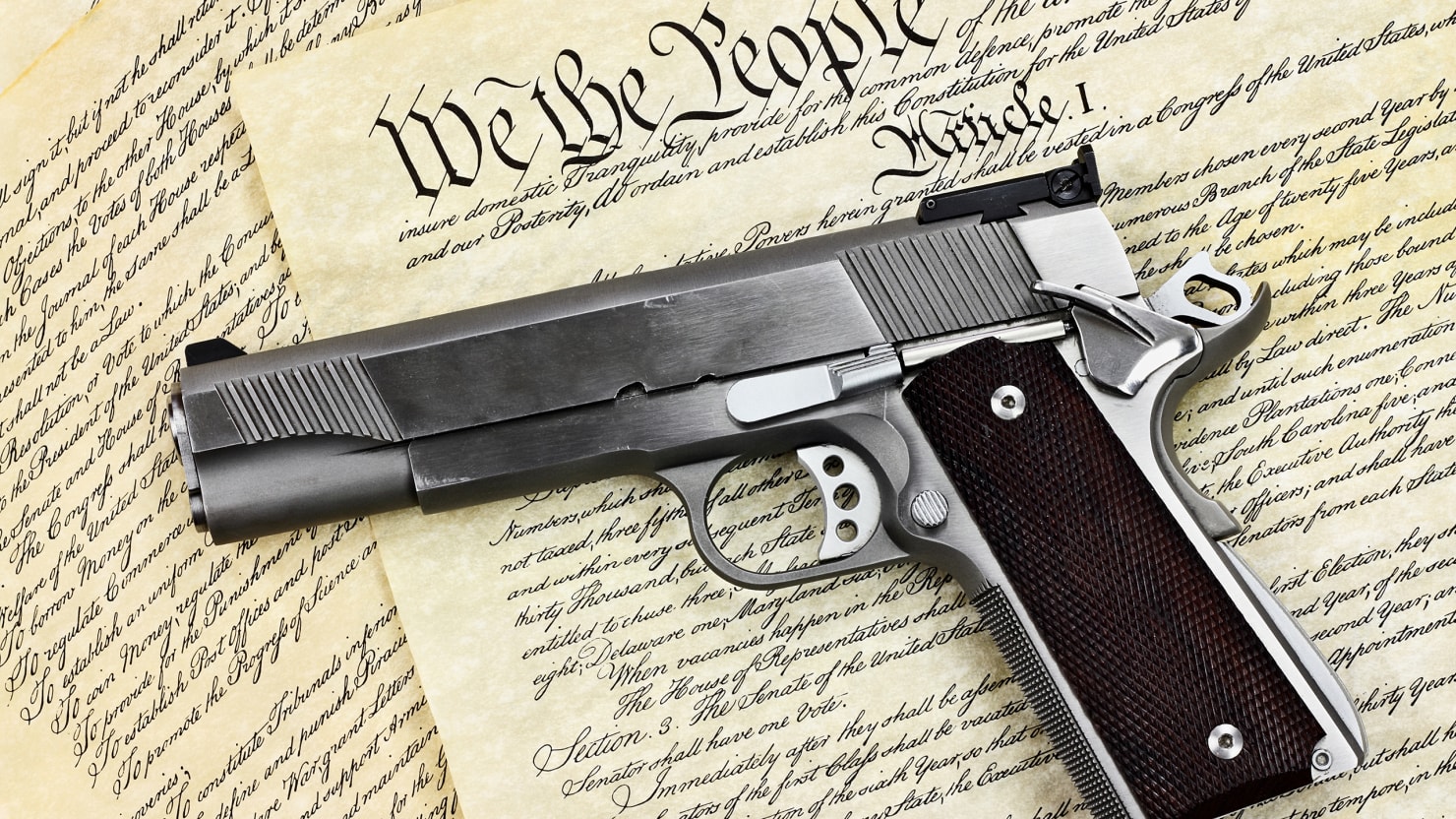
Gun Violence in America: Race, Reform and Freedom

 American seem increasingly terrified of the upcoming November elections regardless of the outcome. If the "Trumpsters" win, the fear is mass riots by the Far Left worse than when won Trump in 2020. If the Democrats win, the concern is another "January 6th" on steroids. One indication is the fact that Americans are arming themselves like never before. 

Case in point, in 1999 just 26% of Americans owned a firearm for self-protection. Today that number is  80%. One professor, Dr. David Yamane of Wake Forest University equated the uptick to the radical change in cultural values, which is something not seen to this degree since the late 1960's and early 1970's.

A recent Pew poll showed that 40% of households had at least one firearm in the house. 45% of Republicans and conservative leaning Independents owned a weapon while just 20% of Democrats or liberal leaning Independents did. When it came to gender, 40% of males owned a gun compared to 25% of women.

When we look at race, Americans of European origin made up 38% of gun ownership. Black Americans comprise 34% of gun ownership. Meanwhile, the nation's largest minority, Hispanics, made up 20% of the ownership. Asians were just 10% of gun owners. The reason most often cited by 72% gun owners for the reason they owned a firearm was self protection of person and property. 62% say they use their firearm mostly for hunting or sport. 15% claim they simply collect weapons of various sort. Lastly 7% it's a part of their job (such as security guard).

What type of guns do most Americans own? 72% of gun owners have a pistol/handgun. 62% have a rifle of some sort (including lever action and semi-automatics like an AR15). Finally, 54% own a shotgun (either single or double barreled). It bears mentioning that  58% of Americans in general favor tighter gun control laws. 26% believe current laws are about where we need to be, and 17% think that current gun laws are too restrictive.

Where do most of these gun owners live? Not surprising is that the majority---47%---live in the country where a firearm is commonly used for a wide variety of reasons such as hunting, protection against snakes and dangerous animals as well as theft of personal property and livestock as well as self protection.  Suburban neighborhoods, which comprise mostly Middle Class families and individuals, make up 30% of gun owners. 20% of those who own a firearm line in urban areas.

When it comes to the 2nd Amendment and the right to bear arms without restrictions, the percentages are quite low. The majority of gun owners regardless of political "affliction" said they believe that there should be some form of restrictions. For instance, respondents favor legislation to prevent those with some form of mental illness to own a firearm in near equal measure. 88% for conservatives and 89% for liberals.

What about carrying a concealed weapon without a permit? 60% of Republicans say no while 91% of Democrats agree.  When it comes to military styled weapons (which are typically semi-automatic deigned to look like a military grade firearm) as well as high capacity magazine clips (clips which hold more than eight rounds), the difference between ideologies becomes crystal clear. 81% of Democrats and those who lean liberal oppose both. 

In addition, there are now 17 states which no longer require a permit to carry a firearm---Alaska, Arizona, Arkansas, Idaho, Kansas, Kentucky, Maine, Mississippi, Missouri, New Hampshire, North Dakota, Oklahoma, South Dakota, Vermont, West Virginia, and Wyoming. Some states, such as New Hampshire is expected to pass a law to allow residents to have a loaded gun in the car provided the car is locked when unoccupied and the weapons is not readily visible.

So, where does gun violence most often occur? Globally, the U.S. is the overwhelming leader when it comes to gun related deaths. at 12.1% per 100,000. The next highest is Finland with 3.25% per 100,000. Canada's rate was 2.05%. Japan had the lowest rate of gun related deaths at 0.06%.

States with the highest rate of gun violence tend to take place in "blue states", that is, states controlled by Democrats, especially in the South. Mississippi is the worse state when it comes to gun violence at nearly 30% per 100,000. Louisiana is next with 28.2% per 100,000. Rhode Island was the safest state with just 3.1%.

When it comes to cities, Pueblo, Colorado was the worse city for gun violence with a murder rate of 119% over the previous year, is a moderate size city with a population of about 112,000. As an aside,  Pueblo has a racial makeup is 71.78% white, 12.36% mixed race, 9.26% listed as "other" and 3.14% Native American. Perhaps of more significance is the poverty rate, which stands of 16%.6. The unemployment level is 7% which are known to affect crime levels.

Pueblo was closely followed by Amarillo, Texas, which has a population just over 200,000, at 117%. Next on this shameful list is Lansing, Michigan. It has 112% rate of gun related deaths. Lansing has a surprisingly low population of 112,500. Whites make up just half the population with 52.6%. Blacks comprise 23% while mixed race is 6.03%. Hispanics are 5.52% of the residents and Asians are  4.93%. Lansing's poverty rate is 20%, which far exceeds the national average of 12.5%. It's unemployment rate is 3.90%.

Austin, Texas, with a population of 974,400, has been shown to have a gun violence rate of 86%. Rounding out the top five of this nefarious list at 77% is Fayetteville, North Carolina and its population of just under 209,000.  Their unemployment rate  is 5.2%, and poverty level of 18.7%, both of which are higher than the national average.

Other cities with higher than average gun related deaths include St. Louis, Missouri, New Orleans and Baton Rouge, Louisiana,  Jackson, Mississippi, Birmingham, Alabama, Baltimore, Maryland and Cleveland Ohio. Cities like Louisville, Kentucky, Memphis, Tennessee, West Palm Beach, Florida, Columbia and North Charlestown, South Carolina and Atlanta Georgia have higher levels of gun deaths relative to their population size. 58% of Americans say they've either personally experienced some form of gun violence or know someone who has.

In examining percentages of gun related deaths, we unsurprisingly find 66% are homicides. 32% are suicides and 3% are accidental.   It's worth mentioning that among the suicides, 16.9% were known to have some form of medically diagnosed mental illness at the time of their death and one person per day accidentally dies by a firearm (the most common form of accidental death was while cleaning their gun). 

Native Americans and Alaskan Natives have the highest percentage of suicide of any racial group. The root cause is believed to be extreme poverty coupled with drug and alcohol abuse.  Should we be surprised that around 50% of Americans admit being anxious when firearms are present? 36% said they or someone they know will be exposed to a gun related crime in their lifetime.

When we delve further into homicides, we find that Black Americans have the highest statistical rates of firearm related deaths at 8 times the national average (on average, just slightly under 10,000 blacks die of gun violence every year.  

The police have shot and killed more whites than any other racial group in terms of raw numbers. However, Black Americans are shot and killed at a higher percentage relative the size of their population. They are  followed by Hispanics and finally other racial groups.

To put it in further perspective, blacks comprise just 13% of the U.S. population while owning 24% of all guns. However, 60% of all gun related deaths are Black-Americans. When compared to the largest minority population, Hispanics, blacks die at a rate 11.5% more often than Hispanics. 83% of deaths among Black Americans are gun related. If blacks don't think back lives matter, why should the rest of America? 

Black youth of either gender die much more often due to gun violence than any other racial population. From birth to age 17, black youth die at a rate of 7.87% per 100,000 compared to whites and other racial groups of the same age, the death rate is 0.58%. From ages 18 through 24, their death rate is sickening 58.78%. For everyone else, it's roughly 3.10%.

From 25 to 39, the percentage of black deaths by gun violence is 42.35%. Other racial groups have an average of 3.21%. Finally, blacks 40 and over, their death rate is 11.5% per 100,000. For everyone else it's 1.78%. The average across all age brackets for Black Americans is 21.05%. For everyone else it's 1.93%

When we break down by gender, we find that black males are far more likely to die by gun violence than black females. If we group together all age brackets, black males have a death by firearm percentage of 40.09% compared to other races which have a death rate of 2.77%. The highest death rate among black males is between ages 18 and 24, While Hispanics, whites, Asians, and other races have a 4.59 death rate percentage, the death rate among black males is a horrific 104.07%!

Even when you look at older age groups, the percentage of gun related deaths for black males far exceed their population percentage. For age 19 up to 39, it's barely under 80%! Other racial groups show a 5.02% rate. You would expect that late middle age men would do better. Guess again.

Blacks males 40 and over have a gun related death rate of 20.42% per 100,000 compared to 2.48% for males of other races. It bares mentioning that 85% of all gun related murders of blacks were committed by other blacks, and while white on white gun rated murders have increased. Roughly 84% of whites are killed other whites, yet black on black homicides are roughly 93%.  A interesting aside mentioned in a Department of Justice report states that 52% of victims are familiar with their murderer. 

Politicians (mostly Democrat) have been promising serious gun law reforms for decades. Several such as Barack Obama and Bill Clinton have said they would "go door to door" if they had to taking away people's guns. Even 2024 Democratic nominee, Kamala Harris, has promised serious gun law reform, making it more difficult to buy or own a firearm. Of course, that's great for a sound bite on nightly news and aimed as invigorating the anti-gun crowd, that's neither realistic or likely ever to happen.

Many Americans are willing to accept tighter guns laws in order to keep firearms out of the hands of people most likely to cause harm such as the mentally unstable, drug addicts, and so forth. But as the old adage goes, "when guns are taken away, only criminals will have guns". It will be like fat sheep being guarded by hungry wolves.  

Besides, Americans have had a love affair with guns since the founding of this nation. They are part of our national fabric like freedom of speech, assembly, or the right to vote (not that it does us any good), Nevertheless, 89% of Americans agree there should be mandatory background checks without exception.

66% of Americans favor laws to allow the Feds to track gun sales (which means keeping records so they'll know who owns what). I understand the reason behind such a law, but to me that seems to violate our right to privacy. 64% want to ban high capacity magazines which hold more than 10 rounds. Proponents say there is no reason for anyone to shoot more than 10 rounds. Opponents point out that it's no one's business how many rounds they shoot.

Another 63% want to ban "assault weapons" all together. I suspect that most of these individuals have little idea what a "assault weapon" actually is. A so-called "assault weapons" is merely a semi-auto rifle like any other used in hunting or recreational shooting. The one key difference is that the stock has been changed to give it a "military" style. It just makes it look "cooler". It is not a military grade weapon.

So, when they say they want to ban "assault weapons", in reality  they mean any rifle other than a single shot bolt action rifle. I suppose they'd like to see us return to Colonial era black power flint locks too.  It's more likely they want to ban any add-on mechanisms or devices which can convert a rifle or other firearm into something approaching a full automatic such as was used by the 2017 mass murderer, Stephen Paddock, in Las Vegas where he killed 60 individuals and injured 413 more. At the time Paddock was using something called a "bump stock" which used the gun's recoil to continue firing. While it came too late for the victims, the 'bump stock" and similar devices have been banned.

There is no question tighter laws should be considered, but first existing laws to be enforced and extended to include gun shows where used guns can be bought with no background check. Transactions between individuals could be conducted using a intermediary such as a licensed gun store dealer.  It would be a little harder on both buyer and seller, but with proper ID, sellers could do a electronic background check. I'm sure everyone would agree that the minor inconvenience would be worth a possible life lost.

Lastly, and perhaps most importantly, attitudes toward gun violence must change, especially among those who've come to believe the only way to settle a disagreement is through violence. These people need to accept that all life has value, even those you disagree with. That people are murdered for  chump change makes no sense. Stealing someone's car or breaking into a house is placing more value on their stuff than your own life. Gun violence is the first choice of the weak and ultimately solves absolutely nothing. 


 If you enjoyed the article, please consider passing it along to others and don't forget to subscribe. It's free! Lastly please be sure to "like" us on whatever platform you use to read anotheropinionblog.com. It helps beat the algorithms and keeps our articles in circulation. Thank you!


DOJ: Limits on Gun Ownership May Result in Tyranny...


Key facts about Americans and guns


Permitless Carry of Guns: A State By State Analysis


Americans are arming up, study says


Homicide Rates by Race and the Medhi Hasan Controversy


DOJ: Black on Black Homicide---A Psychological PoliticalPerspective


The Disproportionate Impact of Gun Violence on BlackAmericans


Gun Violence Statistics 2024 ---  By Country, City, Demographics, Type Murder Rate and Intent