Showing posts with label Veterans. Show all posts

Thursday, November 20, 2025

Honoring the Greatest Generation

Tuesday, June 6, 1944. It was perhaps the greatest moment of the greatest generation. The weather was miserable. It had been pouring down rain with heavy gusts off and on for days, and when it wasn't raining, it was gloomy and overcast. Weather reports at the time said the weather was more akin to Fall than the Summer. However, there was expected to be a brief break. It wouldn't be much of one.

 It would still be overcast and the waters choppy, but the rain would stop and the wind over Northern France would be relatively calm. The invasion had already been postponed once because of the weather. The next anticipated break wouldn't in until early July...at best. That would give the Germans additional time to reinforce their already formable defenses. Perhaps worse, it could give time for mistakes to be made. 

Meanwhile, there were some 156,000 men chomping to go. They had been honed to a razor's edge.  Many had already been loaded onto the waiting ships three days prior. Most of them were seasick from the choppy water rocking the ships back and forth and up and down. At the same times, planes---bombers, fighters and transports---sat on the ground; fueled, armed, and awaiting their green light to load up, fire up, and go. Scattered at sites all over England millions more waited for the order to go.

Many were civilian or former veterans to old for regular service, while others were military; reserve and auxiliary, both men and women. They were on ships, at airfields, sitting in radar, communication, or command stations, air raid and observation outposts which scanned the skies looking for any hint that the Germans might preempt the pending invasion. The tension was palpable. It was like thousands of rubber bands twisted to the breaking point just waiting to be released. This was Operation Overlord, the code-name for the invasion of France by the Allies. Some 15 nations were taking part in this, the largest invasion ever attempted in history.

Just across the English Channel lay France. On a clear day, you could just make out its shores. But these weren't welcoming shores awaiting its liberators. These shores represented the first visible signs of Hitler's Fortress Europe, and the soldiers behind its more than ample fortifications knew the Allies were coming; they had been for many months. They were waiting, dug in behind massive reinforced concrete barriers, and just as tense and sharp as their counterparts. Many were combat experienced. 

Waiting for the Allied troops on those not-so-distant shores was sixty combat divisions, which made up approximately 850,000 German troops and ten panzer divisions. including the famous 21st Panzer Division which was one of the two divisions which had made up the famous Afrika Korp. This was Fortress Europe, designed by Organization Todt starting in 1940 with the Fall of France, using thousands of mostly forced labor alongside highly skilled German engineers, craftsmen, and builders. 

Fortress Europe (or "Festung Europa" in German) was the name given to the Atlantic Wall; a vast series of massive gun emplacements housed near impenetrable bunkers, observation posts supported by the MG42 machine gun which could spit 1500 rounds per minute with deadly accuracy, miles of razor wire and an estimated six million landmines along the beaches and roads near Normandy. 

The overall commander was General Field Marshal Gerd von Rundstedt, who, fortunately for the Allies, was not among Germany's best generals. As commander of Army Group "A", he issued the "halt order" at Dunkirk allowing thousands of British and French to escape, to England. Then as commander of Army Group South during the invasion of Soviet Russia, was responsible for largest encirclements in history---the surrounding of the Germany Army by the Russians at the Battle of Kursk. Finally, he ordered a unapproved withdrawal of troops during the battle at Rostov. For his repeated failures and incompetence, he was appointed Commander-in-Chief in the West. Why you ask? Because he was also Hitler's favorite "yes man". 

General Field Marshal Erwin Rommel, the famed "Desert Fox" of North Africa, was second in command, and considered by some to be among Germany's very best generals. He was in commander of Army Group "B" and responsible for the defenses in and around Normandy up through the southern portion of the Netherlands. Other key officers included Walter Model, Paul Hausser, and Gunther von Kluge. 

Angled and sharpen telephone poles like giant pongee sticks designed to destroy gliders and other aircraft (nicknamed "Rommel's asparagus"), and 200,000 steel barriers made up of railroad tracks all along the beaches, designed to be hidden at high tide and would ripe the bottoms of landing craft open like a can of flailing sardines. In addition, there was a myriad of concrete enforced trenches and underground rail lines to quickly move men, ammunition, and other material. Beyond that were numerous barracks and other fortifications, often camouflaged as haystacks, barns or houses. Lastly was overlapping communication lines. 

The Atlantic Wall itself ran from Brittany coast in far Western France all along the Northern coastline to include Belgium and Holland. In addition, German troops had fortified the coastlines all along Denmark and Norway. This truly was a "Festung Europa". As an interesting aside, German troops had painted in minute detail everything within view from their gun emplacement on the inside walls of their bunkers right down to every bush. If something appeared which wasn't on that permanent map, it was destroyed. 

So, what do you do when the enemy knows you're coming? You distract them, and that's exactly what the Allies did months ahead of the planned invasion (code-named "Operation Fortitude). The Allies used everything trick in the book, and then some, to make the Germans believe, not that there would be no invasion, but that the invasion would take place 370 miles away, at the Pas de Calais (driving time would be roughly 6 to 7 hours). What was significant about this particular area is that it's the closest point between France and the UK. It's also where Hitler had previously considered invading England from. Thus, the Allies played on Hitler's ego by convincing him that his idea for using Calais was the correct one. 

The Allies did everything from planting false plans, notes, and letters on individuals (and even once used a corpse) knowing that they would be intercepted by the Germans which would only fed their preconceived notions. Meanwhile, unknown to German intelligence, all of their spies had been captured. Many were "convinced" to work for the British, and thus would send false reports back to Berlin.

The Allies even built up an entire fake army around General George Patton, whom the Germans believed was the best Allied general and the man most likely to lead an invasion. They even created inflatable planes, trucks, tanks, and false radio traffic for the Germans to monitor. On top of this was around the clock bombing by US and British bombers to ensure the Germans always operated under pressure. 

Just prior to the invasion, the Allies stepped up their bombing campaign over France to further weaken the Germans. Finally, after months of planning, delays, setbacks, and mounting pressure from Stalin to open another front, it was decided by overall Allied Commander, General Dwight D Eisenhower and his staff, composed of senior Allied officers which included Arthur Tedder, Bernard Montgomery, and Bertram Ramsey, late in the evening on June 5th to go the following morning. It was then or never. The invasion was on. In private, Eisenhower composed two messages for broadcast. The first was to announce the success of the landing, which he hoped to give. The second for the all too real potential failure which he half expected to deliver.

The Allies amassed the greatest armada of ships the world had ever seen. Some 5,333 ships and landing crafts were prepared to sail. Ahead of the land assault was the aerial assault by approximately 23,400 US paratroopers from the 82nd and 101st Airborne along with British 6th Airborne and RAF Pathfinders silently coming in by glider. Their jobs would be to seize key bridges, rail points, and key crossroads in order to prevent German reinforcements from reaching the beachheads. 

In addition to being the largest naval armada in the annals of world history, there were also 3,455 operational heavy bombers, 989 operational light and medium bombers, and 3,824 fighters available on June 6th. However, due to a shortage of aircrews, not all of these flew on D-Day. Nevertheless, some 7,774 planes did fly that day (that number jumps to 9,000 if you include transports and gliders. By contrast, the Luftwaffe had available just 815 assorted planes). The sight and sound of all those planes must have been mind numbing. 

Unfortunately though, the landing took place at low tide causing the men to wade to shore yards out than anticipated since the drafts of landing craft prevented them from getting closer in to shore. As a result, hundreds of men stepped off wearing 80 pound backpacks into water over their heads; the weight of their equipment dragging them down to drown. Tanks, jeeps, and other vehicles also sank as the water was to deep or to rough. 

However, the low tide exposed the beach barricades which would had destroyed the landing craft had they tried to land at high tide. They also provided a measure of protection for the men to hide behind, saving who knows how many lives. Meanwhile, entire landing crafts were ranked by the murderous fire of the MG42s and small arms fire, often killing entire landing crews before they had a chance to step off. 

The Allies were, however, lucky in other ways too. First, many of the heavy gun emplacements were yet to be installed either or were manned by smaller caliber artillery pieces. Of the sixty combat infantry divisions and ten Panzer divisions, including key SS units, which comprised the 850,000 troops and 1,555 tanks in France at the time, the majority---the most experienced---were stationed at Port of Calais, there were only 80,000 troops at Normandy on June 6th and elements of just one Panzer division.

To make matters worse for the Germans, of the 80,000 or so troops in Normandy, the majority had little or no combat experience. In fact, most were Auxiliary and conscripts (many as young as 16) who came from the Eastern territories. Also, many of the tanks on hand weren't yet combat operational; needing repairs or refitting. Those which were working hadn't been brought up the front at previously instructed. 

Finally, the top command of German forces, including the commander for Army Group B, which covered Normandy, Field Marshal Erwin Rommel, were away. Some had decided to take some extended leave time in Paris and surrounding areas, not expecting an invasion due to weather, while Rommel had returned home on a surprise visit for his wife's birthday---June 6th. Meanwhile, Hitler was so convinced that the invasion would come at the Pas de Calais, that he had given strict instructions that no units---men, tanks, artillery, or plane---could be released without his personal approval. 

As a result, the Germans were poorly prepared for any attack, but the cherry on the top of the streusel was than when it was confirmed that the attack was indeed underway, Hitler was asleep. Suffering from bouts of insomnia, Hitler had taken a sleeping pill just hours before and his aides were afraid to wake Hitler up, and so the Allies were able to establish a foothold while Hitler counted sheep (Aryan no doubt).

 By the time Hitler finally awoke, the damage had been done. Even then, he was persuaded to release only a fraction of what was available (notably the 12th SS Panzer Division and the Panzer Lehr Division). In fact, while it should had only taken about six or so hours for reinforcing Hitler's Panzer units to make the journey from Pas de Calais to Normandy, French resistance fighters were able to use the delay to, give the Allies nearly three extra days to reinforce their positions by blocking or destroying roads, bridges, cutting powerlines, ambushing soldiers, and destroying fuel depots.   

Finally, to give some additional weight to the overall complexity of D-Day, besides the 150,000+ soldiers who participated in the landing and the 5,333 ships which got them there (including 200 warships which participated in the offshore bombardment) and the 9000 aircraft which flew a total of 11,085 missions, there were 200,000 vehicles plus 1,550 tanks landed on the beaches that day along with 1,695 tons of material.

Meanwhile Allied bombers dropped 7,616 tons of bombs that night before the invasion followed by 10,395 tons of bombs during the day of the invasion. 27 amphibious tanks were sunk at Utah beach, 120 Allied ships were damaged by German shelling, plus another 59 Allied ships which were sunk. Lastly, because of overwhelming Allied air superiority, the once famed Luftwaffe was only able to get just 100 or so planes up. 

D-Day, June 6th 1944 marked the beginning of the end for the German occupation of France, and eventually for the rest of Europe". By May 1945, the war in Europe would be over, and by August the war in the Pacific would come to a close too. There's another matter we must take into consideration too. 

Field Marshall Rommel remarked, about a pending invasion of Fortress Europe, that whenever and wherever it happened, it would be the "longest day" of the war. For approximately 5000 men it was indeed their "longest day" because for them that day never ended. They were the ones who died on that day. In addition, some 15,000 French civilians living in and around Normandy also died, mostly from Allied shelling. 

On the German side, around 9000 soldiers were killed, wounded or taken prisoner including 28 generals. When calculated for the entire Normandy Campaign, which lasted from June 6 to August 30th, there were 209,000 Allied casualties. For the Germans, it was roughly 200,000. As an aside, the average age of a GI at the time was just 19 while the average age of an officer (excluding senior officers) was only 23. 

While it's hard to believe that these old men with their walkers, canes, and wheelchairs accomplished these feats for which have all but been consigned to history books and the movies, there is no doubt that 81 years ago these were men of unbreakable will and character. They lived through a depression, fought a war, and came home to remake a nation. The same can be said of all the women who served as well and those who supported the war effort at home.

According to the Veterans Administration, out of the millions who served during WWII, there are approximately only 66,000 remaining, and we're losing on average 250 of these national treasures a day. Make no mistake that these men and women were indeed our greatest generation and we should feel blessed that they existed.

If you want to know more about this article's topic, please check out the links below. If you enjoyed the article, please consider passing it along to others and don't forget to subscribe. It's free! Lastly please be sure to "like" us on whatever platform you use to read anotheropinionblog.com. It helps with the algorithms and keeps our articles in circulation. Thank you!

Friday, November 07, 2025

The History Behind Veteran's Day

November 11th is Veterans Day, a day to honor and "thank" all the men and women who honorably served our country past and present.  However, it has not always been known as Veterans Day. Originally it was known as "Armistice Day"; the day the which officially brought World War I, or as it was known then, the "Great War" and "The War to End All Wars" to an end. But that's not the whole story.

The German "Spring Offensive" of 1918 had recently been stalled following the Battle of Amiens, forcing the Germans back while Allied counter attacks in the Lowland nations of Belgium and Netherlands had ground to a halt, although there was still some small pockets of movement here and there. Germany still occupied territory in Belgium, Netherlands, and Northern France while the Allies had yet to cross into Germany. It appeared that after four long and bloody years, each side had come to an exhausted stalemate. Back home, each of the major  belligerent nations were facing economic collapse and civil unrest.  

Germany's Kaiser Wilhelm II (who would resign and later abdicate on November 10th), on the advice of his ministers and leading generals, agreed that it was time to end the war.  On October 3, Prince Maximilian of Bavaria, who had replaced the Kaiser as head of state, instructed German diplomats to approach representatives of France, England, and the United States (which had just recently joined the war) about a ceasefire and returning the frontiers to their original pre-war boundaries as well as notifying President Wilson on October 5th of their acceptance of his "Fourteen Points" proposal. After a short deliberation, they agreed.

Thus, on November 11, 1918, representatives of France, Britain, and Germany met in a cramped railroad car belonging to France's Marshal Ferdinand Foch, located at the Forest of Compiegne outside of the town of Compiegne, which is about 37 mile north of Paris.   At 5:45 am the Armistice or cease fire agreement was signed, bringing the war to an effective end (the Armistice was not a surrender agreement as some mistakenly have alleged).

The Germans called for the cease fire to take effect immediately. Marshal Foch, speaking on behalf of the Entente (or Allies), was adamant in his refusal. He insisted the hostilities would stop at exactly 11:00 am, which was about six hours later. Why?

Two reasons were given by Marshal Foch. First, he claimed that it would take six hours to alert front line troops and the media (Germany said they could alert all their front line units within the hour. They were less concerned about the media). Secondly, Marshal Foch thought that end of the greatest war in human history required a "poetic end". Therefore, Foch insisted that the war should end on the eleventh day of the eleventh month at the eleventh hour. Such was his arrogance and elitism I suppose. 

Meanwhile Marshal Foch wanted time to prepared to meet with the media while his subordinates alerted various commands, some 3000 more men would needlessly die, which is something not often found in the history books.  From the conclusion of the ceremony until the armistice took effect six hours later, 3000 soldiers lost their lives to war which technically had come to an end. The majority of those sacrificed for Foch's "poetic end" were mostly Allied soldiers intent of gaining land which no longer held strategic value. Several hundred German died as well, caught off guard as they prepared to go home.

When the "War to End All Wars" was finally all over, 40 million military and civilians were dead and another 23 million combatants were wounded with the Spanish Flu already beginning to make its deadly presence felt. It would ultimately claim the lives of 500 million men, women, and children, or about 1/3 of the entire population of the planet.  

In 1919, President Woodrow Wilson signed into law a bill which recognized November 11th as Armistice Day and those who served. On May 24, 1954, President Dwight Eisenhower signed the bill which expanded Armistice Day to one recognizing all veterans of all wars. Thus, November 11th would henceforth be known as Veterans Day.

Of course, the "War to End All Wars" proved to be a illusion. Despite all the parades and celebrations, the "Treaty of Versailles", which officially brought the Great War to an end laid the seeds for the next, even greater war, in the freshly dug graves and war ravaged fields and towns of Europe. The war brought to an end the empires of Germany, Russia, and the Ottomans. It indiscriminately redrew the map of the Middle East, Asia, and Africa, creating a series crisis, wars, and conflicts which still continues. It greatly weakened the British and French empires as well while bringing the United States to the forefront as a world power. 

The booming Twenties which followed gave way to an economic collapse on a global scale by 1929.  By 1933, many of the old actors had left the stage of History to write their sanitized memoirs, to be replaced by a new form of nationalism and oppression---fascism-- and new actors like Churchill, Franco, DeGaulle, Hitler, Tojo, Franklin D Roosevelt, and Mussolini, stepped onto the stage of History to assume their roles as the clouds of war once more gathered. By the time it ended in 1945, an estimated 85 million lay dead because of the failures of politicians in 1919.

Today, there's an estimated 15.8 million veterans in the United States, which comprised about 6.1% of the population. The largest segment are from the Gulf Wars. The smallest are those who survived WWII, of which approximately 120,000 are still with us. The Veterans Administrations predicts that the last of these heroes will pass into history by the early 2040's. 

At any given time, there are around 32,822 homeless veterans living on the street nationally, a record low. While that is a decrease of 7.5% over 2024, even one homeless veteran is one too many. As of 2023, there were 5.27 million disabled veterans, which is about 30% of all veterans. Some of their injuries are physical while for others, it's the result of mental trauma. such as PTSD.  

Lastly, and arguably the most tragic are veteran suicides. As of 2022 (the latest year available), there were 6,407 veteran suicides compared to 41,841 non-veteran suicides. The most common reasons are often those you don't see like PTSD, depression, stress, drug or alcohol abuse. So, this November 11th---Veterans Day---take a moment to say "thank you" to ant veteran you meet. Your appreciation goes a long way. 


If you want to know more about this article's topic, please check out the links below. If you enjoyed the article, please consider passing it along to others and don't forget to subscribe. It's free! Lastly please be sure to "like" us on whatever platform you use to read anotheropinionblog.com. It helps with the algorithms and keeps our articles in circulation. Thank you! 


Friday, November 15, 2024

The 2024 Presidential Election: Who Showed Up and Upset the Status Quo's Applecart?

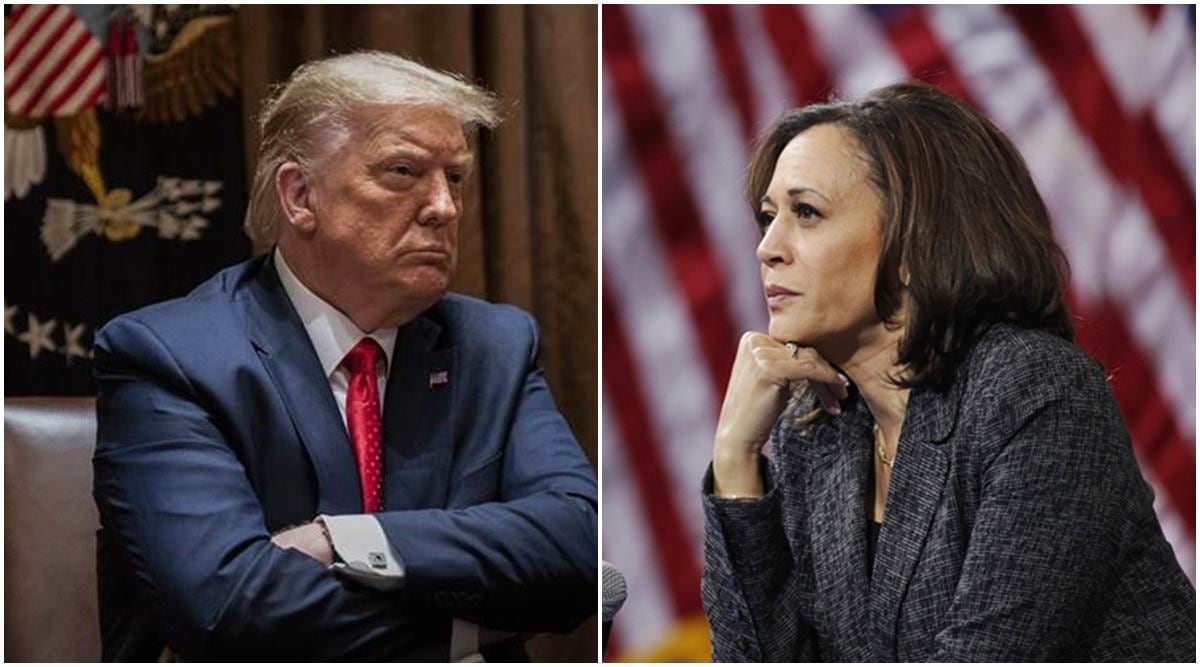
86.7% to 13.2%. That's the percentage Donald Trump defeated Kamala Harris among early voters, In the end, the Electoral College total was 312 to 226 (popular vote percentages were 50.1% for Trump and 48.3% for Harris) It's not what the political Establishment expected. It's not what the not-so-subtle partisan news media predicted. It's not what the Left or limousine liberals hoped for either. Some of the celebrity types even threatened to leave the country if the results weren't to their liking. I guess that was supposed to be some sort of implied threat.

All the "big names" came out---Barack and Michelle Obama, Bill and Hillary Clinton, Nancy Pelosi, Oprah Winfrey, Whoopie Goldberg and the rest of the "The View", George Clooney---and even Taylor Swift to name a few. I guess their opinions weren't as important as they thought they were.

 Even the debates were a farce, at least as seen by the voters who bothered to turn in, further embarrassing the news media credibility and mocking its impartiality. Fact-checking one individual but not the other? Turning off the "mic" on just one in mid-sentence but not both? Giving extra camera to one candidate while the other is still speaking, plus the innuendos? Hardly "fair and balanced". I can see why some call it "soft propaganda". 

Some blamed President Joe Biden for waiting too long before withdrawing and thus giving Harris too brief a time to mount a properly organized campaign. But if so, then the blame needs to be shared by the Democrat Party for allowing an obviously ill Biden to be nominate in the first place, and then for encouraging him to stay the course. Biden has been in mental decline for much of his four years, becoming a running joke among foreign leaders, the international media, and a headshaking embarrassment to Americans of all political stripe.

A few have said that President Biden should have stepped down and allowed Harris to assume the mantle of President. It would have given her a certain clout to be running as the incumbent. It would have given her an opportunity to flex her presidential muscle, perhaps even getting some of ideas passed into law. 

At the very least, the Democrats could point to having America's first female president and Harris would have at least achieved something of note aside from having the worst consistent approval rating of any Vice President of either party in U.S. history.

Senator Bernie Sanders made a good point when he said "the Democratic Party left the working class. Now, the working class has left the Democratic Party". One voter in Pennsylvania who seemed to sum up much of the sentiment of Trump crossover voters when he quipped "It wasn't so much that I liked Trump more as it was that I liked Harris less". 

Many voters found her shallow, pandering, and basically unqualified to be president. Some remarked that they didn't like the fact that they didn't have a say in who the Democratic nominee was after President Biden withdrew under extreme pressure because of the decline in his cognitive health.

Maybe rather than being nominated as a "buy one get one free" ticket or allowing the presidential nominee (in truth, the party powerbrokers) choose the Vice Presidential nominee, the slot should be voted on separated by the party membership. But protest votes and finger pointing by disgruntled insiders and a partisan media aside, who upside their apple cart? Who peed in the Left's Cheerios? Let's find out.

 Early analysis of the race was a key factor in Trump's victory. Trump's advisors went back and reexamined who were their core supporters from his 2016 and 2020 races.  The majority are primarily  white male, mostly seniors, active duty military or retired veterans, law enforcement, business owners. Most are middle class with good representation among the working class and upper middle class.

They're strong advocates of the 2nd amendment. Dedicated nationalists ("America first"), and opposed to a open borders policy as well as to amnesty. They want a secure southern border, strict regulation on migration in general, and deportation of all illegal immigrants currently living in the United States (with some six to ten million embedded in the U.S., that would prove unlikely).

Trump supporters tend to be religious, mostly Christian fundamentalists. They oppose abortion, although they're split on whether the ban should across the board or allow for some exceptions such as rape or incest. They back legislation calling the adoption of English as the official national language.

Many advocate for the reduction of government bureaucracy and eliminating "red tape" which hinders business (especially small businesses).  Some want to do away with various government agencies like the Department of Education, the Department of Commerce, the IRS, Department of Energy, the EPA, and any other agency not specifically called for in the founding documents.

That's the core which has stayed loyal to Trump. That has been his base. But, would that hold true in 2024?  The 2024 election was a near record in voter turnout, with voters reportedly standing in lines for hours in some cases. According to pre-election polling, taken in late October by Gallup, 70% of voters said they were looking forward to casting their vote (70% of Republicans and conservative leaning voters and 67% of Democrat and liberal leaning voters). An estimated 54% said they intended to vote early.

Voter outreach was far more extensive than in previous elections. 58% of Democrats said they were contacted by someone in Harris campaign and asked to support their candidate. That compares 40% of Trump supporters who were contacted by a representative of the Trump team. 25% of registered Republicans said they were contacted by the Harris camp while 31% of Democrats said they were contacted by Trump supporters (as an aside, the polls excluded Independent and third party voters).  

The majority of Trump supporters over the age of 45, were 57% of men and 48% of women. Harris received 51% of the 45+ women's vote and 42% of the over 45 men's vote. The big surprise was the voters age 18 to 44, which includes the Millennials and GenZ. 53% of the males went for Trump compared to 45% for Harris. On the women's side, 44% voted for Trump while 55% backed Kamala.

Historically, the 18 to 40 age bracket has been strongly liberal (or at least, anti-Republican). This group---male and female---is the one we've heard so much about advocating democratic socialism, Communism, or anarchy (although a large minority is said to support libertarianism). Although women turned out for Harris, their numbers were slightly lower than expected whereas the men were backing Trump in strong numbers. If we compare these with numbers with those of the 2020 Presidential election we see just how significant there are.

In 2020, former Vice President Joe Biden received 60% of the vote from those 18 to 29 and 52% of voters between ages 30 and 44. When broken down by gender, Biden got 57% of the women's vote and 45% of the men's. Trump, by contrast, got just 39% of the vote from those in the 18 to 29 bracket and but 50% of those 30 to 44. Trump also received 51% of the vote from those 45+. When it came to gender, 42% of women voted for Trump in 2020 while he got 53% of the men's vote.

When it came to race, Harris picked up 83% of the Black vote which tends to vote lockstep Democrat. Trump earned 16% of the Black vote. In 2020, 87% of the Black vote went to Biden while 12% voted for "The Donald". 55% of the Latino vote also went to Kamala along with 55% of mixed or other race. 43% of Latinos vote in favor of Trump along with 41% of mixed or other race. When it came to white voters, Harris garnered 43% of their vote while 56% went for Trump.

In looking at the 2020 race, 58% voted for Trump compared to 41% for Biden. For Latinos, it was 65% for Biden and just 32% for Trump. Among Black voters in 2020, 12% voted for Trump with Biden getting 87%. Asians, who tend to be traditional, gave Biden the thumbs up with 61% of their vote. 34% said "yes" to Trump. Lastly, among mixed race results, only 41% sided with "The Donald" and 55% went with Biden.

The next category we want to examine is education. Among those who graduated from college gave Kamala Harris 56% of their vote and Trump just 43%. Voters without a college degree (as well as those who didn't graduate from high school or may have a technical/trade education) voted for Trump 56% to 43%. This group tends to be blue collar or middle class, as well as some small business owners. In 2020 Trump won the same bracket.  

Another important demographic is location. Who did better in suburbs versus the city and the hinterlands of rural America? Kamala Harris pulled in the vote among city dwellers with 53% of the vote while 35% voted for Trump.  Out in the suburbs, 47% of voters got behind Trump. A majority of 52% cast their vote for Harris. What about in America's farmlands? A strong 63% stood with "The Donald" compared to 35% for the current Vice President, Kamala Harris.   

When it came to gender out in the suburbs (irrespective of race), we find that 57% went for Kamala Harris. Trump got only 42%. Among guys, the story was reversed. 46% supported Harris while 52% backed Trump. The results here shouldn't come as a big surprise.  Most of us know that the majority of liberals and those registered Democrat tend to live in cities while many conservatives and Republicans often live in the rural farmlands of America.

 The tossup was in suburbia. This is Middle America. It's where the "America Dream" lives, tucked away in working class and middle income neighborhoods while the well-to-do are secluded in their gated communities. By and large, Middle America is traditionalist and typically leans conservative, though it's not rock solid conservative. It has some liberal tendencies too. It's not particularly fond of extremes from either side.

Most of the kids attend public schools while both parents work full time (some have to hold down multiple jobs just to make ends meet). In the 1980's we'd call them "latch key kids".  Much our country's veterans live in Middle America too. This is where you'll tend to find small business owners and factory workers. Many of whom are either members of unions or come from historically union families, which begs the question---who did best among union households?

According to a 2023 survey, 59% of union members were registered Democrat, and yet 39% intended to vote Republican. A October 14, 2024 poll by Pew revealed that 50% of union households surveyed said they would vote for Kamala Harris. 43% intended to vote for Trump while 6% planned to vote for a third party candidate. These are numbers which would have been unheard of just a few years ago.

So, what happened? The reasons Donald Trump won are varied. He was better at identifying his core base and better at persuading those who leaned in his direction. He delivered a more clear and articulate message. Vice President Harris was seen as not being a legitimate candidate. No one voted for her to be the Democratic nominee for President. She wasn't "their" choice.

 Harris was seen as a stop gap because President Joe Biden was falling apart and everyone on the Left failed to act in time. She offered platitudes instead of realistic goals that differed from Biden's failed policies. She appeared at times confused as she tried to appease everyone, and was often caught talking out both sides of her mouth. Her campaign was unorganized and unsure of its candidate or direction.

Another factor, which will undoubtedly be ignored is the news media. The news media's role is provide unbiased and objective news. Over the past decade (or longer), the news media has devolved into a partisan propaganda machine devoid of credibility. They've spent years doing everything possible to discredit Trump and aiding the Status Quo in its quest of character assassination (which likely contributed to the two attempts at the real thing). Their partisan bias was all too obvious. Too bad for them that the American Public isn't as ignorant or naive as they think we are. 

Lastly, American voters are tired of the same old bait and switch political game that's played every election cycle. They are tired of broken promises, condescending platitudes, and seeing the can kicked down the road and into their children's and grandchildren's laps rather solving the problem now. We've had enough of their bipartisan lies.

 We want our country back from the neo-fascist corporate elite who've hijacked our Republic. Trump, like him or despised him, represents the "outsider"; someone willing and able to challenge the corrupt Status quo for the soul of America, and it seems that most Americans are with him.   


Thank you for reading Another Opinion! We hope you enjoyed this article and will pass it along. Please don't forget to subscribe. It's free! Lastly, please "like" us on whatever platform you use to read anotheropinionblog.com. It helps beat the algorithms and keeps our articles in circulation. Please find below the links we consulted in researching this article. 


How 5 key demographic groups voted in 2024: AP VoteCast


Gallup: More Than Half of U.S. Votes Likely Cast BeforeElection Day


Roper/Cornell: How Groups Voted in 2020


Key facts about union members and the 2024 election


Friday, October 25, 2024

Who Votes in America? A Snapshot of the Average American Voter

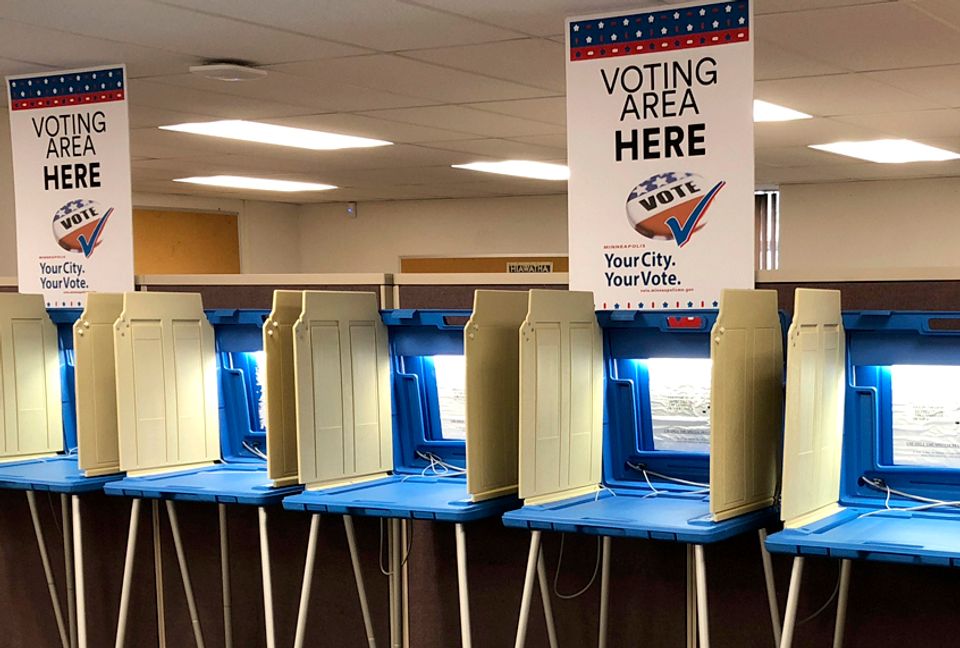
It's ironic that nearly every election is billed as the "most important" to our democracy, and yet voter turnout in the United States is among the lowest of any democracy. I remember when I first ran for a seat on our newly created Metro Council, voter turnout in my district was between 5% and 7%. You would think there would be more interest for electing representatives to a newly created local metro government council (we had just merged city and county governments), but nope!

Other democracies have a far greater percentage of voter turnout that we do (we're ranked 31st in the world). For many people it means trudging on foot for miles enduring all kinds of terrain and weather, through dangerous areas controlled by drug cartels, terrorists, corrupt police and military troops, all trying to intimidate voters. But Americans, it seems we will stay home at the drop of a hat. Any ole excuse will do. Is it that we just don't care anymore? Who does show up to vote? Let's look at the numbers.

Voter turnout in the United States in the 2020 presidential election was 66.1%. Of the eligible 240 million voters, 158,427,986 bothered to show up (and of that, an estimated 5% of the votes were cast by illegal immigrants).  Colorado, Maine, Minnesota, Wisconsin, Washington State and Oregon had the highest percentage of turnout with 75% or better of eligible voters showing up at the polls. Hawaii, Oklahoma, Tennessee, Missouri, and West Virginia had the lowest turnout---under 55%---of registered voters.

Historically, voter turnout for presidential elections has been in the neighborhood of 55%. The lowest turnout since 1932 was in 1996 when just 49% of the voting age population showed up to decide between between Bill Clinton, Bob Dole, and Ross Perot. Clinton won with 49% of the vote, Dole received 40.7% and Ross Perot got 8.4%.

As an aside, the lowest voter turnout in U.S. history was the 1792 presidential election between George Washington (seeking a second term) and John Adams.  The turnout was just 6.3% (or 28,000 voters out of a population of 3,919,023). Of course, there were only 15 states back then. Apparently being "Father of the Country" didn't count for much.

Women weren't allowed to vote until 1920, following the passage of the 19th Amendment and the hard work of suffragettes. The last state to approve the amendment was Tennessee on August 18, 1920 (incidentally, my great grandmother was one of those suffragettes. She lived in Nashville). 

The highest voter turnout at the polls was in 1876 when 82.6% of eligible voters showed up to vote for Rutherford Hayes or Samuel Tilden. This was one of the earliest elections to allow former slaves to vote following the passage of the 15th Amendment in 1870.

Although America has had a wide variety of political parties since 1790, the two main parties nowadays are the Republicans and Democrats, although there are several strong third parties which include the Libertarian Party, the Green Party, and the Constitution Party (according to a October 4, 2023 Gallup report, support for third parties is up 63%, the highest increase since 2003).

Nevertheless, both of the two major parties have been hemorrhaging voters, especially since the Supreme Court upheld the "Citizens United" ruling in 2010 which effectively gave over control of the U.S. political system to corporations by declaring they had  "personhood" and basic civil rights. It also declared money was  "free speech",  and without a cap on donations, they could give what they wanted. That meant the few would have more "free speech" than the many.  

For about the last 10 or so years, voters have shifted away from the growing extremism of either corporate owned party and becoming Independents or joining third parties. Today, registered Independents make up about 41% of all registered voters with the Democrats and Republicans comprising 28% and 31% respectively (Independents were as high as 51% in June 2024).

There are currently 244 million eligible voters in the U.S.. Of that, there are 168.31 million registered voters. As we said above, the majority of voters are registered as Independent, followed by Republican and Democrat. When it comes to gender, women tend to vote more often than men. In fact, according to the Center for American Women and Politics, there were 7.4 million more female voters in 2022 than men. To rephrase it, 68.4% of registered women voted compared to 65% of men.

According to a Pew survey, in 2020 48% of registered male voters who showed up voted Democrat compared to 55% of females. 50% of registered Republican males voted while 44% of Republican women did. In 2022, a presidential off year, 44% of male Democrats voted as did 51% of Democratic women. So, in both instances, Republican males showed up more than Democratic males. Among females, the opposite was true.  More female Democrats voted than Republicans.

The survey left out the political majority---Independents (does that subtlety imply a measure of partisanship I wonder?), which is interesting given that Independents made up over a quarter of all voters who showed up at the polls in 2020. Independents tend to lean conservative when it comes to the economy and taxes and lean liberal on most social issues. Independents are, to frame them, typically moderates. They oppose the extremism of the prevailing duopoly.

 When it comes to voting, Independents look at individual candidates and their positions on specific issues compared to their partisan counterparts who tend to vote along party lines (even if it means holding their noses to do so). For instance, in 2022 Democrats voted for Democratic candidates 96% of the time with just 3% refusing to walk in lockstep.

It wasn't any different among Republicans which had the same percentages. Independents, however, tilted more for Biden in 2020 than Trump (54% to 41%) because of the latter's perceived unpredictability and the extremism of the Republican Party. In 1994, more Independents backed President Bush than Bill Clinton by 18 points because he was a unknown factor with a questionable past.

What does this mean? In 2022, 74% of voters disapproved of how Biden was handling (or mishandling as the case may be) of the economy. Given the lockstep mentality of both parties, and their near dead heat in voter registration, it will be the Independents who may decide the 2024 election and do so into the future. The question is which, if any, of the two corporate owned parties can pull in the Independent voter? Independents are political "free agents" and the Democrats and Republicans aren't the only game anymore.

According to a CNN poll, Democratic voters between ages 18 and 29 and 30 to 39 turned out in heavy percentages---63% and 51% respectively---then the percentages drop off significantly to the mid and lower 40% range.  Among Republicans, the inverse was true. The percentages for the same age brackets were 35% and 47%. Ages 40 and older saw the numbers jump to about 55%.

Married Republicans voted 58% of time compared to 39% who are single. For Democrats, just 41% of married couples voted. But if you're single, that percentage jumps to 59%! So, in looking at these two sets of statistics provided by CNN, young single Democrats are more likely than not to show up at the polls. On the other hand, older married Republicans are most likely to be dedicated voters.

Looking backward, although the historical affiliation among the youth vote has been Democrat, it has been by decreasing margins coming forward. If Pew had included Independents, the data would have shown that the general trend among the youth in both parties are deserting the two corporate parties in droves and becoming Independent. As an aside, almost 50/50% favor some form libertarianism  or type of social democracy. Support for traditional capitalism is also in decline.

When it comes to race, 92% of Black voters voted for Democrat in 2020 compared 8% who voted Republican. In 2022, 93% voted Democrat while 5% backed the GOP. In looking at the 2020 white vote, 43% went Democrat in contrast to 55% who voted Republicans. in 2022, 41% of white voters voted Democrat while 57% went Republican.

Hispanics, who are now the second largest population in the U.S., voted 61% Democrat in 2020. 36% backed Republicans (most were of Cuban descent). Those number changed slightly in 2022 when 60% voted Democrat and 39% when Republican. Asians weren't much different. 70% voted Democrat in 2020 compared to 30% Republican. 2022 saw 68% going Democrat and 32% voting Republican.

If we look at race and gender,  60% of white males voted Republican in 2022. 38% voted Democrat. Among white females, 55% voted for the GOP in 2022 while 44% sided with the Democrats. Among Black males, 93% backed Democrats while just 6% supported the Republican Party. Black women were nearly identical with the male counterparts. 93% went Democrat and 5% back Republicans.

Among Hispanic males in 2022, 43% sided with Republicans. 56% back the Democratic Party (one reason may be for the perceived leniency toward illegal immigration and less willingness to deport compare to the Republicans). It appears that 64% of Hispanic females agree. 34% side with the Republicans. Unfortunately, there was no data for Asians.

 In the 2022 election, individuals with a high school or less level of education leaned Republican by a margin of 59% to 39%. Those with an associate degree favored the GOP by 54% to 44%. However, those with a four year degree favored Democrats to Republicans, albeit narrowly, 51% to 48%. For those with a Master's degree or better, 61% voted Democrat versus 37% went for the Republicans.

Does this mean that the more educated you are the more liberal you become or is it the longer exposure to a liberal infused education? Higher education is supposed to be about encouraging critical thinking skills and enhancing the ability to reason rationally and without bias based on facts right? But what if the "facts" are tainted?  A 2023 study showed that 26% of professors considered themselves conservative while 17% said they were moderate. But, 50% admitted they were liberal.  

When it comes to income, more lower income families are registered Democrat than Republican, and they're also more likely to vote. 58% compared to 36%. Among upper middle class voters, 52% will turn out for Republicans compared to 46% for Democrats. Meanwhile, the very wealthy actually show up for Democrats over the Republicans 53% to 46%. It appears that the average Republican voter is someone with a lower middle to upper middle class (the very class which is decreasing the rapidest).

As an aside, union members are more likely to be registered Democrat (59%) than Republican (39%) although the Democratic Party depends on corporate dollars. Among non-union voters, it's almost a even split with 48% Democrat and 49% Republican. Most renters are Democrat compared to Republican (64% to 32%) whereas most homeowners vote Republican (51%) as opposed to Democrat (45%).

When it comes to military service, 63% of veterans vote Republican while 51% of non-military tend toward the Democrats. 72% of white veterans lean Republican but 82% of Black veterans are Democrat. Similar numbers hold true for those who attend church regularly. The majority of white churchgoers---59%---tend to vote Republican while Black churchgoers vote Democrat in near equal numbers.  

So, there you have a snapshot of the average American voter. Women are more likely than men to show up at the polls to vote. The older the voter, the more likely they'll vote. Higher education doesn't equate to more conservative voting. Those with a high school (or trade school degree) are more likely to turn out to vote than someone with bachelor or higher degree.

Among race, whites and Hispanics are more likely to vote than Asians or Blacks. The excuses varied. It could range from getting away to vote, a lack of convenient transportation, no ID or simply a lack of interest. Ultimately, the missing factor appears to be a lack of motivation to show up. But regardless, the result is the same. No vote no voice no b*tching.

The voters of 2024 won't be much different from the voters of 2022, except that turnout will likely be higher. Right now the polling numbers show a virtual dead heat. Will it be who can get their side out in numbers that stands the best chance of winning? Is it who can swing the Independent vote that will win? Personally, I think Joseph Stalin had it right when he allegedly said "those who vote decide nothing. Those who count the votes decide everything", but then that's a problem we've been experiencing with greater frequency isn't it  


Thank you for reading Another Opinion! We hope you enjoyed this article and will pass it along. Please don't forget to subscribe. It's free! Lastly, please "like" us on whatever platform you use to read anotheropinionblog.com. It helps beat the algorithms and keeps our articles in circulation. Please find below the links we consulted in researching this article


Voting Patterns in the 2022 Elections


Voter turnout in United States presidential elections


Gallup: Party Affiliation Week of October 1, 2024


Citizens United vs. FEC


Women's Suffrage in the United States


Gender Differences in Voter Turnout


Independent Voters Have the Final, and Future, Say


Conservative Faculty are Outliers on Campus Today


Partisanship by family income, home ownership, unionmembership, and veteran status


Most White Americans who regularly attend worship servicesvoted for Trump in 2020


Turnout in U.S. has soured in recent elections but by somemeasures trails that of many other countries


Support for Third U.S. Political Party Up to 63%


Friday, October 18, 2024

Some Inconvenient Facts Behind Our Most Important Presidential Election Since Lincoln

We are just under a month away from perhaps the single most important presidential election since Abraham Lincoln vs. Stephen Douglas in 1860 with quite possibly a similar outcome. Of course, it's typical of marketing hyperbole to claim one election or another is more important than any other when, in truth, each election puts the future of our constitutional republic at stake (albeit in name only at this point), but in this case, the claim is not being overstated.

Vice President and Democrat nominee, Kamala Harris, has been speaking about the need to "move America forward" and to "restore the American Dream", which, I think, we can all agree, are worthy (albeit unrealistic) goals. Of course, the underlining message is that former President Donald Trump is somehow personally responsible for throwing the switch that put our "democracy" in peril . Lastly, Ms. Harris has promised a "opportunity economy" for all.

The problem, however, that Ms. Harris is overlooking is that her administration along with President Biden are the one's responsible for whatever track America is on, be it good or bad. After all, they've been in charge of the economy as well as domestic and foreign policy for the last four years. Anything Trump did, good or ill, has been of no real consequence since the Biden/Harris ticket won in 2020. 

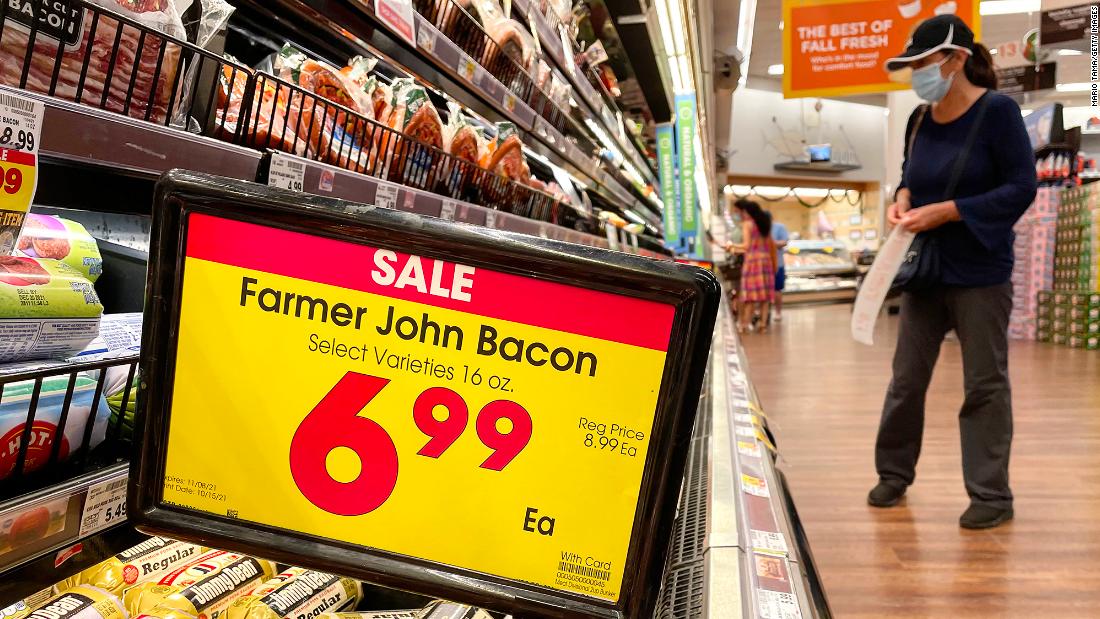
So, any complaints or compliments is all theirs. For instance, the rate of inflation (which jumped by 3.24% shortly after Biden took office). It was a frightening 8% in 2022 before eventually settling to 2.4% in September falls squarely on their shoulders, not Trump's. Same goes for prices, from gas and groceries to appliances, cars or houses. 

Since February 2020 to now, overall prices have gone up 21.4%. According to the U.S. Bureau of Labor Statistics, that's far above the national average. According to another economic report, thanks to inflation, what you could buy for ten dollars in 2020 would now cost $11.31 in 2022.

That may not sound like much, but when you look at a the cost of a tank of gas, heating oil, or a week's worth groceries for a family of four, that's quite a hunk of change, forcing the average American to pay more with less purchasing power. 

For example, since 2020 the price of margarine, which nearly everyone uses in cooking, has increased 56.8%. Eggs have gone up 40.1%. Sugar and sugar substitutes have seen a 39.1% increase. Meats, depending on type and cut, have seen a increase of between 39.2% and 44.2%. Car insurance raced upward to 47.5% while vehicle repair (already high) went higher to 47.1%. Gasoline prices almost doubled from January 2020 to June 2024; a increase of 89.5%.   

On the other hand, the prices of Smartphones dropped by 53.9%. 22.4% for televisions. Computers and related items went down by 15.9%, while other electronic equipment (like video cameras, microphones, etc.) dropped in price by 14.1%.The costs of non-electronic toys were 7.1% less as of June 2024 compared to January 20202.

Finally, men's clothing (such as suits, coats and jackets, as well as pants and shirts) saw a decline in price of 6.3% (but apparently not where I shop!).  So, while prices on some items cost consumers less, prices on other items cost more, some significantly more. I suppose it's all a matter of perspective. 

What about housing? How much has the cost of keeping a roof over your head changed since 2020? According to a report ResiClub of the Case-Shiller National Home Price Index, since 2020 until present, the cost of homes rose 47.1%, which they said "easily outstripping the gains of recent decades". That apparently includes not just the Trump years, but the Obama and George W. Bush years as well.

Some of the reasons cited for the increase in housing prices are the lack of housing in general (remaining down 34.3% from pre-2020 availability), the upswing in mortgage rates and jump in the price of construction material.  As an aside, a related RedFin report said that house payments are up 11% over 2023 prices. The average house payment is now $2,775.00. I can certainly see what Ms. Harris means by a "opportunity economy". But then, these are numbers based on her and Biden's policies.

While we're speaking about housing, what about the homeless? In 2020, the number of reported homeless was about 580,466. By 2023 that number had jumped to 653,104, up 12%, the highest year-to-year increase and the second highest total since 2007. Of that, 324,854 were white. 243,624 were black.  According to the VA, there was homeless 35,574 veterans as of 2023, representing an increase of 7.4% over 2022. A single homeless veteran is one too many for the nation to tolerate.

The unemployment rate is at 3.7%, which is higher than expected due to the drop in individuals who are no longer self employed. If underemployed and dissatisfied and looking are factored in, that number nearly doubles to 6.7%.  Note too that unemployment rates don't include those who've given up on looking or serving in the military. The Bureau of Labor Statistics said as of August 2024, overall job growth was weaker than anticipated with 818,000 fewer jobs than in March as previously reported.

While much of the job openings were service industry or low income, work hours correspondingly decreased from the traditional 40 hour work week to a current 34.3 hours. Nevertheless, employees are still expected to do the same amount of work as they would in a traditional 40 work week.

In 2022, the most recent year data was available, over 12% of the nation was living at or below the poverty level. 13% were "food insecure", which is a polite way to say they didn't have enough to eat on a regular basis. School provided meals are commonly the only regular nutritional food kids get. Data also indicated that the figures were trending upward, so by 2024 that number is likely to be considerably higher.

Wages have generally done well since 2020, exceeding inflation by roughly 2% overall. In April 2020, wages dropped by 6% but then jumped to a record high of 15.40% by April 2021. In 2014, when Trump took office, wages had been trending upward. Starting in 2014, the average wage was $24.33. In 2016, it was $25.38. By the time Trump left office, the average hourly wage was $28.44. Under Biden, it had increased to $31.63 as of January 2022. By September the average hourly wage was $35.36%. Social Security, disability payments, and other compensation are all tied to the rate of inflation.

It should be noted that the once untouchable Social Security Trust Fund has been repeatedly raided by Congress to the tune of $17.5 billion dollars. The Social Security Administration predicts that the trust fund will be empty by the end of 2034. Starting in 2035, recipients will see a 23% reduction in benefits. 

Although wages have done well in keeping up with inflation, that can't be said of everyone as the percentage of those falling behind has been increasing dramatically. Since 2009, wage inequality become has a serious issue, leaving the U.S. with the dubious distinction of having the worse wage differences of any industrialized country in the world.

 In 2022, despite federal laws to the contrary, women between ages 25 to 34 still earned 92% as much as men of the same age. Between ages 35 and 54, that number drops to 83%.  Finally, those from 55 and over, it's 79%! For minorities it's worse. Is this the "progress" or "change" Kamala Harris is talking about?

How well do employees do compared to management? Not surprisingly, not very well. For several decades, the incomes of senior corporate officers have far outperformed that of their employees. Ironically, the margin of difference has increased when tracked against the decline in union membership.

In 2021, the median employee to CEO wage gap was 235%, meaning that for every dollar a worker earned, a CEO received $235 dollars. A year earlier,  it was slightly better with a 212:1 ration between CEO and employee. In 2023, that ratio was now 268:1 among S&P 500 Index companies. I guess it really is good to be king!

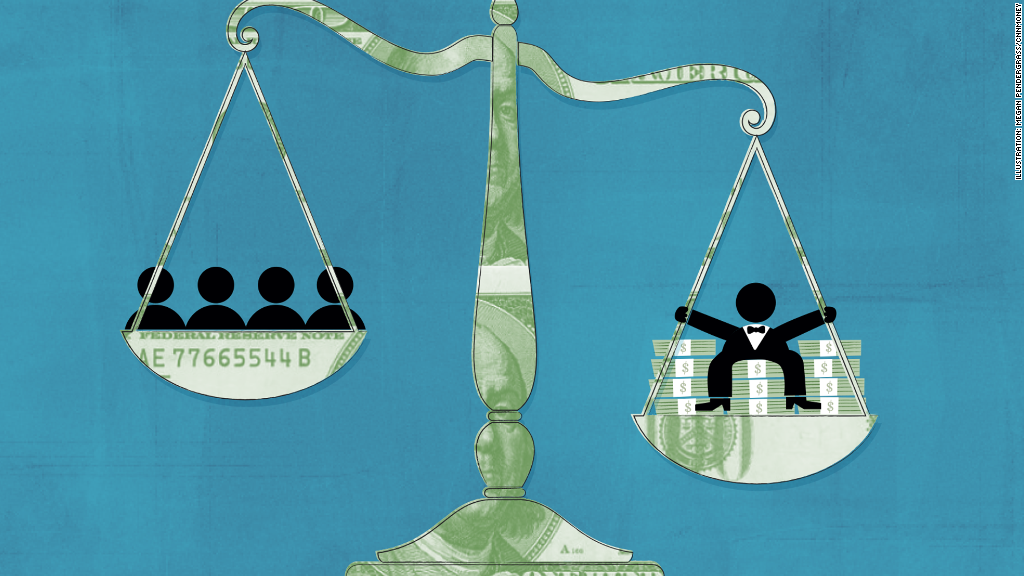
In 2021, the Top 1% saw their percentage of wealth continue to grow by 9.1% while the bottom 90% saw theirs decrease.  During the same period, the Top 0.1% saw an income growth of 18.5%. The bottom 90% had a drop in real (after tax) income of 0.2% in 2020 and 2021. By the way, the Top 0.1% is what comprises the ruling oligarchy with a individual power index of 882.9 compared to the bottom 90% which has a power index of 1%.

The bottom 90% also saw just 58.6% of all wages earned, the lowest on record (in 1979, it was 69.8%), demonstrating that over time, workers have been losing ground compared to the upper 20%. Those in the rarified air of the Top 1% took in 14.6% of all wages generated (by comparison, in 1979 it was 7.3%).

To put it another way, from 1980 through 2021, the bottom 90% of Americans saw an increase in wages of 28.7%. The upper 1% saw their wealth increase by 206.3% over the same period while the upper 0.1% (aka: the ruling oligarchy) saw their wealth grow by 465.1%. Feeling nauseated yet?

It bears mentioning that Vice President Harris allegedly said Hurricane Helene victims would be eligible for a $750 "loan" from FEMA which would have to be paid back with interest or face a seizure of their property. That's false. FEMA is offering victims up to a $750 dollars onetime payment for baby food, diapers and incidentals., but it's part of a larger relief package.

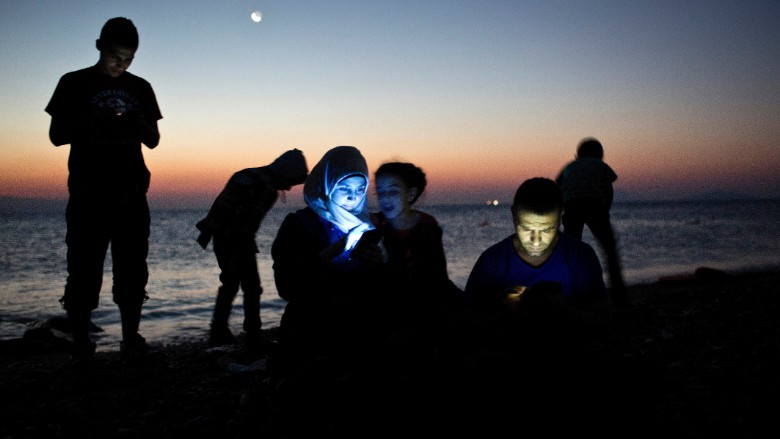
Another rumor is that illegal immigrants can receive over $2000 from the government. That's also not true. The federal government provides immigrants classified as "asylum seekers" (pending determination) with up to $459 monthly to help with the cost of food, transportation, and shelter for up to 12 months. Still, financially, doesn't it appears these "asylum seekers" are making out better than U.S. citizens in trouble?

Lastly, what about foreign aid? Under President Biden, the U.S. has sent $95 billion dollars overseas in the form of foreign aid. The majority of that money went to Africa, the Middle East (mainly Israel), Taiwan, and to Ukraine, which got the most at $60 billion dollars for weapons and other military aid.

Under President Trump, he attempted to get a 21% cut in foreign aid (including eliminating aid for 27 countries) with a requested foreign aid budget of $44.1 billion. However, Trump was overridden by Congress and much of his proposed cuts were restored. It should be noted that the Joint Chiefs of Staff and practically all of the major defense contractors publicly and privately urged Congress to reinstate Trump's military budget cuts, and why not? War is a very profitable business.

Biden has no such qualms. His continued support for arming Ukraine, Taiwan, NATO, and Israel (despite public hand smackings) assures all that the money will keep on rolling in. Besides, war or the appearance of war is a good thing. Besides, it helps to artificially simulates the economy.

The Defense Industry continues to build, spend and hire which in turn helps numerous peripheral businesses and that trickles out to the rest of the interconnected economy. It reduces the appearance of the unemployment numbers despite a reduction of jobs by enlisting individuals (many of whom are under or unemployed and whose numbers aren't included in employment statistics).  

This is the economic picture Kamala Harris and the mainstream media, in its subtle promotion of Ms. Harris, isn't telling you about. Instead, we're being offered generalities and distortions. While this blog is neither Democrat or Republican and strives to simply provide nonpartisan facts as it find them, it would appear that in the real world Biden/Harris, devoid of the script writers, teleprompters, and cheerleading, things aren't so rosy for the country.

Ms. Harris offers a campaign message of "progress", "opportunity", and "change" for a faltering economy and political state of affairs it helped create. It's like the lookout on the Titanic offering to take the wheel after it struck the iceberg.  Our "ship of state" is already bow down, badly listing and taking on water with its engines open full throttle. Not exactly the right strategy if you can't swim.   

This election is one of the rare occasions where we can look at Trump's past term in office and gage how he will perform if reelect. At the same time, we know what Harris has done and what four more years would like accomplish. Can Trump do better? Maybe. He's previously managed to hold his own while fighting the media, Congress, and the political/economic status quo. It certainly wouldn't hurt!  


Thank you for reading Another Opinion! We hope you enjoyed this article and will pass it along. Please don't forget to subscribe. It's free! Lastly, please "like" us on whatever platform you use to read anotheropinionblog.com. It helps beat the algorithms and keeps our articles in circulation. Please find below the links we consulted in researching this article. 


Eggs, gasoline and car insurance: Where inflation has hitAmericans hardest


US home prices have surged 47% since the start of 2020


Veteran homelessness increased by 7.4% in 2023


The number of homeless people in America grew in 2023 ashigh of living took its toll


Average Hourly Earnings of All Employees, Private


The Enduring Grip of the Gender Pay Gap


Inequality in annual earnings worsens in 2021


AFL-CIO Executive Paywatch


Comparing Biden and Trump's Immigration Policies in 12 Charts


Friday, October 11, 2024

A Case of Misplaced Priorities and False Promises

I've been a political activist, candidate (won three lost two), a congressional aide, and a community organizer for over 40 years. There's not much I haven't experienced or seen. But if there's one thing I've learned, and it's been exemplified more this election go around than ever before, is that today's politics, in its final analysis, is really nothing more than a popularity contest. Not much different from when you were in junior high school.

Like those junior high school popularity contests for class president and the student council or homecoming king and queen, it's all about working the crowds and making promises you either can't or have no intention of fulfilling like less homework, open book tests, more pep rallies, and so forth.

In truth, I guess no one really expects you to actually follow through on your promises, it's just that they get so caught up in the campaign speeches (usually accompanied by free pizza), balloons, flyers, confetti, and all the rest, we just overlook the fact of the matter. That is, there's not much of what they're promising they can make happen.

 After all, most everything has to be approved by the teacher, the principal (who may have to deal with multiple teachers and staff members ranging from the janitor on up), the coaches, and perhaps even involve the School Board. There's not much in life, and particularly in the world of politics, which is as it appears to be.

How often have you heard candidates say something like "when I'm (re)elected I'm going to lower taxes" or "I'll stand up to the powerbrokers (or substitute "corporate lobbyists" "special interest groups", etc) and make them pay", "I'll fight higher gas (utility, grocery, or whatever) prices" and best of all, "I'll be your voice" and "I'll be answerable only to you". 

They talk about encouraging or restricting development (depending on what the pollsters say), illegal immigration, foreign aid, or simply trying to pigeonhole some scapegoat (which is always someone or something already unpopular). But, in truth, can they really do anything about it? The short answer is no, but let's take a moment and look at why.

No one in politics or business (or indeed life) exists in a vacuum. They don't take actions arbitrarily. Everyone has a boss, especially politicians. Everyone elected is assigned to committees and have to follow the committee structure, and that means getting the approval of the committee chairperson, and up the food chain. There's a party whip to ensure bills are voted on in a certain way. Of course, there a large chunk of their time dialing for dollars, not for themselves, but for party bosses and the party itself.

If there is any candidate who thinks they're going into Congress, the State House, or local council and play the part of a rebel, they are sadly mistaken. First off, the committee system virtually guarantees they won't have the time. Most members are assigned three or more committees which occupies most of their day, and sometimes even into the evening.

Secondly, the party system is partly designed to weed out anyone who isn't a "team player". Party leaders are more than willing to work against an individual, including getting someone to run against them in the primary (called "primaring"). Troublemakers can be excluded from media events.They can even be reassigned to some obscure and worthless committee, virtually guaranteeing  they'll never be heard from again.  

They can be cut off from the financial spicket of corporate donations and endorsements (bear in mind, to get reelected the average U.S. Senators needs to raise a minimum of $14,000 per day for the six years they're in office)  So the next time you hear some candidate saying they'll stand up to whomever, tell them to set down and shut up. They aren't "standing up" to anybody.   

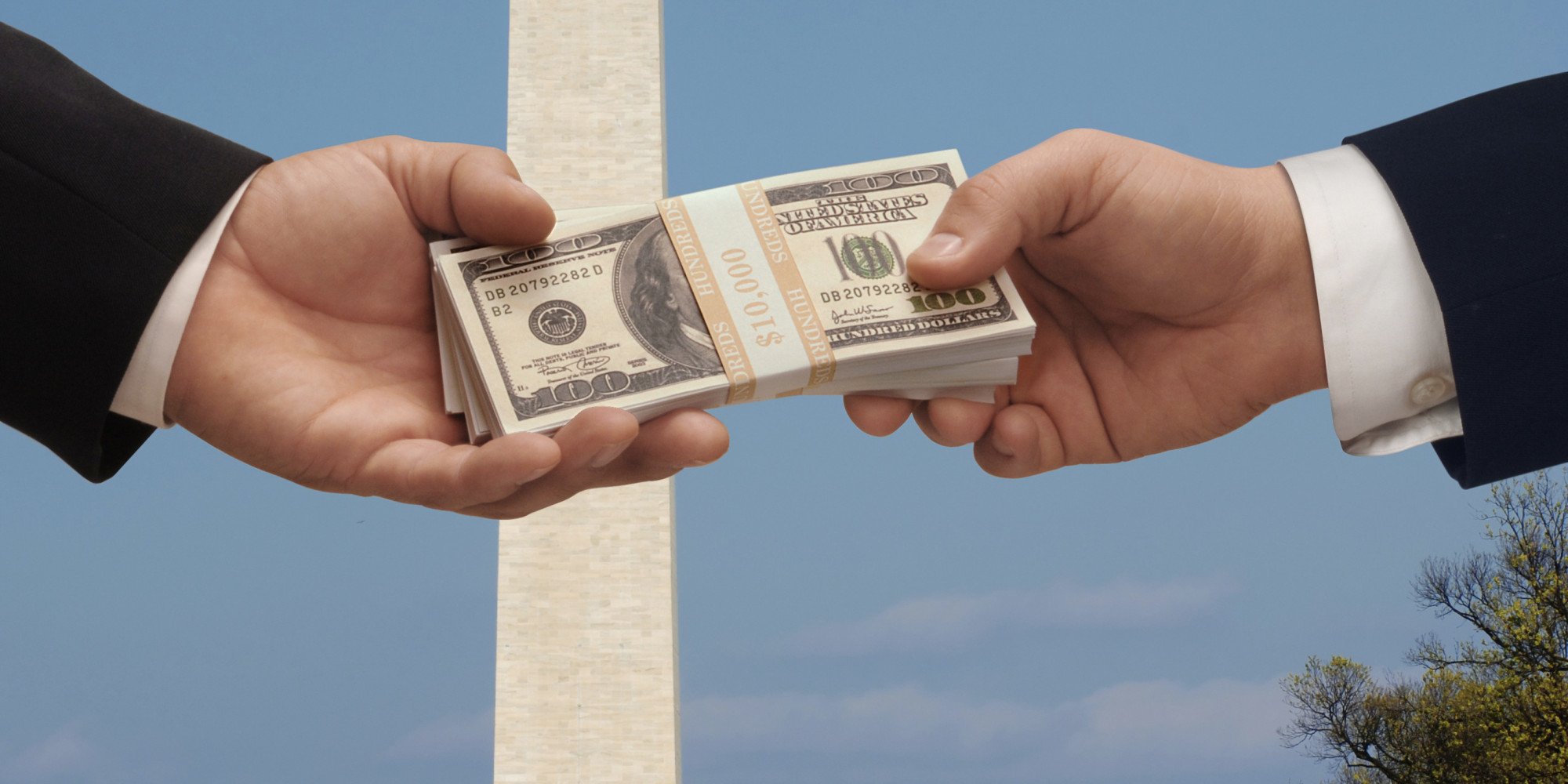
As an aside, in Congress, corporations are responsible for underwriting political campaigns, filling the coffers of the both parties and the so-called "leadership PACS" (ie: political slush funds). All thanks to the 2010 Citizens United ruling. In 2022, both parties received $8.9 billion dollars, with the GOP receiving just slightly more than the Democrats.

Another $344 million came from company PAC's and trade associations. In 2023, corporate donors gave a record $4.2 billion dollars to Congress (most of the money came pharmaceutical and healthcare companies). Now, tell me who Congress represents.  

Spending $4.2 billion dollars should buy a lot of Congressional members, so you'd think we would have a pretty good healthcare system wouldn't you? Well, if so, you'd be wrong. Dead wrong. The U.S. healthcare systems ranks last compared to other top tier nations in 70 performance measures.

Our hospitals have fewer available beds per patient than other countries. We also have fewer doctors and nurses per patient too. We fail in preventative care (focusing more of treatment after the fact) and in access to care. We face higher costs for care than in other nations and poorer administrative efficiency. One reason is that most other countries have some form of nationalized healthcare while we have "pay-as-you-go" system. The closest we come to nationalized healthcare  is so-called "Obamacare" which is considered mediocre.

Corporate lobbyists also "help" draft legislation for legislators. They also review various bills and provide summaries of their content and even recommendations on how to vote.  Now isn't that nice of them? It bears mentioning that roughly 90% of Congress members go on to become lobbyists when they leave office. Why? Well, besides all the usual perks, the average member of Congress can expect a 1,452% pay raise over the $150,000 they made while in office.   

Politicians like to make all sorts of claims and promises when they're running for office. They always try to make it appear they're "one of the people". Some "dress down", appearing in blue jeans, rolled up sleeves, eating at some local diner, or using working class phrases, etc. These people have as much in common with the working or middle class as Martha Stewart would at a White Castle or McDonald's.

Donald Trump, for instance, has a net worth of about $4.6 billion dollars while Kamala Harris is worth about $3.5 million (and her net worth is only 38th in the Senate). "The Donald" as he is called, doesn't play down his wealth. If anything, he waves it like a flag. He's proud of his accomplishments. Harris, on the other hand, wants to sounds like she's one of the "working class stiffs".

Congress is called "the Millionaire's Club" for good reason. Almost everyone in Congress is a millionaire. In fact, the median net worth of Congressional members is one million dollars. Some are worth far more than a million dollars, and those who aren't, are pretty close going in and are certainly worth a million or more coming out. Not bad for a job that pays $150,000 annually.

Kamala Harris speaks about "a new way forward" on her campaign website as if the country is heading down the wrong path. Well, I think we're owed an explanation since Harris and her boss, Joe Biden, have been the ones driving the proverbial "bus" for the last four years. Exactly what kind of "new path" does she mean? A new path different from what Biden and Harris has been skipping down over the last four years?

Trump's campaign slogan in 2014 was "Make America Great Again"; the same as it is now. That's pretty straight forward. He sees an America which once was the envy of the world. We were number one in production, top tier in education, had the highest quality of life of any country, the lowest child mortality, one of the longest life expediencies, and the world's best military bar none. None so much anymore.  

The majority of our manufacturing jobs were shipped overseas ("offshoring") as early the late 1960's and 70's, but it was in the 1990's that it went into high gear, especially during the Clinton Administration and the package of NAFTA, and with it a lot of solid middle class incomes. The worst segment hit were women and minorities. America transformed from a major manufacturer nation into a service economy. From 1998 to 2021, the U.S. lost 5 million manufacturing job (2.8 million between 2001 and 2018), with the majority going to India, Malaysia, and China.

We're second tier (13th) in education and near or at the bottom when it comes to mathematics and science among other industrialized nations. We're 75th overall in mortality and 57th out of 195 countries in infant mortality. That's the highest among the world's industrialized nations. In terms of quality of life, we rank 12th, just behind Australia and the Scandinavian countries.

Even our seniors, who used to be considered politically "untouchable" have faced low cost of living increases ("COLAs"), fewer exemptions, and even Social Security, once regarded as "sacred" is under attack. Starting with President George W. Bush, there's been regular raids on Social Security, starting with a "borrowed" $1.37 billion to pay for the war in Iraq and cover the costs of tax cuts for the well-to-do.   To date Congress will owe Social Security over $804 billion dollars in interest alone by 2027. Instead, Social Security and Medicare are facing a deficit.

According to a Pentagon assessment following the disastrous end to our 20 year involvement in Afghanistan and embarrassing withdrawal under President Biden, our military is exhausted and in serious need of a total overhaul and refit. The only branch rated "battle ready" was the U.S. Marine Corps.  Nevertheless, we are presently not capable of successful dealing with multi-front conflicts.

We are currently struggling with the aftermath of two severe weather events, and yet we can send billions overseas to prop up juntas and wannabe dictators. We sent Ukraine and Zelenskyy $12.1 billion alone in 2023. We face rising poverty rates--12.9% or 37.2 million individuals living at or below the poverty line. In 2023, there was 653,104 homeless individuals in the U.S, especially among our veterans. Between October 2023 and August 2024, there were 43,116 U.S. veterans living on the streets, and yet those entering the U.S. illegally are given preference.

 We can no longer tolerate substituting popularity contests for serious leadership in Washington. We can no longer afford the corruption of a neo-fascist kleptocracy in lieu of a republic. We need real solutions to address real problems here at home. No one appointed us the world's policeman, banker, or arbiter of morals. We need to accept the choices other nations make whether we agree with them or not. Until then, is it any wonder that we are rated as a "flawed democracy" teetering on a "failed democracy"?


Thank you for reading Another Opinion! We hope you enjoyed this article and will pass it along. Please don't forget to subscribe. It's free! Lastly, please "like" us on whatever platform you use to read anotheropinionblog.com. It helps beat the algorithms and keeps our articles in circulation. Please find below the links we consulted in researching this article. 


Offshoring


Botched Policy Responses to Globalization...


Not Prepared for Major War: Commission Slams U.S. DefenseStrategy


Measuring U.S. Military Readiness


Group spent record $4.2 billion in 2023lobbying federallawmakers, report says


US Healthcare System Ranks Last Overall Among Other HighIncome Countries