Showing posts with label decline. Show all posts

Friday, April 04, 2025

Where Does Religion Fit in Today’s Politics?


What do you think about religion? Does it have a place in everyday society? What about in public education or in politics? In 1962, the Supreme Court ruled in Engel vs. Vitale (370 U.S. 421), to remove mandatory prayer in public schools. On November 17, 1980, the Supreme Court ruled in Stone vs Graham that a Kentucky Statute requiring the Ten Commandments be posted in every school was a violation of the 1st Amendment.

So, here we are, having seemingly completed some cosmic cycle. Again, we’re addressing the issue religion in not just society, but in our schools and as a part of our politics. The political Far Right (aka "Christian Right" or "Christian Fundamentalists") routinely call for voting their faith, provided that faith is Christian of course. After all, they argue, America was founded as a Christian nation while others are permitted to practice their faiths out of Christian kindness.

The Left, however, have a very different opinion. They argue that religion---any religion---does not belong in the public domain, especially our school system and in particular politics. Schools should be secular. If a parents wants their child to have religion inserted in their education, there’s plenty of private and religious based schools available.

As for  politics, candidates should be chosen not on their faith, but on their actions as it pertains to the overall public good. Religion in politics runs the risk of creating a fascist theocracy little different from Iran’s.  After all, doesn’t the Constitution call for a separation of church and state? Besides, if the Founding Fathers want a national religion, wouldn’t they have made it official?

Well, to address the first things first, no, the Constitution doesn’t call for a separation of church and state. That’s a misconception. The separation between church and state, while never specifically stated in the Constitution, is implied according to a Supreme Court ruling in 1868.

The court argued that the 14th amendment (which pertains to citizenship) also requires states to guarantee fundamental rights such as the First Amendment’s against the establishment of religion. In other words, neither the federal government nor states “may make no law respecting the establishment of religion” (aka “the establishment clause”).  

In 1947, the Supreme Court again addressed the issue when Justice Hugo Black wrote on behalf of the court in the matter of Everson vs Board of Education of the Township of Ewing (330 U.S. 1:1947), “Neither a state or the Federal Government can set up a church. Neither can it pass laws which aid one religion, aid all religions, or prefer one religion over another…In the words of Thomas Jefferson, the clause against the establishment of religion by law was intended to erect a ‘wall of separation between Church and State”.

While many of the Founding Fathers where “Christian” in the broad understanding of the term, their personal religious beliefs differed from person to person, and indeed, varied greatly over their lifetime. However, the main reason was that the monarchies of Europe tended to have a formal church which, while not necessarily adhered to, must still be financial supported.

 England had the Church of England (Anglian Church). France, Poland, and Italy had the Catholic Church as did the Austro-Hungarian Empire and Bavaria in Germany while most of Northern Europe had Lutheranism. Czarist Russia was Orthodox as was much of Eastern and Southeastern Europe.

Everyone, whether a member or the official church or not, was required to pay homage since, after all, the ruling monarch was the head of the church and/or ordained by “God” under the concept of “Divine Right” or “God’s mandation” to rule.

This political and religious doctrine established the legitimacy of a kingship and asserted that a monarch was not subject to any earthly authority. In the case of Catholics, since the pope was seen as God’s vicar on earth, monarchs were subject to his dictates on religious matters (though these were occasionally ignored).  

The Founding Fathers wanted to make their new experiment in democracy a nation open to all faiths. This meant that citizens weren’t required to acknowledge any religion but theirs. It meant that under the law, all religious persuasions were equal. It didn’t forbid, for instance, religious symbols in public property. It simply meant that all religions beliefs had the same access to public property. It meant too that no particular religious dogma held priority over any other.

There have been many instances throughout our history where there was a serious concern that one or another religious sect was going to try and assert dominance over the government. For instance, the Puritans and Pilgrims, who settled in the 1600’s, intended on establishing a religious community along their particular interpretations of the bible including that of premillennialism.  William Penn acquired large tracts of land in what’s now Pennsylvania for groups like the Quakers and Mennonites to practice their faith unimpeded.   

There was the First Great Awakening of the swept through the colonies in the 1730’s and 1740’s.  It was an early forerunner of today’s fundamentalists. The Second Great Awakening (approx. 1790 – 1840), which began in Kentucky and Tennessee, expanded the concept of “revivalism”.

A Third Great Awakening, running from around 1855 to 1930, fueled the belief in a postmillennial or pretribulation world and an imminent “Second Coming”. This was a new intensity in revivalism known as “Social Gospel” which applied biblical interpretation of societal issues such as poverty, establishing orphanages, education, ending slavery, prohibition, and to so forth.

Many pietistic movements also started backing the Republican party because of its adoption of an abolitionist platform. Certain  individuals came to prominence  like Dwight Moody who started his Moody Bible Institute or William Booth who established the Salvation Army or Carrie Nation’s Temperance Movement.

 Individuals like Martin Luther King Jr., Billy Graham, Pope John Paul II, the emergence “megachurches” and televangelists like Jerry Farwell and Pat Robertson are seen as early leaders of  what some call a  “Fourth Great Awakening”.

President Ronald Reagan is credited with firmly aligning Christian fundamentalism within the Republican Party which incorporates a conservative social conformity by merging issues like pro-Life, prayer in school, home schooling, patriotism or opposition teaching a LGBQT/transgender/gay agenda in school and what they identify as "socialism" into political action and ultimately legislation.  

President Trump’s election has rekindled the fervor in the fundamentalist movement which had faded under Clinton, Obama, and Biden, which brings us to the question about what Americans in general think about mixing religion and politics. Do the two belong in the same pew?

According to a March 19, 2024 Pew Poll, 80% of Americans said that organized religion was losing its influence on society. 82% of Protestants  and Catholics agreed as did 76% of Black Protestants and 74% of Hispanic Protestants. Also in agreement were 76% of Jews  who were polled.

When asked if their religious beliefs made them feel as if they were part of a minority, only Jews and Muslims said yes with 83% and 55% respectively. However, 48% of those surveyed said their religious beliefs put them in conflict with America’s current culture. This was especially true among white evangelicals (78%) and Jews (59%).

Politically, 84% of registered Republicans and those who identified as conservative said that religion’s influence was in decline. Democrats and liberals weren’t far behind with 78% agreeing that organized religion was in decline. In looking at age groups, those 18 to 60+ years of age were all in agreement with an average of 81%.

When addressing politics and public education, 49% of adults in general didn’t think any religious group was trying to impose their religious beliefs on society. This opinion was held by 65% of Protestants and peaked with 79% of white evangelicals and 71% of Hispanic Protestants. 39% of Black Protestants disagreed.

Among Catholics, 54% also thought no particular religious group was trying to impose their faith on them. However, 76% of Jews disagreed as did 72% of the religiously unaffiliated. 85% of agnostics also said religious groups were trying to impose their beliefs on them.

When we turn to politics again, 75% of Republicans and those leaning conservative thought that other conservative Christians weren’t trying to influence them. But 72% of Democrats and those who are liberal leaning said conservative Christians were trying to impose their beliefs on them.

That opinion was also held by those 18 to 49 years of age with a clear majority believing that they were being negatively impacted by conservative Christians. It was almost the exact opposite for those 50 and up with about 55% saying no.  

So, where does that leave us? In a 2022 poll by Pew, 73% of Americans said they wanted to keep religion away from politics. However, while the Constitution prohibits using religion as a criteria to run for or hold public office, there is nothing to prevent voters from using their own religious standards in determining who to vote for or what issues to support.

Therefore, our political landscape could very well be determined based not on one’s personal religion (or lack thereof) but on that of the voters. The more religiously conservative voters who show up at the polls the more like minded individuals will likely get elected.

For some, that idea is nothing short of terror, while for others its couldn’t come soon enough. The notion itself represents just one of the many growing divides facing America. The question is whether, in this no-compromise environment, can a compromise be reached before it’s too late?


Thank you for reading "Another Opinion", the Op/Ed blog page for the "militant middle".  Here at "A/O" we truly value our readers. At A/O we seek the facts as they exist, not partisan talking points.  We hope you find our articles informative and engaging. Comments are welcome, provided they are not vulgar, insulting or demeaning.  Another Opinion is offered without charge and is directed toward all independent and free-thinking individuals. We ask, however, that you "like" us on whatever platform you found us on in order to keep our articles available for free to others. Lastly, in order to keep costs down, we depend on passive marketing, and therefore, depend on our readers to please forward our posts along. Below you will find links to the sources we used in writing this article. Thank you. 


What is Separation of Church and State?


BRIA 13 4 a separating Church and State


Everson v. Board of Education


Justia: Everson v. Board of Education, 330 U.S. 1 (1947)


Divine right of kings


Americans Have Positive Views About Religions Role inSociety But Want It Out of Politics


First Great Awakening


Religions Role in Public Life


Christian Right


Religion in Politics


Friday, September 06, 2024

What are some of contributing factors for the decline of the United States? An Observation from the Center


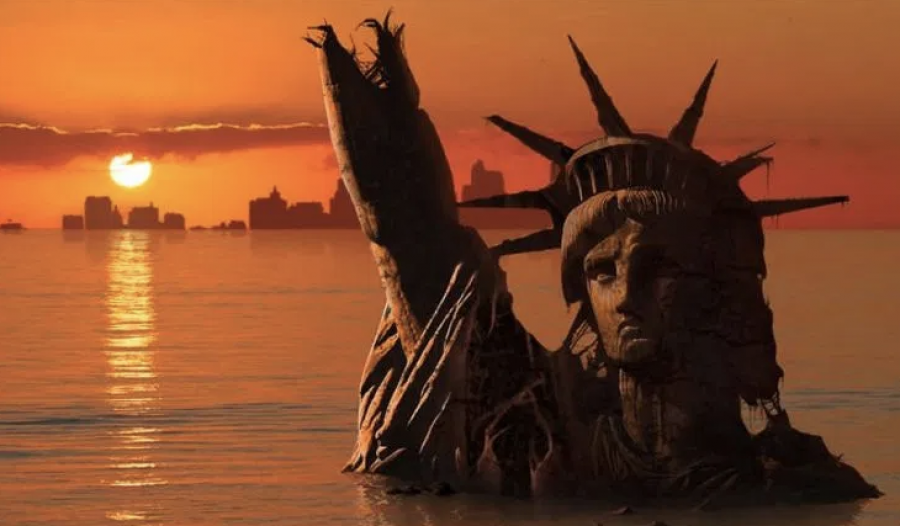
America, as you know, is no longer a “Republic” although it still likes to pretend it is (much like Rome did under the early Caesars). While purely speculative, as all such predictive analysis are, our decline is not one or two things, but a series of events external and internal, all connected directly or indirectly, which, in the moments of our daily existence, barely warrants our notice. Some appear benign, hardly noticeable, while others glare back at us like Fredrick Nietzsche's abyss. 

First is the assumption that the world wants to be America, or at least like America. America is first and foremost a capitalistic pseudo-democracy. We tend to export “American” ideals and values along with our Levi's, Fords, soybeans and television shows whether they're wanted or not. We try to imprint our society on everyone, especially through consumerism to created a world of "mini me's".  

We create mostly unrealistic dreams, from what to eat, what to wear "what's in and what's passe'" (an artificial construct to sell clothes), TV shows to watch, what we should drive to look sexy or "cool", or what we should look like (especially applies to young girls and women), and even what we should think and what should be considered "important".  Doesn't it make you wonder where we would be without them to think for us?

The corporate media, after all, manufactures the narrative (remember, only five corporations control 96+% of media in all its forms). They tell what's important and not just as they tell us how we're to think or feel. But even that is all about selling "eye time". The higher the viewership the higher the price they can sell a particular commercial slot or print space for.

Another way we sell American ideals is by removing governments we don’t like because they negatively impact our (that is, Wall Street's) financial interest.  This is typically euphemistically referred to as "regime change".  It doesn't matter if the individual or party are chosen by the people, if it interferes with profits, it goes.

During the Cold War with Soviet Russia (1946 - 1991), the U.S. has been involved with the overthrow of roughly 12 governments (euphemistically referred to as "restoring democracy" or "supporting the will of the people"). We've also been directly involved in several hundred political assassinations such as Ngo Dinh Diem, the South Vietnamese President in 1963 or  President Salvadore Allende of Chile in 1973. During the same time span, we've been involved at varying capacities in some 23 proxy wars and 285 armed conflicts. According to one survey, the U.S. was responsible for 81% of the world's armed conflicts from 1945 to 2001

Overwhelmingly, each of these were either directly or indirectly the result of pressure by Wall Street since the individual leader or their government is a threat to their bottom line. In their place, we have typically installed a puppet government, but not just any ole puppet government popular with the people. No siree bob!  These are almost always far Right military juntas headed by such charming individuals like Generals Augusto Pinchot, Gregorio Conrado Alvarez, Alfredo Stroessner, and Jorge Rafael Videla.

Under "Operation Condor", which lasted from 1973 to 1983, we were active in the kidnapping, torturing, murder, or "disappearance" of some 60,000 individuals along with over 400,000 imprisoned. Many of them being Communist, democratic socialists, or simply vocal Left-leaning  activists. Some were union organizers, teachers, pastors, nuns, community leaders, and students.  Naturally, the government likes to say we acted in conjunction with our allies as sort of a soothing balm for our collective conscience.  Still, it kinda brings into question that notion of "leader of the free world" doesn't it?

As an aside, in researching this and similar articles over the decades, I've noted that we've never tried a to elect a non-partisan centrist or someone without strong financial ties to Wall Street. Rarely we elect someone without a military background  Given that we're no longer a democratic or constitutional Republic, having become a Oligarchy led corporatocracy years ago, if we were to have some sort of coup or civil war, what's in store for us? Based on our history, perhaps this is a hint. After all, we have so much experience at it.

Following wars, conflicts, or police actions, the next step is often what's called "nation building" (it should be more properly labeled "national building in our image"). This is where dozens (or more) government contractors engage in the lucrative business of, well, the literal business of physically rebuilding countries we had just bombed back to the Stone Age while the State Department helps restore their government to something acceptable to Wall Street.

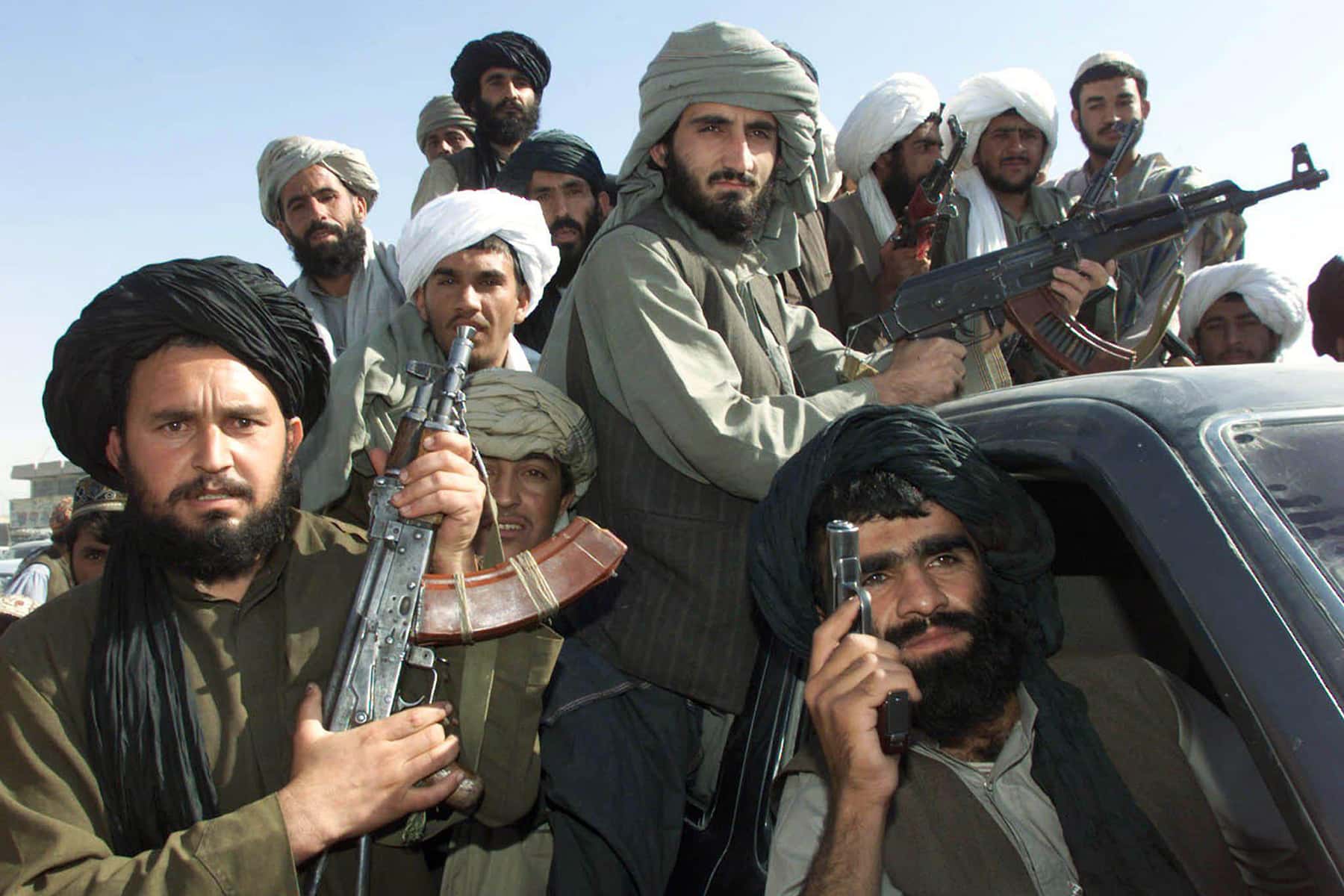
Speaking of "nation building", Brown University announced the results on one of its projects concerning U.S. and its "War on Terror", that states over the last 20 years, Washington has spent $8 trillion dollars and came out empty handed with the Taliban still in charge and Al Qaeda still in business despite the loss of some leaders. Why isn't the American Taxpayer furious?

 In addition, over those 20 years, around 900,000 people have been killed. The U.S. Department of Defense confirmed that over those same 20 years, the American taxpayer has shelled out $145 billion dollars just to rebuild Afghanistan. I'm sure Al Qaeda and the Taliban are quite grateful, not to mention  thankful for the millions of dollars in state-of-the art military equipment we so graciously abandoned when we skedaddled out of Kabul.  

It's worth noting that despite spending billions on nation building since 1946, not a single country has opted to adopt our form of government. Not a single one. The dozens of countries we've helped rebuild like Humpty Dumpty tend to adopt the inclusive British proportional representative government.

Instead, they tend to choose the British “parliamentary” or proportional system where each party is basically guaranteed a seat, depending on the percentage of the vote they get, meaning everyone has a voice in government. This is in lieu of America's "winner take all" system where the voters on the losing side are unrepresented for the term of that office.

Another serious factor in our decline is our educational system. We’ve dumbed it down so as not to “offend” underachievers. We're ranked in the lower tier among industrial nation. How will we compete globally? We’ve accepted the idea of “equal outcomes over equal opportunities”. Everyone gets “participation trophies” just for showing up. Everyone isn't a “winner”.

We’ve developed the notion that certain individuals or groups are somehow "due" something by society simply because they exist. An extension of that is the mistaken presumption that we're “owed” something--- aka "reparations"--- because your ancestors experienced an injustice or other burden. Well, that may be reprehensible, but try naming one group on this planet who hasn't experienced injustice somewhere in their collective history (which speaks volumes about the state of humanity more than it does anything). 

Every race or ethnic group has at one time or another been the slave or the master. But it's all in the distant past. We can't change or undo what happened. They sacrificed for our future. Take from it the lessons they taught us  and move on. The only person ultimately responsible for your success or failure is you. Not the government, not your fellow citizens, and sure as hell not your ancestors.

America has lost its way. We no longer value life or show respect for others or their things. We covet what others have more than we value our own lives. That's how some people end up dead. We're told we're all victims. So now we've developed a victim mentality where others are responsible for our failures, but why not our successes? We're told it's okay to be "offended" if others won't play along with our "pronoun pity party". Guess what? You can "self-identify" as the "Cheshire Cat" if that's what you want, but that doesn't mean everyone has to play long Alice.

We no longer discuss opposing ideas in a civil manner. We don’t want to be presented with anything outside our “bubble”. We want nothing that would distort our view of the world. To do otherwise triggers a intellectual breakdown, requiring a "safe space" and "comfort blanket".

Our partisan politics is a reflection of that. Its’ developed a enemy-like “us vs. them” mentality where the “us” part doesn’t include the average voter. Rather than producing, society now based on consumption of everything without replacing it. Capitalist democracy requires that we  constantly expand and consume ever faster to survive. It’s appetite is insatiable. It’s fueled by greed for “more” of whatever is there.

When capitalist democracy can no longer expand, it begins to metastasize. It starts to consume itself. As it does so, it increasingly seeks to control and manipulate its environment. The economic class which feeds it is put under increasing pressure to provide more and more while it starves. That’s the stage we're now at by the way.

We've arrived at the point where there are no absolutes. Right from wrong is merely shades of gray. Much is often promised, especially by our so-called “leaders”, but no one actually expects those promises to be kept. We've discovered we can invade the coffers expecting them to always be filled but that's increasing not the case.

Facts are now seen as ambiguous. Truth is now a matter of perspective rather than accepted norms mutually agreed upon by society. They're conveniently assumed to be a lie to be discarded if we disagree with them. Perhaps worse is when no one is held accountable for the lie. Let's take a quick look at the nation and the lie we were loosely modeled on---Rome.

"Rome the Eternal", like countless nations before and after, fell because of an over extended and undersupplied military. It was no longer able to impose Roman values on the unruly barbarian tribes. Even its military became less “Roman” as more and more foreigners filled its ranks, who had no vested interest in the empire due to a decline in Rome's  birthrate.  

Originally, the title (and it was a “title”) of “Roman Citizen” carried great weight.  It was bestowed rarely and often with great fanfare. Eventually, it all but lost its mystique. Foreigner didn't settle in order to become a “Roman Citizen”. They came for the economic opportunities Rome could provide.  Eventually, didn’t they even bother to learn the lingua franca of the empire--- Latin---or follow its laws, traditions and adopt its values.  Sound familiar?

Internally, Rome had always been corrupt, but it was the degree of corruptness which changed. It became a cancer and spread everywhere. Citizens were distracted  with “bread and circuses”, that is, games and monthly bread rations, all paid for by the working class---the Plebeians or "Plebs"--- until it eventually collapsed from over taxation.

Taxes and goods from client states also dried up. They developed their own trade alliances and bypassed the Roman “middlemen”. They even lost their fear of Roman might. Why? Not because it was no longer formable, but because Rome could no longer financially sustain a war. Again, sound familiar?

Eventually, there arose an outsider, Julius Caesar, who pledge that “in order to save the Republic I must destroy the Republic”, which was a true enough observation. The Republic could no longer reform itself out of it situation. The dependent classes lacked the means and will. It couldn’t appease all the special interests groups which controlled it. Rome must be founded again.

However, Caesar failed and paid with his life. What followed was a series of internal civil wars, When they were over, Rome had order. It also had a dictatorship. Can we be that far aways from our own Caesar? That’s a question many Americans are asking themselves. We are now a defacto neo-fascist corporatocracy; a surveillance state with all the tools for a full blown police state already in place. All that’s missing is a crisis—-real or manufactured.

We likely won’t have a military junta (although the military is the only institution which has kept a positive approval rating), but rather someone like a board president or chairman. And why not? After all, Wall Street runs the show. Why shouldn’t they step center stage and claim the crown?


 If you enjoyed the article, please consider passing it along to others and don't forget to subscribe. It's free! Lastly please be sure to "like" us on whatever platform you use to read anotheropinionblog.com. It helps beat the algorithms and keeps our articles in circulation. Thank you!


United States involvement in regimechange in Latin America


Operation Condor


Parliamentary system


US initiated 81% of global armedconflicts from 1945 to 2001   


Cold War Coups and Proxy Wars


Costs of the 20-year war onterror: $8 trillion dollars and 900,000 deaths


DoD: What We Need To Learn:Lessons From Twenty Years of Afghanistan Reconstruction


Saturday, April 06, 2024

The Decline of America May Not Be What We Think

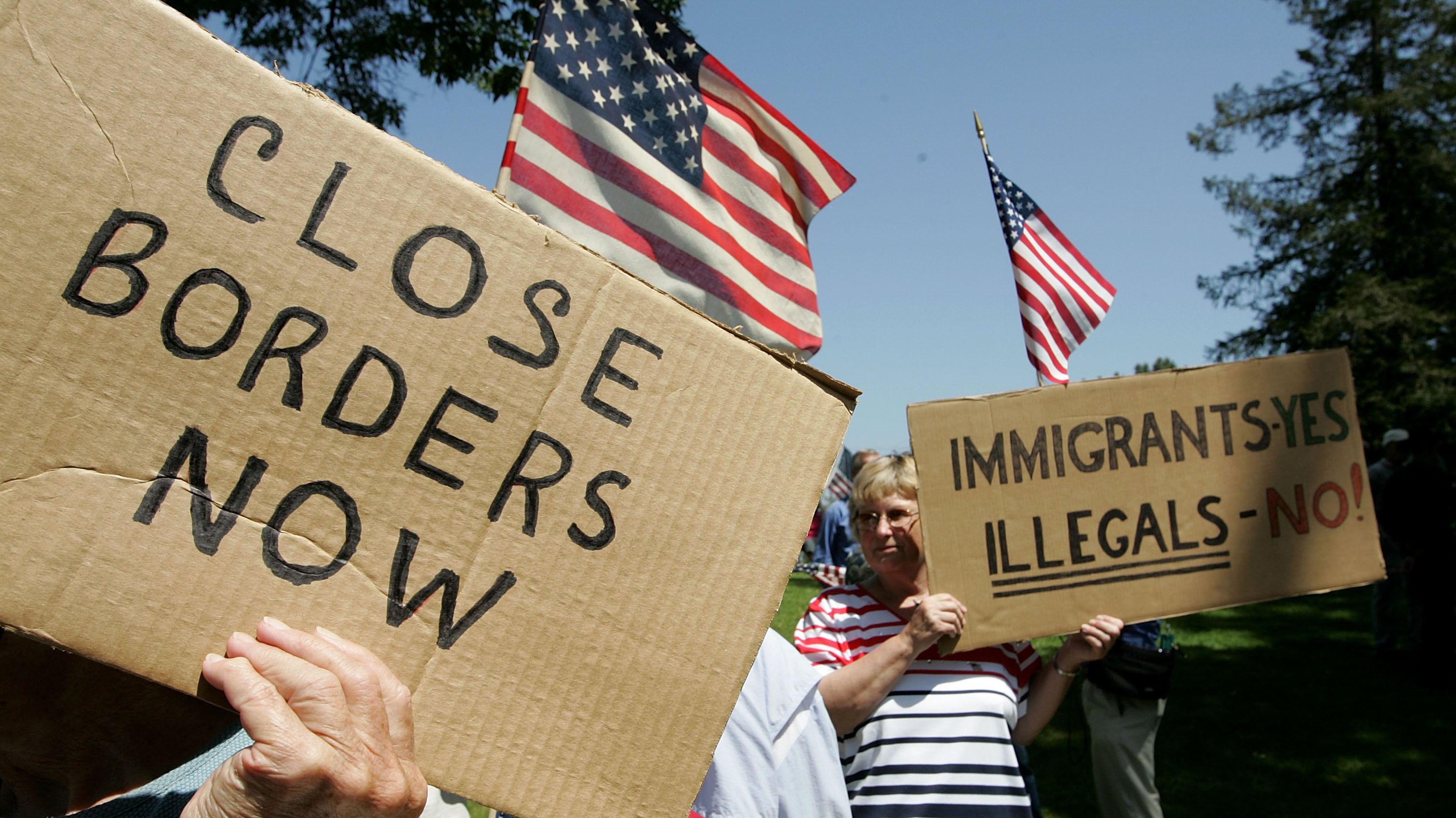
I've been writing about illegal immigration for decades and there still doesn't seem any end to it, but that's on purpose as I'll show you. States along the border with Mexico are being inundated with individuals wanting to come to the U.S., not to gain citizenship, but to obtain---for free--- the benefits available to citizens because they worked and paid into the system through their taxes.

The federal government maintains that it controls the border problem, however it does next to nothing, and worse, it wants states not to enforce existing federal laws concerning illegal entry. Eric Holder, the AG under President Obama, even sued Arizona for doing nothing more than using existing federal laws to halt immigrants from illegally crossing the border (worse, he even allowed Mexico to join in the lawsuit against Arizona as a co-plaintiff).  Now it's Texas.

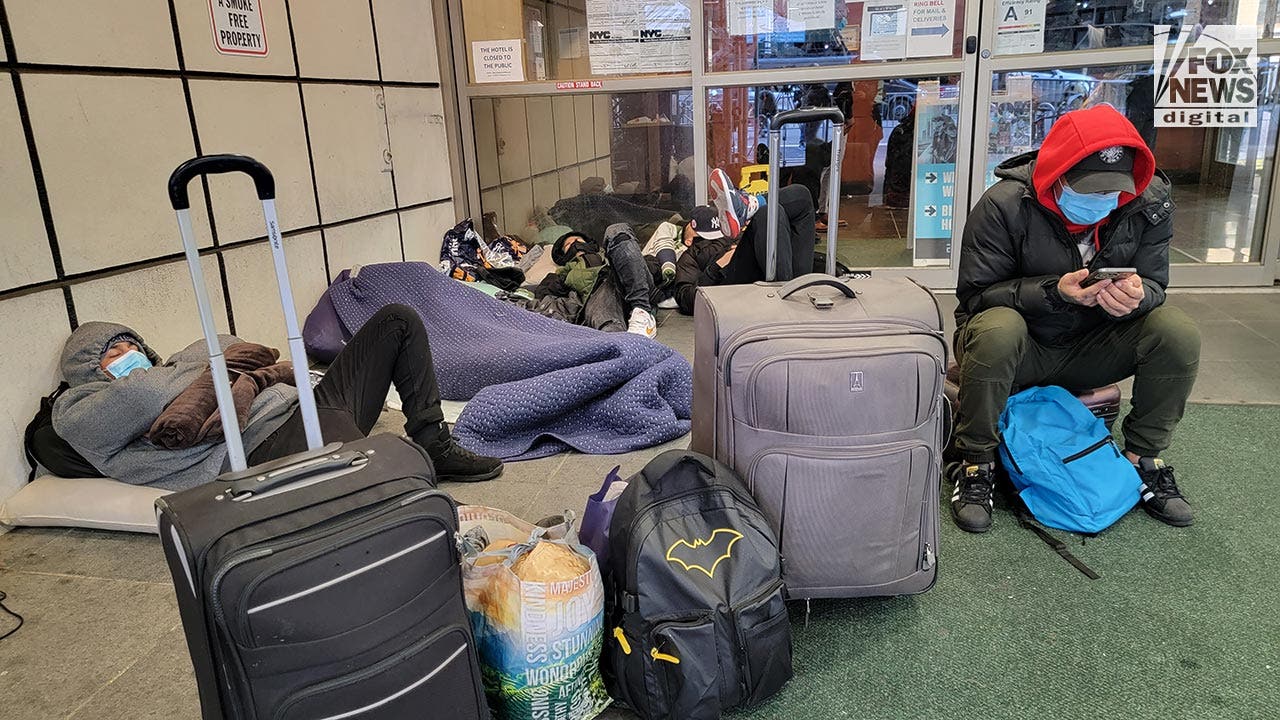
Some states and cities have declared themselves "open" to illegal immigration under the euphemistic sounding title of "sanctuary". The result has been thousands of individuals heading there and immediately demanding and receiving taxpayer funded government services.

As a result, some of the cities involved have seen increases in crime, homelessness, and a growing demand for public and private services, especially food and medical care. Unable to keep up with the demand, these cities and states have...ironically...turned to the federal government and requested additional federal dollars and aid to cope with the very problems they intentionally created. Did their legislatures, mayors, and governors not think this through?

Currently it's believe that there are some 10 million or more individuals  illegally in this country, The majority of them drawing on services paid for by taxpayers---you and me---that they never contributed  into.  Many have also decided that they have no intention or interest in integrating into society as previous migrants have historically done (other nations, such as Canada and countries in Europe and Asia) face similar problems.


It's as if these immigrants want to keep their  traditions, values, customs, and languages while at the same time relocate to where they can receive "free" resources---food, housing, medical care, child care, transportation, and so forth for nothing. In fact, not just do they "demand" these items (and more), but believe they are actually "entitled" to them!  Worse, they expect us---the citizens--- to conform and adapt rather than them!

Remember, these individuals have not come with the intent of gaining citizenship, few have applied for entry, and few have come seeking asylum. They come because they've been told they would be openly welcomed and provided with freebies simply for showing up. The majority of immigrants are coming north for nothing more than economic reasons---"economic asylum".  Bear in mind that the U.S and United Nations does not recognize "economic amnesty". Even Amnesty International doesn't promote "economic amnesty".

Amnesty can only be granted for ethnic, racial, political or religious  reasons only, and then only if you are in danger of torture, extreme discrimination, imprisonment or death.  Even then international law says they must seek shelter in the next closest stable country...not travel thousands of miles through safe countries and attempt crossing  the U.S. border illegally!

So, who is promoting this migration north? Why is the U.S. seen as the only acceptable destination?  

Many of those headed north are coming for economic reasons, so that seems to be a logical place start. The U.S. and some of its allies have instituted sanctions and/or embargoes against Venezuela, Nicaragua, and Cuba. Of those, Cuba's has been the longest, first imposed on March 14, 1958 by President Eisenhower against the Batista Government to prohibit the sale of arms.

In October 1960, following the overthrow of the Batista dictatorship by the Fidel Castro's led revolution, another embargo was placed against Cuba. This applied to everything but food and medicine. The embargo was expanded in February 1962.

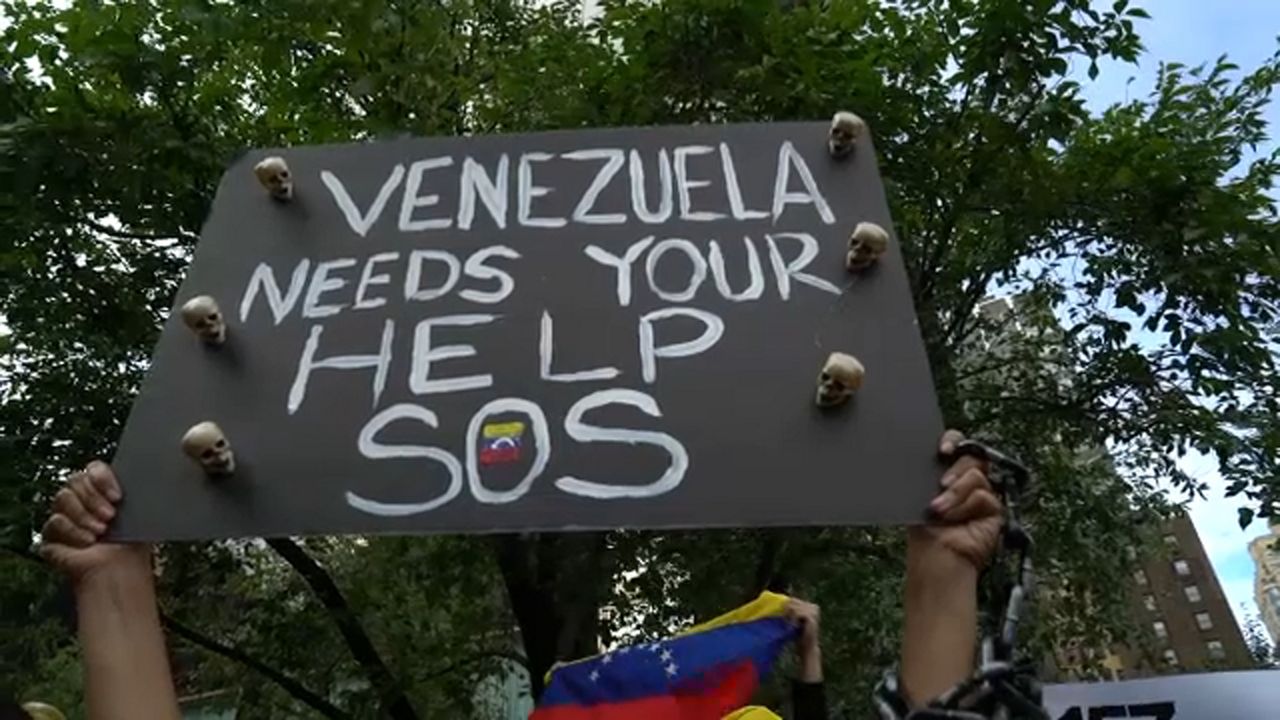
In Venezuela, sanctions were imposed in January 2017 by President Trump, for alleged human right violations, but rumors have persisted that it had more to do with Venezuela's suppressing a U.S. led attempt to overthrow the government. Either way, unlike Cuba, the sanctions helped Venezuela's economy to collapse, causing record level inflation, unemployment, poverty, and crime (Venezuela has the highest rate of violent crime in the world).   

The sanctions resulted in freezing $5.5 billion dollars belonging to Venezuela. Also, there was a 65% decline in the number of international banks willing to do business with them, with 99% of them coming between 2017 and 2019. This has resulted in severe shortages of food and medicine which the country must buy abroad.

It's estimated that some 80,000 HIV+ patients were affected along with roughly 32,000 individuals in need of cancer or dialysis medication or treatment. Some 15% - 20% of the population no longer has access to potable water during the height of the sanctions.

High unemployment (the result of many oil related businesses closing) triggered a serious increase in crime, making Venezuela the most violent crime ridden nations in the world. Presently, the crime rate (as of 2023) in Venezuela is 83.76 per 100,000. The majority of the crime is committed by individuals ages 20-30 years old. By comparison, the United States has a crime rate of 47.70%. So, if you want a reason for the exodus northward, there you go. U.S. imposed sanctions.

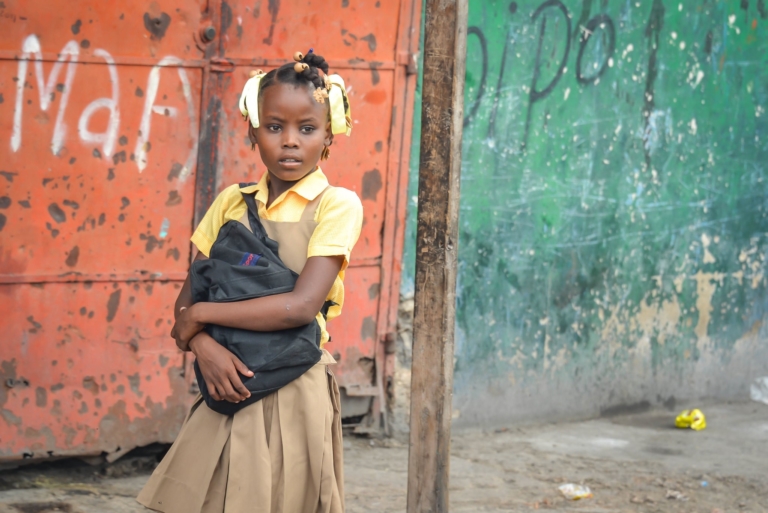
Economic issues have affected other countries in the region as well, such as the Caribbean island nations of Haiti, Jamaica and Trinidad and Tobago. Their problems are primarily the result of inept governments, rudimentary infrastructure, failed social programs and perpetual poverty. 

The result is chronic unemployment and high crime rates (Trinidad and Tobago are ranked sixth in the world while Jamaica is tenth).  Another key factor, not found elsewhere, is the weather. Due to climate change, the Caribbean has found itself in bull's eye of some of the worse tropical storms and hurricanes on record.

Most of these countries have long depended on the tourist trade to pump money into the economy, but the weather and crime has caused tourists to go elsewhere. As an aside, in 2023, the U.S. pumped $110 billion dollars in humanitarian aid into Haiti alone. Without this aid, we'd see a much larger exodus northward toward the U.S. Compare that with $16 billion in aid (humanitarian and military) to Ukraine in 2023 and $3.3 billion to Israel.  

Brazil is one of the most rapidly growing economies in the world. It is a key member of the economic union know as "BRICs" along with China, India and Russia, among others. Few know that Brazil was one the world's most impacted nations by the Covid-19 epidemic . The economy had been growing at a steady rate of 3.3% between pre-Covid 2001 and 2014. But between 2014 and 2020, the economy shrunk by the same percentage of 3.3%.

However, things bounced back by 2021 with growth rate of 5.5% followed by 2.9% in 2022 and 2.6% in 2023. Despite this, Brazil has seen a relatively high crime rate of 23.6 per 100,000 (ranked 9th in the world). It previously had been as high as 30.8. Unemployment is about 7.8% thus far for 2024, Compare that 2.6% in Mexico. The poverty rate is slightly higher than it neighbors at 24.3%.

Mexico, which has borne the brunt immigration crisis, has the 15th largest economy in the world and the second largest in Latin America behind Brazil. However, for the last 30 years, the Mexican economy has underperformed in terms of economic growth, poverty reduction, and the development of a strong middle class according to the World Bank.  

The  Mexican economy grew at just 2% between 1980 and 2022, though in 2023 it saw a growth rate of 3.2%. However, poverty, while dropping from 43.9% in 2020, still remains high at 36.3% in 2022.

Other countries in Latin America are facing economic difficulties due to a slow global economy (bearing in mind that the majority of these countries are rural and dependent of agriculture, mining, forestry, and tourism, not to mention U.S. and international aid. As a result, many of these countries have expanded their trade interests from one based primarily on the U.S. to one based more on China, as well as Asia and the EU.

However, China's economy has cooled somewhat which has had the expected ripple effect on some of its poorer trading partners.  The result has been something of a unbalanced unemployment rate and largely stagnant poverty levels. Relatively high global interest rate and inflation remains a serious problem in servicing debt and public programs. As a result, we see moderately high unemployment along with a reduction in social programs, adding to poverty.

While "economic amnesty" is not recognized, under other forms of amnesty, an individual must seek sanctuary in the "next nearest safe country" . In Latin America, it appears there is no "safe" country. Just varying levels of poverty and unemployment. So, we see possible explanation for thousands of individuals willing to make the long walk to the U.S..

The next big issue is "who" is encouraging these individuals to come to America. Surely they know that illegal immigrants aren't welcome in America. They must know what they'll face when they get to the border. Are they delusional enough to think they'll be an exception? No doubt the drug cartels encourage these people to sell everything they have to make the long and often brutal journey, as long as they make money.

The cartels, using "coyotes" or guides, charge roughly $200 per person (which is a fortune for most of these people). In lieu of money (or even with it), they are often forced to smuggle drugs or other illegal contraband. Sometimes, they are only able to send their children to friends or relatives until they can raise the money to follow. In many cases, there's no assurance the children will reach their destination or that they'll ever see them again.

Using cartel connected coyotes is very dangerous. Immigrants have often reported being beaten, raped while seeing others murdered. The trip is fraught with other dangers such a injuries and no medical facilities (often the coyotes will confiscate any personal medication), corrupt cops and militias who have to regularly be bribed, as well as the lack of food or fresh water while dealing with the weather conditions and having no shelter other than what they brought with them.  

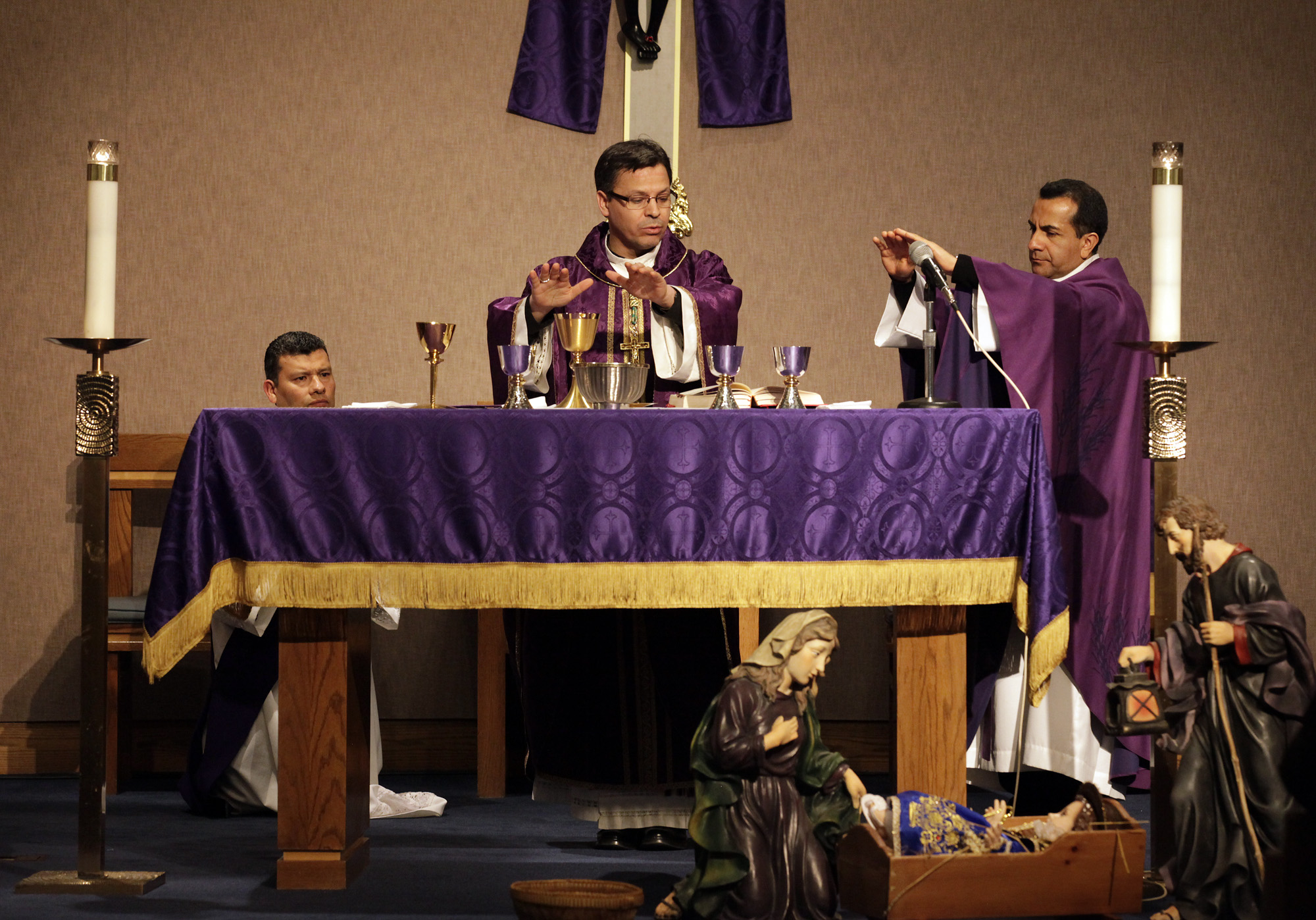
Aside from drug cartels, there are the various religious organizations, especially Catholic. 57.1% of Hispanics are Catholic. Most are historically highly devout and closely follow the dictates of their parish priest.  In America, Catholics are much more open minded and don't give the same level of credence to the priest's instructions, treating them more like  "suggestions" to be followed...or not at one's own discretion.   

From the 1960's onward, most conservative churches have been dying, especially Catholic, causing many parishes to merge while closing numerous schools and other institutions. In addition, there have been fewer priests and nuns signing up. The average age of a priest in 1970 was 30. Today it's 63. When it comes to nuns, only 1% are under 30 with the average age being 80! 

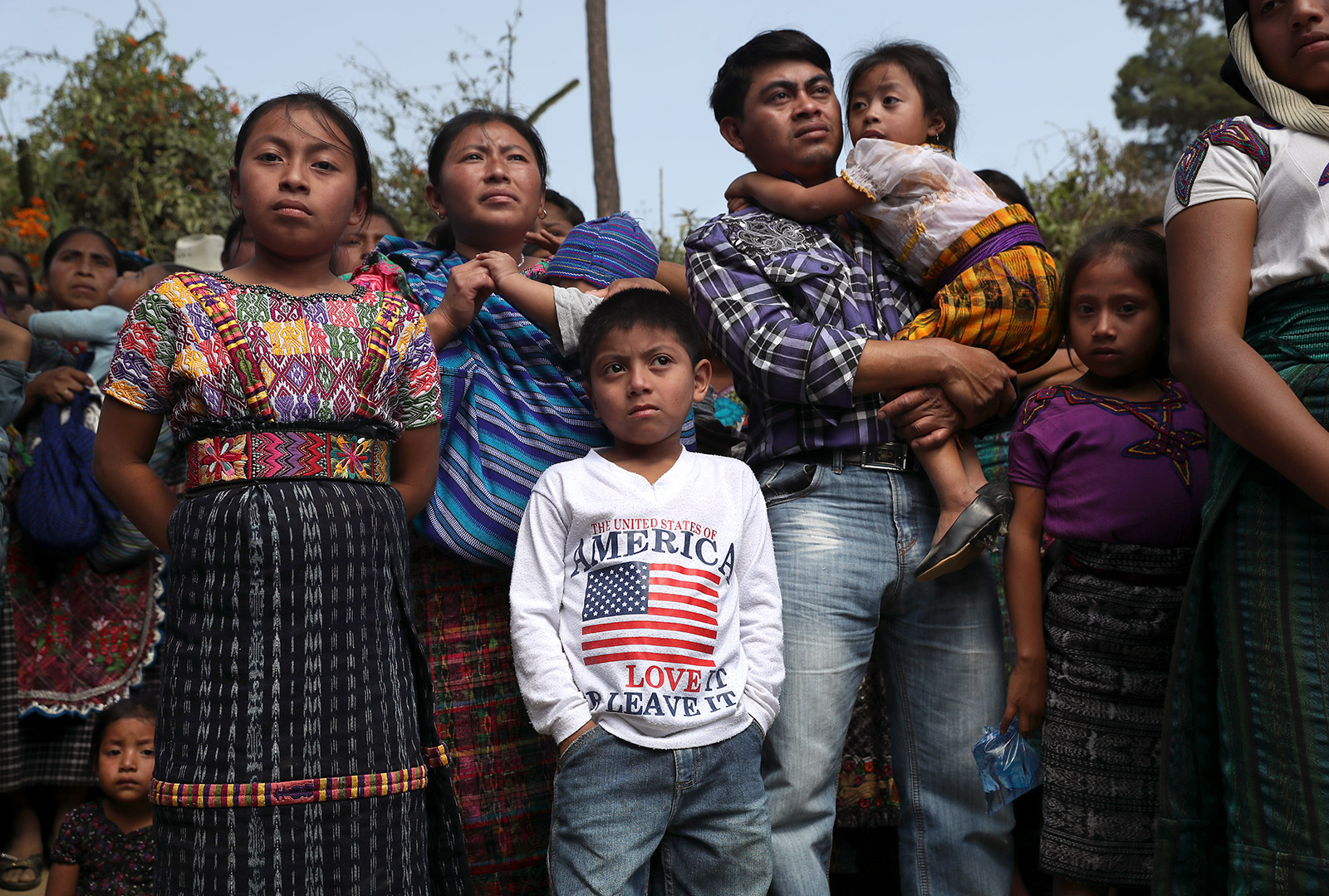
With the immigration of individuals from mostly Catholic Latin America, it's hoped this trend can be reversed. Thus, they are offered shelter (and presumably legal sanctuary since most law enforcement agencies won't enter a religious institution) once they cross the border, as well as help find housing, a job, help with translations and getting various services at taxpayer expense, and of course, religious services are offered in their native Spanish or Portuguese.  

However, to the chagrin of these churches is that a growing number of immigrants, while taking advantage of the services offered, are leaving the restrictions of the church behind. A good number are converting to Islam faster than any other demographic. In fact, in Latin America itself, Islam has grown by 23% with Shiites outnumbering Sunnis. A smaller, but significant percentage, have converted to Evangelical  Protestantism. So, we find not just Catholic organizations encouraging migrants northward, so apparently are Islamic and Protestant organizations too.

Illegal immigration has become more than a political issue of right versus wrong in terms of following the law. It's become an economic issue as employers seek a cheap work force not dependent on unions and are willing to accept long hours for very little money without complaining, thus forcing the traditional workforce to work for less too.

 Various religious groups are looking to grow their numbers and political clout. Meanwhile, mostly traditional conservative Americans are desperately trying to hold on to an America they see slipping through their hands like Texas sand. Hitler once praised Islam, saying that he wished all Germans were Muslims because Islam makes people compliant to authority.

So why isn't Washington doing anything? Simple. The federal government is on the side of Big Business. They fill their coffers, provide the perks and underwrite their campaigns. Both political parties may pretend to be concerned about illegal immigration, but remember that both the Democrats and Republicans are corporate owned and controlled. In truth, they are only concerned to the level Wall Street is. Meanwhile, Washington and Wall Street will continue to offer smoke and mirrors as our America slowly evaporates before our eyes.  

If you enjoyed the article, please consider passing it along to others and don't forget to subscribe. It's free! Lastly please be sure to "like" us on whatever platform you use to read anotheropinionblog.com. It helps beat the algorithms and keeps our articles in circulation. Thank you!


Sanctions during the VenezuelanCrisis


How Sanctions Contributed to Venezuela's Economic Collapse


World Population Review: Crime RateBy Country 2024


USAID: Providing AdditionalHumanitarian Assistance to Respond to Rising Needs in Haiti


Foreign Aid By Country: Who's getting the most---and how much?


Latin America economic outlook, November 2023


Why are more Hispanics converting to Islam...


Saturday, September 30, 2023

Religion In A Post-Republic America: The Decline of Christianity?


When the populace begins to distrust the institutions upon which society is built, the time is not long off when there will be some sort of change, possible violent or not, but there's little doubt that significant change is on the way. According to several recent polls, trust in our key institutions are at record lows with little data to indicate any significant improvement.

The most fundamental institution affecting Americans is religion. In the preceding generations, one could argue the society, and especially the family unit, revolved around organized religion. According to a Gallup poll, just 32% of Americans said they had a great deal or a lot of trust in religion. 36% said that had "some" confidence while 33% had little or none.

According to the Billy Graham Center at Wheaton College, some 70% to 84% of all churches are seeking a decline in membership. A Pew survey conducted two years ago indicated that the fastest growing religious category in the U.S. was "none". The report also said that if "unaffiliated" was a religion, it would be the largest in the United States.  If the present trend continues, it will reach a de facto majority status by 2070.

However, among those who hold to some sort of faith, non-dogmatic "spiritualism" comprises the largest chunk of the unaffiliated. Of those who adhere to dogmatic Christian religious institution, the Church of Latter Day Saints or Mormons are the fasting growing. The largest growing non-Christian religious institution in the United States is Islam. By 2040, Islam is expected to be the second largest religious institution in America.

As an aside, Mormonism is on track to become the largest Christian religion, the Churches of Christ, Assemblies of God, and the Catholic Church are the runners up. It's worth noting that all three of the Protestant churches and the Catholic churches are considered socially conservative although most are registered Democrat, leaving about one third registered Republican.

Liberal churches on the other hand are showing the fastest decline in membership. Churches regarded as being "liberal" or "progressive", some of which include the United Churches of Christ, Lutheran, Presbyterian, Episcopal, and the Methodists. This is most notably due to their stance on issues like gay marriage and LGBQT rights, abortion, and women in the pulpit. 

The massive increase in immigrants from Latin America as well as Africa and Asia will spur the growth for the Catholic Church in the United States. Whether they will continue to register Democrat while remaining socially conservative remains to be seen. 56% are registered Democrat while 28% are Independent and 14% are Republican, although many are switching to Independent. 

Incidentally, the majority of immigrants---61%---are settling in just five states, Texas, Florida, California, New York and New Jersey. It's worth noting that four of these, New York, Texas, Florida, and California, also have the highest number of Electoral College votes which, in our antiquated "winner-take-all" electoral system, determines the winner of the Presidency and not the popular vote. 

Globally, by 2050 there will be approximately the same number of Muslims as there are Christians. In India, which now has the largest population of any nation, Hinduism will remain the majority religion but not by much. Islam will make up a large minority. In fact, because of the large Indian population, by 2050, there will be more Muslims just in India than in all of Indonesia. In Europe, Muslims will comprise at least 10% of the total population with the majority living in Western Europe.

Buddhism will hold its hold globally and remain about the same size, although its number will grow in the United States. The majority of Buddhists in America are converts, with the majority being white and former Protestant. By 2050, Buddhism will be the 10th largest population group by religion. Buddhism tend to lean Democrat in significant numbers.  

While Judaism, which is predominantly Left leaning in the U.S., will likely grow worldwide, it will no longer be the largest non-Christian religion in the United States. That honor, as stated above, will go to Islam. Politically, however, it will make little difference since they both tend to vote Democrat  with 68% of Muslims and 64% of Jews being registered Democrat. 

It's worth mentioning that while agnostics, atheists, and Humanist currently make up a significant segment of the "unaffiliated" in the United States (as well as in France and Germany), their numbers are projected to decline globally. Folk religion and neo-paganism (such as native African, Nordic and Wiccan)  will also continue to enjoy a resurgence globally, especially in the United States, although their numbers will not keep pace with the growing world population and thus their overall percentages will decline.

In our increasingly technological and sterile world, you would think that religion everywhere would be in decline. Various polls, however, show that the majority of Americans side with religion over science. In fact, just 29% of those polled by Pew in a 2019 study said they would always or most always trust science over religion. 40% of Americans believe solely in Creationism while 33% believe in evolution under the direction of a divine influence or plan. Note too that this percentage is fairly consistent globally among Christians and non-Christians religions that follow some form of established dogma.

So, what's the future of religion, particularly Christianity, in the United States? In 1990, 90% of all Americans identified as Christian. By 2050, that number is expected to be 54%, and within 50 years, it's expected to be just 46% while those who identify as secular will rise from around 30% now to 52% by then. Liberal leaning churches will decline, with many closing their doors for good.

The largest non-Christian religion will be Islam, replacing Judaism for the first time, and smaller size congregations will gradually replace the mega-church (which are often half jokingly referred to as "Six Flags over Jesus" or "Churchmarts"). Many services in the future will take place in private residences, harkening back to early Christianity when services were often led by women who were in charge of the home. 

Christianity will also likely be more racially and ethnically diverse than at any time in American history. Services conducted in multiple languages along with a sharing of cultures.  They will also likely be conservative, creating possibly a new schism in the form and function of Christianity itself. 

If you enjoyed the article, please consider passing it along to others and don't forget to subscribe. It's free! Lastly please be sure to "like" us on whatever platform you use to read anotheropinionblog.com. It helps with the algorithms and keeps our articles in circulation. Thank you!


The fasting growing US religious affiliation? 'None', poll says


The Future of World Religions: Population Growth Projections2010 - 2050


Modeling the Future of Religion in America


U.S. Religious Groups and their political leanings


What is the Future of Religion in America?


The Future of Liberal Christianity


Is There a Future For Progressive Christianity in America?