Showing posts with label Income inequality. Show all posts

Saturday, October 21, 2023

A Nation Out of Balance: Wealth Inequality in America

Did you know that the top 400 richest individuals in America are worth a combined $4.5 trillion dollars? Of those, the top four are worth about $1.9 trillion dollars. Do you think you have what it takes? Just to make it into the top 400 you'll need a minimum net worth of $300 billion dollars. In addition, the top 20 are worth 30% more than they were this time last year. So, who are these modern day descendents of King Midas?

The top five wealthiest individuals are Elon Musk ($180b) at the top, followed by Jeff Bezos ($114b), Bill Gates (135.8b), Larry Ellison ($119.5b), and Mark Zuckerberg ($117.5). Zuckerberg is also the youngest at 39. Warren Buffet is the 7th richest person and Charles Koch ($54.2b), the villain of liberals everywhere, is 17th. Julia Koch ($54.2b), widow of Charles' brother, David, is 18th, making her one of the wealthiest women in the world.  

As an aside, these are the richest individuals in America. Globally, Bernard Arnault of France is the second wealthiest person, behind Musk with a net worth of roughly $174 billion. The balance of the list is the same, making the top 9 out of 10 richest Americans.

Meanwhile, Michael Bloomberg ($69b), the bane of conservatives, is actually much richer, clocking in at 10th place.  Of course, these figures are approximate. By the time it took just to type the figures, they already grew several hundred thousands of dollars. And for those who like to gloat, former President, Donald Trump, is no longer among the top 400 wealthiest. According to Forbes, "The Donald's" wealth has dropped from $3.2 billion to $2.6 billion. While that puts him about $300 million dollars shy of the top 400, I doubt Melania is having to clip coupons.

But what about us ordinary Americans? How do we stack up? As of 2022, the "official" poverty rate in the United States was 11.5% or around 37.9 million people. The number of children living in poverty as of 2022 was 12.4%, up from 5.2% in 2021. However, the actual poverty rate of Americans is much higher, especially when you consider that 49% of Americans are dependent in some matter on government services. That translates to roughly $1.19 trillion dollars or 20% of the federal budget.   
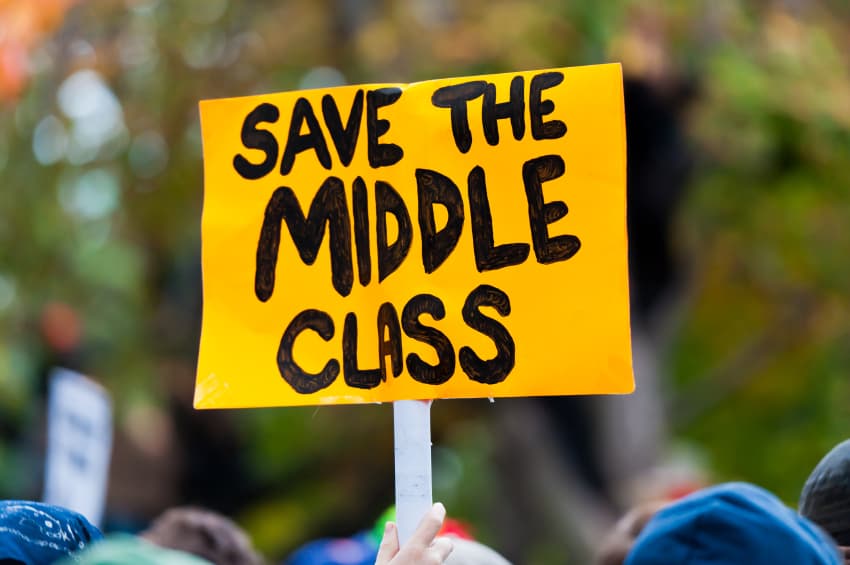
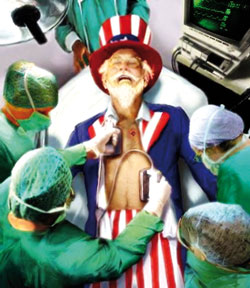
Historically it's been the middle class which has provided the economic and social structure to society. The middle class provides the overall stability which keeps capitalist democracies afloat. Ideally, a society should have a relatively small upper class and a small lower class with a large center. However, that's not the case anymore.

In 1971, 61% of Americans were middle class. By 2021, it was just over 49%.  To make matters worse, those in the upper third of the middle class dropped significantly to middle income while many of those previously in middle portion either remained the same or dropped into the lower middle class, thus making the lower middle class the largest of all the economic classes.

Minorities, which had struggled for decades to reach a middle or upper middle class lifestyle (reaching their zenith in the 1980's) have dropped to middle or lower middle income. The decline of the middle class coincided with the closure of factories and exportation of good paying, and mostly union jobs overseas in the name of improving shareholder profitability and staving off corporate raiders.  

The decline of the middle also coincided with growth of the lower class which increased to 25% of the population (some studies put the figure closer to 29%). Of that 13% were classified as "working poor" while 12% were defined as "underclass". Note that none of this takes into consideration those who are under employed or have simply given up looking for employment.

I should also mention that the rate of homelessness has also grown along with the decline of the middle class. Currently 22% of the homeless are categorized as "chronic", meaning they are unable to be find regular shelter. 5% of the homeless have children with them (defined as those under age 25).  6% of the homeless are veterans. The majority of homeless, 21.5%, are men. 13.3% are women.  
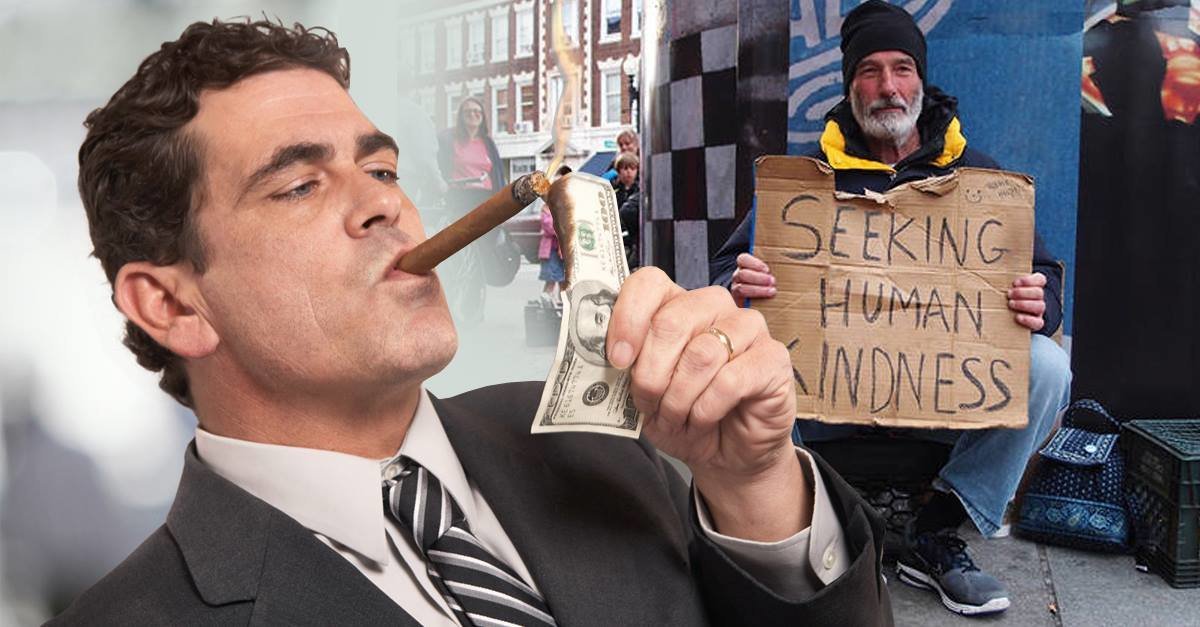
When we take a look at wages, the situation becomes more dire. As of 2022, the average company CEO made a whooping 670 times more than the average employee---not the lowest paid employee mind you, but the middle income earning employee. That means for every dollar the average employee earns, the CEO gets $670. In 2021, that ratio was 399-to-1. By 1989, it was 59-to-1, and in 1965 CEO's made $29 dollars for every dollar the average employee made. 

Between 1979 and 2022, the pay of senior company executives went up 1209.02% while the average worker's compensation went up 15.3%. It's worth noting that since 1975, prices overall have increased by 361.41%, or to rephrase it by saying that it would take $5.72 in 2022 to buy the same amount a dollar in 1975 would. Thus when adjusted for inflation, the purchasing power of a dollar relative the rise in wages, which helps to explain, at least partially, the decline of the middle class.

When we look at the situation globally, the picture is much the same. The upper 10% take home 52% of the income while the poorest 50% has just 8%. In terms of overall wealth, the top 10% control 85% of all wealth while the bottom 90% control 15% with the poorest segment owning a mere 2%. The top 1% control 50% of the world's wealth.  

Compare that with the U.S. where, according to the Federal Reserve, as of 2021, the top 1% controlled 32.3% of the total wealth while the bottom 50% controlled just 2.5%. As of the end of the second quarter of 2023, the Federal Reserve said that the top 10% control 69% of the total wealth while the lowest 50% had just 2.5%. The top 1% controlled just over 1/4 of the total wealth in the U.S..  

Globally speaking, the United States has the fifth worse level of income inequality out of the top 35 industrialized nations. Only Bulgaria, Turkey, Mexico, and Costa Rica were worse off. The U.S. also still had the highest disparity between CEOs and workers by a large margin. The next closest was Switzerland where the wage disparity between CEO's and workers was 148%, followed by Germany at 147% and Spain at 127%.
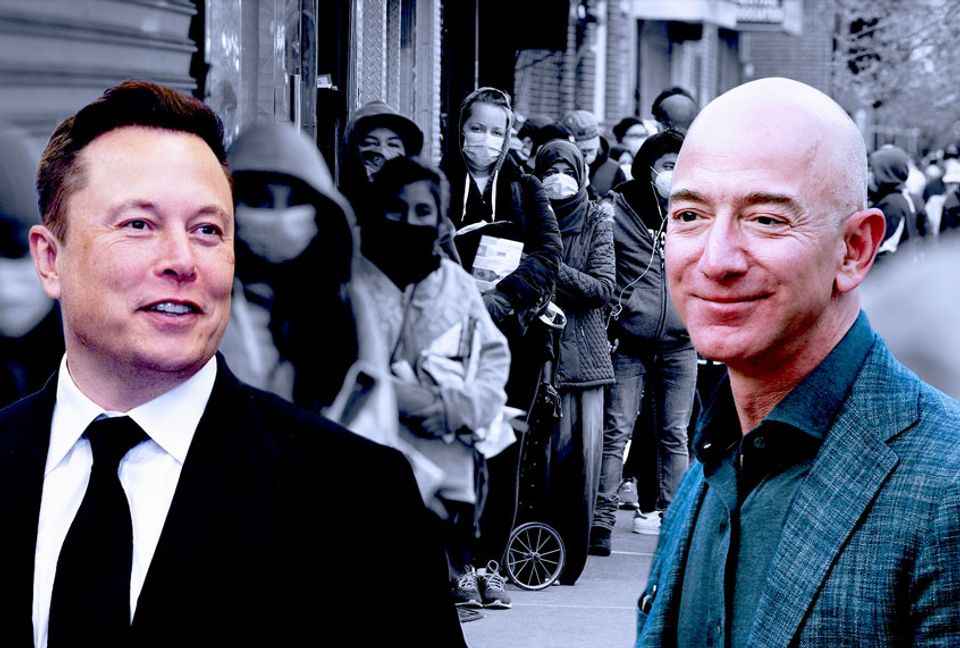
As an aside, it should be pointed out that the COVID-19 pandemic contributed to the growing wage disparity since senior executives continued to receive their full compensation while the majority of the workforce was at home receiving next to nothing beyond unemployment and a couple of small government handouts (aka "stimulus checks").  

Also don't forget about their considerable investments in pharmaceuticals,  healthcare, and medical research. During the pandemic, Jeff Bezos, Mark Zuckerberg, Elon Musk, and six other billionaires made $360 billion dollars during the deadly outbreak. 

From March 5, 2020 through March 5, 2021, the height of the pandemic, Elon Musk's wealth increased by $118 billion dollars. Jeff Bezos saw an increase of $58 billion while Larry Paige and Sergey Brin saw their wealth grow by $33 and $32 billion dollars respectively. Mark Zuckerberg's portfolio increased by $29 billion, while Larry Ellison's grew by $28 billion. Bill Gate's financial worth blossomed by $24 billion. Two other billionaires, Steve Ballmer and Michael Dell saw their wealth grow by $23 billion and $18 billion. Money begets money, and they have a lot of money to beget! 

The ever expanding wealth inequality has effectively created a two tier society both in the United States and abroad. The middle class has historically been the glue which held capitalist democracies together. Even during feudal times, it was the well-to-do peasant class which helped prop up the monarchies. The middle class has provided an incentive for the lower classes to try to achieve economically and socially while providing a social barrier for the upper classes.

It has been said that the middle class is the only thing protecting the rich from being murdered by the poor. However, if the middle class no longer has as much to protect, then there is no reason it shouldn't make common cause with the lower class which has happened previously in history. If that should occur, there would be a complete upheaval in society.

The choice, therefore, that we all must accept is either fundamental and real change in how society functions economically and politically, including possibly a defacto cap on individual wealth and a minimum corporate tax, or face a real threat of more radical changes at home and globally.

There is no longer a middle ground. Attempts by politicians or the corporate media to divert our attention with another "crisis de jure" or even their blatant refusal to protect their financial interests just aren't going to cut it anymore. It's past time that we took charge of this country again.  

In addition to the links below which explain the statistics mentioned above in greater detail, I've also include two short videos below which illustrate what we've discussed more entertainingly. We hope you enjoy them and will let us know what you think about the decline of the middle class and bifurcation of society politically and economically.


Video: Wealth Inequality in America: Visualizedfor 2023 (13:19)

Humphrey Yang


Video: Wealth Inequality in America (6;23)

politizane


If you enjoyed the article, please consider passing it along to others and don't forget to subscribe. It's free! Lastly please be sure to "like" us on whatever platform you use to read anotheropinionblog.com. It helps with the algorithms and keeps our articles in circulation. Thank you!


List of wealthiest Americans by net worth


Donald Trump drops from the Forbes 400 list of richest Americans. Here's what changed


For most U.S. workers, real wages have barely budged fordecades


Wage gap between CEOs and US workers jumped 670-to-1 lastyear, study finds


These charts show the growing income inequality between the world's richest and poorest


OCED: Income Inequality


State of Homelessness: 2023 Edition


Thursday, March 02, 2023

Is the U.S. Egging on the War in Ukraine?

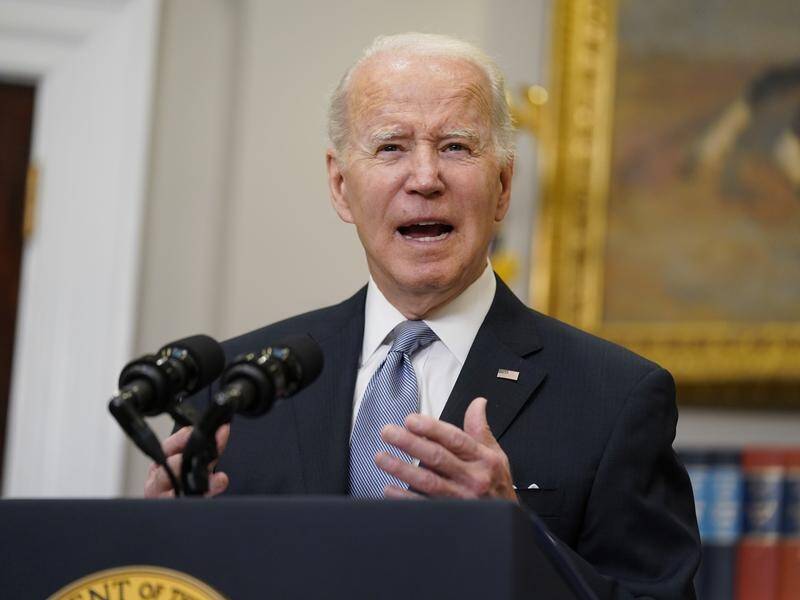
What do you think about the United States getting more deeply involved with the Russian-Ukraine War? The U.S. and NATO have been fanning the conflict by dumping increasing levels of military material in Ukraine and promising even more aid. In fact, President Biden recently flew to Kyiv to personally tell Ukrainian President Zelenskyy that the U.S. will be sending some $500 million dollars worth of military hardware. In January 2023, the Department of Defense proposed a $3 billion dollar package in military aid to Ukraine. 

If we go back to January 2022, we'll find that $3 billion dollars in of your money is just a drop in bucket. Starting in January 2022 through January of this year, you and I have paid for $78.8 billion dollars in aid to Zelenskyy. 31% of that (or about $23.5 billion) was exclusively for military hardware. Another 6% (or $4.7 billion) in the form of grants and loan guarantees for military purposes just in case they want to buy from one of our allies or something.

On top of that, American taxpayers have ponied up $18.3 billion in "security assistance". This covers logistic support, training, and incidentals like boots, belts, uniforms, winter/summer uniforms, rations and whatever else that's not covered previously. In short, the DOD is that one stop shopping that despots, tyrants, and warmongers the world over have come to count on. I wouldn't be surprised if each purchase didn't come with a gold "skull and crossbones" stick pin.

So, the total package just for military related items comes to $46.6% billion dollars, or 61% of $78.8 billion dollars in aid we've given so far.  As they say on television infomercials..."but wait, there's more!", and indeed there is. We've given $26.4 billion in financial aid. This is suppose to cover rebuilding Ukraine's infrastructure, ranging from rebuilding buildings and bridges to schools, roads, and general clean up.

So, what about the people of Ukraine? You know, the women and children that Biden briefly mentioned in his press conference with President Zelenskyy? Well, out of the $78.8 billion dollars, they were slated to receive $3.9 billion in aid. This was to cover temporary shelter, food assistance (including baby formula), as well as medical treatment and medicine. That amounts to just 5% of the 78.8% we provided on last year (and that doesn't cover the additional money that Biden just promised).  

It's worth noting that U.S. military aid to Ukraine has far exceed the amount of aid we've provide any other country, including our closest allies such as Israel which has received a beggarly $3.3 billion. Jordan has receives a mere $504 million dollars in military aid. For the record, prior to the war, Ukraine received just $284 million in American military hardware. 

As an aside, it's worth noting that while President Biden is being so generous with your money, he made no mention of trying to find a way to bring this war to end. You would think that in addition to spreading all that money around a little more fairly, especially on the humanitarian aid side, he would want to see a peaceful and fair resolution to this war.

Accurate reports are hard to come by, but it has been reported that at least 8,000 civilians have been killed with over 13,000 others injured. Many experts are saying that the number of civilian deaths have likely been grossly underreported and added that perhaps as many as 100,000 civilians are possibly dead and buried under unexplored rubble. Military deaths on both sides have lost far in excess of 100,000 each with some estimates putting the number of Russian troops killed as high as 200,000.

Here at home, we have a failing infrastructure system (we are rated a "C-" by the American Society of Civil Engineers). The World Economic Forum's of global infrastructure rankings placed the U.S. 13th in the world out of 141 countries, behind the United Arab Emirates and ahead of Belgium for 2019.  

We have a school system which consistently fails to measure up to international standards (we're 14th overall). A healthcare system which is just as bad (the U.S is 11th, which dead last among the leading industrialized nations). We are faced with rising food and gas prices, as well as rising taxes and stagnate wages amid an inflation rate of 6.4% (last year the inflation rate ranged from 7.480% to 9.060% with the majority being around 8.5%).

Our general quality of life has been on the decline for several years. Globally, we are ranked in the second tier at the 21st. Among the top countries ranked above us include Scandinavia, Germany, the UK, Ireland, the Netherlands, Australia and New Zealand, Italy and Portugal. We even have one of lowest life expectancies of any developed nation---in 46th place!

We have the highest income disparity of any developed nation. Top tier incomes among the one percent make more than 84% more than the bottom 20%. The top 20% earned more than half---52.2%---of all U.S. income in 2020.  CEO's average incomes that are more than 399% more than that of the average employee.  Despite laws to the contrary, women still earn on 82 cents for every dollar her male co-worker earns (the disparity is worse among female minorities).

What about the U.S. military? There's no question that after fighting a 20 year war, the U.S. military was pretty exhausted. Much of our equipment, including tanks, planes, and ships, were in desperate need of some intense maintenance. We were starting to run shortages in everything from bombs and ammunition to spare parts.  We've also experienced a drop in enlistments as service members decided to get out (it's worth noting that during our 20 year misadventure in Afghanistan and Iraq, service members did more tours of duty than at any point in U.S. military history. Much of that was under combat conditions).

According to a report published by Defense News, a detailed report by the Heritage Foundation showed that the U.S. military was weaker than it was in 2022. The "Index of U.S. Military Strength" focuses on the need for the U.S. to be prepared to be able to engage in two wars simultaneously or a major regional confrontation. 

The report goes to say that the U.S. military fails to meet that objective, and currently would struggle in a single front confrontation. The article goes on to state that the military is still capable of "projecting" its strength around the world (meaning we can be anywhere at any time), our fighting capabilities are greatly diminished.

Of all the various branches, only the Marines were still rated as "strong" (hooyah "Devil Dogs"!). The Army was rated as "marginal" while the Navy was "weak" and the Air Force was "very weak". The Space Force was also listed as "weak", citing slow updating of ageing technological platforms.

The Navy's score was based on a lack of combat fit ships (most are in need of overhaul) and an inadequate number of additional "manned" ships. The Air Force lacks adequately trained pilots and the pilots they do have are logging in less than satisfactory flight time (same for the Navy). Nevertheless, we seem to have enough "surplus" military hardware to send to Ukraine but not to satisfy our own needs. To me that just doesn't make sense.

Finally, the reports identifies China as our primary military adversary due to its expanding military capabilities, technology, and growing aggressiveness. China was followed by Russia with its large nuclear capability. North Korea was mention as low threat along with various countries in the Middle East including Iran.

So, where does that leave us? At present the United States is still trying to be the world's policeman and arbiter of events. However, things are rapidly changing. China is now the world's largest economy according to some experts Where it can continue at its present pace is another question. Countries like India and Brazil are on the ascent economically too.

The U.S. is showing serious cracks in almost every area, especially the most important ones of education, technology, and global competitiveness.  It's political system has morphed from a Republic into a neo-fascist Corporatocracy; a surveillance state born out of fear thanks to 9/11. We have a social and political divide unlike anything since the decade preceding the Civil War, not to mention a growing economic divide brought on in part by our "outsourcing" of good paying production jobs.

We are unwilling to stop the hemorrhage of illegal immigration. Worse yet, politicians no longer have the decency to lie to us about trying to stop it!  They just ignore and keep on doing as they please. And so, those who encourage them to come over and those who hire them, often turning these individuals into serf labor, go unpunished.

Meanwhile, we maintain the highest prison population in the world; much of which is based on uneven sentencing. We focus on "doing time" rather than rehabilitation for those convicted of non-violent crimes. We even fine and convict individuals for possession of what grows naturally. Tell me corporation self-interest isn't behind this.

I think our chief problem stems from our failure to take a stand and then stand by our decision. We're too afraid of "offending" someone or being called a name than speaking the truth. We don't want to take responsibility for our actions. Instead, we find someone or something else to blame. There are consequences to our actions and we need to step up and own them---good or bad. 

 When it comes to the government we keep falling into the same ole trap that somehow, magically, the "next time it will be different". We allow ourselves to be seduced by the lies. Politicians, the two corporate owned political parties and their corporate owners are counting on it. It won't change. Why? Because we fail to remember the adage that what we allow to happen will continue to happen.

Lastly, we have a bad habit of sticking our noses where they don't belong globally. It's not our place to decide what government or leader another country should have. Did you know that since the end of WWII in 1945, the U.S. has been involved in the overthrown or attempted overthrow of 57 countries, including the predecessor of Ukrainian President Zelenskyy? 

We need to accept the decision of a people freely voting in their own country for the government they want whether we like it or not and then to find ways to work with those governments if we really want to promote democracy. Besides, we wouldn't tolerate it, why should anyone else?

Not everyone wants to be America's "mini-me". In fact, of all 96 democracies in the world, not a single one has emulated the United States. Not one. Instead, they prefer the parliamentary system of the UK where everyone is represented in lieu of our "winner-take-all" two corporate party system.

Americans are, by and large, a very generous people. We've come to the world's rescue every time disaster has struck. In the case of Ukraine, we should continue to help the people of Ukraine with humanitarian aid while stopping to egg on a war aimed at: A: Antagonizing Putin, B: Securing Right to the oil and gas, C: Securing rights to coal and other natural resources, D: Threatening Russia's national security with NATO/U.S. missiles on Russia's border. Our focus should be on stopping a war which could have and should have been avoided.


 If you want to know more about this article's topic, please check out the links below. If you enjoyed the article, please consider passing it along to others and don't forget to subscribe. It's free! Lastly please be sure to "like" us on whatever platform you use to read anotheropinionblog.com. It helps with the algorithms and keeps our articles in circulation. Thank you! 


How Much Aide Has the U.S. Sent Ukraine? Here Are Six Charts


Soaring Death Total Gives Grim Insight Into Russian Tactics


U.S. Health System Ranks Last Among 11 High-Income Countries


The Quality of Life


US military in decline, threats from China "formable" , report says


Executive Summary of the 2023 Index of U.S. MilitaryStrength


Saturday, January 07, 2023

Are We "Spartacus"?


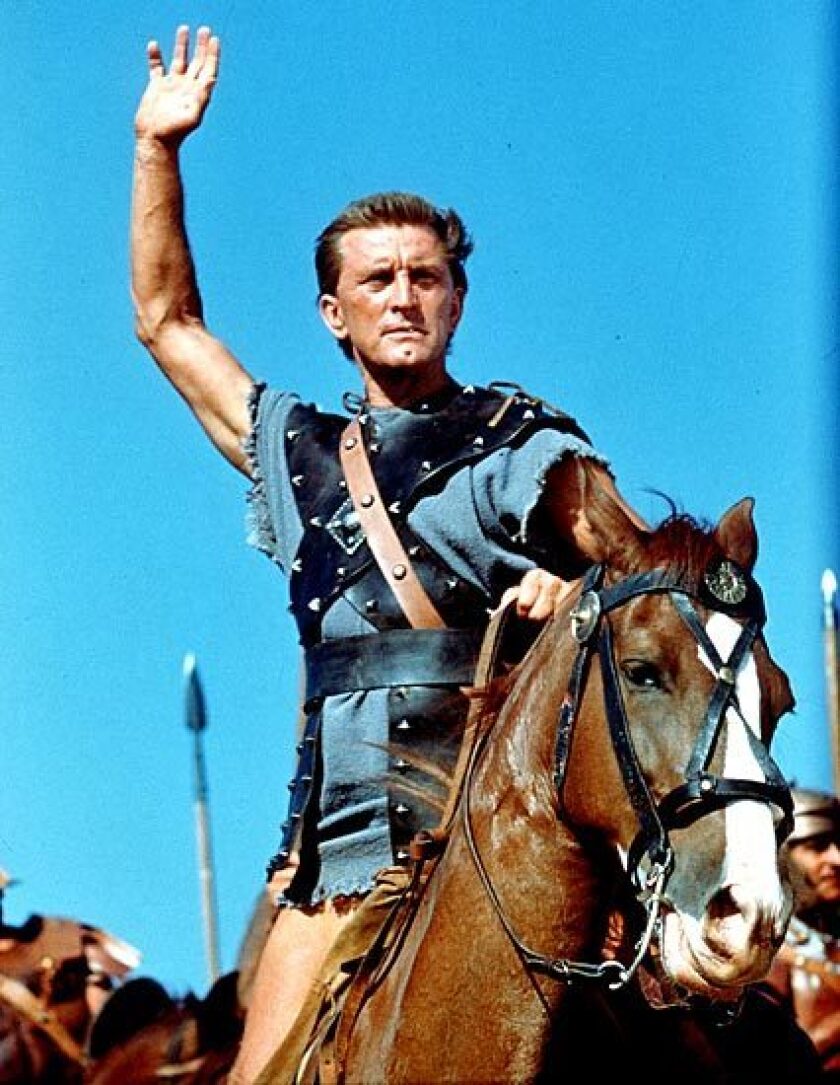
Spartacus. A name which has inspired down through the ages. For some, the inspiration was fear of a possible rebellion, be it of strikers from a specific industry or the working class as a whole who had grown sick and tired of the empty promises and platitudes made by factory owners or party bosses. 

For others, the name of Spartacus inspired hope. It showed that, united, the people could challenge the oppression leveled by the powers that be. The famous French philosopher Voltaire said that the rebellion led by Spartacus, also known as the "Third Servile War" (73 BCE - 71 BCE) was "the only just war in history".  Perhaps it was.

The name of Spartacus has been used repeatedly as a rallying cry against injustice and oppression, be it against working conditions, wages, or discrimination based on everything from age, gender, religion and so forth. It was called upon during the fight for voting rights by the Suffragettes during the first quarter of the 20th Century just as often as it was around by unions as they began taking shape in the latter half of the 19th.

The mythos inspired by the name of Spartacus has been used in pro-democracy revolts opposing authoritarian governments such as the 1848 uprising in Imperial Germany, the Paris "Commune" of 1871, the Russian Revolution of 1917, and the second German Revolution of 1919 as well as the "Color Revolutions" of Eastern Europe  and  the "Arab Spring"  uprisings in the first decade of the 21st Century.  

I bring up the topic of "Spartacus" after having read of short but very informative article by Gavin J. Maziarz of Gettysburg College, published in August 2022 in "The Gettysburg Historical Journal" (Volume 21 Article 1) about the rebel leader on the second anniversary of the January 6th protest in Washington in 2021.

The article, entitled "The Spartacus Rebellion, More than a Slave Revolt" deals with more than with Spartacus as leader of the Third Servile War (along with Crixus, Castus, Gannicus, Oenomaus) and the successful escape of 70 gladiators and ordinary slaves out of an original 200 who attempted to break out from the ludus or gladiatorial school of Lentulus Batiatus. 

The article, which is only about ten pages long, discusses the modern political implications of the revolt, albeit primarily in Marxian terms, within the context of today's political collapse. To be sure, one doesn't need to be a Marxist to understand the implications of a revolt against an oppressive political system by those at or near the bottom of the social ladder. 

As an aside, did you know that globally, the top 1% owns 46% of the world's total wealth? To put it another way, the world's top 1% owns as much wealth globally as the bottom 90%.

In fact, given that CEOs make approximately 324 times that of an average worker or the fact that the top 1% control more wealth than the middle 60%, it's a wonder something hasn't happened already. The implications of a lower and middle class revolt in light of this should be obvious, especially in light of mass looting and arson under the label of "peaceful protests" by Antifa and BLM when Trump was elected and following the deaths of George Floyd and Breonna Taylor. One could even include the January 6th protest and brief occupation of the House by some of those on the extreme political Right.

Poll after poll has for decades reflected the public's distrust and dislike of Congress, the Presidency, and even the Judicial system. America has morphed from a democratic or Constitutional Republic into a neo-fascist Corporatocracy run by the aforementioned 1%.  Citizens are forced to bear more and more of the tax burden while corporate lobbyists write laws for the benefit of an elite few.  

Corporate interests own both political parties, underwrite their campaigns while ensuring Independents (the nation's largest political bloc) and third parties are kept out of the "People's House" as former Speaker of the House Nancy Pelosi refers to the House of Representatives. The media serves the ruling oligarchy as their propaganda arm, controlling nearly everything we read, watch, or hear (just five mega corporations own 95+% of all media outlets).

The revolt by Spartacus was about an attempt by a few to reclaim the freedoms taken from them by an all powerful state. Although they shook Rome to the core, defeating two professional legions and several cohorts in the process, the rebels ultimately loss. Of those not killed, around 6000 survivors were crucified along the length of the Appian Way from the city of Capua to the gates of Rome itself. A distance of some 120 miles which serves as a reminder that freedom isn't free and once loss, is difficult at best to obtain again.

You'll find a link to Mr. Maziarz's article below. We hope you will check it out. I think you'll agree that given the political climate of the world in general and the United States in particular, we could use more individuals with the drive and vision of a Spartacus.


The Spartacus Rebellion, More Than a Slave Revolt


If you want to know more about this article's topic, please check out the links below. If you enjoyed the article, please consider passing it along to others and don't forget to subscribe. It's free! Lastly please be sure to "like" us on whatever platform you use to read anotheropinionblog.com. It helps with the algorithms and keeps our articles in circulation. Thank you! 


The top 1% officially have more money than the whole middleclass


Top 1% of U.S. Earners Now Hold More Wealth Than All of theMiddle Class


Global Inequality


Oxfam says wealth of richest 1% equal to other 99%


CEOs Made 324 Times More Than Their Median Workers In 2021,Union Report Finds


CEOs average pay was 324 times higher than employees: report


Saturday, November 26, 2022

Thanksgiving: Being Grateful For What We've Had as Americans

 If we look at the present rate of inflation, it was running about 7.7% as of October. It looks like inflation it will be 8.3% for the year, which is a 40 year high. Your general utilities will be just about 17.9% more than it was last year. Food is up 10.9% over last year.

The cost of gas and diesel fuel has been on the rise as we all know. The average increase has been around 6.3%.  We saw a drop in prices toward the end of the election cycle when President Biden freed up some oil and gas from our national reserves. The point of course was to make voters forget, at least temporarily, all the pain they were paying at the pump.

Interest rates on everything from bank loans to credit cards are on the rise. When interest rates start to rise, so does inflation and visa versa. This is because to there is less money in circulation, so the "price" of money, which is based on its availability, goes up. Interest is the price we pay to "rent" the use of money.  

The control of money (and interest rates) is controlled by the Federal Reserve. In order to slow the economy, the Fed increases interest rate, which slows borrowing in order to reduce inflation. By the same token, if the economy slows too much, the Fed lowers the rate of interest in order to encourage more borrowing and thereby stimulate the economy. In general, the Fed likes to keep the overall inflation rate around 2%.

When it comes to stocks and bonds, they tend to operate inversely. As stock prices rise, bond prices drop. When stock prices drop, bond prices tend to rise.  For instance, the interest rate of "I" Series U.S. Treasury Bond are expected to starting dropping from a current rate of 9.62% to an anticipated 6.47% as inflation rises.

The average American spends about 33% of their net income on mortgage or rent payments. With that in mind, real estate prices have risen approximately 17% over last year. The median price of an average home in the United States was $428,700 in the first quarter of 2022. If we go back to 2020, it was $329,000, which is a 30% increase in price. Availability is one determining factor.

If we compare by state, the average cost of a home in Hawaii was $1,038,544 in July 2022. That same home would cost $164,132 in Mississippi. Like California? Get ready to pony up around $816,804 (some parts of California such as San Francisco are actually considered too expensive for some people to move to). Maybe you'd like a little more open spaces instead.

In Montana and North Dakota the average price of a home will set you back $449,723  and  $282,461 respectively.  Not remote enough? Try Alaska. The average price of a home is $337,373.  Of course, you could consider Kentucky or West Virginia where they say weddings are more like family reunions. An average priced home will cost you around  $197,644  and $137,286. 

Any way you slice it, the home prices are forcing more Americans to consider renting. But even that is becoming beyond some people's reach. A single bedroom apartment nationally  rents for an average of $1,326.00 a month (typically with utilities included). A single family house typically rents for $2,018.00 plus utilities.  Of course, as with homes, location is everything.

As with houses, Hawaii has the highest apartment rental prices, followed by California. The average one room apartment goes for $2,399.00 a month in Hawaii and $1,844.00 in California. Washington DC is high when it comes to either buying or renting. The average apartment rents for $1,770.00. Meanwhile, you can rent a nice single bedroom apartment in Kentucky for roughly $920.00 or $905.00 in Iowa.

But, as with everything else, the price of rent is expected to keep rising. Nationally, the U.S. is short between some 2 and 5 million units meaning there's more demand than supply, which drives up prices. Meanwhile, with inflation increasing along with interest rates, the cost to "rent" money to build more units has gone up too. That makes it more expensive to build more units and those higher cost are passed along to the consumer.

Perhaps the most important component here is wages. The average worker receives a wage increase of approximately 3.5 to 5.5% annually. Social Security and other government income recipients receive a annual cost of living increase (called "Cost of Living Adjustments" or "COLAs") of 8.7% at the beginning of the year.   

However, when confronted with the current inflation rate, most individuals go in the hole by the time you add  in all the increases in utilities, fees, credit card interest rates, gas, food, taxes (particularly property and schools taxes), clothes, and so forth. Perhaps if it was just one or two of these, most people could cope, but it's not. It's the commutative effect.    

Meanwhile, the cost of benefits, on which employees depend, continue to increase. Over the last five years, the cost of basic benefits have risen between 5% and 7%, forcing employers to reduce what they offer or requiring employees to pick up more of the tab.

Some small businesses have had no other choice but to drop benefit packages altogether, which forces some employee to seek employment elsewhere (and we all know finding qualified workers has always been tough, but finding individuals willing to work has been next to impossible since COVID). 

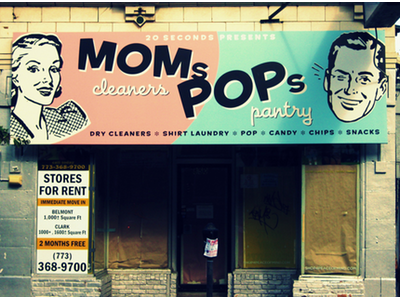
As a result, a lot of smaller "mom and pop" shops have vanished. Bear in mind too that few small businesses receive taxpayer based corporate bailouts. Those seem to be reserved for Wall Street. Let's take a more detailed look at wages since that effects pretty much everything else.

Not surprisingly, wages have failed to keep up with the rate of inflation. In terms of real dollars (dollars adjusted for the rate of inflation), our purchasing power is at a 66 year low. To put it another way, the current minimum wage buys the same as what 75 cents did in 1956.  Individuals on the low level of the pay scale, which includes most entry level jobs, simply can't make it.

A  survey by Bankrate said 55% of those surveyed said their wages weren't keeping up with prices. That includes workers who receive regular salary increases annually and the 39% of employees who do not.

 To add salt to the wound, CEOs and senior executives earn an average of just over $21 million dollars a year. This is more than 400 times the salary of an average employee which is about $51,000 a year. The difference was 20% in 1963. From 1978 to 2020, the salaries of U.S. CEOs increased by over 1,322% while the average employee saw an increase in pay of just 18% for the same period.  

The top three companies with the greatest executive/employee wage inequality are Nike, Walmart, and Amazon. The three companies with the lowest executive/employee wage inequality are Alphabet (the parent of Google), Walt Disney, and Berkshire Hathaway.

To put it another way, an employee at Nike would have to work just under 30 hours to equal one minute of their CEO's salary. It's 20.7 hours at Amazon and 14 hours at JP Morgan Chase Bank. At Starbucks it's 10.7 hours of serving their overpriced coffee to equal one minutes of CEO Kevin Johnson's salary. At Blackrock, which is arguably the world's most influential company, an typical employee has to work 6.2 hours to earn the same amount that their CEO, Larry Fink, earns in 60 seconds.

Income inequality is at its highest level in over 50 years according to the U.S. Census Bureau. The widest pay gaps are in California, Florida, New York, Connecticut, Louisiana. However, Texas, Kansas, Nebraska, New Mexico, New Hampshire, Virginia, and Arkansas aren't far behind.

The Census Bureau also shows (perhaps not surprisingly) that the percentage of poverty in the U.S. was 12.8% in 2021, which is among the highest of any developed nation. That's about 38 million people. In fact, of the top 25 industrial nations in the world, the U.S. ranks dead last.

In 2021, the percentage of child poverty (those under 18 years of age) was 16.9%. For those over age 65, it was 10.3%. In Kentucky, the central South, New Mexico, and Washington DC,  the child poverty rate was over 22%. It was lowest in Utah, North Dakota, Montana, Vermont, and New Hampshire.

For seniors, Washington DC, Louisiana, and Mississippi the poverty rate was 13% or higher. In 12 states, including Kentucky, Nevada, and South Dakota, the poverty rate was between 11% and 12.9%. In the majority of the country it was 8.8% to 9.9% while in four states it was under 8%.  

According to a number of reports, around a half a million Americans are homeless at any given time. About 70% are individuals while the rest are families. 11% of the homeless are military veterans. The rise of inflation and prices in general will likely add to these numbers.

Inflation, increasing home prices, the cost of gas, food, utilities, income inequality, homelessness, and, of course, rising taxes, are symptoms of a failing political and economic system along. There is no questioning our social, economic, and political divide.

 History has shown that radical change tends to come from the bottom up. This is especially true if a middle class supports the bottom tier. In America, our middle class has gone from 61% of the population in 1971 to 50% in 2020 while the percentage of low income has grown from 25% to 29%. Globally the middle class has shrunk by 150 million since 2017. India lost 32% of its middle class while Asia lost 25%.

Along with industrial output, the quality of education and medical care, and other key measurements, the United States is showing all the signs of a irreversible decline. China is now the world's leader in manufacturing. In terms of technology and its innovation, the U.S. ranks number one, but China, Japan, and South Korea are pretty close behind. Germany and Israel are closing in too.

Academically, we rank in the middle of the second tier in science. In reading, we're in the lower half of the second tier, while in mathematics we're just above the third tier.  Overall, we're 17th in the world academically with Asian, Scandinavian, and Europeans dominating the top slots.   

When it comes to healthcare, we spend more money than any other developed nation, and yet, we have among the highest infant mortality rates, the lowest life expectancy, and the fewest number of available beds. Among the top 11 highest income nations, the U.S. healthcare system ranks dead last.

Some predict America will become a second tier economy with a top tier military presence akn to other historic empires like Rome, the Ottomans, and Great Britain.  Others think it will a much harder landing resulting in a broken and fragmented nation.  Certainly the foundations are in place thanks to unchecked illegal immigration and a multiculturalism which discourages integration. Anyway you look at it, you better buckle your seatbelts.  


 If you want to know more, please take a look at the links below. If you enjoyed the article, please consider passing it along to others and don't forget to subscribe. It's free! Lastly please be sure to "like" us on whatever platform you use to read AnotherOpinion.com. It helps with the algorithms and keeps our articles in circulation. Thank you!   


Inflation Calculator


What Is the Relationship between Inflation and Interest Rates


United States House Prices Growth


How Rising Interest Rates and Inflation Impact Real EstateInvestments


Average House Prices by State in 2022


Bureau of Labor Statistics: Employment CostIndex---September 2022


Average Rent by State 2022


CEO vs. Employee Salaries at America's Top Companies


U.S. Poverty Rate Is 12.8% but Varies Significantly by Age Groups


U.S. health-care system ranks last among 11high incomecountries, researchers say


Report: Pandemic Shrunk Global Middle Class by 150 Million


America's Poor Are Worse Than Elsewhere


Wednesday, September 15, 2021

Our Quality of Life and Positives Changes We Can Make


As pointed out in our previous article, one of the ways to judge a country's future is to look at its infrastructure. In our case, it looks pretty bleak. Another indicator of a nation's health is to look at its quality of life.

In terms of freedom and quality of life, America ranks fairly low. According to the "Democracy Index", which is published by the Economist Group, America is defined as a "flawed democracy", which should come as no surprise given that we're an Oligarchic led Corportracy. As an aside, a "flawed democracy" is just one step above a "failed democracy", and the bad news is that social indicators don't show us moving up.

When it comes to overall health and quality of life, Spain and Portugal are one and two. They're followed by Switzerland, Japan, and Iceland. Others in the top ten include Singapore, Norway, and Austria. And the U.S? We didn't do so well. We came in 153 out of 166.  

We also have one of the lowest life expectancies of any industrial nation, with an average of 79.11 years (81.65 for women and 76.61 for men).  We are between Estonia and Panama. The top five belong to Hong Kong  with an average of 85.29, Japan (85.03 avg.), Macao (84.68 avg.), Switzerland (84.29 avg.), and Singapore (84.07 avg.). In fact, everyone in the top 39 positions have an average in the 80's.             

The Conde' Nast Traveler, which provides travelling advice and ranks travel agencies, and so forth, published a report in March of this year of the world's happiest countries. As with previous reports, all of the Scandinavian countries make the top ten, which Finland, Denmark, Switzerland making the top three. The U.S. came in 14th, just behind Ireland and ahead of Canada (in 2019, we were 19th).

Another indicator economists, historians, and other social scientists look at in judging the stability of a country is the percentage of its population which is incarcerated. Unfortunately, we again don't stack up well compared to other countries.

According to the Prison Policy Initiative, about one in one hundred Americans are behind bars at either the federal or state level; 2.3 million people (which includes juveniles as well as adults). Globally, that's one in five of the world's population. To put it another way, while we have just 5% of the world's population, we have 20% of it behind bars.

The next closest country is Communist China, which imprisons 1.6 million. Even Russia and Iran jails fewer people...by far!  So how can we justify calling Russia, China, Iran, Cuba, Rwanda, or Venezuela "tyrannies"  when we imprison a greater percentage of our population people than any of them?

Of course, one answer to that question is that our prison systems outsources to more "for profit" prisons than any other nation. The overwhelming majority of countries utilize state run and financed institutions (through taxes, etc) to house inmates. We tend to emphasis time served rather than focus on reform and other methods to change behavior---even for first offenders.

In doing my research, I came across another interesting statistic. Of the so-called "top tier" or "first world" nations, we are the only ones which still utilizes the death penalty (albeit, it's decided at the state level). Of course, you can expand the definition of "top tier" to include nations like Saudi Arabia, Japan which also employ the death penalty. However, as of 2020, just 53 countries in the world have a death penalty; most of whom are third tier nations.

So, with all the statistics and other data about the United States and how it compares to the rest of the world, what does this tell us? There are a number of takeaways to consider. First, we have to understand that we are not the America our Founders had envisioned. I suspect that if they could see us now, they would have paid that damn tea tax!

Secondly, those elected to handle "the People's business" are actually "doing their business" on the People. We've lost our Republic plain and simple. Perhaps it was while we were busy trying to keep a roof over our heads and food on our tables. Maybe it was while we were distracted by all the "reality" shows, sports programs, video games, and manufactured propaganda masquerading as "news".

Congress represents Big Business, not us. Their lobbyists write the legislation. They help push it through committees and work to get it passed. These bills serve their interests, not ours. Not by a long shot. We get the crumbs.  We don't have lobbyists to represent our interests or to write bills for our wellbeing.

Corporations do their best to evade paying their fair share of taxes, and while the percentage of what we pay isn't the highest in the world, what we get for our money isn't the best either. Corporations are not "people" despite the Supreme Court's misruling. They do not necessarily represent their employees. Their loyalty is to their corporate officers, shareholders, and ultimately, their bottom line.

Corporations should also pay their fair share of taxes, even if that means establishing a minimum tax rate for "Big Business", plus a penalty for off shoring jobs and then shipping product back into the United States tariff free. Corporate lobbyists should never write legislation. Period. If a corporation or its industry is deemed to be essential to national security, it should be regulated if not nationalized in case of national emergences.

We have the highest incarceration rate in the world. We make the Chinese look like truants! We need to take the profit out of the prison system. We need to focus on reform, especially for first and non-violent offenders. We need to invest in reform and post incarceration support, such as helping with remedial education (GED, etc) and developing employable skills, helping to find stable employment, and periodic follow-up down the road. It's better for all of us in the long run and it's cheaper than building more prisons and housing more prisoners.  

As for the death penalty, I've always supported the "eye for an eye" principal. But, if we're going to take someone's life, let's make damn sure we have the right person. Coming back later and saying "Oops. We're sorry" ain't going to cut it. If there is one iota of doubt, take the death penalty off the table. Let's also make sure we're doing it for the right reasons; that the punishment fits the crime. Let's also make sure that we judge and sentence based on the crime, not on race, gender, income bracket, or other factors.

Prisons should also not be "resorts". A wealthy white collar crook shouldn't be sent to a less restrictive and better quality prison than a poor one trying to survive. Perhaps if the white collar crook had to spend their time with the "common riff raff", it might change their perspective. Everyone should be subject to the same laws and same penalties. No more two tier judicial system; one for the rich and one for the rest of us.

Prisons should be, as much as possible, self sufficient, including growing as much of their own food as possible. All prisoners should be required to take courses in civics and social behavior, and when possible, pay restitution to their victims. Finally, they should not have "state-of-the-art" gyms and weightlifting equipment. The last you should want is murderers and rapists getting bigger and stronger!

But none of this means anything unless we take back our country from the ruling Oligarchs who are taking this Corportracy that used to be our country  down the road to a neo-fascist surveillance dystopia.  Unless we do, the only thing that will change is the speed by which things will get worse.

They tried to frighten us with words like "socialism", which they equate with "Communism" or (wrongly) with Hitler and "Nazism" (a totally different political ideology). Why? It threatens their ability to control. They use these words because they create images which frighten people in lieu of what they actually mean---democracy, which  puts control  in the hands of people, which is their ultimate fear.

Ideally, socialism is control by the people. In practice, however, it's controlled by the state. While I don't consider myself a "socialist" and prefer a low intrusive democratic government, I do believe that there are some things the state should do or can do more effectively, as did some of the Founding Fathers.

There are features which were once considered "socialist" or even "Communist" just a few generations ago which I support such as Social Security, the right to organize and bargain, having a safe work environment, clean water and air, anti-child labor laws, COLAs, women's suffrage, equal rights and equal pay (which still has yet to be obtained), unemployment insurance, and so forth. 

When it comes to a minimum wage, we forget that it was established for entry level jobs and help people get started in the job market. It was never intended to a "living wage" (to support a family for instance). Ultimately, the job market is the best place to establish an acceptable wage. If no one takes a job for the pay you're offering, then maybe you need to do it yourself or offer more.

As an aside, I also like worker co-ops. In many cases, it isn't just a matter of the employees knowing how to run a company at least as well as the former owners, it's a way to keep the company open and people employed. Companies are likely to do better when everyone has a stake in its success.

I think that America, like all other developed nations, should have a minimum national insurance plan. Not all employers can afford insurance for their employees, especially small businesses.  Without one, we often lose the local "mom and pop" businesses to mega corporations.

A basic national insurance plan, like single payer, would help to level the playing field between small companies who can't afford insurance and the larger ones who can. Individuals could purchase additional insurance on the open market to suit their specific needs. I should add that all taxpayer based jobs should be required to have the same insurance as the rest us, including Congress, which is exempt.

I also believe that the Federal Government only has powers designated to it by the states, and not that it has all the powers except those specifically reserved by the states. In other words, a smaller and more decentralized federal government. I believe that the closer you are to the source of a problem, the easier it is to solve. Therefore, we need to focus on solutions at the state and local levels as much as possible.

There are things we can do to reclaim our nation, as I mentioned above, but there are some other things we should push for too. We need to restructure our tax system and adopt either a flat or consumption tax, in addition to establishing a minimum tax for global corporations.

Corporate lobbyists, consultants, or advisors, should not have a hand in writing any legislation or make recommendations about which bills to support. Corporations are not "people" and money is not "free speech". Therefore, we need to rescind Citizens United and remove virtually unlimited corporate funding of elections.

Any tax increase proposals, as well as fee or rate changes, should be subject to a public vote. To paraphrase the TV commercial says, "it's our money and we want a say how".  We need to end partisan gerrymandering. We need to level the election play field by making all election requirements the same regardless of registration. Appointment to boards or commissions should be based on qualifications only, not party control.  Citizen's initiatives and referendums should be a matter of law.

Aside to term limits, Rank Choice voting should also be added to provide a more equitable choice of candidates. Some public offices should be non-partisan such as Treasurer, Secretary of State, County Clerk, County Judge, or  Secretary of Agriculture. For that matter, once elected, politicians should resign their party affiliation. They're there to represent everyone, not just their party, which means everyone else is taxed without representation (proportional representation would fix that).

These are but a few of the things we must do, to restore our country to the American People and make this a top tier nation once again. As it is, America will soon be no different from any other second level nation with pockets of cities and communities which look like they belong to a third world nation than to the United States. It won't be easy, but I think it's a worthy cause. I hope you do too.


OECD Better Life Index


Sustainable Public Transit


World Happiness Report


The Healthiest Places To Live


What Percentage of the U.S. Population is Incarcerated?


Which countries have the death penalty and how many peopleare executed every year?


Life Expectancy of the World's Population


Saturday, December 05, 2020

America: The Bastion of Freedom?


"Freedom!" It's in our blood. But where would you rank the United States?  For most of us the answer would be number one. After all, we're the "Defender of Democracy" right?  We've all been brought up on the belief that America was bastion of freedom and democracy; that "beacon of light" to the world. But are we? Where does America stand compared to other nations?

For instance, despite allegedly being the world's  "leader of democracy", we are actually the second largest democratic nation in the world in terms of population. The largest is India with a population of 1.4 billion people compared to our paltry 328 million.

Freedom House recently released its annual report which measures various factors including trust in political institutions, voter participation, political culture (such as corruption), and  civil liberties. The report went on to list countries as  "Most Democratic", or a "Flawed" or "Failed" democracy. The U.S. was ranked 25th out of 30 democratic countries and was categorized as a "Flawed Democracy".  

Norway, Iceland, Sweden, New Zealand, and  Finland were the top five. Other countries which ranked higher than the U.S. included Denmark, Canada, Germany, Australia, the UK, Costa Rica, France, Chile, and South Korea among others.

Other reports showed similar results. For instance, a 2020 Statista ranks the approval rating for Congress at 23%. Trump's approval rating has been, on average, around 43%. In a Pew Report from 2020, 68% of those interviewed since the members of Congress do not deserve to be reelected.


In the same poll, interviewees were asked if the trusted the government---Congress, the Presidency, and the Judiciary. A whopping 67% said they had little or no trust in the government!  In most countries, the alarm bells would be ringing. Revolutions have taken place with higher approval ratings.

According to a study by Reporters Without Borders (RWB), the United States ranks 45th of 180 countries when it comes to freedom of the press. Think about that for a minute. We're midway down in the second tier. The amendment our Founding Fathers thought was the most important was our freedom of speech, which includes freedom of the press and we're 45th in world!

We rank above the Papua New Guinea and Senegal and under countries like the former Soviet satellites, the Czech Republic and Slovenia, not to mention South Africa and Botswana. That's worse than embarrassing. That's downright frightening.  So, who has the freest press in the world according to RWB? The top four slots go to the Scandinavian countries starting with Norway, followed by Finland, Denmark, and Sweden. The Netherlands rounds out the top five.

Other top nations include Germany in 11th place, Canada in 16th, and Spain in 29th. It's worth noting that Greece, the birthplace of democracy, ranks 65th. Hong Kong is 80th and Israel is 88th. Russia is 149th, China is 177th, and dead last, in the 180th spot, is North Korea. Since education is the key to the future, how are we doing there?

In terms of best educational systems globally, the top spot goes to the UK according to an article in CEOWorld Magazine. In second place is the United States followed by Australia, the Netherlands, and Sweden. Japan ranks 11th while Hong Kong comes in 44th place. As an aside, Canada is regarded as the most educated nation in the world.


While that should give reason to celebrate, let's hold off on the confetti for a moment. While our educational system is ranked second best in the world, the performance of U.S. students compared to their global  counterparts isn't so good. American students are rank in bottom half of the top tier in the key areas of math, reading, and science.

In math, students from 30 other nations scored higher than U.S. students while we've remained stagnant in reading and science. Worse, according to the report, the gap between us and the top countries is widening. In addition, the report points out that not only are we being outperformed by China, Canada, and Russia, but also by countries like Finland and Estonia. Education is supposed to lead to a better overall quality of life. How do we stand regarding wage inequality in the workplace?

Here again, the U.S. is in trouble.  According to the Organization for Economic Cooperation and Development (OECD), the U.S. leads the top seven industrialized nations in income inequality, which has been increasing since 1980.  Meanwhile, the gap between upper class and the shrinking middle class has continued to widen, while narrowing with lower income families.

Pew Research points out that 61% of Americans believe the income gap is out of control. It's worth nothing that among Republicans and those who lean Republican, 41% oppose the current gap, while 78% of Democrats and those leaning Democrat object to the income gap. It's also worth noting that the top 1% earns 40 times more than the bottom 90%. Meanwhile, wages for the average worker has gone up just 17%.  Over 41% of Americans are low income while the middle class has declined by 19%.

In terms of race, Asians have fared the best economically, followed by Whites and Hispanics. However, Hispanic women have typically done the worse compared to other women (women in general still earn only 80% of what their male counterparts earn). Blacks have done worse overall, with approximately 20% living at or below the poverty level. 


It's worth mentioning that the U.S. also has one of the lowest rates of unionization of any industrialized nation.  The U.S. has approximately 10% unionized workers (private and government) with only Turkey and France having lower rates with 8.6% and 7.9% respectively. Compare that to Germany with 16.7% or Japan with 17.1%.

The UK's unionization rate is 23.2%, but that nothing compare to Italy with 34.3% or Belgium at 54.2%. Higher still is Sweden with 66.1%. But no one tops Iceland which has a unionized workforce of 90.4%! It should be noted that these countries also have a lower national poverty rate as well as less income inequality than the U.S. 

Incidentally, union membership overall is continuing to drop as corporations relocate their operations to countries which prohibit or discourage unions, typically have high unemployment and pay low wages with little or no benefits as well as few regulations regarding safety, overtime, and health codes.  The end result is pitting workers against each other in a type of global race to the bottom while government officials continue to reap financial rewards from their relationship with these corporations.

Finally, in the shadow of the COVID virus, how does America rank in terms of quality and availability of healthcare?  Healthcare systems globally vary greatly, from pay-as-you-go systems to "free" state paid universal coverage and managed care based on level of need paid via taxes on virtually everything.   

The Swiss use a system which combines private, subsidized, and public financed healthcare for instance. Most countries, however, have some sort of overarching healthcare system. The Finns have a three tier publicly financed healthcare system. Funding comes from two sources, local taxes and a national tax.


According to the World Health Organization (WHO), an adequate healthcare system should have well a trained staff, well maintained facilities, reliable financing, and access to information to base both diagnosis and decisions on.  Not mentioned but assumed is adequate number of beds, nurses, and doctors, as well as access to basic medical supplies.  Based on these minimal requirements, the country with the best overall healthcare system is France followed by Italy, San Marino, Malta, and Singapore.

Iceland was ranked 15th while the UK was 18th. Germany was ranked 25th while Australia was 32nd. As for the U.S., we came in 37th place. Mexico was 61th. Ranked at the bottom was Libya in 87th place. Iran came in 93rd. Romania was in the 99th spot, and ranked the worse for healthcare was the Caribbean nation of Saint Kitts and Nevis which was dead last in 100th place. 

So, that you should give you some idea as to how America stacks up to the rest of the world. Are you surprised? Did you expect we would rank higher (or lower) in some areas?  The most interesting part to me was America's poor showing in terms of freedom of the press and education.  America was founded on the concept of freedom of speech, expression, and the press. To find that we were ranked so low seemed to be a warning to us all.

The other issue was education. I'm a strong proponent of quality education. Like many, I think we're to top heavy with over paid administrations and understaffed by underpaid teachers. We tend to spend more per student than most nations, but we're not get enough bang for the buck. Too many kids "graduate"  high school who are barely functional readers, have poor math and science skills, little to no knowledge of history, the arts, or civics...but they sure can play sports!


We've dumbed down our educational system far too much. We've done away with trade programs and technical schools (not every job requires a college education or college level debt). We've lost discipline in the school and allowed parents to opt out of their children's education. If we're to compete that has to change. We have to reverse income inequality if we're to disaster not just for the nation, but potentially for the world. Along with it, we must end the wage gaps between gender and race.

Lastly, I was most surprised by America's ranking as a democracy, fifth from the bottom. But maybe that's not all that surprising. After all, we've allowed ourselves to drift into becoming a Corporatocracy ruled by a wealthy few; an Oligarchy. Like Rome under the Caesars, the Republic has become an illusion. It's remains in name only to comfort those who afraid of the truth.


U.S. Students Show No Improvement in Math, Reading, Scienceon International Exam


US Income Inequality Statistics to Know in 2020


The State Of Global Trade Union Membership


Statista: Do you approve or disapprove of the way Congressis doing its job?


Pew Report: Congress and the Public