Showing posts with label poor. Show all posts

Friday, June 09, 2023

Socialism or Neo-Fascism? Which Way Is America Going?


It seems that the Right is perpetually speaking about Democrats leading us down the road to socialism's perdition. When Donald Trump was in office, the Democrats and those on the Left kept comparing "The Donald"  with Hitler and Republicans with the Nazis. It seems that neither side is familiar with history.

 First off, there's no way those in power on the Left or Right would allow this country to become "socialist", Communist or anything else that requires them to surrender their wealth or power to the State. Secondly, the two party system is a farce. Wall Street owns both parties. 

The only real difference between the two parties is the two competing corporate cliques. Citizens United has ensured corporate control of the political system. It has put political reform all but out of reach of the average American. Corporate lobbyists write the laws, leaving voters with the illusion of choice. 

National Socialism (or "Nazism") was a fascist partnership of sorts between the government and Big Business with the latter assuming a junior role,  and we all know Wall Street would never go for that today.   By the way, the "socialism" part of National Socialism didn't mean what most people today assumes it meant.  For the Nazis, it meant a community of like-minded people or "Volk".

Actual  socialism, which remains an abstract idea, means that the people essentially  own everything.  Power and the control of wealth is in their hands. Businesses and corporations would be typically employee owned and run while others, particularly essential businesses, would be run by the State.

Nevertheless,  I don't see Wall Street or their K Street lobbyists allowing anything like that to happen do you?  Certainly not after  the "Citizens United" or "McCutcheon's" decisions by the Supreme Court gave them carte blanche to the halls of power and the public trough.

What passes for "socialism" today is an admixture of capitalism, democracy, and a welfare state comprised of social programs  under the heading of "Democratic Socialism", which is common in Scandinavia and places like Germany and Netherlands. Think of it as "capitalism with a friendly face".  

 Nevertheless, despite high taxes (especially on the wealthy and corporations), the democratic socialist form of government have proven to be quite popular with the masses, with practically everything being subsidized. However, it requires everyone to pitch in and contribute back into the system. But when you have a mass of people who draw on the system without contributing to it, it fails, which is what seems to be happening in Scandinavia and other parts of Europe.   

Under Communism, which is often---though incorrectly--- used interchangeably with socialism, there are again no privately own properties, especially corporations. The State owns everything. Everyone works for the State. The State is everything. Do you see corporations and the rich---people like Zuckerman, Musk, Bezos, or Buffett  surrendering their power and wealth to Washington? So, what is America is morphing into? The answer is a Corporatocracy, which is a de facto form of neo-fascism.

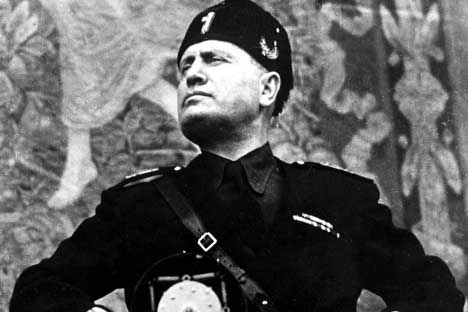
Fascism is, as its founder Benito Mussolini said, was more accurately described as "corporatism". Specifically, Mussolini said this "Fascism should more appropriately be called Corporatism because it is a merger of state and corporate power". Novelist Upton Sinclair called fascism "capitalism plus murder" while Vladimir Lenin referred to fascism as "capitalism in decay".

Politically, it borrows some of its goals and techniques from the Left and some from the conservative Right, including militarism. It grafts various national traditions and values to its cause as needed and jettisons what is no longer of use.  Corporatism is, if nothing else, adaptable. It's objective, however, is always corporate control plain and simple. The role of government is to serve as the lesser partner and "middleman" between the "elites" and masses. It's objective is to serve the rich. 

Under a Corporatocracy, there is little to no strong middle class; certainly not in the way we're used to. There's the insanely rich and then there's everybody else. Sound familiar? Can you see the one percenters giving up their money; their penthouses; their private planes and yachts?  Under socialism, they'd have to; the same under Communism.

Consider this too, while Unions exist in a Corporatocracy, they are weak and fairly ineffective. A far cry from the unions of old. Their prime purpose to keep the masses in their place---on the job and off the strike line---while generally backing the decisions of the corporate bosses.  They serve the interests of the corporation, even if it means cutting benefits, pensions,  and hours.  

Under Communism, the State serves as the union and if you work, you automatically belong to it. But again, no strikes and no complaining, and a set wage. Under socialism, there are wage differences based on the job, but no broad income disparity, at least not like we have today where the top 10% own 52% of all wealth.

So in reality, we are morphing into a neo-fascist corporate State.  Corporations, using the government, previously pushed us to the Right and now is pushing us toward the Left, but the ultimate goal is to diminish the power of the individual while increasing our dependence on the State, which in turn, is controlled by Wallstreet and the corporate elite.

 In short, we're to become economic serfs with the government serving as the overseer and corporations as the owners of us all. Of course, the "big prize" is the creation of a single interlocking global corporation. That means creating and using  global organizations to serve as the intermediaries on global projects and national one's on more regional projects.

Under corporatocracy we can expect national governments, like Washington, become ever more pervasive in the role of overseer while local and state governments become weaker and more dependent on the federal government.  This role also enables corporations an ever growing access to taxpayer money to acquire resources domestically and globally while at the same time shielding their intentions behind the illusion of a sovereign government.  

They can also use the national government take other actions on their behalf, like wars, trade agreements, or treaties, to enhance their wealth and power on the taxpayer's dollar.  In further defining corporatism, its founder, Benito Mussolini said, “Fascism, the more it considers and observes the future and the development of humanity, quite apart from political considerations of the moment, believes neither in the possibility nor the utility of perpetual peace.”. In short, war and the threat of war is good for business.

Il Duce is also talking about is the concept (novel for his time) of the implied foreign policy we're now experiencing, that of perpetual war---like the "war on terrorism"---to maintain control over the population and the exploitation of resources by corporations, be they natural resources or national resources for the sake of the bottom line. It artificially stimulates the economy, masks actual unemployment numbers, and allows for near unlimited deficit spending.  Sound familiar?

As an aside, what did Mussolini think of socialism? After all, his father, Alessandro,  was a prominent Italian socialist and Benito started off his political career as a socialist. This was his opinion, "Socialism is a fraud, a comedy, a phantom, a blackmail".

So, when someone starts complaining about America becoming "socialist" or "Communist", remember that famous line from movie "The Princess Bride" as utter by the swordsman Inigo Montoya (played brilliantly by Mandy Patinkin), "You keep using that word. I do not think it means what you think it means".  


If you want to know more about this article's topic, please check out the links below. If you enjoyed the article, please consider passing it along to others and don't forget to subscribe. It's free! Lastly please be sure to "like" us on whatever platform you use to read anotheropinionblog.com. It helps with the algorithms and keeps our articles in circulation. Thank you! 


Whyinequality is growing in the US and around the world


Eight Billionaires Own asMuch as the Poorest Half of Global Population


The Rich 1% Own Almost Half the World's Wealth & 9 Other Mind Blowing Facts About Wealth Inequality

https://www.globalcitizen.org/en/content/wealth-inequality-oxfam-billionaires-elon-musk/ 

Friday, March 27, 2020

The COVID-19 Bill: The Largest Stimulus Package in U.S. History

After almost two weeks of partisan bickering, it appears that we finally have a bipartisan agreement on a two trillion dollar stimulus package aimed at jump starting the economy following a near total shutdown of everything thanks to the COVID-19 virus. President Trump has already said he would sign the bill into law as soon as it hit his desk. This was also the third attempt to produce a bill which everyone could get behind.

This bill, the largest in U.S. history represents almost half of the current federal budget, includes individual payments up to $1200 per person (individuals making over $75,000 may be required to pay back part or all of it) plus $500 per child, $130 billion dollars for hospitals plus tax credits for "charity" assignments, a $500 billion dollar loan and loan guarantee fund plus $150 billion dollars for state and local governments to use as part of their stimulus program. In addition there will be a $367 billion dollar loan fund set for small businesses which will include a six month loan forbearance which will allow a temporary break in payments.

Of the $500 billion dollar fund, $425 billion will be earmarked for businesses, states, and local governments. $50 billion will go to commercial airlines, $8 billion to cargo airlines. $17 billion dollars will directed to companies deemed essential to national security. The fund will be administered by the U.S. Treasury Department. Additionally, the stimulus package also includes an extension of unemployment benefits for individuals laid off as a result of closures due to the virus and paid sick leave.

The package includes $25 billion in emergency funding to keep to U.S. Postal Service going (there was fear that the shutdowns could wipe out the USPS by June without the extra funding). The Department of Defense will be getting an extra $8 - $10 billion dollars in emergency funding as well. $450 million will be earmarked for food banks and food stamps. The bill will prohibit internet and utilities cut offs, along with providing more power to the FTC and state Attorney Generals to go after price-gougers (shame it doesn't include hoarders). Consumer debt payments will also be temporarily suspended.

The bill is the result of intense negotiations between Democrats and Republicans in both the House and Senate. Attempts were made by both sides to tack on funding for non-essential projects designed to help Congressional special interest groups such as money for abortion clinics, a provision to aid illegal immigrants and one to allow student loan forgiveness (repayments can be temporarily suspended), money for unions, and funds for expanded measures pertaining to environment protection were introduced by the Democrats.

Meanwhile, the Democrats demanded concessions from the Republicans that none of the money would be allowed to provide executive bonuses or for stock buybacks (as was done under Obama's 2008 Wall Street bailout) and restrictions on lobbyists. They also held out for extra funding for schools and universities (mainly to provide meals for students while the schools are closed) as well as WIC, child and earned income credits. While the Democrats didn't get the $15 an hour increase in minimum wage they wanted, they did get four billion dollars in funding to allow states to carry out election projects such as early and absentee voting under the Election Assistance Commission.

I suppose there's truth in the old saying that a "good crises should never be allowed to go to waste". Here we are, a month into the crisis, and we're just now getting a stimulus package put together. If Congress had done their jobs the way they were suppose to have, we would have had a package weeks ago and be that much closer to getting the economy back up and running. Instead, we had the usual petty bickering while both sides tried to sneak perks in for their favorite corporate special interest. Of course, I suppose you can't blame them. After all, these corporate sponsors fund their campaigns and keep them in power. It is them, not us, that they represent. So in that sense, they were looking after their constituents.

This is another reason that presidents, governors, and mayors should have line item veto power. A stimulus bill, no matter how imperfect, could have been on the president's desk weeks ago, and with line item veto authority, all those "add-ons" could have simply been removed with the stroke of a pen.

Another way to go about it is simply to require one measure per bill with no add-ons. Period. It would make it much harder to sneak through "pork" projects that taxpayers would be forced to pay, thus exposing more of the corruption by those who try. It would also cut back on lengthy bills, making them far more manageable easier to read and act on. No more, as Nancy Pelosi once said, "we have to pass it to see what's in it" nonsense.

Hopefully Congress will finally do their jobs and get a comprehensive emergency stimulus bill submitted to President Trump. From there, it has to be implemented which could take just as long as it did in Congress. Still, even the knowledge that relief is on its way will help. Meanwhile we all need to stay safe and follow the recommended guidelines. Remember, this too shall pass and we will come out of it stronger than we were before. If you want to know more about the stimulus bill, I've included some links below.


Senate, White House reach $2 trillion stimulus deal to blunt coronavirus fallout

READ: House Democrats Offer Their Own 3rd Coronavirus Response Bill


How the House Democrats stimulus plan compares to the Senates


Saturday, February 07, 2015

The Income Gap


We've all heard the expression that "the rich get richer while the poor get poorer". Well there's a great deal of truth in that old adage--the rich are indeed richer---much richer, and the poor are incredibly more poor while the middle class as we've known it has all but disappeared into the ranks of the emerging Struggling Class as I call it. The last time there was such a broad wage gap between the rich and poor were the years just prior to the Great Depression in 1929. In fact, not only do we have a greater disparity between the rich and everyone else, the chiasm is actually deeper too than it was in 1929. The top 1% controls 40% of the total wealth while the bottom 80% controls just 7% of the wealth. They own 50% of all investments, from stocks to mutual funds. To put it another way, in 2012, 24% of the total take home pay went to the top 10%. In 1976, it was just 9%.

As a few Americans know, the United States fell from first to second place behind China as the world's largest economy in 2014. What
some may not know was that the American middle class dropped from the world's most "affluent" to second place, behind Canada and is continuing to drop. Academically, America high school students rank, on average, 14th in world. In terms of economic freedom, the US is ranked 12th by the Heritage Foundation. Regarding personal freedom, we are 21st, between Portugal and Spain. In terms of democratic freedom, the US was ranked 15th in the world according to Global Democracy Ranking. This ties into the most telling story from 2014, a study confirming that the United States was no longer a democratic republic as established by our Founding Fathers. We have, in fact, become an oligarchy---rule by a small elite and blindingly rich group of individuals. Combine this with the "Citizen's United" misruling by the Supreme Court five years ago, and one can begin to see why. "How's that?" you may wonder. The typically story line is that "we're going socialist", so how can we be get more "socialist" if corporations are becoming more richer and powerful?

Well, that's the rub isn't it? You see, "socialism" has never actually existed. Yes, we've had countries call themselves that because that was the goal they were attempting to reach. Russia wanted to achieve a socialism based on the teachings of Karl Marx and Fredrick Engels, however in his efforts to bring this about, Lenin "corrected" Marx to use his expression to make the rules fit with his reality. His expressed goal, however, was to shrink government to the size of the local Post Office and maximize individual freedom, that it, after the transition from capitalism through the "dictatorship of the proletariat". Stalin, who succeeded Lenin, was never all that interested in socialism in any form and as far as he was concerned, the dictatorship would remain in place. Stalin's interest was in power. So through forced collectivization and the use of a Police State and its gulags, converted Russia from a backward agricultural nation to a modern industrial fascist-like State with the State owning the corporations; not exactly what Marx had in mind. Hitler too used the term "socialism", but it didn't have the same meaning as we normally think of it. To him and the Nazi elite, the word meant more of community of likeminded individuals. Thus "National Socialism" meant a community of Germanic People who shared a common culture and origin, yet corporations worked in partnership with the government.

As for fascism itself, its founder, Benito Mussolini, envisioned it a working partnership between the big corporations and the
government; the two would be interwoven. In fact, Mussolini, was actually elected to his position (and later voted out) just like a corporate board. Fascism not only borrows from both the political Left and Right, it also can vary from country to country based on its culture and traditions. In other words, fascism adapts and it appearance can be very deceiving.

A precursor to fascism is typically an oligarchy, which is basically rule by a small elite (often rich and powerful) group. In our case, we morphing into a fascist State where corporations will have more of a leading role rather than a equal partnership. Another feature of fascism is a tendency toward militarism, which our never-ending "war on terrorism" conveniently provides, and a increased militarized mindset of law enforcement, State controlled or influenced media or propaganda, increased surveillance and a "divide and conquer mentality" of the population, not to mention a shifting of the wealth (and power) toward the ruling elite. Does any of this sound familiar? And that dreaded "socialism" I was speaking about earlier? Well that means the equality or at least a parity of wealth among everyone and common ownership of most things. Corporations would essentially be employee owned and operated with employees electing board members (one employee/one vote), so there would be no need for a Wallstreet. Banks, if they existed, would look more like credit unions. Utilities and energy sources would be nationalized. Taxes would be high, but then things like housing and groceries would be subsidized while education, medicine and medical care, with the emphasis more on prevention than treatment most likely, would be free. The closest examples I can think of would be found in Holland and Scandinavia before the big influx of immigration.

Another old saw says that "it takes money to make money". Well, there's still truth in that, except the money is less spent and more "invested"; invested in the corridors of power that is. Not only did Citizens United essentially give corporations--these man-made legal fictions---the same rights as you and I, but actually certain rights which exceeded those of the average citizen, at least when it comes to making political contributions. Combine this with what's known as "regulatory capture", and you can see we are in a serious jam. Oh, what's "regulatory capture" you ask? Simply this, it puts foxes in charge of the chicken coup, or more accurately, it gives the keys to the bank to the crooks. Regulatory capture basically puts those being regulated, such as financial institutions, in charge of the regulatory process by either allowing them to help draft the regulations themselves and/or managing the agency in charge through the process of appointment. Considering that many of those elected to Congress pal around with these individuals or at the least are a beneficiary of their largesse, it's little wonder that there's constantly a "loop hole" of some sort in the various laws. Many of those called upon to help draft regulations are the very lobbyist paid to represent that industry's interests, and those appointed are often the ones recommended by these very same individuals! Now you see what I mean by the fox and the chicken coop.

So where does that leave us? I'm afraid not very well off. Adjusted for inflation, real wages, which peaked in the early 1970's, stagnated, and has been in decline ever since. Part of the reason has to be the off shoring of mostly middle income jobs and with it, many of the peripheral businesses (not to mention the rise of so-called box stores and decline in "Mom and Pop" local stores). In addition, we have the decline in private sector unions; down to around 6.7%. When you include public sector unions, the number rises to only 11.3%, which, interestingly, are the lowest numbers since the Great Depression. Like them or not, unions have been not just the mainstay of middle class jobs but also served as a counter weight to the influence of corporations. In additional, US workers suddenly found themselves competing with workers continents away for the same job but a fraction of the costs. Average hourly wages, adjusted for inflation, rose 75% between 1947 and 1972 during the heyday of unions. Since then, it's risen only 9%. From 1947 through 1979, all income grew at approximately the same average rate with lower income wages actually leading the pack which created a large middle class and smaller class proportions at either ends of the scale. Between 1979 and 2012, real incomes increased 74.9% for the top 1% while the bottom 1/5th actually saw a decrease of just over 12%.

Real consumption spending by the top 5% increased by 17% since 2009 but only 1% by the remaining 95%. Globally, it also means that globally 41% of all wealth is in the hands of just 1%. Those with incomes below USD $10,000.00 represent 69% of the world's population. That's just 3% of the total global wealth. Upper end net worth is 70x that of those in the lower income bracket. That's the highest disparity in 30 years according to a Pew Report from 2015. In 1979, pre- tax income among the 1% received 8.9%. By 2012, that number reached almost 23%. Average real wages (adjusted for inflation) has increased by an annual rate of just 1% or 1/2 the productivity growth rate since 1980. However, the highest percentage was reserved for the top 10%, with CEOs earning, on average 380% more than the salary of their average employee.

Anyway, you slice it, the figures simply don't look good for 95% of Americans or the majority of world populations for that matter. So what can be done? A number of thing actually such as removing individuals in the same industry to draft its own regulation; ending gerrymandering to allow for fresh ideas and at least make it more difficult for lobbyists to buy politicians; end direct and indirect subsidies (corporate welfare) to large corporations and focus on small and medium businesses; restrict present Congressional members and staffers from working with or for special interests companies or lobbying firms for at least 10 years, including serving as a "consultant". Make public all contact with lobbyists. Revoke "Citizen's United" and prohibit corporate donations to political campaigns.

Finally, restore the American Dream by cutting red tape that restricts competition, especially from small and medium size companies. Meanwhile, you and I can shop as often as possible at locally owned stores or farmer markets, and we can support independent and third party candidates; We can become citizen activists and use our social networks to spread the message, attend meetings and speaking out; We can write letters and send emails to those elected to represent us, be it in City Hall or Congress. Remember that in the long run the only true power any of them have is our obedience.


Income Inequality
http://inequality.org/income-inequality/

Wealth inequality in America: It's worse than you think
http://fortune.com/2014/10/31/inequality-wealth-income-us/

Income Inequality Is a problem
http://reason.com/archives/2015/01/22/income-inequality-is-a-problemwhen-cause

The Rising Cost of U.S. Income Inequality
http://www.huffingtonpost.com/laura-tyson/us-income-inequality-costs_b_6249904.html

Income Inequality
http://www.pewresearch.org/topics/income-inequality/

Global Democracy Ranking
http://democracyranking.org/?page_id=738

Tuesday, December 23, 2014

'Tis the Season


It's Christmas time again. It seems like it keeps coming around earlier and earlier every year. Sales galore, complete with ruder than usual motorists, crowded stores and mall, not to mention some amazingly nasty bargain hunters who could put Army's Rangers to shame. I think I saw my first Christmas commercial this year just before Halloween; of course that doesn't include the perennial "Christmas in July" sales. Nothing says "Christmas" better than a good sale on appliances or a new car. As for me, I was never much of a Christmas person. Yeah, I know..."Scrooge"...."Grinch". I've heard it all before believe me.

At Christmas, people go into hock to buy the latest gizmos or the most popular toys, which everyone knows will either be outdated or fade with the next "big thing" within the next two or three months. America, despite its failing government and political influence globally, is still a land of plenty. Yes, our quality of life is in decline. No question about it. This present generation is the first in history not to equal or exceed its parents, and the next generation is expected to do worse. We have no one to blame but ourselves....and Washington which has consistently ignored the people with its debt prone policies and bailouts of the uber-rich ruling class which comprises the oligarchy under which we now all live. But, I digress.

America is still the land most people want to come to. We're not the most popular nation in the world. That honor falls to Germany. No, we are not the freest people on the planet. Far from it. That honor goes to tiny Estonia on the Baltic. In fact, America isn't even in the top ten freest nations. When Obama took office, the US was ranked tenth. Now, we're ranked 12th. That means there are 11 other countries with more personal and economic freedom than we have in the good ole US of A (kinda scary isn't it?). In terms of academics, we don't fare much better. We're 17th in the world in academic performance, yet we spend more money per student than most of the 16 countries above. In math, we're a dismal 25th; 17th in science, and a pathetic 14th in reading.

So, who's on top? That would be Finland, South Korea, Hong Kong, Japan, and Singapore. Latvia, Chile, and Brazil are making academic gains at three times the rate of US students while countries like Slovenia, Columbia, Poland, and Portugal are making academic gains at twice the rate of the average US student. At this rate, it's a good thing Velcro has caught on. Shoelaces may soon prove to be too much. Meanwhile, the US spends the second highest on children's toys, with an average of $371.00 per child. Wahoo! The Brits win honors for spending the most on the little tikes at a whopping $438.00 each. France comes in third at $338.00 each on their little Napoleons and Josephines. Spain came in last. They only spend $176.00 on their little ninos y ninas.

Of course, the other side of the coin, while American's spend an elf's ransom on Christmas toys, we're nowhere near the top when it comes to spending money for Christmas. Americans tend to spend up to 5% on their annual income, the Greeks and Russians will drop 6% of their income, but even they aren't first. So, who's number one? Well, as hard as it is to believe, the "Christmas Consumer Award" goes to the South Africans who spend an insane 15% of their annual income (adjusted to US dollars) on Christmas. No wonder Nelson Mandela was always smiling in all those pictures!

Yet, despite all this spending, America still has a poverty rates comparable to any third or second world nation. The bad news is that our national poverty is 14.5%, the good news is that it's down for 15% from 2013. The poverty rate for children is down by two million to 19.9%, or about 14 million children from a previous high of 21.8%. However, with Obama's attempt, apparently unconstitutionally, to grant executive amnesty to some 5 to 6 million of the 12 million illegal immigrants currently in this county, the poverty rate will likely increase as those individuals will now officially be counted (many had previously avoided the census in years past) and struggle to find work openly.

The backbone of this county, the middle class, has also seen its number decline with the average income level remaining steady despite annual inflation growth (adjusted for inflation, the average purchasing power for the middle class is equal to 1975 rates). The one group that's done well is of course the elites; the top 5 percent, whose numbers include the oligarchy that is now America. Their incomes have increase 14% since 1995 (since 1979, the top 1% have seen their incomes grow by 200% compared to the middle class, which has seen a growth of 67% while the bottom 20% has seen a growth of just 47%). If we forget about just income and look at overall wealth, we'll find that the top 3% controls 54% of the wealth in this country, and it's growing. So much for the economic "diamond" model most of us learned in school which showed a small group of poor and rich at the bottom and top and a large middle class in the center.

So what does any of this have to do with Christmas? Well, first is that we should be grateful for what we do have. While there are some who are doing way better than us, there are many more doing a lot worse. We need to reach out to those who are in need and not give them a handout as much as we should give them a hand up. We must find ways to return America to the land of opportunity it once was. Everyone of us has needed some help at some time or another. That's fine. There's nothing wrong with that, nor is there anything wrong with offering a helping hand. If anything, that's about as "American" as it gets, but so it helping someone get back on their feet so they can get on with life.

Christmas should be about helping others, not going overboard with toys and gadgets. Maybe it's time to make a point of adopting a star off of an "Angle Tree", making a donation, or volunteering somewhere a family tradition. Maybe too we should loudly demand those in our state capitols and in Washington start listening to us for a change. Let's penalize companies that ship jobs overseas yet continue to get tax breaks. Let's end corporate welfare and cut red tape for small businesses so they can hire more local workers.Let's make sure the super rich pay their fair share of taxes, and speaking of taxes, let's overhaul this outdated tax code to make it more fair for the poor and working poor, which includes what was once known as the middle class. Let's take money out of politics, especially corporate money so that our votes actually count for something. And let's get politics out of the classroom and get back to teaching students what they need to know to be productive citizens, and that includes civics, volunteerism as well as restoring discipline, and while we're at it, we need to invest in trade schools again. Not every job requires a college education and not everyone is cut out to go to college. That concept seems to have worked pretty for Germany, Japan, and South Korea. By investing in our children's education, we're investing in America's future. What better Christmas wish could there be than a stronger and compassionate America?

Happy Chanukah and Merry Christmas from Another Opinion.


U.S. Drops From Top 10 Freest Countries in 2014
http://www.nationalreview.com/corner/368410/us-drops-top-ten-freest-countries-2014-index-economic-freedom-alec-torres

Best Education in the World
http://www.huffingtonpost.com/2012/11/27/best-education-in-the-wor_n_2199795.html

Amount Spent on Toys by Country
http://www.statista.com/statistics/194424/amount-spent-on-toys-per-child-by-country-since-2009/

Christmas spending gone global
http://www.usatoday.com/story/money/business/2014/12/12/ozy-christmas-spending-gone-global/20281179/

Monday, January 06, 2014

What An Increase in Minimum Wage Means


The federal minimum wage is $7.25 an hour. That's works out to be $290.00 for a 40 hour week or $15,080.00 a year, excluding any unpaid time off. That's not much, and that's before taxes (in post-Depression 1938, when minimum wage was established under the Roosevelt Administration, the minimum wage was 25 cent an hour). Of course, minimum wage is a bit higher in the District of Columbia and 19 other states while four states have a lower minimum wage and five states (all Southeastern) have no minimum wage laws. President Obama favors an increase of the minimum wage to $10.10 an hour. Fast food employees, as many of you know, have been protesting for an increase to $15.00 an hour. 13 states have increased their minimum wage effect January 2014. In Kentucky, State Senator Greg Stumbo (D-Prestonsburg) favors an increase in the minimum wage to around $10.00 an hour while other states are considering similar increases.

Many corporate CEOs are, naturally enough, opposed to an increase in the minimum wage, at least to $15.00. Some cite a statistic by the Bureau of Labor Statistics which states that most individuals earning minimum wage are not working adults supporting a family, but are primarily teenagers still living at home and, at least in part, still being supported by their parents; specifically, 24% of 3.6 million workers earning minimum wage, and another 25% were under 25 years of age. In addition, for those who are attempting to support a family, many if not most are qualified for some form of taxpayer based assistance like food stamps (SNAP---Supplemental Nutrition Assistance Program) or earned income tax credits for children.

With 3/4 of Americans calling for an increase in the minimum wage, advocates also cite CEO salaries in the US are now 357% over the average company worker; the highest in the world (some estimates put it closer to 495% when their total compensation package is taken in account). The top 20% of the richest people in America now control 89% of all wealth in this country. Now if that doesn't give you pause, consider that the top 1% of the world's richest control 46% of world's total wealth according to a Reuter's report released on October 9, 2013! In America, the top 1% control 40% of the nation's total wealth. Therefore, this excess of wealth needs to spread around proponents claim. Those on the Right argue that the wage gap is justified; it's just a part of the capitalist system. They further claim that it's corporate (and personal) profits that allow them to employ the majority of the nation's workforce.

But, what about from an economic perspective? What happens when there's an increase in minimum wage? Well, obviously a broad based income increase will result in an increase in purchasing power, at least temporarily. That means there will be a sudden demand for products; usually high end products such as cars, houses, as well as appliances and entertainment, but also to groceries, utilities, and even taxes. Typically, very little of the wage differential (the difference between the original wage and the new wage) will go into savings or similar investments, though some may find its way in paying down debt, statistically this tends to be minimum at best. Instead, overall debt tends to rise. As the economy adjusts to the influx of additional income, there is always a slight delayed rise in costs to offset the sudden rise in demand. However, once supply reaches a equilibrium with demand, the newly set increase in price will always adjust itself upward to match the new level of demand.

This generally tends to have two secondary actions. First, with the increase in demand, there will be a resulting delayed increase in retail costs as wholesale costs begin to rise to compensate for the declining level of supply and a rush to acquire raw material at a newer, higher premium prices to match the demand. Secondly, there's a short term increase of cost to the manufactures/producers in terms of wages and other internal costs as companies attempt to catch up with demand. This could be simply increasing work hours through overtime or additional shifts; perhaps even temporary hiring. However, as prices of merchandise rise, the demand will begin to drop until it reaches a price equilibrium. This results in less demand for the product and a corresponding reduction of hours to original levels, or even a drop in hours worked.

To put it another way, there's a short term benefit to the employees but as demand increases, the costs rise to meet the level of supply, so that in the end, most everyone is back where they started from but everything has increased in price and in some case, more than by the percentage of the wage increase. Some companies may find that the demand for whatever it is they do has dropped (especially if it's considered a non-essential item). The result will be a reduction in hours or workforce, or even closure. Therefore, employees may be no better off than before; some could even be far worse off. So, how do we get out of this predicament?

A lot of politicians like to talk about increasing minimum wage since it sounds like they're "giving" the people something for free. The reality, however, is that they're not giving them anything. Companies have to raise prices to offset the increase in wages. The money has to come from somewhere after all doesn't it? And you can sure bet it won't be coming out of profits margins. With increased prices, demand could drop. This may mean layoffs or a cutback in work hours with employees having to pick up the slack. For those not affected by the wage increase, they'll be forced to pay more as prices increase while not bringing home any more money. This is especially true for those who are unemployed or on a fixed income.

Free market advocates (or libertarians for that matter) might call for doing away with the minimum wage and allowing demand compete with supply. Employers offering the best salary (and benefits) would attract the most potential employees while those who don't will be forced to adjust the wages upward to attract workers. Of course, those who, at least initially, offer better wages will attract the most potential employees, thus the supply will obviously exceed the available positions which will, in turn, result in employees willing to work for less money in hopes of getting at least an acceptable wage while the employer would get the most qualifed individuals at the lower wage.

Perhaps, then, the best solution would be mandatory increases in wages tied to the inflation. As prices "naturally" rise due to demand over time, wages would match the increase accordingly. Such an increase would simply keep pace with the change in prices and would have little to no adverse affect since the wage adjustment would apply to everyone. A secondary solution would be the complete overall of the US tax code and the adoption of a national consumption tax in lieu of a federal income tax. People could manage their level of taxation based on their purchases. The rich would obviously pay more since they tend to buy more while the poor would pay less since they buy less. Nevertheless, an increase in the minimum wage comes with a price.


Minimum Wage Laws by States
http://www.dol.gov/whd/minwage/america.htm


Fast Food Workers Cry Poverty Wages
http://www.npr.org/blogs/thesalt/2013/12/03/248567592/fast-food-workers-cry-poverty-wages-as-mcdonalds-buys-luxury-jet


13 states raising pay for minimum wage workers
http://www.usatoday.com/story/money/business/2013/12/29/states-raising-minimum-wage/4221773/


Disclosed: The Pay Gap Between CEOs and Employees
http://www.businessweek.com/articles/2013-05-02/disclosed-the-pay-gap-between-ceos-and-employees

Monday, December 24, 2012

Twas the Day after Christmas

Twas the day after Christmas, and all through the land,
America awoke without a economic plan.
To the streets! To the Malls!
To find someone to blame and kick in 'em in the...

On Ford! On Chevy! On Beamer and Dodge!
To the bank, my complaint I must lodge!
Where's my savings, my retirement, and job?
I've worked hard. I've been robbed!

On to bank I did drove,
Down broken roads and overgrown groves.
Foreclosed homes up and down the block,
On Wallstreet , I wished a pox!

I demand to the see the manager
On him alone will I vent my anger!
I searched and searched all around,
Not a IRA in sight; not a dime to be found!

"I'm not to blame" he did exclaimed
Smiling wryly ; adapt at the game.
"Why, it was someone else. It wasn't us "
"Get it straight. No more of your guff"

"Why you must be mistaken" he said with a sigh,
His mouth was moving, I thought it must be a lie!
"Responsibility here, you cannot hold.
It's Washington's fault we were told.
But if you may, if mus'
You'll have to go elsewhere to fuss".

So, I called my Senator; Called my Congressman,
"Where's my golden years? I had a plan!"
With serious expression and upper lips held stiff,
"We're sorry to tell you, but it's fallen off the cliff".

"Cliff?" I shouted. "Do you think me a fool?"
"I've had it with you. Enough your bull".
"It's all true our naive friend"
"It's the other guy's fault that we've reached the end".

"Who's to blame? I voted for you don't your see?"
"You were to take care of us. You were to take care of me!"
With a smile as charming as a snake, they motioned me closer,
My confidence they now wanted to take

"We promised you promises, and yes we lied,
We promised to take care of you until you died.
You never questioned what we did, and willingly believed every word that we said".
"Do not blame us for what we do. It is to our natures that we must be true.
Wolves in sheep's clothing. Are you surprised?
It was you after all, who pulled the wool over your own eyes".
And with that, down gilded Wallstreet they did stro',
Arm and arm, more friend than foe.

So after all, it's to us to blame
We let them write the rules and we play at their game.
Unless we say no more and get it right
There's will be no Merry Christmas. No more good night.


Sunday, April 01, 2012

Children of Illegal Immigration

What is America to do with the children of the 12 million or so illegal immigrants? Do we deport them? Do we support them but not their parents? Or do we support the whole family (which often includes extended families)? We've all heard the hue and cry from the liberal media about some little child being separated from one or both of the parents (or, in some cases, their aunts, uncles, grandparents, cousins, etc.) and the "inhumanity" of it. Some have referred to it as a form of child abuse, and perhaps it is. But on who's shoulders should that nefarious title rest?

The "unpolitically correct" answer is simply this. It's their parents who are criminals. Yes, I know that's considered a "harsh" term to some, but the fact of the matter is that they are here in violation of our national laws; in violation of our national soverenity. Not that we wouldn't normally welcome them. America is, after all, a nation of immigrants. We simply ask that everyone take their turn and follow the legal steps. Is that asking too much? And if someone can't do that, what can we expect of their attitudes will be toward the rest of our laws? Of adopting our culture and language? Heck, by coming here illegally, many are in violation of their own nation's laws!

I understand their desires. I really do. Most of these people in abject poverty and quite often in fear of not only the drug cartels, but of their equally brutal and corrupt governments. They live in an economic world where not only have their governments failed them, but their entire economic and social system has failed them. There are barriers in place and ruthlessly enforce to keep them in their supposed places. Much of it is imposed by their governments (many of whom are military backed dictatorships sponsored by the US Government), and by the Catholic Church, whose aim is to preserve the status quo.

Any amateur historian knows that development of a large middle class in Latin American was curtailed since it would impact on the rich, which gave generously to the Church while an illiterate and politically powerless population made for dependant and pliable followers and workers. After all, power is the name of the game, whether economic and spiritual. Liberation theology, which mashed the socialistic teachings of Jesus and the Gospels with the cause of the poor and was immensely popular in the 1970's and 80's, has largely been suppressed by the Catholic Church. Its avocation carries with it the guarantee of excommunication which is the Church's version of the death penalty. Sure, there has been a few willing to challenge the status quo (Zapata, Villa, and Che come immediately to mind, but their efforts were eventually subverted and often didn't have happy endings. Che vive en nosotros todos mis amigos), but questioning authority has usually been a quick way to purgatory or the morgue.

Corporations, the real power in American politics, have seen to it that lip service is the only thing offered the American People. Why? The logic is simple if you bear but one thing on mind: money. Money equates with power. The more you have of one the more you gain of the other. To make more money, it's necessary to hire people willing to work for little of nothing, and what's better than workers who can't complain; can't strike over money, benefits, or work conditions? Who are they going to complain to? More workers like this, the fewer "legitimate" employees they need. The results, is more individuals willing to work for less; to tolerate more. To survive, these same individuals have to incur more debt. They means they live on a borrowed existence. It doesn't stop there of course, the same strategy applies across the economic spectrum. The result is a decreased middle class and its transformation into a defacto working poor class.

Of course, religion has much to gain too. America has been a beacon of independent thinking, hard working Protestants. American Catholics too are a different breed. They tend to think that dictums issued by the Church are more like suggestions. Their pew companions from south of the border have been conditioned to think that a word from the Church, be it the Pope or village Priest, is like a commandment from God himself. A large influx of these parishioners would greatly increase the Church's political (and thus economic) influence in a heretical land. Thus, we've seen the Church ignore various laws to help "accommodate" in entry and support of illegal aliens into this country (of course, there are others but none with the same resources).

The costs to support illegals in this country are born by the taxpayers, creating a resentment among the classes. The costs, in the multimillions of dollars, are at a near breaking pointing of what our social safety net can bear. Still, an effective strategy to divert attention from the corporate overlords. At worse, it's the politicians, serving as the buffer on behalf of their paymasters, which takes the brunt of the public's outrage. But any successful blow is soften by the revolving door between government and the corporate world. What they fear the most, however, is the public's attention to the (pardon me Dorothy), "CEO behind the curtain". In this, the OWS and Tea Party movement almost had it right. Both saw a government out of control; totally unresponsive to anyone except Wall Street. Their leaders ultimately co-opted or marginalized. However, the energies of both groups were deflected, and easily so, thanks in large part to the media of both ideologies. For theirs is the power to create and influence public perception, and with that, public opinion. "Thank goodness for sheeple with attention deficient!" could be on countless plaques in boardrooms across America.

The children of the illegal immigrants in this country are but one, perhaps the most vulnerable, casualties. No one wants to see children suffer. It's not their fault in any sense of the word. They are true victims here. They are the victims of their own countries, which has failed them; of a Church for supporting a repressive status quo; of a crime of necessity committed by their parents; of government sanctioned corporate greed which funnels them into an economic serfdom, and by an economic and social system which failing all of us.

Wednesday, November 02, 2011

Election 2011

Every since my campaign of 2004, I do two things every election cycle as a matter of principle. First, I urge my fellow Kentuckians to show up at the polls and vote. Voting is the most powerful weapon we have to protect the great nation from the bumbling and inept to the corrupt and cynical politician. Big Money and its lobbyist paymasters need us to stay home. They have enough cronies to show and get their hiring elected. Our votes carry more power than all their money combined. Don't believe me?

Did you know that in 2008, candidates nationwide spent a total of $5.3 billion dollars to get elected? Most of that came from corporate donors and PACs. In 2004, the year I ran, candidates spent $4.2 billion dollars. Obama raised an incredible $610 million dollars (by the way, how does a junior Senator with little political experience raise that much money?). Combined, John McCain and Obama raised over $1 billion dollars on their races for President (in 1952, the combined total was a miserly $16 million). That's just Presidential campaigns, so what's it cost to run for the US Senate or House?

Well, according to an article by Seth Fiegerman in MainSt News entitled "The Cost of Running for Political Office" (http://www.mainstreet.com/print/19196), the average cost to run for the Senate starts at $7.6 million dollars while the average cost to run for Congress is $840,000.00 with some seats going for much more.

Sorry, but I can't help asking myself how many school lunches or miles of road that would pave. It's an obscene amount of money to spend on an election. Personally, I would love to see serious campaign finance reform and apparently so would most Americans. Approximately 70% in fact, and in another interesting tidbit, apparently so would most Republicans by a margin of two to one over Democrats (http://www.politico.com/news/stories/1108/15283.html and http://www.usatoday.com/news/politics/election2008/2008-10-29-poll_N.htm).

This brings up another issue. Are we attracting the best and brightest to public office? The answer to my mind is an obvious "no". We have serious problems. We need serious thinkers, and the average person, no matter how well educated or how intelligent has that kind of money. This means that our nation's elected offices doesn't go to those best equipped to solve our country's problems, but to the richest...Republican or Democrat. Once you meet the financial requirements, it then becomes a fight between the most telegenic and best able to regurgitate empty but catchy sound bites in the most sincere sounding way in a heavily scripted media environment (at these prices, the paymasters of both parties, who happen to be one and same, can't afford any surprises).

So, with the best that modern technology and marketing talent money can buy, elections are bought while we, the general public, are given the illusion of choice. The only possible thing that can go wrong is that people like you dear reader show up an vote, which brings me to my second point.

I absolutely abhor media endorsements. Every election cycle, the media attempts to manipulate the public's perception of candidates and the issues. I suppose that's a given, but it's the newspaper which takes it a step future with their endorsement page.

I used to think that most people didn't pay much attention to the newspaper's endorsements, but over the years (I've been a political and community activist for over 35 years and my two runs for office) my opinion changed. In both cases, the editorial board of our one and only newspaper endorsed my opponent. Now, before you start thinking "oh, this is about sour grapes", hear me out.

My first run for was Metro Council. Jeffersonians had just approved to merge county and city government, and in doing so, eliminate the local 12 member Board of Aldermen, the County Judge and three County Commissioners. This was the first election for the newly formed 26 member Metro Council and "Super" Mayor. I had been a community and political activist at the time for around 27 years; holding a number of senior non-profit board and mid-level party offices. I had been asked by my local county executive to run for office while my opponent had been recruited for the opposing party at the urging of the state party executive (I had and have a reputation for thinking for myself, which some disapprove of). At the endorsement interview, my opponent, who had no political knowledge and no recent community experience, not unexpectedly couldn't answer most of the questions; had no clue (there was a third "candidate", a "ringer" who played in a band with my opponent's brother).

Well, needless to say, I was stunned when my opponent got the nod; with the editorial board citing my opponent's 15 year old previous experience as an assistant coach. Seriously? I've managed millions of dollars professionally and on behalf of non-profits for decades. I'm a disabled veteran; served as a countywide administrator for the DAV plus a host of other positions and that was the best they had? Of course, I filed a complaint but with this being the only paper in town, their arrogance carried the day. Later, when I ran for state office, the same editorial board didn't even bother with an interview, or read my material. They made a completely uninformed decision; a deliberate attempt in both cases to mislead the public in my opinion (and in case you're wondering, I neither had or have any particular ill feelings for either opponent).

I started checking out other endorsements and came across similar results. I discovered too that statements made by candidates were either taken out of context or completely wrong. I then started questioning whether newspapers should be make endorsements at all. Yes, if you agree the corporations were covered under the First Amendment, I suppose they could, but should they? If so, why not CBS, Fox, or even ESPN? I began a campaign to get the entire interview process made public, which they did a few years ago.

However, my opinion that the media should not endorse remains steadfast. I believe voters should check out the candidates and issues themselves. The aforementioned newspaper publishes a great tool called the Voter Guide which details each candidate and their position on variety of issues. It also provides contact information and web addresses. For several years now, I've urges voters to read the Voter Guide. Check out the issues and candidates for themselves and ignore the media's attempt to manipulate voter decisions. Americans have more venues of information than ever before in history. We no longer require a Big Brother approach to elections. We're big boys and girls. We can make up our own minds thank you.


Also check out the following articles:

Care - The Role of Money in Politics

http://www.ieeeusa.org/policy/care/moneyinpolitics.asp

Follow the Money

http://www.followthemoney.org/

Sunday, October 02, 2011

The Gale Winds of Change

The gale winds of political change have begun to blow. These winds come every so often. They are born of idealism and anger and when they pass, the political landscape is altered; sometimes beyond recognition. The first of these winds was the Tea Party. Comprised mainly of older, well educated, and mostly conservative remnants of the middle class, they burst on to the scene to protest the government excess, corruption, and the revolving door of the corporate/government complex. They opposed the bailouts of Wall Street and the bank industry and the abandonment of the Middle America. Their mass movement was at first ignored by main street media. After it became apparent that the winds of change were going to be sustained, corporate media jump into action to ridicule the Tea Party as "fringe", "radical", “extremist” and full of the "crazies". The majority of Americans ignored the commercially sponsored organized propaganda from the talking heads of corporate media and pursued their own investigation and discovered a different truth.

Now, another, perhaps most telling wind has begun to blow. This wind calls itself "Occupy Wall Street", and like the Tea Party, it has spun off hundreds like itself. This wind condemns much of what the earlier tempest did---corporate greed, government ineptitude and corruption, destruction of the environment, unfair taxation, and outsourcing of jobs. But the key difference is that this storm brings with it the energy of youth. The Tea Party never contained much of the youth. The "Occupy Movement", if one is to call it that draws its strength from the younger crowd, as well as the unemployed and underemployed blue collar; the working poor; the lower middle class; as well as many others.

Thus far, the corporate media has largely ignored or under reported what's happening in places like San Francisco, Chicago, and, of course, New York City. These protests against governmental, if not societal failure are spreading like wildfire. There are literally hundreds of similar groups springing up across the nation. At its heart, are the failure of both political parties and the capitalist model of economic pillage and imposed serfdom. The "99%" of Americans, who received no government bailout; who received no loans; who received no relief from toxic mortgages and foreclosures. But corporate America did, and the American taxpayers paid for it while Washington listened to their K Street paymasters. We've seen no curbing of illegal immigration. There's been no fence built, yet we've told the federal government to build one dozens if not hundreds of times. We still have to request to hear our own language.

We are seeing the first effects of global climate change. Does it really matter if it’s man made or part of natural cycle? What no one can dispute is that something is happening. The results are the same. We must take steps to alter our societal behavior, if only to slow global warming down. Corporations have done much to stall or derail any serious efforts to create cleaner energy sources like solar or wind. On the other hand, they've given us "feel good" media about all they've done out of a sense of corporate citizenship, so why blame them? Gotta love public relations and clever folks in marketing.

So where does that leave us? We have two distinct groups basically seeking the same goals. One is the Tea Party, who tend to be older, better educated, and slightly more affluent. The other is the Occupy groups, who seem to include more college age students and blue collar individual. Together, they represent what’s left of the middle class, blue collar workers, and lower income individuals. Their object of their combined frustrations is Washington, including both political parties, and the corporate elite who run Washington. Yes, there are differences besides their demographics. The Tea Party is more conservative, though not as extremist as the media portrays. For instance, they would like to see a small federal government. The other appears to be more liberal leaning. They would like to see a more responsible though not necessarily smaller government. But there is common ground and common cause between them. I urge both groups to explore ways to combine, if not coordinate their efforts. I urge you dear reader to plug in to which ever group you feel most comfortable with and work for the change we need to save this country for our children and their children. The time is now.


Check these Out:

http://www.huffingtonpost.com/2011/09/30/occupy-wall-street-protests-new-york_n_989221.html?icid=maing-grid10%7Chtmlws-main-bb%7Cdl3%7Csec3_lnk1%7C100783

http://www.thedailyactivist.com/

http://www.occupytogether.org/

http://www.teaparty.org/about.php

Saturday, April 02, 2011

Fat Tax

Granted, times are tough. People are doing whatever they can to cut back to save money. Governments across the board are cash strapped. Many municipalities and states are staring financial insolvency in the face like death at the door. We got a full court press on to cut and tax everywhere at a time when no one, literally no one, can afford it. So, I guess kudos of sorts needs to go to Arizona for a unique, though impractical, partial solution to their financial problems. Arizona legislators are looking at taxing that Whooper and fries you’re setting there eating (or maybe, it’s that pizza and beer).

Arizona is considering a $50.00 tax per year on fat people. Why only $50 bucks and not by the pound, is beyond me. I suppose the legislators don’t want to appear too greedy in grabbing their “pound of flesh” (sorry, couldn’t resist). However, according to the Arizona Health Care Containment System, individuals who are obese, smoke, or even have diabetes, could face the annual $50 charge if it was determined that they’re not following their doctor’s instructions to develop better health habits. Arizona’s legislature has been trying to come up with $500 million dollars in cuts to reduce its $1.5 billion deficit. Taxing people with unhealthy life styles is one option being considered given their cash strapped Medicaid program.

It’s no secret or great revelation that people with unhealthy lifestyles are more prone to diseases or illnesses than people who take care of themselves. Businesses penalize individuals who engage in unhealthy or unsafe behavior while those who do comply are generally rewarded with either additional benefits, or benefits at a cheaper cost. I see two issues with this move by Arizona’s legislature.

First, individuals have a right to make specific behavioral choices for themselves. In doing so, they must bear the responsibility of their actions in terms of cause and effect (bad things will lead to bad results), and their associated costs. In the private sector, businesses try to spread the costs among its participants, but more often than not, companies are requiring individuals to bear the financial costs of their habits through higher premiums, limited or even denied coverage. It’s a choice issue. Others shouldn’t bear the costs of your choices. Fair enough right? But, what about government?

Putting aside for the moment whether or not government should be in the healthcare business, the issue of whether government has the right to regulate your lifestyle choices. Two points must be understood before we can go further. One is that government does not generate money. The argument that the government is paying for it doesn’t hold. Government, at all levels, derives its income from you and me through taxes and hidden taxes known as fees. In short, government takes from us and redistributes to others, allegedly, for the betterment of society as a whole. Sometimes it’s with our consent; sometimes not. Now, secondly, individuals who engage in unhealthy behavior use more (and more expensive) health care services, and over longer periods of time. That costs us more money. This is Arizona’s argument.

However, should, in the name of eliminating these extra costs, government be able to dictate specific behavior to us? If you want to set on the couch and stuff your face while watching Oprah, that’s your business. If you want to eat foods high in transfats, that’s a personal decision right? What about smoking? You know it’s stupid. You know what you’re doing to your body. But it isn’t anybody’s business but yours right? You and you alone should be expected to bear the costs of your actions. But, what about diabetes, heart disease, arthritis, or high blood pressure? What if you are trying to get these under control but can’t? Should you be fined? At what point does government have a right to impose any type of control on your behavior? Should government mandate a minimum amount of daily exercise? Where does it stop?

Well, government does, in fact, impose controls on your behavior already. It’s called laws, and they’re enforced by the judicial system. Some of these are health related, such as drug and alcohol use and abuse, food, water, and air standards, as well as clean and safe work areas or age restrictions. Even sex is regulated! There are penalties for violating and enforcing these rules which you and I pay for as taxpayers. So, there is some legal precedence for what Arizona is considering. But, it still doesn’t address the issue that, while possibly legal, is it justified from an ethical perspective? Just because you can do a thing doesn’t mean you should do it.

There is one more factor to consider. A disproportional number of individuals who use government services, and who lead unhealthy life styles, are the poor; the very people who could least afford to penalized any amount of money. So, does government require these individuals to see a doctor (at taxpayer cost) and enroll in some sort of modifying behavior program (again at taxpayer cost), and who'll monitor them (we can already guess who’ll be paying for it). One could argue that if they can afford a carton of cigarettes every few weeks, they can afford a $50 dollar fine once a year. But is this what we want government to do; to become our “mother”?

Since you and I are paying for the welfare of our fellow citizens who use government services in the form of taxes, we should have a say in how our money is spent. Recipients should be allowed to buy only healthy items (many states already require this). That is means no unhealthy snacks or drinks, and certainly no booze or cigarettes. Recipients should be required to perform some type of public service if they aren’t actively looking for a job or preparing for a job (like school) while they’re on the public dole. Random drug and other screenings should be required. Three strikes and no benefits for 90 days; no exceptions and no excuses. Yes, we would still have to pay for it, but the numbers (and costs) will be lower and the uncertainty of coming up for a test would serve as a deterrent. Conditions which are genetic should be exempt. If you aren’t a US citizen or in the process of becoming one, you receive no taxpayer based assistance. Of course, you can always choose to opt out altogether.

On a related note, healthy habits are generally acquired young. Schools should remove all soft drinks and unhealthy snacks from vending machines. School cafeterias should serve only healthy foods (perferably bought locally) and some sort of exercise programs should be required. Informational flyers (aimed as much for the parents as anyone) about preparing healthy meals, snacks and exercise should be sent home often. It’s not a perfect solution, but I think it’s better than the alternative.

Saturday, October 15, 2005

LIHEAP: What Would Jesus Do?

David Hawpe of the Courier Journal, asked in his recent editorial of October 12th regarding the funding of LIHEAP, “what would Jesus do”? I suspect Jesus would do the same thing he did 2000 years ago, which was to chastise us for not doing enough. Indeed, the Bible tells us that the poor will always be with us, but that doesn’t mean we should stop trying to find ways to end poverty. As a good friend of mine recently said, we don't get into Heaven without an letter of recommendation from the poor.

I have had the privilege of being elected twice by the citizens of South Jefferson County to represent them on the Community Action Partnership’s Board of Administrators, which is the agency that administers LIHEAP, among other programs. In fact, I’m the Board Chairman, which comprises representatives from local government, the private sector, and those such as myself who were elected to represent the Poverty Sector. CAP, as it’s called, was envisioned by President Kennedy and became the cornerstone of President Johnson’s “War on Poverty". For years it carried presidential oversight. As time passed, oversight drifted down to the state and local levels. Today, it’s up to us at the grassroots’ level to fight for organizations such a CAP to keep them fully funded.

It’s not easy. Government is looking to cut funding anywhere it can, and seems to be willing to use any excuse, and there's no reason to think the poor are exempt. With the anticipated increase in costs to keep warm this winter, funding for LIHEAP is more important than ever. In 2002, according to the US Census Bureau, Jefferson County alone had an overall poverty rate of 12%. Of those between the ages of 0 and 17, the rate jumped to 19%. The rate of poverty among the elderly and minorities was even higher. In a related article on poverty in Jefferson County, Mayor Jerry Abramson said local city leaders weren’t to blame for the high levels of concentrated poverty, which places Louisville third nationally, and cited the federal housing policy as the main culprit. I disagree with the mayor.

By decades of concentrating poverty in certain sections, local government has in effect created many of the blighted and high crime areas that taxpayers now have to pay for. It placed people who needed opportunities into areas where there were few. Local leaders cut mass transit routes in low-income areas, such as around Fairdale, leaving some with no means to seek or retain employment, or have access to various services needed to get off the public dole. Today, some local leaders are learning to take a pro-active approach to “mix-housing” developments, and they're taking another look at mass transit issues such as a light rail or reinstating some bus routes to low-income areas.

But, we must be ever vigilant and speak out to keep programs such a CAP and LIHEAP properly funded. We must insure adequate and affordable housing. We must insure children have a nutritious meal at school. We must look after our elderly. Government must not be allowed to put on blinders to poverty. Hungry children don't learn. They don't usually go on to graduate high school and get decent jobs so that they can contribute back to community as a whole. They are more likely to find their way into gangs, drugs, and ulitmately crime. Without affordable housing, families don't put down roots. Neighorhoods stagnate and decline. We loss our sense of community, and commitment. What would Jesus do? He’d roll up his sleeves and fight for the rights and dignity of least among us. Won’t you?