Showing posts with label health. Show all posts

Saturday, May 09, 2020

Our Brave New World: Life Post-COVID-19


As we slowly start to return to life after being confined to our homes these past many weeks, I've wondered what our world will be like post-virus. What will change and what will remain the same? Many states and cities remain on lockdown while a few others are slowly coming around, much like flora in the spring, but will they ever fully blossom again?

The federal government has largely left governors and mayors to decide how quickly or slowly they can reopen. Some recommendations have been suggested such as maintaining "social distancing" of at least six feet, wearing protective masks, regular hand washing or using hand sanitizers, which all sound sensible, but how will it play out in practical daily application? Before we address this and other questions about our "brave new world" (to borrow from Aldous Huxley), perhaps we should take a look at what changes took place following the 1918 Spanish Influenza pandemic.

As you may know, the 1918 influenza outbreak (better known as the Spanish Flu), a strain of the H1N1 virus, first appeared just as World War One was waning. No one knows for sure where it originated. It acquired its infamous name from a Madrid newspaper article which had reported on some of the first cases, including their king, Alfonso XIII, but stated that the virus had originated in France. Meanwhile, American doctors first noted patients with the all too familiar symptoms months earlier at a Kansas army base (many of the patients had been stationed in Europe as well as in Asia).

Unlike the current viral strain, the Spanish Flu was truly a mass killer. More people died due to the flu than died in the war (about 50 million compared to around 20 million war dead). At present just over 264,000 worldwide have died due to COVID-19 with about 4 million infected. Compare that to the 500 million or one-third of the world's population being infected by the Spanish Flu. At the time there were no vaccines. Doctors were at a complete loss. They lacked the high tech specialized labs that we have today or computers capable of running millions of calculations a second. It was all slow trial and error experimentation and knowledge gleaned from each death.

Without a proven vaccine, the best solution was to ask citizens to cover their nose and mouth with whatever they could (most used handkerchiefs or scarves while others used homemade masks). Like today, schools and businesses were closed as were churches, saloons, theaters, and other places where people tended to congregate. Even libraries were closed while mail delivery and garbage pickup became sporadic. Since it was thought that the virus was spread by human contact, some staggering business hours in order to minimize crowds.

Meanwhile, as hospitals quickly filled up with the sick and dying, officials began to covert empty buildings, homes, and gymnasiums. With a lack of available doctors and nurses, medical students were pressed into service to treat the less severe patients, who, as an aside, were often treated with nothing more than common aspirin, then a relatively new "wonder drug" (the German company Bayer held the patent and Germany was an enemy combatant, making the drug hard to come by). And like today, entire communities were quarantined. Those who violated the quarantine were issued a citation ("disturbing the peace") by the local police. Repeated violators were fined or even arrested!

The death rates were so high that funeral homes were filled beyond capacity. Many used ice houses to store the bodies until they could be buried. In rural parts of the country (which at the time made up 49% of the nation), families had "parlor" funerals in their living rooms while graves were dug by family members or friends with the departed buried on the property (it wasn't unusual in the country to have small family cemeteries). Their names and date of death were reported when they could, which could be weeks or months after their death. Some were never reported.

So how did the Spanish Flu change the America? America in 1918 was still in the midst of "The Great War". Industry had been geared up to support the war effort while young men (and a few women) volunteered to go "over there" as the popular battle cry implied. In some ways that was a good thing. It meant much of America's youth were overseas at the height of outbreak.
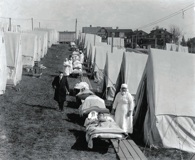
It also meant that our resources (especially medicine and medical supplies) had to be balanced to support the war effort and flu outbreak "over there" and increasingly at home. Bear in mind too that many of the country's recently graduated medical doctors and nurses, feeling patriotic, had volunteered for military service. Thus, medical students were co-opted to take care of the sick on the home front.

Like today, the flu took its greatest toll on the old , the sick or those with serious underlying medical conditions like cancer, diabetes, heart or lung disease. Another killer at the time which claimed thousands of lives was tuberculosis. "TB" as it's typically called ran rampant in poorer regions of the country like the deep South or in the slums of large cities like New York and Chicago.

Thanks in part to the devastation of the flu and TB among other diseases of the time like the measles, there was calls to eradicate the slums, access to clean water, improved nutrition, particularly for children, and demands for mandatory vaccinations (again, mainly for the children). Hospitals and universities began dedicating more money to the treatment and prevention of these diseases.

By 1920 overall healthcare had improved dramatically. This was due, in part by the lessons learned by the war in the care and treatment of not just the wounded or treatment of the flu, but also mental illness such as "shell shock" or PTSD as we call it today, and other diseases experienced by those who fought in the filth of the trenches. One major improvements was in sanitation.
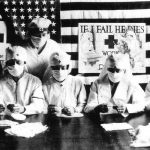
After the war much of this changed. There was an emphasis on cleanliness. Even hospital food improved (well, relatively. At least they now got healthier meals). Standardized treatment of individuals now became commonplace with added emphasis in prevention. Because more money was going into research, there was more or improved medicines, treatments and vaccines becoming available.

In society in general, there was a new emphasis in cleanliness, be it in restaurants, saloons, or the neighborhood grocery store, which focused on insuring that its vegetables, fruits, and meats were fresh. It became common to wash your hands before dinner and to take regular baths---with soap! It was far from what we would consider acceptable these days, but it was a huge improvement, and it helped jump start movements to improved the quality of life such as water lines to bring clean water to every home, and stronger health codes for better quality control of meat and food processing.

What will the post-COVID-19 world be like? It's hard to say at this point just as it was all but impossible to predict in the waning months of the Spanish Flu pandemic. At first, I expect there will be a lot of "overkill" of precaution. As in 1918, officials are terrified of being accused of doing too much as they are of not doing enough. We'll see some demand everyone wear masks until the impractically of it finally dawns on them or society refuses to comply. Social distancing will likely remain, at least for awhile, but that will soon fade. Humans are social animals. We tend to congregate. It's our nature.

Whereas in 1918/19 there were no "take out" dinners per se, I think we'll see more people doing just that. The result may be fewer restaurants, especially those whose menus don't easily accommodate to pickups. Businesses which deliver food will likely do well along with those who pick up and deliver office supplies, groceries, and fulfill similar needs. We'll see an increase in online shopping across the board. In fact, anything that can be done electronically will do quite well.
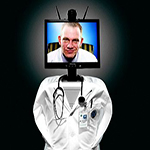
There are some things which has to be done in person such as visiting the doctor. Well, maybe. This pandemic took a relatively new technology, "telemedicine", and brought it into the mainstream of healthcare. It allows the doctor or their staff to connect visually over the internet and conduct a virtual office visit. Of course, there are practical limits, but it does allow the physician to actually see and speak with their patient and ascertain their general health and any issues which may necessitate a office visit or trip to the ER. Now, if we can only figure out how to use this in lieu of dentist visits!

Naturally, the patient can provide their weight, temperature, and blood pressure too if they have the equipment at home. Physicians can already check on a number of medical conditions remotely such as heart monitors and CPACS through the use of the internet or electronic transponders. We may also see the increase in doctor directed robots making the rounds in hospitals or nursing homes.

Speaking of robotics, expect to see an increase in automation not just in manufacturing, but also in warehousing and fast food restaurants. The virus pandemic and reliance on "essential" employees has proven to be too unreliable, operationally costly, and increased the risk of a potential infection which would affect not just staffing but insurance costs.

Banks, which are operating mainly through drive-thru tellers, could potentially eliminate inside banking altogether except for appointments, reducing cost and improving security. They could have a dedicated drive-up window to handle investment services or loan applications. What all this means is less demand for low skill/entry level employees. By the way, there's a growing case being made to all but eliminate cash, which some claim is susceptible of carrying germs and viruses.

The result would be the use of credit and debit cards for the majority of transactions. But why stop there? Why not encode a card to include your credit, work, insurance, criminal, and medical histories plus your driver's license and voter ID ? By the way, expect that your vaccination history to be included, which is more likely going to mandatory and less an option. In short, your entire life on one plastic card! You would have just have one card to worry about, but we can do even better than that!

What if, instead of a plastic card to carry around, they could simply implant a microchip in your hand or arm with all your data on it? Just a wave of your hand (or arm as the case may be), and that's all. No more "dirty" money. No more cards to carry or pin numbers to remember. Less risk of ID theft or stick ups! Maybe it could be encoded to unlock your home or car (or even start it!). Well don't laugh, microchips are already being tried in places like Sweden and the trend is growing. Now it's being promoted as a way to cut back on interpersonal contact and reduce the spread of viruses.

Unlike 1918, we have far greater technology available to us. But scientific achievement doesn't translate to moral wisdom, which sadly often lags decades behind. Sometimes longer. In our rush and fear to avoid the next pandemic, let's pause for a moment and reflect on what it is we really want as a society and what price we are willing to pay for it. Remember, earlier Republics and democracies often failed as a result fearful citizens willingness to trade their freedom for security, and ultimately, obtaining neither.


The Influenza Pandemic of 1918


Diseases In The Trenches


Five Bold Predictions For The Post COVID-19 World


Telehealth


Why You're Probably Getting A Microchip Implant Someday


Saturday, April 02, 2011

Fat Tax

Granted, times are tough. People are doing whatever they can to cut back to save money. Governments across the board are cash strapped. Many municipalities and states are staring financial insolvency in the face like death at the door. We got a full court press on to cut and tax everywhere at a time when no one, literally no one, can afford it. So, I guess kudos of sorts needs to go to Arizona for a unique, though impractical, partial solution to their financial problems. Arizona legislators are looking at taxing that Whooper and fries you’re setting there eating (or maybe, it’s that pizza and beer).

Arizona is considering a $50.00 tax per year on fat people. Why only $50 bucks and not by the pound, is beyond me. I suppose the legislators don’t want to appear too greedy in grabbing their “pound of flesh” (sorry, couldn’t resist). However, according to the Arizona Health Care Containment System, individuals who are obese, smoke, or even have diabetes, could face the annual $50 charge if it was determined that they’re not following their doctor’s instructions to develop better health habits. Arizona’s legislature has been trying to come up with $500 million dollars in cuts to reduce its $1.5 billion deficit. Taxing people with unhealthy life styles is one option being considered given their cash strapped Medicaid program.

It’s no secret or great revelation that people with unhealthy lifestyles are more prone to diseases or illnesses than people who take care of themselves. Businesses penalize individuals who engage in unhealthy or unsafe behavior while those who do comply are generally rewarded with either additional benefits, or benefits at a cheaper cost. I see two issues with this move by Arizona’s legislature.

First, individuals have a right to make specific behavioral choices for themselves. In doing so, they must bear the responsibility of their actions in terms of cause and effect (bad things will lead to bad results), and their associated costs. In the private sector, businesses try to spread the costs among its participants, but more often than not, companies are requiring individuals to bear the financial costs of their habits through higher premiums, limited or even denied coverage. It’s a choice issue. Others shouldn’t bear the costs of your choices. Fair enough right? But, what about government?

Putting aside for the moment whether or not government should be in the healthcare business, the issue of whether government has the right to regulate your lifestyle choices. Two points must be understood before we can go further. One is that government does not generate money. The argument that the government is paying for it doesn’t hold. Government, at all levels, derives its income from you and me through taxes and hidden taxes known as fees. In short, government takes from us and redistributes to others, allegedly, for the betterment of society as a whole. Sometimes it’s with our consent; sometimes not. Now, secondly, individuals who engage in unhealthy behavior use more (and more expensive) health care services, and over longer periods of time. That costs us more money. This is Arizona’s argument.

However, should, in the name of eliminating these extra costs, government be able to dictate specific behavior to us? If you want to set on the couch and stuff your face while watching Oprah, that’s your business. If you want to eat foods high in transfats, that’s a personal decision right? What about smoking? You know it’s stupid. You know what you’re doing to your body. But it isn’t anybody’s business but yours right? You and you alone should be expected to bear the costs of your actions. But, what about diabetes, heart disease, arthritis, or high blood pressure? What if you are trying to get these under control but can’t? Should you be fined? At what point does government have a right to impose any type of control on your behavior? Should government mandate a minimum amount of daily exercise? Where does it stop?

Well, government does, in fact, impose controls on your behavior already. It’s called laws, and they’re enforced by the judicial system. Some of these are health related, such as drug and alcohol use and abuse, food, water, and air standards, as well as clean and safe work areas or age restrictions. Even sex is regulated! There are penalties for violating and enforcing these rules which you and I pay for as taxpayers. So, there is some legal precedence for what Arizona is considering. But, it still doesn’t address the issue that, while possibly legal, is it justified from an ethical perspective? Just because you can do a thing doesn’t mean you should do it.

There is one more factor to consider. A disproportional number of individuals who use government services, and who lead unhealthy life styles, are the poor; the very people who could least afford to penalized any amount of money. So, does government require these individuals to see a doctor (at taxpayer cost) and enroll in some sort of modifying behavior program (again at taxpayer cost), and who'll monitor them (we can already guess who’ll be paying for it). One could argue that if they can afford a carton of cigarettes every few weeks, they can afford a $50 dollar fine once a year. But is this what we want government to do; to become our “mother”?

Since you and I are paying for the welfare of our fellow citizens who use government services in the form of taxes, we should have a say in how our money is spent. Recipients should be allowed to buy only healthy items (many states already require this). That is means no unhealthy snacks or drinks, and certainly no booze or cigarettes. Recipients should be required to perform some type of public service if they aren’t actively looking for a job or preparing for a job (like school) while they’re on the public dole. Random drug and other screenings should be required. Three strikes and no benefits for 90 days; no exceptions and no excuses. Yes, we would still have to pay for it, but the numbers (and costs) will be lower and the uncertainty of coming up for a test would serve as a deterrent. Conditions which are genetic should be exempt. If you aren’t a US citizen or in the process of becoming one, you receive no taxpayer based assistance. Of course, you can always choose to opt out altogether.

On a related note, healthy habits are generally acquired young. Schools should remove all soft drinks and unhealthy snacks from vending machines. School cafeterias should serve only healthy foods (perferably bought locally) and some sort of exercise programs should be required. Informational flyers (aimed as much for the parents as anyone) about preparing healthy meals, snacks and exercise should be sent home often. It’s not a perfect solution, but I think it’s better than the alternative.