Showing posts with label Faith. Show all posts

Friday, August 01, 2025

What Do You Believe? The Future of Religion in the World


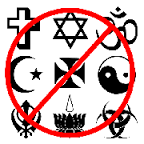
I don’t know about you, but of late my news feed has been inundated with stories about religion of all varieties, but especially expansion of radical Islam (now being called “Islamic Imperialism”). Typically, my focus is on politics, economics, and history. Topics such as religion are a little outside of my usual bailiwick despite coming from a very long line of minsters, theologians, reformers, founders, crusaders, and so on. Nevertheless, with all the posts I've been receiving, it's made me curious about the trend of religion throughout the world. 

Since the end of World War II religion (particularly the militant kind) has increasingly with politics and affected global trade, war, climate change (when discussing oil and gas), population replacement, and what some are calling the “conquest with babies” of the West and Asia. What is the current state of organized religion in the world and in the United States, and what does the future look like?

In America’s post WWII “golden years”, the economy was booming. Suburbia  was booming. Everyone had a good paying job (and only dad had to work. Mom got to stay home and run things there. Housing, food, electricity, and medical care was affordable. If you lived downtown, as many Americans did, public transportation was plentiful and cheap.

If you lived out in one of the new sprawling suburbs, everyone had at least on car, although most had access to a bus line. It seems that nearly everyone could afford to take a vacation to some state or national park. And over half of every household attended religious services on a regular basis.

This was the American Dream that many of us remember or have heard stories about. We could still trust the news and government. Television was entertaining and never contained overt violence, sex, or foul language. Even cartoons were funny and didn't require parental supervision.

From the start of the 1950’s, church attendance accounted for 57% of the population and rose to 63.3% by 1960 (prior to WWII, just 37% of households attended church on a regular basis (as a disclaimer, when I discuss topics such as attending “church”, I am not specifically referencing Christianity. I am referring to any organized religious service be it Protestant, Catholic, Jewish, or other).

All that changed on a sunny afternoon in Dallas Texas on November 22, 1963, in a place named Daley Plaza at 12:30 PM. If there was a demarcation or transition point in society, that was it. It’s where our confidence and trust in the media and government was first called into question. It was the day “America’s Camelot” came to an end. It was the day when President John F. Kennedy was murdered and the coverup began.

November 7, 1963 marked the beginning of the turbulent 1960s, with the mass protests,  some violent and some not. It marked the beginning of fundamental changes in society from the civil rights movement, the “Freedom Riders”, boycotts, desegregation,  the murders of Rev. Martin Luther King Jr and Bobby Kennedy, the Vietnam War, Women’s liberation, the decline of unions, and so much more. It also marked the beginning organized religion’s decline in America.

By the late 1960’s, weekly attendance had dropped from 63.3% in 1960 to 39% by the start of the 1970’s. It also saw the rise of so-called “alternative” religious and spiritual movements such as the "Moonies", Buddhism, yoga, Transcendental meditation blossomed along with  the "Flower Power" generation. There was a return to Native America spirituality and nature based religions of old. Today, roughly 40% of U.S. households attend services on a regular basis. 

So, what is the health of religion today? What does religion look like globally and in America? What faith is growing and what’s not, and what might it look like just a few decades down the road? To answer those questions, we need to look at how many people identify with some sort of religion.

According to most polls, roughly 84% of the world’s population claim to identify with one or more religion or faith. Of that 84%, approximately 77% self-identify as a Christian, Muslim, Hindu, or Buddhist. Out of that 77%, the largest organized religion in the world is Christianity (which includes Western with Protestantism and Catholicism as well as Eastern with denominations such as Orthodox and Coptic) represents 31% of the world’s religiously affiliated. As of 2020, there were roughly 2.3 billion Christians in the world, an increase of 121.6 million from 2010.

Christianity’s largest growth is now to be found in Sub Saharan Africa who has grown by 30.7% from 2010 to 2020. In Latin America, it has declined slightly, from 24.8% to 24.1% over the same period, and in Europe it’s dropped from 25.8% in 2010 to 22.3% ten years later. In Asia and the Pacific Rim, Christianity has remained the same with 11.8% while here at home in North America, its dropped from 12.4% to 10.5% as of 2020.

Islam, with its various sects, is the second largest with about 2 billion followers as of 2020, which represents an increase of 346.8 million since 2010, making it the fastest growing religion in the world and is nearly a quarter of the world’s population at 25%. It’s fastest growing areas are mainly in the Middle East.

Hindus are the next largest organized religion with 1.2 billion adherents, up 126.3 million from ten years earlier. That’s 15% of global population. Incidentally, India, the home of the majority of the world’s Hindus, also has the world’s largest population, having recently surpassing China.

Next on the list is Buddhism with 7% of world’s population. They make up just 0.3 million believers. Since 2010, their numbers have dropped18.6 million. Judaism comprises just 0.2% of the global population with about 14.8 million, an increase of 1 million since 2010.  Other religions such as Zoroastrianism, Taoism, Sikhs, Baha, and Shintoism comprise roughly 0.9 billion believers, which as grown 18.1 million over the previous decade.  So, is that it? Well, no, it isn’t.

While the survey looked at those who were religiously affiliated, it also examined a new and growing trend. Snuggled in between Islam and Hinduism is another group, those who fall outside of established norms. This group doesn’t identify with any particular faith or follow some deity. It’s the “unaffiliated” and according to the survey, there’s 1.9 billion of them and they’ve seen the second largest growth---270.1 million---of any group.

Who are the “unaffiliated”? They are individuals who’ve chosen different paths away from organized religion. Many say they are “spiritual”. They may dabble at being Wiccans, pantheists, or pagans. They may explore traditional paths such as shamanism (such as the Asian “Tengrism”), ethno-centric such as Celtic, Slavic, Norse, as well as African based (like Afro-Caribbean Voodoo and Hoodoo), or Native American type spirituality. They may have created their own paths such as through meditation and/or yoga (bear in mind that often these “unaffiliated” individuals are sometimes grouped into a “other” category as well just as Independents are sometimes mislabeled as "leaning" Democrat or Republican).

However, the largest segment of “unaffiliated” are simply those with no religious attachments (often saying they're “nothing in particular”). They may be agnostics or even atheist. Regardless of how they describe themselves, they aren't buying what organized religion is selling no matter how many times they change the packaging. Nevertheless, whatever path they’ve chosen to follow, they are the third largest group in numbers and the second fastest growing group. Keep them in mind, we’ll come back to them shortly.

So, let’s dig a little deeper into the unaffiliated. As pointed out above, the majority say they don’t belong to any specific religion. The largest number of unaffiliated are those who have left Christianity for some reason. Some may claim some form of spirituality, while most claim to be agnostic or atheist. China has the largest number of unaffiliated with 1.3 billion so self-identifying though they have their own private beliefs. This is roughly 90% of China’s population. The large number could be due to China’s long policy of discrediting religion since the Communist came to power under Mao in 1949.

The United States, which doesn’t have any similar policy, has the second largest number of unaffiliated---101 million---with the largest number coming from Christianity (due to the fact that Christianity is the nation’s largest religion).  Various projections show that by the year 2070, the U.S. could have 46% to 41% majority Christian to unaffiliated or a reverse of 48% to 39% unaffiliated to Christian ratio while other religions (most notably Islam)  reaches 12% of the population, mostly in large cities and among minorities.

 Aside from the United States, people moving from Christianity to unaffiliated is happening worldwide. As of 2020, they are no longer the majority in the UK (49%), Australia (47%), France (46%), or Uruguay (44%). Note too that both France and Uruguay were once heavily Catholic. In addition, Uruguay now has a majority unaffiliated population (52%). 

Netherlands now has an unaffiliated majority of 54%. In New Zealand, 51% identify as unaffiliated. Other countries with an unaffiliated majority (aside from China), include North Korea and Vietnam (which have a similar “no religion” policy), the Czech Republic, Macao, and Japan with the fastest growing number of individuals adopting the “none of the above”, which I find both interesting and a bit sad given its long history of Shintoism and devotion to ancestors. In countries where Islam, Hinduism, Buddhism, or Judaism were the majority, there were no changes in their majority positions.

So, globally speaking, what does this mean? The short answer is that Christianity is losing numbers to those who seek answers outside of the religious Status Quo. They no longer want inner guidance from those with a vested interest in the answer, especially without historical proof. Religious intermediaries no longer need apply. 

 While Islam is growing (particularly outside the U.S.) the number of “none of the above” are growing rapidly everywhere around the world while Islam is growing only in certain areas. Islam will not be able to keep pace. It will, of course, try to enforce adherence, especially through intimidation and violence as it historically has done, but as long as they are unable to control what people think or feel, they’re facing a losing battle. I will add that, in my opinion, any system, secular or religious, which demands absolute obedience through fear and intimidation cannot be divinely inspired and therefore acts out of moral weakness.

Hinduism may face a similar fate as Christianity in that it will find itself confronted with the very same science based rational used by the much of the unaffiliated that it has embraced to save its economy.  This is more so when you consider that people will turn more and more to AI for their social, political, economic, and perhaps ultimately, spiritual answers.

Buddhism, as a religion, is losing numbers. That trend is likely to continue, however, Buddhism is unique in that it can be applied as either a religion or as a philosophy, and it is in the latter that it may find its own redemption since it can be applied unilaterally to the religious, spiritual, or unaffiliated akin to the teachings of Chinese philosopher, Lao Tzu or that of Confucius. Meanwhile, the growth of other non-traditional belief systems will also likely continue to grow as people turn from outside sources to more internal way of spiritual growth.


Thank you for reading "Another Opinion", the Op/Ed blog page for the "militant middle".  Here at "A/O" we truly value our readers. At A/O we seek the facts as they exist, not partisan talking points.  We hope you find our articles informative and engaging. Comments are welcome, provided they are not vulgar, insulting or demeaning.  Another Opinion is offered without charge and is directed toward all independent and free-thinking individuals. We ask, however, that you "like" us on whatever platform you found us on in order to keep our articles available for free to others. Lastly, in order to keep costs down, we depend on passive marketing, and therefore, depend on our readers to please forward our posts along. Below you will find links to the sources we used in writing this article. Thank you. 


The Four Largest Religions


How the Global Religious Landscape Changed From 2010 to 2020


How U.S. Religious Composition Has Changed in Recent Decades


Projecting U.S. religious groups’ population shares by 2070


Modeling the Future of Religion in America


Church Attendance Has Declined in Most U.S. Religious Groups


Saturday, April 17, 2021

The Babyboomers and Millennials: The Generational and Religious Divide


Last week, I wrote about the decline of organized religion in the U.S.. In addition last week's article looked at how Babyboomers, Millennials, and Gen Z, have influenced this decline which began in the 1960's. This week, we'll get a more specific, starting with the Babyboomers and continuing with the Millennials.

Babyboomers (1946 - 1964) were the product of a society which experienced, on the one hand, one of the most prosperous economies in the country's history, and on the other hand, perhaps America's most violable period.  It was a traditional childhood and youth in one sense but would ultimately led to violent rejection of traditional values, anti-war protests, clashes over race relations and civil rights, which, between 1955 and 1975 took the nation from one which trusted the government to one which had utter contempt for the government.

It was during the 1960's and early 1970's that many Boomers turned their back on organized religion, although there was a brief and intense resurgence as noted by the popularity of musicals like "Godspell" and "Jesus Christ Superstar" which attempted to find a new relevance and interpretation in religion. At the same time, "Fiddler on the Roof" attempted to revive Judaism's historic belief in its traditions and values while plays, like "Hair" and  "Oh! Calcutta!" explored society's changing morality, especially its sexual morals.

The same, or similar expression of disconnect found expression in music, art, and even TV shows like "All in the Family", "The Smother Brothers Comedy Hour", and Rowan and Martin's "Laugh In".  Even network comedies like "Get Smart", "Love American Style", and others carried a anti-establishment undertone. It's not surprising then to expect that religion too would be affected.

Rock groups like The Beatles, The Rolling Stones, among others  had a profound effect on that generation's view of organized religion (in a sense, their "message" came to replace that of the pulpit's).  Groups like these introduced society to the Eastern philosophies, mysticism, yoga, acupuncture, mantras, meditation, holistic and herbal medicine, and Swami whose names we couldn't pronounce.

In addition, first cohort Boomers (1946 - 1954), were largely Left leaning politically. They promoted an idealistic vision of socialism, and began viewing the Cold War as nothing more than propaganda war by Wall Street over who controlled what natural resources and allowed military bases. 

By the late 60's, Boomers started moving to communes as a socialistic experiment and to "get back to nature". They joined small collectives, growing their own food, sharing chores, making their own clothes. Those who, for whatever reason, weren't able to join in, however, started forming neighborhood associations and block watches to take care of their piece of the New American Dream

They also started petition drives and formed boycotts against "unfriendly" or "anti-nature" corporations which wanted to pave over the "bunny fields". From thus the concept of the "NIMBY"---Not In My Backyard was born and remains very much alive today. It was also the birth of consumer advocacy,citizen lobbyists, grassroots environmentalism, and community activism.

The Boomers involvement with protecting the environment, especially air and water, ultimately resulted in the passage of the Clean Air and Water Act and creation of the EPA (1970) just as they had done earlier with the passage of the Civil Rights Act in 1964, which was later expanded in Title VII to include other categories such as gender and age discrimination.

Meanwhile, the second cohort of Babyboomers (1955 - 1964), which embraced many of the same ideals as their older siblings, tended to be less optimistic. They had been more deeply affected by the outcome of the Vietnam War (in part, due to the nightly "body count" on the evening news) and America's failure to secure victory after a nearly 20 year war and the loss of almost 60,000  (mostly young) men and women amid a mountain of lies by the military, Congress, and the Presidency which just seem to grow.

Lies, such as Watergate, caused  Boomers, along with much of America, not just lost its faith in the government and it's institutions, but even its religion was affected as we headed into the 1980's thanks to the rise of the "Televangelist" and the political activism of the "Moral Majority". Sadly, we've never recovered and as I wrote last week, the trend has turned into a death spiral. 

Babyboomers, who rejected materialism in the 1960's went on to be the wealthiest generation up to date, giving us the "Go Go 80's", shopping malls, timeshares, and modern day "greed is good" robber barons like Carl Icahn, T. Boone Pickens, and Ivan Boesky.  Boomers have been behind trends such as healthy eating and fitness craze, disco and mullets (my apologies), McMansions, wine clubs, along with countless others. 

As they age, many of the things Boomers have clung on to will begin to fade (and not just vinyl records or eight tracks). We're talking about traditional brick and mortar businesses (even banks, schools, especially universities are at risk), cable only TV, home ownership, big cars, professional football and, perhaps, boxing (due to head injuries) along with baseball (which is cited by Millennials as "too slow"), and  organized religion just to name a few.

A study by the University of California at Santa Barbara's sociology department indicated that around 42% of Boomers dropped out of organized religion all together, yet 33% never dropped out. Those individuals tended to be conservative, fundamentalist, and were Reagan supporters. However, 25% are slowly returning. Of those, the majority are leaning to liberal and less traditional churches or religious institutions. Their biggest hang-ups? The need for less formality, pro-choice, and LGBT acceptance.

Today, about 88% of Babyboomers describe themselves as "believing in God" or being "pretty sure" God exists (God or some sort of "higher power"). 83% said that religion still had a positive impact on their life. The survey didn't define "religion" as being formal or the same as a less structured "faith system".


When it came to attending some sort of religious service during the year, 71% said they did (but only 38% was weekly). However, when asked if they attended some other religious program (such as bible study or prayer group), 57% said no. When asked if they prayed, 77% said they did; 61% daily and 16% weekly. When asked if they meditated, 56% said they did. Of that, 45% was weekly, while 42% didn't ("prayer" and "meditation" were viewed as being separate from each other)

The same poll asked Babyboomers if they felt a sense of inner peace or spiritual well being. Only 14% said no. 84% did, at least some of the time.  44% also said they didn't read religious scripture of any sort. Just 38% did so weekly while 17% did so occasionally. Of those who did, 35% thought it was literal word of God. 29% said it could be...maybe...or shouldn't take literally. 29% said it wasn't the literal word.

When asked about Heaven and Hell,  74% thought that Heaven existed in some form. 26% didn't think it existed or weren't convinced. As for Hell, 59% believed it existed. 41% didn't think there was a Hell or wasn't sure.  So, how does this compare to the Millennials?

Millennials (1980 - 1996) are, for the most part, the grandchildren of the Babyboomers. They seem to have inherited much of their grandparent's distrust of the government, institutions, and organized religion. However, Millennials are also more dismissive of Boomers (the common Millennial phrase "Ok Boomer" is usually intended to be a polite dismissal of something a Boomer has said or done). 

Many believe that the current social and financial hardships they face as a generation are the direct result of Babyboomers, which they view as greedy and inconsiderate (typical of the "Me Generation). Millennials are the first generation whose quality of life didn't meet or exceed their parents.

Boomers  benefited from their parent's level "living wage" jobs, lifelong employment, employer provided healthcare and retirement (which was often the result of unionization). While Boomers attended college at higher numbers than any previous generation, their debt level was relatively low, especially compared to Millennials, due to many programs which have since been discontinued, including the original GI Bill.

 Millennials are, as we all know, more diverse than Boomers, especially along race, sexual orientation, and ethnic lines, not just as a group, but among their personal relationships. As a group, they tend to have far fewer friends than their grandparents at the same age. They're also more likely to have more health issues like high blood pressure, diabetes, Crohn's, and depression. They are also more likely to have an addiction problems. Millennials are more likely to marry later in life and have fewer children whereas Boomers had more children. Boomers also tend to divorce more often, even as they age.

When it comes to the importance of religion, just 38% of Millennials said it's very important. 29% said it was only "somewhat" important while 33% wasn't impressed with it. 28% attend religious services regularly. 38% did so just a few times a year and 34% said they never do.

Asked about prayer, 36% said no thank you. 39% said they prayed daily while 35% did so occasionally. By contrast, 42% meditated (though only 27% did regularly) while 58% didn't.  When asked if they participated in some sort of religious activity, a whopping 62% said no. Only 18% did on a weekly basis. The remaining 20% was a "hit or miss". 

When asked if they read religious scripture, 53% said no. Only 25% did so weekly. When it came to believing what they read, it didn't fare much better. 20% thought it was the literal word of God while the remaining 80% weren't so sure, which included 44% who said it wasn't. Heaven and Hell? 68% believe in a Heaven; 32% not so much. As for Hell, 56% said yes but the rest didn't think so.

The downward trend of religion seems to have begun in the 1960's, although the seeds were certainly planted much earlier; likely the outgrowth of the private hell brought home by the veterans of WWII and Korea. Babyboomers were said to have been the most spoiled group in recent history; totally devoted to materialism in their childhood yet by their 20's embracing a idealistic form of socialism, and again returning to "conspicuous consumption" and corporate greed by their 30's. Now, once more, returning to the nomadic spiritualism of their youth as they enter their senior years.  

Perhaps it was an attempt by their elders to buy them things they themselves couldn't afford during the Great Depression or during the war years. A vain attempt to buy happiness which left a spiritual void in their children. Maybe the same could be said of the Millennials. They too were spoilt by their parents and grandparents, only to be left feeling hollow inside.  

Millennials have a sense of anger at what they see as misused consumption by their elders, leaving them in no mood to be lectured by a generation which seemed to have had it all and blew it. Now they find themselves adrift financially, politically, and spiritually.  However, with no societal anchor to be found with their parents, grandparents, or great grandparents, the deciding fate of organized religion and perhaps society itself lays with the Gen Z, the new kids on the generational block.


Religious composition of Baby Boomers


Generational cohort by religious group


Why Millennials distaste for Babyboomers is justified


Religious composition of younger Millennials


Saturday, April 10, 2021

Where Has That Old Time Gospel Gone? The Decline of Religion in America

According to a recent survey by Barna, 20% of all churches, regardless of denomination, could close by the end of 2021. That's approximately 60,000 churches nationally. Although there are a number of factors, the leading contributing factor is the COVID-19 virus.

This shouldn't come as a surprise given that the average age of attendees is 57 years old; an age bracket which is considered to be at risk for the virus. However, don't think the decline is just the result of a virus, or that it applies only to Christian churches. Far from it. The decline in attendance applies to practically all organized religions, from Catholic and Protestant churches to Temples and Mosques.

According to an April poll by Gallup, just 47% of those surveyed acknowledged belong to a specific religion, which is down from 70% in 1999. That's the first time in Gallup's 80 years that number has dropped below the 50% mark.

 The poll also revealed that the percentage of "none of the above" has risen from 8% in 1998 to 21% in 2000. It now stands at around 1/3 and growing. It's worth noting that of those who do identify with some specific domination, the majority do not attend services, or if they do, it's only for the major events like Passover, Easter, Yom Kippur, Christmas, etc.

How this breaks down generationally is equally interesting. According to the poll, 66% of those born before 1946 (which comprises the "Greatest Generation" and the "Silents") still either attend or participate in other ways (such as watching it on TV, recordings, listening on the radio, or online).

It's worth nothing that the "Greatest Generation" experienced the Great Depression as children, endured WWII and the Korean War (some participated in the early stages of the Vietnam War too). They fueled the greatest economic revival in history, including the birth of subdivisions, and set the standards we associate with the Middle Class. Many were union members or belonged to some social fraternity; a carryover from their comradery and "can do" attitude from their experiences during the war. 

Meanwhile, the "Silent Generation" (1928 - 1946) was the first generation to benefit from the post-war economic boom. They were known for their fast cars, dances, soda fountains, Beatniks, surfing, having disposable income, and rock 'n' roll! It was also the start of the Space Race and the Cold War. They're usually characterized as hardworking, resourceful, dedicated, traditional, and respectful of authority.

 Babyboomers (1947 - 1964) participate at a rate of 58%. This group was the largest demographic up to that point. As a result, Babyboomers are divided into two similar but different groups or cohorts.  The first group, born between 1947 and 1954, are the more typical "flower children" and "Hippies" of the 1960's. They are often identified by Woodstock, Monterey Pops Festival, communes, the early Vietnam War, JFK, Malcolm X, "love-ins", decline in unions, the Civil Rights Movement, and a lost innocence.

The second cohort, born between 1955 and 1964 was influenced by the more violent aspects of the anti-war movement, SLA, Weathermen, the Women's and LGBT movements, moon landing, Watergate, late Vietnam War, Che Guevara, oil embargo, hyperinflation, the assassinations of MLK and RFK, and the Kent State Massacre. As a group, the first cohort tended to be more optimistic while the second cohort was much more cynical. The first questioned authority. The second was downright dismissive of it.

The first cohort makes up the majority of the 66% which participates, in some fashion or another, organized religion. They were also more likely to "tune in and turn off" and were part of the cutting edge of the emerging popularity of Eastern philosophy thanks mainly to The Beatles and the Rolling Stones. They are also most likely to identify with a religious denomination.

The second cohort is less likely to either participate, identify, or belong to a religious organization. They are, however, more likely to be spiritual. They were much less likely to be trusting of authority figures or institutions in their youth which has carried over into adulthood.

Generation X (1965 - 1980) has a religious participation rate of 50%. This generation is the younger sibling of the Boomers or first born of the first Boomer cohort.  Interestingly, Gen X as its often called was known for being the "Reagan Generation". Unlike the Boomers, they were usually socially and fiscally conservative. They tended to be more traditional in some respects as well, and this included religion. Socially, Gen X was the first post-Jim Crow generation.

Another interesting aspect of this generation is that they were the first to experience the use of computers in school and were the first to take advantage of the internet. They tended to be very entrepreneurial, independent, and self-motivated (the classic Gen X stereotype is "Alex P. Keaton" from the 80's TV series "Family Ties"). 

When it comes to religion, one Pew poll indicated that religion was important to Gen X as a whole with 53% saying it was "very important" and 56% saying they pray at least once a day. However, while religion is considered important, most remain non-denominational. Additionally, just 25% say they participate in some form of religious services on a regular basis (57% said seldom or never).

Replacing Babyboomers as the largest generational demographic is the Millennials (1981 - 1996). Millennials have been in the news a lot due to their increasing influence over both the economy and politics. Millennials are often considered to be lazy or self absorbed; a generation totally immersed in technology. However, they are behind the tech drive which has created countless social media platforms and the high tech world we live in (for better or worse), adaptive, and achievement driven.

Politically, Millennials (aka Generation Y or Gen Y as they're also called) are noted for being strongly in favor of democratic socialism; at the very least, to be anti-capitalist as much as their Gen X predecessors from the "Go-Go '80's" were capitalistic. This could result of having come of age during the "Great Recession", which created a sense of economic insecurity for many of them. They are also the first generation where their quality of life didn't surpass their parents, but dropped instead.

As a group, Millennials tend to be fairly optimistic and socially conscious as their first cohort Babyboomer grandparents were at the same age. They're very aware of the environment, ranging from population to climate change (the environment became a political issues during the mid 1960's and heavily influenced the Presidential election of 1968 and continued to do so for the next decade or so).

 Millennials were the most socially, economically, and racially diverse group this nation had seen, with the majority being Hispanic (many are foreign born or first generation American). They are highly educated and generally optimistic about the future. However, it's worth noting that as a group, they also tend to be financially crippled from high college debt.

The main reason is that in pursuing their academic passion, they neglected to take into consideration how employable their major was. As a result, many ended up with degrees in which the market was already over saturated with applicants or were there was little or no demand (such racial or gender studies).  This has left many unemployed or underemployed in what should now be close to their peak earning years.

Millennials are quite comfortable working on small ad hoc groups or teams to complete a projects, and then moving on to other impromptu groups. They prefer to set their own schedules; working around their own personal time rather than scheduling personal time about work hours.

Politically, the majority of Millennials have rejected both corporate owned parties---the Democrats and Republicans. Most are registered as Independent, which has contributed to Independents being the country's largest political demographic. When it comes to ideology, while Millennials aren't big on dogma, they strongly lean Left as group. In fact, most self-identify as "socialist" or "democratic socialist", while a majority cite libertarianism (small "L") as their preference.

When it comes to religion, Millennials again reject any sort of dogma. Just 36% acknowledge any sort of religious preference. 62% say don't participate in any form of religious services. However, it's worth noting that 69% of Millennials regard themselves as spiritual or somewhat spiritual. 61% say they are sure or fairly sure God exists. As an aside, several of the surveys seem to point out that among Millennials, once they break from an established religion, that break becomes permanent.

The latest generation on the block is Gen Z (born after 1996). Most members of this group are just beginning their lives, so there's much we don't know yet. However, there are a few things we're pretty sure about. First, Gen Z is the first generation which has never known a world without laptops, the internet, or Smartphones.  

Economically, life started out pretty good for most with the overall economy actually in a upswing. However, perhaps the defining factor for them will be the COVID virus and its influence on their lives in terms of physical interaction with friends and school (most have been taken classes online and via chat rooms instead of having personal contact). Thus, they've been forced to develop a further dependence on technology rather than through developing their interpersonal skills. How that works out in the future remains to be seen.

As an aside, many Gen Z's are more interested in trade and vocational schools than in going to college. Perhaps they've seen what the high debt and low economic return has done to their older siblings, thus preferring the lower cost and higher demand, and greater reward trade and vocational school can bring. This could also present a badly needed boon for blue collar unions as well.

Socially, Gen Z has grown up in highly diverse environments. Like their older siblings, race, gender identification, and other markers mean little or nothing. Knowing someone who is gay, transgendered, or of a different culture or race is no big deal.  One in five are Hispanic.

Like Millennials, Gen Z is comfortable with technology just as they are in working in ad hoc groups or teams to solve as specific issue. Equally, they are at ease with a large government and tend to be even more progressive than Millennials.

Although they are still coming of age politically, this is translating into a generation which is even more Left leaning than Millennials. In fact, many are already starting to identify as "socialist" or "democratic socialist". Obviously, with two Left oriented generations, this doesn't bode well for Republicans.

When it comes to religion, Gen Z appears to be even less interested in organized religion than Millennials; 52% have no trust in organized religion. However, while that means they are less interested in organized religion, that doesn't mean they eschew faith. Actually, they are very interested in spirituality in general, with a strong curiosity in Eastern philosophies such as Buddhism, along with Hinduism. Additionally, they are interested in Native American as well as early European spirituality.

Most interesting, a strong segment of Gen Z say they find spiritual satisfaction from giving back to the community, such as participation in food or clothing drives for the poor, picking up trash alongside a river bank, helping the homeless, and so forth, which is similar to some Millennials. That is, they find their spiritual satisfaction from actually doing something instead of praying about it.

So, while organized or dogmatic religion is on continuing its decline in America, interest in spiritually is actually on the rise. While there are numerous reasons, such as the affect of the COVID virus and the ageing of traditional church attendants, there are other and more deeper reasons too.

 Many cited the failure of organized religion to keep pace with technology, changing social values such regarding issues like homosexuality, single parent or adult, abortion, stance on women, divorce, ongoing sexual abuse by priests, plus the ability of priest to marry. Some, on the other hand, point to the failure of organized religion to update their dogma based on recent discoveries in archeology.

Finally, along with the changing social and political demographics of America, including its rejection of the Corporatocracy which has hijacked both parties and usurped the Republic, many see religion as merely another attempt at control. With access to more information than ever before, we can expect more questioning of authority than ever before, be it government, social institutions, or religions. Those able to withstand the onslaught will survive. Those who can't won't. Religion, like everything else, must adapt or be swept away. 


America is losing its religion


Adults in Generation X


Younger Millennials


Gen Z Is The Least Religious Generation. Here's Why That Could Be A Good Thing


Gen Z is looking for religion. You'll be surprised where they find it


Gen Z is lukewarm about religion but open to relationships


Saturday, February 15, 2020

Book Review: Embodying Soul by Keri Mangis


If I were to try to describe "Embodying Soul" by Keri Mangis in one word, it would be a struggle since this book offers its readers multiple layers to be explored. Thus any single word description would be just as valid as the next. First, it is an highly entertaining story full of wit, humor, and personal honesty, not to mention wonderful characters; personifications of emotions which add an extra element of insight and comedy through their voices.

You could say this book is about transformation, which it is. It's about how a quiet, bookish introvert from the Upper Mid-West struggles to find her own identity, and through it, her place in the world. It is a book about relationships and the roles we are forces to adopt.

It's an exploration about spirituality. The search of our true Self, be it through religion, science, or the various forms of spirituality is perhaps one of the important journeys we, as humans, can undertake. But ultimately, I think it's about Authenticity, a term which the author frequently invokes and calls to the reader to explore with her.

The search for our own unique Authenticity or Truth is essential to discovering who we are as person. By that I mean discovering our true nature by examining and peeling off labels either assigned to us by society or ones we pinned on ourselves. Ms. Mangis' search is a reflection of our own. She courageously exposes herself--warts and all--in a way that we each can identify with, regardless of our gender, upbringing, education, age or where we are in life.

Books about religion or spirituality tend to dry or filled with psychobabble. Not so here. The writing style of Ms. Mangis is refreshing honesty as is her ability to engage her reader that is deeply personal and revealing. One cannot but help to want to join her in her journey of self-discovery.

Through artful personification, Ms. Mangis creates delightful characters using her emotions--Fear, Anger, Joy, Depression and so on in a way that we can easily relate to. We meet her spiritual alter ego, Serene Voyager or "Seri", as she prepares to once again rejoin humanity in her pursuit of "The Great Truth", albeit with a mix of excitement and trepidation.

We're introduced to her Soul Realm guide, Rasa, who I can almost visualize as a wiser and brighter "Aunt Clara" from Bewitched. It's Rasa's job to help prepare Seri for her journey to come while giving tantalizing glimpses of her life to come. However, her most endearing character is her wild silver wolf named Endless Curiosity or "Curiosa" for short who leads the way forward; ever in search for Truth and knowledge wherever it leads. I'm sure I have one of her litter mates.

"Embodying Soul" by Keri Mangis is a delightfully entertaining book. It engages both the imagination as well as the intellect. I urge to pick up a copy of "Embodying Soul" by Keri Mangis and join her in her journey to find the "Great Truth". Perhaps in doing so, you will discover your own "Great Truth" along the way. 285 pages.