Showing posts with label Catholic. Show all posts

Saturday, December 30, 2023

Illegal Immigration and America: Death by a Thousand Cuts?


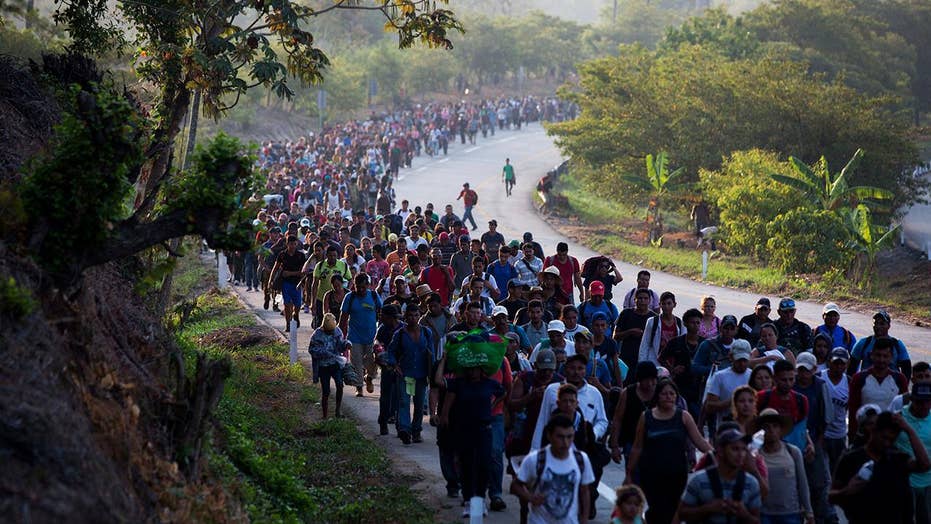
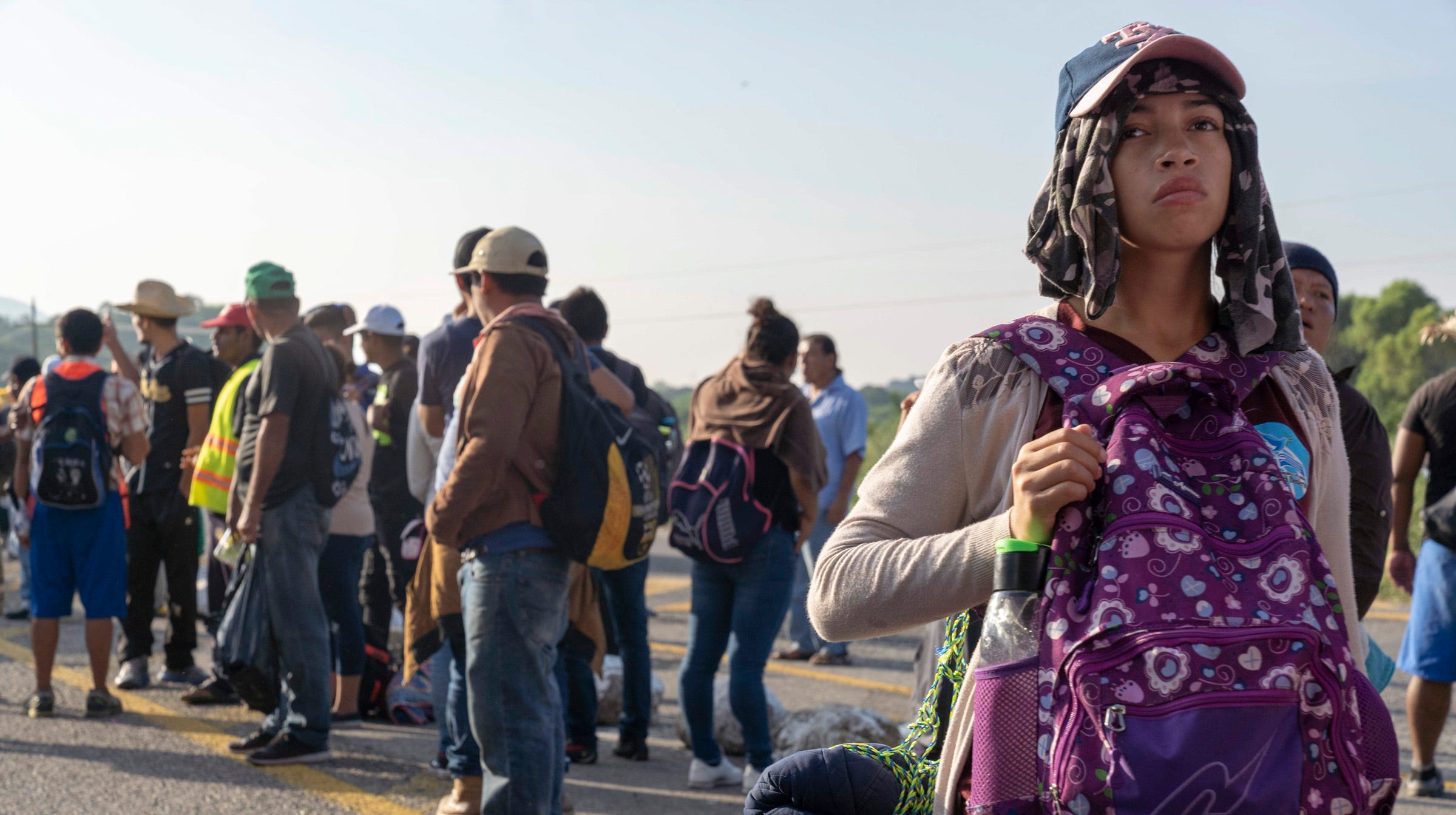
Once again, a caravan of migrants are heading toward the U.S. border with Mexico. Just how many is a matter of debate. At present, the caravan has roughly 8000 men, women, and children. That number will change greatly as individuals and groups leave while others join. Some of the immigrants admit that their goal is to seek sanctuary in the United States while others want to stay in Mexico, at least for the time being.

Media outlets have (as usual) focused on the women, children, seniors, and handicapped with the aim of turning the event into a typical human interest story, which are great for ratings. The focus, as usual, is on the many hardships facing the migrants. There was a recent report about how migrants were "forced" to sleep on the ground using cardboard for mattresses over Christmas.

They also talk about the dire conditions of walking thousands of miles with essentially no shelter, scarce food or fresh water, little or no medicine except what they brought with them. Some are able to barter with other migrants or local residents for various necessities (toilet paper is always in high demand as are shoes and socks). Several charities have, however, been able to pitch in with donations along the way.

There was one story about a week or so ago where one of the leaders of caravan said that he wanted to bring the plight of migrants living conditions to the attention of the governments of Mexico and the United States. He went to indicate that expected the Mexican government to provide some humanitarian relief, despite the fact that the trip through Mexico is a violation of Mexico's immigration laws and border security.

From the tone of the interview, it seems that some among the migrants were expecting to be provided with air conditioned busses somewhere along their trek northward. In truth, they're lucky they haven't been forced back to Guatemala, where the caravan originated from or detained by Mexican Federales.

The Federales, or Mexican Federal Police are known for the "no nonsense" discipline and enforcement of the law in the same vein as the Texas Rangers or Canadian Mounted Police. There have been numerous reports of rouge elements taking advantage of the migrants through shake downs, rapes, physical beatings, and temporary jail time in one of Mexico's notorious rural jails. There's even been a few unsubstantiated reports of migrants travelling alone or in small groups being murdered.

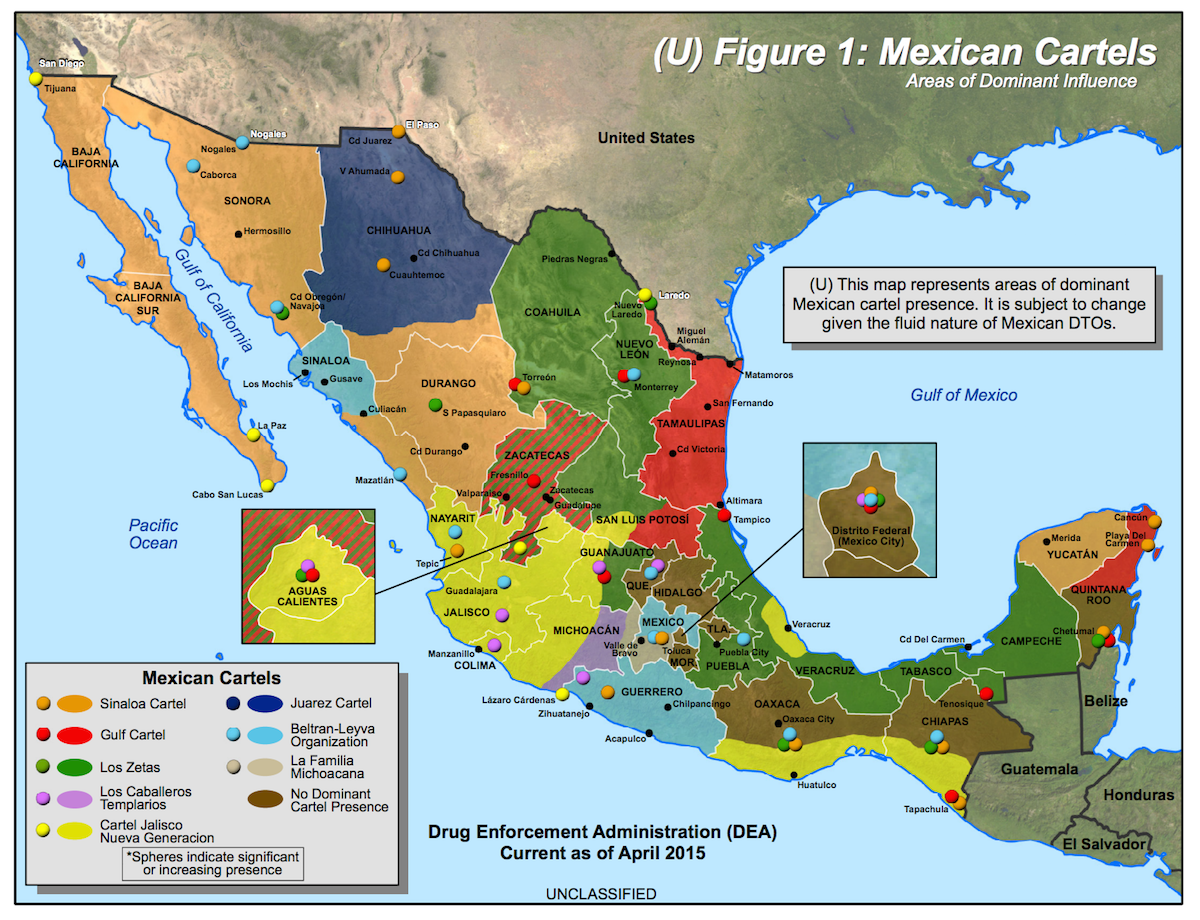
Of course, there's also the ruthless drug lords to contend with. The route usually taken by migrants take them through areas controlled by various drug cartels, and you can be sure they'll have their hand out in typical gangster fashion---pay up for protection or face the consequences.

Some of the drug cartels offer to provide "coyotes" or guides through relatively safe areas into the United States. They're kinda like a cross between a Old West wagon master and the James/Younger Gang. These coyotes provide nothing more than their expertise as guides through some of the back roads and trails leading to the Mexican-U.S. border, and the best places to cross.

Caravans or individuals migrants moving up from Central and South America, may encounter as many as six different cartels ranging from Los Zetas and Sinaloa in the south to South Pacific Cartel, Juarez Cartel, Gulf Cartel, and the Sinaloa in the north (the Sinaloa cartel control the largest swath of territory in Mexico by far). The central portion of Mexico is largely open and highly disputed, which includes Mexico City.  However, that doesn't mean it's cartel free. Certain areas in central Mexico are run by smaller and non-aligned drug related gangs.

Being a coyote can be a pretty lucrative business. The average coyote charges around $1500 to $5000 per person to bring someone across the border. On any given night, they might move 500 individuals or more. A small operation might make anywhere from $780,000 to over $1 million dollars a year (and all tax free naturally). Large operations can see as much as a billion dollars annually.
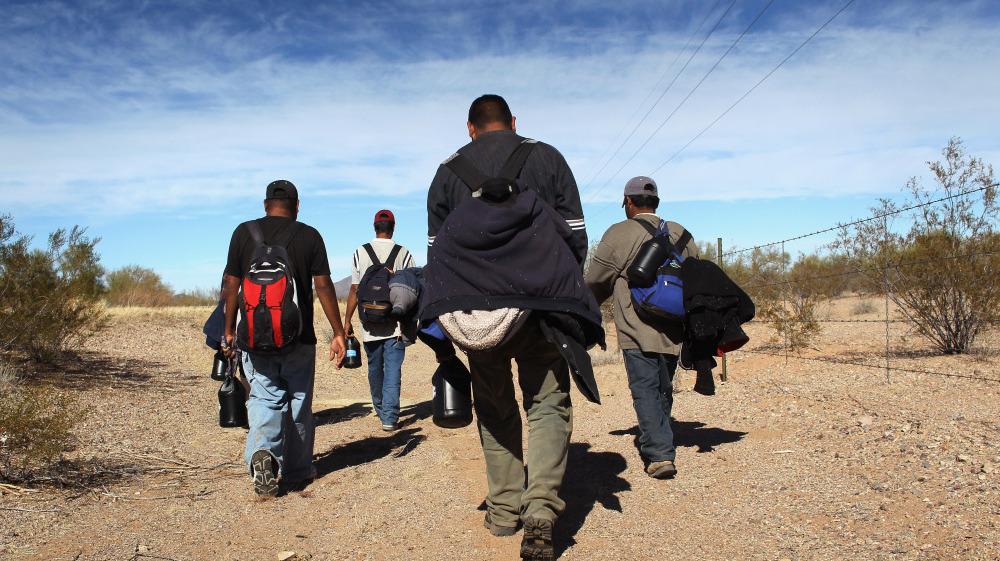
A few of these coyotes might hook them up with other coyotes who operate on both sides of the border. These individuals will usually provide transportation once the individual crosses the border, in the form of car trunk or semi truck trailer, bound for someplace far away from border patrol agents.

Occasionally, for those short on cash to pay the coyote, there's a job of sorts waiting for the migrant at journey's end, albeit working in some sweat shop processing drugs or for the younger and more attractive women, a job turning tricks. Some may be tasked with running or warehousing drugs or whatever else the cartel needs. However, most choose to pay their fare and take their chances once they reach the border.

Various religious organizations (mostly Catholic) compete with the cartels for the last leg of the migrants journey into America. These groups ensure contact by advertising extensively in the border towns and communities along both sides of the border. They typically provide a means to contact them and the assurance of transportation once they reach the U.S. and promises of a warm meal and shelter complete with a bed and fresh linen, but it doesn't end there.

Many of these religious groups provide the newly arrived migrant with the kind of help they'll likely need, both legal and financial. They help migrants with completing the necessary forms (and correct wording) in their native language to gain at least temporary status in the U.S.. The current technique involves a plea for amnesty, which is typically given priority (especially if children are involved) and the best part is that not a lot of documentation is required, at least not initially. As an aside, amnesty doesn't apply if the applicant is merely seeking employment or better living conditions.

In addition, these organizations provide legal assistance with all mandatory hearings, and finding long term shelter, help with obtaining employment with businesses that don't ask a lot of questions. These are often in agriculture, farms (including horse racing tracks), hospitality, and construction. They provide aid in navigating the bureaucratic maze to obtain taxpayer paid medical care and school enrollment for their children (which can be in their native language with English never having to be learned...ever).
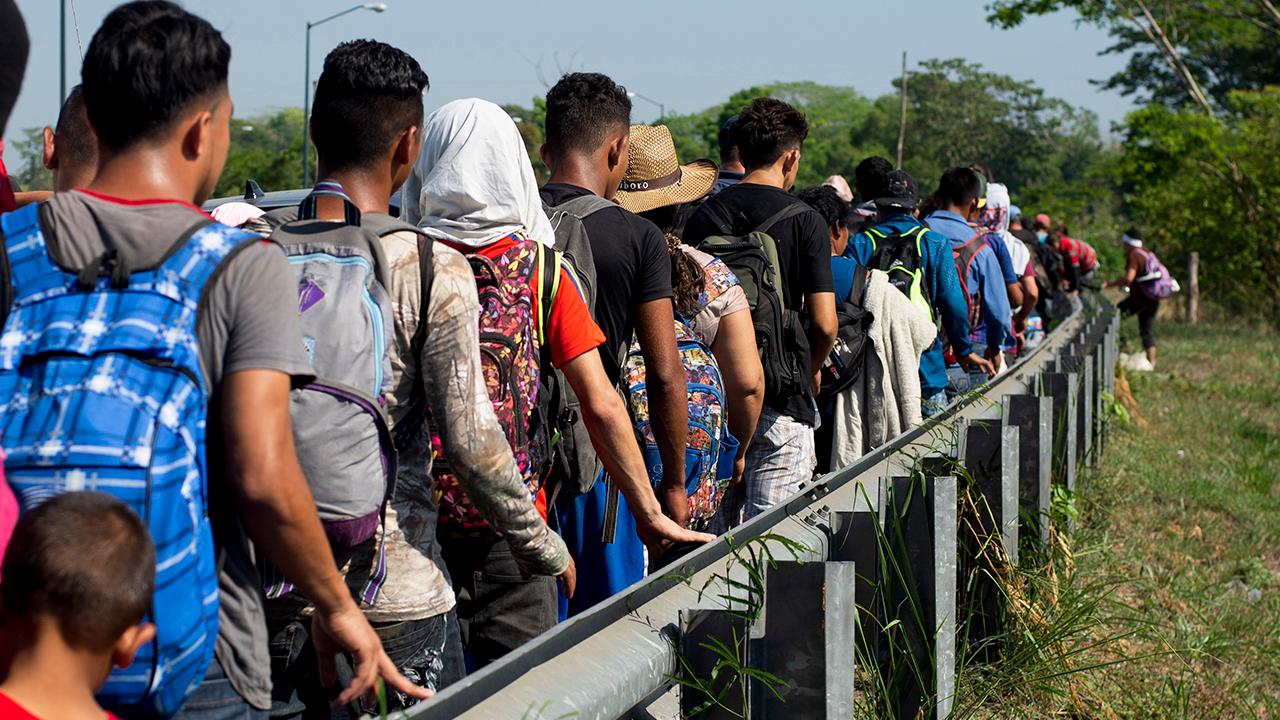
The cost to the U.S. taxpayer is in the multi-billions (in 2021 the estimate was $120 billion). So why do these groups do it knowing the financial burden they're putting on the already cash strapped Americans? The answer is simple. They sincerely believe they are above the law. Immigration laws, quotes, or whatever doesn't apply to them because they've convinced themselves that they're serving a "higher purpose" and they only have their faith to answer to. Seriously.

Of course, there is the "other" reasons which aren't discussed much, at least not openly. Many of these church based groups are looking to growing their numbers for a variety of reason, but it ultimately comes down to political and economic clout. The more members, the more money flows into their coffers. Secondly, they gain more direct and indirect influence; the kind that politicians pay attention to.

Secondly, since many of the members of these organizations are Democrat, they expect that once the immigrant becomes a citizen, they will repay the kindness by registering as Democrat, The flaw with this tactic is that most migrants are here to find a job. They have no interest in citizenship. They also tend to be fairly conservative socially which puts them at odds with Democratic ideology.

In addition, many of these migrants will end up in trades or industries which are organized. Labor union membership has long been spiraling downward since the 1960's with their core base---production---being sent overseas as a cost cutting measure by businesses. In addition, with more people attending college, many of these entry and low levels positions go unfilled.

The influx of immigrants, legal and illegal, helps to keep these jobs from remaining empty. Since these positions are mostly unionized, filling them pumps badly needed money into union coffers in the form of union dues.  Workers get decent pay, often with good benefits, safe working conditions, job security, and someone to go to bat with them if they need it.
It's far better than working for some dangerous sweatshop with no benefits, impossible lots, and pay so low its illegal. Working conditions are miserable and often unsafe (no air conditioning in the summer, no heat in the winter, no restrooms, etc). And if the boss says you're working 12 hours straight, you are, and there's little recourse. After all, the employer can (and will) hold your immigration status over your head. 

In 2022, some 2.76 million immigrants came north, mostly from Nicaragua, Honduras, Cuba, and Venezuela. They came for a myriad of reasons, from economic conditions (largely triggered by U.S. embargoes and sanctions) to government corruption and wars (many of which we underwrite). So far this year (FY2023), their numbers have been around 2.5 million.

However, U.S. and Mexican government authorities have reported seeing increasing numbers of mainland Chinese, North Koreans, and those from Middle Eastern countries such as Iran, Iraq, Syria, as well as Kurds among the migrants. There is little doubt among government officials that intermingled within these groups are active terrorists. Last year, Mexican authorities incepted several individuals with terrorist connections hiding among the caravans. Most of those caught have been single, male, and of military age.  

The American People have been demanding for decades that Washington contain our southern border, yet nearly every attempt has been thwarted despite U.S. and Mexican officials agreeing that the migrant issue has reached critical levels.  President Trump's efforts to build a wall was meet with fierce        resistance, both in Congress and by the corporate controlled media. So, who is behind the push to keep the border open?

Ironically, one major cause for the influx of migrants is the media itself. According to one recent poll, 71% of individuals between ages 16 and 24 confirm hearing on media outlets rhetoric about the U.S. southern border being "open". They also hear that entry is easy and there are plenty of jobs. That's more than enough incentive for people living in poor economies like Ecuador or El Salvador. 

Powerful drug cartels and corrupt governments are taking advantage of the situation too. For politicians, it's a way to get rid of their poor by encouraging them to go north, thus saving millions in tax dollars. Drug cartels and independent coyotes can easily make millions or more guiding people northward, and of course, there's plenty of unscrupulous individuals along the way to take further advantage.

In the U.S., there are ample religious organizations and special interest groups who would like to see the southern border opened even further, especially among Hispanic communities. Hispanics are the second largest population in the U.S. and growing and they account for 14.3% of all voters (currently they vote Democrat by a 2:1 margin). Within the next 25 years, they will be on par with European whites and perhaps 30 or fewer years into the future, they'll likely hold a majority. This is why both of the corporate owned political parties are currying favor with Hispanics.

The debate over illegal immigration is, in many respects, already over. While the Federation for Immigration Reform (FAIR) projects around 17 million illegal immigrants currently living in the U.S., a study by Yale University says the number is closer to 22 million illegal immigrants. Meanwhile, those numbers grows daily thanks to so-called "sanctuary cities" who openly defy federal immigration laws while simultaneously demanding more federal tax dollars to cope with the influx of illegal migrants!  

With the growth of Hispanic influence, there will be changes unimagined by our parents and grandparents in the U.S.. While socially conservative and family oriented, politically they've tended to lean socialist and populist, but does that reflect America's political and social future?

Given that the U.S. has historically aggressively oppose anything socialist or populist to the point of overthrowing duly elected governments and installing juntas, it will prove interesting to witness. After all,  with a total population of 65.57+ million (13% of which being illegal), are hard numbers to ignore, even in the U.S..


If you enjoyed the article, please consider passing it along to others and don't forget to subscribe. It's free! Lastly please be sure to "like" us on whatever platform you use to read anotheropinionblog.com. It helps beat the algorithms and keeps our articles in circulation. Thank you!


Coyote


Mexican Cartels


Thousands join migrant caravan in Mexico ahead of Blinken's visit to the Capital


Shifting Patterns and Policies Reshape Migration toU.S.-Mexico Border in Major Ways in 2023


Migrant border crossings in fiscal year 2022 topped 2.76million , breaking previous record


The Path to Democratic Socialism: Lessons from Latin America


The U.S. cannot ignore the new 'pink tide' in Latin America


Yale Study Finds Twice As Many Undocumented Immigrants AsPrevious Estimates


Saturday, September 30, 2023

Religion In A Post-Republic America: The Decline of Christianity?


When the populace begins to distrust the institutions upon which society is built, the time is not long off when there will be some sort of change, possible violent or not, but there's little doubt that significant change is on the way. According to several recent polls, trust in our key institutions are at record lows with little data to indicate any significant improvement.

The most fundamental institution affecting Americans is religion. In the preceding generations, one could argue the society, and especially the family unit, revolved around organized religion. According to a Gallup poll, just 32% of Americans said they had a great deal or a lot of trust in religion. 36% said that had "some" confidence while 33% had little or none.

According to the Billy Graham Center at Wheaton College, some 70% to 84% of all churches are seeking a decline in membership. A Pew survey conducted two years ago indicated that the fastest growing religious category in the U.S. was "none". The report also said that if "unaffiliated" was a religion, it would be the largest in the United States.  If the present trend continues, it will reach a de facto majority status by 2070.

However, among those who hold to some sort of faith, non-dogmatic "spiritualism" comprises the largest chunk of the unaffiliated. Of those who adhere to dogmatic Christian religious institution, the Church of Latter Day Saints or Mormons are the fasting growing. The largest growing non-Christian religious institution in the United States is Islam. By 2040, Islam is expected to be the second largest religious institution in America.

As an aside, Mormonism is on track to become the largest Christian religion, the Churches of Christ, Assemblies of God, and the Catholic Church are the runners up. It's worth noting that all three of the Protestant churches and the Catholic churches are considered socially conservative although most are registered Democrat, leaving about one third registered Republican.

Liberal churches on the other hand are showing the fastest decline in membership. Churches regarded as being "liberal" or "progressive", some of which include the United Churches of Christ, Lutheran, Presbyterian, Episcopal, and the Methodists. This is most notably due to their stance on issues like gay marriage and LGBQT rights, abortion, and women in the pulpit. 

The massive increase in immigrants from Latin America as well as Africa and Asia will spur the growth for the Catholic Church in the United States. Whether they will continue to register Democrat while remaining socially conservative remains to be seen. 56% are registered Democrat while 28% are Independent and 14% are Republican, although many are switching to Independent. 

Incidentally, the majority of immigrants---61%---are settling in just five states, Texas, Florida, California, New York and New Jersey. It's worth noting that four of these, New York, Texas, Florida, and California, also have the highest number of Electoral College votes which, in our antiquated "winner-take-all" electoral system, determines the winner of the Presidency and not the popular vote. 

Globally, by 2050 there will be approximately the same number of Muslims as there are Christians. In India, which now has the largest population of any nation, Hinduism will remain the majority religion but not by much. Islam will make up a large minority. In fact, because of the large Indian population, by 2050, there will be more Muslims just in India than in all of Indonesia. In Europe, Muslims will comprise at least 10% of the total population with the majority living in Western Europe.

Buddhism will hold its hold globally and remain about the same size, although its number will grow in the United States. The majority of Buddhists in America are converts, with the majority being white and former Protestant. By 2050, Buddhism will be the 10th largest population group by religion. Buddhism tend to lean Democrat in significant numbers.  

While Judaism, which is predominantly Left leaning in the U.S., will likely grow worldwide, it will no longer be the largest non-Christian religion in the United States. That honor, as stated above, will go to Islam. Politically, however, it will make little difference since they both tend to vote Democrat  with 68% of Muslims and 64% of Jews being registered Democrat. 

It's worth mentioning that while agnostics, atheists, and Humanist currently make up a significant segment of the "unaffiliated" in the United States (as well as in France and Germany), their numbers are projected to decline globally. Folk religion and neo-paganism (such as native African, Nordic and Wiccan)  will also continue to enjoy a resurgence globally, especially in the United States, although their numbers will not keep pace with the growing world population and thus their overall percentages will decline.

In our increasingly technological and sterile world, you would think that religion everywhere would be in decline. Various polls, however, show that the majority of Americans side with religion over science. In fact, just 29% of those polled by Pew in a 2019 study said they would always or most always trust science over religion. 40% of Americans believe solely in Creationism while 33% believe in evolution under the direction of a divine influence or plan. Note too that this percentage is fairly consistent globally among Christians and non-Christians religions that follow some form of established dogma.

So, what's the future of religion, particularly Christianity, in the United States? In 1990, 90% of all Americans identified as Christian. By 2050, that number is expected to be 54%, and within 50 years, it's expected to be just 46% while those who identify as secular will rise from around 30% now to 52% by then. Liberal leaning churches will decline, with many closing their doors for good.

The largest non-Christian religion will be Islam, replacing Judaism for the first time, and smaller size congregations will gradually replace the mega-church (which are often half jokingly referred to as "Six Flags over Jesus" or "Churchmarts"). Many services in the future will take place in private residences, harkening back to early Christianity when services were often led by women who were in charge of the home. 

Christianity will also likely be more racially and ethnically diverse than at any time in American history. Services conducted in multiple languages along with a sharing of cultures.  They will also likely be conservative, creating possibly a new schism in the form and function of Christianity itself. 

If you enjoyed the article, please consider passing it along to others and don't forget to subscribe. It's free! Lastly please be sure to "like" us on whatever platform you use to read anotheropinionblog.com. It helps with the algorithms and keeps our articles in circulation. Thank you!


The fasting growing US religious affiliation? 'None', poll says


The Future of World Religions: Population Growth Projections2010 - 2050


Modeling the Future of Religion in America


U.S. Religious Groups and their political leanings


What is the Future of Religion in America?


The Future of Liberal Christianity


Is There a Future For Progressive Christianity in America?


Saturday, March 28, 2015

What do you believe?

How religious is America? What would be your best guess? According to a survey taken in August of 2014 on behalf of the Religion News Service, America is in the midst of a "great decline" among the mainstream churches. In 1994, 94% of those who attended church identified with that church. Today, that is about 85%. Church membership is down from 69% ten years ago to approximately 59%. Speaking of church attendance, that's down to about 53% in 2014 compared to 62% in 1994.

The role of religion has declined too. In 1994, 88% said religion was important in their lives. Today, only 78% say it's important. In terms of relevance, that too has declined, albeit not significantly, from 79% to 70%. However, what may actually be a more important indicator is the result of five Gallup polls averages which shows that overall religious importance has declined from 78% to 69%. That is significant. According to a recent Gallup Poll, 53% of those surveyed said they were satisfied with religion's role in public life. While that is a majority, its certainly isn't a commanding majority, especially when you consider than in January 2001, that number was 64%, and a year later, in 2002, that number was 68%.

How does that break down along demographic lines? This is an important question given that religion has been interwoven into the
fabric of America since Jamestown, and religion is still reflected in the voting booths. 9 in 10 Americans believe in God; that's 92%. Going back to "the Greatest Generation" of the WWII era, that number was 96%. Between 1953 and 1967, it was incredible 98%. Women tend to believe in God more than men (94% to 90%). Older Americans too believe in God more than those between 19 and 29---94% to 84% (perhaps older populations are simply covering their bases!). The most interesting aspect of the poll was how the percentages changed when the respondents were asked if they believed in a "Universal Spirit" or a "higher power". That number jumped by 12%. This would seem to mean that while there's a strong belief in a Creator, fewer identify with the more dogmatic version of organized religion.

Millennials (ages 18 to 33) are the next big demographic wave to hit as we've often discussed on this blog. With 50% of them self-identifying as independent, Millennials have no love for the current social/economic/political system. This includes the two party duopoly, the corporate capitalist economic system, with a split between small "L" libertarianism and democratic socialism (with the later getting the slight nod), as well as discrimination of any sort, including gay marriage, or interracial mixing. They are the most diverse of all the generations (43% are non-white). They tend to vote Democrat, though they are not aligned with the Democrat Party; they just like the more liberal stance of Democrats on social issues than the GOP (for instance, 68% favor gay marriage while 69% support legalization of marijuana). So it should come as no surprise that Millennials have little positive to say about religion; at least organized religion. Millennials have proved to be both optimistic about the future and on the whole, willing to roll of their sleeves and get to work when they find an issue or cause that's important to them. They are also the most technologically connected of any generation. They've never known a time without handheld electronics, computers, or social networks. They are also more inclined to delay marriage and have the largest percentage of debt (mostly school loans).

When it comes to religion, 36% say they consider themselves as religious, with almost 30% say they are not affiliated with any religion (read "organized religion"). This compares to 21% of Gen X (ages 34 to 49), 16% of Boomers (ages 50 to 68) and 9% of the Silent's (69 to 86) who say they aren't religious. When they are affiliated with a religion, few are members of conservatives churches since the majority are liberal to very liberal on social issues. 58% of Millennials say they believe in God, while 28% say they believe, but they're not entirely sure actually exists, and 11% say they don't believe in God at all. Compare this with 69% of their older Gen X brethren, 73% of their Boomer parents or 74% of their Silent generation grandparents.

So, what's the takeaway here? I think it's the realization that religion---particularly mainstream organized religion---will likely decline as Silents and the first wave Boomers (those born between 1945 and 1964) age out. Non-organized religions, especially non-traditional faiths like those which emphasis spirituality (Native American, Wiccan), as well as Buddhism or even moderate Islam will continue to take hold due to the increased internationalization of the average American continues amid the decline of the once dominate WASP (with the increase of Hispanics, remember most are Catholic and while some are embracing Protestant churches, most remain, at least nominally, Catholic). What is expected to remain stable is the traditional mostly conservative and socially active black churches such as the Baptists, and AME.

In addition, Millennials do not support church activism when it comes to politics. Again, I think we can, therefore, expect the
role of the religious Right to decline inasmuch as their influence on political matters. For some, this will be viewed as a very bad thing, however, with the largely left of center and even somewhat democratic socialist ideals held by Millennials, the conservative Right as we know it now may become marginalized to a more localized role and off the national stage as a key player. The only way they can avoid this is by adjusting their political plank on social issues to the middle or even slightly center left. This will certainly mean a complete overhaul of the Republican and/or Tea Party as well as a strong commitment the ideals of the Constitution which, at least, the libertarian Millennials support. However, at present, with the near stranglehold the far Right has on the Republican Party (and increasingly on the Tea Party), change may not be possible until the GOP and/or Tea Party accepts that its ideals are out of touch with most Americans. Therefore, the strategy has to be adapt, change or die (as an aside, please recall that America is now governed by a oligarchy comprised of the 1% and a few key corporations, so that too will have to be addressed regardless of all other considerations).

On another level, religion, regardless of denomination, has served as a basic foundation to establishing and maintaining a moral foundation for most Americans. America was founded on Judeo-Christian values along with ideals from the Enlightenment. Religion laid out a set of broad guidelines or boundaries of behavior; or what's acceptable and what's not, which was usually reinforced by our parents and the schools we attended. Americans have always turned to religion when times were rough, either personally or for the nation as a whole. It has been a guiding light or safe harbor. It's also provided inspiration for us individually and for us as a nation. How does the decline in religion impact this? First, I think it's instrumental in defining our moral compass. Just look around you or watch the television and you'll see what happens when people lose their moral guideposts. I guess you can say that this system of Judeo-Christian values and ideals of the Enlightenment helped to create the American character.

Because of the all the trauma and societal betrayals by the government, legal system, education system, and churches, we've lost the ability to trust our institutions. In fact, there is very little institutionally speaking that we have any faith in (perhaps our military is all that's left). That's not to say America is becoming atheist. We still crave a spiritually rudder. That's clearly shown by the nominal levels of those who claim to be atheists as shown in the surveys, not to mention the strong numbers of those who are looking outside of mainstream religions. I think too that the expanse of science has played a part. The more knowledge we as a species acquires, the further back we push back the veils of superstitions and myths, and yet, we still cling to the idea if not the belief in God, and I think we always will. Personally, I find God in the beauty and complexity of life; from the simplest of life forms to the vastness of the Cosmos. I also think that because of the cross pollination of ideas and cultures through technology and globalization, we're gradually learning to accept that there is more than one path to reach what we commonly refer to as God, and that can only be a good thing. Ultimately, we are one species; more similar in our aspirations, emotions, and fears than not. We will either evolve together or we shall perish together.


5 Signs of the 'Great Decline' of Religion in America
http://tobingrant.religionnews.com/2014/08/01/five-signs-great-decline-religion-america-gallup-graphs-church/

U.S. Satisfaction With Religion Settling at Lower Levels
http://www.gallup.com/poll/181532/satisfaction-religion-settling-lower-levels.aspx

Poll: 9 in 10 Americans Still Believe in God
http://www.huffingtonpost.com/2011/06/06/belief-in-god-poll_n_872059.html

Millennials in Adulthood
http://www.pewsocialtrends.org/2014/03/07/millennials-in-adulthood/

Generation Atheists! Millennials to religion--get out of politics!
http://www.salon.com/2013/11/04/were_raising_a_generation_of_atheists/