Showing posts with label Kentucky Governor. Show all posts

Saturday, November 16, 2019

Tying Up Loose Ends: A Last Word on Three Stories


Over the past several weeks, we've covered a wide range of topics, from the situation in Syria and the plight of the Kurds, to the vanishing middle class, and Kentucky's state races. However, we've not quite finished the stories, which were still pretty fluid at the time. Personally, I hate to be left hanging; not knowing what finally happened; the "coda" as it were. I guess that hearkens back to the legendary Paul Harvey and his famous "rest of the story" format (I loved to listen to Harvey back in the day). So, with this edition of A/O, we're going to step back and take a parting look at some of the stories we've recently covered.

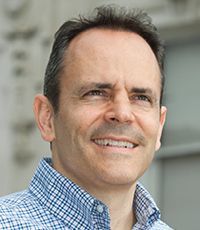
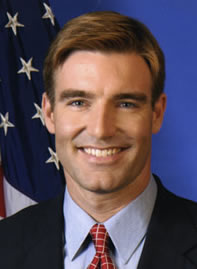
Let's start with Kentucky's Governor race. As we left it, it appeared the Attorney General Andy Beshear (D), son of former Kentucky governor Steve Beshear, had narrowly defeated Governor Matt Bevin (R) by just over 5000 votes or a margin of 0.36%. However, Governor Bevin refused to concede, citing possible voting "irregularities".

As a result, Bevin called for a recanvassing. Speaking from personal experience, voting "irregularities" in Kentucky are more common than not, so I can't say I blame him. Nevertheless, if Bevin was expecting to see the gap needed to win close, he was mistaken. None of the areas in question (mainly in the sparsely populated counties of Eastern Kentucky) could account for the 5189 votes he needed to pull out a victory. On Thursday, November 14th, the recanvassing was completed and not much changed. Beshear had won and Matt Bevin was out.

Bevin had counted on President Trump's popularity to help him win. However, what he failed to take into consideration was that Trump had lost much of his popularity among Kentuckians since 2015. Since taking office, Trump's approval rating across Kentucky has declined by almost 25%. Still, he remains popular among large segments of the population, especially in rural Kentucky but not in the heavily populated urban centers like Louisville, Lexington, or even Bowling Green for instance.

Secondly, Bevin had been ranked as the most disliked governor in the U.S. earlier in 2019 (he rose one place, to 49th, in the third quarter). The moral of the story is that if the voters don't like you, attaching yourself to a more popular figure typically won't be enough. Bevin should have focused more his accomplishments such as increasing corporate investments in the state to $9.2 billion dollar; nearly two times the previous record set in 2015 of $5.1 billion, which translates into more jobs and an increase in the tax base. He fully funded the Actuarially Required Contribution (ARC), the first administration to do so for instance.

Instead, his opponent, Andy Beshear, set the tone by making the race about Bevin's "abrasive" personality. Like it or not, politics is a popularity contest. If voters have a favorable opinion of someone, be it their appearance or personality (it's called "relatability"), they'll likely give them their vote. If not, they won't, no matter how positive their record is. Yeah, it's pretty shallow and no way to elect representatives, but that's the way it is. The average voter rarely takes time to research a candidate's position on issues or their political record. I guess that's why those who promise the most seem to the best.

Earlier we took a look at America's vanishing Middle Class. As just about all of know, it keeps getting harder to make ends meet. We seem to increasingly have "more month than money". The gap between the rich and everyone has steadily been increasing for decades. According to an article in the May edition of Forbes, the richest top 10% control 70% of the wealth just in America, an increase 10% over the last ten years. Meanwhile, the top 1% controls over 1/3 of all the wealth. The article went on to say that the bottom 50% saw a net zero gain over the last 30 years.

In another article, this one from the St. Louis Federal Reserve, pointed out that in 1989 the top 10% controlled 42% of the nation's wealth. The middle 50% - 90% had the same--42%---and the poorest segment about 15%. In 2016 that had changed. The top 10% had 50% of the total wealth while the middle 50% - 90% had just 37% and the poorest shrunk to 13%.
America has gone from being a democratic or representative Republic to being a defacto Oligarchy, leaving us (for the time being) the illusion of choice when it comes to elections. America's political system is broken beyond "reform" (whatever that means). We need to end partisan controlled gerrymandering, impose term limits, and end "Citizens United" which gives "person-hood" to corporations while equating free speech with unlimited financial contributions (though it still caps what flesh and blood citizens can give), allow equal access of candidates and parties, as well as citizen referendums.

Here's an interesting aside to consider. As anyone who has run for office knows, it takes a lot of money to get elected. Money, after all, is what you need to buy name recognition and get your message out there. Without it, you might as well not exist. If you want to run for the U.S. Senate, you better have $10 million just to get in the game. Think a U.S. Representative may be a better way to go? Great. Count on coughing up at least $5 million. Hillary Clinton spent $1.4 billion in running for president and still lost.

Statewide elections can be just as expensive. In 2002, Texas millionaire Tony Sanchez ran to become the state's first Hispanic Governor. He spent $65 million dollars to unseat Governor Rick Perry...and lost. In the 2018 Illinois Governor race, Democrat Jay Bob ("J.B.") Pritzker raised $175.1 million dollars to his opponent, Bruce Rauner's $79.7 million.

In Florida's 2018 Governor's race, Republican Rick DeSantis raised just under $59,000,000.00. His opponent in the race, Democrat Andrew Gillum, raised $55,062,506.84. Many political consultants will tell you that unless you can raise at least $20 million dollars, stay away from the top jobs. Even the down ticket offices are going to set you back a pretty penny.

Thanks to Citizens United, corporations now underwrite these campaigns, backing the candidate they believe will best serve their interests...not ours. Once elected, their lobbyists ensure that politicians toe the line by "helping" write legislation, ensuring that certain bills get voted up or down, and funding reelection war chests (aka "Leadership" PACs) not to mention all sorts of indirect bribes. Once a politicians (or even senior staffer) decides to hang it up, they tend to become lobbyists, political consultants, or Wall Street executive, thus perpetuating the cycle. Who do we have to look out after our interest? Absolutely no one, and that's not likely to change any time soon without a fight.

As you may have noticed, we haven't heard anything recently about the Kurds. When I last wrote about them in October, there was a ceasefire in place. The U.S. had withdrawn a small contingent of troops from Northern Syria in order to allow Turkish troops to freely invade the area and push back our allies, the Kurds, from the area. There was a real concern that prisons holding ISIS fighters and guarded by the Kurds, would be left unguarded, thus allowing thousands of dangerous ISIS fighters the opportunity to escape (which indeed happened at two locations). Also, pro-Turkish fighters were able to assassinate a popular Kurdish diplomat and peace advocate, Hevrin Khalaf, along with eight others in a ambush.

Nevertheless, the situation did create a unique opportunity for the U.S. military. With the pullback of the American troops and announcement by President Trump of a pending American withdrawal of troops, the head of ISIS, Abu Bakr al-Baghdadi, came out of hiding...albeit briefly. He had been long targeted by U.S. Special Forces who, it would appear, were just waiting for the right opportunity. That opportunity came on the evening of October 27th when members of the super secret Delta Force chased the ISIS leader into a cave outside of Syrian town of Barisha where, using a suicide vest, he blew himself up along with three of his children.

As for the Kurds, U.S. intelligence agencies (principally the CIA's Special Activities Division), confirmed that the Kurdish led Syrian Democratic Forces (SDF) provided essential intelligence information as to the movement of key ISIS leaders, including that of al-Baghdadi, as well as information regarding his compound and security. The U.S. State Department added that the attack was delayed briefly after President Trump announced the troop pullback ahead of the Turkish invasion of Northern Syria.

Nevertheless, SDF as well as the Iraqi Kurds, continued to provide highly credible intelligence deep from within both ISIS and al-Baghdadi's inner circle, once again proving their importance as valuable American allies in the region. Shortly after al-Baghdadi's death, the second in command and ISIS spokesman, Abdul Hasan al-Muhajir, was killed in an airstrike thanks to information provided by the Kurds.

As a brief aside, it should be noted that Turkey's President Erdogan has repeatedly stated that he considers Kurdish nationalism to be a greater threat to Turkey and the region than that of ISIS and a Islamic Caliphate. We need to bear this in mind given that Turkey, which is 98% Muslim, is a major player in NATO and a key economic trading partner with the European Union.

The Kurds having been living in the same area---northwestern Iran, northern Iraq, northern Syria and southeastern Turkey--- for nearly 5000 years. The majority belong to the Shafi'i sect of Sunni Islam, there are also enclaves of Christians, Shia Islamists, Yazidisms, Zoroastrianists, Alevists and Yarsamists. They have been the victims of countless purges, exiles, and genocide. However, I should point out that part of the land they've long claimed also contains some of the richest oil and gas reserves in the region, so this is much more than about mere "nationalism" or a homeland for a persecuted people.

While Turkey is mostly Muslim, it's also mostly secular with strong connections to the West. An Islamic State could change that. It would certainly destabilize Turkey and even possibly push it toward religious extremism. One could imagine how that would affect its role in NATO or as a reliable trading partner. Meanwhile, the majority of Kurds have been forced to move to safer territory in Northern Iraq as they have time and again over the centuries.

So that, as Paul Harvey so often said, is the rest of the story. As a writer, I felt it was necessary to put a final statement on each of these stories, which had been left open do to the ongoing nature of events at the time. You, the reader, deserve nothing less than the full story.


Kentucky Republican Gov. Matt Bevin concedes to Dem Andy Beshear in reelection bid


America's Humongous Wealth Gap is Widening Further


What Wealth Inequality in America Looks Like: Key Facts and Figures

Kurdish informant provided key intel in operation that killed ISIS leader Abu Bakr al-Bagdadi


Friday, October 09, 2015

The Illusion of Choice: Surveys and Polls

A few nights ago the AFL-CIO called me with one of those pre-recorded surveys designed to sound like a "real" person was on the other line. I'm fine with that. I actually don't mind answering their questions (at least some of them. They are certain questions that I
won't answer such as household income). Nevertheless, this survey centered on the upcoming Governor's race.

The survey started off by thanking me for my willingness to participate and added that I had been "chosen" because of my political participation in the past. While I didn't realize there were folks keeping track of my previous political involvement, I decided to play along. The first question asked me if I was aware that Republican Matt Bevin and Democrat Jack Conway were running for Governor of Kentucky. However, no mention was made of the Independent, Drew Curtis, which I found odd.

The next question asked me if I was Democrat or Republican or unsure. As everyone knows, I'm a Independent, so I guess that puts me in the "unsure" camp. Apparently whoever put the survey together doesn't consider Indies as a valid political philosophy or is aware that Independents are the largest voting bloc in America. The next question asked me if I leaned Republican or leaned Democrat. Well, like most Americans, I'm a Centrist. Is that Left leaning or Right leaning I wondered? Fortunately, there was a third choice----unsure, which was apparently inserted in case the respondent couldn't make up their mind whether they preferred to be accused of being a "Socialist" or a "Nazi". The reason I selected "unsure" is simply because I don't believe the political Left or the Right has got it right. Like most people, I support the Left on some issues, mostly social and the Right on other issues such as small government and tax overhaul.

I was then asked who I voted for in the last presidential election---Democrat Barack Obama or Republican Mitt Romney or the ubiquitous "some other candidate" as if there was really just two choices but if I had to be difficult, I could pick someone else. I really had a hard time trying to imagine who in their right mind would admit voting for Barack Obama these days but then again, who in their right mind would admit voting for Mitt Romney? It reminded me of being a kid and having to chose between chocolate or vanilla ice cream when all I really wanted was strawberry. So, I dutifully picked "some other candidate".

I guess they weren't satisfied with my answers, and so in another attempt to pin me down, I was asked who I voted for in the last race for governor---Democrat Steve Beshear or Republican David Williams, or (again) "some other candidate"? Well, once more, I opted for the latter just to maintain the consistency. After all, if I was going to buck the system, I wasn't going to be wishy washy about it. The survey closed with the usual questions "for statistical purposes" so they can attempt to identify their demographics (which is kind of interesting. If I was "selected" because of my past political activity as they said at the beginning of the survey, wouldn't they already know my demographic values?). I was asked to select an age range, which I did. The worse thing about that was that I was second from the last grouping ("65 or older"). That sure didn't help with my self-esteem. It made me feel as if I was slowing being ushered of the stage! Anyway, they asked my race (including "other" and "decline to say" which I thought was pretty cool). I was then asked to identify my gender. Apparently you still have to chose between male or female. (sorry Bruce...err...Caitlyn), and my zip code. I was a little surprised they didn't ask for my highest level of education completed, but maybe "skoolin" isn't considered an important value in determining potential voters for Governor.

This wasn't the only gubernatorial survey I've received recently. A few days before this survey, I received a "live" phone call from a somewhat husky sounding female who was calling on behalf of the UAW. I have to admit, this was a much more pleasant phone call. I guess that's because I was speaking with an honest to goodness human being, which made me like my opinion was a bit more important than the pre-recorded ones I get from an autodialer. I suppose that's also because I can ask questions back, which I consider important given my quizzical nature. The caller thanked me for taking the time to answer their questions, and volunteered that I was chosen because I was identified as "politically active", as well as "Democrat leaning" and a union official, which I found interesting on several levels.

I haven't been a registered Democrat since 2003 when I was forced to switch due to some unremitting harassment the local party refused to address for not actively supporting my 2001 Metro Council opponent (he had switched from Republican to Democrat at the behest of the State Democratic Party even though he had never been involved in politics or a consistent voter. In addition, I had been asked to run for Metro Council by the local Democratic Executive Committee and other local party leaders). I had been a long time mid level officer in the local Democratic Party organization and a prominent community activist, however, the state party leadership didn't think I could be controlled and wanted someone else. I had also been the state chairman of a national writers union for several years and served on the national steering committee as well as having served on the veterans and Victory Pac committees plus the AFL-CIO Central Labor Council (my wife is also a retired Teamster). After that, I was aggressively recruited to run as a Republican for State Representative in 2004 against a sentimentally popular but unproductive Democratic incumbent of some 30 years (though I lost the race, I came within 1500 votes of winning in a strongly conservative Democratic district, which resulted in him opting not to run again). However, I've been "clean and sober" from any political party since around 2008, though I've kept my contacts on both sides.

Nevertheless, the questions were much like the other survey I mentioned, however, I did get to ask a few questions of my own. Specifically, I asked what kind of responses they were getting. She said most people had indicated little interest in the race. Most were focusing on the presidential election, especially on Donald Trump. She added that "The Donald" seems to have tapped into an underlining current of distrust bordering on distain for the federal government and especially on Obama. She also mentioned that of those who were keeping up with the gubernatorial race, most of the respondents held negative opinions about both Jack Conway and Matt Bevin. I asked about their feedback regarding the Independent, Drew Curtis (I had noticed that no mention of the Independent was made in either survey). She said that a number of those familiar with the race mentioned that they supported or leaned toward the Curtis. A few who didn't recall Curtis' name also indicated they wanted to know more about the third candidate.

Obviously, there's a couple of factors going on here. First, neither Bevin or Conway are particularly strong candidates. Conway has run for just about everything but keeps losing. People just can't relate to him and Conway, no matter what office he's running for, comes across as a spoilt rich brat with a sense of entitlement. Matt Bevin seems to be popular with the Kentucky Tea Party set and the anti-Mitch McConnell and anti-GOP Establishment clique. However, Matt just seems to be unable to get his message out to a wider base, especially across party lines. Perhaps part of this is because people in general are sick and tired of "good ole party boys". They see both parties as inept, out of touch, corrupt, beholden to the corporate oligarchs and one percenters who are running America now. Of course, both parties continue to lose members while third parties and especially independents are growing. Indies are now the largest political segment of America, followed by Democrats and more distantly, Republicans. Within ten years, Indies are expected to outnumber Democrats and Republicans combined.

I guess the reason why neither survey (and I suspect this holds true for other surveys being conducted on the governor's race) mention the Independent's name or positions is because the race between Conway and Bevin is tight, and just perhaps, the sponsors of the surveys are trying to make voters think they only have two choices for governor. Perhaps too they are attempting to condition voters into choosing an "R" or a "D" as if that's all that matters when the reality is just the opposite. Even when it comes to debates, third party and independent candidates are rarely invited as if they candidacy is publicity stunt. Few people realize that the national Democratic and Republican parties have worked out a deal to keep everyone else out of the limelight and off the stage ever since they were grossly embarrassed by Ross Perot's performance. The corporate news media plays along and downplays, ignores, and makes fun of just about every third party or independent who comes along. It's like being onboard the Titanic and throwing ice cubes at the approaching iceberg! All the Indies and third parties are truly missing is charismatic candidates with a good campaign organization. Of course, they're going to need money, however, the corporate oligarchs who control the power in this country also control the money flow in politics (remember the Citizens United misruling by the not-so-Supreme Court?), but it can still be done.

I think it's time that the average voters takes third party and Independent candidates more seriously. Obviously, like most of us, they're are just as fed up, turned off, and discouraged by our broken political system as everyone else is, except they're willing to step forward to try and do something about the mess both parties and their benefactors have created. Most are closer to our ideals about common sense government than either party and let's face it, with more people leaving the other two parties and registering as Independent, the political tide is on their side. Besides, if the corporate news media and both political parties are so opposed to them, they almost have to be the better choice by definition! Finally, remember that the only endorsement which ultimately matters is your vote.


Drew Curtis for Governor
http://drewcurtis.nationbuilder.com/

Matt Bevin for Governor
http://www.mattbevin.com/

Conway Overly for Kentucky
https://conwayoverly.com/