Showing posts with label Matt Bevin. Show all posts

Saturday, November 16, 2019

Tying Up Loose Ends: A Last Word on Three Stories


Over the past several weeks, we've covered a wide range of topics, from the situation in Syria and the plight of the Kurds, to the vanishing middle class, and Kentucky's state races. However, we've not quite finished the stories, which were still pretty fluid at the time. Personally, I hate to be left hanging; not knowing what finally happened; the "coda" as it were. I guess that hearkens back to the legendary Paul Harvey and his famous "rest of the story" format (I loved to listen to Harvey back in the day). So, with this edition of A/O, we're going to step back and take a parting look at some of the stories we've recently covered.

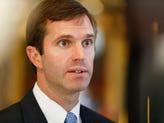
Let's start with Kentucky's Governor race. As we left it, it appeared the Attorney General Andy Beshear (D), son of former Kentucky governor Steve Beshear, had narrowly defeated Governor Matt Bevin (R) by just over 5000 votes or a margin of 0.36%. However, Governor Bevin refused to concede, citing possible voting "irregularities".

As a result, Bevin called for a recanvassing. Speaking from personal experience, voting "irregularities" in Kentucky are more common than not, so I can't say I blame him. Nevertheless, if Bevin was expecting to see the gap needed to win close, he was mistaken. None of the areas in question (mainly in the sparsely populated counties of Eastern Kentucky) could account for the 5189 votes he needed to pull out a victory. On Thursday, November 14th, the recanvassing was completed and not much changed. Beshear had won and Matt Bevin was out.

Bevin had counted on President Trump's popularity to help him win. However, what he failed to take into consideration was that Trump had lost much of his popularity among Kentuckians since 2015. Since taking office, Trump's approval rating across Kentucky has declined by almost 25%. Still, he remains popular among large segments of the population, especially in rural Kentucky but not in the heavily populated urban centers like Louisville, Lexington, or even Bowling Green for instance.

Secondly, Bevin had been ranked as the most disliked governor in the U.S. earlier in 2019 (he rose one place, to 49th, in the third quarter). The moral of the story is that if the voters don't like you, attaching yourself to a more popular figure typically won't be enough. Bevin should have focused more his accomplishments such as increasing corporate investments in the state to $9.2 billion dollar; nearly two times the previous record set in 2015 of $5.1 billion, which translates into more jobs and an increase in the tax base. He fully funded the Actuarially Required Contribution (ARC), the first administration to do so for instance.

Instead, his opponent, Andy Beshear, set the tone by making the race about Bevin's "abrasive" personality. Like it or not, politics is a popularity contest. If voters have a favorable opinion of someone, be it their appearance or personality (it's called "relatability"), they'll likely give them their vote. If not, they won't, no matter how positive their record is. Yeah, it's pretty shallow and no way to elect representatives, but that's the way it is. The average voter rarely takes time to research a candidate's position on issues or their political record. I guess that's why those who promise the most seem to the best.

Earlier we took a look at America's vanishing Middle Class. As just about all of know, it keeps getting harder to make ends meet. We seem to increasingly have "more month than money". The gap between the rich and everyone has steadily been increasing for decades. According to an article in the May edition of Forbes, the richest top 10% control 70% of the wealth just in America, an increase 10% over the last ten years. Meanwhile, the top 1% controls over 1/3 of all the wealth. The article went on to say that the bottom 50% saw a net zero gain over the last 30 years.

In another article, this one from the St. Louis Federal Reserve, pointed out that in 1989 the top 10% controlled 42% of the nation's wealth. The middle 50% - 90% had the same--42%---and the poorest segment about 15%. In 2016 that had changed. The top 10% had 50% of the total wealth while the middle 50% - 90% had just 37% and the poorest shrunk to 13%.
America has gone from being a democratic or representative Republic to being a defacto Oligarchy, leaving us (for the time being) the illusion of choice when it comes to elections. America's political system is broken beyond "reform" (whatever that means). We need to end partisan controlled gerrymandering, impose term limits, and end "Citizens United" which gives "person-hood" to corporations while equating free speech with unlimited financial contributions (though it still caps what flesh and blood citizens can give), allow equal access of candidates and parties, as well as citizen referendums.

Here's an interesting aside to consider. As anyone who has run for office knows, it takes a lot of money to get elected. Money, after all, is what you need to buy name recognition and get your message out there. Without it, you might as well not exist. If you want to run for the U.S. Senate, you better have $10 million just to get in the game. Think a U.S. Representative may be a better way to go? Great. Count on coughing up at least $5 million. Hillary Clinton spent $1.4 billion in running for president and still lost.

Statewide elections can be just as expensive. In 2002, Texas millionaire Tony Sanchez ran to become the state's first Hispanic Governor. He spent $65 million dollars to unseat Governor Rick Perry...and lost. In the 2018 Illinois Governor race, Democrat Jay Bob ("J.B.") Pritzker raised $175.1 million dollars to his opponent, Bruce Rauner's $79.7 million.

In Florida's 2018 Governor's race, Republican Rick DeSantis raised just under $59,000,000.00. His opponent in the race, Democrat Andrew Gillum, raised $55,062,506.84. Many political consultants will tell you that unless you can raise at least $20 million dollars, stay away from the top jobs. Even the down ticket offices are going to set you back a pretty penny.

Thanks to Citizens United, corporations now underwrite these campaigns, backing the candidate they believe will best serve their interests...not ours. Once elected, their lobbyists ensure that politicians toe the line by "helping" write legislation, ensuring that certain bills get voted up or down, and funding reelection war chests (aka "Leadership" PACs) not to mention all sorts of indirect bribes. Once a politicians (or even senior staffer) decides to hang it up, they tend to become lobbyists, political consultants, or Wall Street executive, thus perpetuating the cycle. Who do we have to look out after our interest? Absolutely no one, and that's not likely to change any time soon without a fight.

As you may have noticed, we haven't heard anything recently about the Kurds. When I last wrote about them in October, there was a ceasefire in place. The U.S. had withdrawn a small contingent of troops from Northern Syria in order to allow Turkish troops to freely invade the area and push back our allies, the Kurds, from the area. There was a real concern that prisons holding ISIS fighters and guarded by the Kurds, would be left unguarded, thus allowing thousands of dangerous ISIS fighters the opportunity to escape (which indeed happened at two locations). Also, pro-Turkish fighters were able to assassinate a popular Kurdish diplomat and peace advocate, Hevrin Khalaf, along with eight others in a ambush.

Nevertheless, the situation did create a unique opportunity for the U.S. military. With the pullback of the American troops and announcement by President Trump of a pending American withdrawal of troops, the head of ISIS, Abu Bakr al-Baghdadi, came out of hiding...albeit briefly. He had been long targeted by U.S. Special Forces who, it would appear, were just waiting for the right opportunity. That opportunity came on the evening of October 27th when members of the super secret Delta Force chased the ISIS leader into a cave outside of Syrian town of Barisha where, using a suicide vest, he blew himself up along with three of his children.

As for the Kurds, U.S. intelligence agencies (principally the CIA's Special Activities Division), confirmed that the Kurdish led Syrian Democratic Forces (SDF) provided essential intelligence information as to the movement of key ISIS leaders, including that of al-Baghdadi, as well as information regarding his compound and security. The U.S. State Department added that the attack was delayed briefly after President Trump announced the troop pullback ahead of the Turkish invasion of Northern Syria.

Nevertheless, SDF as well as the Iraqi Kurds, continued to provide highly credible intelligence deep from within both ISIS and al-Baghdadi's inner circle, once again proving their importance as valuable American allies in the region. Shortly after al-Baghdadi's death, the second in command and ISIS spokesman, Abdul Hasan al-Muhajir, was killed in an airstrike thanks to information provided by the Kurds.

As a brief aside, it should be noted that Turkey's President Erdogan has repeatedly stated that he considers Kurdish nationalism to be a greater threat to Turkey and the region than that of ISIS and a Islamic Caliphate. We need to bear this in mind given that Turkey, which is 98% Muslim, is a major player in NATO and a key economic trading partner with the European Union.

The Kurds having been living in the same area---northwestern Iran, northern Iraq, northern Syria and southeastern Turkey--- for nearly 5000 years. The majority belong to the Shafi'i sect of Sunni Islam, there are also enclaves of Christians, Shia Islamists, Yazidisms, Zoroastrianists, Alevists and Yarsamists. They have been the victims of countless purges, exiles, and genocide. However, I should point out that part of the land they've long claimed also contains some of the richest oil and gas reserves in the region, so this is much more than about mere "nationalism" or a homeland for a persecuted people.

While Turkey is mostly Muslim, it's also mostly secular with strong connections to the West. An Islamic State could change that. It would certainly destabilize Turkey and even possibly push it toward religious extremism. One could imagine how that would affect its role in NATO or as a reliable trading partner. Meanwhile, the majority of Kurds have been forced to move to safer territory in Northern Iraq as they have time and again over the centuries.

So that, as Paul Harvey so often said, is the rest of the story. As a writer, I felt it was necessary to put a final statement on each of these stories, which had been left open do to the ongoing nature of events at the time. You, the reader, deserve nothing less than the full story.


Kentucky Republican Gov. Matt Bevin concedes to Dem Andy Beshear in reelection bid


America's Humongous Wealth Gap is Widening Further


What Wealth Inequality in America Looks Like: Key Facts and Figures

Kurdish informant provided key intel in operation that killed ISIS leader Abu Bakr al-Bagdadi


Saturday, November 09, 2019

2019 Kentucky Election: The Aftermath


Tuesday's election should set aside any further discussions about which side of the fence Kentucky is on. With a near perfect sweep of offices by the Kentucky Republican Party, the state is now firmly "red". The GOP took all of the Constitutional offices, including the two most important, the Attorney General and the Secretary of State. The only office where the Republican Party didn't fare so well was the top seat, the Governor's office, but more on that latter. Let's look at some of the key offices first.

The incumbent, Allison Ball (R), out performed her opponent, Michael Bowman (D) convincingly, winning by a 300,935 spread with 69.7% of the vote to 39.3% in the race for Treasurer. As I wrote previously, Allison had the better qualifications. Her opponent, Michael Bowman was simply outmatched and outspent (Ball raised close to $200,000 compared to Bowman who raised close to $40,000).

That's not to say that Bowman is wrong for political office. He certainly has some good experience, however, I think shooting for a statewide office at this stage of his political career without previously holding an elected office and, frankly, lacking the level the same level of education and professional experience as Allison, was reaching too far. As for Allison, I think she has a very bright future ahead of her in politics. She's not just quite intelligent and responsive to citizens, but very personable as well. Kentucky did well to reelect Allison Ball as its State Treasurer.

In the State Auditor's race, it was again the incumbent who won convincingly. Incumbent Mike Harmon (R) garnered 55. 7% of the vote compared to his opponents Sheri Donahue (D) and Kyle Hugenberg (L) who received 41.0% and 3.3% respectively. The actual vote difference was 204, 960 between Mike and Sherri with Kyle capturing 46,562 (obviously, even if the Libertarian wasn't in the race, the outcome wouldn't have changed).

Once more this was a more experienced individual winning out. Like Allison, Mike Harmon is a very intelligent and responsive. Sherri has an excellent professional and academic background, however, with a degree in Industrial Engineering and professional experience more in the cyber security field, it simply wasn't a good match for the seat she was seeking. Sherri would do well to find a position within government rather than through elected office.

In Kyle's case, it's a bit different. Both his education and experience are in accounting, which matches up well with Auditor. What he lacked was the political expertise and, of course, money which buys the necessary exposure. Given that he ran as something other than one of the two corporate owned parties, the only exposure he's going to get is what he can buy.

Next was the Secretary of State's office. This was particularly interesting election since it pitted a well known veteran's advocate, former Second Lady of Kentucky, and a Miss America against a much less known election law attorney. Nevertheless, it was the attorney who won. Michael G Adams (R) won the seat with 52.3% of the vote compared to the Democrat, Heather French Henry's 47.7%. The actual numerical difference was 64,562 votes. So why did the better known and, frankly, more popular candidate lose?

Heather French Henry has been in the public eye ever since she won the Miss Kentucky Pageant back in 1999. She went on to win the Miss America title the following year. Heather has also been a pro-active advocate for veterans from the beginning of her public career. Her husband, Steve Henry, is a well known orthopedic surgeon and equally involved in veteran issues. He was elected Lt. Governor in 1995. One or the other always attended my district meetings when I was 3rd District Commander of the DAV along with our state conventions.

Steve ran into some legal issues. He was charged with campaign finance law violations in 2007, resulting in Steve having to personally assume financial responsibility for $600,000 dollars in loans, a $10,000 fine, and a 12 month prison sentence. However, both Steve and Heather have remained popular with veterans, with Heather serving as State Commissioner and Deputy Commissioner of Veteran Affairs.

Given recent legal problems within the Secretary of State's office over misuse of voter rolls, allegations of intimidation, and campaign election laws violations, voters seemed tired of the "business as usual" mishandling of the office. In addition, Kentuckians clearly want to modernize a outdated election system. Adams, an election law attorney, appeared the best person for the job. Furthermore, Adams had a better grasp of the nuances of the office than Henry did. In the end, it was experience over popularity
.
The second most important office in the state is Attorney General. The office isn't just the state's top lawyer, it's been used as the governor's chief enforcer as well as the governor's chief opponent. This was on full display when Greg Stumbo (D) was elected AG in 2003 and set about hamstringing Governor Ernie Fletcher (R) at every turn. Personally, I believe the office should be strictly non-partisan, along with most of the Constitutional offices. The Attorney General should focus solely on legal issues, not engage in partisan politics, and apparently Kentucky voters agreed this time around.

Faced between the political "retread", Greg Stumbo, who was seeking to reprise his role as "Chief Legal Obstructer" and a political newcomer with some serious political ties to Majority Leader, Senator Mitch McConnell, Daniel Cameron. Stumbo tried desperately to link Cameron to Senator McConnell (which wasn't hard to do since he served as his attorney) and his role as a Washington lobbyist. Senator McConnell isn't exactly a popular figure in Kentucky politics. Not even many Republicans like him that well, and no one likes lobbyists.

By the way, Cameron also happens to be black, a non-issue with voters, and while Cameron isn't the first person of color to run for a statewide office, he is far from the first to win elected office either in Kentucky on the Republican ticket. In fact, the current Lt. Governor, Jenean Hampton (R), happens to be black too. Color is not a barrier in Kentucky politics despite some--mainly from the Left---trying to make it one by accusing Cameron of not caring enough about black issues and being out of touch with the black community.

So, how well did Daniel Cameron do against Greg Stumbo? Pretty well as it turned out. Cameron won with 57.8% of vote compared to Stumbo's 42.2%; a voter margin of 221,125. In terms of money, Stumbo raised right around $560,000 while Cameron was able to raise just over $836,000 (with a lot of help from McConnell no doubt). Clearly Kentuckians were ready for a change, and as I previously wrote, it's time for Greg Stumbo and those like him to disappear from the political scene.

Perhaps the most continuous race was for governor. In fact, despite the election results, the race hasn't been settled yet. The current governor, Matt Bevin (R) is calling for a recanvassing, citing some "irregularities" in the ballots. Of course, that's nothing new in Kentucky politics! Voting "irregularities" are almost tradition like bourbon and horse racing. Speaking from personal experience, there was a great deal of electioneering and questionable ballot casting when I ran for Metro Council back in 2001.

So, let's look at the results as they now stand. Andy Beshear (D), son of former governor Steve Beshear, appears to be the winner with 709,846 votes to Governor Bevin's 704,760, a difference of 5,086. Meanwhile Libertarian John Hicks got 28,442 votes. In terms of percentages, Beshear received 49.2% while Bevin got 48.8% and Hicks picked up 2.0%. It was by far the closest race of the evening.

There's been a number of Republicans attempting to blame John Hicks and the Libertarians for Matt Bevin's apparent loss. I will have to respectfully disagree with those who claim John Hicks was the "spoiler" in the election, which, as a result, threw the governorship to Andy Beshear. Those who voted for Hicks did so because they either supported his position on the issues (or at least most of them), particularly on medical marijuana, or because they simply disliked what the Republicans or Democrats were offering.

At least those voters cared enough about the election to bother showing up, unlike many of the Democrat or (especially) Republican voters who decided to stay at home. For that matter, one could make a solid argument that if the Republicans had a actual political party in Jefferson County instead of a East end clique, Bevin wouldn't have lost the county by over a 100,000 votes. The same argument could be made for the GOP in other counties in the state as well except the other Republicans candidates did pretty well, so perhaps Bevin and not Hicks is to blame after all.

Claiming that a third party candidate or an Independent is no better than a "spoiler" or "wasted" vote presupposes that the current corporate controlled duopoly is the only legitimate form of government, which I find to be absolutely preposterous. What it demonstrates is that 28,000+ Kentuckians didn't like either the Democrat or Republican choice for governor. In addition, despite the media's misrepresentation, Indies are the largest voting bloc in the country and growing while the Democrat and Republican parties are shrinking. Indies and third parties, especially Libertarians, are also growing in Kentucky. It's time that attitudes change regarding non-conforming candidates.

Lastly, for all the Democrats gloating about winning the governorship (technically), here's a little reminder. Matt Bevin was for most of early 2019 the most disliked governor in America. Just recently he moved up a notch to the second most disliked governor in American (the "honor" of the most disliked went to Massachusetts Governor, Charles Baker). That means Andy Beshear barely beat someone at the bottom of the list of governors. Honestly, that's nothing to brag about folks.

So, what's the takeaway? First and foremost, Kentucky is squarely in the "red" column for the foreseeable future. A Beshear Administration will face a super majority in Kentucky Legislature (both the House and Senate are controlled by the GOP), as well as all the state's Constitutional office, including the powerful Attorney General. Plus all but one of Kentucky's federal offices are held by Republicans starting with powerful Senator Mitch McConnell. Beshear, while a Democrat, is going to be playing by Republican rules or find himself basically impotent as governor. Of course, all this presupposes that Bevin's recanvassing doesn't change the results which in all likelihood it won't. Additionally, Bevin tied himself closely to President Trump.

Trump was at one time very popular with Kentucky voters. Not so any more. His popularity rating has dropped about 20%. Anyone attempting to ride Trump's coattails as Bevin did may find them very short indeed. McConnell's popularity isn't great either, just 18%, which is the same as Congress. Cameron was successful primarily because the unpopularity of his opponent was greater than that of McConnell. Lastly, third parties and Indies are on the rise in the state. Get use to it. The winds of change are blowing, even in the hollers of Kentucky.

Lastly, a big shout out to all my fellow veterans, especially the disabled veterans out there on this Veterans Day. Thank you for everything...literally. Fair winds and calm seas to all.

Sunday, November 03, 2019

The 2019 Kentucky Election: The Main Event---Attorney General and the Governorship


The second most important political office in Kentucky is Attorney General. Although it's officially a "law enforcement" office, it's typically been used as the "Anti-Governor" office, depending on the political allegiance of the other occupant. It's also the office best suited for a future run for Governor. Again, this is another open seat. The two candidates are Daniel Cameron (R) and Greg Stumbo (R). Both candidates are, as required, lawyers; having both graduated from University of Louisville's Brandeis School of Law, but that ends the similarities.

Daniel Cameron is basically a political newbie. He clerked for Federal Judge Greg van Tatenhove in Eastern Kentucky for two years. He then served as Senator Mitch McConnell's general counsel, and is generally regarded as being McConnell's political protégé. Cameron regards himself as a strict Constitutionalist and says that he will try and "depoliticize" the office. He also says that he will work closely with "Trump-appointed" federal prosecutors, especially in going after drug traffickers (a major problem in Eastern Kentucky). He does not support expanded gaming and is strongly "Pro-Life". Finally, he cites having strong Christian beliefs and believes in active political engagement by fellow Christians.

Greg Stumbo is the quintessential Kentucky "good ole boy" in every way. A dyed-in-the-wool Democrat and icon of the state's backward status quo image. He's what Kentuckians call a political "retread". He has served as State Representative, State Senator (including Speaker of the House), and previously as the Attorney General opponent of Republican Governor Ernie Fletcher (the first GOP governor since 1969. Stumbo did everything in his power to challenge and derail Fletcher. As an aside, he had also served as AG under the previous governor, Steve Beshear).

He cites his 40 years as a trial advocate and prior experience as his best qualifications. Though he cites the importance of family values, it's worth nothing that Stumbo fathered a child out of wedlock, denied paternity, and was successfully sued for back child support. Stumbo is known to be very cunning; even devious, making him a tough opponent. According to Stumbo, he will focus on the opioid crisis, consumer scams, and Medicaid fraud. Although he acknowledges that the AG office has no role in expanding gaming, he's a supporter.

There's no doubt that Greg Stumbo knows the job. He knows it in ways that only an insider could. Stumbo is part of what's wrong with Kentucky in every sense of the word. While no political office should be "politicized", this is especially true of Attorney General, which should be a non-partisan office to begin along with most of the other Constitutional offices. Greg Stumbo, in my opinion, needs to be consigned to the Kentucky's "dustbin of history"; a product of a bygone and soon-to-be forgotten era. Nevertheless, despite Cameron's association with McConnell, his fresh approach may just be what Kentucky needs.

Matt Bevin is the least popular governor in America, at least according to a Morning Consult poll. In July 2019, his disapproval rating was 56%. He's now the second least popular governor. Massachusetts' Charlie Baker has that honor. As an aside, Mitch McConnell was the least liked US Senator. Still, Governor Bevin has brought Kentucky into the 21st Century, albeit kicking, screaming, and biting the whole way.

The Colorado born and New Hampshire raised governor is a businessman by profession. He earned a BA Degree in East Asian Studies from Washington and Lee University in Virginia on a ROTC scholarship, becoming fluent in Japanese. Bevin is also former military, having risen to the rank of Captain. Matt has been around the political block so to speak a few times at well.

In 2011 he considered a run against incumbent Representative John Yarmuth (D), but backed off after determining that partisan gerrymandering had made a run all but impossible to win (Bevin claimed that Senator Mitch McConnell had recruited him to run. McConnell's office denied it). In 2014 he challenged Senator McConnell for his seat and lost with 35.42% of the vote. As an aside, McConnell and Bevin haven't exactly been best of pals since.

In 2015, Bevin ran for governor, but unlike his opponents in the primary and general elections, focused on economic rather than social issues. He won, narrowing beating James Comer (R) in the primary by 30.90% to 30.87% (or 43 votes). He later beat Jack Conway (D), the state's Attorney General in the general election by successfully linking him with the hugely unpopular President Barack Obama.

There's been a lot of controversy during Bevin's tenure in office; some of it real while much of it smoke and mirrors by the local media such as over the delinquent taxes and a "sweetheart" sale of a house. However, Bevin did gut Kynect, the state's insurance exchange, cut Medicaid dental and vision coverage for about 460,000 Kentuckians (a computer glitch accidently included some children, disabled adults and pregnant women which made it worse). He also issued a cease and desist order to Planned Parenthood in Louisville, claiming that they lacked proper licenses and had "illegally" performed 23 abortions, although Governor Beshear's inspector general had just authorized their performance of the procedures prior to leaving office. Matt also caught a lot of flak by replacing his popular Lt. Governor, Jenean Hampton with Ralph Alvarado, a state senator with alleged ties to Senator McConnell.

Lastly, the teacher's strike. The Kentucky Education Association and the Jefferson County Teacher's Association are perhaps the state's most powerful unions. Bevin faced off with both over pension funding. For years , the pension system was grossly underfunded under Democratic administrations (and one Republican). Fed up, the teachers staged a series of "sick outs" and protests in Frankfort. Despite this, Governor Bevin was able, through the legislature, to fully fund the state's contribution portion, but you'd never know it by the response the unions and local media gave. Bevin has promised to continue work for long term sustainability of state pensions. He also increased individual funding per student to the highest amount in the state's history.

Perhaps the cold shoulder was because Bevin moved to make Kentucky a "Right to Work". Kentucky has always been a blue collar state, and while it was never exactly a "pro-union" state, it did have quite a few strong unions. However, those faded as the state lost many of its manufacturing companies and railroads, but it remains very much "working class". He has lower personal and corporate taxes by 17%, at least according to his website. Bevin also declared that Kentucky would not permit any so-called "sanctuary" cities or communities; this despite attempts by certain mayors. Lastly, Matt Bevin has tied his coattails to the President Trump as I pointed out earlier. Given the decline in the president's popularity, this may prove to be a curse more than a blessing.

Andy Beshear (D) is the son of the former governor, Steve Beshear. Like Matt, Andy sees education as a key issue in this election. He promises to increase teacher pay and further increase funding for schools. How? He doesn't say, but I suspect it will mean a tax increase for somebody. He also promises to reduce class sizes, which means we'll need more teachers and classrooms.

Beshear also promises to reduce drug costs for seniors, aggressively pursue the opioid crisis, stop robocalls and scammers, increase funding for the Seniors Health Insurance Program, restore voting rights for felons who've served their time, reduce the costs of attending public universities and technical schools, expand gaming, support medical marijuana, end "Right to Work", promote marriage equality (ie: gay marriage), and attract more decent jobs. Finally, Andy Beshear is on the record as being pro-choice.

I couldn't find any specific details about how he intends to accomplish any of these, which will obviously require the support of the legislature (the Kentucky Senate is controlled by the Republicans and the democrats narrowly control the House). It will also require a great deal of money, and that means tax increases. Kentucky is ranked 24th in highest taxes (23rd for businesses). You can't attract businesses by raising corporate taxes. That means personal and consumption taxes---gas, property, sales, and a myriad of others. Kentucky's infrastructure is ranked 34th in the nation while its quality of its healthcare and financial stability are ranked 44th and 45th respectively (the state is ranked 40th overall).

Beshear's choice for Lt. Governor is Jackie Coleman, a teacher and current assistant principal from Mercer County. She is also founder of Lead Kentucky, a non-profit which helps women in college obtain leaderships positions both on and off campus. She is also a participant of Emerge Kentucky which trains Democratic women to seek public office.

Finally, we come to the third candidate in the governor's race. Libertarian John Hicks. John is a Vietnam Era Army veteran, a former school teacher, and currently an IT consultant. He has a BA Degree in Political Science and History. He has never held political office, but ran previously for State Representative (District 43) in 2018. John is pro-life and believes government should stay out of personal issues.

John supports the legalization of marijuana, expanded gaming, and the development of hemp as sources of additional state revenue (better than raising taxes!). He also believes that the best way to compensate for budget shortfalls is to reduce the size of government and streamlining operations. Additionally, John Hicks supports election reform; specifically by introducing run-offs, using ranked choice voting, proportional representation, multi member districts which would end partisan gerrymandering.

On education, Hicks supports expanding education and, as he says, "removing any barriers" to obtaining access to education. Thus, he supports expanding work-visa programs for immigrants wanting to study at state schools. Regarding illegal immigration, he believes the current immigration system is "absurd" and those here illegally should be treated with "respect and humanity". He is also pro-Second Amendment, and stresses the need for individual liberty as well as limited government. His choice for Lt Governor is Ann Cormican, a factory employee. She has a BS Degree in Agricultural Economics from the University of Wyoming. She previously ran for State Representative (District 72) in 2018.

So, there you have it. I've met Governor Bevin on several occasions. I like him. He's interesting to listen to and has the necessary acumen of a successful businessman (and the same learning curve when it comes to politics). I agree with many of things Bevin has done as governor. However, there are also several things I disagree with (specifically his handling of the insurance crisis, dropping Jenean Compton, and his opposition to legalized medical marijuana).
As for Andy Beshear, I'm not impressed (I wasn't impressed with his father either). He talks a lot about what he opposes but not much about what he supports and how he's going to pay for it. That's something I'd like to know before casting my vote. His failure to provide details makes me nervous. I don't want to pay more taxes. I'm sure other Kentuckians don't either.

I do agree with Andy's positions on some issues (such as legalized marijuana) and expanded gaming (provided it doesn't all go to Churchill Downs). I think that gaming reform could be a major boon for increased tax revenue if it's done right. Same with legalized marijuana, which would also go a long way to ending the state's opioid problem. I've never met Andy, but the impression he creates is one of a privileged brat. He's depending heavily on his daddy's name (and he wasn't all that popular). I don't care for the negatively of either individual's campaigns, but understand that if the other side throws dirt, you throw manure. That's politics.

I do like John Hicks. Like him, I'm big on keeping government out of my personal life. In theory, I support a small government, but in practice believe government should be more elastic, depending on the economy. I am pro-Second Amendment, and I believe Kentucky has to do much more in terms of education. Employers are attracted by low tax rate, but they are equally attracted to a educated and trained workforce. Until we can provide that, the good paying jobs aren't coming. Kentucky need serious government, election, and tax reforms too. John's biggest flaw, as I see it, is his support of illegal immigration (which is a federal issue), and the fact that he's woefully underfunded. The fact that the media has all but ignored him doesn't help.

Lastly, I want to remind you that the local newspapers will be doing their "endorsements". I urge to completely ignore these. The media should be in the business of reporting the news fairly, honestly, and balanced, not trying to manipulate public opinion and influence elections in support of their agenda. Do your own research and make your own decisions. Don't let someone else---even a newspaper---decide for you. Voting is too important.


Stumbo's family values theme is plain phony


Matt Bevin no longer most unpopular governor in America in latest survey


USA News and World Report: Best States Ranked

Friday, April 08, 2016

KYNECT: My Experience with Kentucky's Health Exchange Network

It's not my habit or even inclination to write about local or state issues. I usually try to leave that to those who have the interest and, frankly, the connections. As the editor of Another Opinion, I try to keep the focus on the "big picture"; national and international events which affect everyone. I least of all like to write about myself. To be honest, I don't think I'm that interesting. But I must make an exception this time. This is a personal story which has to be told, not for my sake but the sake of others affected by Kentucky's health exchange, KYNECT, which has often (and erroneously) been billed as "America's Model Health Exchange" by former Governor Steve Beshear in response to the Affordable Care Act or as it's more commonly called, "Obamacare"; the healthcare law that isn't. This isn't my first go around with KYNECT, only the most recent. I will try to avoid using identifiable or real names of those I've dealt since many, if not all, are still employed and I have no bone to pick with any of them or desire to cause them harm in any way. Most were simply trying to do their job to the best of their ability and simply either lacked the proper training or authority. However, it was the system itself and the bureaucracy built around it which plays the primary role as villain in this little drama. So, with further ado, let's begin.

Like most Americans, one of the first projects I begin working on following New Year's, is gathering and sorting through piles of receipts, notes, and other documents in order to file my taxes; an annual ritual that most Americans both curse and gleefully anticipate like kids at Christmas in the hopes that dear ole "Uncle Sam" will be sending them money for new washers or dryers, or down payments on cars, boats, vacations, or whatever with stopping to realize that it's their money in the first place that they were denied use of for a year, but I digress. After dutifully gather all my paperwork together for 2015, I headed off to a professional tax preparer on February 13th. After dropping everything off and quick review, I headed home knowing that's one more problem off my plate and secure in the knowledge that they'll be done right while I focus on more mundane tasks like cleaning the garage. Alas, that wasn't to be this year. By the time I had arrived home, the tax preparer had called and left a message for me to call back. "That can't good" I thought, and I was right.

It turned out that KYNECT had sent a 1095A form, which meant nothing to me. As the tax expert matter-of-factly explained, it meant that we had been enrolled in a insurance program for which we didn't qualify for based on my wife's part time job and income reported on her W2. She recommended that I call KYNECT and get a corrected 1095B form, which is what KYNECT should have provided based on the insurance program we were enrolled in. Sounded simple enough. So, I called and after a brief hold spoke with a rather chipper customer service representative named Shayne. I explained the problem to Shayne, who politely said they would correct the problem and get a 1095B out to me as soon as possible. A few days later, almost miraculously I received a 1095B and immediately I dropped it off at the tax preparers' office. Once more, I had a phone message waiting for me by the time I got back home. So, feeling like a kindergartener who got caught skipping down the hall, I called her back. As it turned out, the 1095B they sent went with the 1095B and so it's wrong too. She explained that the 1095A should be zeroed out since we never received supplemented coverage KYNECT was showing and the 1095B should reflect the policy we actually did have. So, on February 23rd, I called and spoke with Jasmine at KYNECT and gave her my story. Jasmine promised to review with her supervisor and send a corrected 1095A and 1095B, but again, I received the same incorrect forms a few days later.

On March 2nd, I called an explained the situation again to the poor unsuspecting customer care representative who had the misfortune to answer the call. She reviewed the notes in the system and refreshingly admitted that this was above her head and then politely asked if she could place me on hold while she spoke to her supervisor. Jackie. No problem. I explained to Jackie the situation and my justifiable frustration. Jackie said she had reviewed the notes and thought she understood the problem and had a possible solution. According to Jackie, either the system or someone, had entered our annual income into the wrong column. The yearly income, based on my wife's part time job, was mistakenly shown as our January 2015 income. This automatically kicked us out of our insurance plan and into a supplemented insurance plan, at least for a few weeks when the mistake was probably caught by someone reviewing the data. The system showed that we were placed in plan which showed no income for January 30th to February 1st, and then back into our original plan starting February 2 through the rest of the year. Confusing, but at least we had an explanation. All that was needed, according to Jackie, was to transfer me to the folks who handled 1095A forms and have them zero out the January 1st through the 30th. That would automatically generate a corrected 1095A form and would generate a correct 1095B form. Jackie also said she would make sure this would be amply detailed so everyone would know what happened. Hallelujah!

So, Jackie transferred me to the folks who handled those dreaded 1095A forms. As it turned out, I spoke with a very sympathetic Amanda. Amanda asked for my claim number and as I started to explain, she said she had just read Jackie's beautifully detailed notes and knew just what to do. Amanda said she had already entered a ticket to have the 1095A form, the bane of my existence at this point, zeroed out. I should receive a new, and hopefully correct, 1095B form. To be sure, Amanda transferred me to Shasha in the 1095B department. Again, they were on the ball. Shasha had the information from Jackie and Amanda, and assured me a new and accurate 1095B should be generated and on its way to me shortly. For the first time in weeks, I had a good feeling about this. I immediately called and let my tax preparer know the good news. Actually, I think she was almost as pleased as I was (probably because she knew she was going to get this off her desk and paid).

On March 7th, I received a call from Jackie at KYNECT to make sure everything was taken care of. I brought her up to date and thanked her for help. I deeply appreciated everything she had done. On March 10th, I called to confirm that everything was proceeding as discussed and there were no hiccups. John, another one of the customer care reps, was a bit less friendly (personally, I think he saw all the notes and was afraid I was going to ask him a question). John confirmed that the revisions were being processed and there was a ticket to expedite the handling of my claim. "Excellent" I thought, and that's when the other shoe dropped...with a dull pain-in-the-pit-of-my-stomach thud.

On the morning of March 17th, I received a phone call from Jeanette at KYNECT. Apparently she must work in the 1095A department since she said he supervisor had asked her to call me and see "if I really wanted to have the 1095A form corrected". What? I asked Jeanette if she or her supervisor had read the notes, and she said her supervisor had but was wanting to know if I really wanted to do this? She went on to say that their system showed that we didn't qualify for the program we were in due to our "substantial income for the month of January 2015" and that's why we were placed in the other supplemented insurance plan which generated the 1095A. I think that for a moment I was actually numb. How could this be happening...again? Didn't anyone actually read the notes? Why were they just now working on this---10 days later? I explained as rationally and briefly as I could what the error was and what had been done, but somehow I don't think I was getting through. In her eyes, I was making the claim that their system was wrong; it was flawed, but I suspect she was thinking that it was I who was wrong.

Immediately, I gathered up all my documentation and notes and called KYNECT. Enough was enough. The unfortunate soul who answered for KYNECT was Jaz. She dutifully asked for my claim number and then...silence. I think she was just as stymied by all the notes as I was in knowing where to begin. As I started to explain, she very politely asked to place me on hold while she spoke with her supervisor. After a brief hold, Jaz came back on and in a refreshingly honest tone said that this was over her head and recommended I speak with her supervisor, and so I spoke with Dannie. Dannie introduced herself and asked if she could place me on hold for a few minutes while she read all the notes. "No problem" I said. I let her know that I wanted someone who knew the facts before we went any further. After about five minutes, she came back and said she had read through the notes. She asked if I had ever been referred over to Community Based Services (CBS), which oversaw our insurance plan. I said no and she said that she hadn't seen anything either. She explained that she understood everything that had happened but was flabbergasted that I hadn't been referred to CBS since they had oversight over our plan. She went on to say that only CBS could make the correction which would then flow over to KYNECT's 1095A and B departments where new forms could be generated. Until CBS made the change, the system would keep editing out the corrections and perpetuate the original error. This was now March 24th and I had started the process on February 15th. I had wasted weeks of effort.

So, Dannie transferred me to Community Based Services where, after an hour and a half wait, I spoke with a cordial Jane. Jane read through the mass of notes and was surprised that no one---not customer service reps or supervisors or their supervisors---no one had thought to refer me to them. We discussed the problem in detail and she issued a ticket for an immediate correction. She said the 1095A would have to be backdated, if possible since we never had (or knew of) the tax credit, as a result of being bumped out of our original insurance plan, and in fact, had never enrolled new plan. The insurance company which underwrote the new plan didn't have a new member ID number for us, and obviously we never received a new insurance card. We never even received notice of a change in plans. Nothing. As I advised Jane, we, in fact, had continued to use our original insurance card as always with no problems. The problem, however, for us was whether the system would allow a backdating of the entry to correct their error. She also pointed out that this wasn't a system error. It was human error in making a data entry. Some minimum wage summer help goofed and now I'm paying the price I thought to myself. Jane promised to follow up, however reminded me that nearly the public safety net for the State of Kentucky was in turmoil due to errors generated by the recent mergers of social programs which had caused thousands of individuals to bumped out of programs on which they depended, such as food stamps, housing assistance, natal care, and so forth. My problem, as important as it was, would not be considered priority. Jane suggested that I give KYNECT a call in a few hours. By then they should had the change from her side and could reprint a corrected 1095A and B. She added that KYNECT could read their notes since they were on the same system (besides, CBS can read KYNECT's notes).

About three hours later, I called KYNECT and spoke with Aretha. She said there were no changes showing; nothing. I asked her to check with her supervisor who may have a higher access. She came back and said that KYNECT was unable to read anything from CBS. Jane had recommended that I request a letter from KYNECT explaining their error for my tax records. Aretha said that under HIPAA guidelines that was not possible, even with a oral or written request. In short, KYNECT wasn't going to step up and own their mistake. At that point, I was fed up. I was tired. I had done everything in my power to get this resolved but nothing I did worked. I was dealing with a bunch of apparatchiks that would have made the Soviet Union proud. Since I know a few people on the executive side of State government, I felt the time had come to reach out for assistance. I contacted someone I knew and as briefly as I could explained what had happened and asked if there was anything he could do to help. I made sure this was done formally to both protect each other as well as to give it the weight of a formal request for assistance.

On March 30th, I was pleasantly surprised with a call from the Kentucky Cabinet of Health and Human Services. After a bit of clutter about what their system was still showing, etc, I was able to explain what had happened and needed to happen. I was told I would need a special letter of exemption, which she would discuss with her boss about providing. However, she never had heard of a problem quite like this before and acknowledged that she didn't know what, ultimately, they could do. I was promised a call back as soon as she knew something. I was hopeful that this bureaucratic nightmare was about over but I knew better than to get my hopes up again, and as it turned out, I was right.

Approximately a week or so later, I received another letter from KYNECT. It was the same incorrect forms as before showing the same incorrect coverage and the same incorrect income. After all this time, nothing whatsoever had been accomplished. I phoned my contact at CHHS to ask what had happened. She said that coverage apparently became available as a result of the income entry error. There was no coverage actually provided, though the company which had picked us up did, apparently, received payment from the State. I reminded her that no new member number was ever assigned. No notice of the change in coverage was ever provided. There had been no contact from either the new insurance provider or by me with KYNECT. In fact, I had received a notice from KYNECT in December 2014 advising that my coverage would continue as before for 2015. After the error was ultimately caught and corrected late January, the money was returned by the new insurance company to the State and we were resigned our original coverage as if nothing had happened, except for the incorrect 1095A and 1095B.

I asked how we was assigned the new provider and was advised that either I or someone else had selected them since the system doesn't automatically assign individuals (at this point, I don't think they know what the system actually does and doesn't do). I reminded her that I hadn't contacted anyone at all with KYNECT in 2015 and I keep very detailed notes of my dealings with KYNECT. They had caused me enough problems once before, in 2013, so the less I had to deal with them the better as far as I was concerned. So, apparently someone at KYNECT---perhaps that same minimum wage summer help---made the selection for us. As for backdating the system to correct them original program, they can't. There is no mechanism in the system to allow this type of correction. After nearly two months of dealing with this so-called "health exchange model", I was stuck with their mistake. No ability to correct data errors. No letter of exemption. No letter acknowledging their mistake. Nothing.

Most of those I dealt with were helpful, and like many State and local government employees overworked, stressed, and often underpaid while the department administrators are very well compensated and usually have linebackers to keep them separated from the common riff-raff. Of course some entry level employees are rude, unproductive, and unprofessional. I didn't find that here, though some were obviously totally lost. I didn't get what I needed, a correction of KYNECT's original, a correct 1095A and 1095B form, or written acknowledgement of their error, I wouldn't describe this as a "loss". I was successful in exposing the often ignored individual employees who went above and beyond to help me address a problem not of my making as well as highlighting failures in KYNECT's employee training, in its bureaucratic roadblocks designed to protect KYNECT's administration, and perhaps most importantly, in revealing a flawed system which lacks the proper programming to allow its users the ability to correct errors. I am sure there will be those who won't care one bit for this being exposed to the public. That's too bad since it's our tax dollars which are paying for this. If KYNECT is a "model" of a healthcare exchange, it's the model of what could be a successful exchange rather than of one that is.

Thursday, November 05, 2015

Does America Really Share 'Core Values' ?


Before I delve into the edition's topic, I have to say that I'm still a little bit in shock at the outcome of the recent election results. Rarely in my 35 plus years as a political and community activist have I seen such a seismic shift. Most political pundits and pollsters were predicting almost the complete opposite. Perhaps it was a referendum on the Obama Regime's policies. Certainly the scope of the election would indicate so. But then, given that the Governor-elect, Matt Bevin, has long been considered an "outsider"; a "Tea Partier", and an "anti-establishment" candidate, one could equally argue that the election was a refutation of the McConnell controlled Republican Party.

Of course, the top of the Democrat Party's ticket wasn't an especially strong candidate and, as a result, relied heavily on negative campaigning. Nevertheless, other candidates such as Adam Edelen, long thought to be a rising star, is now a bit dimmed. What we ended up with was a near sweep of the Constitutional offices by the Republican Party while the two Democratic wins were razor thin. So, congratulations to all the winners, and a special thanks to everyone who was willing to put themselves out there as a candidate. It's not easy. I know. I've done it a few times.

Moving on to this edition of A/O, did you happen to notice that one of the themes repeated over and over by the Democrat nominee was that Republican Matt Bevin didn't share "our values"? How often have we heard the phrase "our values" being thrown about in political campaigns or debates? It seems to be a catchall phrase used by both political parties for years if not decades, but no one ever seems to try and define just what that means. I wonder why that it is? Could it because no one knows what those "values" are? Maybe they're afraid to mention them because one or two of them might "offend" someone---and that may cost votes or worse! Then again, maybe it's just supposed to be left to our collective imaginations that we have some unspoken national or even regional moral bond.

But if you think about it, that's not quite true. As Americans, we do seem to share some common beliefs. If you take a look at our Founding documents, such as the Constitution, Declaration of Independence, Bill of Rights, as well as some other key documents and speeches (TR's "Man in the Arena" speech comes to mind), we can glimpse what some of these common core values are, such as a liberty, equality and self-government. As a nation, we have a almost unshakeable belief in a higher power or Creator (74% believe in God or a higher power), who has bequeath to us certain rights (often referred to as "natural or unalienable rights" as defined by individuals such as John Locke). These natural rights aren't due to the good graces of some benevolent government or royal decree. They are ours as a basic irrevocable entitlement based on our common Humanity.

Americans also share a common belief in self-reliance, privacy, equal opportunities to succeed (or fail) based on our own efforts (this is the "pursuit of happiness" portion you've probably read or heard about it). It means that you have the right to try to achieve a measure of self-happiness as you define it, but you have no guarantee that you will be successful. No one owes it to you. This is also part of our collective heritage as Americans of a capitalist or mercantile system. It's not a "anything goes" social or economic system. It implies a level playing field for all participants, which, of course, means equality and equal treatment for all. It also means honesty in our dealings with others, which brings me to an interesting contradiction in our collective mentality. Americans despise cheaters, whether it be in business dealings or sports, and yet there's a part of us which subtly admires the cleverness of the act. Perhaps that's why we can simultaneously like and hate someone like an Al Capone or Barry Bonds or Richard Nixon.

Another thing we as Americans seem to embrace is charity. Americans are among the most giving of any nation (ranked 13th in the world). We spend billions annually---$358 billion in 2014---helping people around the world and here at home (in 2013, the US Government gave $40.11 billion in aid, of which $8.03 billion was earmarked as military aid). We are quite individualistic, especially compared to other nations who think more in terms of the collective good, be it village, ethnic group or nation. It's part of our "up by our own bootstraps" mentality, and yet we tend to think of ourselves are part of various subgroups like Westerners, Northerners, Southerners, or New Yorkers or Californians and so forth.
Some self-identify by race (though frown upon by most), or sexual preference, religion, or even ethic group. Yet, when we travel abroad, we rarely make any other claim than that of being Americans. We are also a very informal. Perhaps that because we see each other as a unique human being; a "one-of-a-kind". It may also be because we, as a nation, rejected any titled sense of superiority of Europe. We tend to measure ourselves by our abilities and our drive to succeed through hard work. We also tend to distrust authority, especially governmental authority. Again, perhaps a holdover from our collective history.

There you have it. It appears we do indeed have a certain set of core values which unites as Americans; a belief in individualism and self-government, personal privacy, a level playing field and equal opportunity to succeed or fail based on our own efforts along with "healthy" competition, specific "inalienable" rights such as freedom of speech, religion, movement and thought innate to us as human beings, not to mention a strong work ethic and "can do" attitude, value of our leisure and informality. Some may add to that our sense of the value of our time and thus punctuality, the acceptance and normality of change, ability to own property, a representative government responsible to the people, and a right to participate in the political process as well as civilian control of the military and law enforcement.

So, the next time you see or hear a political advertisement or speech which either stresses their commitment to our shared "American" or "Family" values or their opponents lack thereof, ask yourself whether what's being promoted adds to or takes away from these values. Is what they're promoting increase the scope and power of government or personal responsibility? Does it contribute to creating a level economic playing field for all or does a certain group unjustly benefits? Does what they're claiming takes away from the rights of individual such as increasing surveillance or limiting our freedom of personal privacy; perhaps it creates a "personhood" out of artificial legal entities and bestows on them more rights than on flesh and blood individuals? Is money merely a form of freedom of speech or an economic tool? Should our use of it be restricted or just restricted for some?

As Americans, there is more which unites us than divides us, although to some we must remain divided as much as possible so that we remain distracted from what's really going on behind the scenes and more often than not, in our name...for our own good of course.


The University of Missouri-St. Louis. International Student and Scholar Services:
Key American Values
(July 17, 2013)
http://www.umsl.edu/~intelstu/Admitted%20Students/Visitor%20Handbook/keyvalues.html


Time Magazine: What Are American Values These Days?
(July 4, 2012)
http://ideas.time.com/2012/07/04/what-are-american-values-these-days-2/


Everyday Sociology Blog: American Values: Are We Really Divided?
(March 21, 2011)
http://www.everydaysociologyblog.com/2011/03/american-values-are-we-really-divided.html


Gallup Poll: Majority in U.S. Still Say Moral Values Getting Worse
(June 2, 2015)
http://www.gallup.com/poll/183467/majority-say-moral-values-getting-worse.aspx


Theodore Roosevelt: Citizenship in the Republic/Man in the Arena
(April 23, 1910)
http://design.caltech.edu/erik/Misc/Citizenship_in_a_Republic.pdf

Friday, October 09, 2015

The Illusion of Choice: Surveys and Polls

A few nights ago the AFL-CIO called me with one of those pre-recorded surveys designed to sound like a "real" person was on the other line. I'm fine with that. I actually don't mind answering their questions (at least some of them. They are certain questions that I
won't answer such as household income). Nevertheless, this survey centered on the upcoming Governor's race.

The survey started off by thanking me for my willingness to participate and added that I had been "chosen" because of my political participation in the past. While I didn't realize there were folks keeping track of my previous political involvement, I decided to play along. The first question asked me if I was aware that Republican Matt Bevin and Democrat Jack Conway were running for Governor of Kentucky. However, no mention was made of the Independent, Drew Curtis, which I found odd.

The next question asked me if I was Democrat or Republican or unsure. As everyone knows, I'm a Independent, so I guess that puts me in the "unsure" camp. Apparently whoever put the survey together doesn't consider Indies as a valid political philosophy or is aware that Independents are the largest voting bloc in America. The next question asked me if I leaned Republican or leaned Democrat. Well, like most Americans, I'm a Centrist. Is that Left leaning or Right leaning I wondered? Fortunately, there was a third choice----unsure, which was apparently inserted in case the respondent couldn't make up their mind whether they preferred to be accused of being a "Socialist" or a "Nazi". The reason I selected "unsure" is simply because I don't believe the political Left or the Right has got it right. Like most people, I support the Left on some issues, mostly social and the Right on other issues such as small government and tax overhaul.

I was then asked who I voted for in the last presidential election---Democrat Barack Obama or Republican Mitt Romney or the ubiquitous "some other candidate" as if there was really just two choices but if I had to be difficult, I could pick someone else. I really had a hard time trying to imagine who in their right mind would admit voting for Barack Obama these days but then again, who in their right mind would admit voting for Mitt Romney? It reminded me of being a kid and having to chose between chocolate or vanilla ice cream when all I really wanted was strawberry. So, I dutifully picked "some other candidate".

I guess they weren't satisfied with my answers, and so in another attempt to pin me down, I was asked who I voted for in the last race for governor---Democrat Steve Beshear or Republican David Williams, or (again) "some other candidate"? Well, once more, I opted for the latter just to maintain the consistency. After all, if I was going to buck the system, I wasn't going to be wishy washy about it. The survey closed with the usual questions "for statistical purposes" so they can attempt to identify their demographics (which is kind of interesting. If I was "selected" because of my past political activity as they said at the beginning of the survey, wouldn't they already know my demographic values?). I was asked to select an age range, which I did. The worse thing about that was that I was second from the last grouping ("65 or older"). That sure didn't help with my self-esteem. It made me feel as if I was slowing being ushered of the stage! Anyway, they asked my race (including "other" and "decline to say" which I thought was pretty cool). I was then asked to identify my gender. Apparently you still have to chose between male or female. (sorry Bruce...err...Caitlyn), and my zip code. I was a little surprised they didn't ask for my highest level of education completed, but maybe "skoolin" isn't considered an important value in determining potential voters for Governor.

This wasn't the only gubernatorial survey I've received recently. A few days before this survey, I received a "live" phone call from a somewhat husky sounding female who was calling on behalf of the UAW. I have to admit, this was a much more pleasant phone call. I guess that's because I was speaking with an honest to goodness human being, which made me like my opinion was a bit more important than the pre-recorded ones I get from an autodialer. I suppose that's also because I can ask questions back, which I consider important given my quizzical nature. The caller thanked me for taking the time to answer their questions, and volunteered that I was chosen because I was identified as "politically active", as well as "Democrat leaning" and a union official, which I found interesting on several levels.

I haven't been a registered Democrat since 2003 when I was forced to switch due to some unremitting harassment the local party refused to address for not actively supporting my 2001 Metro Council opponent (he had switched from Republican to Democrat at the behest of the State Democratic Party even though he had never been involved in politics or a consistent voter. In addition, I had been asked to run for Metro Council by the local Democratic Executive Committee and other local party leaders). I had been a long time mid level officer in the local Democratic Party organization and a prominent community activist, however, the state party leadership didn't think I could be controlled and wanted someone else. I had also been the state chairman of a national writers union for several years and served on the national steering committee as well as having served on the veterans and Victory Pac committees plus the AFL-CIO Central Labor Council (my wife is also a retired Teamster). After that, I was aggressively recruited to run as a Republican for State Representative in 2004 against a sentimentally popular but unproductive Democratic incumbent of some 30 years (though I lost the race, I came within 1500 votes of winning in a strongly conservative Democratic district, which resulted in him opting not to run again). However, I've been "clean and sober" from any political party since around 2008, though I've kept my contacts on both sides.

Nevertheless, the questions were much like the other survey I mentioned, however, I did get to ask a few questions of my own. Specifically, I asked what kind of responses they were getting. She said most people had indicated little interest in the race. Most were focusing on the presidential election, especially on Donald Trump. She added that "The Donald" seems to have tapped into an underlining current of distrust bordering on distain for the federal government and especially on Obama. She also mentioned that of those who were keeping up with the gubernatorial race, most of the respondents held negative opinions about both Jack Conway and Matt Bevin. I asked about their feedback regarding the Independent, Drew Curtis (I had noticed that no mention of the Independent was made in either survey). She said that a number of those familiar with the race mentioned that they supported or leaned toward the Curtis. A few who didn't recall Curtis' name also indicated they wanted to know more about the third candidate.

Obviously, there's a couple of factors going on here. First, neither Bevin or Conway are particularly strong candidates. Conway has run for just about everything but keeps losing. People just can't relate to him and Conway, no matter what office he's running for, comes across as a spoilt rich brat with a sense of entitlement. Matt Bevin seems to be popular with the Kentucky Tea Party set and the anti-Mitch McConnell and anti-GOP Establishment clique. However, Matt just seems to be unable to get his message out to a wider base, especially across party lines. Perhaps part of this is because people in general are sick and tired of "good ole party boys". They see both parties as inept, out of touch, corrupt, beholden to the corporate oligarchs and one percenters who are running America now. Of course, both parties continue to lose members while third parties and especially independents are growing. Indies are now the largest political segment of America, followed by Democrats and more distantly, Republicans. Within ten years, Indies are expected to outnumber Democrats and Republicans combined.

I guess the reason why neither survey (and I suspect this holds true for other surveys being conducted on the governor's race) mention the Independent's name or positions is because the race between Conway and Bevin is tight, and just perhaps, the sponsors of the surveys are trying to make voters think they only have two choices for governor. Perhaps too they are attempting to condition voters into choosing an "R" or a "D" as if that's all that matters when the reality is just the opposite. Even when it comes to debates, third party and independent candidates are rarely invited as if they candidacy is publicity stunt. Few people realize that the national Democratic and Republican parties have worked out a deal to keep everyone else out of the limelight and off the stage ever since they were grossly embarrassed by Ross Perot's performance. The corporate news media plays along and downplays, ignores, and makes fun of just about every third party or independent who comes along. It's like being onboard the Titanic and throwing ice cubes at the approaching iceberg! All the Indies and third parties are truly missing is charismatic candidates with a good campaign organization. Of course, they're going to need money, however, the corporate oligarchs who control the power in this country also control the money flow in politics (remember the Citizens United misruling by the not-so-Supreme Court?), but it can still be done.

I think it's time that the average voters takes third party and Independent candidates more seriously. Obviously, like most of us, they're are just as fed up, turned off, and discouraged by our broken political system as everyone else is, except they're willing to step forward to try and do something about the mess both parties and their benefactors have created. Most are closer to our ideals about common sense government than either party and let's face it, with more people leaving the other two parties and registering as Independent, the political tide is on their side. Besides, if the corporate news media and both political parties are so opposed to them, they almost have to be the better choice by definition! Finally, remember that the only endorsement which ultimately matters is your vote.


Drew Curtis for Governor
http://drewcurtis.nationbuilder.com/

Matt Bevin for Governor
http://www.mattbevin.com/

Conway Overly for Kentucky
https://conwayoverly.com/

Sunday, August 16, 2015

When did you stop beating your wife?


I'm sure everyone remembers that old joke about misdirection and innuendo, which came to mind recently when I read an article by Courier Journal political reporter Joe Gerth, who recently wrote an article about gubernatorial candidates Jack Conway and Matt Bevin attending a private meeting being sponsored by the Kentucky Coal Association which excludes the media (specifically the CJ).
Even the date, time and location are something of a secret. The hosts of the meeting said that the absence of the media would encourage a more open and honest debate between the candidates and the association, which is what they want given the precarious status of coal these days. They went to claim that the presence of the media would hinder the ability of the candidates to provide blunt and direct answers without the media attempting to their answers (or the other candidate) out of context. Mr. Gerth even insisted that since the media (read "Courier Journal") were not invited, both candidates should boycott the debate. He then went on to take umbrage regarding the Republican candidate, Matt Bevin, who refused to answer questions from reporter because of the alleged nature and tone of those questions, which he---Bevin---deemed as unfair or biased. Given the climate of today's politics and lack of impartiality from the media, perhaps Matt Bevin was justified. Just look at the latest Republican debate hosted by the supposedly "fair and balanced" as well as "conservative" Fox News and note the differences in questioning between the status quo GOP candidates and Donald Trump (especially the questions from Bret Baier and Megyn Kelly).

In what's the worse kept secret in Kentucky, the CJ has often been accused of acting as the unofficial mouthpiece for the Democratic Party. It's so bad that it's become part of local lore and the butt of countless jokes. For years the CJ editorial staff has black listed me ever since I began reviewing and critiquing their "endorsement" process. Previously, they published practically everything I wrote---sometimes in separate box with an illustration added---and even gave me the byline at the top of the Editorial page! Then after I began questioning their process the only way I could give my opinion was on their online site, which was generally deleted. So I or someone else had to "like" my comment to avoid it's near immediate deletion. On the upside, one of my "demands" was to publish the entire unedited transcript of the endorsement interview or at least video tape it and make either available to the public, which the Courier Journal is at least occasionally doing now.

Don't get me wrong here. I'm not implying anything about Joe. He's a great guy and a pretty darn good reporter. Personally, I haven't had any problems with him and Joe isn't involved with his newspaper's "endorsement" process so far as I know . However, too many
times I heard stories from conservative candidates who claimed answers were wrongly attributed, misquoted, or "correct" answers or "wrong" answers deleted for the opponent not to mention endorsement made without so much as an interview---phone or in person--or
familiarity with a candidate's positions! I was never really sure if I should believe any of this until it happened to me personally...twice...as well as to personal friends of impeccable character who were running for office, but apparently on the wrong ticket. That's not how you go about trying to find the right person for political office or any job for that matter (the other part of my "demand" by the way has been to publish the names, titles, and party registration of the interviewers so the public knows the political leanings of the questioners, the nature of questions themselves, and maybe understand why endorsements often go the way they do. The voters deserve better. Now, it seems that some folks like me, who openly challenge them, can't even doing that. So, here's my comment that would have otherwise been directed to the article:

I've always thought candidates should respond to the press with direct and honest answers to honest and direct questions. However, when the media puts itself into the active role of trying to create the news or manipulate public opinion, candidates have a civic duty to either call that reporter, editor or manager out or by simply declining to answer the question after explaining to those present why and then moving on to the next reporter who will be hopefully "fair, balanced and honest". Of course, candidates shouldn't assume every question they don't like is necessarily biased. That's just as unfair to the public. Questions should be relevant to the race and issues being discussed.

Naturally the media has ways around that such as the innuendo. Fortunately there are some candidates, like "The Donald", who couldn't care less what the media pundits have to say and has the wherewithal to give as good as they're giving as well as having the financial means to respond to any attacks or negative reporting. Bevin may or may not have the bank account to get out his version of the truth in response to any media attacks, though I have no doubt that he and his Democratic opponent, Jack Conway, have the financial ability to get their message out against each other (if not them directly, then certainly the partisan oriented PACs do). From the content of Mr. Gerth's article, I have no difficulty understanding Bevin's decision not to respond. Nevertheless, perhaps other candidates of either political party might want to follow suit and demand honest and impartial reporting without the misdirection. Maybe someone will get the message.


Gov. candidates should demand open coal debate
http://www.courier-journal.com/story/news/politics/gerth/2015/08/15/gov-candidates-demand-open-coal-debate/31780119/