Showing posts with label GDP. Show all posts

Friday, January 10, 2025

The Rise of the Chinese Dragon and Decline of the United States

Somehow its seems appropriate that the Chinese astrological symbol for 2025 is the Snake, specifically the wooden snake, The Snake is sometimes referred to as the "Little Dragon" which follows the Dragon symbol in the Chinese astrology, and is associated with Earth (it's also occasionally called the "Serpent") and is the sixth of the twelve zodiac signs. The Snake, it is said, is intelligent, cunning, and patient. At the same time it can be narrow minded, judgmental, vain, sneaky, and petty. Why is that significant?

Well, in the world of mythology, which not so surprisingly, still exerts a influence, albeit mostly symbolic, on our lives. We name pieces of technology, procedures, and even name planets after mythological gods and goddesses. Many of us still read our horoscope with at least a passing curiosity. Even when we go out on dates we often get asked "what's your sign" in the hopes that it will reveal a possible compatibility. 

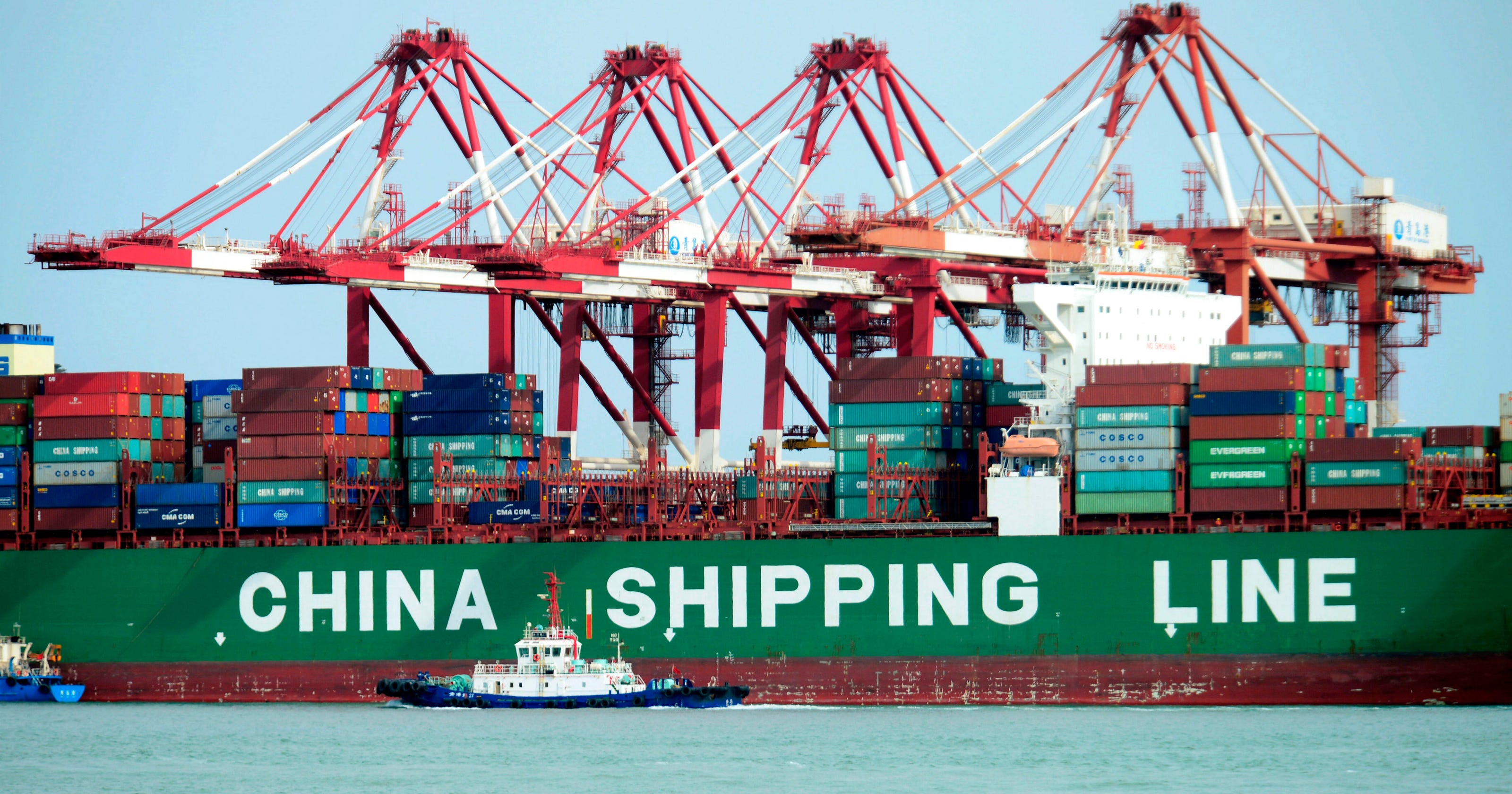
As anyone who follows politics, economics, or current events should know, China has become a major economic power. In 2022, we imported $536.3 billion dollars worth of goods from China. That represents 16.5% of all U.S. imports. Most of that ranges from cheap toys, tools, and miscellaneous items to sophisticated technical hardware, computer chips and processors, computers, batteries (especially lithium), display monitors, and video games. 

Meanwhile, we ship some $195.5 billion dollars in goods back to China, accounting for 7.5% of China's total imports.  We are indebted to China to the tune of just over $1 trillion dollars. That's roughly 7% of our national debt. Still, the United States still has the largest economy in the world, larger than China's by nearly a third. However, among the top industrial nations, China has the fastest growing economy, and may surpass the U.S. in ten or so years.

 Our Gross Domestic Product (GDP) is currently $30.4 trillion compared to China's with $19.6 trillion. While much is made of Chinese ownership of U.S. farmland, in fact China owns just under 1% of American farmland (Canada owns the most). That accounts for about 380,000 acres.  

However, there's another key factor to be considered. Along with having the fastest growing economy in the world among the top industrialized nations, China is also rapidly expanding its economic reach. China has been aggressively buying up control of natural resources around the world, exceeding that of the United States. 

China has been acquiring rights not just to farmland, but mineral rights as well, especially strategic minerals used in computer and missile technology like cobalt and platinum.  However, perhaps one of the most essential of resources, potable water, has been high on China's "buy" list. With 20% of the world's population, it has just 6% of its drinking water. In addition, because of its rapid "hellbent" economic growth, minimizing pollution has not been high on the government's list of things to do. 

According to a study done by the Lowy Institute, somewhere around 85% of China's groundwater is not fit for consumption (over 40% of the groundwater in Beijing is unusable). Worse still, nearly half of China's groundwater isn't safe to be used in the production of crops. On the upside (if there is one) is that China's water pollution isn't the worse. India's is.  What this means is that the two most populous countries on the planet have critical need for scarce usable water, making it perhaps the single most critical natural resource. Many military strategists believe that useable water may become valuable than gold or oil, and thus making its control of primary importance, especially given climate change. What cannot be bought or bartered for will be taken by force as a matter of national survival.   

Another serious factor has been China's growing aggressiveness over control of the South China Sea, which has traditionally been used as a international shipping lane. However, China is now claiming territorial control of the channel, and threatening to use force to hinder or stop all international shipping, including the passage of U.S. military ships. China has even threatened to fire on or seized any vessels traversing the channel. Why the sudden interest in control of a waterway which has long be seen as open?

One possible explanation could be China's recent growth in its navy and its ability to protect whatever it claims. By the end of 2025, China is expected to have 395 ships, including three aircraft carriers, and 435 by 2030. as of 2024, China possessed 234 warships compared to 219 belonging to the U.S. Navy, which makes the Chinese navy this largest---and most modern---in the world. It's should be noted that not only are China's navy newer, it has more shipyards and drydocks than the U.S.. In addition, several recent wargame scenarios have shown China's navy as the victor. This is due to both the newness and quantity of their ships (meaning China's navy can afford to lose more than the U.S. can). 

China has been making use of its new found naval power not only in the South China Sea, but also reenforcing its claim of expanded territorial fishing rights in areas once considered international waters, as well as impinging on waters now claimed by South Korea, Japan, Philippines, Indonesia, and even India. China has also been stepping up it claim of national sovereignty over the island nation of Taiwan in addition to strengthening its ties with North Korea and Iran. 

A Pentagon report on U.S. military readiness didn't help. According to the report provided to the Department of Defense, the United States military was in serious need of a general overhaul, running the gambit from rifles and bullets to tanks, personnel carriers, artillery to aircraft, combat and support ships. In its present condition, according to the Pentagon, the military wasn't capable of fighting a sustained conflict on multiple fronts. 

Thanks to the 20 year war in Afghanistan and Iraq, as well as propping up the Zelensky regime in Ukraine and U.S. support of Israel, the U.S. military is also running critically low levels on spare parts, and technicians to maintain and operate various systems. This is due to the massive hemorrhage of personnel getting out of the military (many of whom have done numerous deployments). For instance, in 2022, the Army missed its infantry recruitment goal by 50%. 

Since 2013, the number of males enlisting has dropped 38%. Enlistment from 1980 through 2020 dropped 59%. To make matters worse, according to the DoD, 77% of individuals of military age (17 - 24) are unfit to serve due to issues like obesity, drug use, mental or other physical reasons. As of November 2023, the Navy was 20% of it annual recruitment goal. The Army was 23% short, and the Air Force was 11% shy of its recruitment goal. Only the Marines and Space Force reached their recruitment numbers.  

Another issue facing the military is the Defense industry's focus on weapon systems that are either not wanted or needed. Following Nazi Germany's example toward the end of WWII, many of the weapons systems have become overly complex and prohibitively expensive (the Wehrmacht adopted equipment which were so complex, they were difficult to maintain such as the "King Tiger" tank or V2 rocket, plus the expense resulted in the production of relatively few numbers).

Per the "2024 Index of U.S. Military Strength"  published by the Heritage Foundation, China is listed as a "formable" threat in Asia  along with Russia. North Korea is considered worth watching. So, how does our military stack up? Again, according to the "Index", the U.S. Army's capacity for waging war is categorized as "weak".   Its capability is listed as "marginal", while its readiness is excellent. Overall, it's rated as "marginal". The Air Force faces similar problems. Its capacity and capability are both "marginal" while its readiness is "very weak" as is its overall rating. 

The U.S. Navy, facing reduction in the number of ships and shipyards, had a capacity rating of "very weak". It capability is rating is "marginal". As for its readiness and overall ratings, both are "weak". As an aside, its projected that with the growth of the Chinese navy, the U.S. Navy will likely not recover its previous naval dominance for at least the next decade. The Marine Corps has a  "weak" capacity rating, while capacity, readiness, and overall score were all "strong".  

The newest member of the military services, the U.S. Space Force, is still looking for its mission. It has yet to establish its fighting credentials (perhaps if aliens invade...). Nevertheless, it maintains satellites, drones, and related technology which are still emerging as unique military systems. But, they're not quite there yet. The U.S. Space Force was rated "marginal" across the board.   Next is our nuclear abilities. In terms of stockpile, delivery modernization, and "allied assurance" the rating was "very strong". 

When it came to delivery platform reliability, warhead modernization (heck, slap a coat of paint on there. Truth me, it won't matter), lab technicians, and weapons complex, the score was "marginal" as was the overall rating.  So, when we add it all up, the U.S. military came out with a overall score of "weak". The question then, is this good enough of a deterrent to stop China, North Korea, Iran, Russia, or a outside player, such as ISIS or Al Qaeda?   

There's no question China is playing the long game. While its economy is growing rapidly, it has also been promoting the Yuan as the alternative currency to the U.S. dollar (or even a possible replacement) which is unlikely, at least in the near future. It has joined Russia, India, South Africa, and Brazil as one of the principal members of "BRICS", which is poised to become a serious competitor to the U.S. dominated "New World Order". While BRICS has aways to go yet, its already showing promise as the number of applicants, especially among less developed countries, continues to grow.  

China's military, like its economy, has been growing and exerting its influence ever wider. With a weakening United States internally and externally, there is a quiet but growing question starting to be asked in serious but hushed tones throughout the nations of Asia, Africa, and even South America, and that question is whether they should continue to place all their political and economic eggs into one "Made in America" basket or is it time to accept the new role of the Chinese "Dragon" as we being the year of "Snake", or as it's also known, the "Little Dragon"?  


 Thank you for reading "Another Opinion", the Op/Ed blog page for the "militant middle".  Here at "A/O" we truly value our readers. At A/O we seek the facts as they exist, not partisan talking points.  We hope you found our articles informative and engaging. Comments are welcome, provided they are not vulgar, insulting or demeaning.  Another Opinion is offered without charge and is directed toward all independent and free thinking individuals. We do ask, however, that you be sure to "like" us on whatever site you found us on in order to keep our articles available for others, and that you please pass our post along. Below you will find links to the sources we used in writing this article. Thank you. 


China's Ownership of US Federal Debt


China's dominance of strategic resources


How Much U.S. Farmland Does China Really Own? More Than Bill Gates ---And Less Than 17 Other Countries


The Top Ten Largest Economies in the World in 2025


The Global Impact of China's Water and Related Environmental Problems


How Does Water Security Affect China's Development? 


Executive Summary of the 2024 Index of  U.S. Military Strength


CFR: What Is the BRICS Group and Why Is It Expanding?


Is military enlistment down?


Our Military Is in a Dangerous Decline and This Is the Reason Why


Friday, May 05, 2023

Taming the Golden Dragon: Facing Down China's Growing Military and Economic Influence

While military spending is important to maintaining a strong defense, it's only part of the picture. There are numerous other factors to consider, which brings me to the Lowy Institute Asia Power Index for 2023.

Founded in 2003 by Frank Lowy, the Lowy Institute is a independent Australian think tank. The institute's role is to provide original policy oriented research pertaining to political, economic, and strategic issues from a global perspective with an emphasis on Asia in this case.

The Asia Power Index examines a myriad of factors such as GDP, technological connectivity, resource availability, internal stability and military capabilities in to order to access the overall political clout each of the 26 Asian nations.

For brevity sake, we will focus on a handful of countries with an emphasis on China, Russia, and the United States who are considered the current key global players and some of the key factors affecting the standing. If you'd like to delve into the index more deeply (and we encourage you to do so), we've provided a link below. I'm sure you'll find it as intriguing as we did.

In terms of Gross Domestic Product (GDP), China was the largest. Alone of the top five, which included the U.S., India, Japan and Russia, its GDP showed signs of sustained growth. It's worth mentioning that sixth placed Indonesia's GDP was growing, making it 9th out of the 26 Asian nations in overall power.

When it came to productivity, the U.S. scored a perfect 100, followed by Australia, Singapore, Japan, New Zealand, and Taiwan. Russia ranked 9th while China was 11th. India, Philippines and Indonesia ranked lower.

The United States was first under the heading of "International Leverage". This can be defined as global clout based on available financial, legal, sanctioning (and enforcement) capabilities.  China was second with its leverage showing sign of growth. Third place Japan, however, saw its influence declining, whereas India, Singapore, South Korea, and Russia all experiencing growth in their global clout.

Technology seems to be the byword for prosperity these days, which was puzzling as each of the top 10 nations associated with technological innovation all showed decline, including top ranked United States, China, and Japan. To find any country whose technology capabilities were growing, we have to drop down to Myanmar in 22nd place on the Index.

However, when it comes to high tech exports, the leading countries were Russia, Brunei, Cambodia, and Indonesia. The United States and China were in fourth and fifth place respectively. 

Under the heading of "Resilience", we come to resource security or the ability to protect and preserve national resources.  In looking at energy self-sufficiency, which would be essential in the event of a global natural disaster or world war, we had some surprising finds.

Each of the top ten countries, starting with Australia, Brunei, Indonesia, Laos, and Malaysia, scored 100, as did Russia and the United States.  China was 12th with a energy self-sufficiency  score of 79.6.

Another key factor was fuel security. Not unexpectedly, China, Russia, and the U.S. all scored 100, as did India, South Korea, and Thailand. However, only Brunei and Malaysia showed signs of growth. In terms of net fuel exportation of refined petroleum, China showed growth while Russia, the U.S. as well as India had a decline in their net fuel exportation.  

In today's high tech world, access to rare earth metals are critical. These minerals are used in everything from computer chips and digital cameras to cell phones, batteries (especially like those used in electric cars), flat screen TVs to refining equipment used in processing oil and gas.  

Ranked first, China was the only country with a score of 100. Second was the United States with a score  25.6, though production of rare earth minerals by tonnage was declining. It's worth noting that the U.S. imports 78% of it rare earth metals from China. In addition, China has roughly 90% of all known rare earth minerals in ground.  Fourth was Australia which has been increasing its share of mined rare earth metals. 6th ranked India and 7th ranked Russia were both reducing their percentages of tons mined.  

Perhaps one of the most overlooked but critical factors is that of internal security.  The U.S. was ranked 8th among the 26 Asian nation with its internal stability in decline, which isn't surprising. For five straight years the Economic Intelligence Unit's "Democracy Index" has rated the U.S. as a "flawed democracy" and ranked us 26th out of 167 countries, putting us between Chile and Estonia.  Other studies have shown the United States as no longer a Republic, but a Corportracy and an Oligarchy.

China was ranked tenth in over internal security, but also declining. This likely due to the rising tensions in China's Xinjiang Province among its Muslim population which makes up about 2% of China's total population. In addition, there has been a surge in China's Pro-democracy movement, principally around Hong Kong, and opposition to one party rule.

15th ranked Russia also faces declining internal stability. This appears due to several factors such as frustration with Putin's control over the country, a decline in democratic freedoms, the ongoing war with Ukraine and  its effect on the Russian economy, and rising militancy among its Muslim population.

Another related factor is political stability. Singapore and New Zealand are considered the most politically stable of the 26 Asian nations with scores of 98.5 and 98.0 respectively. Nevertheless, the United States was ranked 11th with a score of just 44.8. While the Index showed increasing stability, this may be a bit deceiving.

The two primary political parties have become dominated by corporate special interests and there has been less diversity of opinion from mainstream news sources, resulting in a drop in trust according to the major polling services.  Meanwhile, voters have been abandoning both parties enmasse, resulting in a 49% majority of voters registering as Independent.  

China, ranked 16th, too is showing as what passes for "political stability" as the CCP has exerted tighter control over the government amid the growing tensions with the United States and the West, and rising internal troubles. The same can be said for 20th placed Russia and Putin's tightening grip given the war with Ukraine and frosting of relations with the West, and particularly the United States.   

America was alone among all developed industrial nations in continuing seeing a rise in infant mortality along with a decline in life expectancy and general quality of life. In 2020, it ranked 50th of 147 countries. The U.S. ranks 47th in life expectancy, putting it between Albania and Estonia.

As an aside, it's worth noting the United States ranks last among the seven largest high income economies in terms of healthcare. The metrics used include quality of overall care, number of and access to hospital beds, quality of life, access to care, and efficiency despite having the most expensive healthcare system of any country. So who's the best? Norway, followed by the Netherlands, Australia, the U.K., and Germany.

Now we turn to the military.  In terms of sheer manpower, with 2.8 million men and women in uniform and another 500,000 reservists, China should be the largest military in world. However, according to the Index, India has taken over that honor with just over 3 million active duty military personnel. The Index also shows that China has decreased the number of active duty military while India's has increased.

China has, however, been on a building spree to increase the size of its navy which includes aircraft carriers--- one operational, one nearing completion, and another on the drawing board. It has increased the number of its cruisers, destroyers, and landing craft of various sides. It's chief problem at this time is a lack of trained carrier based pilots and that takes time. Russia was ranked fourth with roughly 1.4 million in uniform. The U.S. ranked 5th with 1,495,000 men and women serving in the armed forces.

In a related area, the Index still gives the U.S. the nod when it comes to long range naval force projection, though its ability has declined in recent years. China has been quickly rising from its number two ranking position and may overtake the U.S. in the Pacific within the next few years. However, for now, the U.S. remains first in naval deployment capabilities.

Both Russia and the U.S. have seen a decrease in the effective of their respective militaries. In the case of Russia, it's been the reduction in overall preparedness since the fall of the Soviet Russia in 1991. When it came to rapid deployment, China was ranked first thanks to a new emphasis on its naval development. Russia was a close second. The U.S. was fourth and trending down.

In America's case, this is due largely to the 20 year misadventure in Iraq and Afghanistan which has left the military understaffed and in need to a complete overhaul of nearly everything. Several defense report suggest that the only branch now capable of a full engagement was the Marines.

Other reports point out that the U.S. military, while able to quickly put boots on the ground anywhere in the world, would not be capable of sustaining a two front war as it was in the past. Still, U.S. troops remain the best trained and equipped of any in the world. The Index ranked the U.S. first followed by Russia and Australia.

The Index gave the U.S. a rating of 100 when it came to military platforms, though it acknowledged American military decline. Meanwhile, at  number two, China military capabilities are increasing, especially its naval power as mentioned above. Russia and India remained ranked third and fourth.

As an aside, China was ranked first in ground based missile launchers while the U.S. was out in front when it came to "boomers" or ballistic missile submarines. In terms of area deniability, which covers intelligence gathering (including recon and monitoring), air firepower, and naval capabilities, the U.S. remained first although those capabilities have dropped while second ranked Russia and third placed China saw their capabilities increase. 

When it came to airpower, the U.S. remained ranked first, however, China, India, and Russia were expanding their abilities to contest the battle from above. Meanwhile, Russia and China were expanding their drone and AWACS presence as the U.S. has been forced to cut back due to retirement, aircraft overhauls (along with facing shortages of spare parts and adequately trained personnel), and updates. All three superpowers face a reduction in cyber capabilities as well according to the Index.

Lastly were the nukes. The country with the most nuclear weapons was by far Russia. It's currently estimated that Russia has 5,977 nuclear warheads, mostly mounted on ground based mobile units. The United States has roughly 5,428 nukes spread throughout it naval, air, and land based forces. The Chinese have about 350 nuclear warheads.

So, where does this leave us? Based on the Index, the United States remains number one overall among the 26 Asian nations examined. However, while the U.S. remains strong in key areas, it's apparent that its overall capabilities, while still strong, are showing indication of decline. America remains vulnerable in key areas such as strategic or rare earth metals and outdated shipping facilities. It should be pointed that America's communication grid continues to be vulnerable to cyber or terrorist attack.

Finally, the U.S. military is badly worn down thanks to a badly conceived invasion and occupation of Iraq and Afghanistan and an equally worse withdrawal. The final result was a defacto military defeat which left the Taliban and ISIS back in charge and in possession of billions in U.S. military equipment.

The military is in critical need of a total overhaul or replacement of everything from tanks to aircraft to ships to leadership while the country needs a clearly defined foreign policy base on new realities, not those of a Cold War that ended over two decades ago. Since the end of the war, the military is facing a serious shortages of qualified personnel as thousands grab their DD214's and get out.

America's healthcare system, which is vital in the event of a major war, natural disaster or another scare like that of COVID, is woefully inadequate. The political system of the U.S. is deeply fractured, which has greatly increased its internal stability, leading many to project "when", not "if" as revolution or civil war isn't far off. The stability of the U.S. financial system is shaky at best, forcing deepening cut backs in public services, which only worsens the economic and social divide.

Meanwhile, China has double down on its economic and military growth despite warning signs of overheating or even collapse. It has been busy buying up resources and making inroads throughout the world, especially in Africa and Latin America, as well as among America's enemies (most notably Iran). China controls many of the natural resources the U.S. needs to remain competitive globally. It also dominates American trade imports so much so that sanctions, an embargo or war with China would cripple the economy.

There's no question the winds of global power have shifted east. It growth in naval power will ensure its power projection throughout the Pacific. The Yuan is posed to replaced the dollar as the "go to" currency for international trade. It's developing economic and military power has many Asian leaders contemplating whether their best interests lay with Beijing rather than Washington.

Russia too is on the rise. Although Moscow has always tried to look westward to a future with Europe, the current war in Ukraine, brought on by an aggressive U.S. backed NATO, which has included economic sanctions, has forced Russia to turn again eastward where the bulk of its landmass and resources lay. The warming of the climate will allow Russia access to trillions in natural resources.

The cross-nation BRICS economic alliance, consisting of Brazil, Russia, India, China, and South Africa, has allowed emerging growth nations the ability to bypass the Machiavellian policies of the West (and U.S. led sanctions), and create an essentially post-America future.

As Bob Dylan sang back in 1960's while the Cold War raged, "times are a-changing" . Indeed they have, and it appears the winds of change are getting stronger. Perhaps it's time we pull our collars up and dig our hands a little deeper into our pockets. It seems the eastward blowing winds are getting colder too.


If you want to know more about this article's topic, please check out the links below. If you enjoyed the article, please consider passing it along to others and don't forget to subscribe. It's free! Lastly please be sure to "like" us on whatever platform you use to read anotheropinionblog.com. It helps with the algorithms and keeps our articles in circulation. Thank you! 


The Lowy Institute Asian Power Index 2023


PH 51st on the lists of world's most powerful militaries


U.S. remains a 'flawed democracy' in annual rankings


World Data: Life Expectancy


AJMC: U.S. Has Highest Infant Maternal Mortality RatesDespite the Most Healthcare Spending


Mirror Mirror 2021: Reflecting Poorly


JAMA: US Health System Ranks Last Among High-IncomeCountries


US defense industry isn't prepared for a war with China, report says


Friday, September 16, 2022

Biden's Continued Downward Slide and Changes


According to a recent poll conducted in late August by YouGov, 75% of Americans believe that Biden is taking us down the wrong path. A NBC News Poll reported 74% of those they polled thought America was going the wrong way too. An earlier poll, taken in late June by Monmouth University, put that number at 88%.  A mere 10% also said we were on the right path.

The Monmouth Poll pointed out that approximate 90% who thought we were going in the wrong direction.  80% of Democrats and 92% of Republicans disapproved of Biden's handling of the country.  Among America's largest political bloc, Independents, 91% agreed that we were going the wrong way.

As an aside, the poll noted that 84% of seniors (55+) disapproved of Biden. 92% of those 35 to 54 agreed that Biden was doing a poor job, as did 95% of those 18 to 34 years of age, which includes Millennials and Gen X. 

55% thought President Biden had botched his handling of the country while 42% thought he was doing at least a passable job. A majority of country---irrespective of party--- believes Biden is mentally unfit to be President. His approval rating, at 54%, remain some of lowest in history.  Meanwhile, Congress isn't doing any better. It's seemingly perpetual "in the toilet" disapproval rating is a current 60%.

Although these are significant numbers, there's nothing new here in either of the three polls. Americans, regardless of their political leanings, have for decades known that both corporate owned parties are destroying America. We've become everything our Founding Father's warned us about.

According to the above NBC poll, 58% believe that our country's best days were behind us. When we compare the America of today with that of our parents or grandparents, it's hard to disagree. True, there has been badly overdue progress, especially in the area of civil rights.

At the same time, we've managed to create a nation of "victims" and a "entitled" generation where everyone gets a "participation trophy" just for showing up and "safe spaces" when their feelings get hurt. Perhaps that's History's revenge on the self-important "Me Generation". As the saying goes, "history doesn't repeat but it often rhymes".

With prices continuing to rise, inflation is the main concern for the majority of families whose incomes aren't keeping up in survey after survey. For seniors and those on fixed incomes it's becoming a growing crisis. One report says that 45% of food banks nationwide have seen an increase of 10% or more. Among those surveyed, 56% said Biden was not doing enough to help them or the economy. 68% said that, despite Biden's reassurances, America was already well into a recession.

71% of respondents didn't think Biden's "Inflation Reduction Act"  wasn't going to help them any. 36% said it wouldn't make any difference one way or another in their financial situation while another 35% thought it would actually make matters worse for them personally!

The "Inflation Reduction Act" will cost taxpayers an anticipated $437 billion dollars. The non-partisan Congressional Budget Office, which reviewed the bill in depth, stated that it would have little to no actual affect on inflation. The University of Pennsylvania went further and said the bill's impact on inflation would be "statistically zero", although it could possibly reduce the total national deficit by $300 billion over the next ten years or so, and therefore could indirectly affect inflation.

It should be pointed out that although $300 billion may sound like a lot, it's barely a drop in the debt bucket. Our current deficit is $31 trillion dollars and growing. By 2031, it will consume 106% of the Gross Domestic Product (GDP), which measures the value of all goods and services produced in the U.S..  

The result will almost assuredly mean a severe reduction in money available for crumbling infrastructure (like our outdated sewers and electrical grid, roads and bridges),national parks, and social services (Medicare/Medicaid, Social Security, WIC, unemployment, etc). It will also practically guarantee a substantial increase in taxes.

In the short term, I suspect that the beneficiaries of Biden's "Inflation Reduction Act" will be large corporations and those at the top of the economic ladder. After all, they own both parties and their lobbyists write the laws. Politicians are little more than hired help; the intermediaries serving as gatekeepers between the "us and them".  If we benefit in any way, it's nothing more than a happy coincidence for us and political hay for whoever is in office. But, what do you expect living in a neo-fascist "Corporate Democracy"? 

Poll after poll for decades now have shown that Americans are "sick and tired" of being sick and tired. We know both parties serve corporate masters and not the people. We know Citizens United was a mistake.  It was the catalyst for converting America from a democratic Republic to a increasingly neo-fascist Corporatocracy. It created a professional political class of multi-millionaires and ruling oligarchs no different than those found in Russia, Ukraine, China, or other nations we like to villainize.

We know what to do. We eliminate Citizens United, institute real campaign finance reform, impose term limits, end partisan gerrymandering, change elected administrative offices into non-partisan offices, create a level political playing field by opening using the same ballot requirements for everyone running for office.

We need to open up federal election debates to all qualified candidates. These debates are currently closed to anyone who isn't a Democrat or Republican. We need to encourage rank choice voting, give the chief executive line item veto powers to eliminate "pork" from bills and raise our tax bills, prohibit lobbyists from writing legislation, permit recall elections, ballot initiatives and referendums.

There are other things we can do such as create separate election officers for third parties and Independents and ending public funding of partisan primaries. Make election day a holiday in order to encourage more participation. End taxpayer based funding of partisan primaries. Lastly, voters should have the final say on all proposed local and state taxes, fee or rate increases. Any one of these would help tilt the game in our favor.

There's nothing radical about any of these reform measures mentioned above. Most were once available to nearly every citizen. But one by one we lost them thanks to political corruption and corporate greed.   All we have left is the ballot box, and even that is under attack. We've been left with little more than the illusion of power. Perhaps it's time to restore the sovereignty of the individual and curtail that of an increasingly autocratic government and its corporate masters. What do you think?

 If you want to know more, please take a look at the links below. If you enjoyed the article, please consider passing it along to others and don't forget to subscribe. It's free! Lastly please be sure to "like" us on whatever platform you use to read A/O. It helps with the algorithms and keeps our articles in circulation. Thank you! 


Nearly 75% of Americans think the US is headed in the WRONGdirection under President Biden...


88 percent say US on wrong track: survey


Over half of American believe US is 'on the wrong track'---poll


U.S. Debt Clock