Showing posts with label border security. Show all posts

Friday, July 11, 2025

President Donald Trump’s “One Big Beautiful Bill” : A Comprehensive Overview and Analysis


If there is anything we can all agree on about Donald Trump, it’s his propensity for hyperbole. Going all the way back to when he first appeared on Robin Leach’s “Lifestyles of the Rich and Famous”, Trump  has always described anything he’s involved with as “the biggest”, “the most”, “the best”, “the greatest ever”, and so forth. Everything he does is over the top. 

Trump, the son of a real estate entrepreneur, learned as a child that it’s not what you actually say or do, it’s all about the perception. So, now, here we are with President Trump’s 870 page “One Big Beautiful Bill” which (allegedly) contains the greatest sweeping changes in our country’s history. The bill, we're told, will become legendary. Aren’t we blessed to be here and now to witness its unveiling? But just what is in this bill and is it as wonderful as it’s being portrayed by the Republicans? Is there anything in it we're not being told? 

The bill was officially known as H.R. 1 “One Big Beautiful Bill” (aka “OBBBA”) and was sponsored by Rep. Jodey Arrington (R-TX) and originated in the House Budget Committee May 20, 2025 (I’m sure he’ll find an extra special “something” in his Christmas stocking).

The bill passed in the House with a 218 to 214 vote after barely sliding by a vote in the Senate, 51 to 50, marking a significant victory for Senate Majority Leader John Thune (R-SD) despite three Republican senators voting against the bill--- Rand Paul (R-KY), Thom Tillis (R-NC), and Sen. Susan Collins (R-ME).

The bill, which focused on tax cuts, was considered by many to be an extension of President Trump’s earlier bill, the 2017 Tax Cuts and Jobs Act (“TCJA”). The bill represents a saving of about $3.7 billion tax dollars to taxpayers (or if you look at it another way, $3.7 billion in taxes that the federal government won’t collect for various programs).

The bill makes Trump’s previous tax cuts permanent, while increasing spending for border security,  military expenditures, and energy production (with little funding for alternative energy projects). Two compromise points was postponing the sale of public land for the time being and temporarily prohibiting state regulations over artificial intelligence (AI).

Funding for the increases came, in part, from reductions in the budgets for programs like Medicaid, and the Supplemental Nutritional Aid Program, better known as “SNAP,” as well as other healthcare and nutritional support programs. Some opponents claim that the reductions will potentially leave some without healthcare and leave the underserved even worse off. Congressional Republicans deny this will happen.

For some reason, I’m reminded of when President Ronald Reagan made a similar cut in the National School Lunch Program. At one point, after being criticized over the cuts in fresh fruits and vegetables being available to school age children living poverty, he said the ketchup, which was readily available in school lunchrooms, should be counted as vegetable (also mentioned was pickle relish). It’s just not the same Gipper.  The cut of 1.5 million dollars was intended to give schools more “flexibility” to the lunch programs, however, it backfired. As I’ve said on many occasions, perception in politics is everything.

With respect to Medicaid, which was created in 1965, approximately 71.4 million people are currently using Medicaid which is intended for low income individuals and families as well as those disabled and unable to work. A further 7.3 million are enrolled in the Children’s health Insurance Program (“CHIP”), which brings the total to 78.7 million people who benefit from Medicaid, or roughly 24% of the U.S. population.  

As an aside, both Medicaid and Medicare were expanded under President Obama’s healthcare legislation, known as the “Affordable Care Act” in an effort to  provide coverage for those without any healthcare and to provide a bridge for those who fell through the cracks. So, I guess “Obamacare” has effectively been replaced by “OBBBAcare”!

Some of the changes made under Trump’s bill includes changing annual application enrollments to every six months and additional residency verification requirements in order to eliminate non-citizens from applying. Medicaid has always been for low income or handicapped individuals and their families. Under the “One Big Beautiful Bill”, there will be tighter restrictions on incomes.

Federal provider coverage will dropped from 6% to 3.5% over the next seven years.  That’s expected to have an adverse effect on small community clinics and rural hospitals (especially in low income areas like the Ozarks and Appalachia). The bill mandates that “able bodied” adults to work or volunteer up to 15 hours per week. This also applies to those receiving SNAP benefits to work or volunteer a minimum of 15 hours weekly.

According to the Congressional Budget Office, an estimated 12 million Medicaid recipients could lose coverage over the next decade. Proponents claims that only those able to work and obtain coverage on the open market and those who’ve obtained coverage fraudulently (such as illegal immigrants) will be affected.

Social Security will also be affected. Once considered to be “untouchable”, Congress regularly raids Social Security with the assurance that these “loans” with be repaid but has resulted in concerns that the national retirement safety net  will go broke over the next few decades. 

A good piece of news is that individuals dependent on tips or overtime to make ends meet with no longer be required to pay taxes on their income up to $25,000. Many individuals, especially in the service industry, aren’t paid a standard wage. Instead, they depend on tips while others, especially in manufacturing, count on overtime to make ends meet.

Previously, workers were required to pay taxes on this extra but essential income, under Trump’s bill, they will be tax deductible on the first $12,500 of overtime earned. The child tax credit will be increased by $200, making it now  $2,200 and then adjusted for inflation thereafter.

Taxpayers will be able to write off a portion of their state and local taxes (SALT) on their federal taxes up to $40,000 on incomes up to $500,000 until 2029 when it will drop back to the current rate of $10,000. The deduction benefits those who pay high property taxes, which tend to be the wealthy. Private jets will now be tax deductible. In another prop for the well-to-do, individuals can now pass up $15 million to their heirs tax free (if any of you are rich, I’m available for adoption).  

Private school vouchers were also added to the bill. Families who earn less than three times the local income average may now receive up to $5000 in tax credits to be used for homeschooling and private schools (including religious based schools). Private colleges with a student population of 3000 or more, will pay up to 8% in taxes on their endowments. Students will now be capped on the amount of federal loans they can borrow for college. 

Car buyers will be able to write off up to $10,000 in interest annually on car loans IF the car is assembled in the United States. A boon for American auto workers. Additionally, those 65 and over will be able to deduct up to $6000 in taxable income off the top through 2028.

According to a Penn Wharton Budget Model Forecast, the beneficiaries of this portion of the bill will be those in the upper income brackets, especially the top 1% (as if they need another tax break). Low income families currently receiving Medicaid and/or SNAP benefits could lose around $28,000 over a lifetime while those earning $58,000 or more could see savings as much as $65,000 over the same period.    

When it came to the energy and the environment, it was a victory for oil and gas companies. Trump’s “One Big Beautiful Bill” cut President Biden’s clean energy tax breaks for alternative energy sources (such as wind and solar power), especially those with “foreign ownership or other connections” (ie: China). Companies currently involved with alternative energy will continue to be eligible for the full tax credits. However, starting in 2026, new construction projects will be eligible for just 60% of those credits, dropping to 20% in 2027, and disappearing altogether by 2028.

It bears mentioning that the bill includes language encouraging continue and accelerate oil and gas leasing as well as permits oil and gas companies to us deductions built into the bill to avoid paying so-called "must pay" minimum corporate taxes of 15% imposed by the 2022 Inflation Reduction Act. 

The U.S. military is the largest in the world, exceeding the next ten nations combined (including China, Russia, India, France, and the UK), but under Trump’s bill, they’ll received an increase over their current budget by $150 billion dollars, with an emphasis on rebuilding a badly depleted military in addition to creating a missile defense “Golden Dome” along the lines of Israel’s “Iron Dome” (look for China to build a “Jade Dome”) next.

In 2024, the Heritage Foundation published a summary of U.S. military readiness and key foreign threats. According to the report, the U.S. military was not adequately prepared for a two front war or a prolonged war across a broad single front. The U.S. Army’s capacity was listed as “weak” while its capability was “marginal”. The Navy’s capacity was categorized as “very weak” while its capability was “marginal” and its readiness was “weak”.

The Air Force was “very weak” when it came to readiness. Its capability and capacity were both determined as being “weak”. The Marines, as expected, were listed as “strong” when it came to readiness and capability, yet “weak” in regard to capability. The Space Force was “marginal” across the board (making us vulnerable to Martians I suppose). Overall, the report indicated that the current state of our military was on the low side of “marginal”.

The Golden Dome will be specifically designed to stop incoming intercontinental ballistic missiles (“ICBMs”) as well as the latest in high tech destruction, hypersonic missiles which travel at five times the speed of sound and “fractional orbital bombardment systems” or  as they’re better known, “FOBS”.  FOBS are a type of multiheaded nuclear ballistic missiles which, after launch, remain in low earth orbit, until being directed toward their intended target much like a maneuverable  glider.

 As an aside, in the event the crisis is alleviated (such as capitulation or diplomacy), they can redirected into space and detonated.  Critics say the “Golden Dome” only heightens global tensions while proponents believed it will serve  to deescalated the threat of a global war.

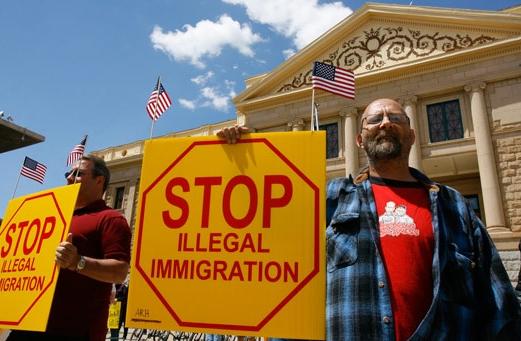
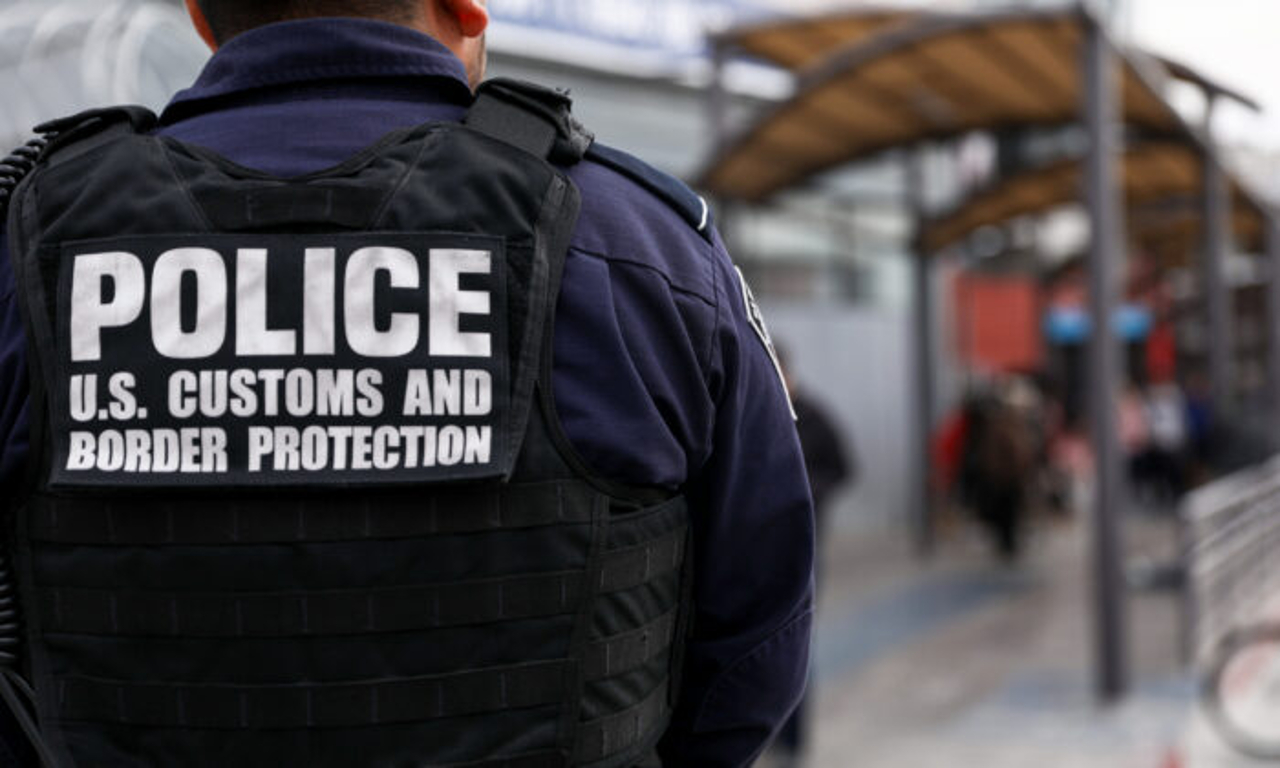
Trump has promised (and largely delivered) to enforce existing immigration laws and improve border security. Accordingly, thousands of migrants have been rounded up and deported. In an effort to continue and step up efforts, the Office of Immigration and Customs Enforcement (“ICE”)  was being given an additional $150 billion to their budget, which had been reduced to just $8 billion dollars by previous administrations. The increase now makes ICE the top funded federal law enforcement agency in the country.  

In summary, President Trump’s “One Big Beautiful Bill” will extend tax cuts over the next decade, resulting a savings of approximately $4.5 trillion dollars to taxpayers and corporations. Border security and immigration enforcement will see an increase in their Christmas stockings of $129 billion dollars, and the military will get an increase over their current budget of $150 billion dollars. That should buy a lot of new toys for them to blow up.

On the down side, the Congressional Budget Office said that Trump’s “One Big Beautiful Bill” will likely add $3.4 billion to the federal deficit over the next decade. The debt ceiling will be raised to $5 trillion dollars, ostensibly to help pay for current and future federal programs.

Medicaid will see a drop of $930 billion dollars over the next decade (some see it as a savings since it will reduce from the roll those not legally entitled to the various programs covered under Medicaid). Because of reductions in Medicaid, nursing homes receiving Medicare or Medicaid funding will face a hiring moratorium.  

The bill also provides Big Pharma with a major break. It limits Medicare's ability to negotiate lower drug prices with pharmaceutical companies. Other public assistance programs, such as SNAP, will see a reduction of $287 billion over the next ten years (the same reason as above). Meanwhile, the so-called “green industry” will lose some $488 billion dollars in federal support.

In conclusion, President Trump’s “One Big Beautiful Bill” is largely positive overall for most Americans, and certainly for big business as well as the very well-to-do. However, as usual, lower income brackets (and by extension, minorities) and some seniors didn’t fare well with reductions in the social safety net programs. However, many of the tax breaks and other cuts are temporary which may be the best a deeply divided Congress can do.

The military, as is usually the case, made out like a pirate (or should I say “privateer”?). For those who are curious, the budget for intelligence agencies are separate and are generally kept secret from the public as well as the majority of Congress.  Thus, their budgets are apparently none of our business even though we fund them through our tax dollars. Tax breaks on income, especially tips and overtime, were long overdue, but come on, private jets? Really? 

 Crackdowns on illegal immigration and dramatic improvements in border security are seen as a good thing for national security, though it may be closer to the proverbial closing of the chicken coop after the foxes are in. Educational funding had a number of pros and cons but ultimately benefited the kids, which is what matters the most (now they need to figure out how to improve the quality of their education).  

Finally, all things considered, after having spent a lot of time researching the bill, I’m not sure I would have called it “One Big Beautiful Bill”, but I guess “One Big Not Ugly Bill” doesn’t sound as marketable.


Thank you for reading "Another Opinion", the Op/Ed blog page for the "militant middle".  Here at "A/O" we truly value our readers. At A/O we seek the facts as they exist, not partisan talking points.  We hope you find our articles informative and engaging. Comments are welcome, provided they are not vulgar, insulting or demeaning.  Another Opinion is offered without charge and is directed toward all independent and free-thinking individuals. We ask, however, that you "like" us on whatever platform you found us on in order to keep our articles available for free to others. Lastly, in order to keep costs down, we depend on passive marketing, and therefore, depend on our readers to please forward our posts along. Below you will find links to the sources we used in writing this article. Thank you. 


H.R. 1 One Big Beautiful Bill text


Big Beautiful Bill 101: What you need to know about the newlaw


Affordable Care Act


Senate passes Trump’s “big, beautiful bill” in 51 to 50 voteafter marathon session


Ketchup as a vegetable


Can Donald Trump build the ‘Golden Dome’ over the US?


What are the key items in Trump’s sprawling budget bill?


Is the Pentagon headed for a military readiness crisis?


Military Readiness: Implementing the GOA’s recommendations…


Executive Summary of the 2024 Index of U.S. Military Strength


7 Overlooked Provisions In Trump and The GOP’s Ugly Tax Bill


Friday, May 23, 2025

America: A Nation of Exiles, Misfits, and Second Chances. But has it gone too far?

America. There has always been something truly unique about this country. People of all sorts have been coming here almost ever since its discovery, and they keep coming despite all our faults and failures (and there are many).  Nations, far older than us, are constantly comparing themselves to us. We’ve become the world’s yardstick for practically everything, but who are we really?

We don’t tend to think about it much, but most of those who came here to settle were misfits and exiles. They were people who didn’t fit into society any longer. They came to escape the restrictions their native country had placed on them. For many, they were locked into an economic and social caste system irrespective of their intelligence, ability, or motivation.  

Many were just one slippery step from debtor’s prison. Others had already fell victim to the harsh judicial system, often for petty crimes committed in the name of survival. The lucky one’s found themselves “transported”. This was a way to be rid of petty criminals, social deviants, and malcontents while emptying out their overcrowded prisons and relieving a marginal social safety net based largely on charity.  They were typically sent abroad as “indentured servants” to work off their sentences in places which were often difficult and dangerous (Georgia and the swamplands of South Carolina were often a key destinations).

Meanwhile, others simply wanted to chance to start life over again and a chance to show the world (and themselves) what they could do if given the opportunity, and so they came by the tens of thousands.  Many bore  the same title of “indentured servant” as the felons, though under slightly better circumstances in most cases.

These individuals were mostly young, poor, marginally educated, with very limited opportunities. Many were orphaned. They voluntarily leased themselves out for a set period of time. This usually covered their passage (typically in steerage) as well as their labor with the hopes that, in the end, they would get their chance at a new life. It was a difficult and often risky choice, with many never seeing the end of their bondage, but it was better than what awaited them if they had remained.

A surprisingly large segment of immigrants also came to avoid religious persecution. It was commonplace for each country to have an official religion, often headed by a monarch,  to which everyone was expected to participate, if not in person, then financially. It wasn’t uncommon for so-called “dissenters” to find themselves harassed by authorities, fined, imprisoned, or stripped of everything they owned in order to pay the mandatory tithes. This new country demanded none of that. There would be no state mandated religion.  It’s easy to understand why, to believers, this was seen as the “promised land”.

Not much has really changed in all those centuries since the first Europeans set foot on this continent. We still attract the world’s misfits, exiles, and those looking to start over. America is a different sort of country. It is not a nation which evolved organically over time like Europe or Asia. We came about in less than a blink of an eye in terms of history. We were created as an experiment, born out of a sense of justice, fair play, and individual sovereignty.

 In lieu of having a long history to shape our nation, ours was based a heritage of ideas stemming from the Enlightenment, Judeo-Christian morals, and the philosophies of the Near East, Ancient Greece and Rome.  Even our government was modelled on the Roman Republic. All of which is nicely summed up in our traditional national motto---"E pluribus Unum” (“Out of Many, One”) along with our official national motto, “In God We Trust”, which reflects the desire of many to come here to seeking their religious freedom.   

The Statue of Liberty, which graces the entry into New York, reminds us that we are still a nation of second chances. It’s often the first thing arriving immigrants see. The plaque at its base bears the  famous poem by Emma Lazarus entitled “The New Colossus” which speaks of America as the “Mother of Exiles”. It urges the world to “…Give me your tired, your poor, Your huddled masses yearning to breath free. The wretched refuse of teeming shore. Send these, the homeless, tempest-tost to me, I lift up my lamp beside the golden door!”

Marvelous words expressing the aim of America to welcome all those seeking to be free, but something has changed since those words were pinned in 1883. America was conceived of as a welcoming melting pot, where all would leave behind the worthless hatreds and prejudices from wherever they came. Here they would become a new people---“Americans”--- sharing a common language with a shared set of values, laws, and uniquely American traditions.

Somewhere along the way something changed. We no longer concerned ourselves with those who come here in defiance of our laws. We stopped being proud to be Americans. Today, we have some 13+ million illegals living here with millions using taxpayer based social services they never paid for. They have no interest in adopting our language, laws, traditions or values. Worse, we have politicians, cities and groups which are fine with that. What happened?

According to a U.S. government budget committee report on the costs of illegal immigrants to taxpayers dated January 11, 2024, 69% of illegal immigrants don’t have an education beyond high school (compared to 35% of Americans) which impacts their work skills and employability. Each individual cost taxpayers approximately $68,000 each over their lifetime or about $42 billion.  In addition, the children of illegal immigrates (including children born in the U.S. of parents here illegally) received roughly $68.1 billion dollars (as of 2019) in taxpayers funded services. Taxpayers also picked emergency care and other medical costs to the tune of $7 billion dollars annually.

Some hid behind the 14th Amendment, which was intended to provide citizenship for recently freed slaves following the Civil War, in order to claim legal status, thanks “anchor babies” as noted above. More recently, others have claimed asylum status when they’re only seeking employment without applying for a work permit (employment isn’t recognized as a legitimate reason for asylum status under international law).  Still others send their children with strangers and then come seeking to be reunited with them.

Even certain religious institutions blatantly choose to ignore immigrations laws, believing that somehow they are exempt from following the law, and going as far as not just encouraging them to migrate, but providing them with shelter, housing, job contacts, and even how to manipulate the system to access taxpayer based services. Of course, these immigrants fill pews and church coffers, as well as improve their political clout.

We became fixated on the “right” of these individuals to enter our country undeterred while other nations, ever anxious to rid themselves of hungry mouths they can’t afford thanks to antiquated societal norms, openly proclaim that we had no legal right to protect and secure our border.

Somehow, our right of national sovereignty had come under attack while their sovereignty remained securely intact. Immigrants now come, not to be Americans, but to transplant their country, language, values, traditions, and all! Some intend to even transplant their religious values despite not being compatible with ours. We’re the ones expected to conform and adopt, not the immigrant. What went wrong?

Our  English language is treated as unimportant. The government now caters to “diversity” instead of promoting emersion. Immigrants view the taxpayer funded social security net as an entitlement just for being here. They regularly send money home to support their families and community, which is perfectly fine. But why do they refuse to apply for work permits and pay their fair share of taxes to the country which makes it all possible?

At about the same time, we started to see more and more people no longer identifying as Americans. They had become hyphenated Americans, be it cultural, racial, ethnic, or whatever. In addition, the very notion of “American” increasingly became as a form of slander. The “ugly American” of the 1960’s had suddenly returned home.

We were increasingly taught to be ashamed of our collective history. Entire chapters of our history have become distorted and rewritten. Critical thinking skills have been replaced, and with it, the quality of education. Discipline is now seen as a form of suppression. In colleges and universities, students aren’t expected to take responsibility for the debts they willingly incurred despite many earning majors where there is no demand in the job market.

Even the Pledge of Allegiance is no longer publicly acceptable. Neither are displays of the American flag (which is now considered a “trigger object”).  Statues and monuments deemed “offensive” by a select few are defaced, vandalized, and removed.  Individuals with criminal histories are portrayed as heroes while law enforcement is viewed with contempt.

While America has always welcomed various religions, how do we deal with a religion which wants to impose its own religious laws on society, going so far as verbal and physically attacking people, blocking sidewalks and traffic while they “pray”? They become incensed at criticism of their faith but encourage attacks on other religions. In Europe, this has proven to be a disaster as the governments continually cave to their demands while punishing the victims.  

This is all part of a new narrative being preached throughout America---the “Gospel of Political Correctness” as proclaimed by so-called “woke” Millennials and Gen Z. To contradict the gospel in any way is regarded as blasphemy or heresy, often resulting in being  “canceled” (sounds like a euphemism used by the Gestapo or KGB). The good news, however, is that you’re freely entitled to their opinion at any time, whether you want it or not.

How does a nation founded on freedom of speech, religion, and association cope with this? How does a nation protect its national security when our borders are ignored?  How do we address the issue of hyphenated loyalties, a declining education system, no common language, or an agreed upon history survive? Historically, nations similar to this  have become ungovernable and ultimately imploded. No nation can be pulled in multiple directions and hold in the long run  (I’m reminded of Yugoslavia, the Austro-Hungarian Empire, as well as the Ancient Roman Republic).

I’m reminded of a quote by Theodore Roosevelt (perhaps our greatest president and certainly my favorite). In speaking before the Knights of Columbus at Carnegie Hall in 1915, the former president addressed many of these same issues when he said, “In the first place, we should insist that if the immigrant who comes here in good faith becomes an American and assimilates himself to us, he shall be treated on an exact equality with everyone else, for it is an outrage to discriminate against any such man because of creed, or birthplace, or origin. But this predicated upon the person’s becoming in every facet an American, and nothing but an American…There can be no divided allegiance here. Any man who says he’s an American , but something else also, isn’t an American at all. We have room but for one flag…We have room for one language here, and that is the English language…and we have room for but one sole loyalty, and that loyalty is to the American people”.

I couldn’t have said it better Teddy. Well done. The question  which needs to be addressed is whether we are going to heed Roosevelt’s word, spoken some 110 years ago or are we going to go the way of the Yugoslavia past or current Europe? America has always been a country of second chances for those with nowhere else to go. But for us, here and now, there’s no place for us to go. There’s no one coming to our rescue. Republics rarely, if ever, get second chances.


Thank you for reading "Another Opinion", the Op/Ed blog page for the "militant middle".  Here at "A/O" we truly value our readers. At A/O we seek the facts as they exist, not partisan talking points.  We hope you find our articles informative and engaging. Comments are welcome, provided they are not vulgar, insulting or demeaning.  Another Opinion is offered without charge and is directed toward all independent and free-thinking individuals. We ask, however, that you "like" us on whatever platform you found us on in order to keep our articles available for free to others. Lastly, in order to keep costs down, we depend on passive marketing, and therefore, depend on our readers to please forward our posts along. Below you will find links to the sources we used in writing this article. Thank you. 


Poems: The New Colossus


“Americanism”  by Theodore Roosevelt (1915)


Theodore Roosevelt: No Room in This Country for Hyphenated Americans


Hyphenate American


House Judicial Subcommittee Report: The Costs of IllegalImmigration to Taxpayers


Indentured Servants  


Friday, February 07, 2025

Confronting Illegal Immigration: Understanding Who Illegal Immigrants Really Are

We previously published a brief history about U.S. immigration ("Our Never Ending War on Illegal Immigration: A Brief History"). As noted, every president since Ronald Reagan in the 1980’s has promised the American People that they would do whatever was necessary to end the onslaught coming primarily from across our southern border. And yet, virtually every one of those presidents lied.

Not only did they not take steps to halt illegal immigrations, most took steps to open the border even further. They’ve cut budgets, restricted enforcement, changed laws to allow for easier immigration, and permitted cities to openly defy federal immigration law.

President Obama even sued the State of Arizona to prevent them from enforcing immigration laws (and in a legal first, allowed a foreign power---Mexico---to join the lawsuit). The end result is that there are now some 11 million illegal residents now living in the United States.

According to a December 4, 2024 study by the Department of Government Efficiency, the U.S. is spending 2% of its budget on illegal immigration. How much is that to American taxpayers? Roughly $150.7 billion dollars.  While President Trump is doing what few before him has done---keep his word on illegal immigration---the question which arises is whether he can reverse decades of subversion to our national sovereignty?

With 11 million individuals illegally living in the U.S. (which, no doubt, has to include terrorist’s cells from the Middle East), just who are these people who knowingly broke our laws to be here? Why did they come? What are their long-term intentions? Are they hoping for amnesty and eventual citizenship or is this just about employment? In this issue, we’re going to take a look at who these people are.

When most of us think of illegal immigrants, a certain stereotype comes to mind. We tend to think of them as Hispanic, mainly Mexican, illiterate, minimally skilled, and so forth, but what’s the truth?

As of 2022, illegal immigrants represented 3.3% of the U.S. population and 23% of the foreign born population. Naturalized citizens make up roughly 23.4 million of the foreign born population or about 49%. Legal permanent residents number approximately 11.5 million people, which is 24% of the foreign born population living the U.S.  Temporary lawful residents (comprising 2 million people) are just 4% of the population. So, where do these individuals come from?

Mexico is the home of some 4 million illegally. Immigrants. Although Mexicans were historically has represented the largest segment, since 2022, that number has declined. Today, it’s just around 37% of “undocumented” immigrants. The majority of those here illegally come to fill temporary agricultural jobs (many return to Mexico after the harvesting season has ended), while some end up employed in domestic and service positions.  

The largest increase in the illegal population has come primarily from the Caribbean (mainly Haiti, Trinidad and Jamacia), Europe (especially southeastern Europe), Asia, and believe it or not, Canada (many of these are of Asian descent).  Central America has contributed a large percentage of illegal immigrants as well, especially the area known as the “Northern Triangle”.

 The “Northern Triangle” is comprised of El Salvador, Guatemala, and Honduras.  As of 2022, these three countries represented 1.9 million of the illegal population living in the U.S.(El Salvador 750,000, Guatemala 675,000, and Honduras 525,000).  India, which is typically considered a part of Asia, is responsible for approximately 725,000 illegal residents now in the U.S.

Other countries with large “undocumented” populations in the U.S. include Venezuela (which has jumped from approximately 55,000 in 2007 to  270,000 in 2022), Brazil, Columbia, Dominican Republic,  as well as the Philippines, China, and the former USSR.  

Where do the majority of these people tend to settle? California tops the list with about 1.8 million illegal residents. Following California is Texas (1.6 million), Florida (1.2 million), New York (650,000), New Jersey (475,000), and Illinois (400,000).

In addition, there are several other states with large populations of illegal immigrants, including Washington State, Arizona, Nevada, Georgia, North Carolina, Pennsylvania, Virginia, Maryland, and Massachusetts. The states with the fastest growing populations of “undocumented” residents are Florida, Texas, New York, New Jersey, Massachusetts, and Maryland. It’s not surprising that the majority of these states also provided so-called “sanctuary cities”.

Illegal residents, as of 2022, made up 4.8% of the total U.S. workforce (down from 5.4% in 2007). That’s roughly 8.3 million workers. The majority of these individuals tend to occupy the lower rungs of the labor market. Many of the women find jobs working in the hospitality industry in housekeeping, as domestic workers, cooks, or working in factories.

Men tend to be employed in construction related jobs, agriculture and farms (including racetracks), handymen, and odd jobs. Given that they make up 3.3% of the population and comprise 4.8% of the workforce, many obviously work multiple jobs.

Nevada has the largest percentage of illegal migrants in their workforce with 9%. Texas and Florida each have 8% while illegal workers make up 7% of the workforce for California, Maryland, and New Jersey each.

According to a November 24, 2024 Pew Poll, 64% of Americans believe that illegal residents should be offered a pathway to remain in the U.S. The largest majorities favoring a legal pathway for the “undocumented”  are naturalized or native born Hispanics, Asians, and Black Americans.

White Americans are nearly evenly divided, with a slight majority favoring some sort of legal pathway. It bears mentioning that 88% of Trump supporters favor immediate deportation of all illegal immigrants.

Younger Americans (mostly Gen Z and some Millennials) are mostly likely to support a means for illegals residents to remain while older adults (especially Boomers and Gen X) believe that illegals need to be deported and should follow the law if they want to come to America.   

Nevertheless, 96% agreed that breaking the law (in this case, immigration law) should not be rewarded or encouraged. 94%  also thought that allowing illegal immigrates to remain was unfair to those trying to the right thing and follow the law. Lastly, 83% said that illegal immigrants took resources aways from U.S. citizens.

When asked what a possible “pathway to legal residency” might look like, 79% said that a background check was mandatory. 52% said they must be employed. 25% believe that illegal residents must pay a fine or penalty if they want to remain. Not qualifying or solely qualifying for residency is having a “anchor baby” (a child born in the U.S. by a mother here illegally) by a margin of 84%.

Owning a resident should not qualify as the primary reason to be allowed to remain according to 88% of those polled. (half of those said it should be considered at all). 89% said owning a business in itself shouldn’t be the only reason to qualify for residency.  

Finally, why did some 11 million individuals leave their homes to come to America illegally? There’s little doubt they knew that doing so was an intentional violation of U.S. immigration law, if for no other reason, that their home country has similar, and more often, stricter immigration laws.

The majority of individuals come to America strictly for economic reasons. They’re looking for a job. Even low paying jobs here are viewed as far better than what’s available at home. Often, they leave poor countries with third world economies. There are few jobs for most workers, especially those without a good education or connections. It’s not uncommon for them to send money back home to support their families. There are some communities which depend on this money to survive.

Their home countries often lack an adequate social safety net. To make matters worse, their governments tend to be run by incompetent or corrupt leaders and bureaucracies, making actual reform unlikely. Often they can't even turn to the judicial system or churches (which has historically sided with the wealthy). As a result, many head to the U.S., bypassing other nations  even though some of them have a stronger economy, but due to stricter immigration laws, they are unable to remain.

Studies have shown that few of those who come to America illegally are actually interested in citizenship per se, and they have no interest in becoming part of the great “mixing pot”, often refusing to learn or use the English, adopt to the traditions, values, or laws (which is not unusual even among legal immigrants, depending on others to accommodate them instead).

Increasingly, many of these immigrants come here claiming “amnesty”. However, according to international law, someone seeking amnesty must be fleeing their home country due to persecution for religious, racial, ethnic, or similar reasons.  Unfortunately, economic reasons don’t count. Secondly, they must seek sanctuary in the next closest (and safest) country. That means they don’t get to randomly choose what country they go to.

However, some do come here with the intent of staying permanently.  Pregnant women often use the 14th Amendment as a means to obtain residency (infamously known as “anchor babies”). While intended for the newly emancipated slaves, the laws states that any child born in the U.S. is automatically a U.S. citizen.  Of course, you can’t deny a child their mother…or father…or siblings…or grandparents, etc. It’s easy to see how it can spiral out of control, especially when dealing with individuals who come from strong extended family cultures.

Others simply try to blend in. Some even try to register to vote, thinking that might be a means to establish residency (and some states now allow illegal residents to vote in local elections). You also have various groups (mostly religious oriented) who aid newly arrived immigrants by providing them with “sanctuary” in a church. They assist them to find housing, employment, and even manipulate the system to get healthcare and other taxpayer benefits, and, of course, in evading immigration officials. They will even help to get their children into public schools complete with a translator at the taxpayer’s expense!

So, there you have it. A factual picture of those individuals who, for whatever reason, have decided to bypass the law and come to the United States illegally. The majority are here strictly for economic purposes, although some do come for legitimate reasons. Determining the difference is difficult, time consuming, and expensive.  Many of their home countries were happy to see them go regardless. They couldn’t afford to provide for them anyway.

Deportation, while providing an immediate solution, is also a temporary one. It doesn’t address the "why" these people are fleeing or prevent them from returning (which is likely) and thus perpetuating the cycle. What are some of the long term solutions? Certainly, addressing our foreign policy is one answer. We can’t be destabilizing countries solely because we disagree with their political or economic philosophy. Promoting increased trade and greater self-sufficiency at home through the development of natural resources as well as greater investment in R&D, especially in emerging technologies, is another.

 However, stricter immigration requirements (such as enforcing laws on employers on employers of illegal workers,  revoking tax exemption status on religious groups adding illegal immigrants and mandatory jail time and/or fines, making more green cards or visas available with improved tracking, requiring a minimum level proficiency in English, and tighter border security are just as important.  

 Thank you for reading "Another Opinion", the Op/Ed blog page for the "militant middle".  Here at "A/O" we truly value our readers. At A/O we seek the facts as they exist, not partisan talking points.  We hope you find our articles informative and engaging. Comments are welcome, provided they are not vulgar, insulting or demeaning.  Another Opinion is offered without charge and is directed toward all independent and free-thinking individuals. We ask, however, that you "like" us on whatever platform you found us on in order to keep our articles available for free to others. Lastly, in order to keep costs down, we depend on passive marketing, and therefore, depend on our readers to please forward our posts along. Below you will find links to the sources we used in writing this article. Thank you. 


Illegal Immigration Cost U.S. Taxpayers $150.7b: DOGE


What we know about unauthorized immigrants living in the U.S.


Most Americans say undocumented immigrants should be able tostay legally under certain conditions


Demographic Divides Immigration and Diversity 


Friday, February 17, 2023

The Status of Immigration: Poll Show Americans Have Had Enough!

According to the article, "Americans Sour on Immigration", written by Casey Harper of The Center Square (formerly known as Watchdog.Org), a conservative oriented website owned by the Franklin News Foundation, a recent Gallup poll shows voter support for maintaining the current immigration level has dropped.

The poll indicates that the approval level has declined from 34% to just 28%. It hadn't been this low since 2007 when it dropped even lower, to 23% (the highest it has been was 41% in 2018). Perhaps we shouldn't be surprised. Last year (2022), the United States took in just over one million legal immigrants.

The majority came from India, Mexico, China, Vietnam, and the Philippines. 25,000 of new arrivals were refugees. Over the preceding 18 months, around 150,000 illegal immigrants crossed into the U.S. according to information released by United States Customs and Border Protection.  The Department of Homeland Security also stated that in the second quarter of 2022, roughly 221,000 "non citizens" were given lawful permanent status to remain in the U.S..

Many immigrants come from Mexico, however, increasing percentages are arriving from Central and South America; countries like Columbia, Honduras, El Salvador, and Guatemala. In fact, the majority of immigrants illegally trying to cross our southern border are coming from Venezuela, replacing Mexico as the origin of most illegal immigrants.

The primary reason most often cited is the collapse of the Venezuelan economy following the death of President Hugo Chavez in 2013 and the imposition of strict restrictions by the U.S. government (an example of reaping the whirlwind?).

The most cited reason is economic and political hardship (as an aside, economic hardship is not generally accepted as legitimate reason to claim refugee status).   In addition, individuals arriving from Caribbean (such as El Salvador, Honduras, and Guatemala, also known as the "Northern Triangle") have also been on the rise.

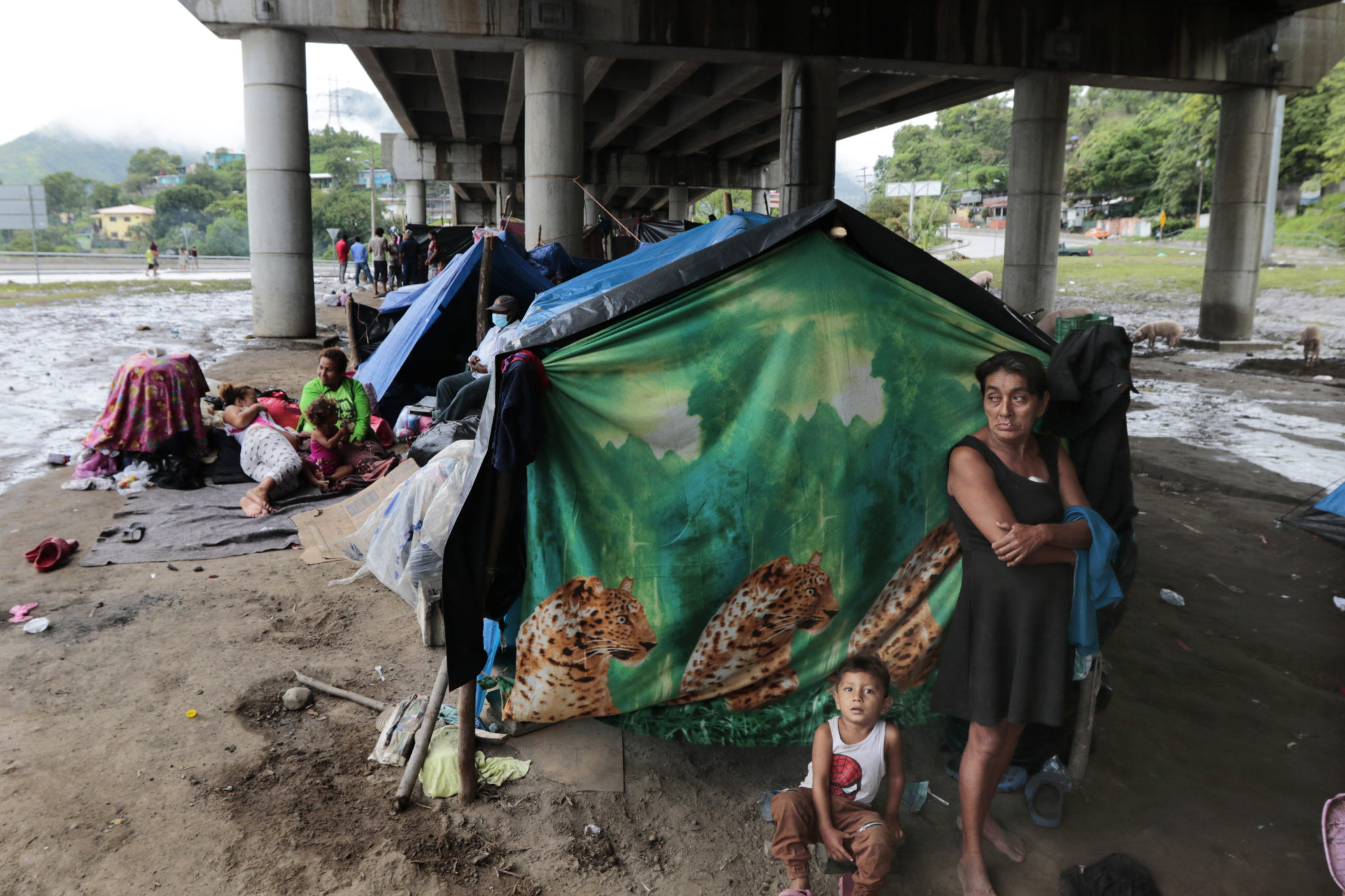
They too cite the economy (in part due to horrific damage cause by increasingly severe hurricanes) as the main reason along with the usual political corruption. These areas underdeveloped economically and are dependent on tourism to keep their economies afloat, but thanks to COVID-19, tourism dropped to a fraction of what it used to be due to travel restrictions  and cancellations by cruise ship companies.

Most of those coming here illegally are settling in Florida, Texas, Arizona (places already with large Hispanic populations) as well as North Carolina. There are also large migratory populations to be found in more rural states like Kentucky, Iowa, Kansas, and Nebraska.

It's also worth noting that there has also been a substantial increase in individuals from Asian countries coming to America illegally as well with India and China being the top two, followed by Korea and Vietnam.

At present, around 14.6% of the U.S. population are foreign born, which is the highest percentage in 112 years. That translates to about 48 million individuals (legal and illegal) as of September 2022 and a 2.9 million increase since the beginning of the Biden Administration according to the Center for Immigration Studies.  Some 900,000 have gone on to become American citizens according to a report from Pew Research from 2022.

Along with the 48 million immigrants, there were 17.2 million "children" (those under 18 years of age) with a foreign born parent. Therefore, including the immigrant and their children, that account for  approximately one in five U.S. residents.

It's worth noting, particularly given the prevalence of "help wanted" signs appearing in nearly every business window or on every telephone poll, that of the 48 million immigrants in the U.S. roughly half---27.4 million---were employed. This represents two million prior to the COVID-19 crisis. It's worth noting too that most are considered to be hardworking.

In fact, several surveys have shown that most illegal immigrants don't want to become U.S. citizens. They don't want to "blend in" with other Americans, including learning English. They are here solely for the money. Nothing more. Many send a portion back home to support their family.

 In some cases, entire communities are at least partly supported by money sent home by their sons and daughters working in America. If they get caught, so what? They get a free physical paid for by U.S. taxpayers, a good meal, and free trip back home (along with any money earned while here in the States).  Once home many repeat the process all over again a few days or weeks later.

So, what's the takeaway? What are we to make of this?  Well, America has always been the number one "go to" destination for immigrants---legal or illegal. America was, after all, founded by and for immigrants.

No other nation in history (except perhaps Ancient Rome) has had the influx of migrants as we have had. It can truly be said that nearly every country, race, ethnicity, and religion can be found somewhere in this country. I suspect that every language and nearly every dialect can be found here too.

However, America was intended to be a "melting pot". People who came here did so with the intent of becoming "American". To become a U.S. citizen was the goal of nearly everyone who stepped off the boat. Most did their best to learn the language (with varying degrees of success). It was part of what it meant to be American. They did their upmost to adapt to the prevailing customs, laws, and traditions as best as they could.

They tried  to leave behind centuries of hatreds, feuds, and other prejudices. Some changed their names and others their religions. Many married not just out of their social class, but often our their own nationality. This was an opportunity to start completely anew. 

While certain traditions were kept by these new migrants, the objective was to become part of the giant American "melting pot", where our collective backgrounds were added together to create this new being called "American". However, sometime around the 1960's this began to change.

Instead of trying to blend in and part of this nation, we encouraged immigrants to keep their own languages, cultures, traditions, and values. It would be us who would adapt; who would accommodate you.  In time, we began to accept their refusal to blend in and to excuse away their laws and customs even when it came in conflict with our own in the name of "multiculturalism".

Immigrants now can refuse to have their children taught in English, opting instead to have a taxpayer tutor teach them in their former tongue. We provide instructions in a multitude of languages. Even phone recordings are in different languages, which wouldn't be so bad I suppose except we are suppose to "push one" to hear English. As an aside, I won't do it. If you briefly wait, it will continue on in English.  

While we should try to be accommodating, we shouldn't remove the incentive to learn the language spoken here by making it easy to avoid it. Otherwise, we're simply enabling the separation of our nation into ethnic enclaves. As I've said many times over the years, a common language is the thread which binds the fabric of a nation together. 

Once everyone typically wore generally similar types of clothing. Not anymore! Now it's common to see individuals wear traditional native garb. The problem is that some areas try to impose "modest" dress customs (usually based on religious traditions) on others comes into their neighborhoods as if these are foreign enclaves instead of the U.S.

This is a big deal in Europe which even has its own "morality police" which can arrest and even fine so-called "offenders" (usually women) This topic has recently popped up in New York and other U.S. cities. The same goes for food or drinks where pork products or liquor are served or sold in certain neighborhoods.

This has already happened in Europe too where native restaurants are penalized for offering pork or alcohol on their menus. Sure, you can still get these "off menu", but you have to consume them out of sight of other customers less you risk "offending" them. I'll be damned. Give me a BLT and glass of cold beer and I'll enjoy them both wherever I bloody well please!

I don't begrudge anyone's heritage or beliefs, but they should understand that they are the foreigner. It is therefore up to them to adapt to the traditions, values, customs, and language of the nation which took them in and provided them with an opportunity to start over...not the other way around. If they don't like it, they are free to catch the next flight out. That's one of the pluses about America. You can leave at anytime.

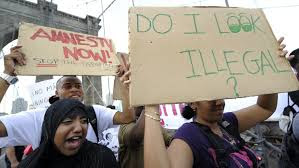
We don't need a poll to tell us that Americans are tired of dealing with this mess just as we're tired of weak willed political stooges ignoring us, but the validation that we're not alone doesn't hurt. I also suspect that many immigrants are just as tired of others, in their self-righteous arrogance, making life harder on them as well. We often see signs at rallies and protests which read "No One is Illegal", which is true. No human being is illegal, however, their actions sometimes are. That's why we have laws. 


 If you want to know more about this article's topic, please check out the links below. If you enjoyed the article, please consider passing it along to others and don't forget to subscribe. It's free! Lastly please be sure to "like" us on whatever platform you use to read anotheropinionblog.com. It helps with the algorithms and keeps our articles in circulation. Thank you! 


Foreign-Born Population Hits nearly 48 Million in September2022


U.S. Immigration---2022 in Review


DHS: Legal Immigration and Adjustment of Status ReportFiscal Year 2022 Quarter 2


Ten Graphics That Explain the U.S. Struggle With MigrantFlows in 2022


Saturday, June 25, 2022

The Quiet Invasion: Illegal Immigration Under President Biden

Not much has been said or written about illegal immigration lately. We've been focused on inflation, the war in Ukraine, the growing aggression of China, the "Great Resignation", and gas prices. However, none of that, as severe as they may be on their own, replaces the issue of illegal immigration which goes back to at least the presidency of Ronald Reagan, and yet we're hearing very little about it.

Illegal immigration is "the quiet invasion". Currently there is an estimated 11.7 million illegals currently living in the United States. 53% are believed to be Mexican. 16% are from Asia (mainly China, the Philippines, Vietnam, and Korea), followed by El Salvador, Guatemala, and Honduras. About 4% or 430,000 illegal residents are from India.

However, 17% or about 2 million are from elsewhere, such as Russia, Africa, Middle East or Europe. Most come from "south of the border", however, Canada has become an important crossing point due to its largely open and thinly monitored border. Amusingly, there's an estimated 70,000 Canadians living in the U.S. illegally. Most of those are thought to be residing on either coasts. California and Texas saw the biggest influx with a combined 40% of all illegal immigrants. 

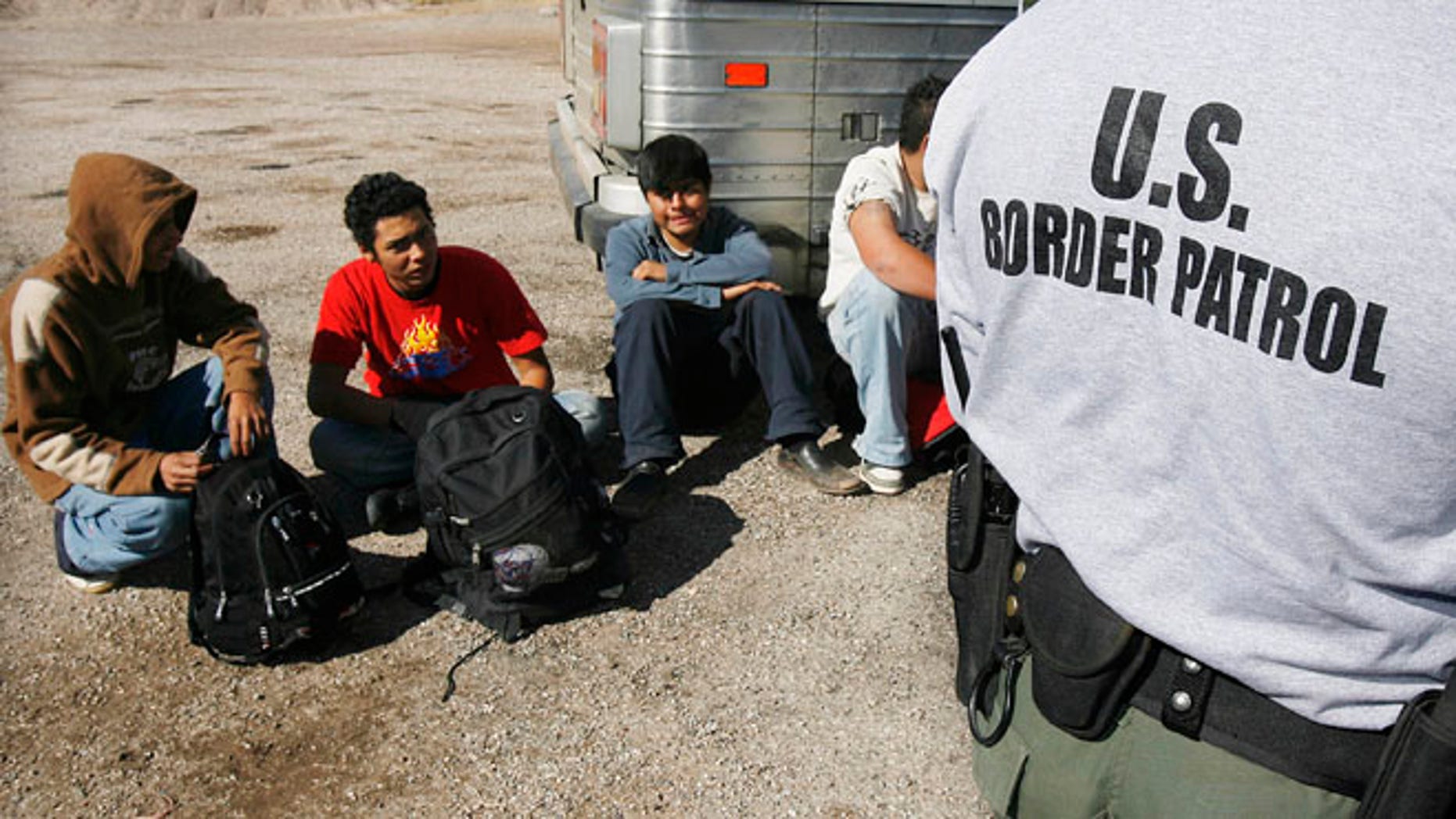
Other crossing points includes U.S. coastlines which are typically unmonitored and typically close to large cities.  The good news is that the border patrol usually intercepts up to 2/3 of those attempting to enter illegally. A record 210,000 were arrested in March 2022; a 24% increase from March 2019. 

During President Trump's Administration, illegal immigration dropped  off significantly due to his crackdown, starting with a wall along the Texas/Mexico border. 2017 saw a 46 year low; down 25% from 2016, although still well less than under the Obama Administration's high of 298,000 arrests in 2009 compared to Trump's high of 143,000 in 2019. Nevertheless, President Biden promised to undo many of Trump's immigration policies.

As promised, on his first day in office Biden signed six executive orders reversing portions of Trump's immigration policies. He also sent Congress a comprehensive immigration reform bill. Biden has taken steps to boosting refugee admissions (and expanding the requirements to qualify as a refugee), protecting so-called "Dreamers" or those who came here illegally as a minor alone or with their parents, and expanding Obama's "DACA"  or "Deferred Action for Childhood Arrivals" program.

It should be noted that under United Nations guidelines, refugees are considered those fleeing their country due to war/conflict or ethnic and/or religious persecution. UN guidelines state that refugees must go to the next nearest safe country, not traverse the continent to find one of their liking.  However, per the UN, those seeking economic betterment do not qualify as refugees.

Biden's proposals ignore that exception since most individuals seeking entry into the United States are doing so to improve their economic status. Biden has stated that the U.S. is committed to settling some 20,000 refugees, particularly from Latin America, and most notably from Haiti. He is also resuming the Cuban Family Reunification Parole Program which will allow reunification of Cubans with their American relatives (a similar program will be made available for Haitians). 

He also decided not to enforce the "public charge rule", denying green cards to those who would use them to obtain taxpayer backed benefits such as Medicaid and Social Security, as well as food stamps. Biden also supports legislation to allow the estimated 11.5 million here illegally a means whereby they can remain legally, and even obtain citizenship over a eight years period.  

69% of those issued a green card are based on pre-existing family ties here in the United States. 14% are issued for purpose of obtaining legal employment. 8% are given to refugees while their application for permanent residency is being processed under the Temporary Protection Program.  Another aspect of Biden's loosened immigration policy is broadening standards needed to obtain a H-1 Work Visa, especially for highly skilled or agricultural workers (which comprised 22% and 24% of the visa's issued). 

Another change made by the Biden Administration has been the restructuring of U.S. Immigration and Customs Enforcement (or better known as "ICE"). From now on, it will restrict its immigration enforcement to those who pose a threat to U.S. national security such as felons and recent illegal immigrants (thus excusing the so-called "Dreamers").  It would also reprioritized  to lower status those with older non-felony criminal records.

In the last 11 months of the Trump Administration, an average of 6,000 illegal  immigrants were arrested  monthly by ICE. Under Biden, that number has dropped by half for the first 11 months of his administration.  Biden also moved to halt Title 42, which was the last effective legal mechanism for deporting illegal immigrants.

Title 42 was a public health order which provided government the power to deport an immigrant for health reasons such as the spread of contagious diseases like STDs or Covid. This was to have gone into effect in May 2022. However, just prior to being halted, a federal judge in Louisiana blocked the move which means immigrants can still be deported for spreading certain diseases...for now.

Also among those whose arrest have been reprioritized  are illegal females who are pregnant, recently given birth, or are currently nursing, along with those currently hospitalized, under doctor's care, attending a public function like a wedding or funeral, attending a religious function, or is at a social services facility. Children at school or on a playground may not be apprehended (including their parents or other relatives). The idea appears to be to create a softer and more compassionate immigration enforcement agency.  

ICE raids of businesses are known to strike fear in the hearts of illegal immigrants out of fear of arrest and deportation, while proving to be an annoyance to employers who are often fined but rarely arrested, face the loss or suspension of their business license, or serve time.  Between 2000 and 2020, there were nearly 30,000 arrests of employees as a result of these raids but fewer than 75 managers.  

Now, under Biden, such raids have stopped. In addition, now the Department of Homeland Security (DHS) are actually encouraging illegal employees to rat on employers for "exploitative" or unsafe employment practices in exchange for legal protection and deferred deportation status (in other words, DHS looks the other way while they're given a head start to get out of Dodge and find another job). 

Lastly, the Biden Administration ended the family separation program, which was begun under the Obama Administration, but for which President Trump was blamed by the media. In conjunction, Biden also ended the long term family detention program which had been in effect since 2001.

So, what does all this mean? As a result of the changes discussed above, the border patrol has stated that they are anticipating as many as 18,000 attempted illegal border crossing per day. Yet, despite the changes, Biden didn't change the funding for DHS or ICE in FY 2022.  But for FY 2023, he is requesting $56.7 billion for Homeland Security, which includes an 80% increase in funding for immigration courts.

However, Biden is also asking for a 8% reduction in funding for ICE's Enforcement and Removal program while funding of the Border Patrol is expected to see a 13% increase over the previous funding. This increase calls for the hiring of an additional 300 border agents.

More technology will be added to border protection, which will increase to $309 million. It includes funding for additional watch towers, personnel sensors,  aircraft/drones, and aircraft monitors to detect incoming planes. Lastly, funding of ICE's detention operations will see a drop by about 25%.

This represents a decrease from 34,000 beds to around 25,000, meaning that ICE will not be capable of holding as many detainees, which in turn, encourages fewer arrests and more rapid processing. Overall, Biden's FY 2023 budget, as it pertains to containing and curtailing illegal immigration isn't much different than President Trump's. Critics of the budget are already chiding Biden for "more of the same". 

With just under two more years remaining in office, it's unlikely Biden will do anything dramatic. It's also just as likely that, given his consistently poor approval rating (which is currently at 36% for the fourth straight week), that Biden will see a second term (not to mention his declining mental health). There's also an increasing likelihood that the Democrats could lose control of at least one chamber of Congress in the midterm elections this November.

Overall, his FY 2023 budget appears more of a readjustment of both Obama's and Trump's immigration policies rather than anything new. Having said that, the ongoing situation in Ukraine will likely result in more refugees being accepted than expected.

Afghanistan too is continuing to unravel as the Taliban slowly try to re-impose its version of Sharia law despite assurances to the contrary. This has been particularly hard on female professionals who had begun to thrive during the American occupation as they had during the pre-Taliban era. The same thing applies to females being able to attend school. 

In addition, there were thousands who aided the U.S. military in various capacities that were left behind. The number of these individuals applying for emergency refugee protective status will grow and for the most part will be granted.  The situation in Syria for the Kurds and Yazidis who face severe ethnic and religious discrimination, and in some instances, attempts at genocide, will worsen as will their applications for emergency refugee status. Additionally, there has been an increase in illegal immigration from countries in Asia facing unstable political situations, not to mention the growing threat of war due to China's growing aggression.   

Finally, there will be continued mass migration from South and Central America due to growing economic instability, increasing violence, and political corruption (which tend to include the police and military).   Thus far, most of it is stopped at the Mexican/U.S. border. However, the influx has put a tremendous strain on Mexico's resources, despite increased U.S. aid (the State Department confirms that in 2021 we gave $321 million dollars to Mexico and Central America in humanitarian aid). This money covered refugees, asylum seekers and other migrants, and is expected to increase under Biden.

It's worth nothing that while amnesty isn't on the table this go around, the Biden Administration has switched gears when it comes to businesses hiring illegal workers. Now, under Biden's revised plan, ICE agents would "look the other way" in exchange for employees ratting out employers, meaning more illegal workers will remain in the country rather than be deported.  

Also not on the table is what to do about individuals and groups who undermine U.S. immigration law by illegally bringing illegals into this country and providing them with housing, jobs, and other forms of assistance (most of these are religious groups who believe they're exempt from the law). 

Like with businesses, those caught could face fines, loss of their tax exempt status, and/or jail time. Taxpayers pay out an estimated $113 million dollars a year to support these illegals, not including what they unknowingly give in the way of donations to certain churches and religious institutions. Apparently, there will no change in the existing laws unless forced by U.S. citizens. 

Until the political class in Washington and around the country develops the fortitude to put an end to illegal immigration while simultaneously proving aid to legitimate humanitarian needs, illegal immigration will remain a growing problem and will lead to a destabilization of the U.S. economy, as well as the political and social structure of this nation. This will require the American voters to reward and punish those politicians at the ballot box and to call them out at every public venue possible.


If you want to know more, please take a look at the links below. If you enjoyed the article, please consider passing it along to others and don't forget to subscribe. It's free! Lastly please be sure to "like" us on whatever platform you use to read A/O. It helps with the algorithms and keeps our articles in circulation. Thank you!  


Biden Administration moving to protect Dreamers after Texascourt ruling


2022 Changes to the Public Charge Inadmissibility Rule andImplications for Health Care


Key facts about U.S. immigration policies and Biden's proposed changes


Biden Advocates More Legal Pathways to Reduce IllegalImmigration


Biden at the One-Year Mark: A Greater Change in Direction onImmigration Than Is Recognized


President Biden's Executive Actions on Immigration


Judge blocks Biden Administration from lifting public healthorder


How border apprehensions, ICE arrest and deportations havechanged under Trump