Showing posts with label UK. Show all posts

Thursday, December 07, 2023

The War in Gaza: A Prelude to WWIII?

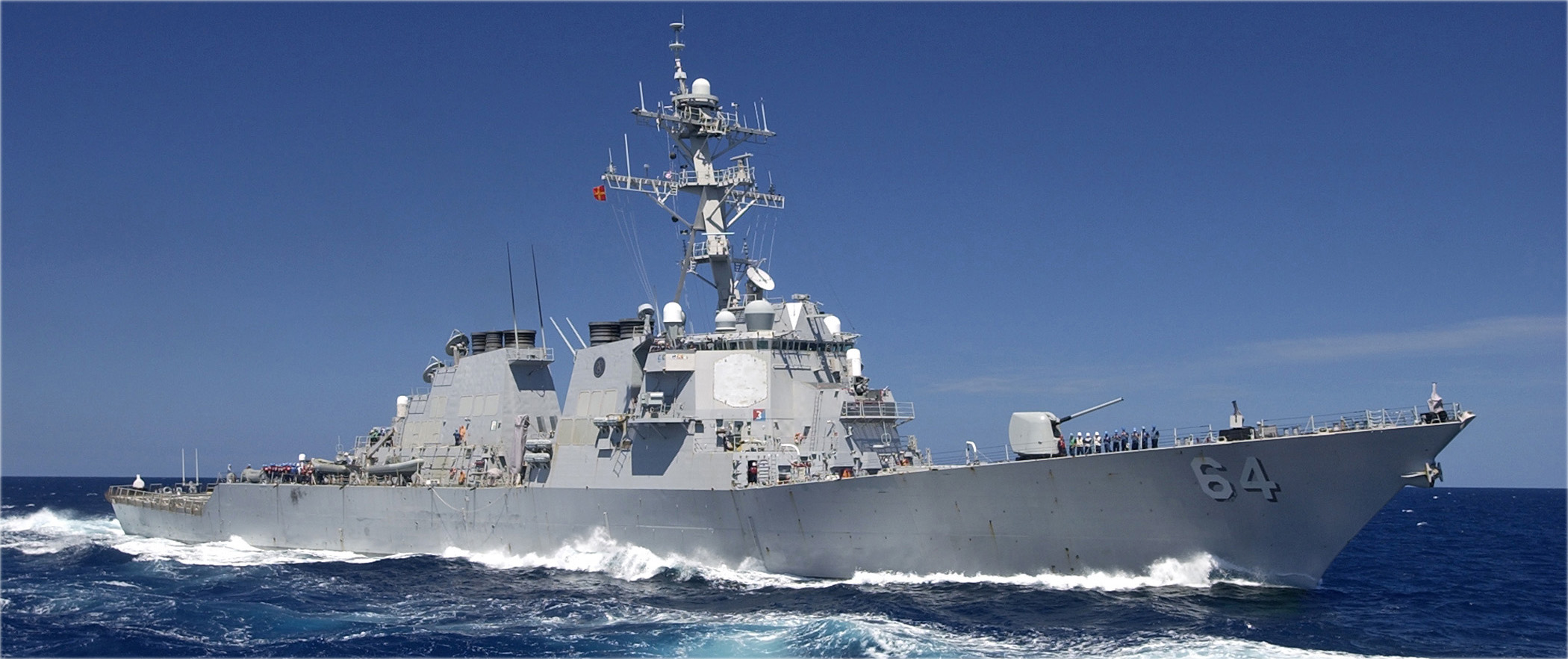
On December 3, 2023, a seven hour long attack on three commercial ship and the guided missile destroyer, the USS Carney, took place in the Red Sea as the U.S. warship patrolled the area. The attack by ballistic missiles came from Yemen in four separate waves. The Pentagon claimed the attack was the work of Iran, through which the terrorist Houthi organization carried it out. The Pentagon went on to claim that the USS Carney shot down three of the attacking missiles.

The U.S. Navy ship detected a "anti-ship ballistic missile" launched from an area controlled by the Muslim terrorist group directed toward the "M/V Unity Explorer", a 656 foot general bulk cargo ship built in 2016 sailing under Bahamas registration. Weighing in at 61,000 tons fully loaded, she recently departed Port Said in Egypt bound for Singapore. At the time of the attack, the Unity Explorer was carrying grain from U.S. based Cargill.  She is owned and managed by Ray Shipping of Tel Aviv Israel.

The "Number 9", also came under attack. Built in 2007, the cargo container sails under Panamanian registration.  Ironically, the 856 foot ship was sailing from Singapore and bound for Port of As Suways (Suez Port) in Egypt. The ship is owned by Number 9 Ltd/Cargo Harbor of England and managed by Bernhard Schulte Shipmanagement out of Newcastle-upon-Tyne in Northeast England.

A third ship, the bulk carrier "M/V AOM Sophie II", was also attacked by the Houthi missiles. Like the "Number 9", the AOM Sophie II, built in 2021, sails under Panamanian registration. At 751 feet, she has a 43,500  gross tonnage. Her registered owners are Kyowa Kisen Company, Ltd and Green Spanker Shipping S.A. while she is under the management of Cleanseas Shipmanagement, Inc., located in Manila, Philippines.  

The USS Carney (DDG-64), a heavily armed Arliegh-Burke guided missile destroyer, is part of the USS Gerald R. Ford Carrier Strike Group operating in the region as part of a two prong U.S. naval carrier strike force which includes the USS Dwight D. Eisenhower. Each strike force consists of approximately eight warships plus one aircraft carrier and eight squadrons of attack aircraft plus one squadron of support planes and helicopters.  That's a helluva lot of firepower.

In addition, there is likely increased submarine activity, not to mention spy planes, drones, and dedicated satellites as well as communications monitoring.  The British also sent a carrier based strike group to the area along with a detachment of Royal Marines, as part of a coordinated military show of force as well as to provide air and naval support for Israel.              

Perhaps the key reason for the attack, other than its proximity to the war zone, is its ownership by Ray Shipping of Tel Aviv Israel. The sinking of cargo ship would have serious consequences for global shipping in the region since it could block all traffic going through the Red Sea. The Red Sea accounts for 30% of the world's cargo traffic.

However, Houthi military command in Yemen, while acknowledging the attacks, stated that their intelligence indicated the three commercial ships had ties to Israel. As indicated above, only one of the cargo ships has Israeli ties. The Houthi have previously sent guided missiles from Yemen up the Red Sea toward Israel settlements in the south. These missile attacks were successfully intercepted.

The Pentagon went on to say that it would pursue all appropriate responses in coordination with its allies and partners, which presumably means Great Britain, which has a carrier strike force offshore at Gaza, and the Israeli military, which is currently conducting military operations in Gaza. By the way, if Yemen sounds familiar, it might be because in 2000, Al Qaeda was almost successful in sinking the USS Cole while it was docked in Yemen's Aden harbor. 17 sailors were killed and 37 were injured.

Meanwhile, it should be noted that the International Criminal Court ("ICC") has initiated a criminal investigation for alleged war crimes against Israel under Article 31 of the Geneva Convention for the deaths of civilians in Gaza and the West Bank dating back to 2014.

These deaths result from not just military attacks, but also the alleged deliberate withholding of water, food, medicine, and electricity according to  the Chief Prosecutor for the ICC, Karim Khan. Mr. Khan, a British attorney, claims that some 2.3 million people have been affected.

The Israeli-Palestinian crisis, contrary to popular opinion, didn't start with Israel's 1948 Declaration of Independence. The situation actually dates back to the early 1900's when various Zionist organizations began lobbying in earnest for a Jewish homeland due to the centuries long progroms,  Many progroms restricted Jewish ownership of property, limited job opportunities and access to higher education, and resulted in numerous murders, rapes, and physical attacks.  The most notable of the Zionist Movements were led by Max Nordau, Chaim Weizmann, and Theodore Herzl.

Control of what was then called the Palestinian or British Mandate came about after the fall of the Ottoman Empire in 1918 and the seizure of lands by the British and French empires (between 1920 and 1948, the Levant was known as "Mandatory Palestine" per the League of Nations Mandate for Palestine). The earlier Balfour Declaration of 1917 guaranteed British support for the creation of Jewish homeland in Mandatory Palestine, but didn't say when.  

This was followed by the creation of the Zionist Commission for Palestine under Chaim Weizmann, president of the British Zionist Federation, in 1918 which aggressively promoted Zionist activities in the region such as smuggling Jews into Palestine to build up the numbers and give Jews a stronger voice for statehood. They also actively fundraised to raise money for Zionist programs.  While the British continued to drag their feet on the issue, World War II brought the matter to a head.

Capitalizing of the horrors of the Holocaust amid the Nuremberg Trials and an unrelenting public relations campaign by various Zionist organizations plus global support (especially from Hollywood, Wall Street, and other financial institutions), the British finally relented and agreed to the creation of a two part state known as the 1947 United Nations Partition with Jerusalem falling under a UN trusteeship.

While the proposal was rejected by the Arabs, David ben Gurion, the head of the Jewish Agency for Israel since 1935 and part of the World Zionist Organization, declared independence for the new State of Israel on May 14, 1948. Ironically, some leaders at the time joked that had it not been for Hitler and the Nazis, it's likely there wouldn't have been ample support of the creation of a Jewish state, and thus Hitler should be credited as the step-father of Israel.

Immediately following the declaration, armies from Egypt, Jordan, Iraq, Syria, Yemen, Saudi Arabia, Lebanon, along with a composite of "volunteers" from Libya, Morocco, Iran, the UAE, and other Arab nations known as the Arab Liberation Army, invaded. Fighting with weapons scrounged from every corner of the world, including German WWII surplus, Israel bitterly fought back. 

Following a nearly ten month long war, a ceasefire was arranged. Israel retained all its land plus captured 60% of the land originally designated as part of the State of Palestine. The West Bank and East Jerusalem fell under the administration of Jordan and Gaza fell to Egyptian occupation. But the real losers were the Palestinians.

Approximately 700,000 Palestinians were either evicted or forced to flee from their homes in what became known as the "Nakba" (the "catastrophe"). Meanwhile, 260,000 Jews were evicted from various Arab nations with another 100,000 were trapped in Jerusalem.   Approximately 7000 Arabs were killed and 13,000 civilian (mostly Palestinians) perished. The Israelis lost 4,200 fighters and 2000 civilians.

This became the first of a long series of wars and terrorist attacks in which Arab nations have sought to "push the Jews into the sea" as former Egyptian President Gamal Abdul Nasser once said, and yet while the damage and loss of life has been tremendous on all side, Israel remains.
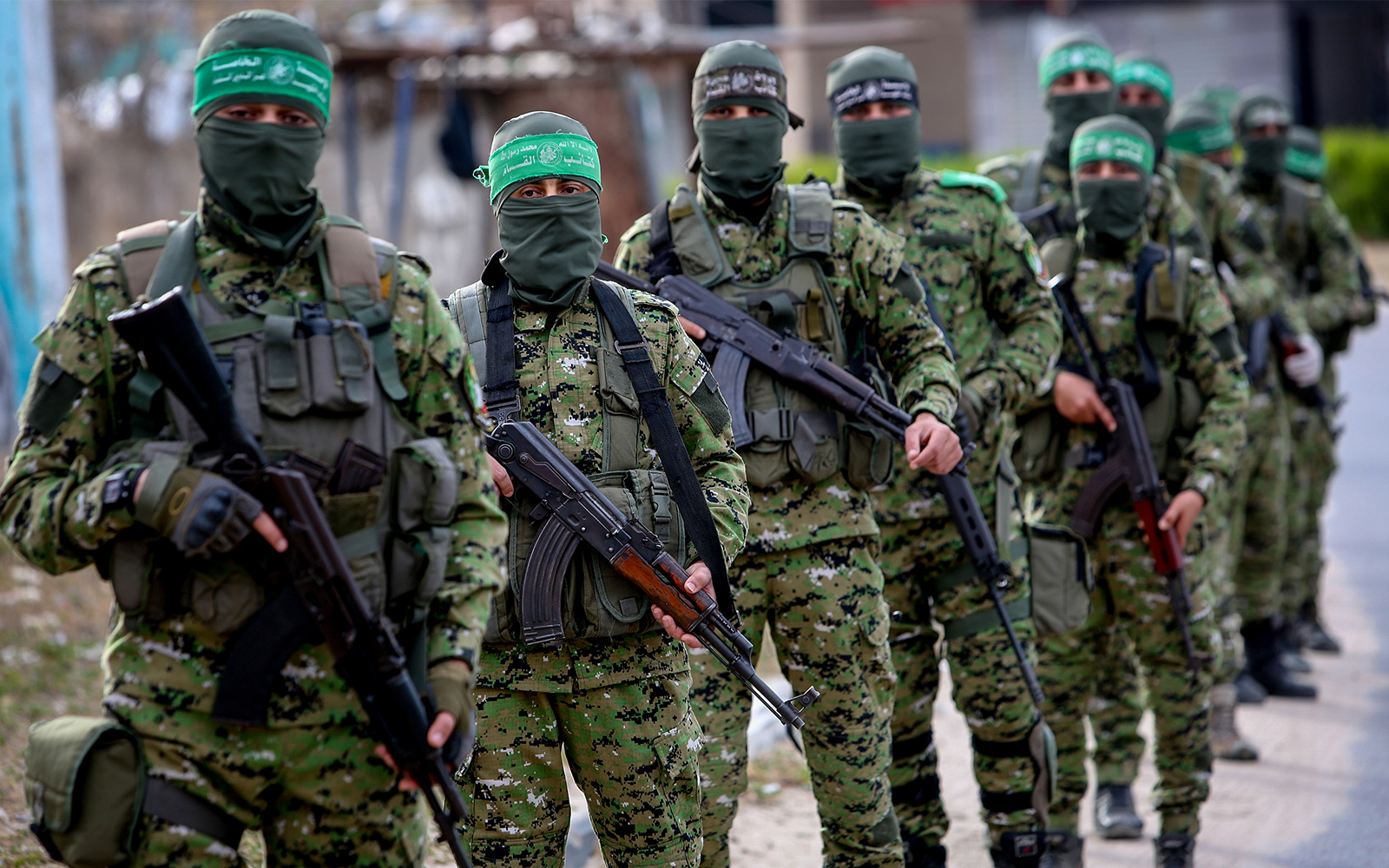
Today, Israel still faces a number of enemies hell bent on its total annihilation, including Hamas in Gaza, Hezbollah in Southern Lebanon, the Houthi in Yemen, Boko Haram in Nigeria, the Taliban in Afghanistan, ISIS/ISIL in Iraq and Syria,  Al Qaeda in Saudi Arabia, the Al-Nusrah Front in Syria, along with dozens of others scattered around the world.  

However, the most threatening is the Islamic Republic of Iran, a extremist state if there ever was one. The Islamic government has repeatedly vowed to "wipe Israel off the map" by any and every means possible, including nuclear, even if it meant its own total destruction.

Iran regularly underwrites, trains, and arms the majority of these terrorist groups, including Hamas and Hezbollah (they refer to the Israel and the United States as "Little Satan" and "Big Satan"). And while the people of Gaza are regularly sent billions in global aide (the U.S. alone has sent $5.2 billion dollars), much of it is sidetracked by Hamas which it uses for its own purposes.

How is Hamas able to do this you ask? Simple. Hamas is the elected government in Gaza. In 2006, Hamas won the Palestinian legislative election for Gaza and the West Bank. In 2007, they militarily defeated Fatah, a secular nationalist political party which once dominated the governing Palestine National Authority. Politically, Hamas controls 44.45% of the legislative seats while Fatah has 41.43% of the seats. The balance are a hodgepodge of various, mostly Marxist, socialist, or theocratic oriented parties.      

So, where does this leave us? The United States has been itching to get at Iran ever since the hostage crisis in 1979 when 52 Americans were held hostage for a year. Attempts by the Carter Administration to free them failed, and in one particular case, horrendously. The fact that Iranian aided terrorist groups also helped bring about the defeat of U.S. and coalition occupation forces in Afghanistan and Iraq as well as flustered U.S. plans in Syria hasn't helped the situation.
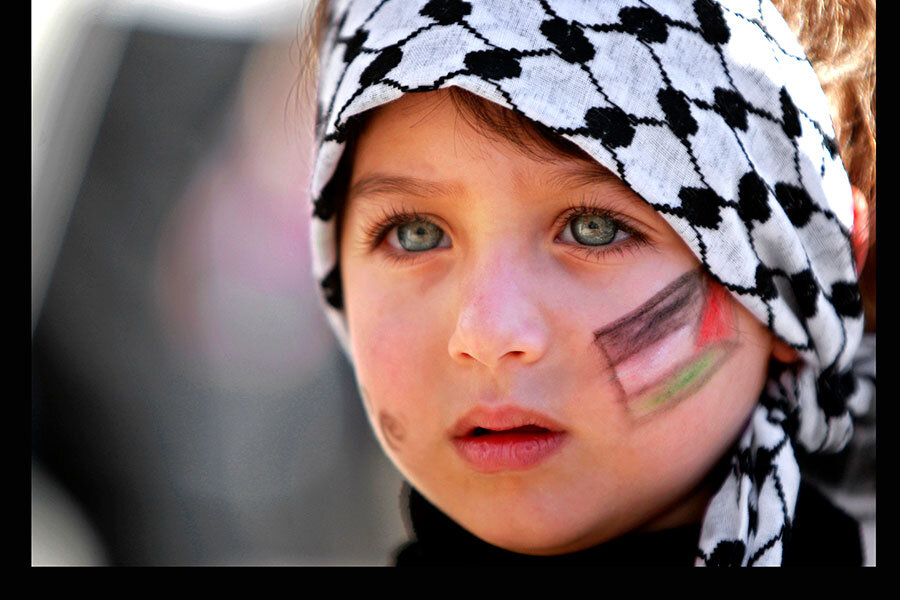
The U.S. sees the situation in Gaza as another attempt by Iran to spread its influence (especially at the expense of U.S. regional allies like Saudi Arabia) and encircle Israel. There's no question the U.S. will do whatever it can to destabilize the Islamic State or that our naval presence is, in truth, little more than bait with a B1 bomber attached.  Whether Iran takes the bait remains to be seen.

But what about the Palestinians? They been used for decades as global pawns for an agenda which no longer belongs to them, and what do they have to show for it?  Tens of thousands are dead, maimed, disabled with millions living a Diaspora, and despite rhetoric to the contrary, they live under the iron boot of a military state. It's poverty rate is 31.9% and a quarter of the population are unemployed.

Meanwhile, Hamas get rich on the misery of their own people. It has an investment portfolio, including real estate, valued at over $500 million and a military budget of $300 million. Yet more Palestinians will die due to starvation, lack of medicine and medical care, potable water, or disease than the war. Why? Many blame Israel, but what about Hamas? Surely by now the time has come to beat swords into plowshares. If not, then when?


If you enjoyed the article, please consider passing it along to others and don't forget to subscribe. It's free! Lastly please be sure to "like" us on whatever platform you use to read anotheropinionblog.com. It helps beat the algorithms and keeps our articles in circulation. Thank you!


Gaza War: US, British Marines 'Train for Action'; 2nd US Carrier Reported Near West of Cyprus


Total Causalities, Arab-Israeli Conflicts: 1860 - Present


Israeli Casualties of War


ODNI: Terrorists Groups


Gaza is plagued by poverty, but Hamas has no shortage ofcash. Where does it come from?


'Hell on earth': Israel unrest spotlights dire conditions in Gaza


International aid to Palestinians


Where Hamas gets its money and why it's so hard to stop, even as the U.S. steps up efforts


Saturday, December 28, 2019

Why Do So Many Countries Hate Trump? A Global Perspective

Here we are, at the end of 2019, and what a year it's been. Like most everyone else I thought about doing a retrospective; taking a look back at perhaps the top stories we did for A/O or maybe a look at the year's leading stories, but that wouldn't be very original would it? So, instead I decided to look at how President Trump stacks up among some of our allies.

While they don't have a direct impact on our elections, their opinions do impact us through the perceptions they create. It also has an impact on our trade relations since their impressions reflect their confidence in the presidency and the government. Besides, Trump's Presidency began with the absurdity that somehow Russian President Vladimir Putin influenced the outcome of the 2016 Presidential election which kept Hillary Clinton from her coronation. So, let's take a look shall we?

In tenth place is Japan. An important economic partner of the U.S. which doesn't seem to like Trump. Since the beginning of the Trump Presidency, Japanese opinion has dropped 54 points. In addition, their opinion of Americans in general has fallen 15 points as well. The Japanese seem to equate Trump with their largely unpopular Prime Minister, Shinzo Abe, who they see as having no sense of humor, a big ego, and militaristic. Additionally, like Trump, Abe was born wealthy and appears out of touch with most Japanese. At least Trump hasn't thrown up on Japanese PM yet unlike another certain U.S. President!

The ninth spot is our friends down under, Australia. Although 75% of Australians have a positive opinion of Americans, only 45% can say the same thing about Trump. The Aussies don't seem to be particularly confident of Trump being able to do the "right thing" when it comes to his foreign policy, especially on the topic of refugees or ability to comprehend the complexity of the situation on Nanru and Manus and ship based human smuggling.

Next is perhaps our closest ally, the United Kingdom. Trump's approval is down 57% from what it was under Obama. In fact, some of their media goes as far as to say that the Brits "really really hate" Donald Trump, but that's not all. Just 50% have a positive opinion about America and Americans in general.

The reason most cited was Trump's promise to minimize Muslim immigration into the US. Of course, the UK has been inundated by Muslim "migrants" as has Europe, much to their detriment I might add. In fact, several large cities in the UK, including London, Birmingham, Manchester, and Leeds, have substantial Muslim populations, not to mention Sharia courts and "No-Go" zones, albeit unofficially.

Our northern neighbor, Canada, is next. So could those obnoxiously polite Canadians dislike about "The Donald"? Well, apparently everything. According to Pew Research, they regard the President as arrogant (92%), intolerant (78%), and dangerous (72%). 84% doubt he's qualified to be the president. They dislike his policies just as much as him personally, and for the first time since Pew began tracking opinions in Canada has Canadians polled over 50% in their dislike of Americans.

According to the survey, 57% of Canadians have a negative opinion of the U.S. while the remaining 43% apologized profusely (just kidding). As an aside, Mexico, our neighbor to the south, came in 14th with a 44% disapproval rating of Trump (mostly due to illegal immigration). Thus while Trump and America are viewed rather poorly by our two closest neighbors, it's Canada which has the worse opinion of us.

Spain is sixth on the list. Spain, which has become a major entry point for "migrants" entering Europe from Africa and the Middle East, not only strongly dislikes President Trump, they don't care much for Americans either. According to Pew, Trump is down 68% from former President Obama. The majority don't believe that President is capable or willing to do the "right thing" when it came to his policies.

They also believe that Trump doesn't understand the international situation well enough to be president. Regarding Americans, a whopping 60% of Spaniards had a unfavorable opinion of Americans while 23% had a very unfavorable opinion of the U.S.. The previous high has never exceeded 7%.

Next on the list shouldn't come as much of a surprise. After all, it's France, which has had something of a national "Napoleonic Complex" toward the U.S. since the end of World War II (you're welcome again by the way) and presidency of Charles De Gaulle. That's not to say the French People don't like Americans, they do...well, mostly. 73% of those polled had a favorable opinion though they admitted to getting a bit miffed when tourists show up and expect everyone else to speak their language. Trust me when I say that most Americans these days can relate!

Nevertheless, President Trump is down 70 points from Obama! To put it another way, the French hate Donald Trump more than Russian President Vladimir Putin, China's Xi Jinping, or even Germany's Angela Merkel (who is partly responsible for Europe's decline thanks to the importation of the "migrants"). France's current president, Emmanuel Macron (the other person most responsible for Europe's decline) has even tried to bill himself as the "Anti-Trump".

As for why the French hate Trump so much, it really covers about every one of his policies, from trade to terrorism to the environment, human rights and the global economy. They dislike his personality and just about everything else about him. The only thing they seem to like is his wife, Melania Trump (the French do love class and style and she exudes it).

Interestingly South Korea is fourth. Now with a nut job with possible nukes just a few dozen miles to the north, you'd think they would have a more favorable opinion of Trump. After all, he has been one of the few American presidents who hasn't been bullied into backing down every time Kim Jong Un throws a tantrum.

In fact, very few world leaders have actually stood up to Kim in the past, including presidents George W Bush and Barack Obama. In addition, the presence of U.S. troops in South Korea, as well as our strong trading partnership, are major reasons South Korea is still there.

Nevertheless, 71% of South Koreans have an unfavorable opinion of Trump compared to Obama. Many fear that Trump is using South Korea as a pawn in his dealings with Kim Jong Un. They also believe that Trump is "indifferent" about South Korea's role as an ally. If that was case, I doubt that Trump would have gone to bat for them as often as he has in the past. By the way, 75% of South Koreans still have a good opinion of America and Americans.

Now for Germany. Is anyone actually surprised? The only thing I found more surprising was that Germany wasn't higher than third on the list. Pew's poll showed a 75% decline in favorability from Obama to Trump; a drop which cuts across all of Germany's political lines.

Perhaps it's because Trump has been a vocal critic of Angela Merkel's disastrous policy of "open borders" of the so-called "migrants" into Europe (many Germans feel the same way except that "war guilt" seems to keep getting in the way of Germans doing the right thing for Germany and Europe). Merkel's immigration policies smacks of national suicide; a desire to destroy Germany's culture, traditions, and sense of national identity, even if that means taking Europe down with her.

Like Germany, the Netherlands has an equal distain for President Trump and like Germany, it's favorability toward the American President has dropped 75 points. Like the Germans, the Dutch believe that Trump is intolerant, arrogant, and lacks the practical experience of a world leader. They too, as others on this list have expressed, believe that Trump lacks the moral character to "do the right thing", be it pertaining to immigration, human rights, the environment, the Middle East, or just about anything else. On the plus side, 71% of the Dutch still have a positive opinion of Americans.

Finally, the number one spot. The country which hates President Trump more than anyone else is (drum roll please)...Sweden. Yelp, that ultra polite "Canada of Europe" dislikes Trump more than any other country in the whole wide world. It's hard to believe actually. Sweden is, after all, so damn polite. They are consistently listed as being among the happiest and healthiest people in the world. They are routinely ranked among the best educated people in the world. Sweden has one of the world's best social safety nets, top government infrastructure and environmentally friendly countries in the world.

Of late Sweden has been suffering from the influx of "migrants" coming into the country; many of whom are poorly educated and lack few, if any, transferable work skills. They've proven to be a huge drain on Sweden's economy, especially its once renown social safety net. Additionally, crime, particularly violent crime, has skyrocketed throughout Sweden, particularly in major cities like Stockholm.

In addition, there has been increased demands by these "migrants" for the implementation of Sharia law (including Sharia courts) as well as curtailing Sweden's traditionally liberal social standards. Many political scientists have proclaimed that Sweden, as a solidly liberal society, may be the first large country lost to the "demographic replacement" of Europeans along with Holland and Belgium.

As a result, we have a nation caught in the grips of a transitional crisis. Nevertheless, their opinion of Trump puts them at the top with an 83% disapproval rating, though the American People retain a 80% approval rating. The principal reason, they claim, is Trump's failure to "fact-check" before speaking (or tweeting). They believe Trump is too intolerant (especially toward Muslims), and lacks the intellect as well as personality to be president.

Could the Swedes be right? For that matter, could everyone else on the list be right? Is Donald Trump the wrong person for the job? Would someone like Hillary Clinton have done a better job as president? If her record as Secretary of State or as a candidate are any indication (including her attempt, along with Debbie Wasserman-Schultz and Donna Brazille to rig the Democratic Primary against Bernie Sanders, illegally obtain questions in the final presidential debate, Benghazi, or the Clinton "pay to play" Foundation), the answer is no. Hillary fails, if for no other reason, than on moral grounds.

We also need to remind ourselves that almost every country on this list has a politically Left government. A few, such as Sweden, have a long tradition of socially and economically liberal policies. Some were part of empires or were the nexus of the empire itself. Many too have had brutal Far Right juntas imposed on them with the help of the U.S. Government. All have had a close economic relationship with the United States. A few are heavily dependent of American economic aid.

To them Trump perhaps represents a threat. He is not just tightening the borders, preventing illegal immigration into this country, but as a result, restricting money from going back to these countries which has become an informal form of economic aid; something which props up small communities. It has also helped to relieve local poverty thanks to the illegal exodus, providing education and healthcare which would have otherwise been unavailable.

Along the same lines, they may be concerned about the cutback of official aid or military support, forcing them to pick up the slack instead on relying on "Uncle Sugar" to do it for them. Of the countries in Europe, they are suffering under the crushing burden of these "migrants"; many of whom are Muslim. No doubt they'd like to see more redirected to the U.S. America has been viewed for decades as the breadbasket, policeman, and bank to the world. As long as the money flows, they love us.

They worry that America may decide to turn its attention inward and start taking care of Americans first. Many would like to see America drop its border restrictions and turn itself into n open "feed trough"; doing for the world what their own governments won't thanks to their greed. Instead of removing their own tyrants and incompetent government officials, they turn to America for free handouts. This, I believe, is what they're afraid of, and Trump is just the outsider who would do it.


These Are The Countries Which Really Hate Trump


Making America Grate Again


Where Countries Stand With Donald Trump: A Crib Sheet

Saturday, September 14, 2019

Sanctuary Cities


Sanctuary cities. They've been with us since the being of civilization. In the bible, there are six such cities, all under the control of the priestly Levites. These six cities, Bosor, Ramoth and Golan west of the Jordan River and Kedesh, Hebron, and Sheham to its east, were places where individuals accused of crime could escape to in order find sanctuary until the crimes they were accused of could be adjudicated by the either the priestly court or local ruler.

 Even the main temple in Jerusalem could be used as a temporary shelter. The ancient Sumerians, Babylonians, and Assyrians also provided cities or temples where the accused could find a brief respite. The ancient Greeks too had cities of refuge, including various temples until such time as the accused could prove their innocence.

Fast forward to the modern era and we find the concept of the cities of refuge being played out in the form of sanctuary cities. In most cases this applies to immigrants trying to get away from war, famine, or disease, however, it's also come to include economic migrants which are individuals seeking better economic opportunities. This is especially the case in Europe which has adopted basically an open door policy toward these individuals. However, that has proven to be disastrous.

In numerous cases, cities and towns have been overrun. Crime has become rampant, partly as a result of a clash of cultures and refusal of the immigrants to adapt to their host country's laws, customs, language, or values. As a result, the immigrants have attempted to transplant their laws, customs, and values onto their new homeland and completely rejected the very notion of assimilation.

The governments throughout Western Europe and the UK have proven to be woefully unprepared for what they willingly invited into their country. As a result, these governments have unleashed nothing less than an invasion which will ultimately result in a complete or nearly complete replacement of the native population, along with their traditions, religions, customs, and culture.

To make matters worse, the governments have largely responded by cracking down on its own citizens, including the victims of the crime caused by these migrants (especially the victims of gang rapes which are often blamed on the victims!). These governments have gone as far as dictating to its native populations what to wear, when to go out and under what circumstances, removing traditional items (such as pork or liquor) from menus for instance; all in the name of "tolerance". 

They've even allow foreign laws to be applied on their own soil (laws which are, by their very nature, in direct conflict of existing laws and customs), and the enforcement of "no go" zones, thus sanctioning de facto occupation zones within their own country.

Finally, while officially there as "economic migrants", the majority of these immigrants have opted not to work. Instead, they've managed to imbed themselves into the very generous economic and social safety nets provided by these countries, and thus, the native population ends up supporting these "invaders" with their tax dollars while being forced into a form of submission to foreign laws and culture. The result has been bringing the once highly successful countries to their knees. As an aside, neither the United Nations or Amnesty International regard economic migrants as justification for any sort of amnesty.

Once, these countries were quite successful and prosperous; where individuals shared a similar work ethic and believed in similar values. Crime was hardly more than a blimp on the radar. Both the quality of life and life expediency were ranked in the top ten in the world for decades. Europe's cities and towns were known for not just being generally safe, but also for being pristine. There was a sense of pride in keeping these communities clean, especially in Germany, the Lowlands, and Scandinavia. However, the migrant crisis, triggered by criminally naive politicians and poorly prepared government infrastructures has all but destroyed what wars and earlier invaders could not.

America has fared better, but not by much. America has always been a nation which has welcomed immigrants. We are, in fact, a nation created by immigrants. Practically every nation, ethnic group, and religion can be found in the America. However, things have greatly changed. Once upon a time, America was viewed as a "melting pot", where individuals came and added their cultures and experiences to the rest. They quickly assimilated into society; adopting its language, customs, and values to create a unique culture all our own. An American Culture.

Naturally, immigrants tended to seek out others who were from the same country, similar religions or cultures. This resulted in the creation of small enclaves, mostly in cities and large towns. However, it didn't change the hope of those individuals of becoming totally immersed in the American experience. Many of these immigrants changed their names, religions and any other links to their past.

They tried to learn what they could about their new homeland long before immigrating. They did their best to learn English, which was a source of deep personal pride (in some cases, English language classes were held onboard the passenger ships). America was seen as a place to start over. Nothing mattered more than to become "Americans".

Most of these immigrants were individuals coming to seek a new life; a chance to start over. Later, immigrants were actively brought to this country by the federal government for humanitarian reasons. Typically this included individuals being persecuted for political, ethnic, or religious reasons. It also included individuals affected by natural and manmade disasters, particularly wars. However, all who sought to come here were expected to do so in accordance to our immigration laws, which, while strict, were viewed the world over as being more liberal and open than most.

However, that started to change in the late 1960's. Individuals who came to this country were encouraged not to assimilate. They were told they didn't need to learn English; we would "ease" their transition into this new society so they could take as long as they needed, if indeed, they even desired to integrate at all. Some never bothered to learn the language or understand the laws and culture of their adopted homeland; many saw America simply as a place to work and send money back home. The result was the creation of a subclass of immigrants which never became a part of the American mosaic; creating pockets of their native countries, transplanted on a new soil. This was "multiculturalism".

The result was a slow but steady increase in individuals who came here illegally with no intent in either assimilating or becoming citizens. In the beginning, most did so to join family and friends who had come to this country legally, however, for whatever reason, they decided to do so illegally. Generally these individuals had a criminal record, lacked adequate skills to find employment or had health issues (which included "anchor babies"). 

What had originally been a trickle had become a flood by the middle 1980's. The situation became so bad that in 1986, President Ronald Reagan signed into law a bill granting the estimated six million illegal immigrants amnesty (excluding those with criminal records). The idea was that the costs of rounding up and deporting these individuals was simply too time consuming and expensive.

Today, various towns, cities, and even states have gone a step further and declared themselves "sanctuaries". By that they mean that those in this country illegally are welcome. The local police departments and other taxpayer funded government entities are instructed not to cooperate in any way with federal authorities in the capture and deportation of these individuals. 

At present there are nine states and well over 100 counties, cities, and towns are have proclaimed themselves "open" to illegal immigrants in defiance to federal laws. Yet, at the same time, these same locales continue to receive federal money. Some have actually had the audacity to ask Washington for more federal dollars to cope with the increased costs of supporting these individuals!

Illegal immigration is ultimately the result of a demand for cheap labor. Employers want to avoid certain OSHA requirements such as safe and healthy work environments, wage laws, and taxes. Unions favor it because it increases their membership and puts dues in the bank. Religious institutions and churches, looking to increase their membership and influence, provide aid by encouraging illegals to enter the country through a system of safe houses, providing temporary shelter (often on church property), jobs, permanent housing, and instruct them on ways to circumvent various laws in order to gain access to taxpayer based services as well as medical care (the cost of which are passed on to consumers and taxpayers).

Unfortunately, it appears this situation will not be resolved until the President and Congress muster the backbone to enforce current laws regarding aiding and abetting criminals. The federal government must first cut off all federal money to states, cities, towns, and communities who provide "sanctuary" to illegal immigrants. Secondly, the Department of Justice needs to bring charges against all those who refuse compliance with federal immigration laws, be they governors, mayors, city councils, or whomever.

States which issue driver's licenses or permit voter registration of illegal immigrants should be voided. That is, a driver's license issued by the State of California or Colorado should not been held as valid outside that state without proper legal identification such as a birth certificate and/or cross checked with a expanded E-Verify. Voter registration should be accompanied by a photo ID and also cross checked with E-Verify. Meanwhile, state legislatures must take whatever steps necessary to make illegal any sanctuary status by the state, as well as counties, cities, and other communities along with a zero tolerance for anyone aiding or employing illegal immigrants.

That being said, the federal government needs to take more aggressive steps to stop the demand. Any employer found employing an illegal worker should have their business license suspended for 90 days for the first offense and face a minimum fine of $10,000 per illegal employee. In addition, corporate officers must be held responsible and should face 90 days jail time. Finally, they must be placed on a permanent watch list. This includes not just the business, but the officers as well.

A second offense should result in a six month suspension of their business license, 180 days in jail, and $25,000 fine per individual. A third offense should result in a permanent suspension of their business license, one year jail time, and $50,000 per individual. Needless to say, any federal contracts should be suspended with the first conviction and permanently after that. Any company with federal contracts who employs an officer guilty of the third offense in a managerial, supervisory, or consultant role must forfeit those federal contracts.

As for non-profits, particularly churches and religious organizations, should face equal consequences for aiding and abetting illegal immigrants. This includes loss of their tax exempt status for the same period as their business license. As the 70's TV detective "Beretta" used to say, "Don't do the crime if you can't do the time". In addition, no one should have access to taxpayer funded services unless they are able to verify they are in this country legally.

Illegal immigration currently cost taxpayers in the multi-billions of dollars on an annual basis. Given the ever widening income gap, increasing food and healthcare costs, not to mention the ever rising tax and utility rates plus the deepening debt many local and states governments are finding themselves, taxpayers can't afford to support those who intentionally defy our laws and then expect us to support them. The majority of us are having trouble just supporting ourselves.

On a related issue, America has a long and well established tradition of religious tolerance, as well as keeping religion out of politics. I doubt many in this country has a problem with Islam or any other religion. However, we will not tolerate attempts to replace or substitute our laws with their religious oriented laws for any reason. We will not allow what has happened to Europe and the UK to happen to this country, and we have no problem with defying politicians unlike our cousins across the pond.

Sanctuary cities of the past were created to provide a place where the accused could go and gain time to prepare a defense against their alleged crime. Today they've become a place where individuals are not accused criminals, but acknowledged criminals can go to avoid punishment. We cannot allow either states or elected individuals to pick and choose what laws they will enforce any more than we can allow churches or employers to ignore existing laws. Until those laws are changed legally, they remain laws and must be enforced.


Center for Immigration Studies-Map: Sanctuary Cities, Counties and States

Sunday, July 15, 2018

Let's Talk About NATO Shall We?


President Trump recently ruffled some feathers while speaking to members the North Atlantic Treaty Organization or NATO. Ruffling feathers isn't anything new for Trump, who seems to take a devious delight in seeing whose golden goose he can drop kick across the Rose Garden. I can't say I blame him. Washington is deep up to its coffered comb overs in special interest muck. However, I was curious to see if Trump was right about this one. Are US Taxpayers picking up the lion's share of the bill needed for Europe's defense? For that matter, should Washington even be spending our money on Europe's military?

Before we get started, let's take a moment to remind ourselves why NATO was created and what it's all about. Historically, Europe had long been a continent interlocked by a complicated network of treaties and alliances which ebbed and flowed like Seine or Danube rivers. Today's friend was tomorrows arch-nemesis. This system of alliances reached the status of an art form under three key statesmen---Charles Maurice de Talleyrand (1754 - 1838), who career as French diplomat and foreign minister spanned decades, from King Louis XVI through the French Revolution, Napoleon, King Louis XVIII and Louis-Phillip. Known to be as brilliant as he was duplicitous.

Next was a younger contemporary, Klemens von Metternich (1773 - 1859). Von Metternich was Austria's Foreign Minister who represented the victorious powers following the second defeat of Napoleon. His diplomatic maneuvering resulted in the creation of the "Metternich System" of interlocking treaties and alliances designed to prevent any future "Napoleon" and ensure peace in Europe. The last, but less important diplomatic chess player was Prussia's Otto von Bismarck (1815 - 1898). Von Bismarck served first as the Minister President of Prussian, and then later as Chancellor of the German Empire; an empire he largely created himself.

All three men attempted to create a network of alliances designed to benefit their particular country just as any diplomat then or now would. But, given Europe's long history of bloody wars, also sought to create a system whereby war would become too costly economically and militarily to wage, and for a brief time, it held. However, Europe came to be dominated by lesser men with greater egos. Their systems were undone in one form or another. World War One all but destroyed any notion of wide ranging interconnecting alliances (in fact, it was misused of the existing cross-nation alliances which was to blame for the continent wide carnage). Out of the "Great War" or "War to End All Wars" as it was known, a more restricted system of alliances arose. However, these new political arrangments were little better and helped set the stage for next State sanction murder spree, World War Two.

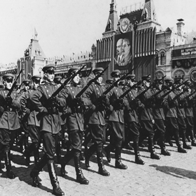
When that war ended in 1945 to the tune of 60 million people killed or 3% of the world's total population (when disease and famine are included, that number jumps to 80 million). No sooner than the war ended, the stage was set for the next confrontation, the Cold War. Without going into the details of what happened, the former allies formed their own armed camps, with the USSR and the countries it "liberated" from the Nazis on one side, and the US, Great Britain, France and other countries freed from Nazi occupation on the other (China aligned with the USSR, but it's interest remained centered in Asia).

The first to formalize their "mutual defense and cooperation" agreement was the West in July 1948, which originally included the United States, France, UK, West Germany, Holland, Belgium, and Luxembourg. Later, Italy, Portugal, Norway, Denmark, Greece, Spain, Turkey and Iceland joined (France withdrew in 1966 and rejoined in 2009). Its purpose was to deter what was seen a aggressive and expansionist USSR, especially amid Communist uprisings in various Western nations such as Greece and Italy and Stalin's refusal to allow free and monitored elections in the countries where it now occupied.

In response, the USSR created the Warsaw Pact in May 1955 as a counterbalance to NATO (interesting, the USSR actually requested to join NATO January/February 1954 and offered to allow a German reunification. The offer was rejected at the insistence of the UK's Anthony Eden and America's John Dulles and France's George Bidault). Originally, the Warsaw Pact consisted of the USSR, Poland, East Germany, Albania (which withdrew in 1968), Hungary, Romania, Bulgaria, and Czechoslovakia (the impetus for the creation of the Warsaw Pact was Czechoslovakia's fear of a rearmed, albeit truncated and monitored, Germany. As such, it sought a military alliance with Poland and East Germany).

While the Warsaw Pact was formally dissolved on July 1, 1991, which also marked the end of the Cold War, NATO continues to operate as it always has done, but why? Its sole purpose, to defend Europe from a possible Soviet invasion, has vanished. I need to point that that since the fall of the USSR and end of the Warsaw Pact, many of its former members have opted to join NATO, including Poland, the Czech Republic, Albania, Bulgaria, Croatia, Slovenia, and the Baltic States of Latvia, Estonia, and Lithuania.

We also need to be reminded that US support of NATO was due largely to add our economic and military weight to a Europe which was still struggling to recover from the Second War, now 73 years past, is no longer valid either (in fact, Germany, now reunified, is ranked as the fourth largest economy in the world, with the UK and France ranked 5th and 6th respectively). Militarily, each of the NATO members work in cooperation in developing, manufacturing, and deploying military equipment, so why are we there?

If we examine the costs to operate NATO, it's not cheap. According to NATO itself costs in 2017 were $946 billion dollars. The UK contributes just over $55 million dollars to NATO (equal to 2.1% of its Gross Domestic Product or GDP) while France spends just under $45 million dollar or 1.8% of its GDP. Germany spends about $45.5 million dollars on NATO, which equates to 1.2% of its GDP. Italy contributes right at $23 million dollars; about 1.1% of its GDP. Canada gives a tad over $21 million dollars to NATO, which is 1.3% of its GDP. Meanwhile Turkey and Spain both provide about $12 million dollars each or 1.5% and 0.9% respectively of their GDP. Greece, which has long been a troubled economy, still manages to contribute $4.7 million, or about 2.4% of its GDP.

Newcomer nations such as Poland has anted up with just over $10 million dollars, which is equivalent to 2.0% of their GDP, while Romania provides $3.6 million; 1.8% of it GDP. The Czech Republic gives a little over $2 million dollars to NATO and Hungary sends $1.4 million dollars, which is equal to 1.1% GDP for both countries. Other members nations provide a lot less in terms of actual dollars, but in many cases, it still represents a substantial portion of their GDP. Bear in mind that while these percentages of GDP don't seem like a lot, they represent the final values of all goods or services at the time of purchase. In this case, this the equivalent of capital being taken out of the economy and being given to nation rather than reinvested back into the economy. For larger countries, this doesn't really have much of an overall effect, however, for the smaller nations or the ones in serious economic trouble like Greece, it's a big deal.

Now, I bet you'd like to know where the US stands in its contribution to the defense of NATO wouldn't you? Well, here you go. US Taxpayers pony up just under (barely) $686 million dollars (yelp, you read that correctly). That represents a whopping 3.6% of our GDP (remember, the next closest country is UK which provides just over $55 million dollars or 2.1% of their GDP). That's a pretty substantial difference any way you want to look at. So, again I have to ask why? Why are US Taxpayers on the hook for maintain a military organization for which we get very little bang for our bucks?

The prime purpose of NATO, to defend against the USSR, no longer exists; in fact, if you look at the new member nations, many of whom are former Warsaw Pact members, Putin's Russia is pretty much surrounded on practically all sides. Militarily, Russia is in a far worse position than it was at the height of the Cold War in the early 1960's, or even in 1990 when it ended. So, while President Trump may have (in his usual fashion) overstated America's position with regards to NATO, there is no question that we pay far more than any nation. In fact, with a published budget of $946 billion dollars, NATO couldn't function without us; at least on the scale that it does, but does it even need to?

In 1949, when NATO came into existence, the USSR was indeed expanding. It had gobbled up most of Eastern Europe. It was looking to expand in Africa, South and Central America, Cuba, and (in conjunction with China) into Asia; notably Korea and, later, Vietnam along with Laos and Cambodia. It was also seeking to expand, at least its influence, into space. In some of these areas, it was successful, however, in most, it failed for various reasons (including CIA sponsored coups and assassinations not to mention "backdoor" support of various groups). However, Europe was still weak. The war had just ended only four years earlier, and while both sides had nuclear weapons, their range was still limited.

Today, either side can drop multiple bombs anywhere it pleases. The likelihood of a conventional invasion, especially of Europe, is all but non-existent. Modern Russia is all but surrounded by NATO member States (which, in my opinion, is actually a far more dangerous situation than in pre-1990). Of course, there are many today in high places who are busy trying to rekindle the Cold War; it's like they need a super enemy to match their military super state. Personally, I don't see the point. There are other, potentially far worse, issues facing not just us as a nation, but that of Russia and especially Europe right now. Perhaps it's time to put NATO to bed and start addressing those issues.


Defense Expenditure of NATO Members Visualized (Infographic)

The World's biggest economies in 2018

North Atlantic Treaty Organization (NATO) Homepage

NATO vs. Warsaw Pact: How the Ultimate Cold War Showdown Could Have Killed Millions

Friday, June 01, 2018

The Muting of Free Speech in America


Our Founding Fathers were big fans of free speech, and with it, freedom of expression. In fact, the only profession specifically mentioned by the Founding Fathers in the Bill of Rights is publishing. They wanted us to have the ability to say what we pleased without fear of retribution by the government. In their day, writing or saying something about the Crown, the British Government or its representatives could get you arrested and thrown into prison. In some cases it could get you tried for treason and either hanged or shot! Nowadays, you can pretty much get away with saying whatever you...or can you?

Actually, your free speech comes with some strings; in many cases and places, those strings look more ropes and gags. For instance, in China the media is controlled by the government. While it gives writers, editors, and TV anchors some wiggle room, they are still highly monitored. What they say or how they express themselves is subject to censorship. If it continues, they may be suspended or completely denied access to any type of public forum.

How can that be you ask? Simple. They are permitted the right to "serve the greater good", and that good is the opportunity to speak on behalf of the government, which is, after all, serving the greater good. Therefore, to speak or express something against the government is to speak against the greater good, and, of course, we intuitively know that's a bad thing...right? While the West (thanks to ancient Greeks) believe that every citizen had to right to speak their mind (a "natural right" they would say), some countries believe that rights are granted by the State; they aren't inherited by God or simply for being human.

The State is therefore believed (or accepted) to be the purveyor of rights and the enforcer of duties and responsibilities. Therefore, would could even argue that the State also establishes social norms or values by elevating certain behavior while condemning others. In some countries, such as England, this continues. British social media activist Tommy Robinson was recently silenced for reporting on a Muslim rape gang which preyed on British girls as young as 9 years old, which the government had issued a media blackout on after the story was originally reported on.

Robinson was reporting on the super secret trial of the 27 member "bang-gangers" via his cell phone to followers globally when he was arrested, tried (without an attorney), sentenced to 13 months behind bars, and sent straight to prison, all within an hour! Why? Apparently the British government had decided what its citizens should know, and what they shouldn't know. I'm sure it was for the greater good. Meanwhile, in other countries, religion is seen as being the sole purveyor of rights and enforcer of rules and responsibilities. With the State, its authority lies with its ability to enforce its will on the people. This is usually some form of coercion, which could be by voluntary acceptance or it could be by force of arms.

In the case of religion, its authority come from some deity (usually seen as omnipotent; a paternalistic all seeing and all knowing being). As with all religions, this deity allegedly made its intentions and requirements known through a select few, which expanded to select clique. This usually results in the institutions being established to promulgate it accepted dogma. Quite often these "rules" get distorted as times change. Some rules get embellished beyond their original intent while others lose their relevance, and new rules are "revealed" to the benefit of a few.

More recently, we've seen a new players on the block: corporations. In a Capitalist World, corporations have mostly replaced the State and religion as the determiner of values and morals. The world that corporations inhabit consists of millions of businesses of all types; each trying to making money. That means, at some point, that they have to sell something. Maybe it's a product. Maybe it's their expertise. Almost anything can be bought or sold. This means billions of dollars change hands every day...and night.

Over time, several corporations gained net revenue greater than some countries. They span global borders. In fact, they've evolved to where they are transnational; corporations without a country. They have no national loyalties. No sense of national pride outside what marketing requires. Their customers are the world. Many of these corporations have grown not just larger than some nation's economies, but large enough that they influence (or indirectly control) these governments. They help set policy, both domestic and international. They help write legislation and bill summaries. They even control a country's national economy based on their use of local resources and exports (and sometimes imports).
An acceptable norm (created by corporations) is advertising. It sells everything, and I mean everything. Most of all, its sell self-esteem. It tells us how to look, how to act, what to eat, what we should own, how to feel, what to think, and every other human emotion and desire. In short, it helps to create our values. But, it can do so much more than just that. It can even own us.

By continually telling us what's in and what's out, it manipulates how we should feel about ourselves at any given moment. This just doesn't include clothes, perfume, cars, hairstyles, or where to eat. It dictates what is politically acceptable and what's not. Take for instance that in the United States, just six corporations own 96% of all media outlets. That means these six corporations can decide what is and isn't news; what we see or hear, and how it will be presented to us. They can influence our opinions on any topic they want simply by the way they spin it.

By their constant harping against one politician, product, or individual they can all but destroy their credibility. By the same token, presenting the same in a positive light can elevate them to near sainthood! While they've been doing this for quite some time in politics, it's only been since Citizens United, that they've been given the green light to step out of the shadows and openly buy the government they want...and we apparently deserve.

If we look at the last election as an example, corporations, often through the media, presented Hillary Clinton as some female George Washington. Despite the continuing leaks through alternative media outlets about a "pay-to-play" State Department, illegal gun sales, claims of treason, repeatedly lying to Congress, a rigged primary, and so forth, it seemed to the gushing reporters that Hillary could do no wrong.

Meanwhile, the cutout Republican candidates were all presented as "serious challengers" (cue laugh track); each having their day, we were all led to believe that Hillary was the anointed one merely awaiting the mere formality of elections before ascending the steps of the White House to receive her crown. All Hail Caesar! As it turned out, there was no candidate who wasn't a cutout, Donald Trump, although the media tried with increasing frustration to make him look like the court jester, the American Public didn't buy it. Apparently, this time, voters weren't for sale.

So Hillary lost the election and the corporate media has lost its mind, along with it facade of impartiality. Hardly a day or night goes by without the media taking pokes at Trump (even LBJ and Nixon didn't have it this bad in the 60's and 70's). Even television shows again, produced by divisions of these same corporations) pump episode after episode on biased content at everything right of Truman. Usually it's in the form of innuendos, but increasingly its "in-your-face" comments.

More than a few times the comments are uncalled for (and many say disrespectful of the office). Several late night talk show hosts and so-called "comedians" have been particularly hateful. One individual, Samantha Bee, even referred to the first lady as a "cunt", and even the likes of actress Sally Fields apparently thought that was an insult...to the definition of the word! Can you imagine saying that about Michelle Obama? There would be demands for a Congressional hearing!

Shock comic Kathy Griffin even posed with a bloody severed head of Donald Trump! If that was Hillary, the Secret Service would have grabbed and bagged her! On the other hand, Roseanne Barr Tweeted some personal comments about one of Obama's former aides, and her top rated show, "Roseanne" was cancelled immediately. Tim Allen's top rated show, "Last Man Standing" was cancelled for its conservative oriented comedy. Why?

How is it that one type of dialogue is acceptable and another isn't? Since when does personal comments made by an individual result in a television show (especially a top rated one) being cancelled? Was it the comment itself, because if so, network executives need to watch more of their own programming. There are far worse things being said on the shows, and not just on personal social media accounts. Perhaps it's because the comments reflect the opinions of corporate executives. Perhaps they condone the hateful, rude, and inappropriate remarks.

Perhaps too they're trying to restrict free speech, or just a particular form of speech based on its political orientation; an orientation they just happen to oppose and want to deny you the opportunity to hear. Maybe it's because you might not be "offended" by it as they think you should; you might even laugh at it, or worse, agree with it! Corporations have become highly paternalistic after all. They seem to know what's good for us (and an awful lot about us), which they often convey through the apparatchiks and nomenklatura of government and other social organizations they own.

Sadly, we see this same behavior on college campuses and elsewhere in society today. Whereas college was once the bastion of free speech, it's become the citadel of censored speech and safe spaces. Nowadays, free speech is only afforded to what the majority accepts as the politically correct speech. Differences of opinion or even of facts, are often shouted down or even occasionally violently assaulted. Nothing must be allowed to burst the bubble...or echo chamber. Of course, we often tend to see this behavior reinforced by corporate dependent institutions, performers, and other so-called "trend setters".

What we end up with is a society which calls itself "free" while having imprisoned itself behind a wall of safety glass; it looks open but it has limits. A society like that is no better than those living in a theocracy which believes itself somehow privileged, secured in its own self-righteousness. By the same token, how does this kind of society differ from Stalinist or Maoist forms of Communism? Their citizens were taught about the immorality of the West and its never-ending attempts to corrupt the ideals of Soviet style Marxism. Of course, its people were never allowed to experience the other side, unfiltered. What was presented were distorted caricatures of the West. Is that all so different from what we're seeing now? In the end, it doesn't matter if Fascism leads with the left boot or the right.


Sally Fields Has An Epic Response To Samantha Bee's Comment About Ivanka Trump


Samantha Bee insults Ivanka Trump with obscene phrase


'Roseanne' canceled at ABC

25 US Mega Corporations: Where They Would Ranks If They Were Countries

30 largest and most powerful companies in the world


The Transformation of American Democracy to Oligarchy


Saturday, May 12, 2018

May 8th: Remembering "VE Day" and the End of War in Europe


May 8th. Remember the date? How many of you recall hearing anything much about it on the news? I sure didn't, yet it's a very important date in world history and its impact still affects today. You see, May 8th marks the end of the war in Europe---VE Day or Victory in Europe Day---in 1945, 74 years ago. I think it's important to remember the significance of VE Day or May 8th.

World War II involved some 102 countries, making it a true global war. The principal players in drama set on the world stage were Germany, Italy, and Japan on the Axis side with supporting roles provided by Hungary, Romania, Bulgaria, Austria, Turkey, Spain, and Slovakia. On the opposing side, the Allies were comprised of Great Britain and her Commonwealth nations (Australia, New Zealand, India, Canada, Hong Kong, and a few others), the United States, and France. It had the support of pretty much everyone else, but notably China, Vietnam, Korea, Philippines, Denmark, Burma, and Norway (some of these countries were occupied at the time and provided support via underground resistance movements.

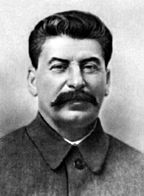
As for the Soviet Union, which was under the iron fist of Joseph "Uncle Joe" Stalin. In the beginning, Stalin threw his support behind Hitler. It wasn't because he particularly liked Hitler, although it could certainly appreciate a fellow dictator when he saw one, rather it was out of self preservation. Hitler had long proclaimed that he would invade the East (Russia and Ukraine) in the search for Lebensraum or "living space" for the Germanic Peoples of Europe. He also vowed to rid the world of Communism. Together, they divided up Poland and Hitler give Stalin a free hand in the Baltic States, Estonia, Latvia, and Lithuania. They also entered into a trade deal whereby Russia would provide Germany with key ores and oil which it needed for its war efforts. However, after the surprise invasion of German forces in July of 1940, Russia changed sides and allied itself with Allies (which at that time was mainly just Great Britain and her Commonwealth nations).

During the course of the war, approximately 60 million people died, which equated to around 3% of the world's total population based on 1940 estimates. Some figures put the total killed as high at 80 million people. This figure breaks down the number of deaths as between 50 - 55 million civilians, including around 18 million who died of war related famine and diseases, with some 21 - 25 million military, including 5 million prisoners of war. Of course, a true figure will never be known.

German estimates placed the number of dead and missing at between 6.9 million and 7.4 million, which was around 8.5% of its total population. France lost roughly 600,000 people or 1.4% of its population, whereas French Indonesia lost between 1 million and 1.2 million people. Italy lost about 1.6% of its population, which was around 514,000 people. Japan lost between 3.5% and 4.34% of its population (not including colonies, such as Korea) which totaled a high of 3.1 million people.

Poland suffered an enormous loss of six million people, which equaled just over 17% of its total population. The UK (including its colonies) lost 451,000 lives or .94% of its total population. The United States losses amounted to 419,400 souls, or roughly just .32% of our total population. China's losses were equally horrific. It's estimated that the Chinese lost somewhere between 16 million and 20 million souls at the hands of the Japanese. This amounted to about 3.86% of its population.

However, the most overlooked (or ignored) number of causalities doesn't go to the Axis nations or even to Western Allies...in aggregate. It went to the Soviet Union. Russia suffered a mind numbing loss of 20 million people during the "Great Patriotic War" as they call World War II. When Soviet Republics are added, that number jumps to 26.6 million lives. Belarus, which buffers between Poland and Russia, lost 25% of its total population. So the south, the Ukraine lost 16.3% of it populace.

Of course, we can't forget the Holocaust (nor should we ever). As most already know, approximately six million Jews died at as result of the extermination and concentration (or work) camps. But this wasn't all. Roma gypsies also suffered, though they tend to be overlooked by historians. Nevertheless, some 285,650 gypsies died in the same extermination and concentrations camps. As an aside, in terms of population, a higher percentage of gypsies died than did Jews. In addition, 200,000 disabled or mentally handicapped people were executed, beginning with the "Action T4 Program", which was intended to rid the Reich of physically and mentally "inferior" individuals.

Germany's ally, Croatia, is believed to have been responsible for the deaths of around 340,000 ethnic Serbs, gypsies, and Jews. The Jewish population in Greece was nearly completely wiped out. Finally, some 5000+ Roman Catholics, Jehovah Witnesses, various Protestant denominations, as well as a Social Democrats, trade unionists, academics, political dissidents (such as the "White Rose") and Communists were believed to have been executed during the war. Again, the exact number will never be truly known.

World War II, which most historians consider to simply have been a continuation of World War I, with a 20 year pause to change players on the world stage, was the most brutal of all wars yet experienced by Mankind. The repercussions of the war led directly to the rise of Communism as a world ideology, the division of the world into basically two warring camps, and to the Cold War, with all its proxy wars down through the decade not to mention coming to the brink of nuclear annihilation on more than one occasion. Despite the tragedy of the war, there's another tragedy which is unfolding, for which no one is blame and there is nothing we can do to stop.

During World War II, the US committed some 16,112,566 men and women to the war, not including millions of civilian personnel who worked in factories and shipyards. As of September 2017, there were only around 588,000 left, and they are dying off at a rate of 362 every single day based on 2016 estimates by the Department of Veterans Affairs.; the youngest of whom are in their late 80's.

At that rate, the "Greatest Generation" will be all gone within the next 20 years. In the UK, there are only about 100,000 WWII veterans left. Canada has about 150,000 WWII veteran still with us, while Russia has approximately the same amount remaining (the last Soviet soldier who took part in the seizure of the Reich Chancellery, Nikolay Belyaev, died at the age of 93 in 2015. He was part of the feared 756th Regiment of the 3rd Shock Army). As an aside, there are around 250,000 veterans of the German Wehrmacht or Armed Forces still alive as of 2015.

Personally, I find it a shame that we don't make a bigger effort to celebrate the deeds and lives of these incredibly brave men and women. These were the young adults and children of the Great Depression, whose lives were molded by hardship, self-sacrifice, and self reliance. For many, it was also marked by poverty the likes of which most of us have no clue about. They were, and are, some amazingly resilient individuals.

Through my Disabled American Veterans Chapter, I have had the honor to know and befriend many of these men and women. I have had the distinct privilege to speak with them about their lives; to hear firsthand their stories of what life was like in places like North Africa, Sicily, Anzio, Crete, Normandy, Caen, Holland, Bastogne, over Berlin or Tokyo, not to mention Bataan, Midway, the Coral Sea, Iwo Jima, Guadalcanal, and dozens of other places which were once just names on page in a book or grainy, sometimes colorized, newsreels or combat footage on TV.

For them, these were very real places full of heat, mosquitoes, sweat, hunger, fear, pain, adrenaline, compassion and hatred where they lost friends, met new ones only to lose them a few days, hours or minutes later. It was the places where lifelong friendship were made...with those who survived; bonds closer than anyone could possibly imagine and will last to the grave and beyond as well as indelible memories mixed with both relief and guilt for having made it home.

Their reality bears no resemblance to the mass produced Hollywood movies many of us have used to shape our vision of war where the hero's hair is never out of place, the uniforms are clean, and there's never any blood or gore, and there's always a happy ending. It also bears little similarity to the sanitized newsreels of the period which provided only the briefest of glances at war's outcome.

This past May 8th marked the 74th anniversary of the end of the war in Europe, however, the war would continue another three months in the Pacific before ending onboard the battleship, USS Missouri, on August 15th 1945. Victory in Japan or "VJ Day" as it would become known, would be officially celebrated on September 2nd. So, if you happen to see a an elderly man or woman wearing a hat or emblem identifying them as a WWII veteran, be sure to shake their hand and say "Thank you for all you did" (though you may have to speak up). What they endured for you and me is beyond measure.


Saturday, April 21, 2018

A Place To Belong: Assimilation or Conquest?


The history of the world has been primarily one of conflict. The main source of the that conflict has been the result of a clash of cultures, resulting in wars, conflicts, genocides, brought about by manufactured starvation through the withholding or deliberate destruction on natural resources, the intentional infection of various people by some biological agent (whether they actually understood as such or not), enslavement, or simply being breed out of existence. I'm sure there are many more examples, but you get the picture.

Direct conflict seems to be the most common. We don't know how many people have died as a result of wars or conflicts down through history, though we can make reasonable guesses with increasing accuracy we come closer to the actual event, but even that's occasionally sketchy since no one really takes time to count the dead during a battle and often, war crimes are hidden or written off as something else. We do know, for instance, that approximately 100 million died just in the 20th century alone; perhaps more when events like trauma, wounds, the long term effects of disease or radiation are factored in.

So what happens when cultures come into conflict? Well, first, I think we should define "cultures" to get a better understanding of what we're talking about. Webster's New World Dictionary defines culture as "the ideas, customs, skills, arts, etc of a given people in a given period: civilization". It also includes in the definition "mannerisms or speech". I would expand this to includes values based not just on a common history, but also on a common religion when that religion has been thoroughly integrated throughout society to the exclusion of all others.

Hinduism, which is prevalent in India, is a good example. It, along with a common historical tradition, has created its own value system, including moralistic code of conduct and behavior towards others. It has superimposed a caste system and specific conduct both within the caste and in dealing with those outside of one's own caste for instance (of course, the caste system has, to a large degree, broken down due to outside influences, the least of which being improved education. We can find the same thing in Japan (which has its own history of a caste system as well), China, and throughout Asia and Africa.

Again, most of this has faded due to the influence of mostly outside factors, especially as they became increasingly in contact with the West, which has tended to be more egalitarian by comparison. Both China's and Japan's feudal systems began to lose their influence after contact with American, British, Dutch, and Portuguese sailors increased. Initially, contact was based on the notion of trade; mostly of goods, etc, but pretty soon it encompassed the trade of ideas. I guess we can chalk that up to natural human curiosity! After all, Mankind is an inquiring species. We are hardwired to investigate and explore; to learn through trial and error.

But what if we must deal with two (or more) cultures which come into conflict? Where both are firmly entrenched through their own common histories, evolved laws, values, especially those based on religion or a political ideology? What happens then? When we look at Rome, with its Greco-Roman values and religion(s), we generally find conflict; often violent conflict. We find two competing social systems struggling for dominance. Eventually, it comes down to the one with the strongest military and best social organization which is able most successfully to impose itself on the other. Of course, it's not entirely a "one-way street". Even the weaker culture is sometimes able to imprint itself on the more dominant culture, especially if its stronger than the other in that area (certain medical practices or engineering techniques for instance).

The Celts were, to varying degrees, able to withstand the Roman legions, and thus avoid complete assimilation. The Germanic tribes were much more successful since they were militarily superior to their Celtic cousins as well as made better use of natural barriers. Eventually, Rome began to adopt and adapt to other cultures, languages, and even religions in the name of multiculturalism, even though many had little or no skills which could benefit the Empire; many didn't even bother to learn the language. However, everyone followed the same Roman laws and paid homage to the dominance of the Roman State, at least for a time. But in time, even that failed and Roman collapsed into a series of petty kingdoms, which rose and fell in relation to their own interactions with other cultures. China suffered a similar fate, despite a relatively homogenous population.

However, religion, is often see as a unifying factor, which it is; at least except for the religions it's seeking to replace. It's not uncommon to see the new religion replace the old religion by adopting some of the more popular traditions of the previous religion, including sacred sites. In England for instance, the Christian missionaries would often take over a sacred pagan site by dedicating it to a certain religious figure or "saint" (especially if the "saint" is a native to the region) and/or rededicate it to a specific "miracle" similar to, but slightly different, from the previous religion.

Also, another form of eradication of the previous religion is by converting their gods into sometime to be feared or made fun of. For instances, fairies and sprites, and gnomes became "demons". Snakes, once seen as symbols of power and knowledge, were now reinterpreted as harbingers of evil, like black cats or ravens were. Some are ridiculed, or simply made to be forgotten. The Celtic god of the hunt, Cernunnos, also known as the "horned god" which represented the male aspect of nature, became the prototype of the "devil" or Satan. The more dominate female aspect of nature, such as "The Great Mother", Isis or Hera, was now viewed as evil and twisted; something designed to trick or corrupt Man. Meanwhile, other popular gods and goddesses were renamed and remade as a "saint" or a venerated individual of the new religion such as the Celtic goddess "Brigantia" who became the Christian "Saint Brigit".

So, while religion can be a unifying factor, it can--and usually is---used as a tool of conquest. A more direct form of conquest is, of course, political ideology. Political ideology is pretty straight forward. It's a system of ideas, both theoretical and practical (if based on historical precedence) designed to create a form of societal governance. Out of this, laws to guide (or rule) society are created. These laws tend to evolve out of common practice or traditions and common values (which are, themselves, are strongly influenced by religion or prominent philosophies). Naturally, the dictates of unfolding events and the Will of the King or ruling elite, has a big influence as well.

What happens when a society, which has had time to incorporate a single religion into not just its government (thus becoming a theocracy), but also throughout every aspect of its society into one where the lives of ordinary people are solely governed by the dictates of its religious and political leaders? Historically, we often find that society stagnate. They can evolve and develop as one would expect of a society because of their strict religious dictates. Now, that's not to say they remain frozen in place. They do develop along certain, often very restricted lines so long as the authority of their religion is never brought into question.

That's the cardinal rule which can never be violated under any circumstances. One bright spot is that despite the monolithic structure of a religion, there are always variations within its structure; however, these are usually well defined distinctions. So, while one sect may not be as strict or repressive in one area, that isn't to say it isn't as or more repressive or strict in other areas. It also doesn't keep one sect from attempting to impose its interpretation on the other either. This brings us to the most pressing and relevant question.

What happens when two entirely different cultures, with wholly unique religions, traditions, values, and political ideologies come into contact? Let's look at the West. As a whole, the West tends to be very independent oriented; the individuality of the individual is paramount. It tends to be open when it comes to expressing new ideas or even values. Government is, at least in theory, democratic in that the majority decides based on the present needs of society (in some countries, this still holds true to a degree, while in others, such as the US, it's devolved into an Oligarchy where voters are given the illusion of choice by picking from pre-approved candidates who will represent the needs and wants of a small economic elite).

In terms of social values, there is little variation of the value of genders. Women and men are basically treated the same. Females have equal access to education and opportunities to succeed on their own, as well as hold any position they desire. The same goes for those who step outside traditional gender roles (ie: the LGBTQ communities). This is also true of races. Despite the recently manufactured "racial crisis" in America, anyone who applies themselves can succeed, but equal opportunity does not mean equal results. Much of that depends on the individual themselves, irrespective of their race or gender.

When it comes to religion, the West is highly diverse. At its core, the West has been Christian since roughly the 10th century. At one time, it was nearly unified in that belief, being either Catholic or Eastern Orthodox until the Martin Luther and the Protestant Revolution or Reformation in the 16th Century (and the subsequent Counter Reformation by the Catholic Church) which spread throughout Europe.

Nevertheless, Christianity has been the dominant religion of the West. Judaism has also had a strong presence in the West, beginning with the ancient Romans (most were teachers, slaves, or traders). Of course, Jews were never entirely accepted by Christianity despite its claim of common roots in Judaism. In more recent years, we've seen a decline in organized religion and a rise in more secular beliefs (or in no religious beliefs at all), as well as alternative beliefs. In past centuries, such beliefs were as good way to get tortured, hanged, or burnt at the stake by religious/state authorities. However, it has been the expanse of democratic beliefs; the sovereignty of the individuals, which has made this possible.

Now, can you imagine what would happen with this society comes into contact with another which holds that the state, not the individual, is superior; where gender differences are seen as absolute and any variations (such as education or having a profession, especially one of authority) are ruthlessly enforced or those who cross traditional gender lines are simply beaten, raped, murdered or disfigured out of hand for violating religious laws? What happens when the very notion of democracy and rule of the people by and for the people is seen as abhorrent and in direct conflict with the accepted religious laws? Even basic notions of free expression or speech are largely forbidden; where questioning religious or political authority could be fatal.

What about the notion that female children can "marry" men three or four times their age or that small boys are allowed to be raped? Even females, regardless of their age, may be attacked or raped if out alone or even in pairs, unless they are accompanied by a male relative? How do you feel about being attacked, raped, or beaten if you aren't properly dressed as dictated by someone else's religious laws? How do you feel about having no pets? What about not being allowed to drive or vote? How about watch movies in public, dancing or go clubbing?

How do you feel about slavery? What would you say to a society which, based on its religion, says anyone not of their religion may be stripped of everything and sold into slavery...or murdered indiscriminately? Your only possible alternative would be to pay a steep tax. What would you say if you were told you have very few personal, or even basic, rights because of your gender or religious beliefs? What about demanding that your religion must not "interfere" with theirs, or simply demanding that you not smoke, drink, or eat pork products---or even that none of these can even be advertised? Now, how would you feel if this same society requires you to follow their religious/societal dictates regardless of your personal beliefs?

What do you think the outcome would be if these two vastly differing societies came in close contact with each other? Which of the two would ultimately dominate the other and enforce its will on the other? Well, that's the situation Europe now finds itself in, and that may soon be the situation that the US, Canada, Iceland, Ireland, and Australia may find itself in. The notion of opening one's home to strangers in trouble is an old one; a compassionate one. However, how does handle that same situation when you're inviting individuals into your home who intend on seizing your home and all its possessions; even demanding that you leave?

Historically, differing cultures have rarely coexisted in peace, at least for long. One of two things usually happen. The first is that the host country, under the naive guise of multiculturalism, is fractured; balkanized or divided internally with the gulf becoming wider and deeper until the nation effectively stops being one. At that point, there is usually a Civil War or revolution to decide the country's fate. Sometimes these divisions are based on mythological claims of empire, but like all wars, are often violent and affects everyone, but especially more so if religion is a factor since one is fighting--- murdering and dying---for their god. Obviously, there can be no compromise. That's where we now stand in the West. The only real question is who will dominate; who will be vanquished and who will conquer?