Showing posts with label Libertarians. Show all posts

Wednesday, March 04, 2026

Reforming Kentucky's Broken Primary System


For Independents, open primaries has been seen as essential. Afterall, we're force to pay for partisan primaries through our taxes, and yet in Kentucky and 13 other states, we're prohibited from participating. Our Founding Fathers, who opposed the notion of political parties ("cliques" as they called them) would have referred to this as an example of taxation without representation.
Joining with Let Us Vote, a nationally Independent organization, we have a terrific opportunity to do something about being locked out of primaries in Kentucky (this also affects third parties as well). Join us on March 18th for a Zoom conference call as we explore ways to break through the door erected by the Status Quo to keep Kentuckians out and protect their usurped power.
We've been working hard over many years---decades---to reform Kentucky's election process. We have been successful in reforming the Louisville Metro Council to create a non-partisan ballot so we can focus on voting for the most qualified candidate. Not the best of the worst. Now, as we join with Let Us Vote, we will have the tools and resources to make it happen. Will you join with us? Together we can make a more fair election system for all Kentuckians!

To learn more and where to sign up, check out this link:  https://kentucky.letusvote.org

Thanks to all!
Paul Hosse for Independent Kentucky;
Editor/Publisher of the top ranked Independent Op/Ed blog, Another Opinion AnotherOpinionblog.com

Friday, October 04, 2024

Can You Name the Candidates Running for President in 2024?

Can you name the candidates running for President in 2024? If you said just Donald Trump and Kamala Harris you would be partly right. While Trump and Harris are the most prominent candidates running for president, they aren't the only ones. Of course, you wouldn't know it by the news media.

 It's not that they forgot to tell you about the other candidates running for president, it's just that they want to give you the illusion choice while limiting your options at the same time. It's like going to a car lot full of cars and being shown the only two you didn't want!

 In fact, they want you to believe all their rhetoric about how "free" and "honest" our electoral process is while at the same time ignoring or ridiculing all the "also ran" candidates in the hopes you'll focus on just the two options given you by Wall Street, thus perpetuating a corrupt duopoly cloaked as "choice". So, this begs the question---who are the other candidates for President?

Here in the U.S. we have a "winner-take-all" form of government. That means if your candidate loses, you have no representation within your district for however long the term of office is. Of course, you still get to pay taxes for the privilege of having no one representing your interests.  The United States is virtually alone in the world when it comes to a "winner-take-all" political system.

Among those nations who are democracies, the parliamentary or proportional system prevails. Under this system, the voter chooses the party---not individual---they want. The winner is assigned a certain percentage of seats based on the votes received. However, unlike the U.S. where the loser has to wait until their next opportunity, a parliamentary system allocates a set number of seats even for the losing party. That way, even if your party loses, you still have someone there to present you.

In the United States, we have numerous political parties (although many are state level only), but only the Democrats and Republicans are dominant, even though both are minority parties. The largest political bloc is Independents with about 40+% of all registered voters. Democrats have about 30% and Republicans have about 29%, but that still leaves about 1% for third parties. While they won't win a presidential election, they do have enough voters at state levels to impact congressional and local races.  The two largest of the "third" political parties are the Libertarian and Greens.
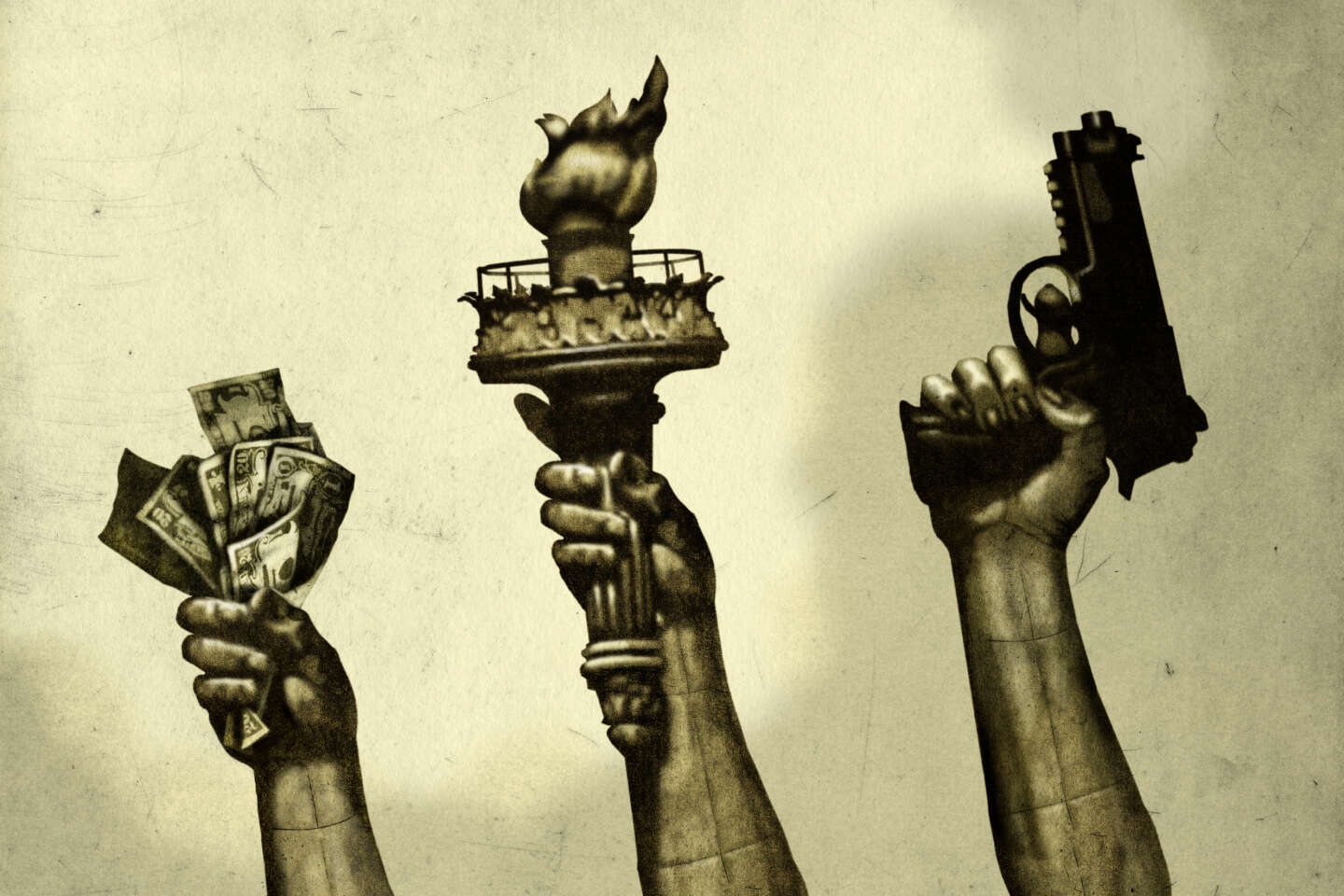
Founded in 1971, about 15% of registered voters are ideologically libertarian or lean libertarian (and about 12% are in the Republican camp) while about 700,000 registered voters belong to the Libertarian Party. Libertarians describe themselves as "socially liberal and fiscally conservative". They claim their ideological linage extends back to Thomas Jefferson because of a mutual belief in small government, free markets (aka "laissez-faire") and maximum personal liberty---provided it doesn't impinge on anyone else's liberty of course. Politically, the Libertarian Party doesn't consider itself to be either "Left" or "Right" wing.

Most oppose a strong central government, believing that authority derives from the actions of a majority. However, a few believe that a small, relatively weak federal government should exist to do those things the marketplace can't  do efficiently.  There are currently about 186 Libertarian elected to local office nationally.

Interestingly, the states with the highest amount of personal and economic freedom are South Dakota, Tennessee, Nevada, and Florida. The "freest" state is New Hampshire. In terms of personal freedom, the top spot went to Nevada, followed by Arizona. Maine was third and New Hampshire was fourth. New Mexico rounded out the top five (Kentucky was 47th in personal freedom. Texas, known for its rugged individualism, was dead last).

When it came to economic freedom, New Hampshire took first place. Second was Florida and third was South Dakota. Fourth was Tennessee and fifth was Georgia (California was 48th and Hawaii was 49th. The worst state in terms of economic freedom was New York).

The 2024 Libertarian Party presidential nominee is 39 year old Chase Oliver, who was born in Nashville, Tennessee. He's an account executive for a import shipping business. His top three issues are foreign policy, criminal justice reform, and immigration reform (he supports a legal pathway to citizenship of illegal immigrants). Chase is anti-tariff, free market, and supports rank choice voting.  He supports the 2nd Amendment and is pro-choice. His vice president nominee is Mike ter Maat.

Mike was born in Portland, Oregon in 1961, making him 63 years old. His primary occupation is in law enforcement, He holds a PhD in Economic (Austrian School) from George Washington University and is economics professor and a substitute teacher. Mike's top priories are jobs and wage growth; mask and vaccine mandates (which he opposes as unconstitutional), along with police and justice reform, including greater transparency and accountability. Mike also backs term limits, ending the Federal Reserve System and IRS.  Both candidates support a anti-war agenda.

The other major political party (though you wouldn't know it by the corporate media) is the Green Party. Starting off as a offshoot of various social movements originating in the 1960's and 1970's, it came into its own right as a movement in 1985. By 1990, it had evolved into a Left oriented political grassroots party comprised of a federation of state parties operating under a central committee. It's focus has been on environmentalism, non-violence and anti-war, grassroots democracy, social justice, anti-racism and  pro-choice. Ideologically it is democratic socialist. It's been jokingly referred to as the "anti-party party".

Although lumped in with the Libertarian Party as a third party, the Green Party is technically  the fourth largest political party with about 244,000 members with 131 members serving in elected office (it bears mentioning that the Green Party is known worldwide and has chapters all over the globe. It's one of the largest and most powerful parties in Europe). Maine has the most elected Green Party members with 57 followed by California with 22.

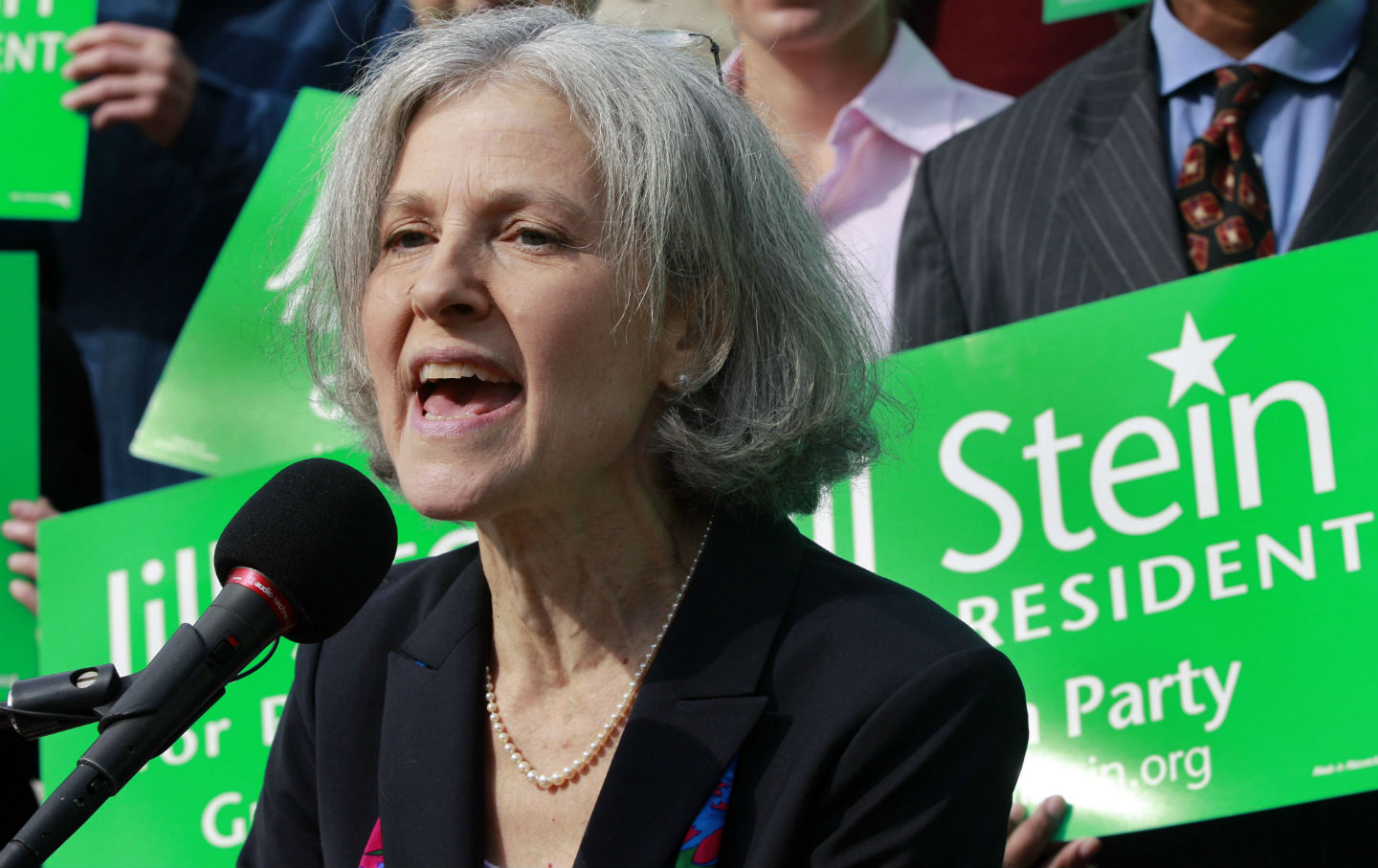
Although having ballot access in 44 states and the District of Columbia, the Green Party presidential nominee, Dr. Jill Stein, is no stranger to uphill challenges, and neither is her running mate, Dr. Butch Ware. The 74 year old Stein is a graduate of Harvard University's School of Medicine where she concentrated in internal medicine. She previously ran for president in 2012 and 2016. Her main issues this go around is on developing a anti-war oriented foreign policy, universal healthcare, free public education, climate change and a cleaner environment as well as stronger worker rights.

Dr. Stein has been a political and community activist since 1998, focusing on the connection between health and the environment. She has been highly critical of U.S. foreign policy, particularly so far as the Gaza conflict between Hamas and Israel is concerned. The crux of her criticism has been on Israel's so-called "genocide" policy toward the Palestinians.

Dr. Stein has also proposed a "Economic Bill of Rights" which includes a living wage for workers, support for housing (and assistance for the homeless), expanded healthcare, support for childcare availability, free and improved public education (including textbooks and any fees), additional benefits for retirees (which presumably includes full protecting of Social Security), healthier foods from farm to table, and cleaner water.

Lastly, she favors "reparations" for slavery. Whether that money will include contributions from England, Spain, Holland, Portugal, the African nations responsible for providing slaves such as Ghana, Nigeria, and Tanzania,  or just from American taxpayers wasn't specified.

Her running mate is 59 year old Dr. Butch Ware. He earned a doctorate in history (West Africa emphasis) in 2004 from the University of Pennsylvania. Dr. Ware currently teaches Islamic Knowledge and Spirituality, Colonialism, African Diaspora and West Africa at the University of California (Santa Barbara). Other than his support for Palestine, I could find no information concerning his stance on the economy, domestic and foreign policy, taxes, housing, crime, drugs, rebuilding our infrastructure, etc.

Dr. Ware is reputedly a leading academic authority on the U.S. Black Radical Tradition, Africa, and Islam.   He is credited as a public educator, activist and organizer, artist, and is involved with groups opposing ethnic cleaning, the anti-war movement, ending colonialism, and "build sustainable, just, peaceful alternatives rooted in African, Indigenous, and Abrahamic traditions".

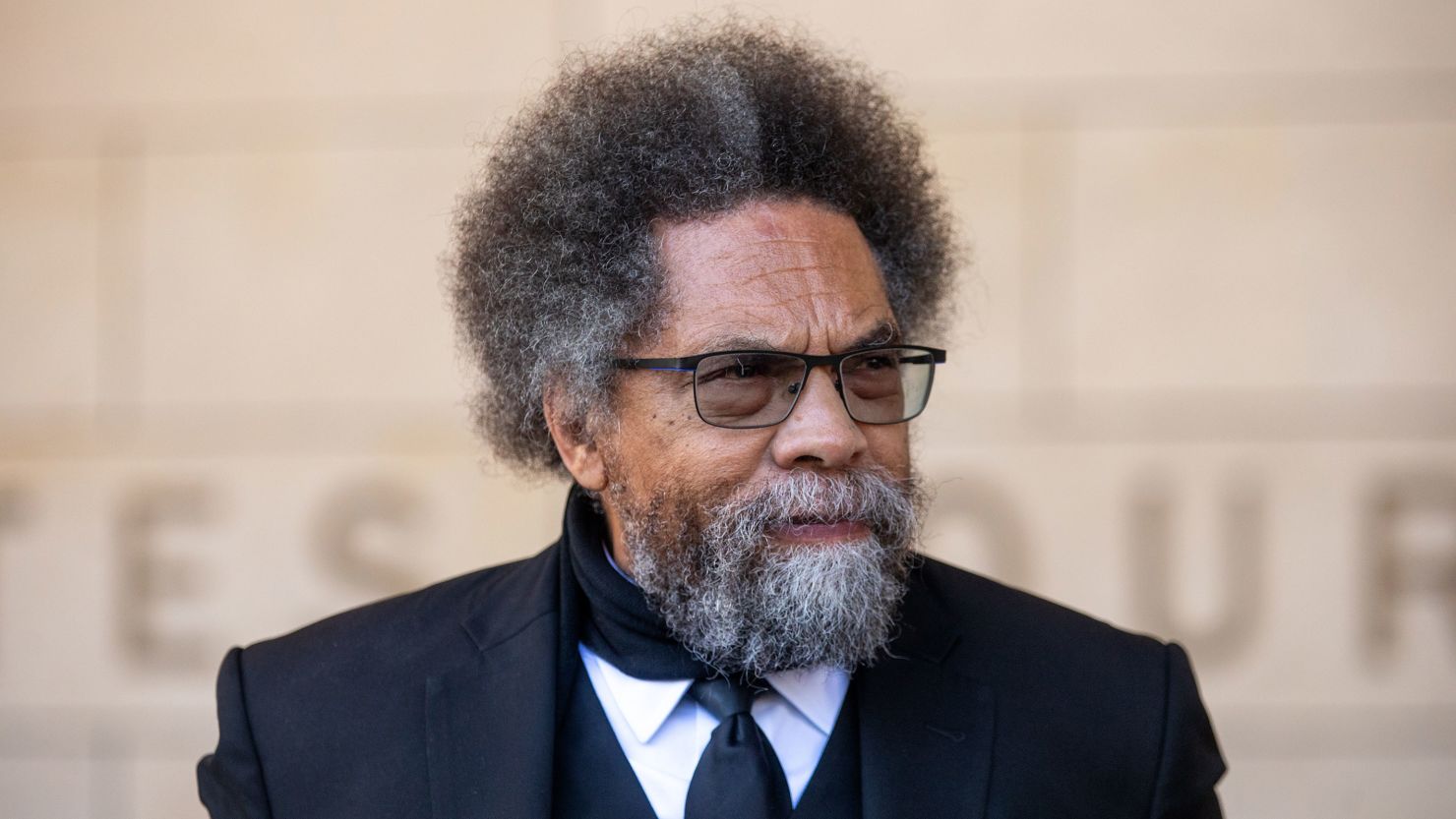
The last notable candidate for president is Dr. Cornel West. The 71 year old professor has been a outspoken voice on the Left for decades. He is a philosopher, theologian (and grandson of a Baptist minister), activist, social critic, and public intellectual. His professional focus is primarily focused on the role of politics on race, gender, and class conscienceless in the U.S.. 

Dr. West describes himself as a democratic socialist and proponent of Left-wing populism, a supporter of the Black Church tradition, a neo-pragmatist, and a student of transcendentalism (the philosophical, spiritual, and literary movement which believes in the natural goodness of people and the tendency towards corruption of the individual by institutions. It also proposes the humanity is at its best when people are more self-reliant and independent). 

Dr. West, a former Green Party member, announced that he was running for president under the banner of the People's Party, which is a Left-wing populist party, in June 2024. However, because of alleged claims of sexual harassment by the party's founder, Nick Brana, and internal dysfunction, he decided to continue his president campaign as a independent four months later. In August, with a $17,000 dollar debt, Dr. West stopped active campaigning although his name may appear on some ballots.

So, there you have it. In addition to Republican Donald Trump and Democrat Kamala Harris, these are the other candidates you might see on your ballot this November. While it's unlikely that any of these individuals will win, they can still affect the overall outcome by drawing away votes from one or the other major party candidate.

 It also shows that Independents and third party candidates are a factor that's here to stay, especially as the two corporate own parties continue to hemorrhage voters. Polls show that between 63% and 58% of Americans want to see a alternative political party. As it is already, the majority of voters are now Independents. We are the only industrialized nation without a labor party.  At the current rate of political defections away from the Democrats and Republicans and mounting dissatisfaction of voters with government general (68%), that may soon change.

However, as we don't have the 2024 donation numbers yet, we need to look at 2020. The Democrats and Republicans received a total of $29 billion dollars from Wall Street (with Biden getting 2.5x more in donations than Trump). This is concrete proof that the ruling elites take good care of their investments.

Meanwhile, the Libertarian Party received just $2.9 million from corporate donors and party donors in the 2020 election. The Green Party receive nothing from Wall Street donors. It's money came mostly from individuals and environmental groups totaling $58,452,552. We can thank Citizens United for this financial disparity. Until that's changed, Wall Street will continue to call the shots no matter the issues or how few voters support either party.  


Thank you for reading Another Opinion! We hope you enjoyed this article and will pass it along. Please don't forget to subscribe. It's free! Lastly, please "like" us on whatever platform you use to read anotheropinionblog.com. It helps beat the algorithms and keeps our articles in circulation. Please find below the links we consulted in researching this article


Who is Running for President in 2024


Gallup: Party Affiliation


Freedom in the 50 States


Libertarian Party


Libertarian Party presidential nomination, 2024


Chase Oliver


Mike ter Maat


Meet Our Nominees: Jill Stein & Butch Ware


Jill Stein


Meet Jill Stein


Butch Ware


Slavery in Africa


Cornel West


 Transcendentalism


Support for a Third Party in the U.S. Dips to 58%


Jo Jorgensen (L) Donations


Saturday, November 09, 2019

2019 Kentucky Election: The Aftermath


Tuesday's election should set aside any further discussions about which side of the fence Kentucky is on. With a near perfect sweep of offices by the Kentucky Republican Party, the state is now firmly "red". The GOP took all of the Constitutional offices, including the two most important, the Attorney General and the Secretary of State. The only office where the Republican Party didn't fare so well was the top seat, the Governor's office, but more on that latter. Let's look at some of the key offices first.

The incumbent, Allison Ball (R), out performed her opponent, Michael Bowman (D) convincingly, winning by a 300,935 spread with 69.7% of the vote to 39.3% in the race for Treasurer. As I wrote previously, Allison had the better qualifications. Her opponent, Michael Bowman was simply outmatched and outspent (Ball raised close to $200,000 compared to Bowman who raised close to $40,000).

That's not to say that Bowman is wrong for political office. He certainly has some good experience, however, I think shooting for a statewide office at this stage of his political career without previously holding an elected office and, frankly, lacking the level the same level of education and professional experience as Allison, was reaching too far. As for Allison, I think she has a very bright future ahead of her in politics. She's not just quite intelligent and responsive to citizens, but very personable as well. Kentucky did well to reelect Allison Ball as its State Treasurer.

In the State Auditor's race, it was again the incumbent who won convincingly. Incumbent Mike Harmon (R) garnered 55. 7% of the vote compared to his opponents Sheri Donahue (D) and Kyle Hugenberg (L) who received 41.0% and 3.3% respectively. The actual vote difference was 204, 960 between Mike and Sherri with Kyle capturing 46,562 (obviously, even if the Libertarian wasn't in the race, the outcome wouldn't have changed).

Once more this was a more experienced individual winning out. Like Allison, Mike Harmon is a very intelligent and responsive. Sherri has an excellent professional and academic background, however, with a degree in Industrial Engineering and professional experience more in the cyber security field, it simply wasn't a good match for the seat she was seeking. Sherri would do well to find a position within government rather than through elected office.

In Kyle's case, it's a bit different. Both his education and experience are in accounting, which matches up well with Auditor. What he lacked was the political expertise and, of course, money which buys the necessary exposure. Given that he ran as something other than one of the two corporate owned parties, the only exposure he's going to get is what he can buy.

Next was the Secretary of State's office. This was particularly interesting election since it pitted a well known veteran's advocate, former Second Lady of Kentucky, and a Miss America against a much less known election law attorney. Nevertheless, it was the attorney who won. Michael G Adams (R) won the seat with 52.3% of the vote compared to the Democrat, Heather French Henry's 47.7%. The actual numerical difference was 64,562 votes. So why did the better known and, frankly, more popular candidate lose?

Heather French Henry has been in the public eye ever since she won the Miss Kentucky Pageant back in 1999. She went on to win the Miss America title the following year. Heather has also been a pro-active advocate for veterans from the beginning of her public career. Her husband, Steve Henry, is a well known orthopedic surgeon and equally involved in veteran issues. He was elected Lt. Governor in 1995. One or the other always attended my district meetings when I was 3rd District Commander of the DAV along with our state conventions.

Steve ran into some legal issues. He was charged with campaign finance law violations in 2007, resulting in Steve having to personally assume financial responsibility for $600,000 dollars in loans, a $10,000 fine, and a 12 month prison sentence. However, both Steve and Heather have remained popular with veterans, with Heather serving as State Commissioner and Deputy Commissioner of Veteran Affairs.

Given recent legal problems within the Secretary of State's office over misuse of voter rolls, allegations of intimidation, and campaign election laws violations, voters seemed tired of the "business as usual" mishandling of the office. In addition, Kentuckians clearly want to modernize a outdated election system. Adams, an election law attorney, appeared the best person for the job. Furthermore, Adams had a better grasp of the nuances of the office than Henry did. In the end, it was experience over popularity
.
The second most important office in the state is Attorney General. The office isn't just the state's top lawyer, it's been used as the governor's chief enforcer as well as the governor's chief opponent. This was on full display when Greg Stumbo (D) was elected AG in 2003 and set about hamstringing Governor Ernie Fletcher (R) at every turn. Personally, I believe the office should be strictly non-partisan, along with most of the Constitutional offices. The Attorney General should focus solely on legal issues, not engage in partisan politics, and apparently Kentucky voters agreed this time around.

Faced between the political "retread", Greg Stumbo, who was seeking to reprise his role as "Chief Legal Obstructer" and a political newcomer with some serious political ties to Majority Leader, Senator Mitch McConnell, Daniel Cameron. Stumbo tried desperately to link Cameron to Senator McConnell (which wasn't hard to do since he served as his attorney) and his role as a Washington lobbyist. Senator McConnell isn't exactly a popular figure in Kentucky politics. Not even many Republicans like him that well, and no one likes lobbyists.

By the way, Cameron also happens to be black, a non-issue with voters, and while Cameron isn't the first person of color to run for a statewide office, he is far from the first to win elected office either in Kentucky on the Republican ticket. In fact, the current Lt. Governor, Jenean Hampton (R), happens to be black too. Color is not a barrier in Kentucky politics despite some--mainly from the Left---trying to make it one by accusing Cameron of not caring enough about black issues and being out of touch with the black community.

So, how well did Daniel Cameron do against Greg Stumbo? Pretty well as it turned out. Cameron won with 57.8% of vote compared to Stumbo's 42.2%; a voter margin of 221,125. In terms of money, Stumbo raised right around $560,000 while Cameron was able to raise just over $836,000 (with a lot of help from McConnell no doubt). Clearly Kentuckians were ready for a change, and as I previously wrote, it's time for Greg Stumbo and those like him to disappear from the political scene.

Perhaps the most continuous race was for governor. In fact, despite the election results, the race hasn't been settled yet. The current governor, Matt Bevin (R) is calling for a recanvassing, citing some "irregularities" in the ballots. Of course, that's nothing new in Kentucky politics! Voting "irregularities" are almost tradition like bourbon and horse racing. Speaking from personal experience, there was a great deal of electioneering and questionable ballot casting when I ran for Metro Council back in 2001.

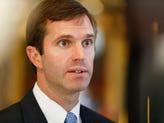
So, let's look at the results as they now stand. Andy Beshear (D), son of former governor Steve Beshear, appears to be the winner with 709,846 votes to Governor Bevin's 704,760, a difference of 5,086. Meanwhile Libertarian John Hicks got 28,442 votes. In terms of percentages, Beshear received 49.2% while Bevin got 48.8% and Hicks picked up 2.0%. It was by far the closest race of the evening.

There's been a number of Republicans attempting to blame John Hicks and the Libertarians for Matt Bevin's apparent loss. I will have to respectfully disagree with those who claim John Hicks was the "spoiler" in the election, which, as a result, threw the governorship to Andy Beshear. Those who voted for Hicks did so because they either supported his position on the issues (or at least most of them), particularly on medical marijuana, or because they simply disliked what the Republicans or Democrats were offering.

At least those voters cared enough about the election to bother showing up, unlike many of the Democrat or (especially) Republican voters who decided to stay at home. For that matter, one could make a solid argument that if the Republicans had a actual political party in Jefferson County instead of a East end clique, Bevin wouldn't have lost the county by over a 100,000 votes. The same argument could be made for the GOP in other counties in the state as well except the other Republicans candidates did pretty well, so perhaps Bevin and not Hicks is to blame after all.

Claiming that a third party candidate or an Independent is no better than a "spoiler" or "wasted" vote presupposes that the current corporate controlled duopoly is the only legitimate form of government, which I find to be absolutely preposterous. What it demonstrates is that 28,000+ Kentuckians didn't like either the Democrat or Republican choice for governor. In addition, despite the media's misrepresentation, Indies are the largest voting bloc in the country and growing while the Democrat and Republican parties are shrinking. Indies and third parties, especially Libertarians, are also growing in Kentucky. It's time that attitudes change regarding non-conforming candidates.

Lastly, for all the Democrats gloating about winning the governorship (technically), here's a little reminder. Matt Bevin was for most of early 2019 the most disliked governor in America. Just recently he moved up a notch to the second most disliked governor in American (the "honor" of the most disliked went to Massachusetts Governor, Charles Baker). That means Andy Beshear barely beat someone at the bottom of the list of governors. Honestly, that's nothing to brag about folks.

So, what's the takeaway? First and foremost, Kentucky is squarely in the "red" column for the foreseeable future. A Beshear Administration will face a super majority in Kentucky Legislature (both the House and Senate are controlled by the GOP), as well as all the state's Constitutional office, including the powerful Attorney General. Plus all but one of Kentucky's federal offices are held by Republicans starting with powerful Senator Mitch McConnell. Beshear, while a Democrat, is going to be playing by Republican rules or find himself basically impotent as governor. Of course, all this presupposes that Bevin's recanvassing doesn't change the results which in all likelihood it won't. Additionally, Bevin tied himself closely to President Trump.

Trump was at one time very popular with Kentucky voters. Not so any more. His popularity rating has dropped about 20%. Anyone attempting to ride Trump's coattails as Bevin did may find them very short indeed. McConnell's popularity isn't great either, just 18%, which is the same as Congress. Cameron was successful primarily because the unpopularity of his opponent was greater than that of McConnell. Lastly, third parties and Indies are on the rise in the state. Get use to it. The winds of change are blowing, even in the hollers of Kentucky.

Lastly, a big shout out to all my fellow veterans, especially the disabled veterans out there on this Veterans Day. Thank you for everything...literally. Fair winds and calm seas to all.

Monday, October 03, 2016

Where Is America Going?


As most everyone knows, I like statistics. In fact, some would say that I "love" statistics. I'm not sure I would go that far, but I certainly believe there's a lot that we can garner from the proper interpretation of polls and surveys as long as they are relatively current, include a reasonably diverse and adequate sample, the questions and their responses are clear and unambiguous, and that we take them with a grain or two of salt. 

After all, most people don't like to be bothered and there are those who may fib (or outright lie) which, of course, skews the entire survey (hence the "plus or minus" or "margin of error" disclaimer).

 The reason I mention this is pretty simple. I recently watched a television show which discussed American's opinions of the two corporate sponsored Democrat and Republican candidates and America's failed political system (as most everyone knows, but may not understand, the U.S. is now a de facto corporate Oligarchy and no longer a Constitutional or democratic republic). 

The show went on to discuss the state of the economy, the rise in (manufactured) racial tensions, our economic/military involvement overseas, quality of education, and so forth. This made me wonder what, statistically, we Americans thought about these issues (the reason I chose a statistical measure was it would be easier to quantify and explain in simple English).

So, just what do Americans think of America? According to a Pew Research Poll from June of 2014, a slight majority of Americans, 49%, thought our best days are behind while 44% thought we still have good days ahead of us. Not surprisingly, those who believed our best days were in the rear view mirror were mostly conservatives; specifically 76% of Far Right conservatives. 

Among business conservatives, it was 59%. Among the remnant of the Middle Class, either those slightly Left or Right of Center, approximately 60% were pessimistic about the future. Where we saw a switch was among the Left such as the Millennials, where 65% were optimistic about the future. Among the Left, Religious Left and Far Left, that number ranged from 50% to 70%. Is this simply youthful idealism or the cynical perspective that often comes with age? Remember, many, if not most, of those on the Right who responded were once the wild eyed youth of the 50's, 60's and 70's.

When the question was slightly changed, and the respondents were asked if America is the greatest nation what would you think their answers were? Well, intuitively, most of us would expect that they would follow along the same lines as outlined above, and we would be mostly correct. Among all groups, 28% said that America was the great nation on Earth while 58% said we were one among the several great counties. 

When this was broken down, hardcore conservatives, including the Far Right, 92% said that if we weren't the best, we were among the best. Among just business conservatives that number rose to 98%! However, things changed radically when looking at the middle segment, where a significant majority said America was among the best but certainly not the best. 

We got a similar response among the Millennials and the traditional Left/religious Left at 67% and 51% respectively while the hardcore Left agreed at 71% with 16% saying that there were other countries ahead of the U.S. A related question asked why America has been successful, 51% said it was our ability to adapt while 44% thought it was our willingness to stand by our principles. 

Again, as expected, the numbers broke down along ideological lines with Conservatives of all stripes leaning toward standing by our principles, the flustered Middle nearly equally spit, and the Left arguing that it was our ability to adapt and change. What do you think? What had been our key to success over the last 200 or so years? The poll went on to discuss a wide variety of other related subjects---16 pages in all---which I will spare you, but if you have an interest in the subject, the link to the poll is below.

Nevertheless, this got me to wondering what Americans thought of the current political situation. It's no big secret that Americans across the political spectrum believe the political system is broken beyond repair. Even with the slanted news coming from the corporate media, we know that the political system is blatantly rigged and that both of the two major political parties, along with media, is bought and paid for by the corporate and financial elites; we are a de facto corporate Oligarchy after all. 

We routinely see the mask of legitimacy dropped on both sides without apology. Both of the two selected presidential candidates, Donald Trump and Hillary Clinton, are without question the worse candidates we have seen in decades if not ever. We've got from scraping the bottom of the barrel to scraping underneath the barrel. The majority of Americans strongly dislike either "choice", and yet both corporate parties and their media counterparts have worked hard to exclude, ignore, and belittle any other candidates and/or their political parties.

Ever since Ross Perot ran for President, both parties have cooperated to exclude any and all third party or independent candidates (even though independents are by far the largest political bloc (43%) in the country) both parties and the media behave as if the Democrat or Republican nominee is our only choice. I

n fact, the largest demographic voting bloc in the country is the Millennials; the majority of whom are independent, and that number continues to grow. I suspect that will prove to be a fatal error for both parties and the elites. When polled, Gallup learned that 57% of those polled thought we needed a third party (which would include independent candidates). 

Interesting, over half of registered Republicans (the GOP is third in registration behind Indies and Democrats) supported the notion of a third party while 43% of Democrats and 73% of independents supported a third party or independent candidate(s). In the current presidential race, Libertarian Party candidate Gary Johnson is polling around 12% while Green Party nominee Jill Stein is hovering around 9%; either way, these are some pretty high numbers considering their lack of exposure (thanks to the corporate enforced media blackout) and slim campaign dollars (again, the Oligarchy controls the flow of "big money" in politics as you know ever since the Supreme Court's "Citizens United" mistake which said money was "free speech" and corporations were "people", these legally created "Frankensteins" were permitted to unlimited "speech" while we were left mostly mute).

All of this begs the question as to whether a third party or independent could actually win a presidential race. Well, third parties and independents aren't new. They've been around almost since the beginning of the country (the Republican Party was actually a merger of several third parties which came about after the implosion of the Whig Party for instance). 

However, more recently (historically speaking), Theodore Roosevelt, who bolted from the Republican Party, ran under the Progressive Party label (more popularly known as the "Bull Moose Party") in 1912. Teddy garnered the largest percentage up to that point, 27.4% while the GOP incumbent and party nominee, William Howard Taft, received only 23.2% and Socialist Party candidate Eugene V. Debs got 6%. 

However, Taft and Roosevelt split the vote, which allowed Democrat Woodrow Wilson to win with 41.8%. Fast forward to 1992, we had Ross Perot run as an Independent. Perot drew support from across the political spectrum, earning 20% of the liberal vote, 27% from conservatives, and a whopping 53% from moderates!

Economically, the majority of Perot's base were those in the middle class bracket (57%) and the rest mainly from the upper middle class (29%). In June of 1992, Perot was polling at 39% of potential voters. In the presidential debates (then hosted by the League of Women Voters), Perot blew Democratic candidate Bill Clinton and Republican candidate George H. Bush out of the water. 

Though Perot ended up with 18% of the overall vote, exit polls would show that Perot took 38% of both Bush's and Clinton's supporters while most of the remainder had intended on staying home until Perot entered the race. In 1996, Perot had formed the Reform Party and made another run at it, but due to internal squabbles and what some called a "personal meltdown", failed to do as well, although still respectable.

Voters today are clearly dissatisfied with both corporate party nominees, and for that matter, with Congress and the Supreme Court. Approval ratings for all branches of the government have been setting new lows for years (according to a 2016 Rasmussen survey, Congress has a 11% approval rating compared to 86% who give Congress a failing grade). 

The majority of Americans have come to accept that the system that we once knew is gone and not likely to return anytime soon. About two years ago, a prominent academic study revealed what most of us already knew, that the government bequest to us by our Founding Fathers had been squandered away, mainly by its beneficiaries and guardians---us. In its place is an Oligarchy comprised of a corporate and financial elite. 

We have witnessed a two tiered economic and judicial system, open and very public abuse of the system and corruption, and use of our military for the economic benefit of a tiny few, increased surveillance, rigged voting, militarization of the police, manipulation of the news and public opinion, manufactured protests and riots, and so forth.

There is a complete and total disconnect between the People and the Government (including the two corporate political parties) that is beyond repair (only 28% of Americans think we're headed in the right direction. Not what the news media or politicians would have you to believe is it? 

Remember too that revolutions tend to occur when public disapproval reaches just 1/4 of the population. We're obviously far past that number and have been for years if not decades ). It's time for the American People to put aside the media created distractions and manufactured differences and focus our attention on the real source of troubles. Perhaps then we can restore America as it should be. It won't be easy, but nothing worthwhile is ever easy is it? So, what do you think America, is this country still worth fighting for?


  If you enjoyed the article, please consider passing it along to others and don't forget to subscribe. It's free! Lastly please be sure to "like" us on whatever platform you use to read anotheropinionblog.com. It helps with the algorithms and keeps our articles in circulation. Thank you! 


Pew Research Center: Red vs. Blue: The Political Typology
http://www.people-press.org/2014/06/26/section-2-views-of-the-nation-the-constitution-and-government/


Americans' Desire for Third Party Persists This Election Year


Rasmussen Reports: Congressional Performance

Wednesday, June 22, 2016

America's Electoral Blind Spot: Who Is Being Represented?


For months now, there's been talk about how the Republican Party's "status quo" who run everything have been working diligently behind the scenes to knock Donald Trump off his perch as the potential GOP nominee. They've done everything in their power to find some candidate or combination of candidates to bump him off. They even appeared to have worked quietly in partnership with the Democrats as well as the corporate controlled media to make "The Donald" look like a buffoon or "not ready for primetime" candidate. Not only did that failed, but the harder they tried, the better Trump did in the polls and with the turnouts he was getting. With all their efforts failing, the talk turned to defeating Trump at the Republican Convention using the "small print" strategy; that is, using the built-in party platform rules to deny Trump, and the voters, the right to have their selection upheld.

Meanwhile, "somebody" has underwritten efforts to terrorize Trump supporters (a few have admitted that they were paid, and bussed in to cause mischief but had no idea who it was for or against). They've blocked traffic on streets and highways to try and keep people from hearing Trump's message. They started fights. They sneaked in to his speaking engagements and tried to disrupt events there by shouting, heckling, holding signs, throwing items and even trying to storm the stage to attack Trump himself. The corporate media has cherry picked and slanted stories to convince viewers or listeners into thinking that Trump or his supporters are behind all the violence while any rational person can see for themselves who's doing what to whom. Meanwhile absolutely nothing whatsoever is going on at Hillary Clinton's campaign stops. It's all very reminiscent of the Hitler's Brownshirts, Mussolini's Blackshirts or the turn of the century union busters.

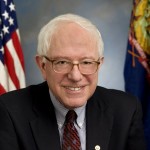
As for Bernie Sanders, he has no hope in winning the nomination. At best, he may be able to exert some influence onto the Democratic platform that Hillary will campaign on. Of course, you have to hand it to Bernie, his message of democratic socialism has hit a nerve with the largest demographic bloc of voters, the Millennials, who are largely liberal or even Leftist on most social issues, are disappointed in both Obama and in Clinton. If a younger and more charismatic Sanders type comes along in the near future, I predict that candidate would stand a pretty fair chance of getting elected. In the interim, a lot of Millennials are taking another look at the Green Party's Jill Stein and the Libertarian Party's Gary Johnson (in several polls taken of Millennials, there is a slight majority who favor libertarianism while a substantial minority favors democratic socialism, and hence the strong popularity of Ron Paul among the under 30 demographic), which brings me to the topic I want to address in this article.

If you were to listen only to the corporate controlled media, you would think that we, as voters, have only two choices---Democrat or Republican. Only those parties seem to get media coverage, which is by design. The Oligarchy which rules this nation now, and with it, the six---yes six---corporations responsibly for 98% of news we get. They also control both of the major parties and are responsible for the thousands of lobbyists who descend on Capitol Hill like locusts every single day and often late into the night. They are the ones who don't just advise lawmakers, their staff, and the President, they also write much of the legislation which is then chaperoned through the the various committees and onto the House and Senate floor for the final vote. In addition, thanks in large part to Citizens United which decided corporations are "individuals", but with greater rights than you and I, removed the financial cap restricting corporations while retaining it on ordinary voters. It is into this morass that we, as voters, must wade. As most you know by now, we are given the illusion of choice.
These corporate "Frankensteins" have already pre-vetted each of the candidates and are assured of their loyalty...to them not to us. We get to choose from some metaphorical unsweetened blue "Kool-Aid" or a slightly sweetened red "Kool-Aid". Regardless, the aftertaste is equally bitter. However, like me, most voters have put down their cups of flavored hemlock. Most Americans, some 43% of the population and rapidly growing have changed our registration to Independent (including 50% of Millennials). We see both political parties and their one percent Overlords as the root of American's decline. We've accepted the fact the media can be counted on to toe the line with their snippets of news, slanted whichever way they're told. The Democrats have the second highest registration, with just over 30% and the Republicans are a distant third. Perhaps it's because, while most Americans are centrists, slight Left or Right depending on the topic, both major parties have blindly purged their parties of moderates; labeling them "Dinos" or "Rinos", Democrat or Republican in Name Only.

As an aside, of all the billions of dollars we have put into euphemistically named "nation building", not one country has modeled itself on our form of government. Instead, they chose the British proportional representation style. Why? Because under the British system, your party is allotted a specific number of seats based on how well your party did in the election, thus even if your party lost the election, you still have individuals in office to represent you. While in the US "winner-take-all" setup, if your party loses, tough luck. For the next two or four or six years you have no one representing you. They may be of some assistance on individual issues, but they don't represent your interests or values on social, domestic or foreign matters. I guess it could be considered taxation without representation again. Personally, I've always been of the mindset that, under our current system, when you take the oath of office, you publically resign from your political party and openly swear to represent your district and/or nation unfettered by your former party. That is, you cease being partisan and swear to represent everyone equally.

So, where does that leave us? It leaves us with the likes of Gary Johnson and Jill Stein. It leaves us with the hope of third parties and Independents bringing their ideas...fresh ideas...to the American People. I think most of us have come to accept the fact that today's government in Washington, or indeed, in our states, do not bare the faintest resemblance to what our Founding Fathers intended. In fact, we are no longer even a democratic republic. We are a defacto Oligarchy with increasingly fascist (or corporatist to use the other proper term) tendencies, complete with a militarized police and surveillance state. I strongly suspect that if the Founders could come back and see us now, they would unanimously agree that they should have paid that damn tea tax and got over it. Now you may be wondering at this point why don't we just sweep the corrupt Republican and Democrat parties to the "dustbin of history" to quote Karl Marx. The answer is quite simple really. The whole damn thing is rigged tighter than a Mafia backed boxing match or horse race.

We hear of, sparsely to be sure, the Libertarian and Green parties only because they've been around awhile and have been successful in building up their membership over the years, and with it, their coffers (there are other third party organizations out there such as the Constitution Party). Money is the life blood of politics. Both parties are usually successful in getting out the message for their two top candidates while down ballot candidates get little or any support, especially financial. Also, ever since Ross Perot's history making race on the Reform Party ticket, both major parties, in the spirit of bipartisan cooperation, agreed not to include any third party or Independent in any debate, or to ever share the stage with them (including appearing on TV or radio). When the non-partisan League of Women Voters, which had been hosting the presidential debates, starting in 1976, refused to go along with this arrangement (13 changes in all), they were booted off and the two parties created their own organization, the Commission on Presidential Debates (CPD), which is headed jointly by the former chairmen of the Democratic and Republican national committees. The CPD then sells the rights to host the debates to the highest bidder, as well as commercial air time. You just have to admire the deviousness of it all.

In addition, Independents and third parties often struggle to get enough money to mount a serious campaign since most corporate donors invest in either of the two major parties, and who can blame them? They know what they're buying with them and odds are pretty strong that the Indies and/or third party candidates are interested in real election and political reforms, and that can't be allowed. Then there is ballot access, which in many states is patently unfair if not outright illegal (but, once again, it takes lots of money and time to challenge these laws, and while Indies and third parties may have the time, it's money that's in short supply).

In most states, simply filling to run for office won't work. You see, to run as a Democrat or Republican, you have to get the signature of between approximately two and five hundred individuals who are all members of your party and live in your district, county, or state, depending on what you're running for (this, of course, varies from state to state), plus pay a filing fee which can run from a few dollars to over a thousand dollars. However, if you're an Independent or third party candidate, all that goes out the window in most cases. Some states, like Maryland, require 10,000 signatures on a petition if you're running as an Independent or a third party candidate with less than 1% registration. In North Dakota, it's 1000 signatures for statewide races or 300 signatures for a legislative office for an Independent candidate . Texas requires a registered political party to have either 5% of the vote statewide or signatures of 1% of the total number of votes from the previous election for governor while an Independent must have 1% of the total vote from the last election for governor. Kentucky, like most states, also use a percentage to determine eligibility. If a party's candidate for president is less than 2% in the state, it's considered a "political group" whereas if it received between 2% and 20%, it's a "political organization", and if they received greater than 20%, they are a "political party". Thus, if you're a political organization or party, you need only two signatures while political groups or Independents will need between 25 and 5000 signatures, depending on the office. Everyone has to pay the same filing fee.

Obviously, all of this can be quite confusing and easily disqualify or discourage anyone from running who isn't aligned with one of the two main parties. What's more, is how Independents, who are the largest voting bloc, are penalized and discouraged from running along with third parties. So, what to do? First, let's make the requirements for everyone who is running the same. If candidates from the two main parities are required to have only two signatures from individuals who are of their party and in their district for instance, then so should any third party candidate (Independents would be allowed the signature of anyone who is registered). Any filing fees required would be the same regardless. All registered candidates should be allowed to participate in any and all debates as well as receive equal radio, TV and print coverage. Lastly, until such time as there is serious campaign finance reform, there needs to be term limits imposed of twelve years regardless of office. If a politician can't get what they want accomplished by then, they don't need to be in office.
Twelve years is also enough time to build seniority (especially since everyone else will be operating from the same playbook) and obtain ample experience while, at the same time, it's short enough to not encourage the level of corruption and arrogance many of these politicians exhibit. We should also demand that corporations (including unions) not be allow to donate, either directly as they do now or indirectly as they previously have done, money or in-kind gifts to any candidate or party. In fact, I think that only individuals---flesh and blood people---should be allowed to donate to any political campaign, though I would raise or remove the cap to help offset the loss of corporate dollars. Meanwhile, if corporations or unions want to donate, then allow them to donate to a general fund to cover the costs of the election process itself. This could even be used to reduce the overall costs of campaigns by being used to cover media costs during the last 30 days of the general election.

I think we should end taxpayer based coverage of the primary. That's right, taxpayers pay for the primaries of both parties. Taxpayers pick up the tab for both the Republican and Democrat primaries. That has to end. Let both parties be responsible for their own bill, not the taxpayers. Lastly, we should ensure that the law apply equally all those elected, up to and including insurance coverage. We should end lifetime payment of the salaries, benefits, plus terminate taxpayer paid security after four years. We need to restrict the "revolving door" arrangement between government and private industry, including consulting or lobbying, by requiring a ten year wait period in order to reduce any possible "friendship deals". While some or all of this may sound harsh, it's this kind of toughness that we need if we are ever going to regain control of the government which is now in the hands of the 1%, and we know that power is never ever given up willingly. But if we are serious in wanting to restore our democratic republic from the Oligarchs who rule this country, then this is what we must do. Otherwise, we will continue to see our freedoms and opportunities vanish.


Ballot Access
https://en.wikipedia.org/wiki/Ballot_access


The Liberal Millennial Revolution
http://www.theatlantic.com/politics/archive/2016/02/the-liberal-millennial-revolution/470826/


Millennials Political Views Don't Make Any Sense
http://www.theatlantic.com/politics/archive/2014/07/millennials-economics-voting-clueless-kids-these-days/374427/


Self-described "liberal" Millennials are Actually Libertarian
http://townhall.com/columnists/cathyreisenwitz/2014/07/14/selfdescribed-liberal-millennials-are-actually-libertarian-n1861177


Pew Research: Political Trends
http://www.pewsocialtrends.org/2014/03/07/chapter-1-political-trends/


Sunday, August 30, 2015

Mister Pot meet Mister Skillet: Defining America


I was listening to a friend of mine's radio show recently. He was talking about the latest misadventures of the Mayor; the Metro Council, and our "once great" newspaper; all of whom seem to coordinate efforts their misuse of the public's trust in his opinion. Truthfully, I was amused by his litany of adjectives in describing each---always with added emphasis on certain key words. However, it was in those descriptions that I noticed a continuation of a trend common in most conservative talk shows, news shows and mailings sent out from various associations and groups.

I noticed their rather loose use of the terms "socialist", "Leftist", "Communist" (or the more purgative word "Commie"), "Progressive" and "Liberal". They seem to throw these terms around indiscriminately or use them interchangeably as if they meant one and the same. Of course, they don't. Nevertheless, this got me to thinking---what does government behave like? It certainly doesn't behave as "socialist". This would imply that control would rest with the people; that there would be no Wallstreet, private banks, income gap, and so forth for instance. Socialism means the common ownership of the means of production with an eye toward equality---social, political and economic---for all the citizens. On the Authoritarian Scale, Socialism rates relatively low though it is strongly centralized. Communism means that the State owns everything and the people work for the State. That means little or no private ownership of property, businesses, banks, or anything else. As expected, a centralized government of this nature would rate very high on the Authoritarian Scale. Does either of these sound like the government you know?

Now, how about the other side of the coin, Nazism and Fascism? We often hear the Left refer to everything done by the Right as being one or the other, but is it really? Nazism (derived from the German term for National Socialist German Workers Party or NSDAP), was originally a small Rightwing discussion group known as the German Workers Party or "DAP", co-founded by Anton Drexler (the "socialism" in the title pertained to Germany as a community of communities and not to the unusual meaning of the word). Later, it evolved into the NSDAP under the leadership of key individuals, including brothers Gregor and Otto Strasser, Hermann Goring, Joseph Goebbels and, of course, Adolf Hitler. Nazism is often described as a Right wing ideology, however in actuality it was center-right in that it derived its policies from both the Left and Right (in terms of economic policy for instance it was Keynesian and included expansive social programs, common at the time, and operated on a four year economic plan). Hitler opposed unregulated Capitalism as much as he detested Communism. It also incorporated a expansionist foreign policy (again, common at the time) and a racial purity policy, which made it somewhat unique as well as nationalistic and militaristic.

Under Nazism, which is a form of Fascism, the government was highly centralized, often operating under a dual governing system whereby government appointed department heads would often be in direct competition with party officials who were operating under similar authority. The idea was to foster internal competition and, thereby, creating a more innovative and efficient system (this rarely happened and often resulted in conflicting policy directives). The government was overseen by a single leader---Der Fuehrer---while departments operated more or less autonomously. Under Nazism, individual unions were disbanded and replaced by a single national union---the German Labor Front or DAF--- while many of the earlier union demands were made into law. Nazism rated high on the Authoritarian Scale.

Fascism was the brainchild of former Italian Socialist activist and newspaper editor Benito Mussolini who abandoned the precepts of socialism in favor of nationalism following his experiences in World War One. According to "ll Duce", Fascism is best described as "corporatism" in which government is run much like a corporation and in close partnership with the business world. Unlike any of the above, Mussolini was President of a governing committee of ministers (and near war's end, was voted off the committee, and thus out of power). While considered a Rightwing ideology, Fascism actually draws from the Left and Right though it strongly favors corporate dominance. As stated by Italian historian Gaetano Salvemini in 1936, Fascism makes taxpayer bear the costs of corporate failures and added that "profit is private and individual while loss is public and social".

That means there could be an increase in certain social programs (typically Left) while decreasing corporate regulation and increased cooperation with the wealthy while taxpayers paid for bad business decisions or business related expenses. It is high in terms of centralization and is often accompanied by a police state along with a strong Executive. Like Nazism, Fascism is also highly martial, meaning a strong military and an influential military industrial complex. Under Fascism there is typically a large gap between the wealthy and everyone else. Unions, under Fascism, were largely co-opted into supporting corporate dictates or banned and outlawed. Fascism rates moderately high to high on the Authoritarian Scale.

Lastly, let's briefly discuss Libertarianism. Libertarianism essentially embraces the concept of "self-government" and voluntary cooperation or participation although there are numerous variations covering the political spectrum from Anarcho-Capitalism and Left Libertarianism to Anarchy and Ayn Rand's Objectivism. As such, Libertarianism doesn't fit neatly on the Left/Right Political Spectrum., but it usually endorses only the bare minimum amount of government needed to maintain the social order and promote trade with emphasis on individual and political freedom. As odd as that may seem to us today, several of the Founding Fathers were strong advocates of this form of government; most notably Thomas Jefferson and Thomas Paine. Libertarianism prefers a laissez-faire economy, which is defined as self-regulating with minimal or no government or outside control beyond the marketplace itself. Unions are permitted, if, however, participation is voluntary and remains off limits from the government interference. Many, however, doubt that given the complexity of today's society that Libertarianism would be practical. Nevertheless, it remains a active and popular political ideology.

There you have it. Now, after you've had an opportunity to review each, which one do you think we have today? Are we the emerging "socialist" or Communist nation that those on the Right claim? Is the Left destroying Wallstreet and eliminating corporate influence over government? Or do you see corporate power over government as the central problem? Is Wallstreet exerting too much power over the direction of US domestic and foreign policy? Is the military industrial complex more or less influential? What do you think about the power of unions---have they become stronger or have they largely been co-opted by big business or even made ineffectual?
What's your opinion about individual freedom---is personal freedom expanding or are we "under the microscope" more today? What about government regulation of business, wages and the income gap, quality of life, the Middle Class, social programs, and personal opportunities? Are they growing or contracting in relation to yourself and other individuals?

I think most of you will agree that our current social, political, and economic situations doesn't favor ordinary individuals. Wages, in terms of buying power, has been on the decline since the late 1970's. Individual freedoms have also decreased since 9/11 while there's been a marked increase in government surveillance by various national security agencies as well as serious infringements on the Constitution and Bill of Rights---all for our own protections naturally---not to mention the militarization of the police. Taxes and job security certainly don't favor the Middle Class (or what's left of it).
Unions, which have been on the decline since the early 1960's, have become impotent. Most survive by being the water boy of the corporations they're supposed to be protecting the employees from.

As I often mention, we are no longer the democratic government of our Founding Fathers. The 2014 study by Martin Gilens of Princeton University and Ben Page of Northwestern University confirmed what the majority of Americans intuitively knew---we've become an oligarchy. The government is no longer "our" government. It serves the interests of the 1% , which includes a handful of corporations. There's one more thing I should mention about Fascism, and that's it tendency to demonize what it fears the most. By demonizing socialism or certain individuals or countries, it is attempting to implant a negative image in your mind in order to build up an automatic rejection. Fascism was successful with that tactic in Germany, Italy, Spain, Argentina, Romania and elsewhere. There's no reason to think it won't be successful here. So, the next time someone claims America is becoming "socialist" or "Communist", be sure to point out their mistake.


The 10 Planks of the Communist Manifesto
http://laissez-fairerepublic.com/tenplanks.html


14 Defining Characteristics of Fascism
http://www.rense.com/general37/fascism.htm


Socialist Party USA Principles
http://socialistparty-usa.net/principles.html


The Socialist International Declaration of Principles
http://www.socialistinternational.org/viewArticle.cfm?ArticleID=31


The Transformation of American Democracy to Oligarchy
http://www.huffingtonpost.com/akbar-ganji/the-transformation-of-ame_1_b_7945040.html


The Libertarian Party Platform
https://www.lp.org/platform


Sunday, June 15, 2008

Getting Pumped at the Pump

On the way to work last Wednesday, I stopped to buy gas, at what I thought was an outrageous price of $3.98 a gallon. On the way home, the price here in Louisville had jumped to $4.15 a gallon! What on earth happened between 7:30 AM and 6:00 PM? Had some refinery been blown up? Had there been some cataclysmic rupture of a pipeline, spilling millions of gallons of crude on the frozen tundra of Alaska (again)? Had some oil tanker run aground (again)? Nope, it was none of those. As it turned out, according to the local news, the price of gas was simply “adjusting” to the new barrel price of $131. Whew, and I thought it was something serious like some greedy little oil sheik or profit grubbing oil execs. It was just some harmless “self adjusting”. Kind of like the type we’re all making in our buying habits, like paying for more for cans of peas, corn, bread, steaks, fish, and even butter (I just read where people are starting to give up their pets because they no longer can afford the pet food). It seems that the pump prices where just catching up to near current pricing of oil. The price I had paid that morning was the based on the price of oil from a couple of months ago. The price on the way home was based on the cost of the same barrel a few weeks ago. According to the oil industry analyst being interviewed, the price at the pump was still “adjusting” and should settle down at around $5.00 to $5.50 a gallon. Luckily that will just be in time for summer vacations. We sure don’t want a fluctuating pump price while visiting all those national parks, resorts, and beaches do we? Then again, who can afford to go on vacation?

I guess what got my goat (which I may have to start riding to work) was what had happened the day before. The Republicans already have some serious issues to contend with, like a “to-be-named-later” official recession, devastating natural disasters affecting homes, businesses, a housing market collapse brought on by speculative lending practices, and crop failures, as well as two wars, and ongoing terrorists threats (not to mention illegal immigration, China, North Korea, exporting of jobs, a health care crisis, a collapsing airline industry, and deteriorating national infrastructure). And to make matters worse, George W Bush is still president. So, what is the dumbest thing the National GOP could do? The Senate GOP blocked a bill that would have imposed a tax on the billions of windfall profits the oil companies are raking in.

According to GOP House leaders, the windfall tax would do little to reduce the price of gas at the pump. Well, maybe it wouldn’t, but it sure would make the public feel better to know somebody was at least trying to do something to stop economic rape of the public. The Democrat sponsored bill would have added a 25% tax on “unreasonable” profits made the oil companies, who, for the first three months of this year, racked up $36 billion dollars in pure profit. Republican leaders commented that they thought the tax would “do more harm than good”. Yeah, but to whom? The people they were elected to represent or the folks who pay for their junkets? The Democrats needed 60 votes to get the bill through. The received only 51, including from seven Republicans who voted for the people, while one Democrat and the remaining Republicans voted “no” in support of the oil companies. The bill would have also rescinded tax breaks to the oil companies, which is expected to save them $17 billion dollars over the next 10 years.

In a second act of stupidity the same day, the Senate Republicans voted to block extending tax credits, which were scheduled to expire, for wind, solar, and other alternative energy development, including energy conservation and efficiency research. I don’t care what your party affiliation is, but when the people you represent are suffering emotionally and financially and you are in a position to do something about it (even if only symbolically), then you do it. Failure to do so is arrogance at best, and borders on political suicide. The failure to help voters at the pump now will---not may--- result in the voter helping the GOP out of office in November. Frankly, I hate to see it, but perhaps a little comeuppance will do the GOP leadership some good.


The Future of the Right

I came across a recent article in which presidential historians are predicting that based on past trends, the John McCain led Republicans are headed for a serious thumping this November. Given what I cited in the previous article, I started thinking about the GOP and its future. Certainly, as a national player, the Republican Party won’t fade away, though many political pundits think it could, at least for awhile, devolve into little more than a regional player (mainly in the Bible-belt South). It is also certainly true that many of the traditional Republicans in the Northeast and Central Western States have already walked away.

Historically, the Republicans were a conglomeration of several third parties. Today, there appears to be three principal groups. The prevalent group most people are familiar with are the Christian Right Republicans (sometimes called Social Conservative Republicans). They are less interested in fiscal issues or government size than they are with social ones such as abortion, same sex marriage, prayer in school, posting of the Ten Commandments, etc. They are best illustrated by George W Bush, Jerry Farwell, and Pat Robertson.

The next group is the Goldwater or Libertarian Republicans. As the name implies, they are interested in getting government out of your life as much as possible. They believe in the old adage that “the government which governs the least governs the best”. Keen on small government, low (or no) taxes, they support private initiatives over public programs. Barry Goldwater, the “father” of the modern Conservative Movement, Ronald Reagan, and Ron Paul are the three best examples.

The last group is the Progressive Republicans (sometimes called the Teddy Roosevelt or Moderate Republicans). It is this group which has historically been the most successful. They are quite at home before a corporate Board of Directors as they are in a Union Hall (in fact, they’ve often been some of Labor’s biggest supporters). Progressives believe government should be kept to a minimal if possible, but should always be used to keep and maintain a level playing field. Unlike the Christian Right or Libertarian Republicans, they believe social issues are essentially private issues. Who you love and choose to marry is a personal issue (whether or not they personally agree with it). Abortion, while it should never be used as a form of birth control, is primarily a private issue and should at least remain an option when the life or health of either the mother or child is at risk. They believe in avoiding foreign wars unless national security is at risk. They supported breaking big business rackets or trusts. They support national programs (like the creation of national parks, the Clean Air and Clean Water Acts, employee protection such as OSHA and various anti-discrimination legislation, etc.) when private action alone won’t work. However, they are firm believers that there is no room for hyphenated Americans. Once a citizen, you are an American first and last. Your loyalty is to this country alone, and that means not only learning the language, but also civic participation. The group is best represented by Teddy Roosevelt, Eisenhower, Nixon, Ford, and George H. Bush.

The Moderate and Libertarian Republicans having either been leaving the GOP since the Newt Gringrich led “Republican Revolution” and the rise of the Social Conservatives, or forced to sit on the sidelines. The Social Conservatives under the Reagan and Gringrich leadership could do no wrong, and it seemed the Democrats could do no right. Nevertheless, their results were at first astonishing. Following on the heels of the “Revolution” however was Bill Clinton, and despite his inability to keep his pants zipped, lead the country to the best economic growth it had ever seen. Internally, the Socially Conservative Republicans (perhaps because of their stinging loss of the presidency) began “Rino” hunting. The term “Rino” is intended to be a derogatory word meaning “Republican in Name Only” and implied that, in a phrase, “if you ain’t with us, you’re against us” (the Democrats have a similar term for ultra conservatives in their party, whom they call a “Dino”). Their idea was to work against a fellow Republican, even if it meant supporting a Democrat if that Republican wasn’t conservative enough. Such was the widening fissures in the Right’s control of the GOP and weakening of the party.

Lastly was the election of George W. Bush. Starting off as the butt of every late night comedy routine, Bush emerged as the dynamic leader of a stricken nation following the cowardly 9/11 attacks. And for awhile, he was. However, Bush (and many would say Rove, Cheney, and Rumsfeld) led the nation into a military and economic quagmire that we may be decades in extricating ourselves from. Now we are faced with a so-called Republican moderate in Senator John McCain and a unproved Junior Senator from Illinois by the name of Barack Obama for President.

The Chinese philosopher and military strategist, Sun Tzu once said “know your enemy and know yourself and you will find victory”. To which I reply, know your enemy’s philosophy and know your own, and you will find victory. The Republicans want to take America back to a time of Ronald Reagan. The Democrats want to take America forward to a “time of Hope”. Americans have seen the past. We know the promises it held. But we know where those same promises have also led us. I think Americans will choose a future which holds out a promise of hope over a past which has led no where.

As for the Republicans, perhaps it’s time to return to the future and again embrace the values which made it so successful like personal responsibility, an entrepreneurial spirit, and a sense of social moderation.


I alluded earlier to the failure of government to maintain our infrastructure. Regular contributor “Moderate Man” has a few words on the subject himself. See what you think.

America’s Infrastructure Needs an Overhaul

America’s infrastructure needs an overhaul from top to bottom. It desperately needs leadership from the executive office. Someone with vision and determination. It also needs funding and tax reform to make it work for centuries to come. Our country started over two centuries ago with no infrastructure and a smaller population. My, look at what we have grown into! Not only has our land mass expanded, but so has our technology and population. We have 8,420,000 total road miles (2,308,602 are urban and 6,111,987 are rural), of which 87,944 miles are interstate and of those, only 46.5% are listed in good condition, according to the Department of Transportation. The county has 169,346 miles of oil pipelines and 1,437,500 miles of natural gas pipelines. America has 157,000 miles of high voltage transmission power lines with 10,000 power plants. Usually there are disruptions in service in the summer months. There are networks consisting of 120,000 miles of major railroads.

Meanwhile, the country’s publicly funded rail, Amtrak, has only 505 stations in 46 states on 22,000 route miles. It only owns 3% or 730 route miles. America has over 25,000 miles of commercially navigable waterways and over 19,900 airports. This vast system also includes over 500 major urban public transit operators and more than 300 ports on the coasts, Great Lakes, and inland waterways with 26,000 total miles of navigable channels. According to the Department of Transportation, 72,520 of America’s bridges (599,766 total bridges in America) are listed as structurally deficient and 79,804 are listed as functionally obsolete. That will make you feel safe the next time you cross a bridge. America has 79,000 total dams blocking 600,000 miles of rivers (about 17% of all rivers in America). Dams don’t last forever. Experts indicate there are one TRILLION dollars needed in water and sewer projects around the country. Think about that the next time you brush your teeth. Transportation contributes 11 percent of the nation’s gross domestic product, amounting to approximately one trillion. Transportation accounts for 19 percent of spending by the average household in America-as much as food and health care combined-and second only to spending on housing. Although it might be more due to the recent fuel increase costs.

The U.S. transportation system carries over 4.7 trillion passenger miles of travel and 3.7 trillion ton miles of domestic freight generated by about 270 million people, 6.7 million business establishments, and 88,000 units of government. Rail and maritime transportation each account for over 11 percent of the tonnage carried. America’s transportation system each year carried 2.7 trillion miles of travel by cars and trucks, more than 9 billion trips on public transit, more than 640 million passengers boarding’s on airplanes, 21 million trips on Amtrak, and nearly 700 million rail freight train miles. Our country in short, uses the infrastructure very heavily. It needs maintenance and replacement in sections. We don’t need to be rebuilding other country’s infrastructure. Fix our own first! The solution is simple, but not easy. Infrastructure should be revenue dedicated and untouchable for other federal agency expenditures. The same for national defense and social security. There should be a tax at the point of profit for these 3 items and a fourth for the rest of the federal government expenses. This doesn’t include any state or city taxes that could be added. Take care of America first!


Moderate Man


Poll Results

With gas prices rising, I asked if oil companies should be nationalized. 40% of you said “no” and the free market should dictate prices. 35% of you thought oil companies needed stronger governmental regulation, while 15% thought oil companies should be nationalized.