Showing posts with label Gulf War. Show all posts

Saturday, November 11, 2023

Veterans Day: What Lays Behind the Day We Honor Those Who Served?


November 11th is Veterans Day.  However, it was not always known as such. It was originally called "Armistice Day" or "Remembrance Day" to honor of the day when the guns of World War One officially fell silent on the 11th day of the 11th month at the 11th hour(WWI was also known as "the Great War" and "war to end all wars"). In truth of course, the Treaty of Versailles which officially ended the war set the stage for the Second World War barely 27 years later.

The fuse which lit the carnage known as World War One began on June 28, 1914 following the assassination of the Habsburg Archduke Franz Ferdinand and his wife, Sophia of the Austro-Hungarian Empire by the Bosnian Serb anarchist Gavrilo Princip. Ferdinand's father, the Emperor Franz Joseph held the Serbians responsible and despite (or perhaps because of) a broken heart and halfhearted demands for justice failed, war declared 30 days later on July 28th and the carnage which claimed  20 million lives while wounding 21 million others began.

I always found it ironic that the warring parties had actually agreed to a ceasefire weeks earlier, but apparently thought it poetic to chose the 11th hour, 11th day, and 11th month to formally stop shooting each other. Obviously no one bothered to ask the soldiers stuck in the mud and muck of the trenches, suffering from dysentery and trench foot or forced into eating rats for their opinion. If they had, I suspect they'd would have been quite willing to forgo the turn of a phrase and just go home.  

But Veteran's Day doesn't just mark the end of World War One.  It is also intended to honor the men and women who've served in our armed forces. As of 2023, just 6% of the U.S. population or about 16 million individuals, can call themselves veterans, and that number is declining.  In 1980, 18% of Americans were veterans.

Meanwhile,  veterans are twice as likely to be homeless as the average American. Some 67,000 veterans---10% of the homeless population---are chronically homeless. 76% have some form of substance abuse or untreated mental illness. Almost one million live near or below the poverty level and about 30% between the ages of 18 and 24 are unemployed.

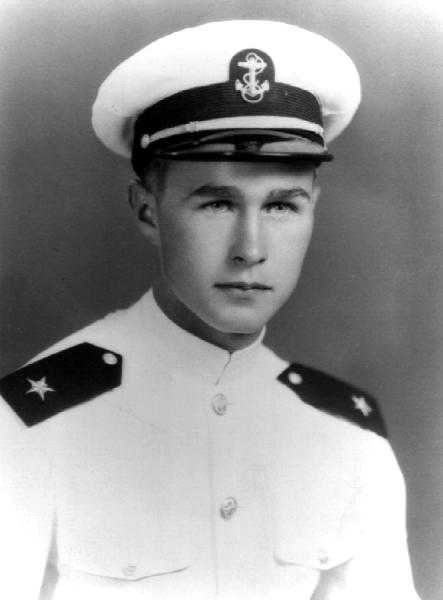
Fewer and fewer of our elected representatives have served in the military. The last President to do so was George W Bush who served in the Texas Air National Guard, although he never saw combat.  The last president who did see combat was George's dad, George H.W. Bush, who served in the Navy during WWII.

America was still recovering from a severe economic depression when it was attacked on December 7, 1941 by the Japanese surprise at Pearl Harbor. The following day, the U.S. declared war. Eventually some 16 million men were to serve in uniform. Their average age was 26. One million of those would actually see combat.  405,399 of them would die. That's one death for every 58 soldier, sailor, airman, or Marine.

Just over 400,000 women volunteered (they weren't drafted) to serve in various military auxiliary units known as the WACs, WAVEs, Coast Guard SPARs, Marine Corp Women's Reserve, and the Navy and Army Nursing Corps.  While they didn't serve in combat, they still served in every theater of war and provided invaluable support to the war effort.

It's worth noting that of those who served, 38.8% were volunteers. They mostly enlisted at the start of the war. 61.2% were drafted. 73% of them served overseas, with an average of 16 months abroad.  The average term of enlistment was 33 months. And they did all this for just an average of $71.33 per month. If you were an officer, you earned $203.50 per month.

According to the Veteran Administration, of those nearly 17 million brave men and women of the greatest generation", there are just 120,000 World War II veterans still alive today. That comprises just 1% of all veterans today.

The Korean War came on the heels of WWII, which begun on June 27, 1950 and continued through January 31, 1955 (technically, the war is still considered to be "hot" since only a cease fire or armistice was signed by the various warring parties). 6.8 million men and women were to serve during the Korean War. Of those, there are 767,000 veterans of the Korean War alive today, which comprises about 4% of all veterans.  

The Vietnam War was arguably the most contentious war in recent U.S. history. The Vietnam War in truth a civil war which was between the Communist factions most situated in the north and the nominally "democratic" factions in the south following the defeat of the French in 1954 at Diem Bien Phu.  The war initially had begun as an attempt to oust the colonial French from Vietnam, which was interrupted by the invading Japanese during WWII, and resumed following the defeat of Imperial Japan.  

U.S. involvement began in earnest in early 1961 and continued through May 1975. During that time, more than 2.7 men and women served in Vietnam, which represented about 9.7% of their generation. The average age of GI in Vietnam was just 19 years old.  7,484 women served in Vietnam as well. 85.5% or 6,250 of them served as nurses.  58,148 of those who served in Vietnam lost their lives. Of those killed, 61% were under 21 years of age with the average age of those killed was 23. 11 years old. 1,611 servicemen are still missing.

The Vietnam war also produced tens of thousands of wounded and disabled. 303,704 individuals were wounded in action. 75,000 were listed as severely disabled. 23,214 are rated as 100% disabled. 5,283 lost a limb while 1,081 lost multiple limbs, and yet while those numbers are high, the number of amputations in WWII were 300% higher. However, because of the use of booby-traps, multiple amputations occurred at a rate of 18.4% of injuries compare to 5.4% in WWII.

It's worth pointing out that 88.4% of those who served in Vietnam were classified as white (which included Hispanics). 12.5% were black, and 1.2% were Asian or of another or mixed race. Of those who were killed, 86.8% were white. 12.4% were black and 1.1 belonged to another race. 14.6% of blacks killed were no-combat related. 34% of blacks volunteered for combat duty.  

76% of the men who served in Vietnam were from poor or working class backgrounds. 75% had family incomes below the poverty level while 23% came from upper middle or better economic backgrounds. Almost 80% had a high school degree or better. 91% of those who served regardless of race or economic background said they were glad they did and 74% said they'd do it again knowing the same outcome.

It's also worth noting that 97% of Vietnam veterans received a honorable discharge. 240 earned the Medal of Honor. Today, there are 5.6 million veterans of the Vietnam War still alive. That's about 30% of all veterans.

43% of all veterans today served in the Gulf War Era. That's about 7.8 million men and women who served from 1990 to present according to the Veterans Administration. Operation Desert Shield, which ran from August 2, 1990 to January 17, 1991.Operation Desert Shield was from January 17, 1991 through February 28, 1991 resulted in the deaths of 148  U.S. service personnel (including deaths by so-called "friendly fire").  Another 235 died of non-combat related injuries while 1,565 died in what the military termed "non-theater" related action while 467 individuals were wounded.  

Meanwhile, the euphemistically named "Enduring Freedom", which was the U.S. war in Afghanistan lasted from October 1, 2001 until December 28, 2014 saw 2,402 military personnel killed along with 10 CIA operatives. 1.5 million men and women served in Operation Iraqi Freedom, which saw the deaths of 4,492 U.S. military personnel, of which 3,481 were killed in action.  Operation Iraqi Freedom ran from 2003 until 2011.

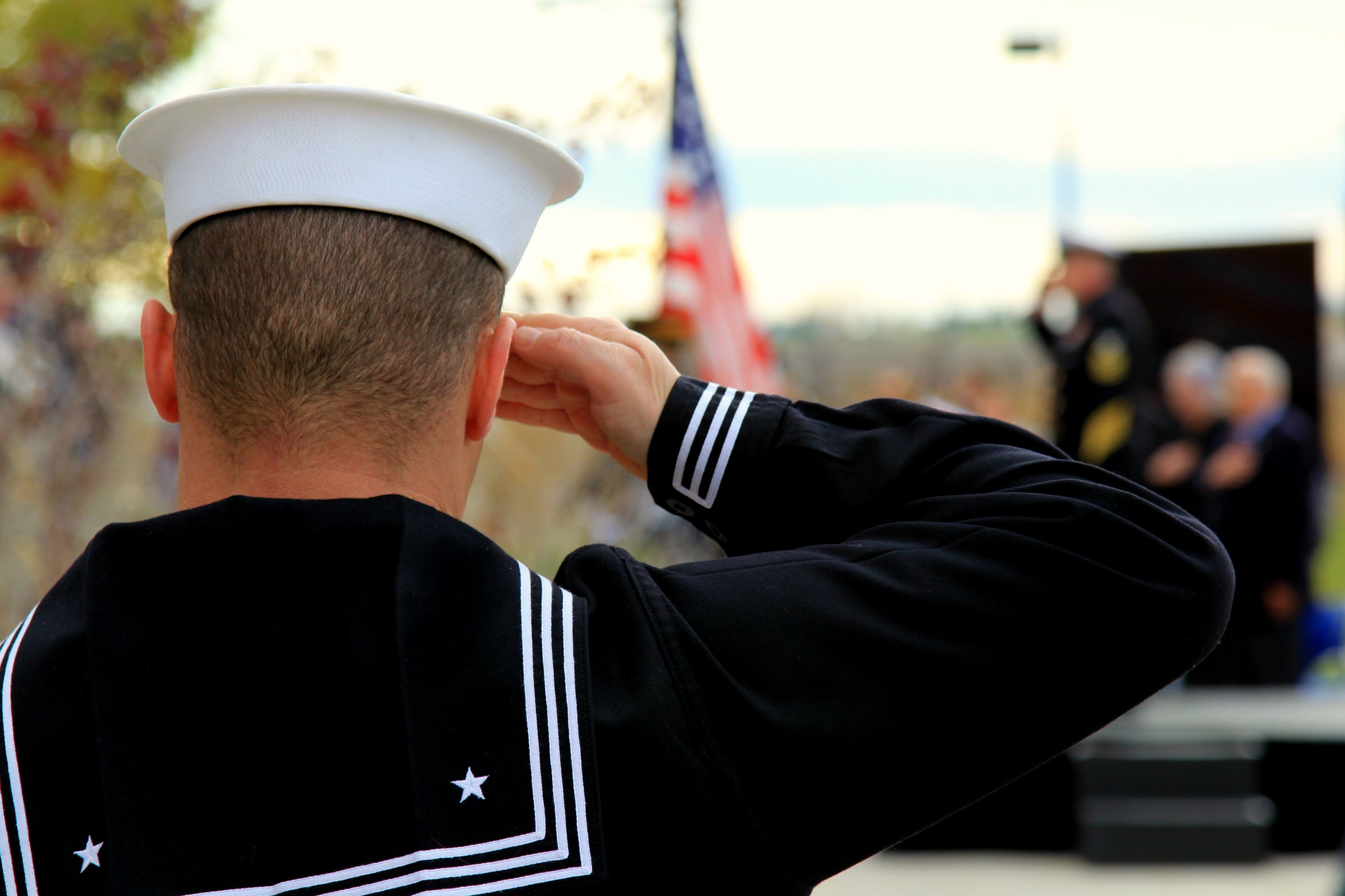
Serving in the military isn't for everyone. It takes courage and commitment. Many say the rewards are worth it and far outweigh the risks, but believe me, as a disabled veteran, the sacrifices are real. However, the military is our first and last line of defense against those who wish us harm. 

While we may disagree with the political policies which, intentionally or not, put our military in harm's way for the sake of material gain or power, we should never allow that to affect our respect for those men and women who stand ready to defend this nation at a moment's notice.

Finally, remember that when someone joins the U.S. military, regardless of age, race, ethnic group, or any other factor, they take an oath to defend the Constitution from all enemies foreign and domestic. That oath doesn't come with an expiration date. We are all the more safer as a nation thanks to our veteran-citizens. So, be sure to thank a veteran or active duty military member, not just on Veteran's Day, but any time you happen to meet one. 


If you enjoyed the article, please consider passing it along to others and don't forget to subscribe. It's free! Lastly please be sure to "like" us on whatever platform you use to read anotheropinionblog.com. It helps with the algorithms and keeps our articles in circulation. Thank you!


Research Starters: US Military by the Numbers


VVA Chapter 310: Vietnam War Statistics


The Changing Face of America's veteran population


Friday, July 16, 2021

Cuba's March For Reform and Freedom

What's happening in Cuba? Why are there now thousands protesting after decades of Communist rule? The answer is not quite as simple as it would seem. First, many of those protesting are citing Cuba's dire economic situation. Cuba has long suffered from food shortages, going back to the U.S. blockage of the early 1960's, which was partially alleviated by the Soviet Union and other Eastern Bloc countries.

Since the fall of the USSR in the early 1990's, Cuba's ability to import food, commercial replacement parts, and medical supplies has been put to the test, which brings us to the two main reasons behind the protests. Aside from food and other commercial necessities, Cuba has been unable to get ample doses of the COVID-19 vaccines. Cuba has already seen infection rates dramatically increase, with some areas reporting as many as 6000 confirmed cases, and it's getting worse.

Just a few years ago, protests like these were unheard of. President Fidel Castro not only maintained a strong grip on the Cuban people via his police and security forces, but also through sheer force of personality. As bad as things were for Cubans, they loved Fidel. Since his death in 2016, Cuba hasn't been able to produce anyone as popular or charismatic as their  "El Caballo".  

Briefly, Fidel's younger brother, Raul, governed the country. While he was generally well liked, he lacked the Fidel's dynamic  personality. To offset this, Raul loosen the government's grip with the announcement of his 300 political and economic reforms, which included limited privatization of businesses, reduced government spending, term limits and better relationships with other nations, especially the United States.

Primarily for health reasons, Raul turned the reins of power over to Miguel Diaz-Canel and stepped down as President in 2018  (he "officially" retired from government in April 2021). Diaz-Canel is also First Secretary of Cuban Communist Party, which is the island nation's sole political party. Unfortunately, Diaz-Canel, age 61, has proven to be fairly unpopular with most Cubans, who consider him to be a puppet of the Castro family and "old guard" politicians; unable to adapt.

Since assuming sole control of government, the economy has shrunk by 11.6%, partly as a result of COVID and the ongoing US trade restrictions which were reimposed President Trump after briefly being normalized following Fidel's death by President Obama and Raul Castro in 2014. Nevertheless, Cuba is still able to purchase food , medicine, and certain humanitarian goods from the U.S. .

Unfortunately, however, for Cuba, while the U.S. had temporarily lifted travel restrictions under President Obama's administration, President Trump reversed many of restrictions, including the ability to send or bring in currency and other items from the States, which has severely impacted the Cuban economy.

Cuba is heavily depended on tourism to bring in badly needed dollars. Tourism accounts for nearly $3 billion dollars to the Cuban economy. However, tourism isn't enough. There exists an unofficial or underground economy of cash sent back by Cubans living at large (particularly Florida), which are typically sent via wire transfer, travel agency courier, or brought in person.

The principal conduit, Western Union, has reported that each month, approximately 240,000 "unique" wire transfers are sent to Cuba for an estimated $2.88 million dollars annually. In addition, approximately $200,000 is carried onboard each flight to the island nation by paid "mules". Best guesses put the total amount entering the country by these "mules" to be around $2.44 million dollars annually. 

Trump's reimposed sanctions resulted in the closing of 407 wire transfer locations like Western Union and its Cuban partner, Fincimex. It's worth noting that the highest concentration of Cubans in Florida are in the Miami-Dade area. Historically, the Cuban community has voted Republican. However, in this past presidential election, it went Democrat; no doubt to protest Trump's restrictions.

In terms of imports, Cuba imports food items (mostly processed),chemicals, machinery and other heavy equipment chiefly from countries like China, which makes up nearly a quarter of Cuba's imports, Spain at 14%, followed by Russia, Brazil, Mexico, and United States with about 5% each.

Cuba is also an exporter of mainly agricultural products such as coffee, sugar, tobacco, citric and fish, along with nickel and petroleum, which makes  the economy heavily susceptible to fluctuations in commodity markets as well as to changing climatic conditions. Cuba also exports medical supplies, including test kits, vaccines, and various drugs (especially for the treatment of diabetes).

Other factors have also affected Cuba and it's economy. Venezuela's economic and political implosion has severely shook the Cuban economy. The Latin American country is Cuba's top trading partner and accounts for 17.8% of Cuba's exports. Spain, whose economy shrank 11% in 2020, accounts for about 12% of Cuba's exports, while Russia, once Cuba's chief trade partner, makes up just under 8%, followed by a troubled Lebanon, whose economy shrank 19.2% in 2020, and Germany, both represent just over 4% each.

So, with the Cuban economy once again struggling, the fear of COVID spreading, and the failure of the Cuban government to open up the country economically and politically as promised, the people have taken to the streets; which is a dangerous at any time.  The result has been attempts at shutting down the internet in order to help contain the situation while restricting information about the protests from getting out. This move was attempted by Egypt in January of 2011 during the Arab Spring and failed.

Cuba's Foreign Minister, Bruno Rodriguez, claimed that the U.S. was trying to encourage more protests by sending "bots" to every Cuban phone with messages urging them to join the protestors. Meanwhile, Cuba's President, Diaz-Canel, has called for government supporters (what he termed as his "revolutionaries") to take to the streets with counter protests.

State controlled media outlets have been running near around the clock "analysis" of the situation (from a decidedly government perspective) while police in riot gear and military personnel have been called out to impose order and make arrests. In the interim, Russia has urged President Biden not to interfere with what it regards as Cuba's internal security matter. Other countries, including China and Iran, have also taken a keen interest in what's happening.

Many analysts, mostly outside the US, believe that if the U.S. Government (notably the CIA) wasn't behind the protests, it certainly was fanning the flames. The U.S. Government has for decades tried to undermine the Castro regime ever since it deposed Batista in 1959, a widely recognized puppet of the U.S. State Department and a pawn of corporate interests, not to mention the American mafia.

Following the ouster of Batista, and the nationalization of several corporations, the U.S. Government, backed by the Kennedy Administration and CIA, attempted an invasion of Cuba (Bay of Pigs) in April 1961 which failed miserably. Later, came the infamous confrontation between Cuba, the USSR, and the US, which, in October of 1963, brought the world to the brink of nuclear war.  Afterwards, the Kennedy Administration enacted an embargo which remains essentially in place, along with CIA sponsored attempts to assassinate Castro and/or topple his government up until his death in 2016.

As an aside, the United States previously invaded Cuba in 1898 during the Spanish-American War after the USS Maine mysteriously blew up in Havana Harbor (it was later determined to have been likely a spontaneous fire in its coal bunker and not sabotage as was alleged at the time). The Maine had been sent there during Cuba's War of Independence to protect American economic interests. It was said at the time that while Spain may control Cuba's politics, America control its economy.

So, what are we to expect? Will the situation in Cuba lead to a "Latin American Spring"? There are many who blame forces within the U.S. Government for destabilizing the self-proclaimed  "socialist" Venezuelan economy, which also may have inadvertently affected surrounding countries, and  resulted in the mass influx of immigrants fleeing north to the US-Mexican border. 

However dire the situation in Venezuela, it appears their government is still hanging on...so far. We also can't (or shouldn't) forget that the U.S. Government has overthrown several duly elected governments in Latin America (notably Columbia, Argentina, Paraguay, Mexico, Chile, among others) that we disapproved of and installed brutal rightwing military juntas, resulting in the deaths, torture, and imprisonment of millions, not to mention the "disappearance" of thousands.

We have also invaded countries in Latin America over a dozen times, so it's easy to understand why Cuba and others are a less than convinced of our sincerity despite President Biden insists claims that our support is solely for the Cuban People. It's worth nothing that as of 2018, just 47% of Latin Americans had a positive view of the U.S. (Mexico, by the way, was the lowest, with only 30%).

It would be cynical to say that the United States acts strictly in terms of protecting or enhancing its de facto "empire". However, it would be naive to say that political and economic self-interest in this era of an Oligarchic Corporatocracy, which America has become, aren't a decisive factor.

If oil and gas weren't at stake, would we have launched the First Gulf War to oust Saddam Hussein from Kuwait? Unlikely.  Aside for revenging the cowardly 9/11 attack and desire to take out Osama bin Laden and the leadership of Al Qaeda, would we have remained in Afghanistan for 20 years if it wasn't for its oil, gas and minerals?

Remember, bin Laden was killed in 2011 and we're just now leaving a worse off Afghanistan, some ten years later, with the likelihood that the Taliban will once again reclaim the country. The same can be asked of Iraq and its oil, not to mention our near psychotic fixation on toppling the Iranian Government or occupying Syria, which has been a long time Russian ally in the region. 

I'm sure that there is a humanitarian element to our public (and perhaps covert) foreign policy. We don't want to see people starving or in need of housing or medicine. That's why America has always acted anywhere in the world every time a natural or manmade disaster occurs, yet thanks to a near 60 year old embargo, we have it just 90 miles off our southern coast. Of course, America has always promoted "freedom" and "democracy", even if that's in short supply here at home.

If deeds speak louder than words, then surely our past history must speak volumes. The Cuban People deserve better than what they've had since 1960. Then again, they deserve better than what they had under the likes of Batista too. If President Biden is sincere, then we should do what we can to support the Cuban People. However, the mantra in Washington has always been "never let a good crisis go to waste".  But nevertheless, whatever the situation, we must do what we can to allow the people of Cuba to decide their own destiny, whether we agree with it or not.


Direct contribution of travel and tourism to gross domestic product in Cuba


Western Union Data For Transfers To Cuba...


Fewer People In Latin America See the U.S. Favorably UnderTrump


Cuba exports medicines to dozens of countries. It would likethe U.S. to be one of them


Russia, China, Iran Warn U.S. Must Not Intervene in Cuba


Saturday, June 01, 2019

And Now A Word From Our Sponsors: War and Economics

The great military strategist, Prussian General Carl von Clausewitz, once said, "war is a continuation of politics by other means", and what is politics except trying to secure a better outcome for yourself (or who you represent) than the other person. Of course, it's also supposed to be about compromise, where each side gets at least some of what they want. War is ensuring that your side gets all of what it wants when compromise is unpractical or unnecessary. Let's take the Napoleonic Wars for instance.

What was Napoleon Bonaparte actually attempting to do? Was it the simple conquest of Europe for the sake of grabbing up some great (and not so great) real estate? Was it about tweaking the nose of the British? While certainly a bonus, that wasn't his actual intentions. Nope. Napoleon was about trying to establish a united Europe for the sake of economics. It was all about creating a economic and political union. England's beef was that it would be at the cost of the British Empire. No longer would Britain be the dominant economic power in Europe.

It also didn't take long for many of the other monarchies realized that their hopes of economic success would be affected as well, especially with the French spreading this nonsense about "fraternity, equality, liberty" and all that democracy rot. Beside, not only did it threaten the current economic system, it threatened the existing monarchies and, by creating a more secular society, the power of the Catholic Church as well. Obviously that would not do! And so, Napoleon was eventually defeated and sent off to the Isle of St. Helena to (hopefully) quietly fade away, and with him all the ideals of the revolution.

Unfortunately, that didn't happen and in time, the ideals of the revolution with its "Rights of Man", a secular society, increased democracy, and the growth of the business (and middle class) took hold. Absolute monarchies gave way to constitutional monarchies and democracies grew, and along with it an industrial revolution. In the colonies across the "pond", a sense of personal and economic freedom had also begun to germinate earlier. Eventually, they--that is, "we"---decided that we would like to govern ourselves thank you very much. We also didn't care much for the tariffs and taxes being imposed. So, we too had our revolution, which was as much about taxation as it was over self-governance which, of course, had everything to do economics!

World War I had everything to do with economics. At least as much as it did about Serbian independence and the assassination of Austrian Archduke Franz Ferdinand and his wife, Sofia. While their murders were the spark, it was the interlocking economic and political system set up in post-Napoleonic Europe, as well the rising economic threat to the British and French empires by the German Empire as anything.

Its outcome resulted in the infamous Versailles Treaty which pinned the blame for the war on Germany while stripping it economically and militarily. Germany lost vast lands to the west, north, east (which also separated Germany from Prussia) and all of it colonies (the majority of which going to Britain and France). It lost its industrial heart---the Ruhr and Saar---while forcing huge reparations on Germany with no means of paying. In total, gone was 13% of its territory in Europe and one-tenth, or 7 million, of its citizens. The German imperial government was toppled, and its military emasculated. No air force. A 100,000 strong army. The surrender of its surface fleet with severe limits on any new ships (including merchant) and no submarines. Its world famous General Staff was disbanded while any research was strictly curtailed.

Germany's fragile new democratic Republic faced repeated social unrest and revolution. Assassinations were almost commonplace. With the hyperinflation of Depression nearly wiping out the upper, middle, and lower middle classes, the stage was all but set for the Second World War. Meanwhile, the Ottoman Empire had collapsed. The Austro-Hungarian Empire imploded, and Imperial Russia was overthrown by revolution and its ruling family, the Romanovs, were executed. As an aside, France and Britain benefited from the fall of the Ottomans, and divided up its lands in the Middle East, which, based on economics, arbitrarily created the nation-states we have there now not to mention much of our current problems since no respect was paid to tribal alliances, traditional boundaries, or opposing Islamic sects.

The new political, military, and economic realignment completely changed international relationships. Germany's former key trade partner, Russia, was now a Bolshevik nation opposed to the West. The US, thanks to its involvement late in the war, catapulted to the center of the world stage now that both France and Britain was weaker, despite their economic gains, having nearly bled to death on the battlefields of Europe, and Austria-Hungary was no longer a world power. Everything was different.

World War II was also all about economics, albeit along with other factors such as racism. Germany wanted to become a world power again, which meant reclaiming more than lands lost through the Versailles Treaty. Specifically, it was the conquest of western Russia and the Ukraine for "Lebensraum" or "Living Space" for the German People. Britain and France faced increased troubles in their colonies as the locals demanded more independence and share of their country's economic wealth. Japan too wanted a piece of the action. It was rapidly industrializing, however, it was resource poor.

As a result, it sought to form the "Greater East Asian Co-Prosperity Sphere", in order to create something of an All-Asian economic alliance of, by, and for Asians with Japan at its center. At least, that was its justification for its military expansion in the Pacific. Even Italy wanted to recreate a version of the Roman Empire. As for the United States, we had been active in Latin America, not so much for actual conquest of land, but for ensuring US corporations could operate freely there and without any undo interference from the pesky locals.
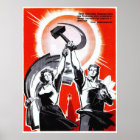
Fast forward 1956, and the war in Europe and Asia is over. Europe was laid waste and the US "Marshall Plan" (along with the Berlin Airlift) had kept the Europeans out of a new Dark Ages. Japan was rapidly rebuilding its economy, turning former planes, tanks, and ships into cars, radios, and VCRs. The Korean War was a draw, despite a massive loss of life on all sides. Independence movements were blossoming everywhere, including the birth or rebirth of new nations. The Age of Empire was quickly fading, and the new kid on the world stage was the US, but we weren't alone. The USSR and Communist China were there too, and each sought to expand their ideological influence, and that meant both arms and money. The Cold War is on. Conflicts, pseudo-wars, and proxy wars spread throughout the world. We now had the Warsaw Pact, NATO, and the Common Market which was to morph into the European Union or EU (ironically, Napoleon's old idea anew). The world also had a defacto single global currency---the US Dollar. However, this wasn't a dollar backed by gold. It was tied to oil and on the "faith and confidence" of the US Government and the strength of the American economy. The one world currency was the Petro-Dollar.

By 1991, the ideology of Marx/Lenin/Mao couldn't compete with the ideology of the "Benjamin's", that is, American led capitalism. The Warsaw Pact broke up and the USSR left with a whimper. In short, instead of outfighting them, we simply outspent them. Sure, China survived, but even it too adopted a limited form of capitalism. Communist Eastern Europe has adopted the economic system of its once hated enemy, and is doing quite well thank you very much. Europe itself is much more integrated than ever and well on its way to a "United States of Europe".

Now, along came Osama Bin Laden. The "chic sheik" of a wealthy Saudi family in the construction business turned terrorist. Of course, before that, he was "our" freedom fighter opposing the Soviets who had invaded Afghanistan. Bin Laden and his fellow zealots, al Qaeda, had declared war not just on the Soviets, but apparently the US and the West, except no one bothered to notice, and so they embarked on a campaign of ever bolder attacks on US interests in the Middle East; embassies, ships, military barracks, discos, and so forth. Finally came 9/11, and they got our undivided attention and anger.

The prime reason for the attack was revenge for the US and other Western influence in the Middle East, but especially our control over Middle Eastern oil. After all, if it wasn't for the oil and gas, not only would we have little to no interest, but the British and French wouldn't have bothered to interfere the region's politics following the fall of the Ottomans post World War I. Nevertheless, we "interfered" now, and in a big way. Before long, the Taliban in Afghanistan, which had sheltered Bin Laden, was gone and "Arab Dillinger" was on the run.

Meanwhile, Saddam Hussein, an ally in the region, decided to invade neighboring Kuwait. Hussein was a known sadist who had previously attacked the Iranians and the Kurds. He even used chemical weapons. Sure, he was a tyrant, but he was our tyrant. This time he overstepped and his actions affected oil and gas prices worldwide. Soon we were rallying public support and building a coalition to liberate Exxon and BP... err...I mean the Kuwaiti People. He was soon defeated, but left in power and would hopefully resume his preapproved place as a deterrent to the Iranians, and so he did for awhile. He also resumed his attacks on the Kurds for good measure. But, soon he was back to coveting his neighbors oil fields, which I'm sure is a prohibitive commandment somewhere.

With that, his removal started with "shock and awe" and ended with the dull thud of a hangman's noose. At that point, America decided to take a direct hand at running Iraq, albeit with a cast of puppets which would make Jeff Dunham proud. Of course, the having proved to be more difficult than the wanting, and without Saddam's iron glove, the genie of religious fanaticism was released in the form of ISIS/ISIL, Al Shabaab, Boko Haram, and dozens more. It wasn't long before most of al Qaeda's leadership and much of its followers had been eliminated, along with its founder, Bin Laden. In the interim, civil war had broken out in Syria, and we were doing more than rooting for the anti-Assad "freedom fighters" (in Iraq and elsewhere, they were terrorists. In Syria, they were freedom fighters). The reason is partly Syria's oil and gas; partly because they're Russia's key regional ally; and partly because it would make for a great staging area to launch an attack against Iran, which has been a thorn in our side since 1979 and the overthrow of the Shah and the US Hostage Crisis.

Despite numerous claims, albeit false, of "chemical attacks" by Assad's forces (they were actually carried out by our pseudo-allies, ISIL, in Syria, public support just wasn't there no matter how much the media spun the story. So, now the war is all but over and Assad is still in power. Iran continues to make threats against "Big Satan" and "Little Satan" (that's us and Israel). Iraq is stable...more or less...though US troops remain despite promises of coming home.

Europe is under invasion from "migrants" from the Middle East and Africa, which has done more than destabilize an economic and social system which has worked well since the end of World War II. It is on track to replace the native populations within the next couple of decades. Gone will be European culture, its social norms, values and traditions, and even its Judeo-Christian based religions.

Europe's politicians have more than proven themselves to be spineless cowards and traitors to European history and culture. They have had the audacity to try and make criminals out of the victims---the European People themselves. Nevertheless, those who wield the real power; the world's ruling Oligarchs couldn't care less as long as the wealth flows. Their interest is in control. Nothing else matters.

In America, we too are under invasions from economic migrants from Latin America. Our ruling Oligarchy could equally care less. To them it means more competition for jobs, which translates to lower salaries and fewer benefits. It's also an opportunity to attack traditional US ideals such as free speech, the 2nd Amendment, traditional family values, secure borders and the very notion of national sovereignty.

Of course, this makes perfect sense. They think and operate in a world made up of economic markets and trade zones. Borders and nations mean nothing to them. They're outdated notions from a bygone era. Their goal is control and compliance. If it means creating short term chaos in order to obtain long term economic stability in order to generate maximum profits, then so be it.

Besides, war is useful. Even the threat of war is profitable, especially if it forces open new markets, accesses new resources, or ensures compliance by governments. If bribery, threats and sanctions don't work and war becomes necessary, the public can easily be convinced of its patriotic duty. Meanwhile, the selling of weapons is a multi-billion dollar business. It artificially stimulates the economy, reduces "excess" population and thus lowers unemployment, and it allows for incursions into freedoms not otherwise tolerated, such a personal privacy. Given enough time, those incursions seem completely normal and acceptable.

Meanwhile, the population is entertained with distractions; distractions about their debt, loss of jobs, lowering of wages, loss of benefits, rising crime, and decline in their quality of life. The corporate media even spins it to make it look all so normal. It tells us what they want us to know, who is to blame...and then a word from our sponsors, we're back to the illusion of our pretend reality.


List of Designated Terrorists Groups


French Revolution

American Revolution

The Muslim Migrant Invasion and the Collapse of Europe


Muslim Invasion of Europe

Trump's Right: It's An Invasion


Saturday, May 25, 2019

Remembering Memorial Day


What does Memorial Day mean to you? For most people, I think it means the "official" start of Summer. It's means that public pools are open (except here in Louisville, where Mayor Fischer plans on keeping them closed; his "punishment" for the Metro Council and the residents of Louisville for shooting down his 300% tax increase to make up for a budget shortfall due to his misspending of taxpayer money, but I digress). For the average American, I think Memorial Day means cookouts, the start of summer vacations, a long weekend, the ending of another school year, and spending lots of time outdoors doing yard work or gardening.

For me, Memorial Day means 400,000. That's how many people are buried at Arlington National Cemetery. The land where these brave men and women are buried was once the property of General Robert E. Lee. The estate was originally owned by George Washington Parke Custis, the adopted grandson of George Washington. His daughter, Mary Anna Randolph Custis, married General Lee. It was seized by Union troops near the end of the Civil War and was used as Union headquarters. It was turned into a cemetery for the Union dead in June 1864 in order to prevent General Lee from ever returning to his family's home. It was later turned into a national cemetery in 1883. Arlington National Cemetery is also the final resting place of 5000 unknown soldiers from this nation's many wars.

On average, about three million people a year come to visit Arlington Cemetery; to see the white marble headstones lined up in perfect row upon row. Beneath each headstone lays men and women from every war and conflict. At Arlington rank, title, or social status means nothing; death treats everyone equally. However, some were well known in life like Audie Murphy, Lee Marvin, President John F Kennedy, Medgar Evers, Lt. Colonel Virgil "Guss" Grissom, General George C Marshall, Joe Lewis and Senator John Glenn. But for every name you might recognize, there are thousands of everyday men and women who were anything but ordinary. It is also the location of the Tomb of the Unknown Soldier (also known as the Tomb of the Unknowns), a tribute to the dead of World War I, World War II, the Korean War, and the Vietnam War, which was originally dedicated in 1922.

Some of you may not know that Memorial Day was first commemorated 1861 in Warrington Virginia to honor the Confederate dead. In 1862, the women in Savannah Georgia followed suit in honor of their Confederate dead. In 1863, this was extended to include all those who had died at Gettysburg. Later, after the War between the States had concluded, the United Daughters of the Confederacy, which had evolved from the Ladies Memorial Association, established chapters throughout the South in which to honor and remember their war dead. This was known as Remembrance Day, although in some states it was called Memorial Day.

In 1868, the practice which had started at Gettysburg, was increasingly adopted throughout all the Northern states. In July 1913, surviving members of the North and South gathered again in Gettysburg. This time it wasn't to fight, but to remember those who had died in what was the bloodiest war in American History. A war which claimed between 620,000 and 850,000 men. By contrast, World War II was responsible for 405,399 US lives.

Nevertheless, the act of remembering the nation's war dead was firmly established, though generally known as "Declaration Day" for all the flowers, ribbons, and banners starting around 1882. Gradually, more people returned to the name, Memorial Day", which had become the most common name by the end of World War II. So, in 1967, the Day of Remembrance and Declaration Day officially became known as Memorial Day.

In addition to remembering those who gave their lives for this country, lets also not forget that we are losing on average 20 veterans a day to suicide, often as a result of post-traumatic stress disorder (PTSD), service connected injuries (especially among post active duty disabled veterans). Some find they are unable to cope with their experiences in combat or with their injuries and turn to drugs and alcohol.

Also, we need to remember that on any given night there are an estimated 40,000 homeless veterans on the street. Homeless veterans make up just under 10% of all homelessness. 57% are white while 26% were black with the rest being multiracial. 85% are listed as non-Hispanic. Approximately 89.5% are men. The states with highest number of homeless veterans are California, Florida, Texas, and New York, but every state and nearly every community has homeless veterans or those with temporary shelter.

My generation, the Babyboomers, has witnessed the passing of the last veterans from the Spanish-American War, World War I, and with an average of 372 World War II veterans dying each day, we'll likely to see them last of them pass as well. We are also the Children of the Cold War, and of Vietnam. We witnessed the assassination of the Kennedy Brothers and Rev King, the Watts Riots and social unrest, the anti-War Movement, the Civil Rights Movement, the Bay of Pigs fiasco, the Cuban Missile Crisis, as well as the land on the moon. Some of our parents recall the Great Depression and witnessed the lost of the last veterans of the Civil War. They may even remember their fathers, uncles, and perhaps older brothers going off to war in the Pacific, in Europe, or in Korea. We, as a People, have witnessed and endured much, however, we owe much to those who sacrificed their hopes, their dreams, and even lives for our sake and that of our children and their children.

Memorial Day should be a day where we come together not just with family or friends, but also as a nation to remember those who gave everything for this nation and our freedoms; freedoms which are now under attack from many corners both outside and inside this great country of ours. We should also give thanks to those who are still fighting their own private war---the homeless veteran, those who suffer daily with their injuries, and those who are struggling to overcome their own demons.

Lastly, as I do each Memorial Day, I'll close with a very special poem, "In Flanders Field", which was written in 1915 by Canadian Lt. Colonel John McCrae, which was inspired by his experiences during the Second Battle of Ypres during World War I. The battle lasted from April 22 through May 25th. During that battle chlorine gas, a deadly poison, was first introduced by the Germans to break the deadlock being fought in the stench of the trenches. The battle claimed the lives of some 112,156 young men (the average age was 19), although the exact number will never be known, but if it were, it would no doubt be much higher.

John McCrea volunteered to serve as a gunner and medical officer for an artillery unit. Following the battle, which had also completely leveled some of the local towns and villages, he was stunned one early morning noting how quickly the crimson red poppies would bloom on freshly closed graves and the eerie silence according to one story. I suspect there's a good deal of truth in it since he did personally bury a close friend, Alexis Helmer, who had been killed on May 2nd. The poem was originally published in 1919. So, without further ado, here is "In Flanders Fields",

In Flanders fields the poppies blow
Between the crosses, row on row,
That mark our place; and in the sky
The larks, still bravely singing, fly
Scarce heard amid the guns below.
We are the Dead. Short days ago
We lived, felt dawn, saw sunset glow,
Loved and were loved, and now we lie
In Flanders fields.

Take up our quarrel with the foe:
To you from failing hands we throw
The torch; be yours to hold it high.
If ye break faith with us who die
We shall not sleep, though poppies grow
In Flanders fields.


Memorial Day

United States military veteran suicide

How many homeless veterans are living in the US?


Saturday, May 27, 2017

Remembering to Remember Memorial Day

Here we are again. Memorial Day weekend. To many people Memorial Day signifies the end of another school year, graduations, plans for college or getting a job, sunscreen, bug spray and of course, the start of Summer along with what all that it entails. However, I think we tend to leave out one very important ingredient in all the usual festivities---those men and women who gave their all--literally---for this country. Memorial Day is, in fact, the day our nation sets aside to remember those who have fallen in service of this nation and the ideals which it stands for.

As those of you who know me should already be familiar, I served in the United States Navy (often somewhat affectionately called "Uncle Sam's Yacht Club") during the mid 1970's. I am also a lifetime member of the Disabled American Veterans, and I've had the privilege to serve, both in the Navy and in the DAV, with some pretty remarkable individuals (a friend of mine describes the DAV as a club nobody wants to belong to but still needs). While serving in the Navy I got to do things I would never have imagined. I met and worked with men and women for all walks of life and from just about every single state in the nation, plus places like the Philippines, Israel, Egypt, Iran, Iraq, Qatar, Saudi Arabia, Kuwait, Germany, England, Canada, and many more. In the DAV, I've had the honor to work with some equally incredibly amazing people, including a unassuming fellow who stood guard at Spandau Prison in Post-War Germany over such individuals as Albert Speer and Rudolf Hess. He then went on to serve in Korea and in Vietnam and was gravely injured.

There was another individual; short in stature and as humble as they come. He was born in Hungary in the early 1930's. However by the time he was about 9 or 10, he was fighting to survive in a concentration camp called Bergen-Belsen. After the war and his liberation (and learning that none of his family had survived), he was transfer to a British internment camp on the island of Cyprus. Later, he was one of the lucky few allowed to immigrate to the British Protectorate of Palestine just in time for David Ben Gurion to declare independence from Great Britain and the establishment of the State of Israel. He went to fight in that war, and even had the opportunity to serve as a driver for, now, Prime Minister Ben Gurion. After the war, he emigrated to the US to start over. No sooner than he got himself settled in, he was drafted in to the US Army, where he served in Korea and in Vietnam, where we was severely wounded. An extraordinary life if there ever was one.

There has been many others, most of whom fought in either the Korean or Vietnam wars; several in both. There military honors and ribbons they wear are impressive. However, what I've found most impressive is just how unassuming most of these men and women are. You would never suspect that the frail quiet guy in the corner took out several bunkers and saved the lives of his fellow soldiers, and in the process lost his arm. Or the woman cracking jokes was a combat nurse who was nearly blinded while she help evacuate the wounded during a mortar attack. Then there's the guy setting with some of his pals who lost part of a hand when his ship was attacked and sunk and he had to spend almost a week floating in a slowing sinking rubber raft in the blazingly hot South Pacific Ocean with no fresh water or food, and watching his fellow shipmates slip beneath the water either as a result of exhaustion, loss of hope, or sharks looking for an easy meal. I can't imagine the nightmares he must still have.

We've also have welcomed veterans of other wars and conflicts like Somalia, Lebanon, Iraq and Afghanistan. I've had the honor to meet several Purple Heart recipients. They are individuals who sustained serious wounds in a combat situation which resulted in the saving the lives of fellow Americans or our Allies. We have had members who were prisoners of war, either held by the Japanese, Germans, Italians, Chinese and North Koreans, or the North Vietnamese. However, there were two men which stood out, at in my mind. Both were about the same age, that is to say in their early 90's. Both were friendly, although one was more outgoing than the other who was a bit---shall we say---cantankerous. Perhaps curmudgeonly might express his demeanor better. Both were non-assuming in appearance, though one dressed like a typical middle class retiree and the other as someone used to working with hands and the soil (you can probably figure out which was which by now). Aside from obviously belonging to "The Greatest Generation", from the looks of them, you would think that underneath they would have little in common. However, they had one thing which bound them forever together in a unbreakable bond. Both were survivors of the Bataan Death March.

For those of you unfamiliar with the Bataan Death March, let me share a few details. Shortly after the Japanese attack on Pearl Harbor, the Japanese invaded the Philippines, which was then a protectorate of the United States (the US acquired it from the Empire of Spain during the Spanish-American War of 1898). The Philippines was under the Military Governorship of General Douglas MacArthur (yes, that MacArthur). Prior to the Pearl Harbor attack, the US General Staff, headed by General George Marshall, had issued a warning to all US Army and Naval bases to be prepared for a possible attack. General MacArthur assured Washington that he was quite prepared. In reality, he wasn't. When the invasion came, US and Filipino troops took a brutal pounding. Although they were able to slow the invasion forces down, they were hopelessly outgunned and out-manned. Gradually, American and Filipino troops were driven back to the Bataan Peninsula while continuing to protect the Manila Bay Harbor as MacArthur was hustled off the island to safety. In the end, they could not stop the overwhelming superior Japanese forces. As a result, US Major General Edward King surrendered to Japanese Colonel Mootoo Nakayana of the 14th Japanese Army. The Battle of Bataan had lasted from January 7, 1942 until April 9, 1942.

The Japanese rounded up the surviving military personal and marched them approximately 110 miles in temperatures up to 110 degrees with little or no water, food, rest, or medical care to POW camps. At one stop, they were herded into unvented boxcars so tightly that it was impossible to do anything but stand. If you to urinate or have a bowl movement, you had to do so right there where you were standing. Along the way, prisoners were ordered to do torturous manual work such as moving rail cars by hand, dig sewage ditches, and repairing roads. Many were ordered to strip naked and given "the sun treatment". Dysentery and disease was rampant. Anyone who stumbled, fell out, or just couldn't keep up was shot on the spot---no questions asked. There were reports on several groups of men being burned alive for no apparent reason. While no firm number is known, it's estimated that at least 20,000 men died during that march. Since the Japanese did not consider the Philippine soldiers are actual prisoners of war, their total death number will never be known. It's estimated, however, to be in the thousands (some reports put it as high as 18,000).

After the war, the overall Japanese commander responsible for the Japanese Army in the Philippines, General Masaharu Homma was charged with Crimes Against Humanity for the abuse and mistreatment of America and Filipino prisoners of war. Found guilty, he was executed by firing squad just outside of Manila on April 3, 1946. Meanwhile, despite pleas of ignorance or "just following orders, Generals Kenji Doihara, Seishiro Itagaki, Akira Muto, Iwan Matsui, Baron Koki Hirota and General/Prime Minister Hideki Tojo were all tried and found guilty by an Allied War Tribunal for the mistreatment and abuse of American and Allied prisoners of war and other Crimes Against Humanity were executed by hanging on December 23, 1948.

So, as you and yours do whatever it is that you do over the Memorial Day long weekend and kick off the start of Summer, remember what this day is actually all about. Remember the men and women who have fallen in the service of this county at places such as Cold Harbor, Bull Run, Gettysburg or the Somme and Argonne, or the beaches of Normandy, Sicily, Bastogne, Saipan, Iwo Jima, Midway, Guadalcanal, as well as Seoul, Inchon, Outpost Harry, Saigon, la Drang, or Khe Sanh. More recently it has been places like the "Highway of Death", Wadi Al-Batim, Baghdad, Anwar Province, and Kandahar to name just a tiny few. It is thanks to them that America has remained safe.

Friday, May 27, 2016

Memorial Day Remembrances

Several years ago, when I was commander of my DAV chapter, we were awarded a special medal of appreciation for our service by a non-profit group who aids veterans. I felt honored to receive the award but slightly embarrassed by the attention as were most of the members in my chapter. But, we smiled politely and accepted the award, complete with the best salute we could manage, and with all the humility we could muster. Afterwards, the presenter, came up to me and wanted to thank me for my service and for being an example of a "true American hero". To be honest, I was taken slightly back; maybe even a little put off by her comment. I smiled and thanked her again for the medal, but politely pointed out that I wasn't a hero. I went on to explain that the bravest---the real heroes---were usually the ones who don't come home. They were the ones who went above and beyond to risk all, not so much for God and Country like in the movies, but for their fellow soldier, shipmate or airman. I doubt any of those mostly young men and women, if they could speak to us now would have ever thought of themselves or their actions as heroic. Real "heroes" are like that. They do the job which needs to be done. That's it.

Noting a bit of disappointment in her expression, I pointed out that I have known a few who I would consider heroes who did make it home. I told her about an acquaintance I had the honor to make on my first day at my new duty station, Naval Station Treasure Island, which was located right in the middle of the San Francisco Bay between San Francisco and Oakland. I was asked to escort an older, somewhat rough looking Senior Chief to a special ceremony being held on the Island. There really wasn't anything special about him I thought. He was of medium height and heavy---solid---built with a slight beer belly; tanned with the usual tattoos in his arms. I could tell that he was quite used to giving orders and expecting instant results. I seriously doubt anything less than perfection would earn you a memorable butt chewing. So, while we were waiting (and to break the boredom), I asked the Senior Chief what the ceremony was all about. It turned out that this was his retirement ceremony. He said that as a boy he had always wanted to go to sea, so he had left home at 16 and lied about his age to join the Navy. After completing boot camp, he opted not to go home for his two weeks leave and instead wanted to go on to his first duty station and do some exploring (by that, I assume he wasn't talking about the usual tourist traps and was more interested in the two legged sights). So, off he went. He arrived on base and reported in; being given a billet assignment at one of the transient barracks. After settling in, he said he took a stroll around the base just to get his bearings and then decided to hit the sack after chow and a quick shower. The next morning, he planned to head off into town to start this two week leave. That day was Saturday December 6, 1941. The place was Pearl Harbor, Hawaii. His life, and the lives of countless others would be forever changed just 10 hours later.

Well, obviously he survived and went on to spend the next 30 years in Navy. He was in nearly all the major engagements, and would later be involved in Korea and Vietnam. After his active duty enlistment was up, he was allowed to join the reserves. But as for all sailors, the day came when it was finally time to disembark from his remarkable career, and there was me sitting next to this remarkable gentleman awaiting the signal to escort him into his retirement. That, I said was someone I would define as an American Hero. I went on to point out that our chapter had two individuals who survived the infamous Bataan Death March, and opted to remain in the military. Both would go on to fight in Korea and one fought in Vietnam. Then there was another individual that most people would take little note of. He was slight, about 5'5" and small built and seemed to keep a tan year around. He was always smiling with a slight twinkle in his eye. He spoke with a slight but undistinguishable accent. As a child of about 9 years old, this non descript individual survived a long brutal march, leaving him an orphan along the way, to the Nazi concentration camp of Bergen Bilsen.

After the war, he was permitted to leave Germany, and having nowhere to go, was sent by the British to the little island of Cyprus, where, again, he was kept behind a fence and barbed wire while awaiting permission to emigrate to British controlled Palestine. After waiting months, he was finally granted permission. He was placed in local kibbutz where he tended crops and look after the animals. However, as he soon learned, danger was just as likely to be two legged as four. Not only was his kibbutz attacked and sabotaged by Arabs, so were most of the other kibbutz's too. It wasn't uncommon to see the crops destroyed or the animals set free or simply killed. Sadly, it wasn't unusual for one of the kibbutzniks to be shot at or worse. So, even though he was still a young teenager, he joined the underground (and illegal) para-military Haganah. In 1948, he was called upon to fight in Israel's War of Independence (he also drove around Israel's famous first president, David Ben Gurion).

Shortly after the war (and I assume hoping for some stability and peace) he immigrated to the US and became a US Citizen. It wasn't long before he received a certified letter from the government. It was his draft notice. Despite pleading his case, he belonged to Uncle Sam for the next four years and off to Korea he went. Apparently accepting the inevitable, he decided to make it a career. He would go on to do multiple tours of duty in Vietnam and ultimately was given a disability discharge to go with his 20+ years of service. We also had an individual who was awarded a two star Combat Infantry Badge. Prior to serving in Korea and Vietnam, he did a tour of duty at the Nuremburg Trials and would later serve as a guard over former Reich Minster Albert Speer and Rudolf Hess. He too would received a disability discharge as all of us had.

I went on to point out that we had several others who had equally remarkable careers. These are individuals that I regard as heroes. Each were basically unremarkable men who preformed remarkable acts of courage and valor, much to their own surprise. I went on to point out that those who claim to be "heroes" rarely are. They are usually individuals who, for whatever reason, lack that special something that marks a hero, yet crave the recognition and attention. It's like those who dress up as military, usually complete with a chest full of metals, and show up at parades, malls, or other events and pose for pictures or try to get something for nothing (that is, until they get called out by the real deal and then they scurry away like roaches in the light. These individuals cheapen the honor of those earned their ranks and ribbons and should be called out every time).

So, after listening to my little spiel, I think they went away a little wiser; at least I hope so. But be that as it may, while you are celebrating your long weekend, the hamburgers and hotdogs, the "adult" beverages, the swimming pools, and everything else that goes with Memorial Day, please take a moment to recall all those who sacrificed their youth, their limbs, their bodies, their minds, and all too often, their lives to make your celebration possible. Share it with your children so they will learn too that with freedom comes responsibility and courage.

Saturday, June 14, 2014

The New Crisis in Iraq


In what can only be described in terms of Vietnam, thousands of US trained, financed, and equipped Iraqi soldiers tucked tail and ran in face of the onslaught of "The Islamic State of Iraq and Syria" (ISSI). Those of us old enough to have fought in Vietnam, or at least remember the unwhitewashed version of events will recall how, after announcing the gradual withdrawal of US combat troops from Vietnam, the US military undertook what was called the "Vietnamization" of the South Vietnamese troops ("ARVN"), starting with the development of a core of group leadership within the South Vietnamese military, followed by upgrading of equipment, which included weapons, tanks, artillery, helicopters, and training of regular soldiers. However, as North Vietnamese regulars ("NVA") and Viet Cong, the guerrilla irregular forces also known as the "NLF", advanced, the South Vietnamese military crumbed and fled; throwing away weapons and uniforms along the way. Not much different here.

The ISSI is an extremist Sunni Moslem guerrilla force with a history of fighting in Syria's long and bloody civil war, which makes them battle hardened. It's goal is to create a strictly interrupted Sunni oriented Islamic state. What sets them apart from other Islamic groups, including Al Qaeda, is their brutality; so much so that even Al Qaeda (which is also Sunni) has disavowed them and Iran, which is predominately Shiite, may intervene. When Al Qaeda and Iran are nervous, that's worth noting. With Obama's announcement of a US withdrawal timetable from Iraq, a tactical mistake, groups are rushing in to fill the void in light of a highly unstable, untested, and corrupt government (much like Afghanistan). You will recall that the US trained Iraqi (and Afghani) soldiers have proved to be unreliable, especially in light of their sudden attacks on fellow US soldiers, much like the Viet Cong did after infiltrating the South Vietnamese military (in both cases, usually reported by the corporate media as "friendly fire").

In quick succession, the ISSI has overrun towns and cities that took months for US forces to bring under control, not including the hundreds if not thousands of US and Coalition troops wounded, maimed, and killed in the attempt. Thus far, thousands of retreating and deserting of Iraqi soldiers and civilians have been executed or wounded, with hundreds of young girls and women reportedly raped. United Nations observers report a stream of some 300,000 refugees pouring into neighboring countries, which are already overflowing with refuges from previous wars. Their economies are already stretched to the breaking point (the US had previously taken in some 85,000). And, as in all situations such as this, food, water, shelter, medicine, and sanitation become very real life or death issues. Meanwhile, the ISSI have captured several weapon depots full of US military equipment and material; much of it expected to see action in the seizure of Baghdad and the rest of Iraq and perhaps even in Syria or against neighboring Iran or Jordan;. While their goal is nothing short of establishing a strict Sunni oriented Islamic State, the Shiite majorities in Southern Iraq and neighboring Iran may still have something to say about this. However, if there's one positive in all of this, the much maligned Kurds have use this opportunity to seize areas long claimed in the north.

While many will be quick to jump on the Obama Administration for this latest crisis, let's not forget that it was George W. Bush and Dick Cheney who got us into the quagmire in the first place. Under the guise of "weapons of mass destruction", Bush decided to pick up where his daddy, George Bush Sr. left off in the first Gulf War ("Desert Storm"). There was no need to invade Iraq as we all now know. Saddam Hussein had no "weapons of mass destruction". His ground and air defenses had been decimated previously by coalition troops. There was an effective "no fly" zone in place, and what's more important, Hussein, for the tyrant he was, kept the religious extremists in check. He ruled Iraq with an iron fist. He had demonstrated repeatedly that he could be far crueler than his enemies; an important treat in a maniacal dictator. The main reasons I suspect were to install a regime friendly to US and Western corporate interests and to gain some measure of control of Iraqi oil facilities, and to be able to put US troops on the doorstep of Iran. Hussein, the US installed strongman, had become to unreliable. The invasion of Iraq and subsequent death of Hussein will long be remembered as a tremendous intelligence and political blunder and perhaps the turning point in US global dominance. As the old saying goes, "the devil you know is better than the devil you don't know".

Former Secretary of State Hillary Clinton recently said that the ISSI and its rapid success was a total surprise. If she really means that, then her competence in strategic analysis is truly lacking. Given the history and instability of the region, there was no way a political void would be tolerated. The Iraqi (and indeed, the Afghani and Syrian) government is ineffective. It has little to no credibility with the majority of the people. While the West and other nations may think the democracy is the greatest thing since sliced bread, democracy is not for everybody. In fact, of the nations around the world that have embraced democracy, not a single one has embraced the American form of democracy. Instead, they adopt the English form of proportional representation . Some societies, however, prefer a "strong arm" government. They feel secure. Crime is not much of an issue since these types of governments have a serious "zero tolerance" attitude toward crime (except their own). The economy is generally stable and they're free from fear of the types of uncertainty that a democracy can bring. Theocracies, on the other hand, have often proven to be the most oppressive and retardant forms of government.

Of course, I'm not praising dictatorships. Not at all. But what I am saying is that we have to have a foreign policy which respects the traditions and desires of other peoples. Too many times the US has intervened to overthrow a democratically elected government because it didn't fit with our foreign policy objectives (but ironically, we've usually supported the installation of right wing military juntas; most of which have proven to be very brutal), which is more often than not dictated by corporate interests rather than humanitarian interests.

As of this writing, Obama is trying to figure out how to salvage the situation. It should be an interesting decision for him. Obama's Presidency has been, up to now, a near complete failure (he's likely to go down in history as America's worse, and perhaps most divisive President). He desperately needs "something" to show that he can be a tough and effective leader (he could learn much from Russia's Vladimir Putin in that regard). This crisis in Iraq may well be that "something". He didn't start the war. It was something he inherited from the previous administration. But how he resolves it may show whether or not this rather politically inexperienced former community organizer has the right mettle. But, as always in such matters, at what costs to the American People will his legacy be forged?

Hillary Clinton Warns Of Jihadists
http://www.huffingtonpost.com/2014/06/12/hillary-clinton-syria-islamist-state_n_5486133.html?utm_hp_ref=mostpopular&icid=maing-grid7%7Chtmlws-main-bb%7Cdl13%7Csec3_lnk4%26pLid%3D488630

Iraqi Kurds Seize Oil Rich City of Kirkuk
http://www.huffingtonpost.com/2014/06/12/iraq-kurds-seize-kirkuk_n_5487184.html?utm_hp_ref=mostpopular


UN: 300,000 Iraqis Became Refugees This Week
http://www.huffingtonpost.com/2014/06/13/iraq-refugees_n_5491139.html?utm_hp_ref=mostpopular

Iraqi Insurgency: Hundreds May Have Been Killed During Sacking Of Mosul
http://www.huffingtonpost.com/2014/06/13/iraq-insurgency-mosul-human-rights-reports_n_5491023.html?utm_hp_ref=mostpopular

4 Key Things To Know About The Islamic Surge In Iraq
http://www.npr.org/blogs/parallels/2014/06/12/321376130/four-key-things-to-know-about-the-islamist-surge-in-iraq?utm_campaign=storyshare&utm_source=twitter.com&utm_medium=social

Saturday, September 17, 2005

Where is Amercia Going?

I have to wonder where America is going, and I know I can’t be the only one. Let’s start with the war in Iraq for now. We’ve got a President, who before 9/11 was fodder for the late night talk show hosts and comedians. His election as President was controversial to say the least. After the tragedy caused by the terror-cowards, Bush suddenly became “Super Patriot”, and united as a country, off to war we went. Later, based on “expert” intelligence, Bush expanded the war to Iraq and launched America’s first “pre-emptive” invasion of a country. We did it against the advice of our long time allies. We did it in violation of international law. We didn’t care. We wanted revenge. It bears pointing out that hereto, we’ve always been the “attackee” rather than the “attacker”.

Our so-called “experts” repeatedly assured us that Saddam Hussein (that’s the “buddy” of Bush’s dad from Gulf War I) had weapons of mass destruction. Saddam, we were told, had stockpiles hidden in every mosque scattered across the country. He, somehow, helped financed, planned, or trained the terror-cowards who attacked us. From all the reports, you’d think every child carried a lunch box, copy of the Koran, and an AK 47 off to school every day. Of course, we sometimes tend to forget that for decades, Saddam was once our ally. We helped him into power. We helped arm him, and we helped train his military. We even supported Saddam in his war against Iran during the late 1970's (a war where he used chemical weapons---and we knew it but didn't say a thing). I guess that's something we're not supposed to talk about huh?

So, we invaded and won. Big surprise. However, with Saddam removed, we find ourselves facing a situation reminisce of Vietnam (for those of you, like me, old enough to remember that war). We now have a bunch of religious nuts running around blowing everyone and everything up in the name of God. Well, that’s never been done before huh? You would think that Humanity has seen enough wars, purges, inquisitions, genocides, and murders done in the name of God to be really tired of it by now. The real tragedy was that there were no mass weapons of destruction. There were no terrorist camps in Iraq. Saddam didn’t finance anybody. In fact, it turned out that Saddam had nothing to do with 9/11. He was militarily impotent thanks to the first Gulf War. Yes, he was cruel and a bully to be sure; however he stabilized the region by keeping their religious kooks in place, and with the likes of Iran and the Taliban lurking, who needed anymore zealots running around?

The invasion was called “mission accomplished” by Bush, yet many of those responsible for 9/11, like Ben Laden, are still running around. We’re told now that US troops may be in Iraq for at least the next ten years while we create and stablize a government that no one asked for. Sure doesn’t sound like anything was accomplished to me, except, perhaps, for what Ben Laden wanted all along, which was to drag us into an unwinnable quagmire; depleting us of manpower, weapons, putting a drain on our economy, and wearing down our will to fight. Then again, that’s exactly what Bin Laden and the Taliban did to the once vaulted Russian military, and Ben Laden should know. After all, we trained and armed him. Isn’t there a proverb or something about crows coming home to roost? Better pull out an umbrella. I think it’s going to get messy.