Showing posts with label WWII. Show all posts

Thursday, November 11, 2021

The Importance of Veterans Day

 A repost from November 10, 2018


82 million. That's the number, give or take a few hundred thousand here or there. 82 million. Written out, it's just an eight and a two followed by six zeros. A really big number, but not overly impressive in a day and age where we talk about a Gross National Product (GDP) of $20.3 trillion dollars, or a national debt of $21.6 trillion dollars or a national revenue of $3.6 trillion dollars. But those are financial numbers; figures so large that it's hard for the average American to wrap their head around. However, the 82 million I mentioned, while smaller, is perhaps an even more significant number than the national debt or rate of unemployment or interest or whatever else.

So, just what is this 82 million that makes it so special? Simply this. It represents the number of American military personnel who've died in the defense of this country. It represents individual lives lost do to war and the anticipation of war. It represents individuals dreams, hopes, and aspirations lost forever. It represents lost smiles, laughter, and conversations. It represents lost potentials; potentials which could have created jobs, make new discoveries, or cured diseases. The 82 million also represents the lost of fathers, brothers, sisters, sons, wives, and daughters, not to mention aunts and uncles. Its represents a lot of lonely days, nights, months, and years, and doesn't even begin to cover the number of tears shed for each one of those lives. The sad or perhaps profound thing about that number is that it's only an approximation; a "best guess" since it doesn't cover those who suffered daily for years from the injuries suffered in war, either physically or mentally; individuals who died as a result of diseases, chemicals, or unsuccessful surgeries. It also doesn't include the disabled who, while alive, continue to suffer their entire life for service to this country.

Yes, it's true that they receive a modest amount of monetary compensation and somewhat reasonable medical care (varying greatly from medical facility to medical facility). In fact, thousands die annually just for waiting for medical care. A 2005 Veterans Affairs report from the Inspector General estimated that some 300,000 veterans died while waiting for medical care. At a single VA facility in Los Angeles, 100 former servicemen and women died while awaiting treatment...in 2017. That was 43% of those on the waiting list.

Auditors found that 82% of veterans waited a month or longer for an appointment, with the average wait time being three months. Given the ages and health condition of many of these veterans, that's simply longer than they have (almost 50% of all veterans are 75 or older). Worse is that incorrect or fraudulent record keeping have kept some veterans from seeking medical care from civilian doctors or treatment centers.
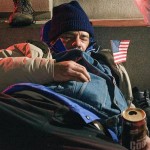
In the United States approximately 130,000 and 200,000 homeless veterans existing in the streets on any given night. According to the National Coalition for the Homeless, that represents in the area one quarter of all homeless individuals. While veterans comprise just of 1/3 of the total US population, homeless veterans comprise 43% of all homelessness. That figure doesn't cover those who are able to obtain short term temporary shelter. To make matters worse, the Veterans Administration predicts that at least 400,000 veterans will experience homelessness during the years.

Ninety seven percent of homeless veterans are men. 46% are 45 years of age or older with 41% being between the ages of 30 and 50. While just 3% of homeless veterans are women, they are more likely to be married and to suffer from some sort of mental illness. 46% are white males while 45% are black or Hispanic. 47% are Vietnam Era veterans; 15% are pre-Vietnam while 17% are post-Vietnam. 67% served three or more years in the military while 89% earned a Honorable Discharge. 85% have a high school diploma or GED compared to just 56% of the general population. Lastly, and more tellingly, 76% of all homeless veterans suffer from drug, alcohol, and/or mental illness; of these, many are unable to get or keep the help they need as a result. 18% of all adult suicides are a veteran.

In terms of general demographics, there are approximately 18.5 million veterans in the US today with three states, California, Texas, and Florida have over one million veterans each. 1.6 million of these are women. 6.7 million are Vietnam War veterans. 78% of all veterans are white, white 11.6% are black. 6.1% are Hispanic and 1.6% are Asian. 0.7% are Native American with the remainder being some other race. There are 4 million service connected disabled veterans (including yours truly).

Veterans Day grew out of Armistice Day which marked the end of World War One. Of the 4,743,826 Americans who served in that war, none are alive today. Of the 16 million US service personnel who served in World War II, only 496,000 remain (they are all in their 80's or older), and we're losing around 348 every day. Let that sink in for a minute or two. Those young men and women you see in those documentaries are all in their 80's and 90's. They were the "Greatest Generation" in every sense of the word, and yet we're losing them at a rate of just over 14 "heroes" (in my opinion) an hour...of every single day.

Let's look at another interesting figure for a moment. There has been a few politicians of late calling for or encouraging violence while blaming the other side for not being "civil". The result has been a serious increase in acts of violence and intolerance of differing opinions. In some cases, there have been threats of physical harm (or death), acts of vandalism, mass shootings, and so forth. In short, the US is starting to look like the era just preceding the Civil War. In fact, historians and political scientists will tell you that American is more broadly and more deeply divided at any time since the late 1850's. We are being divided at every possible point while politicians and various faux groups are fanning the flames (thank you Citizens United). Do we really want that; another Civil War? I don't think so.

A lot of Americans don't realize that the Civil War (1861-1865) was the bloodiest war that the US has ever fought. The Korean war cost 36,516 American lives. The Vietnam War took 58,209. WWI claimed 116,516 souls, while WWII resulted in the deaths of 405,399 American servicemen and women. Yet, the American Civil War, which ended over 153 years ago, still holds the record with 620,000 died, not including those who died of disease or injury later, and we are still feeling ramifications from that war all these years later. We're suddenly seeing the destruction or defacing of monuments and memorials, the removal (and prohibition) of Confederate flags and symbols, as well as the dropping of mascots and changing of school names, streets, and the rewriting of American history all in the name of political correctness.

Why, after all these decades and all these generations is this happening? It wasn't an issue at the end of the war when feelings were running high. It wasn't an issue during Reconstruction. It wasn't an issue when the 13th Amendment was enacted. It wasn't an issue during the Spanish-American War, World War One, World War Two, the Korean War, or even Vietnam. It wasn't an issue during the Civil Rights Era, with the Freedom Riders or any of the great Civil Rights leaders, during the Watts riot or the Chicago Police Riot of 1969. It wasn't an issue during the latter 1960's or 1970's either. It wasn't even an issue during the mid 1970's and forced busing. In fact, by the late 1970's race relations were actually pretty decent overall.

The point, of course, is that these calls for violence, intolerance, restrictions on free speech (not everyone's, just certain groups and individuals), protests, vandalism, all organized and paid for by shadowy political organizations, the media, and various politicians, have the potential to ignite a war which would surpass the Civil War. Do we really want that? So far, the ideological Right and Center have been very quite while the far Left has been on "hate-fest". These are mostly naive young adults who are full of themselves and determined to impose their views and ideas on everyone else, even if it means various forms of domestic terrorism, all dressed in their black hoodies and hiding behind masks. Aren't they just the cutest?

The corporate owned media seems intent on encouraging them while downplaying or ignoring their actions. That doesn't mean the Right gets off scot-free. They too have been engaged in name calling like accusing the Left of trying to impose "socialism" or Communism which is utter nonsense. As anyone who's bothered to read a history book knows, "socialism" and Communism both prohibit Capitalism, with the rich usually murdered. Now, what do you think the chances of Wallstreet folding are? What do you think the chances of America's ruling financial elite suddenly and willingly giving up their wealth, the power, or their control are? Yeah, see my point?

At the same time, the Left likes to call President Trump "Hitler". Anyone on the Right (or whom they disagree with) for that matter a "Nazi", which is just as silly. They also accuse anyone they disagree with as being a "Fascist", yet they are the ones engaging in Brownshirt behavior. However, even if it were slightly true, then they wouldn't be any one of them not in prison, in a concentration camp, or simply stood up against a wall an shot. In short, they wouldn't be afforded the opportunity to peacefully protest or verbally attack anyone.

America is, as you know by now, an Oligarchy whose ruling elite are a small percentage of very wealthy individuals and corporations. Their goal is control pure and simple. They already control business, the media, the government, both political parties and their politicians. They use the US military as their personal enforcers to ensure governments and groups fully "cooperate" and that everyone remains on the Petrodollar which keeps the US economy afloat. What they need from us is chaos. They need to divide us every way possible and to create a situation to bad that we demand the government "do something", and trust me they will, but not in the way you hope or expect.

In truth, we are in a new war. Not quite a Marxist "class" war, or a race war. It's not a gender war, or one of religion, a war to subvert our laws, or even of "American" vs. "non-American". It's a war to fictionalize us at every step; to break our moors from family, Faith, community, ancestral, regional and even national pride until we have no one left to turn to but the State. The State will provide for us, protect us, educate us, nurture us, and even bury us. All is requires is our obedience and submission. To put it another way, the Left wing of the ruling Oligarchy wants to impose a softer and kinder form of Fascism with us becoming their serfs. The Right wing of the ruling Oligarchy wants to impose a more restrictive form of Fascism with us becoming their serfs. See the difference?

The war were engaged in now, whether we acknowledge it or not, is for the present and future of America; whether we return to a Constitutional Republic or continue down the road to some form of Fascism (for comparison, read up on the late Roman Republic). 82 million Americans gave their lives for our freedom. Countless others have given their minds and bodies. Many more struggle through their own private hell. We should honor them on more than just one or two days a year. We owe them this country and our freedom for all they've done. Don't let a handful of greedy individuals, politicians, and special interest groups take it away from them...or us.


IG report: 300,000 Veterans Died While Waiting for Health Care at VA

Inaccurate VA wait times preclude thousands of vets from getting outside care, probe finds


National Coalition for the Homeless: Homeless Veterans


National Coalition for Homeless Veteran: FAQ About Homeless Veterans

Friday, May 28, 2021

Memorial Day: Remembering Our Nation's Fallen Heroes

What does Memorial Day mean to you? As a disabled veteran, Memorial Day means a number, 400,000, and what it symbolizes. That's how many people are buried at Arlington National Cemetery. The ground where these brave men and women are buried was once the property of Mary Anna Custis Lee, the wife of Confederate General Robert E. Lee and great granddaughter of Martha Washington. It was seized by Union troops near the end of the Civil War and was used as Union headquarters.

The property of George Washington's step great granddaughter was turned into a cemetery for the Union dead in June 1864 to both bury their dead and in order to prevent General Lee's family from ever returning home. It became a national cemetery in 1883. Arlington National Cemetery is also the final resting place of 5,000 unknown soldiers from this nation's many wars.

About three million people visit Arlington National Cemetery each year to see the simple white marble headstones lined up in perfect row upon row. Beneath each unassuming headstone lays men and women from every war and conflict. At Arlington rank, title, or social status means nothing. Neither does their race, religion or politics. Nothing speaks "equality" like death. But once many were famous; people like Audie Murphy, Lee Marvin, Thurgood Marshall, Robert "Bobby" Kennedy, President John F Kennedy and Jackie Kennedy Onassis, Medgar Evers, Lt. Colonel Virgil "Guss" Grissom, Admiral William "Bull" Halsey, and Ira Hayes.

 Yet, for every name you might recognize, there are thousands upon thousands of everyday men and women who were far from ordinary. Arlington National Cemetery is also the location of the Tomb of the Unknown Soldier (also known as the Tomb of the Unknowns), a tribute to the dead of World War I, World War II, the Korean War, and the Vietnam War, which was originally dedicated in 1922.

Did you know that Memorial Day was first commemorated 1861 in Warrington, Virginia to honor the Confederate dead?  In 1862, the women in Savannah, Georgia followed suit in honor of their Confederate dead. In 1863, this was extended to include all those who had died at Gettysburg. 

Later, after the Civil War had come to an end, the United Daughters of the Confederacy, which had evolved from the Ladies Memorial Association, established chapters throughout the South in which to honor and remember their war dead. This was known as "Remembrance Day", though  a few states called decided to call it "Memorial Day".

In 1868, the practice which had started at Gettysburg, was increasingly adopted throughout all the Northern states. In July 1913, surviving members of the North and South gathered again in Gettysburg. This wasn't the time to fight, but to remember and honor those who had died in what was the bloodiest war in American History; a war which claimed over 500,000 lives. By contrast, World War II costs 405,399 US lives while Vietnam claimed 90,220. Compare that to Afghanistan, our longest military conflict at 20 years, which has seen a loss of 2,305 service personnel.

Thus, what had started off as a day to remember the Confederate war dead, had become the public act of remembering all of our nation's war dead. Although generally known as "Declaration Day" for all the flowers, ribbons, and banners starting around 1882, people gradually returned to the name, "Memorial Day", which had become the most common by the end of World War II. So, in 1967, the "Day of Remembrance" and "Declaration Day" were officially changed to "Memorial Day".

In addition to remembering all those who sacrificed their lives for this country, let's also not forget that we lose, on average, 20 veterans a day to suicide, often as a result of post-traumatic stress disorder (PTSD), service connected injuries (especially among post active duty disabled veterans). That's about one suicide every hour of every day. Most are between 55 and 74 years of age. The states with the highest rates of suicide are Texas and Florida.

 Some find they are unable to cope with the memories and nightmares of war, or from their injuries and the constant pain. Many are divorced, or struggled to hold on to a job. Some turn to drugs or alcohol.  There are approximately 180,000 veterans now serving time in prison or jail. Ultimately, they see no way out but to take their own lives.

We also need to remember that on any given night there are an estimated 40,000 homeless veterans living on the street. Homeless veterans make up just under 10% of all homelessness. 57% are white while 26% were black. 85% are listed as non-Hispanic. The rest are multiracial. Approximately 89.5% are men. The states with highest number of homeless veterans are California, Florida, Texas, and New York, but every state and nearly every community has homeless veterans or those with temporary shelter.

My generation, the Babyboomers, has witnessed the passing of the last veterans from the Spanish-American War, World War I, and with an average of 245 World War II veterans dying each day, we'll likely to see them last of them pass by 2043 according to VA statistics. Veterans of the Korean War aren't far behind.

 We are also the Children of the Cold War.  We witnessed the assassination of the Kennedy Brothers and Rev. Martin Luther King Jr, the Watts Riots, the anti-War Movement, the Civil Rights Movement, the Bay of Pigs fiasco, the Cuban Missile Crisis, as well as the landing on the moon. Many of us fought in jungles of Vietnam, Laos, Cambodia, the Tonkin Gulf, while others were Freedom Riders or marched in streets to fight another war. Some burned draft cards. Some burned bras, while some burned churches.

 Some of our parents recall the Great Depression and witnessed the lost of the last veterans of the Civil War. Many may even remember their fathers, uncles, or perhaps older brothers going off to war in the Pacific or Europe or their mothers working long grueling hours in factories to keep the country going and their family together. Thank you to all those faceless "Rosies" who are still here and who have passed. Meanwhile, our parents, while still children, would gather scrap or do whatever they could to help out.  We were all in it together.

 We, as a People in this still young nation, have witnessed and endured much. We owe much to those who sacrificed their hopes, their dreams, and their tomorrows for our sake and that of our children and their children. Memorial Day should be a day where we come together not just with family or friends, but also as a nation to remember those who gave everything for this nation and our freedoms; freedoms which are now under attack from many corners both outside and inside this great country of ours. We should also remember those who are still fighting their own personal wars---the homeless veteran, those who suffer daily with their injuries, and those who battling their own demons.

 Lastly, as I do on each Memorial Day, I'll end with a very special poem, "In Flanders Field", which was written in 1915 by Canadian Lt. Colonel John McCrae, which was inspired by his experiences during the Second Battle of Ypres during World War I. The battle lasted from April 22 through May 25th. During that battle, chlorine gas, a deadly airborne poison, was first introduced by the Germans to break the deadlock being fought in the stench of the trenches. That single battle claimed the lives of over 112,156 young men (their average age was just 19), although we will never be know the exact number, but if we did, it would no doubt be much higher.

John McCrea volunteered to serve as a gunner and medical officer for an artillery unit. Following the battle, which left many of the local towns and villages in smoldering ruins, McCrea was stunned one early morning by how quickly the crimson red poppies had bloomed on freshly covered graves and the eerie silence. I suspect there's a good deal of truth in it since he had just personally bury a close friend, Alexis Helmer, who had been killed on May 2nd. The poem, written then following day, was originally published in 1919. So, without further ado, here is "In Flanders Fields",

In Flanders fields the poppies blow
Between the crosses, row on row,
That mark our place; and in the sky
The larks, still bravely singing, fly
Scarce heard amid the guns below.
We are the Dead. Short days ago
We lived, felt dawn, saw sunset glow,
Loved and were loved, and now we lie
In Flanders fields.

Take up our quarrel with the foe:
To you from failing hands we throw
The torch; be yours to hold it high.
If ye break faith with us who die
We shall not sleep, though poppies grow
In Flanders fields.


U.S. Department of Veteran Affairs Report: Veteran SuicideRates By State


United States Military Veteran Suicide


When Will the U.S. Lose Its Last WWII Veterans?


How many Americans have died in U.S. wars?


From Enlisted to Incarcerated: Why Some Veterans End UpBehind Bars


Saturday, June 01, 2019

And Now A Word From Our Sponsors: War and Economics

The great military strategist, Prussian General Carl von Clausewitz, once said, "war is a continuation of politics by other means", and what is politics except trying to secure a better outcome for yourself (or who you represent) than the other person. Of course, it's also supposed to be about compromise, where each side gets at least some of what they want. War is ensuring that your side gets all of what it wants when compromise is unpractical or unnecessary. Let's take the Napoleonic Wars for instance.

What was Napoleon Bonaparte actually attempting to do? Was it the simple conquest of Europe for the sake of grabbing up some great (and not so great) real estate? Was it about tweaking the nose of the British? While certainly a bonus, that wasn't his actual intentions. Nope. Napoleon was about trying to establish a united Europe for the sake of economics. It was all about creating a economic and political union. England's beef was that it would be at the cost of the British Empire. No longer would Britain be the dominant economic power in Europe.

It also didn't take long for many of the other monarchies realized that their hopes of economic success would be affected as well, especially with the French spreading this nonsense about "fraternity, equality, liberty" and all that democracy rot. Beside, not only did it threaten the current economic system, it threatened the existing monarchies and, by creating a more secular society, the power of the Catholic Church as well. Obviously that would not do! And so, Napoleon was eventually defeated and sent off to the Isle of St. Helena to (hopefully) quietly fade away, and with him all the ideals of the revolution.

Unfortunately, that didn't happen and in time, the ideals of the revolution with its "Rights of Man", a secular society, increased democracy, and the growth of the business (and middle class) took hold. Absolute monarchies gave way to constitutional monarchies and democracies grew, and along with it an industrial revolution. In the colonies across the "pond", a sense of personal and economic freedom had also begun to germinate earlier. Eventually, they--that is, "we"---decided that we would like to govern ourselves thank you very much. We also didn't care much for the tariffs and taxes being imposed. So, we too had our revolution, which was as much about taxation as it was over self-governance which, of course, had everything to do economics!

World War I had everything to do with economics. At least as much as it did about Serbian independence and the assassination of Austrian Archduke Franz Ferdinand and his wife, Sofia. While their murders were the spark, it was the interlocking economic and political system set up in post-Napoleonic Europe, as well the rising economic threat to the British and French empires by the German Empire as anything.

Its outcome resulted in the infamous Versailles Treaty which pinned the blame for the war on Germany while stripping it economically and militarily. Germany lost vast lands to the west, north, east (which also separated Germany from Prussia) and all of it colonies (the majority of which going to Britain and France). It lost its industrial heart---the Ruhr and Saar---while forcing huge reparations on Germany with no means of paying. In total, gone was 13% of its territory in Europe and one-tenth, or 7 million, of its citizens. The German imperial government was toppled, and its military emasculated. No air force. A 100,000 strong army. The surrender of its surface fleet with severe limits on any new ships (including merchant) and no submarines. Its world famous General Staff was disbanded while any research was strictly curtailed.

Germany's fragile new democratic Republic faced repeated social unrest and revolution. Assassinations were almost commonplace. With the hyperinflation of Depression nearly wiping out the upper, middle, and lower middle classes, the stage was all but set for the Second World War. Meanwhile, the Ottoman Empire had collapsed. The Austro-Hungarian Empire imploded, and Imperial Russia was overthrown by revolution and its ruling family, the Romanovs, were executed. As an aside, France and Britain benefited from the fall of the Ottomans, and divided up its lands in the Middle East, which, based on economics, arbitrarily created the nation-states we have there now not to mention much of our current problems since no respect was paid to tribal alliances, traditional boundaries, or opposing Islamic sects.

The new political, military, and economic realignment completely changed international relationships. Germany's former key trade partner, Russia, was now a Bolshevik nation opposed to the West. The US, thanks to its involvement late in the war, catapulted to the center of the world stage now that both France and Britain was weaker, despite their economic gains, having nearly bled to death on the battlefields of Europe, and Austria-Hungary was no longer a world power. Everything was different.

World War II was also all about economics, albeit along with other factors such as racism. Germany wanted to become a world power again, which meant reclaiming more than lands lost through the Versailles Treaty. Specifically, it was the conquest of western Russia and the Ukraine for "Lebensraum" or "Living Space" for the German People. Britain and France faced increased troubles in their colonies as the locals demanded more independence and share of their country's economic wealth. Japan too wanted a piece of the action. It was rapidly industrializing, however, it was resource poor.

As a result, it sought to form the "Greater East Asian Co-Prosperity Sphere", in order to create something of an All-Asian economic alliance of, by, and for Asians with Japan at its center. At least, that was its justification for its military expansion in the Pacific. Even Italy wanted to recreate a version of the Roman Empire. As for the United States, we had been active in Latin America, not so much for actual conquest of land, but for ensuring US corporations could operate freely there and without any undo interference from the pesky locals.

Fast forward 1956, and the war in Europe and Asia is over. Europe was laid waste and the US "Marshall Plan" (along with the Berlin Airlift) had kept the Europeans out of a new Dark Ages. Japan was rapidly rebuilding its economy, turning former planes, tanks, and ships into cars, radios, and VCRs. The Korean War was a draw, despite a massive loss of life on all sides. Independence movements were blossoming everywhere, including the birth or rebirth of new nations. The Age of Empire was quickly fading, and the new kid on the world stage was the US, but we weren't alone. The USSR and Communist China were there too, and each sought to expand their ideological influence, and that meant both arms and money. The Cold War is on. Conflicts, pseudo-wars, and proxy wars spread throughout the world. We now had the Warsaw Pact, NATO, and the Common Market which was to morph into the European Union or EU (ironically, Napoleon's old idea anew). The world also had a defacto single global currency---the US Dollar. However, this wasn't a dollar backed by gold. It was tied to oil and on the "faith and confidence" of the US Government and the strength of the American economy. The one world currency was the Petro-Dollar.

By 1991, the ideology of Marx/Lenin/Mao couldn't compete with the ideology of the "Benjamin's", that is, American led capitalism. The Warsaw Pact broke up and the USSR left with a whimper. In short, instead of outfighting them, we simply outspent them. Sure, China survived, but even it too adopted a limited form of capitalism. Communist Eastern Europe has adopted the economic system of its once hated enemy, and is doing quite well thank you very much. Europe itself is much more integrated than ever and well on its way to a "United States of Europe".

Now, along came Osama Bin Laden. The "chic sheik" of a wealthy Saudi family in the construction business turned terrorist. Of course, before that, he was "our" freedom fighter opposing the Soviets who had invaded Afghanistan. Bin Laden and his fellow zealots, al Qaeda, had declared war not just on the Soviets, but apparently the US and the West, except no one bothered to notice, and so they embarked on a campaign of ever bolder attacks on US interests in the Middle East; embassies, ships, military barracks, discos, and so forth. Finally came 9/11, and they got our undivided attention and anger.

The prime reason for the attack was revenge for the US and other Western influence in the Middle East, but especially our control over Middle Eastern oil. After all, if it wasn't for the oil and gas, not only would we have little to no interest, but the British and French wouldn't have bothered to interfere the region's politics following the fall of the Ottomans post World War I. Nevertheless, we "interfered" now, and in a big way. Before long, the Taliban in Afghanistan, which had sheltered Bin Laden, was gone and "Arab Dillinger" was on the run.

Meanwhile, Saddam Hussein, an ally in the region, decided to invade neighboring Kuwait. Hussein was a known sadist who had previously attacked the Iranians and the Kurds. He even used chemical weapons. Sure, he was a tyrant, but he was our tyrant. This time he overstepped and his actions affected oil and gas prices worldwide. Soon we were rallying public support and building a coalition to liberate Exxon and BP... err...I mean the Kuwaiti People. He was soon defeated, but left in power and would hopefully resume his preapproved place as a deterrent to the Iranians, and so he did for awhile. He also resumed his attacks on the Kurds for good measure. But, soon he was back to coveting his neighbors oil fields, which I'm sure is a prohibitive commandment somewhere.

With that, his removal started with "shock and awe" and ended with the dull thud of a hangman's noose. At that point, America decided to take a direct hand at running Iraq, albeit with a cast of puppets which would make Jeff Dunham proud. Of course, the having proved to be more difficult than the wanting, and without Saddam's iron glove, the genie of religious fanaticism was released in the form of ISIS/ISIL, Al Shabaab, Boko Haram, and dozens more. It wasn't long before most of al Qaeda's leadership and much of its followers had been eliminated, along with its founder, Bin Laden. In the interim, civil war had broken out in Syria, and we were doing more than rooting for the anti-Assad "freedom fighters" (in Iraq and elsewhere, they were terrorists. In Syria, they were freedom fighters). The reason is partly Syria's oil and gas; partly because they're Russia's key regional ally; and partly because it would make for a great staging area to launch an attack against Iran, which has been a thorn in our side since 1979 and the overthrow of the Shah and the US Hostage Crisis.

Despite numerous claims, albeit false, of "chemical attacks" by Assad's forces (they were actually carried out by our pseudo-allies, ISIL, in Syria, public support just wasn't there no matter how much the media spun the story. So, now the war is all but over and Assad is still in power. Iran continues to make threats against "Big Satan" and "Little Satan" (that's us and Israel). Iraq is stable...more or less...though US troops remain despite promises of coming home.

Europe is under invasion from "migrants" from the Middle East and Africa, which has done more than destabilize an economic and social system which has worked well since the end of World War II. It is on track to replace the native populations within the next couple of decades. Gone will be European culture, its social norms, values and traditions, and even its Judeo-Christian based religions.

Europe's politicians have more than proven themselves to be spineless cowards and traitors to European history and culture. They have had the audacity to try and make criminals out of the victims---the European People themselves. Nevertheless, those who wield the real power; the world's ruling Oligarchs couldn't care less as long as the wealth flows. Their interest is in control. Nothing else matters.

In America, we too are under invasions from economic migrants from Latin America. Our ruling Oligarchy could equally care less. To them it means more competition for jobs, which translates to lower salaries and fewer benefits. It's also an opportunity to attack traditional US ideals such as free speech, the 2nd Amendment, traditional family values, secure borders and the very notion of national sovereignty.

Of course, this makes perfect sense. They think and operate in a world made up of economic markets and trade zones. Borders and nations mean nothing to them. They're outdated notions from a bygone era. Their goal is control and compliance. If it means creating short term chaos in order to obtain long term economic stability in order to generate maximum profits, then so be it.

Besides, war is useful. Even the threat of war is profitable, especially if it forces open new markets, accesses new resources, or ensures compliance by governments. If bribery, threats and sanctions don't work and war becomes necessary, the public can easily be convinced of its patriotic duty. Meanwhile, the selling of weapons is a multi-billion dollar business. It artificially stimulates the economy, reduces "excess" population and thus lowers unemployment, and it allows for incursions into freedoms not otherwise tolerated, such a personal privacy. Given enough time, those incursions seem completely normal and acceptable.

Meanwhile, the population is entertained with distractions; distractions about their debt, loss of jobs, lowering of wages, loss of benefits, rising crime, and decline in their quality of life. The corporate media even spins it to make it look all so normal. It tells us what they want us to know, who is to blame...and then a word from our sponsors, we're back to the illusion of our pretend reality.


List of Designated Terrorists Groups


French Revolution

American Revolution

The Muslim Migrant Invasion and the Collapse of Europe


Muslim Invasion of Europe

Trump's Right: It's An Invasion


Saturday, May 25, 2019

Remembering Memorial Day


What does Memorial Day mean to you? For most people, I think it means the "official" start of Summer. It's means that public pools are open (except here in Louisville, where Mayor Fischer plans on keeping them closed; his "punishment" for the Metro Council and the residents of Louisville for shooting down his 300% tax increase to make up for a budget shortfall due to his misspending of taxpayer money, but I digress). For the average American, I think Memorial Day means cookouts, the start of summer vacations, a long weekend, the ending of another school year, and spending lots of time outdoors doing yard work or gardening.

For me, Memorial Day means 400,000. That's how many people are buried at Arlington National Cemetery. The land where these brave men and women are buried was once the property of General Robert E. Lee. The estate was originally owned by George Washington Parke Custis, the adopted grandson of George Washington. His daughter, Mary Anna Randolph Custis, married General Lee. It was seized by Union troops near the end of the Civil War and was used as Union headquarters. It was turned into a cemetery for the Union dead in June 1864 in order to prevent General Lee from ever returning to his family's home. It was later turned into a national cemetery in 1883. Arlington National Cemetery is also the final resting place of 5000 unknown soldiers from this nation's many wars.

On average, about three million people a year come to visit Arlington Cemetery; to see the white marble headstones lined up in perfect row upon row. Beneath each headstone lays men and women from every war and conflict. At Arlington rank, title, or social status means nothing; death treats everyone equally. However, some were well known in life like Audie Murphy, Lee Marvin, President John F Kennedy, Medgar Evers, Lt. Colonel Virgil "Guss" Grissom, General George C Marshall, Joe Lewis and Senator John Glenn. But for every name you might recognize, there are thousands of everyday men and women who were anything but ordinary. It is also the location of the Tomb of the Unknown Soldier (also known as the Tomb of the Unknowns), a tribute to the dead of World War I, World War II, the Korean War, and the Vietnam War, which was originally dedicated in 1922.

Some of you may not know that Memorial Day was first commemorated 1861 in Warrington Virginia to honor the Confederate dead. In 1862, the women in Savannah Georgia followed suit in honor of their Confederate dead. In 1863, this was extended to include all those who had died at Gettysburg. Later, after the War between the States had concluded, the United Daughters of the Confederacy, which had evolved from the Ladies Memorial Association, established chapters throughout the South in which to honor and remember their war dead. This was known as Remembrance Day, although in some states it was called Memorial Day.

In 1868, the practice which had started at Gettysburg, was increasingly adopted throughout all the Northern states. In July 1913, surviving members of the North and South gathered again in Gettysburg. This time it wasn't to fight, but to remember those who had died in what was the bloodiest war in American History. A war which claimed between 620,000 and 850,000 men. By contrast, World War II was responsible for 405,399 US lives.

Nevertheless, the act of remembering the nation's war dead was firmly established, though generally known as "Declaration Day" for all the flowers, ribbons, and banners starting around 1882. Gradually, more people returned to the name, Memorial Day", which had become the most common name by the end of World War II. So, in 1967, the Day of Remembrance and Declaration Day officially became known as Memorial Day.

In addition to remembering those who gave their lives for this country, lets also not forget that we are losing on average 20 veterans a day to suicide, often as a result of post-traumatic stress disorder (PTSD), service connected injuries (especially among post active duty disabled veterans). Some find they are unable to cope with their experiences in combat or with their injuries and turn to drugs and alcohol.
Also, we need to remember that on any given night there are an estimated 40,000 homeless veterans on the street. Homeless veterans make up just under 10% of all homelessness. 57% are white while 26% were black with the rest being multiracial. 85% are listed as non-Hispanic. Approximately 89.5% are men. The states with highest number of homeless veterans are California, Florida, Texas, and New York, but every state and nearly every community has homeless veterans or those with temporary shelter.

My generation, the Babyboomers, has witnessed the passing of the last veterans from the Spanish-American War, World War I, and with an average of 372 World War II veterans dying each day, we'll likely to see them last of them pass as well. We are also the Children of the Cold War, and of Vietnam. We witnessed the assassination of the Kennedy Brothers and Rev King, the Watts Riots and social unrest, the anti-War Movement, the Civil Rights Movement, the Bay of Pigs fiasco, the Cuban Missile Crisis, as well as the land on the moon. Some of our parents recall the Great Depression and witnessed the lost of the last veterans of the Civil War. They may even remember their fathers, uncles, and perhaps older brothers going off to war in the Pacific, in Europe, or in Korea. We, as a People, have witnessed and endured much, however, we owe much to those who sacrificed their hopes, their dreams, and even lives for our sake and that of our children and their children.
Memorial Day should be a day where we come together not just with family or friends, but also as a nation to remember those who gave everything for this nation and our freedoms; freedoms which are now under attack from many corners both outside and inside this great country of ours. We should also give thanks to those who are still fighting their own private war---the homeless veteran, those who suffer daily with their injuries, and those who are struggling to overcome their own demons.

Lastly, as I do each Memorial Day, I'll close with a very special poem, "In Flanders Field", which was written in 1915 by Canadian Lt. Colonel John McCrae, which was inspired by his experiences during the Second Battle of Ypres during World War I. The battle lasted from April 22 through May 25th. During that battle chlorine gas, a deadly poison, was first introduced by the Germans to break the deadlock being fought in the stench of the trenches. The battle claimed the lives of some 112,156 young men (the average age was 19), although the exact number will never be known, but if it were, it would no doubt be much higher.

John McCrea volunteered to serve as a gunner and medical officer for an artillery unit. Following the battle, which had also completely leveled some of the local towns and villages, he was stunned one early morning noting how quickly the crimson red poppies would bloom on freshly closed graves and the eerie silence according to one story. I suspect there's a good deal of truth in it since he did personally bury a close friend, Alexis Helmer, who had been killed on May 2nd. The poem was originally published in 1919. So, without further ado, here is "In Flanders Fields",

In Flanders fields the poppies blow
Between the crosses, row on row,
That mark our place; and in the sky
The larks, still bravely singing, fly
Scarce heard amid the guns below.
We are the Dead. Short days ago
We lived, felt dawn, saw sunset glow,
Loved and were loved, and now we lie
In Flanders fields.

Take up our quarrel with the foe:
To you from failing hands we throw
The torch; be yours to hold it high.
If ye break faith with us who die
We shall not sleep, though poppies grow
In Flanders fields.


Memorial Day

United States military veteran suicide

How many homeless veterans are living in the US?


Saturday, May 27, 2017

Remembering to Remember Memorial Day

Here we are again. Memorial Day weekend. To many people Memorial Day signifies the end of another school year, graduations, plans for college or getting a job, sunscreen, bug spray and of course, the start of Summer along with what all that it entails. However, I think we tend to leave out one very important ingredient in all the usual festivities---those men and women who gave their all--literally---for this country. Memorial Day is, in fact, the day our nation sets aside to remember those who have fallen in service of this nation and the ideals which it stands for.

As those of you who know me should already be familiar, I served in the United States Navy (often somewhat affectionately called "Uncle Sam's Yacht Club") during the mid 1970's. I am also a lifetime member of the Disabled American Veterans, and I've had the privilege to serve, both in the Navy and in the DAV, with some pretty remarkable individuals (a friend of mine describes the DAV as a club nobody wants to belong to but still needs). While serving in the Navy I got to do things I would never have imagined. I met and worked with men and women for all walks of life and from just about every single state in the nation, plus places like the Philippines, Israel, Egypt, Iran, Iraq, Qatar, Saudi Arabia, Kuwait, Germany, England, Canada, and many more. In the DAV, I've had the honor to work with some equally incredibly amazing people, including a unassuming fellow who stood guard at Spandau Prison in Post-War Germany over such individuals as Albert Speer and Rudolf Hess. He then went on to serve in Korea and in Vietnam and was gravely injured.

There was another individual; short in stature and as humble as they come. He was born in Hungary in the early 1930's. However by the time he was about 9 or 10, he was fighting to survive in a concentration camp called Bergen-Belsen. After the war and his liberation (and learning that none of his family had survived), he was transfer to a British internment camp on the island of Cyprus. Later, he was one of the lucky few allowed to immigrate to the British Protectorate of Palestine just in time for David Ben Gurion to declare independence from Great Britain and the establishment of the State of Israel. He went to fight in that war, and even had the opportunity to serve as a driver for, now, Prime Minister Ben Gurion. After the war, he emigrated to the US to start over. No sooner than he got himself settled in, he was drafted in to the US Army, where he served in Korea and in Vietnam, where we was severely wounded. An extraordinary life if there ever was one.

There has been many others, most of whom fought in either the Korean or Vietnam wars; several in both. There military honors and ribbons they wear are impressive. However, what I've found most impressive is just how unassuming most of these men and women are. You would never suspect that the frail quiet guy in the corner took out several bunkers and saved the lives of his fellow soldiers, and in the process lost his arm. Or the woman cracking jokes was a combat nurse who was nearly blinded while she help evacuate the wounded during a mortar attack. Then there's the guy setting with some of his pals who lost part of a hand when his ship was attacked and sunk and he had to spend almost a week floating in a slowing sinking rubber raft in the blazingly hot South Pacific Ocean with no fresh water or food, and watching his fellow shipmates slip beneath the water either as a result of exhaustion, loss of hope, or sharks looking for an easy meal. I can't imagine the nightmares he must still have.

We've also have welcomed veterans of other wars and conflicts like Somalia, Lebanon, Iraq and Afghanistan. I've had the honor to meet several Purple Heart recipients. They are individuals who sustained serious wounds in a combat situation which resulted in the saving the lives of fellow Americans or our Allies. We have had members who were prisoners of war, either held by the Japanese, Germans, Italians, Chinese and North Koreans, or the North Vietnamese. However, there were two men which stood out, at in my mind. Both were about the same age, that is to say in their early 90's. Both were friendly, although one was more outgoing than the other who was a bit---shall we say---cantankerous. Perhaps curmudgeonly might express his demeanor better. Both were non-assuming in appearance, though one dressed like a typical middle class retiree and the other as someone used to working with hands and the soil (you can probably figure out which was which by now). Aside from obviously belonging to "The Greatest Generation", from the looks of them, you would think that underneath they would have little in common. However, they had one thing which bound them forever together in a unbreakable bond. Both were survivors of the Bataan Death March.

For those of you unfamiliar with the Bataan Death March, let me share a few details. Shortly after the Japanese attack on Pearl Harbor, the Japanese invaded the Philippines, which was then a protectorate of the United States (the US acquired it from the Empire of Spain during the Spanish-American War of 1898). The Philippines was under the Military Governorship of General Douglas MacArthur (yes, that MacArthur). Prior to the Pearl Harbor attack, the US General Staff, headed by General George Marshall, had issued a warning to all US Army and Naval bases to be prepared for a possible attack. General MacArthur assured Washington that he was quite prepared. In reality, he wasn't. When the invasion came, US and Filipino troops took a brutal pounding. Although they were able to slow the invasion forces down, they were hopelessly outgunned and out-manned. Gradually, American and Filipino troops were driven back to the Bataan Peninsula while continuing to protect the Manila Bay Harbor as MacArthur was hustled off the island to safety. In the end, they could not stop the overwhelming superior Japanese forces. As a result, US Major General Edward King surrendered to Japanese Colonel Mootoo Nakayana of the 14th Japanese Army. The Battle of Bataan had lasted from January 7, 1942 until April 9, 1942.

The Japanese rounded up the surviving military personal and marched them approximately 110 miles in temperatures up to 110 degrees with little or no water, food, rest, or medical care to POW camps. At one stop, they were herded into unvented boxcars so tightly that it was impossible to do anything but stand. If you to urinate or have a bowl movement, you had to do so right there where you were standing. Along the way, prisoners were ordered to do torturous manual work such as moving rail cars by hand, dig sewage ditches, and repairing roads. Many were ordered to strip naked and given "the sun treatment". Dysentery and disease was rampant. Anyone who stumbled, fell out, or just couldn't keep up was shot on the spot---no questions asked. There were reports on several groups of men being burned alive for no apparent reason. While no firm number is known, it's estimated that at least 20,000 men died during that march. Since the Japanese did not consider the Philippine soldiers are actual prisoners of war, their total death number will never be known. It's estimated, however, to be in the thousands (some reports put it as high as 18,000).

After the war, the overall Japanese commander responsible for the Japanese Army in the Philippines, General Masaharu Homma was charged with Crimes Against Humanity for the abuse and mistreatment of America and Filipino prisoners of war. Found guilty, he was executed by firing squad just outside of Manila on April 3, 1946. Meanwhile, despite pleas of ignorance or "just following orders, Generals Kenji Doihara, Seishiro Itagaki, Akira Muto, Iwan Matsui, Baron Koki Hirota and General/Prime Minister Hideki Tojo were all tried and found guilty by an Allied War Tribunal for the mistreatment and abuse of American and Allied prisoners of war and other Crimes Against Humanity were executed by hanging on December 23, 1948.

So, as you and yours do whatever it is that you do over the Memorial Day long weekend and kick off the start of Summer, remember what this day is actually all about. Remember the men and women who have fallen in the service of this county at places such as Cold Harbor, Bull Run, Gettysburg or the Somme and Argonne, or the beaches of Normandy, Sicily, Bastogne, Saipan, Iwo Jima, Midway, Guadalcanal, as well as Seoul, Inchon, Outpost Harry, Saigon, la Drang, or Khe Sanh. More recently it has been places like the "Highway of Death", Wadi Al-Batim, Baghdad, Anwar Province, and Kandahar to name just a tiny few. It is thanks to them that America has remained safe.

Friday, May 27, 2016

Memorial Day Remembrances

Several years ago, when I was commander of my DAV chapter, we were awarded a special medal of appreciation for our service by a non-profit group who aids veterans. I felt honored to receive the award but slightly embarrassed by the attention as were most of the members in my chapter. But, we smiled politely and accepted the award, complete with the best salute we could manage, and with all the humility we could muster. Afterwards, the presenter, came up to me and wanted to thank me for my service and for being an example of a "true American hero". To be honest, I was taken slightly back; maybe even a little put off by her comment. I smiled and thanked her again for the medal, but politely pointed out that I wasn't a hero. I went on to explain that the bravest---the real heroes---were usually the ones who don't come home. They were the ones who went above and beyond to risk all, not so much for God and Country like in the movies, but for their fellow soldier, shipmate or airman. I doubt any of those mostly young men and women, if they could speak to us now would have ever thought of themselves or their actions as heroic. Real "heroes" are like that. They do the job which needs to be done. That's it.

Noting a bit of disappointment in her expression, I pointed out that I have known a few who I would consider heroes who did make it home. I told her about an acquaintance I had the honor to make on my first day at my new duty station, Naval Station Treasure Island, which was located right in the middle of the San Francisco Bay between San Francisco and Oakland. I was asked to escort an older, somewhat rough looking Senior Chief to a special ceremony being held on the Island. There really wasn't anything special about him I thought. He was of medium height and heavy---solid---built with a slight beer belly; tanned with the usual tattoos in his arms. I could tell that he was quite used to giving orders and expecting instant results. I seriously doubt anything less than perfection would earn you a memorable butt chewing. So, while we were waiting (and to break the boredom), I asked the Senior Chief what the ceremony was all about. It turned out that this was his retirement ceremony. He said that as a boy he had always wanted to go to sea, so he had left home at 16 and lied about his age to join the Navy. After completing boot camp, he opted not to go home for his two weeks leave and instead wanted to go on to his first duty station and do some exploring (by that, I assume he wasn't talking about the usual tourist traps and was more interested in the two legged sights). So, off he went. He arrived on base and reported in; being given a billet assignment at one of the transient barracks. After settling in, he said he took a stroll around the base just to get his bearings and then decided to hit the sack after chow and a quick shower. The next morning, he planned to head off into town to start this two week leave. That day was Saturday December 6, 1941. The place was Pearl Harbor, Hawaii. His life, and the lives of countless others would be forever changed just 10 hours later.

Well, obviously he survived and went on to spend the next 30 years in Navy. He was in nearly all the major engagements, and would later be involved in Korea and Vietnam. After his active duty enlistment was up, he was allowed to join the reserves. But as for all sailors, the day came when it was finally time to disembark from his remarkable career, and there was me sitting next to this remarkable gentleman awaiting the signal to escort him into his retirement. That, I said was someone I would define as an American Hero. I went on to point out that our chapter had two individuals who survived the infamous Bataan Death March, and opted to remain in the military. Both would go on to fight in Korea and one fought in Vietnam. Then there was another individual that most people would take little note of. He was slight, about 5'5" and small built and seemed to keep a tan year around. He was always smiling with a slight twinkle in his eye. He spoke with a slight but undistinguishable accent. As a child of about 9 years old, this non descript individual survived a long brutal march, leaving him an orphan along the way, to the Nazi concentration camp of Bergen Bilsen.

After the war, he was permitted to leave Germany, and having nowhere to go, was sent by the British to the little island of Cyprus, where, again, he was kept behind a fence and barbed wire while awaiting permission to emigrate to British controlled Palestine. After waiting months, he was finally granted permission. He was placed in local kibbutz where he tended crops and look after the animals. However, as he soon learned, danger was just as likely to be two legged as four. Not only was his kibbutz attacked and sabotaged by Arabs, so were most of the other kibbutz's too. It wasn't uncommon to see the crops destroyed or the animals set free or simply killed. Sadly, it wasn't unusual for one of the kibbutzniks to be shot at or worse. So, even though he was still a young teenager, he joined the underground (and illegal) para-military Haganah. In 1948, he was called upon to fight in Israel's War of Independence (he also drove around Israel's famous first president, David Ben Gurion).

Shortly after the war (and I assume hoping for some stability and peace) he immigrated to the US and became a US Citizen. It wasn't long before he received a certified letter from the government. It was his draft notice. Despite pleading his case, he belonged to Uncle Sam for the next four years and off to Korea he went. Apparently accepting the inevitable, he decided to make it a career. He would go on to do multiple tours of duty in Vietnam and ultimately was given a disability discharge to go with his 20+ years of service. We also had an individual who was awarded a two star Combat Infantry Badge. Prior to serving in Korea and Vietnam, he did a tour of duty at the Nuremburg Trials and would later serve as a guard over former Reich Minster Albert Speer and Rudolf Hess. He too would received a disability discharge as all of us had.

I went on to point out that we had several others who had equally remarkable careers. These are individuals that I regard as heroes. Each were basically unremarkable men who preformed remarkable acts of courage and valor, much to their own surprise. I went on to point out that those who claim to be "heroes" rarely are. They are usually individuals who, for whatever reason, lack that special something that marks a hero, yet crave the recognition and attention. It's like those who dress up as military, usually complete with a chest full of metals, and show up at parades, malls, or other events and pose for pictures or try to get something for nothing (that is, until they get called out by the real deal and then they scurry away like roaches in the light. These individuals cheapen the honor of those earned their ranks and ribbons and should be called out every time).

So, after listening to my little spiel, I think they went away a little wiser; at least I hope so. But be that as it may, while you are celebrating your long weekend, the hamburgers and hotdogs, the "adult" beverages, the swimming pools, and everything else that goes with Memorial Day, please take a moment to recall all those who sacrificed their youth, their limbs, their bodies, their minds, and all too often, their lives to make your celebration possible. Share it with your children so they will learn too that with freedom comes responsibility and courage.

Saturday, January 31, 2015

Remembrance


I would like to tell you a few stories which I hope you find interesting; perhaps even enlightening. Let's take "Karl". Karl was elderly man of around 70 years of age. He was a plumber by trade and spent his days walking the streets of his small town in search of his next job, which would hopefully earn him enough to pay for his and his wife's next meal, not to mention the rent! Years of a hard work and poor health care had left its mark on Karl. His back was bad, as were his hands and knees. He walked the dirty and smelly streets from sun up until sun down hawking his skills. His clothes were threadbare but always clean, well, for a plumber that is, and his shoes were well-worn hand-me-downs---third time.

But still, Karl was never bitter. He had a loving wife who took in laundry, which she did by hand every day. She also did some mending. On good days, she may get a job cleaning house for a few days while the regular maid was off on holiday. Then one day, Karl came home, extra tired but very proud of himself. He had had a good day---three jobs and the promise of a fourth! Outside the rundown and rat infested hovel which he called home stood his landlord. He stared at Karl with a look of hatred, curiosity, and more than a little trepidation. There had been visitors that day; very special visitors. Upstairs, waiting just inside their door of their apartment stood his wife. She greeted him with tears and a letter. Karl took it and with a quick glance handed it back. Karl couldn't read, but his wife could, a little. The letter, which was very official looking, instructed Karl and his wife to be waiting outside their apartment building promptly at 8:00 AM the next morning. They were to bring just enough clothes for a few days. Their key should be handed over to their landlord for safekeeping. Karl would not be needing his tools.

The purpose of the trip wasn't given, but rumors were that they're going to a special center for evaluation; perhaps to even see a doctor (his wife had been complaining about a bad tooth anyway and maybe someone would be kind enough to look at his hands which were so important in his line of work). Some said it's a resort they were going to, but who would send them---two old miserable wretches to a resort? It must be to a doctor. Maybe he could find some work there too, after all, even doctors have occasional plumbing problems! So the next morning, Karl and his wife waited patiently outside as instructed; having given their landlord their key...and his promise to look after everything (not that there was that much to look after). They didn't have to wait very long...

"Walther" as we will call him was a good man of about 20 years old, though he was what some would call "slow". His mother was an
older woman, way past her prime when she unexpectedly became pregnant and his father, a housepainter, was no "spring chicken" either. Walther was her fifth child; her third son. Walther always seemed different. As a child he could never keep up with other children his age. Often, he would sit in the corner by himself silently rocking himself, or he would go off alone while other kids played. Occasionally, he would sit in the kitchen looking longingly out the window and watching as the others played. They teased him unmercifully, and not just about being slow but about how he looked too. Walther was a different turned child, and a lonely one too.

One day during a routine office visit to the doctor, Walther's mother was told by their doctor that there was now a special place for children like Walther. There are doctors and nurses on site, so he would get good medical care, along with three healthy meals a day and even snacks like oranges or apples. He could be with other children that were like him; it would be an opportunity for him to make friends, and it was free. All that was needed was his referral to a specialist, another doctor; someone from one of the new government health agencies, and of course, the permission of her and her husband.

It wasn't a hard decision to make. Life had been hard, and not just since Walther came along. The economy has been doing badly and there just hasn't enough work to go around, and costs of taking care of Walther's special needs, well that too has been a burden on the family. Besides, the facility the doctor mentioned wasn't that far away and the family could visit every few weeks, and he would finally have friends. Oh, how the boy longed for a friend. So, a few weeks later arrangements were made for Walther. It was a sad trip, but it held so much promise, especially for Walther.

The family visited every few weeks just like they promised to do. Walther was always so happy to see them; happier still to introduce his parents to his latest new friend (although he often introduced them to the same individuals each time, he was happy...truly happy for perhaps the first time in his life). Then, about six months later, his parents received a rather unexpected letter from the government doctor at the special facility. Good news they hoped about Walther's treatments. He seemed to be making such good progress...

Seventy years ago, the notorious death camp at Auschwitz was liberated. It was January 27th, 1945. The liberation was at the hands of Soviet troops advancing from the east. It would prove to be the opening chapter of a unimaginable horror; a blight on not just the German People, or the Nazis, but on all humanity which still echoes today. Some six million Jews, perhaps more, died in these camps---by gas, execution, exhaustion, injection, disease, and starvation. They were experimented on like guinea pigs, and without the benefit of sedatives. They were allowed to feel nothing but raw pain. What most people don't realize today is the Allied leadership, including Roosevelt and Churchill, had known about these camps years earlier through various intelligence reports and smuggled photographs but chose to do nothing.

Prior to the war, the Nazi government shipped hundreds of Jews to both America and South America as a means of "cleansing" Germany, only to be rejected at the behest of the US government. They were returned to Germany where death greeted them at the ports. The Nazi Government has also repeatedly proposed finding them a possible new homeland outside of Europe; places like Ethiopia (Abyssinia), British Rhodesia, and especially French Madagascar were discussed. However, each of these proposals were rejected by the English and French. Meanwhile, Stalin had murdered tens of thousands of his own people, including fellow Slavs, Jews, and gypsies before the war even started.

There's also another story which most people don't know about. In addition to the six million Jews who perished, approximately five million gays, Slavs, political and religious dissenters, and gypsies--mostly Romani---were also murdered. In terms of percentage, the Romani gypsies lost a larger percentage of population than the Jews. But percentages only mattered to the Nazis who kept detailed records of every soul taken--from name and ages to location to the value of gold recovered from items such as jewelry or teeth, or in the amount of reusable leather recovered from luggage, wallets, purses or shoes. Badly needed resources were diverted from the war effort to expedite the delivery of these "undesirables" to concentration and extermination camps. The "Final Solution" was nothing if not efficient.

During the remaining months of the war, which ended in May, 1945, the Allies would push through Germany and occupied lands to liberate others held in these factories of death. For many it would be too little too late. For those that survived, life would begin again, albeit slowly; it would never be as they knew it before. Too many wounds. Too many memories. The once thriving Yiddish culture, with all it sounds and flavors, had all but ceased to exist. Only a remnant would continue to flourish in places like Chicago, Philadelphia, or New York. Of course, there was a certain irony. Had it not been for the persecution of the Jews, there would have been no international push for the creation of a Jewish homeland, but that's another story. As for the gypsies, without a public advocate, they were largely forgotten and faded quietly into the background of history and familiar ways. The others too gradually reintegrated back into society. Those not being able to bear the memories or face those who just a short time before had turned a blind eye to their suffering, simply chose to immigrate and start life anew. At the time of Stalin's death, he was preparing a new purge, which included members of the Jewish population under Russian control. By the time of his death in 1953, Stalin had murdered an estimated 20 million people.

Though the world pledged never to allow something like this to ever happen again, it has; many times over. It's happened in Bosnia, throughout Africa, parts of Asia, and it is currently happening in the Middle East to groups like the Kurds and Syrian Christians, and as before, the world has done little except for the occasional self-righteous admonishment. It has never ceased to amaze me the lengths humanity will go to in order to appease its gods in the name of "love" or "compassion" or racial purity; how many people must be sacrificed before their god is satisfied? Of course, in truth, it's rarely about a god or religion. Those are just handy tools. No less dangerous in the wrong hands than a gun. Ultimately is and has always been about power, wealth, and control. I can't help wondering when humanity will finally grow up. John Kennedy once said "Mankind must put an end to war, war would put an end to mankind".

As for Karl and Walther, Karl and his wife were taken to Auschwitz where the elderly couple were separated and murdered the same day
they arrived. For the Nazis, they were too old to be of any value. Many were murdered using a form of gas call Zykon B which was manufactured by the Bayer Corporation. The letter Walther's parent's received from the government doctor who had befriended them and their mentally handicapped son, read that Walther suffered an seizure and died unexpectedly. In reality, he was euthanized along with his new friends. Apparently, the Nazis didn't believed his life was worth living either. The program to murder those with inheritable disabilities, mental illnesses (which was classified as including so-called "deviant" or non-conforming behavior, depression, homosexuality) or the mentality handicapped was known as Action T4 and funded in large part by the Rockefeller Foundation. Approximately 270, 273 individuals died in this fashion. Not all were murdered however. Some 400,000 were sterilized for reasons like chronic depression or epilepsy. Finally, I would like to point out something else about Karl and Walther. They were relatives of mine, and there were others. I've added two links below which tell the story of two other relatives who faced the Holocaust---the Shoah as the Jews refer to it. One managed to survived. One did not.

We continue to turn a blind eye to what's happening around us. We're too wrapped in our video games and so-called "reality TV" to notice. We're always "to busy" to be involved in our children, our communities or even to vote. We've lost our democratic republic. In its place now stands an oligarchy. What will it take to get us to stop and look up?


Malchen Berlin
http://www.stolpersteine-hamburg.de/en.php?MAIN_ID=7&BIO_ID=1416

The Doctor's House (in German)
https://www.sprockhoevel.de/fileadmin/user_upload/Texte_Stadtarchiv/Das_Doktorhaus_in_Hasslinghausen.pdf


First They Came


In keeping with the topic, I would like to share one of my favorate poems about political apathy. It was written by Lutheran Pastor Martin Niemoller (1892-1984) who was but one of the voices who spoke out against the rise of rise of evil which he saw slowly rising all around him. For speaking out, Pastor Niemoller was arrested in 1937 and sent to first to Sachsenhausen Consentration Camp and then later to Dachau where he was held until being liberated in 1945.


First they came for the Socialist and I did not speak out-
because I was not a Socialist.
Then they came for the Trade Unionists and I did not speak out-
because I was not a Trade Unionist.
Then they came for the Jews and I did not speak out-
because I was not a Jew.
They they came for me and there was no one left to speak for me.

Wednesday, January 14, 2015

The Train to Crystal City: A Another Opinion Book Review

A Another Opinion Book Review:
"The Train to Crystal City"
by Jan Jarboe Russell

World War II, like all wars, encompassed more than just military successes or defeats or the rise and fall of an ideology. Wars impact every aspect of human existence, thus it comes down to the individual and how their lives are impacted in ways where they had little, or more often than not, no choices. So what becomes of those who trusted their country to protect them and instead, betrayed them? What about governments who selectively disregard individual rights out of fears---perhaps real; perhaps not? How does one cope with suddenly being stripped of their job; their school; the friends and loved one and imprisoned for an undefined crime? We've come to expect this of a dictatorship, but what about America?

I had the opportunity to recently review "The Train to Crystal City" by Jan Jarboe Russell. This is the story of just a few of the thousands of lives that, through war, became intertwined in ways that are scarcely imaginable today. These ordinary individuals found themselves thrust upon a world stage, not as bit players, but as set pieces to be used and discarded by events far greater than any of them could comprehend at the time. This is the story of what happens to the American Dream when fear and prejudice are allowed to engulf a nation's soul.

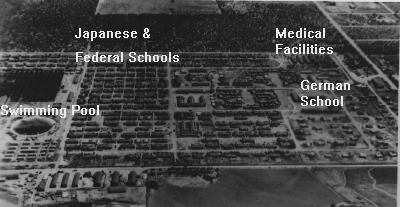
Most of us are familiar with the stories of internment camps which housed Japanese-Americans following the attack on Pearl Harbor on December 7, 1941, but most of us don't know about the Germans and Italians, some of whom having been nationalized and living ordinary lives for years, who were also interned after being stripped of their citizenship. Fewer yet know that many of those imprisoned included their American born spouses and children or that they included individuals, mostly businessmen, kidnapped along with their families by the US Government from various Latin American countries such as Peru or Mexico, and then brought to America illegally, to be held as essentially bargaining chips along with the rest of the internees.

The internment camp in Crystal City Texas was a one of a kind facility designed to hold families and serve to facilitate a secret prisoner exchange program created by President Roosevelt. Its internees would be exchanged, sometimes involuntarily, along with their families and sent to Germany for key personnel, such as downed US pilots or prominent businessmen held by the enemy, and later in the war, for American or non-aligned Jewish nationals held in concentration camps. Then there was those Japanese-Americans who just wanted to go home---not to Tokyo or Yokohama---but to Los Angeles, San Francisco or perhaps Lima and return to their lives before the war who instead found themselves on liberty ships sailing to a devastated and defeated Japan; a Japan their parents did not recognize. As wonderfully told by Ms. Russell, many of the children, who were American born, didn't speak the language of their parent nor understand the culture. In countries where thousands were fleeing and millions were trying to rebuild their lives, these former Americans or Latin Americans were trying to find their way amid rubble, despair, and suspicion.

Then, of course, there were those who benefited from secret exchange like a former baseball pitcher and pilot who was shot down over Germany and lost a leg, exchanged for an internee and found a new life back home in America, or a Jewish girl, who had been interned in the notorious Bergen-Belsen concentration camp along with her family, and managed to obtain a forged passport from Ecuador, exchanged for an denationalized German and his family at the last minute, but then left stranded in Algiers awaiting changes in a government policy that would allow her to complete her journey, while her family remained stuck in a Swiss hospital thousands of miles away.

These stories are as compelling as they are compassionately told through Ms Russell with each turn of the page; many of their stories having never been told until now. Thanks to Ms. Russell, we can relive their memories with them; their fears; their anger; their sense of betrayal; and their sense of aloneness and shame as their time behind barbed wire and watch towers slowly changed from days into months, and then into years, and ultimately the bitterness that they faced when they were forced to leave the country they loved so much and return to a world they barely remembered or knew at all. Some would adjust. Some would be broken, but all would carry the weight of their internment.

In the end, "The Train to Crystal City" is a story that every American needs to know. As hard as it is for us to believe some 70 years on, this is a story of people as real as you or I who had to suffer the indignity of imprisonment and loss of nearly everything they held dear for nothing more than being born in a foreign land or looking different. Finally, it's the story of perseverance; of family and the human spirit's ability to overcome hardships. It's also a warning. If it happened once before, could it happen again, and if so, who will its victims be this time?


"The Train to Crystal City" by Jan Jarboe Russell is a must read for anyone interested in American history, FDR, Truman, Eisenhower, German, Japanese, or Italian history, WWII history, Constitutional law, philosophy, human or civil rights or civics. I could easily see this book in every high school or college library.