Showing posts with label Conservative. Show all posts

Friday, November 29, 2024

Can Donald Trump Really 'Clean House' As Promised?

Donald Trump's thumping of Vice President Kamala Harris has sent shivers down the spines of not just the Democrats, but the Status Quo as well. Trump's election is seen by his supporters as four years of long overdue house cleaning; of ridding the government of corrupt oligarchs and wealthy insiders who've turned our Republic into a neo-fascist corporatocracy, albeit  with a thin veneer of democracy. The question facing Trump and the American People is whether he or anyone else can rid the nation of this virus and restore America?  

According to the 2024 World Population Review's publication of the world's oligarchies, there are twelve full fledge oligarchies plus several which are approaching the definition of oligarchy, but before we get to those countries, just what is a oligarchy?

The term comes from the Greek meaning "rule by the few" . An oligarchy  is sometimes referred  to as a plutocracy or a kleptocracy, which are actually subsets of an oligarchy.  A plutocracy is rule by the rich. So is a kleptocracy, which means rule by a few to steal their country's resources for their own benefit. A aristocracy or theocracy are types of oligarchy.

The ideal form of government for a oligarchy is authoritarian or feudal, although they can exist, at least for a while, in a democratic style Republic, be it a parliamentary system or a "winner-take-all" system like the U.S. has. They typically expand their reach through a process known as "gradualism". They advance a little here, maybe retreat slightly (and temporarily) there until they have ample influence to achieve their agenda.

Generally speaking, oligarchs are students of history and power. Since their bottom line is all about control,  they typically exert control over the media in order to control the flow and content of information.  Following Joseph Goebbels's dicta on propaganda, the public is feed just enough truth as to bury the lie without much notice. In most cases, the lie simply remains hidden behind euphemisms and red tape. Sometimes, there are no lies at all. The public is often seen as having achieve the occasional "victories" to keep them pacified just as they are kept entertained.
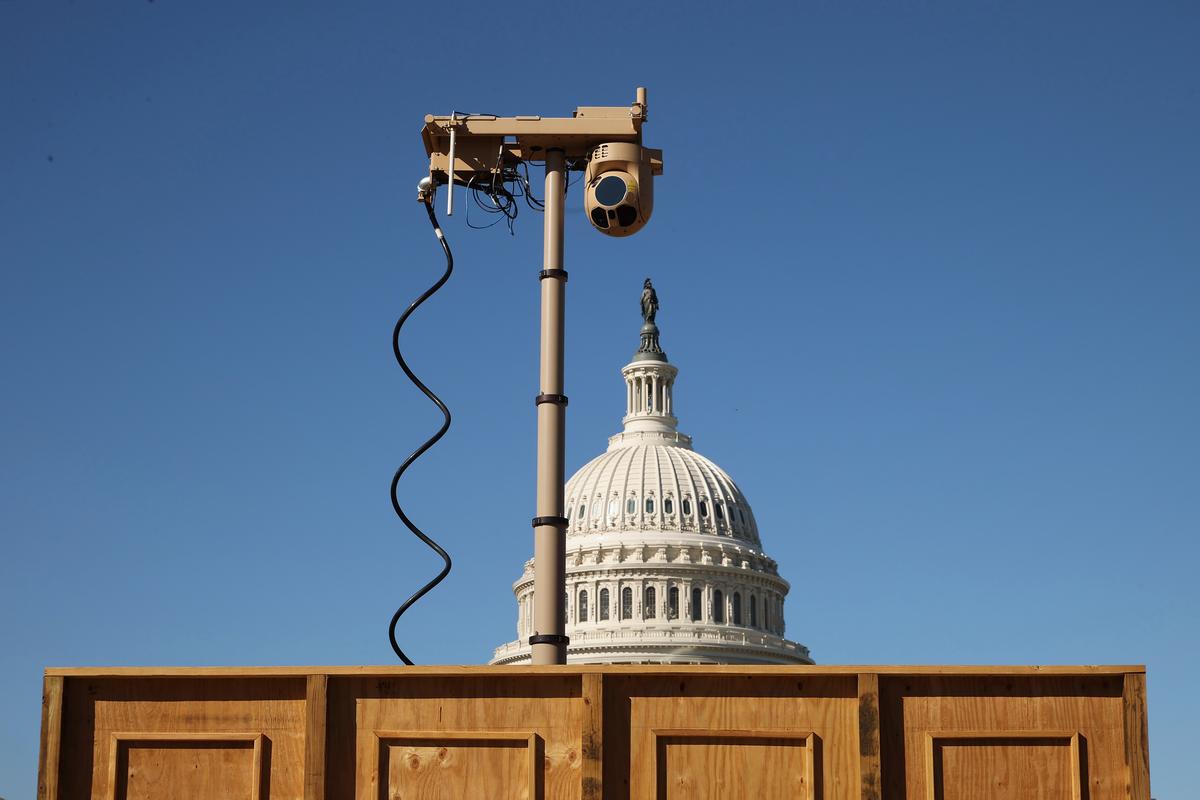
The elite monitors the population through surveillance, which is enforced through the law enforcement, intelligence agencies, secret courts and/or cooperative judges. Individuals who speak out to loudly or reveal their secrets (often falsely labeled as "national security") are accused of treason and dealt with accordingly (Julian Assange, Karen Silkwood, Daniel Ellsberg, Karen Kwaitkowski, and Edward Snowden come to mind). 

 Naturally, they control the nation's monetary policy  in a variety of ways, but most notably interest rates (which affects inflation) and taxation.  The military is used not just protecting the nation, but also as a club to enforce policies which, at their heart, are intended to open markets and access to resources (there is blurring of what's in their interests and the nation's).

Those governments who cooperate, receive various forms of bribery such as ”favorite nation" status and with it, supplemented access to our markets, billions in financial aid and "loans" (which are usually "forgiven" in all or part), and product such as military equipment, grain, fertilizers, etc. (and yet they somehow stay poor and backwards). Many times, direct U.S. military presence is provided to officially protect them from mutual enemies when in truth, they're for propping up the regime and protecting our own investments.

Those who are hesitant or refuse to cooperate face the usual threats of implied force and slow build up of purgative  labels as "undemocratic", "oppressive", "terrorist", and so forth. Gradually, the heat is turned up until a "liberation" invasion is deployed. After which, a new regime and more cooperative regime is installed (historically these tend to be Far Right military juntas).  If any of this sounds familiar, it should.

So, who are these "oligarchic" nations mentioned by the World Population Review? Not surprisingly China is top on the list. Despite officially being a "people's republic", the party control everything. It can make the richest Chinese business person a peasant anytime it wants. The government maintains a significant presence in every business operation.

Russia is another oligarchy which tends to operate more like a kleptocracy. They control every aspect of elections, keenly heeding Stalin's old adage about it not being who voted that's important, but rather who counts the votes. They also have their hands in every aspect of the Russian economy, particularly its oil, gas, infrastructure (like construction) and military.

Iran too is an oligarchy. In this case, a authoritarian theocracy comprised of clerics.  These clerics control nearly every aspect of society, from the economy, parliament, military, education, and media to maintaining a "morality" police which enforces religious laws governing dress, music, food, and social life based on their strict brand of Islamic law. 

North Korea is not unexpectedly an oligarchy under the total control of Kim Jong Un, his immediate family, and the military.  Several Middle Eastern monarchies such as Kuwait, Saudi Arabia, Qatar, Bahrain, and the United Arab Emirates function as oligarchies in varying degrees as well. So do other countries like Columbia, Venezuela, Indonesia, Chad, Laos, and the Congo (amusingly, many of these nations also call themselves "democracies" or "people's republics"). 

Finally, the United States. The U.S. as an oligarchy has been supported by data from various academic studies for several years, although officially it's a democratic Constitutional Republic. That really shouldn't come as a surprise if you know your history. Ancient Rome, which our system of government is modeled on, called itself a "Republic" long after coming under the rule of the Caesars in order to reassure the people while it firmly seized control of the empire. The imperial government functioned as a military junta.  The result of these studies have shown that America is dominated by a relatively small handful of immensely wealthy individuals and corporations.

According to Italian dictator and founder of modern fascism, Benito Mussolini, fascism is a hand-in-glove partnership between the central government and Big Business. He added that fascism was more accurately defined as "corporatism" since that is what it was. However, in his definition, the state was to be the dominate partner. Today, Wall Street is the senior partner. Fascism occupies the same point on the Right that Communism occupies on the Left.

Is Fascism Left or Right wing? We hear that question often these days, especially as WWII fades from our collective memories. Make no mistake, however, those who lived through it had no doubt that fascism was seen as a extreme form of conservatism. Fascism borrows from the Left and the Right to varying degrees based on the history, traditions, and values of a given nation.

Countries with strong religious ties tend to keep or enhance those ties under fascism for instance. Some instituted a racial or ethnic policy. Some didn't. That's why fascism in Italy differed from Germany's, which was different from that of Spain or Hungary, Argentina, Austria, or Romania.  As an example,  Oswald Mosley, a English fascist of the 1930's tried to introduce a brand of Nazism in England, which Hitler, while acknowledging it, disapproved of.

When asked why, Hitler said the National Socialism was organic. It was based on political, religious, and social elements which were uniquely German and therefore couldn't be transplanted elsewhere. Instead, individuals like Moseley or America's Fritz Kuhn, should develop their own unique form of fascism as Italy, Argentina, and Spain had done.

As an aside, many of the reforms which followed WWI and the Great Depression were considered "socialist" such as unemployment insurance, the FDIC, Social Security, and so forth. Not only did the United States enact these and other social programs, so did Nazi Germany, Fascist Italy and Spain, and other Right Wing governments (in fact, almost every country enacted some type of public programs).

Because of the pre-WWI  global political and economic power of Socialism, there was  serious concern among the ruling elites that a revised Socialist Left could potentially topple their capitalist empires. As a result, something called "conservative socialism" came about, albeit amid the gnashing  of teeth and a strong propaganda campaign opposing these "Anti-American" proposals such as wage and hour legislation, the right of workers to organize, the introduction of child labor laws, and workplace safety.

The goal of "conservative socialism" was to protect the capitalist state while introducing changes designed to pacify the people (and, of course, stimulate the economy. Starving or sick workers are useless). This became the bedrock of modern "gradualism" which sought to appease those who provided the labor while leaving the system essentially intact.

So, who are America's oligarchs? That's a hard question to answer since the exact definition is a matter of some disagreement among academics. Some consider those in the 10% or 5% income bracket to be the oligarchy. Many say the top 1%, while a few think it's more likely the 0.01%.

It's this sort integration into society which helps to insulate them from a direct public backlash similar to what befell their predecessors in 18th Century France for instance.  But one thing for certain, it's not the average U.S. taxpayer and voter who calls the shots. We're merely given the illusion. This is our "Matrix". Today's government  serves the interests of the wealthy, whether that be the top 5% or .01% at the exclusion of the bottom 99%.

Once, names like Rockefeller, Morgan, Mellon, Gould, Vanderbilt, Ford, Hearst, Rothschild, and Carnegie were synonymous with near absolute wealth and power. They bought presidents and prime ministers, congressmen and lords, judges and generals with the same ease as hiring anyone else who worked for them. Power was measured in railroad tracks, shipping, steel manufactured, newspapers sold, real estate, and of course, the control of money.

 Today, it's corporations such as Exxon, Bank of America, McDonald Douglas, Google, Apple, and Raytheon are among the small clique of entities who call the shots in Washington, but the end goal remains the same---the control of money and with it, the power it brings.  

While names like Musk, Bloomberg, Bezos, and Gates are familiar to us. Less known are names like Miriam Adelson, Ken C. Griffin, Cameron and Tyler Winkelvoss, Peter Thiel, Dick and Liz, Uihlien, Tim Mellon of the Mellon banking dynasty, and they like it that way. It gives them anonymity, which only enhances their power and personal security. In this past presidential election, they donated billions of dollars (Tim Mellon alone donated $100 million dollars), and you can bet it wasn't done out of patriotism.

Money is more than "free speech" and it buys more than just access. It buys power to a degree that the Czars, Emperors, and Sultans once welded. Consultants, advisors, and lobbyists in their employ, directly or indirectly, do far more that make suggestions when it comes to legislation. They help write bills. They review and recommend how to vote on legislation. They help move bills they're interested in through the maze of committees. They fund public pressure ("awareness") groups to promote issues of interest to them, including linking with legitimate groups.

They have a major impact on creating foreign and domestic policy. Of course, they compete with others elites. It's all part of the game of power, and we're a part of their game whether we like it or not. It creates the illusion of a competing political duopoly. As the famous Louisiana Governor, Huey Long, once said about the Democrats and Republicans, "one skins from the ankle up and the other from ear down.

That's the only real difference in the two parties. We are their pawns to be played and sacrificed with the ease of sipping a martini. In exchange, we're periodically given an incidental crumb from their thrones which are then hailed as some sort of victories for the public by the media they own.  

This is not the nation our Founding Fathers intended, but it is the nation we allowed to come into being. Whether Trump, his cabinet, or his mass of supporters can change this remains to be seen. Historically, those who get to close are bought off, co-opted, stalled, defeated and demoralized before being shuffled off History's stage, or simply removed from the game altogether.  Trump knows the game well. He's been a player all his life. Let's hope he can prevail. This may be the last time an outsider will ever have the opportunity again.


Thank you for reading Another Opinion! We hope you enjoyed this article and will pass it along. Please don't forget to subscribe. It's free! Lastly, please "like" us on whatever platform you use to read anotheropinionblog.com. It helps beat the algorithms and keeps our articles in circulation. Please find below the links we consulted in researching this article.


What countries have authoritarian governments


List of Whistleblowers


Oligarchy comes to America


Who has joined Trump's team so far?


Oligarchy countries 2024


Bourgeois socialism


Saturday, September 30, 2023

Religion In A Post-Republic America: The Decline of Christianity?


When the populace begins to distrust the institutions upon which society is built, the time is not long off when there will be some sort of change, possible violent or not, but there's little doubt that significant change is on the way. According to several recent polls, trust in our key institutions are at record lows with little data to indicate any significant improvement.

The most fundamental institution affecting Americans is religion. In the preceding generations, one could argue the society, and especially the family unit, revolved around organized religion. According to a Gallup poll, just 32% of Americans said they had a great deal or a lot of trust in religion. 36% said that had "some" confidence while 33% had little or none.

According to the Billy Graham Center at Wheaton College, some 70% to 84% of all churches are seeking a decline in membership. A Pew survey conducted two years ago indicated that the fastest growing religious category in the U.S. was "none". The report also said that if "unaffiliated" was a religion, it would be the largest in the United States.  If the present trend continues, it will reach a de facto majority status by 2070.

However, among those who hold to some sort of faith, non-dogmatic "spiritualism" comprises the largest chunk of the unaffiliated. Of those who adhere to dogmatic Christian religious institution, the Church of Latter Day Saints or Mormons are the fasting growing. The largest growing non-Christian religious institution in the United States is Islam. By 2040, Islam is expected to be the second largest religious institution in America.

As an aside, Mormonism is on track to become the largest Christian religion, the Churches of Christ, Assemblies of God, and the Catholic Church are the runners up. It's worth noting that all three of the Protestant churches and the Catholic churches are considered socially conservative although most are registered Democrat, leaving about one third registered Republican.

Liberal churches on the other hand are showing the fastest decline in membership. Churches regarded as being "liberal" or "progressive", some of which include the United Churches of Christ, Lutheran, Presbyterian, Episcopal, and the Methodists. This is most notably due to their stance on issues like gay marriage and LGBQT rights, abortion, and women in the pulpit. 

The massive increase in immigrants from Latin America as well as Africa and Asia will spur the growth for the Catholic Church in the United States. Whether they will continue to register Democrat while remaining socially conservative remains to be seen. 56% are registered Democrat while 28% are Independent and 14% are Republican, although many are switching to Independent. 

Incidentally, the majority of immigrants---61%---are settling in just five states, Texas, Florida, California, New York and New Jersey. It's worth noting that four of these, New York, Texas, Florida, and California, also have the highest number of Electoral College votes which, in our antiquated "winner-take-all" electoral system, determines the winner of the Presidency and not the popular vote. 

Globally, by 2050 there will be approximately the same number of Muslims as there are Christians. In India, which now has the largest population of any nation, Hinduism will remain the majority religion but not by much. Islam will make up a large minority. In fact, because of the large Indian population, by 2050, there will be more Muslims just in India than in all of Indonesia. In Europe, Muslims will comprise at least 10% of the total population with the majority living in Western Europe.

Buddhism will hold its hold globally and remain about the same size, although its number will grow in the United States. The majority of Buddhists in America are converts, with the majority being white and former Protestant. By 2050, Buddhism will be the 10th largest population group by religion. Buddhism tend to lean Democrat in significant numbers.  

While Judaism, which is predominantly Left leaning in the U.S., will likely grow worldwide, it will no longer be the largest non-Christian religion in the United States. That honor, as stated above, will go to Islam. Politically, however, it will make little difference since they both tend to vote Democrat  with 68% of Muslims and 64% of Jews being registered Democrat. 

It's worth mentioning that while agnostics, atheists, and Humanist currently make up a significant segment of the "unaffiliated" in the United States (as well as in France and Germany), their numbers are projected to decline globally. Folk religion and neo-paganism (such as native African, Nordic and Wiccan)  will also continue to enjoy a resurgence globally, especially in the United States, although their numbers will not keep pace with the growing world population and thus their overall percentages will decline.

In our increasingly technological and sterile world, you would think that religion everywhere would be in decline. Various polls, however, show that the majority of Americans side with religion over science. In fact, just 29% of those polled by Pew in a 2019 study said they would always or most always trust science over religion. 40% of Americans believe solely in Creationism while 33% believe in evolution under the direction of a divine influence or plan. Note too that this percentage is fairly consistent globally among Christians and non-Christians religions that follow some form of established dogma.

So, what's the future of religion, particularly Christianity, in the United States? In 1990, 90% of all Americans identified as Christian. By 2050, that number is expected to be 54%, and within 50 years, it's expected to be just 46% while those who identify as secular will rise from around 30% now to 52% by then. Liberal leaning churches will decline, with many closing their doors for good.

The largest non-Christian religion will be Islam, replacing Judaism for the first time, and smaller size congregations will gradually replace the mega-church (which are often half jokingly referred to as "Six Flags over Jesus" or "Churchmarts"). Many services in the future will take place in private residences, harkening back to early Christianity when services were often led by women who were in charge of the home. 

Christianity will also likely be more racially and ethnically diverse than at any time in American history. Services conducted in multiple languages along with a sharing of cultures.  They will also likely be conservative, creating possibly a new schism in the form and function of Christianity itself. 

If you enjoyed the article, please consider passing it along to others and don't forget to subscribe. It's free! Lastly please be sure to "like" us on whatever platform you use to read anotheropinionblog.com. It helps with the algorithms and keeps our articles in circulation. Thank you!


The fasting growing US religious affiliation? 'None', poll says


The Future of World Religions: Population Growth Projections2010 - 2050


Modeling the Future of Religion in America


U.S. Religious Groups and their political leanings


What is the Future of Religion in America?


The Future of Liberal Christianity


Is There a Future For Progressive Christianity in America?


Thursday, May 11, 2023

Media and Print Endorsements: Providing Bread and Circus Coverage for Fun and Profit

 Another Opinion has published this article in one form or another  every election cycle since 2001 as a public service. Why? Because we now live in a world where independent thought is no longer considered "politically correct". We're expected to toe the line dictated to us by the Status Quo. America is no longer a Republic. It's a Corporatocracy run a super rich Oligarchy.

There are just 5 of these corporations that control 96+% of all media content---TV, movies, video games, radio, publishing, newspapers and so on.  This means they have the ability to directly influence your opinions by controlling and spinning what you watch, read, or hear.  They keep you entertained, distracted, and confused. Bread and Circuses. They also try to influence who you vote for by their so-called "endorsements".

We have a problem with this. We believe you should make your own decisions based on your own research regardless of who you ultimately vote for. Independent thought  is important for our present if we are to have a future. Please consider sharing this article. Thank you.

Disclaimer: The opinions expressed here are strictly my own.


Media and Print Endorsements: Providing Bread and Circus Coverage for Fun and Profit

There was a time when the news media (particularly newspapers) were the ever vigilant "crusaders" of public interest, albeit self-appointed and as often as not, the creators of their own hype (see "Yellow Journalism"). However, society and technology grew up. Today, we have instant access to information the world over, and with it, the ability to do own investigation of candidates and the issues which are important to us.

For years, I campaigned for the release of unedited transcripts of candidate interviews  and full disclosure of the interviewer's names and their political affiliations especially when it came to newspaper "endorsements".  The public has a right to know exactly what a candidate said and in what context, what their positions are, as well as the identity of those making the "endorsement" and their  political leaning.

I've been a community organizer and political activist for over 40 years.  Too many times over those years I've come across candidates who were misquoted, misattributed,  or instances  where the "correct" answer  was inserted while gaffs were  removed on behalf of certain individuals. In fact, I've been a victim of these manipulations.  

 Today, a relatively small handful of news outlets are recording and making public these interviews unedited and providing the facts behind their research in a timely fashion. They are also providing unbiased information regarding both side of key issues, particularly those that will be appearing on the ballot. To those brave few actual journalists and editors, bravo to you!  

However, not all are providing full disclosure of the names and political registration or leaning of the interviewers making the endorsements nor are they disclosing the criteria by which the endorsements are made. Those remains hidden behind a false veneer of make believe "integrity".  You, the voter, have a right to know if an "endorsement" on an issue or candidate is honest and fair or is being made with a political or economic bias.  

As I have done for decades, I've urge all voters to take a few minutes to do their own research and make their own decision before casting their vote. Using a Voter Guide is one such resource for you to consider.  You can check out a candidate's or issue's website, or do a general search on the internet. You'll find out a lot more than just reading or listening to a biased review or opinion.

As an aside, if you're looking at a political party's website or that of an endorsing organization, bear in mind that they are writing from their point of view. Any endorsements or opinion they make are to serve their interests, not necessarily yours.  Always understand the political slant of any source.

If you find that you happen to be in agreement with a candidate or issue, fine. Then support that individual or issue as a volunteer,  or with a financial contribution, or simply with your vote. But whatever you, do so as an informed voter. Don't let anyone think or decide for you. Never surrender your vote.

I would also suggest that candidates or those representing an issue who are being interviewed for  an endorsement, and especially by the news media, to be sure and write down the names of those conducting the interview. Ask if they will be making the endorsement. If not, who will?  Also ask when their endorsement is expected to be announced. If you're being recorded for TV or radio, ask when it will be aired.

 Finally, when being interviewed for an endorsement, don't be afraid to ask for their stance on any issue they ask you about or what their political affiliation is. If they refuse to tell you, note that too. You may want to make all this public once the interview is over in order to keep everyone "above board" and honest. Keep it factual and to the point. Leave any personal opinions or animosity out it. If your campaign depends on their recommendations, then you, your supporters and the voters deserve to know what to expect.

The role of the media, regardless of its format, is to present the facts in a impartial, balanced and fair manner. It is not to attempt to manipulate or sway public opinion to suit its own political or economic  agenda, even if they think it's "for your own good".  Only you can decide what's in your own best interests.  

Organizations, including business associations and unions, have a specific agenda. It's in their interests to make endorsements. It is not the job of the media. It should have no agenda. Remember  too that endorsements are merely personal opinions and not always the most informed ones at that! Think for yourself. Do your own research.  And then vote.  America is counting on you to help keep it free.


 If you enjoyed the article, please consider passing it along to others and don't forget to subscribe. It's free! Lastly please be sure to "like" us on whatever platform you use to read anotheropinionblog.com. It helps with the algorithms and keeps our articles in circulation. Thank you! 


Saturday, March 20, 2021

Gimme Some Truth: America's Loss of Trust In The Media

Do you trust the news? If you're like most Americans, the answer is an emphatic "no". Would it surprise you to know that according to a poll released in January of this year, 60% of those surveyed believe the media is all about pushing a political ideology rather than reporting facts? Well, it's true. The majority of Americans no longer trust mainstream media, and it's getting worse.

There was a time, not all that long ago, where we would regularly tune in to watch Walter Cronkite, Edward R Murrow, Howard K Smith, Frank Reynolds, John Chancellor, and of course, Huntley and Brinkley for our news.  Max Robinson, Roger Mudd, Peter Jennings, Eric Sevareid, or Paul Harvey told us what was happening in the world without coloring it with their personal political opinions.

These were journalists with integrity. They reported the facts without distortion. We counted on them to tell us the truth. When they conducted investigative reports, it was to get to the crux of what was happening, not to push a political agenda or conduct character assassinations.  Of course, those days are long gone.

Today, the media divides us instead of bringing us together. The aforementioned poll, conducted by Edelman, a global communications firm, seems to bear that out. According to the poll, in 2020 73% of Democrats trusted the media compared with just 30% of Republicans, because it allegedly leaned Left.

Now, here we are in early 2021, just past one of the most contentious presidential campaigns in recent history, and only 57% of Democrats believe what they are hearing. Interestingly, the "trust" factor rose slightly for Republicans, 18% now believe what they're being told. Meanwhile only 35% of Independents (America's largest political bloc) had zero trust in the media.

Another poll, conducted by Gallup, says that 84% of Americans blame the media for America's deep political and social divide. To make matters worse, the same polls said that 86% of Americans believed that mainstream media was politically biased. Nearly half---49%---thought the bias was highly significant while 37% described at as a "fair amount".

The poll went on to say that 80% of those surveyed believed the media distorted the news toward a specific political viewpoint. 54% added that reporters "misrepresented the facts" while 28% thought that the "facts" were made up entirely to justify the political slant of the story! 

In delving into the racial divide, 60% of blacks felt that racial and ethnic diversity should be a priority when presenting the news compared to only 35% of whites. 55% of Hispanics feel the media misunderstood them, as did Asians and Native Americans, by reinforcing stereotypes or presenting topics of little or no interest to them.

When we jump to the age divide, only 19% of those under age 30 were favorable of mainstream  media. Only 44% of those 65 and older were. So, with so much distrust of mainstream media, where are people turning to for their news?

According to the Pew Research Center, 55% of adults get their news from social media sites; 28% of them admitted that social media provided them with the majority of their news.  But does that mean they trust social media?

88% thought that social media platforms deliberately influenced the slant of the news. 62% of those surveyed saw that as a problem. How much of a problem? Well, 53% of Democrats and Left leaning Independents saw it as issue affecting the validity of the story. So did 75% of Republicans and conservative Independents.

I would say those are some pretty significant numbers, which means while over half of all adults are getting at least some of their news from social media on a regular basis, although their trust of that source isn't any necessarily better than mainstream media.

What's particularly disconcerting is that while 85% of Millennials (those born between 1981 and 1995) expect to vote, the information they're receiving from social media is often considered to be incomplete, misleading, or outright false, and the same is trending true for Gen Z, the generational demographic just behind the Millennials. 

Why is that? Probably because the same major communications companies which own mainstream media also own the social media networks, which means they're peddling the same song and dance, just in a different format. Remember that only six corporations own 96%+ of all media outlets. That includes television and radio stations, newspapers, movie and entertainment companies, video game development, music companies, and social media platforms.

So, which social platforms are getting the most "me time"? Facebook receives about 52% of all hits while YouTube and Twitter ranked second and third with 28% and 17% respectively. LinkedIn (which is more of business oriented site), Reddit, and Snapchat rounded out the top five with under 10% each.

However, due to increased claims of censorship, many dissatisfied customers are jumping ship. Most are going to MeWe, Gab, Rumble, QubeTV, and Parler. As an aside, several social media companies joined together and attempted to deplatform Parler for refusing to go along with their "guidelines" aimed at controlling (and restricting) content, particularly conservative content. My understanding is that Parler weathered the storm thanks to its conservative subscribers and is again back up and running. Create a niche, and someone will fill it.

Millennials are the largest demographic since the Babyboomers, so there's no doubt that media corporations are paying attention to them. They want to influence their outlook on the world, and that especially includes politics as well as products.

As a political segment, the majority of Millennials lean Left. About 70% of them want a socialistic America. The few who lean Right, tend to be more of the libertarian variety (small "L"). Over all, neither have any use for either of the two corporate owned party. So, where are they getting their news?

The majority of them (about 54%+) are getting their daily dose of news from social media as well. Most of them have turned off and tuned out mainstream media. The top social media sites for the "Gen Y" crowd is Facebook, YouTube, Instagram, and Twitter. Interestingly (and concerningly), 60% admit they pay attention to celebrities, personalities, and other so-called social media "influencers" to help shape their opinions on events. 

The generation coming up behind the Millennials, known as "Gen Z" (born after 1996), are showing themselves to be every bit as Left leaning as their older brothers and sisters; 64% describe themselves as "socialist". 78%+ say that current events are important to them and they want to be informed. However, they too put no trust in the mainstream media, choosing to rely primarily on social media. Of course, all this has created a potentially serious problem, not just for them, but for our society.

With those on the Left and Right side of the political spectrum increasingly get their news from distinct sources, we're starting to see competing camps develop.  Television and radio used to bring us together as a society, whether we were listening to Jack Benny or watching Bonanza, we were still getting our news from a small handful of sources, and those were politically impartial. The programming on ABC wasn't all that much different than from NBC or CBS, including the news.

While today there are countless sources for the news, they are all mostly owned by one of six companies and each follow a certain political agenda, even if it's not blatant. They may pretend to be "progressive" to attract a younger audience (and revenue), they remain neo-fascist at their political core.

The media and the political establishment have no intentions of letting the Millennials  or Generation Z have their way when it comes to political, but do we really want fascism in any form? At present, it doesn't matter if you pick from "red" unsweetened Kool-Aide or artificially sweetened "blue" Kool-Aid. You still get the Kool-Aide. Some of us, however, have chosen no Kool-Aide at all.

Regardless, those on either side of the political divide are increasingly insulated from each other within a ideological information bubble, thus reducing our ability to communicate and empathize with each other. We're starting to speak a different language.

We hide behind a veneer of artificial politeness called "political correctness" which mutes us rather than permitting us to speak openly to each other. While our words may be similar, the meanings are starting to blur. We must speak freely so long as we speak honestly if this nation is to survive. 

We must demand that the media once again seek out the highest common good as it once did. Divided we're easier to control and manipulate. That's the name of the game in any authoritarian regime.  Ours is no different. Did we really expect it would be? Perhaps our loss of trust in the media is justified, but what about our faith in each other? We must never lose that. 


New Poll: Media Trust at an All-Time Low  


Gallup poll finds 84% of Americans say media is to blame forUS political divide


Gallup: People With No Trust in News Media Hits Record


Black, Hispanic, and white adults feel the news mediamisunderstands them, but for very different reasons


Parler has been booted by Apple, Amazon, and Google


Saturday, March 28, 2015

What do you believe?

How religious is America? What would be your best guess? According to a survey taken in August of 2014 on behalf of the Religion News Service, America is in the midst of a "great decline" among the mainstream churches. In 1994, 94% of those who attended church identified with that church. Today, that is about 85%. Church membership is down from 69% ten years ago to approximately 59%. Speaking of church attendance, that's down to about 53% in 2014 compared to 62% in 1994.

The role of religion has declined too. In 1994, 88% said religion was important in their lives. Today, only 78% say it's important. In terms of relevance, that too has declined, albeit not significantly, from 79% to 70%. However, what may actually be a more important indicator is the result of five Gallup polls averages which shows that overall religious importance has declined from 78% to 69%. That is significant. According to a recent Gallup Poll, 53% of those surveyed said they were satisfied with religion's role in public life. While that is a majority, its certainly isn't a commanding majority, especially when you consider than in January 2001, that number was 64%, and a year later, in 2002, that number was 68%.

How does that break down along demographic lines? This is an important question given that religion has been interwoven into the
fabric of America since Jamestown, and religion is still reflected in the voting booths. 9 in 10 Americans believe in God; that's 92%. Going back to "the Greatest Generation" of the WWII era, that number was 96%. Between 1953 and 1967, it was incredible 98%. Women tend to believe in God more than men (94% to 90%). Older Americans too believe in God more than those between 19 and 29---94% to 84% (perhaps older populations are simply covering their bases!). The most interesting aspect of the poll was how the percentages changed when the respondents were asked if they believed in a "Universal Spirit" or a "higher power". That number jumped by 12%. This would seem to mean that while there's a strong belief in a Creator, fewer identify with the more dogmatic version of organized religion.

Millennials (ages 18 to 33) are the next big demographic wave to hit as we've often discussed on this blog. With 50% of them self-identifying as independent, Millennials have no love for the current social/economic/political system. This includes the two party duopoly, the corporate capitalist economic system, with a split between small "L" libertarianism and democratic socialism (with the later getting the slight nod), as well as discrimination of any sort, including gay marriage, or interracial mixing. They are the most diverse of all the generations (43% are non-white). They tend to vote Democrat, though they are not aligned with the Democrat Party; they just like the more liberal stance of Democrats on social issues than the GOP (for instance, 68% favor gay marriage while 69% support legalization of marijuana). So it should come as no surprise that Millennials have little positive to say about religion; at least organized religion. Millennials have proved to be both optimistic about the future and on the whole, willing to roll of their sleeves and get to work when they find an issue or cause that's important to them. They are also the most technologically connected of any generation. They've never known a time without handheld electronics, computers, or social networks. They are also more inclined to delay marriage and have the largest percentage of debt (mostly school loans).

When it comes to religion, 36% say they consider themselves as religious, with almost 30% say they are not affiliated with any religion (read "organized religion"). This compares to 21% of Gen X (ages 34 to 49), 16% of Boomers (ages 50 to 68) and 9% of the Silent's (69 to 86) who say they aren't religious. When they are affiliated with a religion, few are members of conservatives churches since the majority are liberal to very liberal on social issues. 58% of Millennials say they believe in God, while 28% say they believe, but they're not entirely sure actually exists, and 11% say they don't believe in God at all. Compare this with 69% of their older Gen X brethren, 73% of their Boomer parents or 74% of their Silent generation grandparents.

So, what's the takeaway here? I think it's the realization that religion---particularly mainstream organized religion---will likely decline as Silents and the first wave Boomers (those born between 1945 and 1964) age out. Non-organized religions, especially non-traditional faiths like those which emphasis spirituality (Native American, Wiccan), as well as Buddhism or even moderate Islam will continue to take hold due to the increased internationalization of the average American continues amid the decline of the once dominate WASP (with the increase of Hispanics, remember most are Catholic and while some are embracing Protestant churches, most remain, at least nominally, Catholic). What is expected to remain stable is the traditional mostly conservative and socially active black churches such as the Baptists, and AME.

In addition, Millennials do not support church activism when it comes to politics. Again, I think we can, therefore, expect the
role of the religious Right to decline inasmuch as their influence on political matters. For some, this will be viewed as a very bad thing, however, with the largely left of center and even somewhat democratic socialist ideals held by Millennials, the conservative Right as we know it now may become marginalized to a more localized role and off the national stage as a key player. The only way they can avoid this is by adjusting their political plank on social issues to the middle or even slightly center left. This will certainly mean a complete overhaul of the Republican and/or Tea Party as well as a strong commitment the ideals of the Constitution which, at least, the libertarian Millennials support. However, at present, with the near stranglehold the far Right has on the Republican Party (and increasingly on the Tea Party), change may not be possible until the GOP and/or Tea Party accepts that its ideals are out of touch with most Americans. Therefore, the strategy has to be adapt, change or die (as an aside, please recall that America is now governed by a oligarchy comprised of the 1% and a few key corporations, so that too will have to be addressed regardless of all other considerations).

On another level, religion, regardless of denomination, has served as a basic foundation to establishing and maintaining a moral foundation for most Americans. America was founded on Judeo-Christian values along with ideals from the Enlightenment. Religion laid out a set of broad guidelines or boundaries of behavior; or what's acceptable and what's not, which was usually reinforced by our parents and the schools we attended. Americans have always turned to religion when times were rough, either personally or for the nation as a whole. It has been a guiding light or safe harbor. It's also provided inspiration for us individually and for us as a nation. How does the decline in religion impact this? First, I think it's instrumental in defining our moral compass. Just look around you or watch the television and you'll see what happens when people lose their moral guideposts. I guess you can say that this system of Judeo-Christian values and ideals of the Enlightenment helped to create the American character.

Because of the all the trauma and societal betrayals by the government, legal system, education system, and churches, we've lost the ability to trust our institutions. In fact, there is very little institutionally speaking that we have any faith in (perhaps our military is all that's left). That's not to say America is becoming atheist. We still crave a spiritually rudder. That's clearly shown by the nominal levels of those who claim to be atheists as shown in the surveys, not to mention the strong numbers of those who are looking outside of mainstream religions. I think too that the expanse of science has played a part. The more knowledge we as a species acquires, the further back we push back the veils of superstitions and myths, and yet, we still cling to the idea if not the belief in God, and I think we always will. Personally, I find God in the beauty and complexity of life; from the simplest of life forms to the vastness of the Cosmos. I also think that because of the cross pollination of ideas and cultures through technology and globalization, we're gradually learning to accept that there is more than one path to reach what we commonly refer to as God, and that can only be a good thing. Ultimately, we are one species; more similar in our aspirations, emotions, and fears than not. We will either evolve together or we shall perish together.


5 Signs of the 'Great Decline' of Religion in America
http://tobingrant.religionnews.com/2014/08/01/five-signs-great-decline-religion-america-gallup-graphs-church/

U.S. Satisfaction With Religion Settling at Lower Levels
http://www.gallup.com/poll/181532/satisfaction-religion-settling-lower-levels.aspx

Poll: 9 in 10 Americans Still Believe in God
http://www.huffingtonpost.com/2011/06/06/belief-in-god-poll_n_872059.html

Millennials in Adulthood
http://www.pewsocialtrends.org/2014/03/07/millennials-in-adulthood/

Generation Atheists! Millennials to religion--get out of politics!
http://www.salon.com/2013/11/04/were_raising_a_generation_of_atheists/


Saturday, March 21, 2015

Do You Have a Right to Work?


Let's say that you like working on cars. Cars are your life. There never has been any question of where you wanted to work---the local auto plant in town. The money and benefits are great, and what's better, they're hiring. So you fill out an application. After a few days, you get a phone from the plant's human resource department and set up an interview. She wants to hire you. An appointment is made to come down and see the company physician for a quick physical. The human resources manager asks you to come back in for an orientation.

At the orientation, you go over the various procedures like safety issues, clocking in and out. Then comes the shocker. You're told that you are required to join a union in order to work there, but you're not interested in joining a union. You're told that the plant is a "closed shop", meaning that in order to secure employment there, you have to join the union. You tell her you're not interested in a union; you just want to work on the car or truck assembly line. At that point, a union representative is brought in to talk with you.

You politely listen as she explains that the union has been in place since the 1950's; that the union would protect your job in case something should happen; that they would provide you with a shop steward in the event of performance issues or any hearings; the union would negotiate on your behalf---collectively---pay raises, health and other benefits, your hours, and job safety issues. All you need do is sign the union card and agree to have the union dues automatically deducted from your salary. Easy peasy.

After the union representative finishes speaking, you politely explain that you don't have any interest in joining a union. You are aware of your responsibilities, and as an adult, take full responsibility for your actions. Furthermore, you are quite capable of speaking for your self should you get into any trouble. The representative explains that without their steward, you could run the risk of being taken advantage of (implying that you couldn't trust the company).

The union representative reminds you that unions have been at the forefront of child labor laws, women's suffrage, job safety, voter
registration, and even the Civil Rights movement. Those were all powerful and important issues, but each has been addressed by the federal government and are now laws. What about wages and benefits? Unions have been out in front in protecting wages, limiting hours, and securing benefits for their members. That's true, however, those too have been largely addressed by various federal laws. As for negotiating wages, over the past decade or so, unions across the country, have negotiated away much of benefits they had fought for over years, which has also included pay cuts, reductions in worker seniority and are only just now getting some of those back. Besides, the company has offered a retirement package before the company unionized, and offers a similar package at its non-union plant.

At this point that the union representative is getting agitated. She adds that the union also has a political education committee which would act on your behalf by endorsing candidates and making political contributions. Where does that money came from you ask, and she says that it is automatically deducted from your paycheck. Ok then, who selects which candidate or issues your money gets directed to? As it turns out, it isn't you. The committee would make that decision for you. What about the candidates they endorse, do you get a say? Not directly, but you do get a vote. However, the final decision is made by the committee. In some cases, only the political election committe makes the decision and in others, only the union president decides. But, you explain, you aren't partial to either of the two parties, but who were some of the candidates they endorsed in the past?

As it turns out, all were of a specific political party, and few if any of them, support the same issues as you. Accordingly, you point out that it made more sense if you donated to whom you wanted rather than have a portion of your salary going to individuals you didn't agree with. Besides, it didn't make any sense to dig deeper into your pocket to donate to those candidates you agree with; it was like you were working against yourself.

After a few polite closing remarks, you're informed that either you sign the union card or don't get the job. At that point she leaves. Funny, you think, wasn't that the company's decision to make? You could see her speaking with the HR manager outside the door. A few minutes later, the HR manager enters and asks if you have any questions, otherwise you were free to leave. You told you can start as soon as you turn in the signed union card. You mention that you did have a couple of questions.

How is it that you answered a company job announcement; filed out an company application; interviewed with company personnel; went to a company doctor; but in order to accept a job that you really wanted--- that you had studied hard for in school---spending countless hours after and before school; that would hopefully be your life's work---you had to join an organization that you weren't the least bit interested in, not to mention an organization which would not support your views politically in order to work there? In fact, you're told that they, not the company, decides who works there based on whether you sign the union card or not. Two words---closed shop. A closed shop means simply that in order to work there, you had to join the union whether you wanted to or not, and you have to abide by their rules and pay their dues.

Closed shops came about during the heyday of union membership---the late 1940's and early 1950's. Within the past few decades, many companies have sought to circumvent closed shops by moving the company to either states which had "right-to-work" laws, meaning that individuals can't be compelled to join unions, or the plants were closed and work shipped off to countries where workers are paid sweat shop wages with no benefits and they had little or no rights whatsoever.

So there you have it folks. Although the story was entirely fictional, the situation is real. Is it better to join the union, where the jobs of everyone is more or less protected, or take a chance? Some can certainly fight back or negotiate their own pay, but many can't. In some cases the costs of wages, benefits, and protecting unproductive workers have proven to be too much and companies have closed or moved. Unions essentially negotiated themselves out of a job. Many companies have retirement or 401k programs. Much of what unions championed down through the years are now laws, with workers having recourse through OSHEA (including its "Whistleblower Program"), the Labor Department's Wage and Hour division, the Equal Employment and Opportunity Commission (EEOC), plus various State and local agencies.

On the political side, instead of looking for themselves, unions have been in bed with one political party since the 1930's instead of playing each party off each other. Also, instead of supporting the best candidate for the rank and file, they nearly automatically endorse just the one party's candidate even if that particular individual doesn't even support unions! And let's not forget that in many cases, the member doesn't even have any say so where their money goes, which is often on issues or individuals they completely disagree with, meaning they have to dig deeper in their pockets to support the cause or candidate they want, and heaven help them if they actively support then non-union endorsed candidate or even put out their yard sign! Currently, some unions are pushing for amnesty for illegal immigrants since many are employed in mow skill and mostly unionized jobs. Amnesty would open the door for them to join the unions, and thus add desperately needed dues to the union's coffers. However, the influx would create more demand for jobs than there are available jobs, thus driving down wages and benefits while driving up unemployment.

What do you think? As corporations have become more feudalistic and some, like banks and oil companies, have essentially taken over governments like ours, have unions become passé? Have they outlasted their usefulness? Certainly big business would like for to think so. Unions have traditionally balanced the scale of power. Of course, unions aren't perfect. Some became corrupt through their Mafia involvement while for others, it became hard to distinguish union management from corporate management, especially when looking at their salaries! Unions have been at the apex in many social issues that we now take for granted. They were responsible for a vibrant middle class and growing economy, and as unions have declined, so as the middle class and so has America overall; so much that we face the largest disparity in income since just before the Great Depression, but then this isn't 1929 and the American economy is no longer the largest or strongest.

There are of course alternatives to unions, such as worker owned companies (co-ops), employee associations, employee-managements boards where employees and management elected representatives to a special board on a rotating membership basis which deals with employee related issues such as work conditions, complaints, and worker innovations. In addition, there's been a trend in business to create a more horizontal hierarchy and empowering employees, not to mention occasional outings, ongoing surveys, and workshops. I served as an employee liaison with management at several companies where I worked, including in an Assistant Vice President role working on projects to improve morale, productivity, and efficiency; a happy workplace is a productive workplace, at least that was the idea.

Right now, certain groups (primarily conservative and pro-business) are pushing for "Right to Work" laws, with Wisconsin having just recently enacted such a law. Proponents claim that "Right to Work" makes companies more competitive and gives workers more options, which they cite as being critical in today's global marketplace. Opponents, however, refer to the effort as "Right to Work for Less" and claim that without union representation, workers will be taken advantage of, have less job security, and will eventually be forced to take cuts in pay and benefits without any recourse except walking out and trying to find another job when jobs are hard to come by. In addition, unions point out that in "Right to Work" states, they'll be forced to cover non-union employees which they can't financially afford to do; such a move could ultimately bankrupt many unions. Unions are already having to compete, directly and indirectly, with companies and workers overseas who aren't unionized and earn pennies on the dollars and often without any benefits or even basic health and safety regulations while management and Wallstreet investors pocket the difference. Proponents, however, cite lower costs of living standards which justify the lower wages and benefits aren't something workers don't deemed as important.

Many on the political Right look at unions as "communist" or "socialist" (their two favorite terms) and champion the idealistic individual concept of popular Americana myth, while those on the Left see unions as an entre into the middle class, a better life for themselves and their children, along with the possibility of a college education. This is especially true among minorities. They see unions as a means to having good health care and providing for a decent retirement while working in a safe environment. Some of the principal goals unions have fought for, such as safe jobs or a means to fight against employer harassment or discrimination, are now federal laws and give workers some legal recourse. Certainly popular opinion has swung against unions in recent decades. Historically, union participation peaked in the early 1950's and has been in a steady decline ever since with only 11.3% of the workforce being unionized (about 6.6% of private employees and approximately 35.9% of public employees). Running near parallel, the purchasing power of the middle class has declined as union membership has dropped.

So, what do you think dear reader? Do you have an unobstructed "right to work" or is their strength in numbers? In which direction does the future look brightest for ordinary individuals amid the global marketplace and increasing competition for fewer jobs, Citizens United and the demise of our democratic republic, the 1% oligarchy versus a declining middle class and the widening income disparity?


Unionfacts.com
https://www.unionfacts.com/cuf/vitals