Showing posts with label Labor. Show all posts

Thursday, August 28, 2025

Why Is There A Labor Day?


Welcome to the last “official” long weekend holiday of the summer!  It typically marks the closing of pools, the beginning of the school year, and the last quick vacation. But what is Labor Day really? Simply a day marking the end of summer or something more?

 Labor Day was established on June 28, 1894 and reluctantly signed into law by President Grover Cleveland, making the first Monday of each September a federal day set aside to celebrate the efforts of organized labor and the gains---financial and social--- it has made on behalf of  organized labor and the working class. Before then, there was something of  a “unofficial” day set by various unions, the date varying from place to place.

 It bears mentioning that organized labor, and those pushing for a day of recognition for organized labor were regarded as “socialist”, and indeed, they were. Most of those who belonged to labor unions were affiliated with various socialist political parties including the Socialist Party of America. Also, unions tended to become popular in jobs sectors with a history of abusing its employees such as mining, the auto industry, the garment industry, and shipping (train and cargo ships) and employed mostly immigrants and minorities.

 Later on, various other laws such as Social Security, minimum wage, 40 hour work week, child labor laws, women’s right to vote, job safety and the creation of OSHA, worker’s compensation, unemployment, and welfare were all labeled as “socialist” (or even “communist”) and vigorously opposed by Big Business.

Not long after the first Labor Day parade was held on September 5, 1882 in New York City, the New York State legislature began work to introduce a bill to formally recognize organized labor. However, it was Oregon which was first sign into law a bill establishing a day honoring labor on February 27, 1887.  Later that same year, four other states, New Jersey, Massachusetts, Colorado, and New York signed into law bills which not just acknowledged organized labor but also established them as state recognized holidays.

By 1890, Nebraska, Pennsylvania, and Connecticut join the growing list of states to celebrate organized labor. Four years later, 23 states  passed laws to honor working men and women. Finally, on June 28, 1894, Congress decided to get on the act, thus establishing Labor Day as an official federal holiday.

While this was a major victory for the working class, who was the first person to propose a day recognizing labor? Not surprisingly, the answer isn’t so clear cut. However, there are two individuals most often cited. The earliest records show that in 1882, Peter J. McGuire, the son of poor Irish Catholic immigrants and general secretary for the United Brotherhood of Carpenters and Joiners as well as the co-founder of the American Federation of Labor (“AFL”) first suggested setting aside a day to honor the working class.

The other contender was Matthew Maguire, another child of Irish immigrant parents. Maguire was the secretary of Local 344 of the International Association of Machinists and Blacksmiths located in Paterson, New Jersey. He made the proposal in 1882 while serving as the recording secretary of the Central Labor Union in New York. Maguire was also a New York alderman.

Additionally, the New Jersey Historical Society reported that according to an editorial in the Paterson Morning Call newspaper, “Alderman Maguire” President Cleveland should give Maguire a ”souvenir pen”.  As an aside, in 1896, Maguire ran as the vice presidential candidate for the Socialist Labor Party of America alongside the presidential candidate, Charles H. Matchett.

 Labor membership continued to growing, reaching almost 1/3 of the workforce by the end of the 1950’s, although in terms of actual numbers, it reached its highest point in 1979, hitting 29 million dues paying members. Nevertheless, union membership began its decline in the 1960s, accelerating in the 1980’s under President Ronald Reagan as companies began closing plants and exporting jobs overseas.

The once powerful public sector unions have also lost much of their clout following the infamous 1981 strike by the Professional Air Traffic Controllers Organization (PATCO) which resulted in the firing of some 11,000 striking air traffic controllers over pay, hours, and job safety issues by President Reagan, which, among other things, prohibits public unions from striking.  

 Another reason for the decline of union membership is growing trend of “Right to Work” legislation., which stems from Section14(b) of the 1947 Taft-Harley Act which gives state the authority to prohibit mandatory union membership even in a closed (or union) shop. Under “Right to Work”, employees may elect not to join a union and thus are not required to pay union dues.

 However, these employees still benefit from any and all collective bargaining agreements, including the use of a shop steward to assist them with any employment issue. The result is a drain on union resources. Currently there are 27 "Right to Work" states which include Kentucky, Texas, Florida, Alabama, Georgia, and Indiana. 

 Today, organized labor makes up roughly 10% of the workforce or about 14.3 million workers, with public unions comprising the bulk of union membership (33%) compared to just 6% who belong to private unions. The states with the highest union membership is Hawaii with 26.5% of its workforce belonging to a union. Hawaii is followed by New York with 20% and Alaska with 17.7%.

 Education and protective services such as teachers, police, EMS, and fire have the highest percentage of union membership. Black employees are most likely to belong to a union, more so than Hispanics, Whites, Asians, or Native Americans.  Meanwhile, men are slightly more likely to belong to a union than women (10.5% to 9.5% respectively).

I guess I've always tended to support unions, employee owned workplaces. and employee initiatives. Most of my relatives belonged to unions, especially mining and railroad. I've worked primarily for several non-union companies. Most were decent, but some seriously "used and abused" their employees. 

This resulted in high employee turnover, sloppy work, very low morale, heated outbursts, and hostile work conditions amid poor management skills. In fact, they were so bad, I used them as examples in the undergraduate and graduate classes I taught. Amusingly, few of my students believed the examples were from a real---albeit unnamed---company!  

In every place I worked, I was asked by fellow employees to serve as the employee representative. I'm not sure why I was repeatedly chosen. Perhaps they thought I'd be fair and balanced or perhaps it was because I wasn't bashful about challenging authority figures. Regardless, I was always honored by the trust and confidence my fellow employees had in me to take on management.

My last position before retiring was that of "Special Coordinator to the President for Special Projects". Basically, this was an assistant vice president position which functioned similar to my previous roles as an employee/management liaison (some saw it as a “non-union shop steward”). I provided a comprehensive report to the company president and the Regional Vice President with recommendations for the improvement of company morale and productivity (in addition to my role as Senior Legal Manager).

In addition to serving on several non-profit boards, I was appointed state chairperson of a national writers union (UAW/NWU 1981) where I served for 11 years. I handled state based issues and served on the local labor council. I was elected as the National Vice Chairperson of the At Large Chapter and served on several national committees. I also liaised with several labor oriented organizations and served on the Greater Louisville Central Labor Council.

Equality and fairness in the workplace has always been a historically important union issue. Unions backed social causes like the Women's Suffrage Movement, Civil Rights, and the Chicano Movement of migrant farm workers and sharecroppers for fair wages, not to mention the Family Medical Leave Act,  and the Uniformed Services Employment and Reemployment Rights Act (USERRA) which guaranteed returning military personal their old job back or paid training for a similar job in the event their earlier job or place of employment was gone. Many also unions opposed President Clinton's "NAFTA", which turned out to be a disaster for many American businesses as well as the working class.

Unions are said to have created the middle class, which may very well be true, but it's not been all wine and roses. If you look at countries with no or weak unions, you tend to find a weak middle class and widespread poverty. Of course, that isn’t to say unions are the answer to every social or economic problem, nor are unions always applicable to every job sector, but they aren’t the villain they are often made out to be by Big Business.

Additionally, unions have faced a lot of problems over the years, externally and internally. One of which is their refusal to think outside of the box, or to be more accurate, outside of the hip pocket of the Democratic Party which, like the Republicans, greedily serves Wall Street, leaving unions to “manage” the employees on behalf of management rather than represent them.

Union leadership has consistently failed to protect the best interests of its members by not making the major parties or candidates compete for their support. Labor must look elsewhere, even if it means forming its own political party (did you know that we're the only industrial nation---and one of the few nations period--- without a Labor party?) or face eventual extinction. It’s not a question of “if”, but “when”.

So, as you and yours do whatever you do on this last long weekend of the summer, take a moment to remember what Labor Day is all about---the working class of America.


Thank you for reading "Another Opinion", the Op/Ed blog page for the "militant middle".  Here at "A/O" we truly value our readers. At A/O we seek the facts as they exist, not partisan talking points.  We hope you find our articles informative and engaging. Comments are welcome, provided they are not vulgar, insulting or demeaning.  Another Opinion is offered without charge and is directed toward all independent and free-thinking individuals. We ask, however, that you "like" us on whatever platform you found us on in order to keep our articles available for free to others. Lastly, in order to keep costs down, we depend on passive marketing, and therefore, depend on our readers to please forward our posts along. Below you will find links to the sources we used in writing this article. Thank you. 


Labor Day


History of Labor Day


Right To Work—What It Is And More Importantly, What It Isn’t?


Labor unions in the United States


Unions, Workers, And Wages At The Peak Of The AmericanLabor Movement


US labor union membership slips in 2024 to record low


Right to Work


The Consequences Of Reagan Breaking The 1981 Air TrafficControllers Strike


Matthew Maguire


Charles H. Matchett


Peter J. McGuire


AFL-CIO: Peter J. McGuire


Socialist Labor Party of America


Thursday, May 11, 2023

Media and Print Endorsements: Providing Bread and Circus Coverage for Fun and Profit

 Another Opinion has published this article in one form or another  every election cycle since 2001 as a public service. Why? Because we now live in a world where independent thought is no longer considered "politically correct". We're expected to toe the line dictated to us by the Status Quo. America is no longer a Republic. It's a Corporatocracy run a super rich Oligarchy.

There are just 5 of these corporations that control 96+% of all media content---TV, movies, video games, radio, publishing, newspapers and so on.  This means they have the ability to directly influence your opinions by controlling and spinning what you watch, read, or hear.  They keep you entertained, distracted, and confused. Bread and Circuses. They also try to influence who you vote for by their so-called "endorsements".

We have a problem with this. We believe you should make your own decisions based on your own research regardless of who you ultimately vote for. Independent thought  is important for our present if we are to have a future. Please consider sharing this article. Thank you.

Disclaimer: The opinions expressed here are strictly my own.


Media and Print Endorsements: Providing Bread and Circus Coverage for Fun and Profit

There was a time when the news media (particularly newspapers) were the ever vigilant "crusaders" of public interest, albeit self-appointed and as often as not, the creators of their own hype (see "Yellow Journalism"). However, society and technology grew up. Today, we have instant access to information the world over, and with it, the ability to do own investigation of candidates and the issues which are important to us.

For years, I campaigned for the release of unedited transcripts of candidate interviews  and full disclosure of the interviewer's names and their political affiliations especially when it came to newspaper "endorsements".  The public has a right to know exactly what a candidate said and in what context, what their positions are, as well as the identity of those making the "endorsement" and their  political leaning.

I've been a community organizer and political activist for over 40 years.  Too many times over those years I've come across candidates who were misquoted, misattributed,  or instances  where the "correct" answer  was inserted while gaffs were  removed on behalf of certain individuals. In fact, I've been a victim of these manipulations.  

 Today, a relatively small handful of news outlets are recording and making public these interviews unedited and providing the facts behind their research in a timely fashion. They are also providing unbiased information regarding both side of key issues, particularly those that will be appearing on the ballot. To those brave few actual journalists and editors, bravo to you!  

However, not all are providing full disclosure of the names and political registration or leaning of the interviewers making the endorsements nor are they disclosing the criteria by which the endorsements are made. Those remains hidden behind a false veneer of make believe "integrity".  You, the voter, have a right to know if an "endorsement" on an issue or candidate is honest and fair or is being made with a political or economic bias.  

As I have done for decades, I've urge all voters to take a few minutes to do their own research and make their own decision before casting their vote. Using a Voter Guide is one such resource for you to consider.  You can check out a candidate's or issue's website, or do a general search on the internet. You'll find out a lot more than just reading or listening to a biased review or opinion.

As an aside, if you're looking at a political party's website or that of an endorsing organization, bear in mind that they are writing from their point of view. Any endorsements or opinion they make are to serve their interests, not necessarily yours.  Always understand the political slant of any source.

If you find that you happen to be in agreement with a candidate or issue, fine. Then support that individual or issue as a volunteer,  or with a financial contribution, or simply with your vote. But whatever you, do so as an informed voter. Don't let anyone think or decide for you. Never surrender your vote.

I would also suggest that candidates or those representing an issue who are being interviewed for  an endorsement, and especially by the news media, to be sure and write down the names of those conducting the interview. Ask if they will be making the endorsement. If not, who will?  Also ask when their endorsement is expected to be announced. If you're being recorded for TV or radio, ask when it will be aired.

 Finally, when being interviewed for an endorsement, don't be afraid to ask for their stance on any issue they ask you about or what their political affiliation is. If they refuse to tell you, note that too. You may want to make all this public once the interview is over in order to keep everyone "above board" and honest. Keep it factual and to the point. Leave any personal opinions or animosity out it. If your campaign depends on their recommendations, then you, your supporters and the voters deserve to know what to expect.

The role of the media, regardless of its format, is to present the facts in a impartial, balanced and fair manner. It is not to attempt to manipulate or sway public opinion to suit its own political or economic  agenda, even if they think it's "for your own good".  Only you can decide what's in your own best interests.  

Organizations, including business associations and unions, have a specific agenda. It's in their interests to make endorsements. It is not the job of the media. It should have no agenda. Remember  too that endorsements are merely personal opinions and not always the most informed ones at that! Think for yourself. Do your own research.  And then vote.  America is counting on you to help keep it free.


 If you enjoyed the article, please consider passing it along to others and don't forget to subscribe. It's free! Lastly please be sure to "like" us on whatever platform you use to read anotheropinionblog.com. It helps with the algorithms and keeps our articles in circulation. Thank you! 


Saturday, July 08, 2017

Protesting for Fun and Profit: The G20 and Its Consequences


Did you know that Hamburg Germany is currently on fire? Well, not the whole city. Just sections really. The reason for the fires, which mostly consists of cars and trash set ablaze in the middle of the road, as well as the obligatory looting and general mayhem, is the result of the G20, which currently meeting there. What is the G20 you ask? Well, set back and I'll be happy to explain it to you. For those of you who follow Another Opinion on a regular basis, you've often read my rants about the Oligarchy and how America is no longer a democratic or constitutional republic. Well, that's where the G20 come into play.

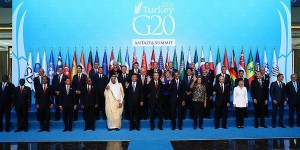
The G20 or Group of 20 is a international forum comprised of the top 20 economies and central banks whose polices literally control the world's economics (as an aside, it was decided in 2009 that the G20 would replace the G8. The G20 itself was created the year before in 2008). They determine virtually everything involving global trade, including who gets loans and credit to bailouts and the wavier or reduction of interest charges and whose debts get written off ("forgiven"), though the prime responsibility is maintain a stable global economy. Currently, the G20 is comprised of the United States, Germany, France, Argentina, India, Indonesia, Mexico, Russia, South Korea, Japan, China, Italy, the UK, Saudi Arabia, Turkey, Australia, Brazil, Canada, South Africa, and the European Union which is represented by the European Commission and European Central Bank.

The G20 came out the rubble of World War II in response to the need to "manage" world economies in order to create a more balanced trade environment and foster closer cooperation between the world's leading economies and oversight of developing economies. The first incarnation of the G20 was the Bretton Woods conferences, followed by International Monetary Fund and World Bank, and the World Trade Organization. It was Germany's Hans Eichel, a member of the Social Democrat Party (or SDP) and the finance minister under Chancellor Gerhard Schroder, along with Canada's Finance Minister (and future Prime Minister) Paul Martin and US Treasury Secretary Larry Summers who created the G20. Martin is a member of Canada's Liberal Party while Larry Summers is a Democrat and served in President Bill Clinton's Administration. It's understood, however, that Eichel and Summers were the driving force for the creation of the G20 through their respective roles in the G7, later G8, to manage the developing debt crisis's that were happening at the time. Nevertheless, the role agreed to by the member nations was the "governance of the world's economy".

Collectively, the G20 accounts for 85% of the gross world product; 80% of world trade; and 2/3 of the world's total population. The current chairpersons of the G20 are Germany's Angela Merkel and Argentina's Mauricio Macri, which, given Germany's internal migrant issues and the present state of Argentina's economy, doesn't exactly exude confidence, especially when you look at some of the other member nations. Notably absent are most of Africa, the Middle East, and the Oceania nations. However, of these, Africa, has the weakest and most unstable countries. This agenda of the summit is the rise and spread of global terrorism (and religious extremism), climate change, and of course, global trade. It should be pointed out that the G20 invites non-member nations and organizations such as the World Bank Group, the Association of Southeast Nations and the International Labour Organization to attend its meetings as a "guest".

So, if you ever wanted to know who or what the Oligarchy is, there you go. In addition, there are dozens of think tanks which deal with developing policies on a vast array of topics such as the environment and pollution, overpopulation, food production, poverty, resource development, and sustainable economic growth. They work hand in glove their respective governments on policy and given its transnational role, just as often with member governments, associations, academic institutions and global corporations on setting coordinating polices. In short, this is the world government---albeit still taking shape---that many of you were taught to fear in Sunday School and in sermons. It is also the global governance which threatens organized labor by being able to so easily transfer production and manufacturing across international borders in order to obtain the cheapest labor and/or avoid various taxes. Some would also argue, that organizations like the G20, facilitate the "raping" of natural resources, leaving behind a decimated local environment while enriching government officials, corporate executives and investors.

But that's not all. Many also believe that groups like the G20 are the main cause behind various wars and conflicts. Why you ask? Because their role, under the label of "global governance", is to maintain economic stability in order for trade and financial growth to take place. In other words, it's about control--control over economic development, both world and individual national economies, and resources, as well as resource acquisitions. It means obtaining whatever natural resources exist in a given country, which may mean resettling a native population, the temporary or permanent loss of local food sources, damage to the environment including loss of clean drinking water or farmland, and so forth. Generally, the powers that be can usually be bought, but sometimes they want to much or they're just obstinate and won't cooperate. Then additional pressure can be brought to bear on an escalating scale with military intervention (either direct or covert) being the last resort. Of course, it's always presented as being in the national interest while painting the other nation's government with a wide---and often unsubstantiated---brush of various nasty charges like having weapons of mass destruction, the use of chemical weapons, or in support of "the people's demand for democracy", etc. In reality, it's about not getting onboard with the petro-dollar as its trade currency, access to various indigenous resources, and so forth.

This brings us to Hamburg and what's going on there. While estimates vary wildly, most put the number of protesters well into the thousands according to attendees. Most are anarchists, meaning that they just don't simply oppose corporate globalization, but also the government's---any government---interference in their personal lives. They simply want to be left alone and live a life free from the dictates of some government bureaucrat. Freedom and democracy in its truest form. Naturally and to not waste a good riot, you have wannabe "Socialists" or Communists. Then too you have those who are there simply to thrash everything and loot as much as possible. These are usually the most violent types, which means they're the ones who get the most media coverage and are presented to the watching public as the anarchists, neo-Socialists or born again Communists. They are the ones throwing Molotov cocktails, glass bottles, rocks, and starting fires as well as doing the looting. Rounding out the lot are various special interest groups such as Kurds, and opposition political parties like the Scottish Independence Party, who are there in the hopes of getting some free media coverage. For the time being, the usual Muslim protesters and Sharia law enforcement gangs have been keeping a low profile, perhaps out of fear of getting their collectives butts kicked. If so, they may have more common sense they I gave them credit for. However, some Kurds are using the occasion to draw attention to their plight.

Reports from various news outlets state that despite the use of body armor, water cannons, armored vehicles and standard anti-riot tactics, approximately 160 police officers have been injured---some seriously---while dozens of protesters have been arrested or detained. Estimates , according to the police and reporters put attendance among the rioters as high as 100,000 to perhaps 75,000. Ironically, it's being reported that some of the rioters are demanding the implementation of Socialism or Communism while others, specifically those from countries like Venezuela, are demanding an end to their current form of government---Socialism! Others are demanding open borders while others want closed borders and tighter control over immigration, as well as more money directed towards alternative energy research, ending poverty and a reduction in military budgets. These same reports point out the many of the rioters are from countries other than Germany, and describe the protesters are mostly college educated, employed, middle class and/or "trust fund babies". As an aside, there are "sympathy protests" taking place in other countries, such as in Venezuela's capital, Caracas. One witness to all the riots, Laura Zeriadtke, said that what she as witnessed was nothing less than a "Civil War". Many would agree.

I believe that what we are seeing is a seismic shift in the global body politic. People are rejecting the adoption of this implementation of a new form of Fascism; Perhaps "Friendly Fascism" as the late great Dr. Bertram Gross had coined the growth of corporate-government partnership. People demand the imposition of "Socialism" without truly understand what "socialism" is. The same goes for the Communism. I would also have to ask whose "Communism"? Stalin's? Lenin's? Mao?, Castro's or Ho Chi Minh? Kautsky's? Luxemburg's? Maybe Che's or Marx's? Each were different and none actually followed what Marx and Engel wrote. In truth, they were only variations of totalitarianism (except maybe Luxemburg and Kautsky). As for Socialism, that's never actually be tried despite claims to contrary. What has been attempted is democratic socialism, which, in fact, was quite successful, that is until the vast influx of migrants who didn't share the same work ethic, traditions or social values. Instead, they simply drew on the system like a piglet does on a sow, without contributing back to it . As a result, their economic systems are being strained to the breaking point. People are rejecting globalization, at least the corporate control of markets and nations.

Historically, people have always willingly surrendered their freedom for security---personal and economic. Always. I think the ruling Oligarchs are banking on this holding true again. They provide control, be it economic, political, social or personal. In exchange, we have a certain measure of safety and security. Never mind that our privacy is gone or greatly compromised. Never mind that ordinary businesses are regulated to the hilt or that we are taxed to the point that we might as well simply sign over our checks. After all, someone has to pay for this new found protection right? The only problem is that an increasing number of people worldwide are catching onto the scam. We know that the elections are rigged. We know that the politician class doesn't represent us. They represent the corporations who underwrite their campaigns and help write or lobby for certain policies.

We know that there are two sets of laws---one for the wealthy and one for the rest of us. We've seen it happen too often not to know. Right now, the ruling class is doing everything in its power to divide us along as many line as possible. Divided, we are weak and powerless. United we can topple any Oligarchy or ruling clique, and they know it. We know it too in increasing numbers. What's happening in Hamburg and elsewhere are but the opening salvos in a socio-economic war that's a old as civilization. A war between the ruling elite and the rest of us. The difference is that the stakes are far higher now than they were a few generations, centuries, or millennia ago. It's time we demand our freedoms back.


Peaceful protests mark the end of the G20 summit hours after riots


More than 100 police injured in Hamburg riots


G20: Activists riot overnight in Hamburg...


Monday, April 03, 2017

How To Kill A Successful Company: A Short Guide


Several years ago, a company I worked at, which was well respected in the industry, experienced a traumatic shock. It was sold. The company had been founded almost a century earlier, and although it had undergone a few changes in ownership, had continued to grow and become extremely successful. The ownership which had been in place since the late 60's was perhaps its most successful incarnation. At the time I was hired in 1990, there was a actually a waiting list for many of their positions, starting with the file room and stenographers (yes, they had actual hard files and stenos). The president of the company was strict by most standards. He believed in being on time, working until your lunch or break. At the same time, employees were respected, well compensated up and down the entire company hierarch with an excellent insurance plan.

There were also small non-quantitative "bonuses" which added immense value to being an employee there, such as an outing to the track. The company would shut down for the day and take everyone to the races (the company owned box seating), lunch at one of the upscale restaurants, along with anniversary lunches, gift cards, and turkeys at Thanksgiving. The white collar employees, such as myself, had individual offices. Each morning the company president would come by and greet each employee. He would check to see that the trash cans had been emptied the previous night, the carpets vacuumed, light bulbs changed, office furniture was in good repair, and everything was in working order.

True, there were a few downsides, such as their refusal to modernize when it came to technology as fast as some would like (although, at the time, the company was slightly ahead of the technology curve within its industry) and there was a professional dress code for everyone. They lacked a professional HR person (the person they had in that position also was in charge of building maintenance, the mailroom, shopping for supplies, and filing up the soft drink machine). There was also a departmental rivalry which encouraged to mistrust the other departments; a "dog-eat-dog" mentality, which was extended to include individual employees within each department so that fellow employees were to be viewed more as "frienemies". Stenos were given quotas with a chance at a small bonus. But, nevertheless, there was a strong work ethic and the president was someone you could easily respect.

After the president retired, things changed rapidly. There were fewer and fewer pay raises (even COLAs), updates in technology slowed to virtually nothing. Building maintenance became nearly nonexistent. Gone too were many of the small perks such as an outing to the race track, luncheons and turkeys. There was greater emphasis placed on intercompany competition. Employees were subtly encouraged to steal fees from fellow employees (especially if they were in another department). Employees were expected to lie to clients when it came to issuing remittance checks (the company would hold the checks for approximately ten days, sometimes longer), or find ways to beat the attorneys down on fees and to get clients to go along with changes in terms which would, of course, benefit the company's (but not necessarily the employee's) bottom line. Ultimately, the company's reputation took a nosedive.

Some employees excelled at this and were rewarded with better claims. Some didn't, or simply wouldn't go along. They were either fired or forced out be being given poor quality claims with no opportunity to make money. Everyone was on a small base salary plus commission, which had been reasonable and a person could make a good living. In fact, most lived off of their commission checks and banked their base salary. However, the company used this as an excuse to forego COLAs, and they often adjusted the draw upward, making it harder and harder to earn a commission. This applied to stenos as well as inside and outside salespeople (outside salespeople were also responsible for making personal "adjustment" visits usually covered a territory that was several states wide and covered huge geographic distances. They were compensated for overnight stays, given a company car plus per diem). Eventually that too stopped. They were still expected to meet quota---bringing in new business, calling on existing clients, and making personal contact with debtor businesses. The toll became too much for everyone, and so began a period of constant turnovers, and with it, the quality of claims (which, naturally meant fees and overall income for everyone dropped). However, "favorites" still continued to earn top dollar since management could still farm out the best claims or volume to chosen individuals.

It soon became a very depressing place to work, but among the veteran employees, they had so much time invested in the company and had been out of the job (and technology) market for so long, felt they were trapped. Of course, management itself continued to make money hand over fist, which only increased the general animosity, and with it, productivity declined. Many of the benefit and insurance packages were either eliminated or cheapened for everyone except management. Everyone started simply going through the motions. It didn't take long for leading clients to leave either. Employee innovation or suggestions were ignored or rejected out of hand; after all, what could "mere" employees, some with more experience and/or education than even the senior most management, possibly know? At one point a management consulting firm was brought in. Employees and management were surveyed, interviewed, and finally brought together for the verdict. The result was that management was completely out of touch---with the employees, with the industry, and with each other. However, management faulted the consulting company for not doing an adequate job, and certain employees for "sabotaging" the project. Yet everyone knew the truth, whether or not they wanted to accept it.

In time, the company embraced technology ("embraced" is a little too strong of a term. It was more like being made to shake hands your worst enemy after a fight). Several in upper management had left by this time, along with much of the senior personnel. But by this point, the technology was too little too late, and the company was quietly put on the market despite transparent lies from senior management to the contrary. Again, management showed how out of touch it was by initially valuing the company based on its previous glory and not its current reality. Eventually the business was sold at a fraction of its original estimated worth. The match, however, turned out to be one made in Hell. Management did its best to place a positive spin on the sale, which I suppose was all it could do. Promises were made about no major changes, vast improvements to come, no layoffs, more advancement opportunities, better income potential, but some of us knew better and a few even said so. These were two completely different companies from two unrelated industries, with completely different philosophies internally and culturally. But, hey, everyone got a free coffee mug with the new owner's logo on it and a $25 gift card! Apparently loyalty can be bought, and at bargain basement prices too!

The company became a small American cog in a global European based machine. We were managed by individuals thousands of miles away who had little or no understanding of American business practices and knew nothing of our industry. It wasn't long before the white collar staff lost their coveted offices in favor of open cubicles. The income structure was changed too, but not for the better. The "disconnect" attitude was replaced with a "stepchild" attitude. We were expected to conform to a structure and philosophy which simply didn't work. We had to adapt to a computer system which was incompatible with everything we did, and on prescheduled timetables which were unrealistic. Long term employees---veterans---were seen not as assets but as liabilities and were viewed with an air of suspicion. Thus came the next exodus, be it willingly or enforced.

So, how did I fare? Well, I had been one of the employees who looked out for fellow employees regardless of their department or role. I openly opposed any and all internal conflict. I refused to take advantage of my attorneys or of the clients (however, if there was a way we all could mutually benefit, I was all for it). I was seen as a "shop steward" or employee liaison. Employees came to me on a regular basis to discuss problems with supervisors, management or other employees. I often served as the conduit for new ideas to improve work conditions, improve productivity and so forth. Management, rather than appreciating my role, which was at their behest, actually feared it. They did everything they could to force me out, from verbal harassment to cutting my income my over 1/3 at one point. Somehow though, I always made money. In fact, I was lucky enough to collect the single largest recovery in my department's 90+ years history (and the second largest in the company's history) and collected the most total fees earned in the company's history. I was also one of the most requested managers to handle certain clients exclusively; this, despite routinely being given the worse claims.

But, if you want to really know how I fared and what it was like, here's an example for you. It is an email exchange which was sent out shortly after we were acquired by the new division Vice President. So, here is goes: "Start with a cage containing five monkeys. Inside the cage, hang a banana on a string and place a set of stairs under it. Before long, a monkey will go to the stairs and start to climb towards the banana. As soon as he touches the stairs, spray all the other monkeys with cold water. After a while another monkey makes the attempt with the same result. Pretty soon when a third monkey makes the attempt, the other monkeys will try to stop him. Remove one monkey and replace it with a new one. The new monkey will see the banana and want to climb the stairs. To his surprise, the other monkeys beat the snot out of him. Another attempt and another attack. He knows that if he tries to climb the steps, he gets assaulted. Next, replace another monkey with a new one. It gets the same treatment. The previous newcomer even participates in the punishment with equal enthusiasm. Continue the process until all of the original monkeys have been replaced. The new monkeys will continue to attack anyone trying to climb the steps and retrieve the banana, but without knowing why they are doing it. Nevertheless, no matter how hungry they are, no monkey will approach the steps". The intent was to tell everyone that the "old ways" of doing things was gone, but that's not how it was taken by most of the employees (someone in new management had previously commented that trained monkeys could do our jobs).

After a few minutes of thought, I fired off a reply and for good measure, copied all the same people as he did. Here's what I said, "That works until the monkeys decide to organize their efforts. One goes for the banana. One serves as lookout, and the other three wait to beat the bejeezus out of the asshole with the water hose. They split the banana and laugh and laugh". A few years later, I was promoted to Special Projects Coordinator to the President---an Assistant Vice President position within the new company. My role was improve the workplace efficiency and working conditions, evaluate individual and departmental performances, assist with HR functions, help resolve any workplace conflicts (I was a certified mediator), in addition to my existing position as the senior Legal Manager in the department. It was a role I enjoyed (and the additional compensation was nice too).

The point to all this is that employees aren't liabilities to be used and discarded. Employees, especially those who've been properly developed, are essential to the success and longevity of any company. To be dismissive, condescending or arrogant in dealing with an employee is to sow the seeds of the discontent and that may eventually affects the bottom line, not to mention the life of the company no matter its standing in a given industry or how old it is. I am not, of course, saying that management should jump on every suggestion, but it should keep its eyes and ears open as to what the employees are saying or not saying, as the case may be. Is there a specific issue which keeps coming up? Is there a trend to comments or suggestions? How are the attitudes? What are other companies, both in and out of your industry, doing to improve worker moral? Are the employees being engaged?

Ask for their ideas---and be willing to implement the better ones. Nobody knows the job better those who do it day in and day out. When I was in the military, on Command Staff, I was taught to always praise in public and criticize in private (something this company rarely did). Acknowledge everyone's contribution. Treat everyone, from the lowest individual on the totem pole to your peers, as equals. Be fair in your criticisms, praise, and especially in compensation. And in this world of global competition and connectiveness, accept that one size doesn't fit all, be it in the product or service you're selling or how your company functions. Learn to appreciate the little nuances. While cubicles were the norm for our new parent company in their European or Asian offices, they weren't here in the US. Personal offices were seen as a source of professionalism and of accomplishment, plus they added in our ability to do our jobs, which were often highly stressful, in quiet. The loss of those offices I think set the stage for what would be the death kneel of the company which would come just a few years later. Lastly, if there is an employee, no matter how much they may earn, who doesn't fit in, be it bullying, domineering, temper tantrums, inappropriate behavior, or being abusive, don't be afraid to terminate that individual. It's one less stressful and potentially harmful situation eliminated, and that allows for a more smooth running department or company, which means a more productive department or company.

Monday, December 05, 2016

Did Donald Trump Really Save 1000 Carrier Jobs?


I've been involved in politics in one fashion or other for close to 40 years now, and if there's one thing I can say about it, it is this. Politics has never ceased to amaze me. President-elect Donald Trump, perhaps the most unpopular incoming President in American history with the possible exceptions of Lincoln and Kennedy, recently stepped up and made a pre-inauguration promise to the heating and air conditioning giant Carrier that if they kept the Indiana plant in the US instead of moving it to Mexico, he would give them a tax abatement; that is, a break on their corporate taxes. Now here is Trump, not even President yet, and he's living up to his reputation as the "Master of the Art of the Deal" which has earned him billions. Of course, it doesn't hurt that the plant is located in the home state of his choice for Vice President, Mike Pence.

In exchange for keeping the plant at home, which allegedly will save about 1000 jobs, Carrier will also get a break on its taxes. However, that's a deal Trump can't realistically keep because Congress, not the President, is responsible for controlling the federal purse (if you'll recall, that was an issue when the Supreme Court overstepped its Constitutional Authority regarding the Affordable Care Act aka Obamacare, by rewriting the bill as a tax). That is, only Congress can approve tariffs, taxes, and that includes tax breaks to companies or industries. However, Vice President-elect Pence remains Indiana's Governor for a few more weeks, and as Governor, Pence could offer the company a break on state taxes as well as other incentives (with final approval of the state legislature). Secondly, Chuck Jones, the President of United Steelworkers Local 1999, which represents the employees at Carrier, said neither Trump or Carrier involved the union in the process. Lastly, Carrier had originally said they were considering moving approximately 1400 to 2000 jobs south of the border. The deal saves just 1000 of those jobs, which is still a substantial number.

"The Donald" has also publicly said that he would revisit President Clinton's North American Free Trade Agreement or NAFTA, which pass crammed down the throats of American workers and small businesses despite loud objections from unions and small business owners. As some of you may recall, NAFTA was supposed to be some wondrous trade agreement that would simultaneously bring economic prosperity to businesses, manufacturers, and unions operating in Canada, Mexico, and the US. It was to serve as something akin to the EU and create a single North American economic trade zone. Instead, it helped Mexico by providing a cheap labor zone to bring parts and reship them back to the US or Canada. Meanwhile, the US and to a lesser extent, Canada, loss numerous, mostly middle class and union based, jobs. NAFTA, in effect, virtually destroyed the middle class in general and union jobs in particular. Now, we have President Obama working on a new secret trade agreement, Transpacific Trade Agreement, as the second linchpin to "opening borders". According to Trump, before the US proceeds further with the TTP, he wants to revisit NAFTA and possibly renegotiate some of the various agreements, which I think could be a good thing for small business owners and workers---especially union workers.

However, things aren't quite as they seem with newly elected President-to-be which I find a little troubling. In addition to taking credit for keeping Carrier in Indy, Trump claims that through his personal intervention, he was able to keep one of the Ford plants in Louisville, Kentucky running. According to Trump, Ford was planning on moving its Lincoln SUV operations to Mexico until he intervened through his "personal contacts" to keep production where it is. However, Ford representatives stated that there was never any intentions to move the operation to Mexico or anywhere else. Hum...well, ok then. Meanwhile, Pratt & Whitney, which manufactures jet engines and other components for the military announced through its parent company, United Technologies, that it would be closing some of its manufacturing plants and relocating operations to Mexico in order to save costs (in part through the use of non-union labor). President-elect Trump stated that he would see to it that United Technologies, which also owns Carrier, would be cut out of any future federal contracts if it did.

It is seriously questionable whether Trump, or any President for that matter, would have the authority to any say in who did or didn't get a federal contract. Of course, there are specific guidelines that everyone bidding on government contract must comply with, but assuming they do, what could a President really do? I guess he could, as Obama has been alleged to have done to some conservative groups, sic the IRS on them and harass them at every turn, but I doubt he'd actually do that given the amount of money these companies funnel into various political campaign coffers and the clout their lobbyist have on Capitol Hill.

So, what should we make of all this then? Is it a bunch of posturing or is it something more? Personally, I think it shows Trumps lack of political experience. What may work in executive board rooms doesn't translate well to the quid-pro-quo world of politics. There are also certain federal guidelines which are in place for a reason. Namely, to prevent political intimidation and retribution, no matter how well intended. I think we're also seeing Trump attempting to break the "Status Quo" mold of previous Presidents and at least to try to be independent. However, I think he will find that the Presidency isn't as powerful as it is perceived to be. There are limits to its power and ability to influence within some very defined boundaries.

Still, we seem to be witnessing Donald Trump's honest and sincere efforts to protect American jobs and stepping out front to lead; something Washington has been in severe short supply of for decades. People are beyond sick and tired of Washington politics. They know the political system is broken beyond any realistic hope of reform. They witnessed the open manipulation and biased boldfaced lying of the corporate news media. America is no longer a Constitutional or democratic republic. It is an Oligarchy with two sets of laws and two sets of standards.. A corporate/political ruling class on the one hand and all the rest of us---their economic serfs---on the other.
Trump, I believe, is our final hope of any peaceful restoration of the government that once was ours, and even at that, we are seeing daily protests by those who naively think that working with or within the system will actually change anything. They are just as stuck in this quagmire as the rest of us; maybe even more so since they are more dependent (think "chained") to the status quo than some and yet suffer the most for it. Meanwhile, the powers that be are doing their very best to keep each us divided in every possible way. The more we're at each other's throats, the less likely we are to turn our attention and anger toward them. Therefore, before jumping on the corporate media's bandwagon criticizing the President-elect, why don't we wait until he actually the becomes the President and give him some time to prove himself one way or the other. I suspect that if we give him a fair chance, we might be pleasantly surprised, and if not, then we're no worse off than we are now.


After Trump pledged to keep Carrier jobs in US, company says it won't move nearly 1000 jobs to Mexico
https://www.washingtonpost.com/news/wonk/wp/2016/11/29/donald-trump-has-reached-a-deal-with-a-manufacturer-to-keep-jobs-from-going-to-mexico/?utm_term=.6a30144fe074


Trump didn't save as many Carrier jobs as he claimed
http://money.cnn.com/2016/12/02/news/companies/trump-carrier-plant-mexico/index.html


Timeline: 1000 Carrier jobs saved from moving to Mexico
http://www.theindychannel.com/news/local-news/timeline-1000-carrier-jobs-saved-from-moving-to-mexico


Trump & Carrier reach deal to keep 1000 Indiana jobs from Moving to Mexico
http://insider.foxnews.com/2016/11/30/trump-carrier-reach-deal-keep-1000-indiana-jobs-moving-mexico

Saturday, March 21, 2015

Do You Have a Right to Work?


Let's say that you like working on cars. Cars are your life. There never has been any question of where you wanted to work---the local auto plant in town. The money and benefits are great, and what's better, they're hiring. So you fill out an application. After a few days, you get a phone from the plant's human resource department and set up an interview. She wants to hire you. An appointment is made to come down and see the company physician for a quick physical. The human resources manager asks you to come back in for an orientation.

At the orientation, you go over the various procedures like safety issues, clocking in and out. Then comes the shocker. You're told that you are required to join a union in order to work there, but you're not interested in joining a union. You're told that the plant is a "closed shop", meaning that in order to secure employment there, you have to join the union. You tell her you're not interested in a union; you just want to work on the car or truck assembly line. At that point, a union representative is brought in to talk with you.

You politely listen as she explains that the union has been in place since the 1950's; that the union would protect your job in case something should happen; that they would provide you with a shop steward in the event of performance issues or any hearings; the union would negotiate on your behalf---collectively---pay raises, health and other benefits, your hours, and job safety issues. All you need do is sign the union card and agree to have the union dues automatically deducted from your salary. Easy peasy.

After the union representative finishes speaking, you politely explain that you don't have any interest in joining a union. You are aware of your responsibilities, and as an adult, take full responsibility for your actions. Furthermore, you are quite capable of speaking for your self should you get into any trouble. The representative explains that without their steward, you could run the risk of being taken advantage of (implying that you couldn't trust the company).

The union representative reminds you that unions have been at the forefront of child labor laws, women's suffrage, job safety, voter
registration, and even the Civil Rights movement. Those were all powerful and important issues, but each has been addressed by the federal government and are now laws. What about wages and benefits? Unions have been out in front in protecting wages, limiting hours, and securing benefits for their members. That's true, however, those too have been largely addressed by various federal laws. As for negotiating wages, over the past decade or so, unions across the country, have negotiated away much of benefits they had fought for over years, which has also included pay cuts, reductions in worker seniority and are only just now getting some of those back. Besides, the company has offered a retirement package before the company unionized, and offers a similar package at its non-union plant.

At this point that the union representative is getting agitated. She adds that the union also has a political education committee which would act on your behalf by endorsing candidates and making political contributions. Where does that money came from you ask, and she says that it is automatically deducted from your paycheck. Ok then, who selects which candidate or issues your money gets directed to? As it turns out, it isn't you. The committee would make that decision for you. What about the candidates they endorse, do you get a say? Not directly, but you do get a vote. However, the final decision is made by the committee. In some cases, only the political election committe makes the decision and in others, only the union president decides. But, you explain, you aren't partial to either of the two parties, but who were some of the candidates they endorsed in the past?

As it turns out, all were of a specific political party, and few if any of them, support the same issues as you. Accordingly, you point out that it made more sense if you donated to whom you wanted rather than have a portion of your salary going to individuals you didn't agree with. Besides, it didn't make any sense to dig deeper into your pocket to donate to those candidates you agree with; it was like you were working against yourself.

After a few polite closing remarks, you're informed that either you sign the union card or don't get the job. At that point she leaves. Funny, you think, wasn't that the company's decision to make? You could see her speaking with the HR manager outside the door. A few minutes later, the HR manager enters and asks if you have any questions, otherwise you were free to leave. You told you can start as soon as you turn in the signed union card. You mention that you did have a couple of questions.

How is it that you answered a company job announcement; filed out an company application; interviewed with company personnel; went to a company doctor; but in order to accept a job that you really wanted--- that you had studied hard for in school---spending countless hours after and before school; that would hopefully be your life's work---you had to join an organization that you weren't the least bit interested in, not to mention an organization which would not support your views politically in order to work there? In fact, you're told that they, not the company, decides who works there based on whether you sign the union card or not. Two words---closed shop. A closed shop means simply that in order to work there, you had to join the union whether you wanted to or not, and you have to abide by their rules and pay their dues.

Closed shops came about during the heyday of union membership---the late 1940's and early 1950's. Within the past few decades, many companies have sought to circumvent closed shops by moving the company to either states which had "right-to-work" laws, meaning that individuals can't be compelled to join unions, or the plants were closed and work shipped off to countries where workers are paid sweat shop wages with no benefits and they had little or no rights whatsoever.

So there you have it folks. Although the story was entirely fictional, the situation is real. Is it better to join the union, where the jobs of everyone is more or less protected, or take a chance? Some can certainly fight back or negotiate their own pay, but many can't. In some cases the costs of wages, benefits, and protecting unproductive workers have proven to be too much and companies have closed or moved. Unions essentially negotiated themselves out of a job. Many companies have retirement or 401k programs. Much of what unions championed down through the years are now laws, with workers having recourse through OSHEA (including its "Whistleblower Program"), the Labor Department's Wage and Hour division, the Equal Employment and Opportunity Commission (EEOC), plus various State and local agencies.

On the political side, instead of looking for themselves, unions have been in bed with one political party since the 1930's instead of playing each party off each other. Also, instead of supporting the best candidate for the rank and file, they nearly automatically endorse just the one party's candidate even if that particular individual doesn't even support unions! And let's not forget that in many cases, the member doesn't even have any say so where their money goes, which is often on issues or individuals they completely disagree with, meaning they have to dig deeper in their pockets to support the cause or candidate they want, and heaven help them if they actively support then non-union endorsed candidate or even put out their yard sign! Currently, some unions are pushing for amnesty for illegal immigrants since many are employed in mow skill and mostly unionized jobs. Amnesty would open the door for them to join the unions, and thus add desperately needed dues to the union's coffers. However, the influx would create more demand for jobs than there are available jobs, thus driving down wages and benefits while driving up unemployment.

What do you think? As corporations have become more feudalistic and some, like banks and oil companies, have essentially taken over governments like ours, have unions become passé? Have they outlasted their usefulness? Certainly big business would like for to think so. Unions have traditionally balanced the scale of power. Of course, unions aren't perfect. Some became corrupt through their Mafia involvement while for others, it became hard to distinguish union management from corporate management, especially when looking at their salaries! Unions have been at the apex in many social issues that we now take for granted. They were responsible for a vibrant middle class and growing economy, and as unions have declined, so as the middle class and so has America overall; so much that we face the largest disparity in income since just before the Great Depression, but then this isn't 1929 and the American economy is no longer the largest or strongest.

There are of course alternatives to unions, such as worker owned companies (co-ops), employee associations, employee-managements boards where employees and management elected representatives to a special board on a rotating membership basis which deals with employee related issues such as work conditions, complaints, and worker innovations. In addition, there's been a trend in business to create a more horizontal hierarchy and empowering employees, not to mention occasional outings, ongoing surveys, and workshops. I served as an employee liaison with management at several companies where I worked, including in an Assistant Vice President role working on projects to improve morale, productivity, and efficiency; a happy workplace is a productive workplace, at least that was the idea.

Right now, certain groups (primarily conservative and pro-business) are pushing for "Right to Work" laws, with Wisconsin having just recently enacted such a law. Proponents claim that "Right to Work" makes companies more competitive and gives workers more options, which they cite as being critical in today's global marketplace. Opponents, however, refer to the effort as "Right to Work for Less" and claim that without union representation, workers will be taken advantage of, have less job security, and will eventually be forced to take cuts in pay and benefits without any recourse except walking out and trying to find another job when jobs are hard to come by. In addition, unions point out that in "Right to Work" states, they'll be forced to cover non-union employees which they can't financially afford to do; such a move could ultimately bankrupt many unions. Unions are already having to compete, directly and indirectly, with companies and workers overseas who aren't unionized and earn pennies on the dollars and often without any benefits or even basic health and safety regulations while management and Wallstreet investors pocket the difference. Proponents, however, cite lower costs of living standards which justify the lower wages and benefits aren't something workers don't deemed as important.

Many on the political Right look at unions as "communist" or "socialist" (their two favorite terms) and champion the idealistic individual concept of popular Americana myth, while those on the Left see unions as an entre into the middle class, a better life for themselves and their children, along with the possibility of a college education. This is especially true among minorities. They see unions as a means to having good health care and providing for a decent retirement while working in a safe environment. Some of the principal goals unions have fought for, such as safe jobs or a means to fight against employer harassment or discrimination, are now federal laws and give workers some legal recourse. Certainly popular opinion has swung against unions in recent decades. Historically, union participation peaked in the early 1950's and has been in a steady decline ever since with only 11.3% of the workforce being unionized (about 6.6% of private employees and approximately 35.9% of public employees). Running near parallel, the purchasing power of the middle class has declined as union membership has dropped.

So, what do you think dear reader? Do you have an unobstructed "right to work" or is their strength in numbers? In which direction does the future look brightest for ordinary individuals amid the global marketplace and increasing competition for fewer jobs, Citizens United and the demise of our democratic republic, the 1% oligarchy versus a declining middle class and the widening income disparity?


Unionfacts.com
https://www.unionfacts.com/cuf/vitals