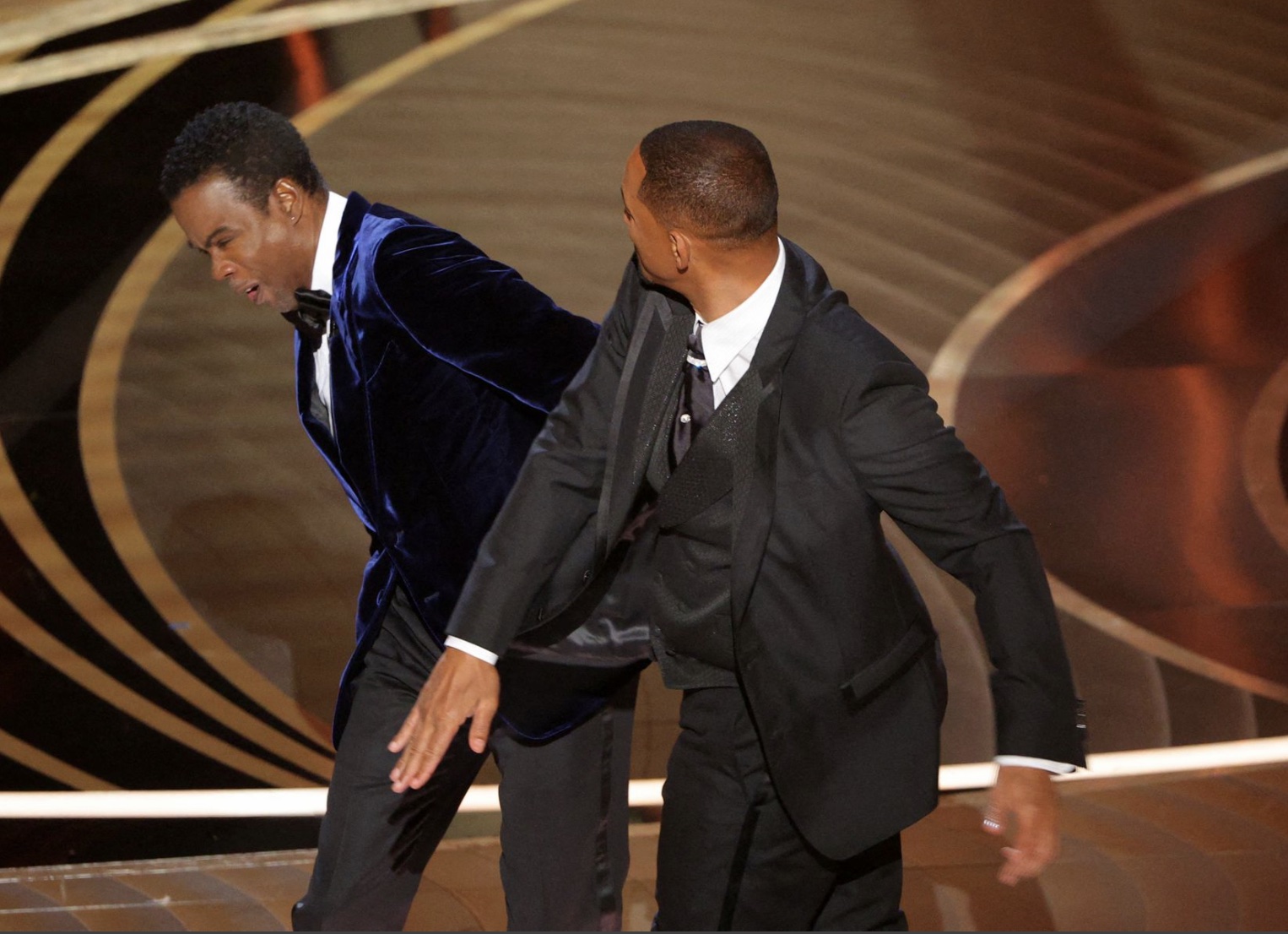
The slap heard around the world. No, I'm not talking about
that sissy slap Will Smith meekly threw at comedian and presenter, Chris Rock,
at the Oscars. I'm talking about the verbal slap President Biden threw at
Russian president Vladimir Putin while visiting Poland. Biden referred to the
Russian president as a "butcher".
The head of state of every nation is expected to act with a
certain amount of decorum when speaking to or about any other leader,
especially one in which they are not at war with, and particularly when they
are trying to bring hostilities between two warring factions to an end.
Referring to Putin as a "butcher" is not going to
make him take heed to anything else Biden says, whether it's about peace or not.
In fact, the only reason to call names like that is if you're actually trying
to provoke a fight, which some think Biden is. What's more is that President
Biden had previously referred to Putin as a "war criminal".
Whether or not Putin is a "war criminal" is not up
to Biden. It's a charge that only the International Court of Justice
("World Court") at The Hague can determine. Secondly, Biden's comment
completely dismisses Putin's reasons for
the invasion, which for those not paying attention, was entirely about national
security and NATO's disruption of the region would bring should the Ukraine be
admitted into the NATO and be permitted to station troops, tanks, aircraft. Most
of all, the missiles which would be placed on Russia's border or pointed at point blank
range towards Russia's largest naval base in Sebastopol. All this begs the question, what's going on
here?
A few weeks ago, President Biden mentioned at a meeting of
the U.S. Business Roundtable that a "New World Order" was inevitable,
and added that the U.S. "must" lead it. As we explained in a earlier
article, a New World Order is all about creating a single global economic
system with the U.S. dollar as the world's reserve currency, meaning that all
global trade would use the dollar as the preferred currency.
This increases the value of the dollar on the world market
and strengthens the U.S. economy. However, it also weakens the Euro, the
Russian ruble or the Chinese yuan, which devalues the U.S. debt (the U.S. is
world's top debtor nation). It would also control the International Monetary
Fund and World Bank, meaning that the U.S. would be central power player when
it comes to loans to various governments.
The New World Order also creates a single world legal
system, which includes trade agreements. It would require nations to subjugate
their national authority to this supranational agency, which would be under the
auspices of the United Nations. Naturally, the U.S. would be the dominant power
leading this arrangement if Biden has his way.
Some would say that's totally fair. After all, the U.S. is
the primary guarantor of money loaned to the IMF or World Bank. It's also the
nation most responsible for keeping the UN afloat. In 2020, the U.S. alone gave
the United Nations 22% of its entire budget. China was second with just 12%
while Japan donated 8.5%. The way the New World Order is presently configured,
other nations like China, Russia, or the EU, would be regulated to second tier
status on financial matters.
However, not everyone is willing to play along. Some
nations, while willing seeking economic trade, don't want to go along with
these rules. They don't want to subjugate their national sovereignty to any
other country or supranational organization. It's worth noting that those
nations just so happen to be on our economic "hit list" and often
labeled as "enemies of democracy". We're talking nations like Iran,
China, Venezuela, and Russia.
Let's take China for instance. It is the second largest
holder of U.S. debt behind Japan (and it's worth noting, that China is Japan's
largest creditor). It doesn't want to subjugate its currency to the dollar. In
fact, it's quite happy with the present economic system. Why? Because it's
winning.
The U.S. is declining as a world superpower. China is poised to surpass the U.S. as the world's largest economy by the end of this decade. Its infrastructure is
continuing to grow (albeit at a pace some economists say it can't sustain), and
massively updated its military. It's done this through a system of controlled
capitalism in which the State maintains a sustainable interest in each
business. It oversees any international agreements to ensure that they meet
China's long term goals.
Nevertheless, it is acquiring control over resources
throughout the world. It has been hyper-aggressive in its intrusion into
fishing waters claimed by India, Indonesia, Japan, South Korea, Australia, and
the Philippines. It has warned these and other nations (including the U.S.) to
stay out of the South China Seas.
China has not only reiterated its claim to the Senkaku
Islands in the East China Sea, which had been Japanese since 1895, but also territory on
the Chinese/Indian border around Tibet. China has even gone to the extent of
actually building islands in the South China Sea which appear to serve as military
fortifications or listening sites.
In terms of international resources, Chinese corporations
are aggressively expanding nearly everywhere. However, it's in Africa and South
America that its interests are particularly focused. China depends on imports
for over half of its key mineral needs such as gold, silver, zinc, copper, and
more exotic minerals like germanium and rhenium. The trouble is that the U.S.
as well as some other countries, need these same minerals too. Control of these
minerals control innovation, which in effect controls economies.
The U.S., while mineral rich, still must import about 24 key
minerals to meet its needs. Of these, we are in competition with China for 11
of these. In addition, China is a primary importer of 9 out of 13 minerals,
which include cobalt, indium, bismuth, and 17 rare earth elements
("REE"); all of which are important in the manufacturing of
batteries, computer chips, automobiles, and electronics. China is also going
after timber, farm land, and fresh water, which is becoming increasingly more
scarce.
As competition grows, so also grows the need for military
might to protect the production and shipment of these products. The military has
become key to the acquisition of these and other resources like oil and gas
("might makes right"). Closer at home, while we continue to pick up
the lion's share of the costs to keep the UN going, China has been focused on
acquiring control of key UN agencies and non-governmental organizations (NGOs).
China has been actively pursuing control of groups like the
World Health Organization (which has been aggressively investigating the origin
of the Covid-19 virus), the World Bank, the IMF, UN's Higher Commission on
Human Rights, and the World Intellectual Property Organization. It is also
attempting to expand its influence into Interpol. China now controls four of
the 15 most important agencies within the UN, whereas no other country controls
more than one.
Although China and Russia have been "frenemies" ,
China is not likely to let Russia sink under all the massive sanctions imposed on
it by the U.S. and EU. However, it will not try to alienate the West either.
For the moment, that's where its economic bread and butter lies.
Both countries have echoed each other's claims of secret
U.S. intervention around the world aimed at reducing Russian or Chinese
influence. One of Putin's original claims was that the U.S. was behind the 2013
"Maidan Uprising" in the Ukraine which coincidentally removed a
pro-Moscow government and replaced it with the current pro-West and pro-NATO
Zelenskiy government.
Russia has expressed its opposition to a "New World Order" government
since the collapse of the Warsaw Pact in 1989, a reiterated again in 1991 with
the implosion of the Soviet Union. In 1989, the Russian President Mikhail
Gorbachev sought assurances from Western leaders not to expand NATO into former
Warsaw Pact nations.
Gorbachev was seeking to rebuild the trust broken in 1946,
following the end of WWII, and find ways to reintegrate Russia into Europe, even
applying to become a member of the EU and NATO, which included accepting that,
at least for the time being, there would be one global superpower (Russia
joined the "Partnership for Peace" in 1991).
Although Gorbachev was promised by President Bush that NATO
wouldn't advance "one centimeter", by 1991, all of the Eastern Europe
was a member of the EU and NATO. Russia has fought the advancement of a
"New World Order" ever since.
Fyodor Lukyanov, one of Putin's foreign policy advisers, has
stated that this "unipolarity" of a single world superpower gave the
United States an rare historic opportunity to remake the world in its image; an
opportunity it squandered. Today, according to Lukyanov, the world must become
"multipolar", with multiple spheres of influence.
He makes the point that rather than trying to create a world
modeled on American styled democracy, that nations and their cultures be
allowed to develop in their own way, whether its democratic, theocratic, or
whatever. The U.S. notion that "one
size fits all" has failed just as surely as Soviet style Communism.
Others in Putin's circle argue that Russia should stop
trying to integrate into West and, instead, focus on being a hybrid between
East and West, while, as was pointed, China increasingly views itself a merger
between communism modeled on Stalin and Mao plus Confucianism which made the
collective stronger than the individual.
Reminds me of the Borg.
President Biden's name calling will solve nothing. His
verbal slapping of Putin will have no positive impact on the crisis in the
Ukraine, nor will it help the Ukrainian people. It does, however, make him look
like an outdated old fool. The war in Ukraine may prove to be mistake. It
certainly hasn't gone as Putin's advisers had planned. But it does demonstrate
Putin's frustration over his nation's security and the attempt by the U.S. led
West to impose its stamp on the world...and Russia. America's time in the sun
is coming to end as it has with all great empires before.
However, Russia and China are governed by autocrats while
America, and by extension the West, is ruled by its own Oligarchs who have
transformed the U.S. from a constitutional Republic into a growing neo-fascist
Corporatocracy.
None of this bodes well
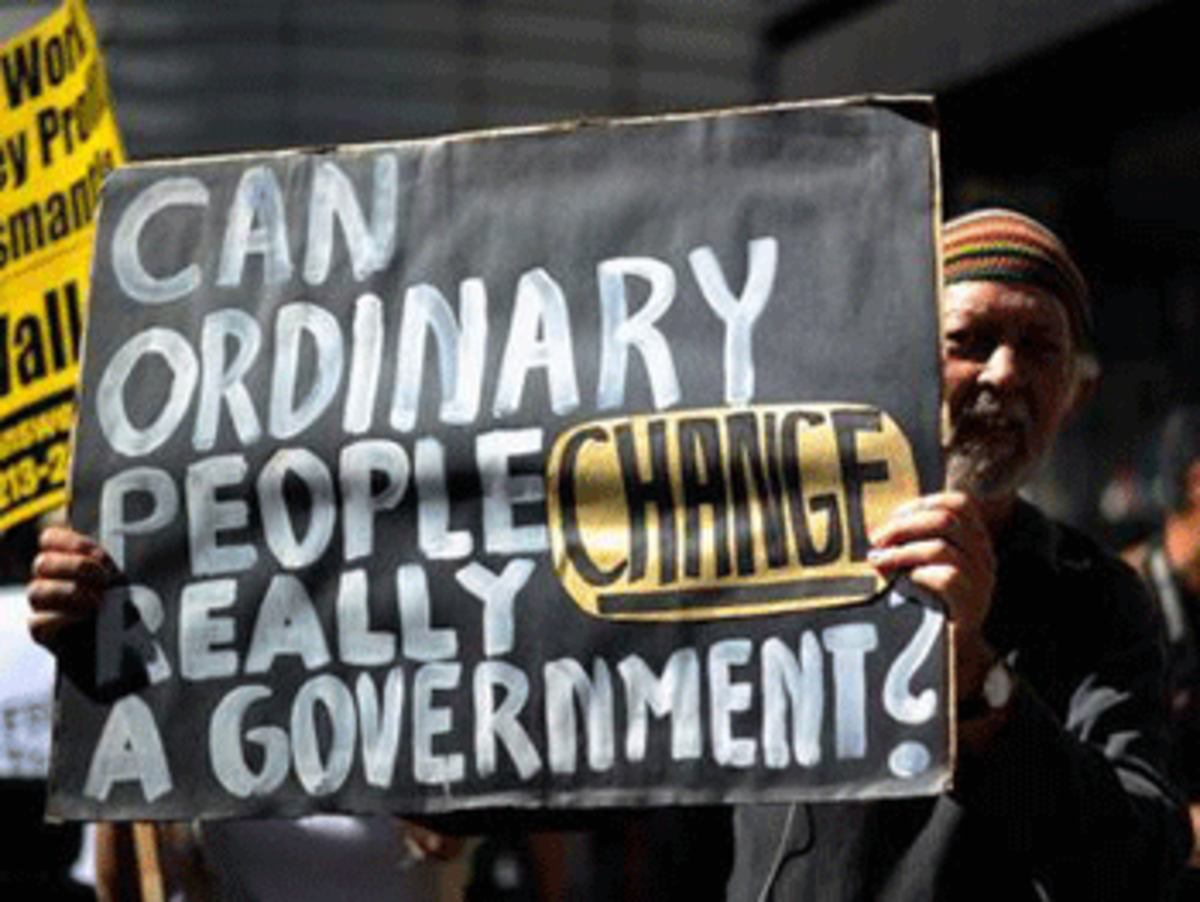
for the masses. The ordinary people of the world, who made the riches of the
Oligarchs possible, must ensure than any change serves our interests first.
The future will not be dominated by one or even two or three
superpowers. The world will once again splinter into perhaps many "points
of light" to borrow from President G.W. Bush, and with it, we will see a
reordering of alliances---political, economic, and military--- as well as
ethnic, racial, and religious, which will hopefully bring humanity closer, but that
will only happen if everyone has a seat at the table.
If you want to know more, please take a look at the links below. If you enjoyed the article, please consider passing along to others and don't forget to subscribe. It's free! Lastly please be sure to "like" us on whatever platform you use to read A/O. It helps with the algorithms and keeps our articles in circulation.
China, United States, and competition for resources thatenable emerging technologies
Russia's and China's plans for a new world order
China Doesn't Want a New World Order. It Wants This One
Rare earth element facts
'Creeping Capture' : How China is trying to 'control' global
bodies like UN, WHO
/https://specials-images.forbesimg.com/imageserve/1223650780/0x0.jpg)




.jpg/131px-RIAN_archive_850809_General_Secretary_of_the_CPSU_CC_M._Gorbachev_(close-up).jpg)

.jpg/170px-Julian_Assange_cropped_(Norway%2C_March_2010).jpg)