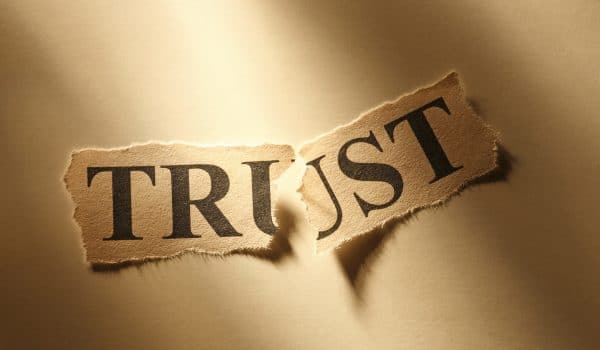
We Americans are facing a severe crisis. Some might rightly
call it a crisis of trust. We no longer trust our social institutions, and
that's a serious problem. Most governments likes ours exist solely by the
consent of those governed. Well, what
happens when citizens withdraw that consent? That's not meant to be rhetorical. That's where we are
now as a country.
In 2022, Gallup published a poll about Americans confidence
in our top 16 most important social pillars. Of those, 11 were total failures.
Of the five which were positive, only the U.S. military and small business had
a solid approval rating. The other three were only marginally positive.
Gallup's most recent approval poll from July 2024 shows that
our trust in government and our institutions have gotten worse. A 2023 Ipsos report indicated that on average only 30% of Americans said we could trust each other. So, given this
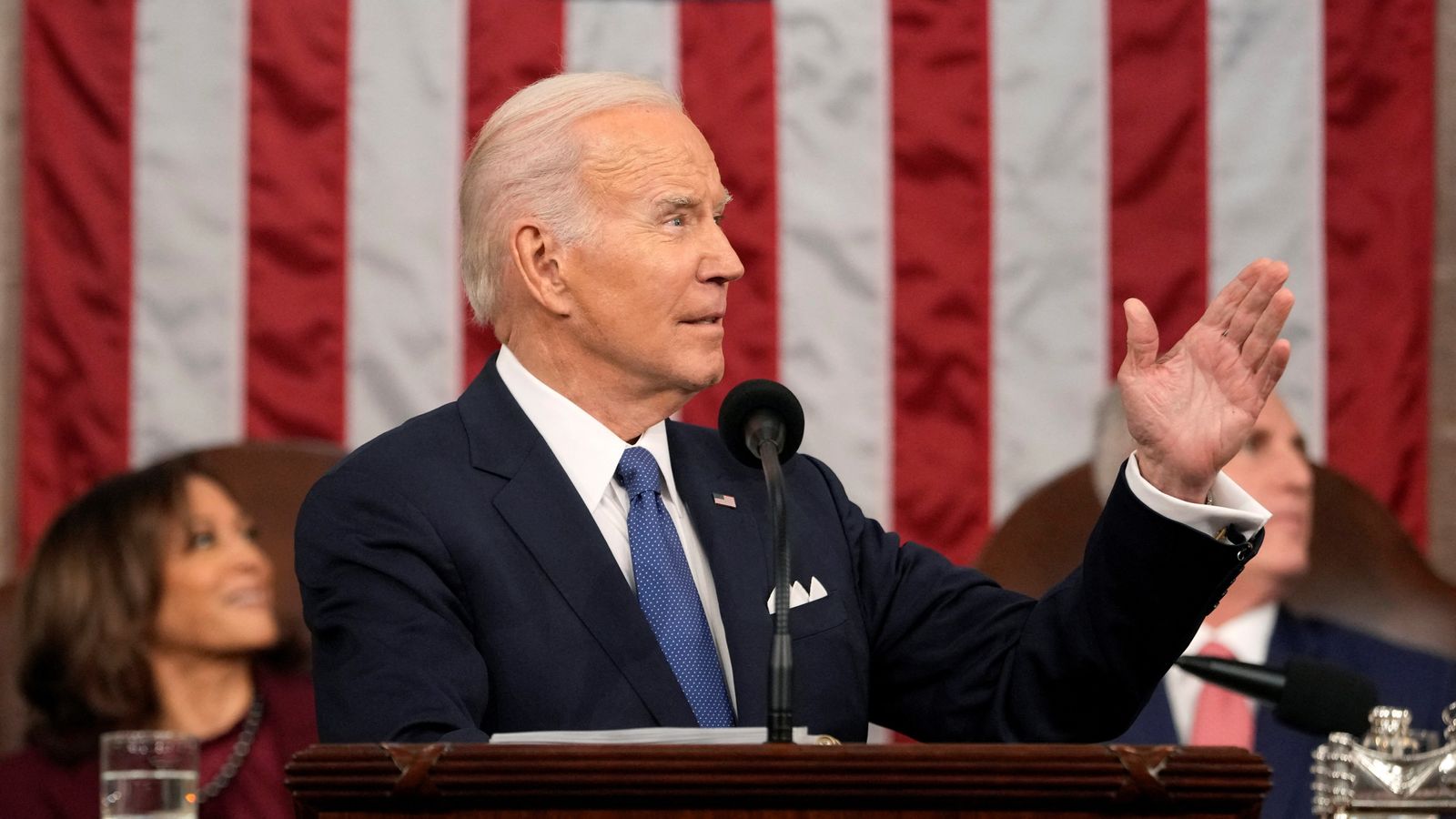
is a presidential election years, lets' start with confidence in the
presidency.
When questioned about their confidence in the role of the
presidency, 26% of respondents said they had " a lot" or "great
deal" of trust in the presidency. Compared that to 69% who said they had
little or no confidence. 4% said they had absolutely no trust in the presidency
at all. In 2013, while Donald Trump was President, 36% said they had a great
deal or a lot of trust in the office. The Nixon Presidency went from a high of
71% to 24% post Watergate. Ronald Reagan left office with a approval rating of
63%. Bill Clinton's was 66% despite his impeachment.
Trust in Congress has historically remained low, yet somehow
it magically manages to pull off a 95% reelection percentage. For the period of
June 3 - 23, 2024, Congress had a 9% approval rating according to the Gallup
poll. 4% said they trusted Congress a "great deal" while 5% said
"a lot". But, 88% said they had no or little trust in Congress.
Just these two sets of numbers alone would have most
politicians in other nations booking flights out to non-extradition nations,
and yet here in America, many are campaigning for reelection based on the
marvelous job they've been doing. How can we explain this?
So, if Congress and the President can't get the job done,
who can? How about the third branch of government, the legal system? If we look
at the justice system, 76% of respondents would find it guilty of not serving
the people. 3% rejected it completely. A mere 11% was happy with how things are
going.
The Supreme Court was once held in high esteem and could
always be expected to be one of the few institutions with a positive approval
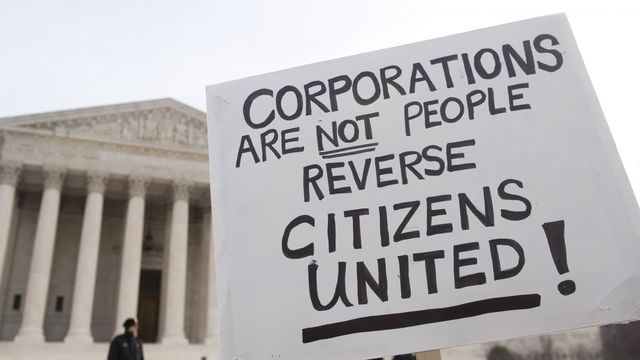
rating. But ever since its 2010 "Citizens United" debacle, faith in
the high court has taken a nose dive. Just 30% approved of the job being done
by the Chief Justices. 66% would dismiss the lot of them. 3% had nothing but
contempt for the nation's top court. Is it any wonder that America is labeled a
"flawed democracy" and on the brink of being labeled a "failed
democracy"?
What about the news media? Print media held themselves out
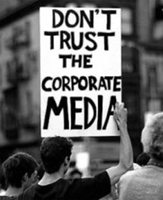
to be the sole arbiters of truth and morality for over a hundred years. Today, 96+% of all media is owned by just five
corporations. Can we still trust them to provide fair and balanced reporting? Beginning
with television, 12% say they have a "great amount" or "a
lot" of confidence in network news while 83% lack any confidence in what
we're told. Another 5% would cancel the lot of them.
The overwhelming majority
of Americans don't believe we're getting "non-partisan" or "fair
and balance" reporting from any national networks. As for print media, it
had a 18% approval rating. Americans, it seems, have come to expect print media
(newspapers, magazines, etc) to publish biased or slanted stories. 79% of
respondents agreed.
The survey didn't mention social media sites such as
"X" (formerly Twitter), Facebook, Gab, YouTube, TikTok, LinkedIn,
etc. However, another survey showed 25%
trusted social media. 42% had confidence in cable news, and 38% in podcasters.
Who did they trust most? 56% said their local broadcasters.
A Pew poll reported that among those under 30 (Gen X) had a
50% approval rating of social media sites when it came to getting their news.
It was 36% for those ages 30 to 49 (Millennials) and
from 50 to 64, the approval rating was 25%
and 20% for everyone 65 and older.
Next are those who protect us---law enforcement and the
military. America has boasted having the best equipped, best trained, best fed,
and best prepared military in the world. Ever since 1945, we have taken on the
(mostly self appointed) role of the world's policeman. However, following a
exhaustive 20 year war in Afghanistan, which ended where it started, the
Pentagon announced that we are currently not militarily capable of fighting a
sustained multi-front conflict.
Our planes, ships, tanks, and equipment are in desperate
need of total overhaul or replacement. We've depleted our stockpile of spare
parts and other supplies, and all the
while, men and women are getting out at a higher rate than average. But, despite
our military loss, how did the poll indicate Americans felt about our men and
women in uniform? Despite a 2.7% attrition rate, the 2024 Gallup poll showed
that most American's still had the back of our military personnel. 61% had a
positive opinion of our Armed Forces compared to 39% who didn't.
As an aside, a Rand
study reported that 54.4% of parents would discourage their children from
joining the military as enlisted (non-commission). On the other hand, 75% of
parent would encourage them to join, but only as an officer. Having been there,
done that, I have to agree. Officer is the only way to go. They have a better
choice of duty stations, pay, housing, retirement, and they are treated much better.
When it came to law enforcement, 51% said they trusted the
local and state men and women in blue. However,
a sizeable number---48%---puts little or no trust in them. 58% reported
little or no trust in the FBI. 43% felt the same way about the Secret Service (the
poll was taken prior to the attempted Trump assassination, so it's likely those
numbers would be lower). Just 46% had any confidence in the CIA. 42% felt the
same way about the Department of Homeland Security. 33% trusted the Justice
Department.

Our currency is backed by the "full faith and
credit" of the U.S. Government, which, if so, should give every American
serious reason to pause. We have the biggest debt of any nation. Congress continually
raises the "debt ceiling" so we can keep the government going. We
routinely borrow billions from foreign countries (including China) just to keep
our nation afloat and make the interest payments on that debt. Imagine having
to borrow money just to pay the interest on your mortgage or credit card debt!
How long do you think you could keep that up before ending up in bankruptcy
court?
So, let's look at the Federal Reserve System, which manages and regulates the nation's money
supply. With a approval rating is mere 36%, most disapprove of how its job
performance. 62% of Americans lack faith in the FRS. Next comes the banks. It
should come as no surprised that 72% expressed little or no confidence in them.
Big Business, often portrayed as ruthless and immoral (not
to mention puppet master of Washington) is deeply disliked by most
Americans---83% to be exact. The Big Tech companies like Microsoft or Apple,
have an approval rating of only 27%. Small businesses (the "Mom and Pop's"
) are liked by 64% of consumers (which is why Big Business spends billion to
portray themselves as being community and people oriented). After peaking in the
1950's, only 27% now approve of unions.
Another key institution is healthcare. Globally, the U.S.
healthcare system is last among the top seven industrial nations. It ranks highest
among the top industrial nations and 54th overall in infant mortality rates, 60th
in life expectancy (behind Estonia and Saudi Arabia), highest treatment cost,
fewest hospital beds, and 22nd in quality of life. Our healthcare system's emphasis is on repeat
treatment instead of prevention. Could the problem be putting profits over
patients?
The Center for Disease Control and Prevention (CDC) has a
disapproval rating of 58% following their (mis)handling of COVID-19. Given the
above, it shouldn't surprise you to learn that our healthcare system as a whole
has an approval rating of just 36% while 64% disapprove.
Our currency boldly proclaims
"In God We Trust". So what about
religious institutions? Surely we can safely put our trust in religion...can't
we? Well, apparently not so much. According to the Gallup Poll, organized
religion has a approval rating of only 32%. 67% of respondents placed little or
no faith in doctrinaire religion. In the 1950's, according to a University of
Southern California report, 57% of households belonged to some religious
institution. By 1960 it rose to a high of
63.3%. Why?
America had come through two wars---WWII and Korea. The
economy was booming. Suburbs were springing up everywhere. nearly everyone had a car and a nationwide highway system to drive them on. We had a functional government where both
sides tried to meet in the middle. There was a new sense of optimism to go
along with our patriotism. Everybody liked Ike. But somewhere in the late
1970's and early 80's, it all began to fade.
Rev. Jerry Falwell's "Moral Majority" (which was
neither) was became viewed as a religious form of McCarthyism; a stick to measure
others by. It demanded conformity as it inserted its values into government and
society. Televangelists ("pay to pray" preachers) like Jim and Tammy Faye Bakker, Ted Haggard, Oral
Roberts, and Falwell, watched by 85% of religious households at one point, found
themselves immersed in scandal amid a lifestyle of obscene wealth.
There were widespread reports of child molestation by Catholic
priests (and the Church's efforts to intimidate victims and hide the perpetrators),
pedophilia, hiring prostitutes, sex trafficking, and tax evasion as well as
their positions on abortion, birth control, LGBQT acceptance, single mothers, support of illegal immigration, musical lyrics, and
more. America changed as organized
religions failed to adapt.
A 2020 Pew Poll revealed that while church attendance was
down considerably, 64% of Americans still self-identified as Christian. Given the current trend, its predicted that by 2030, that number will be 46% or less
and 35% by 2070. Americans are leaving mainstream (mostly fundamentalist and
conservative churches) at a rate of 10% to 15% annually. Many are becoming
agnostic, atheist, or converting to Buddhism, Humanism, Hinduism, or to spirituality
(Wicca, pantheism, paganism, etc). What's the fastest growing
religion in America? Islam. Non-doctrinaire?
Secularism (aka "none").
Lastly, education. Our educational system is ranked 12th among
81 industrialized nations. We scored in the bottom half globally in math (the
top five were all Asian countries). In science, we ranked 16th out of 81
countries,, placing us in the second tier. The top five? All Asian again.
The 2024 Gallup Poll showed our public school system had a
approval rating of 29%. However, 70% of those surveyed said our public schools
were failing. We had kids graduating high school who can't read at a 12 grade level
(many have an 8th grade reading or comprehension ability). In math and the
sciences, it's just as bad. History, English (including proper grammar) face a
similar problem. In literacy, we rank 36th globally (note that poverty levels
are closely tied to literacy rates).
Higher education doesn't fair much better. To many colleges
depend on quotas to fill their enrollment criteria rather than the best
performing academically. Many incoming
Freshmen aren't prepared for college. As a result, they are usually required to
take remedial classes. just to get started.
Bear in mind too that college isn't for everyone and not
every job should requires a four year degree. The best alternative? Trade
school. Tuition is much less. There is a strong job demand (many have jobs
before graduating), it pays well, and the trades offer a wide range of
opportunities.
A lot of students go for whatever major is easiest or trendy,
This usually translates into degrees with little demand (such as gender or race
based studies, art history, Humanities, Mass Communication, Anthropology, or
Sports Health or Administration). These are the students who typically end up
with the most debt and least likely able to find a job or pay off their
academic debt.
So, there you have it. We have lost confidence in overwhelming majority of our foundational institutions; a trend which has been accelerating for years. For some of these institutions, it may be possible to earn back some of that trust over time, but for others,
perhaps the majority, that confidence appears gone forever, and with them an
allegiance to our nation's future.
If you enjoyed the article, please
consider passing it along to others and don't forget to subscribe. It's
free! Lastly please be sure to "like" us on whatever
platform you use to read anotheropinionblog.com. It helps beat the algorithms and keeps our
articles in circulation. Thank you!
U.S. Confidence in Institutions Mostly Flat, but Police Up
Government Agency Ratings Remain Largely Negative
User trust in social platforms is falling, according to ournew study.
U.S. adults under 30 now trust information social mediaalmost as much as from national news outlets
Most Americans Would Discourage Young People From JoiningMilitary as Enlisted Service Members
10 Infamous Evangelical Scandals
Pew: Modeling the Future of Religion in America
A Majority of Americans Trust Local Broadcasters Above OtherMedia for Election News
U.S. Education Rankings Compared to Other Countries
U.S. Ranks Last Among Seven Countries on Health System PerformanceMeasures
30% of adults say most people can be trusted